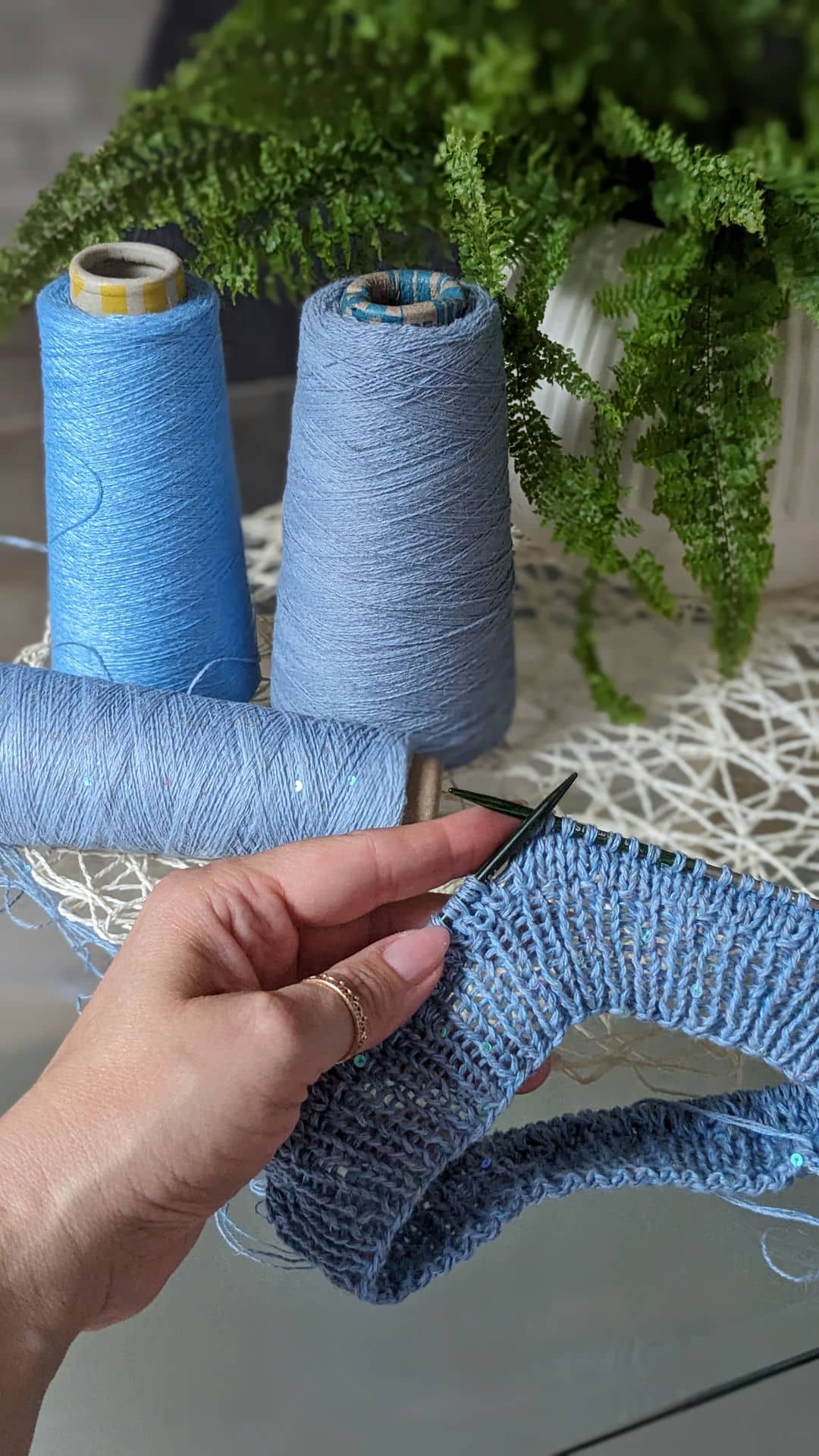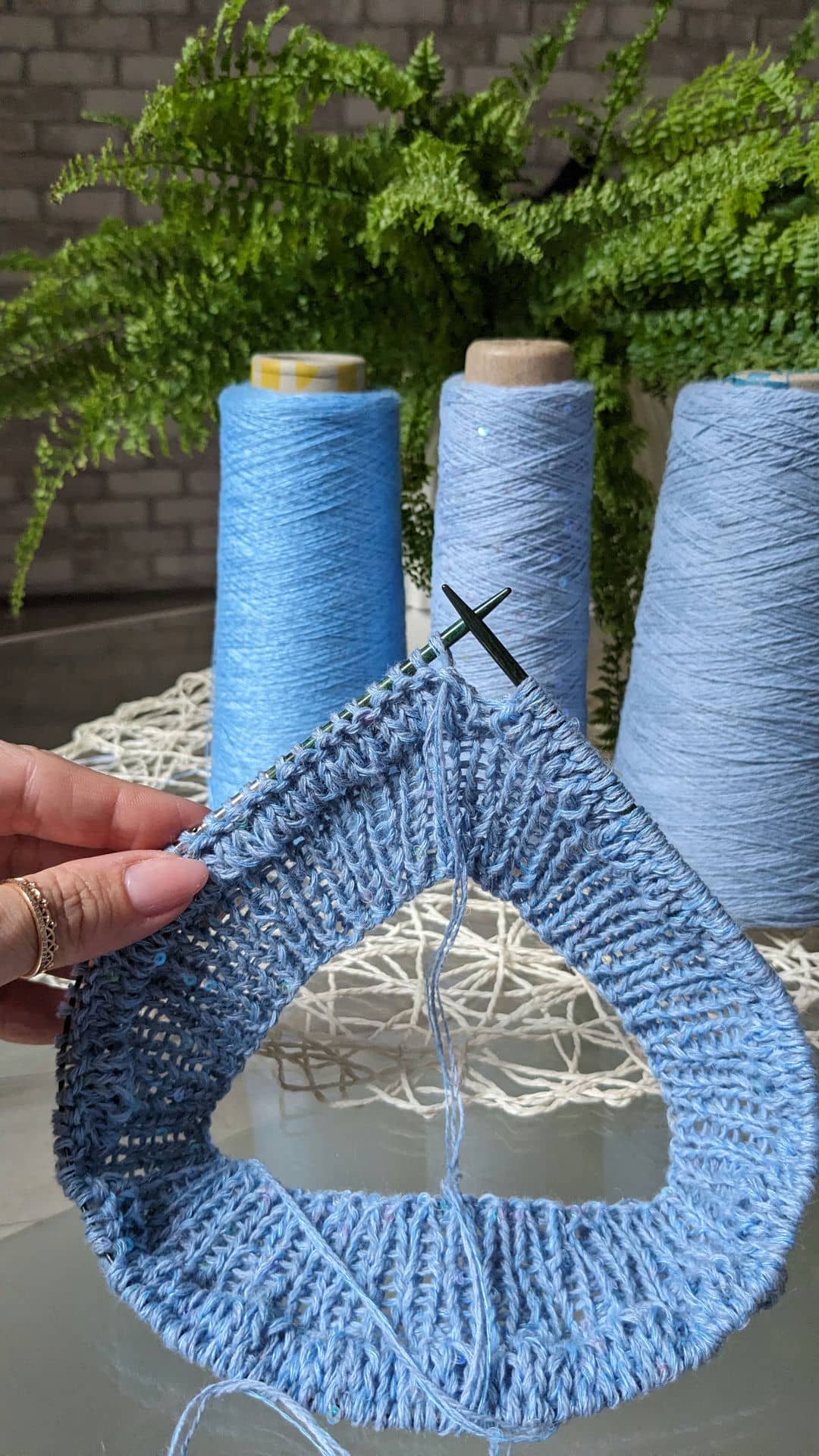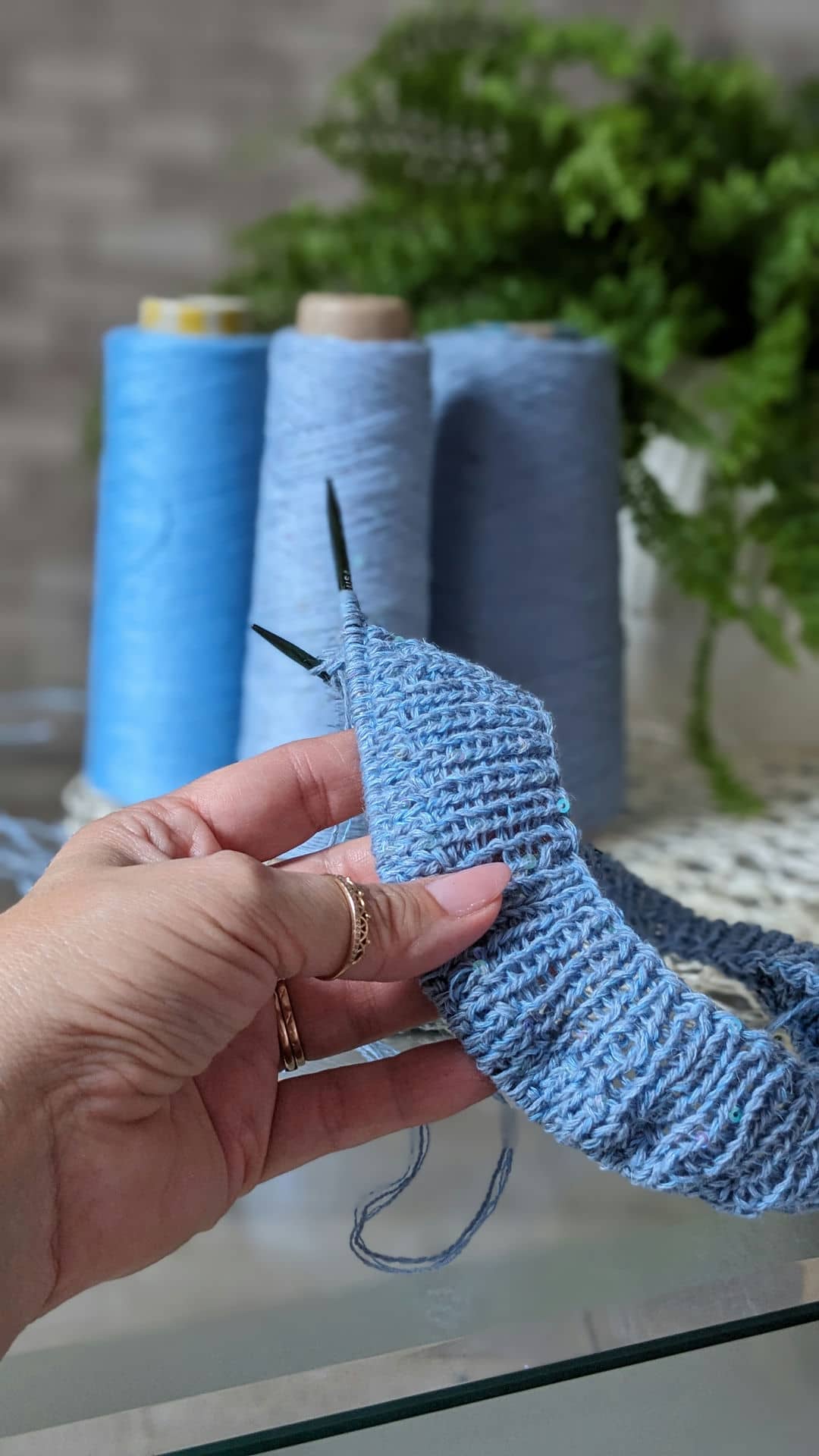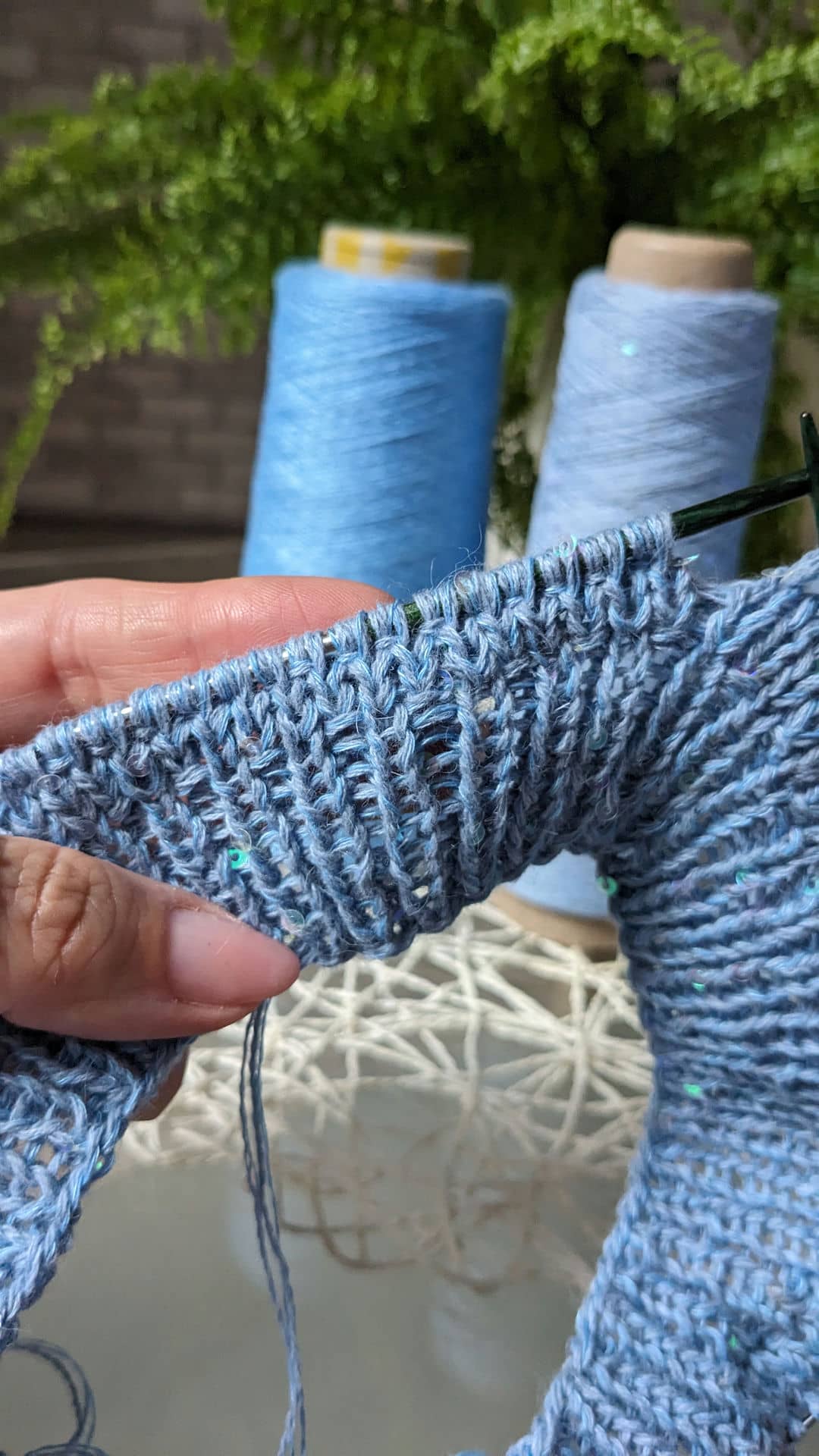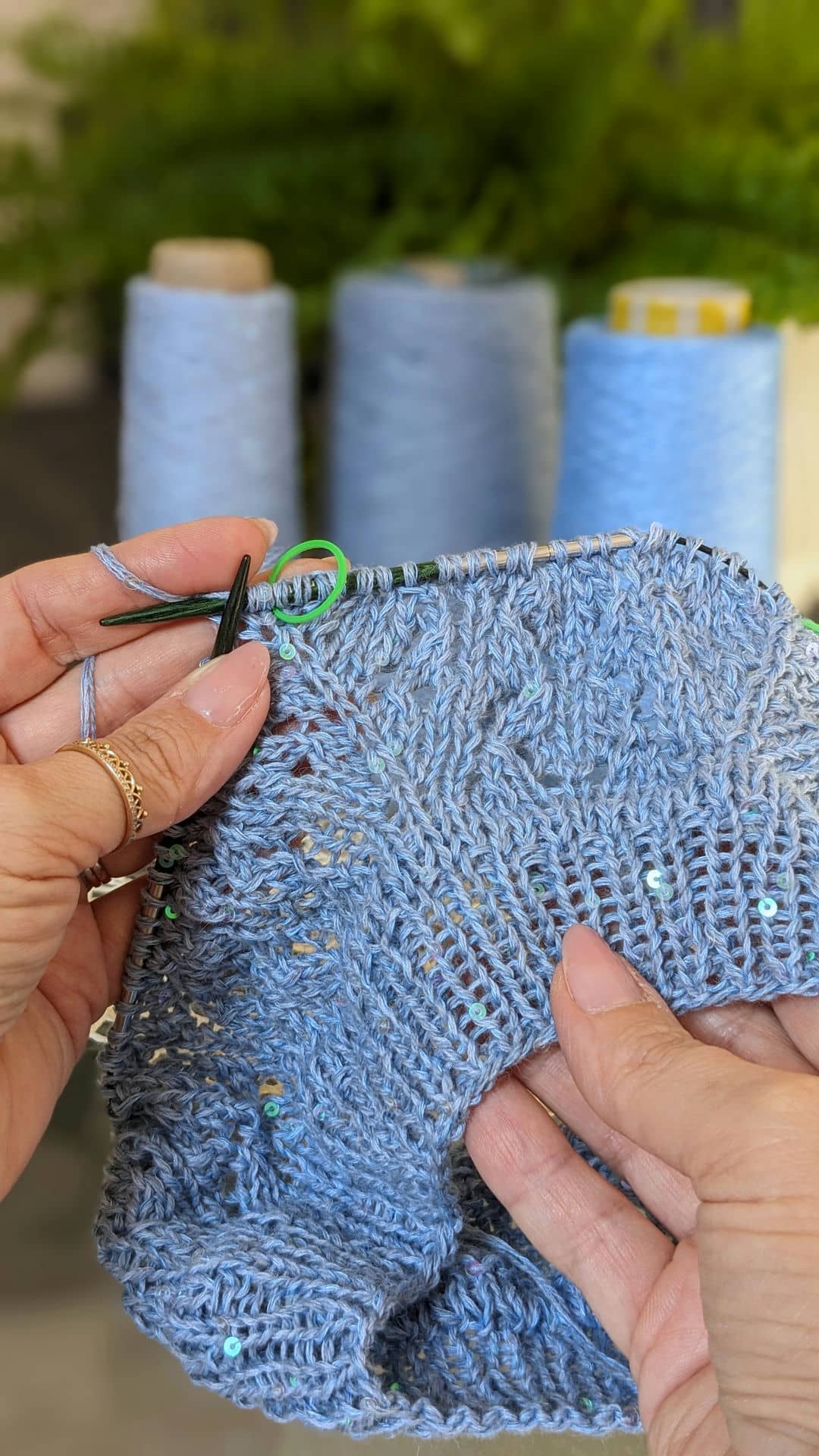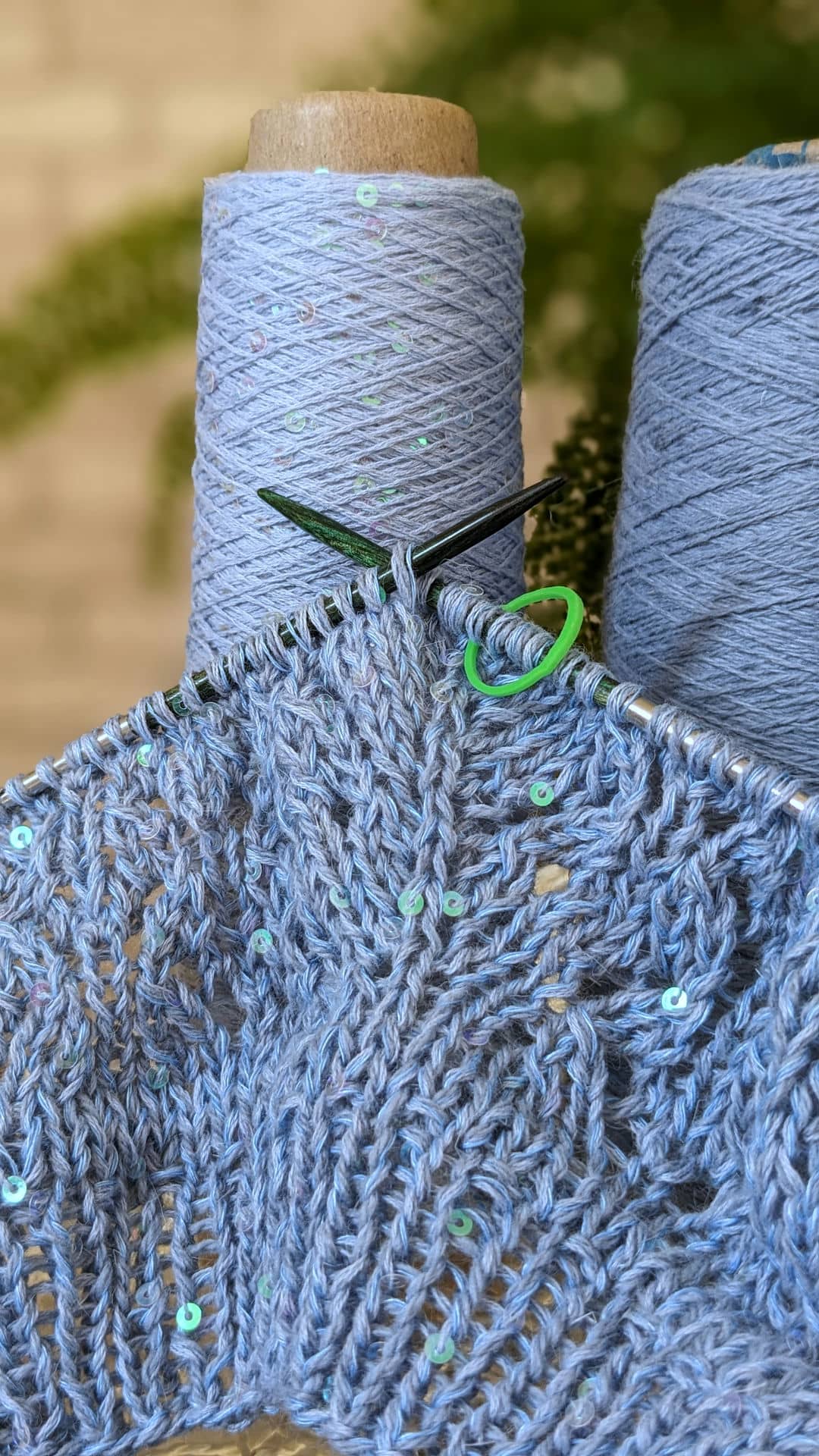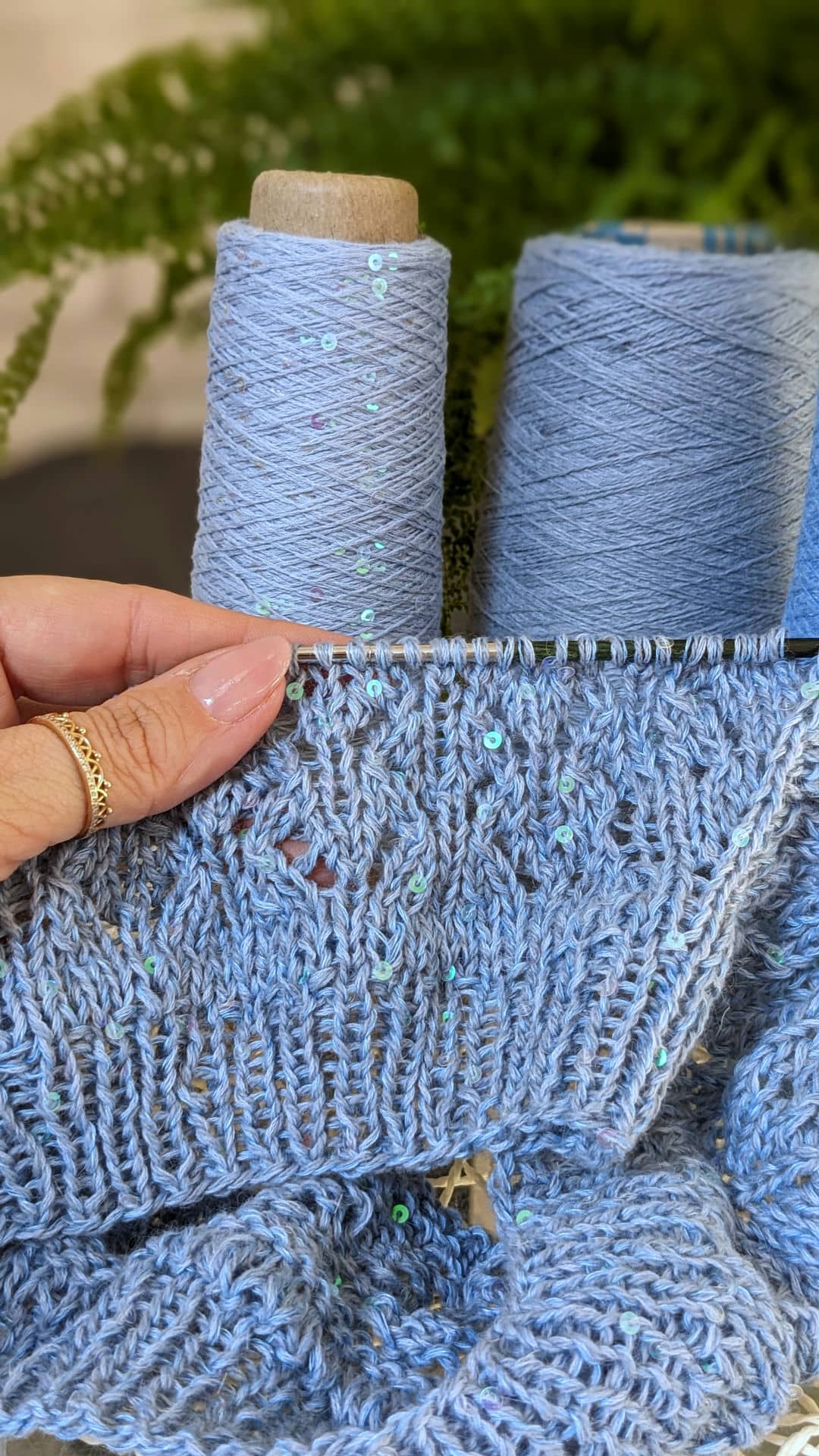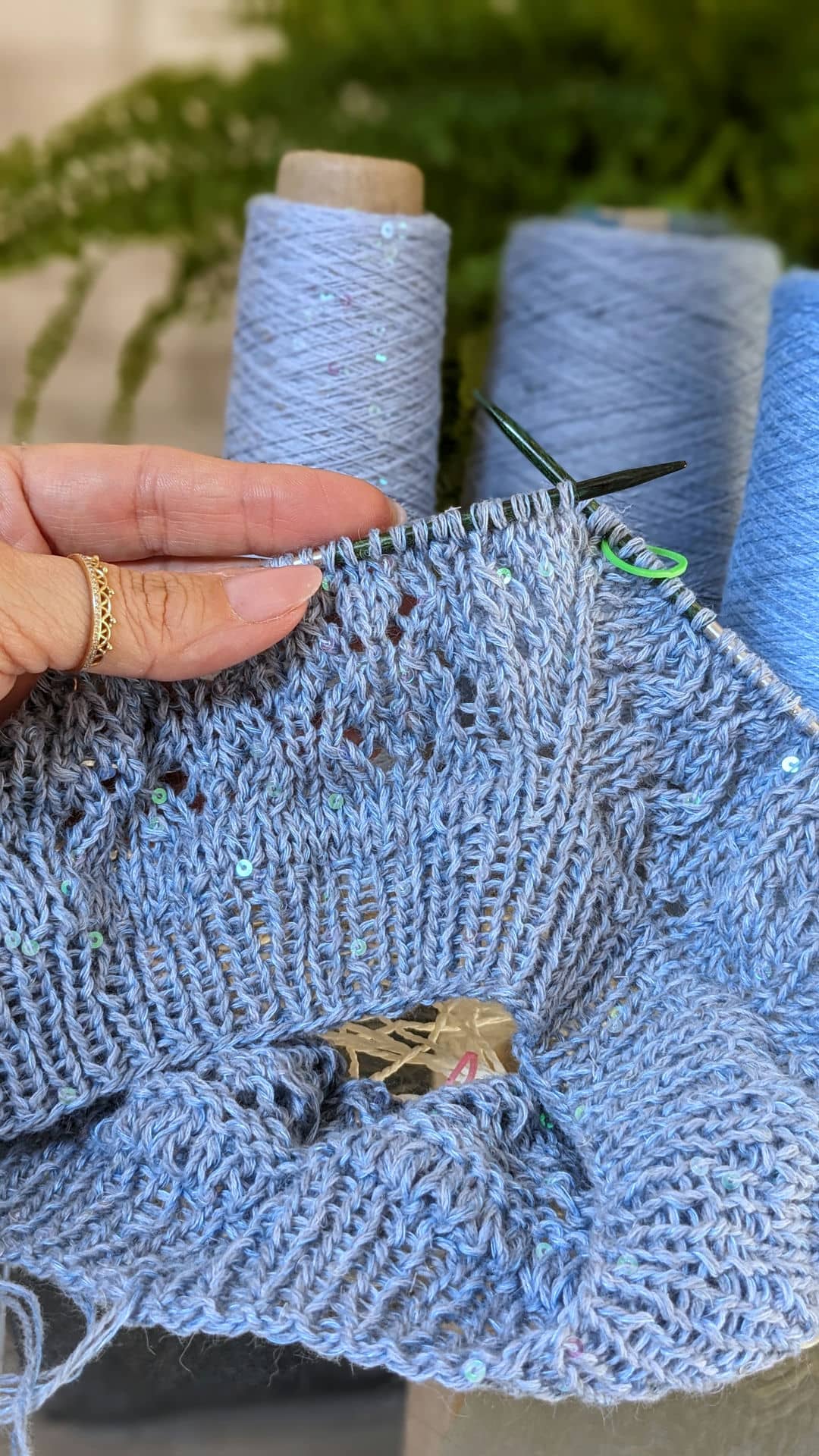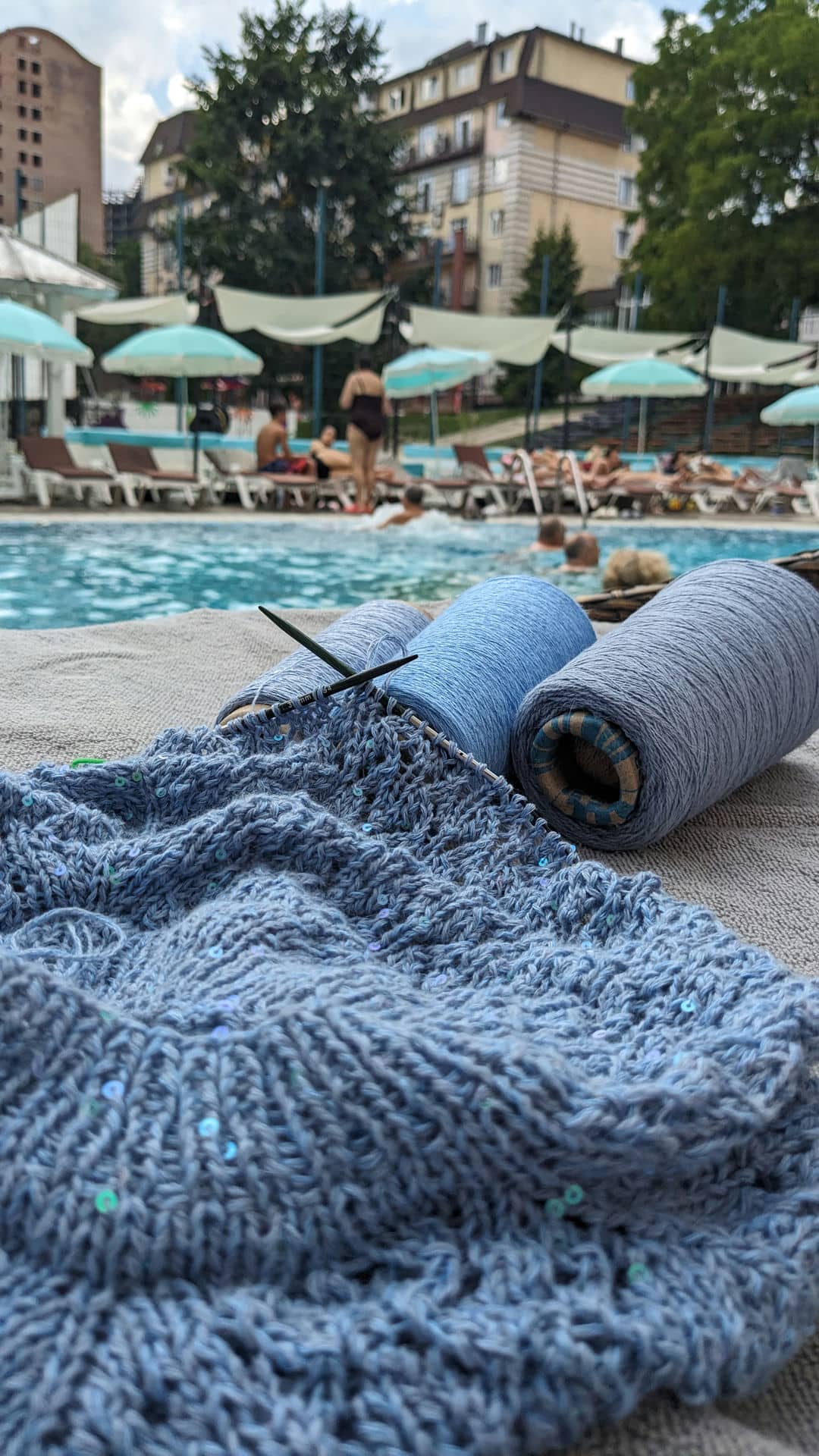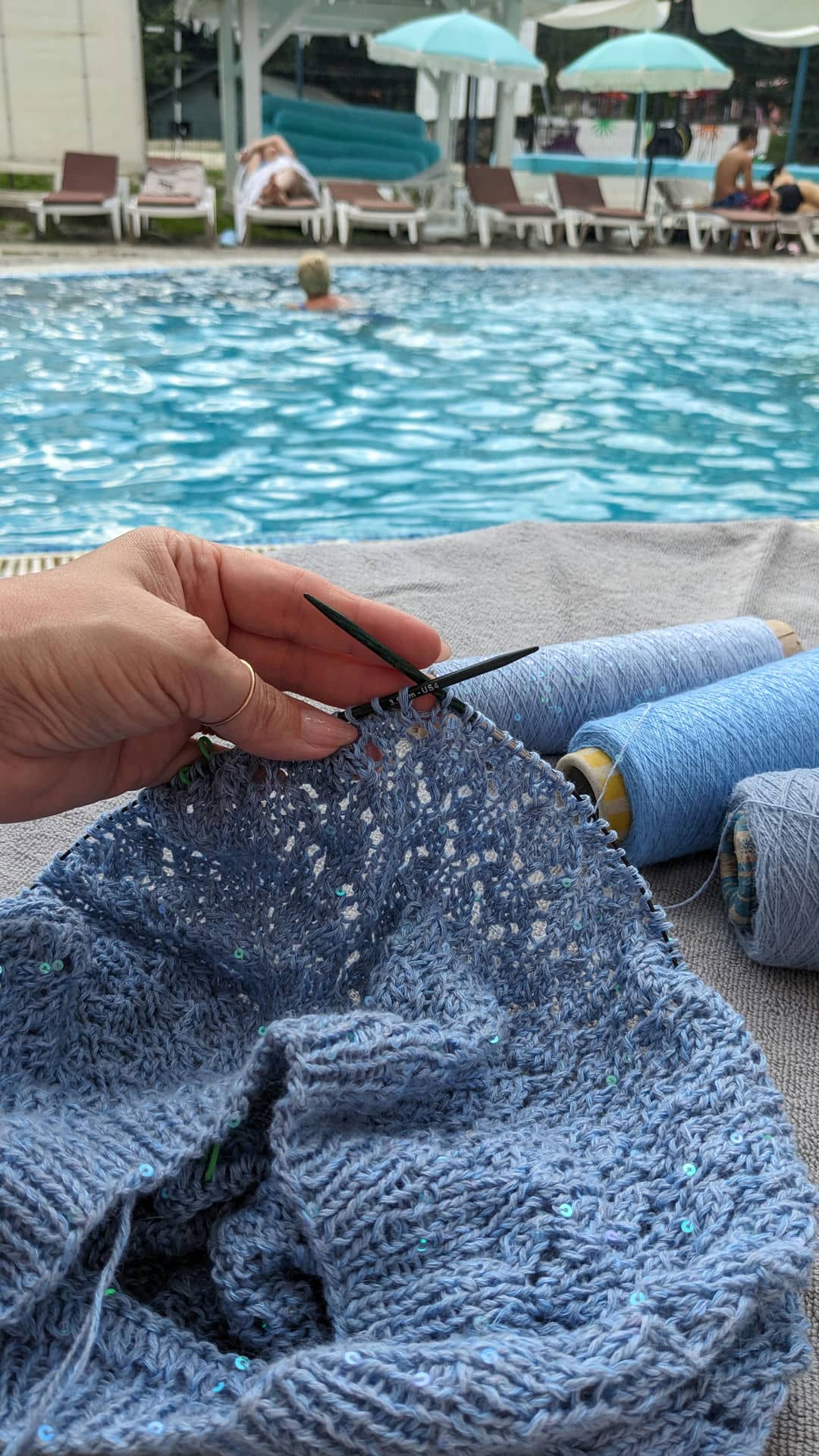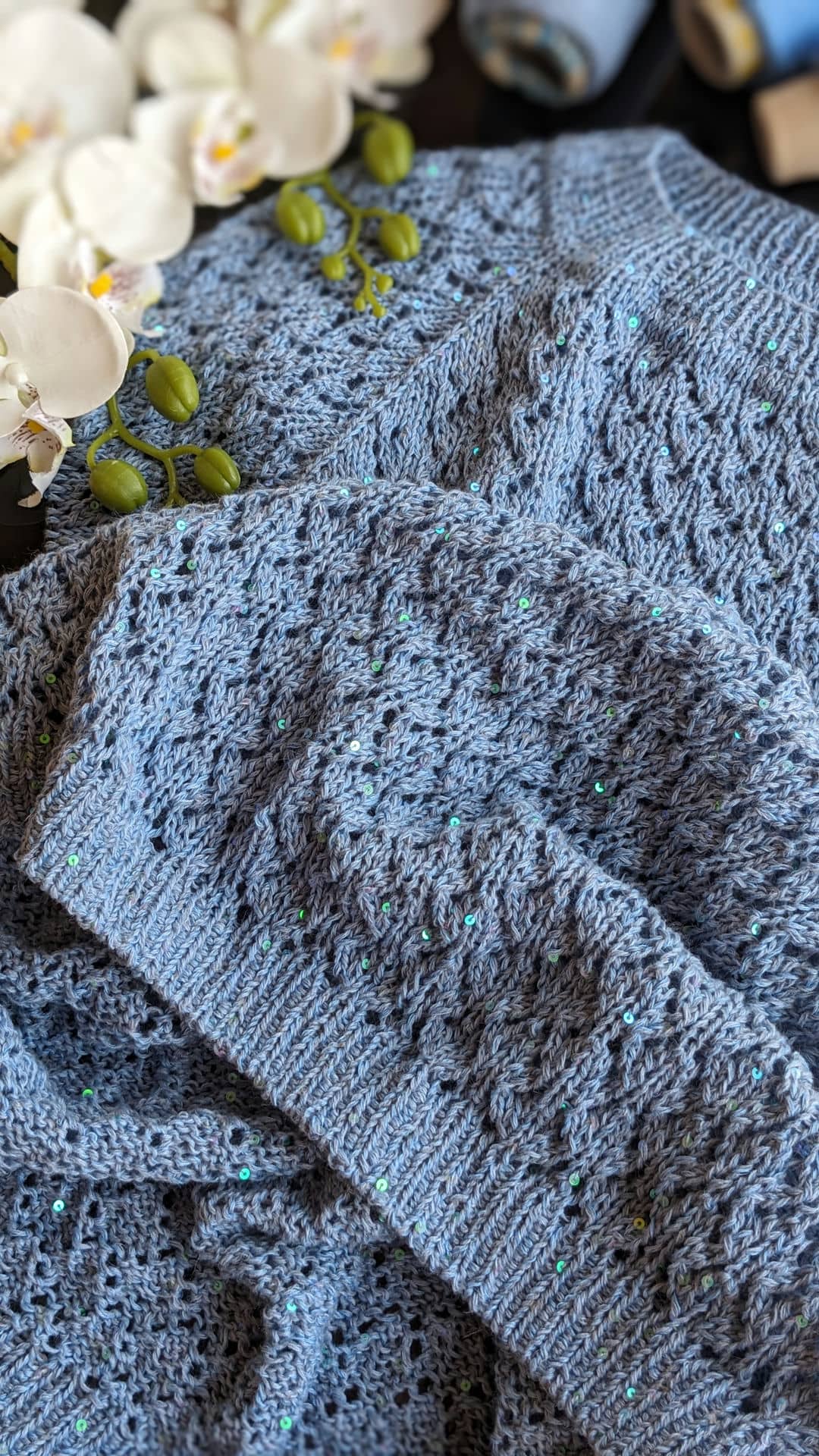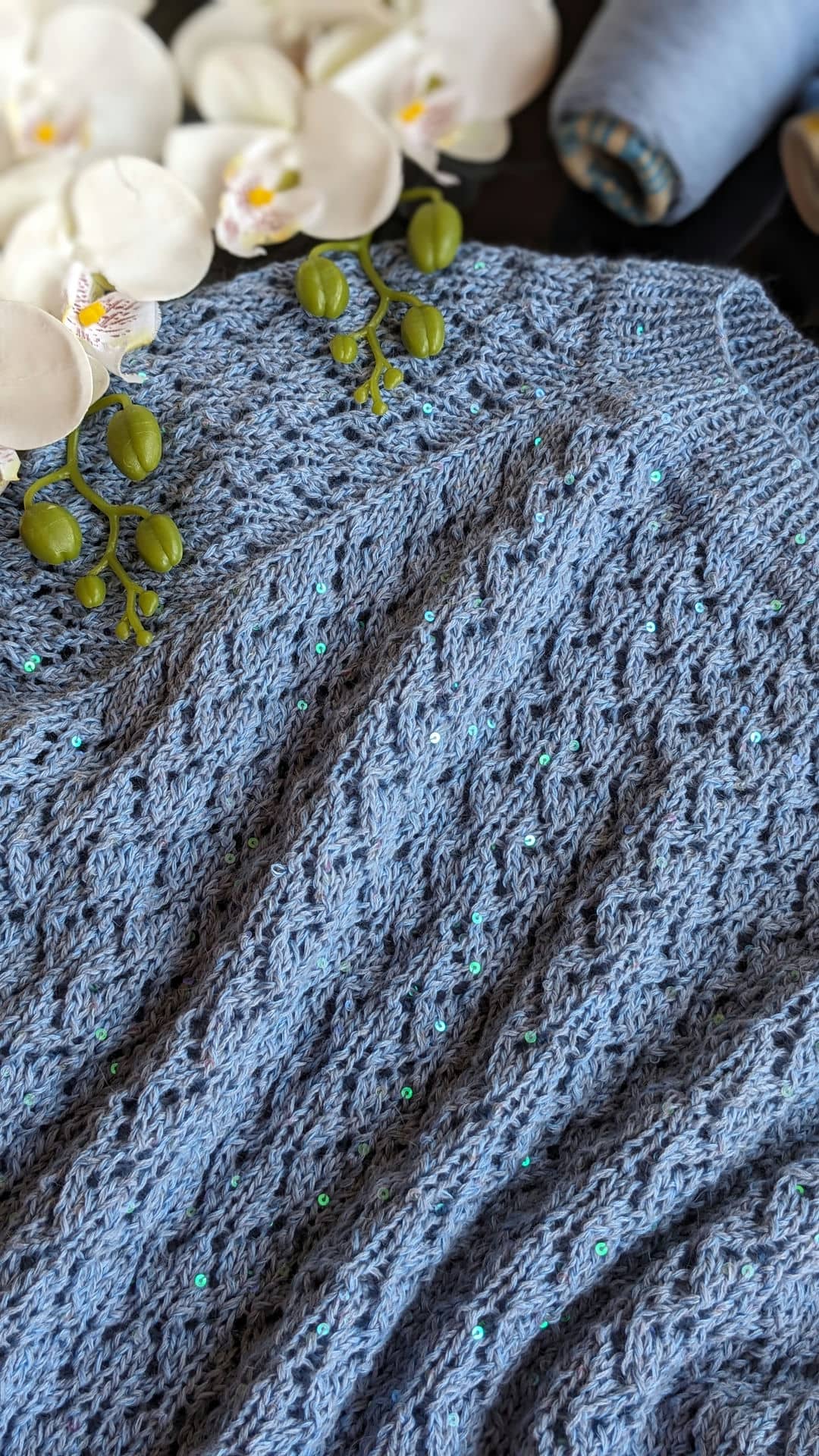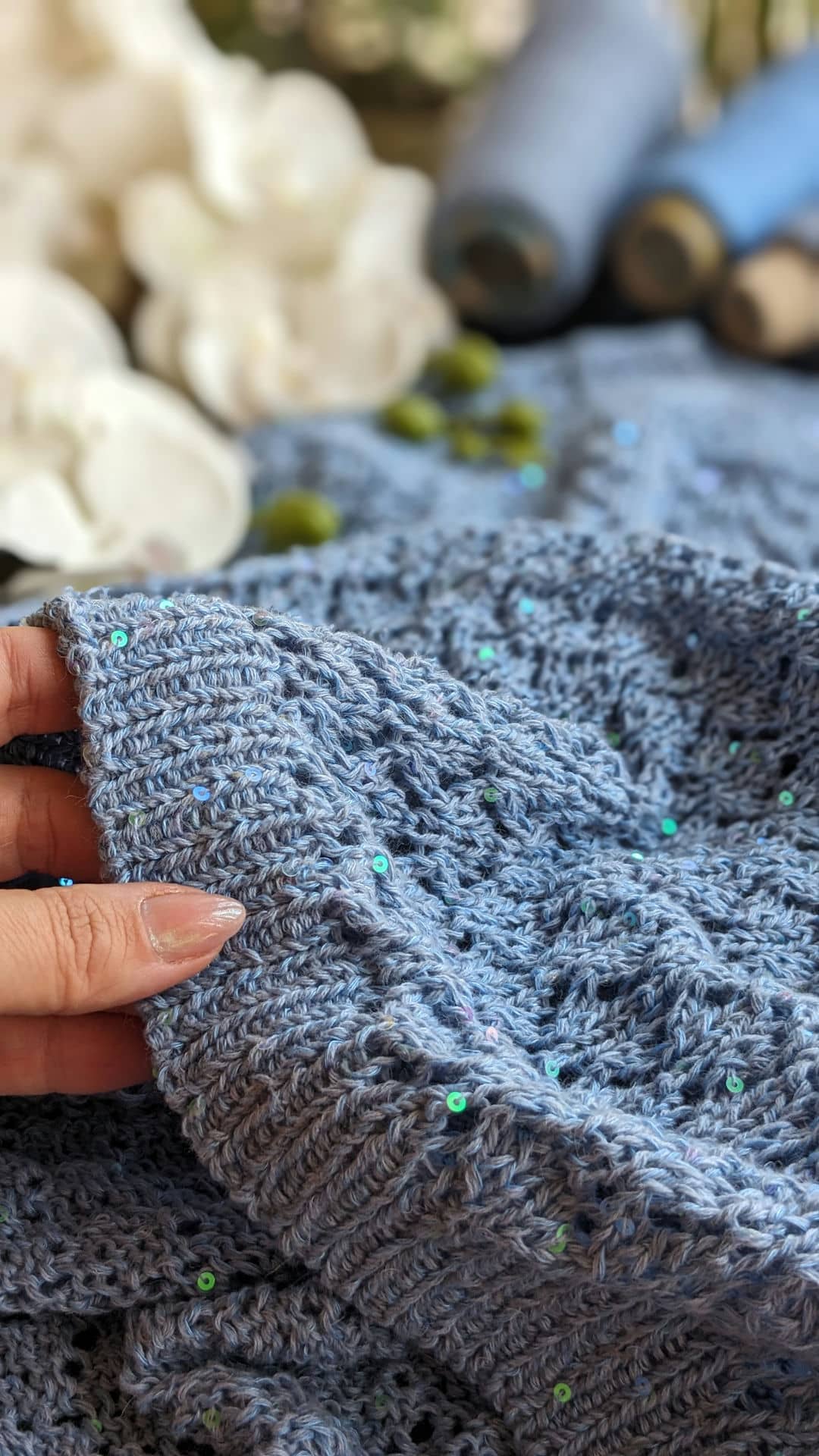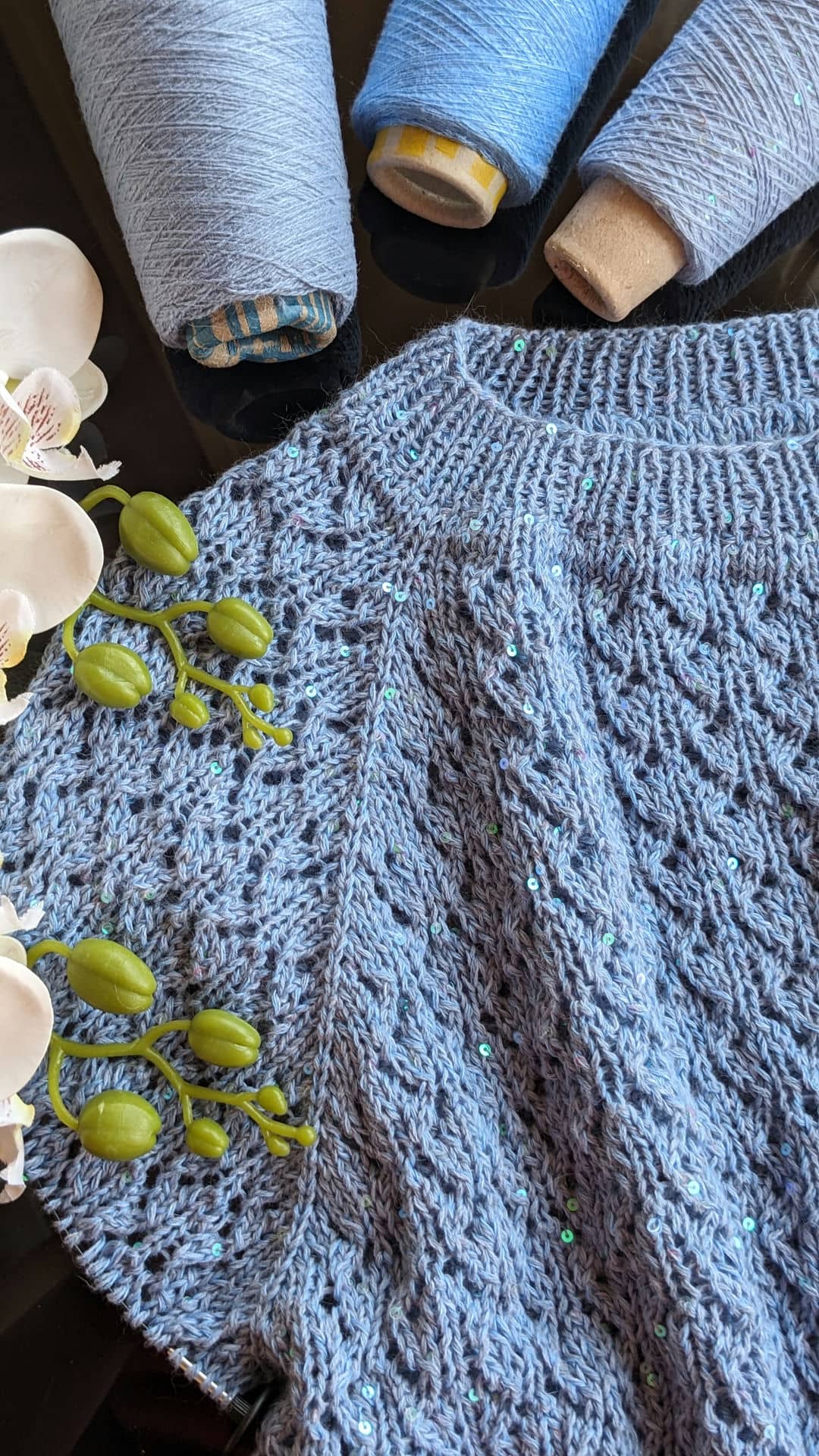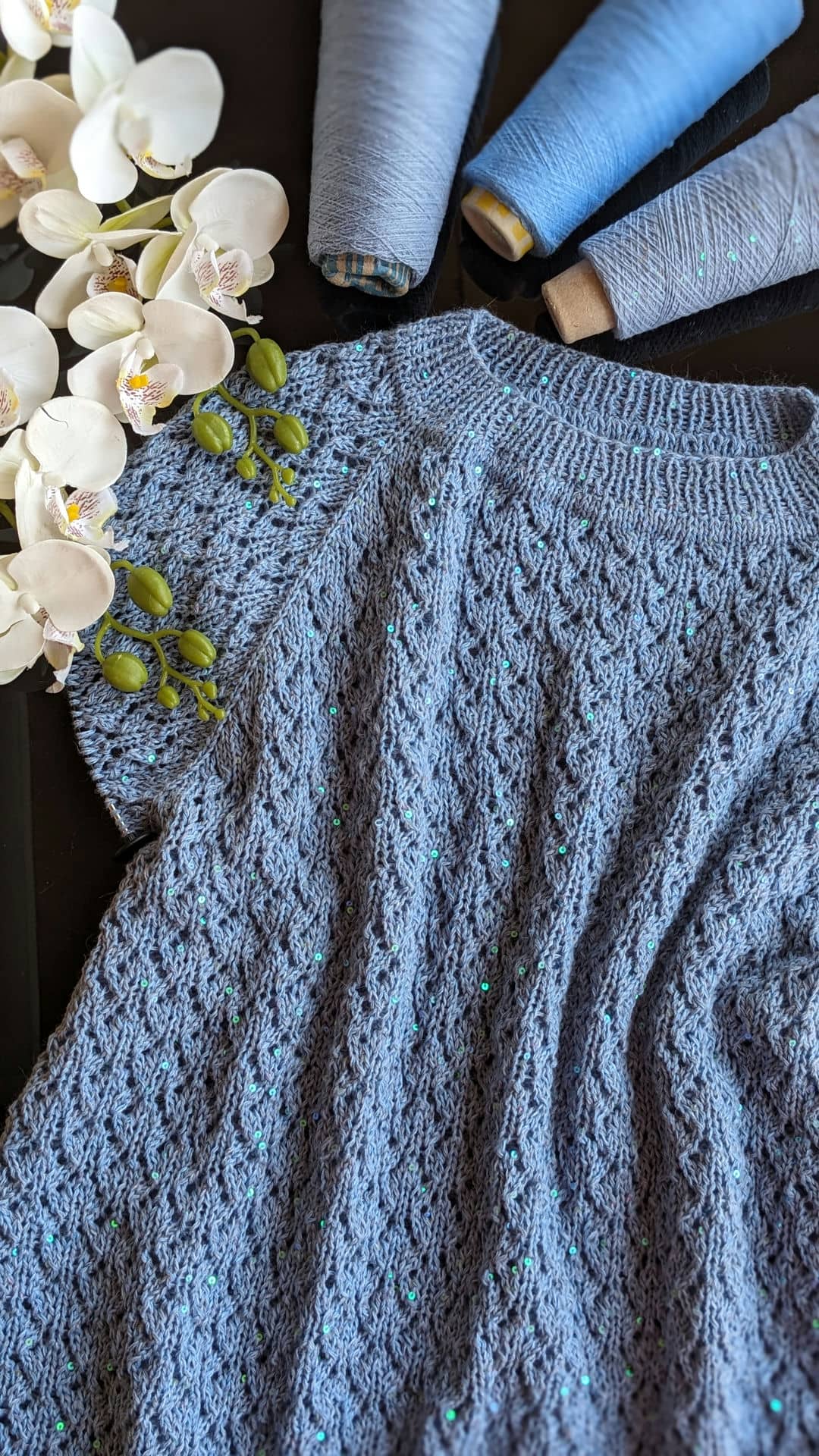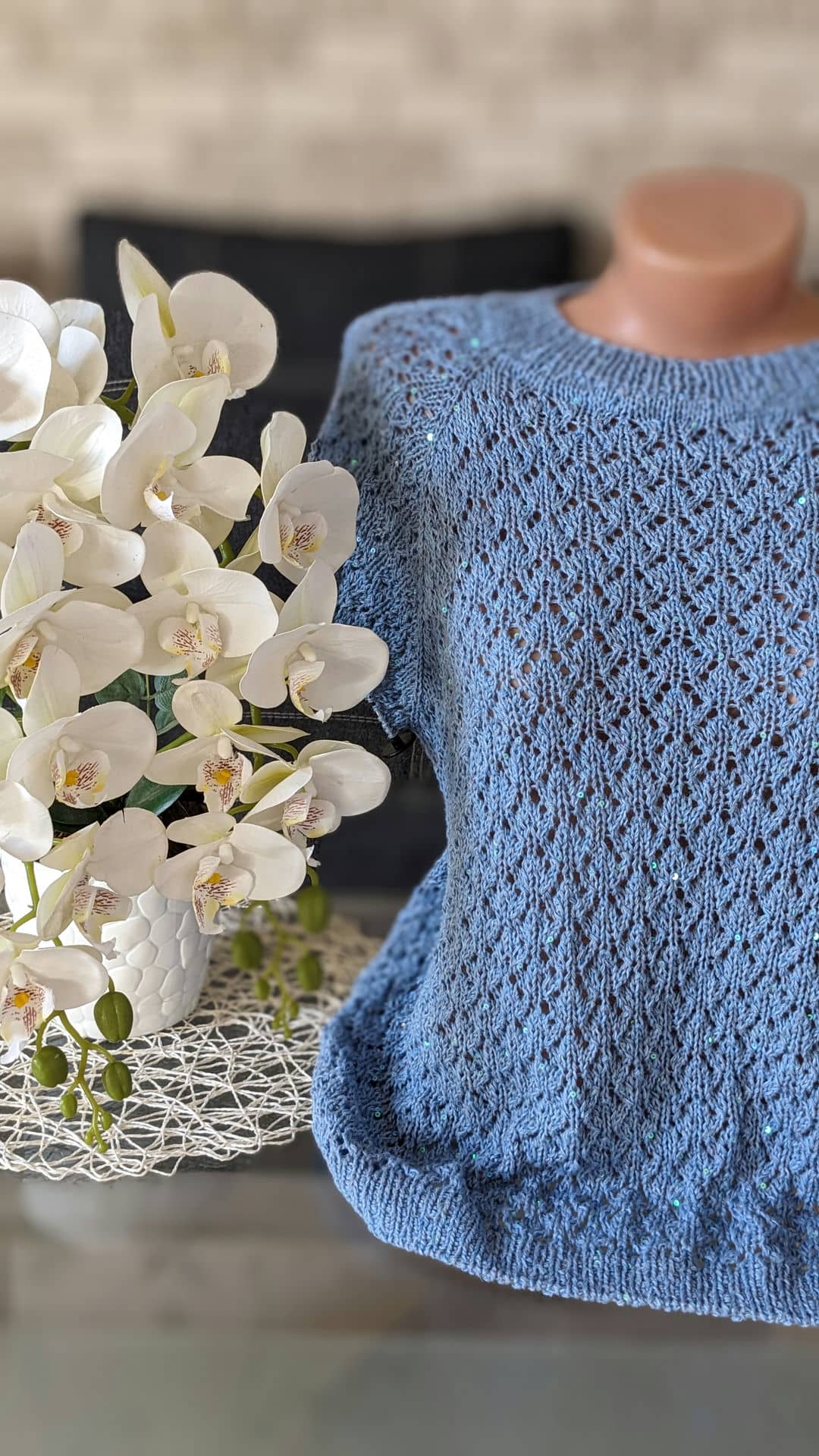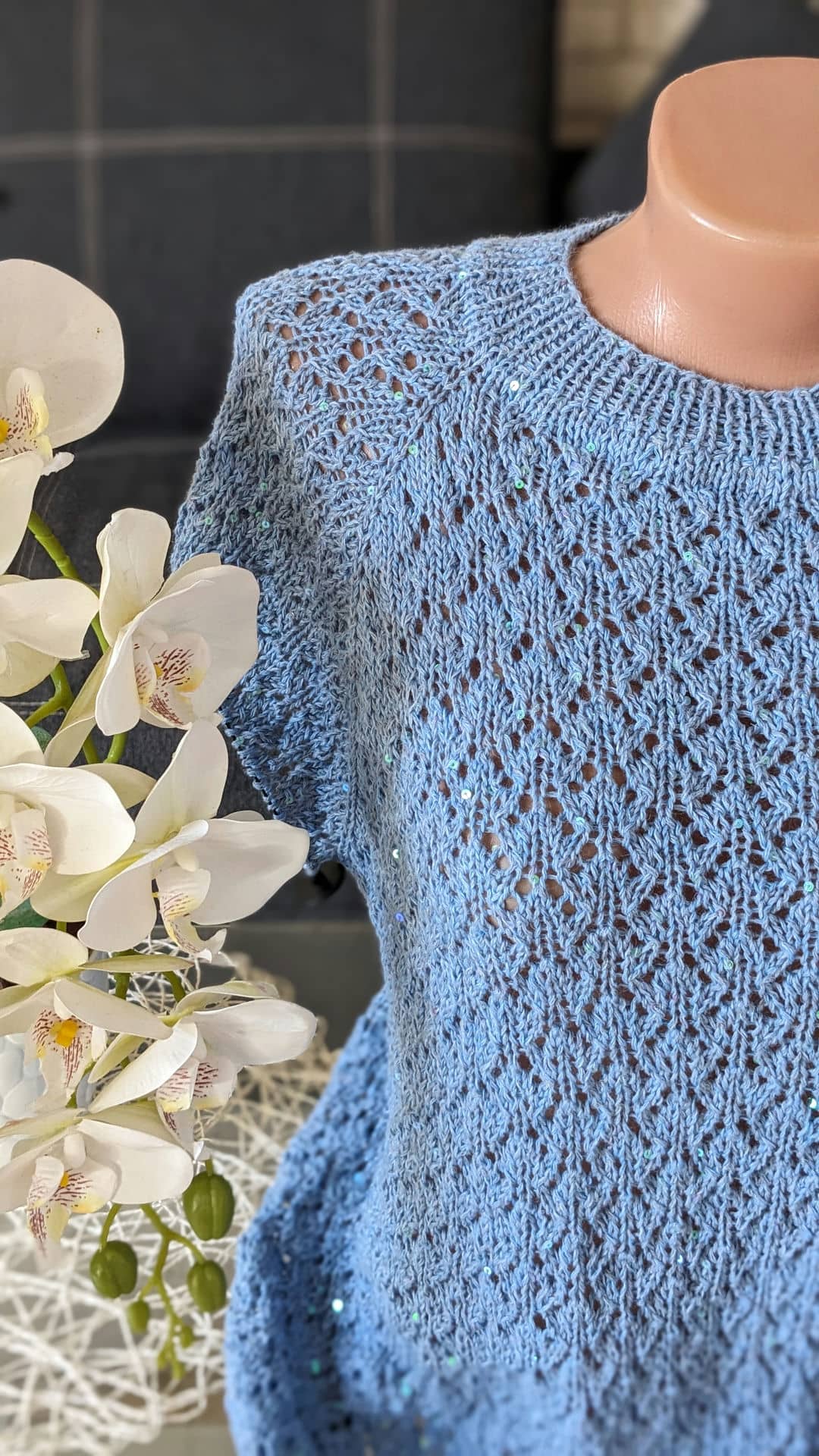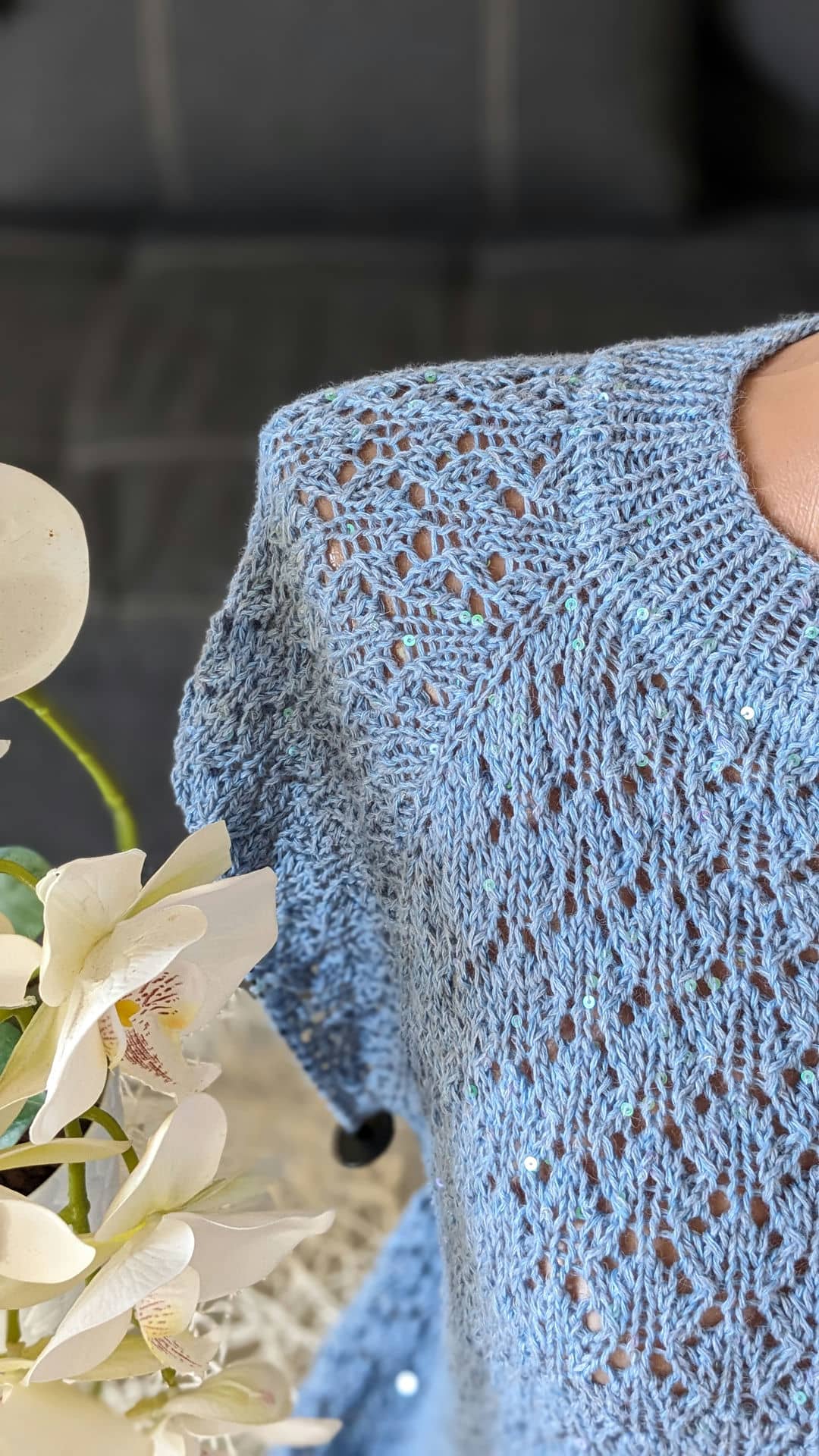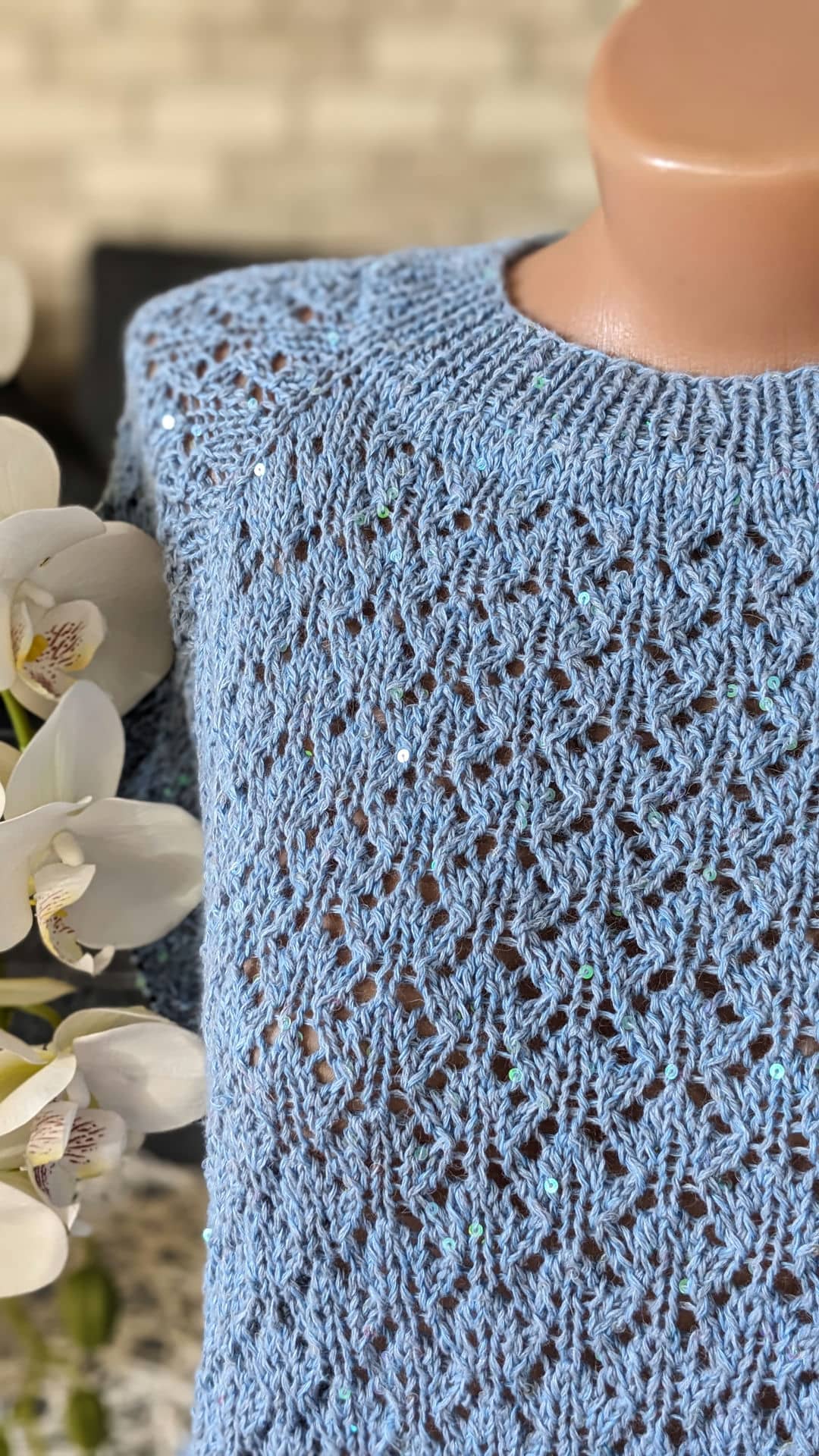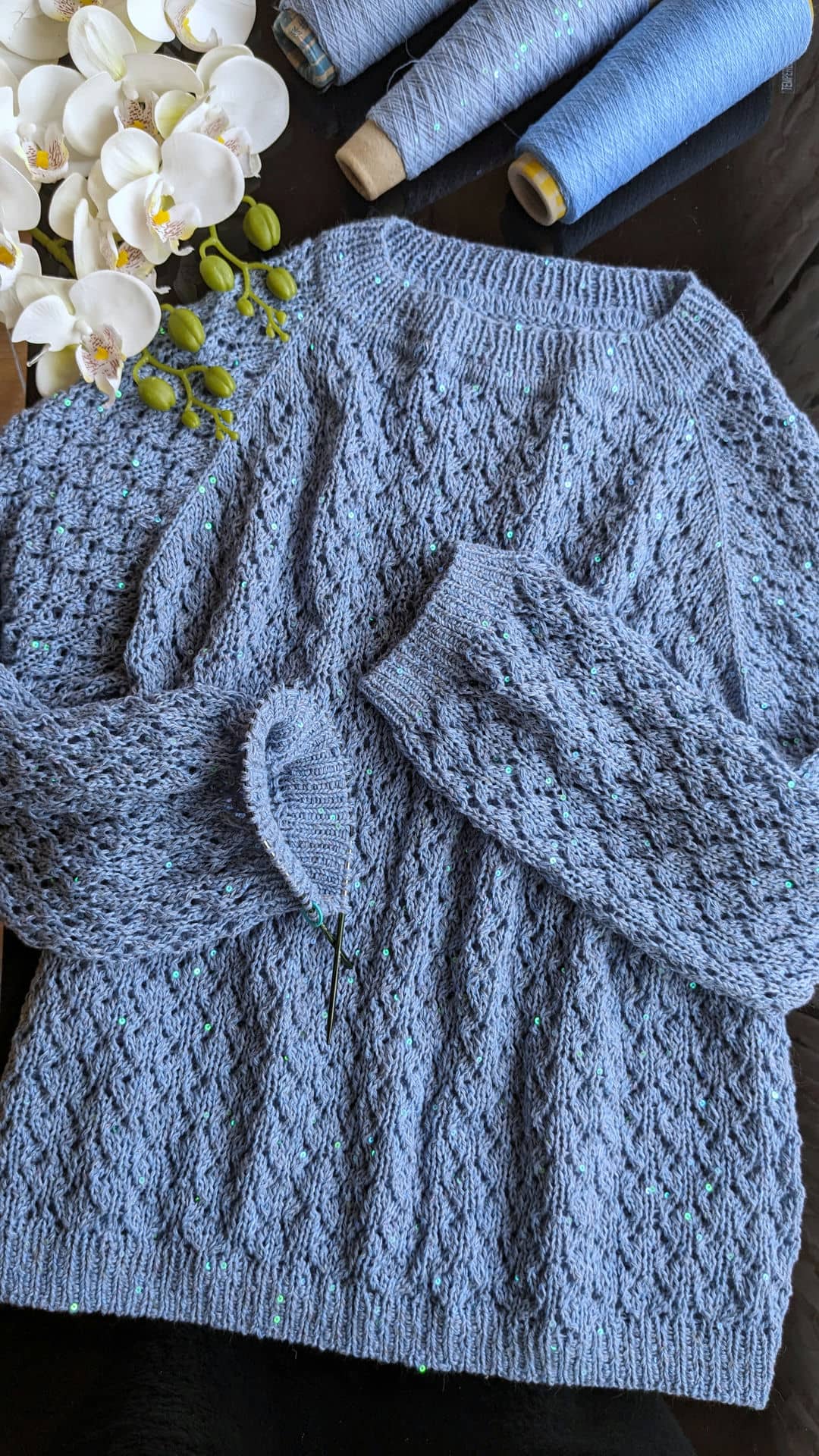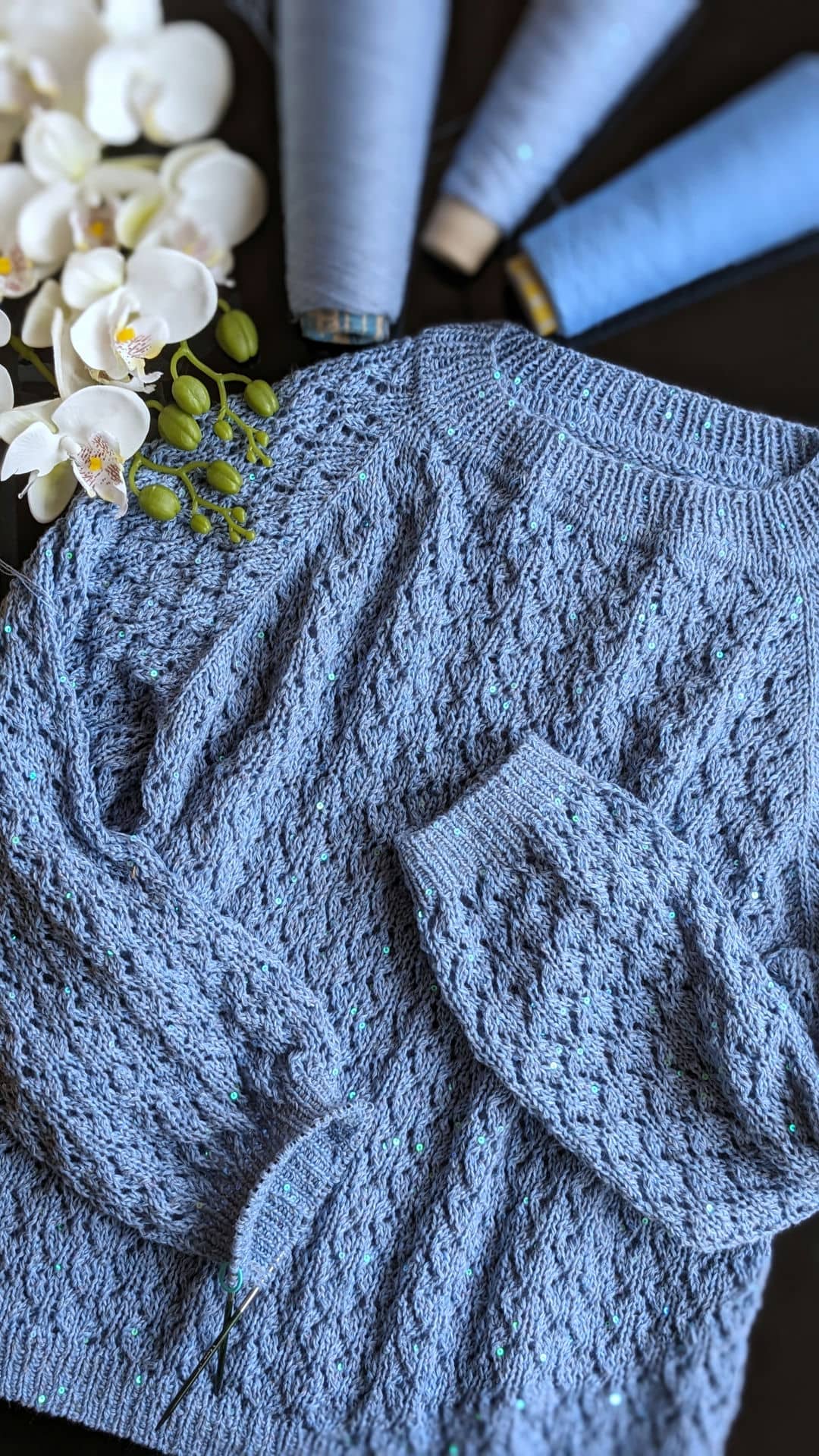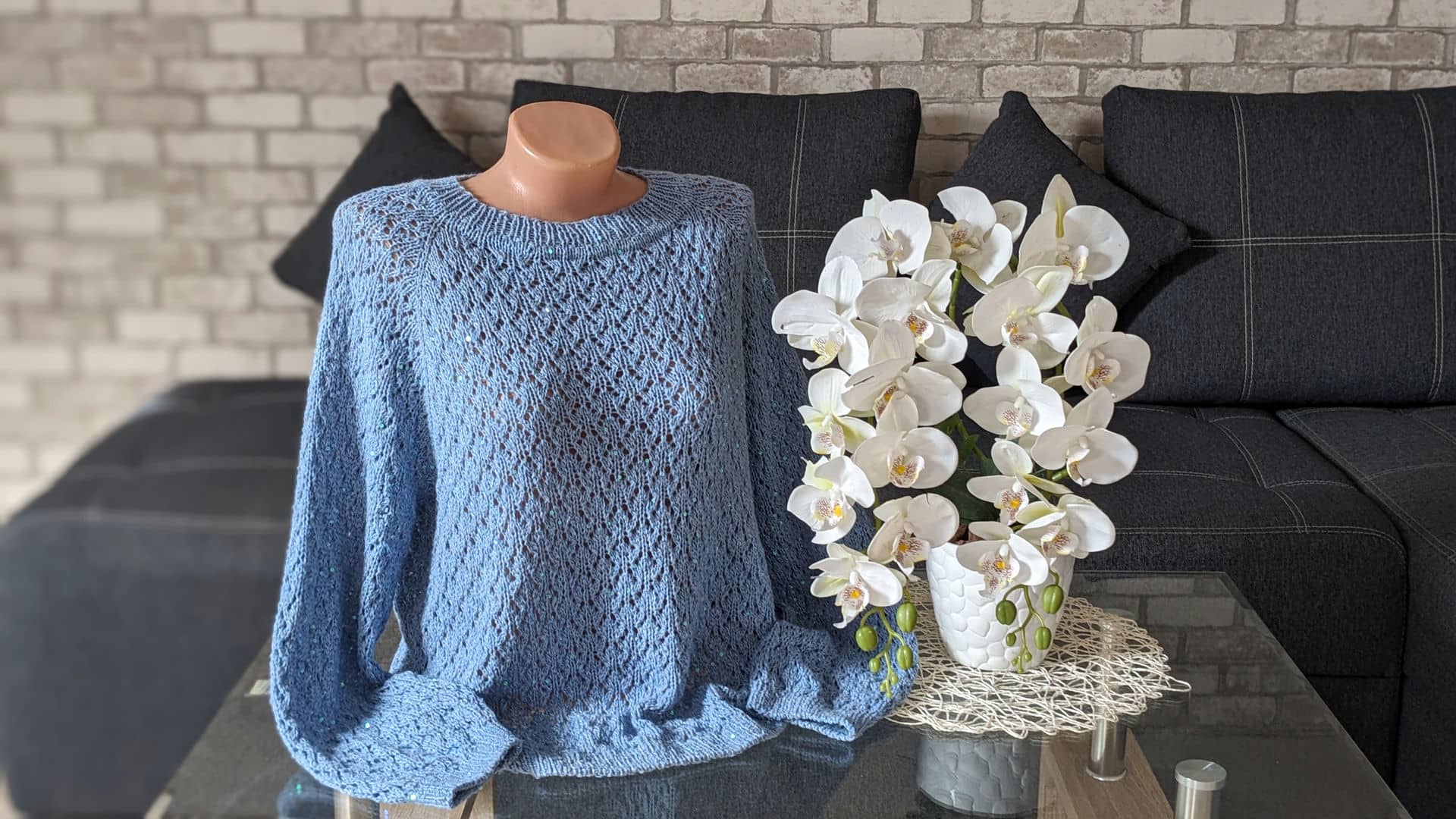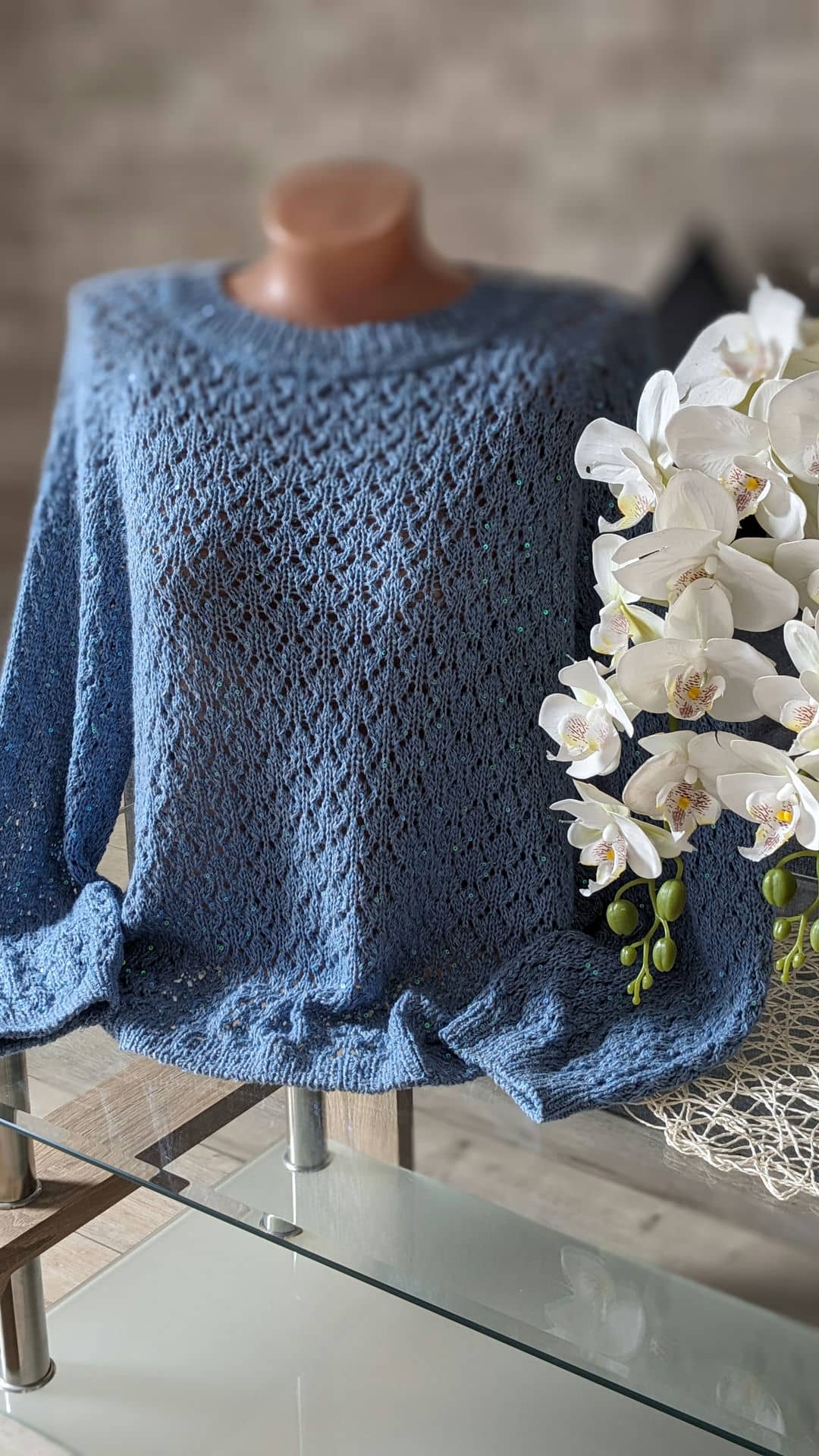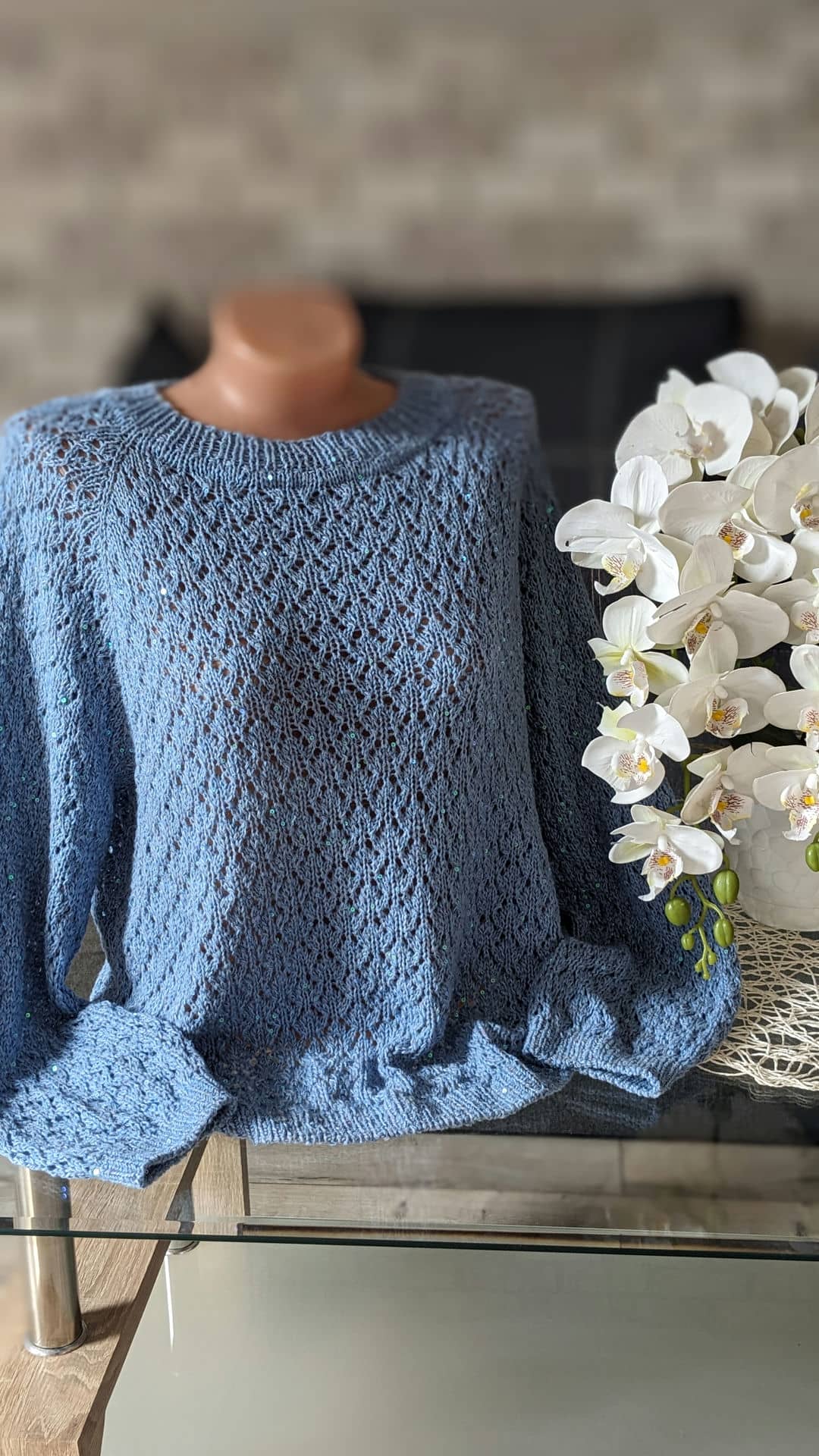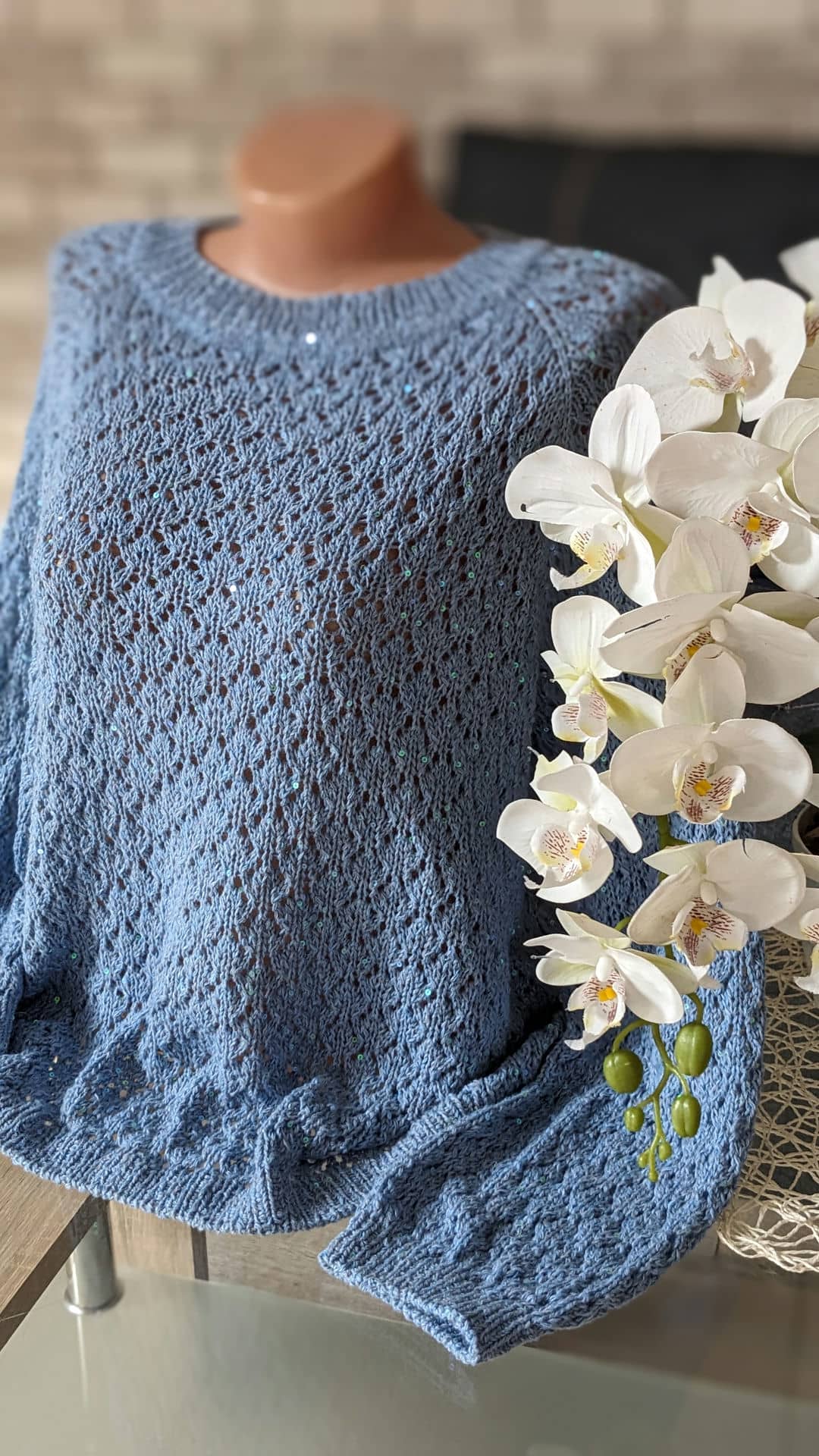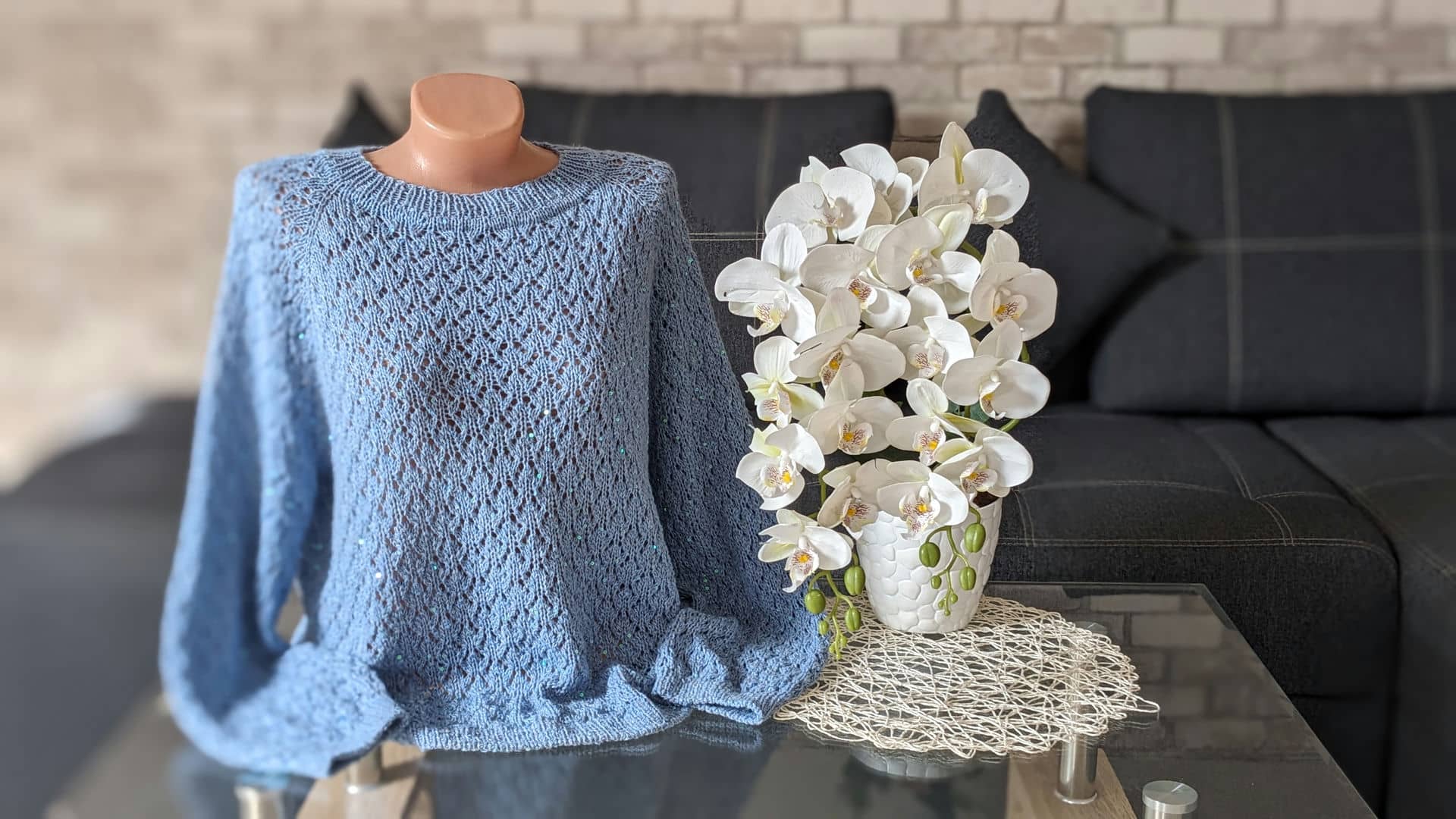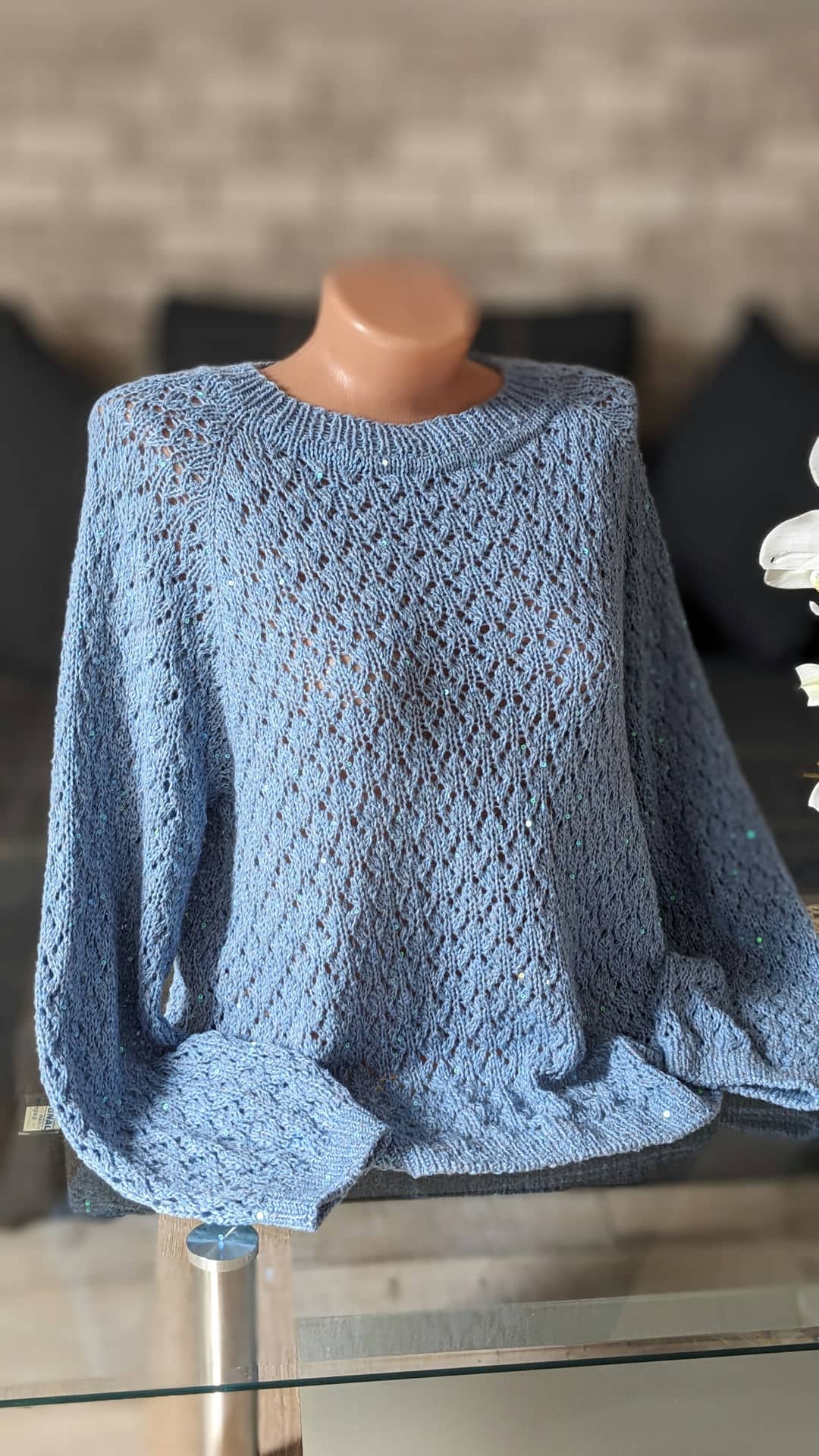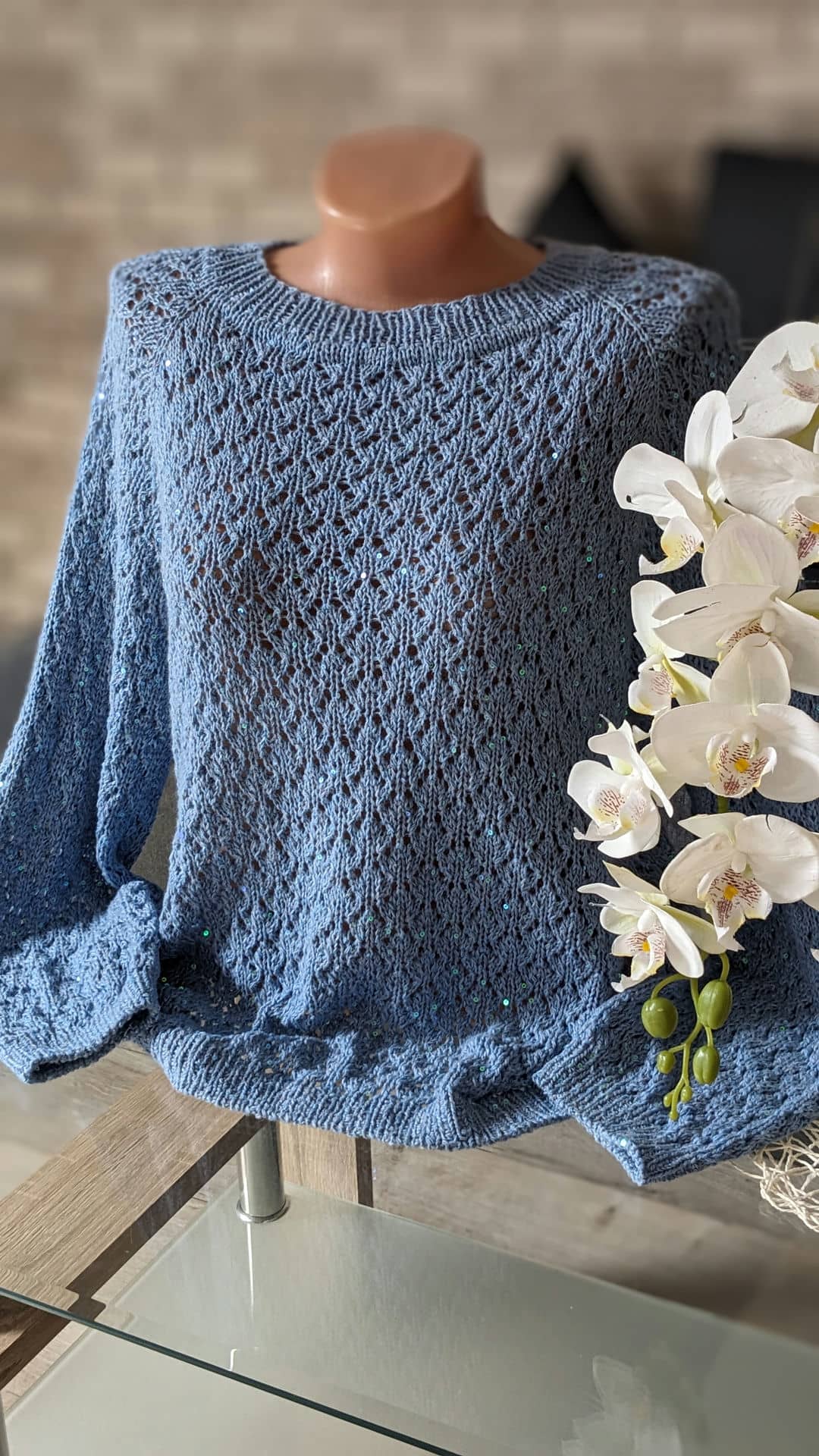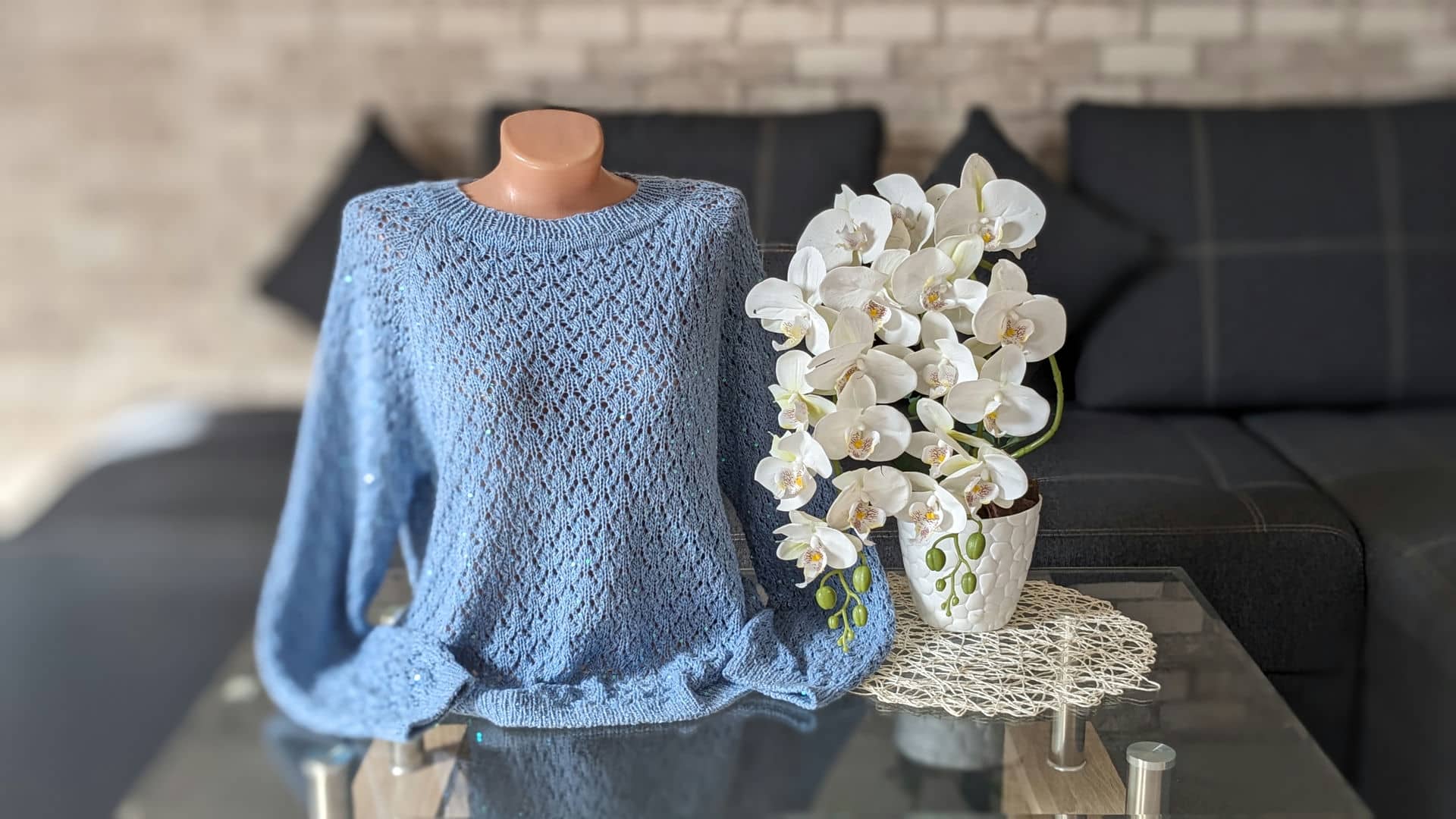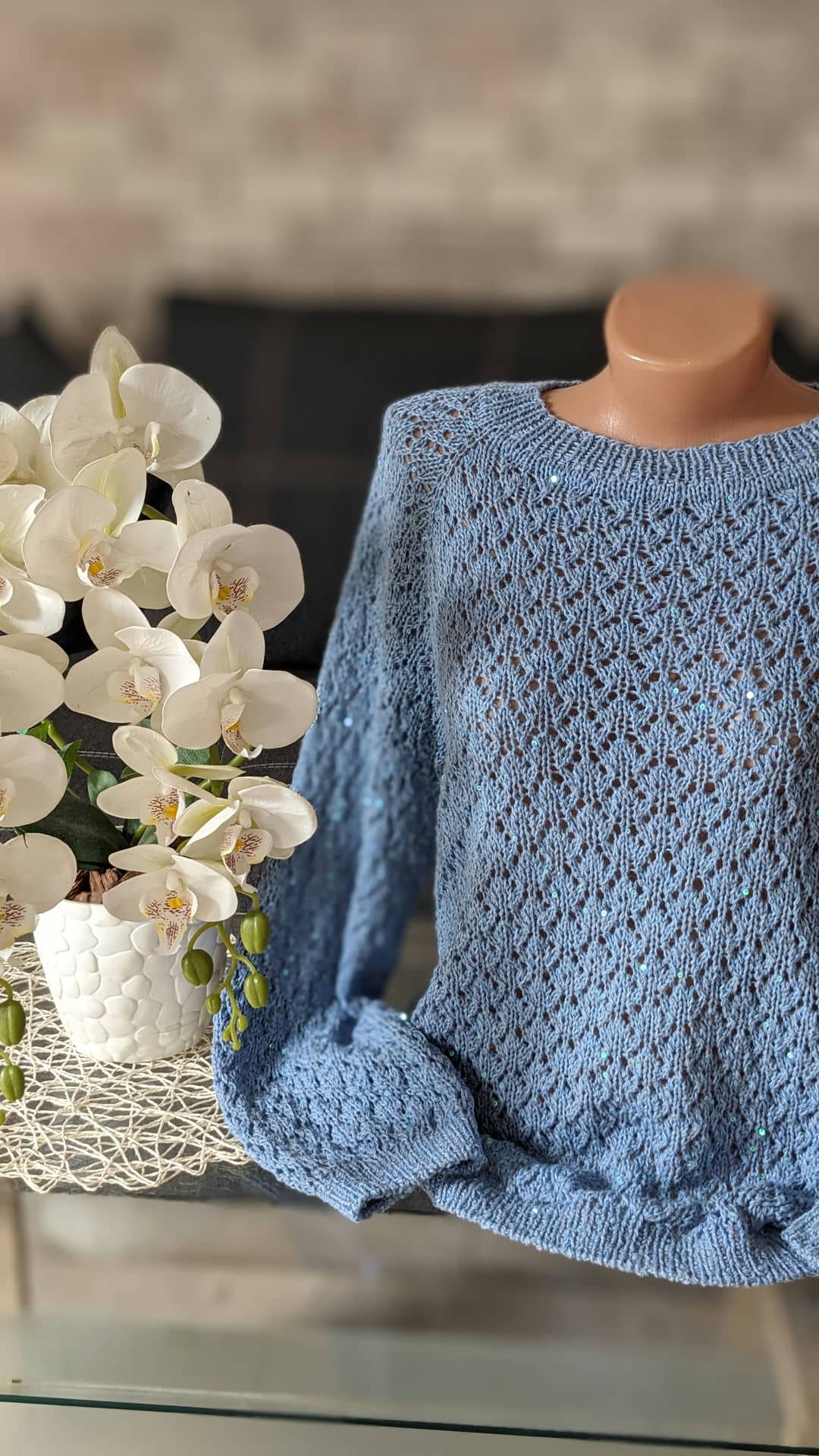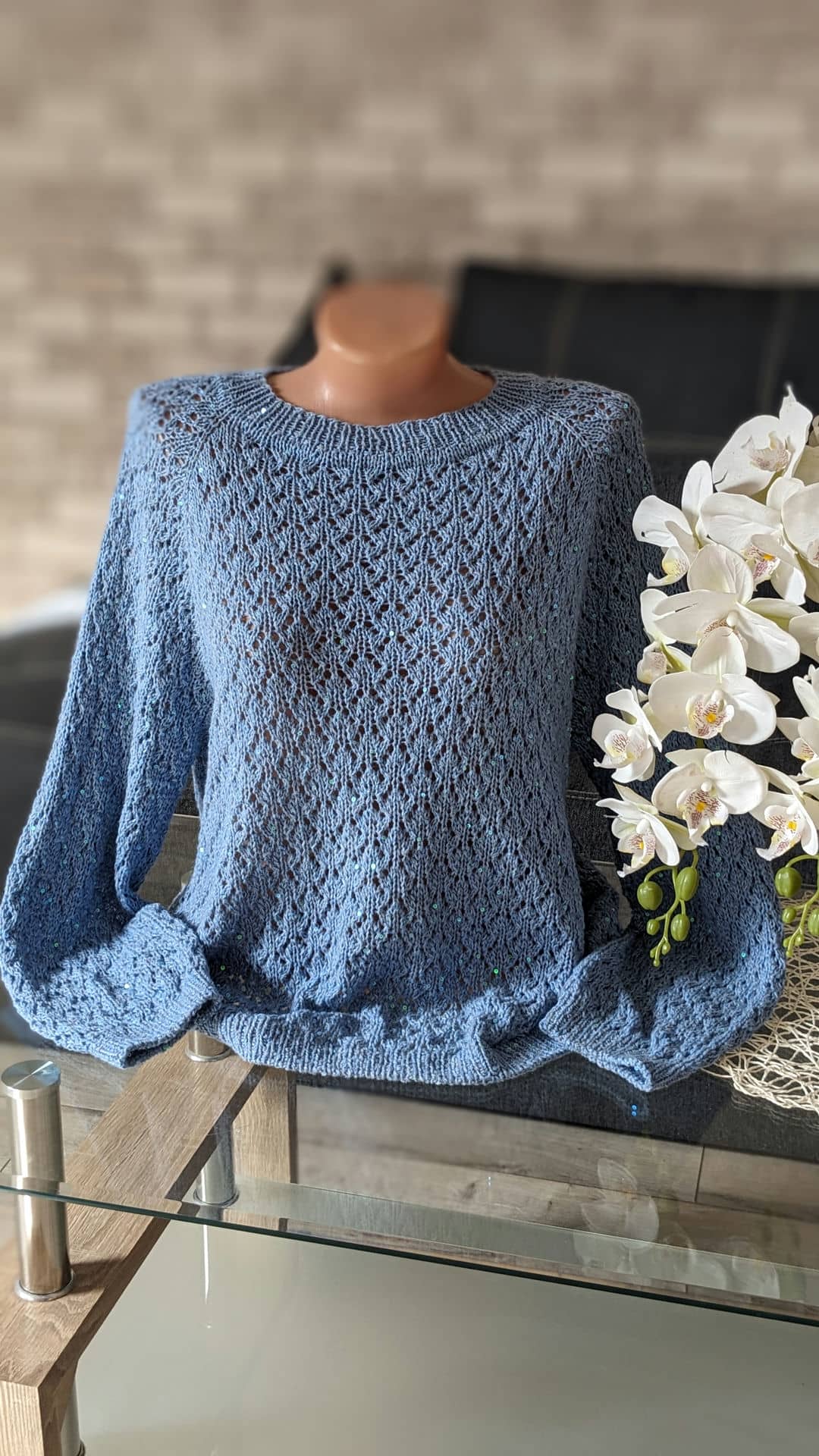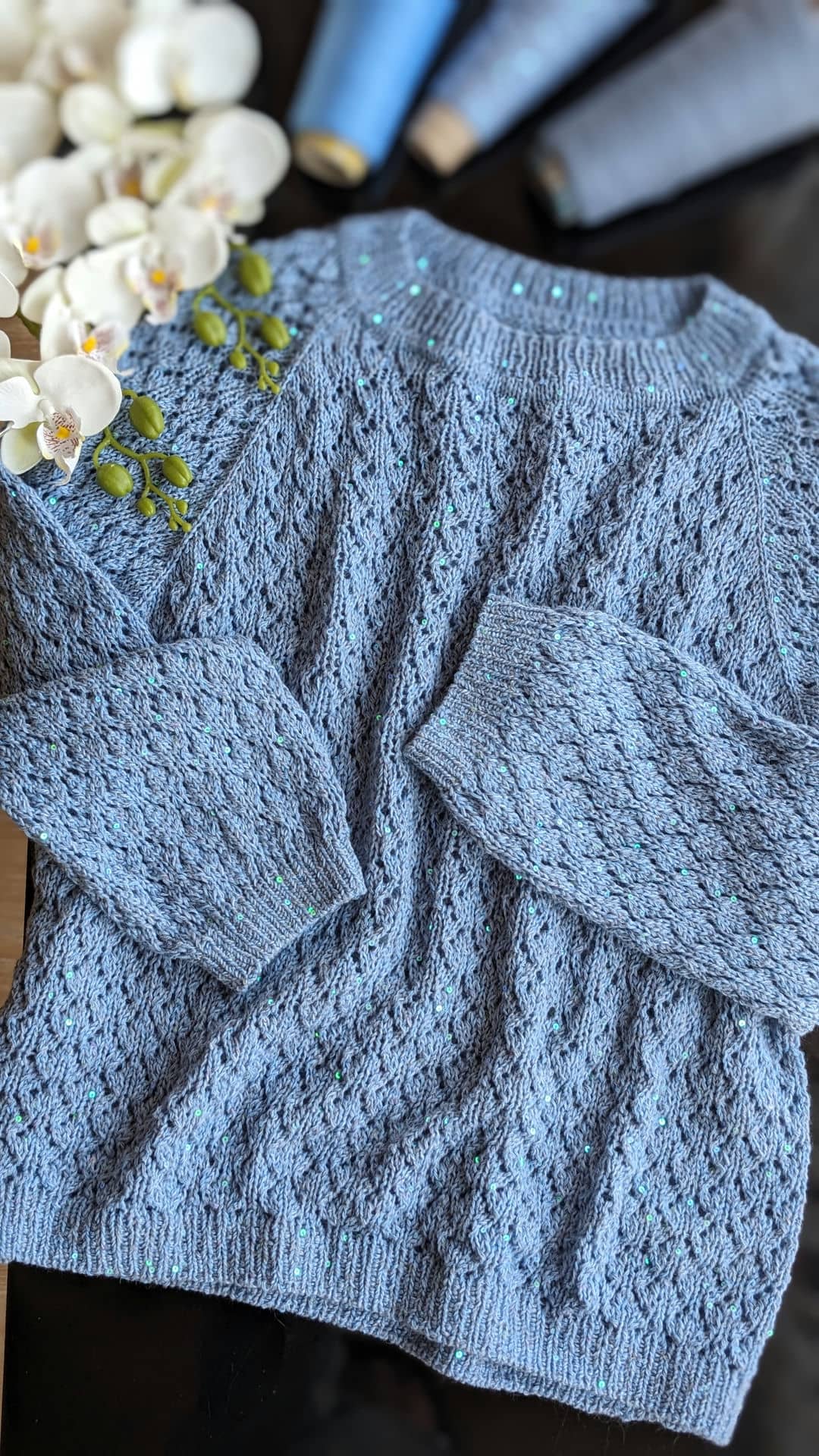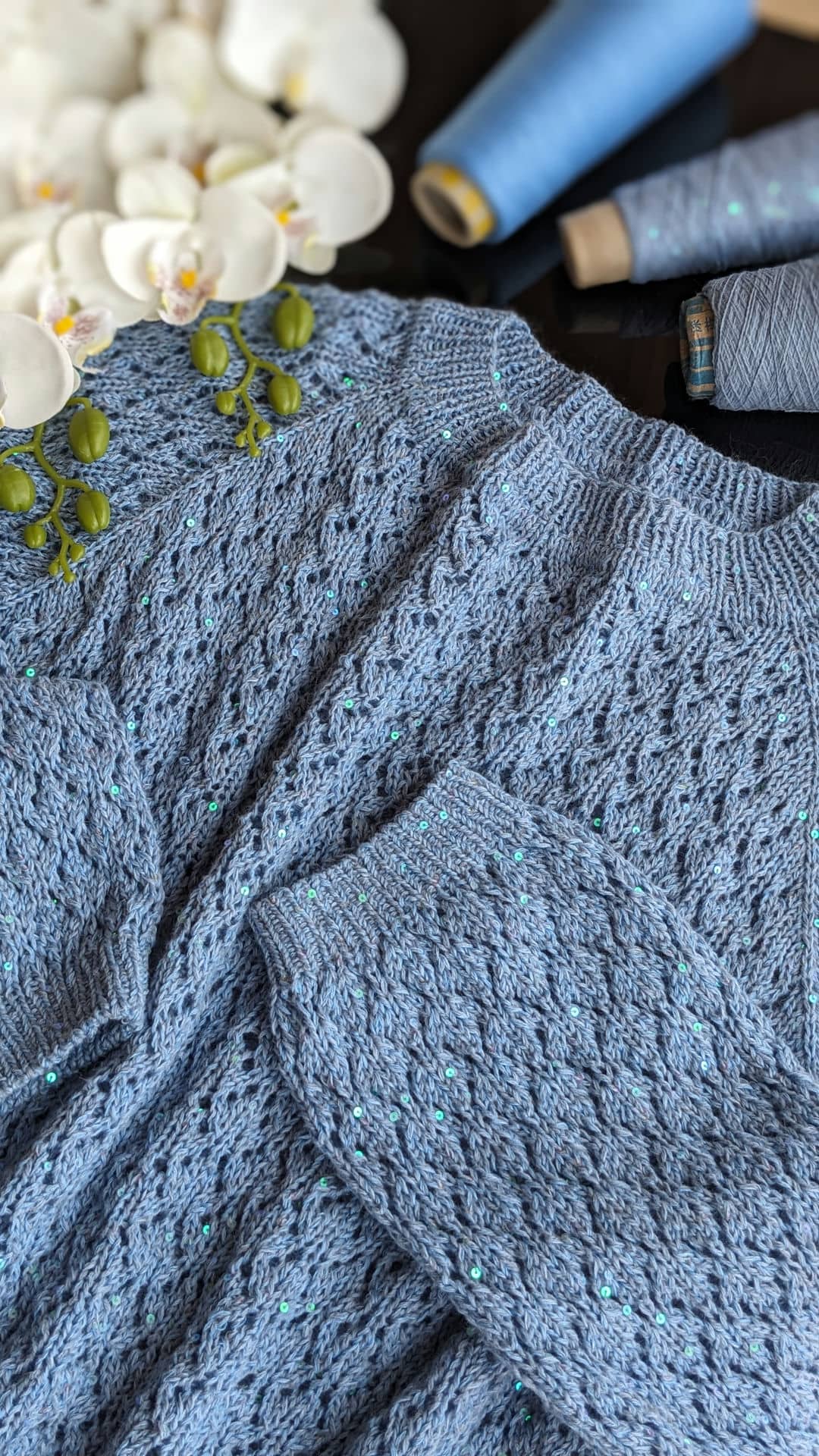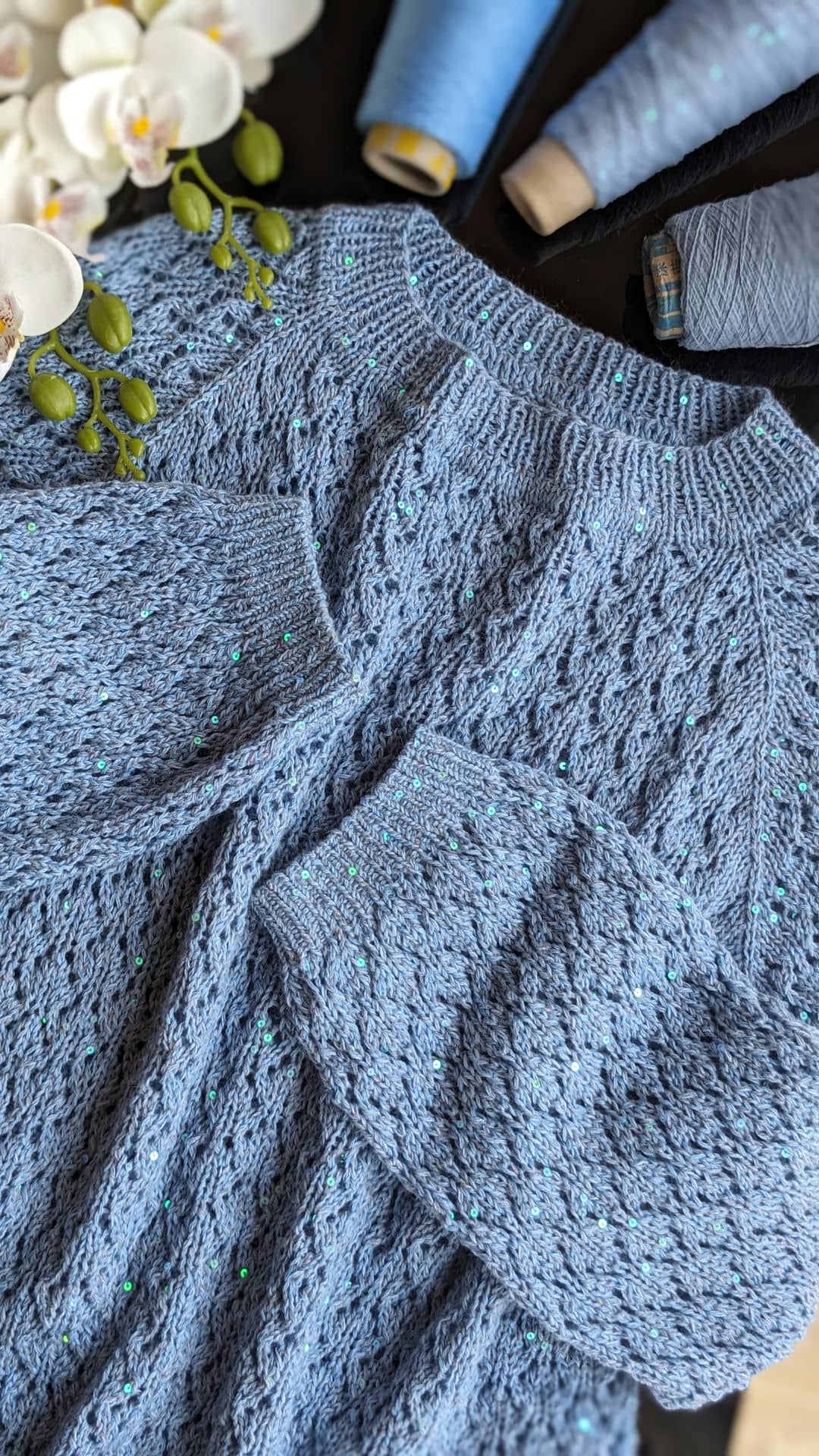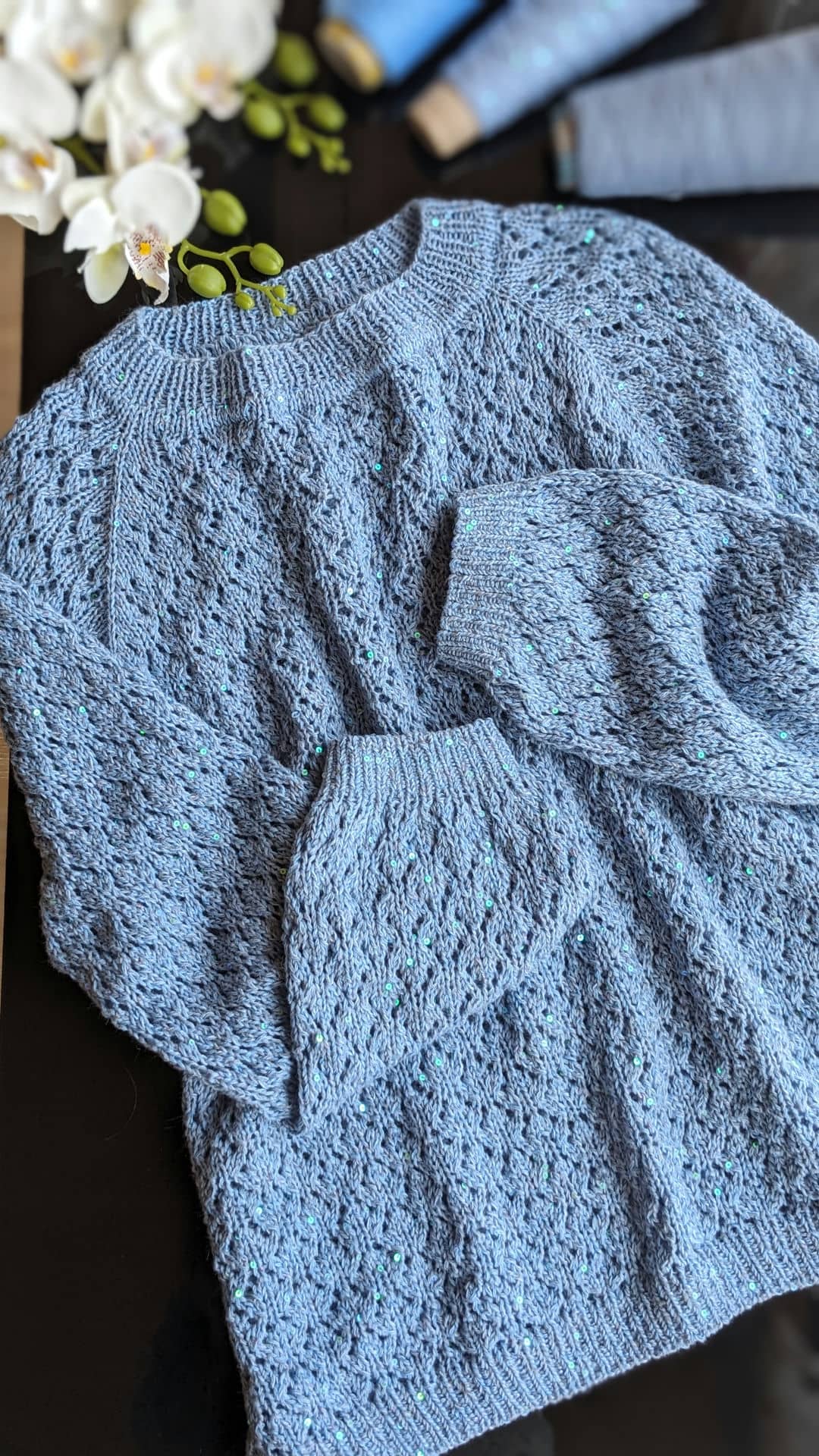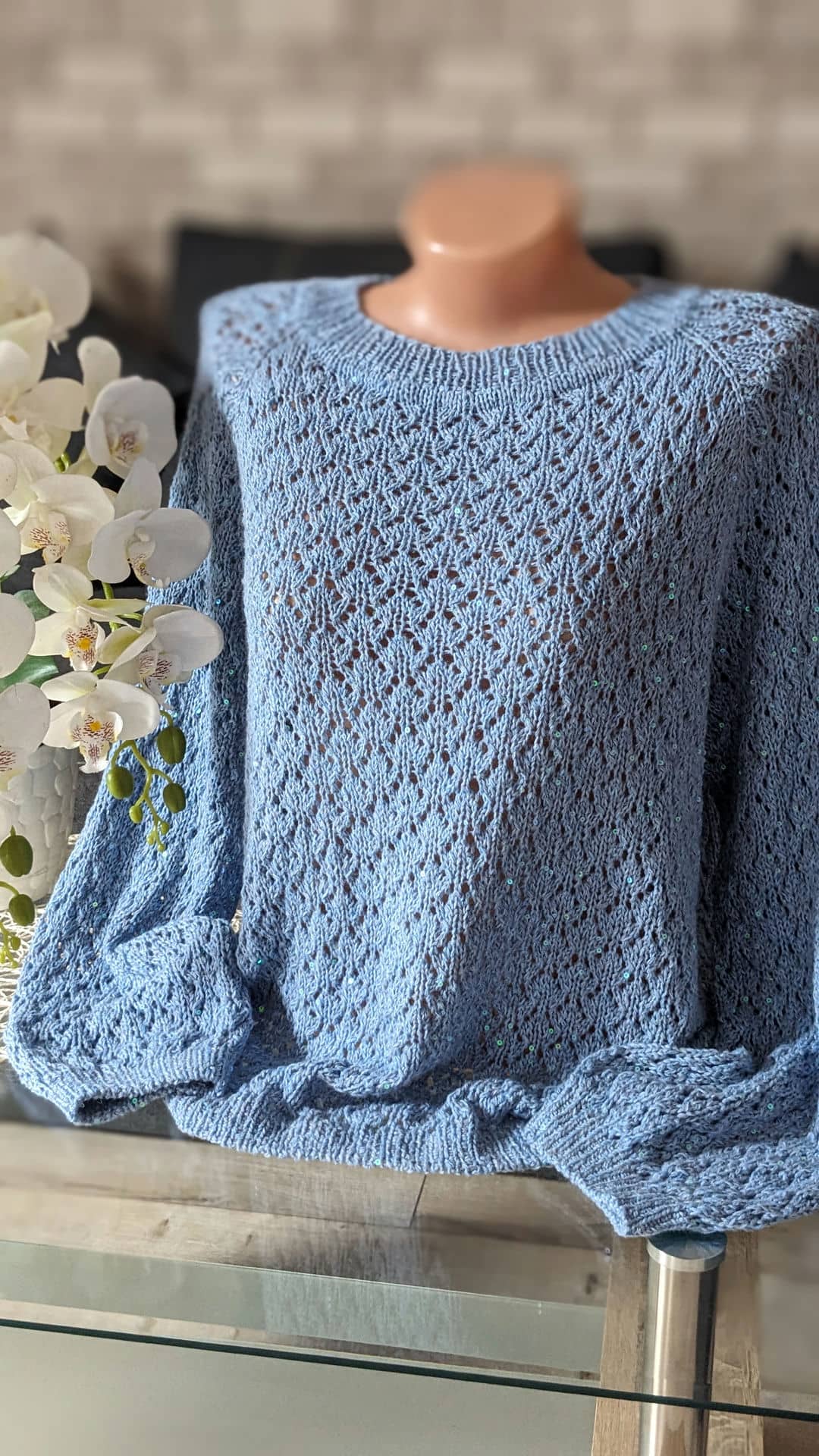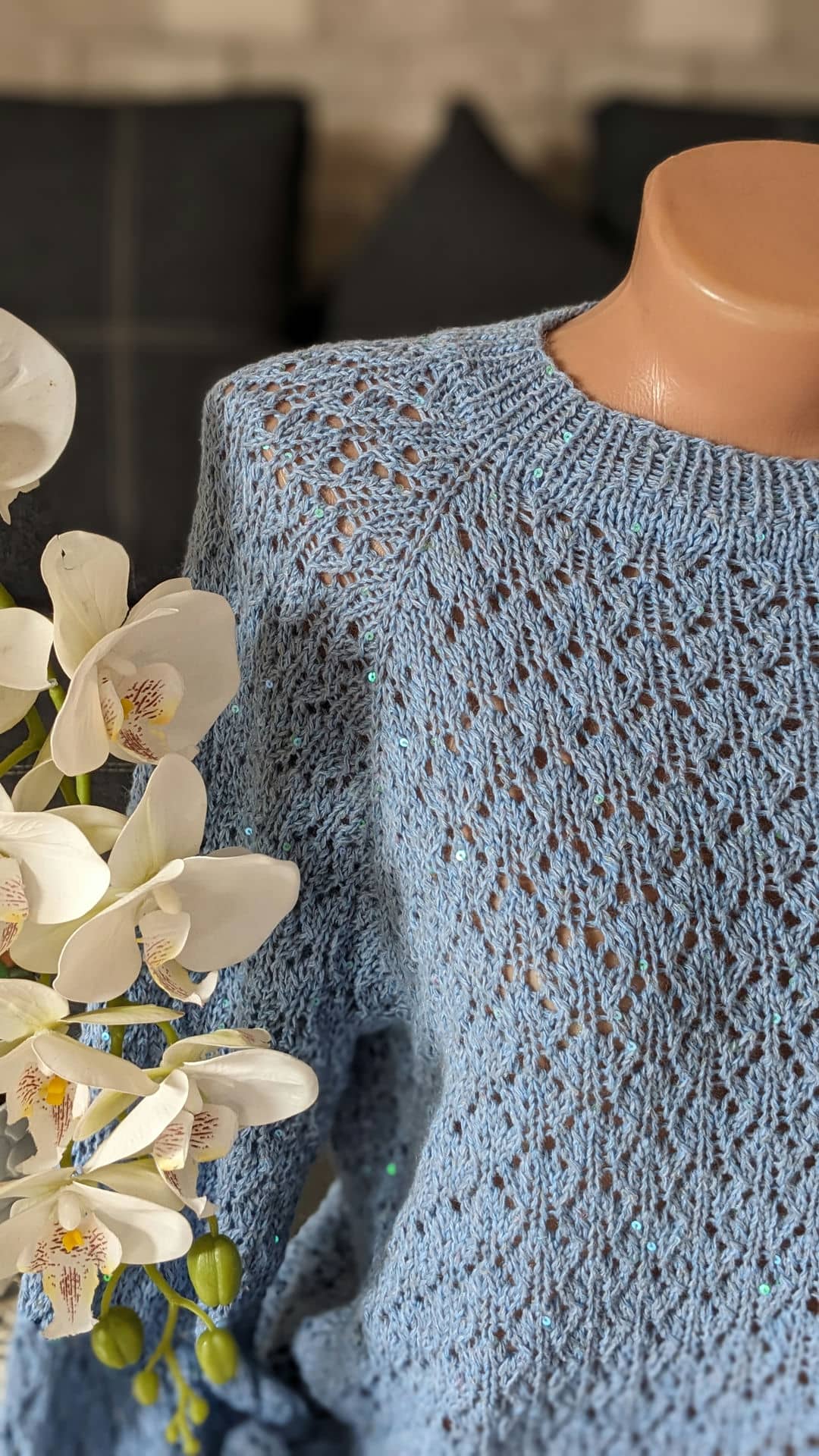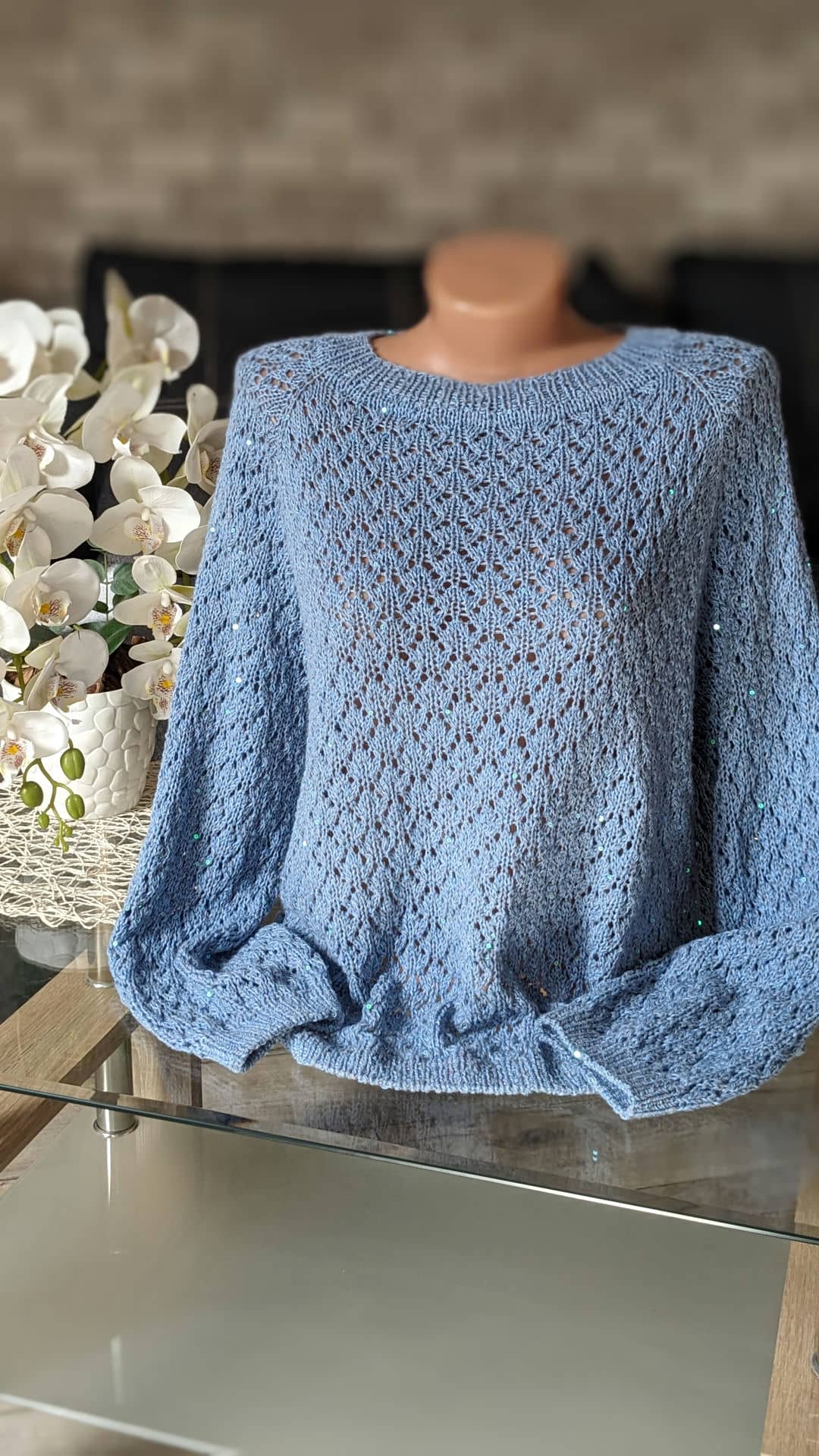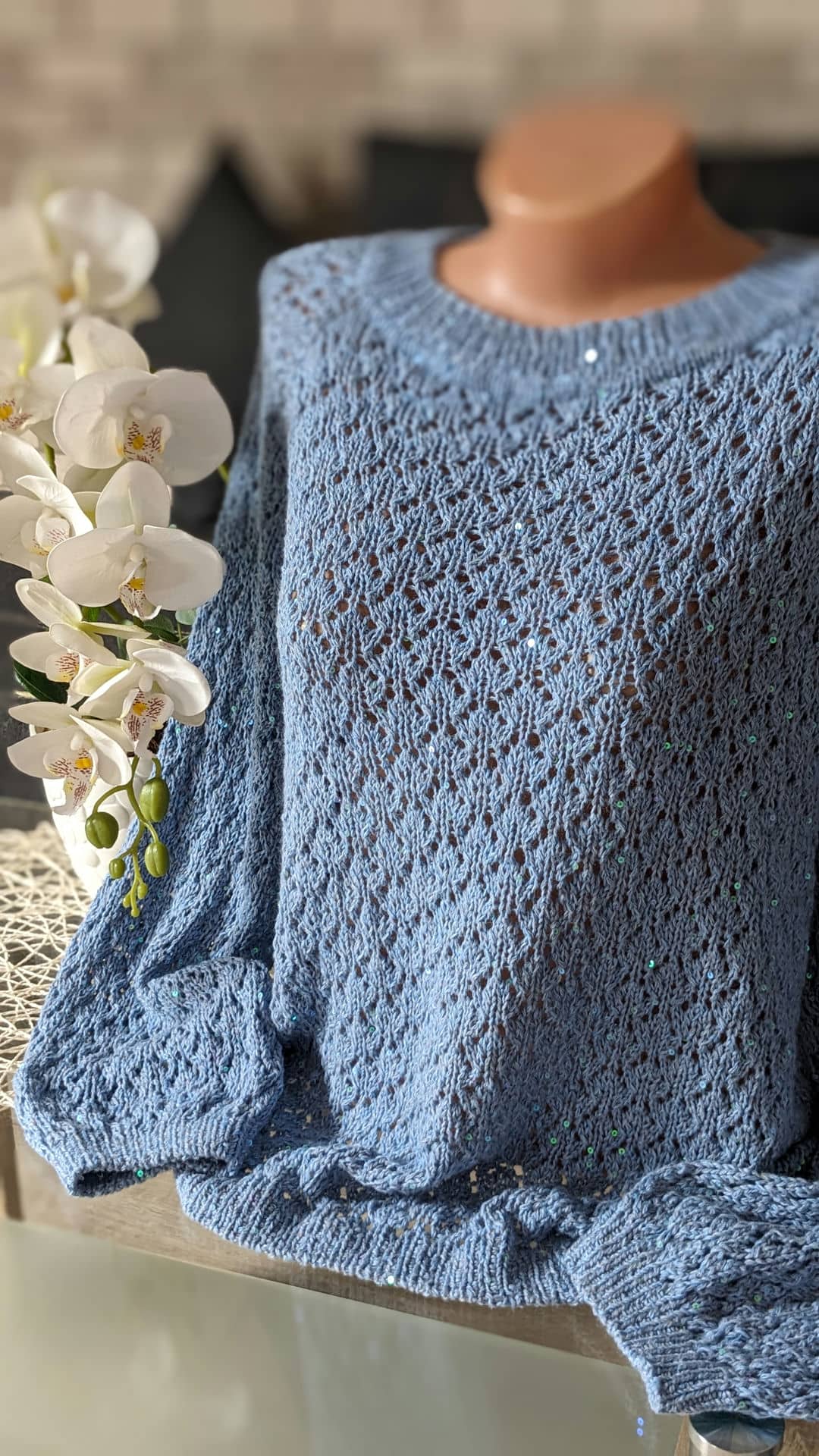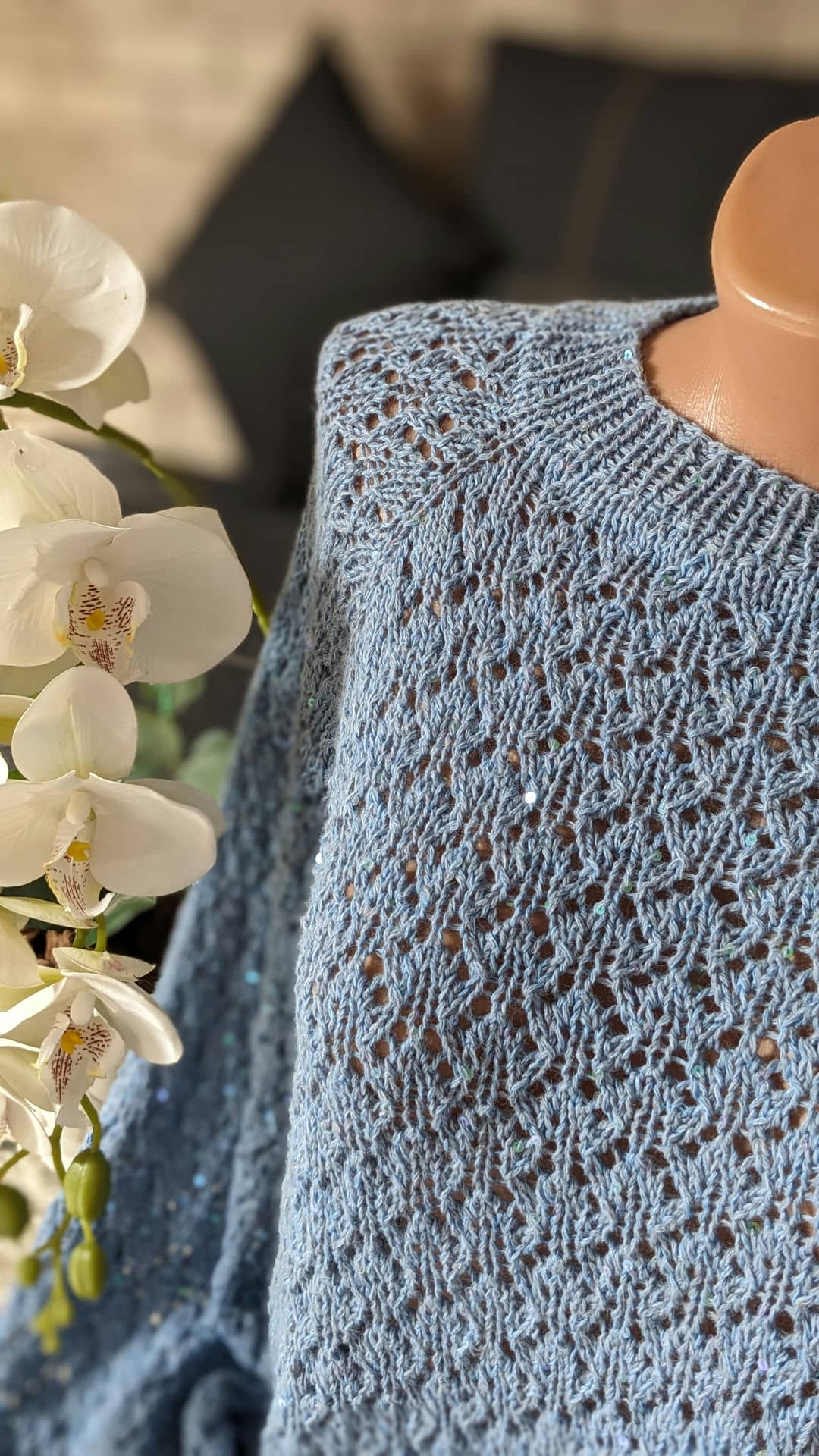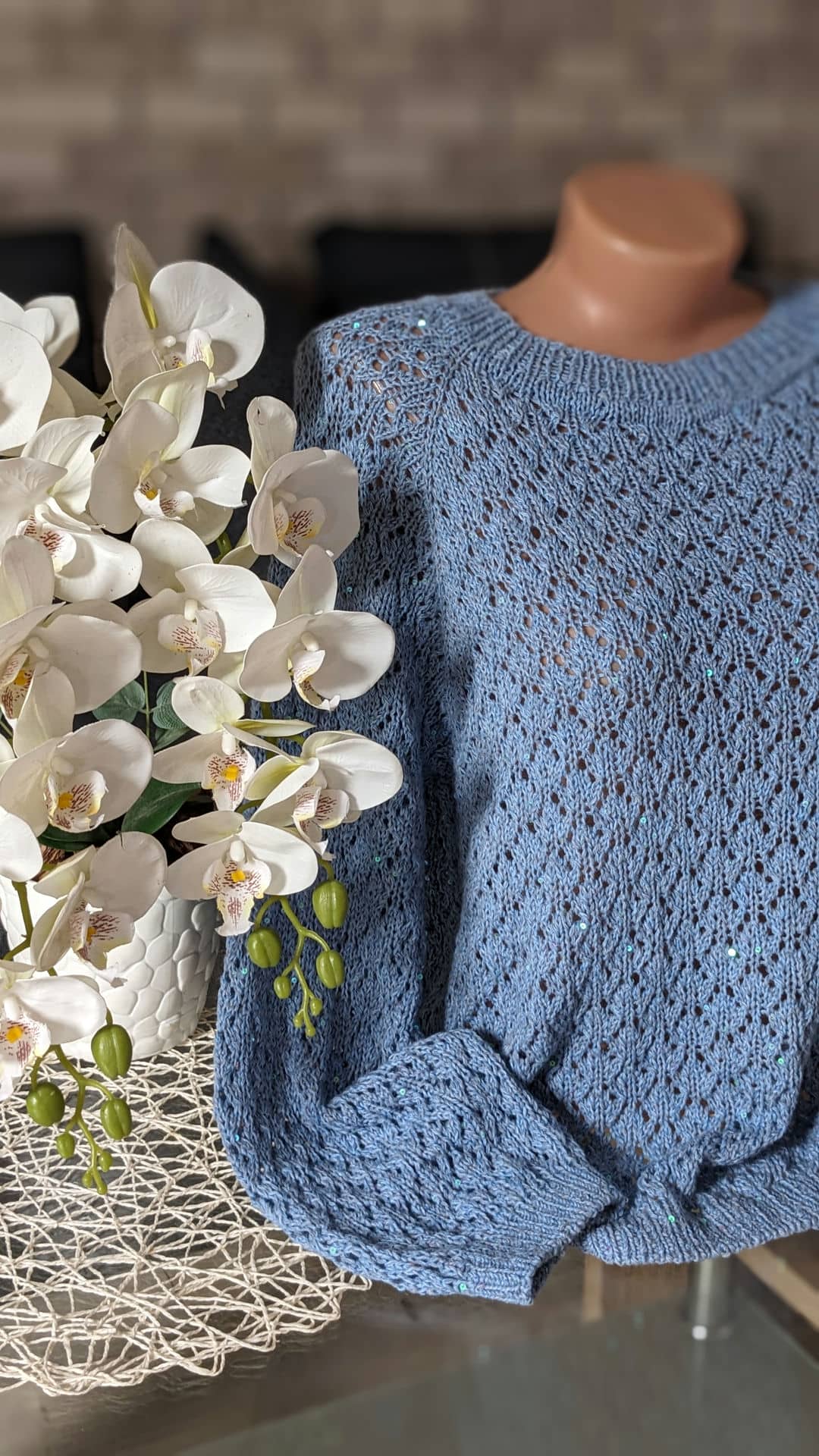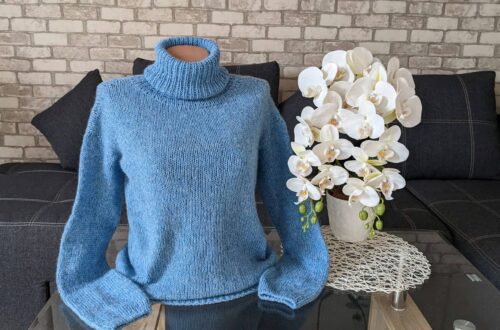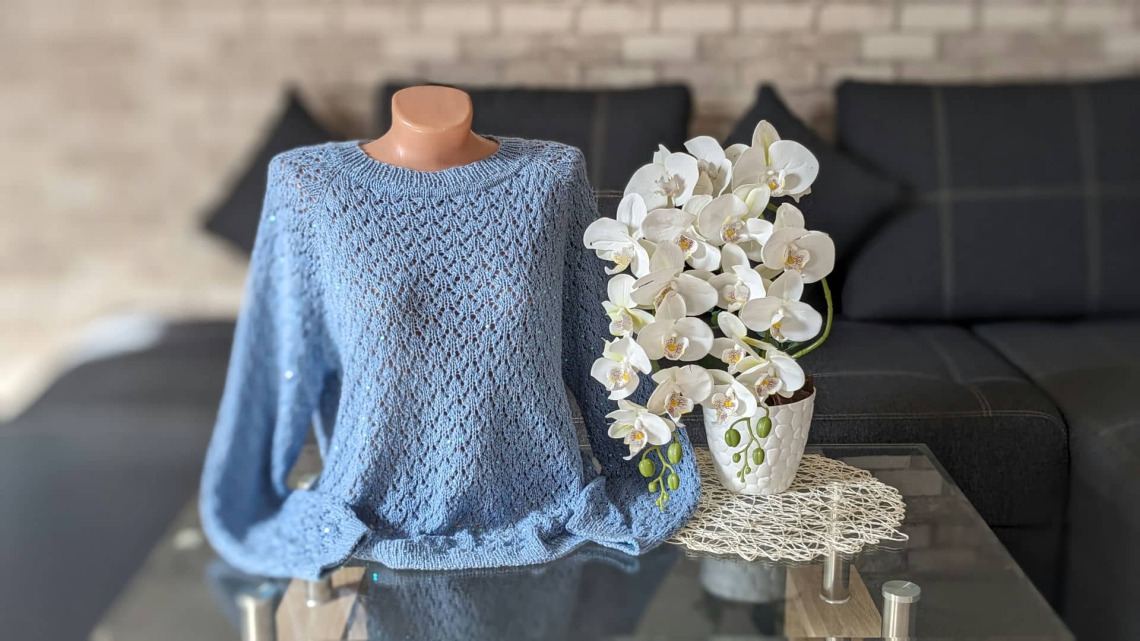
Top-Down Raglan Jumper “Ivy” with a Lace Sequin Stitch
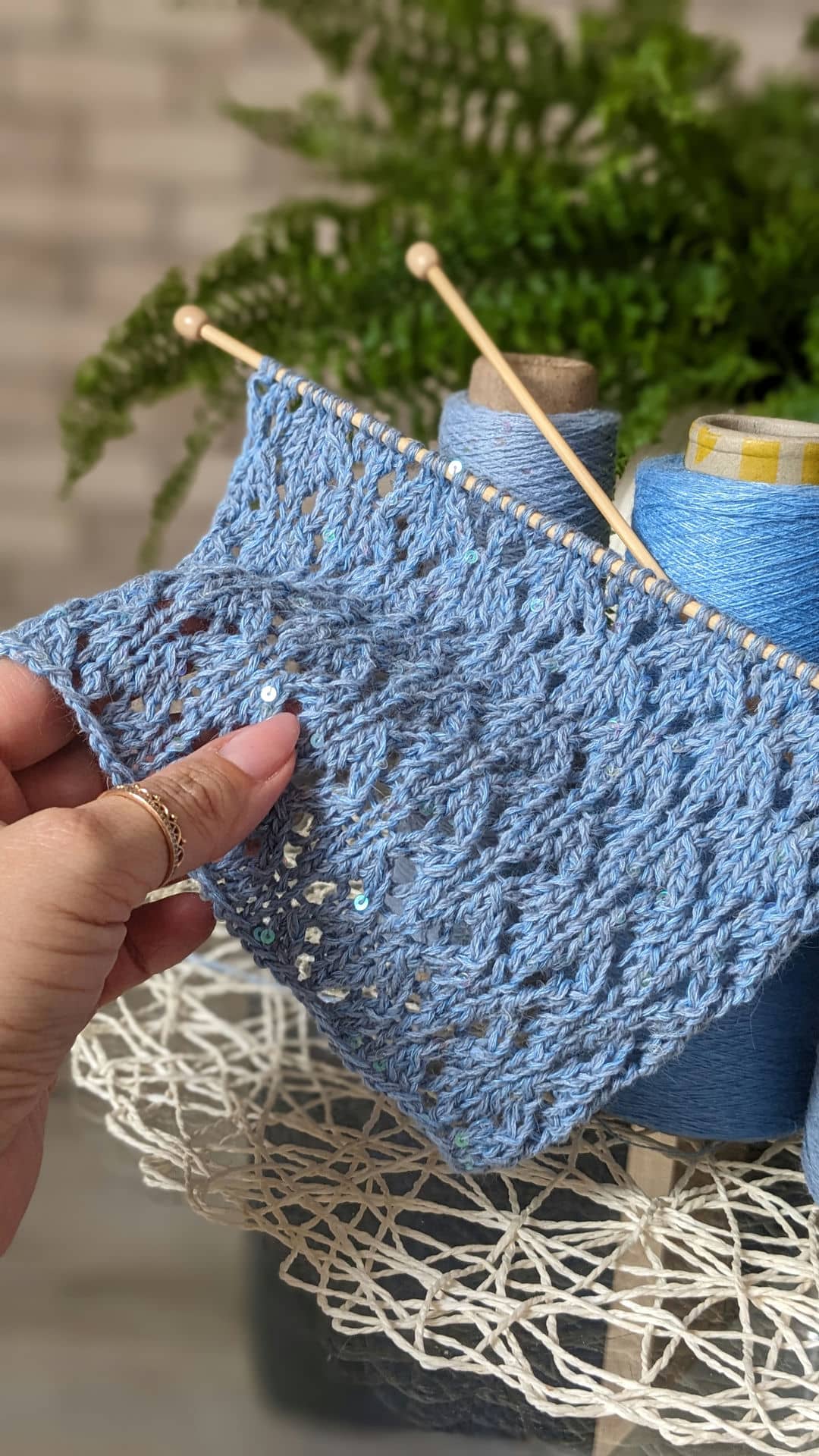
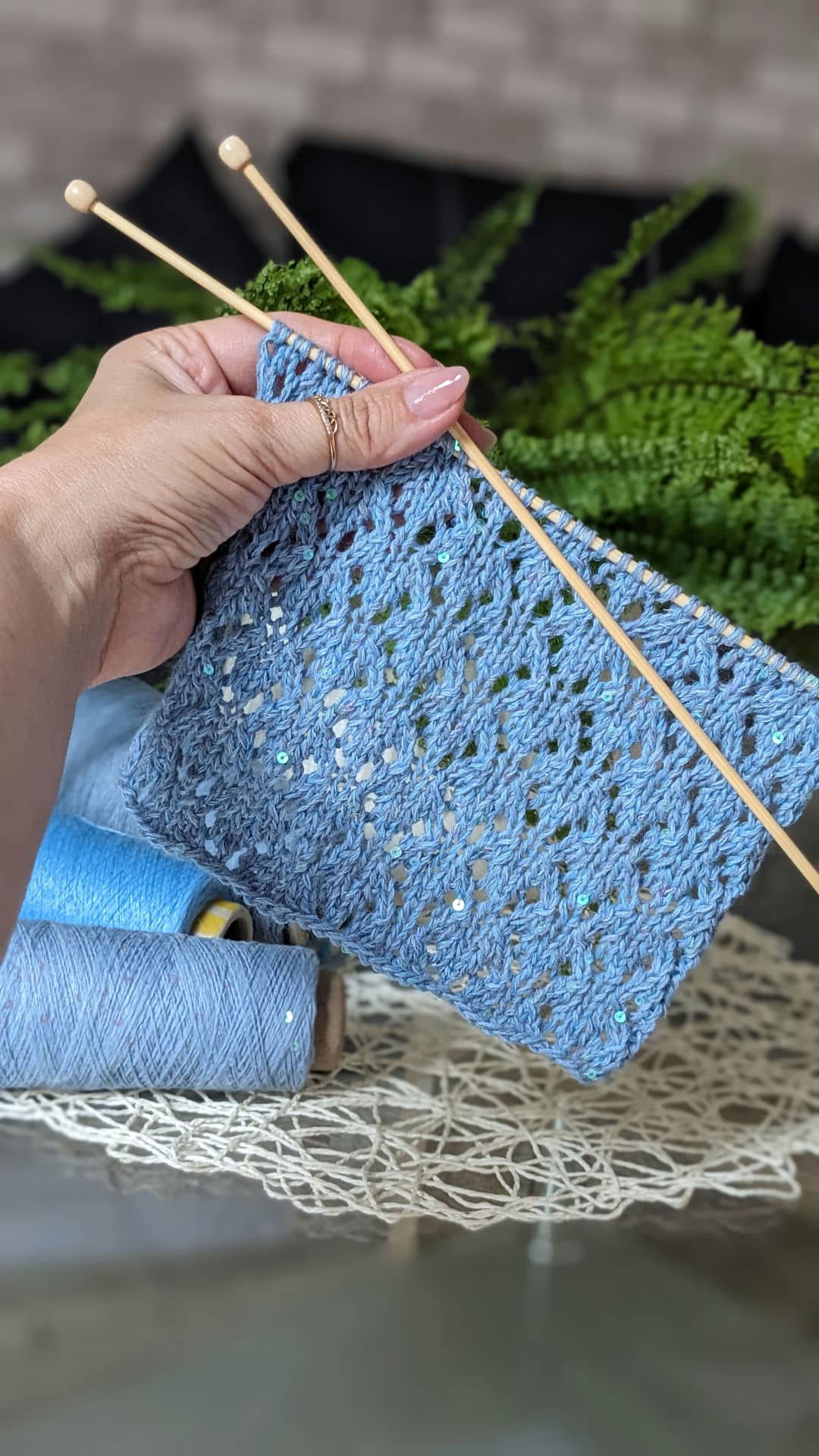
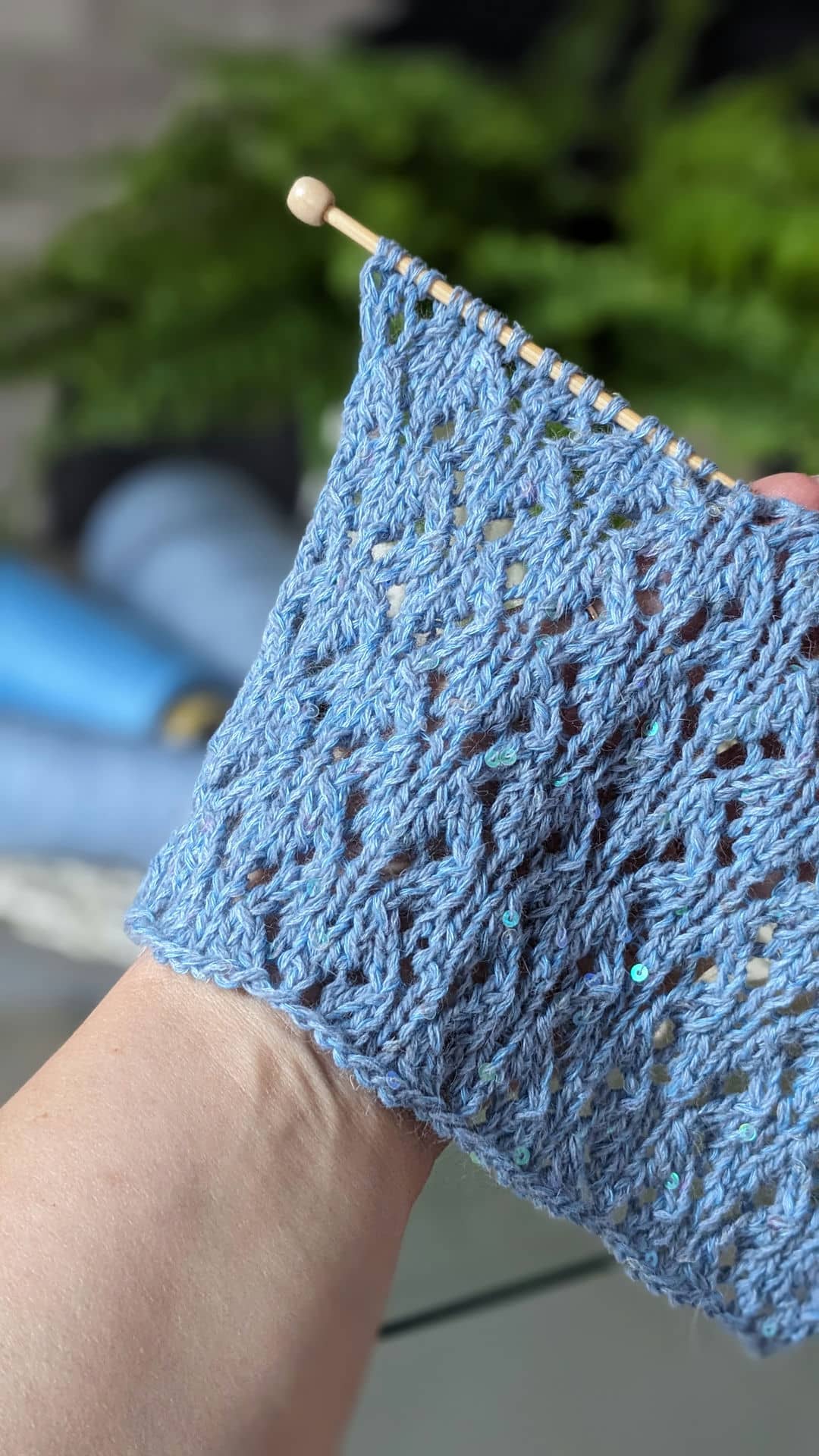
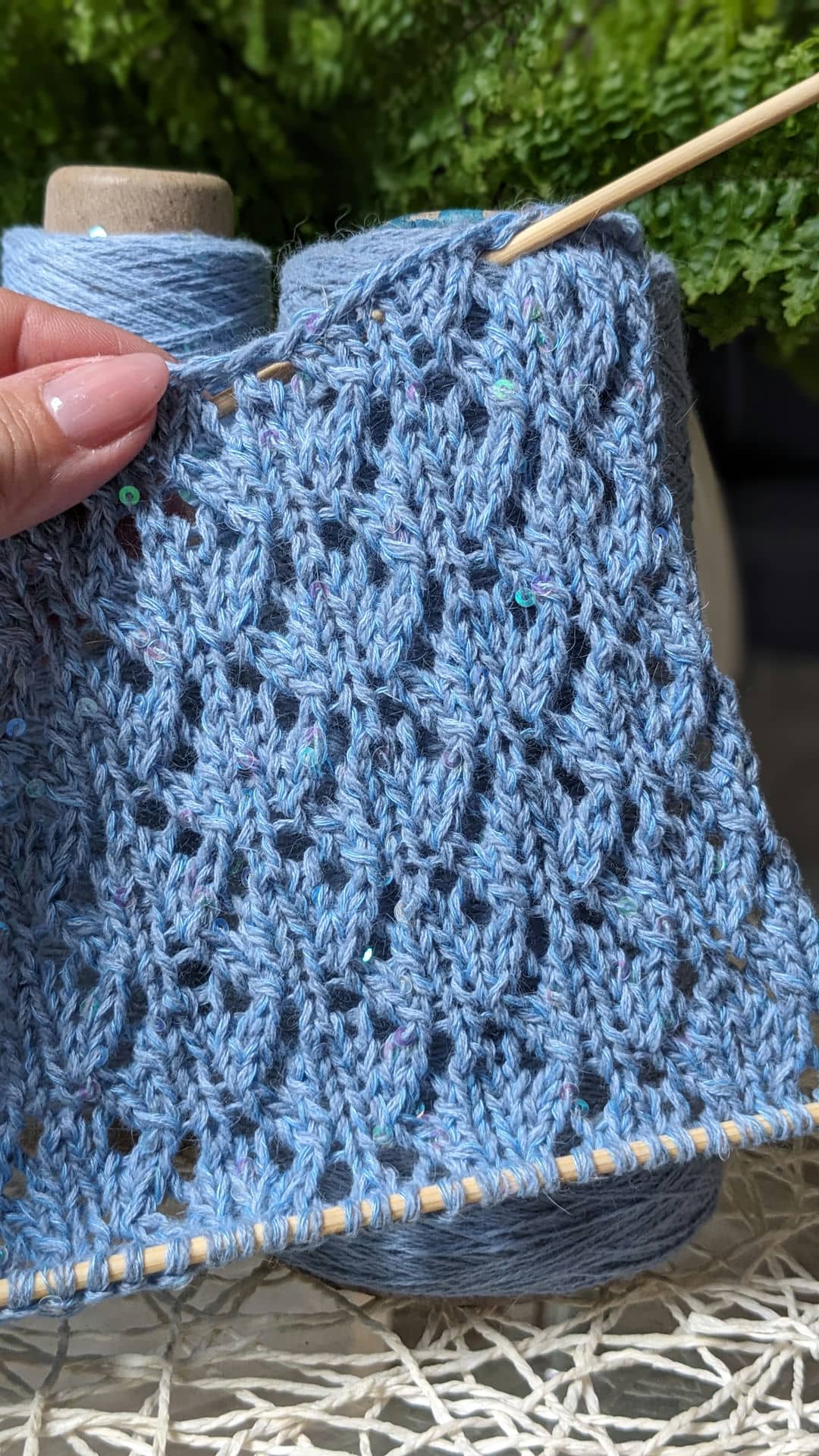
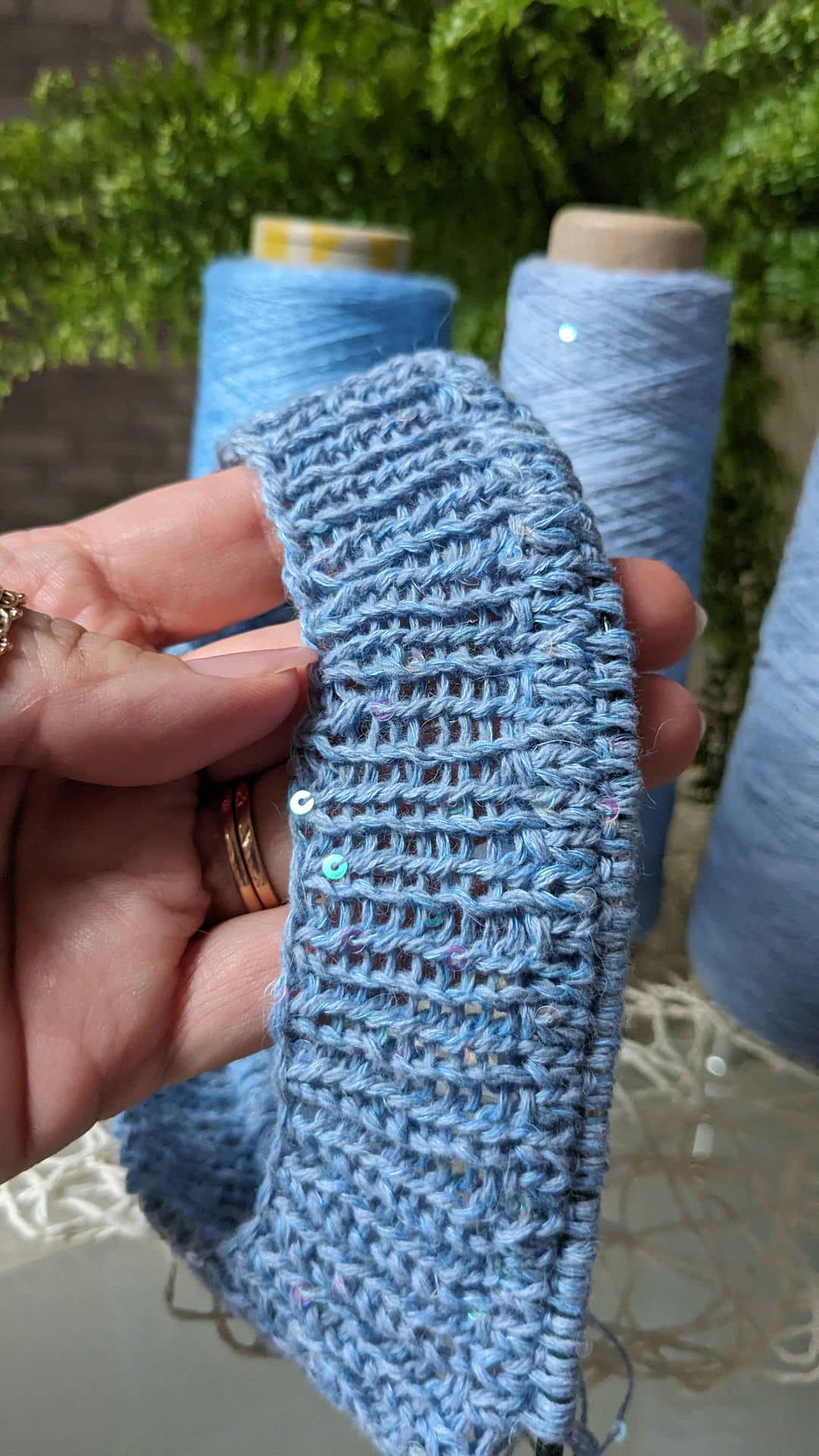
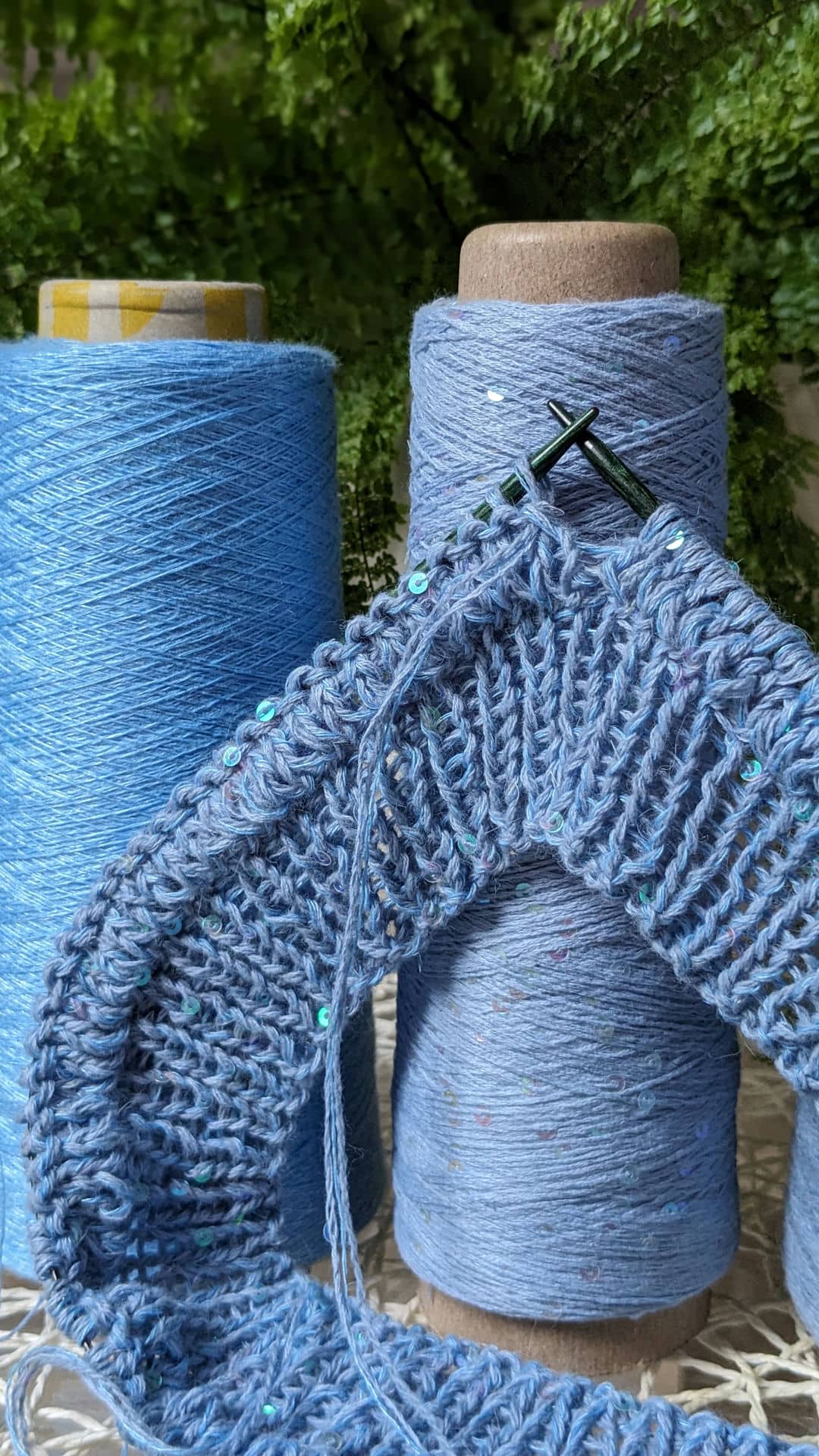
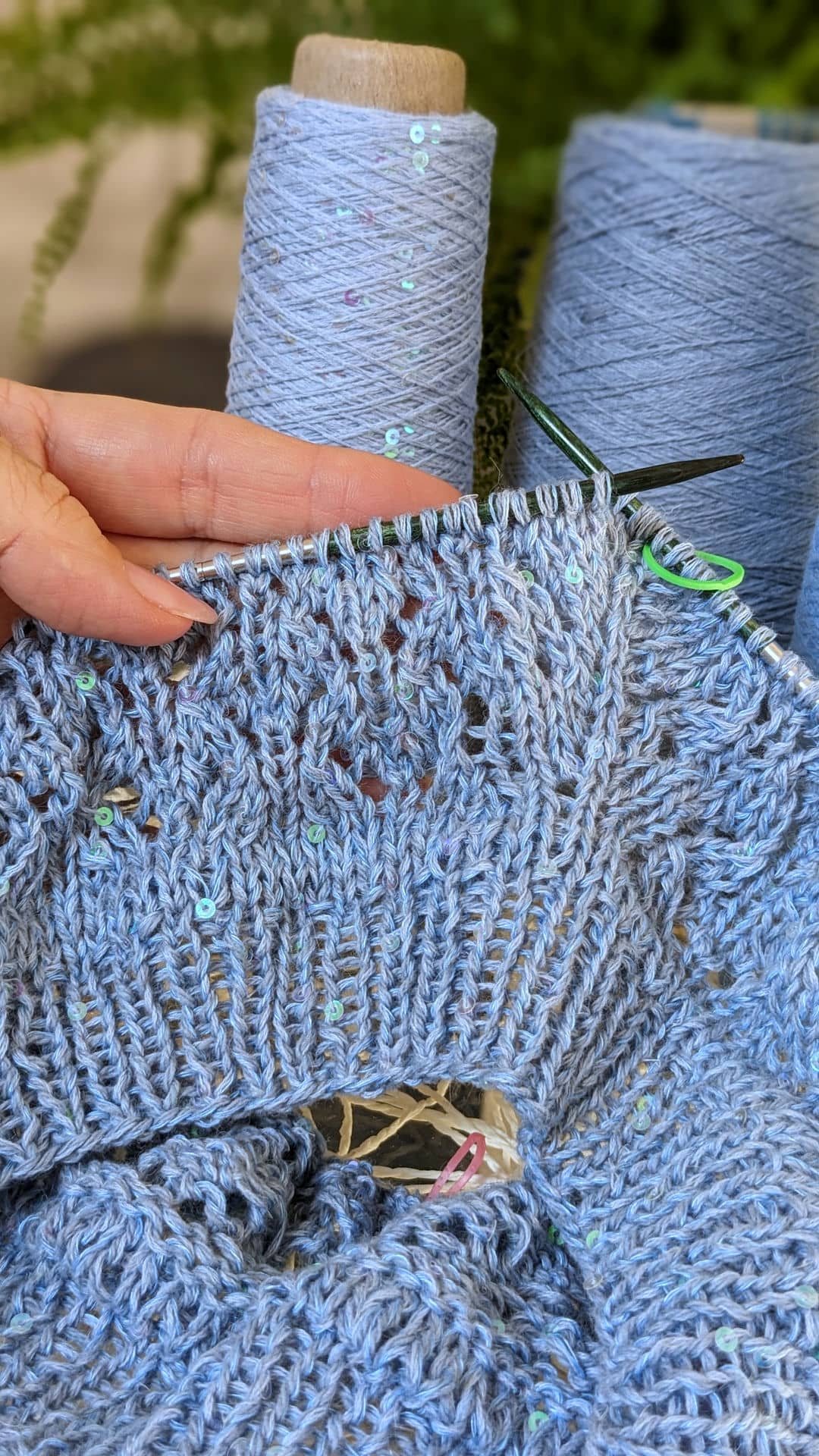
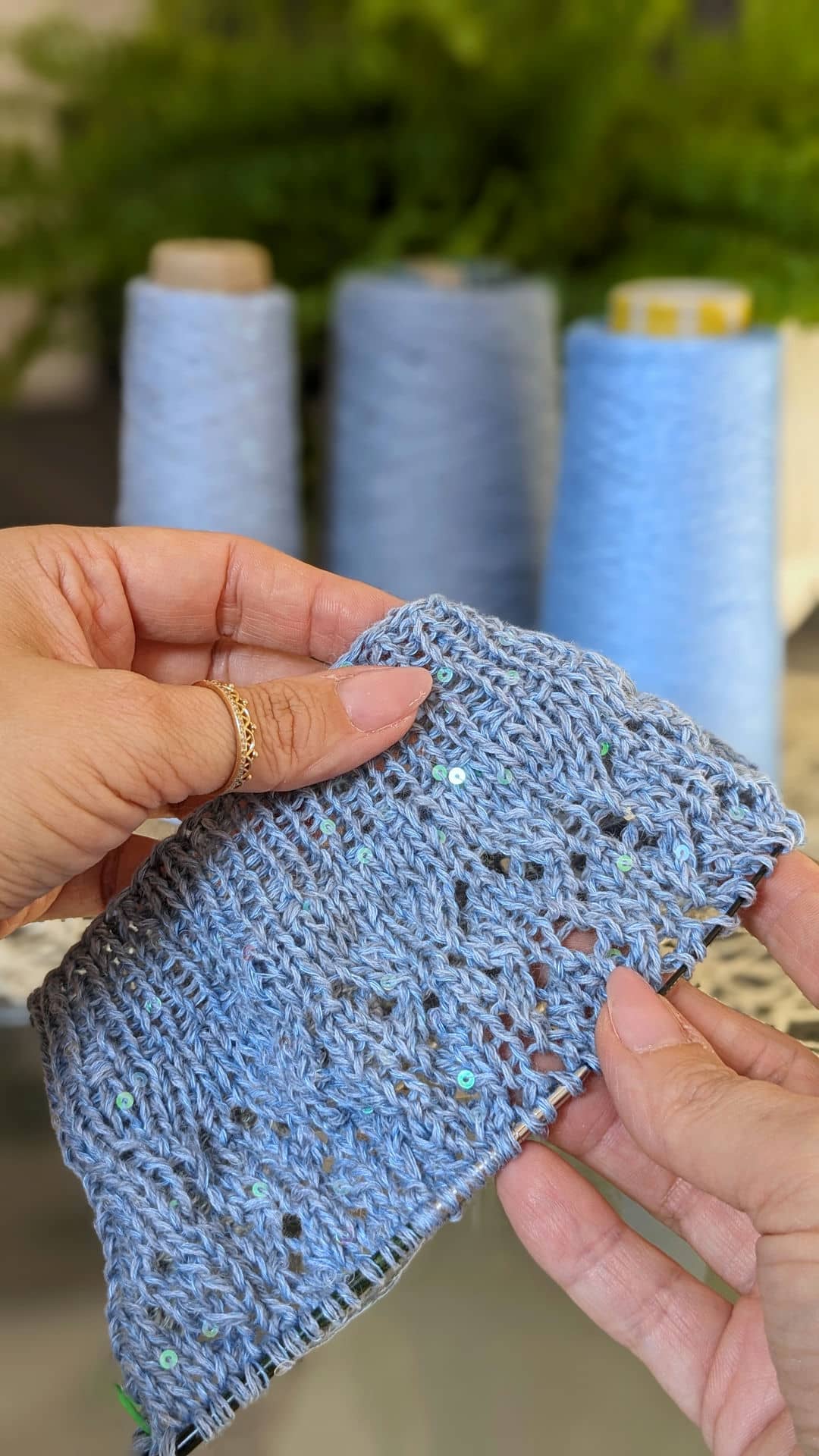
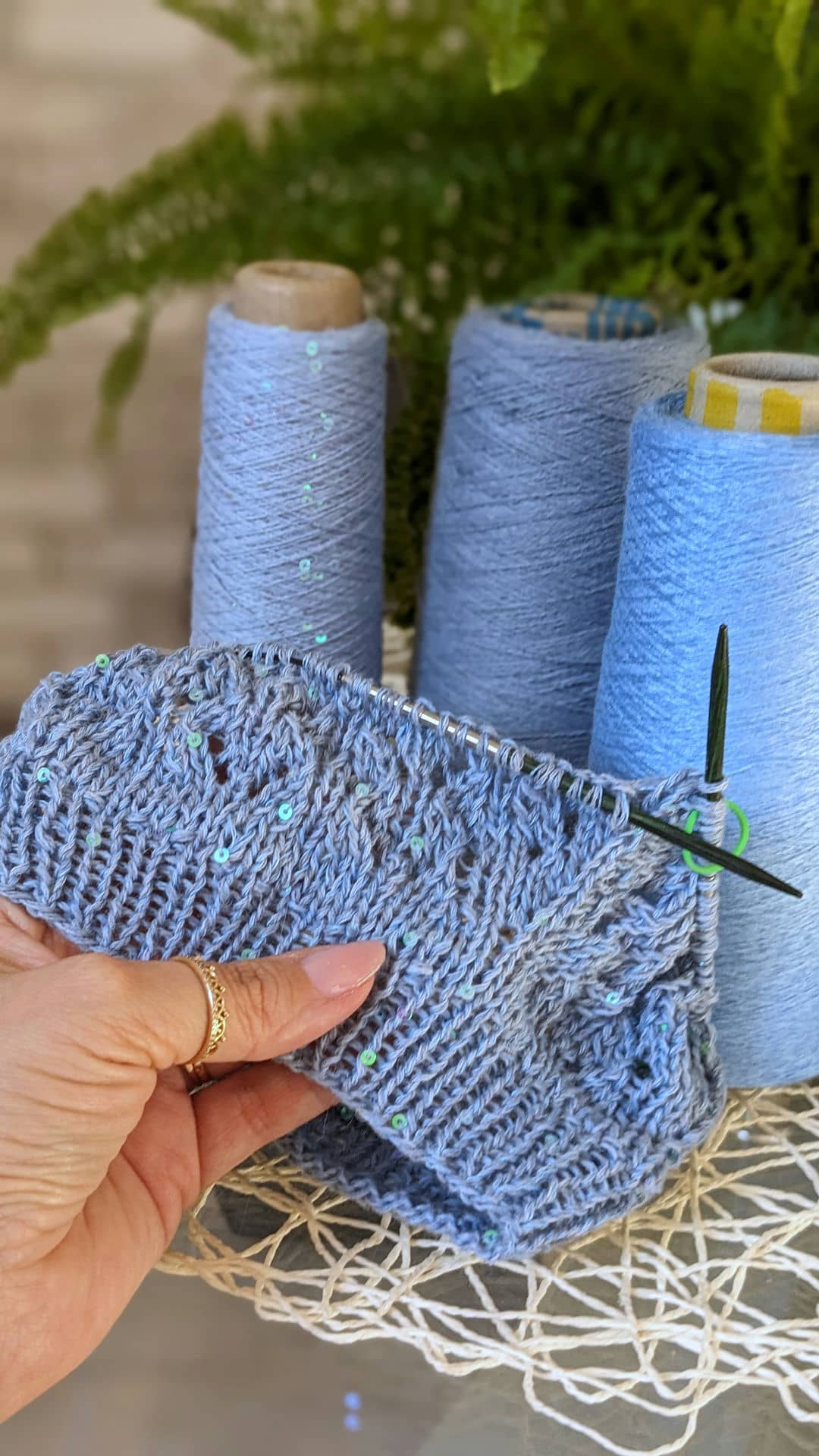
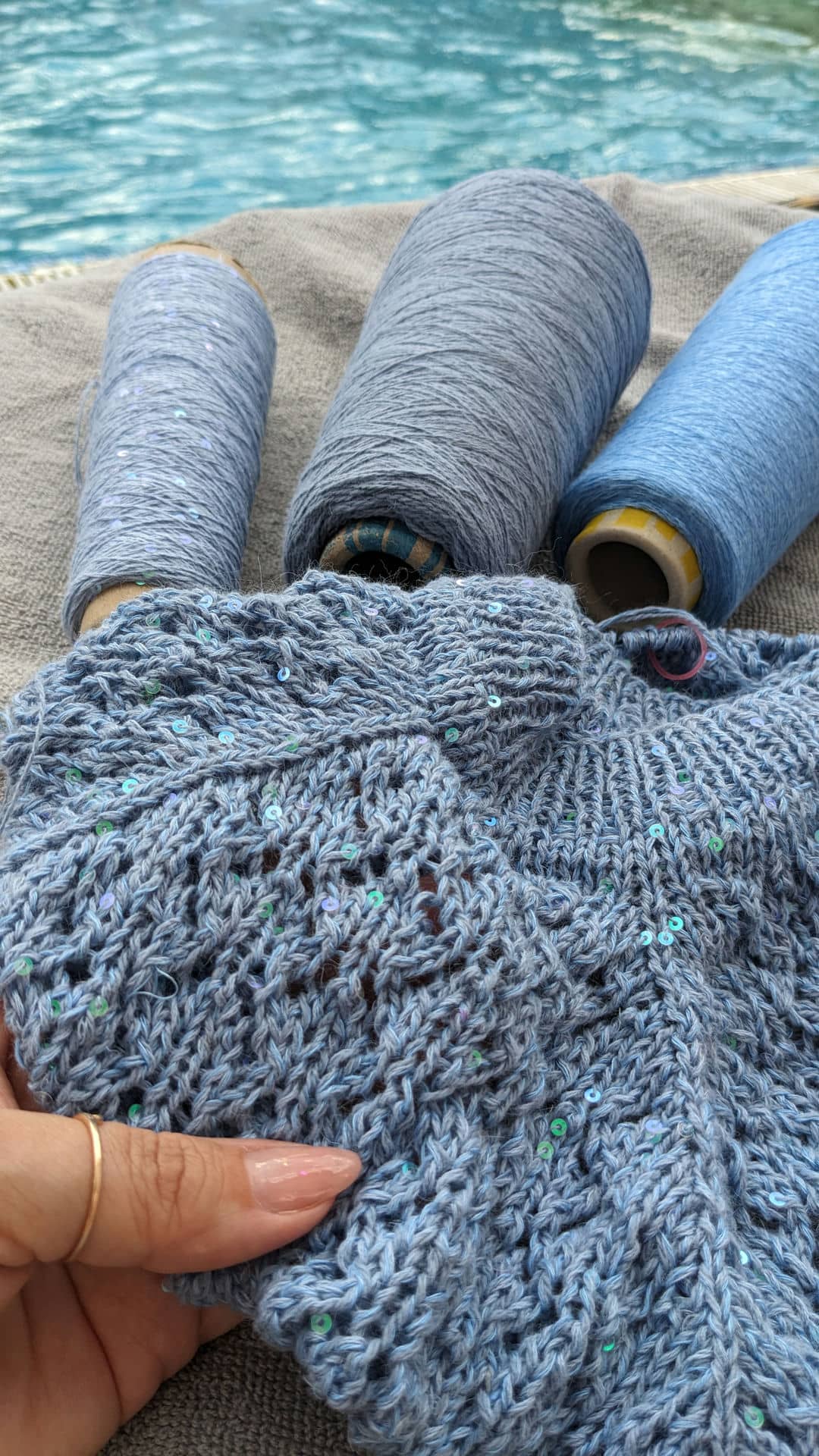
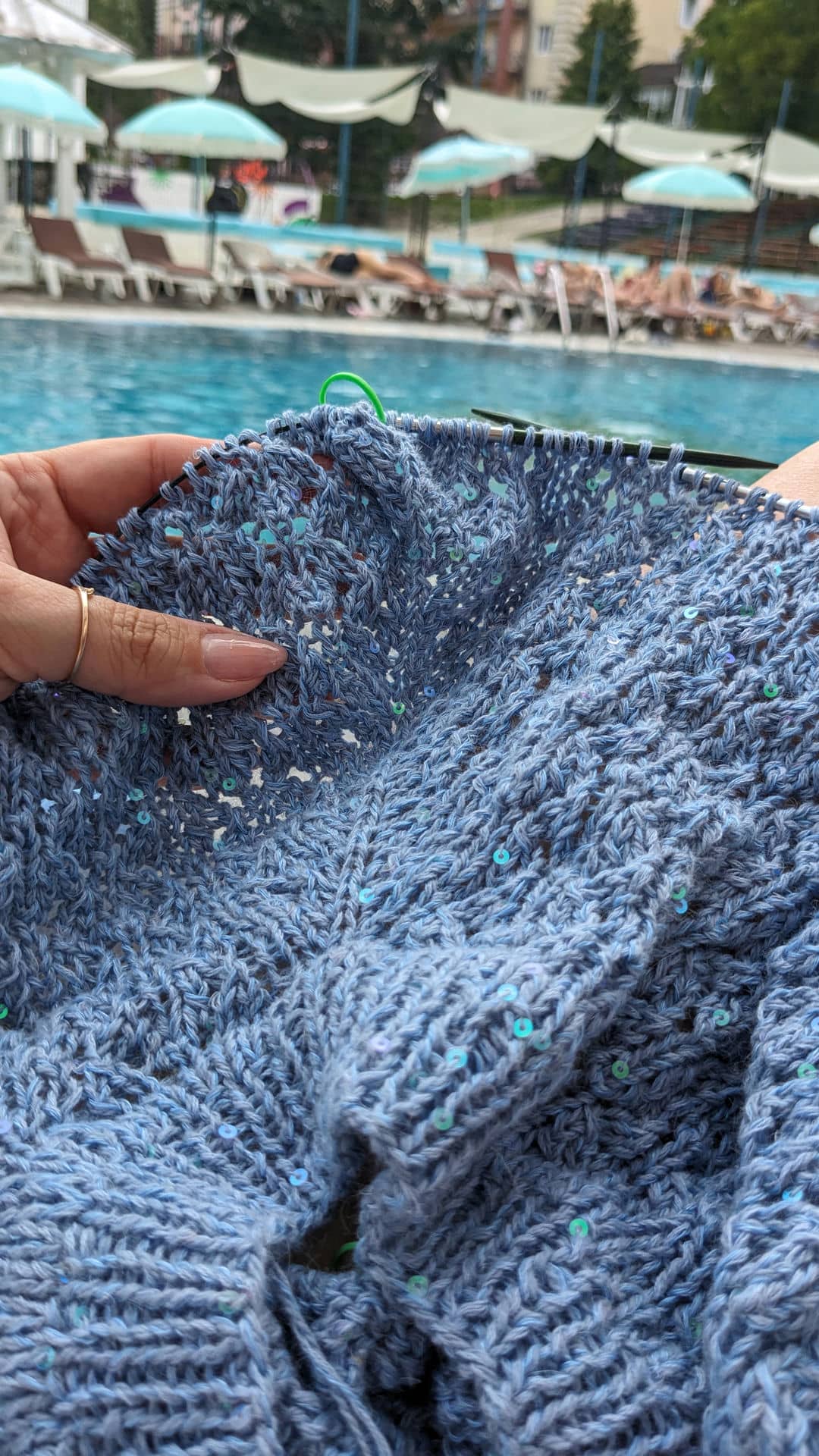
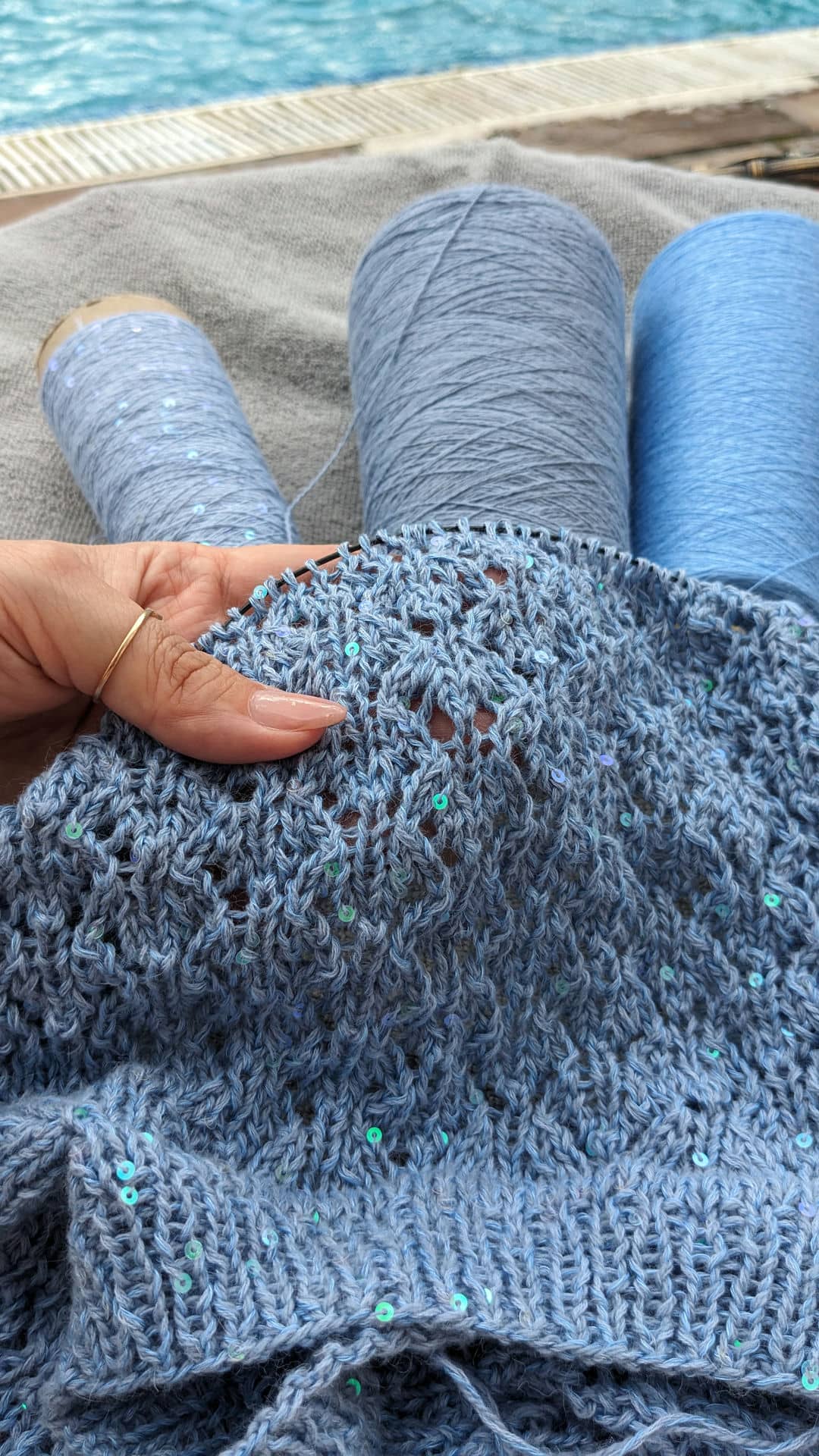
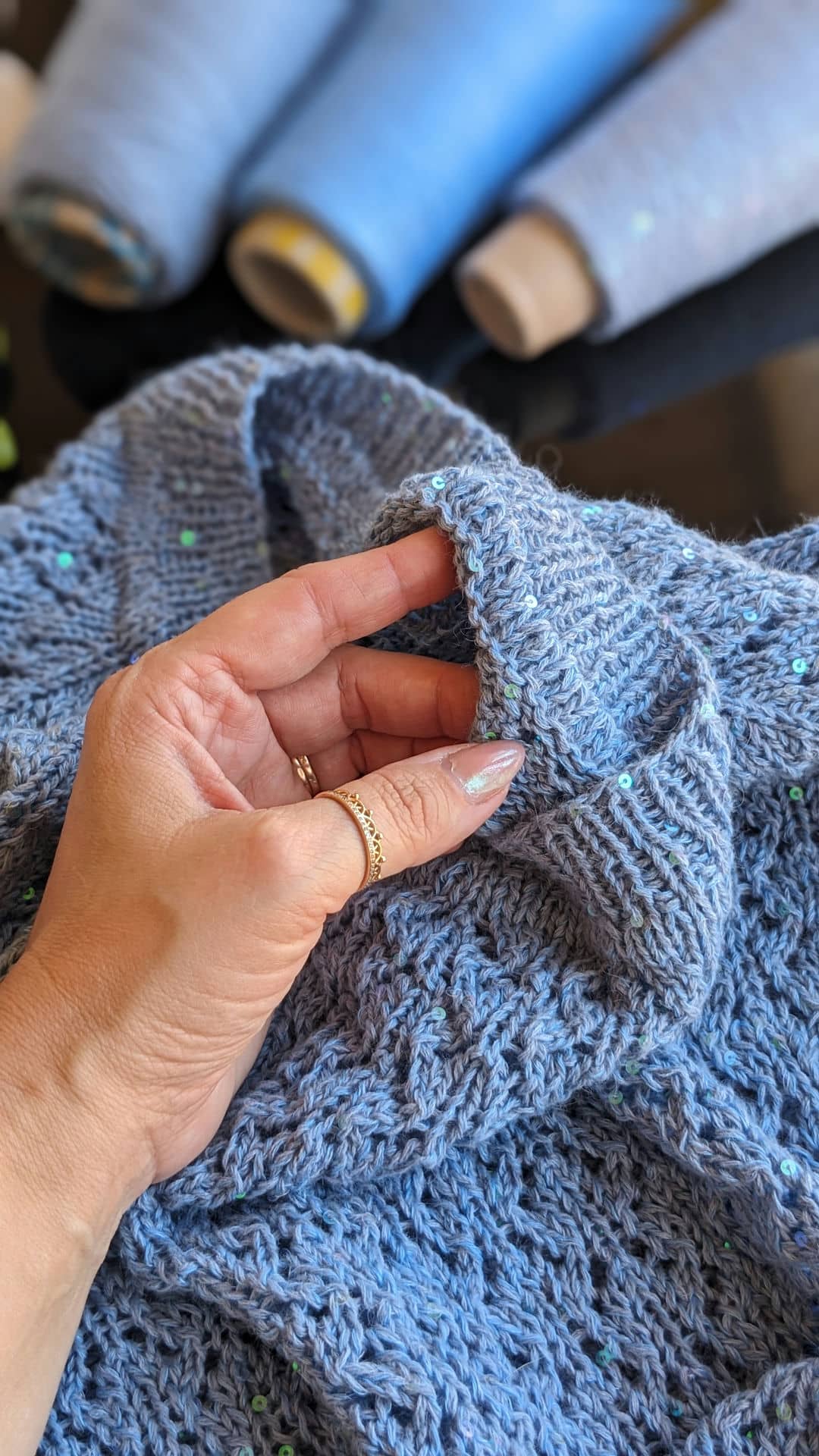
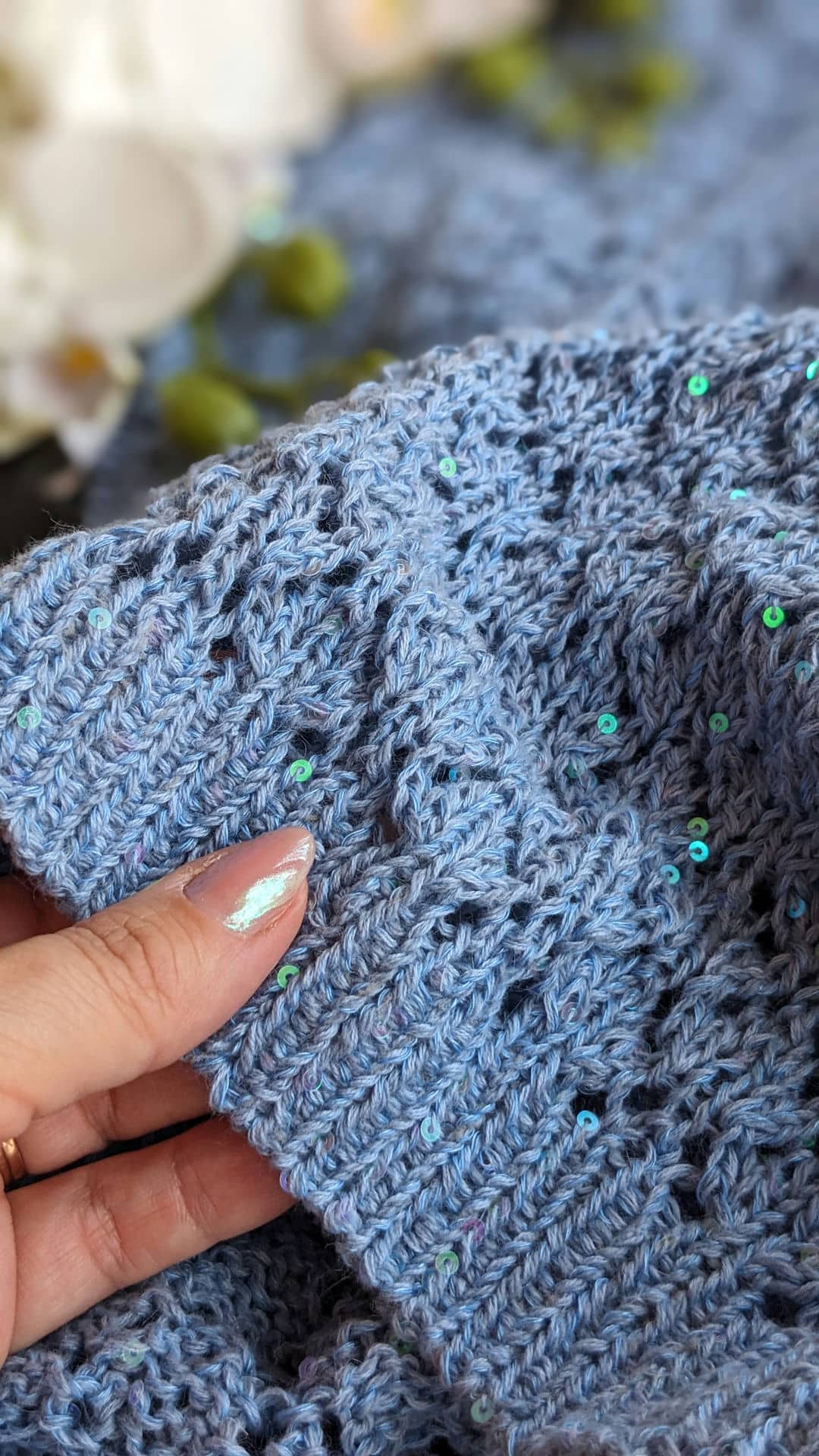
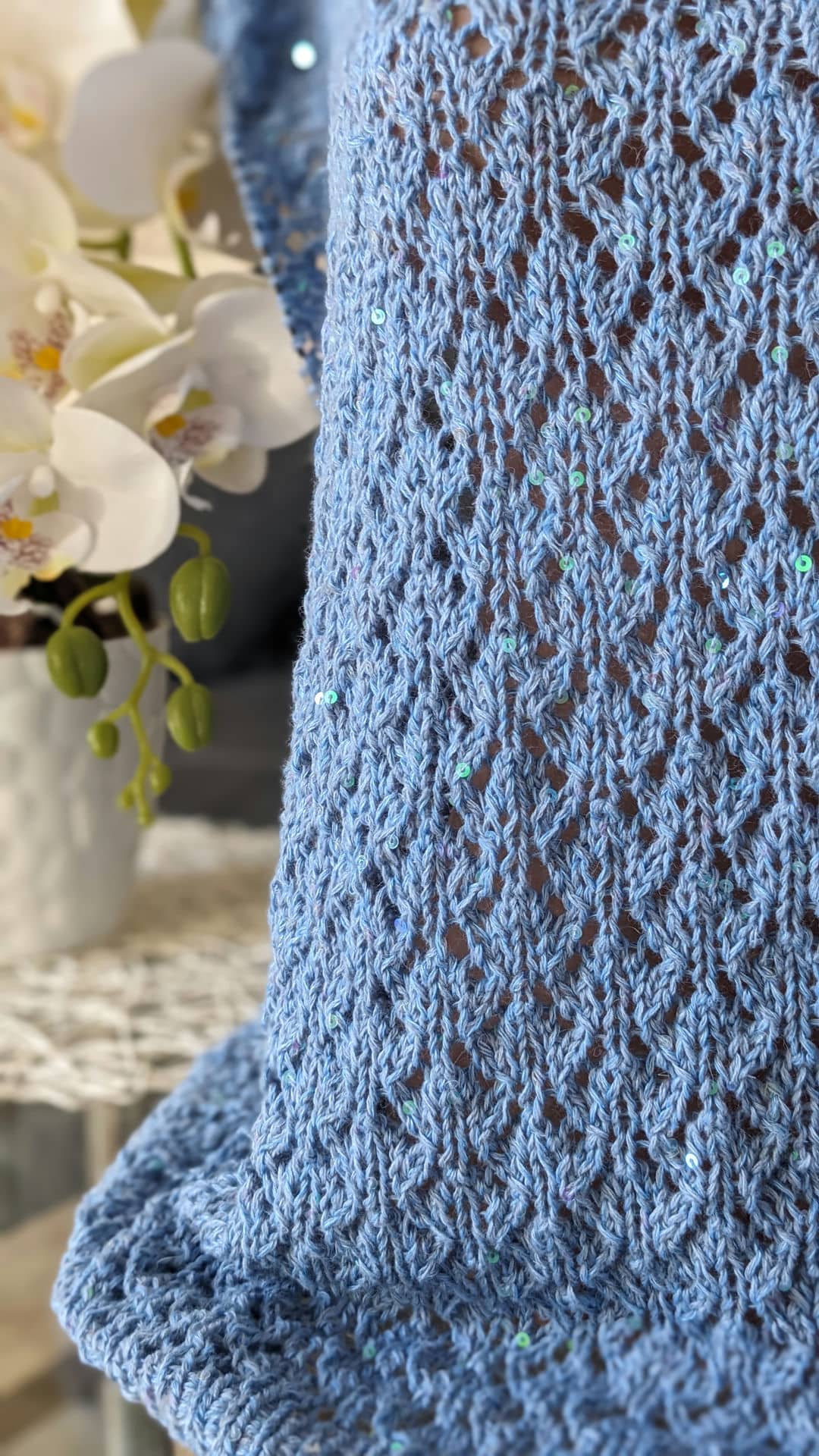
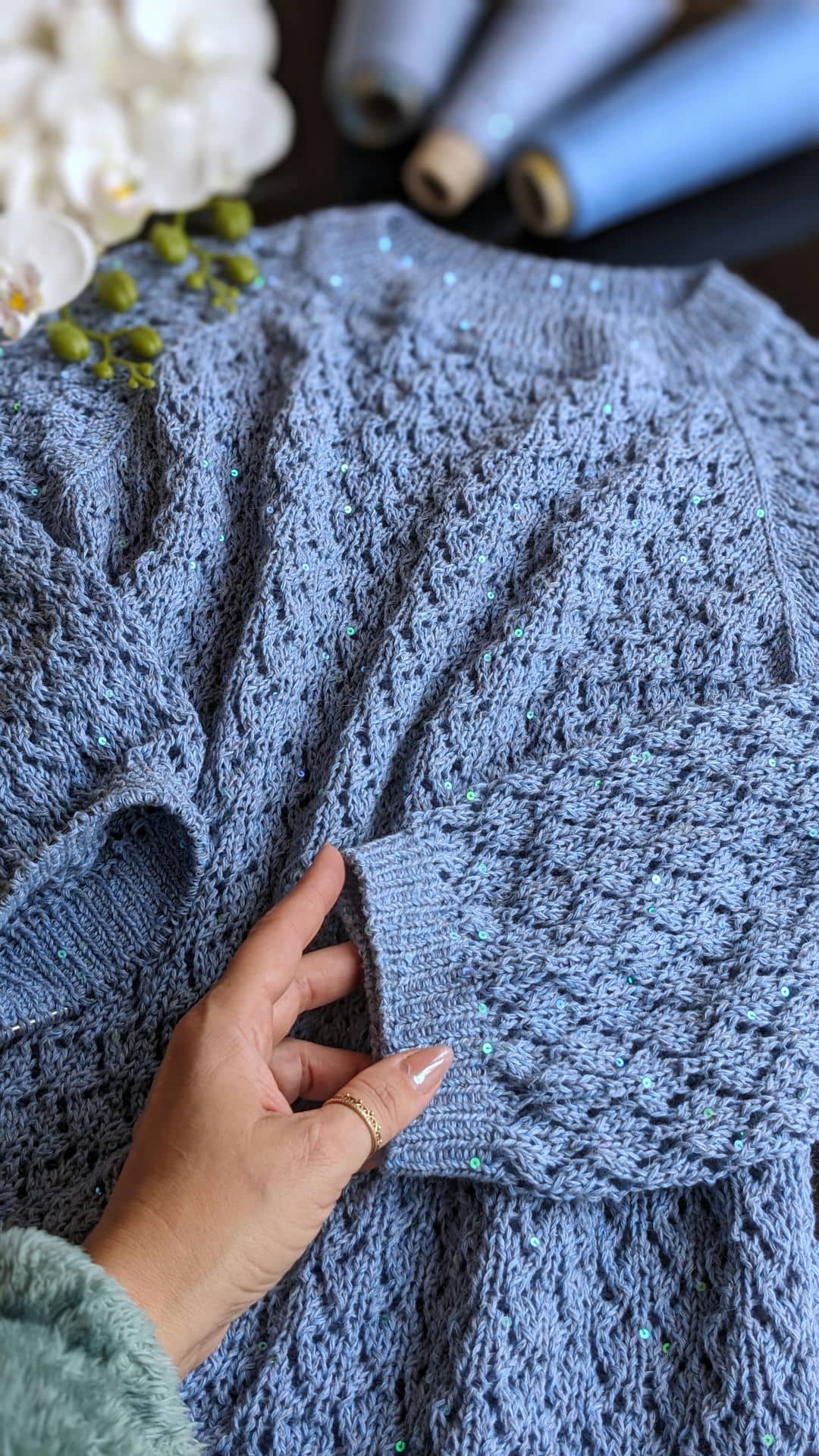
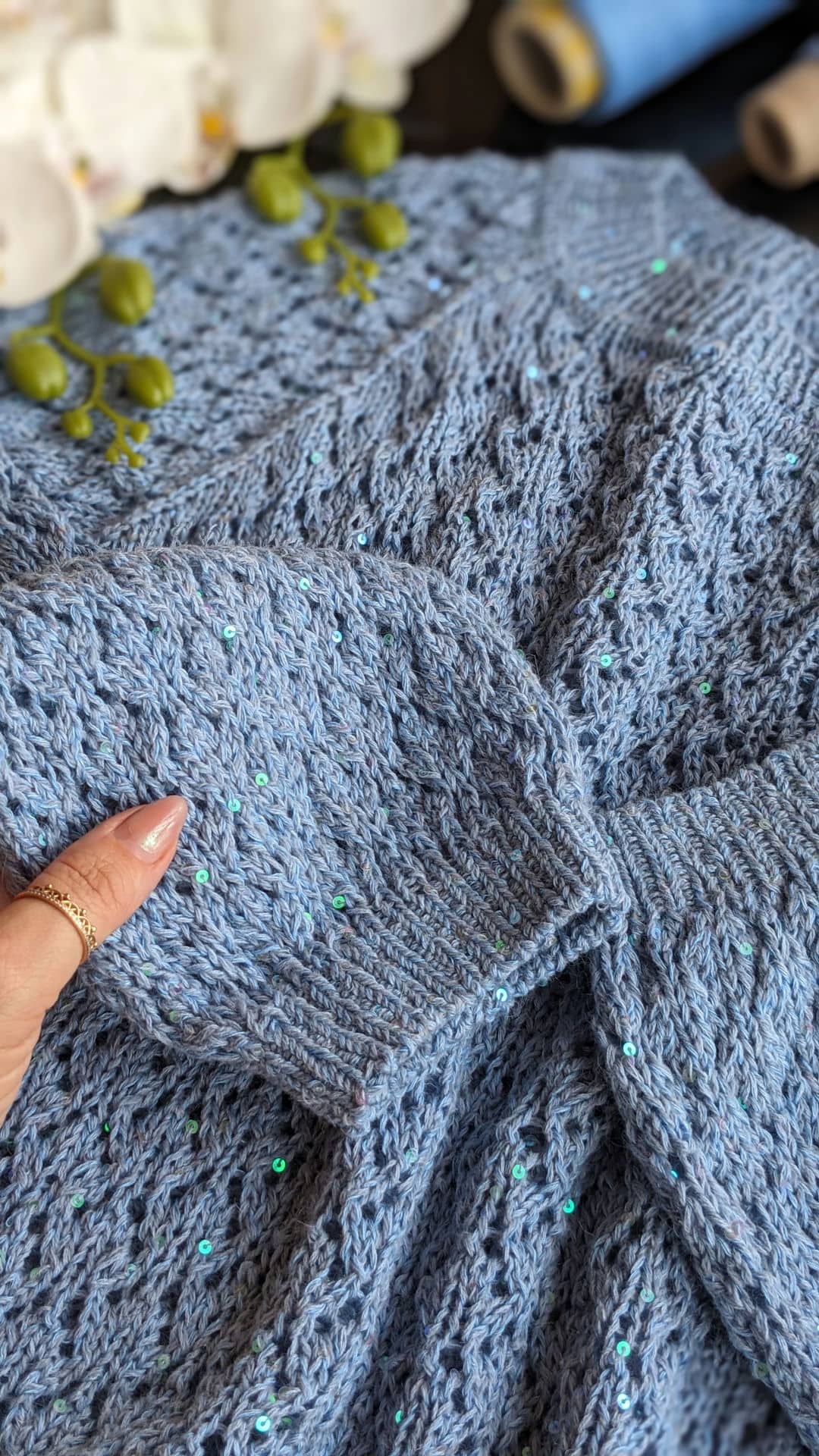
Sometimes ideas appear unexpectedly. That is how it was this time – I picked up my needles to try a new lace stitch, simple to work but striking in the fabric. A light lace, the shimmer of sequins, a design that recalls ivy leaves. And just like that, a small swatch captures the imagination and the idea of a new project is born…
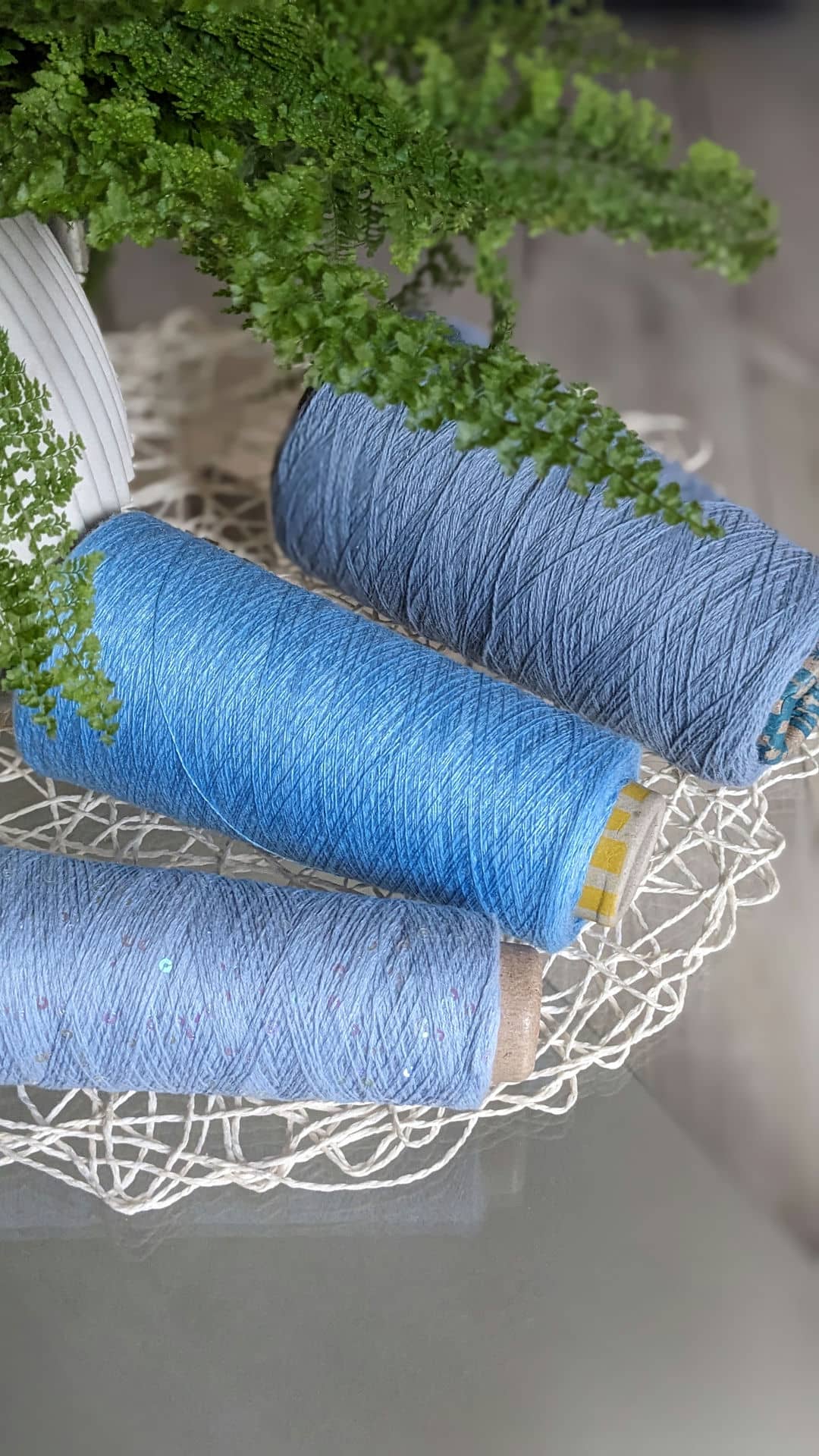
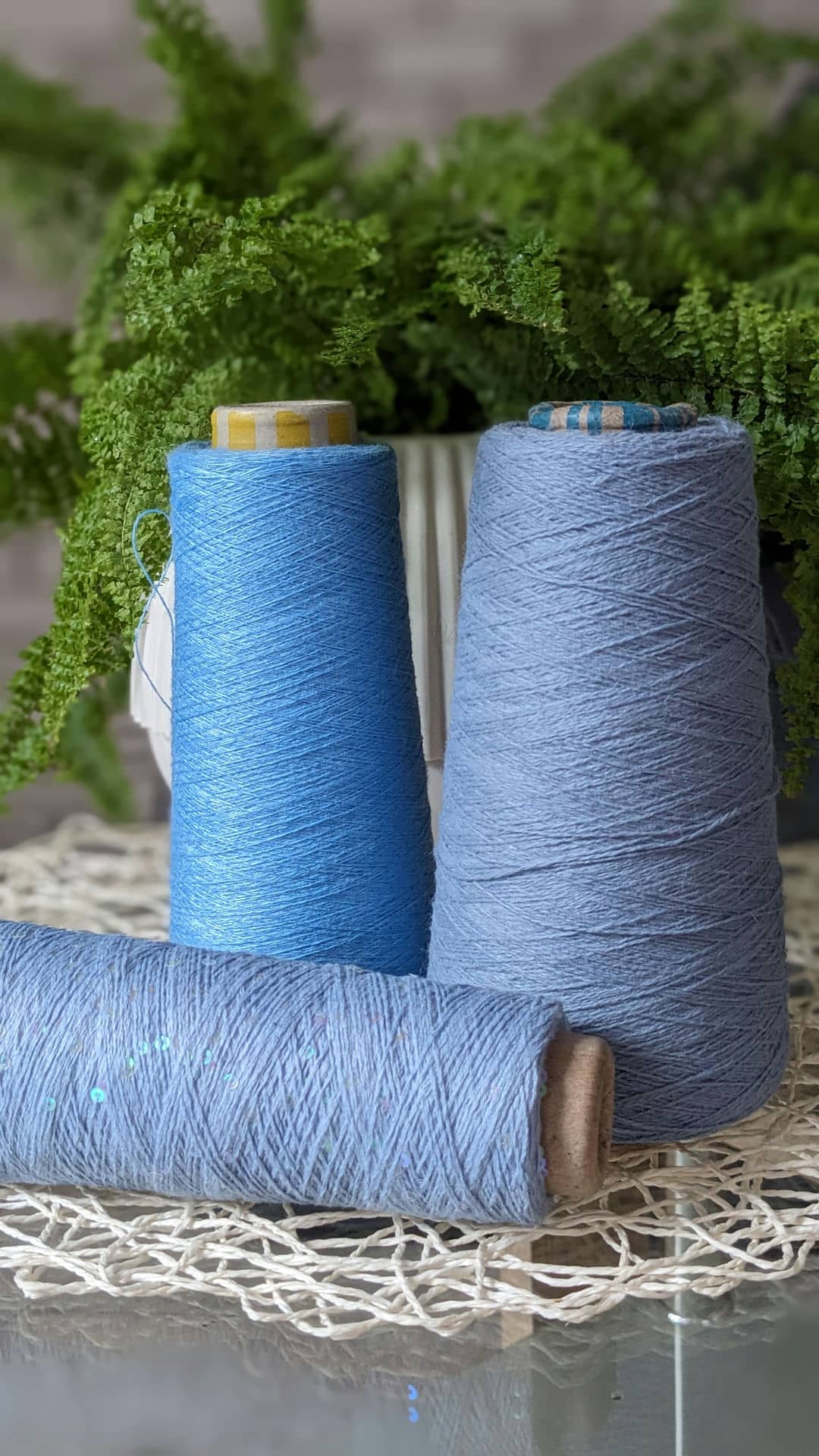
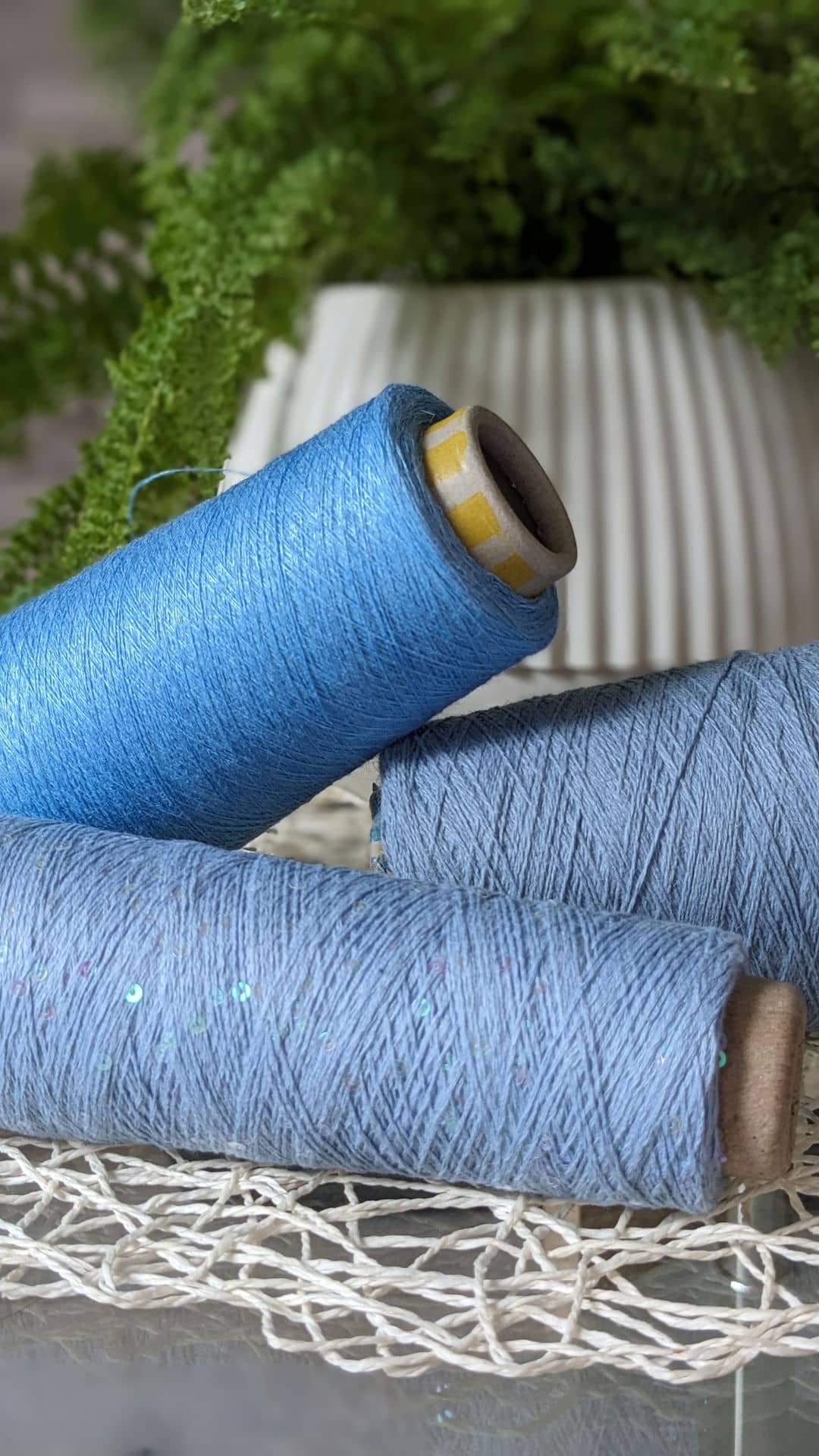
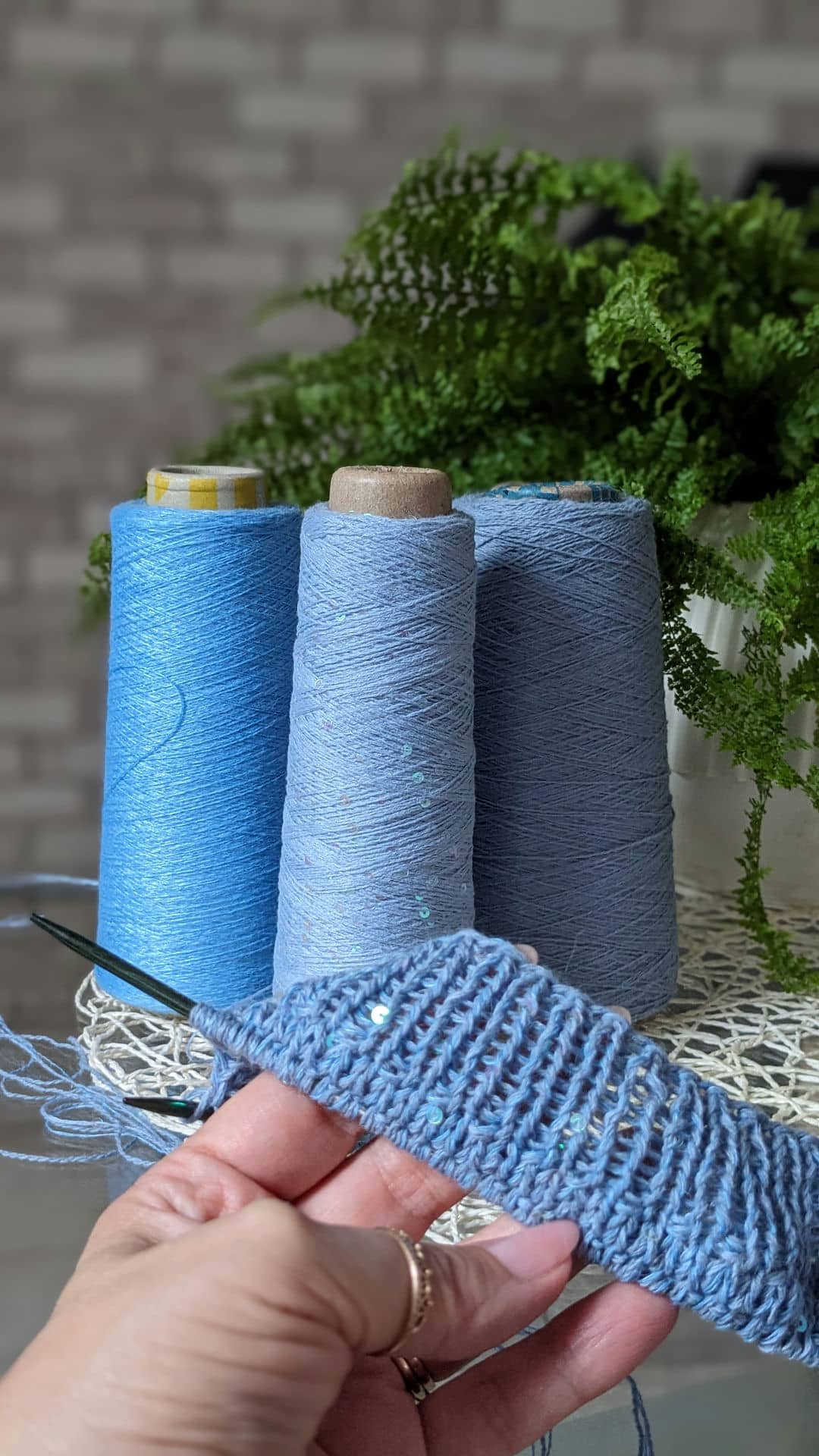
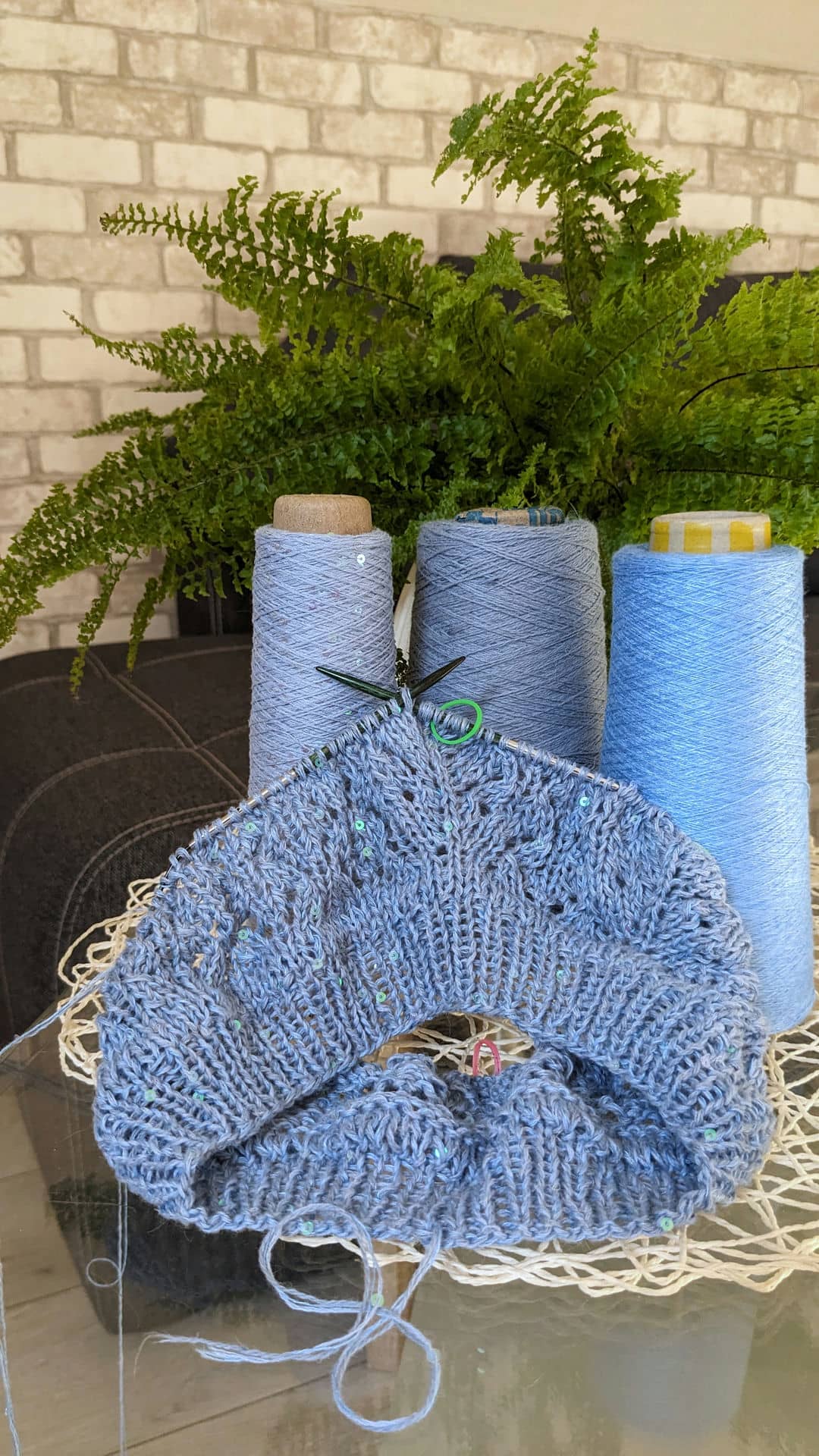
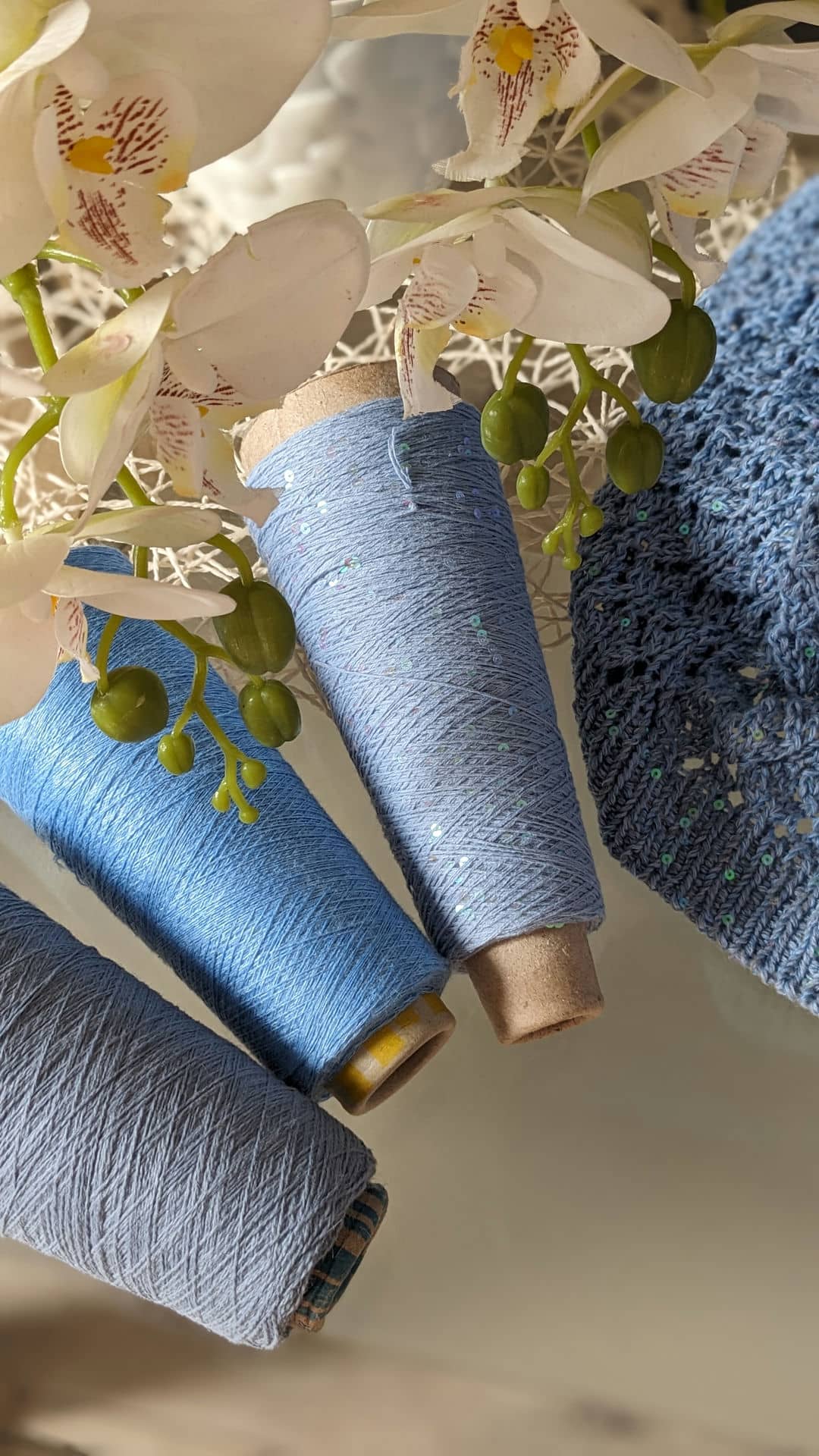
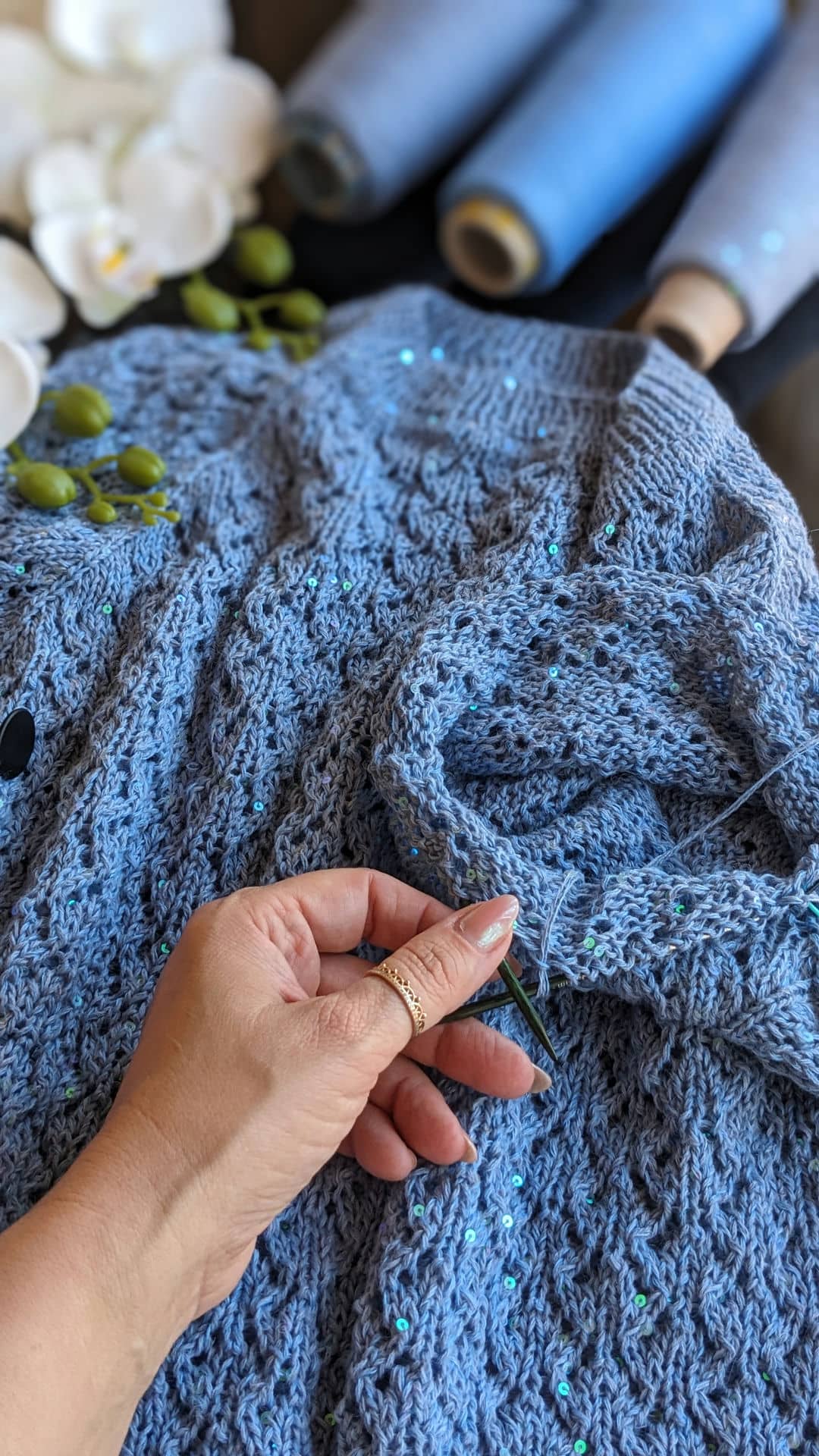
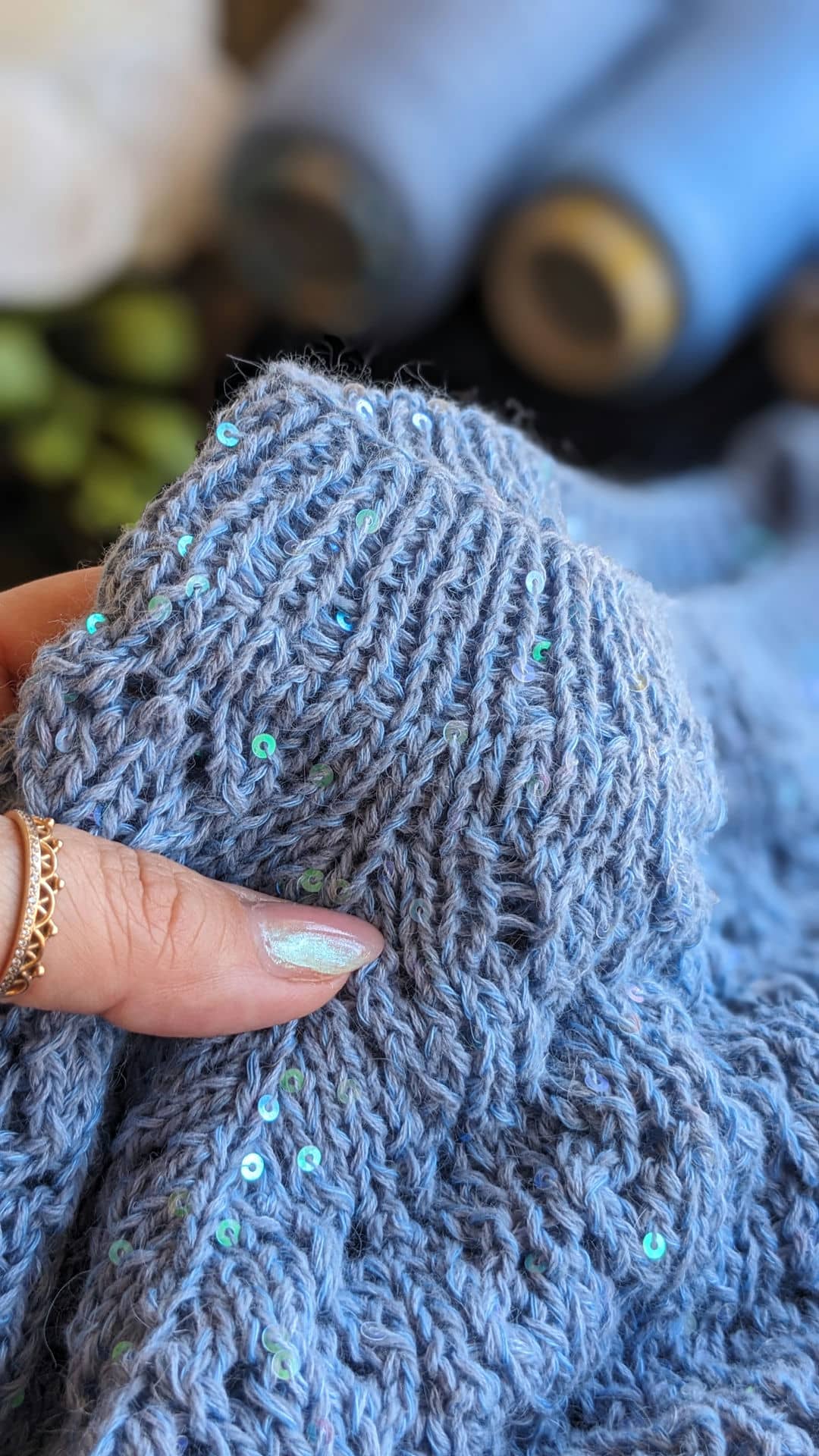
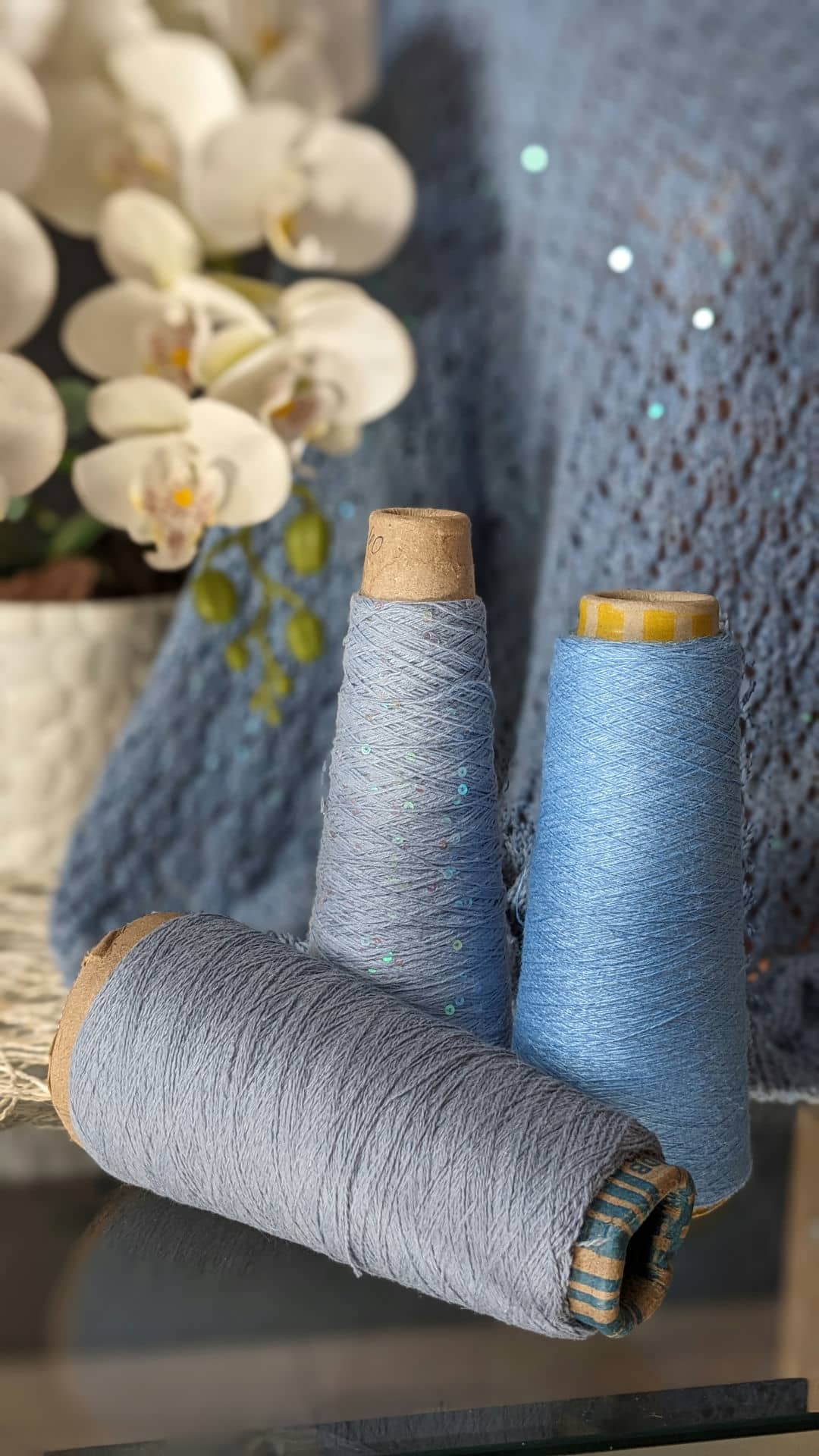
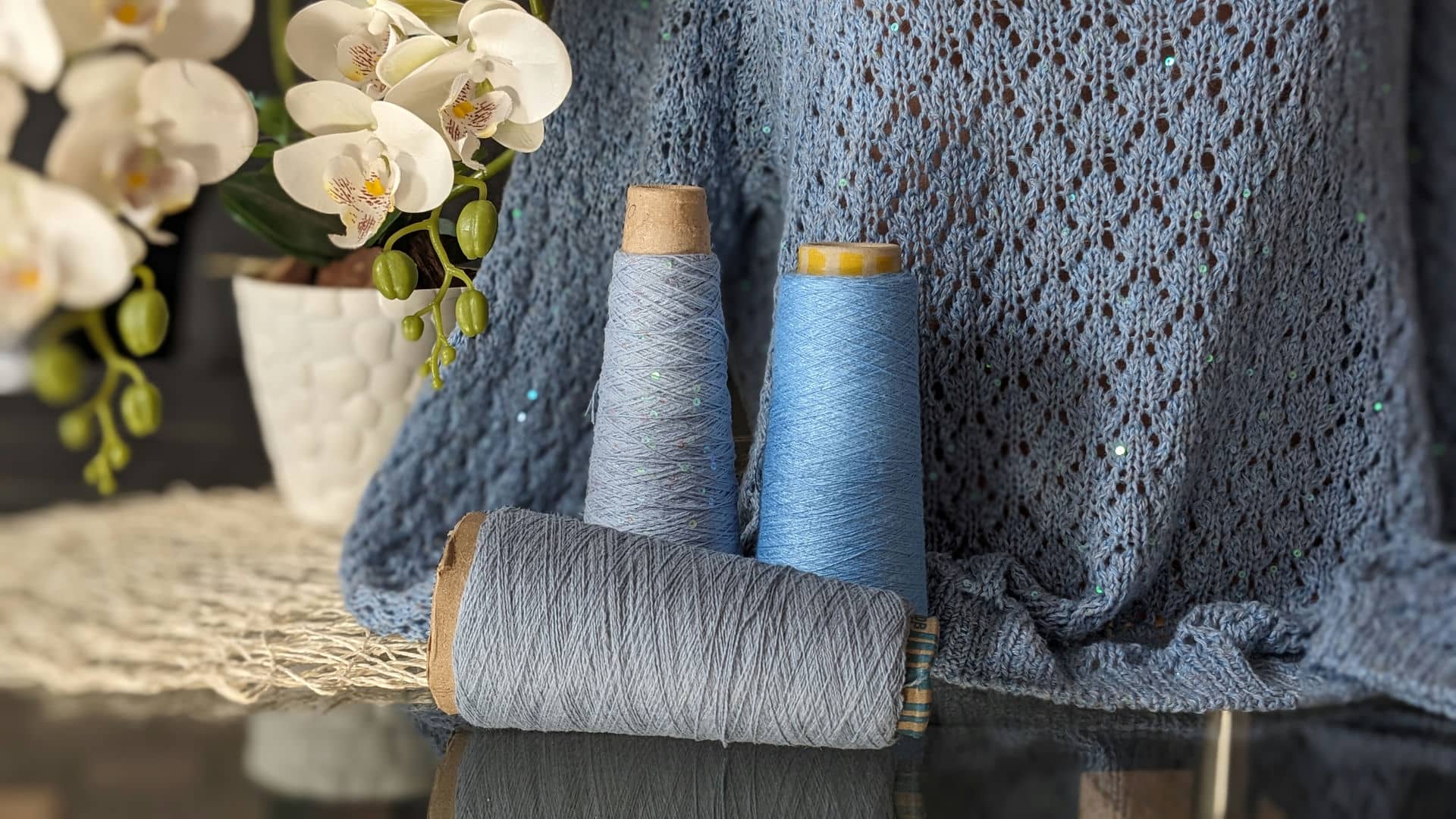
Three different yarns – leftovers from earlier projects – blended into a single fabric:
- short-pile angora, 1200 m/100 g – light fuzz and warmth,
- sequin yarn on cotton, 800 m/100 g – a light sparkle and a delicate shimmer,
- merino, 1600 m/100 g – softness and springiness.
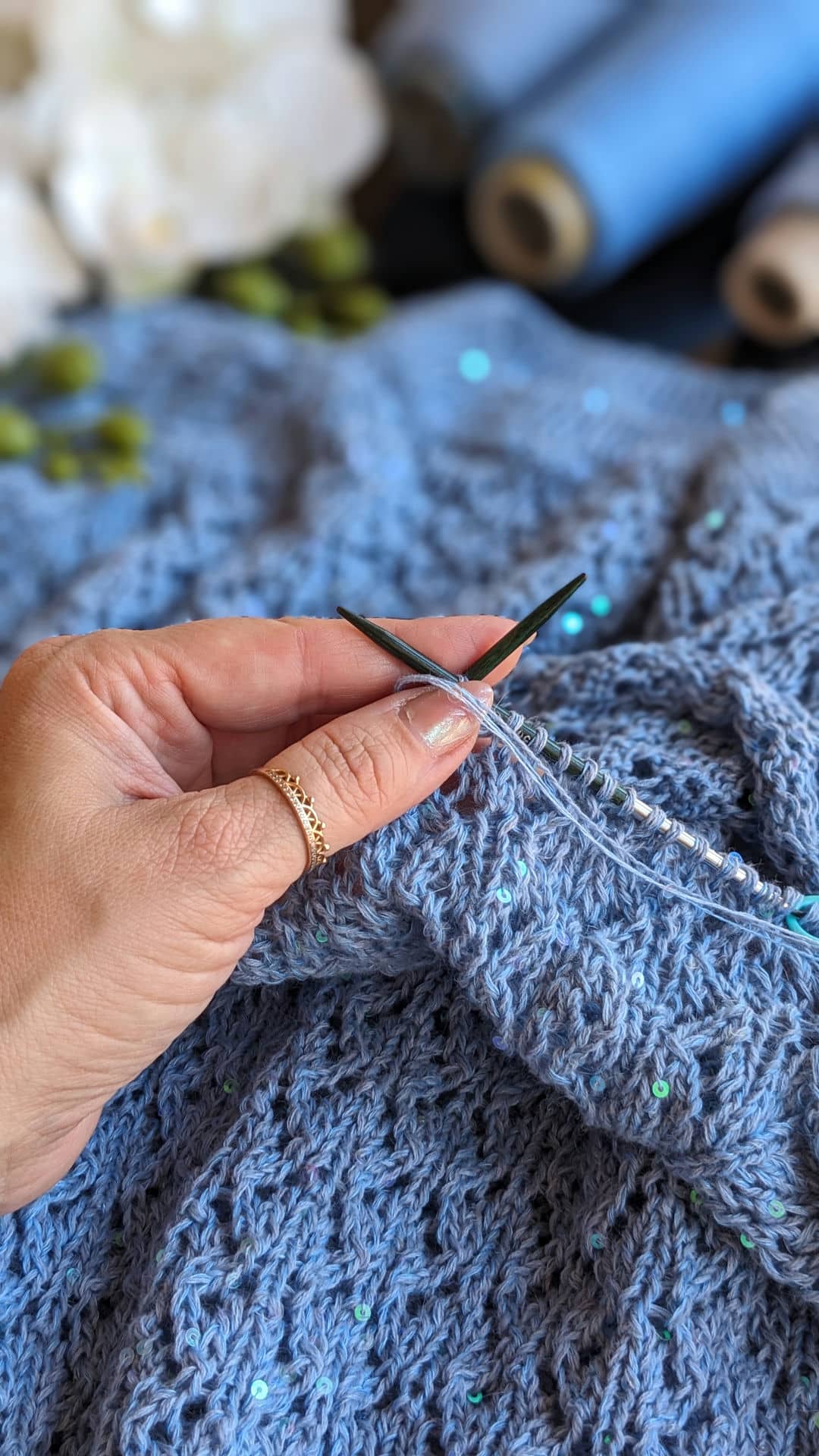
The result is a mix of about 370 m/100 g, which at my gauge works with 3.5 mm needles. A perfect combination of textures and shades – no strand argues with another, they complement each other.
This very swatch became the push for a new garment. “Why not knit a jumper?” I thought.
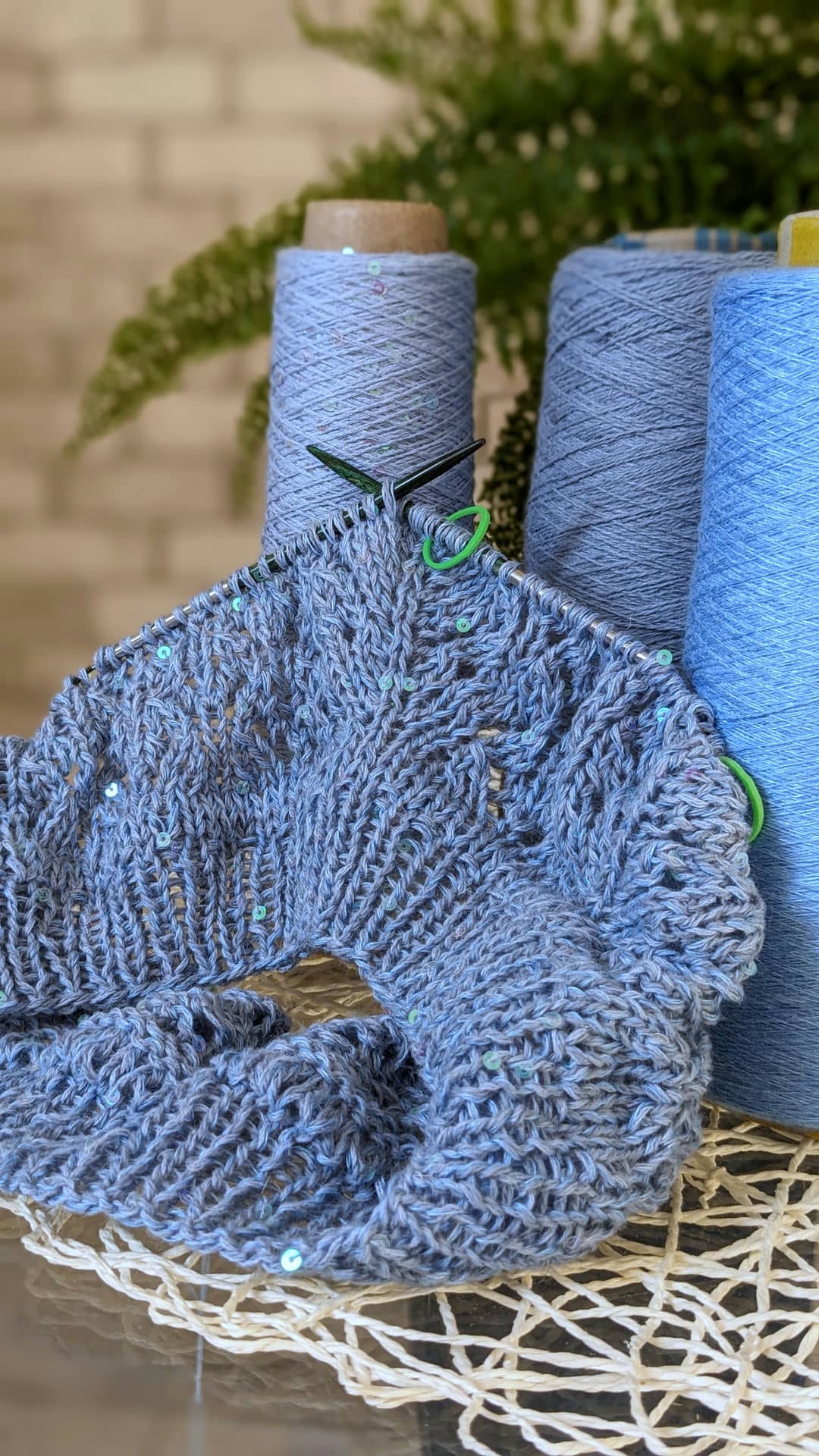
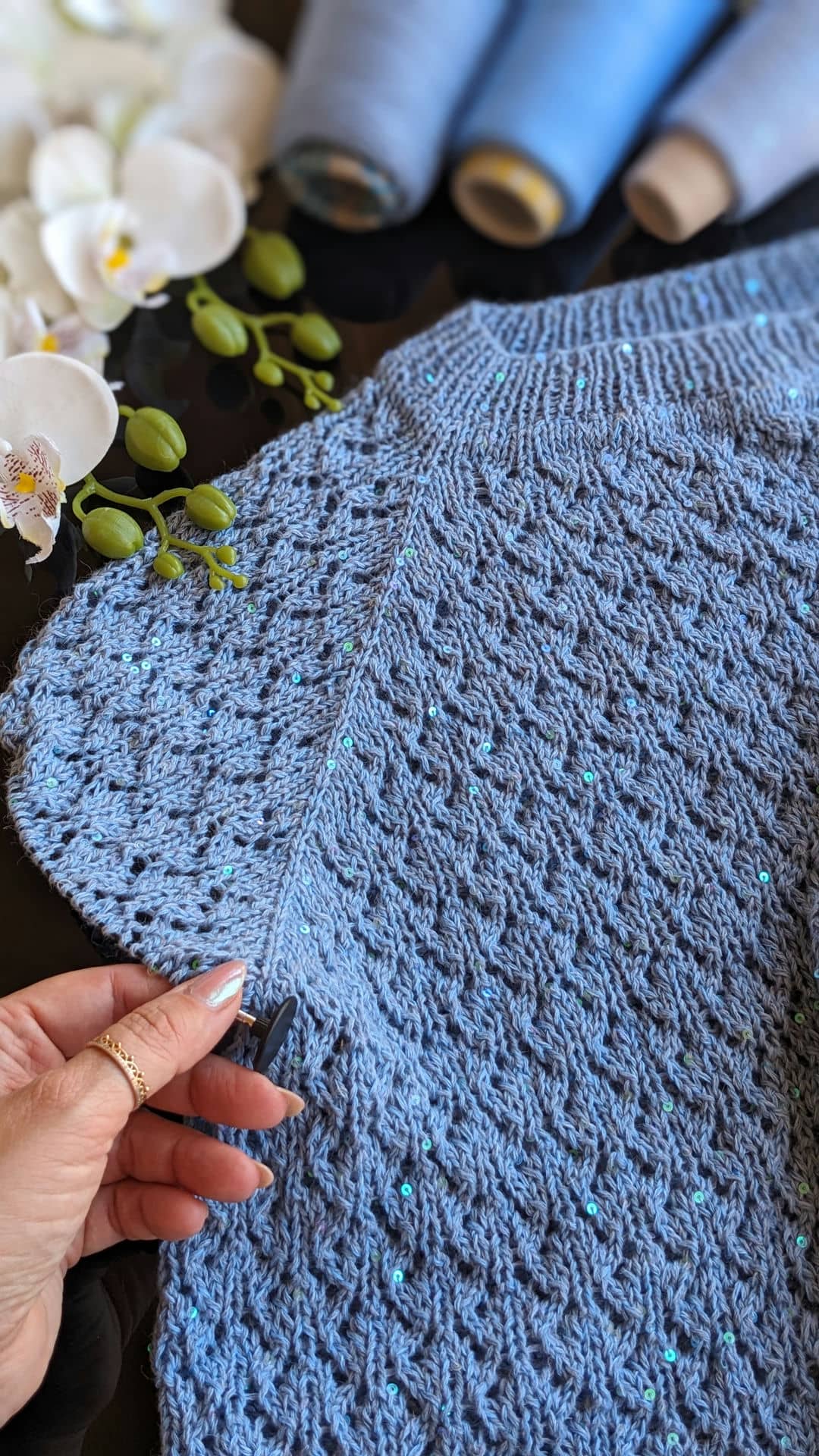
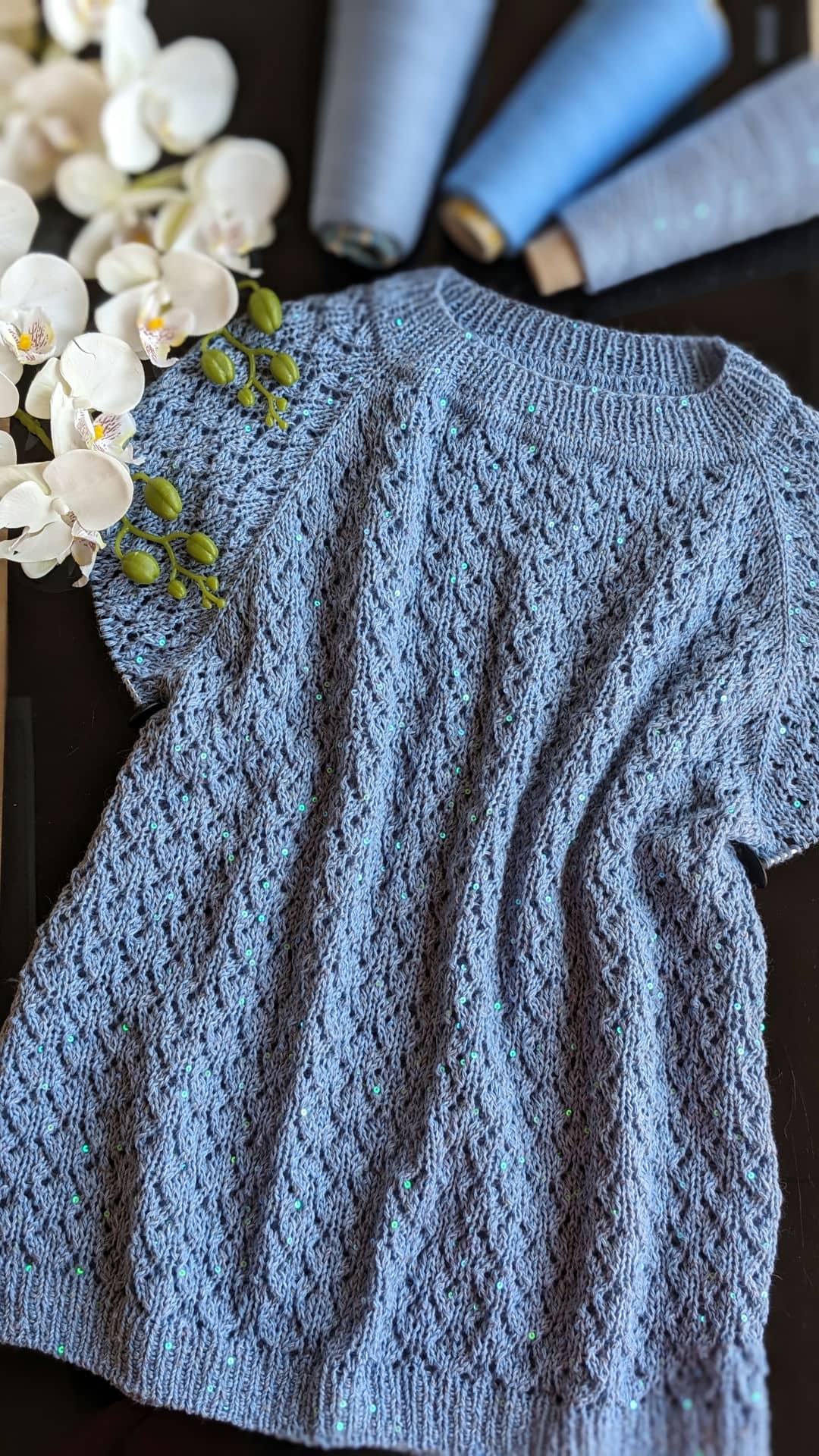
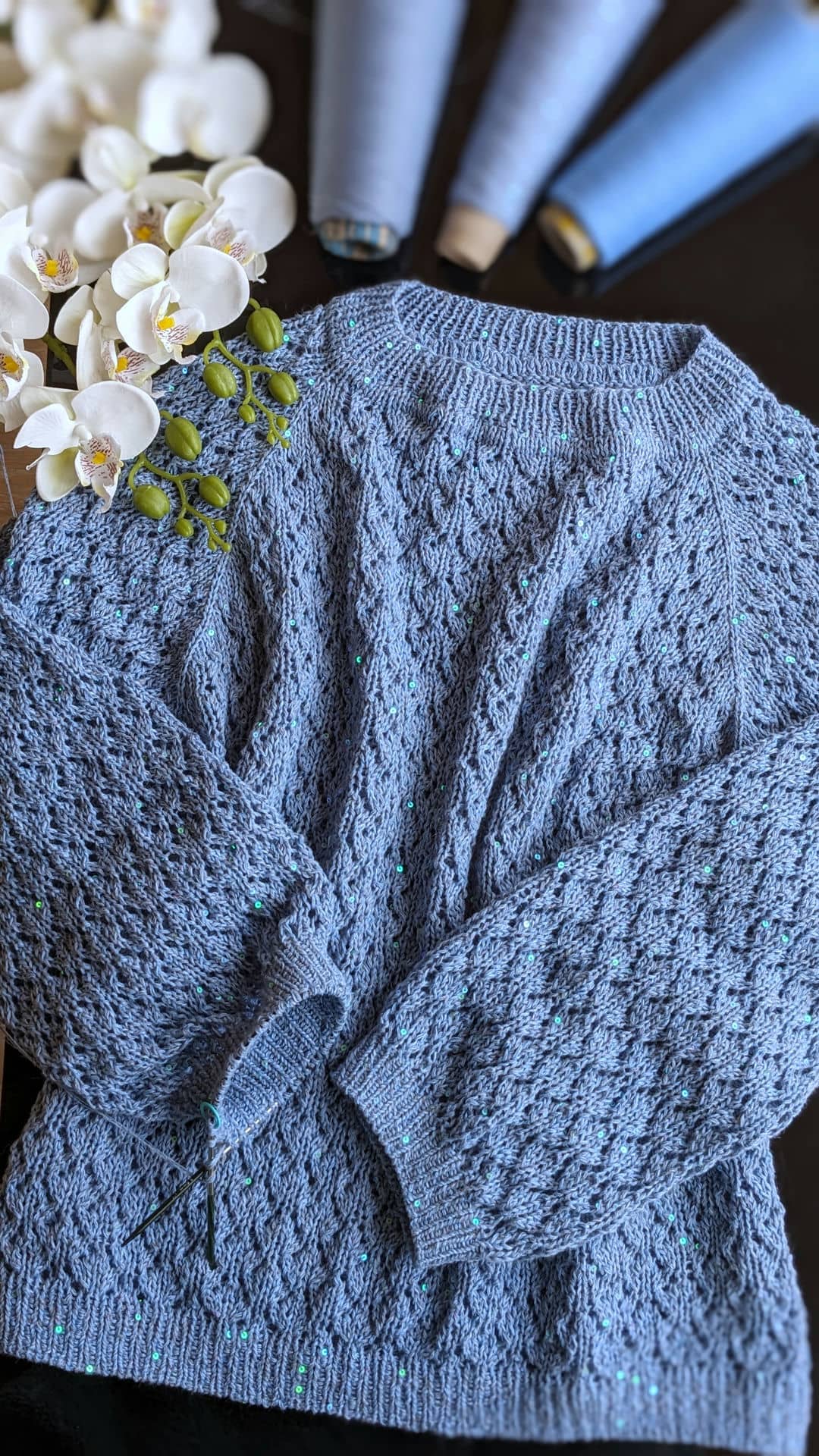
Style – a classic raglan, which gives freedom of movement and sits beautifully on the shoulders. Silhouette – straight and universal, for everyday wear. Neckline – round, not wide, understated. Sleeves – as long as the yarn lasts. There is intrigue in that too – sometimes limited materials make a piece special.
“Ivy” weaves ideas together and opens up new possibilities, even from ordinary leftovers.
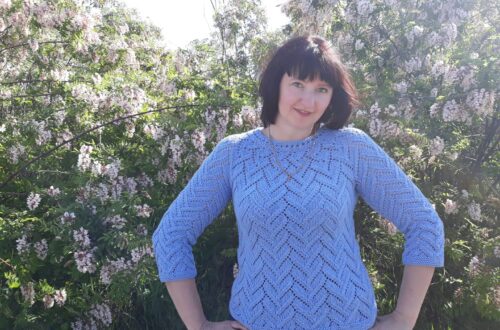
The jumper is a classic top-down raglan with a straight, relaxed silhouette. The calculations are for size 48–50 (≈ EU 42–44, M–L).
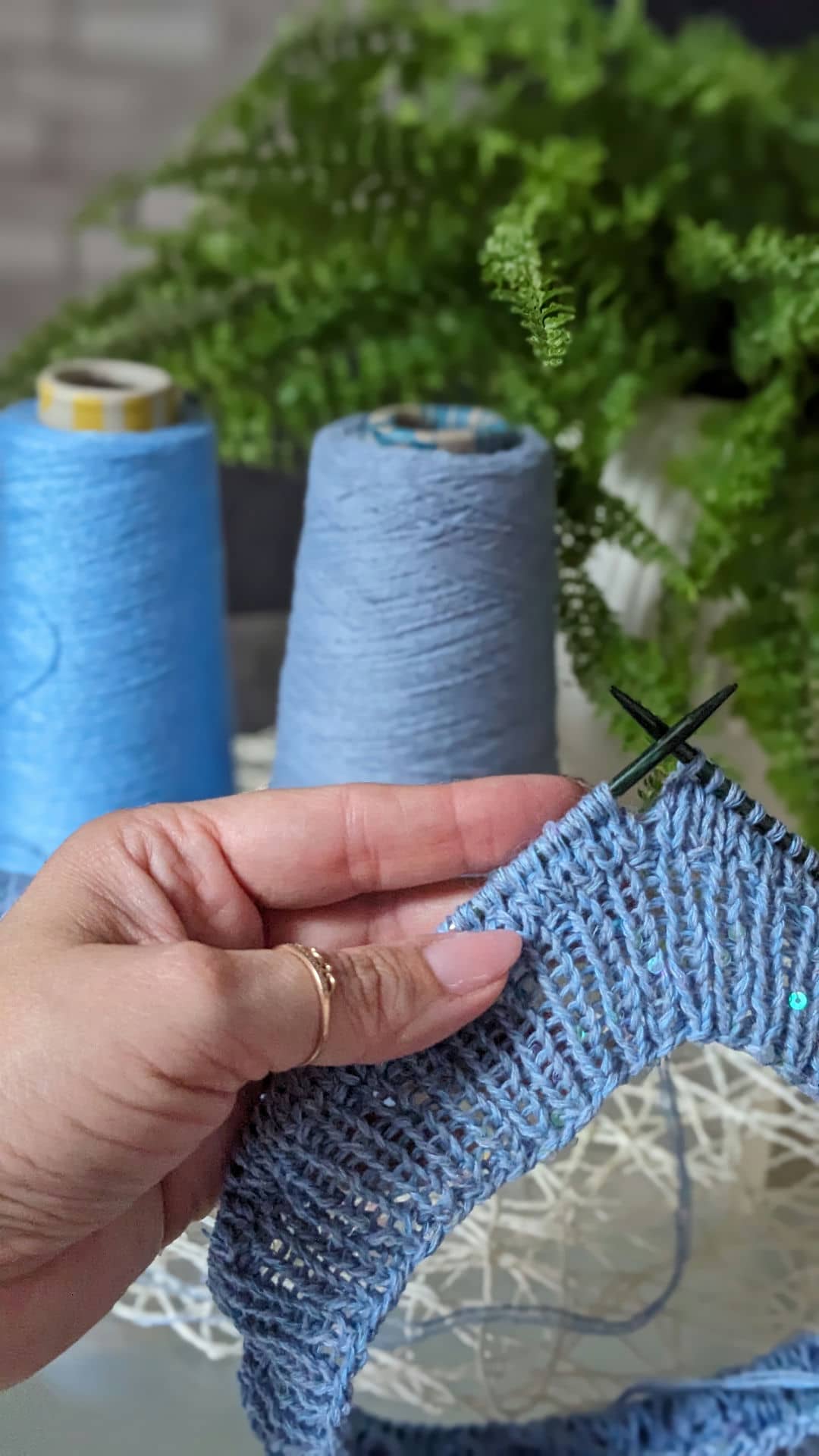
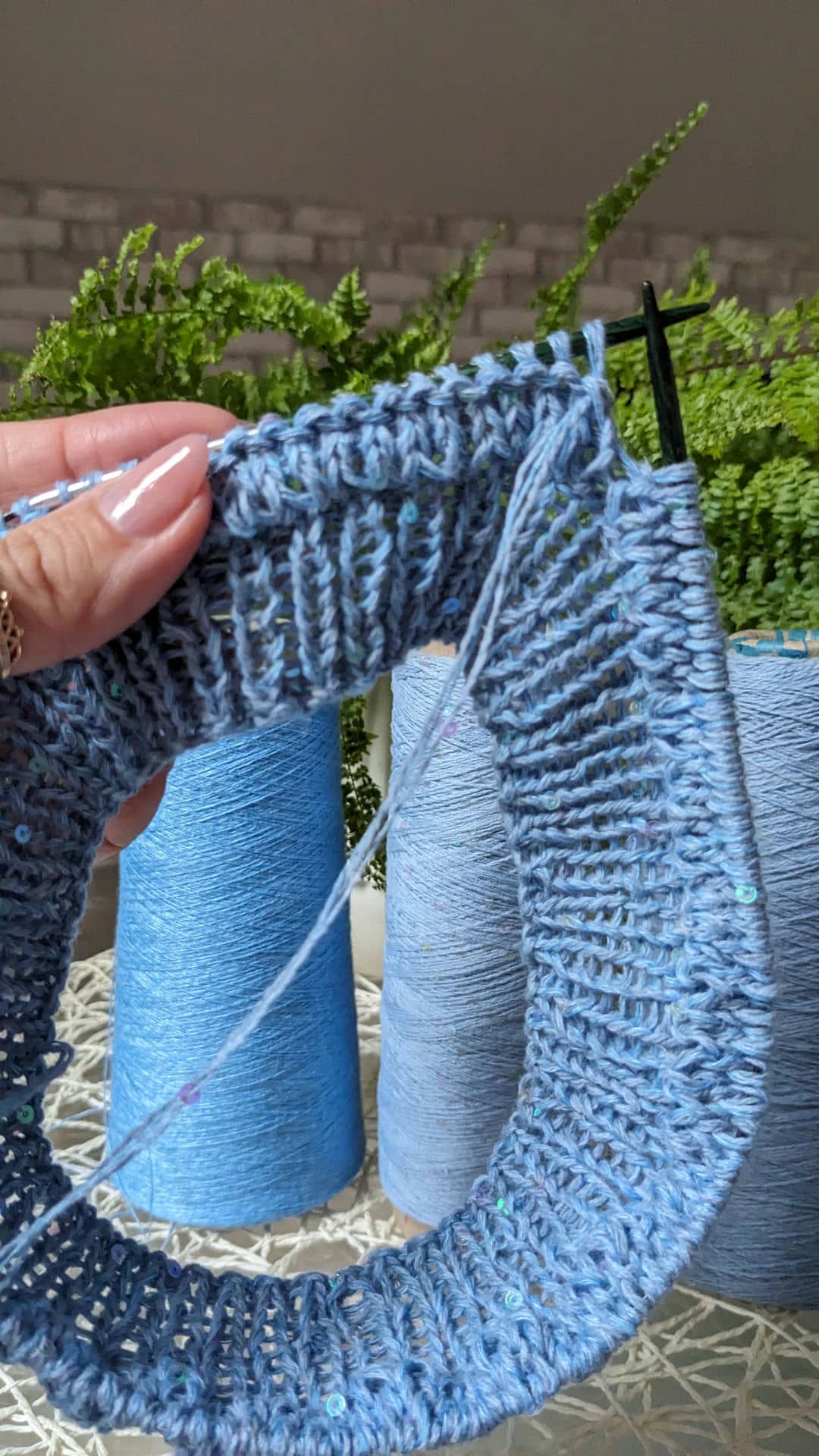
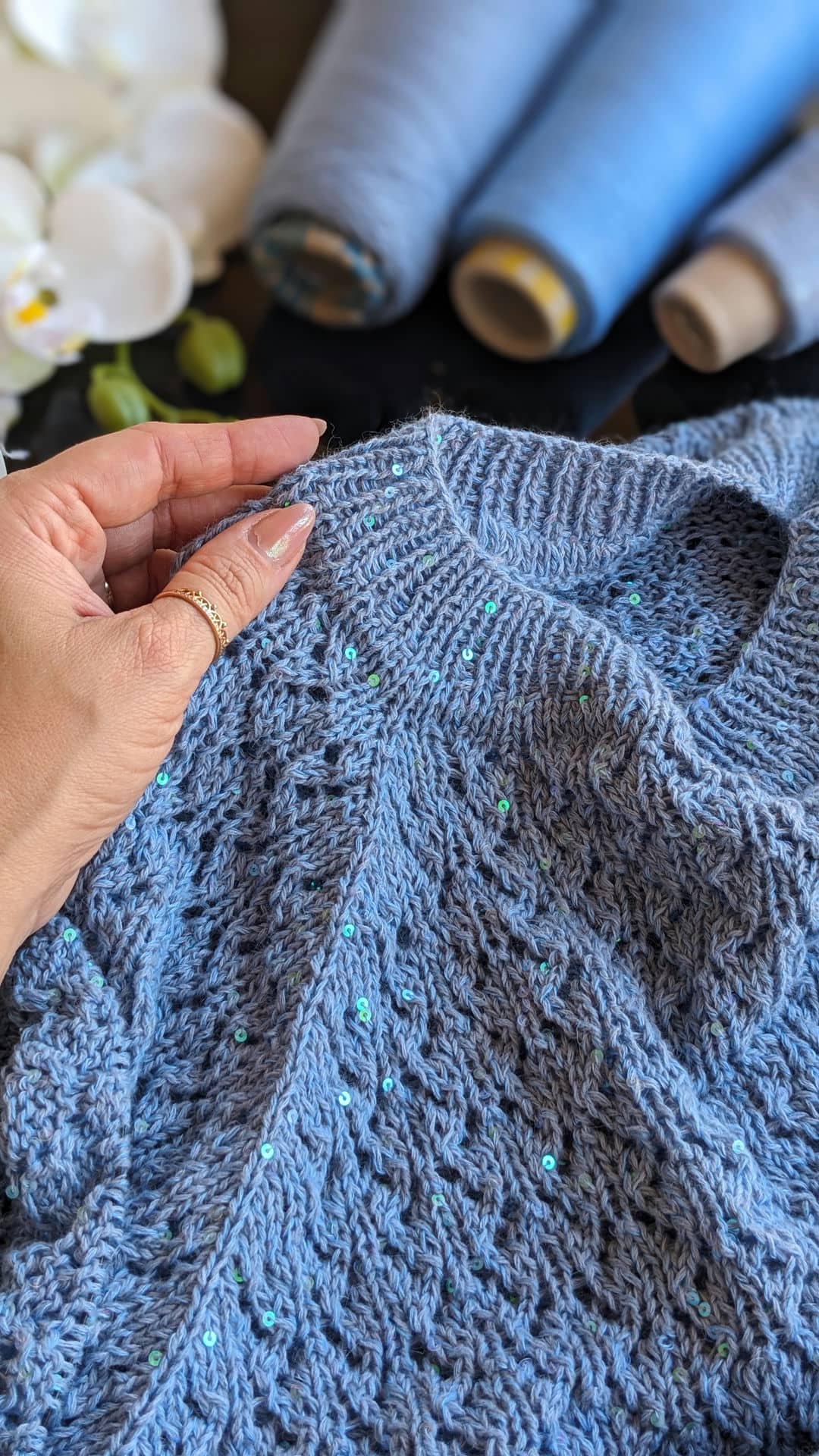
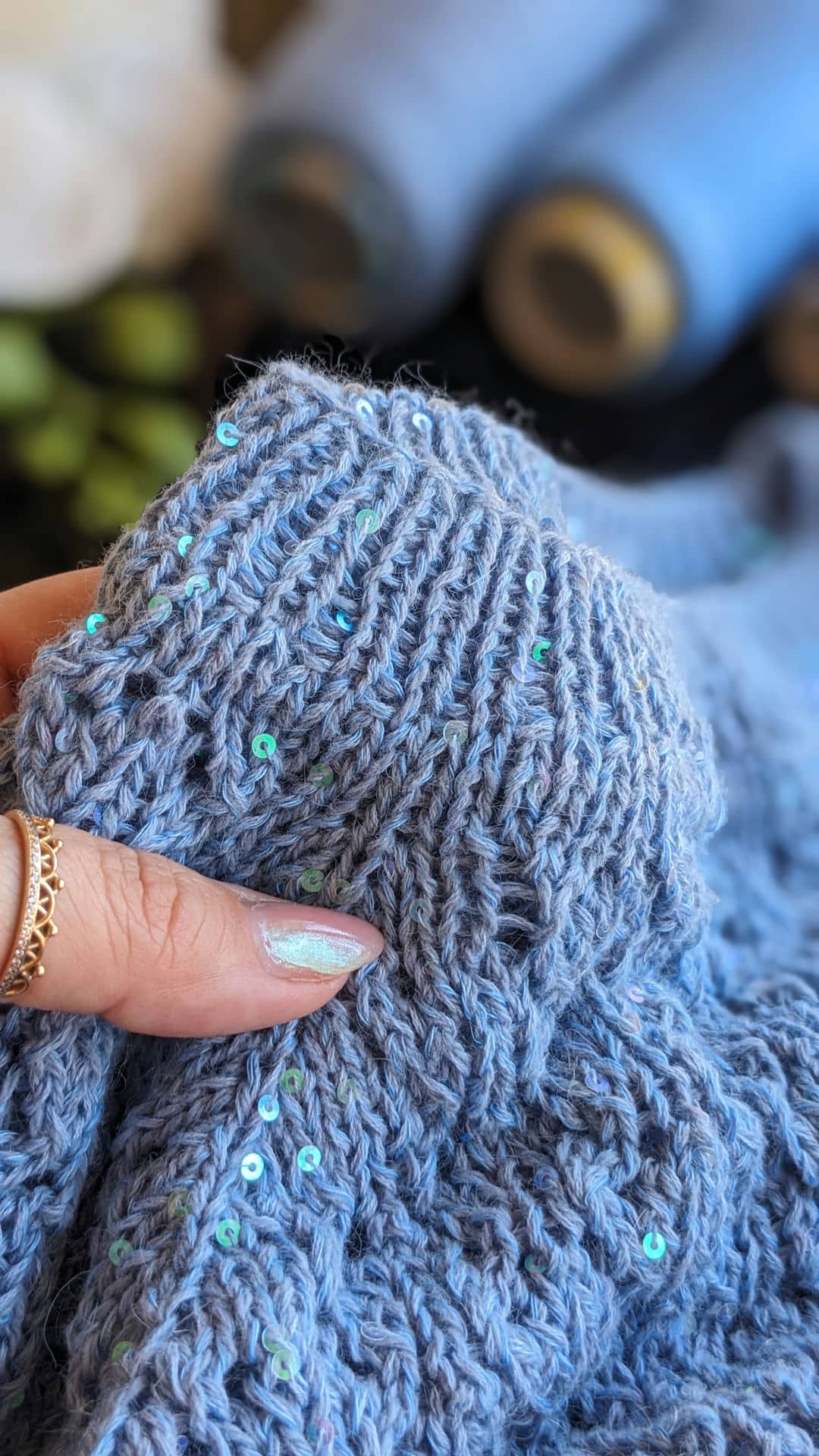
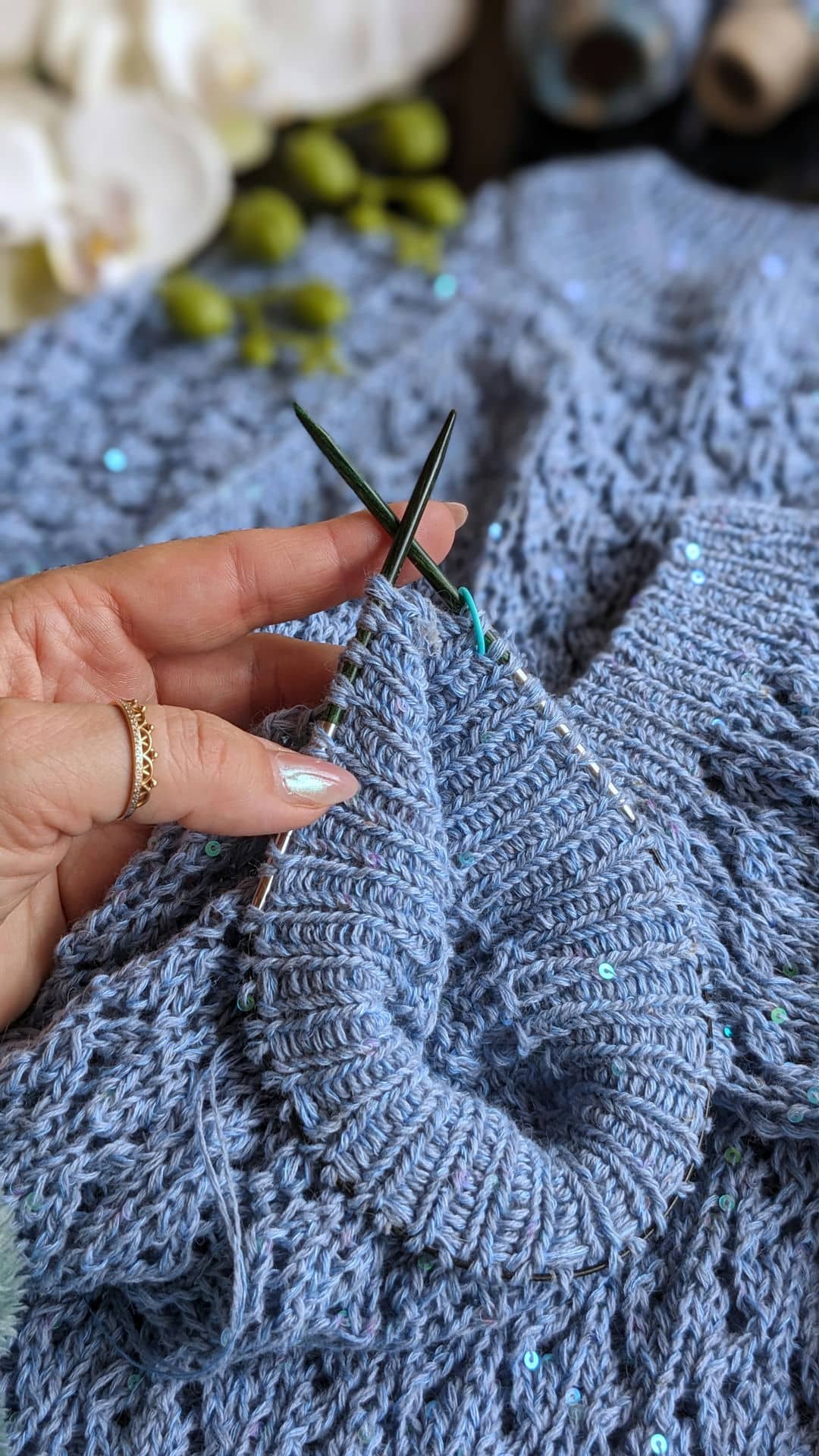
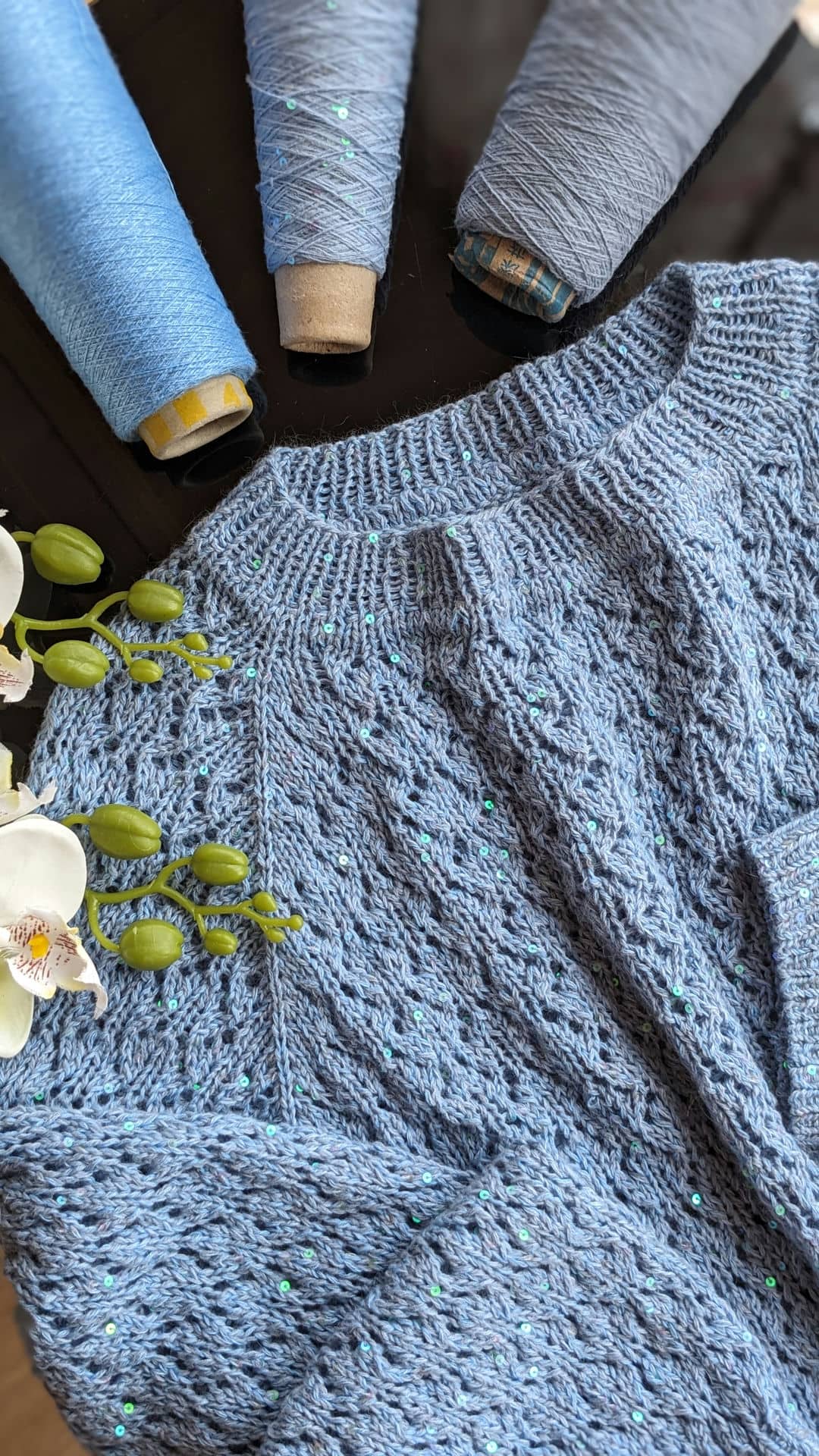
We knit top-down in one piece, starting from the neckline. On 3.5 mm needles, with the yarn held triple, cast on 100 stitches and work 1×1 rib and a mock-linked edge.
Neckline:
Rounds 1–10: 1×1 rib.
Round 11: knit all the stitches on the needles, and between the stitches (M1 from the bar) form new stitches and purl them.
The number of stitches in this round doubles, 100 x 2 = 200 stitches.
Round 12: knit the knit stitch, slip the purl stitch without working it, with the working yarn in front.
Round 13: slip the knit stitch without working it, with the working yarn behind, purl the purl stitch.
Round 14: knit the knit stitch, slip the purl stitch without working it, with the working yarn in front.
Round 15: slip the knit stitch without working it, with the working yarn behind, purl the purl stitch.
Round 16: work the knit and purl stitches together as k2tog, all the way around the round. The number of stitches halves, 200/2 = 100 stitches.
The neckline is done. Now we move on to the main fabric and the lace stitch. Do not change the needle size.
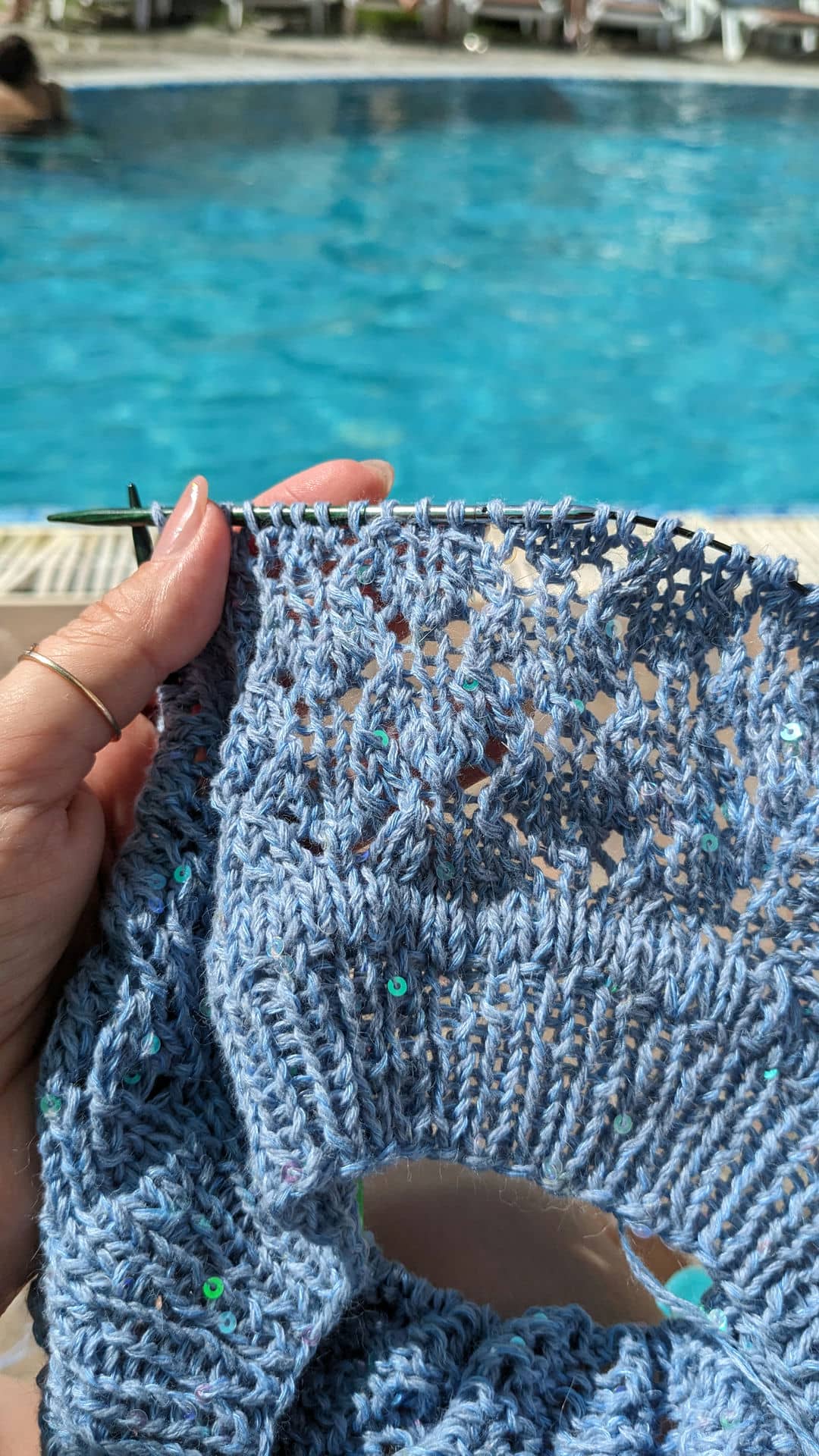
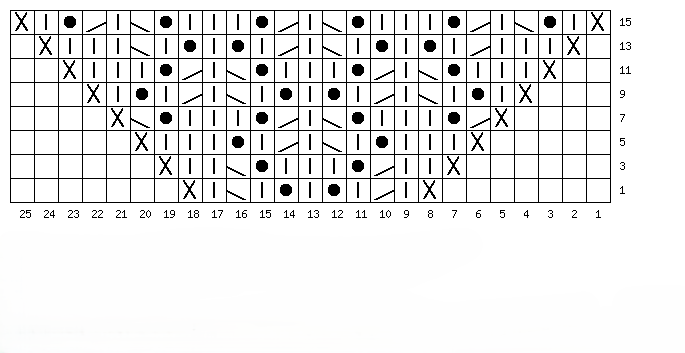
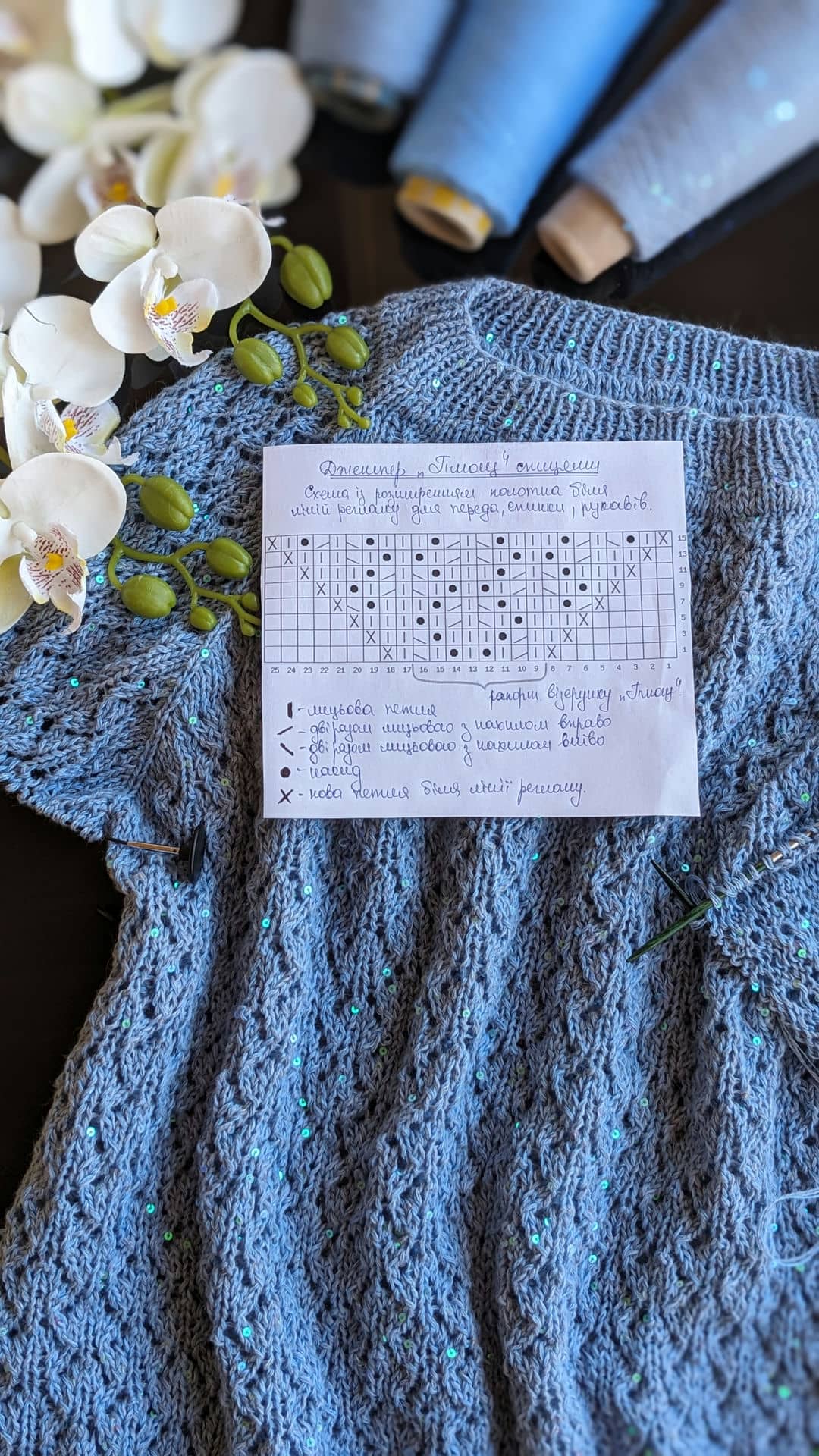
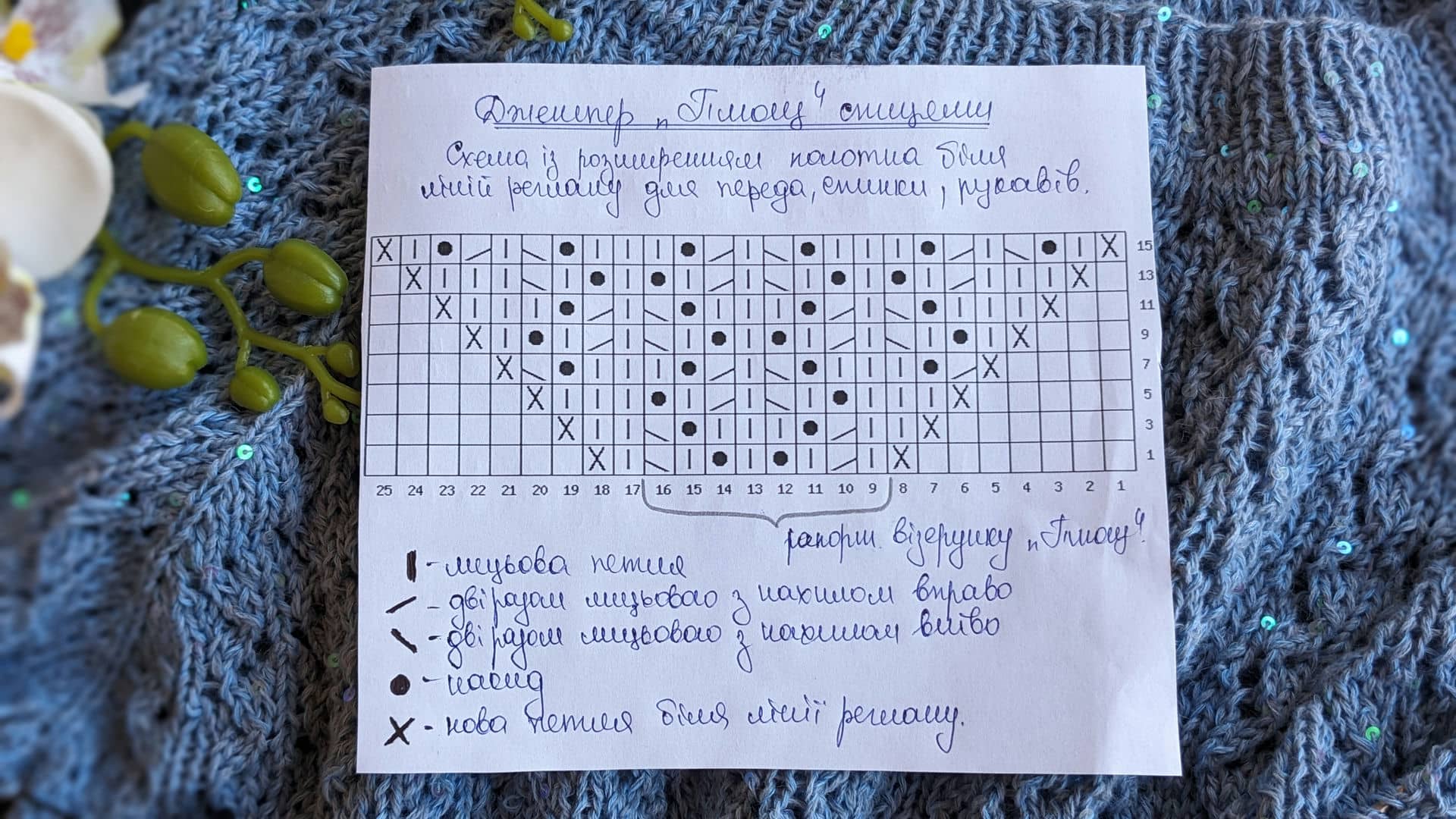
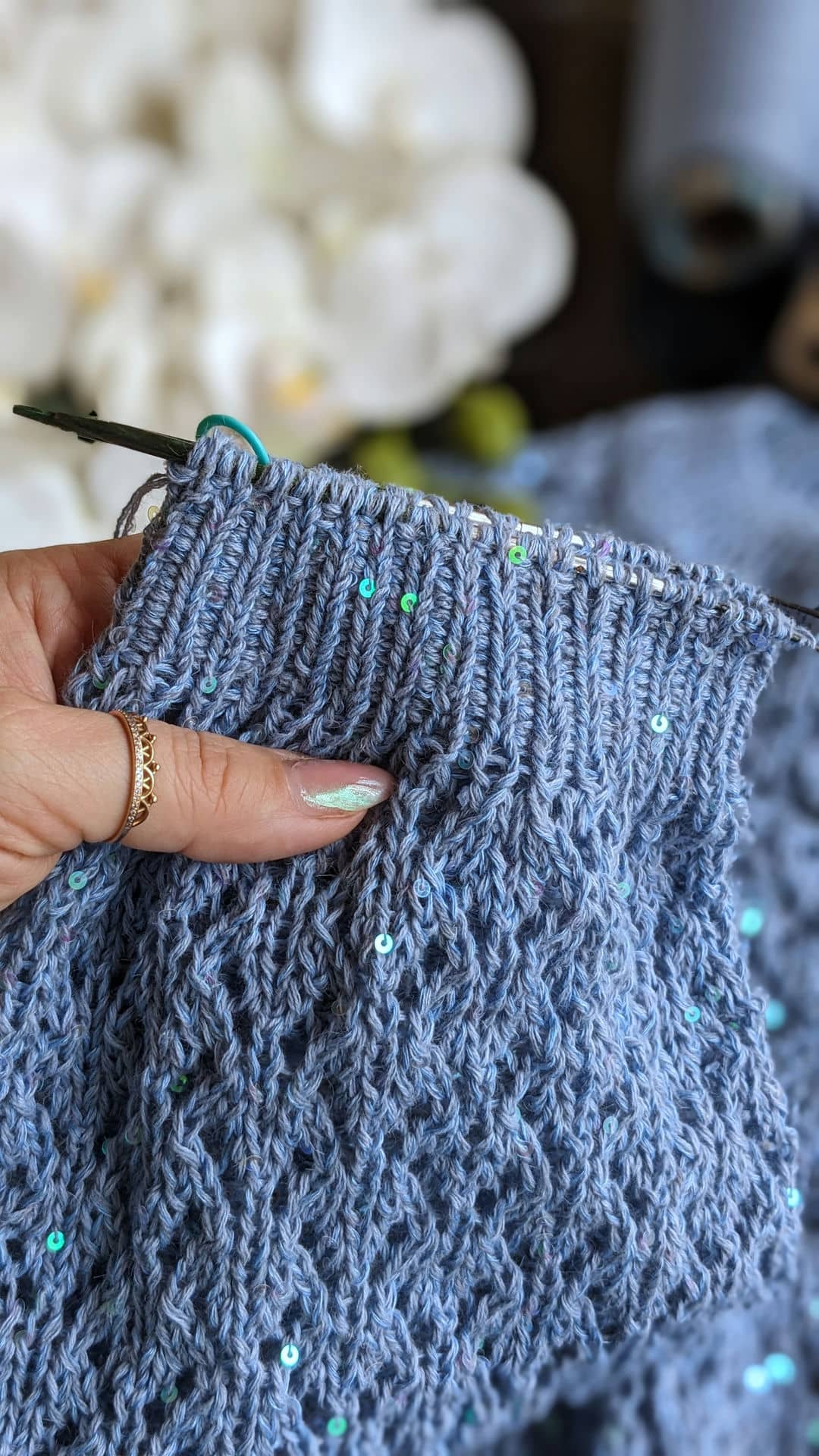
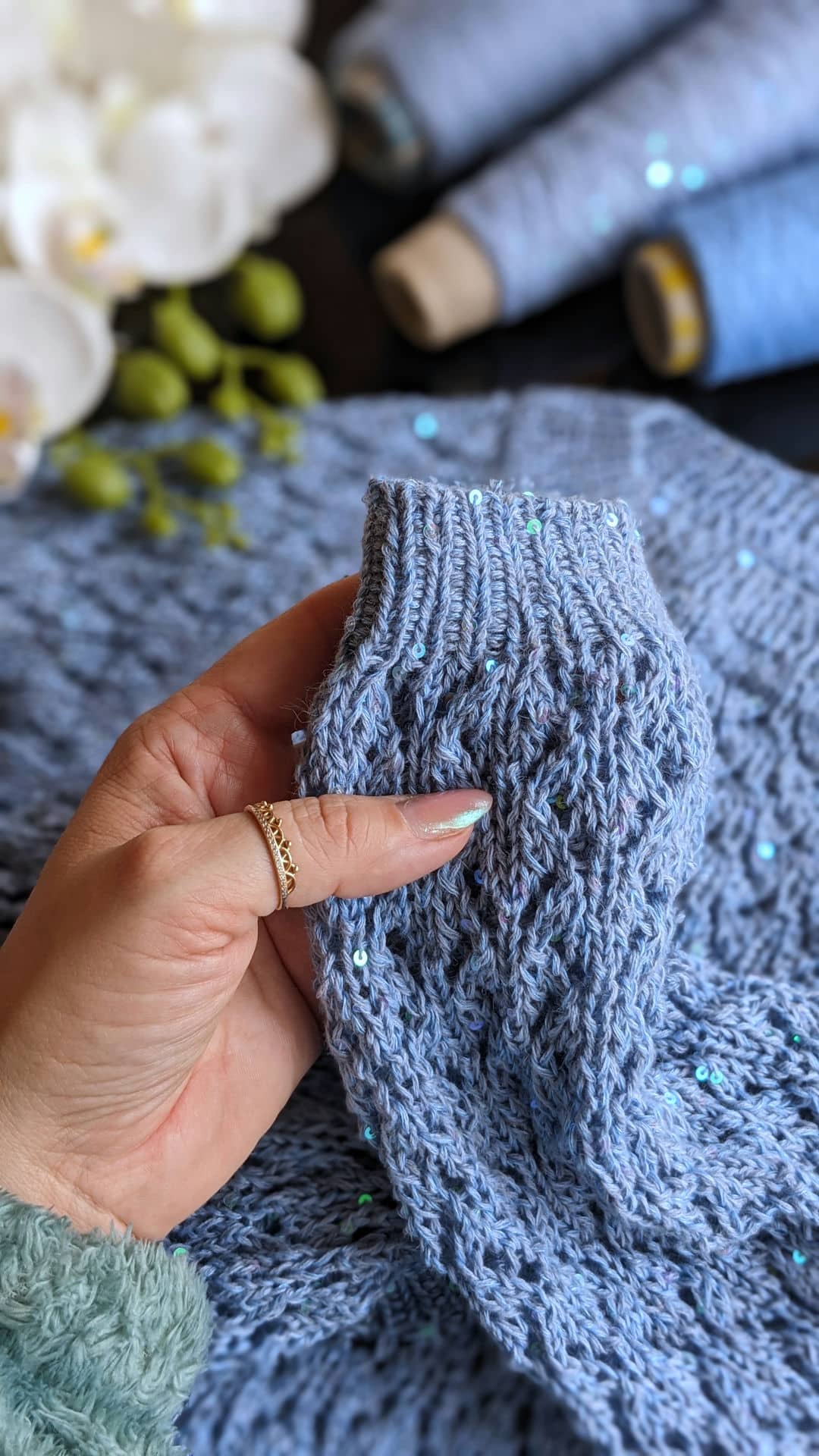
Technical details of the stitch pattern: Pattern repeat: 8 stitches + 1 stitch for symmetry + 2 edge stitches (for working flat).
On RS rows (odd-numbered), work following the chart.
On WS rows (even-numbered), purl all stitches.
When working in the round, keep in mind that: The number of stitches must be a multiple of 8.
Odd-numbered rounds follow the chart.
Even-numbered rounds are all knit.
The repeat is 8 rows high.
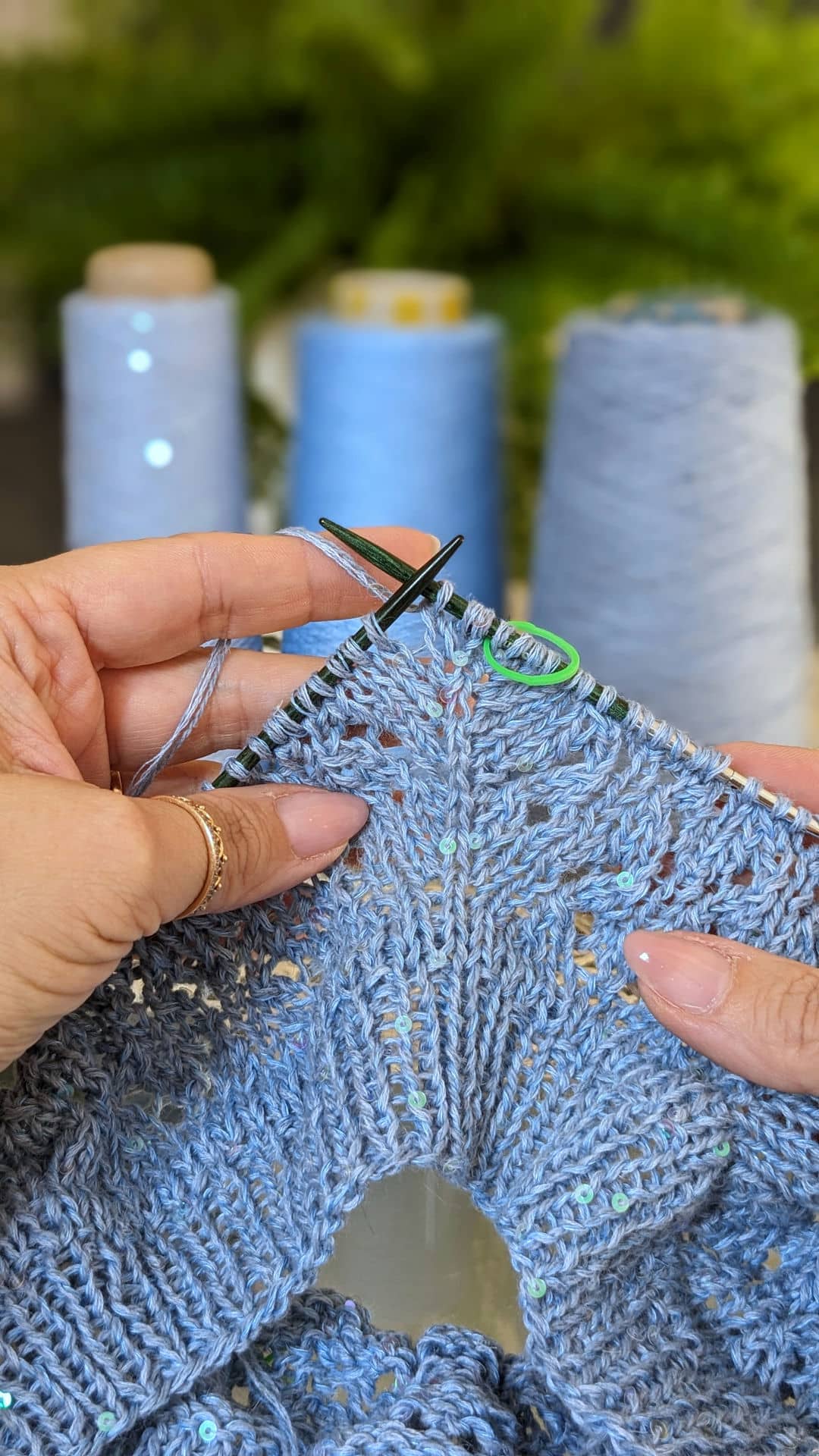
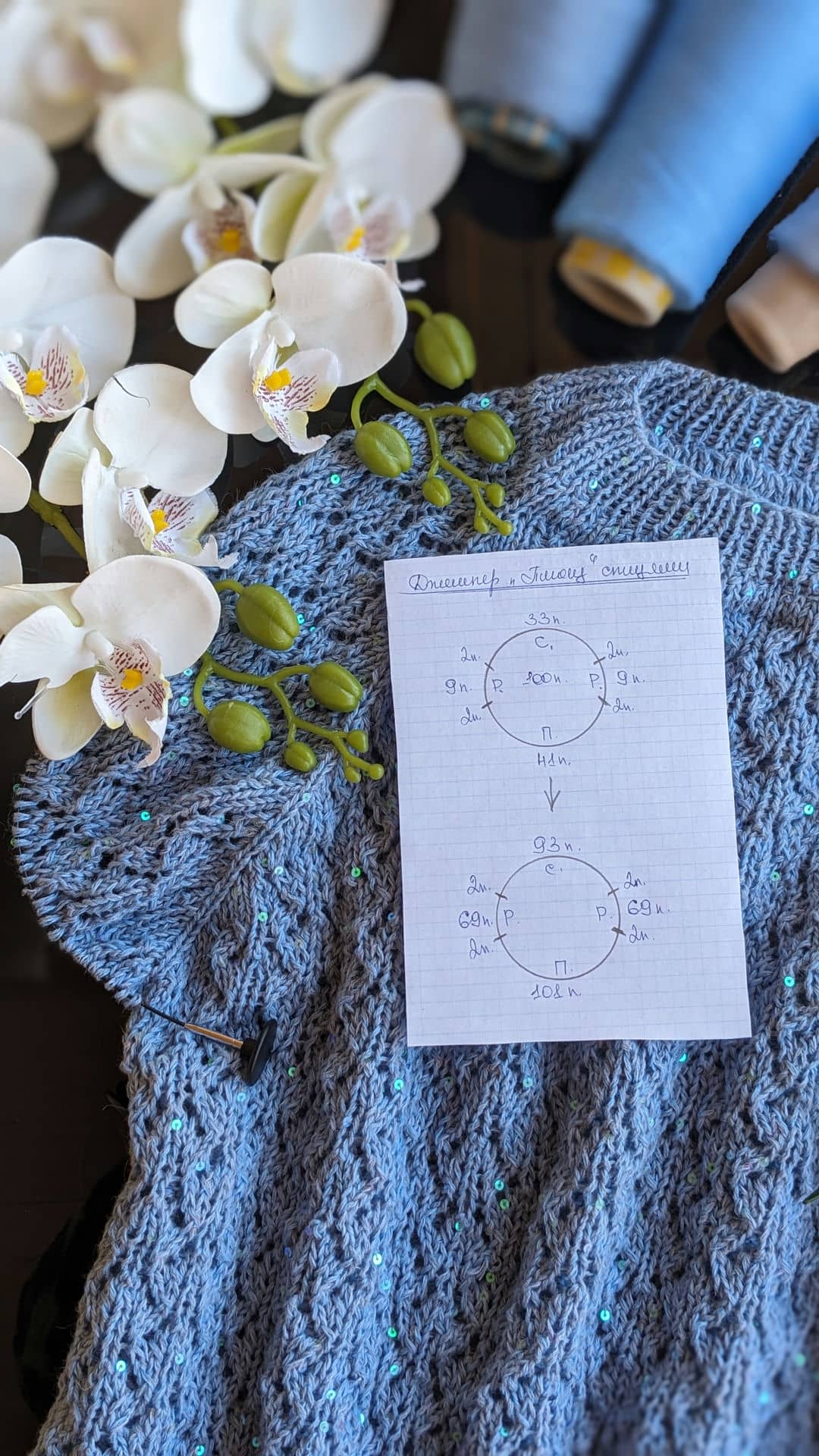
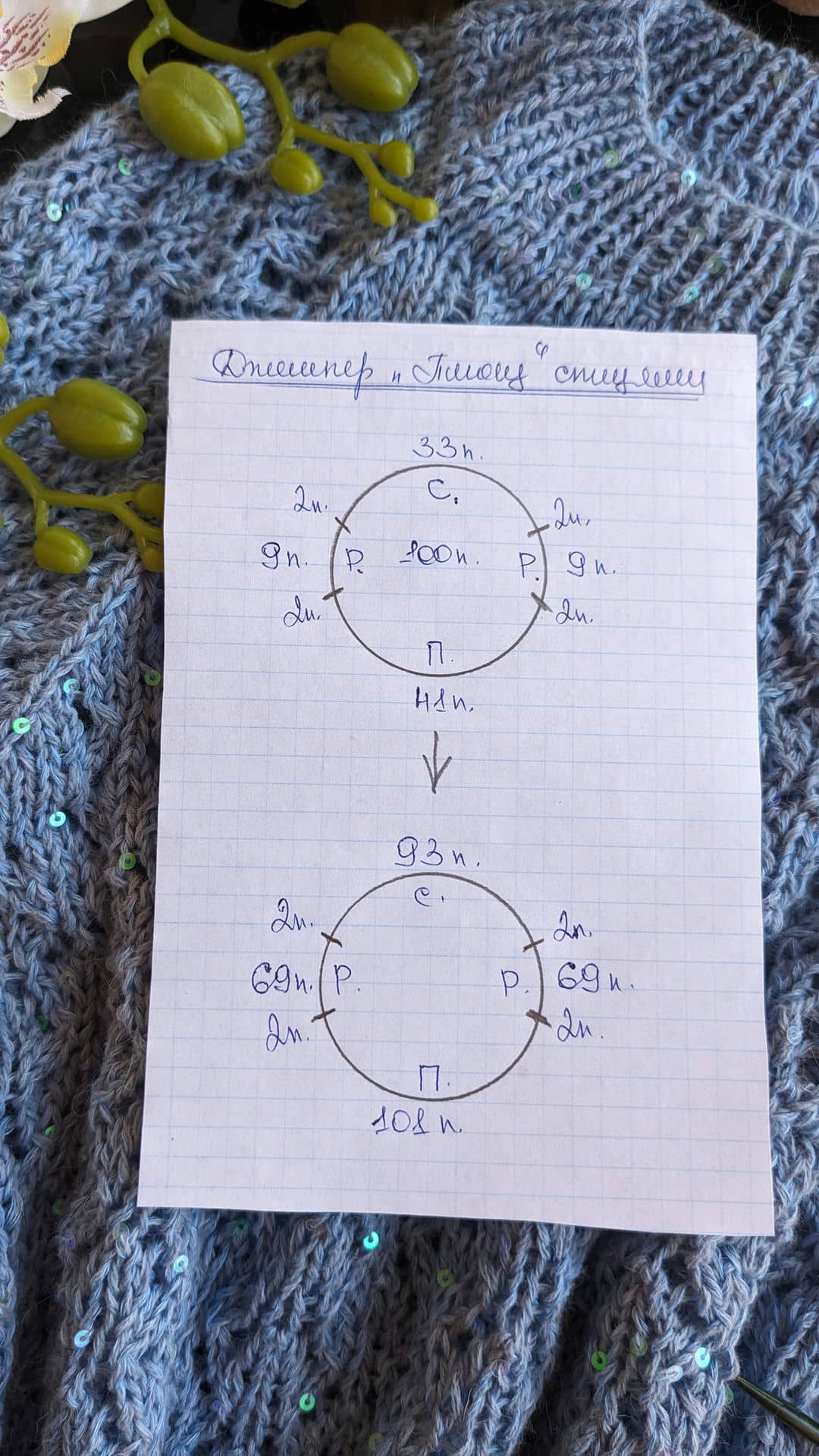
There are 100 stitches on the needles. Divide the stitches into separate sections and mark them with markers:
- back – 33 stitches,
- front – 41 stitches,
- two sleeves – 9 stitches each,
- four raglan lines – 2 stitches each.
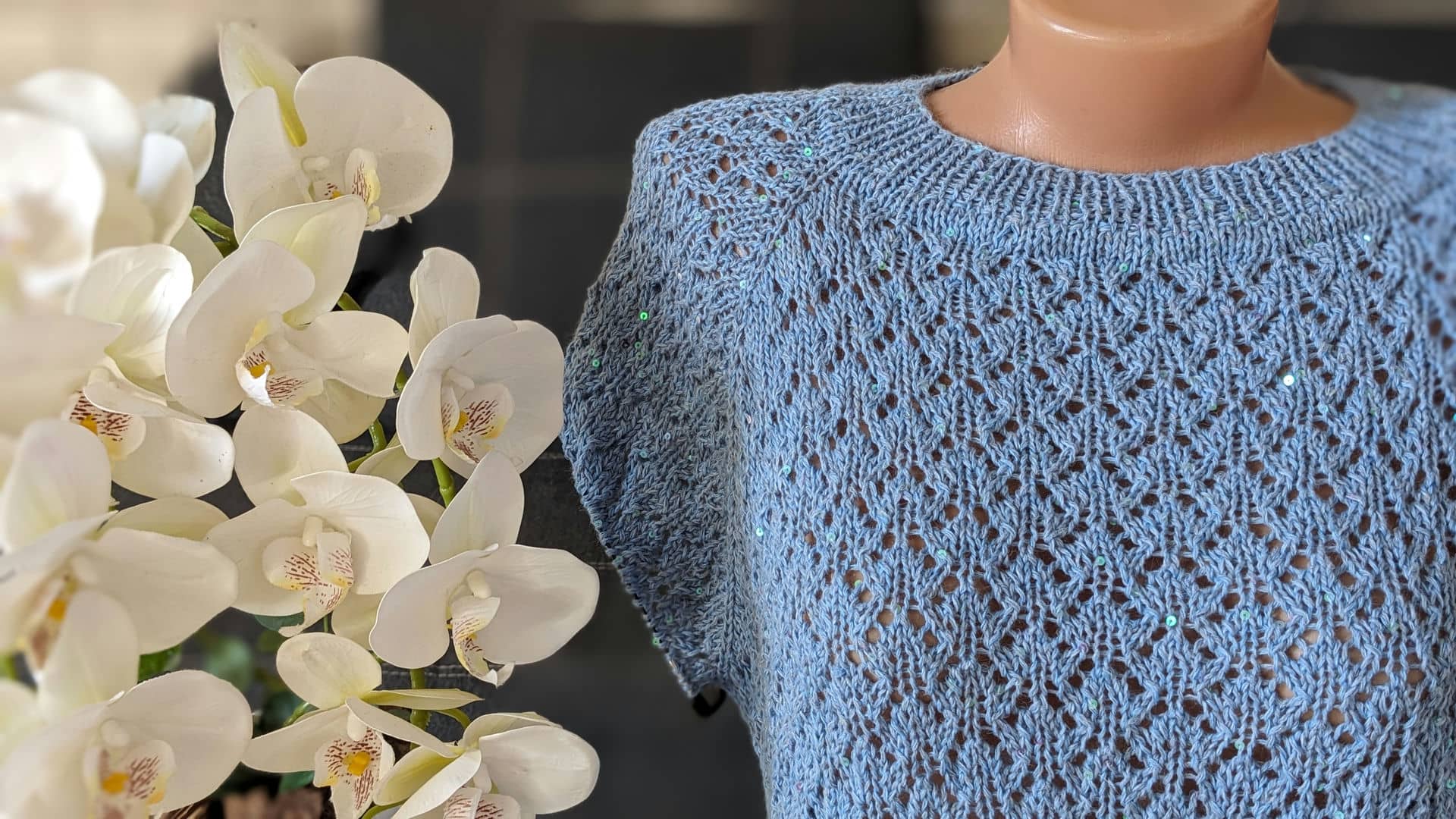
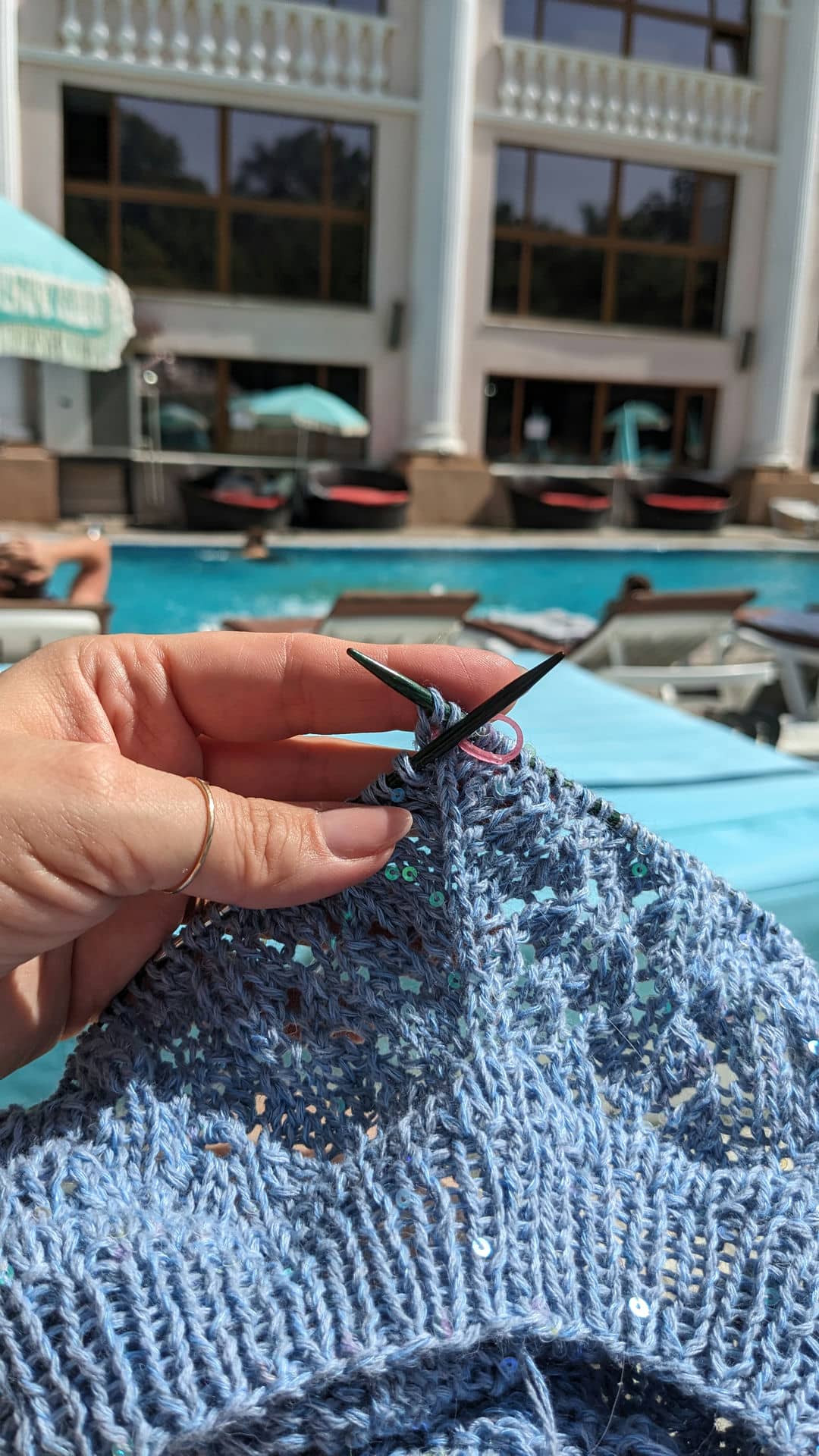
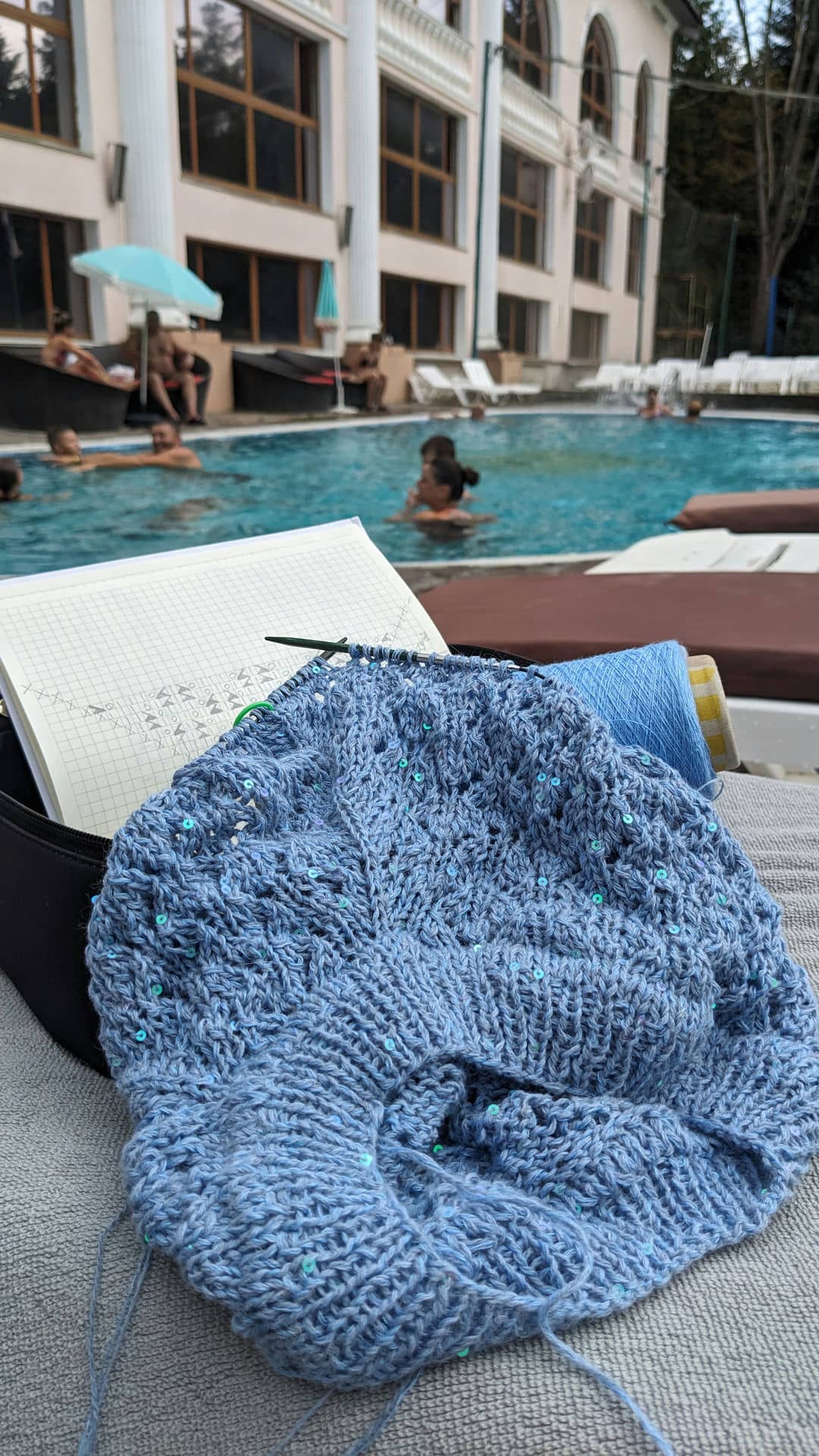
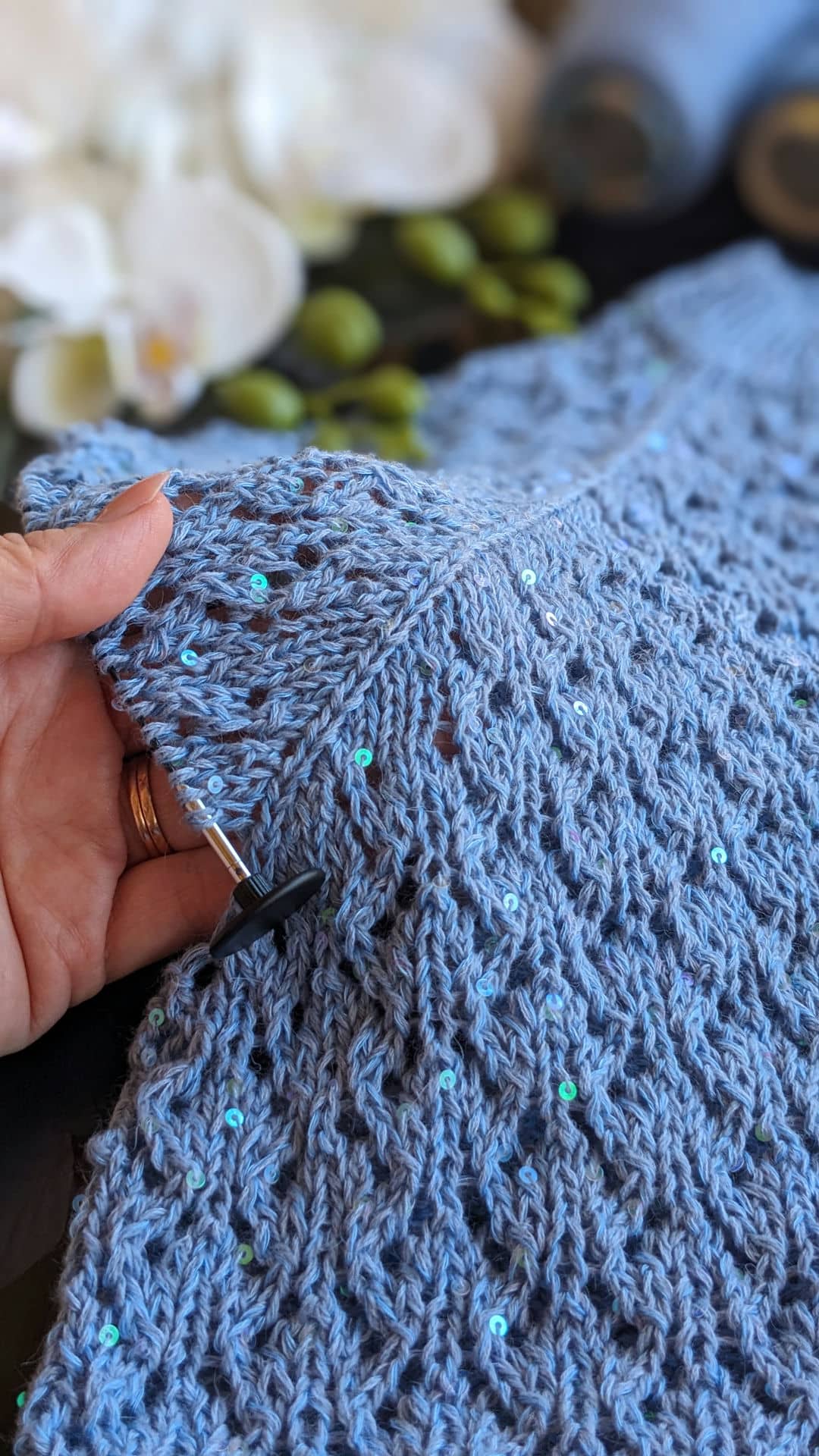
Begin knitting the yoke in the round. Knit the raglan lines (RL) in knit stitches. Work the increases next to the raglan lines on every 2nd round, the same for all sections. Gradually work the new stitches into the pattern following the chart below.
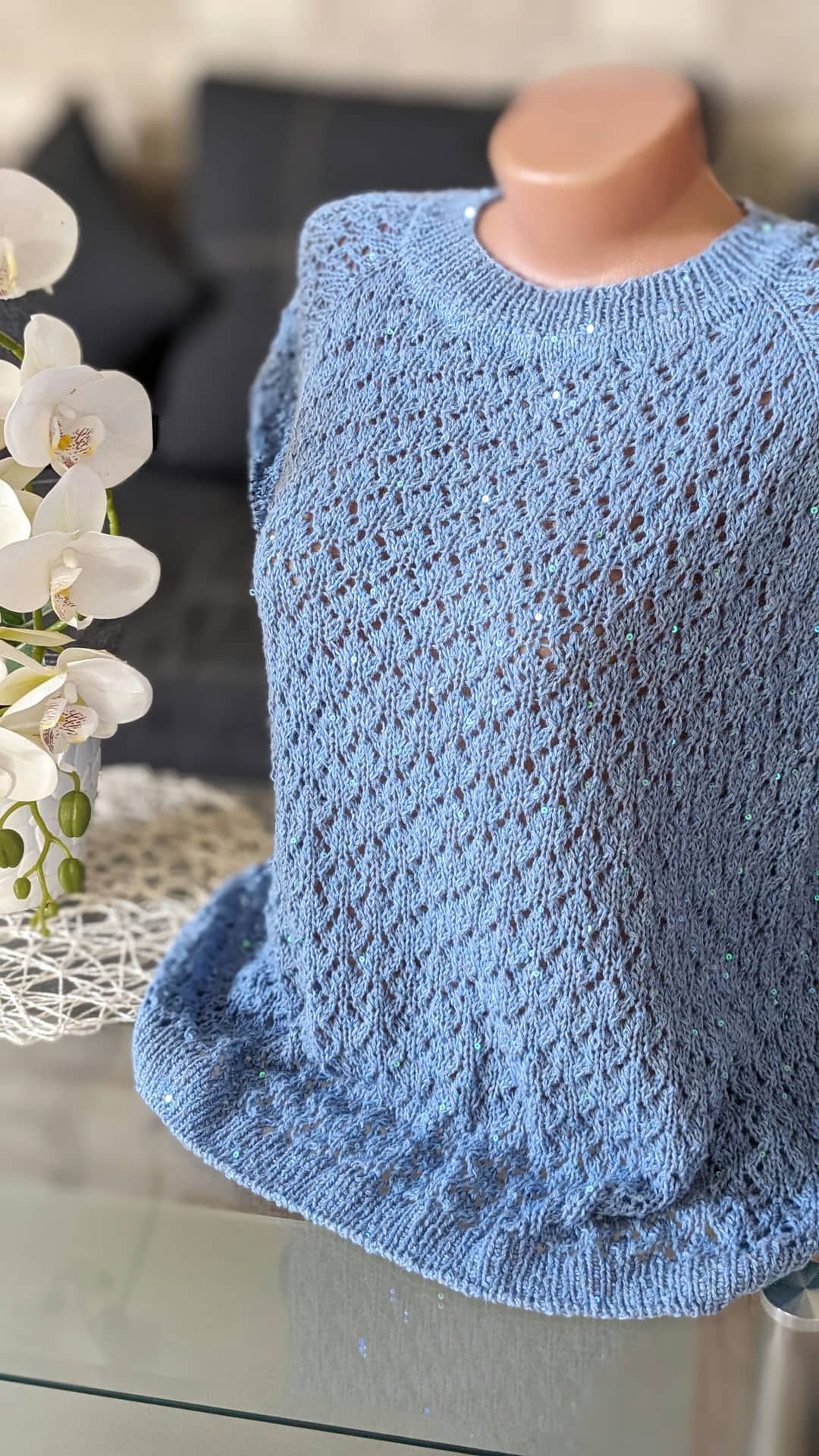
After 22 cm of yoke (including the height of the neckline), the stitch counts at this point are:
- back – 93 stitches,
- front – 101 stitches,
- two sleeves – 69 stitches each,
- four raglan lines – 2 stitches each.
Put the sleeve stitches on waste yarn. The raglan line stitches go to the main body. Now we work the Asian-style back raise in rows, on the back stitches + the raglan line stitches. On the needles: 2 + 93 + 2 = 97 stitches.
Work the Asian-style back raise. Its height is 12 rows of the pattern, about 4 cm.
Next we go back to knitting the main body in the round. Join the stitches of the back, front and four raglan lines, and add the stitches for the two underarms (19 stitches each), keeping the pattern repeat in mind.
The total number of stitches of the main body is:
97 (back + RL stitches) + 19 (underarm) + 105 (front + RL stitches) + 19 (underarm) = 240 stitches.
240 stitches / 8 stitches per pattern repeat = 30 pattern repeats.
Knit the main body to the length you need.
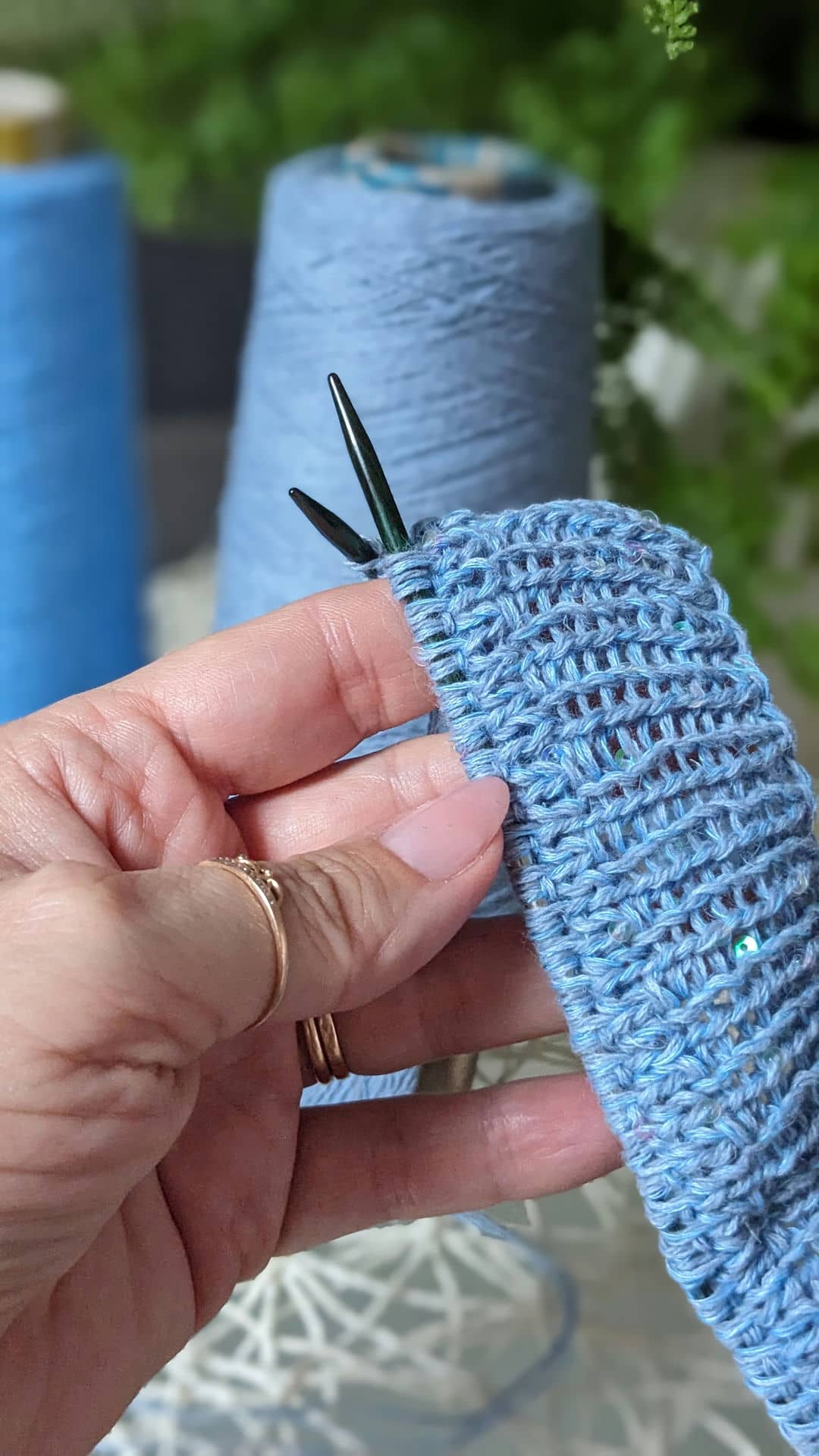
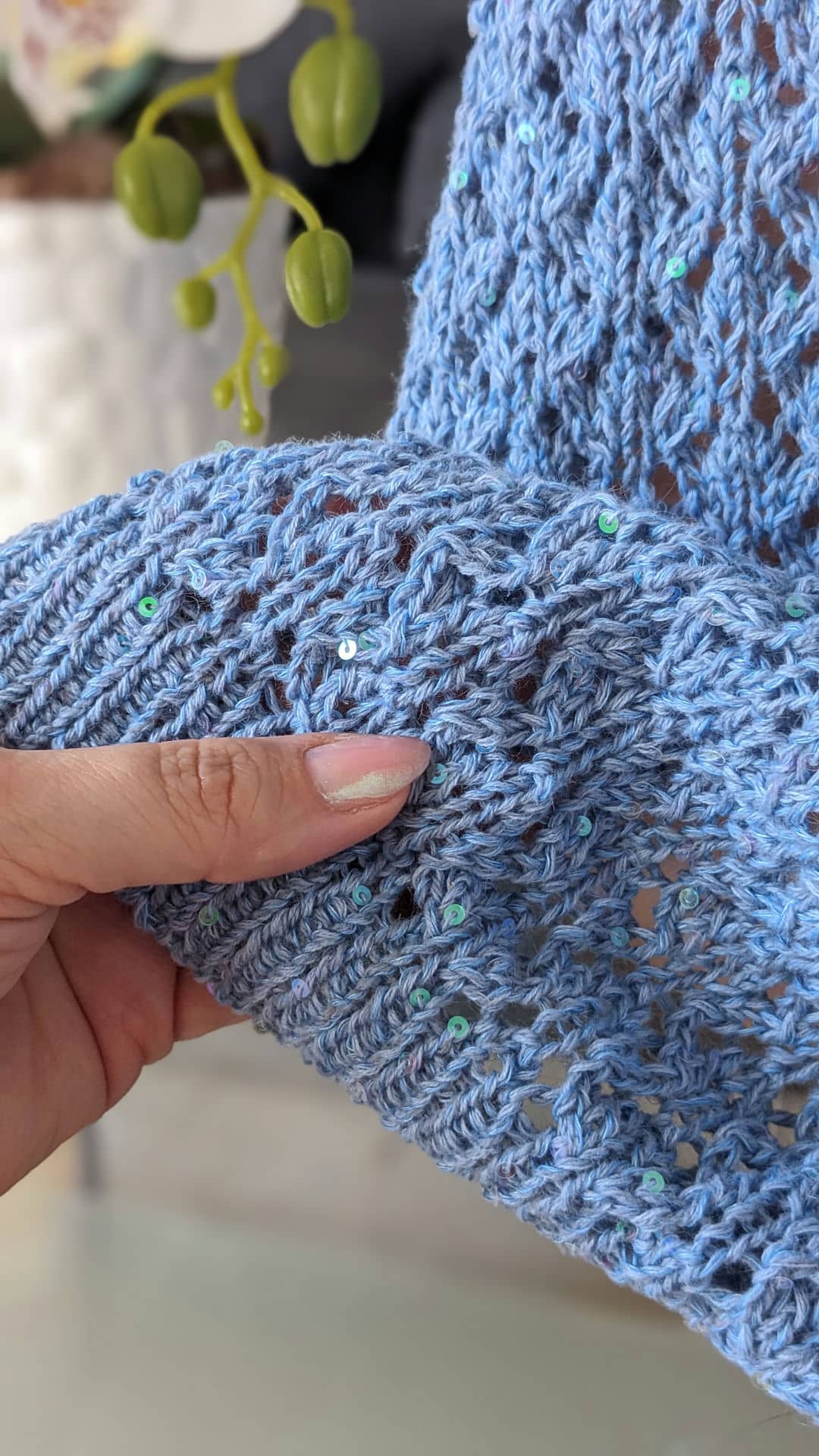
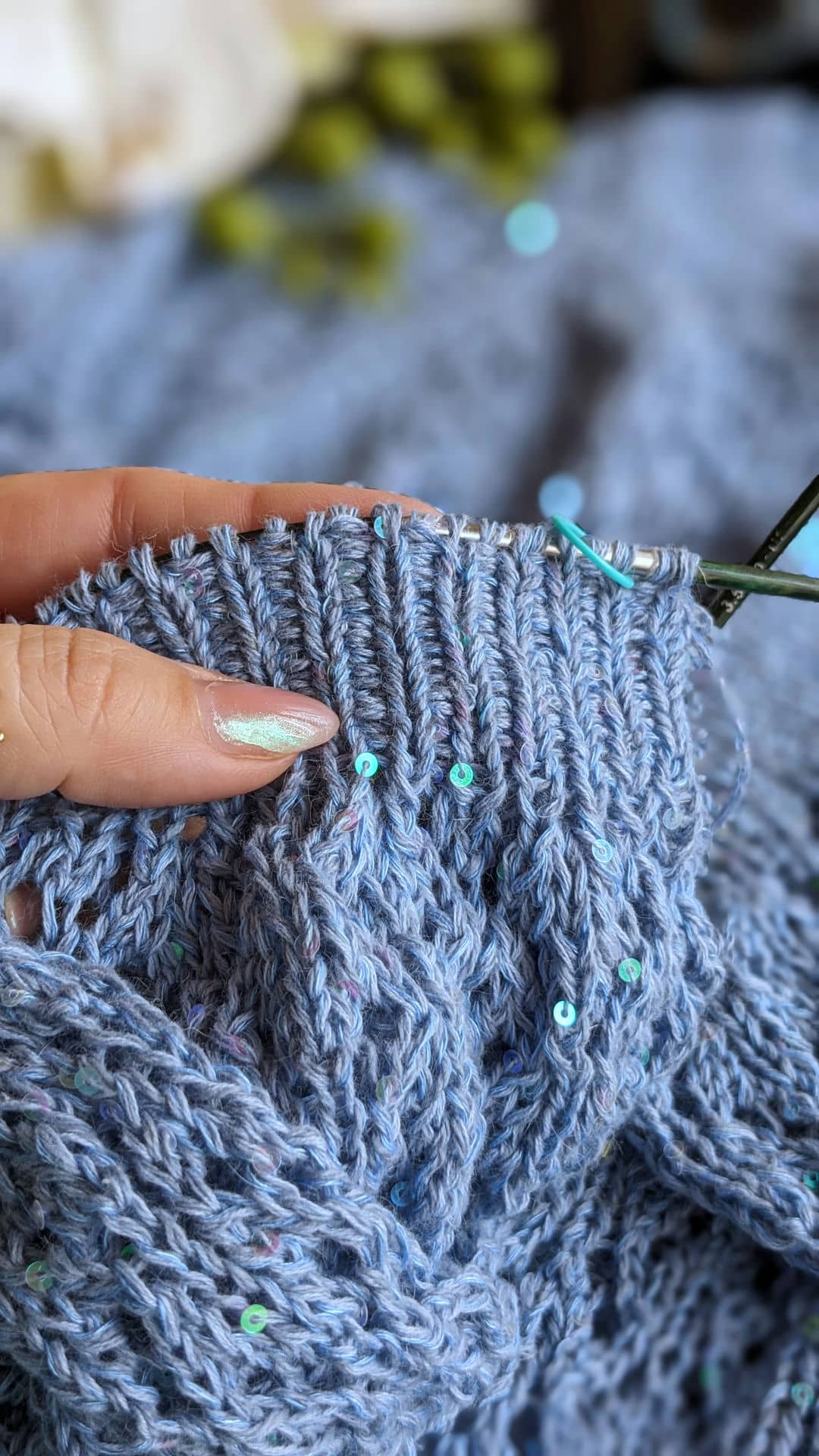
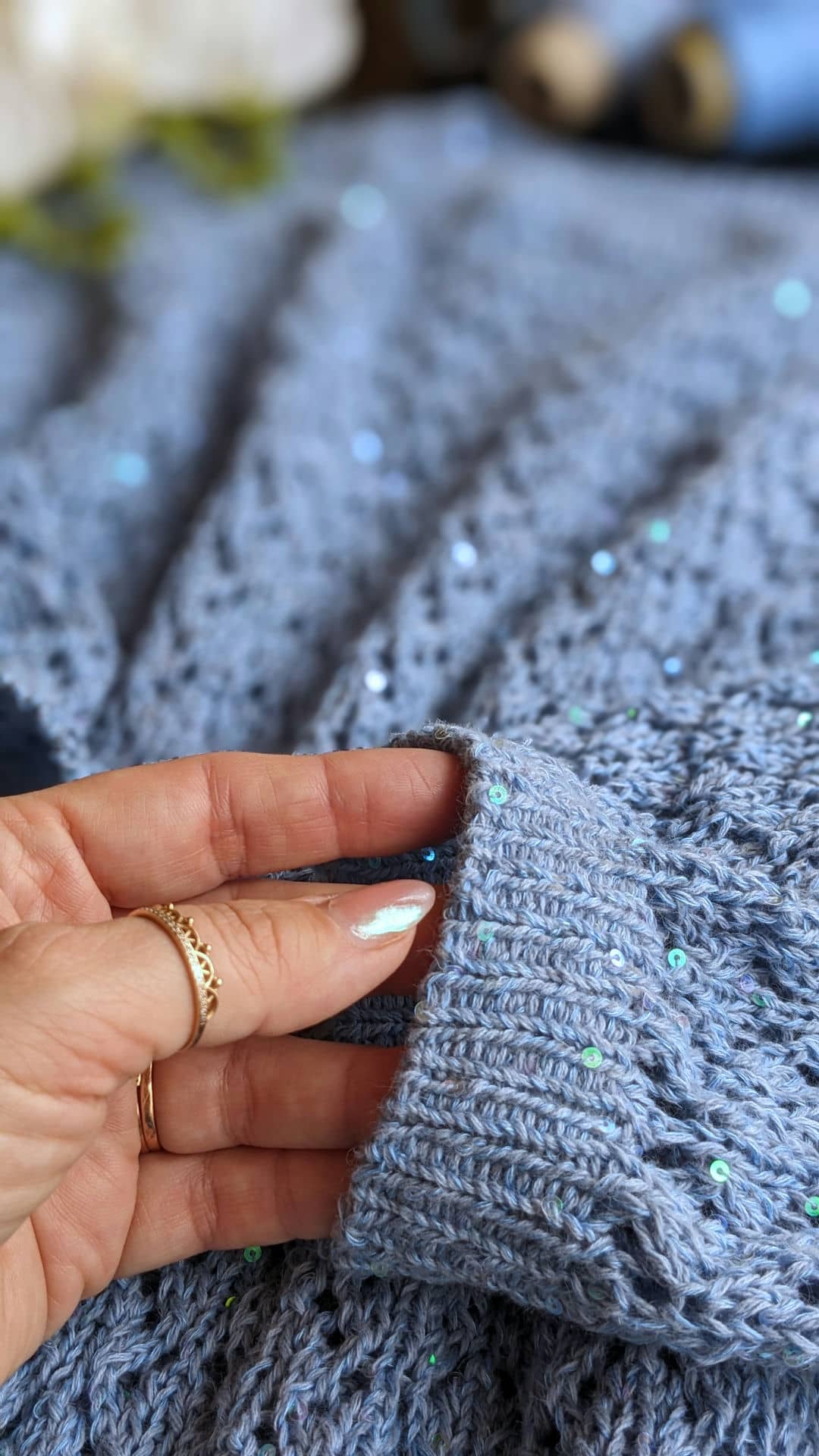
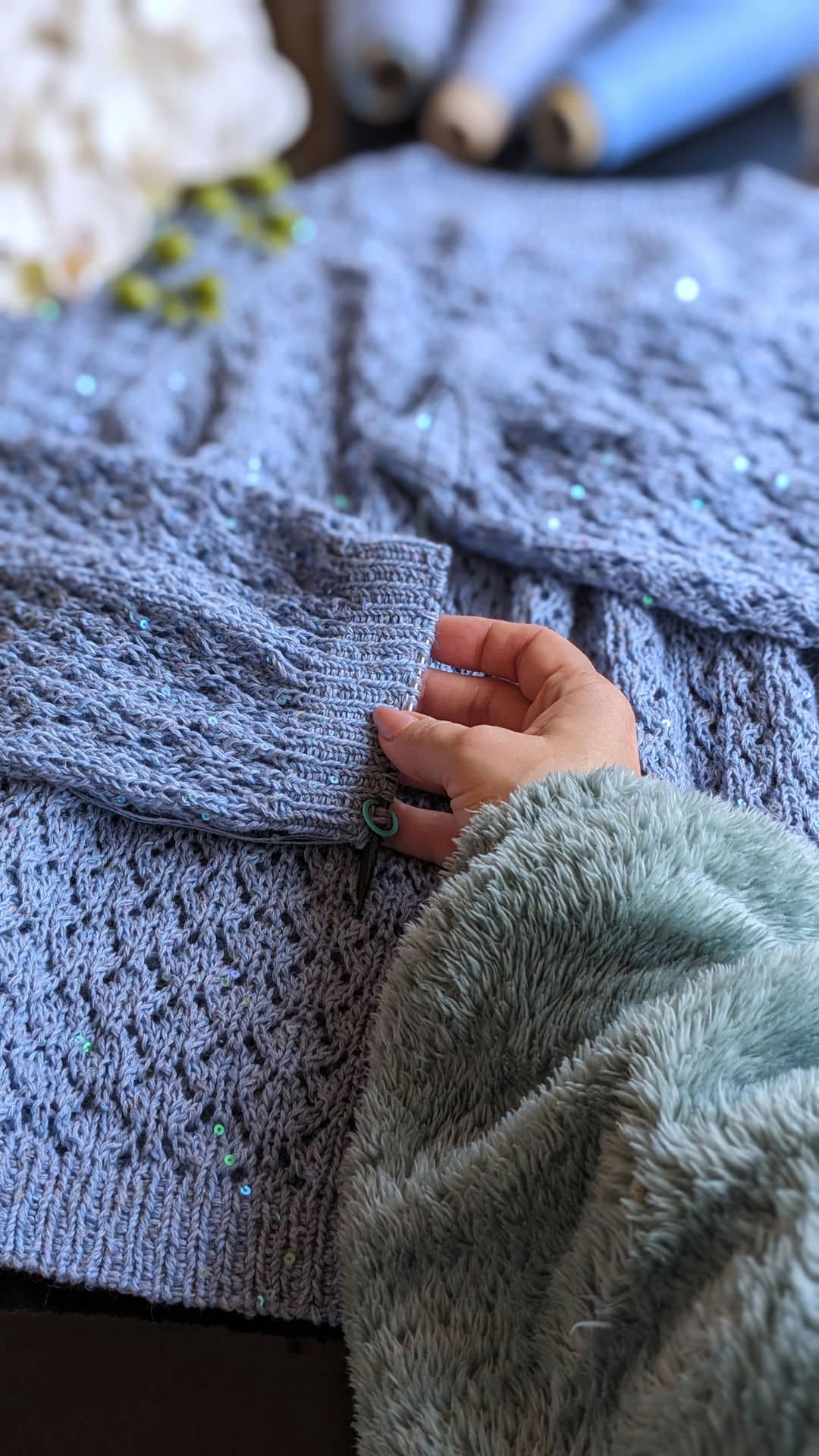
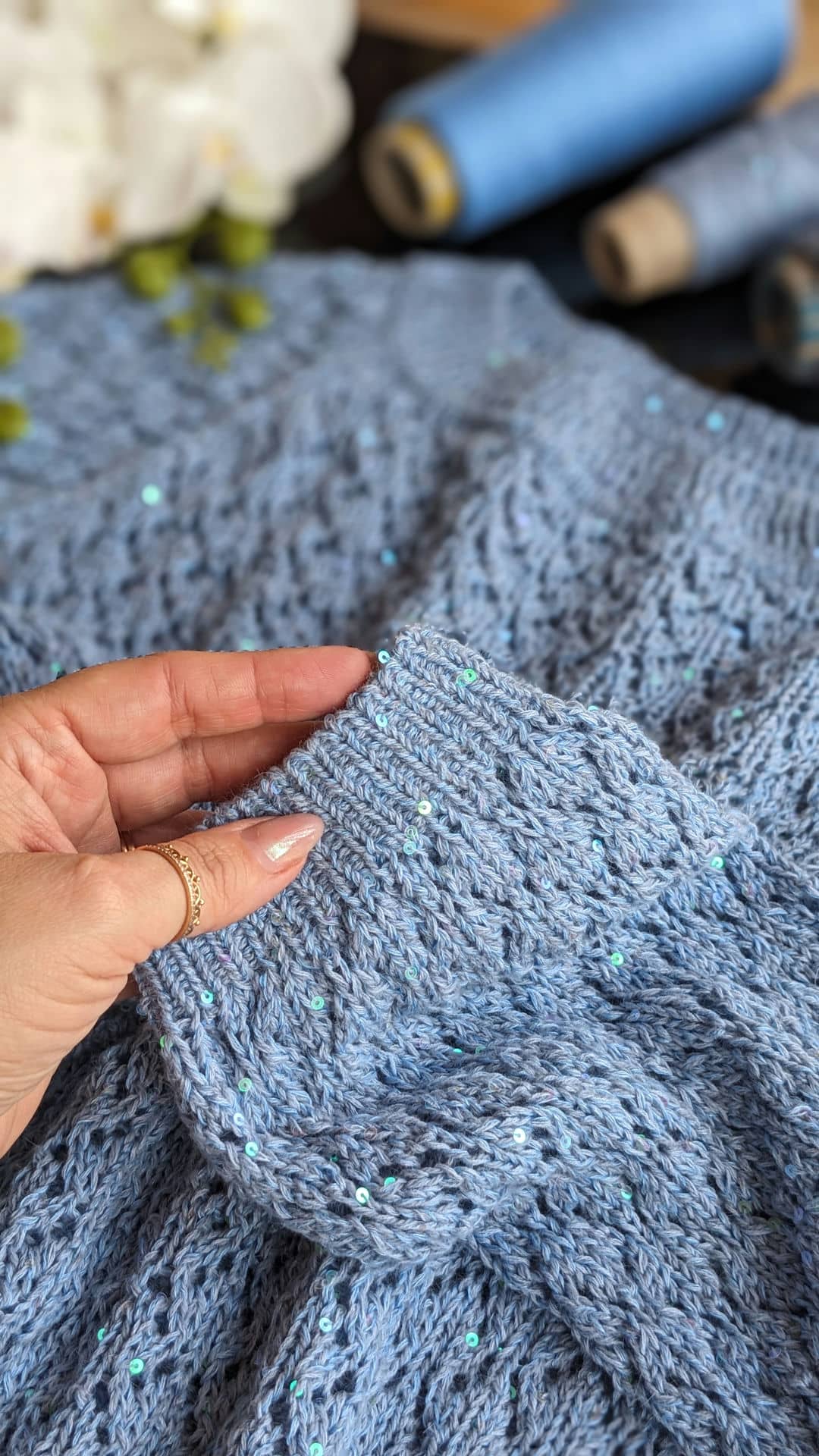
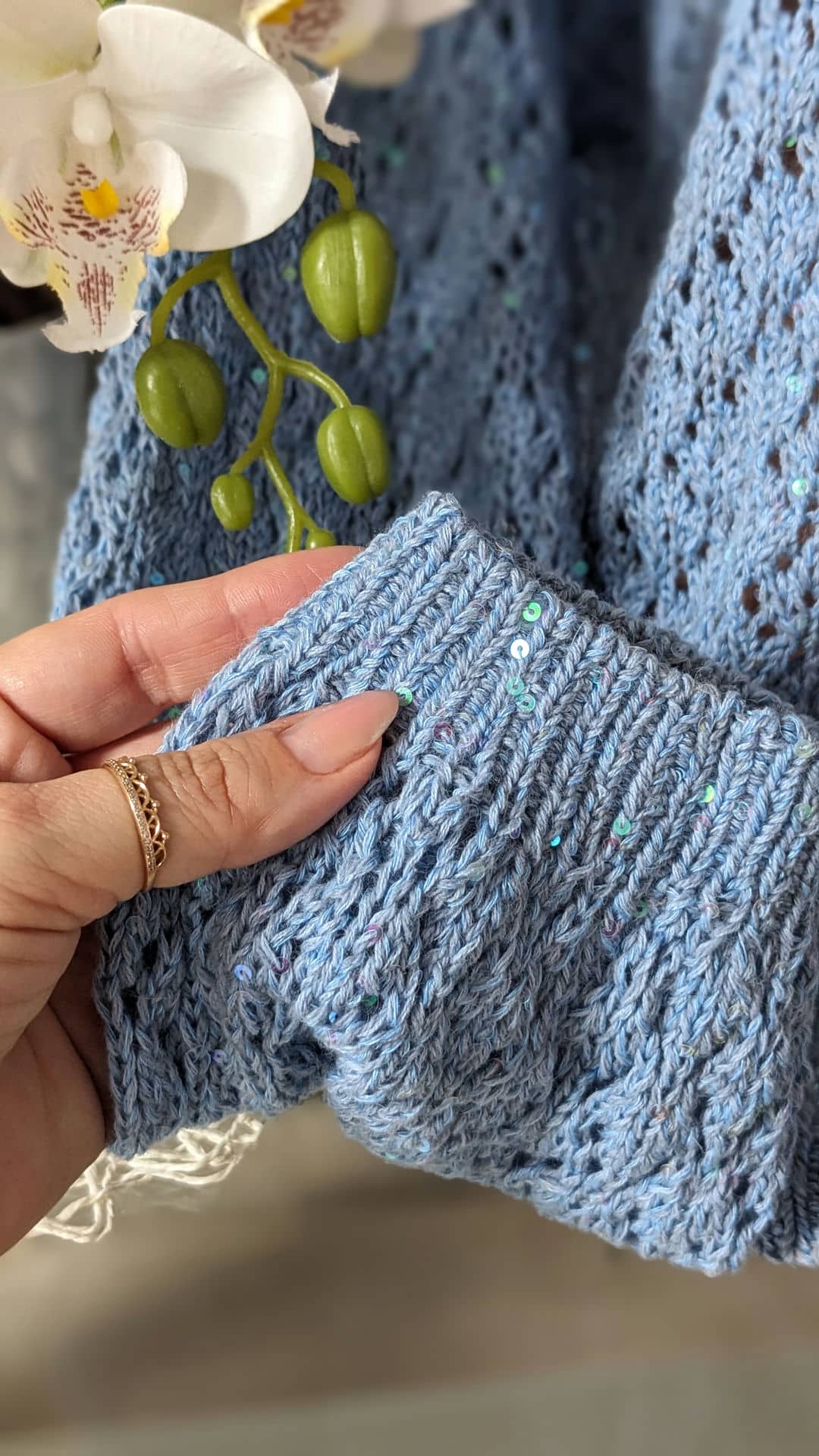
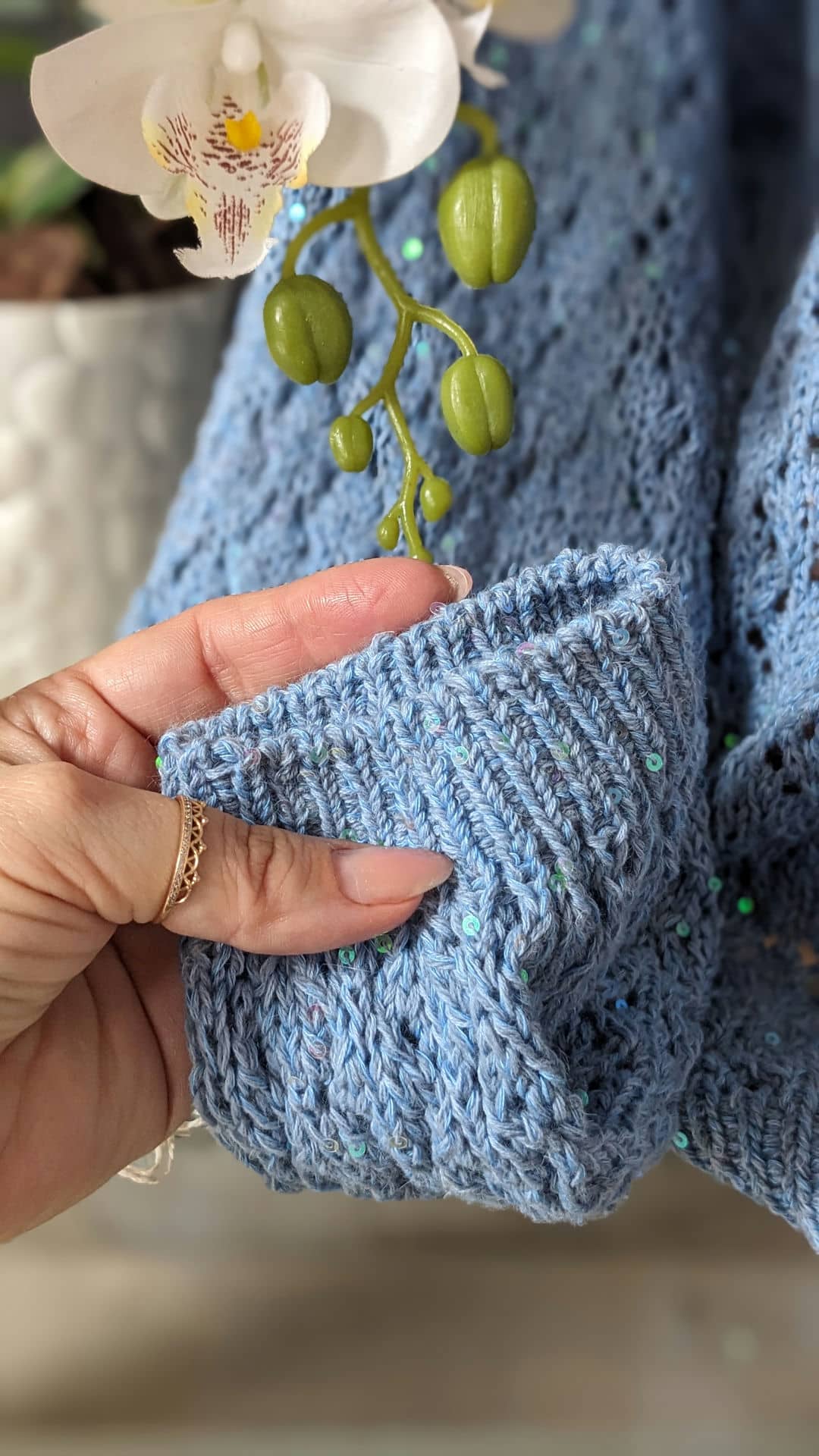
Keep knitting with 3.5 mm needles. At the bottom work 14 rounds of 1×1 rib.
Then 2 rounds of tubular (double-knit) rib:
Round 1: knit the knit stitch, slip the purl stitch without working it, with the working yarn in front.
Round 2: slip the knit stitch without working it, with the working yarn behind, purl the purl stitch.
Bind off with a tapestry needle.
The length of the garment is 62 cm, the width of the main body is 56 cm. The total yarn used at this stage is 220 g.
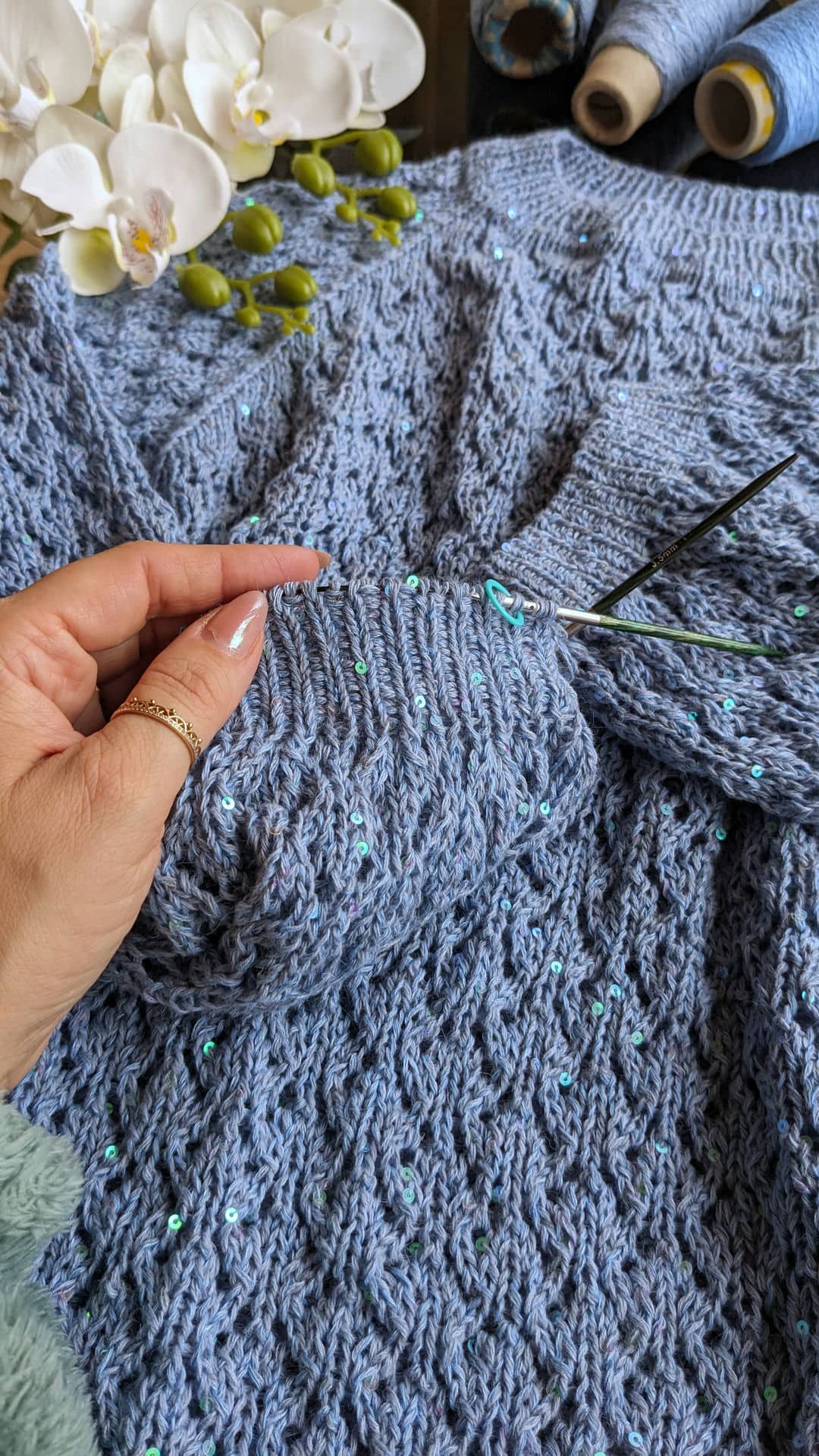
Next we move on to the sleeves. There are 69 stitches on each waste yarn holder for each sleeve.
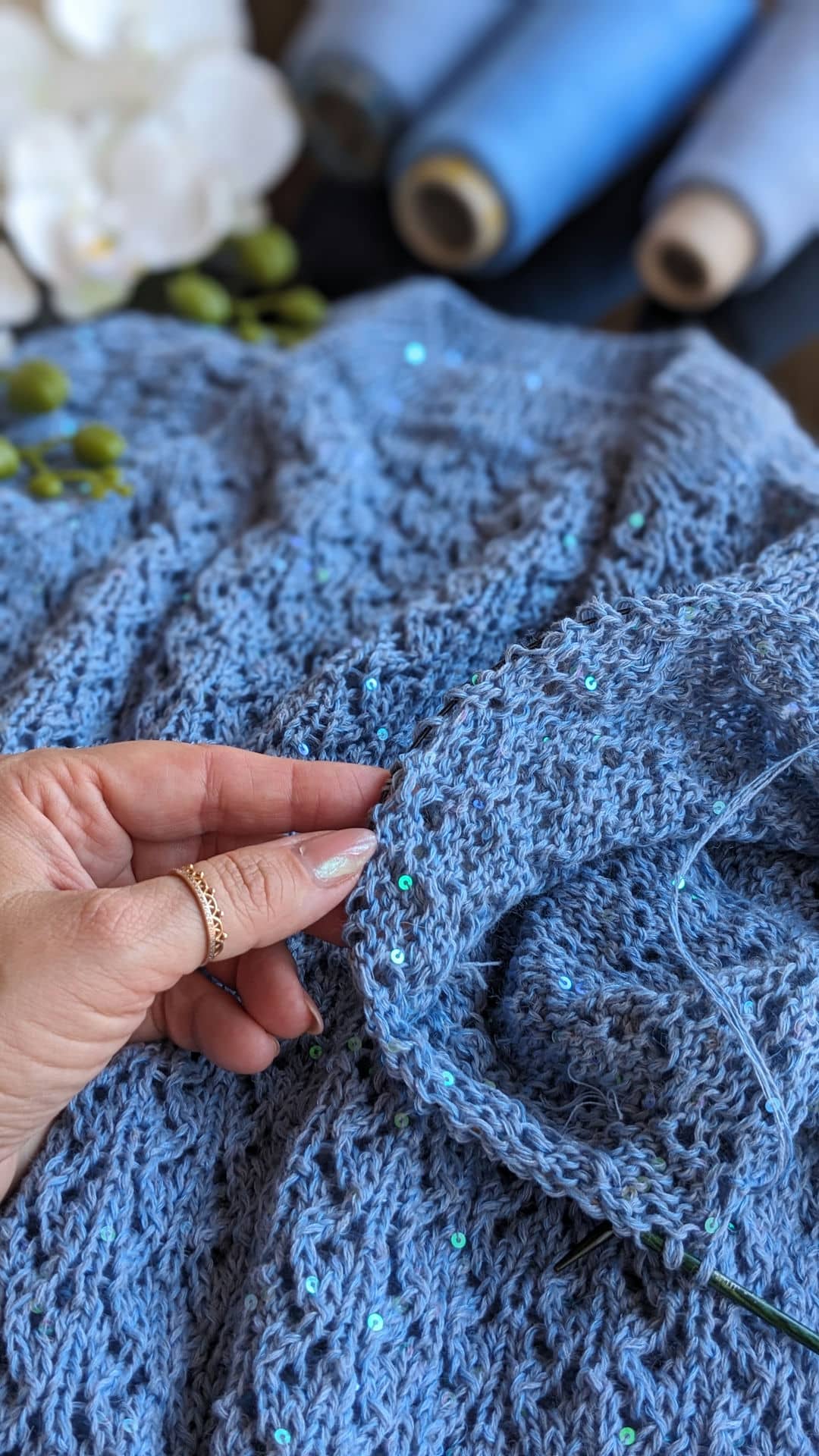
Along the edge of the underarm and the back raise, pick up the number of stitches needed for the sleeve width you want, keeping the 8-stitch pattern repeat in mind. On the needles: 69 + 21 = 90 stitches.
If the total number of stitches comes out higher than needed, decrease the extra stitches in the first round of the sleeve (at the underarm). I decreased to 80 stitches and continued knitting on those.
Knit the sleeves to the length you need. At the bottom work 14 rounds of 1×1 rib and 2 rounds of tubular (double-knit) rib. Bind off with a tapestry needle.
The finished garment is 62 cm long. Size 48–50. Total yarn used for the jumper is 300 g; usage by yarn type:
- short-pile angora, 1200 m/100 g – 100 g,
- sequin yarn on cotton, 800 m/100 g – 150 g,
- merino, 1600 m/100 g – 50 g.
For the sewn bind-off of the rib, watch the video below
You may also like
Knitted Lace Pullover with a Round Yoke
February 18, 2020
Cozy Turtleneck Sweater Knitted Top-Down in Merino
January 9, 2022