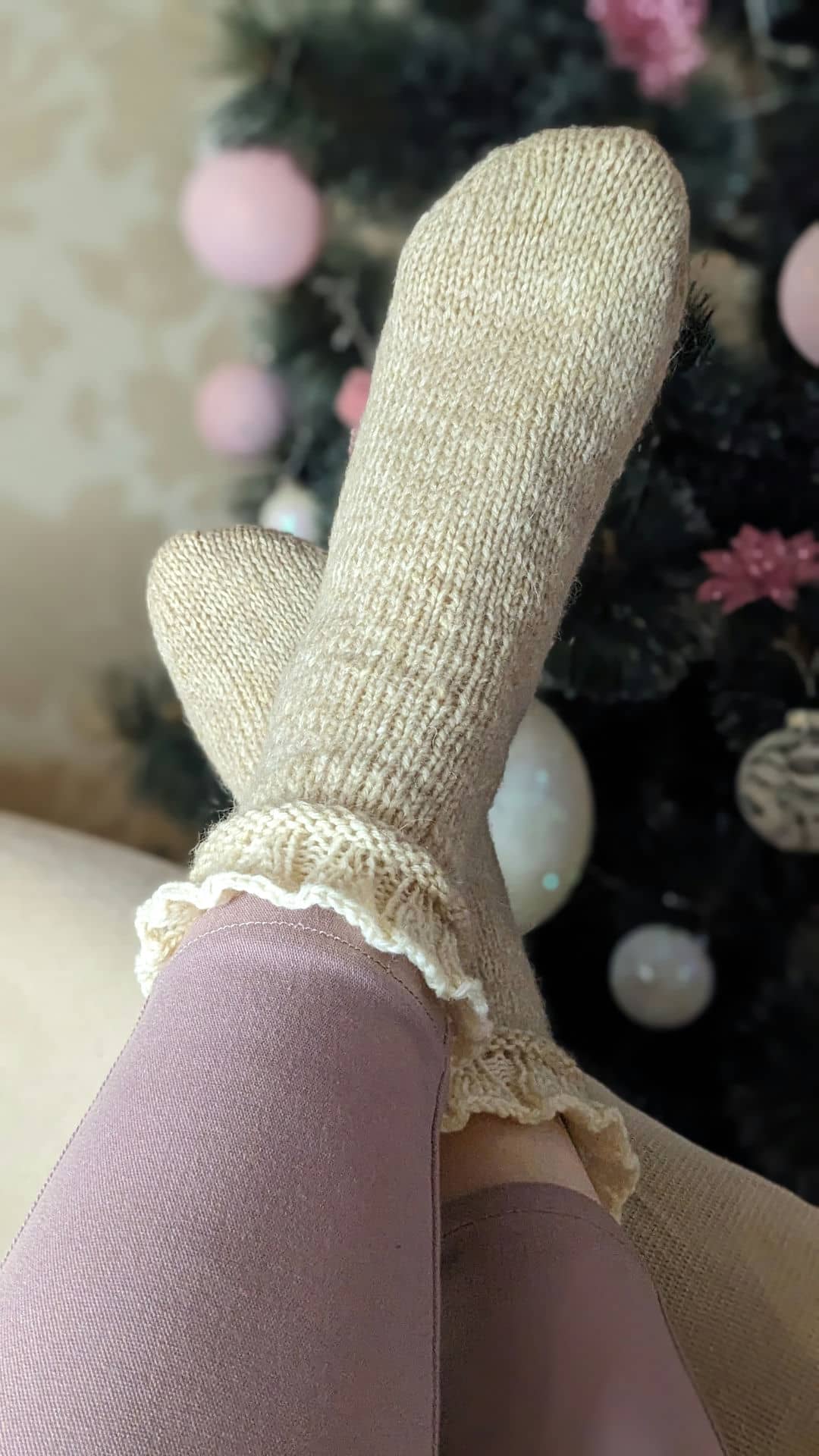
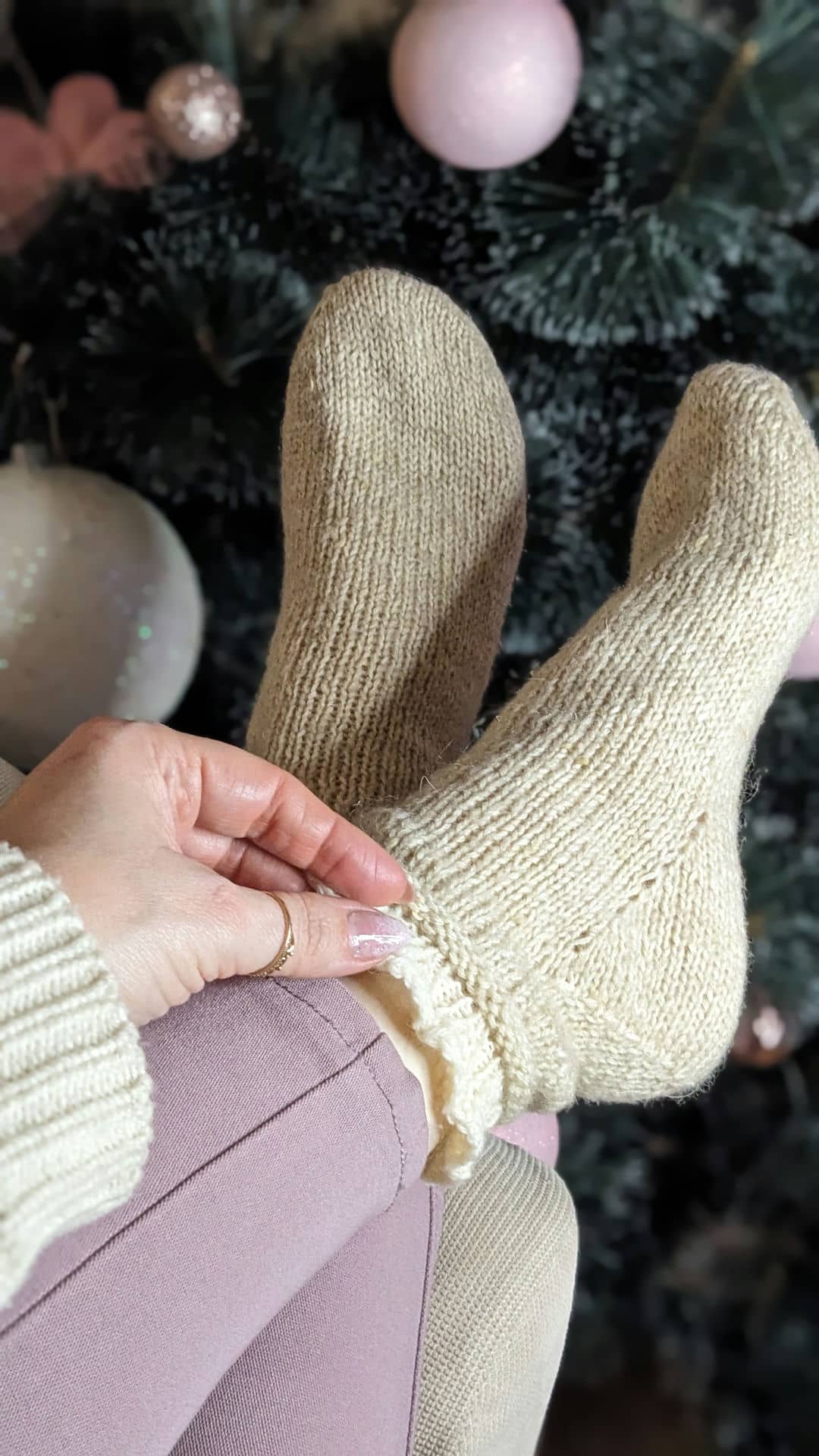
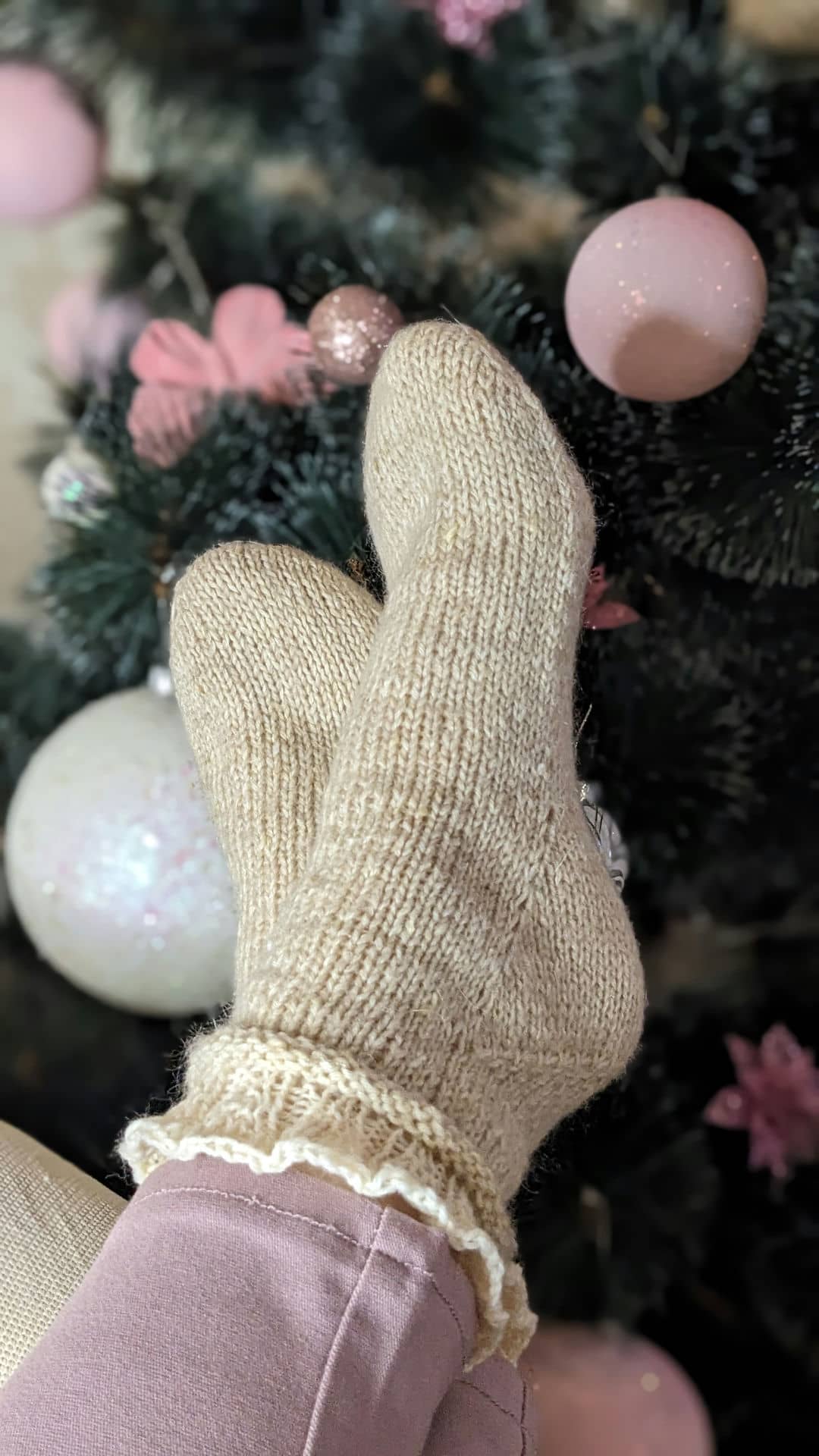
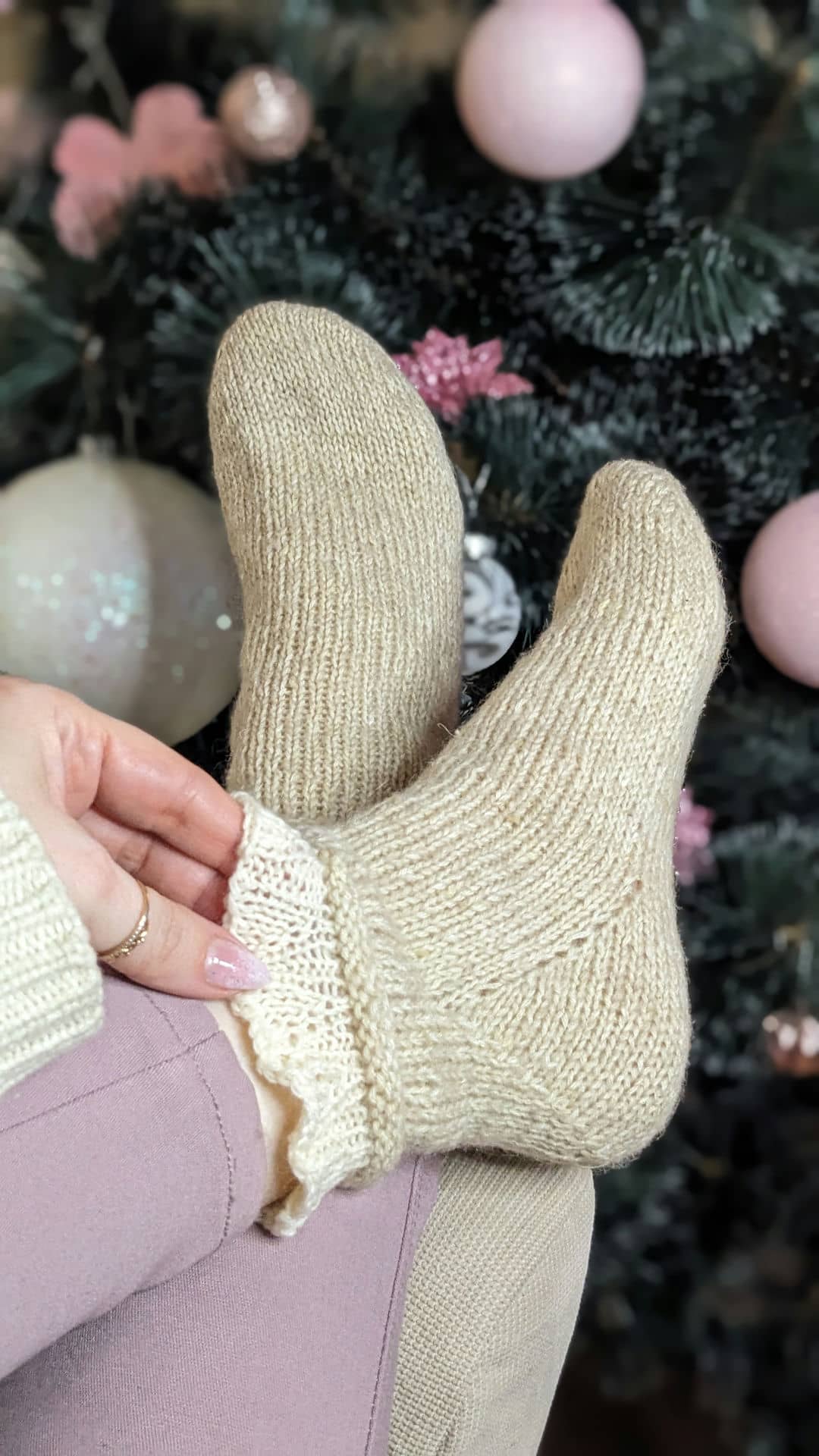
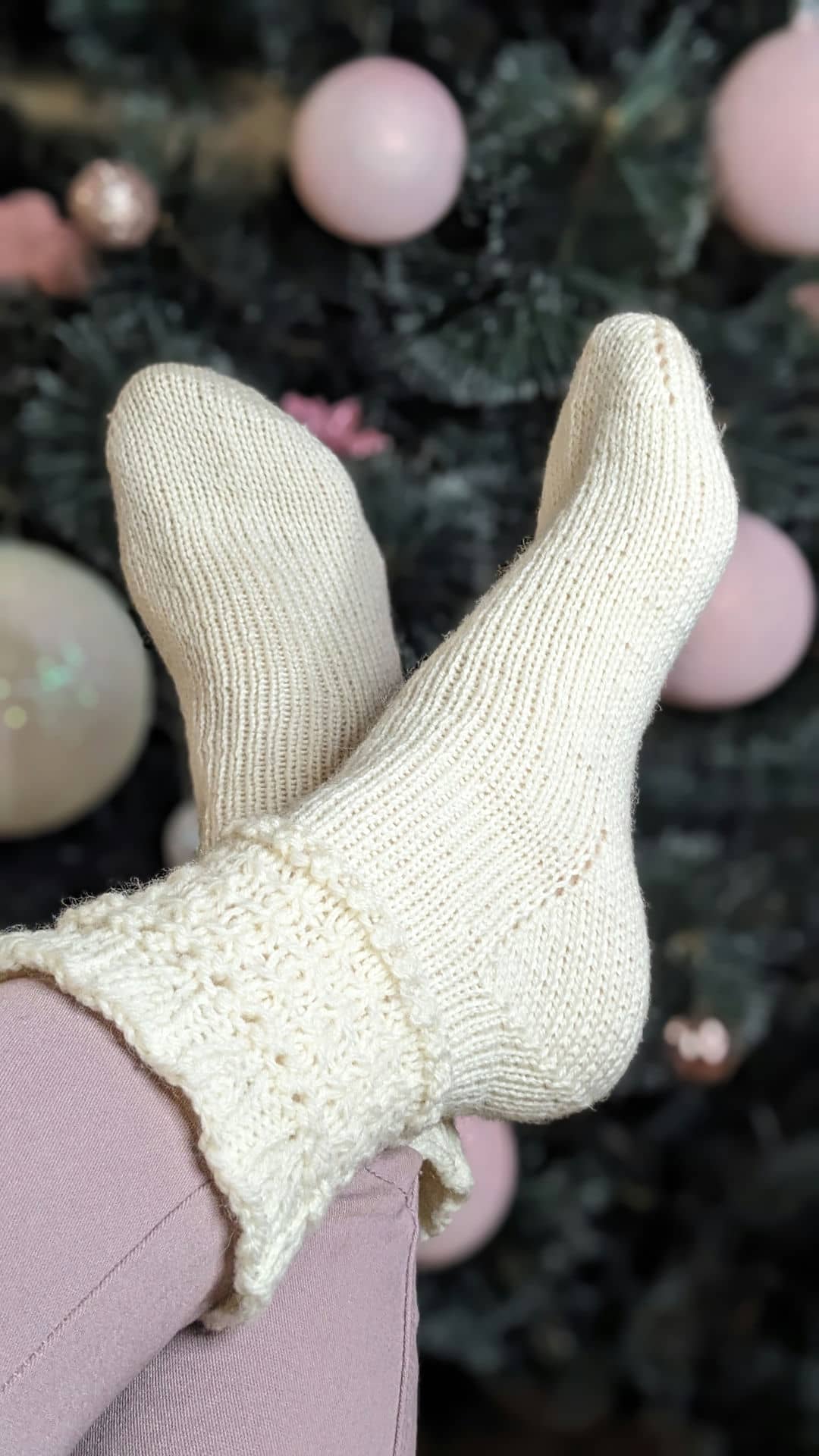
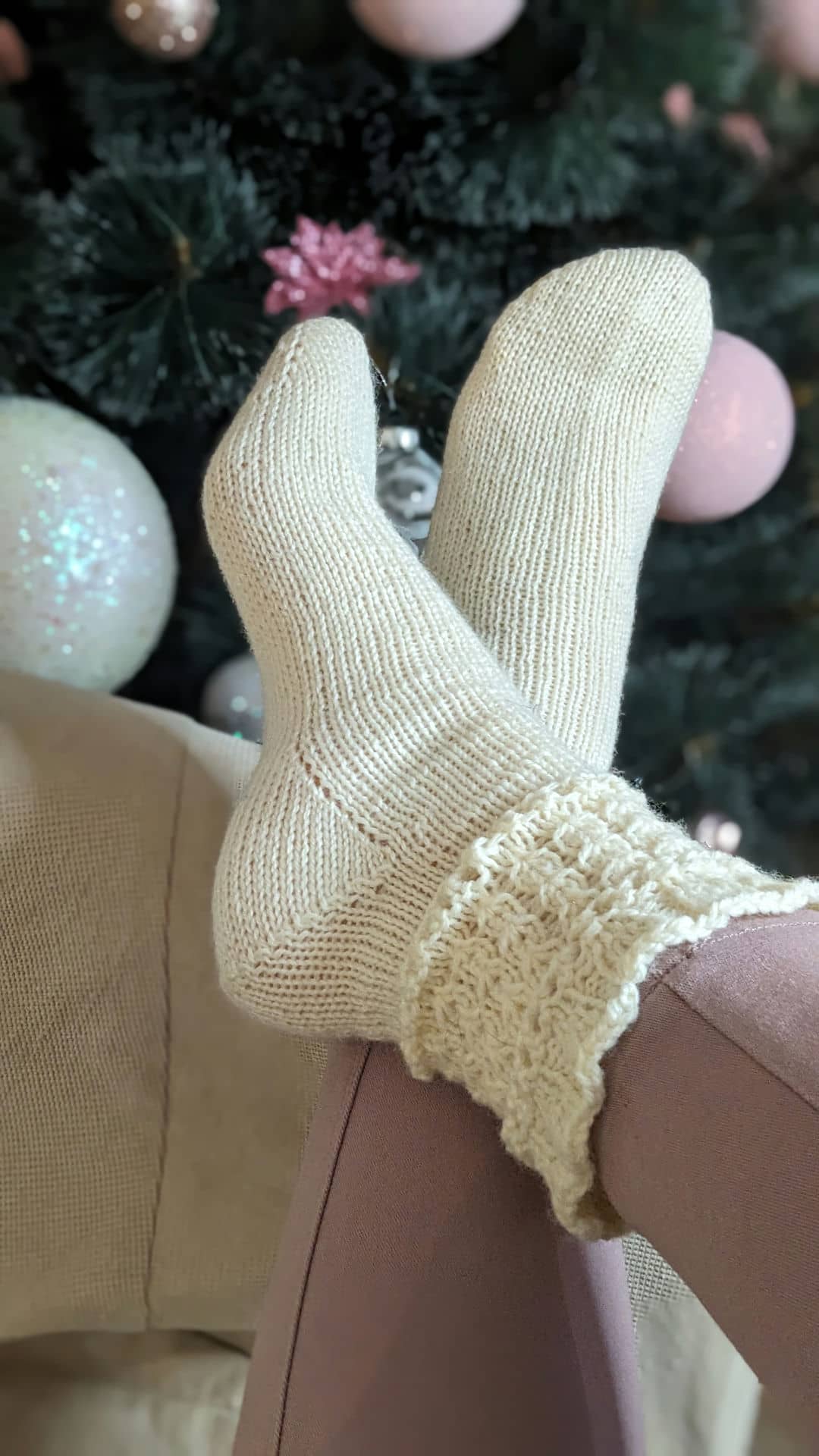
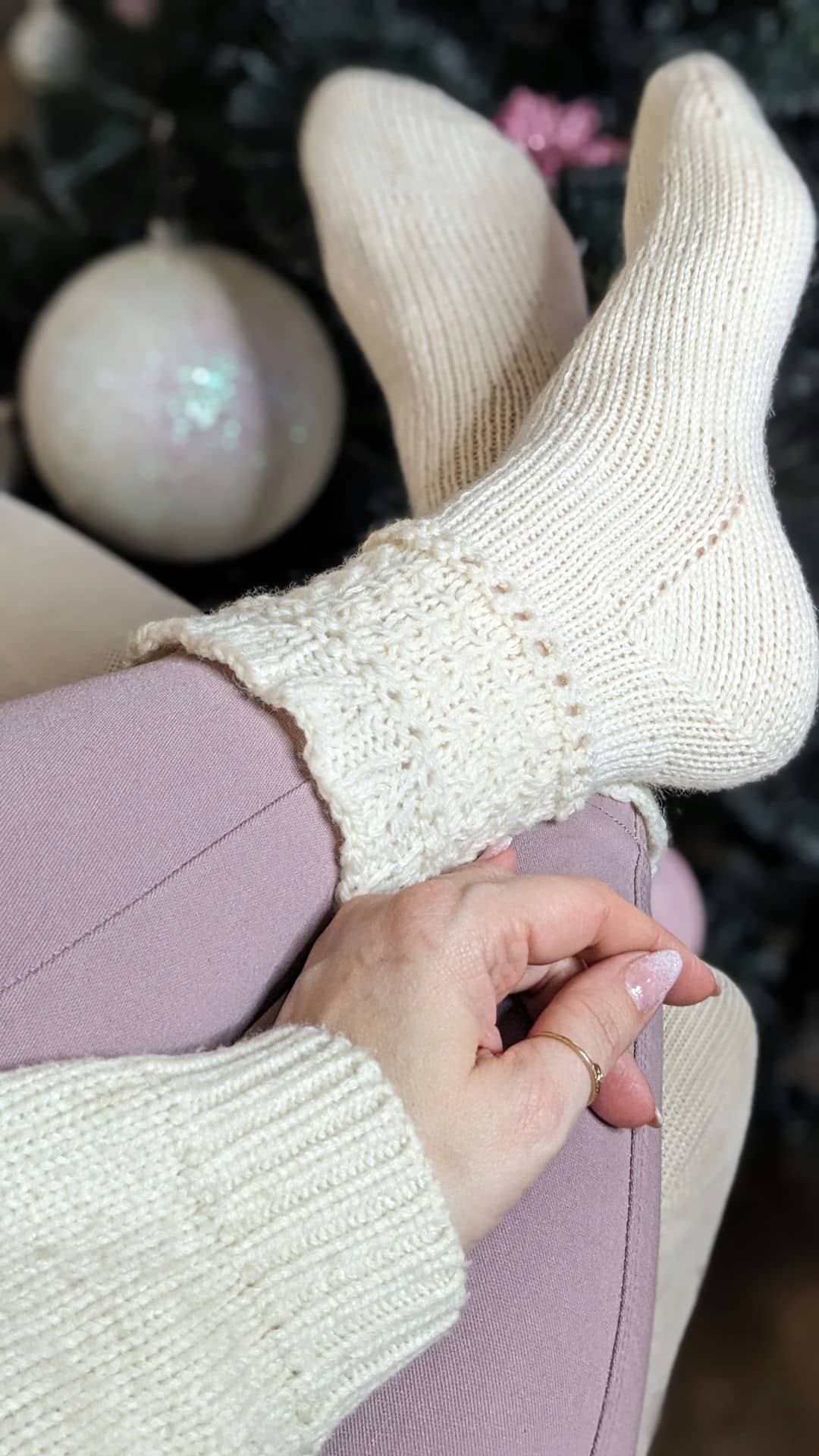
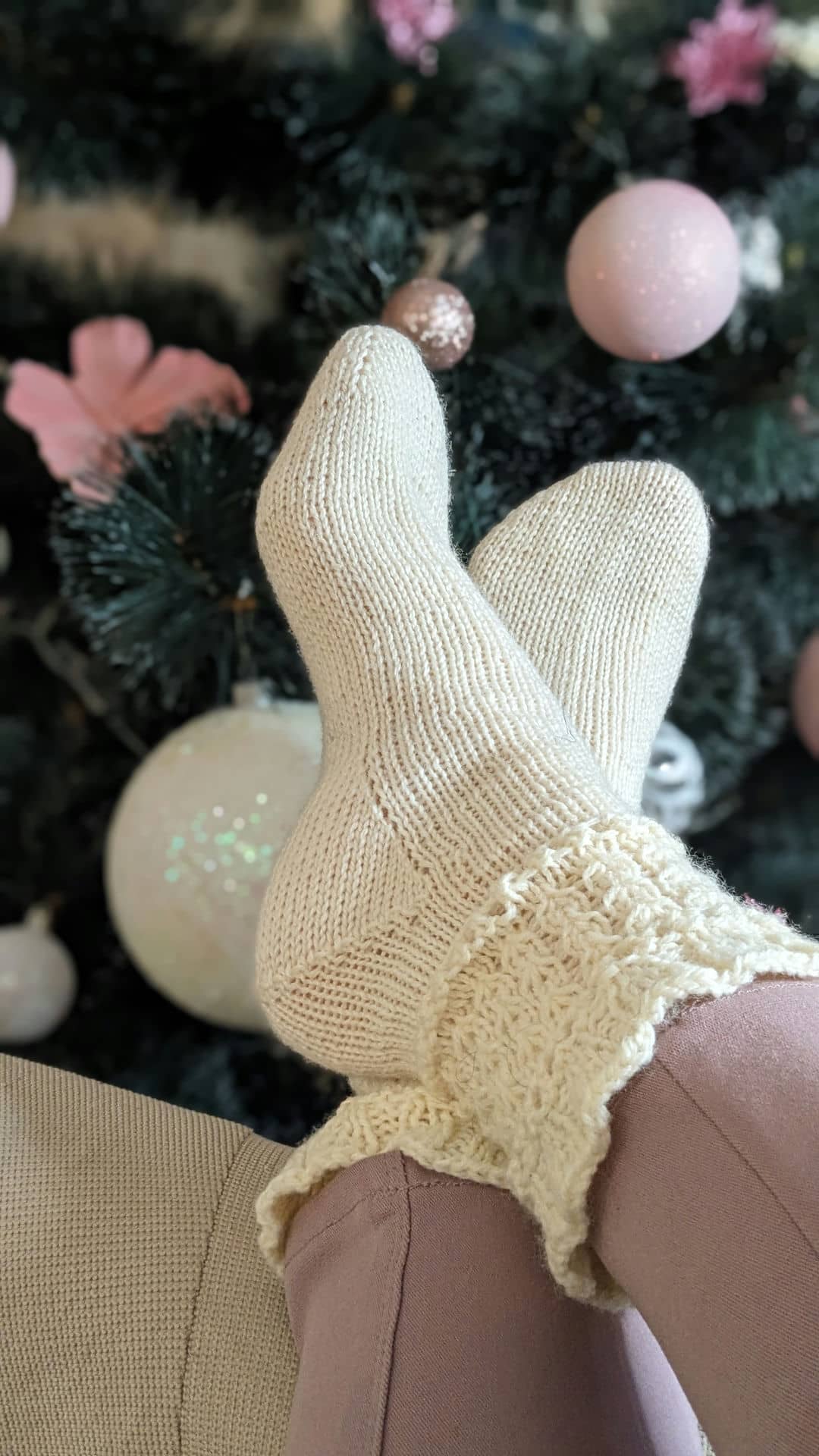
Toe-Up Socks with a Triangular Heel: Four Pairs from Different Yarns
Toe-up socks are one of the most convenient and popular ways to knit socks. This technique lets you control the length of the sock precisely, use your yarn efficiently, and try the sock on as you go.
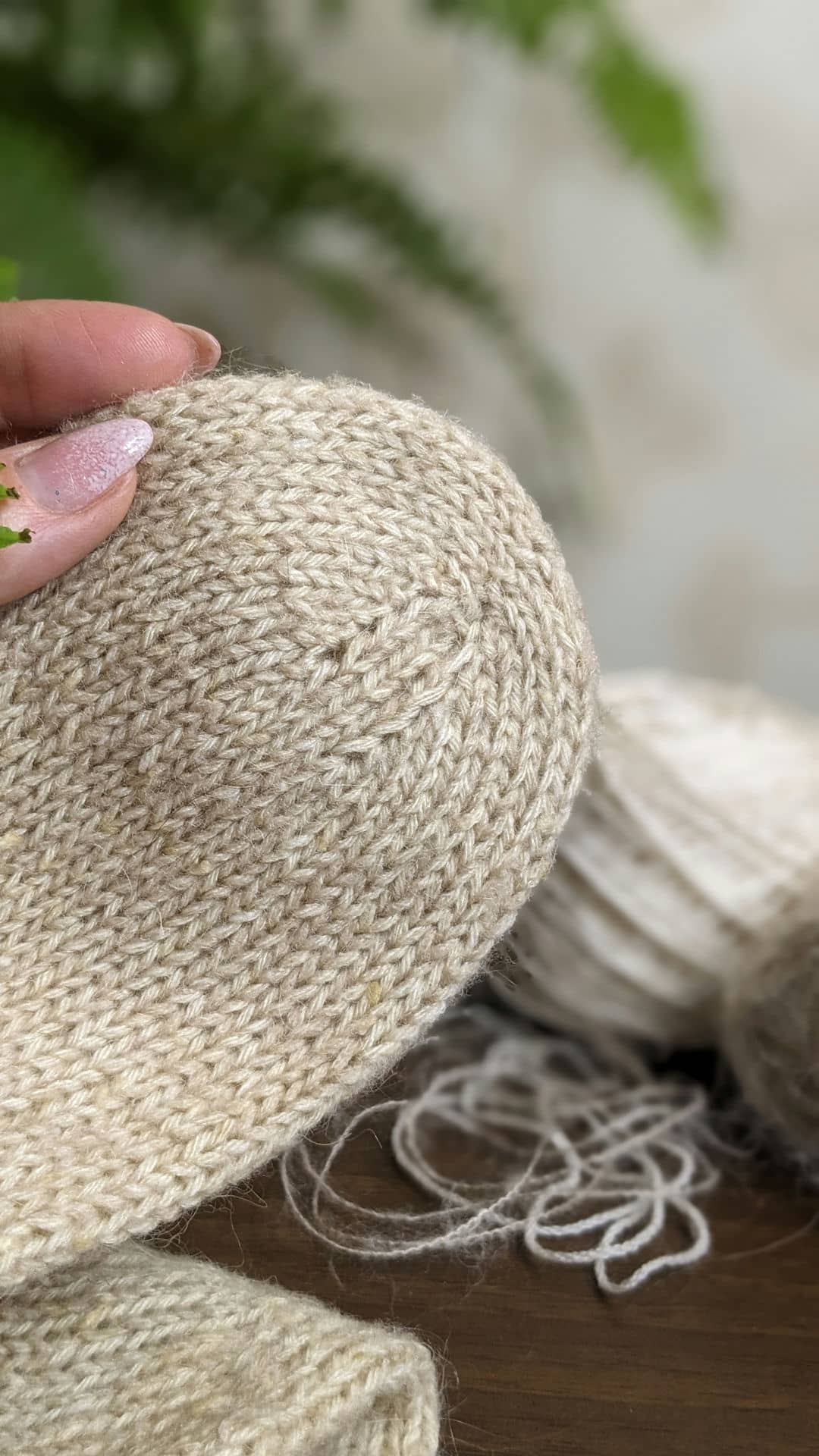
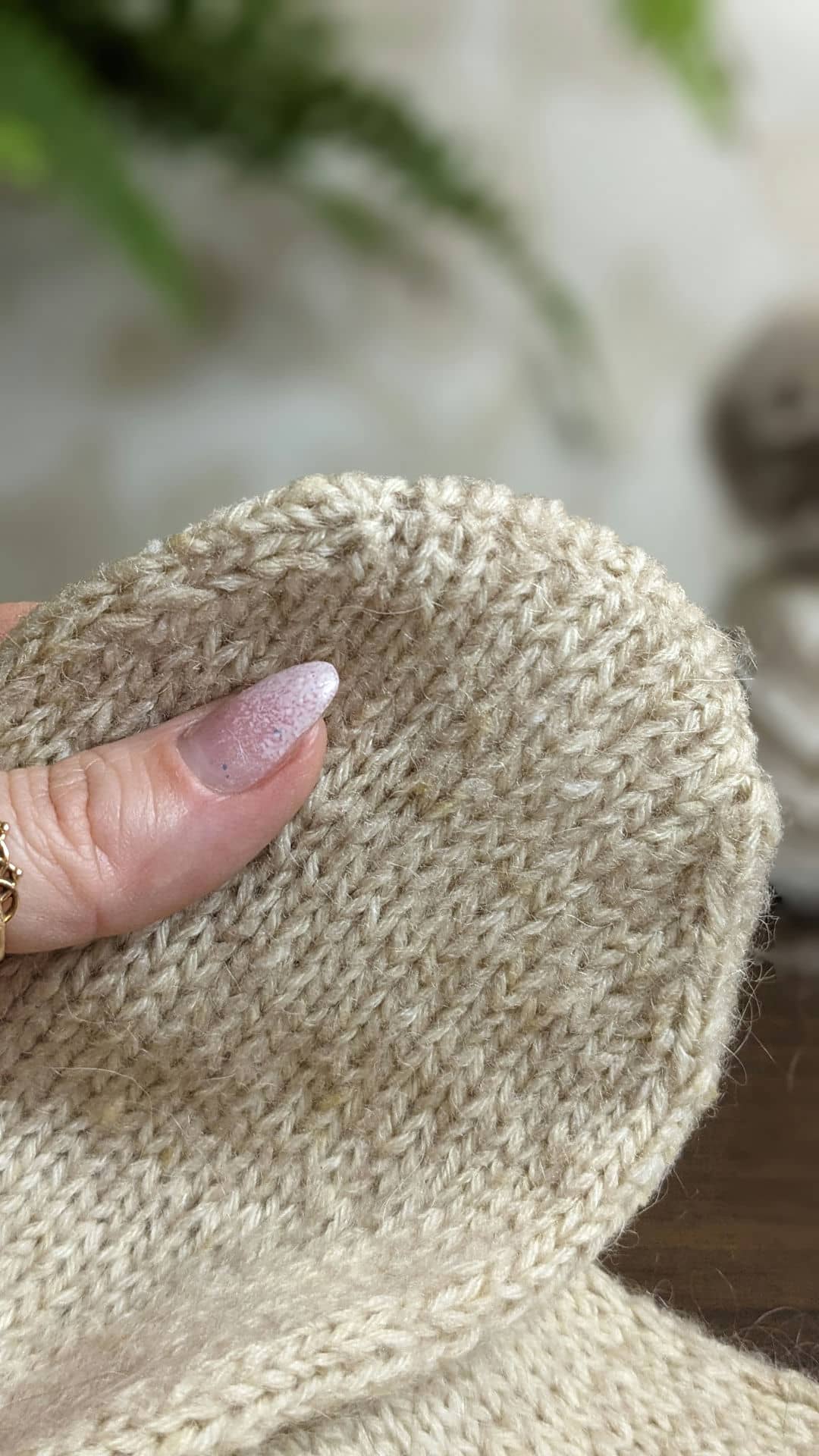
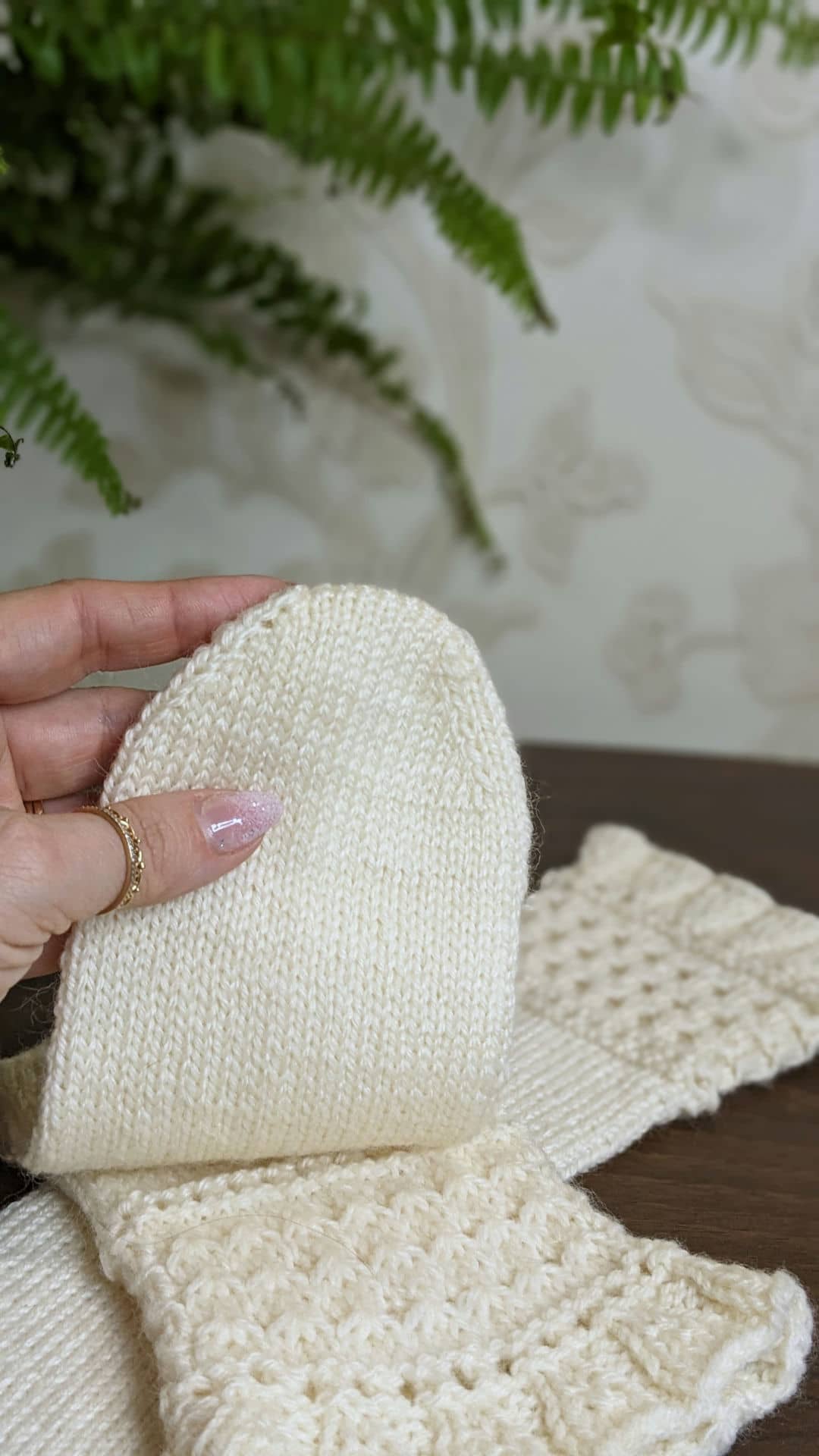
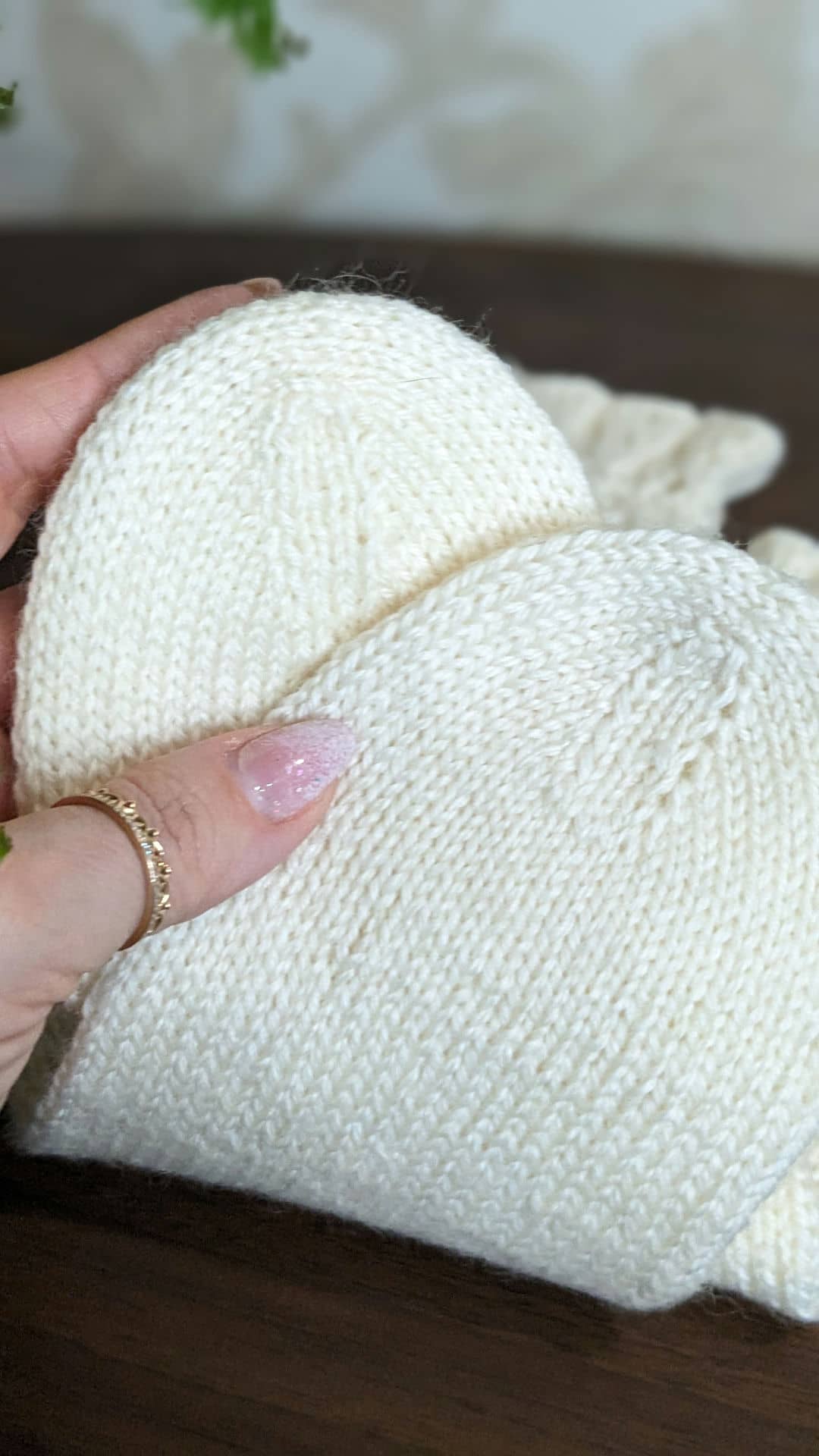
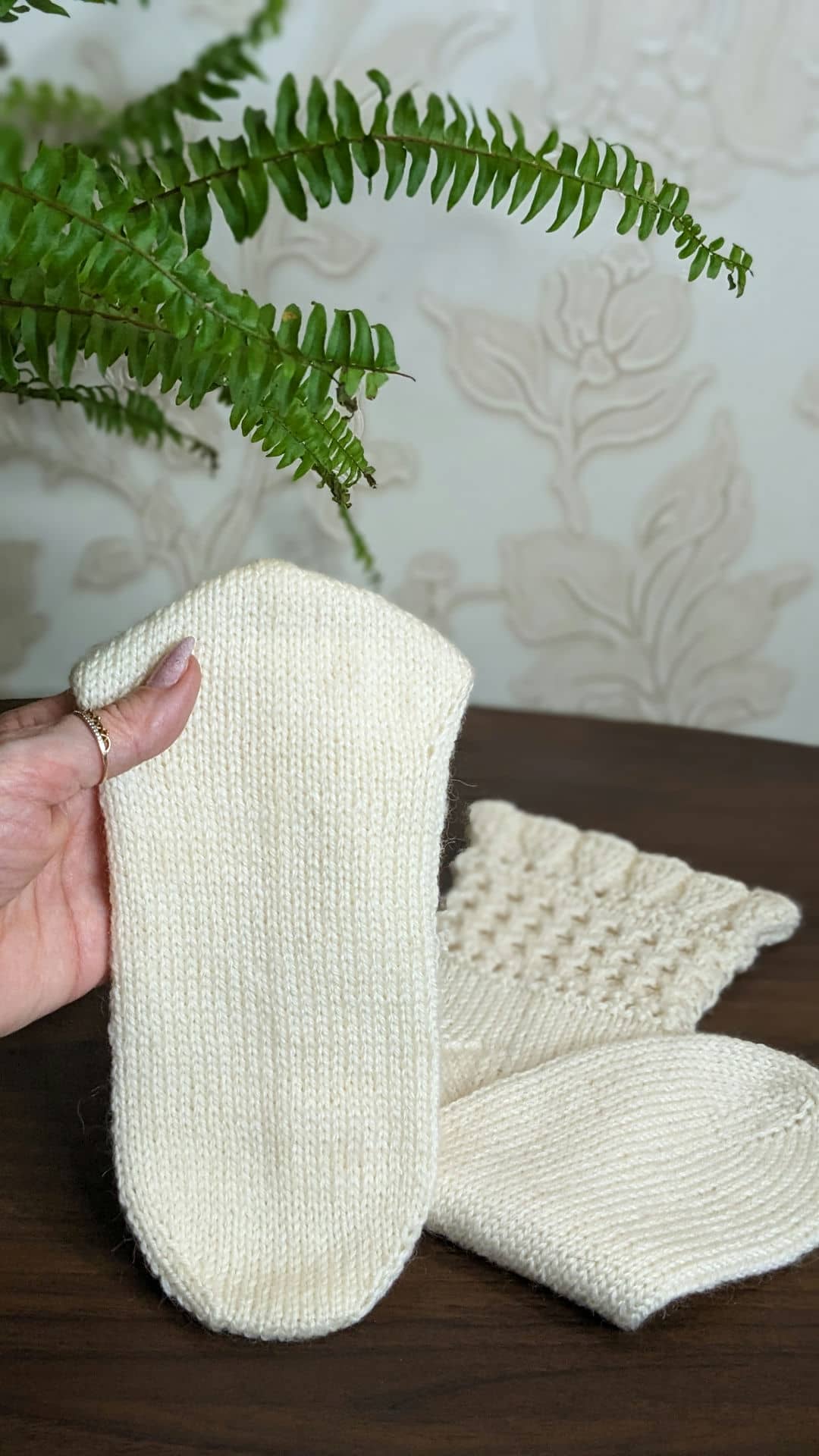
I start with a Turkish cast-on. It is a beautiful and very practical way to begin: the toe comes out neat, symmetrical and seamless. Then the gusset for the instep and the heel are gradually shaped.
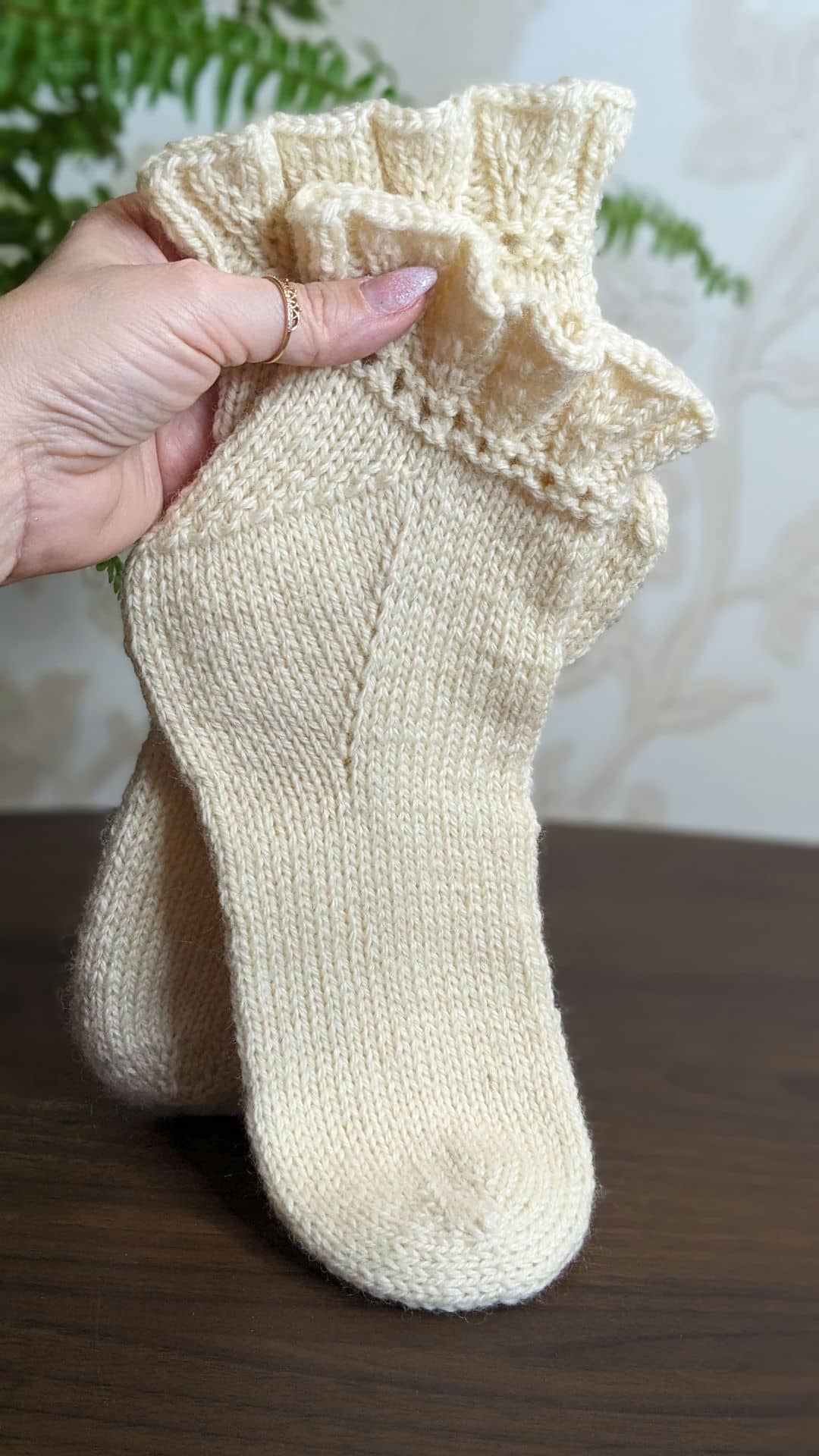
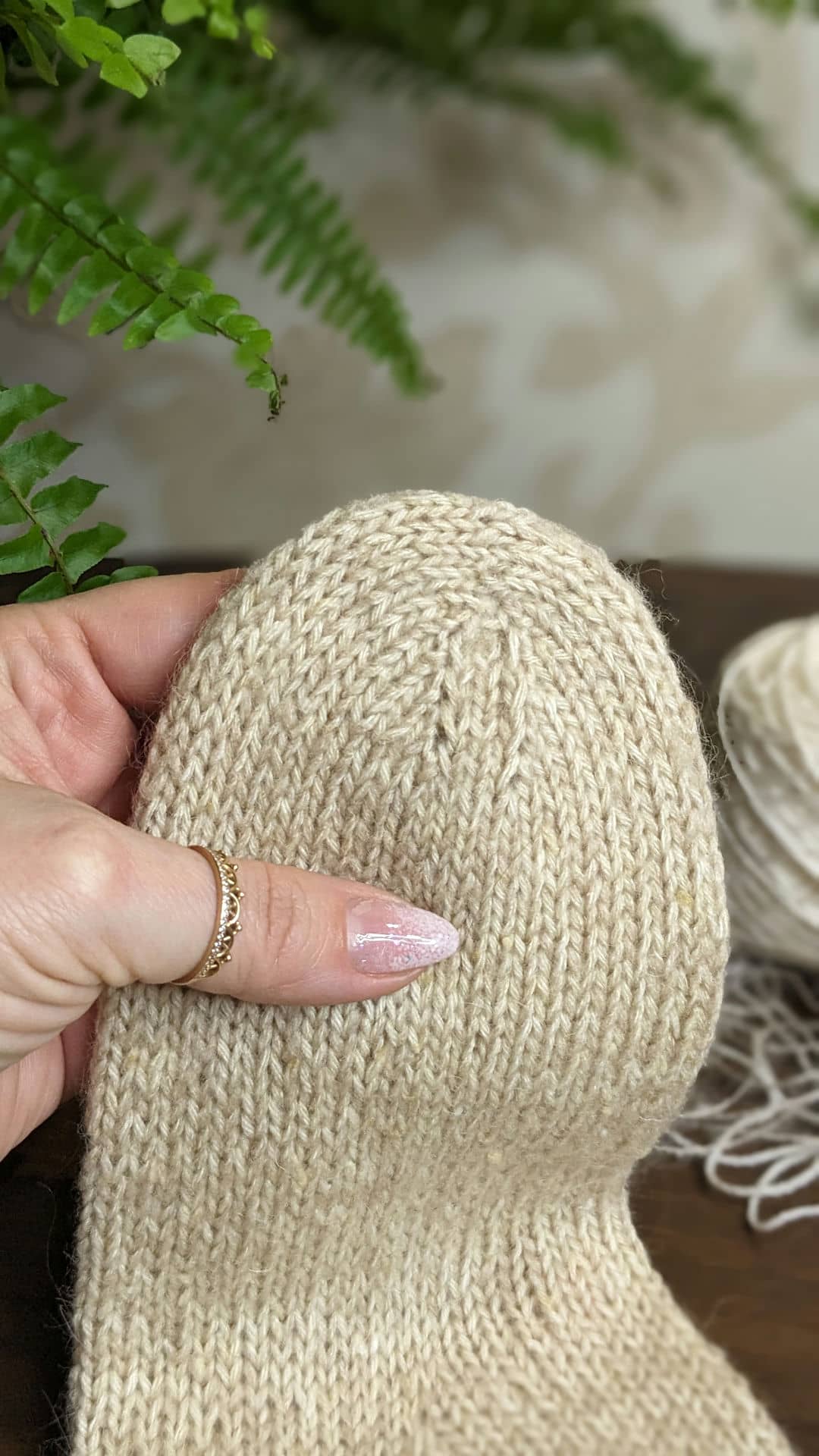
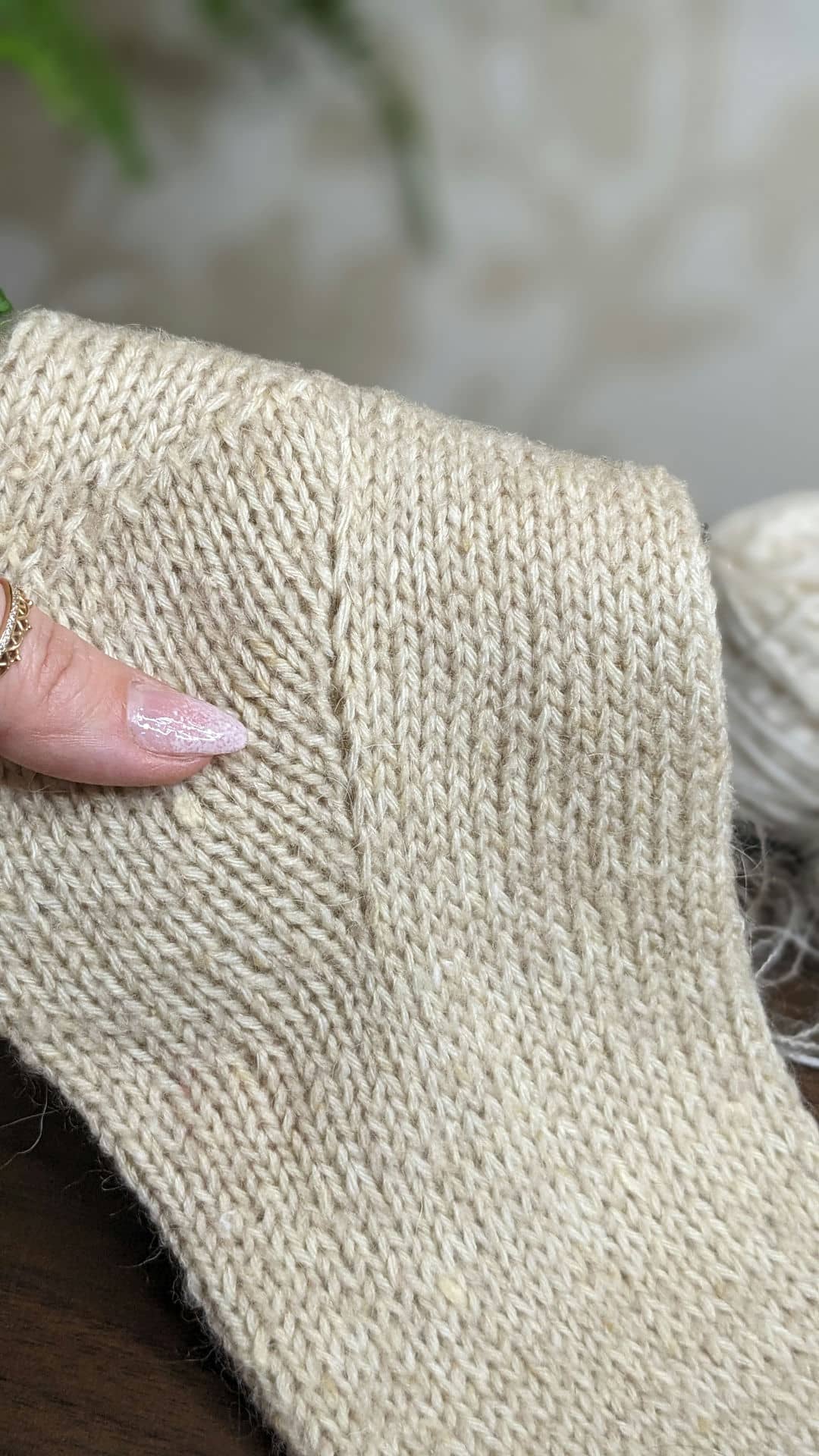
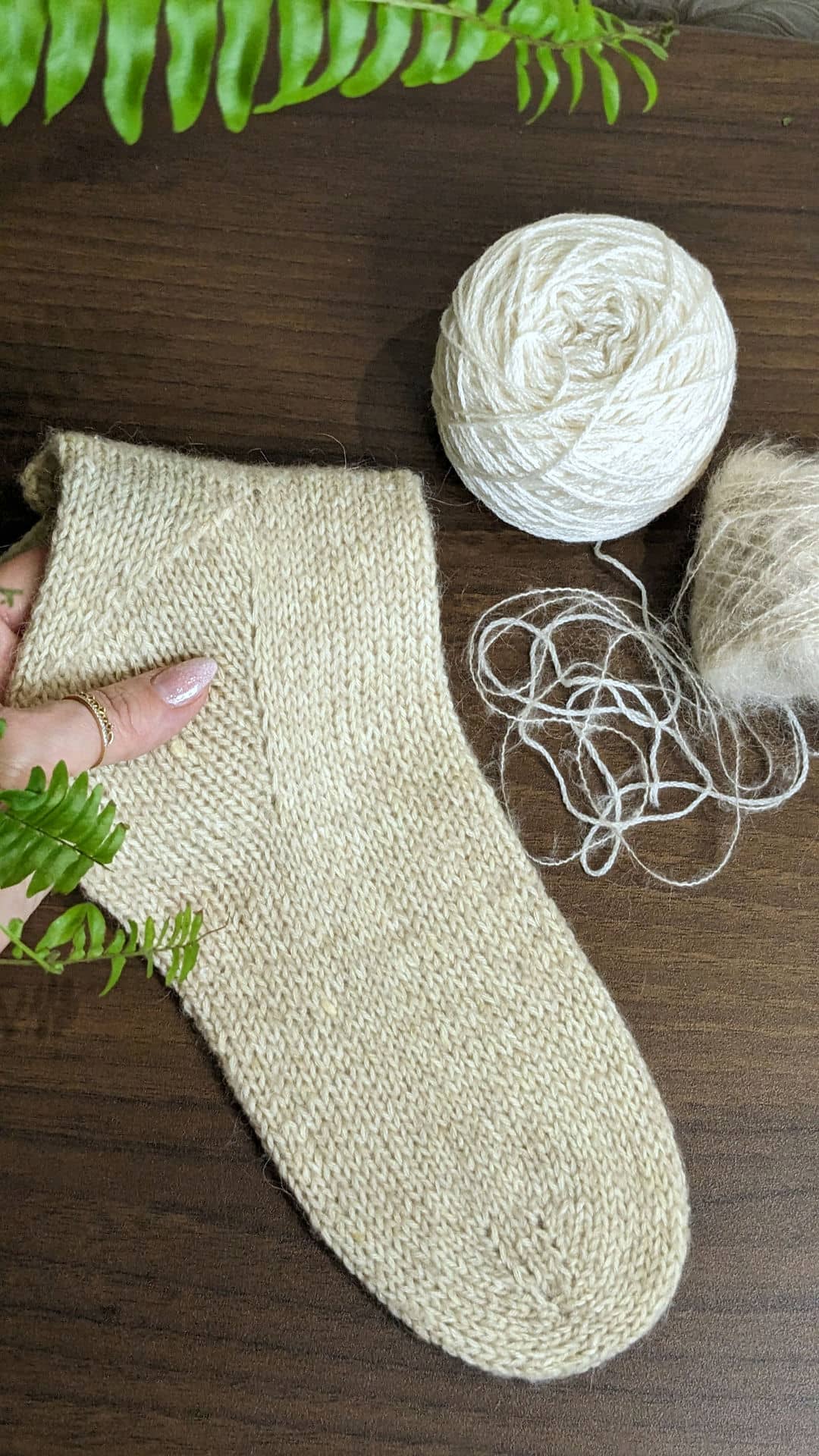
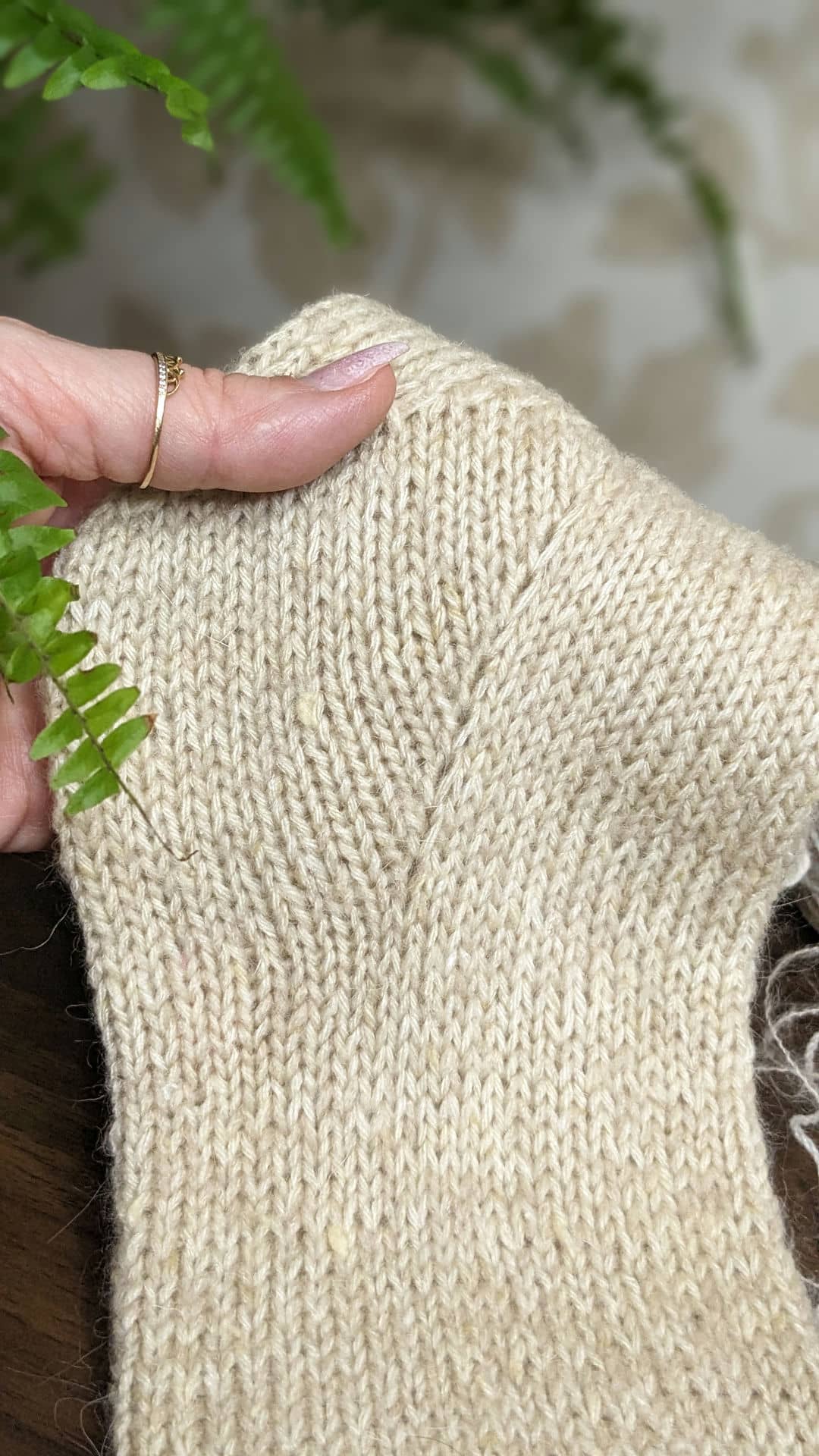
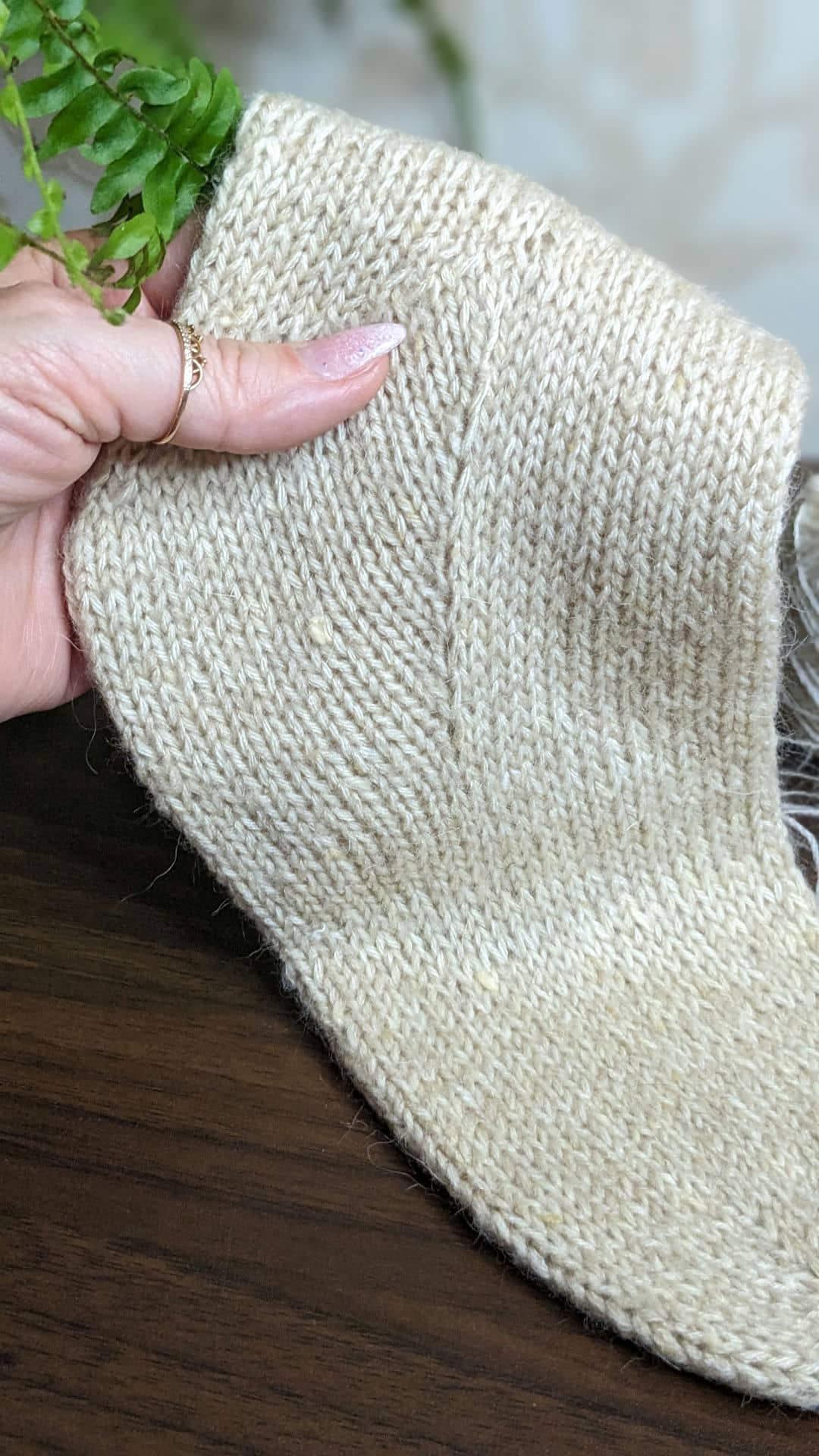
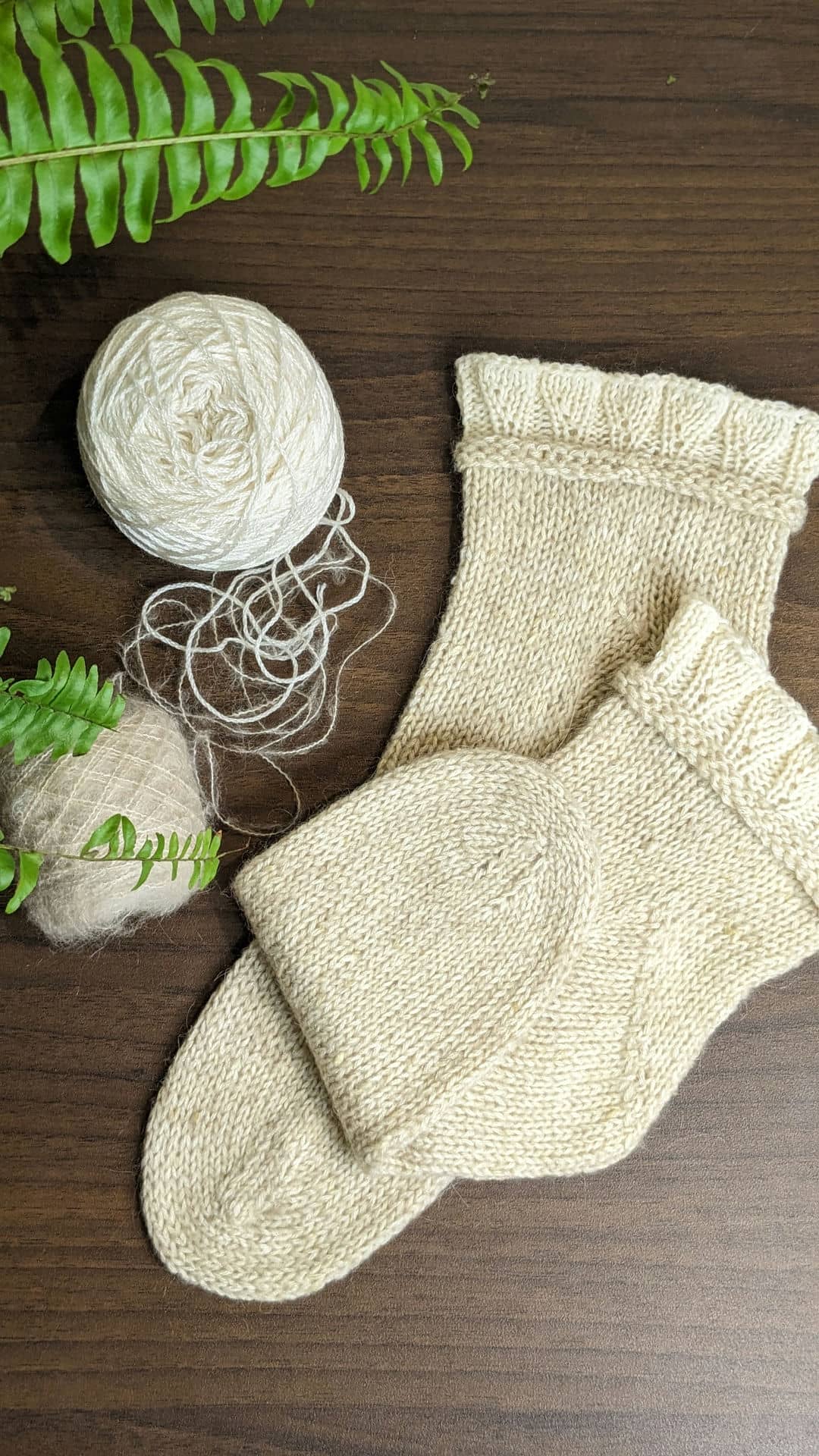
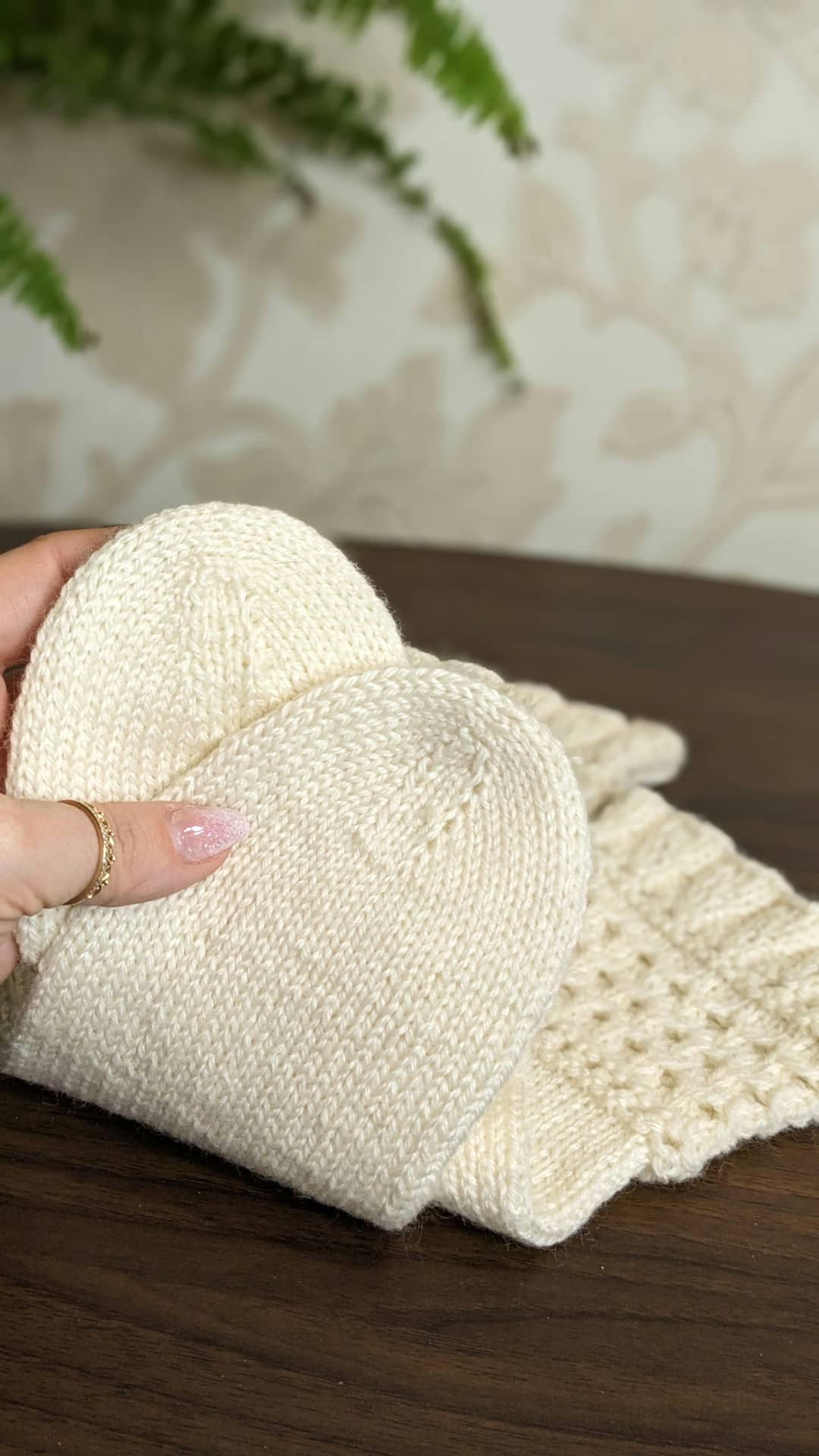
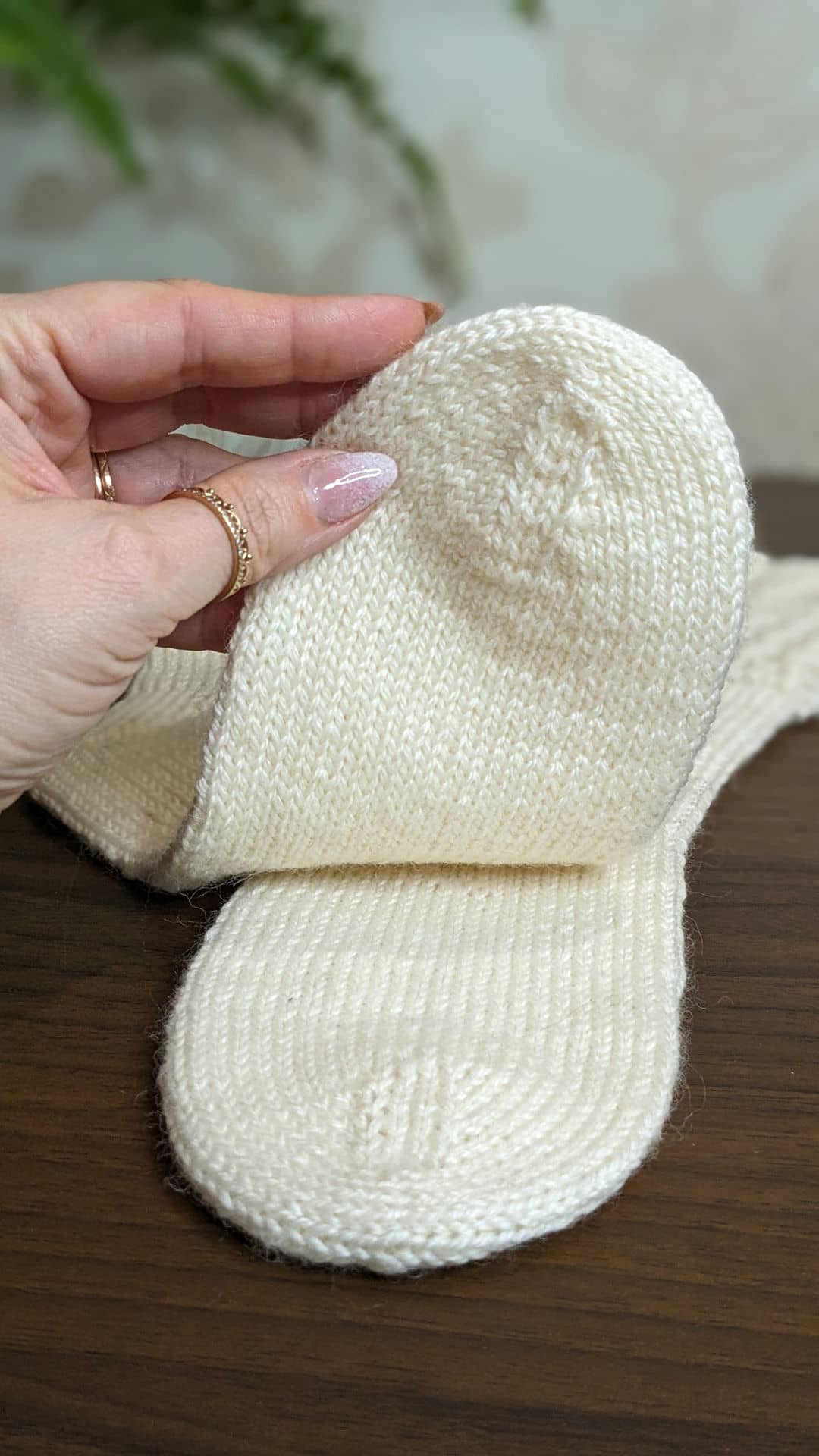
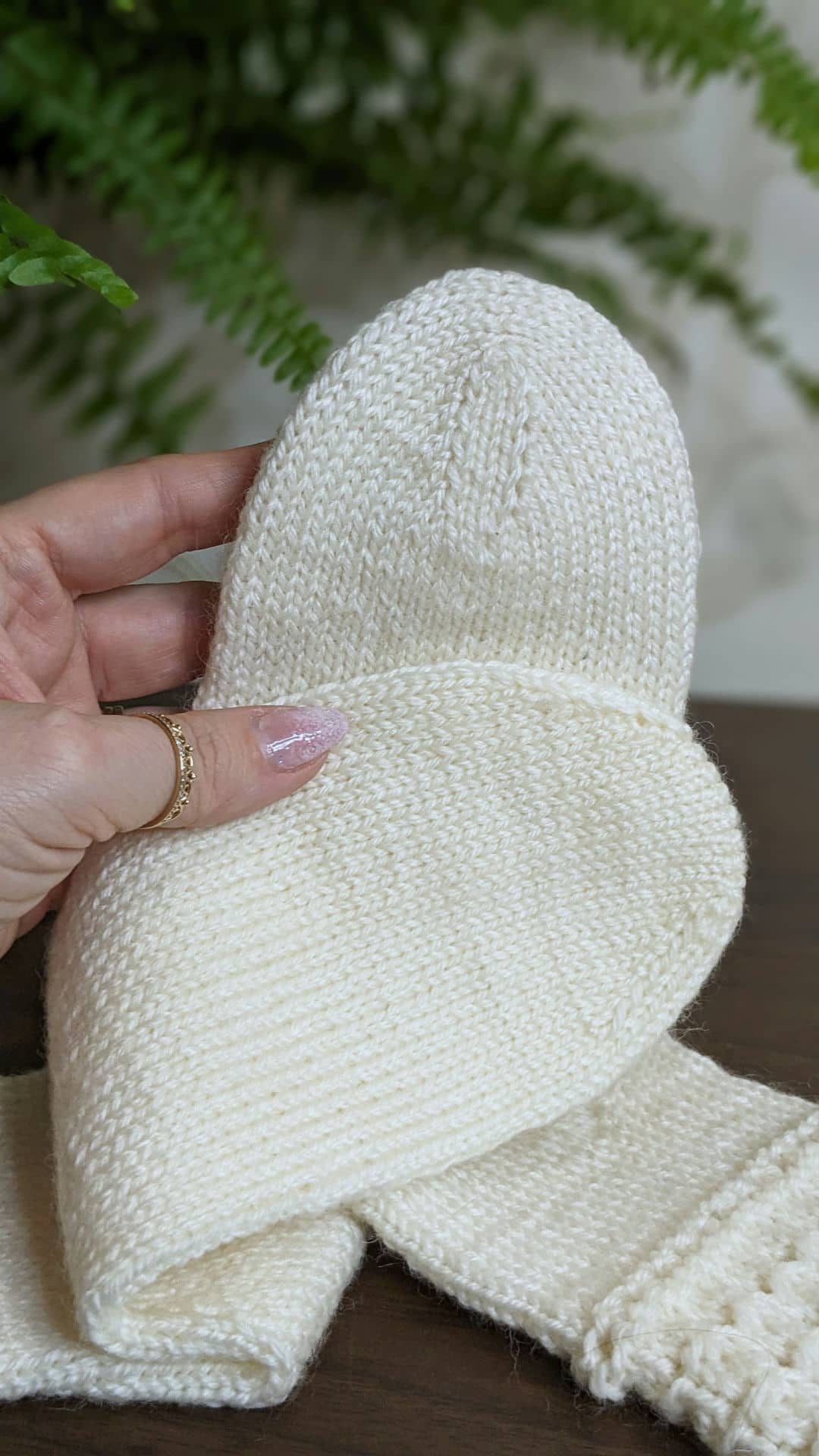
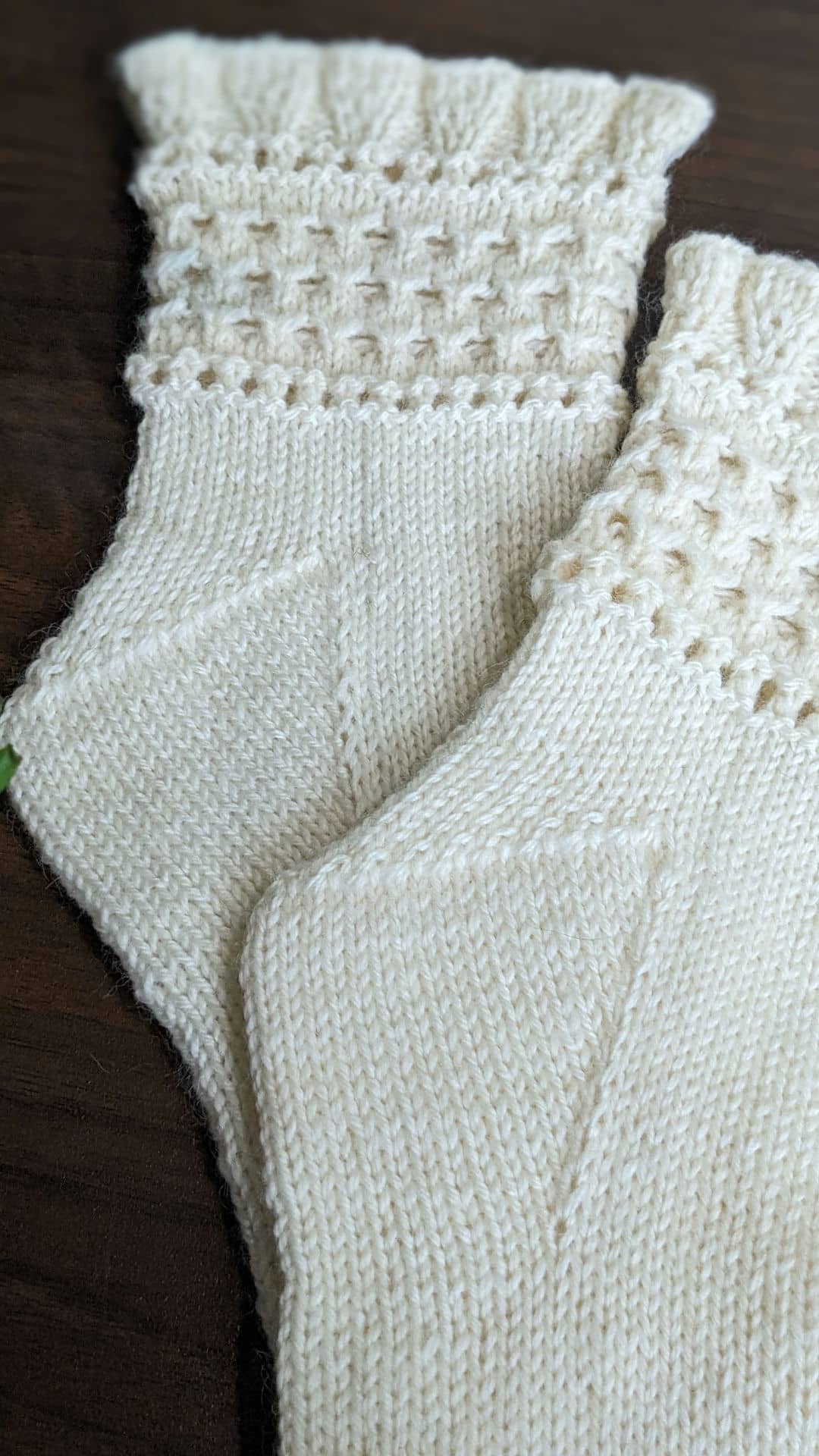
For these socks I use a triangular heel, a popular choice for toe-up knitting. It has several important advantages: it holds its shape well, fits snugly around the foot, is easy to work, and suits different foot widths.
The triangular heel is my favorite. It makes socks comfortable to wear and practical for everyday use. Toe-up socks with a triangular heel need no complicated calculations and are suitable even for those who are just beginning to knit socks. At the same time, the result looks neat and professional.
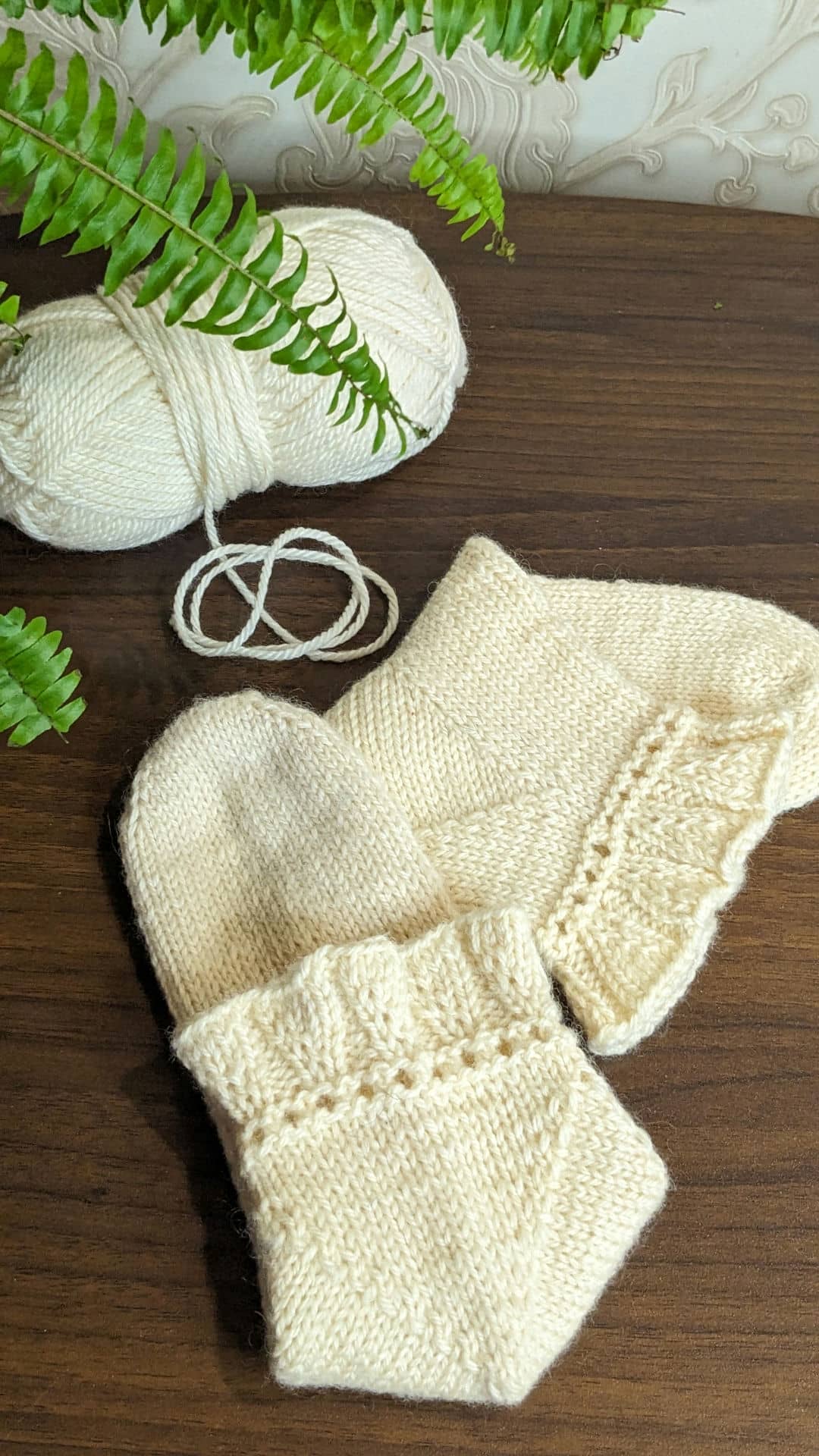
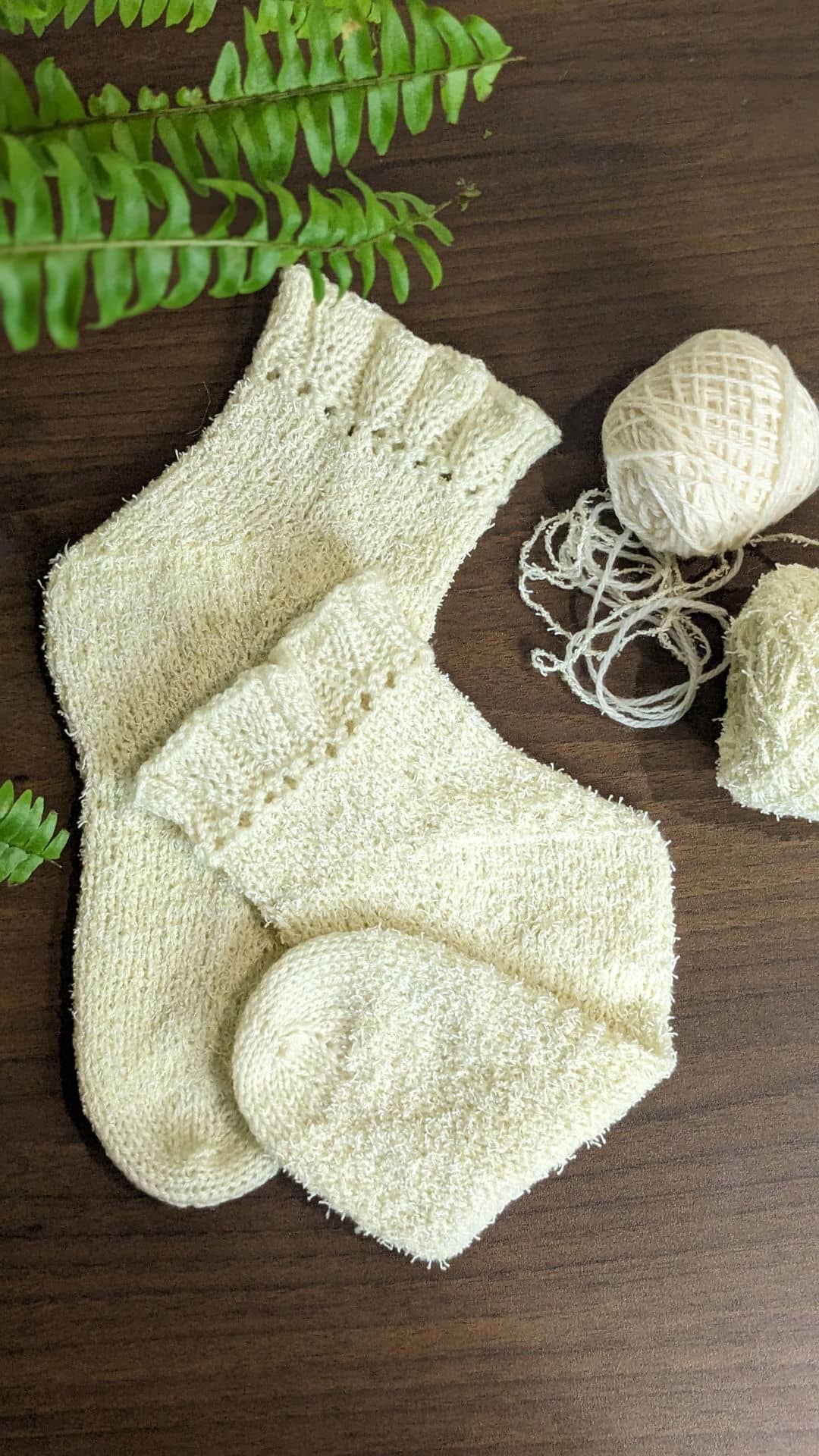
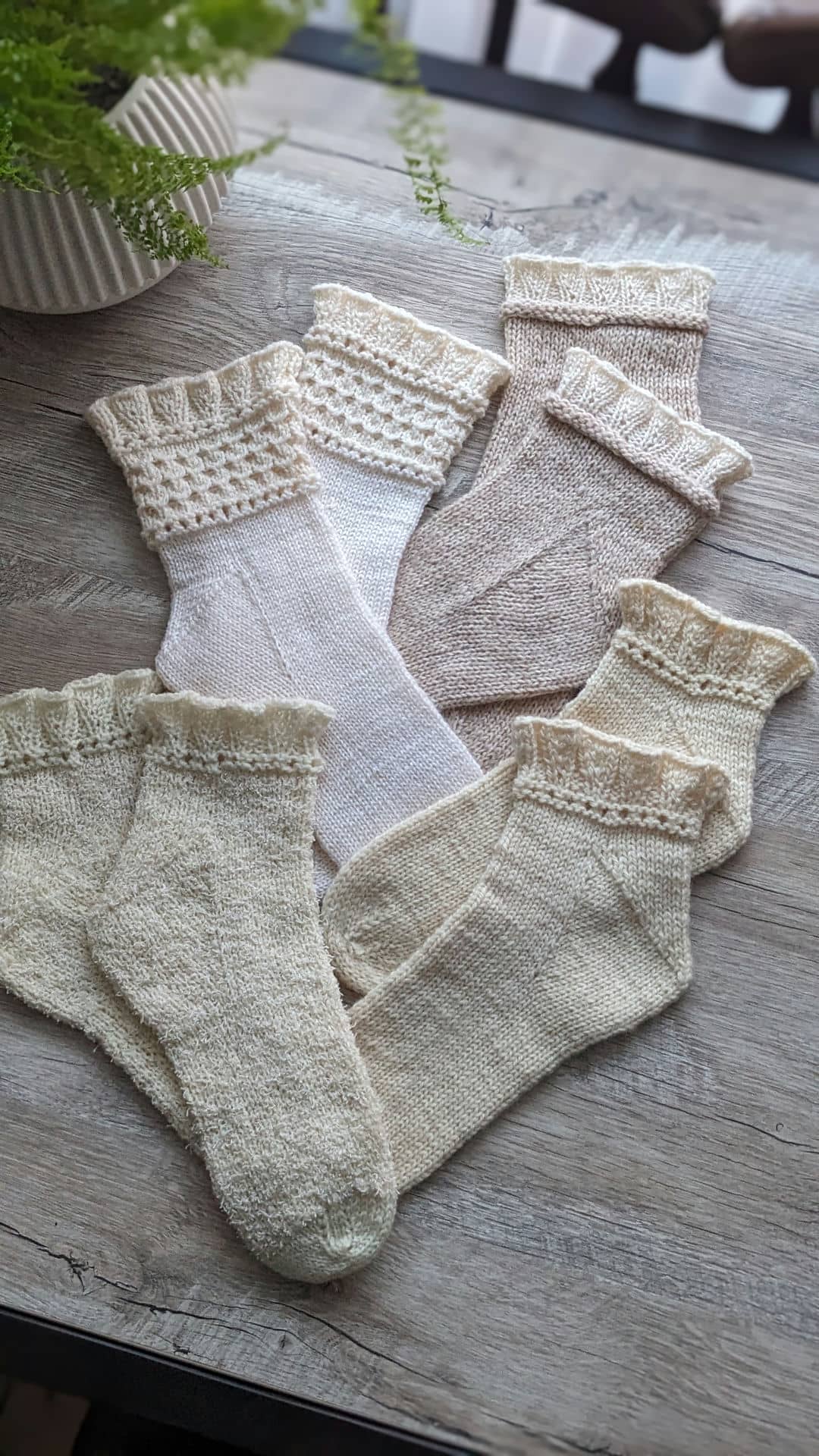
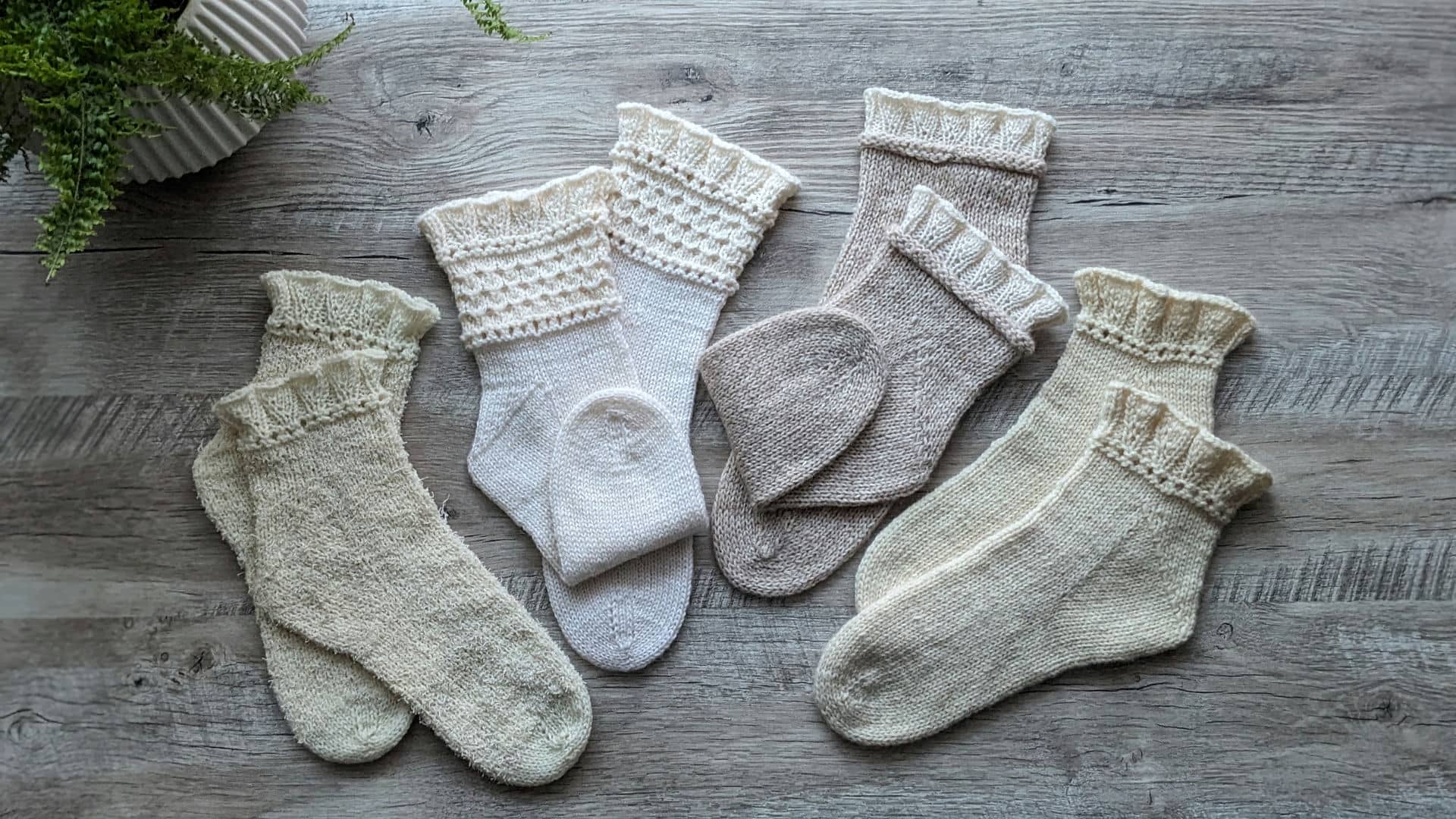
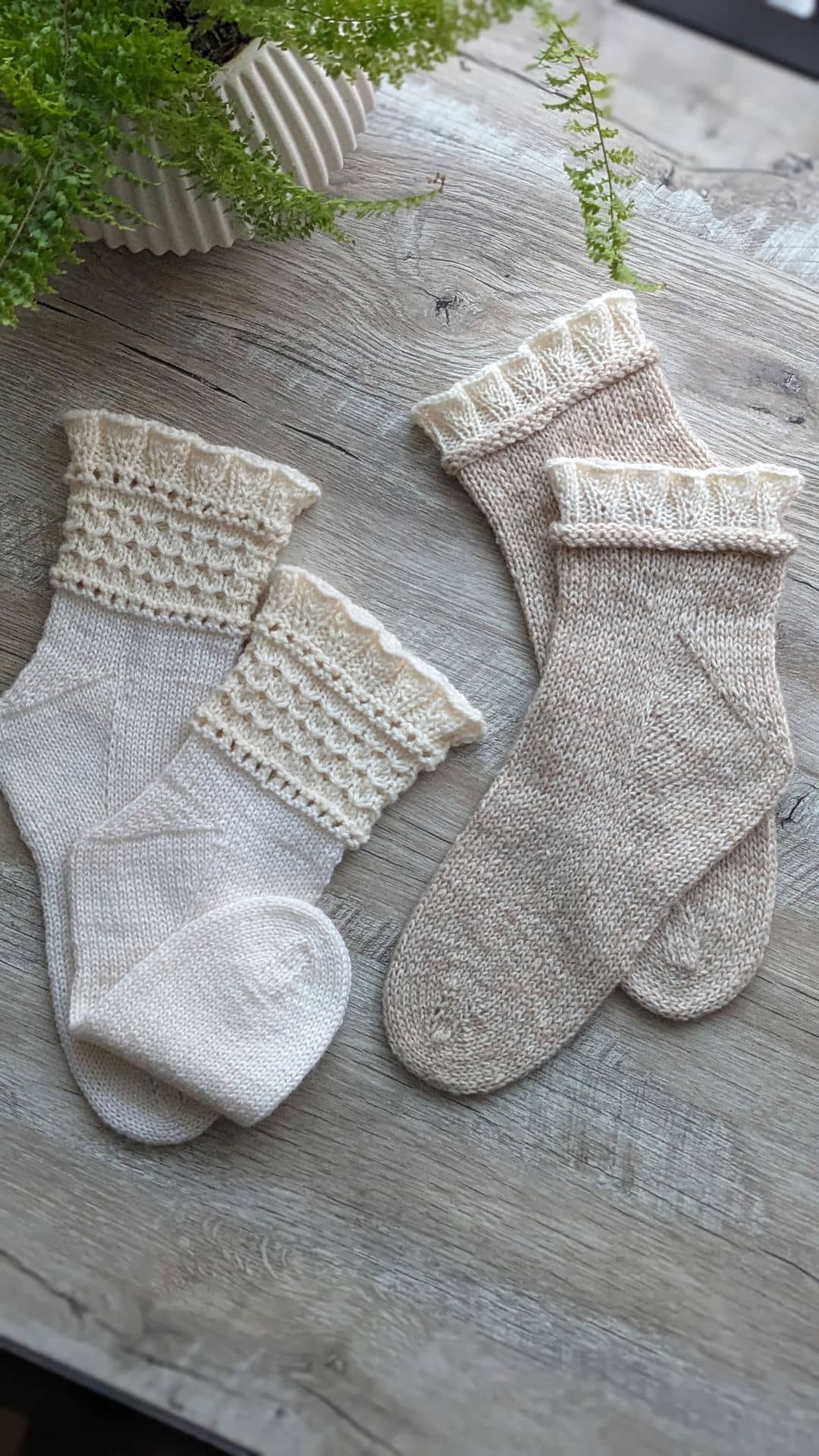
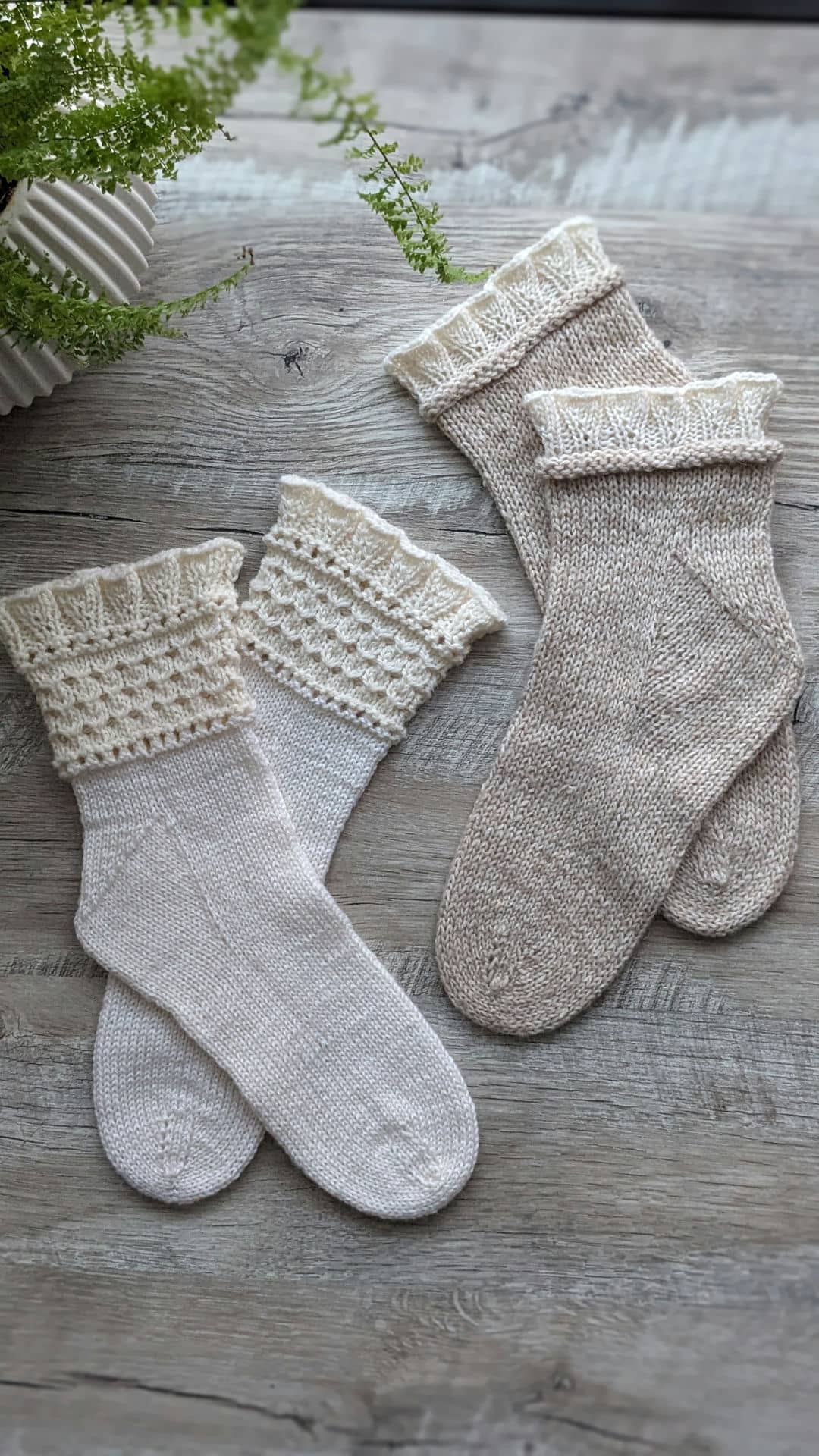
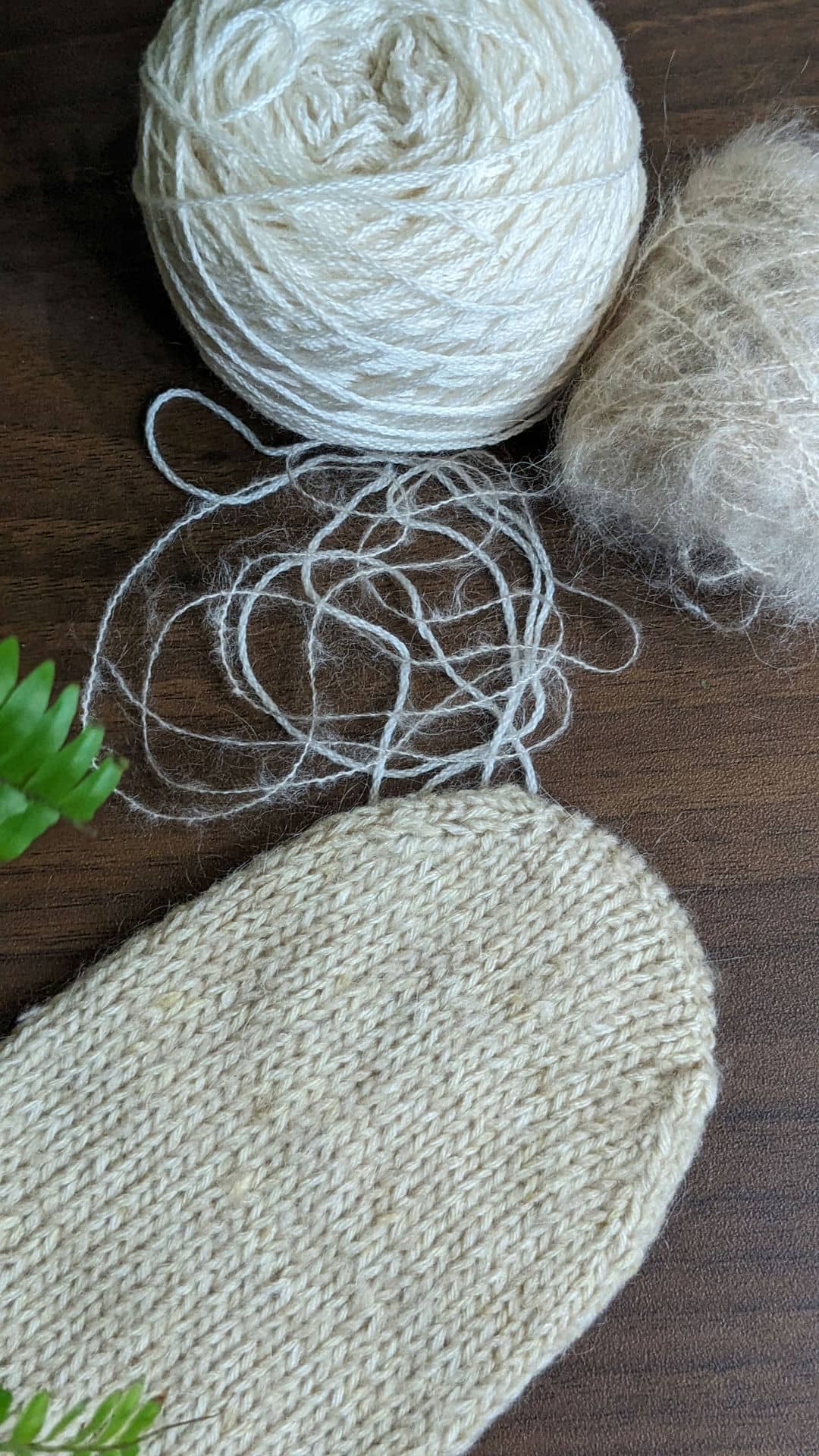
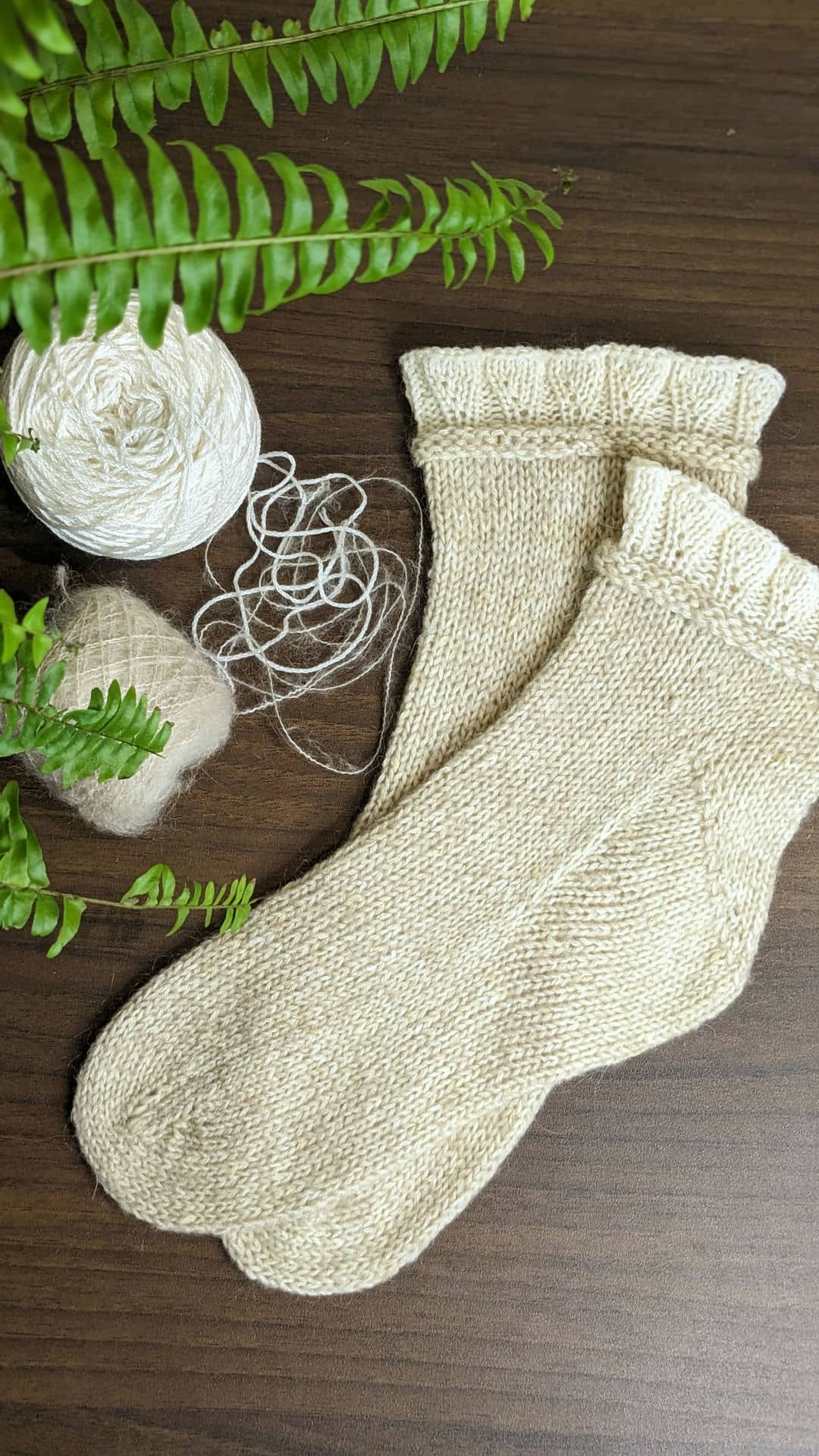
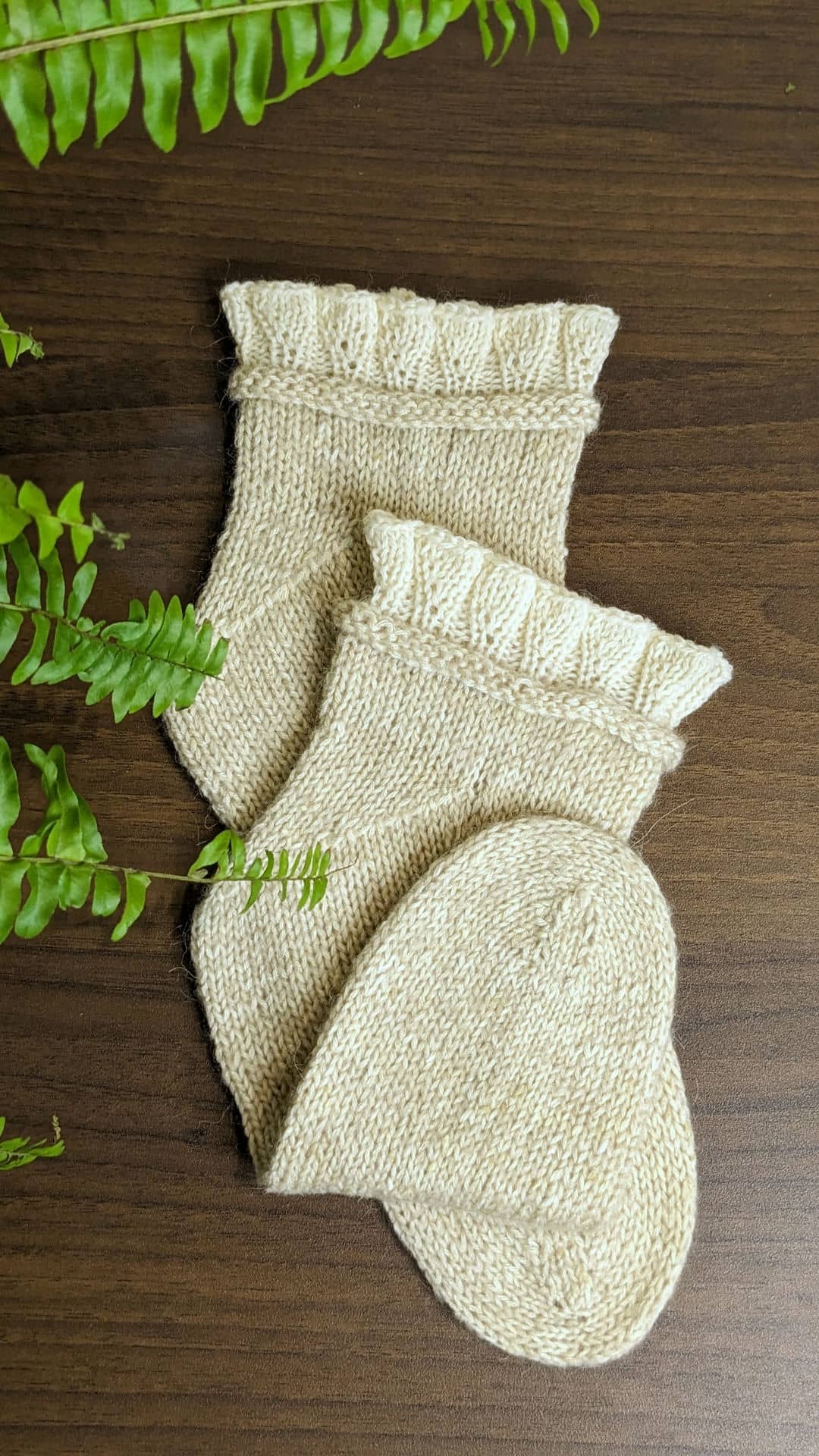
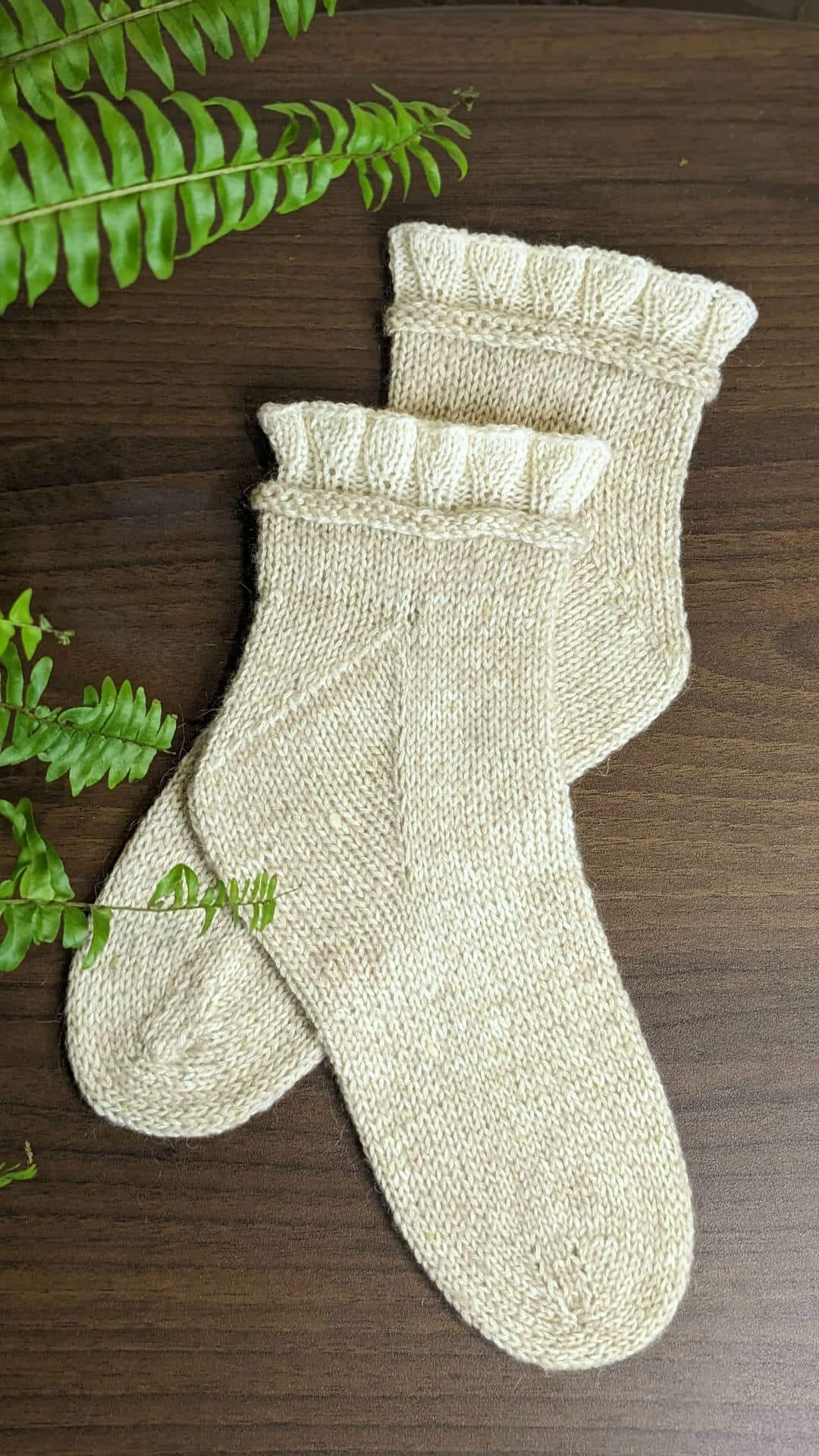
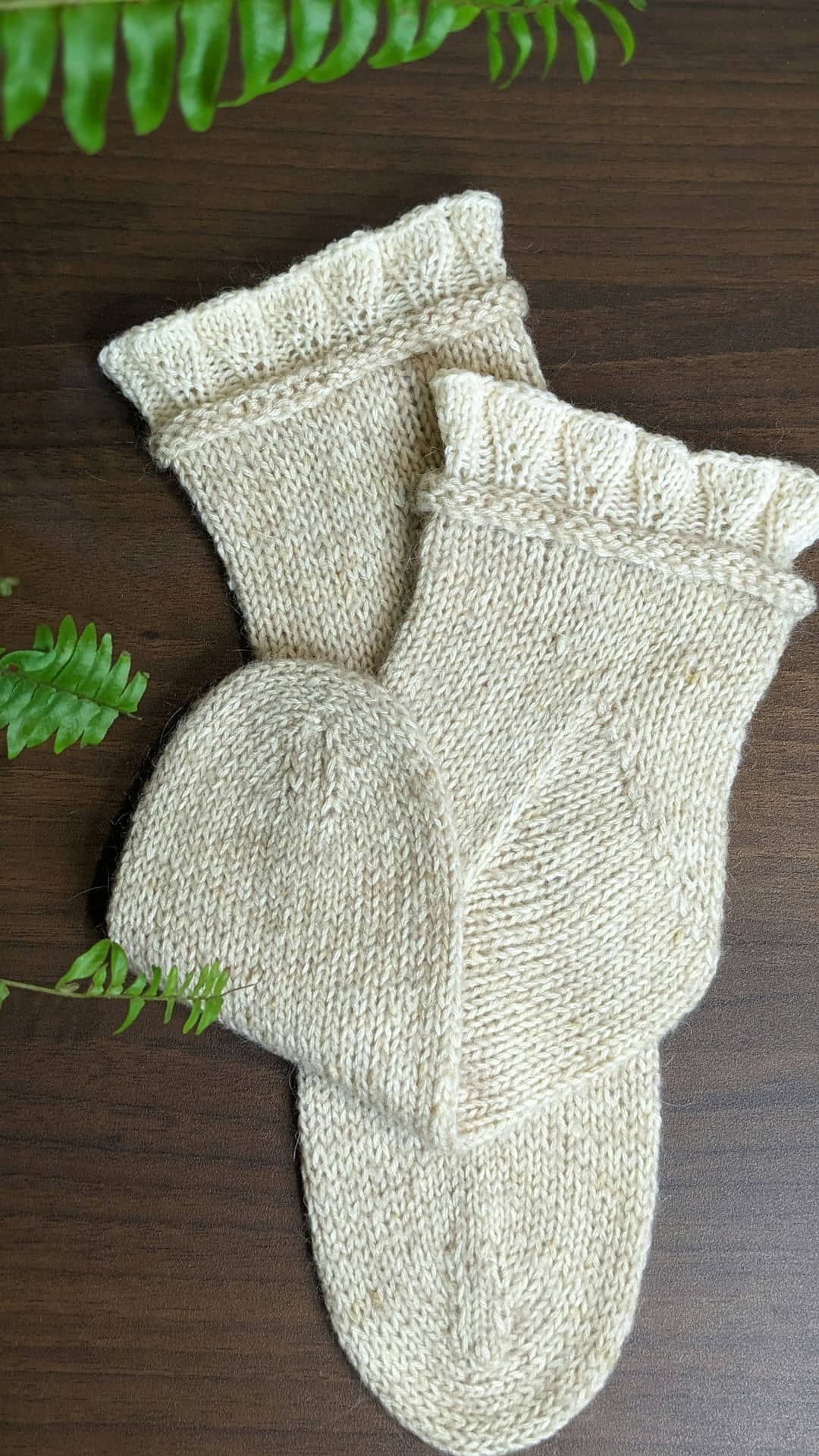
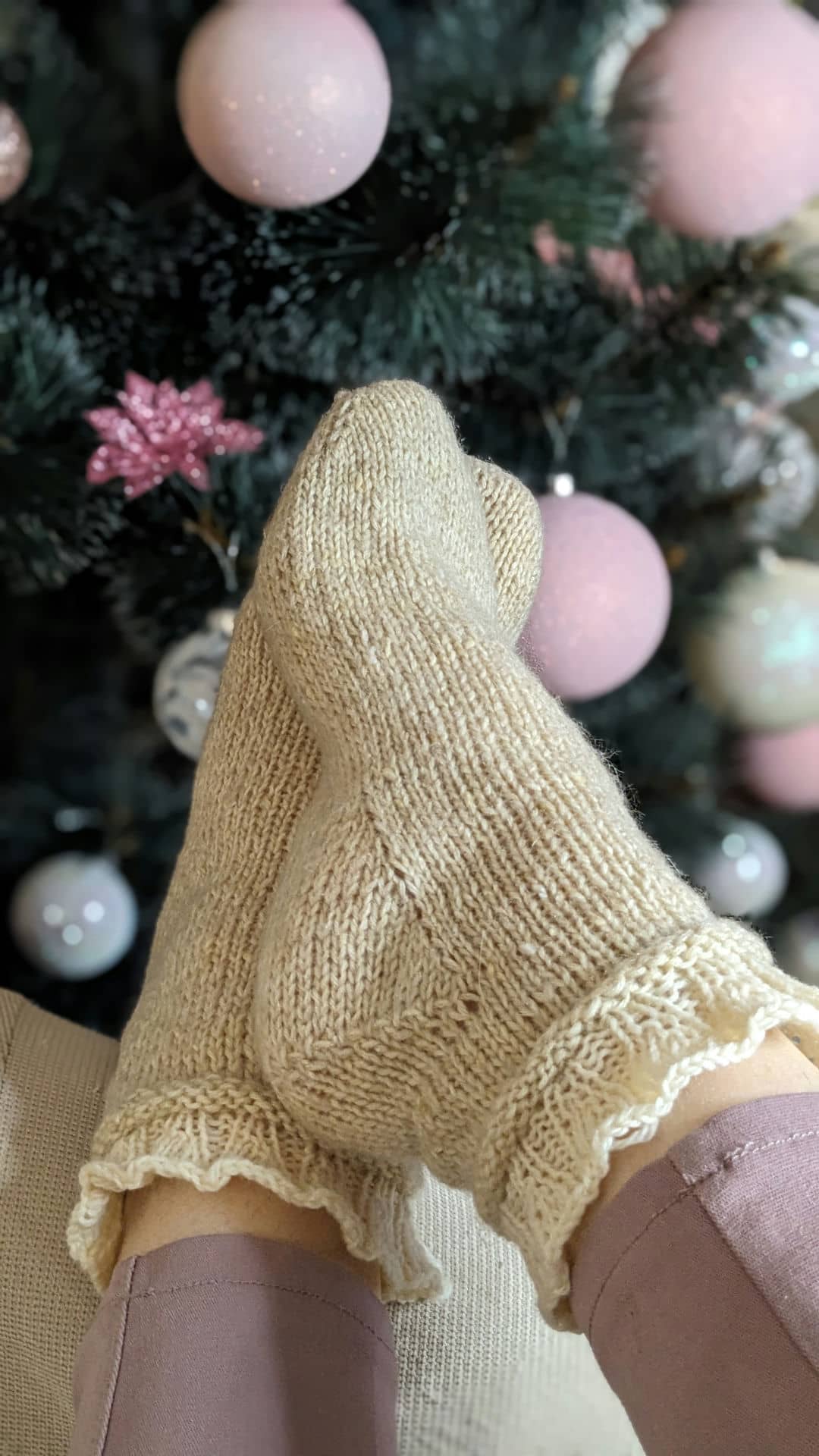
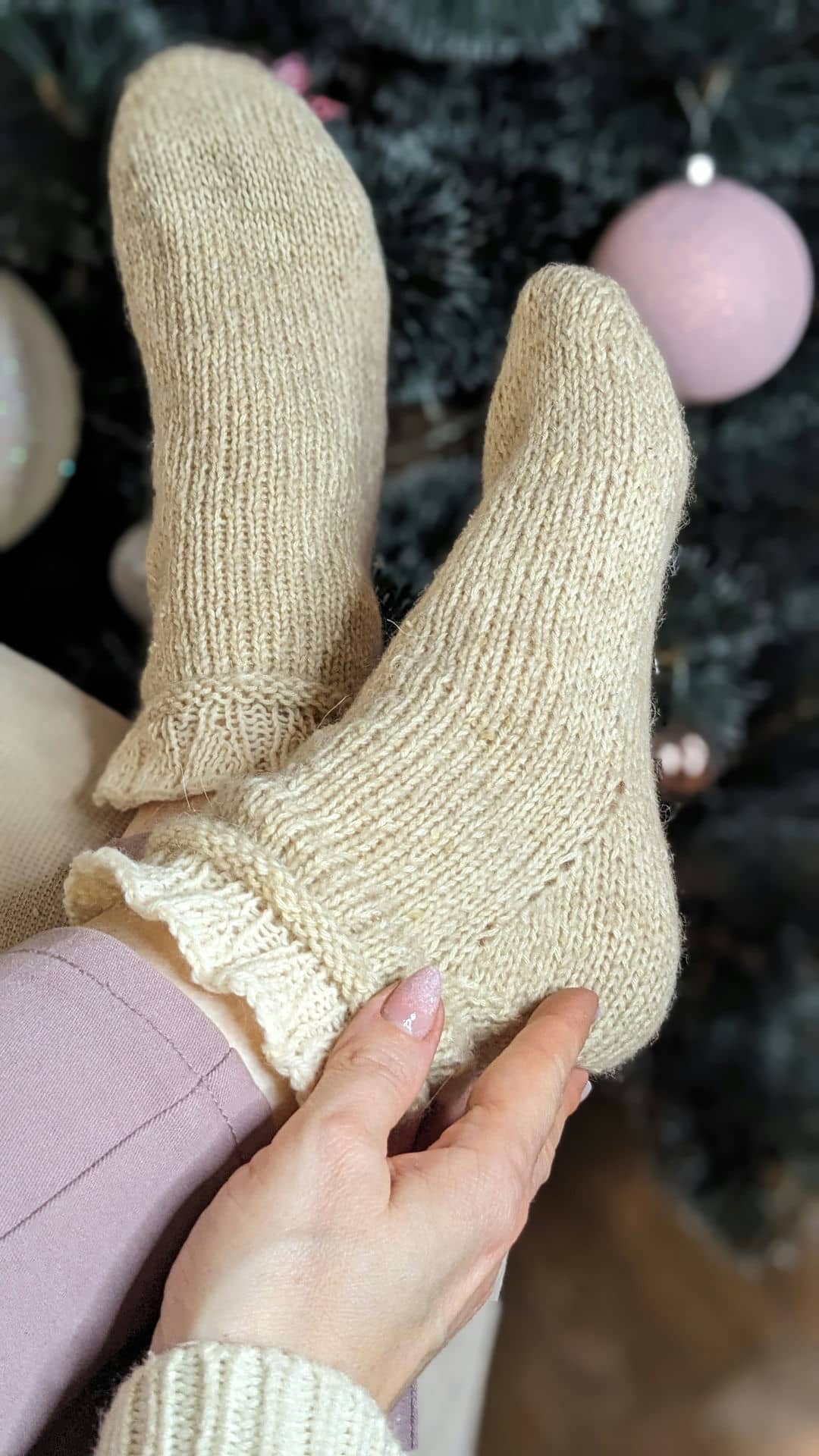
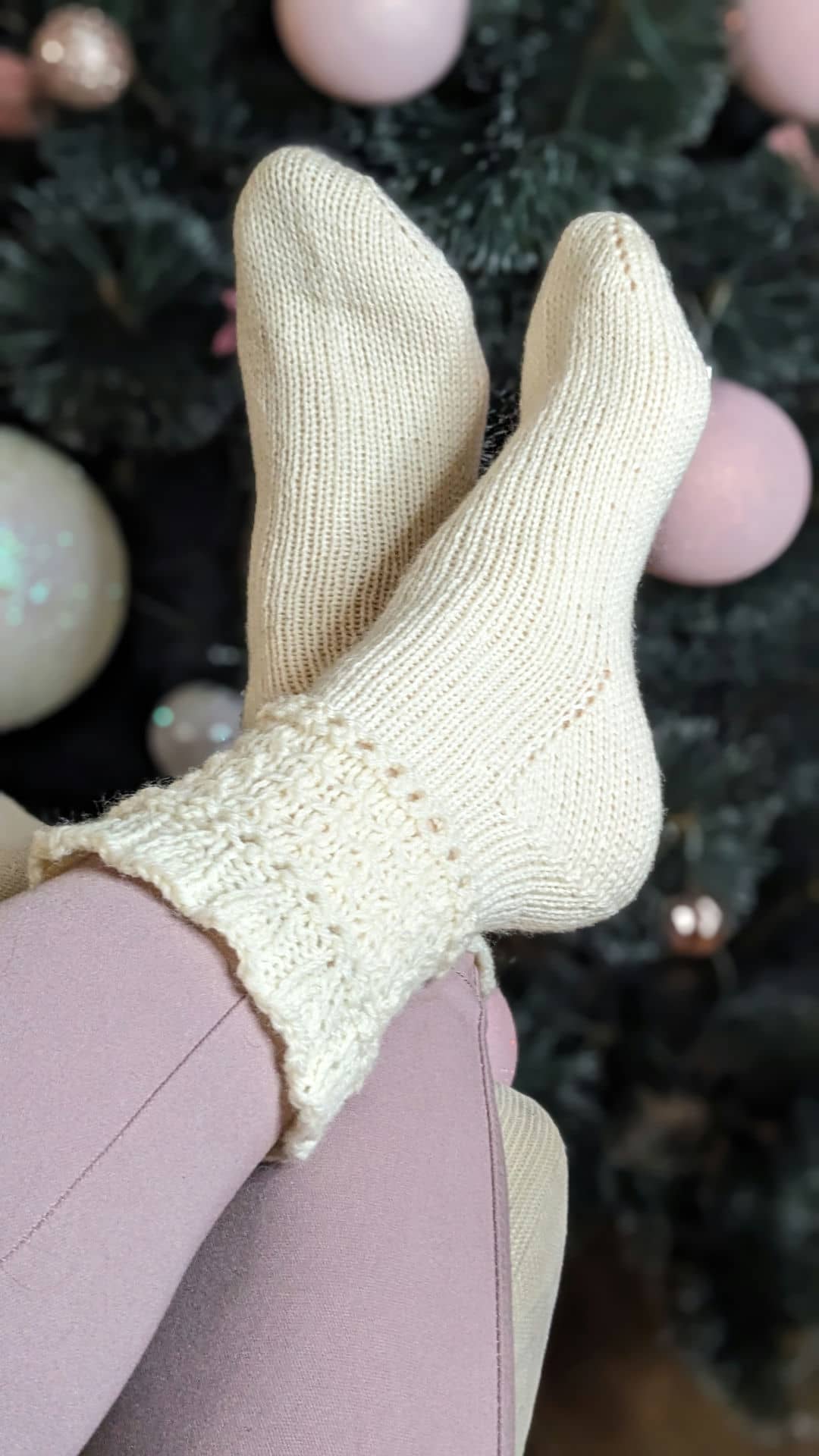
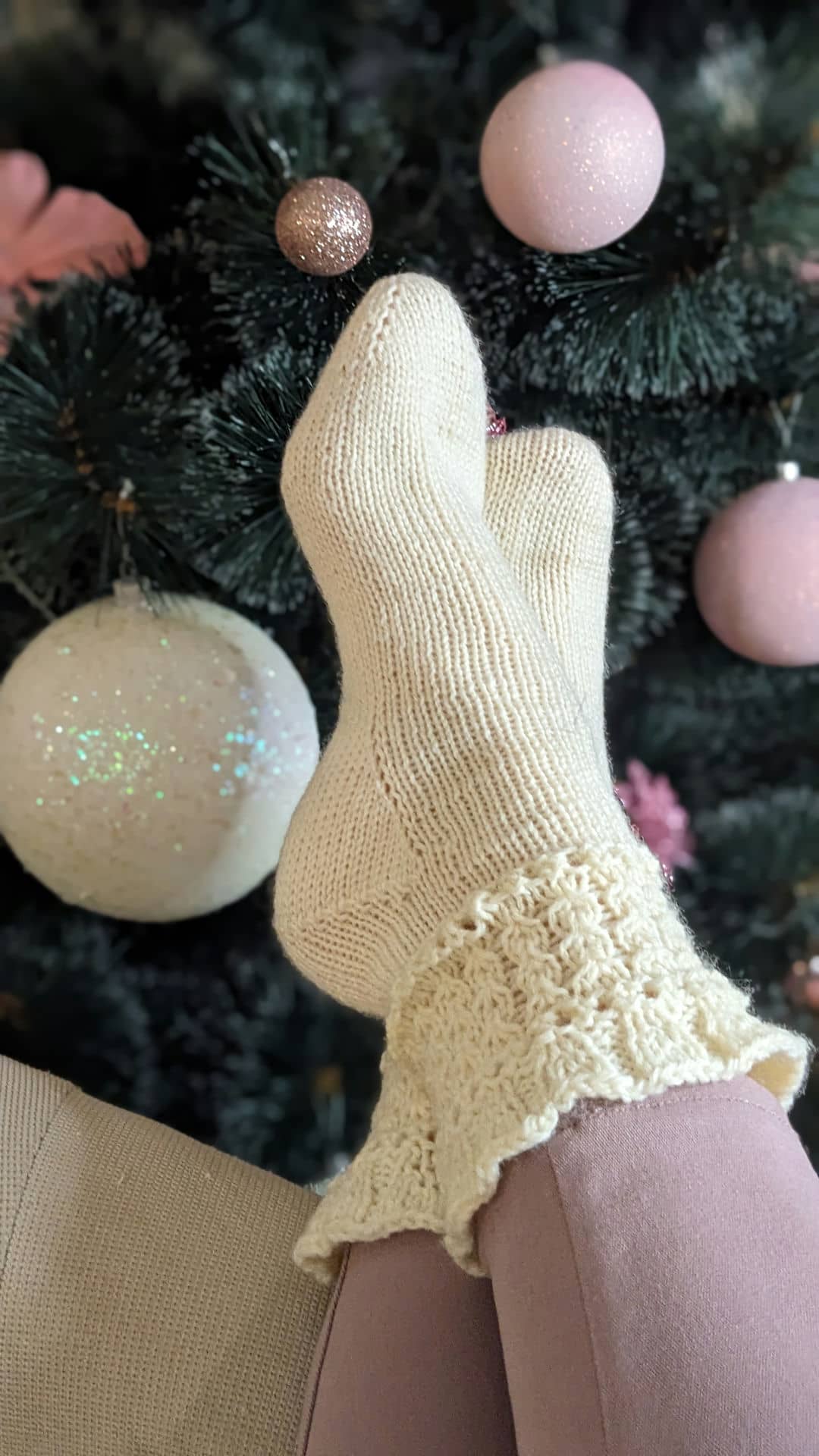
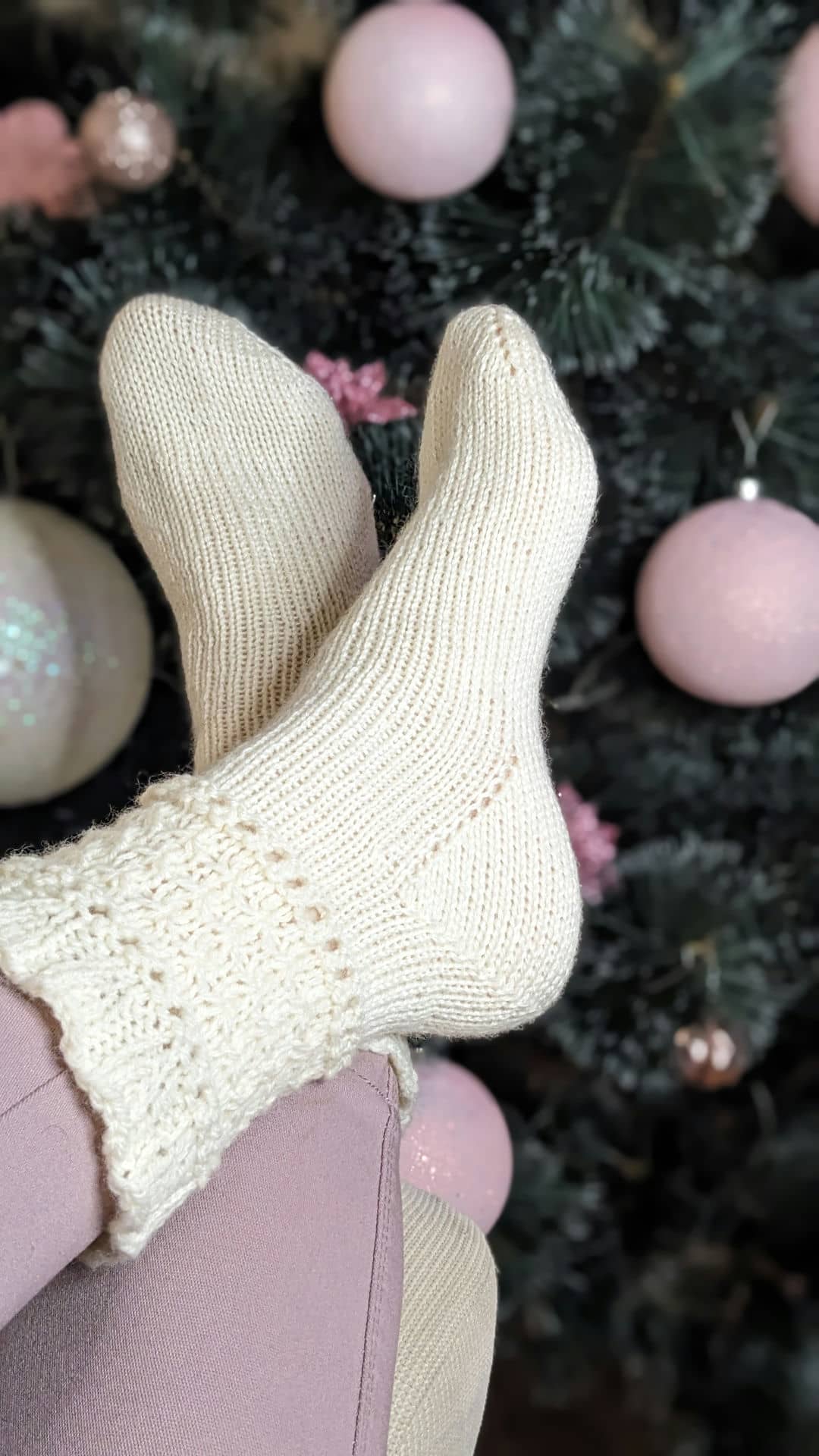
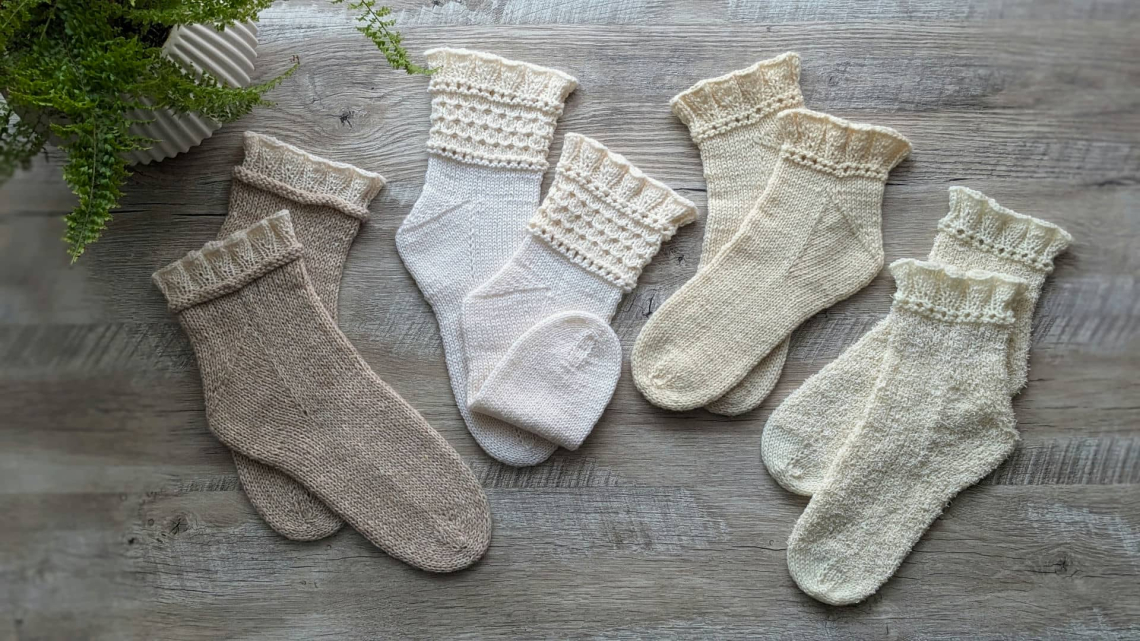
In this post I will show you 4 pairs of socks made from different yarn blends. I mostly used leftovers from previous projects, which is exactly the kind of work I love most. It leaves room for experimenting with colors, textures and mood. I will tell you about each pair in more detail below.
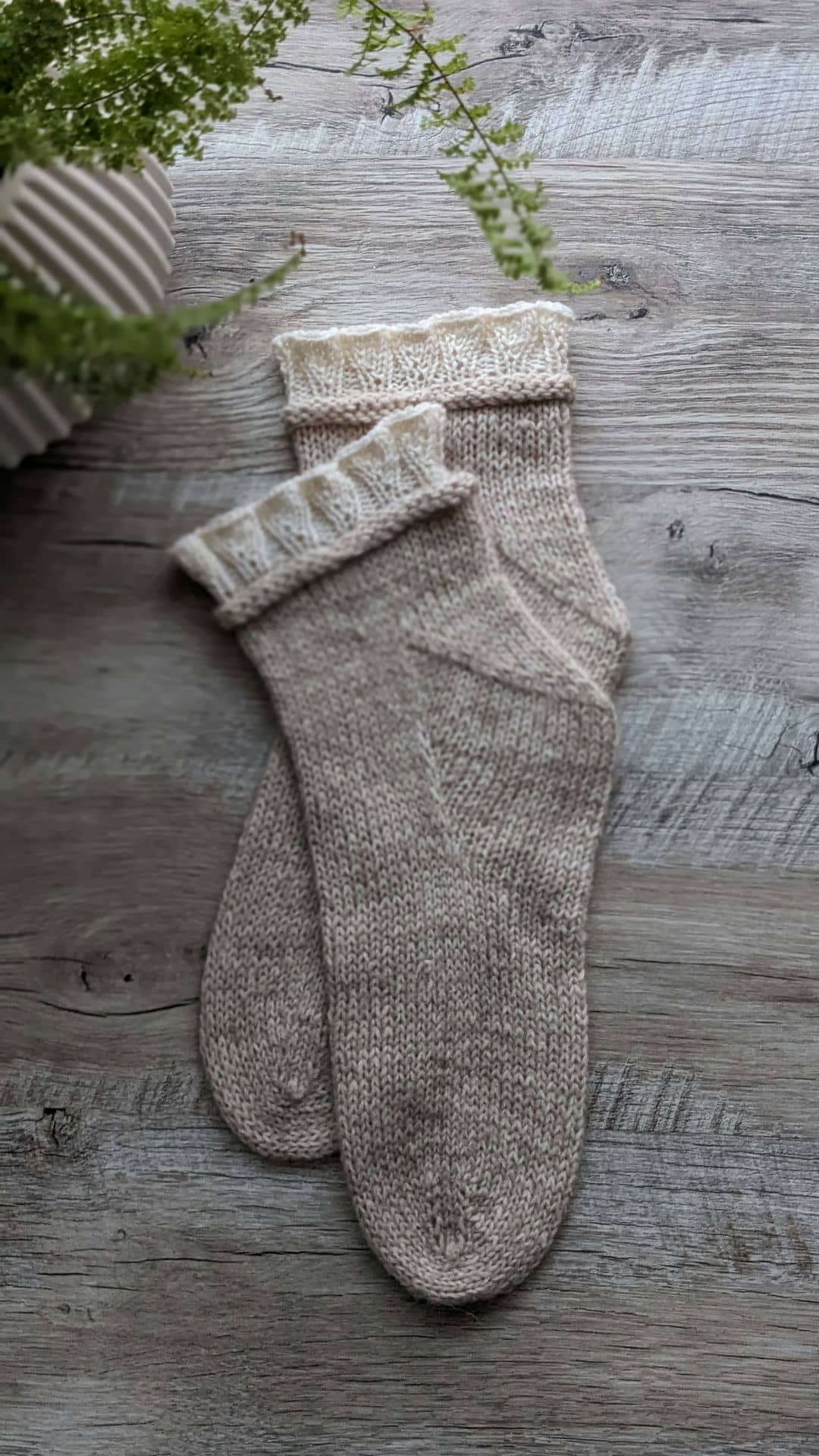
Socks with a soft heathered shade
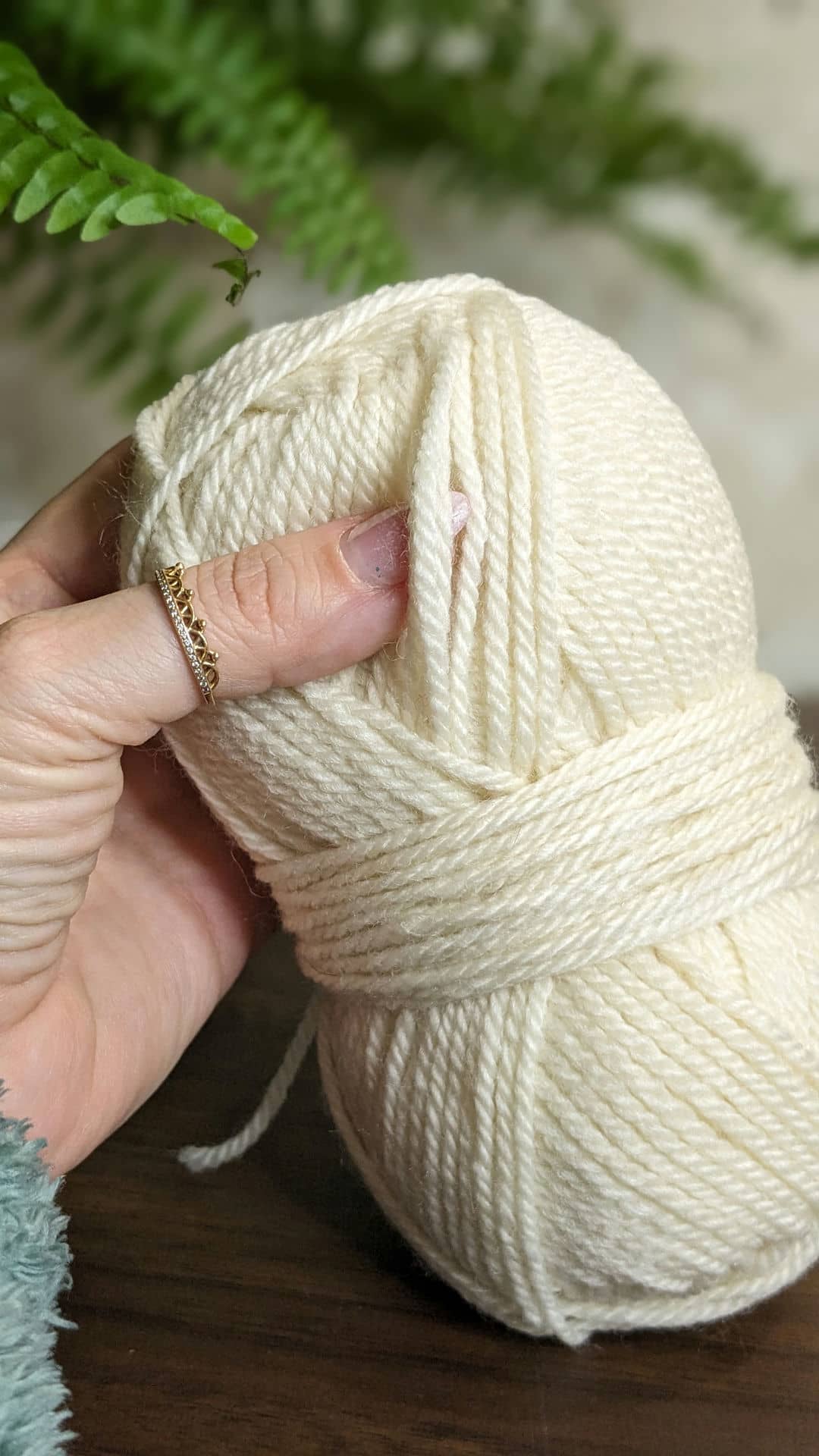
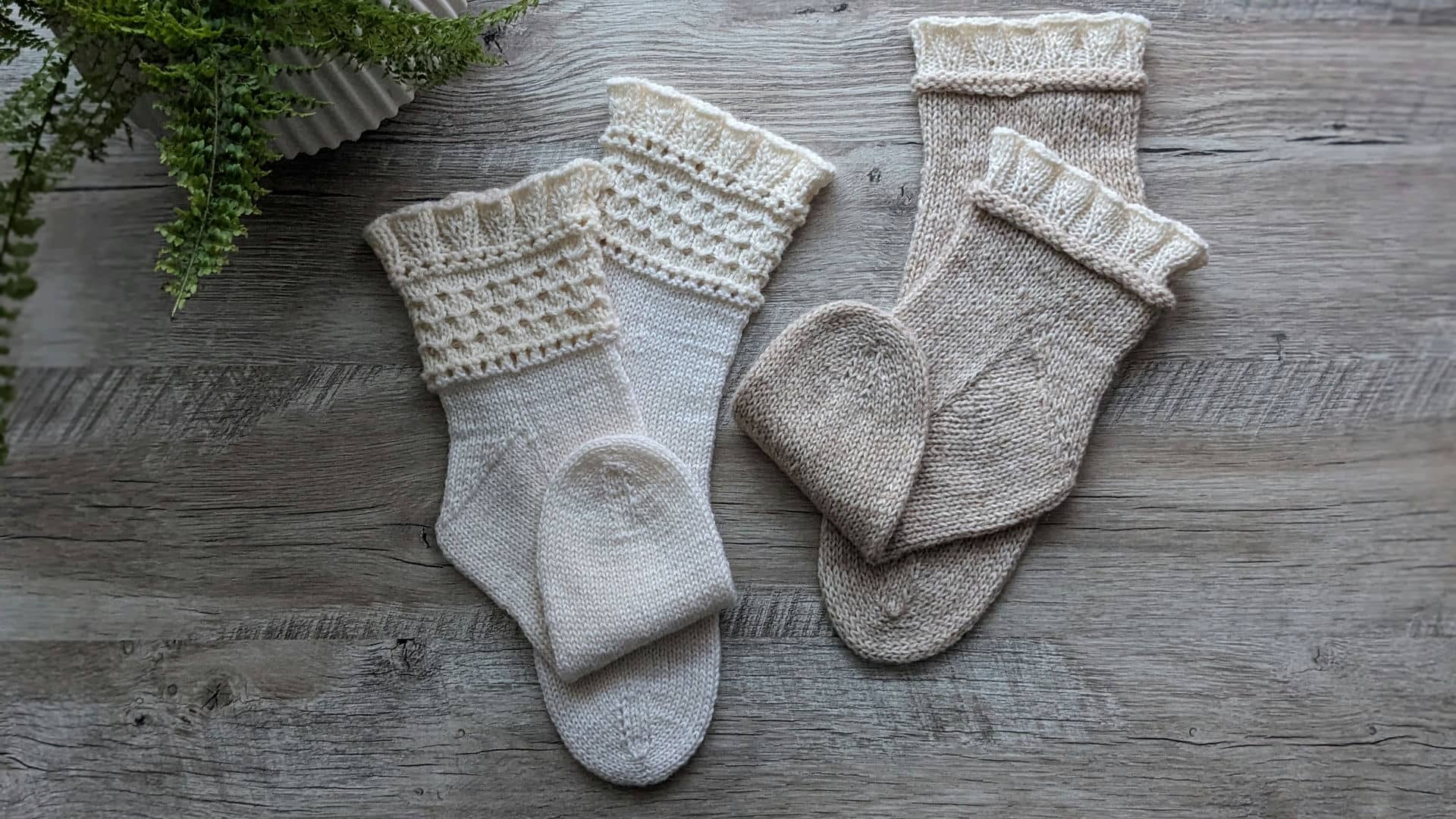
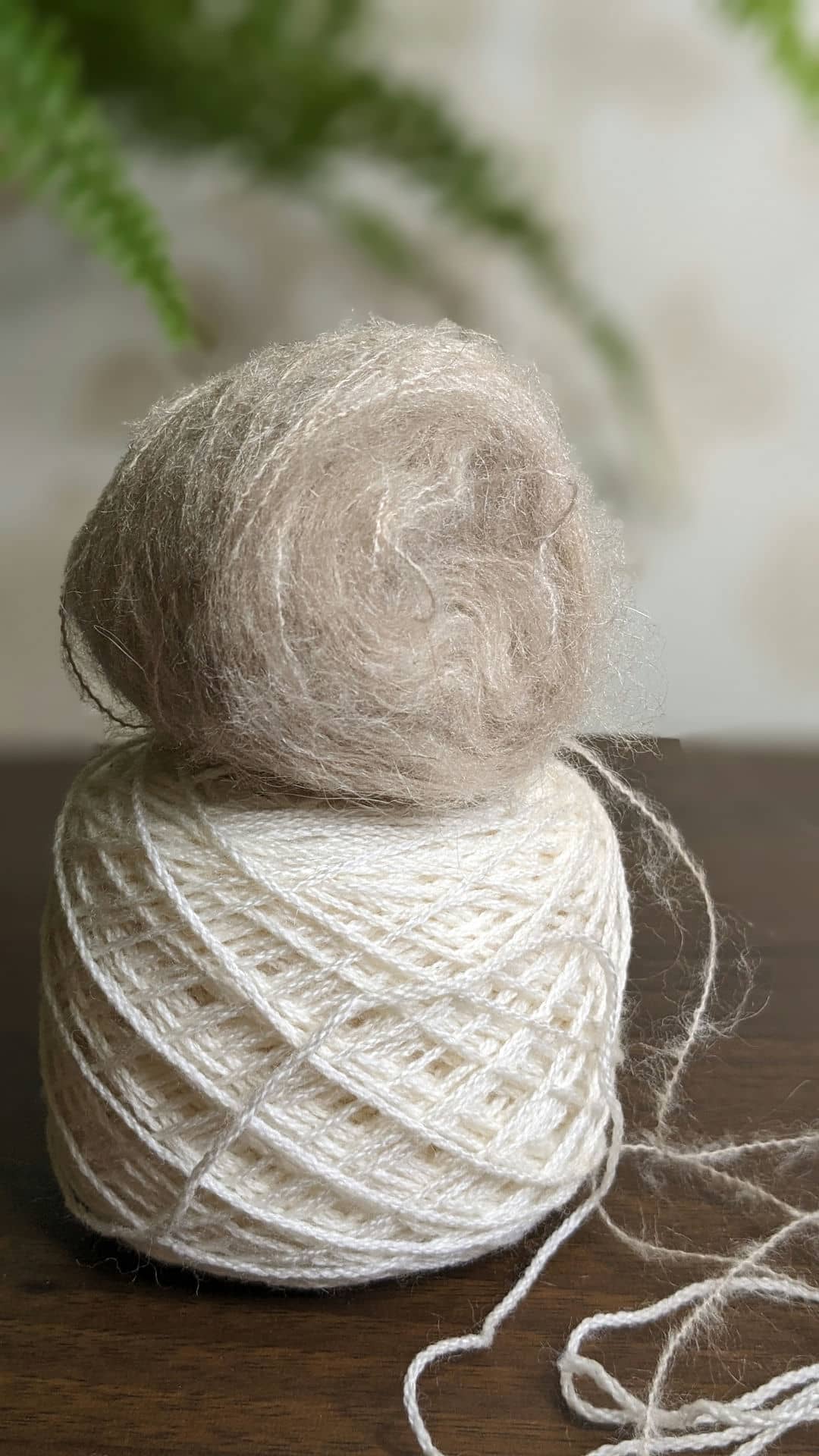
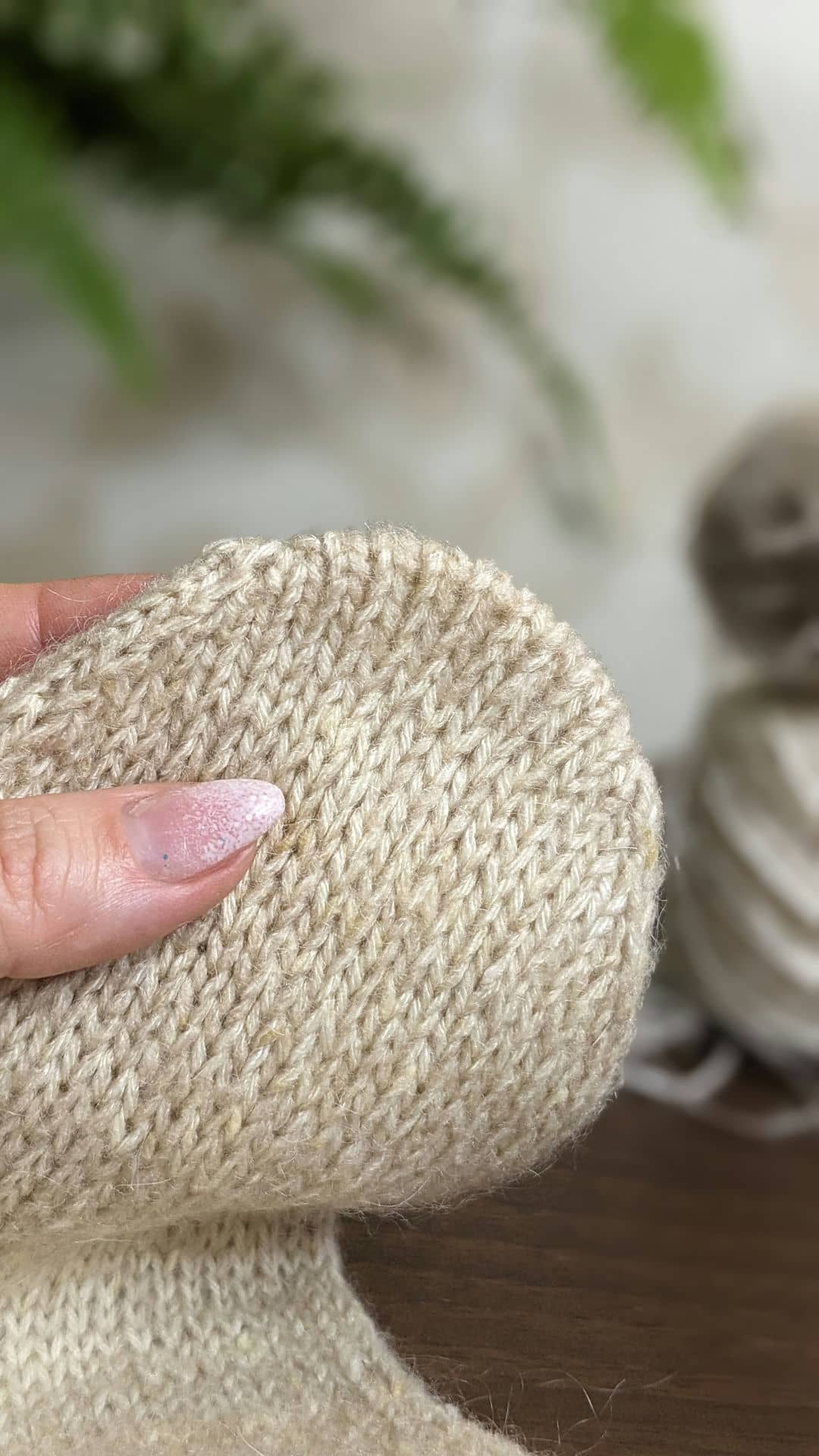
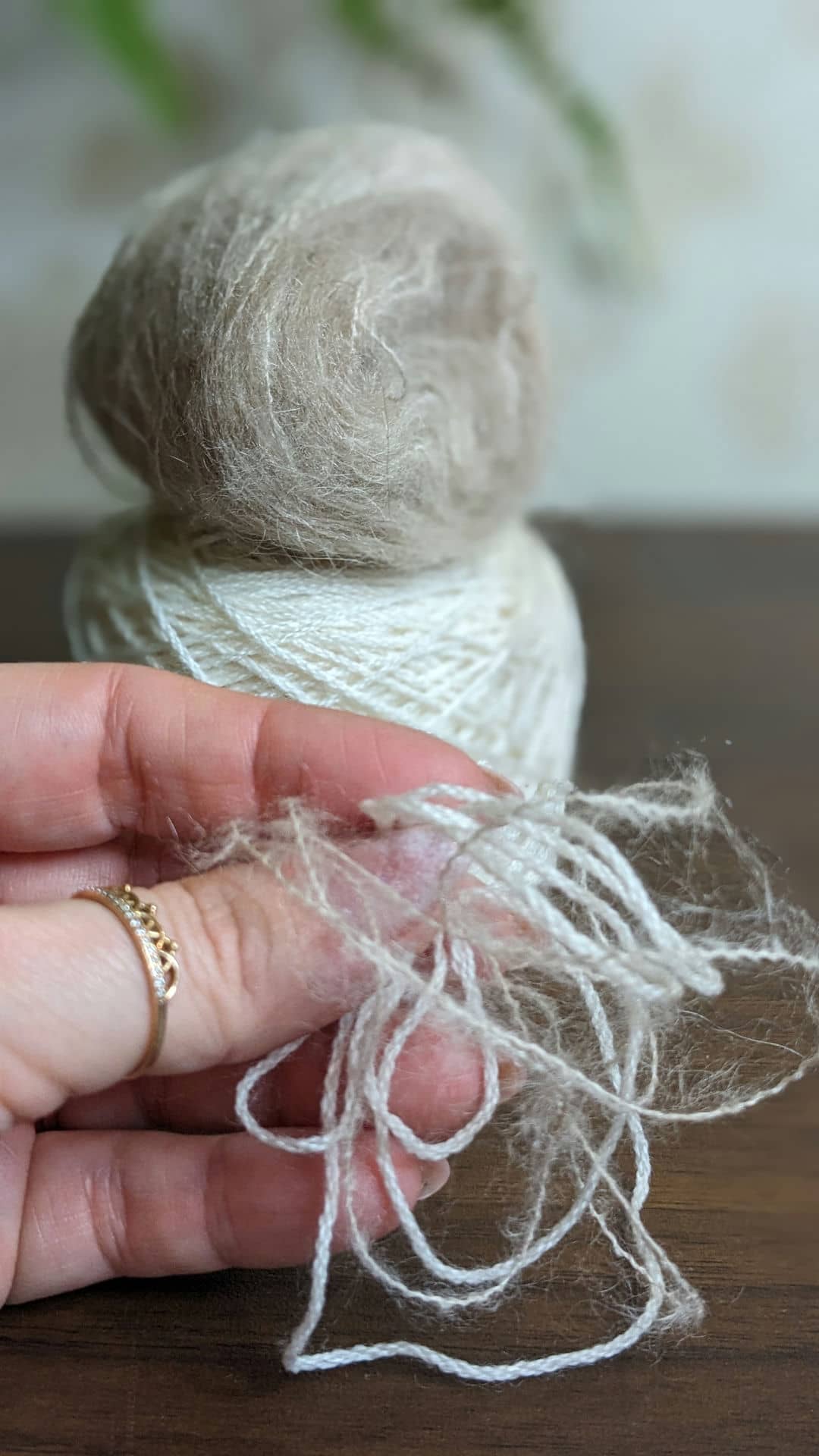
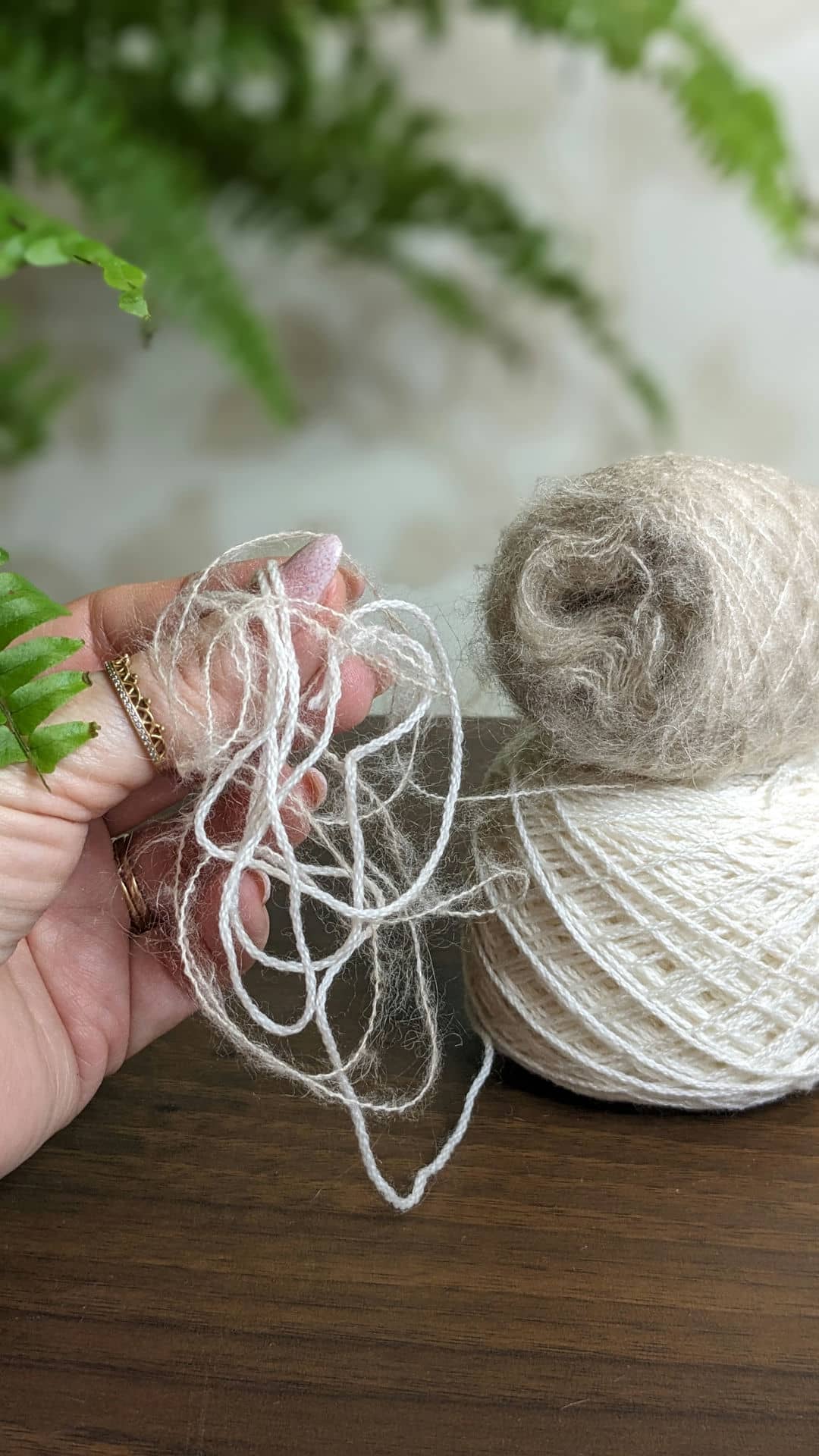
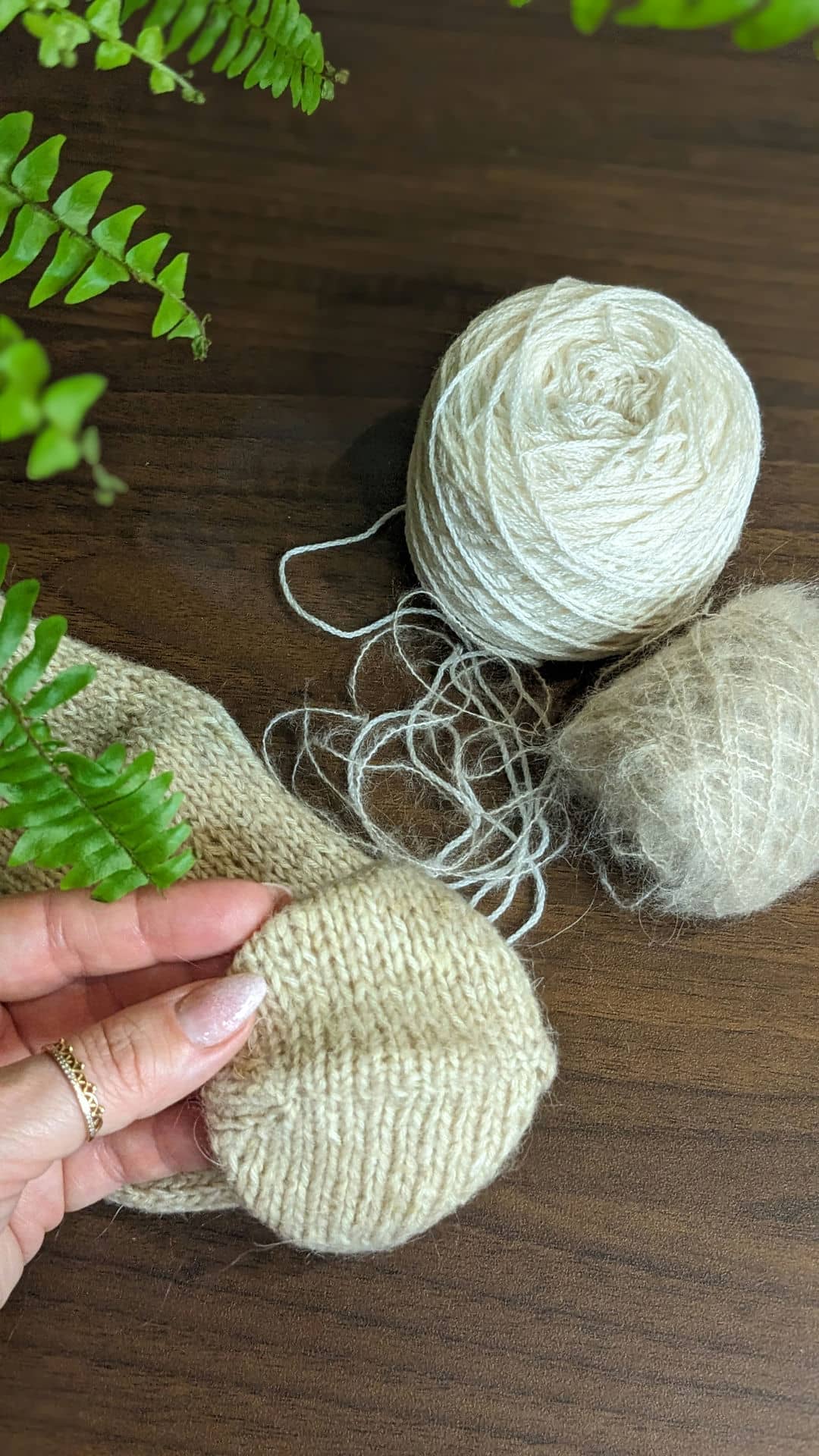
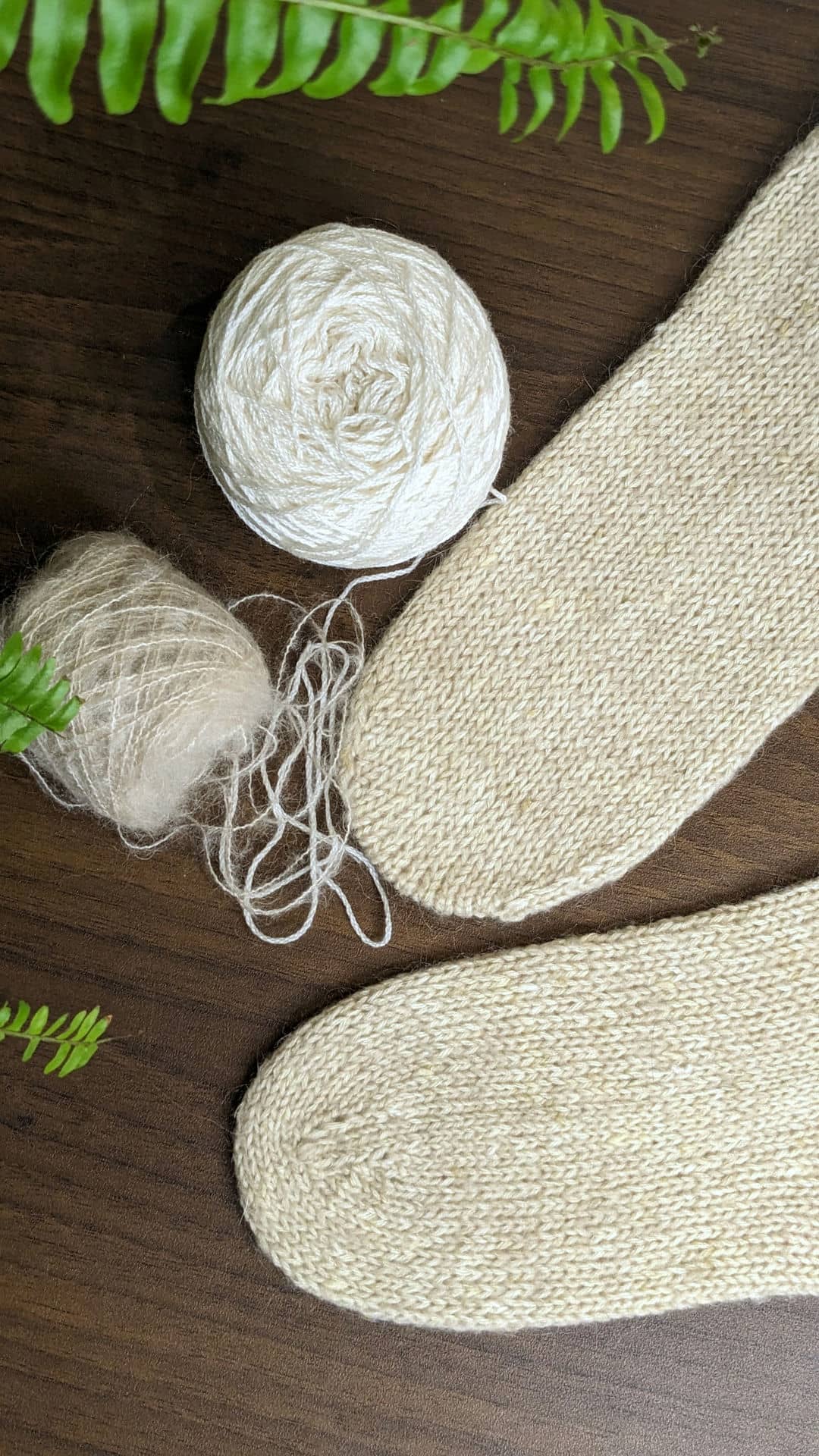
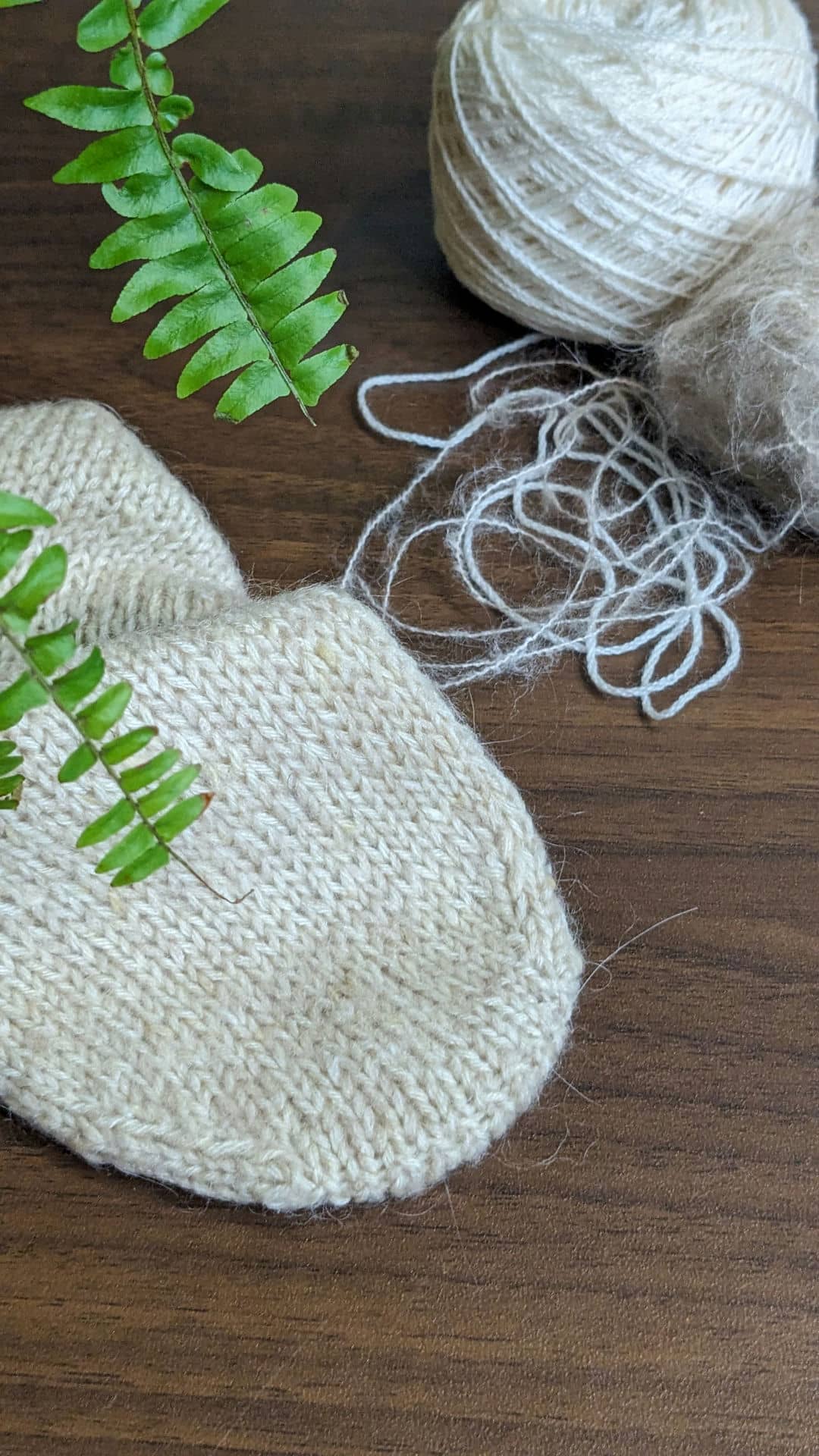
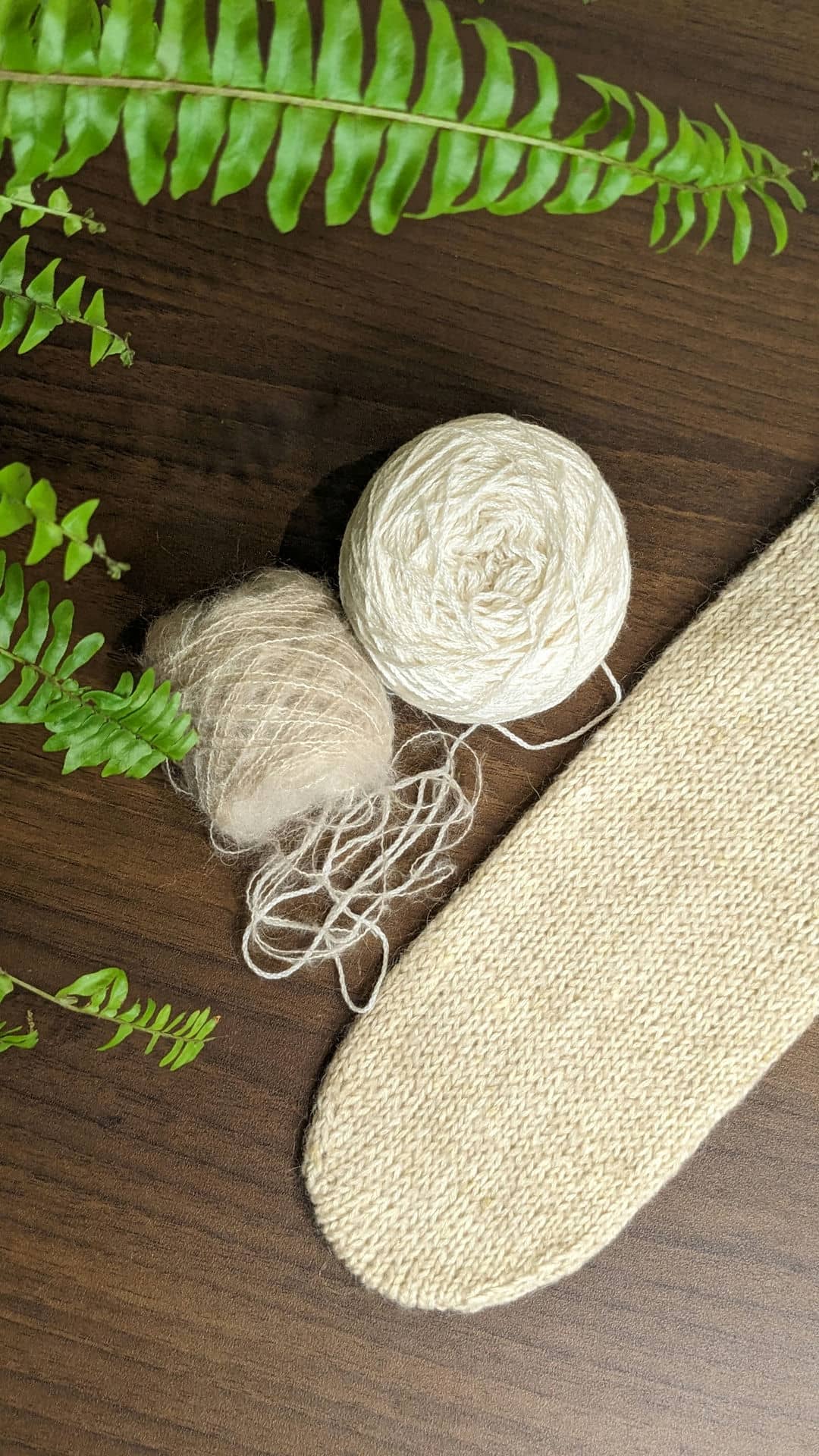
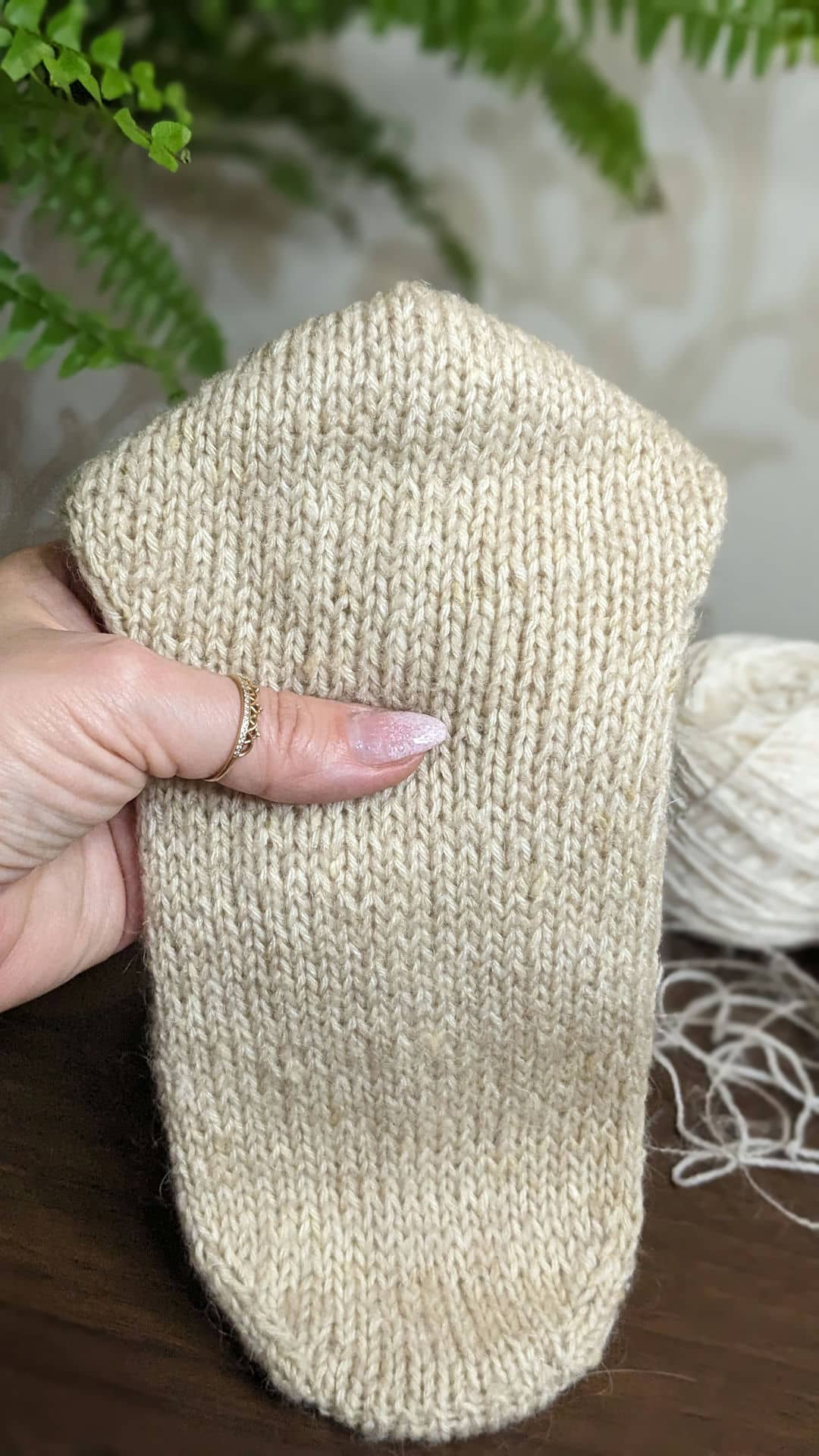
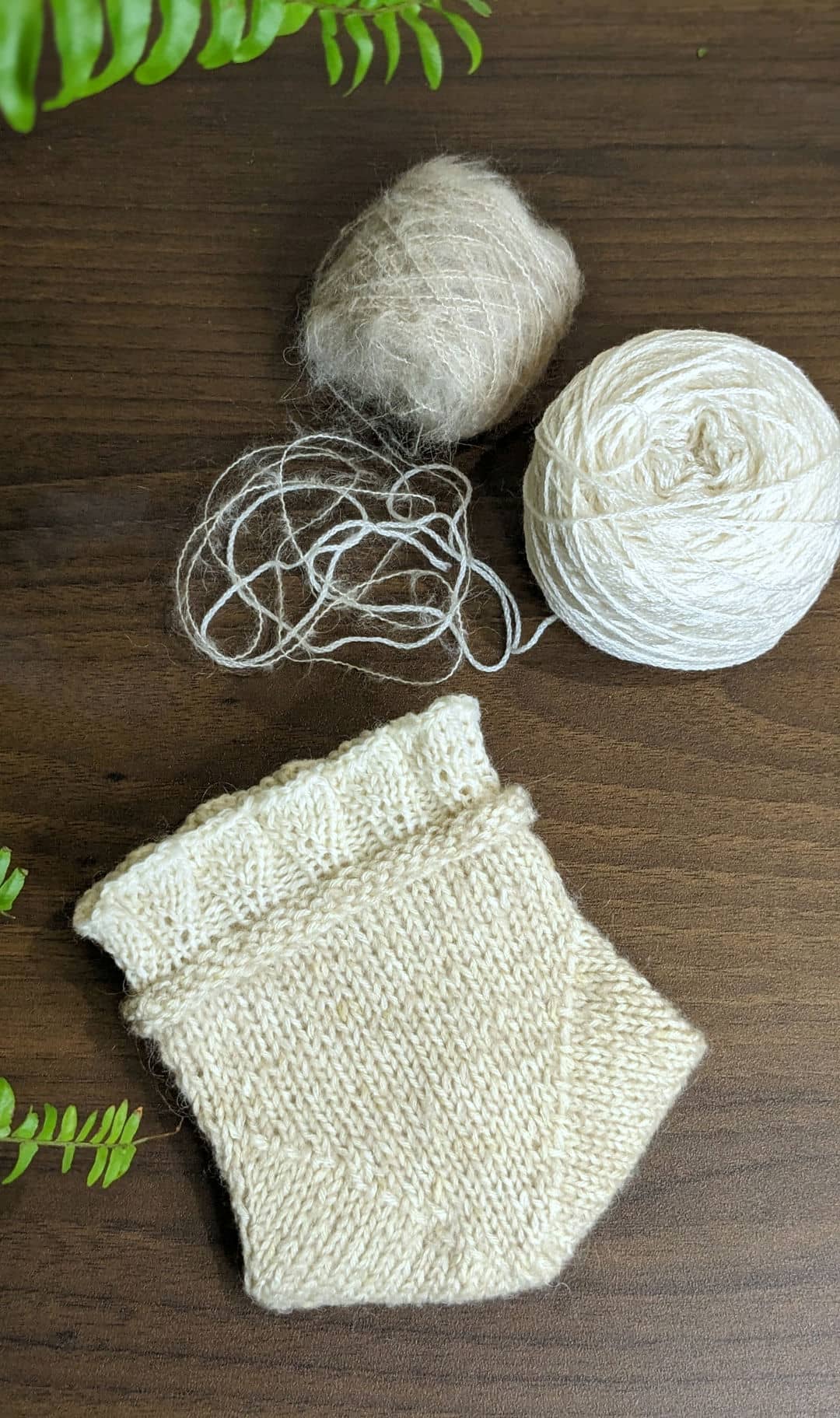
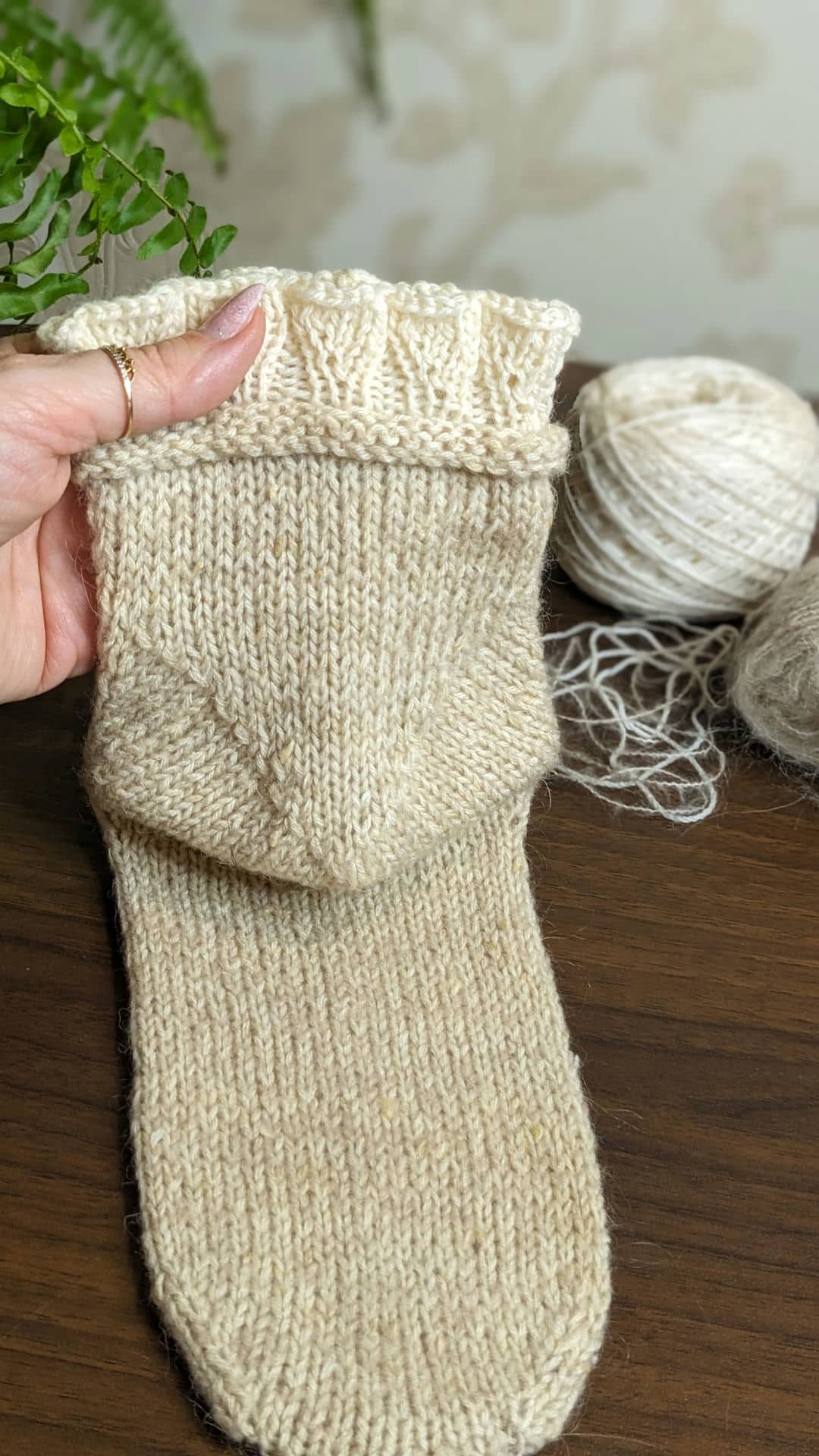
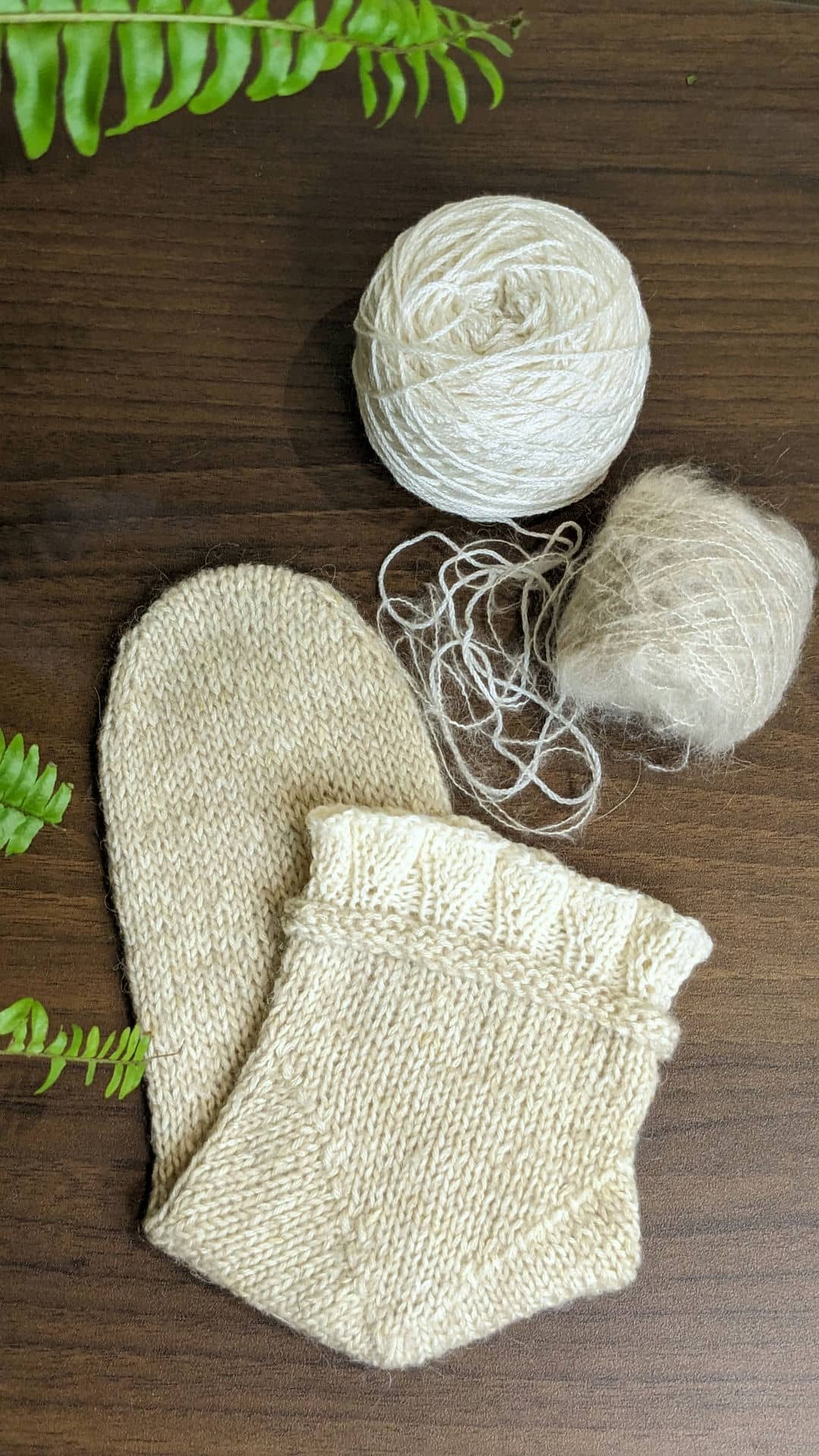
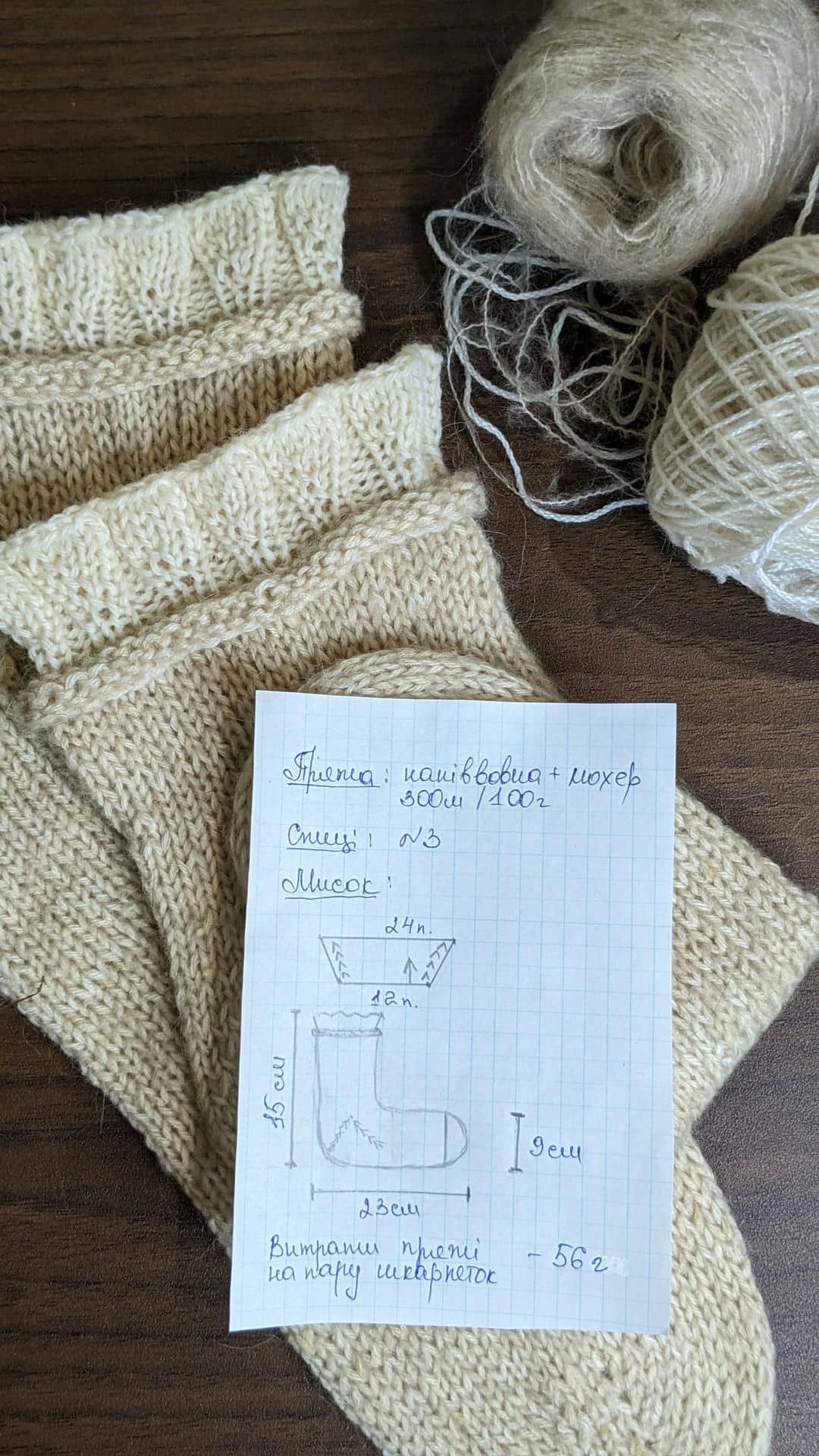
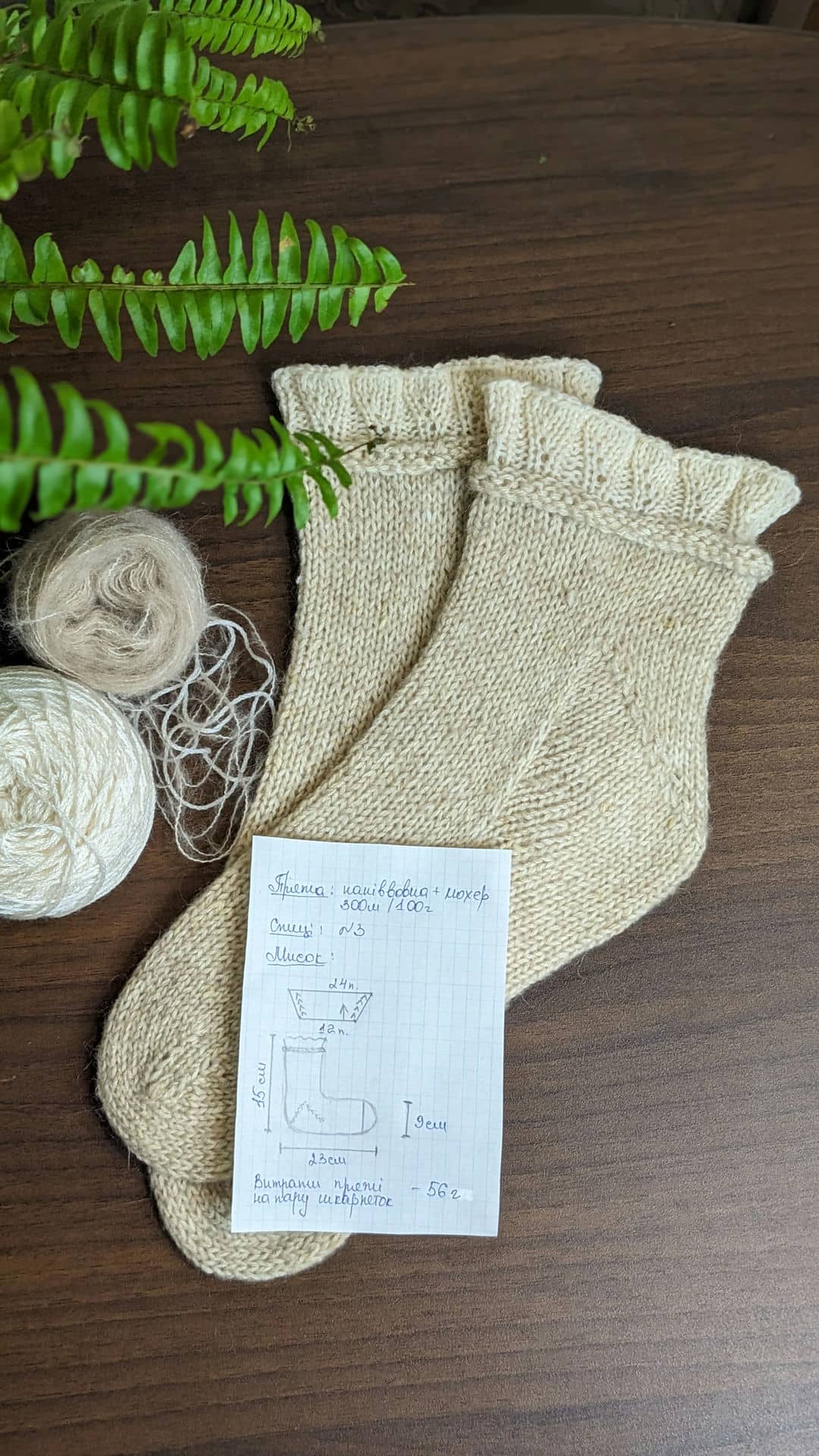
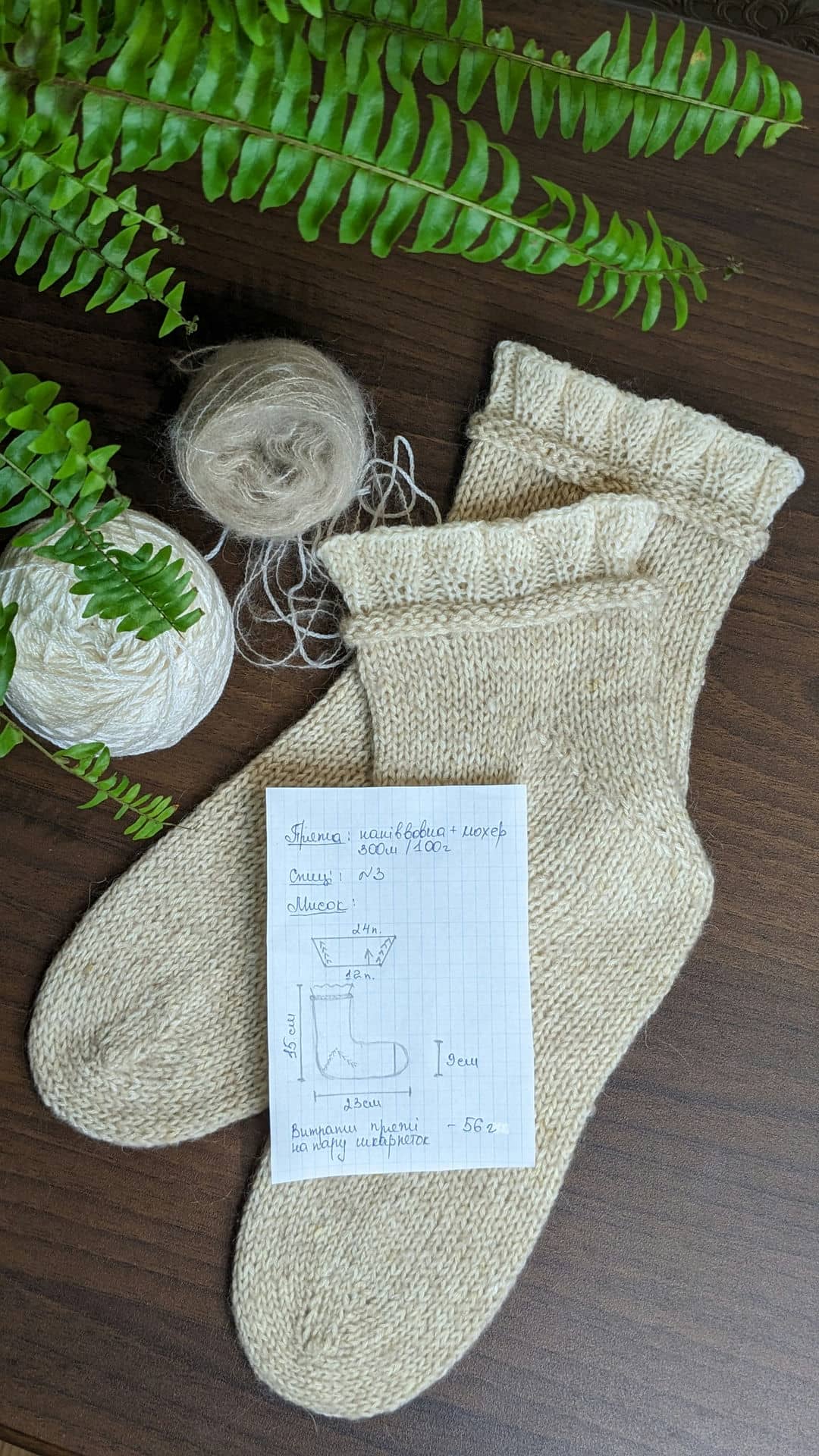
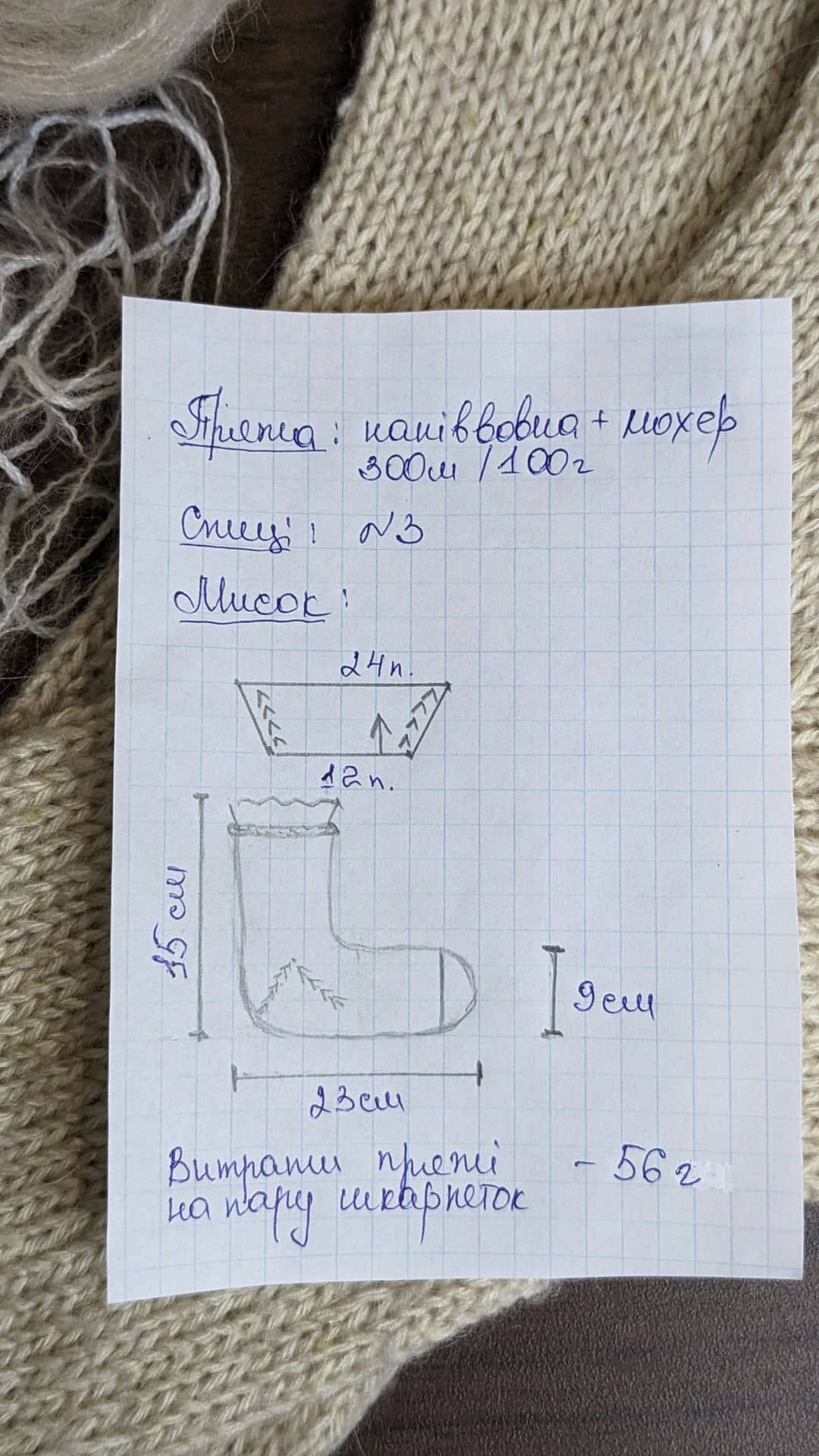
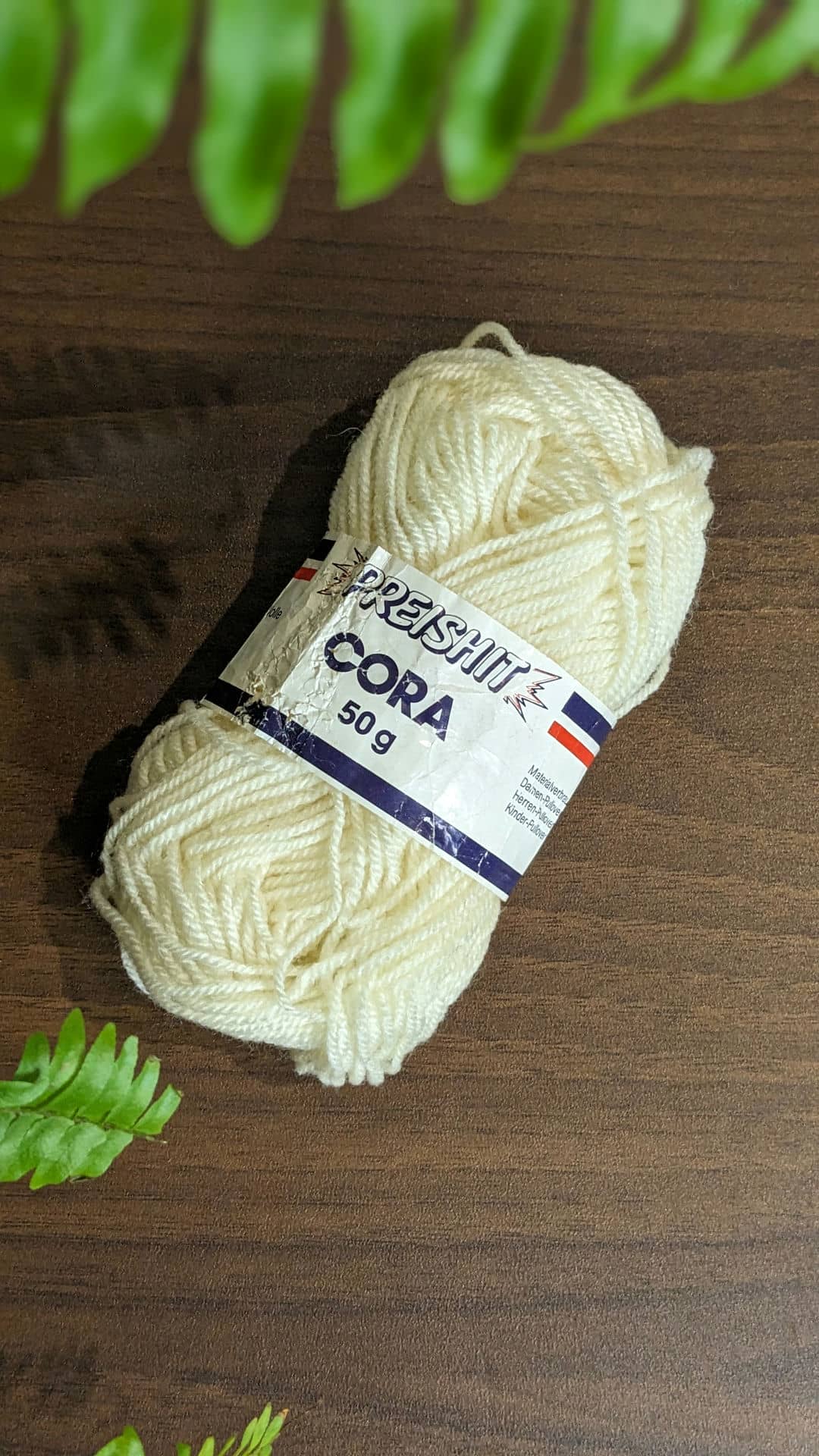
Yarn: a blend of two yarns, mohair (900 m/100 g) and semi-wool (400 m/100 g), one strand of each. Combining two yarns creates an interesting texture: the socks look fuller, and the shade becomes soft, pastel and especially delicate. The blend has about 300 m/100 g. Needles: 3 mm on a cable.
Turkish cast-on is one of my very favorite ways to start toe-up socks. For a detailed look at this cast-on, watch the video below, part 1.
Why this one? Because it is convenient, neat and logical: the stitches are immediately divided evenly between two needles, and the fabric forms in the round right away, with no seams and no extra fuss.
⠀
We start with a small number of stitches. Make a slip knot, place it on a needle, wrap the working yarn around both needles and form the stitches (in my case 1 slip-knot stitch + 12 wrap stitches). Pull out one needle and knit 12 stitches. Knit those same wrap stitches once more (in the round). There will be 12 stitches on each needle.
⠀
Continue knitting in the round, adding one stitch at each side of each needle every other row. You can add the stitches by M1 from the bar or by picking up from the previous row. This is how the toe gradually takes shape and the stitch count grows to the width you need. I worked the increases 6 times. I have 24 stitches on each needle.
Next we shape the foot. We have two needles with 24 stitches on each, which are the two halves of our sock: top and bottom. Knit the foot in stockinette stitch to the length you need. You can add patterns if you like.
I am knitting size 37-38. So after 16 cm from the start I begin increasing for the instep gusset. On the bottom half of the sock, next to the edge stitches, we add new stitches 10 times, every 2nd row (see the video, part 2).
Knit in the round. On the bottom needle: 10+24+10 = 44 stitches. The gusset is 7 cm long.
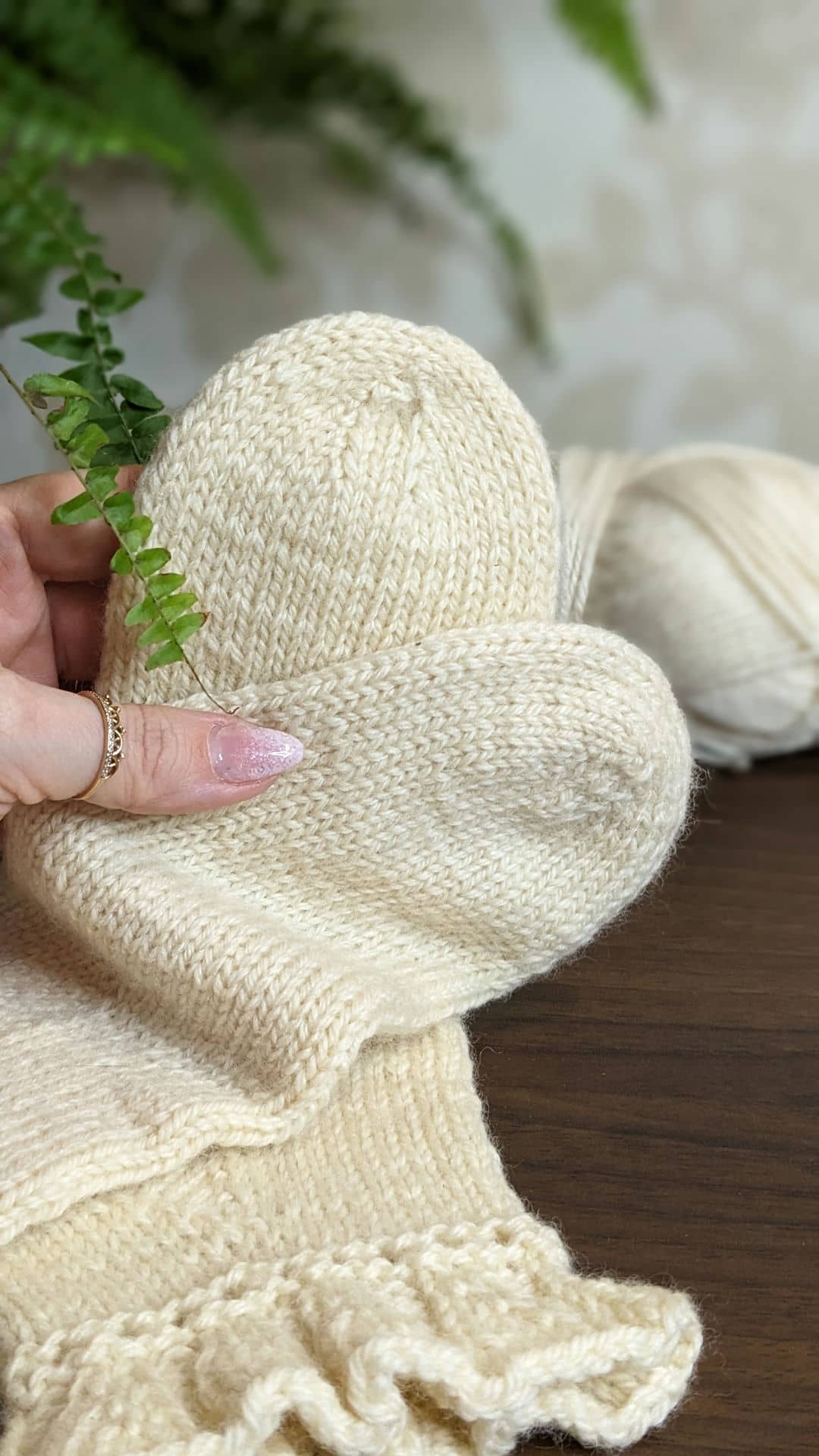
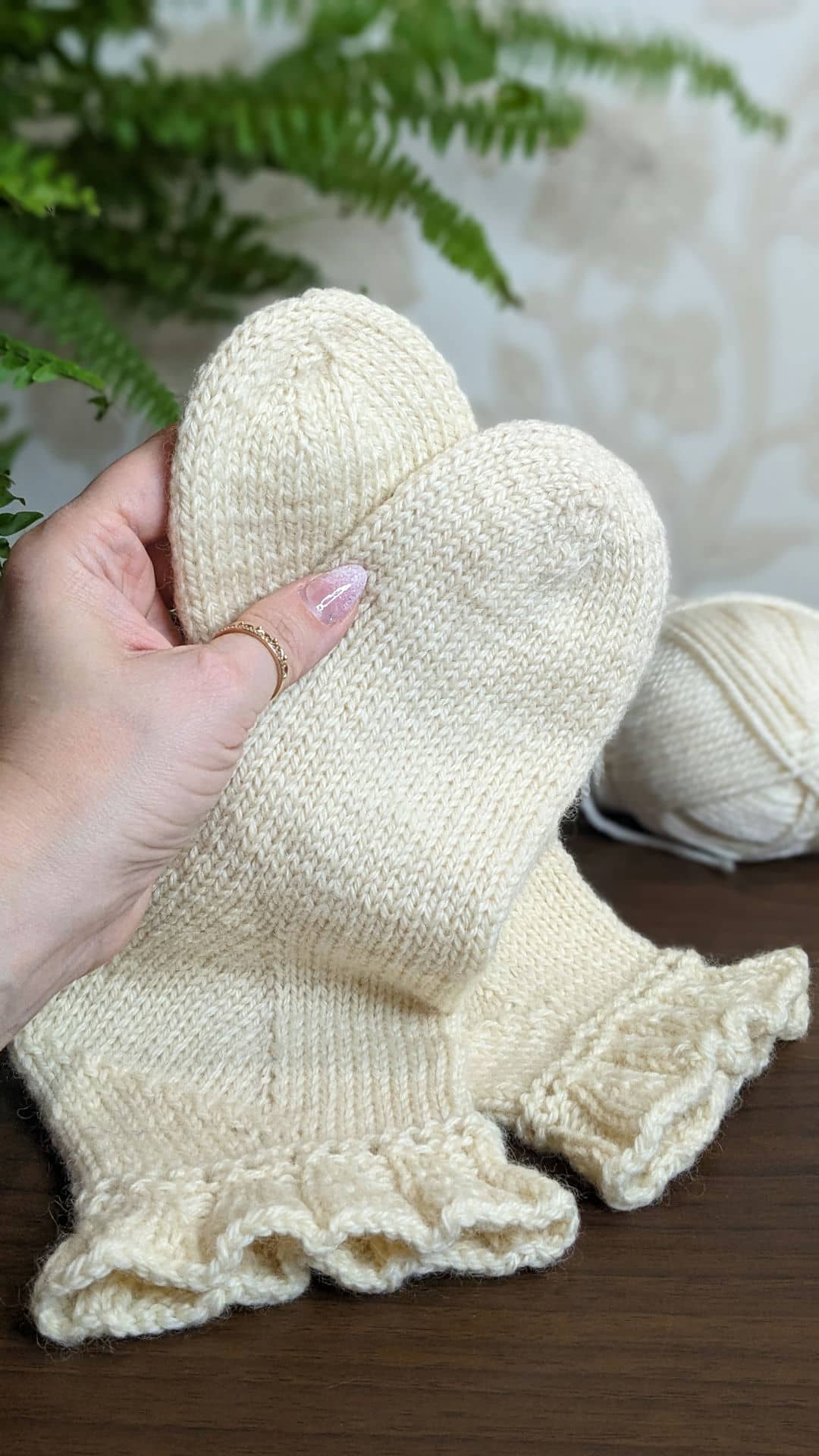
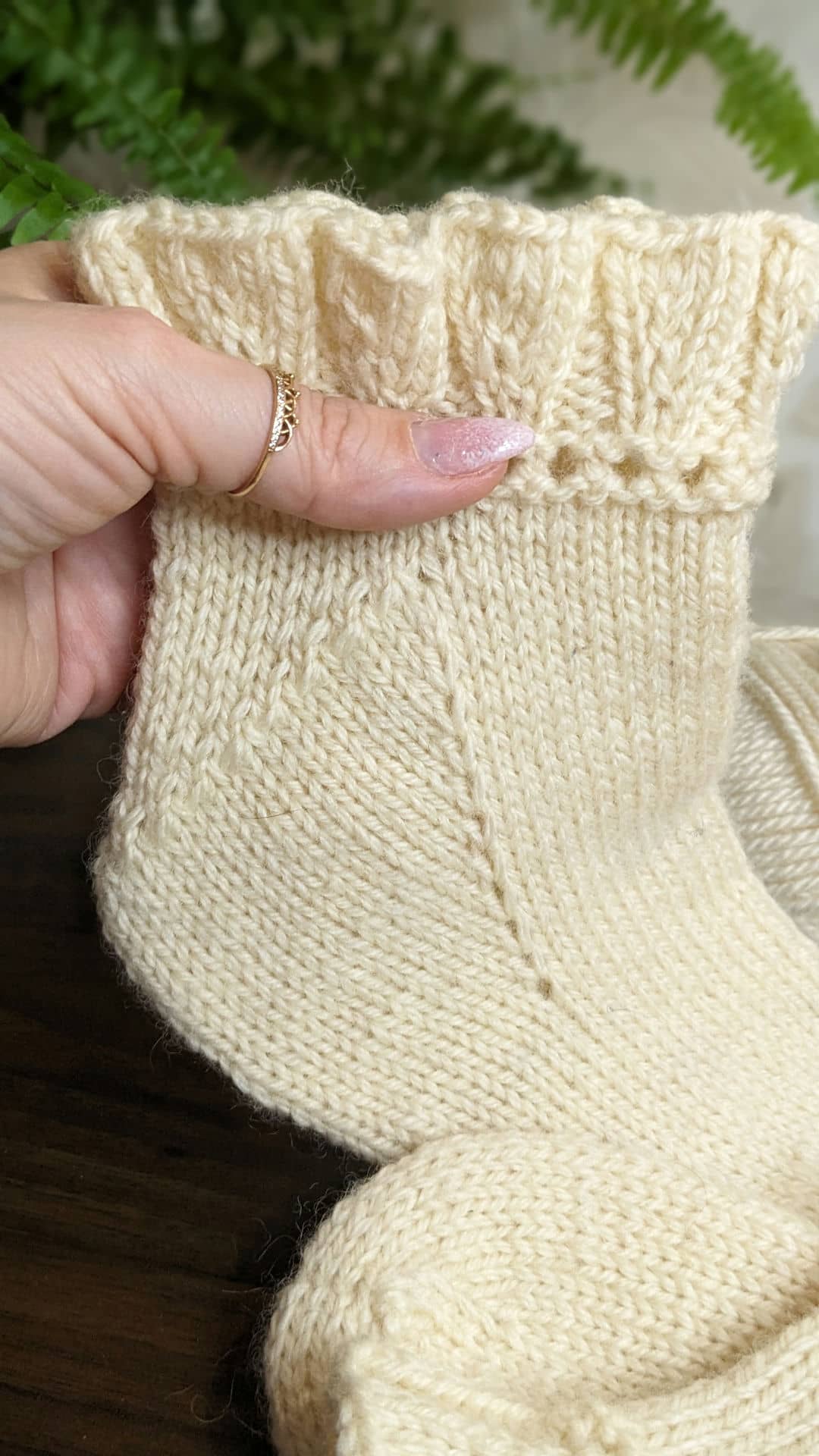
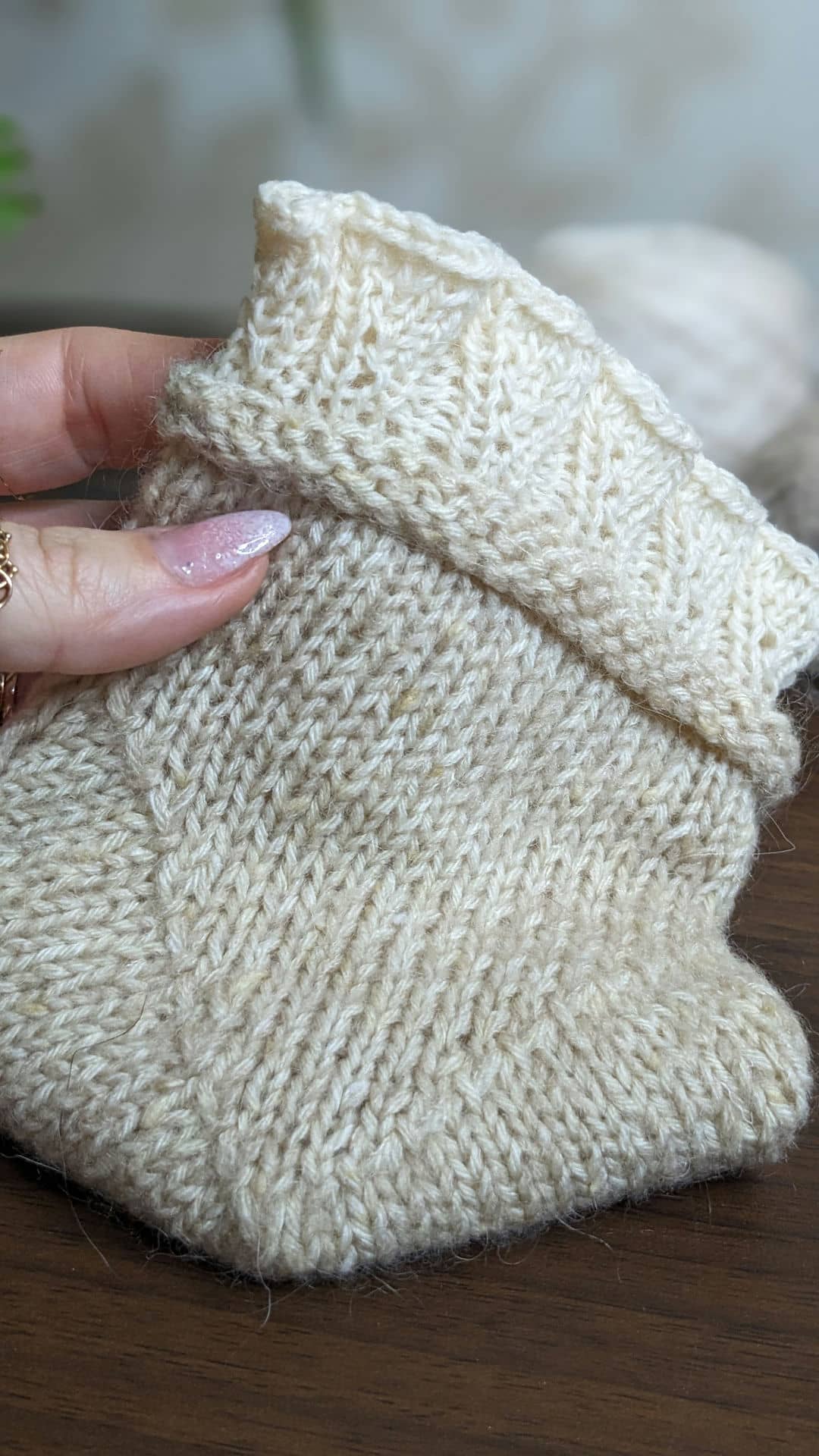
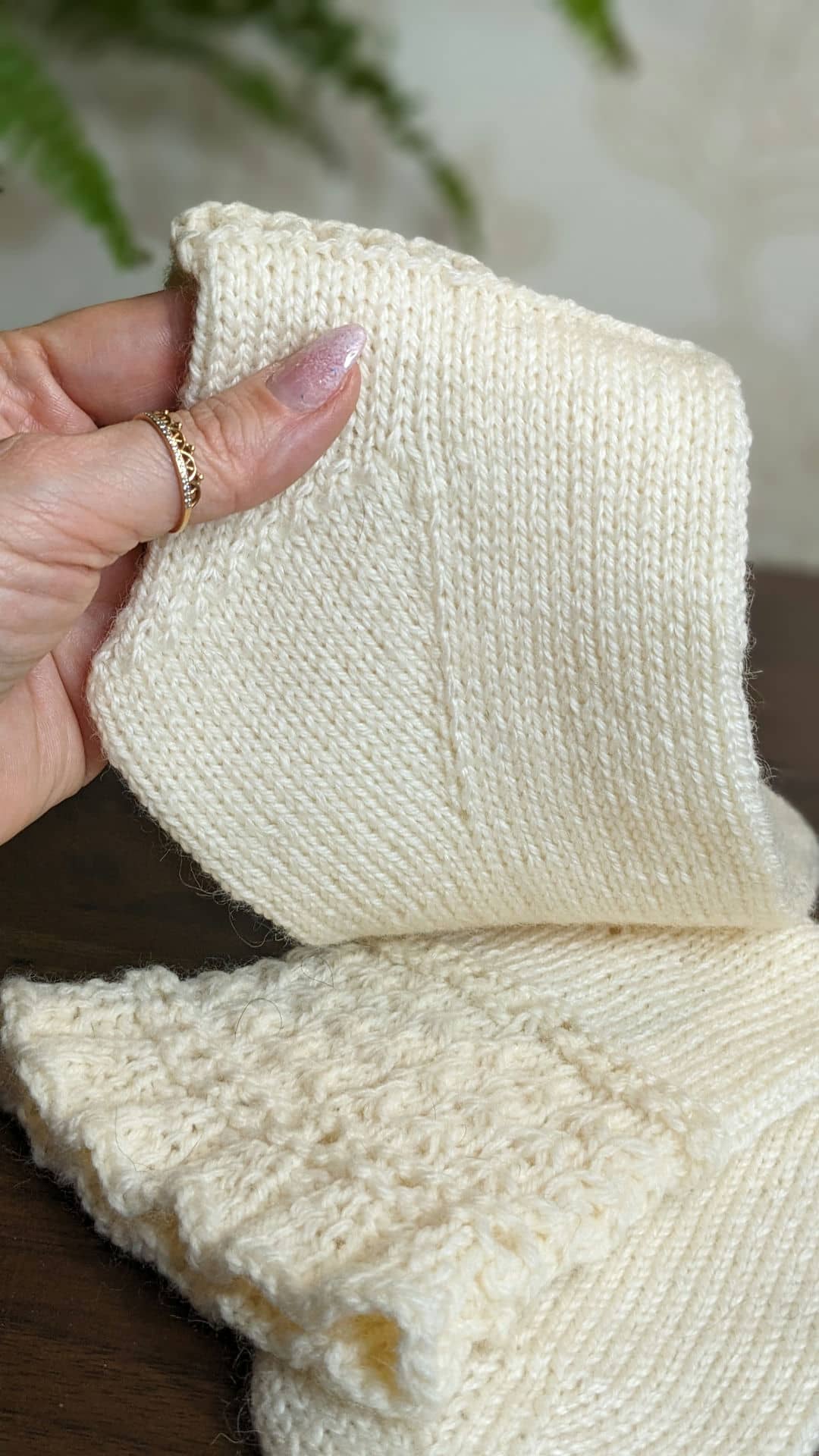
Next we start shaping the triangular heel and decreasing stitches (see the video, part 2). On the bottom half of the sock, mark the 2 center stitches and begin knitting in short rows:
Row 1: k21, k1 (the first of the marked center stitches), k2tog (the 2nd of the marked center stitches together with the next stitch), k1. Turn the work to the wrong side.
Row 2: slip 1, p1, p2tog, p1. Turn the work to the right side.
Row 3: slip 1, k2, k2tog, k1. Turn the work to the wrong side.
Row 4: slip 1, p3, p2tog, p1. Turn the work to the right side.
Row 5: slip 1, k4, k2tog, k1. Turn the work to the wrong side.
And so on… Keep decreasing stitches, working 10 decreases on each side. There should again be 24 stitches left on the bottom needle.
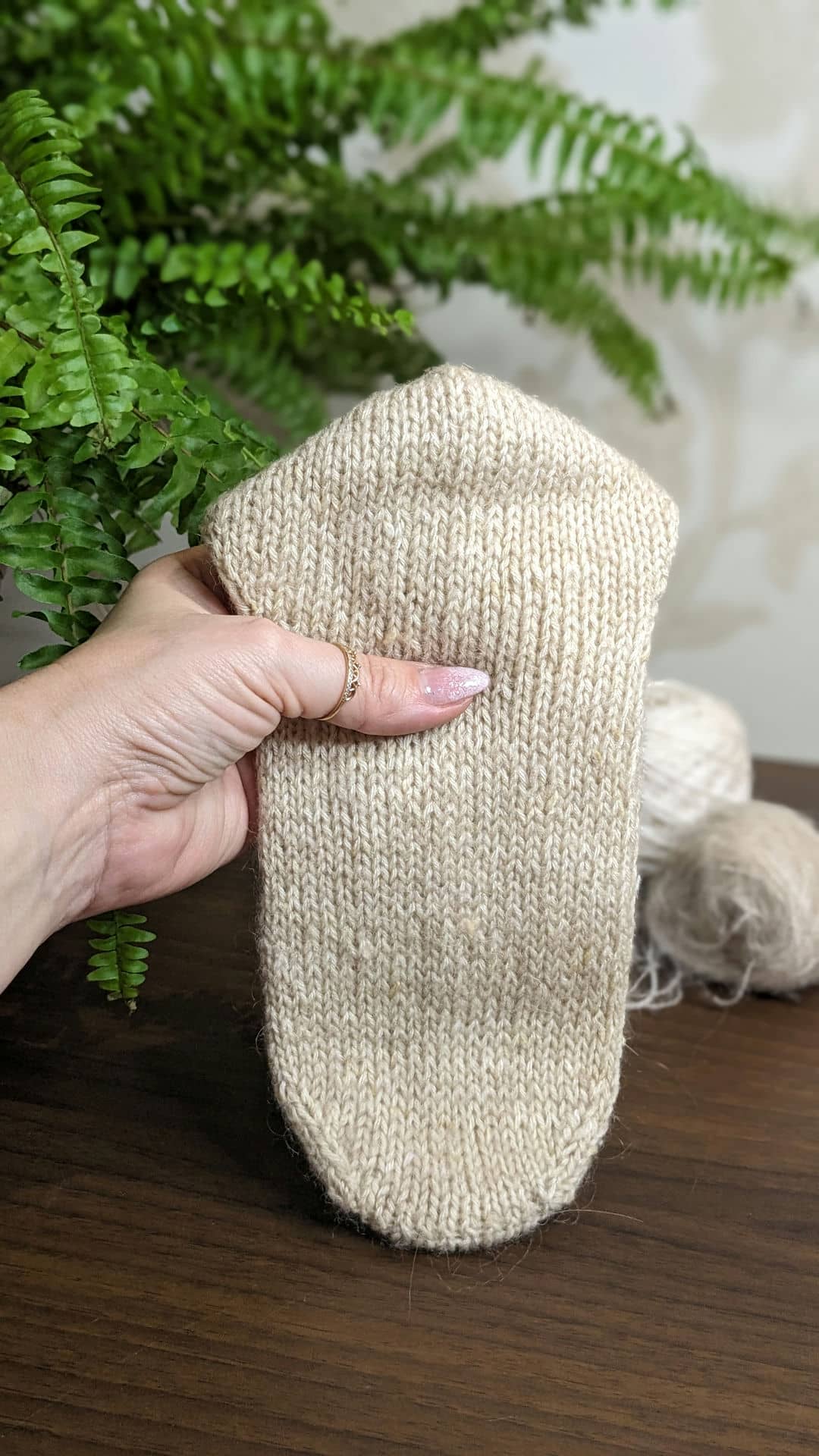
Next we go back to knitting in the round. Knit the leg to the length you need, or until your yarn runs out. Bind off in the classic way. The foot is 23 cm long, the leg is 12 cm. Yarn used for a pair of these socks: 50 g:
- semi-wool – 34 g,
- mohair – 16 g.
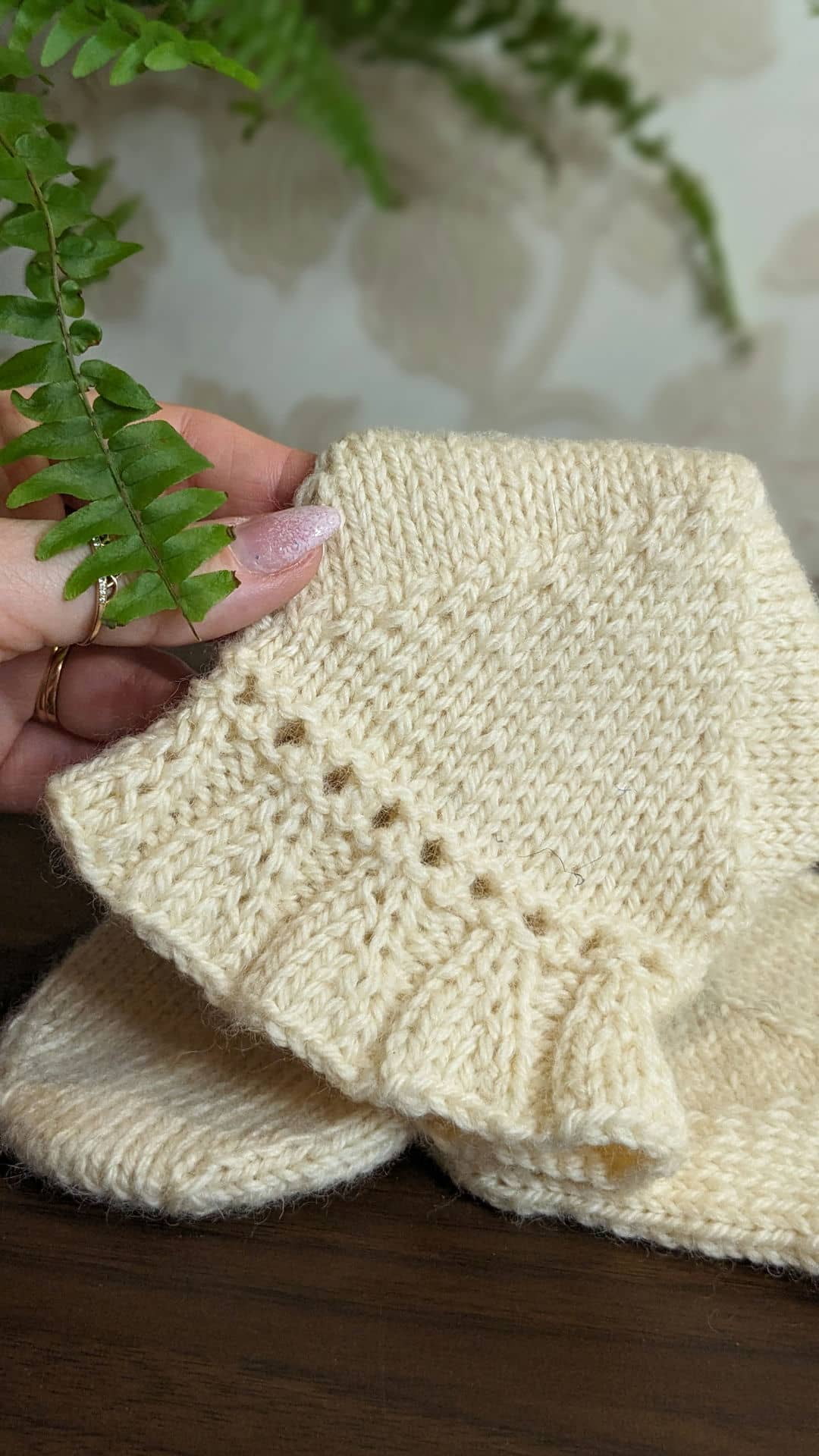
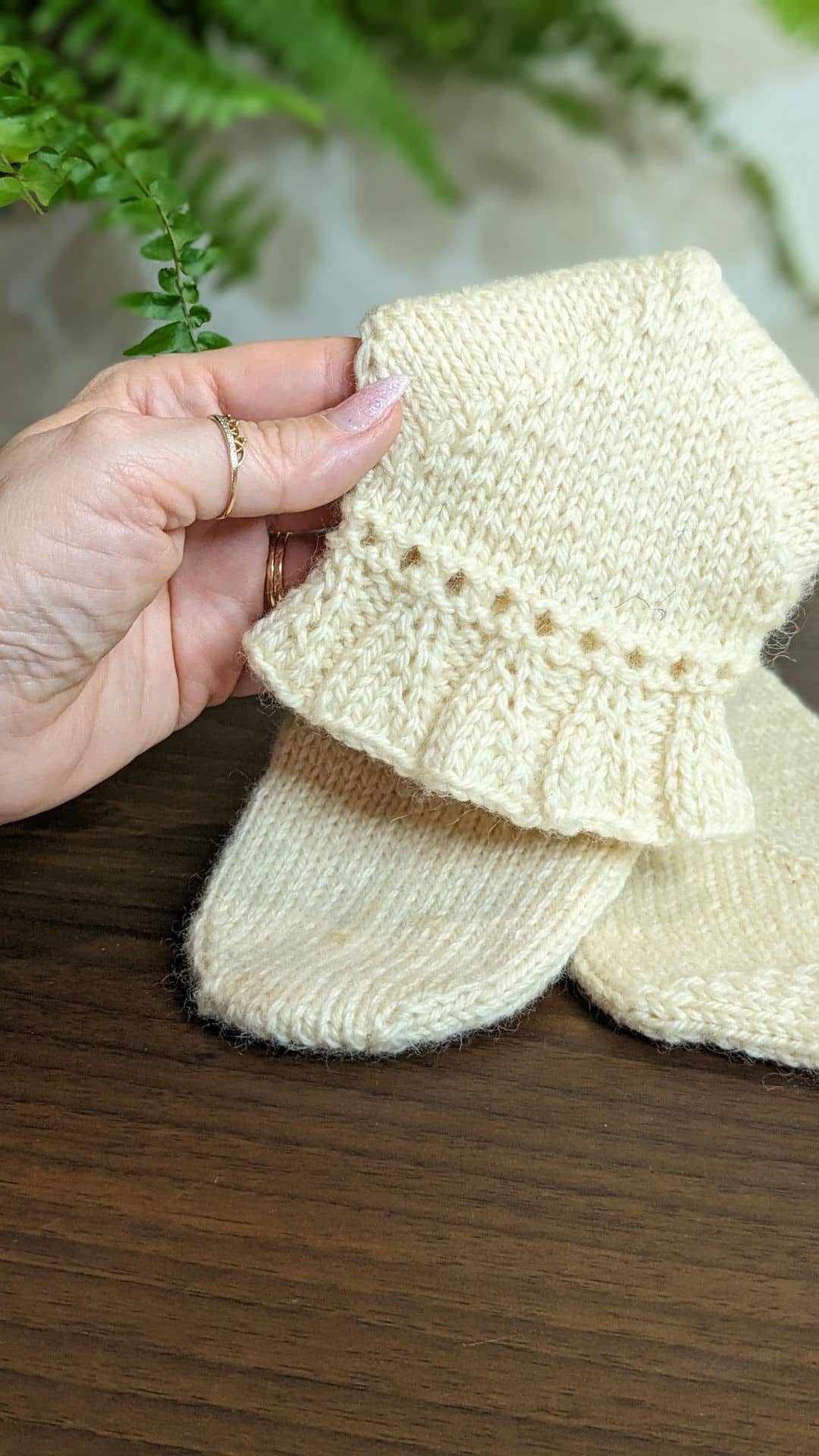
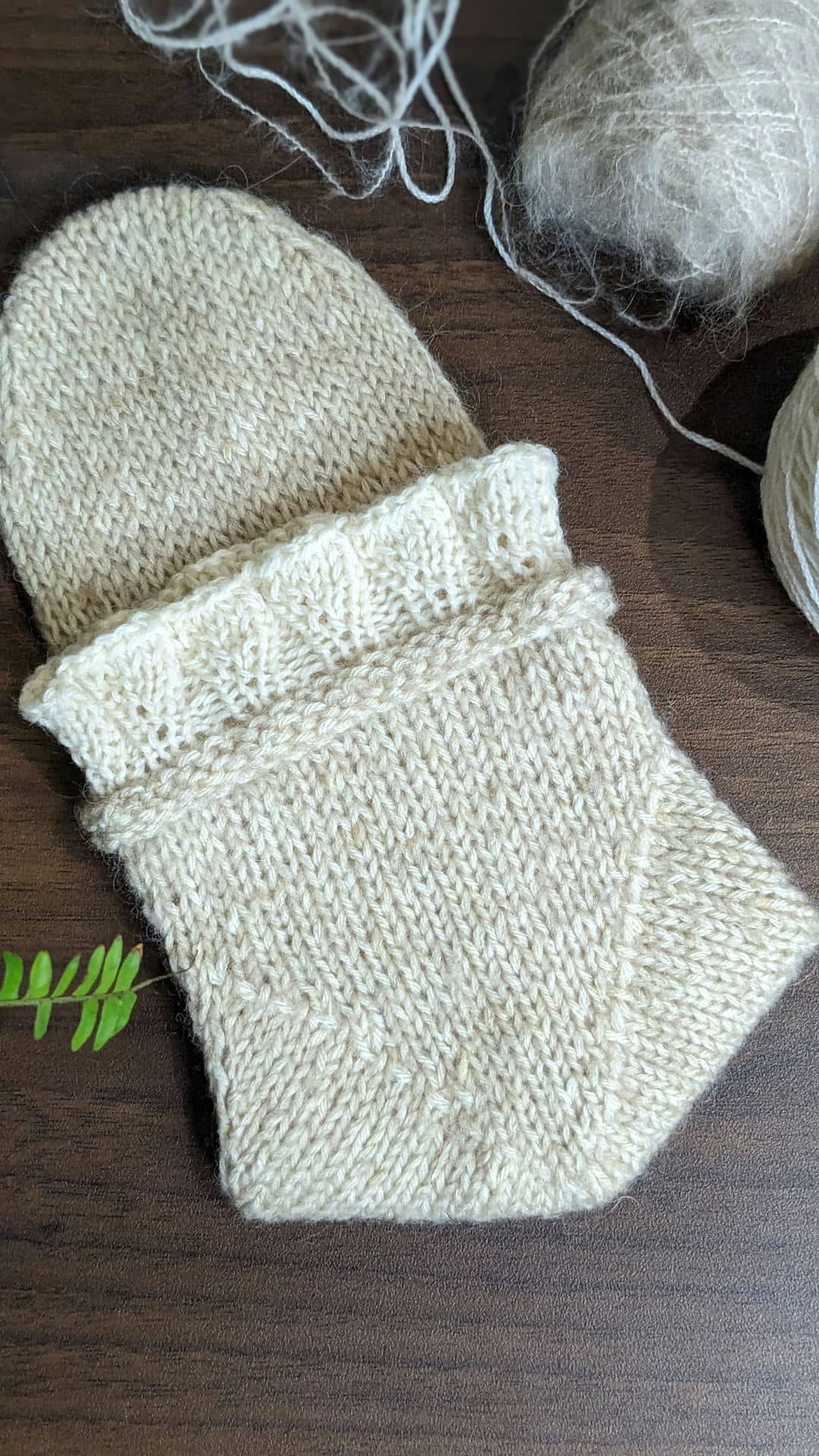
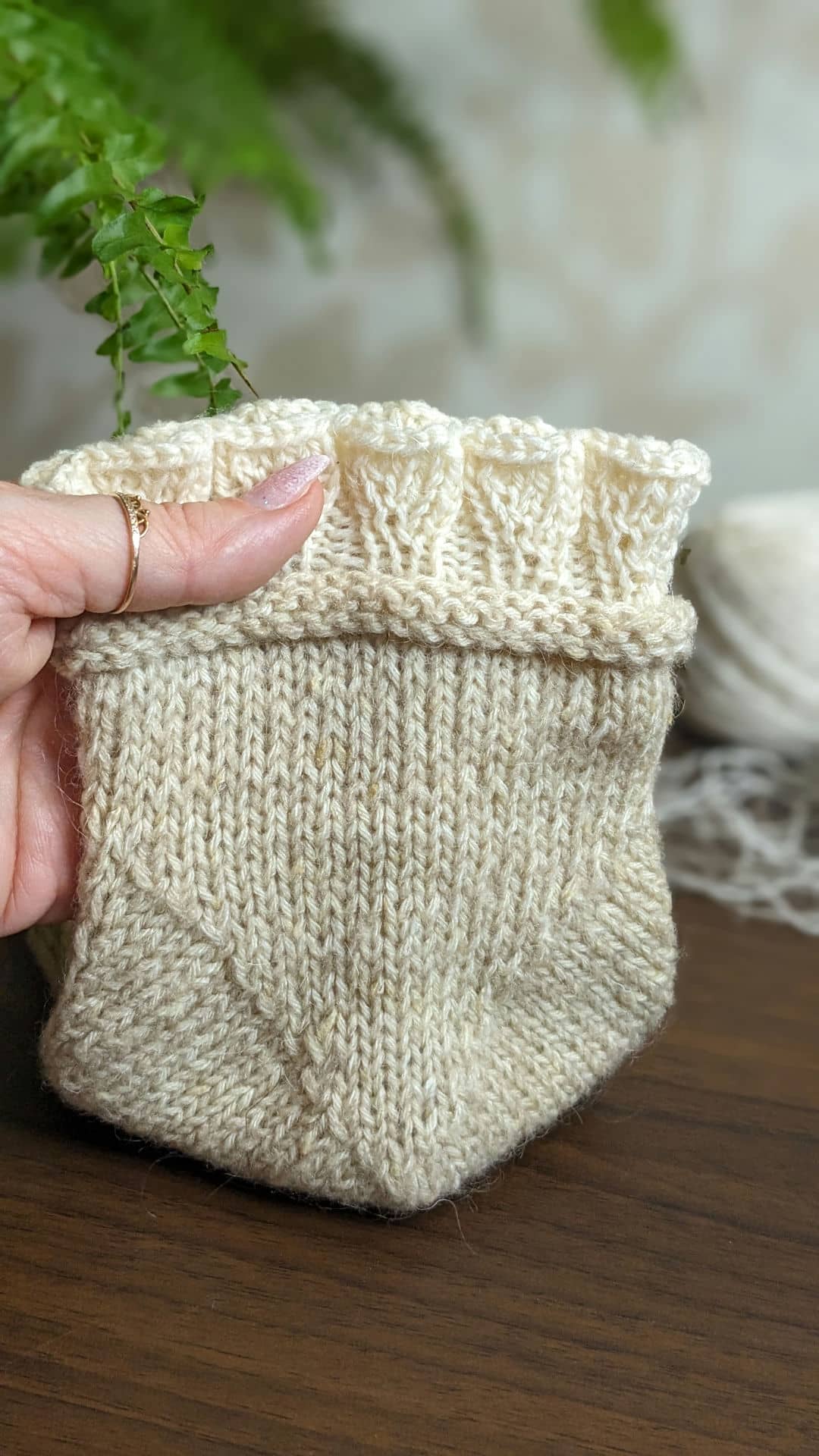
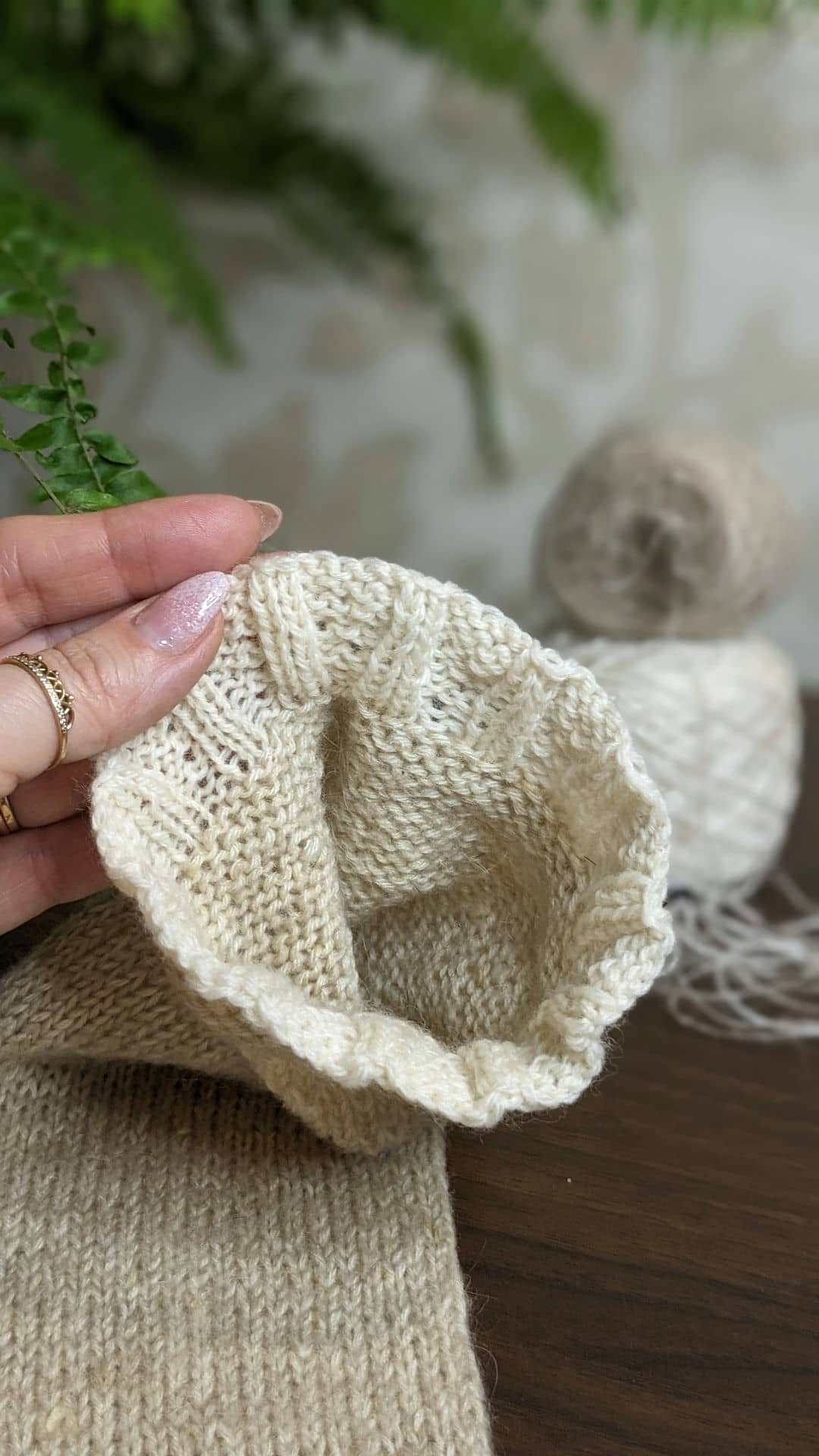
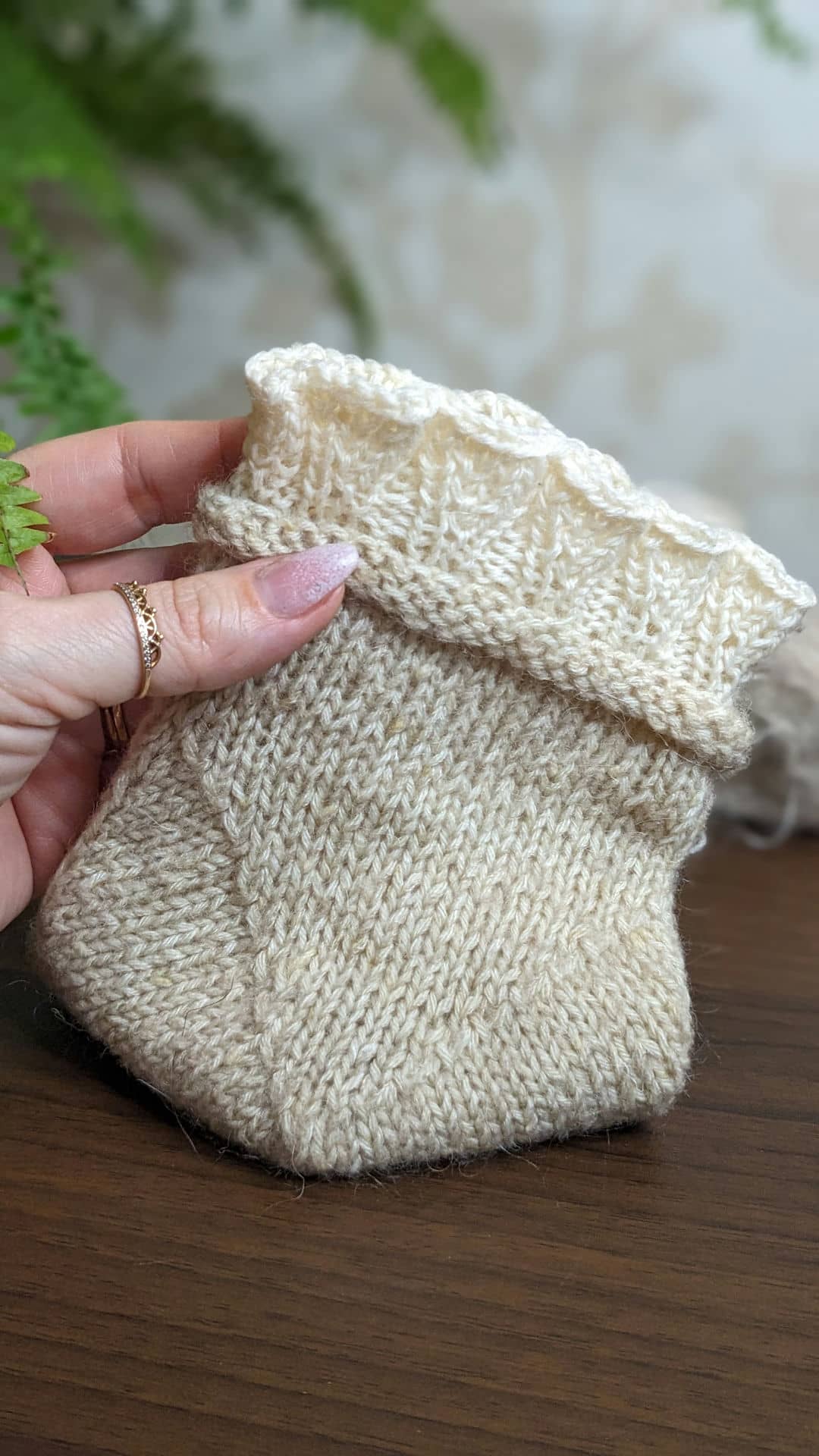
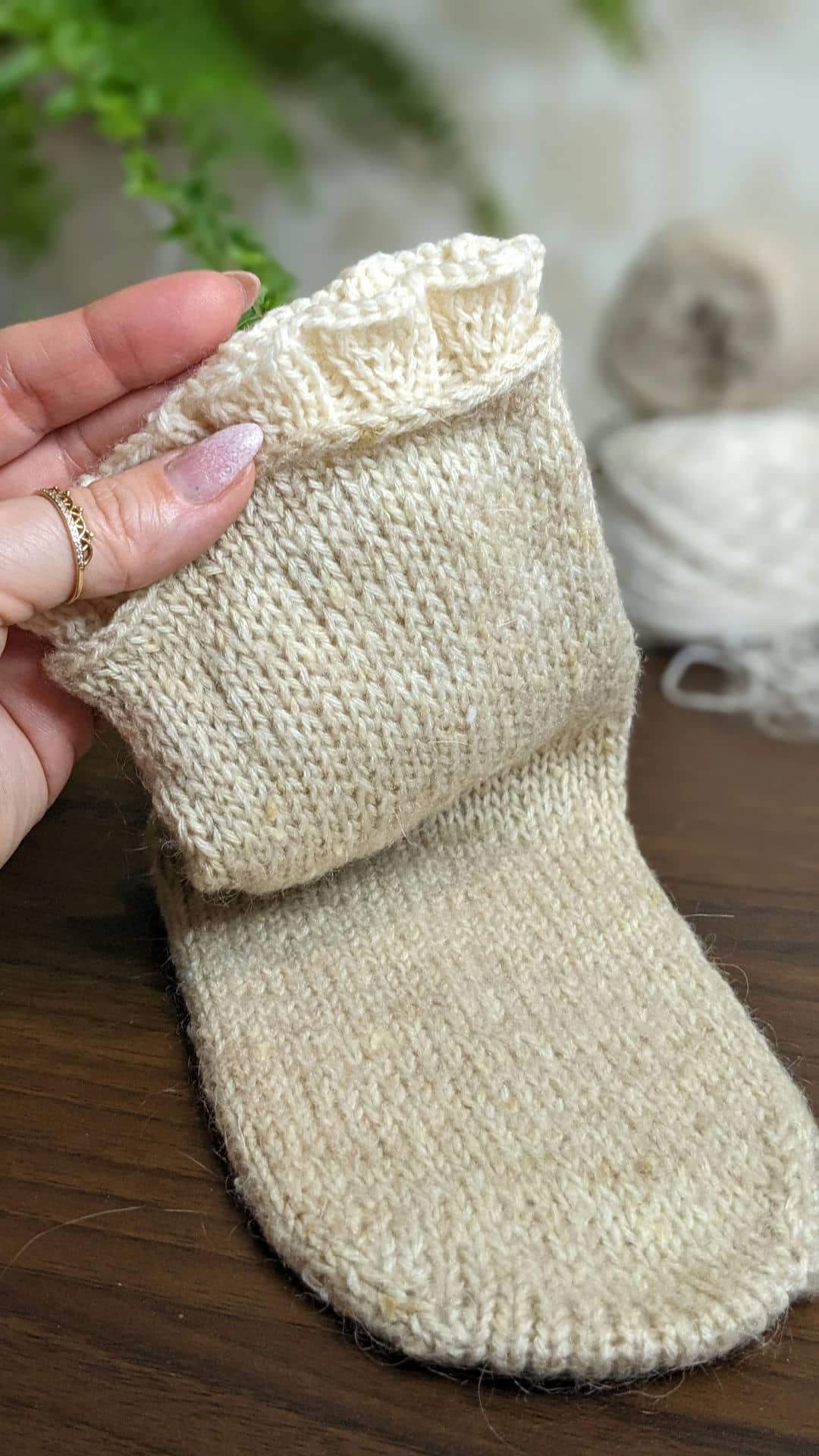
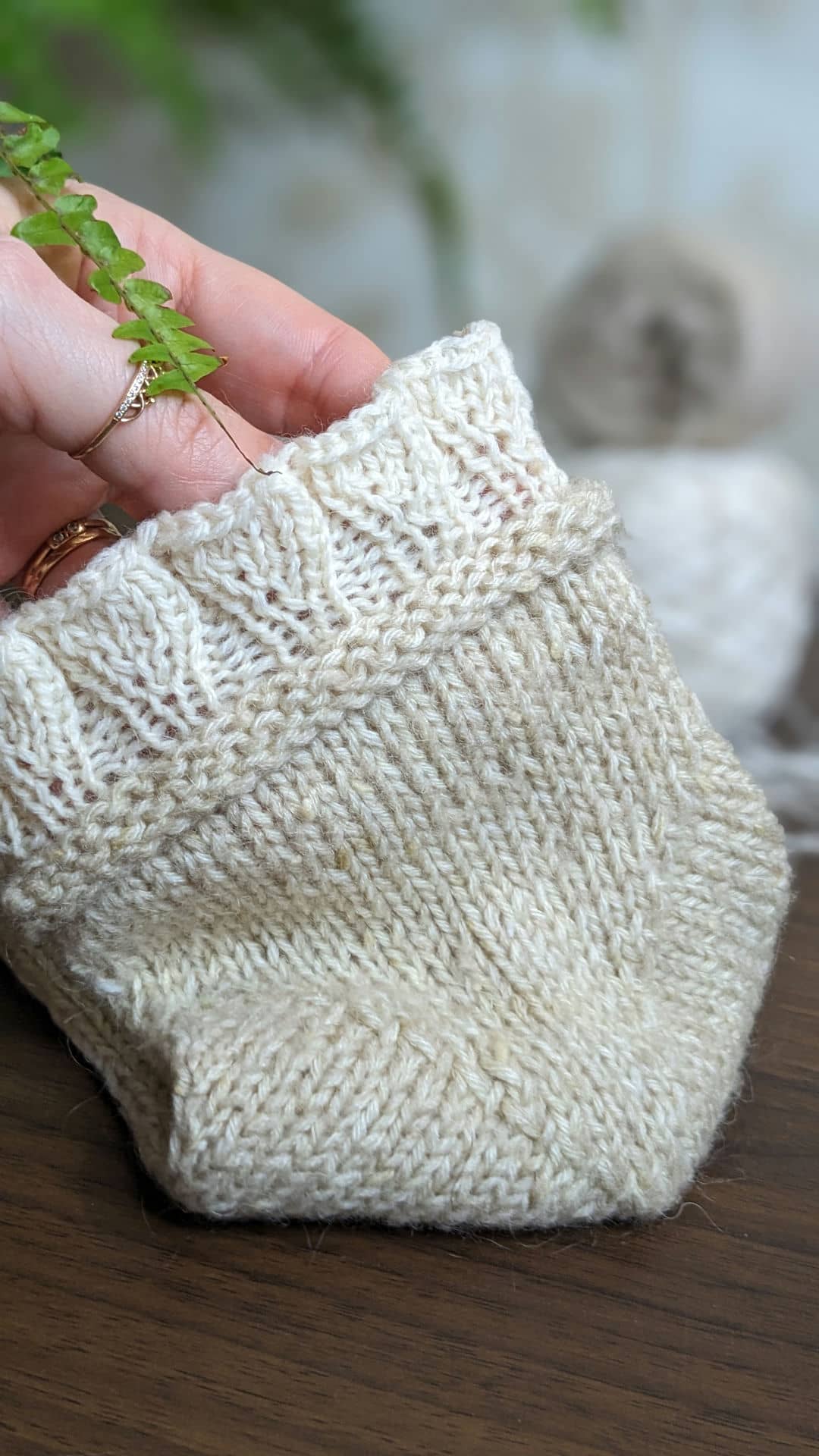
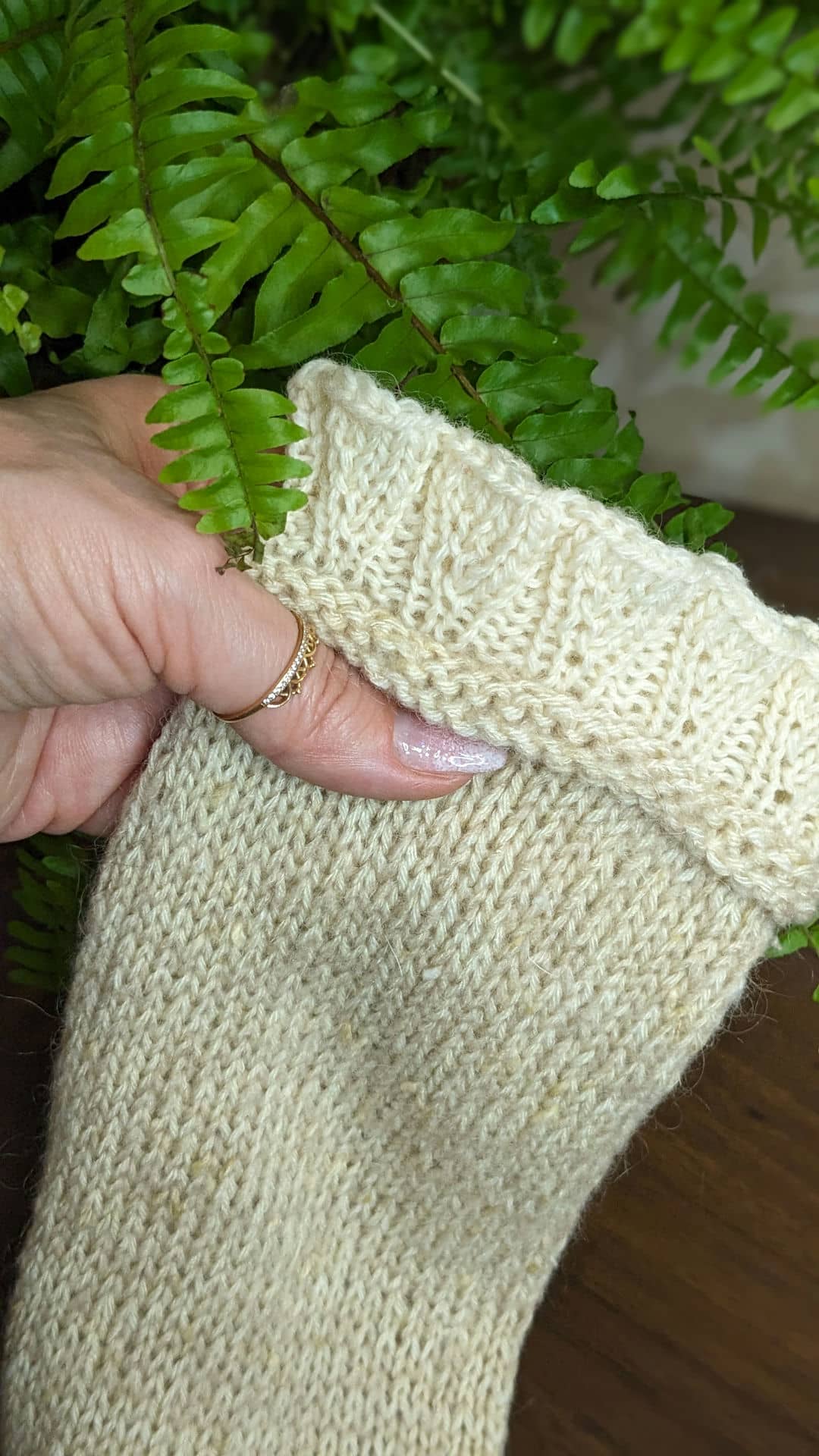
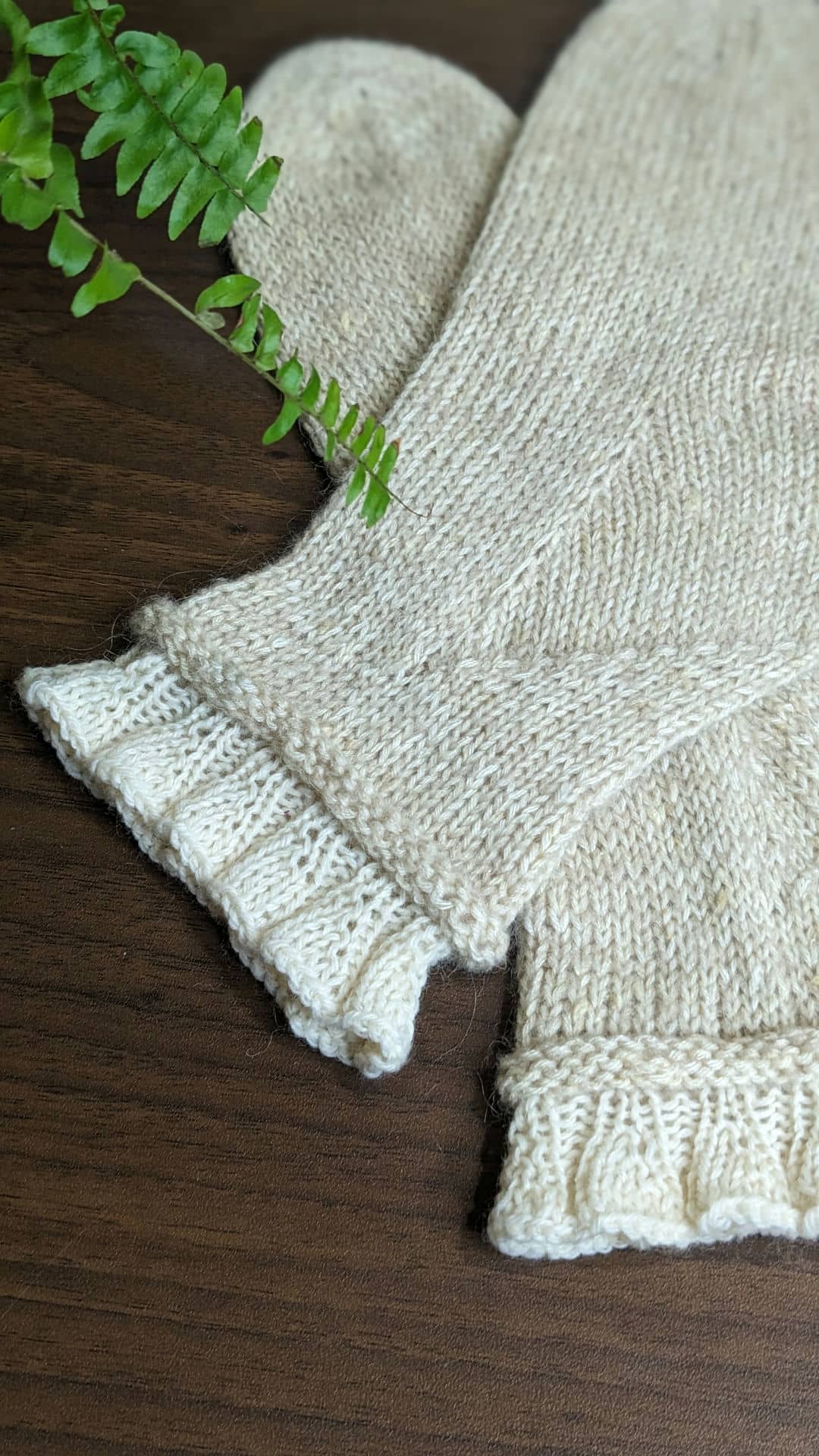
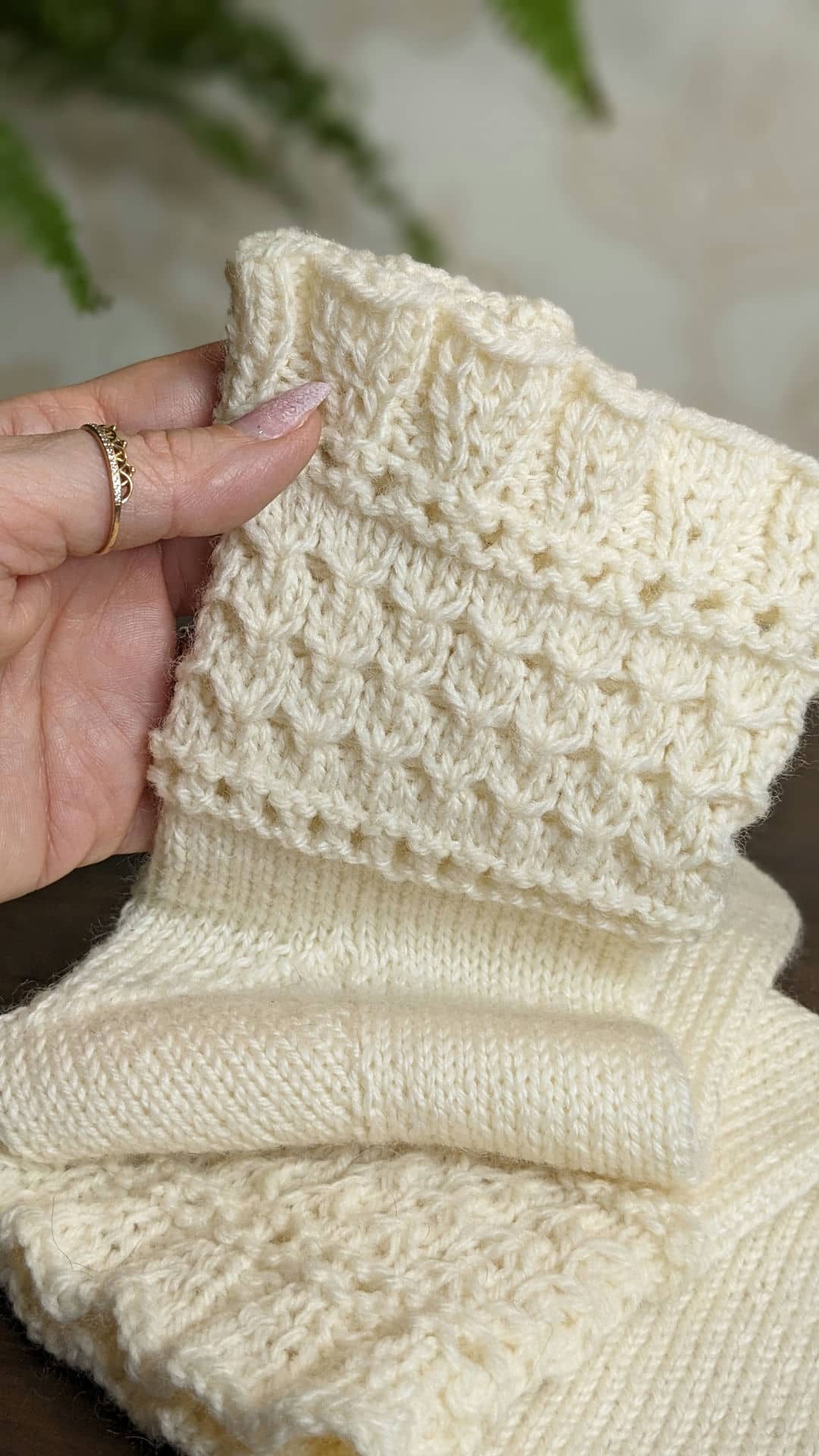
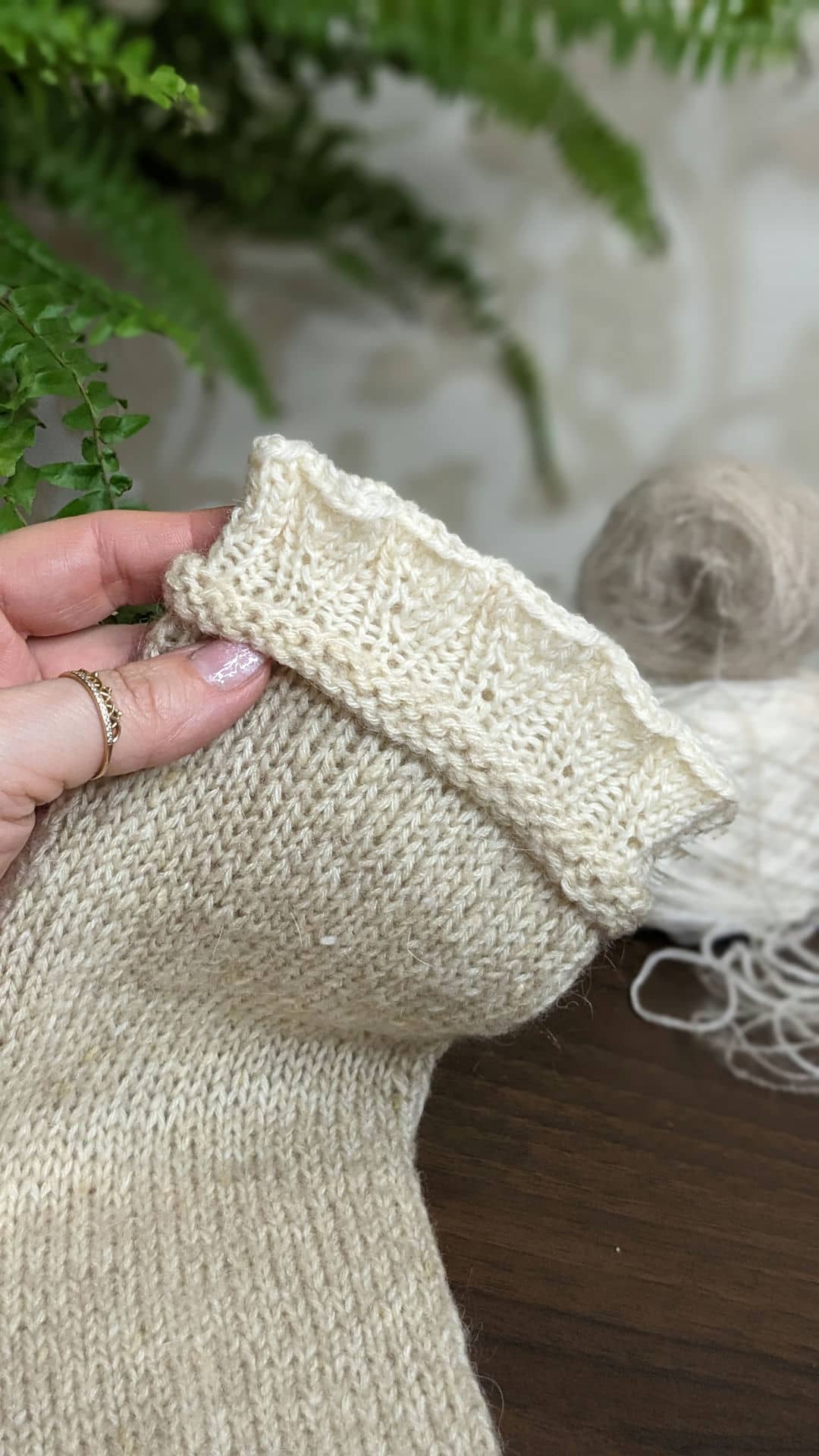
Then I decided to add a decorative ruffle (see the video, part 2). For this I took a new ball of lighter semi-wool. On the wrong side of the sock I marked the 4th row. With a crochet hook I formed new stitches. There are again 24 stitches on each needle. The total number of stitches must be a multiple of 4.
Let’s start knitting the ruffle:
1-3 rows: *k2, p2*.
Row 4: *k1, M1 from the bar, k1, p2*.
Row 5: *k3, p2*.
Row 6: *k2, M1 from the bar, k1, p2*.
Row 7: *k4, p2*.
Row 8: *k3, M1 from the bar, k1, p2*.
Row 9: *k5, p2*.
Bind off in the classic way. Yarn used for the ruffle: 3 g, 6 g for both socks.
I knitted the socks in size 37-38. The foot is 23 cm long, the leg with the ruffle is 15 cm. Yarn used for a pair of these socks: 56 g.
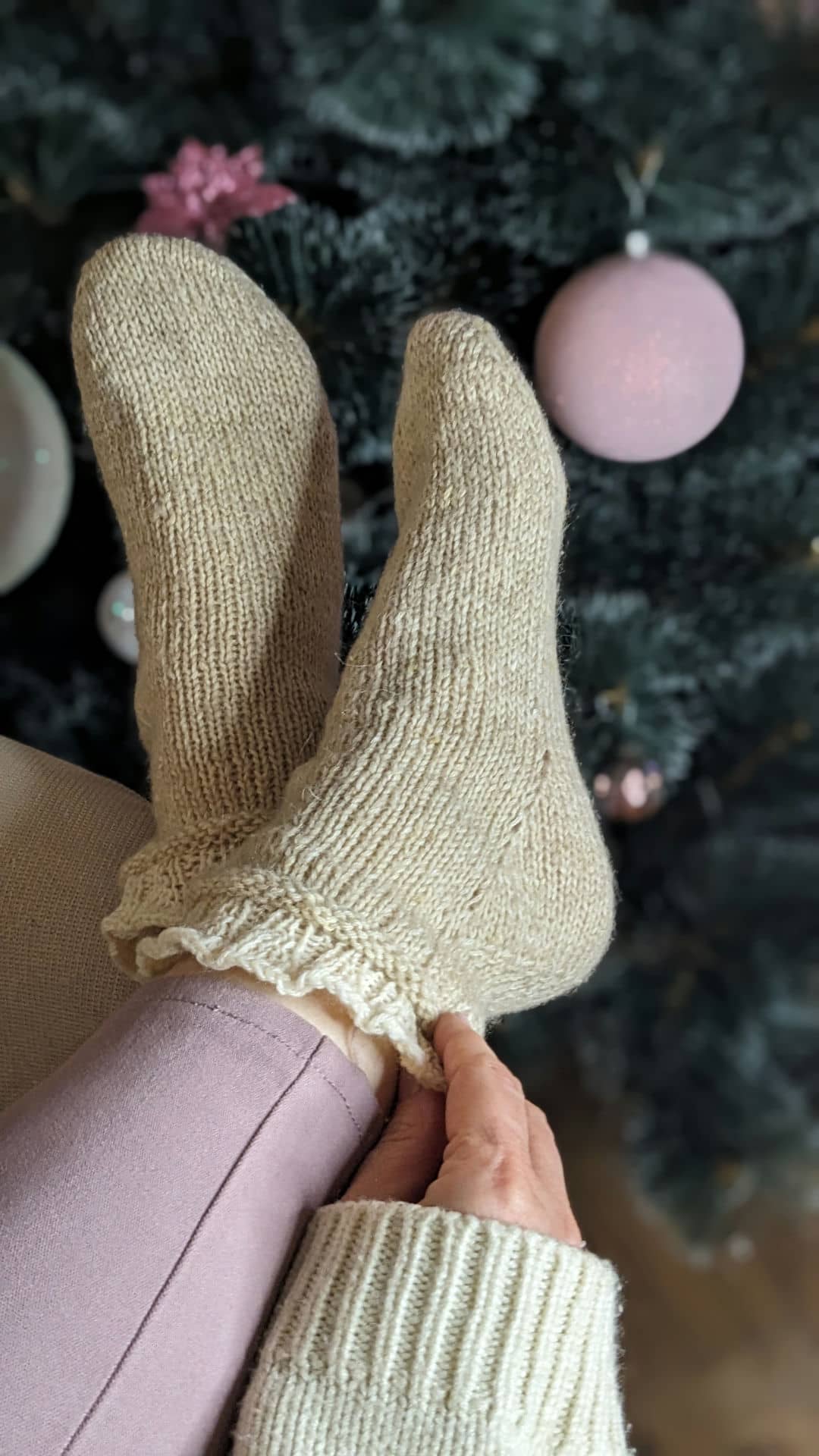
May our feet always be warm and cozy!
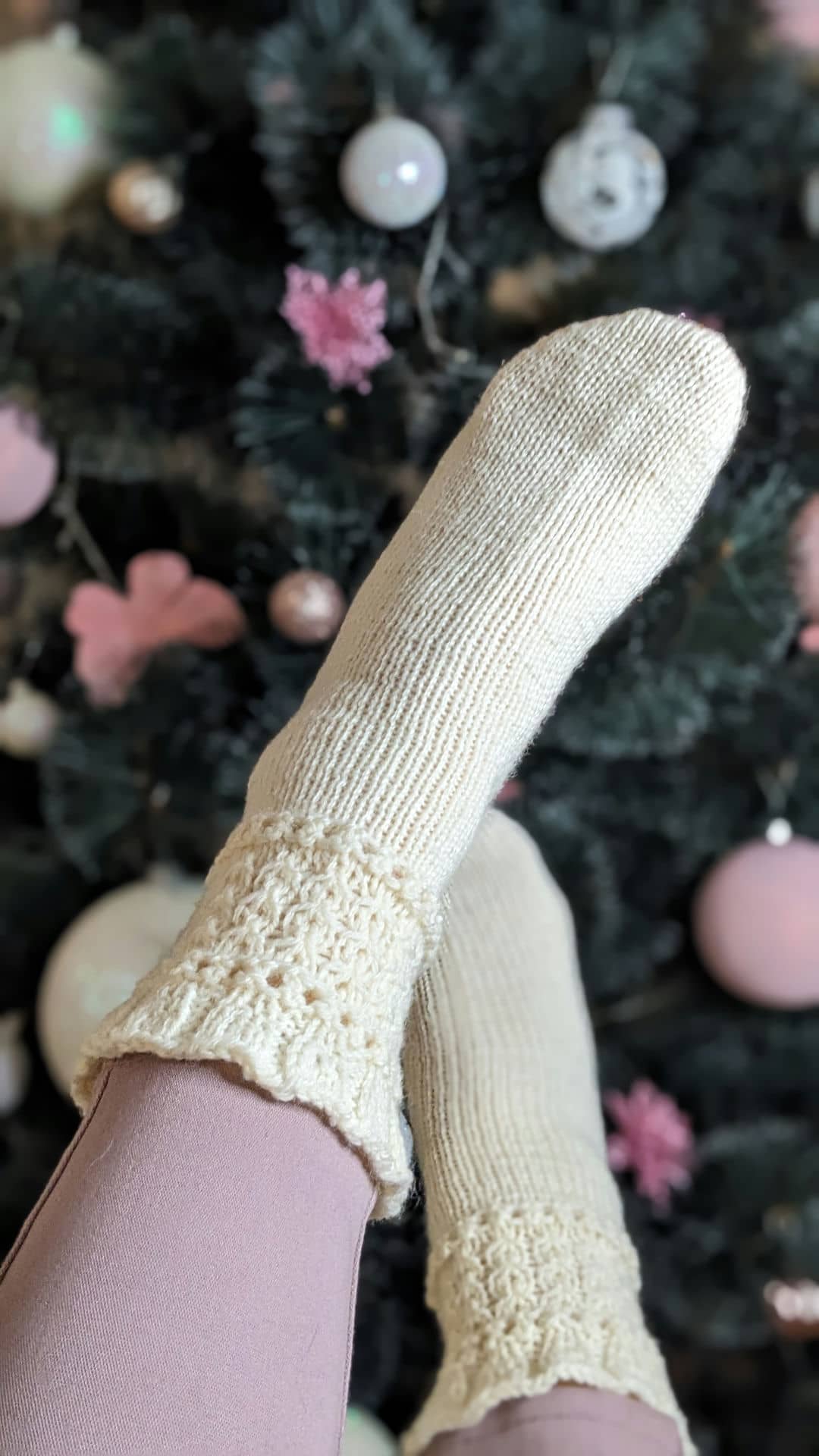
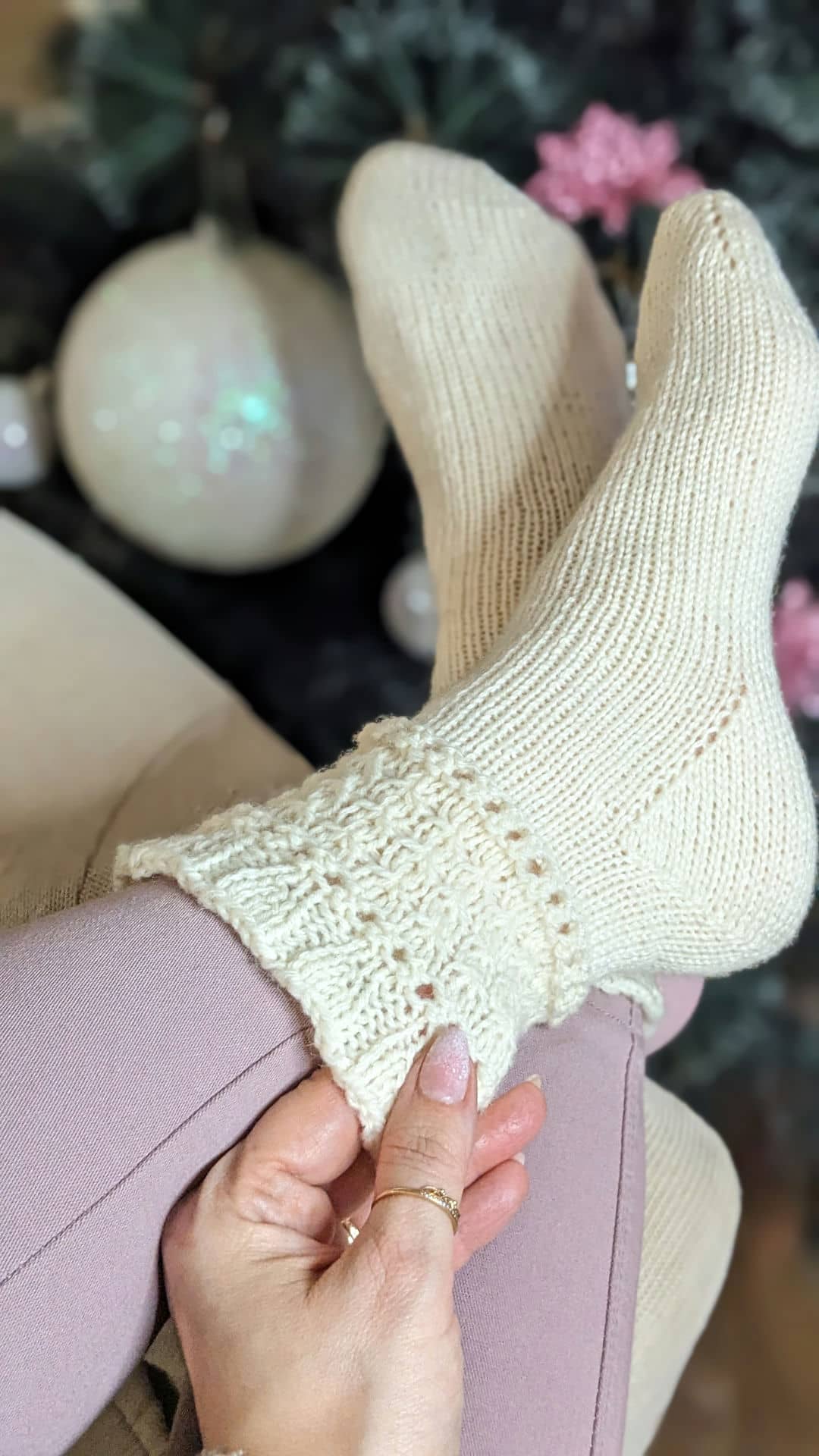
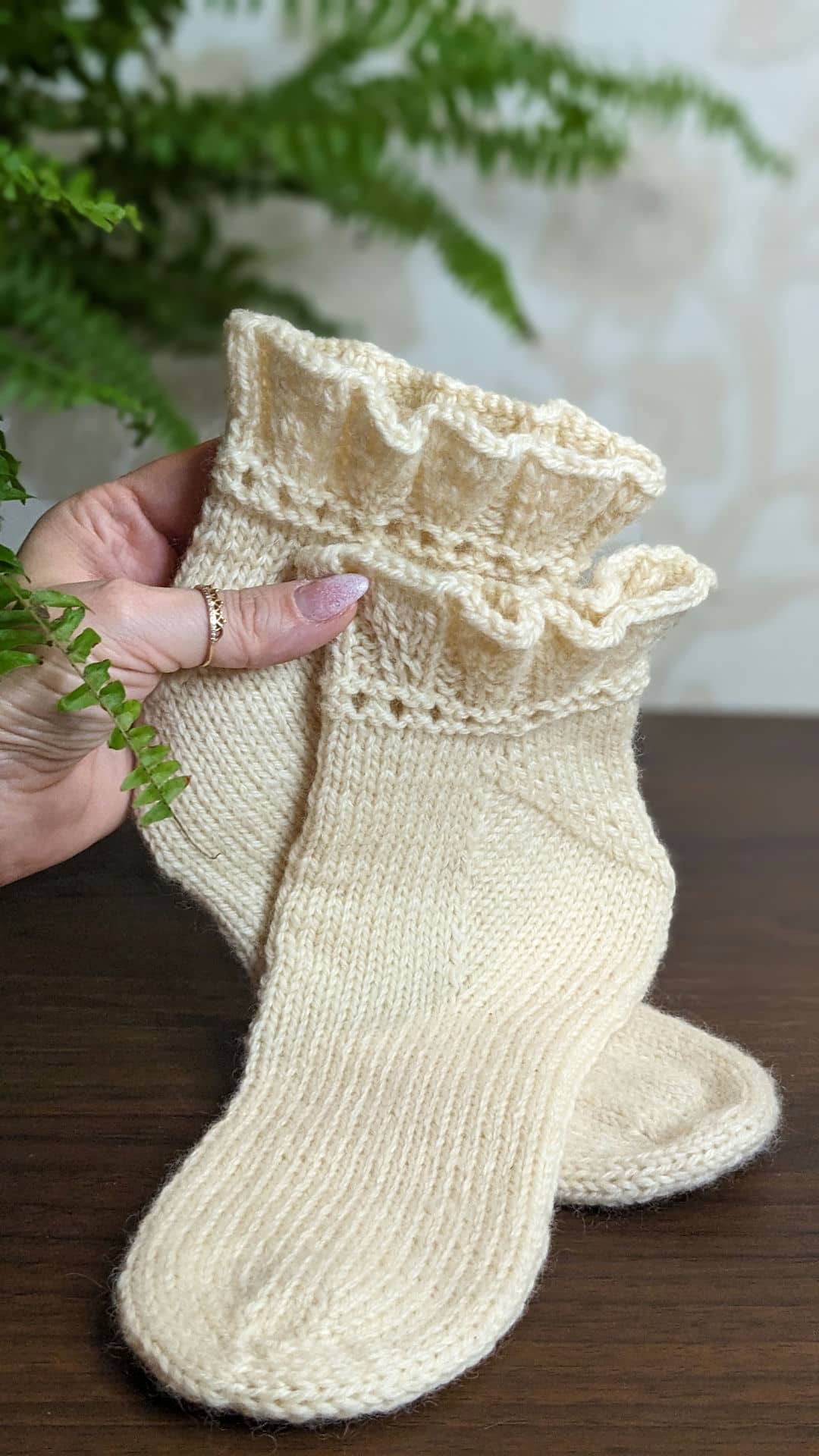
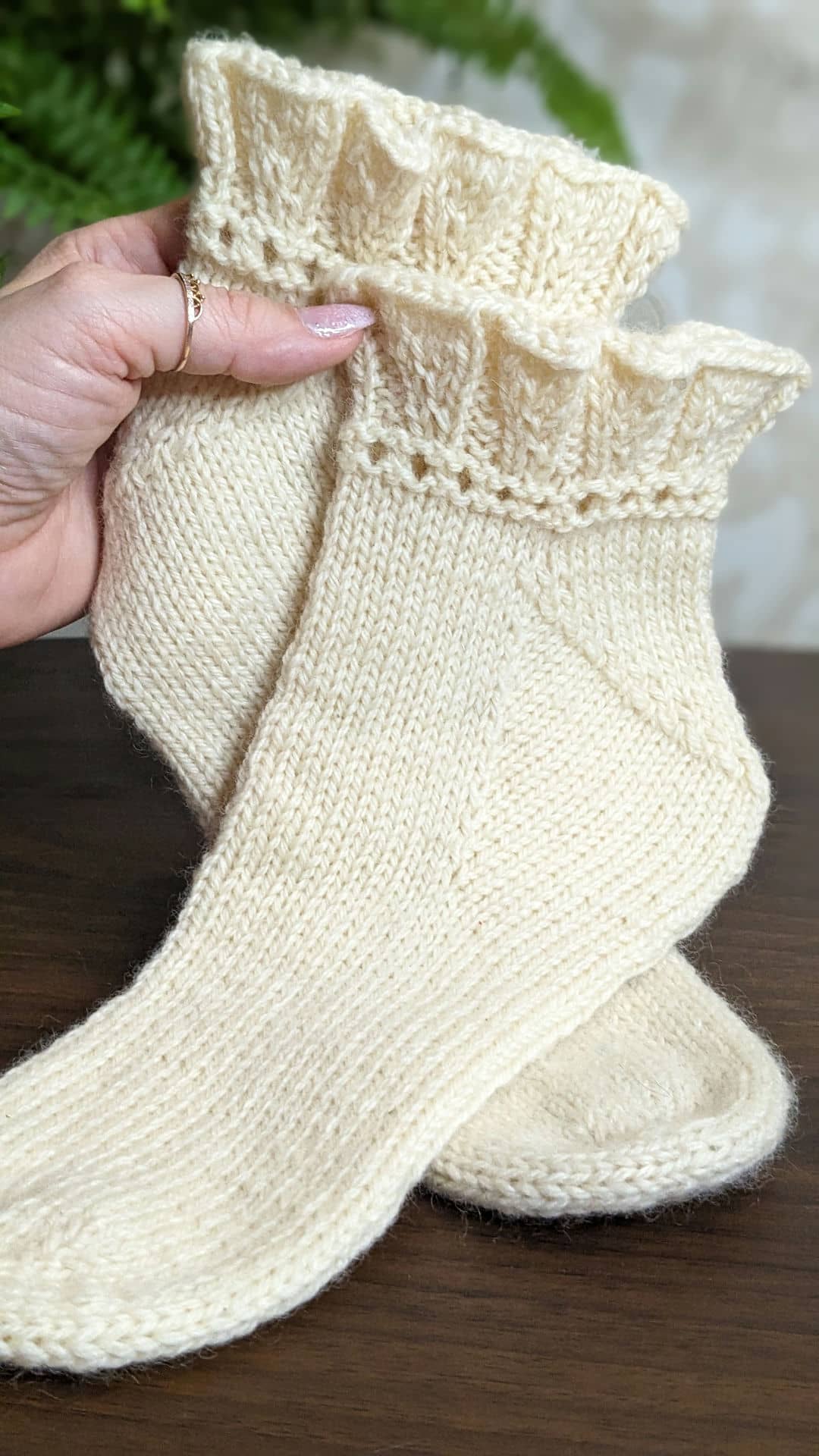
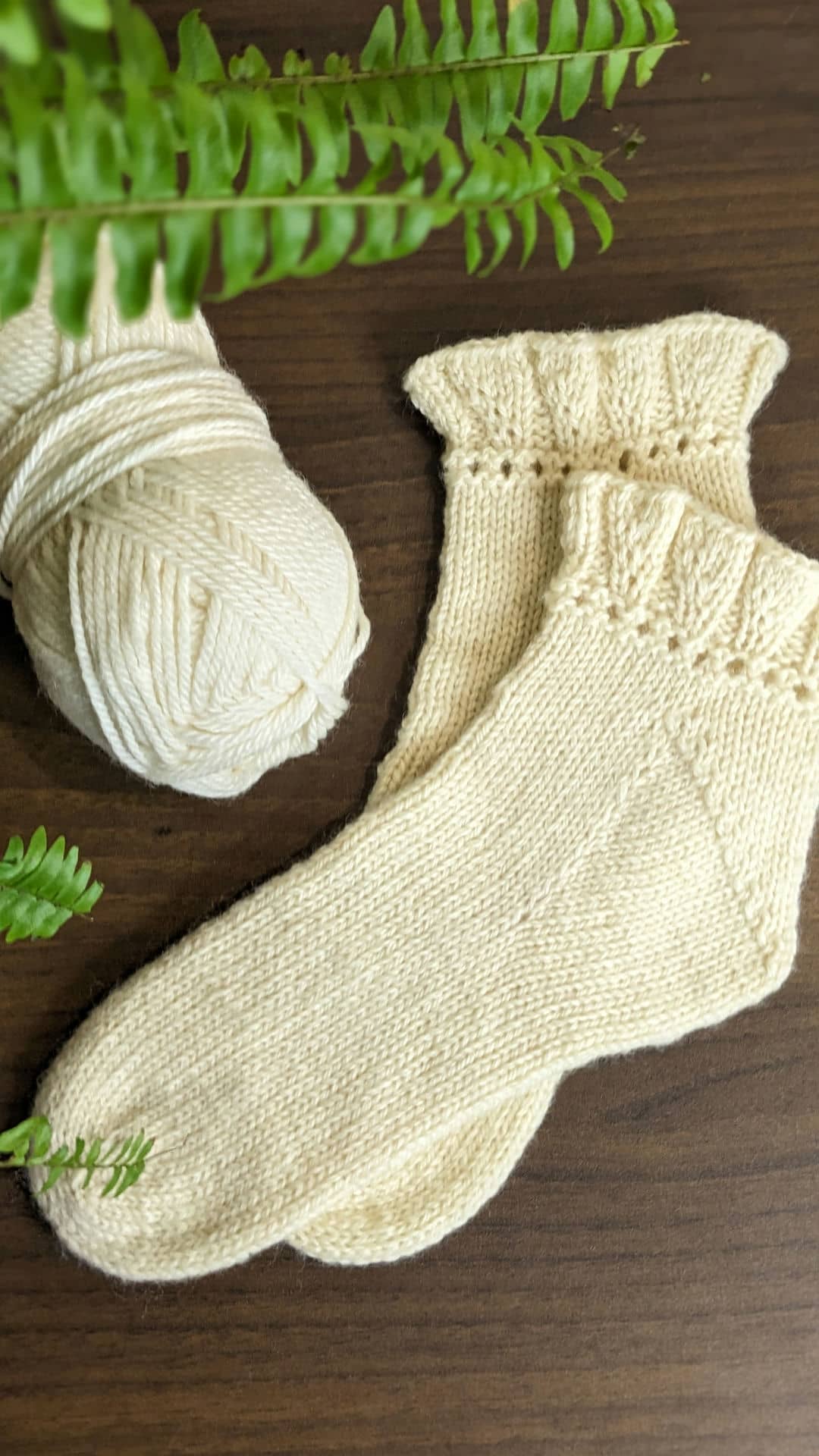
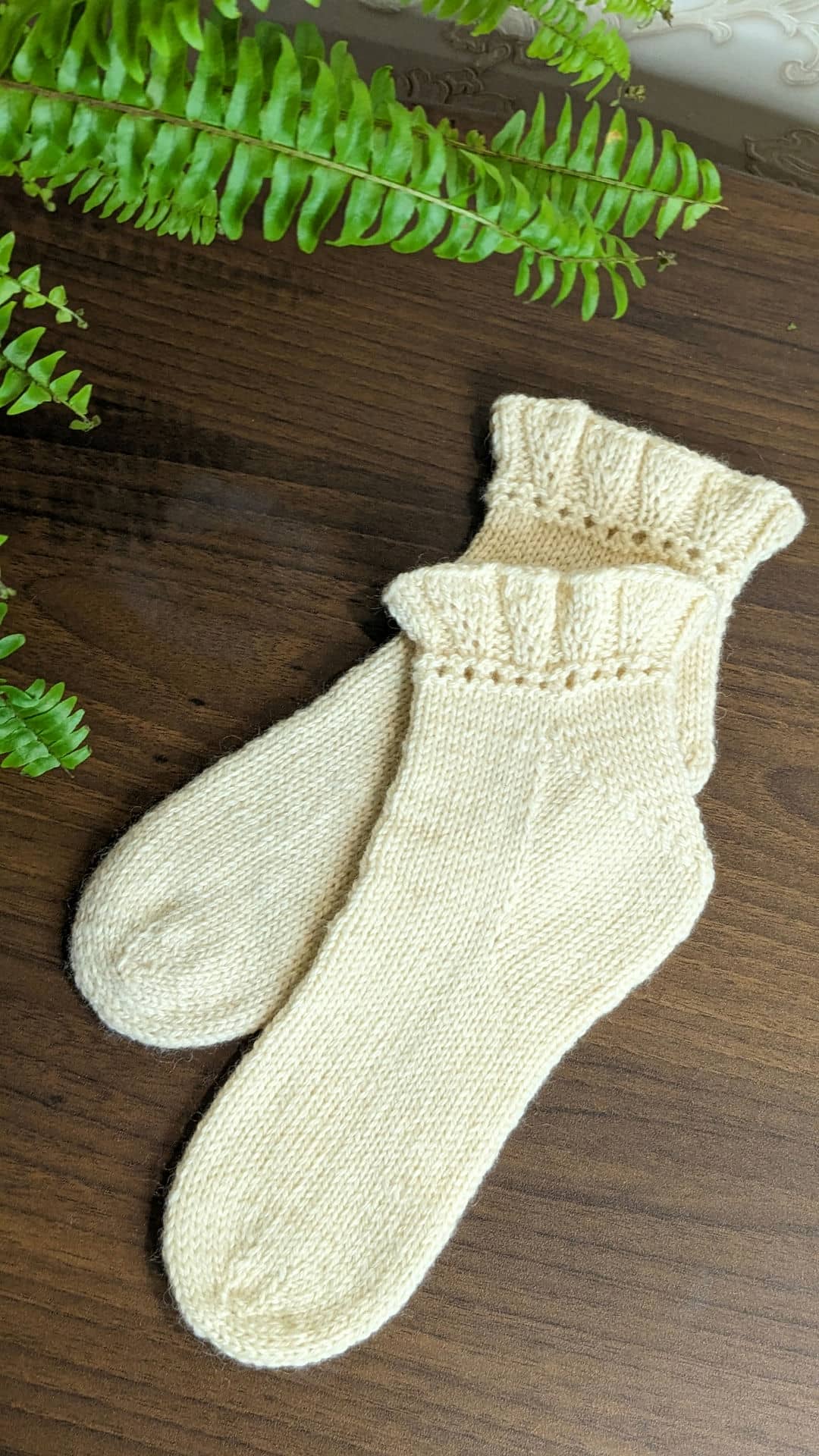
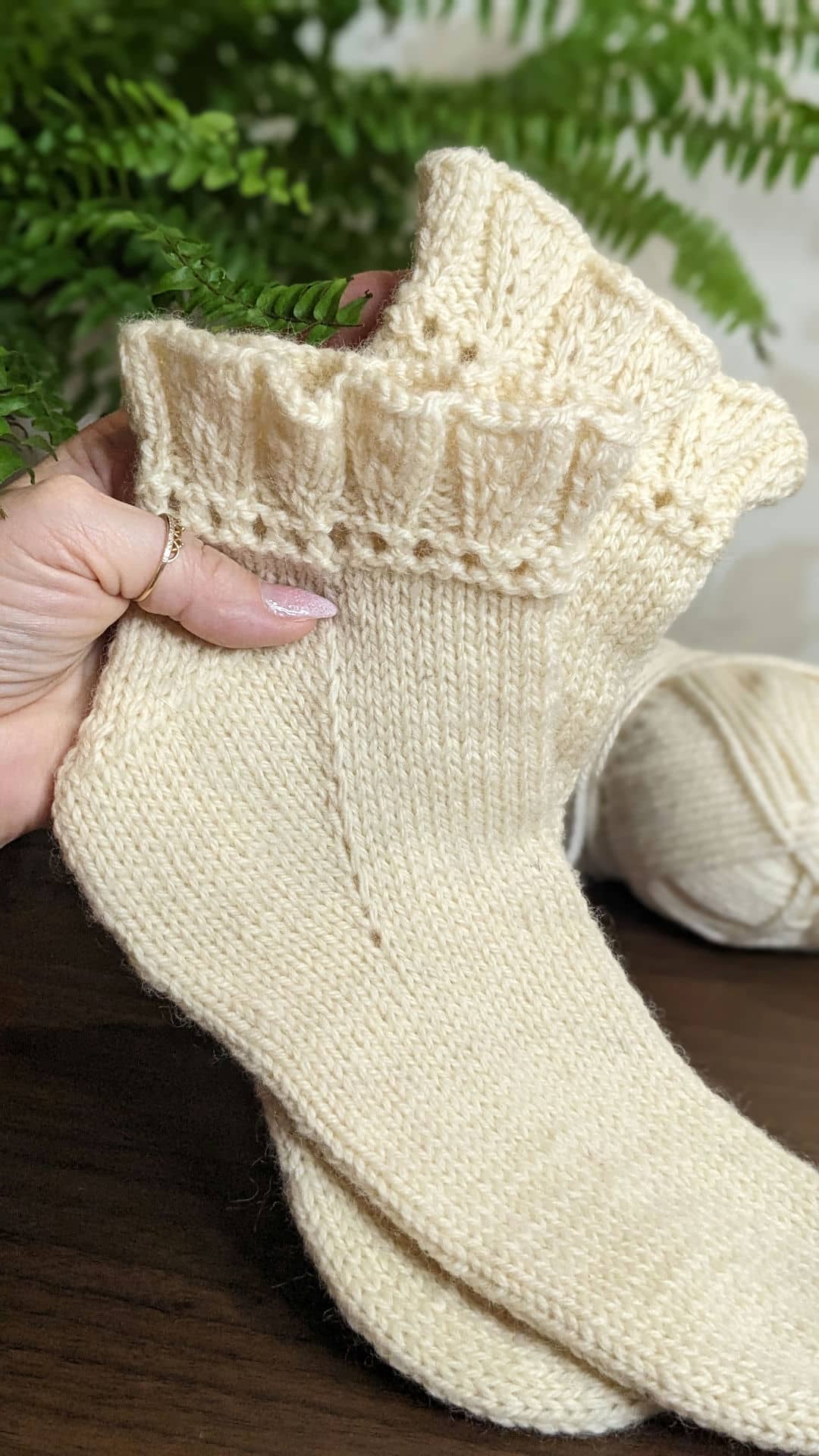
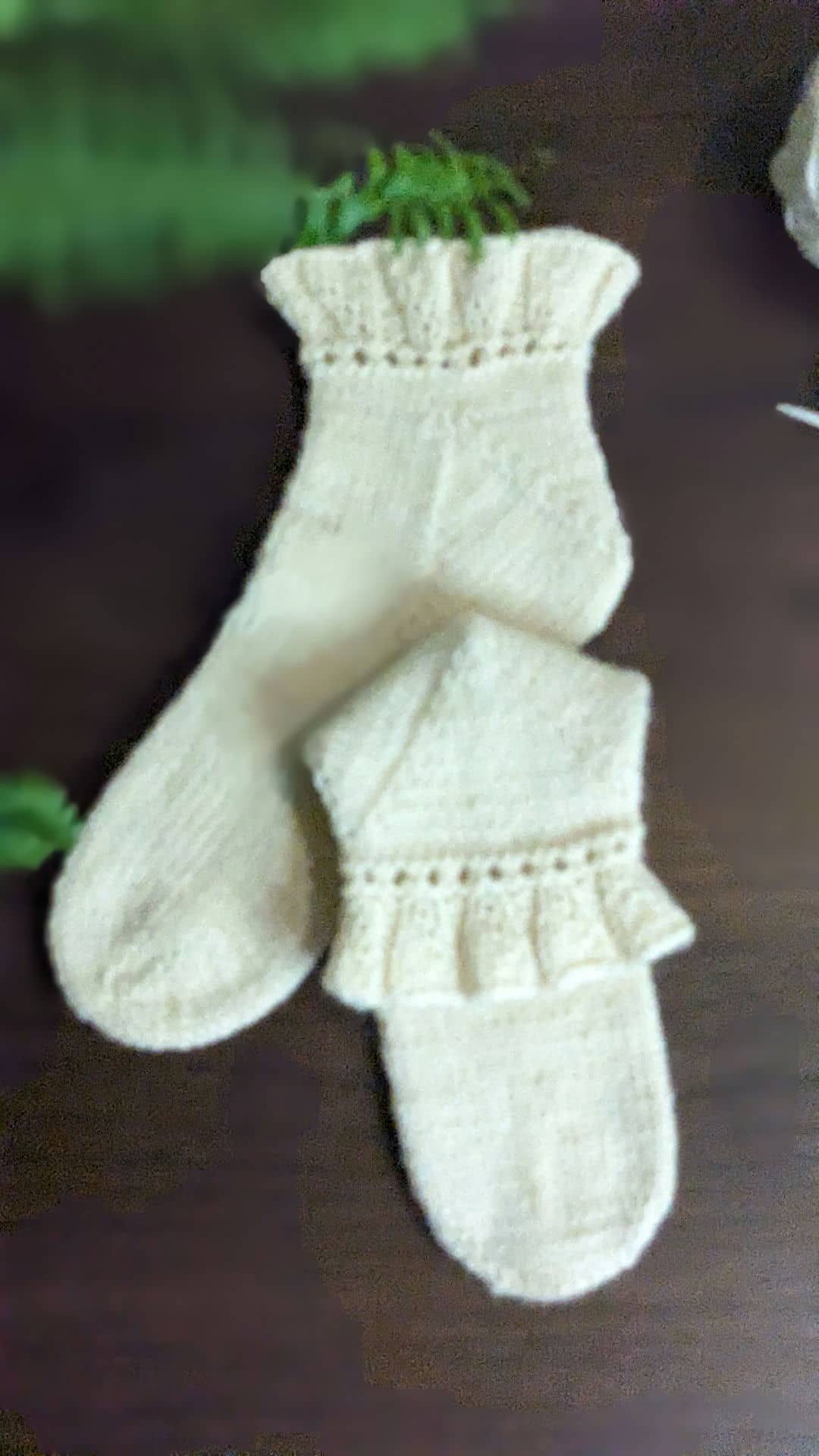
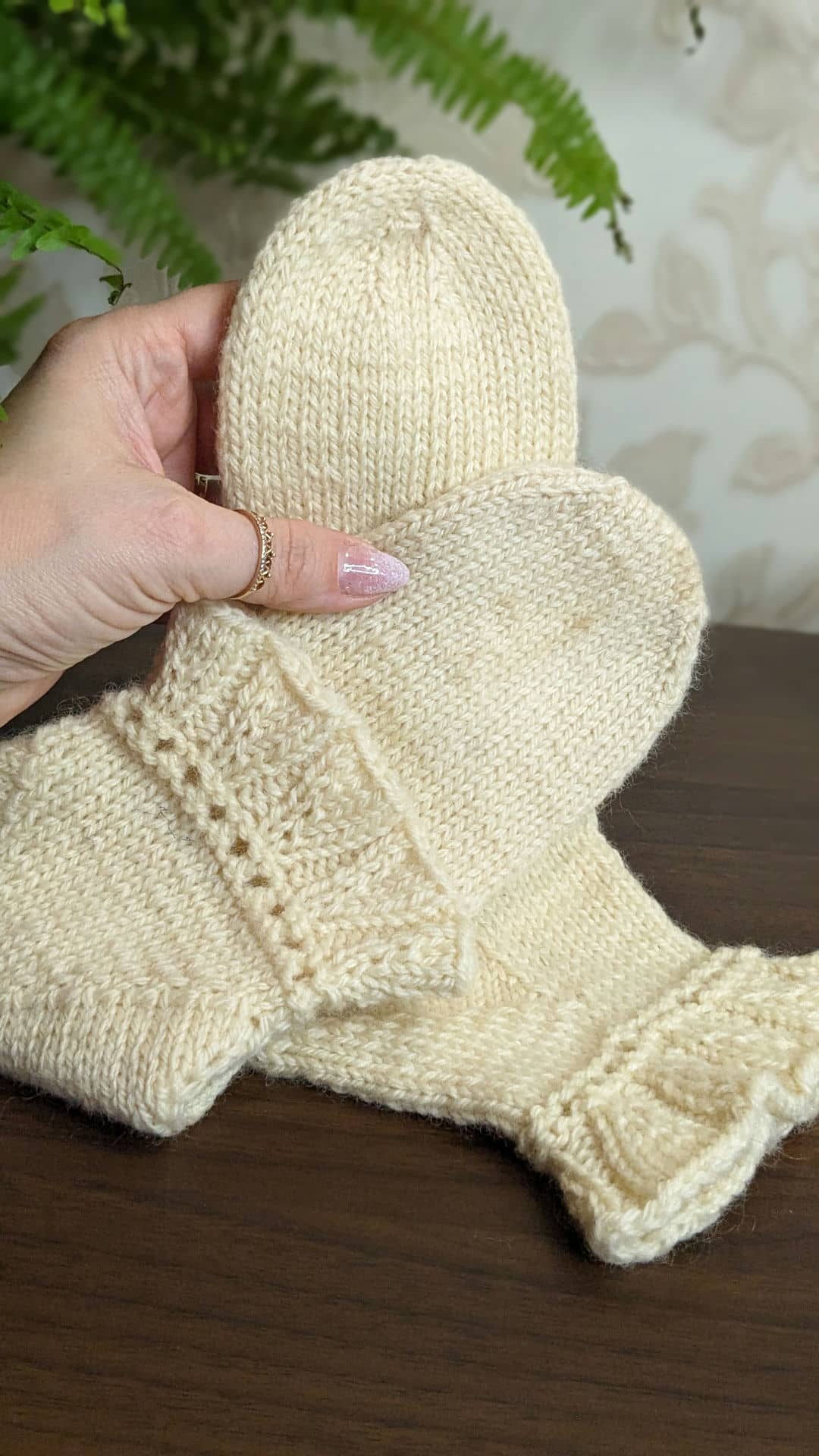
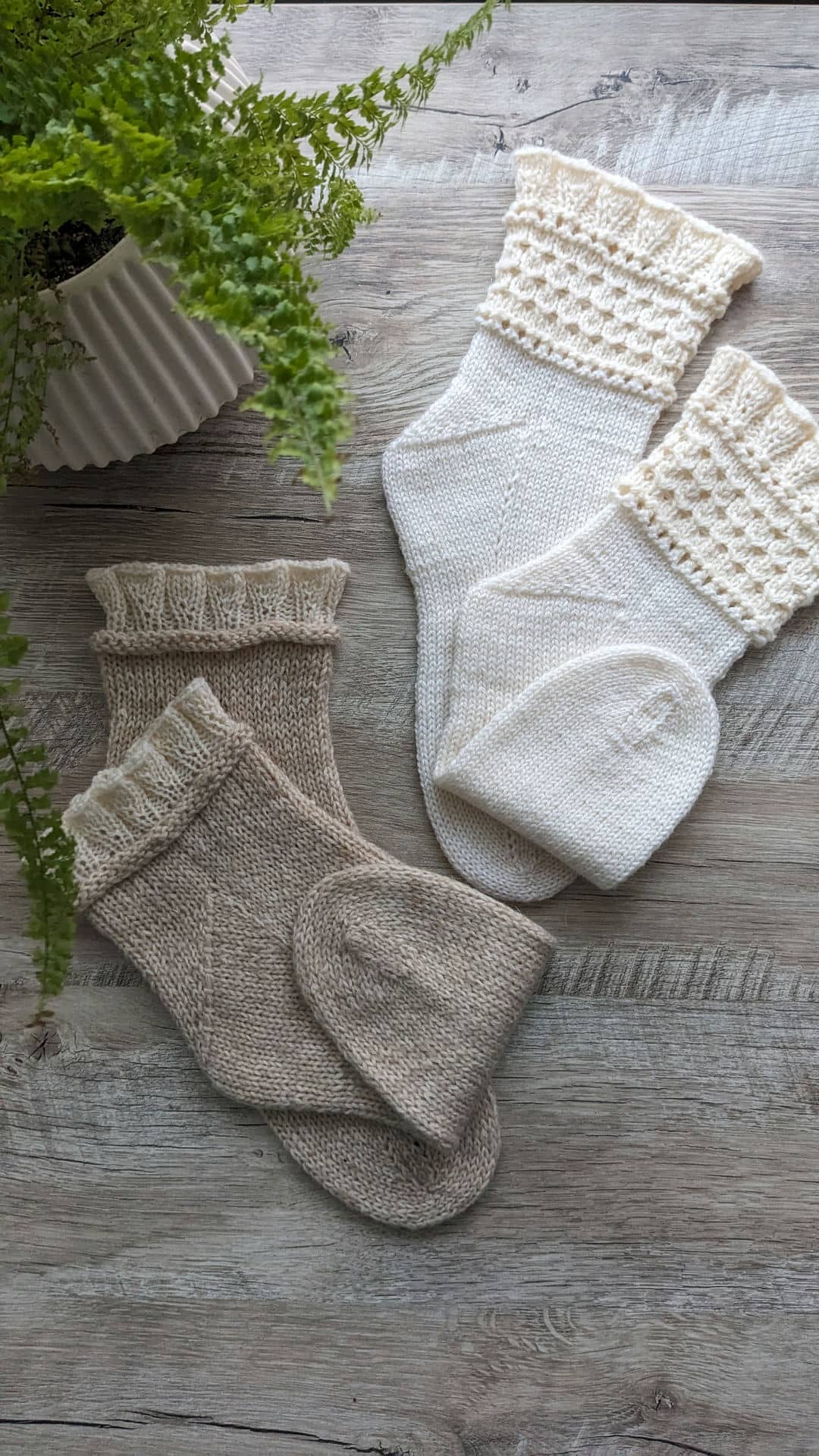
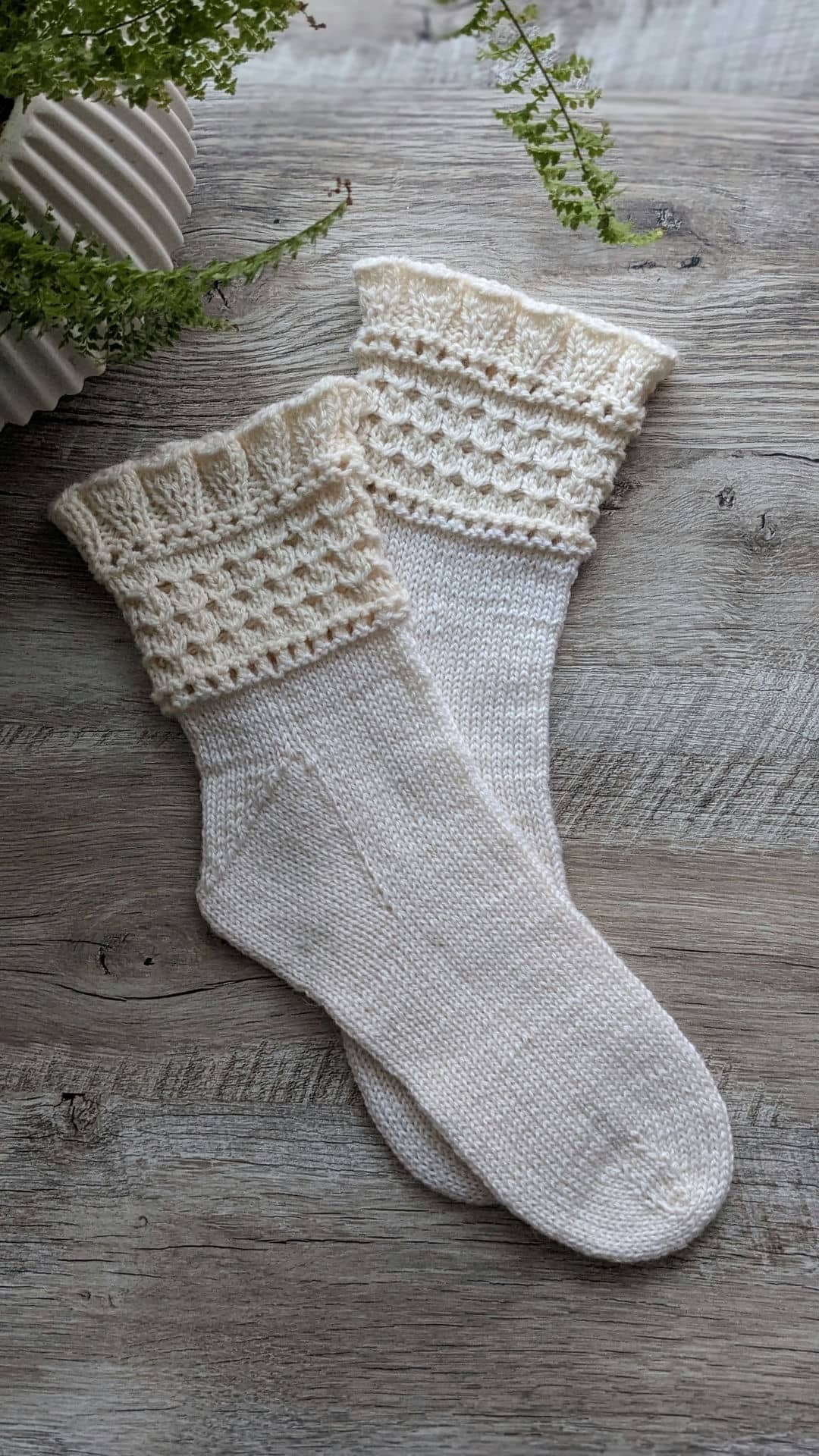
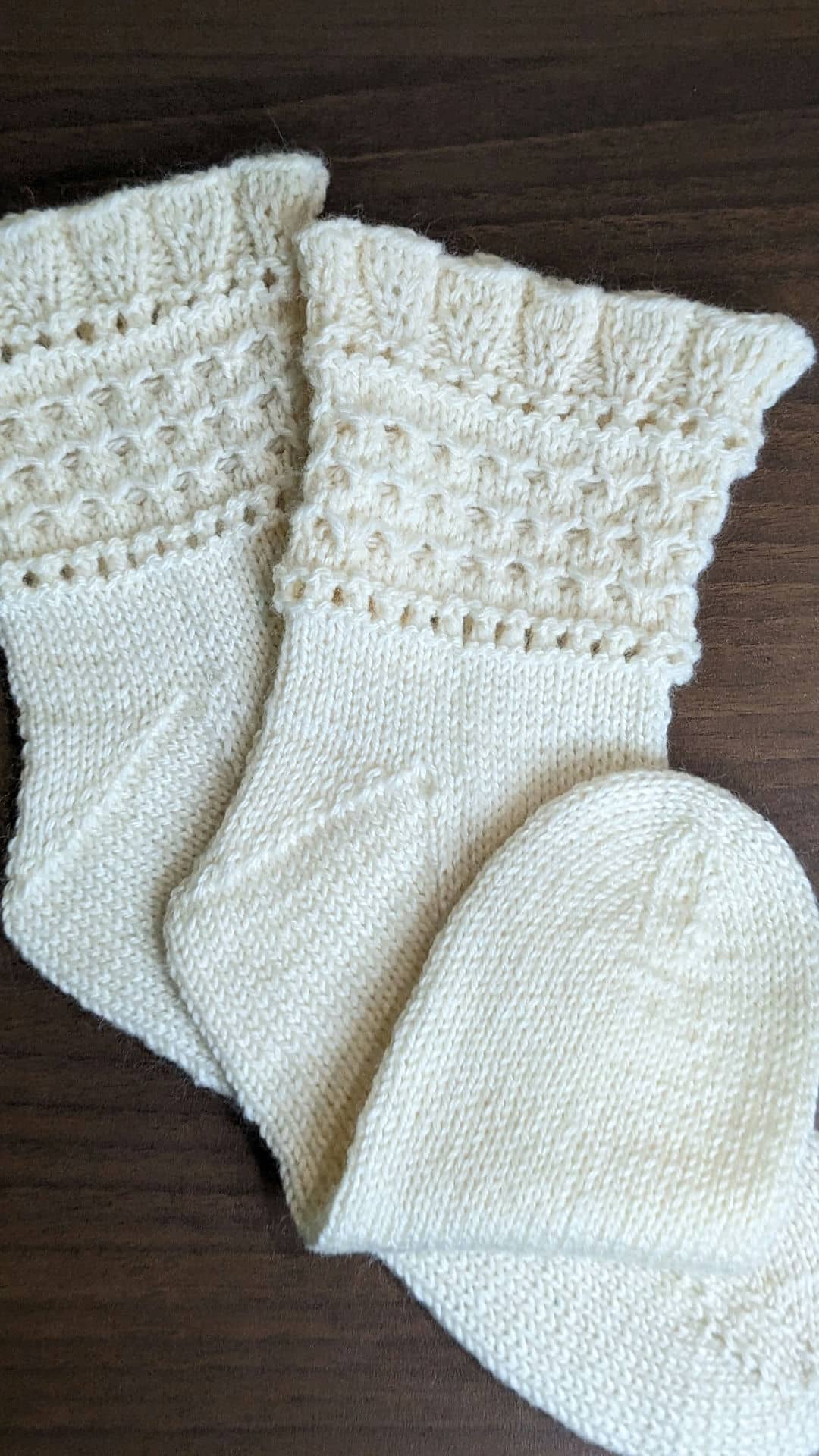
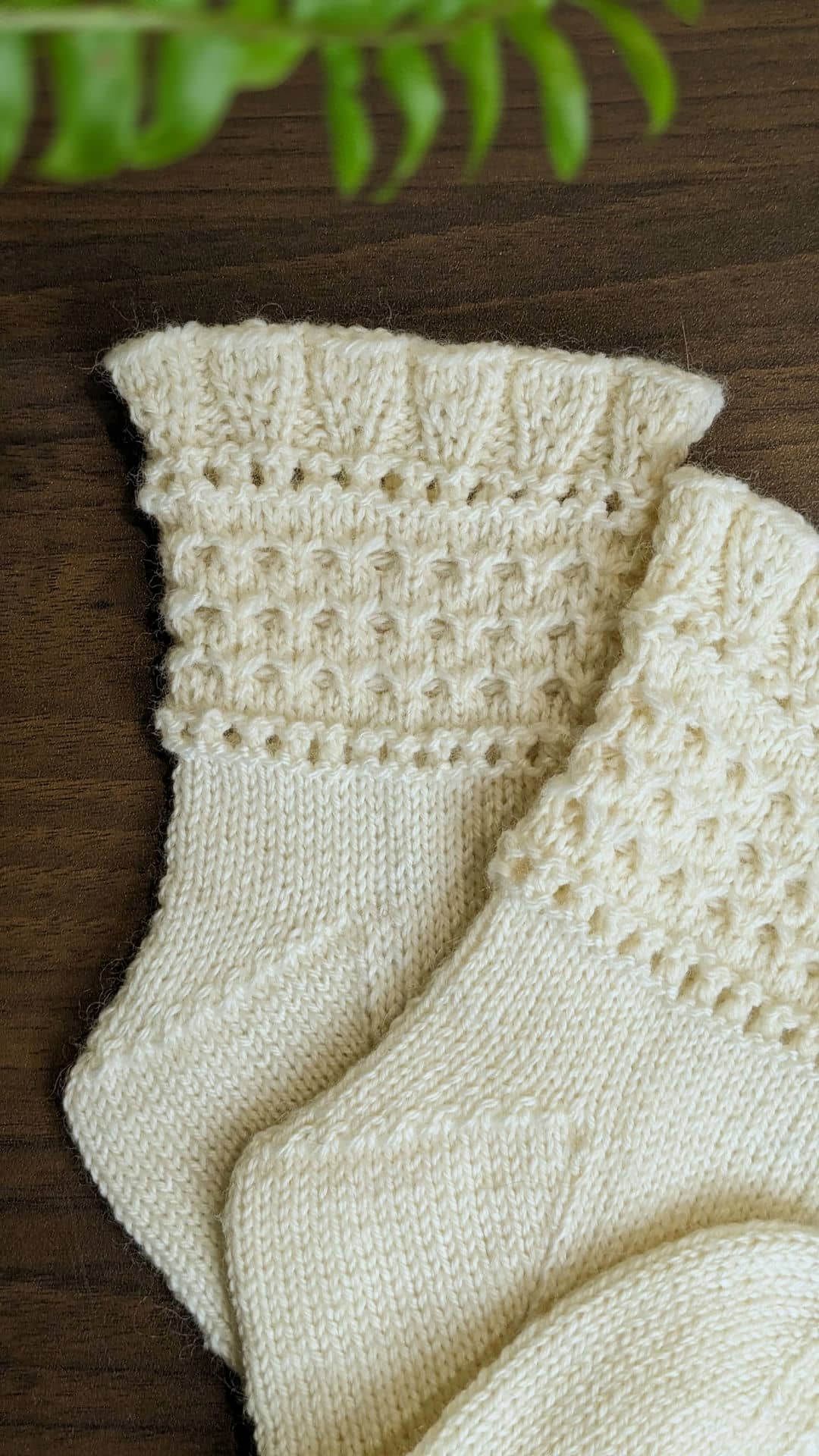
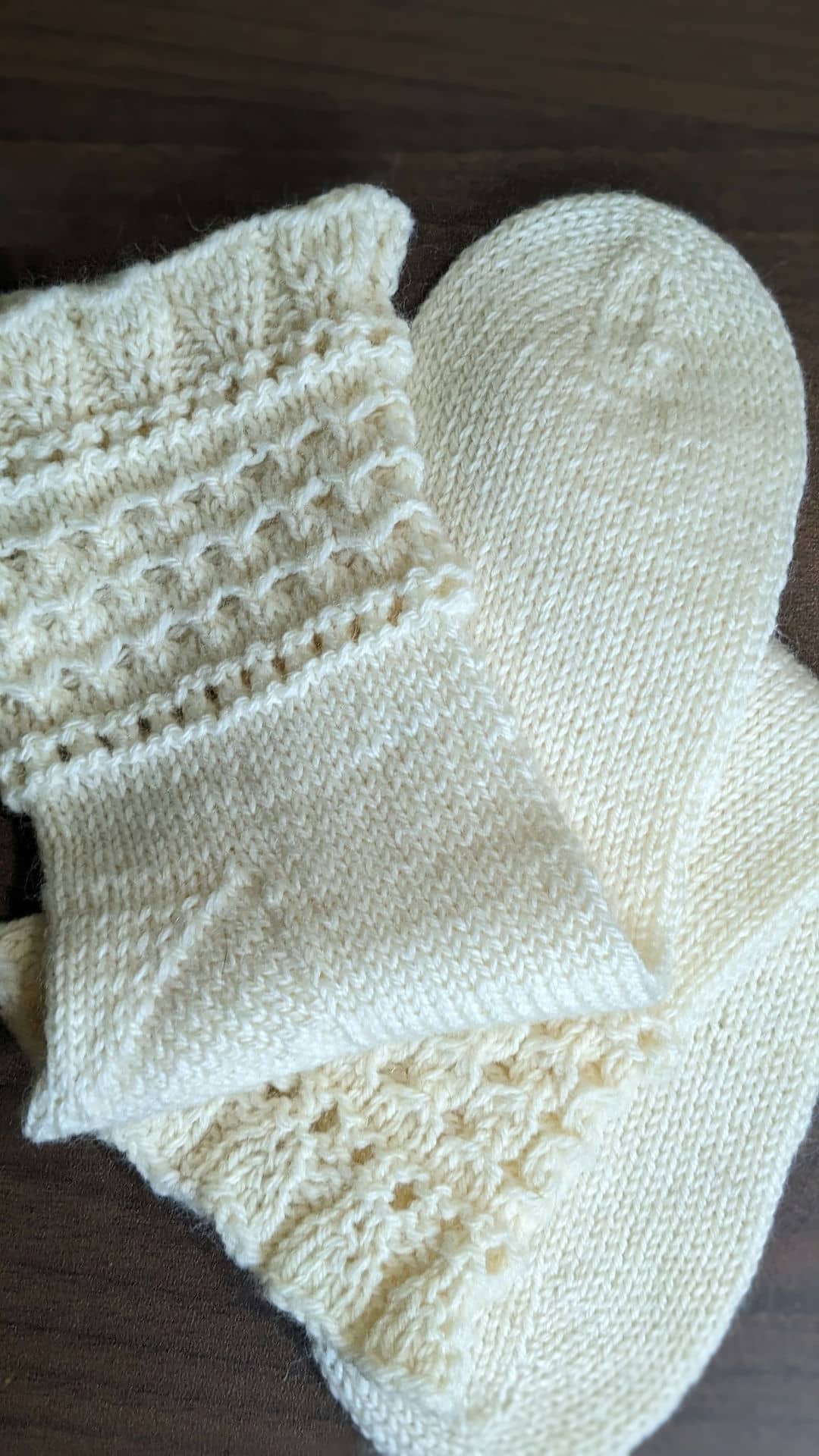
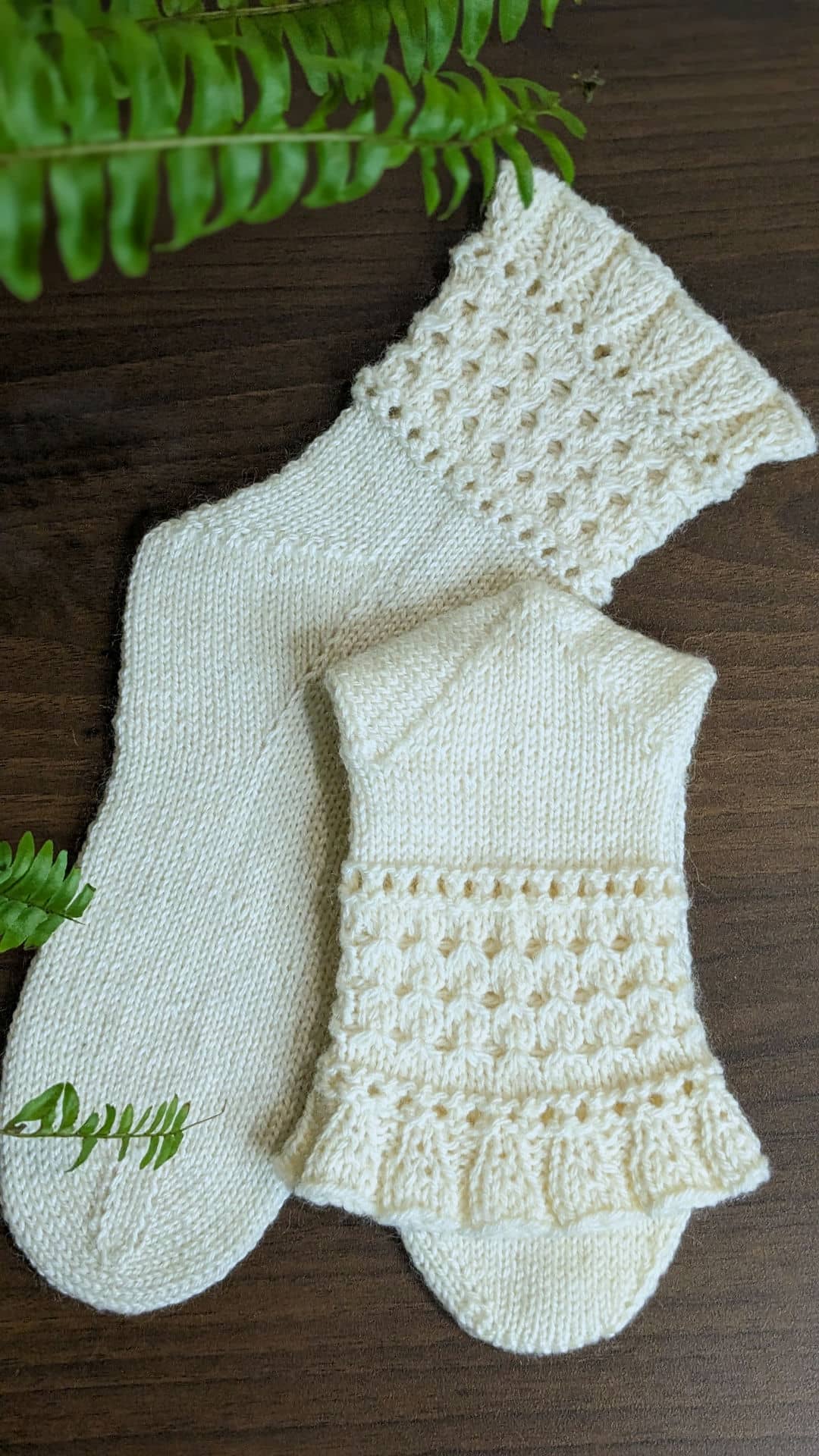
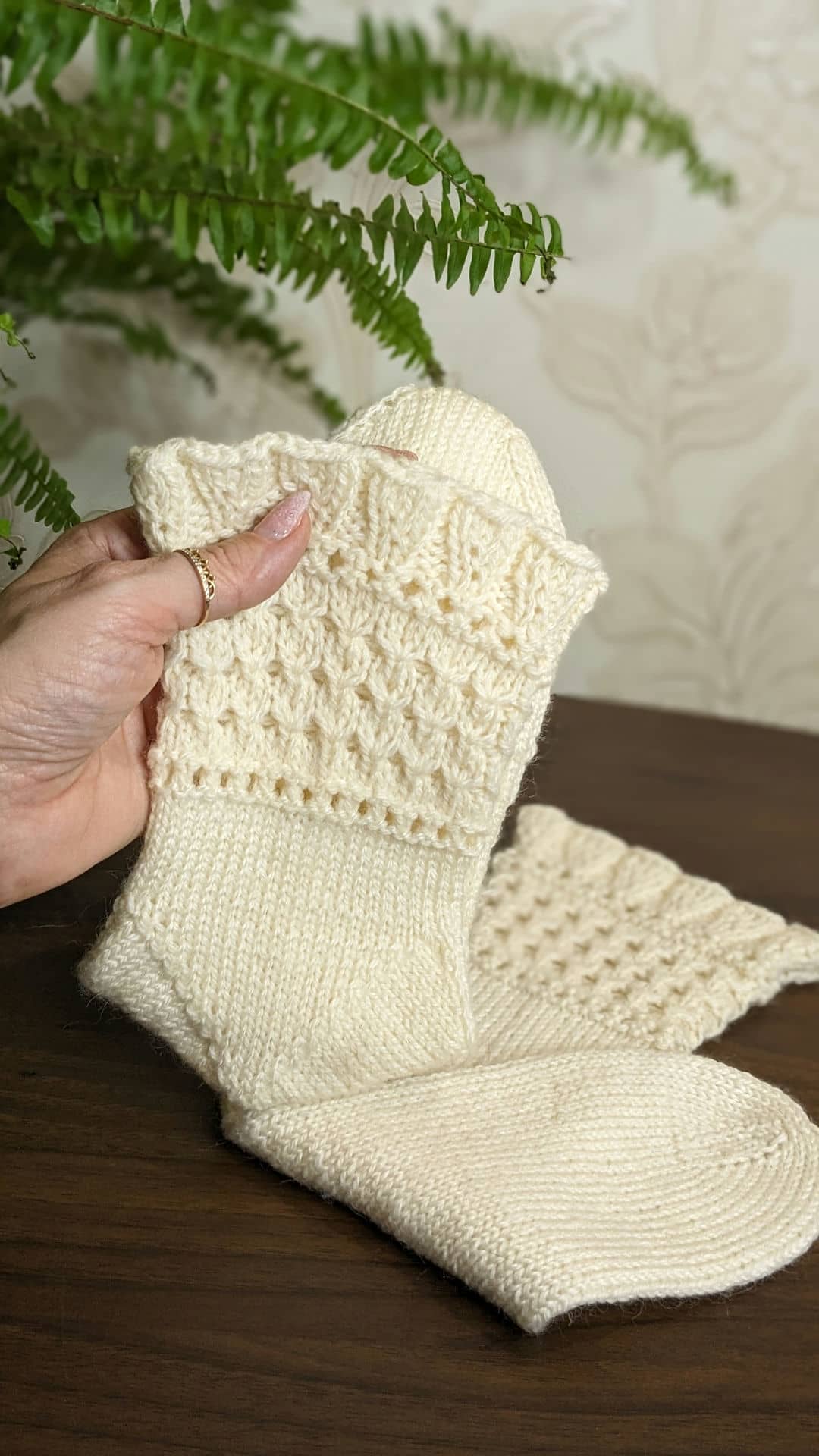
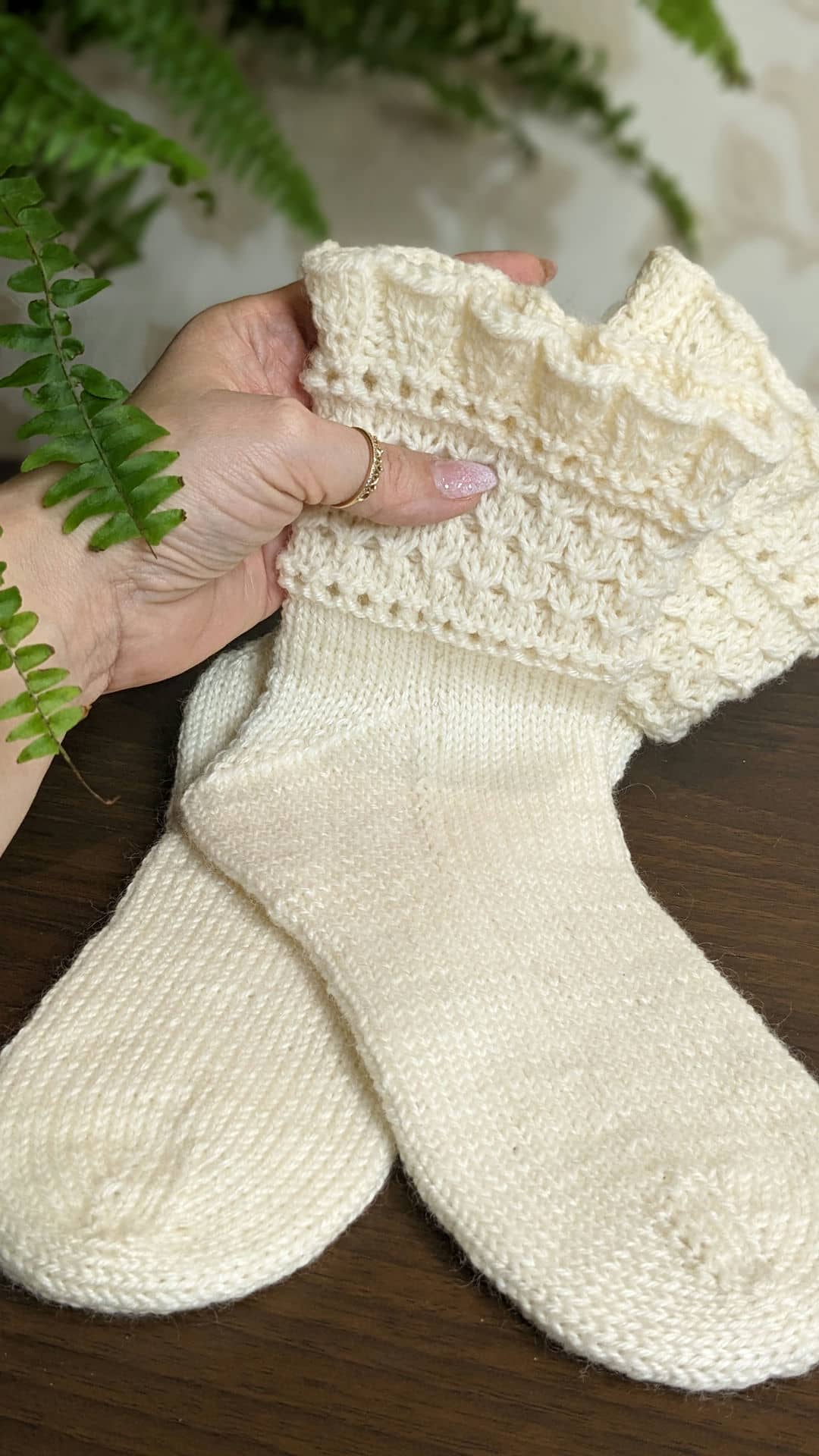
Socks with a cuff and a ruffle
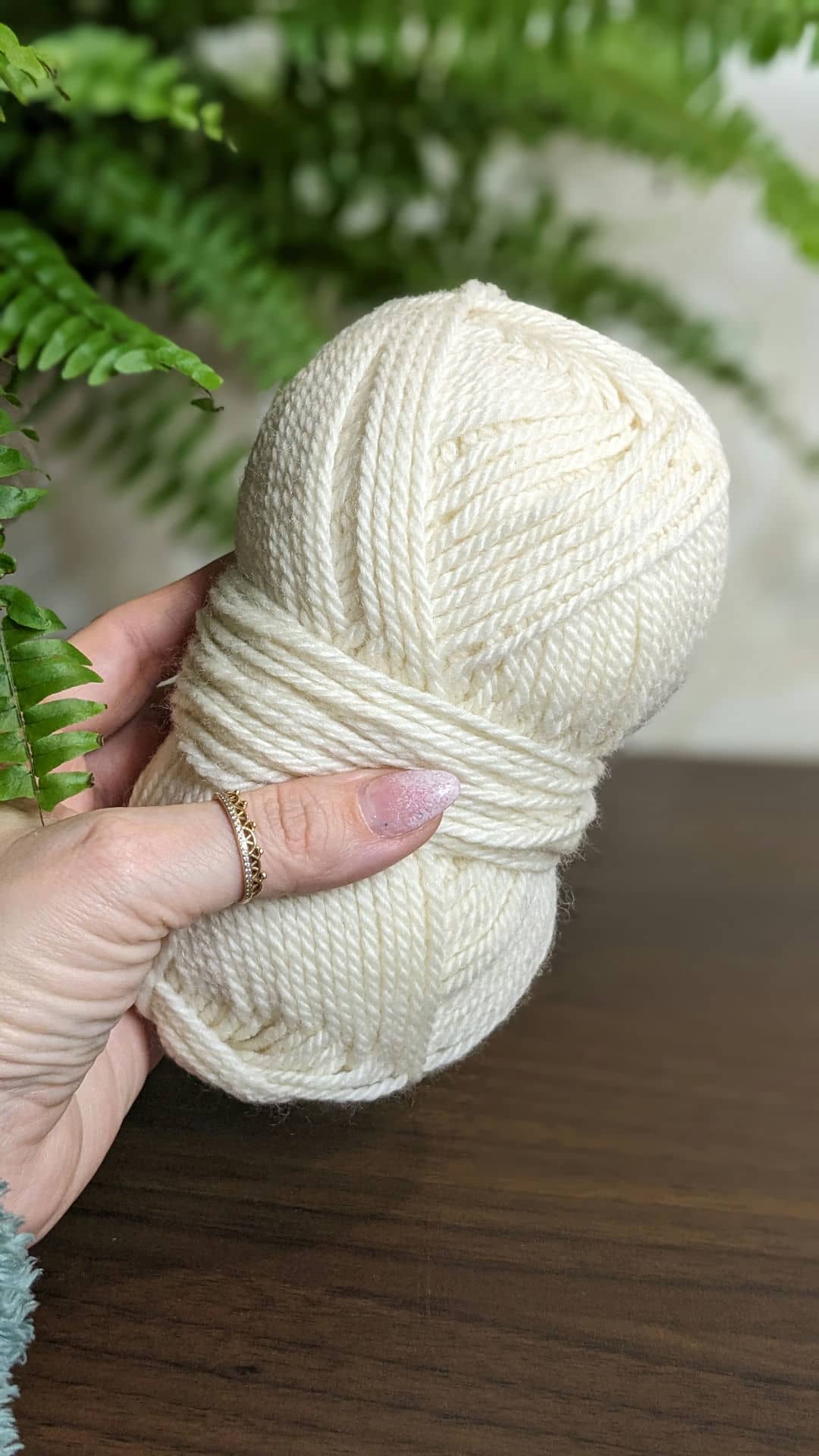
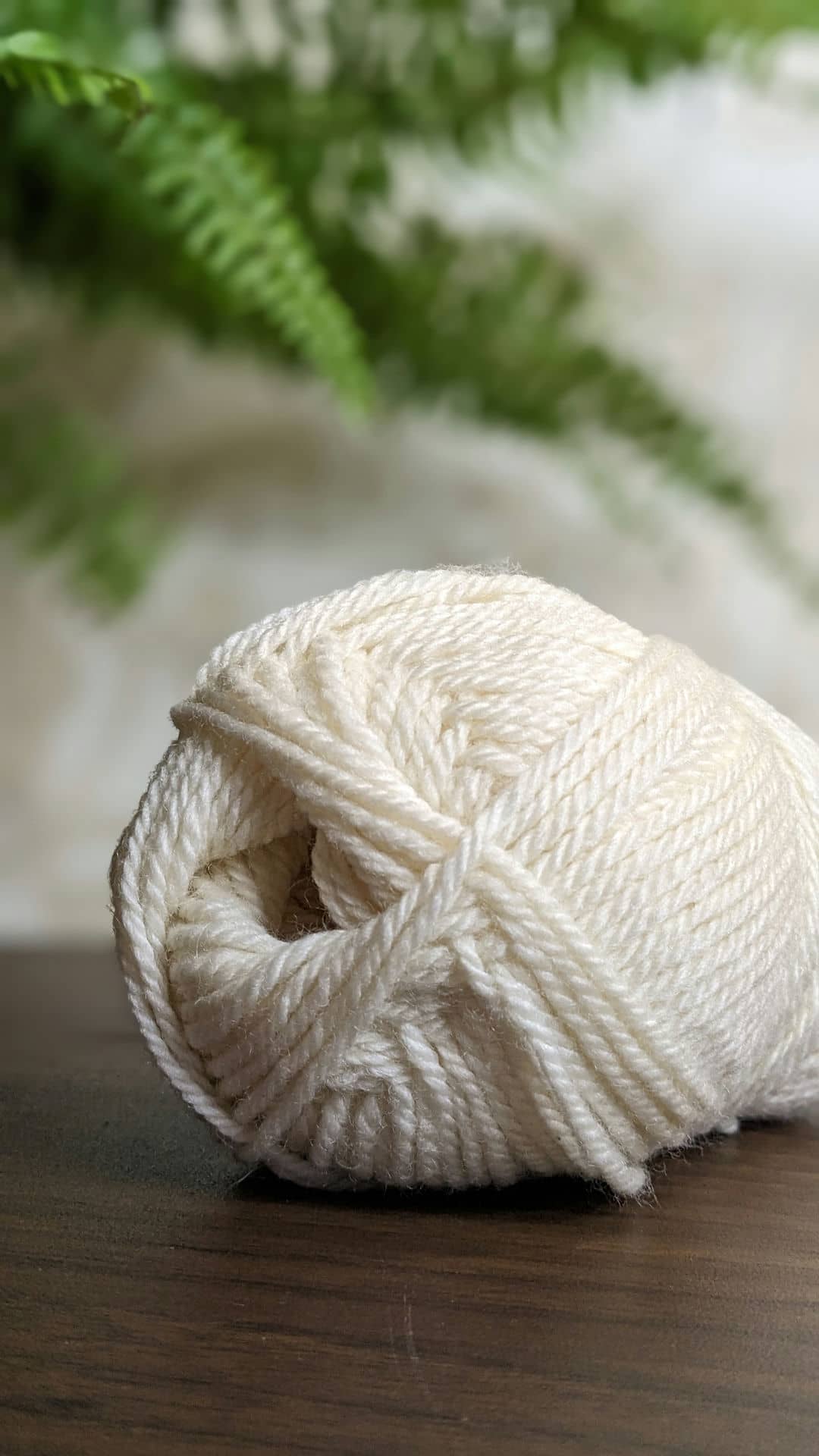
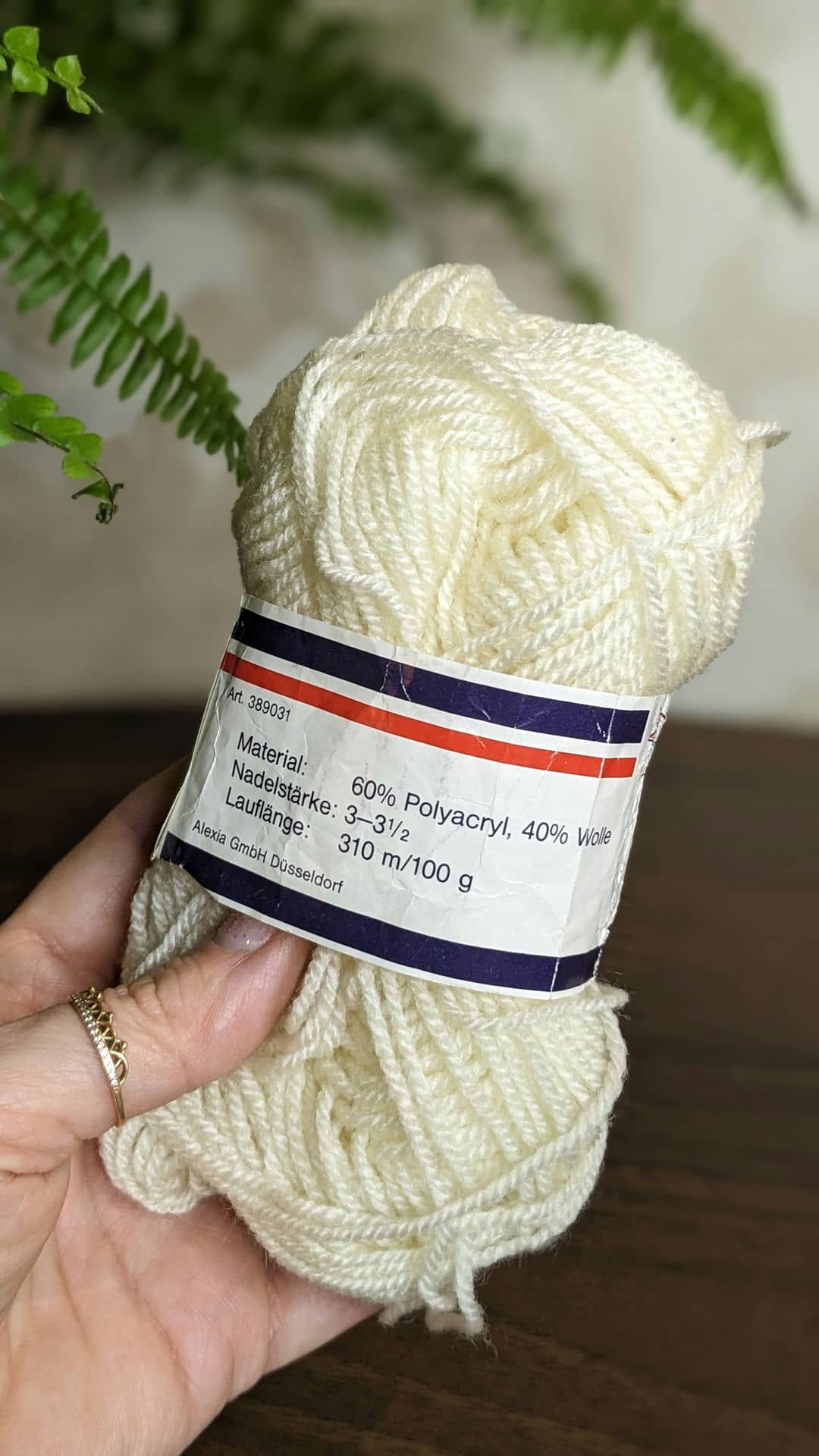
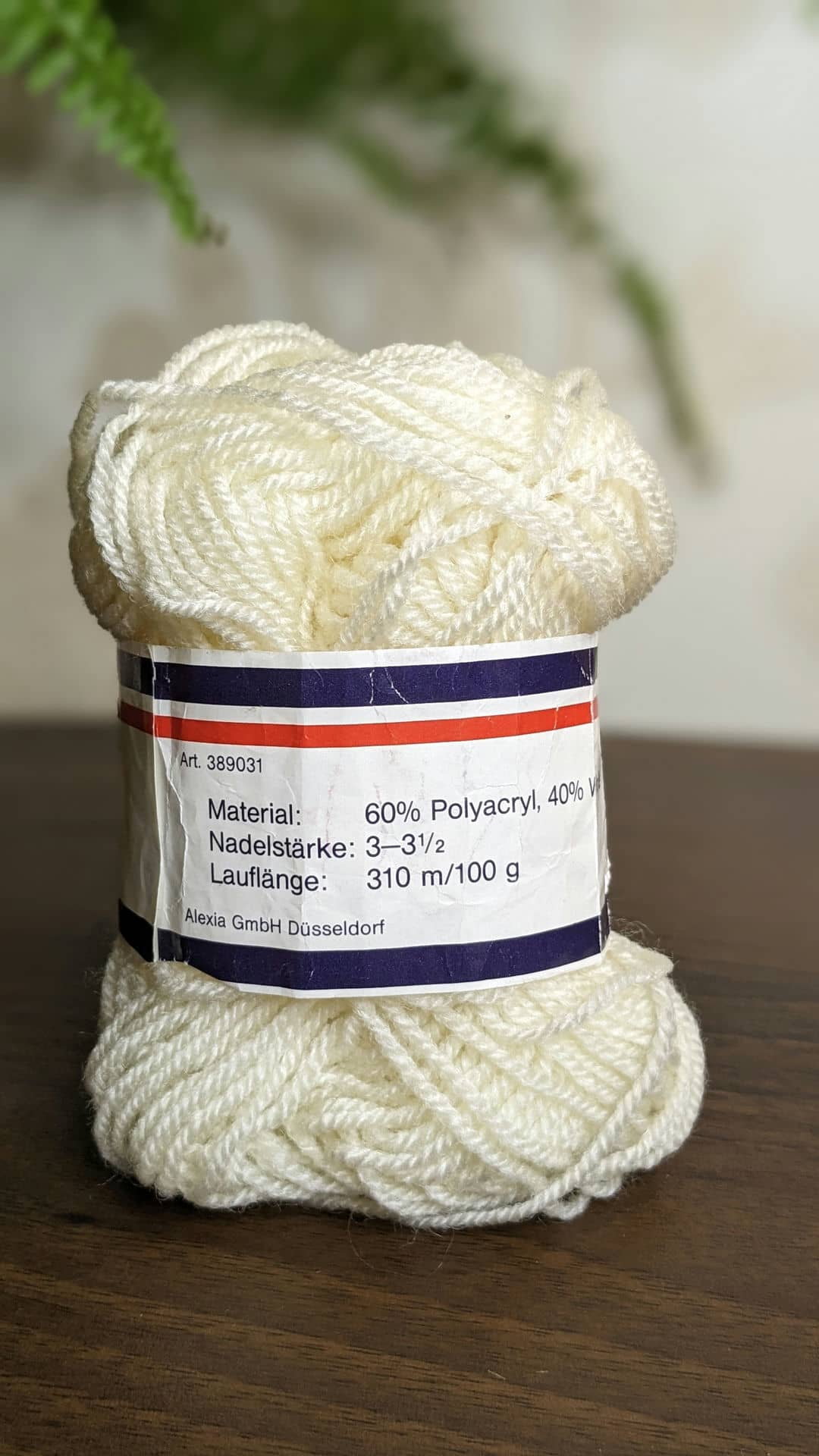
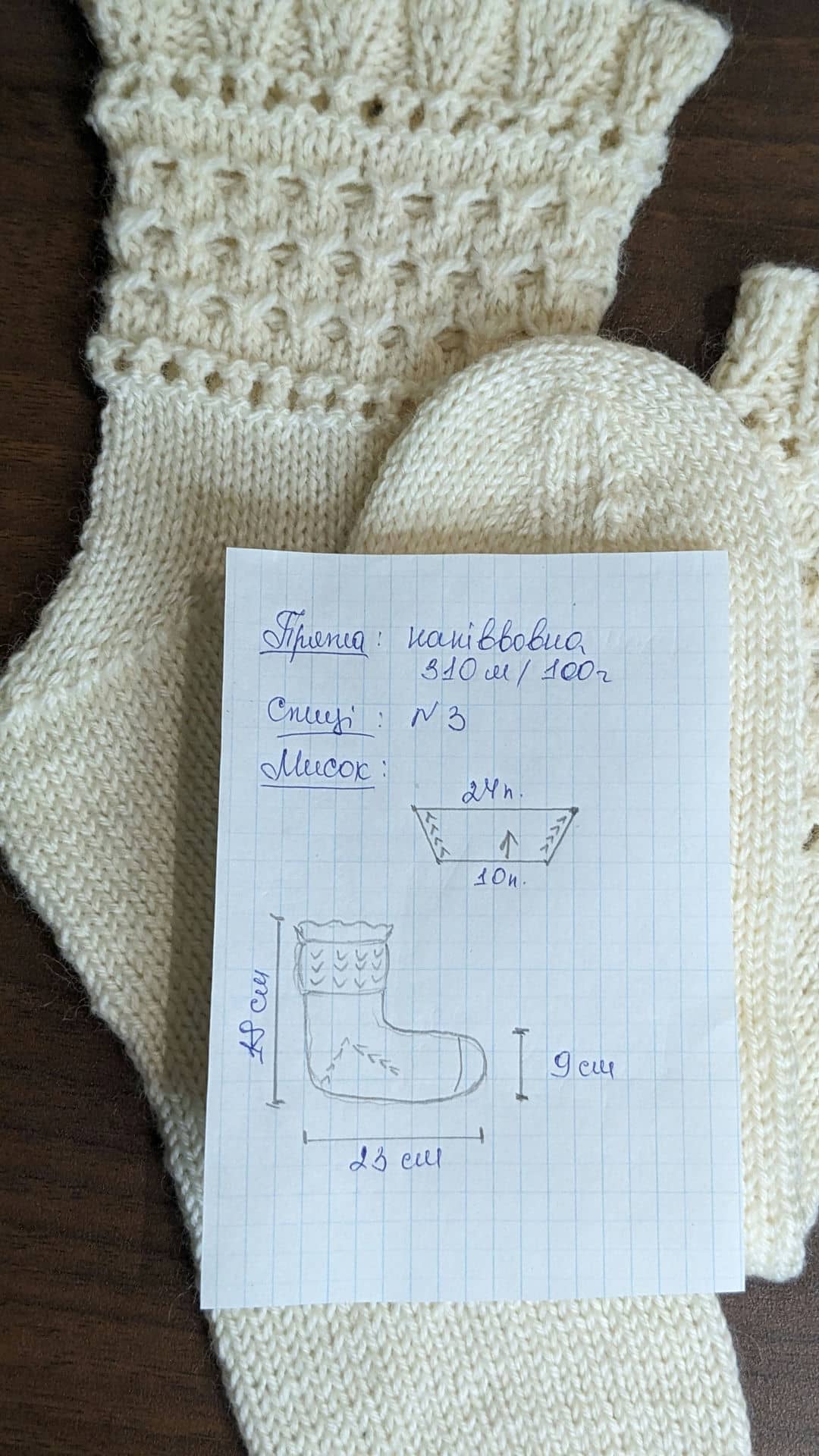
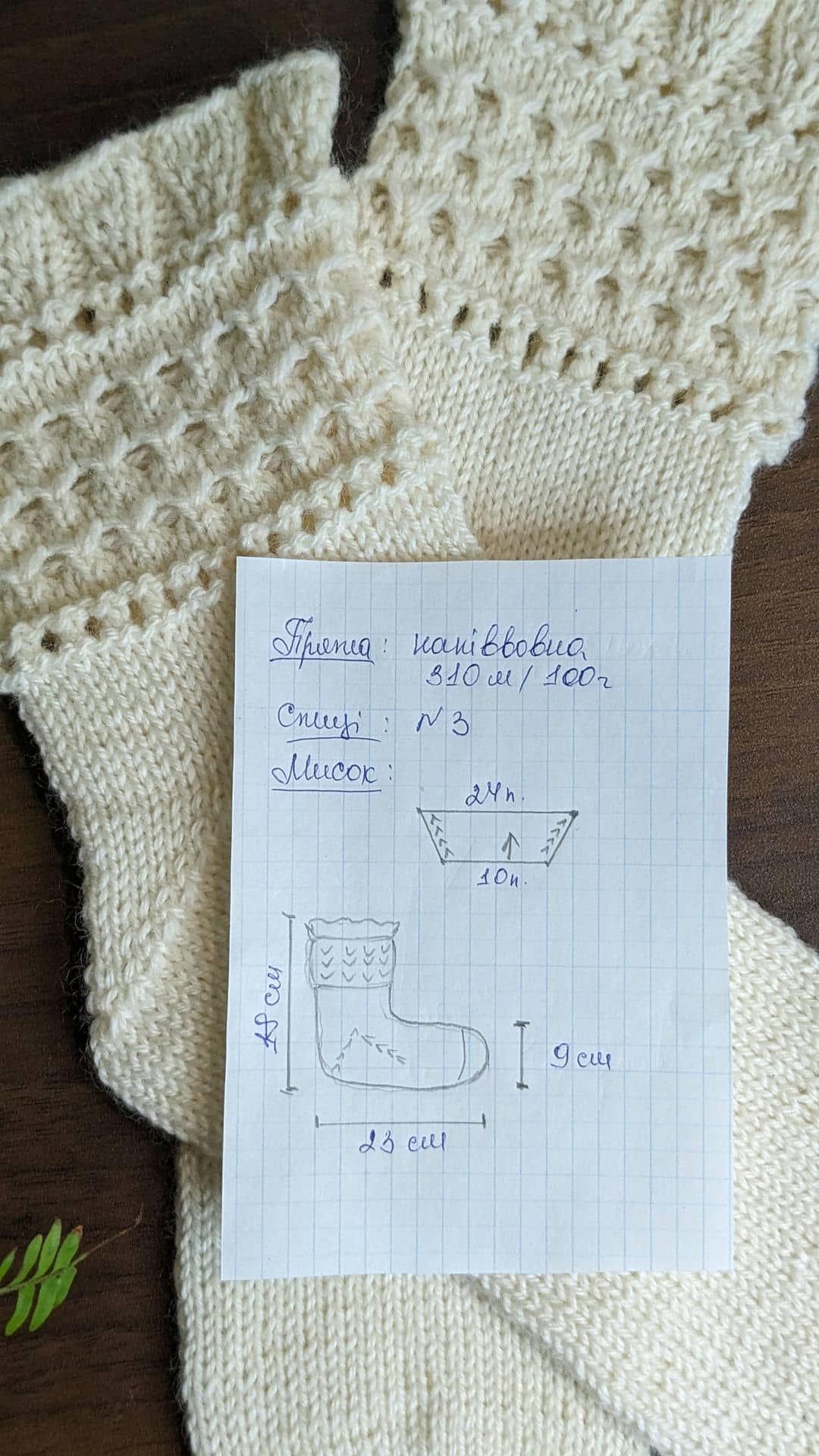
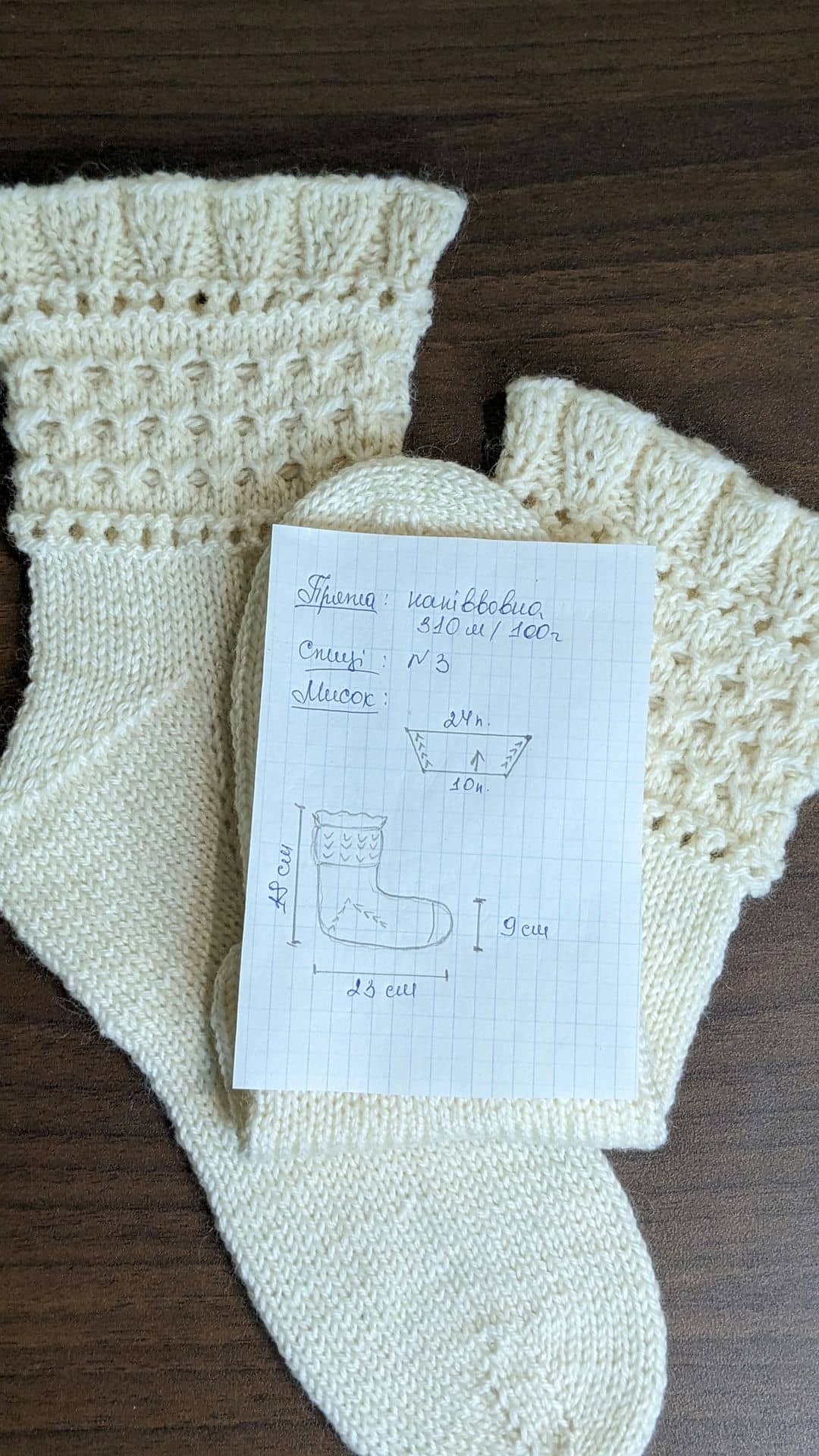
Yarn: semi-wool 310 m/100 g. Needles: 3 mm on a cable.
Turkish cast-on. Make a slip knot, place it on a needle, wrap the working yarn around both needles and form the stitches (in my case 1 slip-knot stitch + 10 wrap stitches). Pull out one needle and knit 10 stitches. Knit those same wrap stitches once more in the round. There will be 10 stitches on each needle.
Continue knitting in the round, adding one stitch at each side of each needle every other row. This is how the toe gradually takes shape and the stitch count grows to the width you need. I worked the increases 7 times. We have 24 stitches on each needle.
Next we shape the foot. We have two needles with 24 stitches on each, which are the two halves of our sock: top and bottom. Knit the foot in stockinette stitch to the length you need. You can add patterns if you like.
I am knitting size 37-38. So after 16 cm from the start I begin increasing for the instep gusset. On the bottom half of the sock, next to the edge stitches, we add new stitches 10 times, every 2nd row (see the video, part 2).
Knit in the round. On the bottom needle: 10+24+10 = 44 stitches. The gusset is 7 cm long.
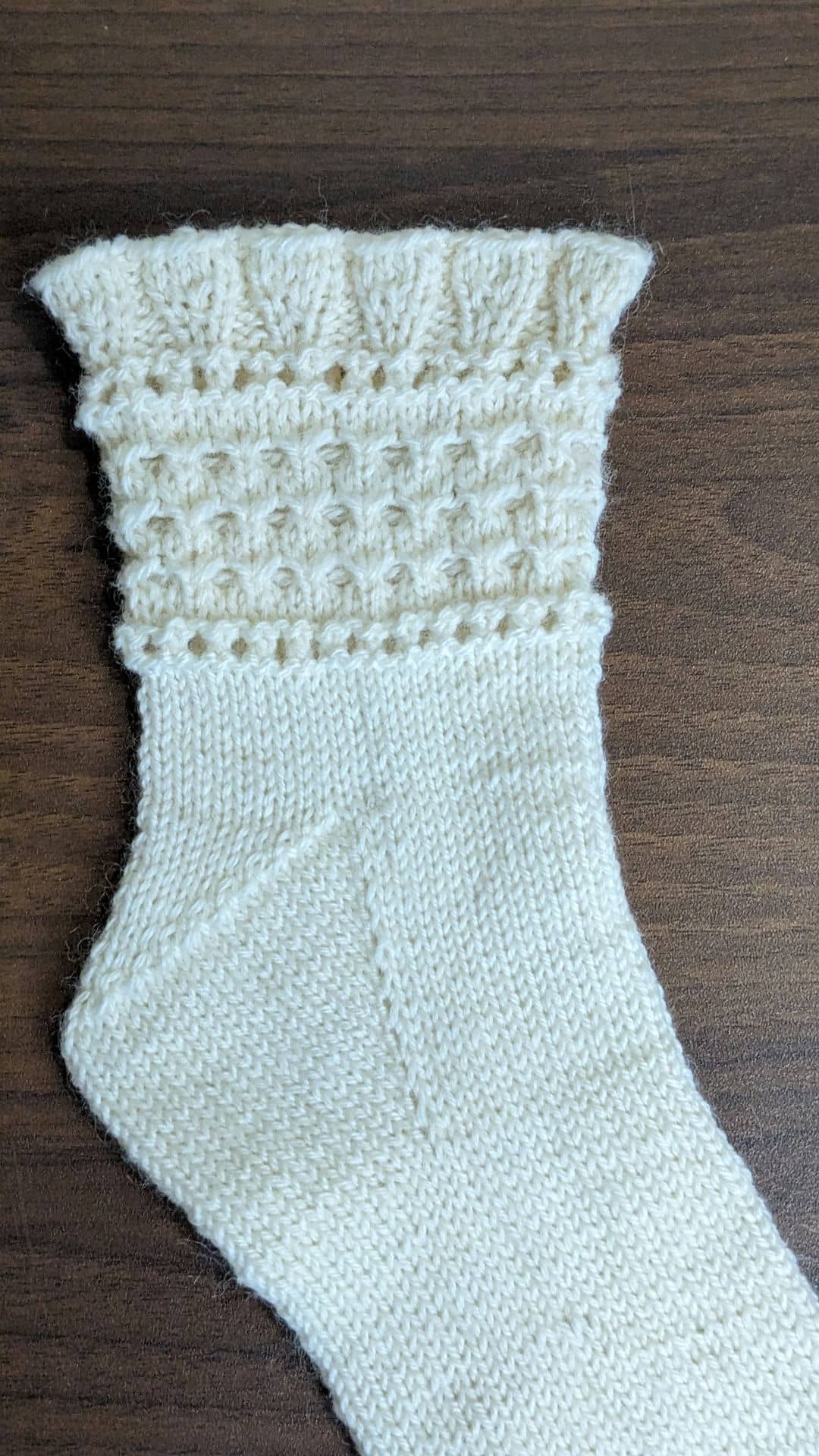
Next we start shaping the triangular heel and decreasing stitches (see the video, part 2). On the bottom half of the sock, mark the 2 center stitches, begin knitting in short rows and decrease stitches, working 10 decreases on each side. There should again be 24 stitches left on the bottom needle.
Next we go back to knitting in the round. Knit the leg to the length you need, or until your yarn runs out.
I knitted the leg to 9 cm. Yarn used so far for a pair of these socks: 50 g.
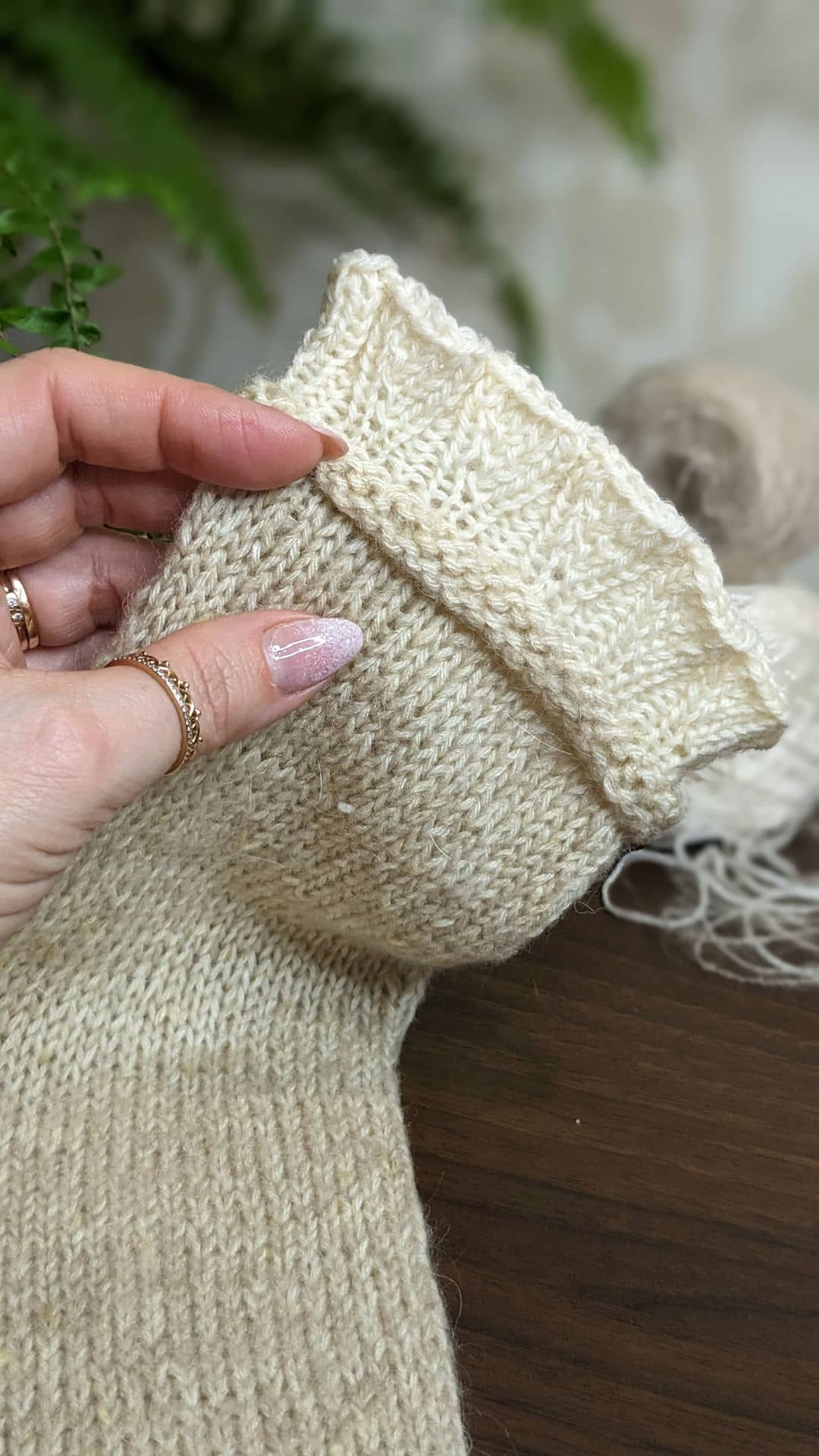
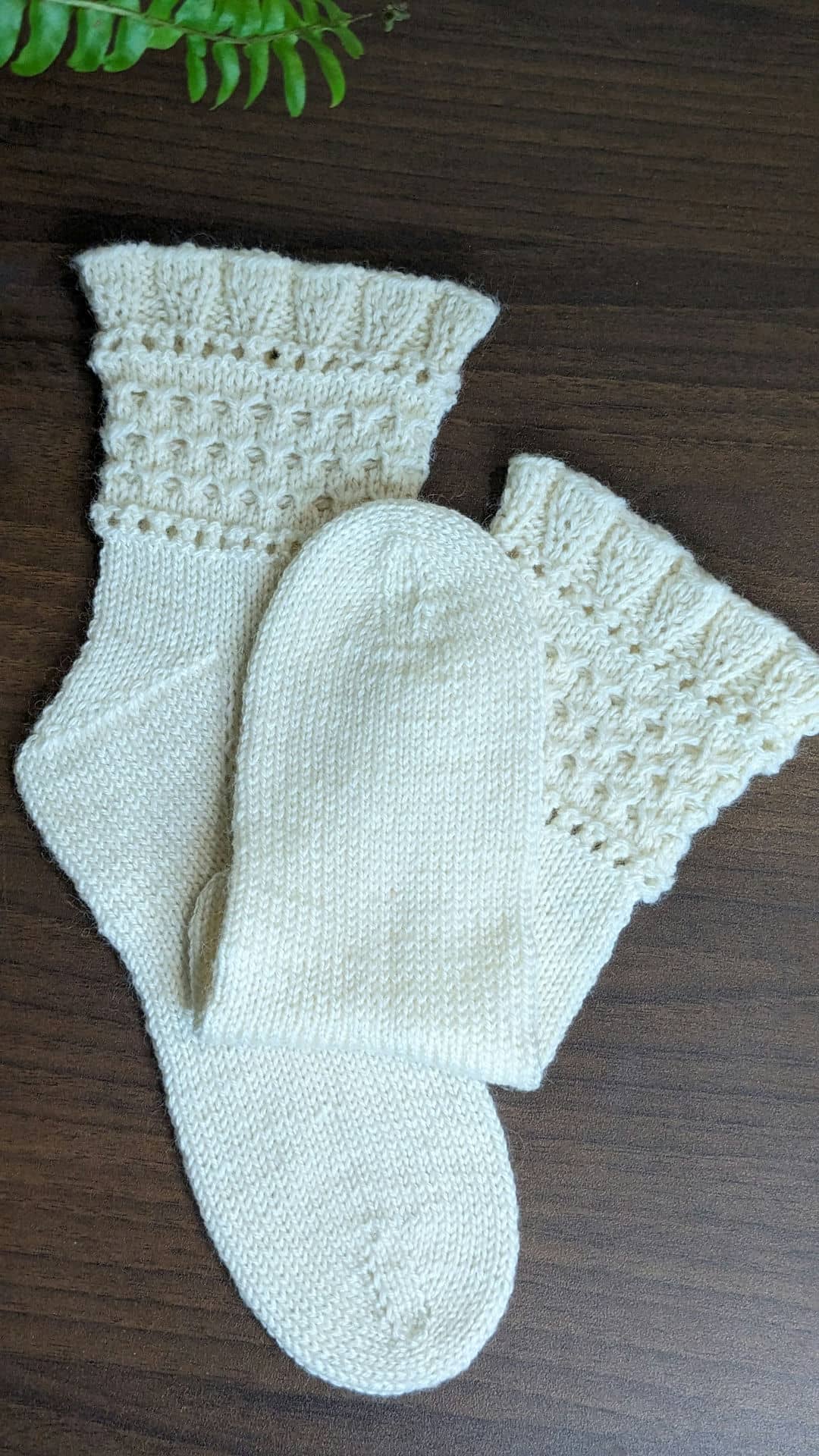
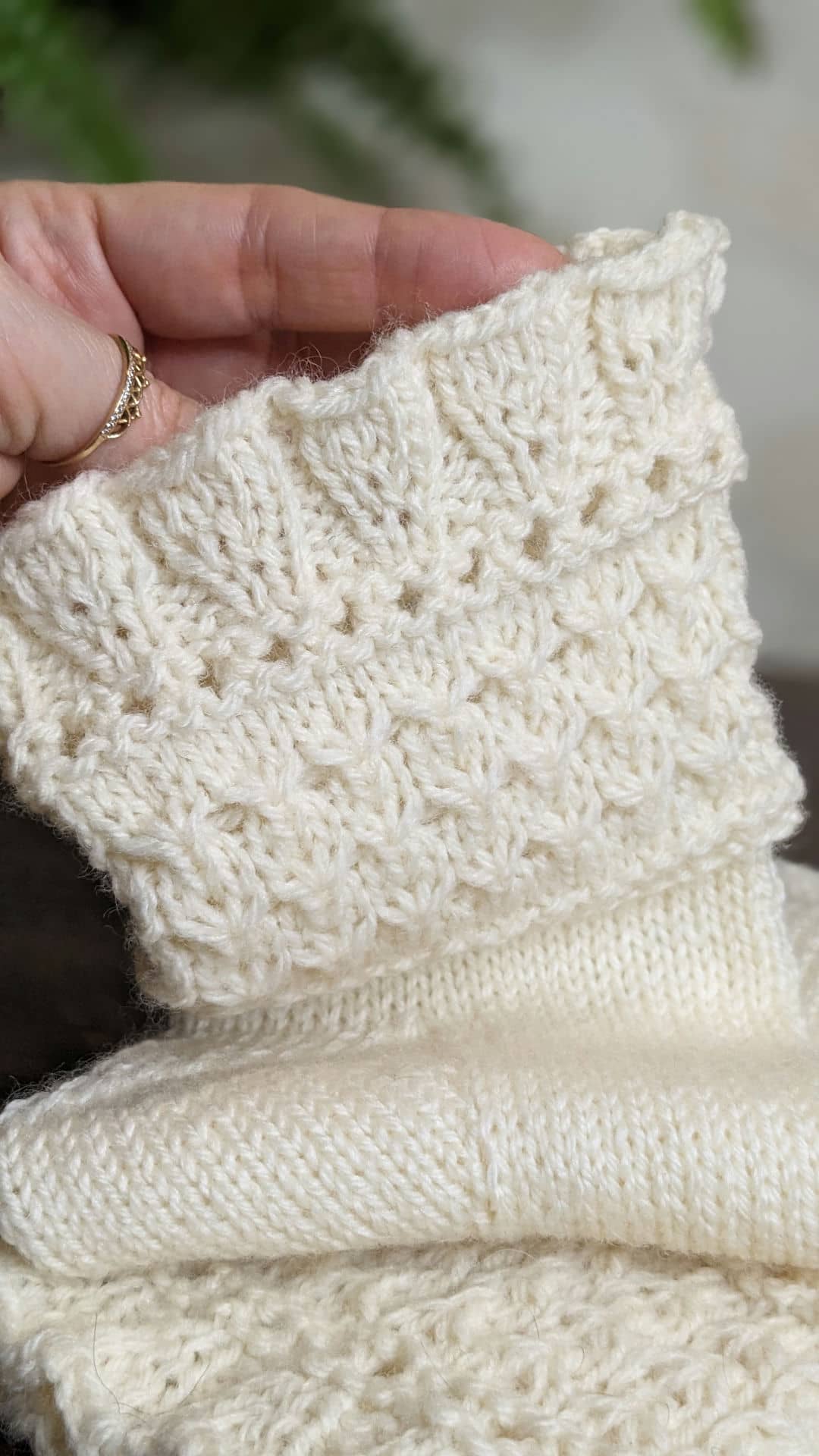
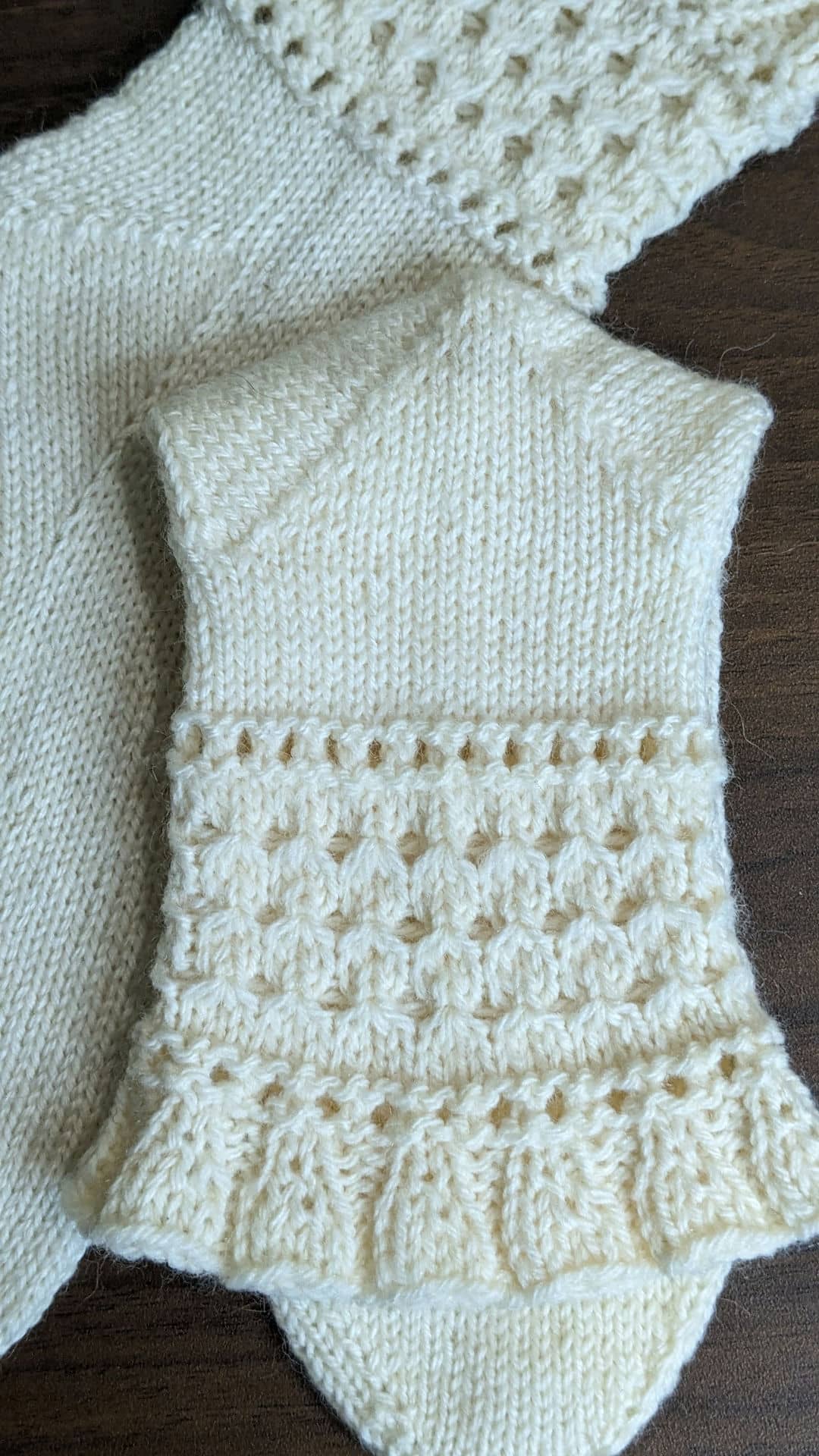
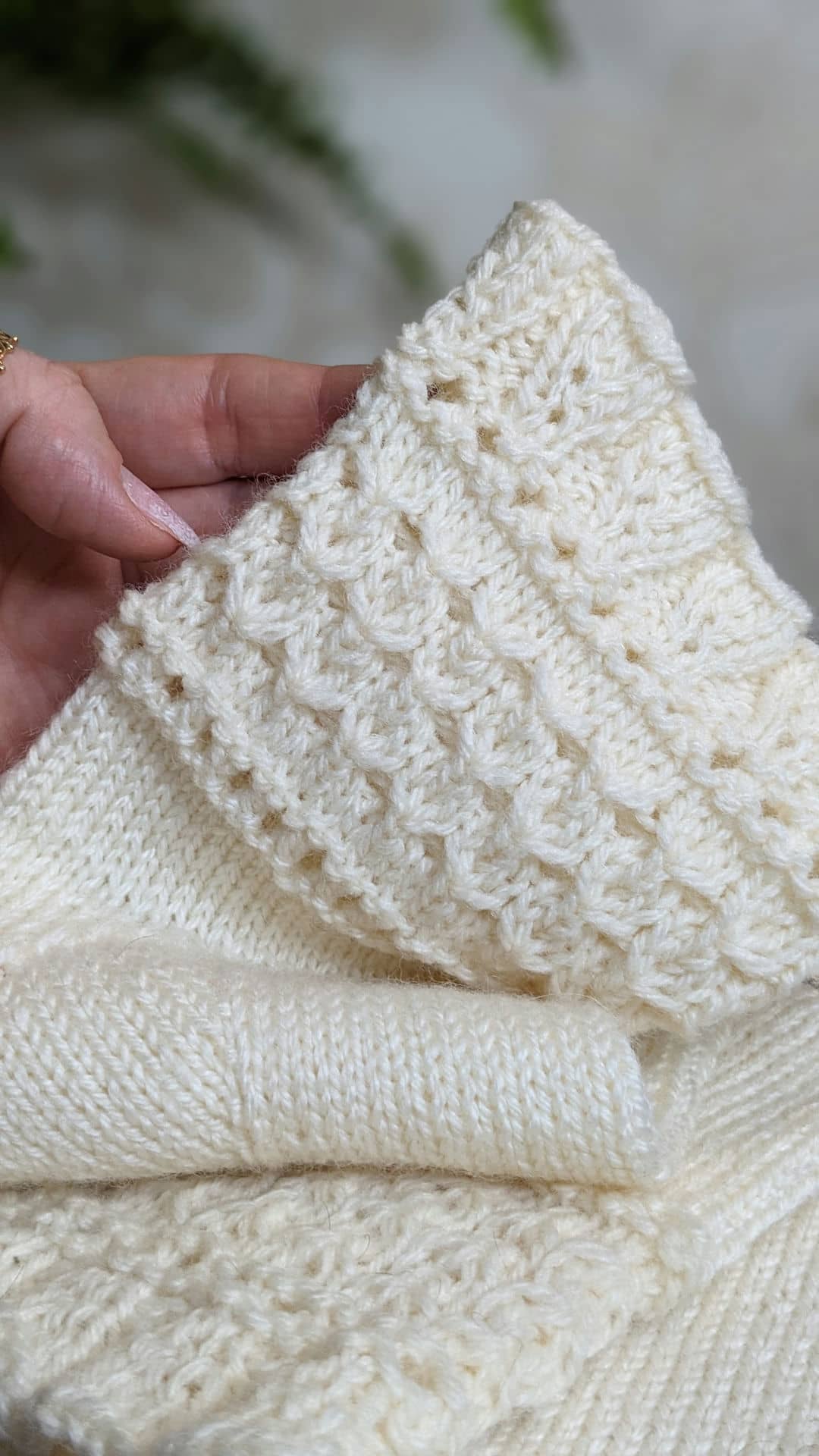
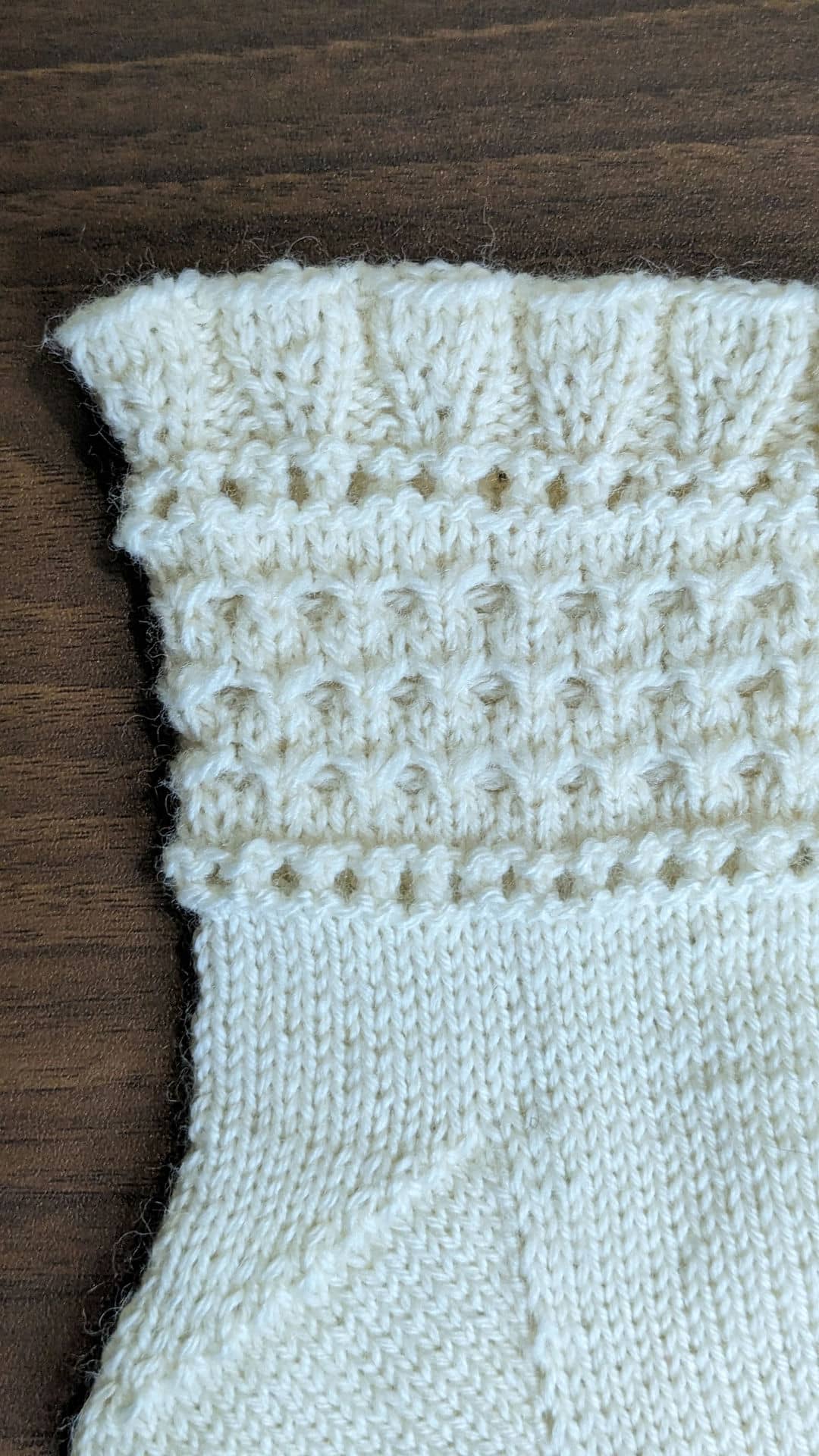
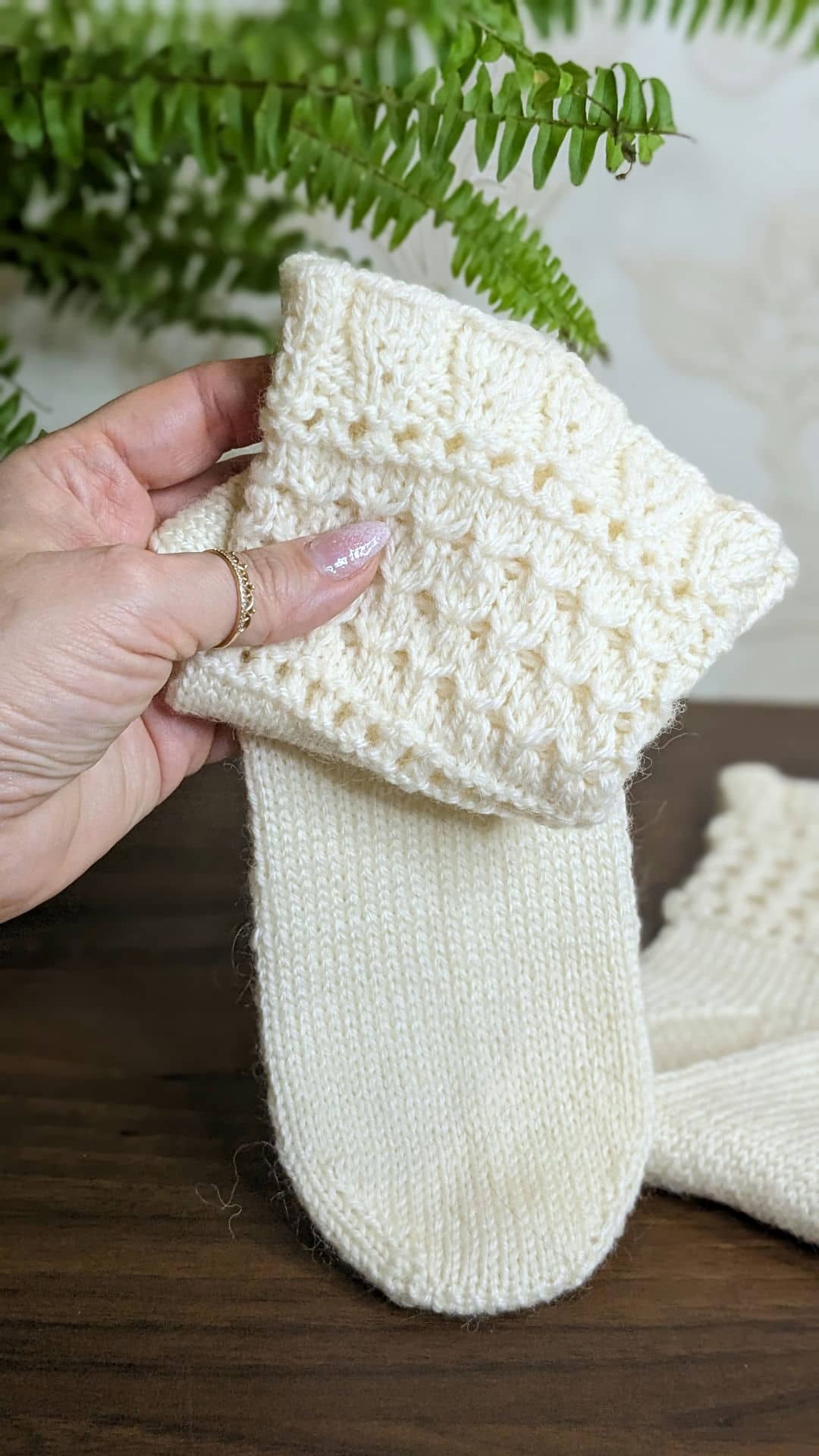
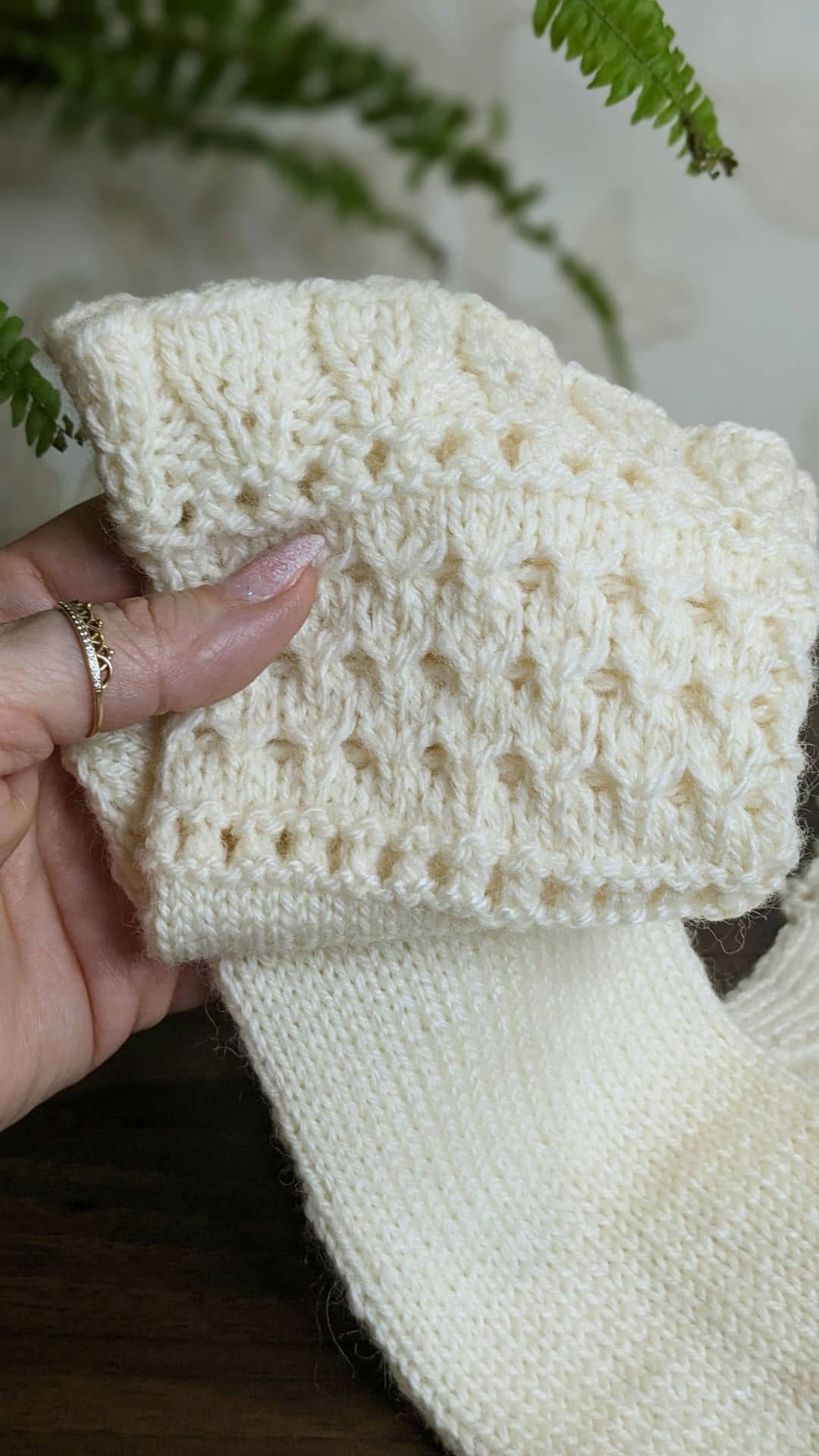
Then I decided to add a decorative element, a cuff and a ruffle (see the video, part 2). So we continue knitting as follows.
Knit the cuff:
Row 1: purl.
Row 2: *k2tog, yo*.
Row 3: purl.
Rows 4-6: knit.
Row 7: work a textured lace pattern, 3-stitch repeat. Work the three knit stitches as follows: k1, yo, k1.
Rows 8-10: knit.
Row 11: knit as row 7.
Rows 12-14: knit.
Row 15: knit as row 7.
Rows 16-18: knit.
Row 19: purl.
Row 20: *k2tog, yo*.
Row 21: purl.
Row 22: knit.
Knit the ruffles. The total number of stitches must be a multiple of 4.
1-3 rows: *k2, p2*.
Row 4: *k1, M1 from the bar, k1, p2*.
Row 5: *k3, p2*.
Row 6: *k2, M1 from the bar, k1, p2*.
Row 7: *k4, p2*.
Row 8: *k3, M1 from the bar, k1, p2*.
Row 9: *k5, p2*.
Bind off in the classic way.
I knitted the socks in size 37-38. The foot is 23 cm long, the leg with the cuff and ruffle is 18 cm. Yarn used for a pair of these socks: 70 g.
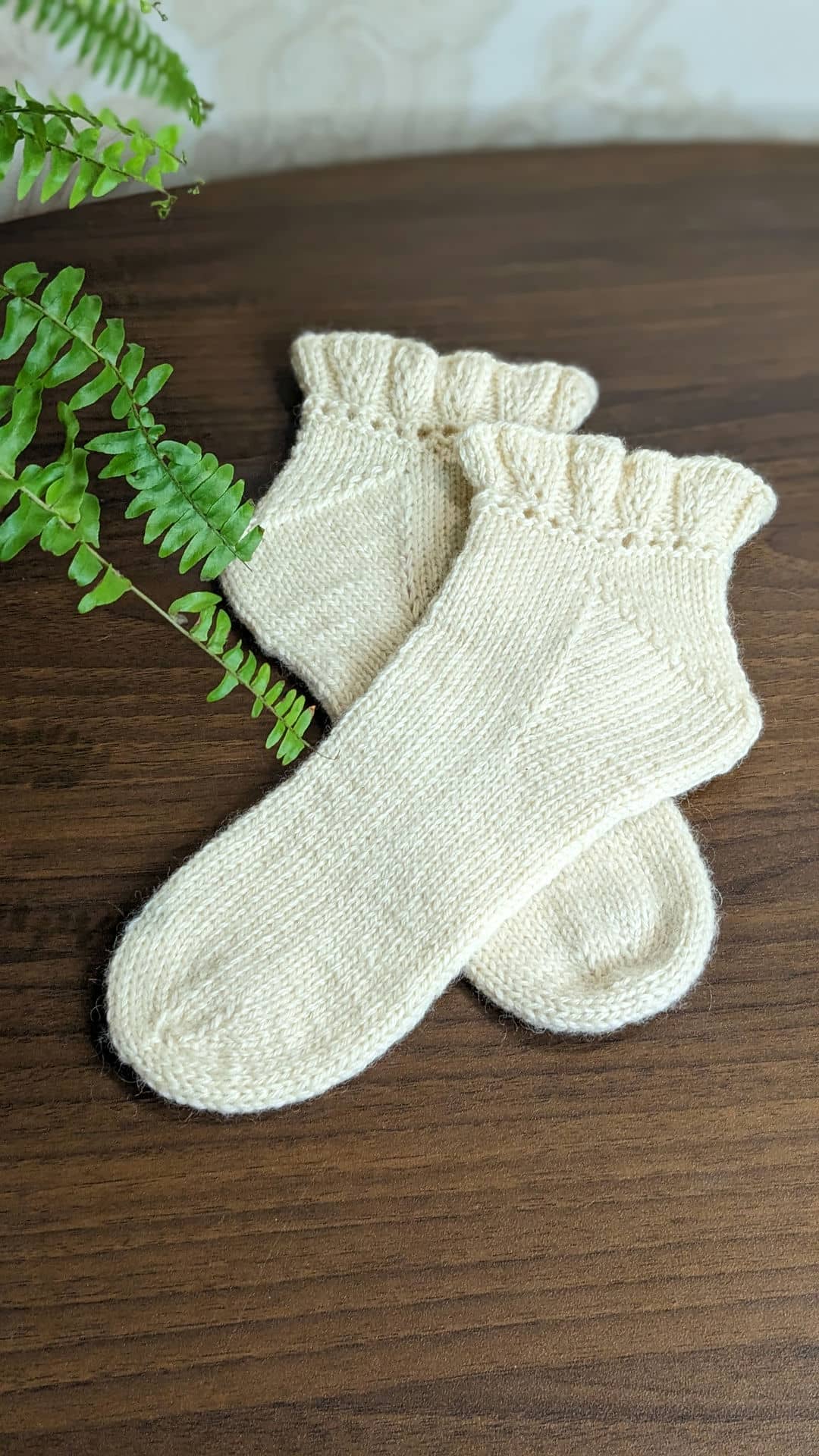
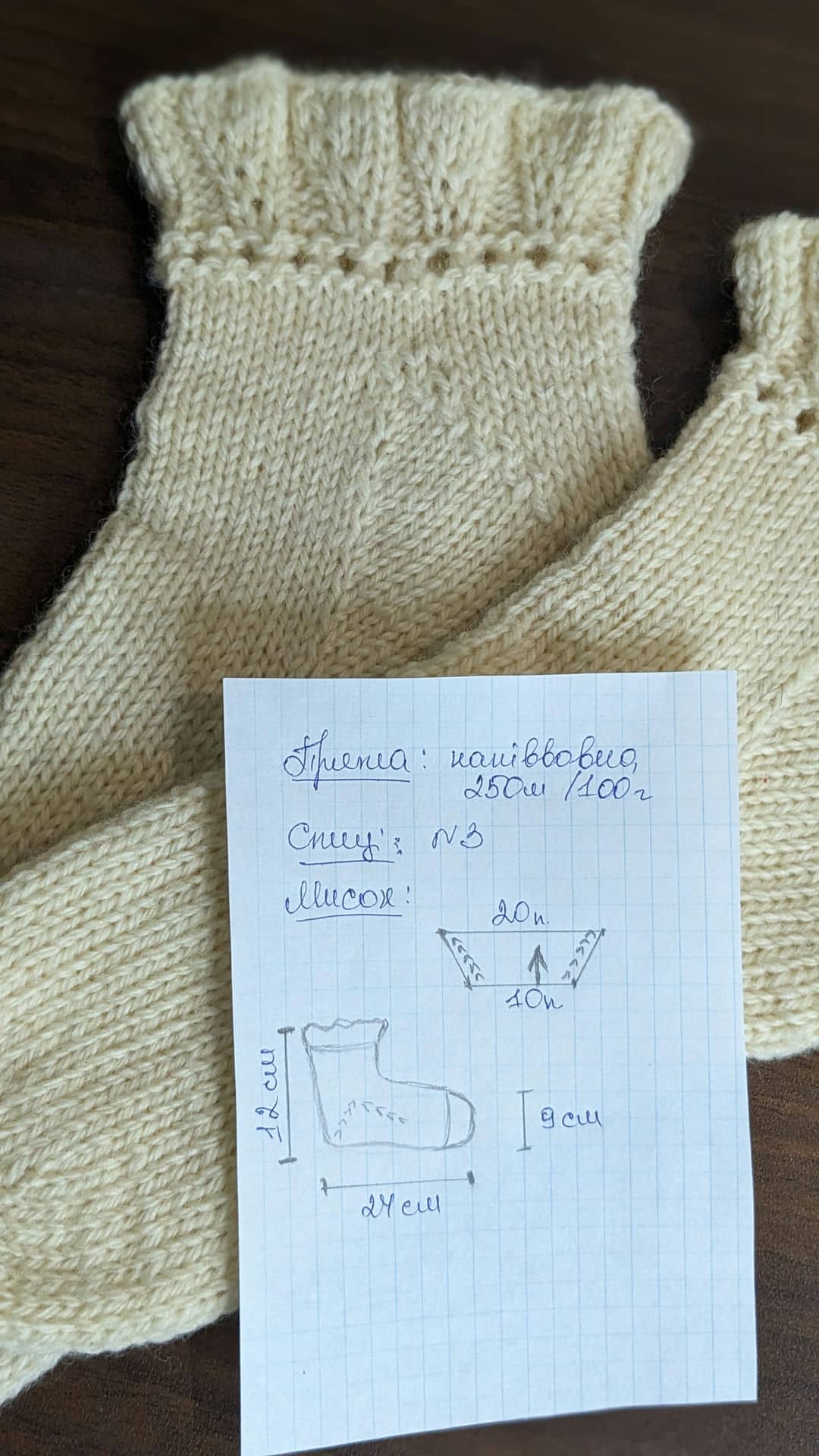
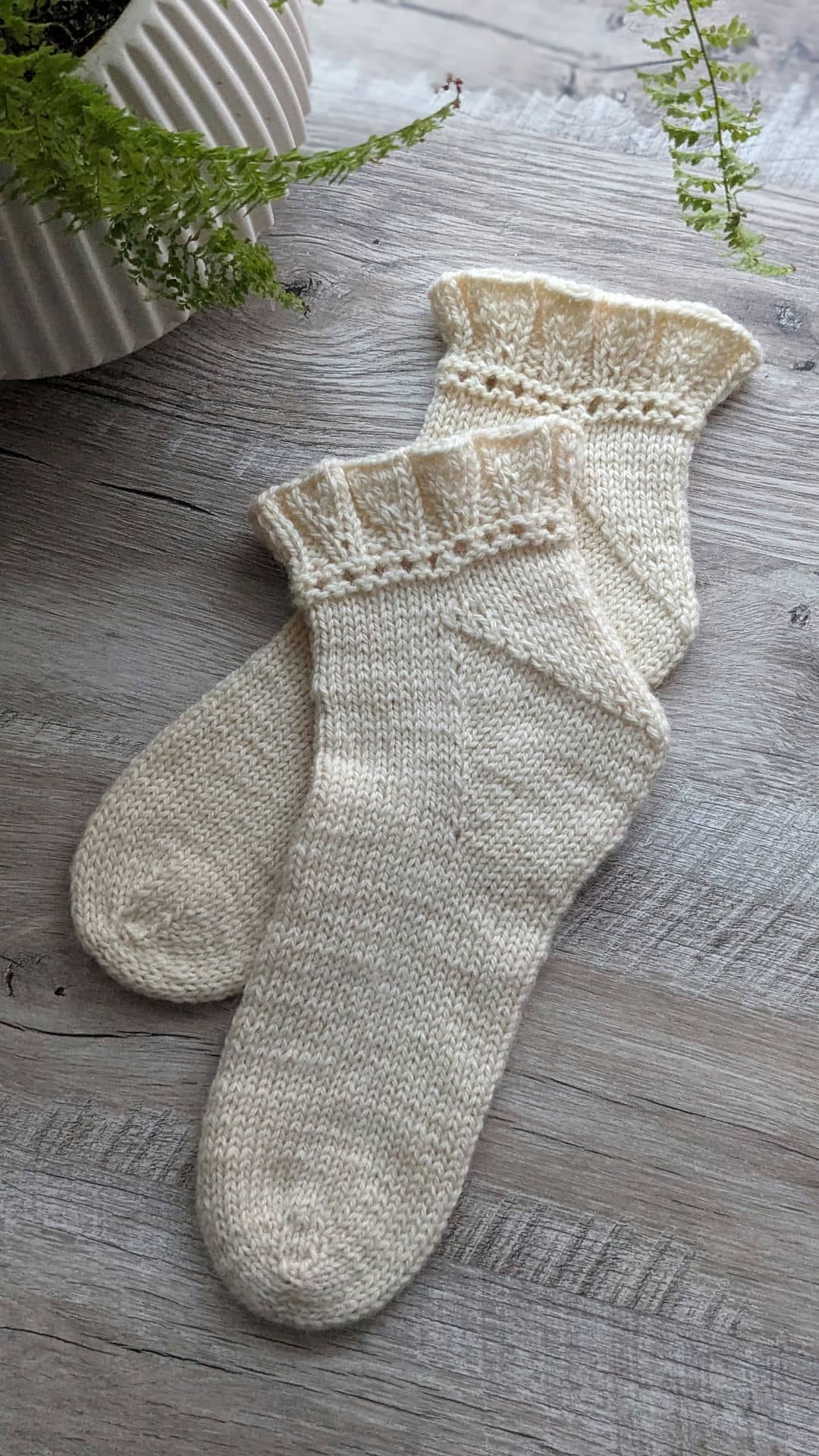
Socks with a ruffle (from thicker yarn)
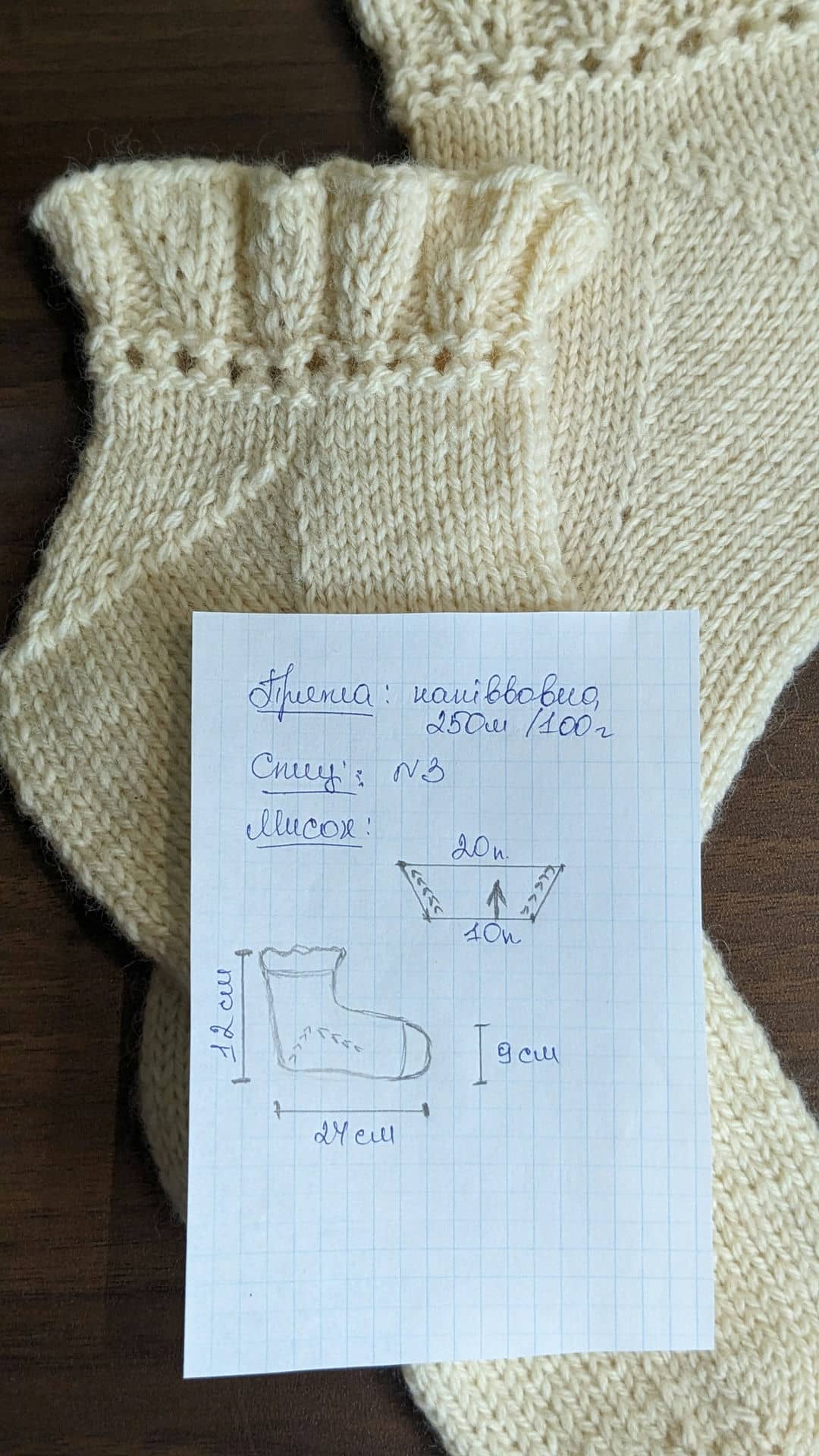
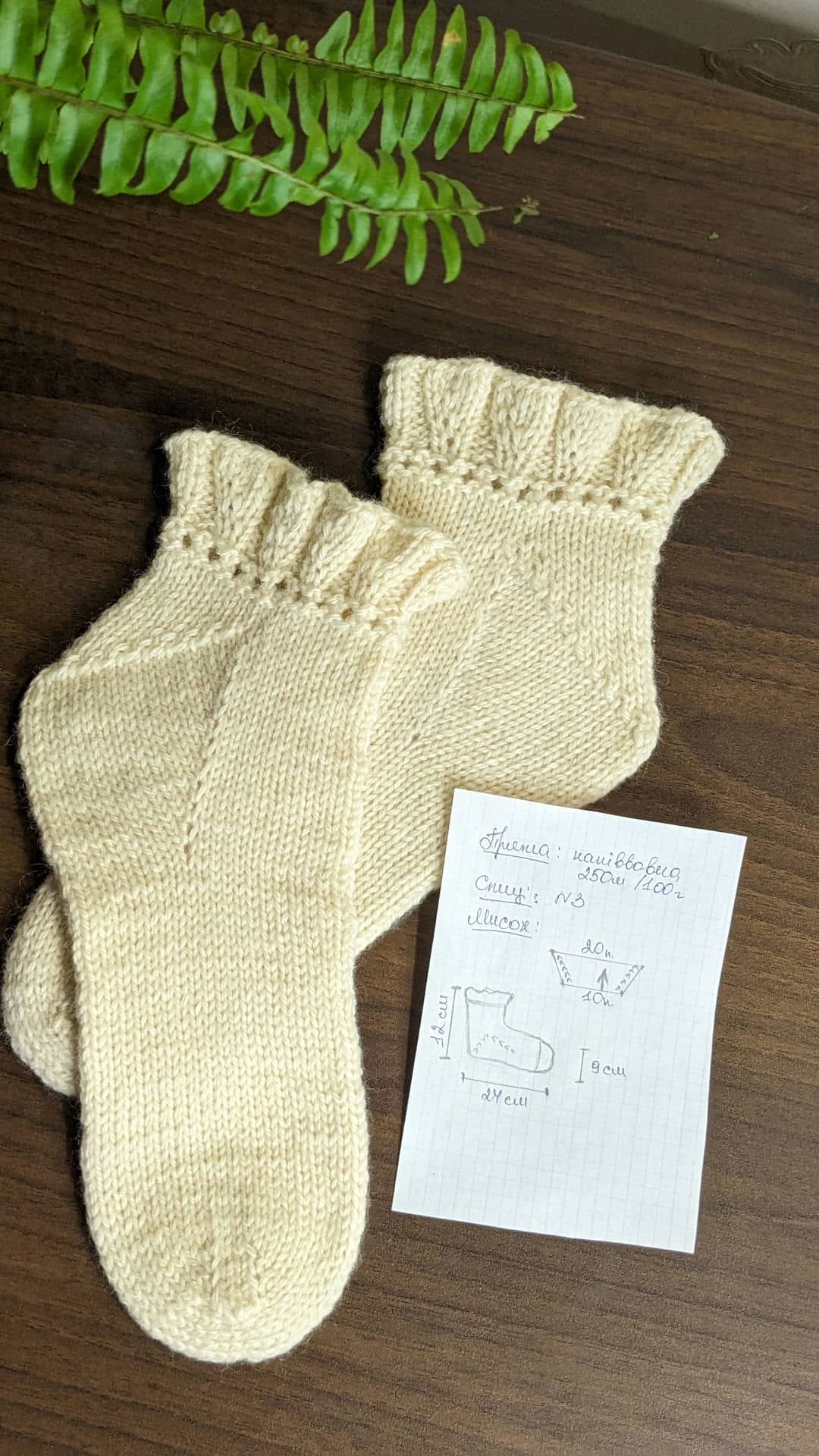
Yarn: semi-wool 250 m/100 g. Needles: 3 mm on a cable.
Turkish cast-on. Make a slip knot, place it on a needle, wrap the working yarn around both needles and form the stitches (in my case 1 slip-knot stitch + 10 wrap stitches). Pull out one needle and knit 10 stitches. Knit those same wrap stitches once more in the round. There will be 10 stitches on each needle.
Continue knitting in the round, adding one stitch at each side of each needle every other row. This is how the toe gradually takes shape and the stitch count grows to the width you need. I worked the increases 5 times. We have 20 stitches on each needle.
Next we shape the foot. We have two needles with 20 stitches on each, which are the two halves of our sock: top and bottom. Knit the foot in stockinette stitch to the length you need. You can add patterns if you like.
I am knitting size 37-38. So after 16 cm from the start I begin increasing for the instep gusset. On the bottom half of the sock, next to the edge stitches, we add new stitches 10 times, every 2nd row (see the video, part 2).
Knit in the round. On the bottom needle: 10+20+10 = 40 stitches. The gusset is 8 cm long.
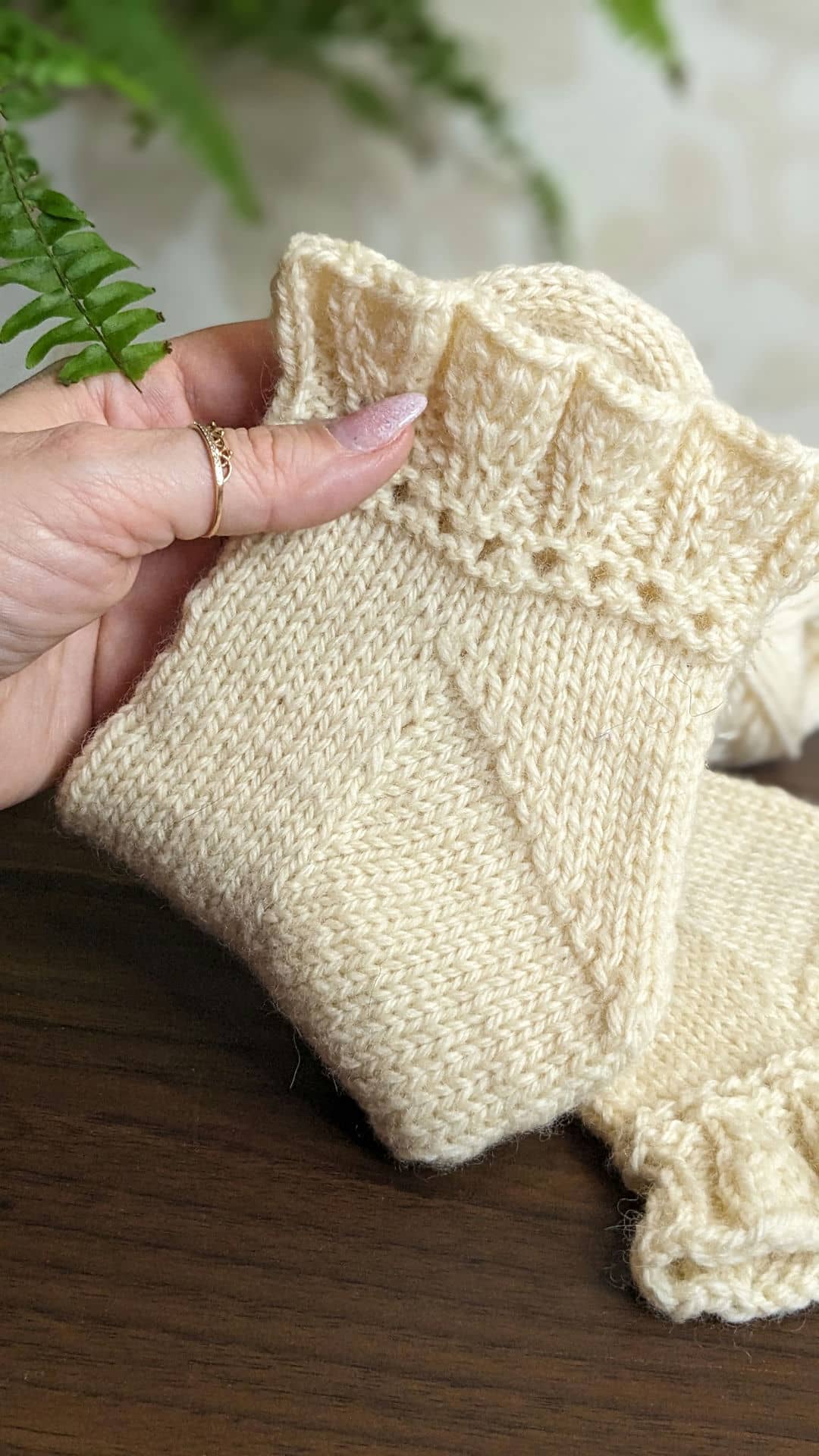
Next we start shaping the triangular heel and decreasing stitches (see the video, part 2). On the bottom half of the sock, mark the 2 center stitches, begin knitting in short rows and decrease stitches, working 10 decreases on each side. There should again be 20 stitches left on the bottom needle.
Next we go back to knitting in the round. Knit the leg to the length you need, or until your yarn runs out. I knitted the leg to 8 cm.
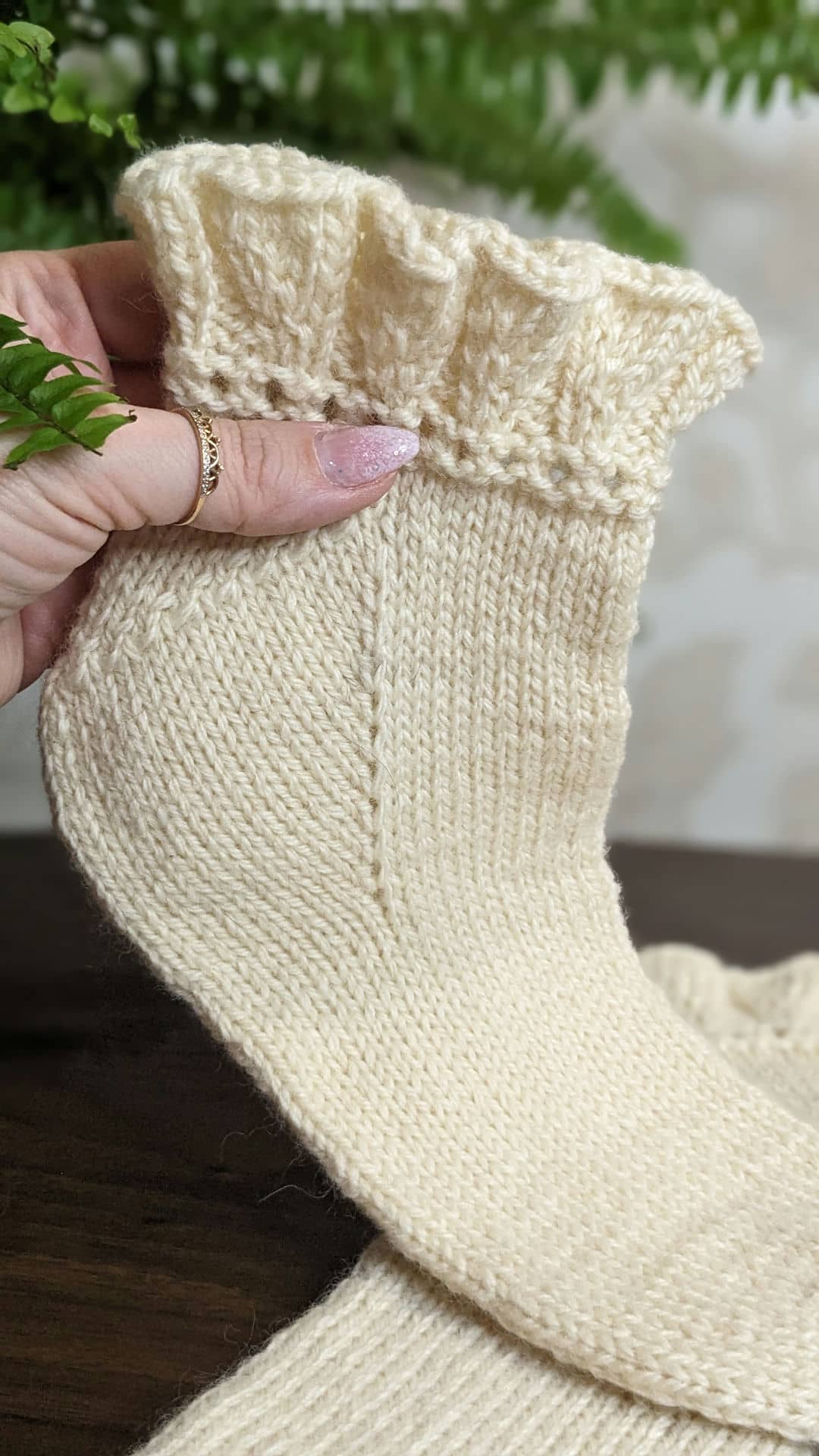
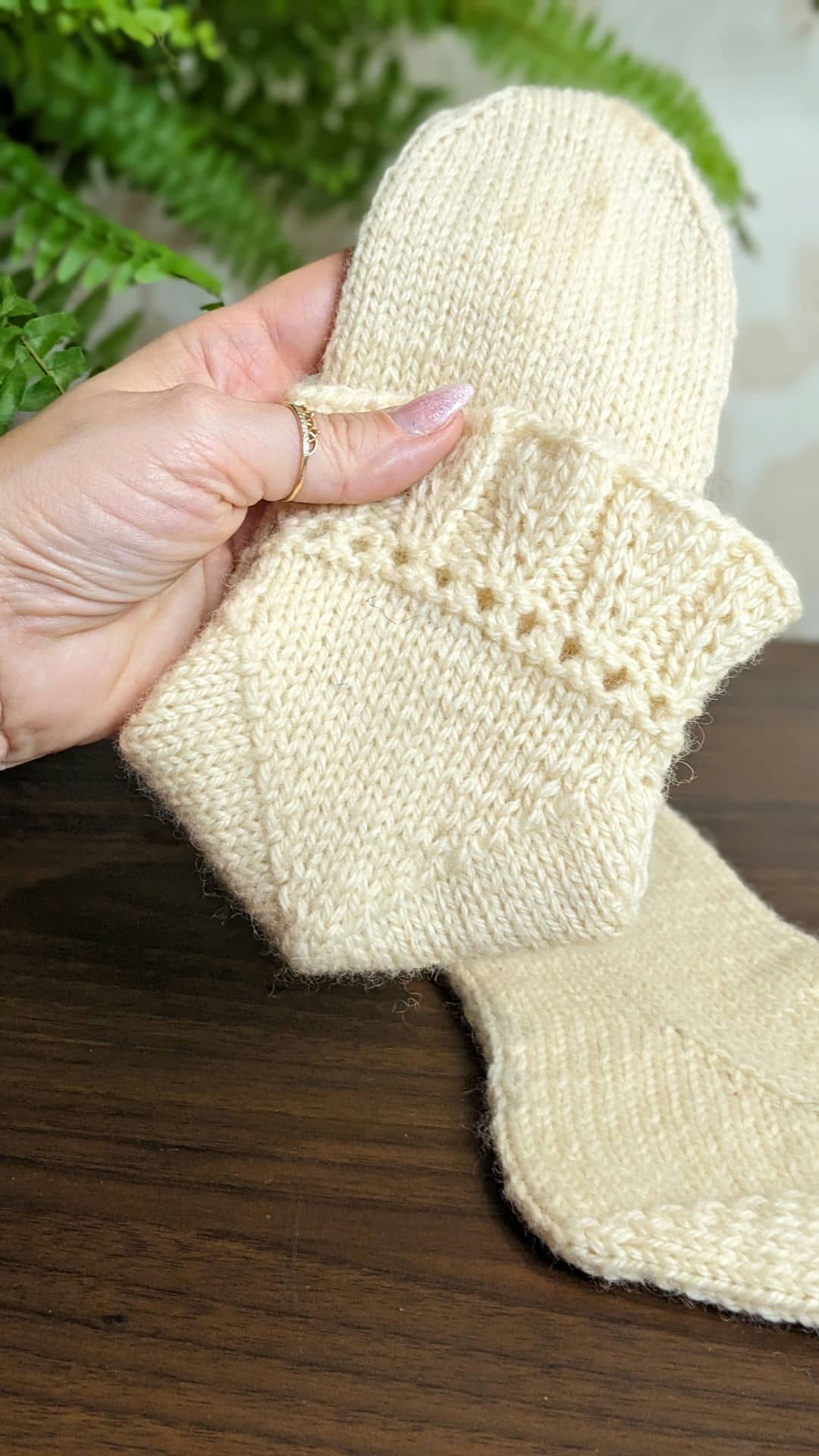
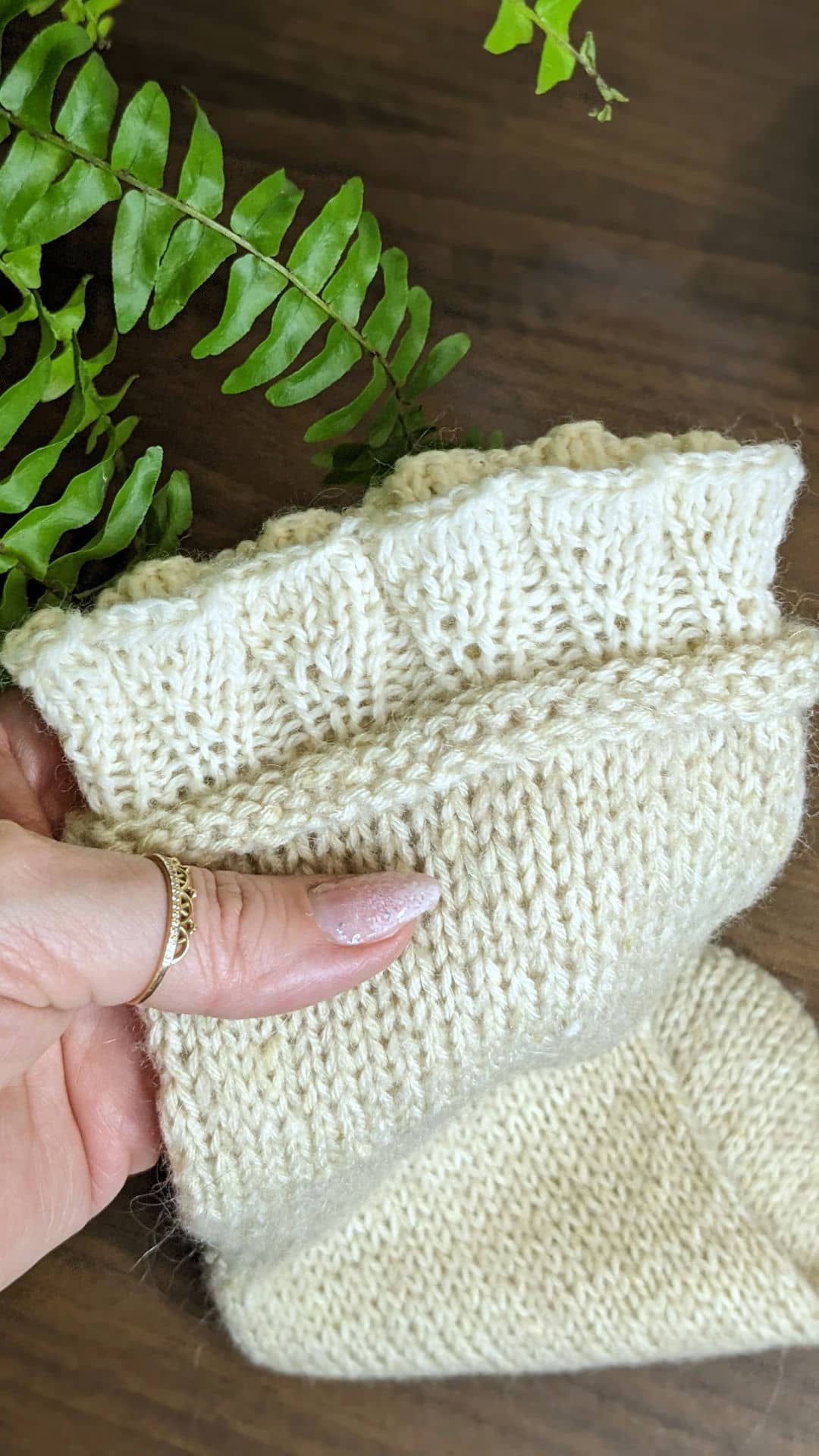
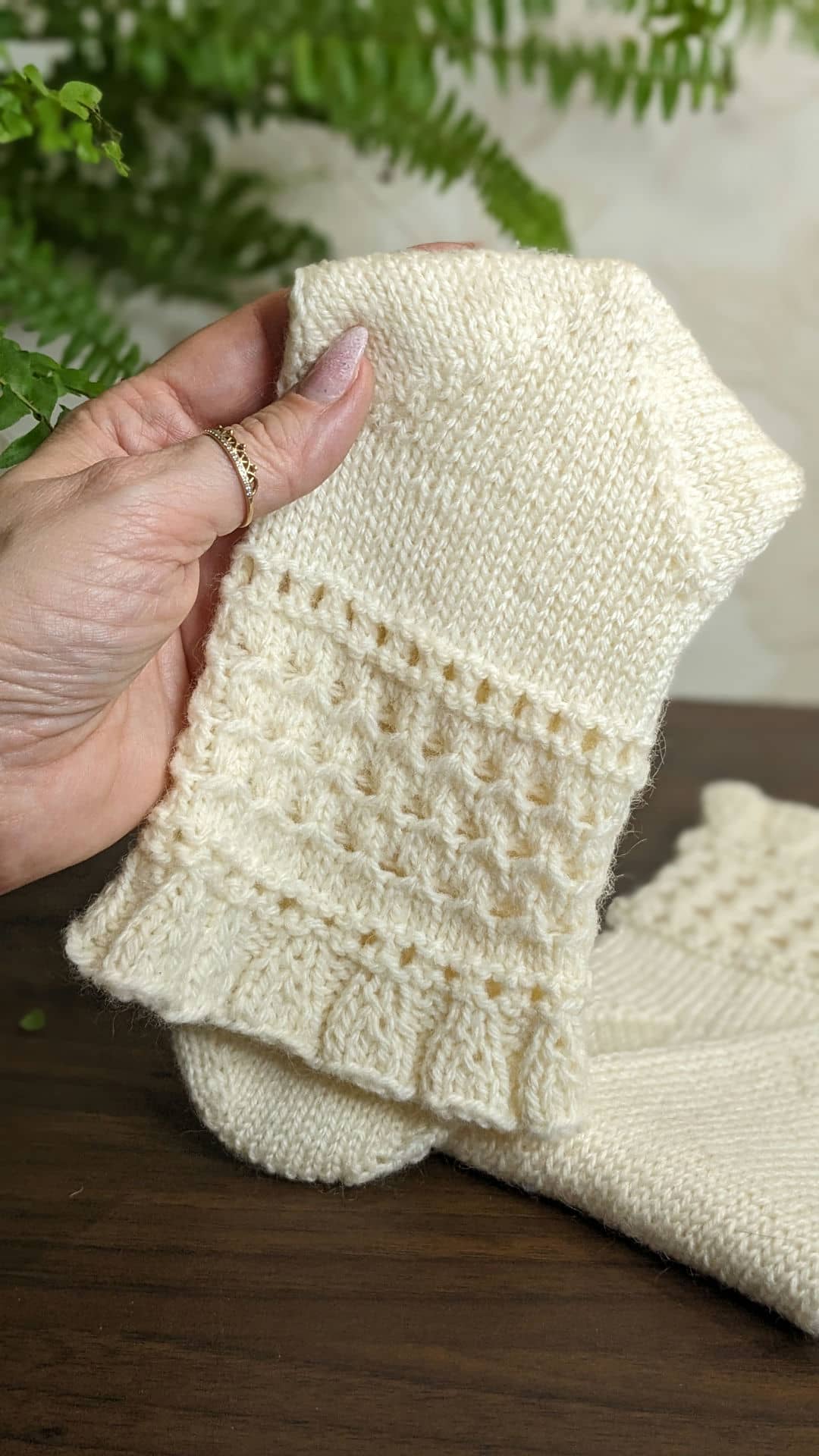
Then I decided to add a decorative element, an openwork band and a ruffle (see the video, part 2). So we continue knitting as follows.
Knit the openwork band:
Row 1: purl.
Row 2: *k2tog, yo*.
Row 3: purl.
Row 4: knit.
Knit the ruffle. The total number of stitches must be a multiple of 4.
1-3 rows: *k2, p2*.
Row 4: *k1, M1 from the bar, k1, p2*.
Row 5: *k3, p2*.
Row 6: *k2, M1 from the bar, k1, p2*.
Row 7: *k4, p2*.
Row 8: *k3, M1 from the bar, k1, p2*.
Row 9: *k5, p2*.
Bind off in the classic way.
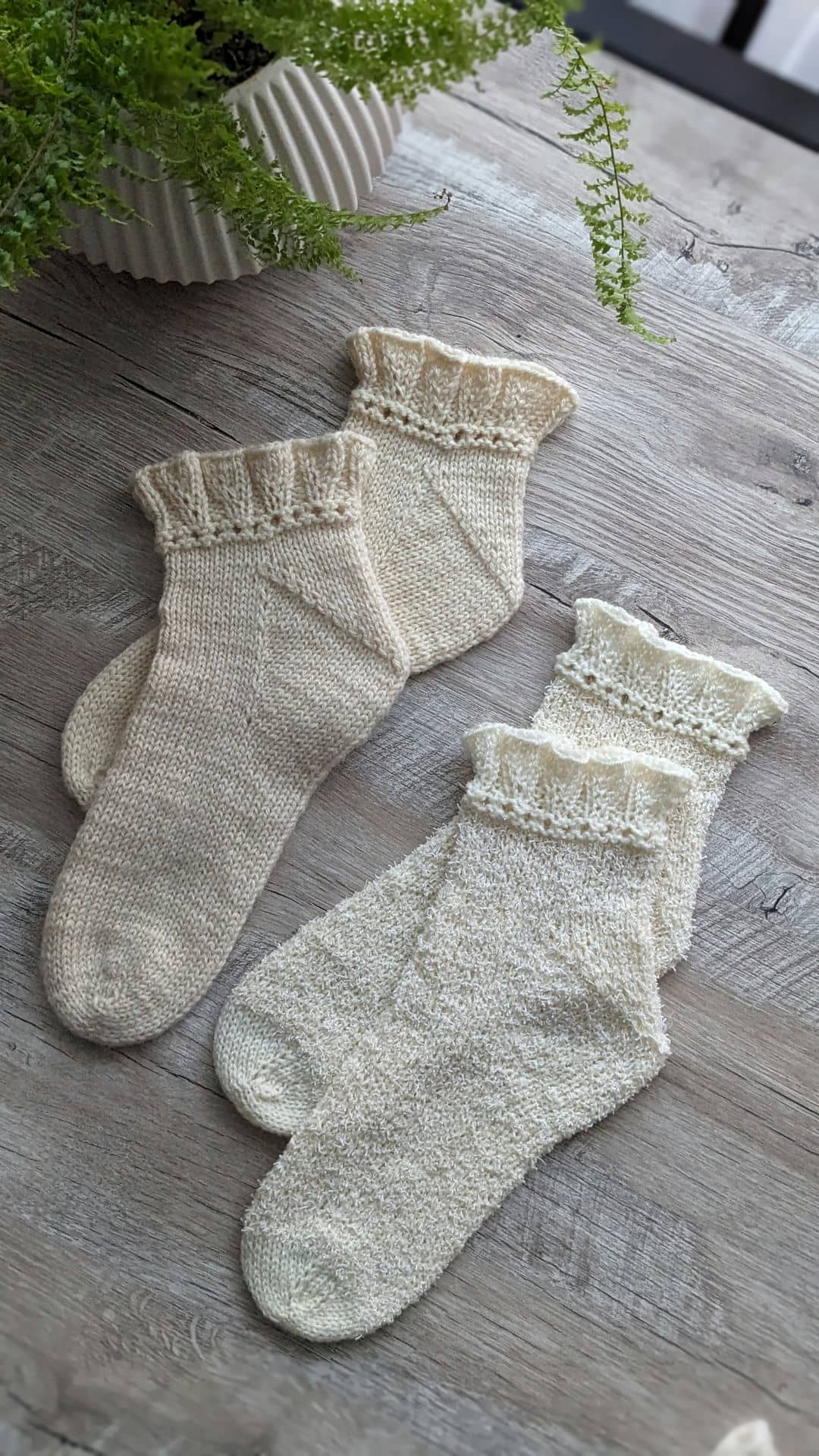
I knitted the socks in size 37-38. The foot is 24 cm long, the leg with the ruffle is 12 cm. Yarn used for a pair of these socks: 70 g.
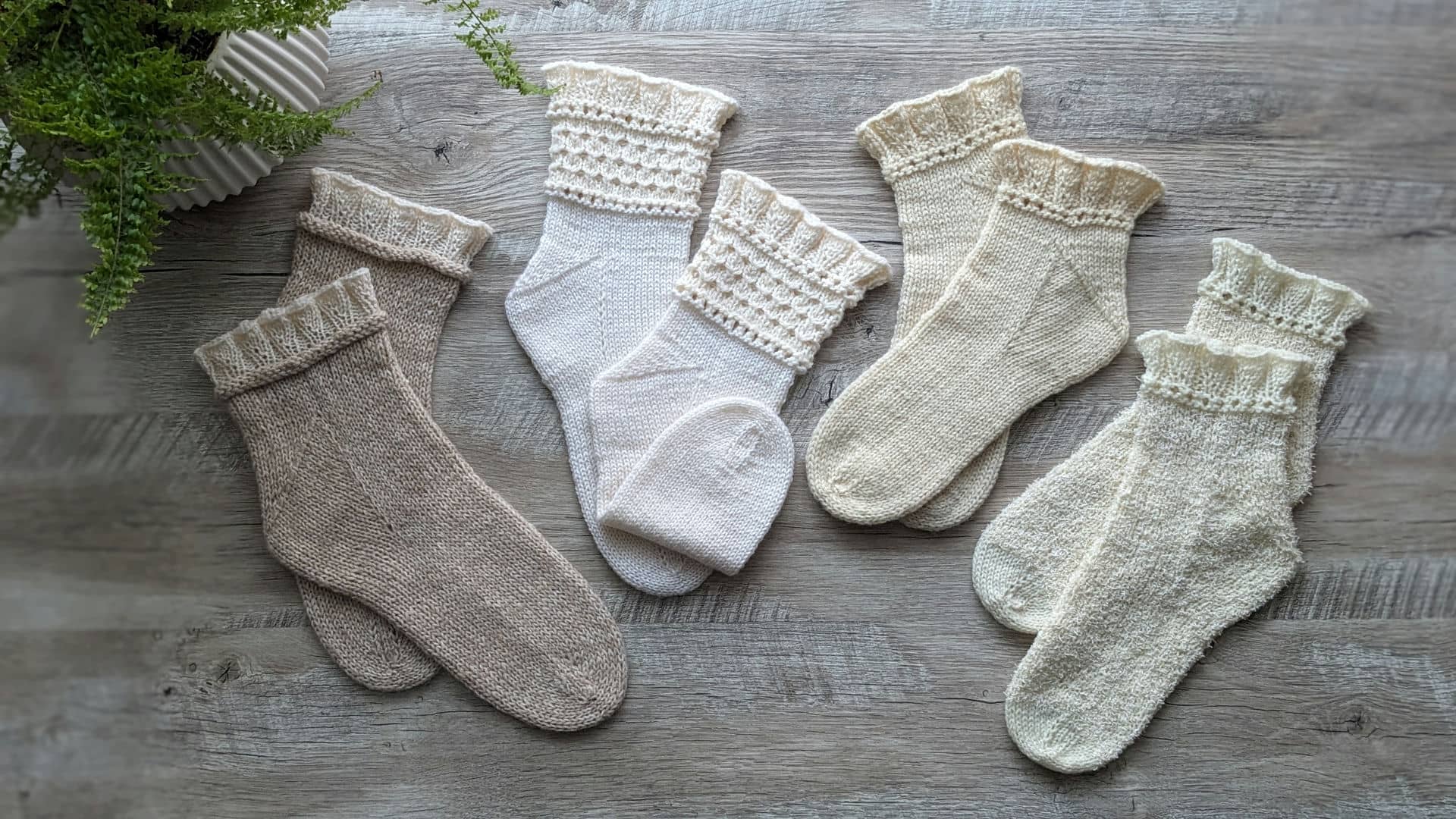
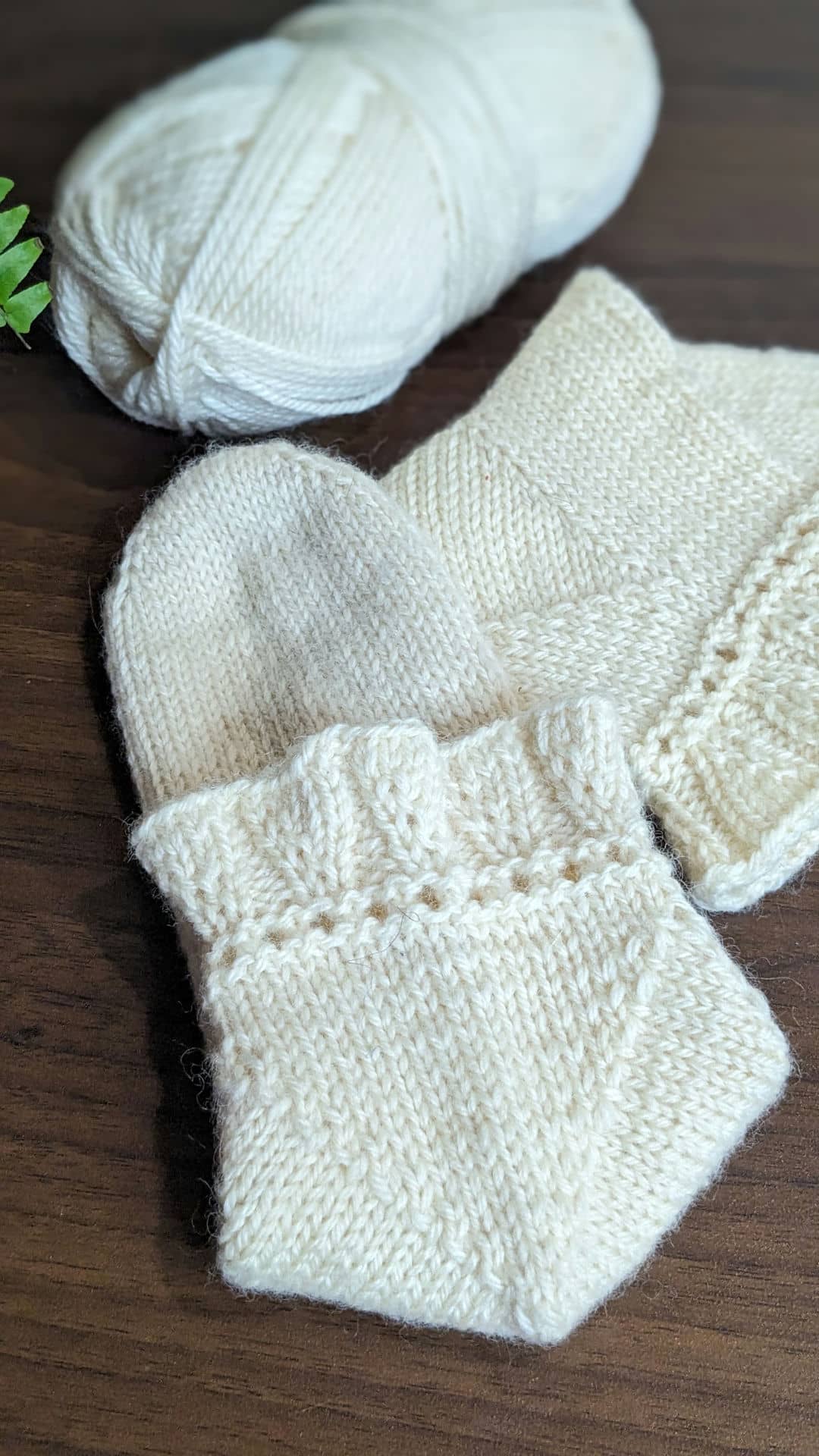
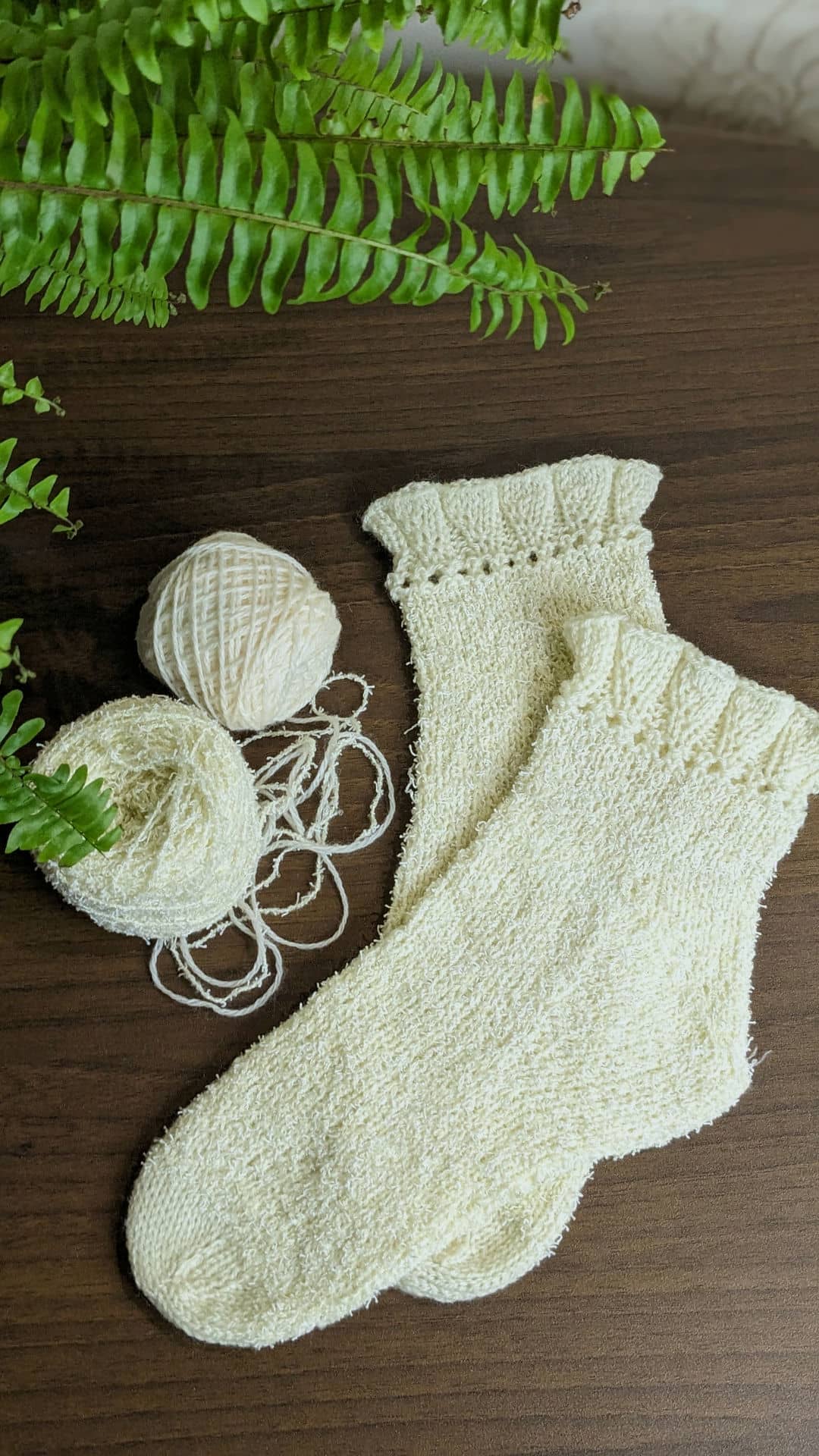
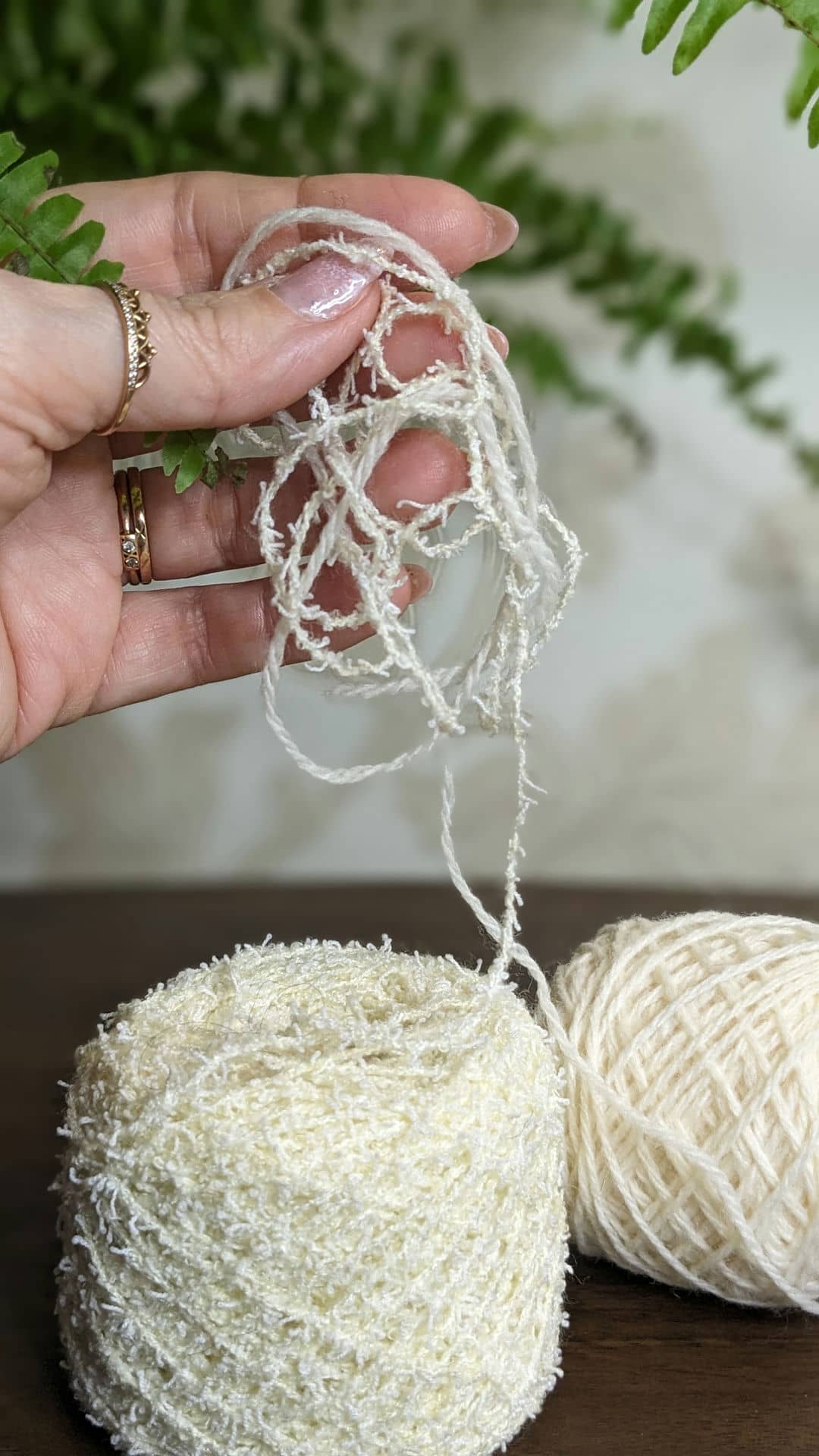
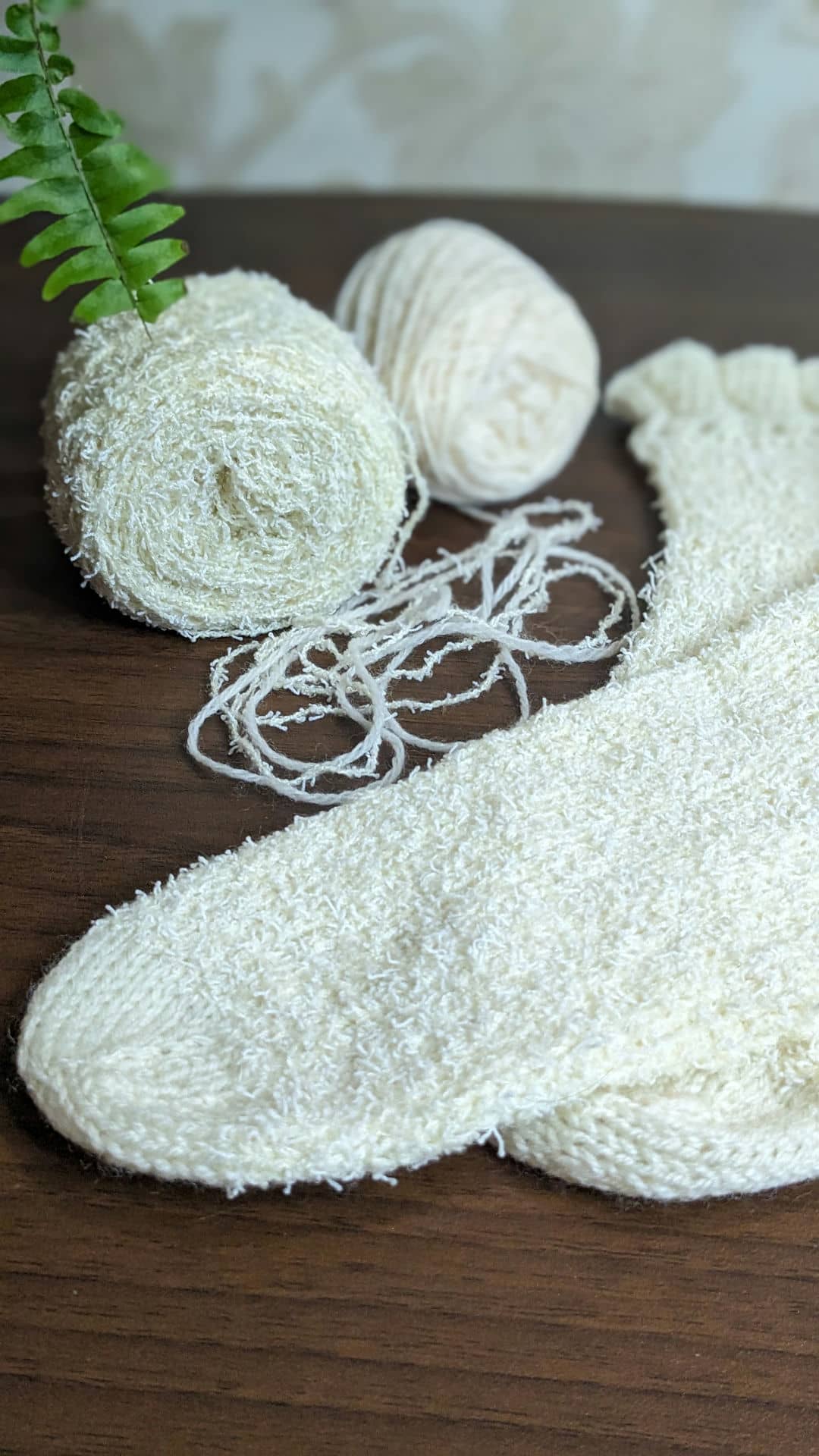
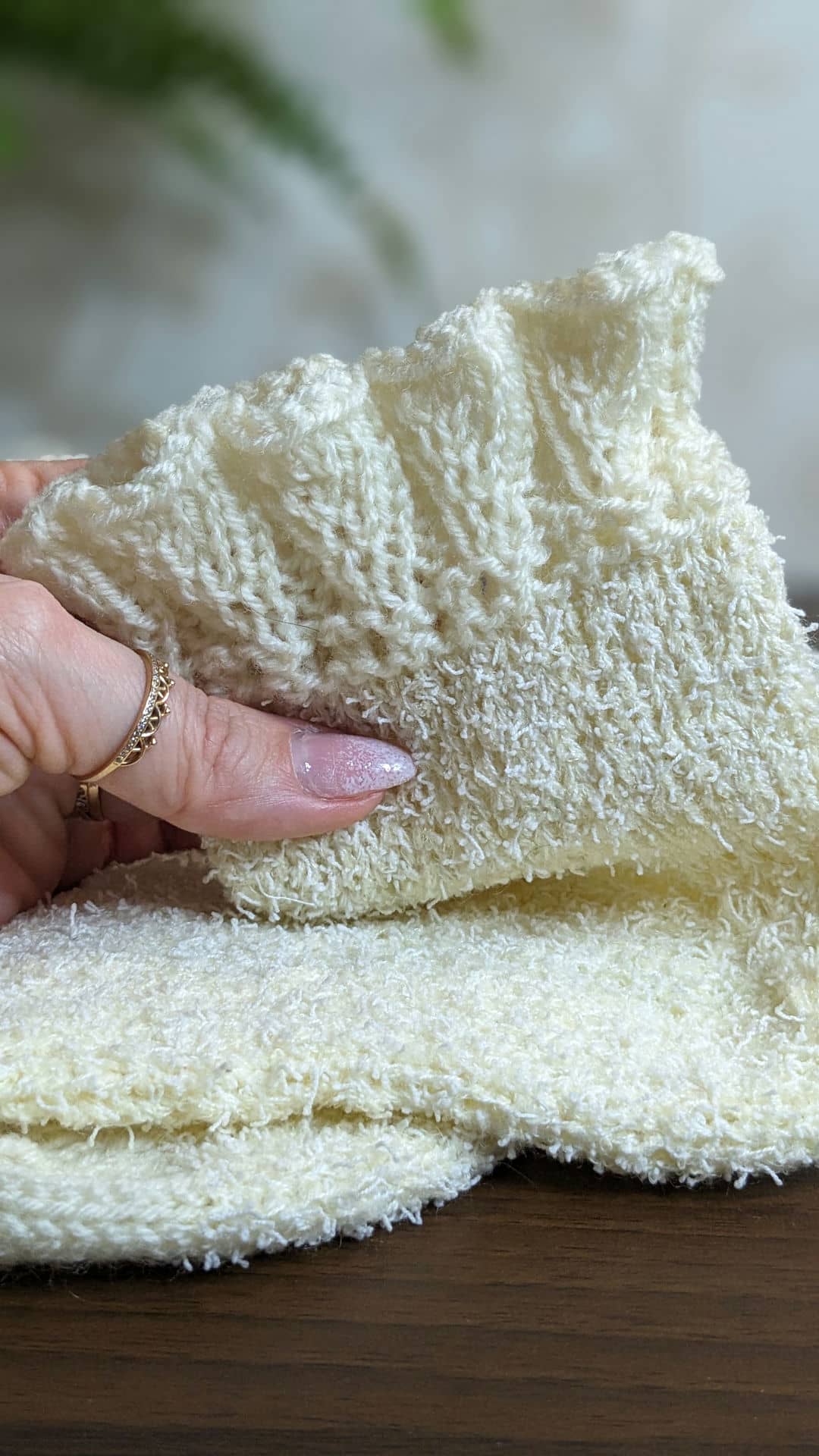
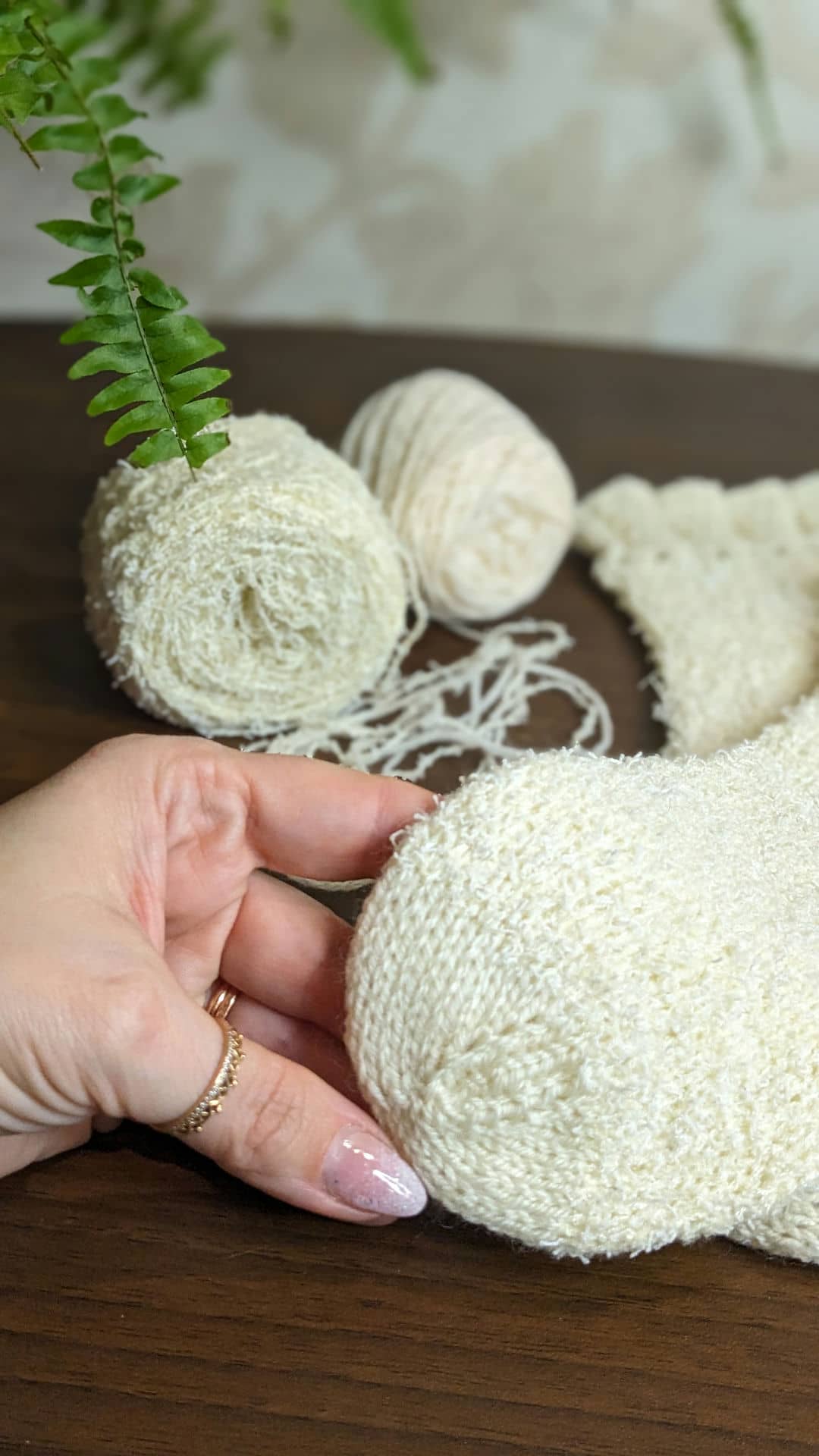
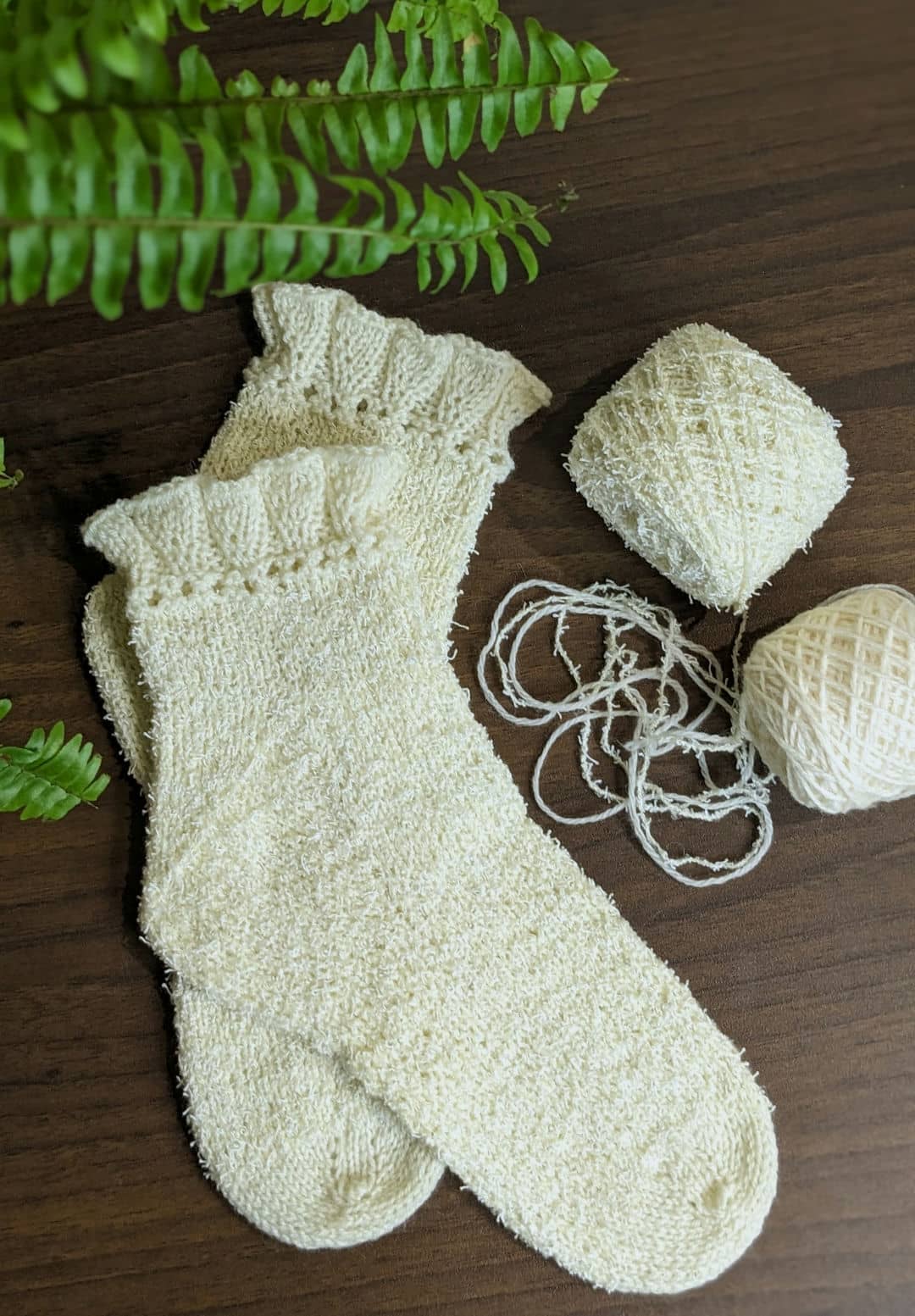
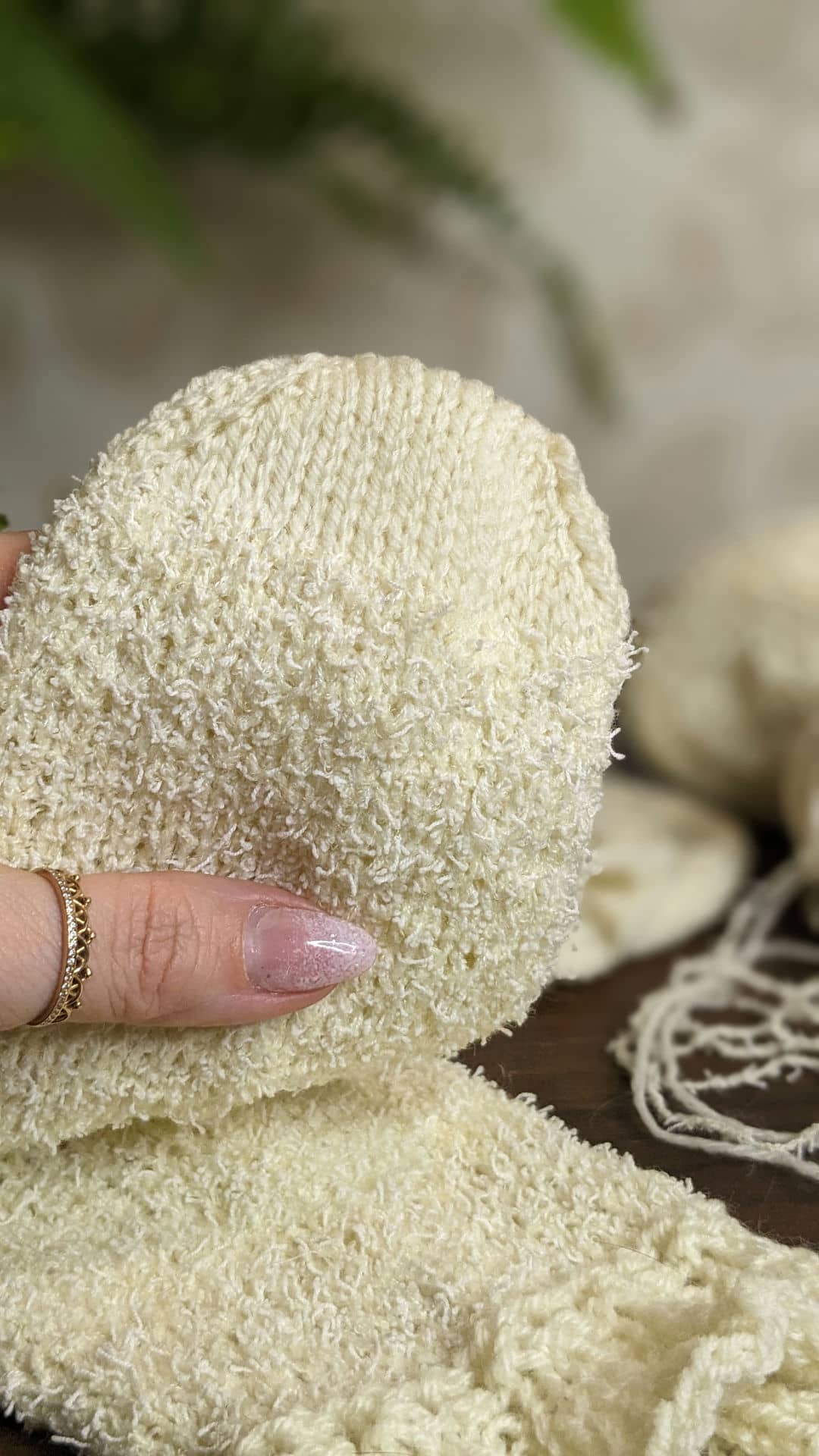
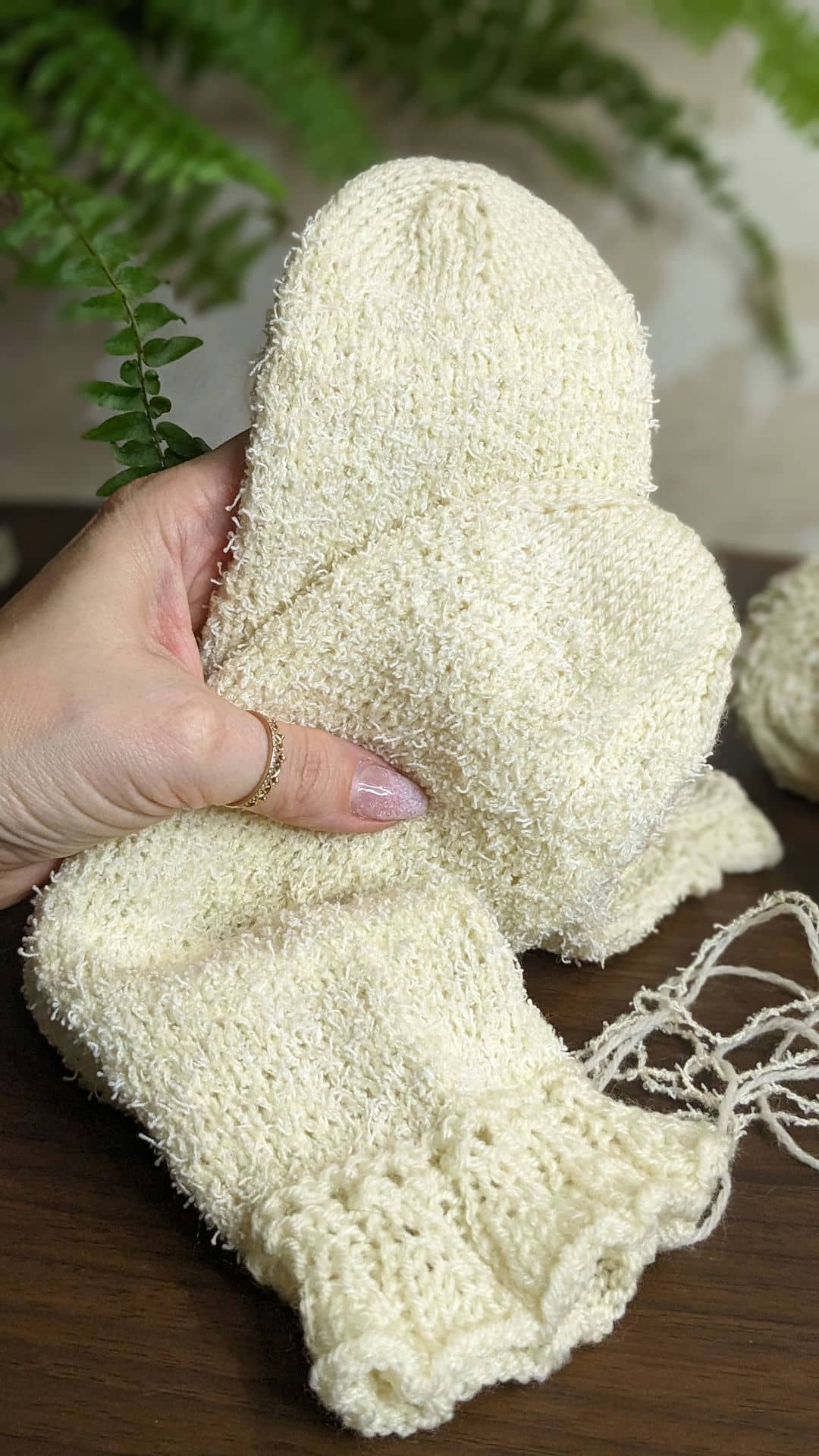
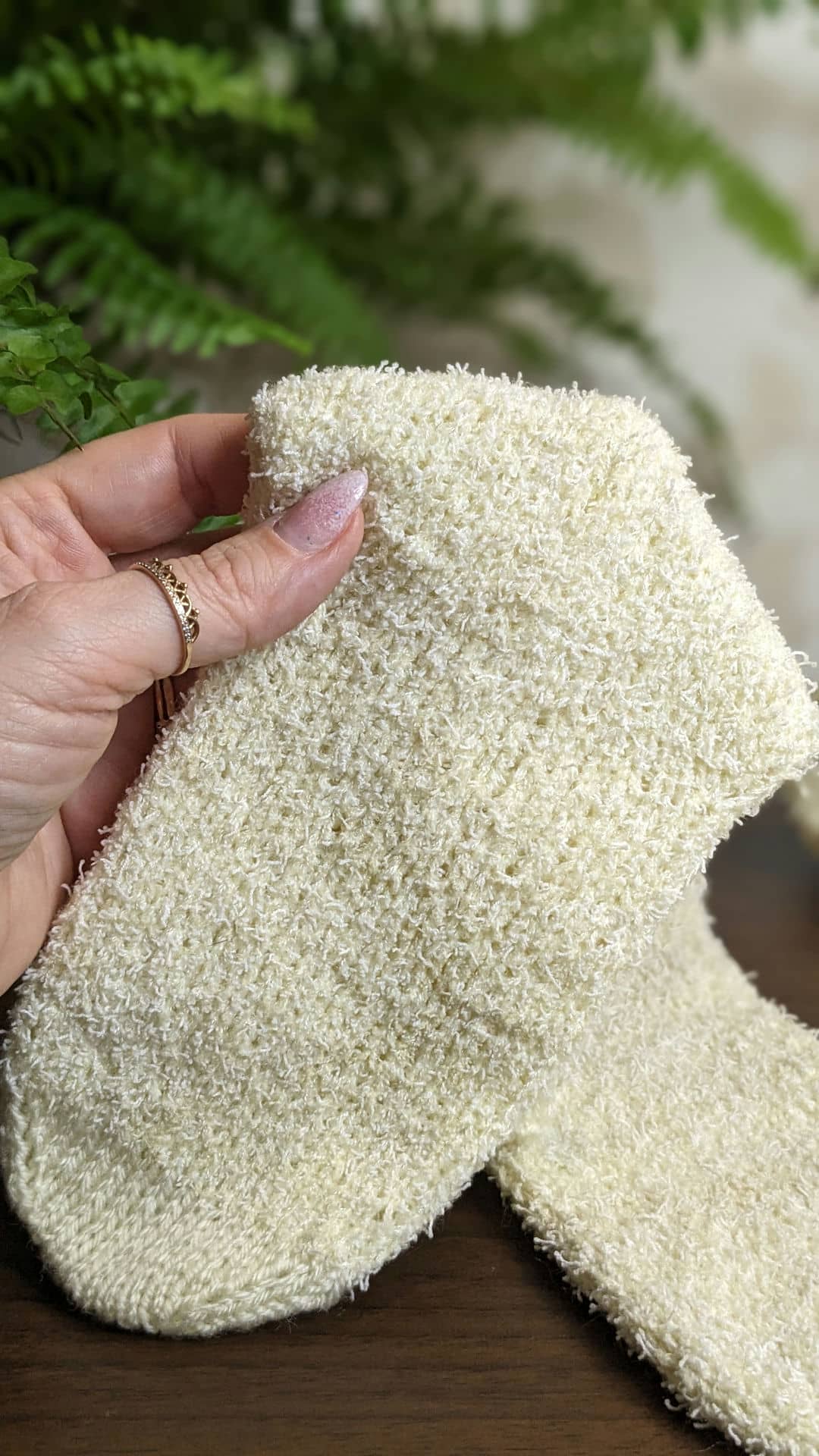
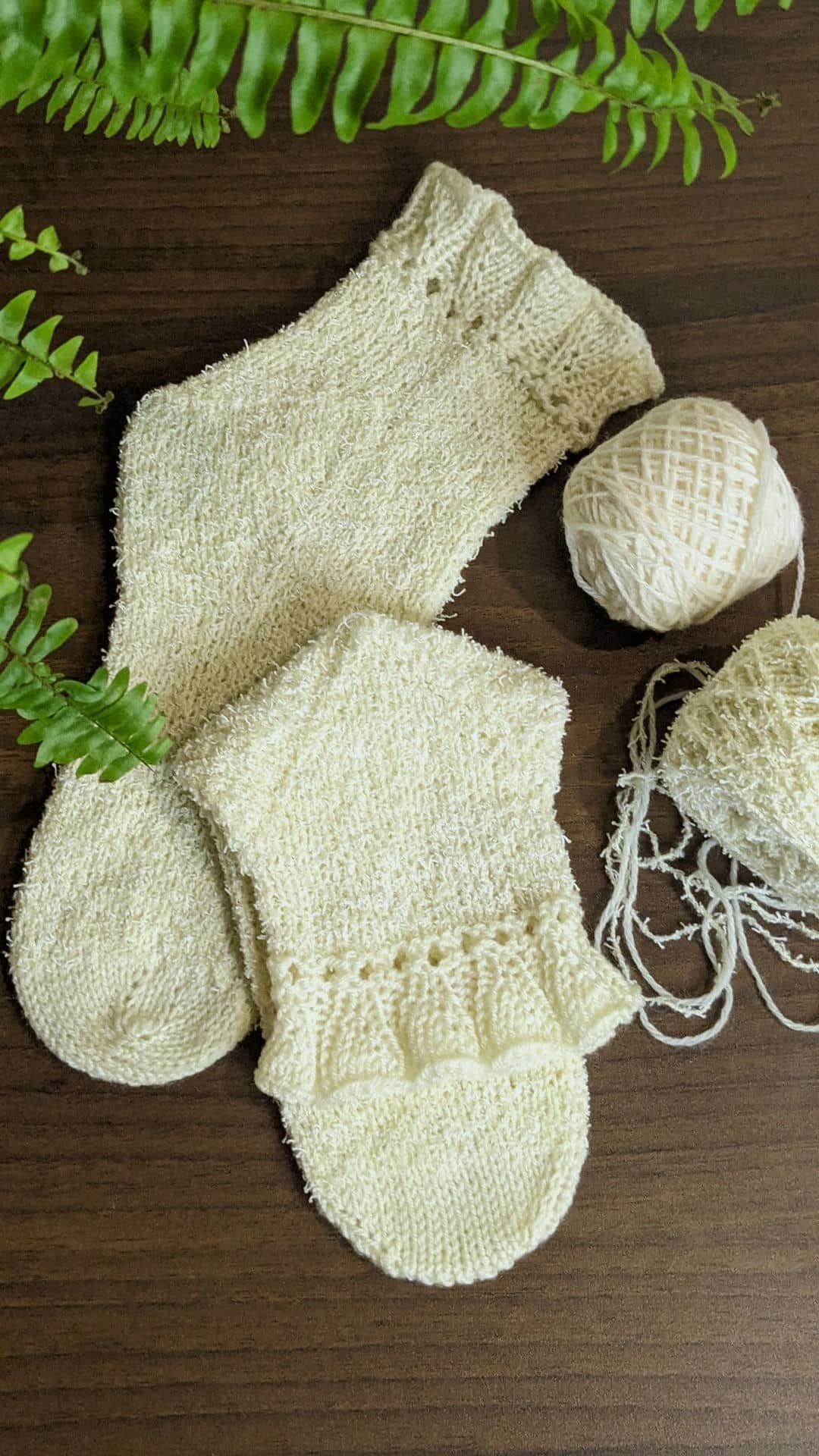
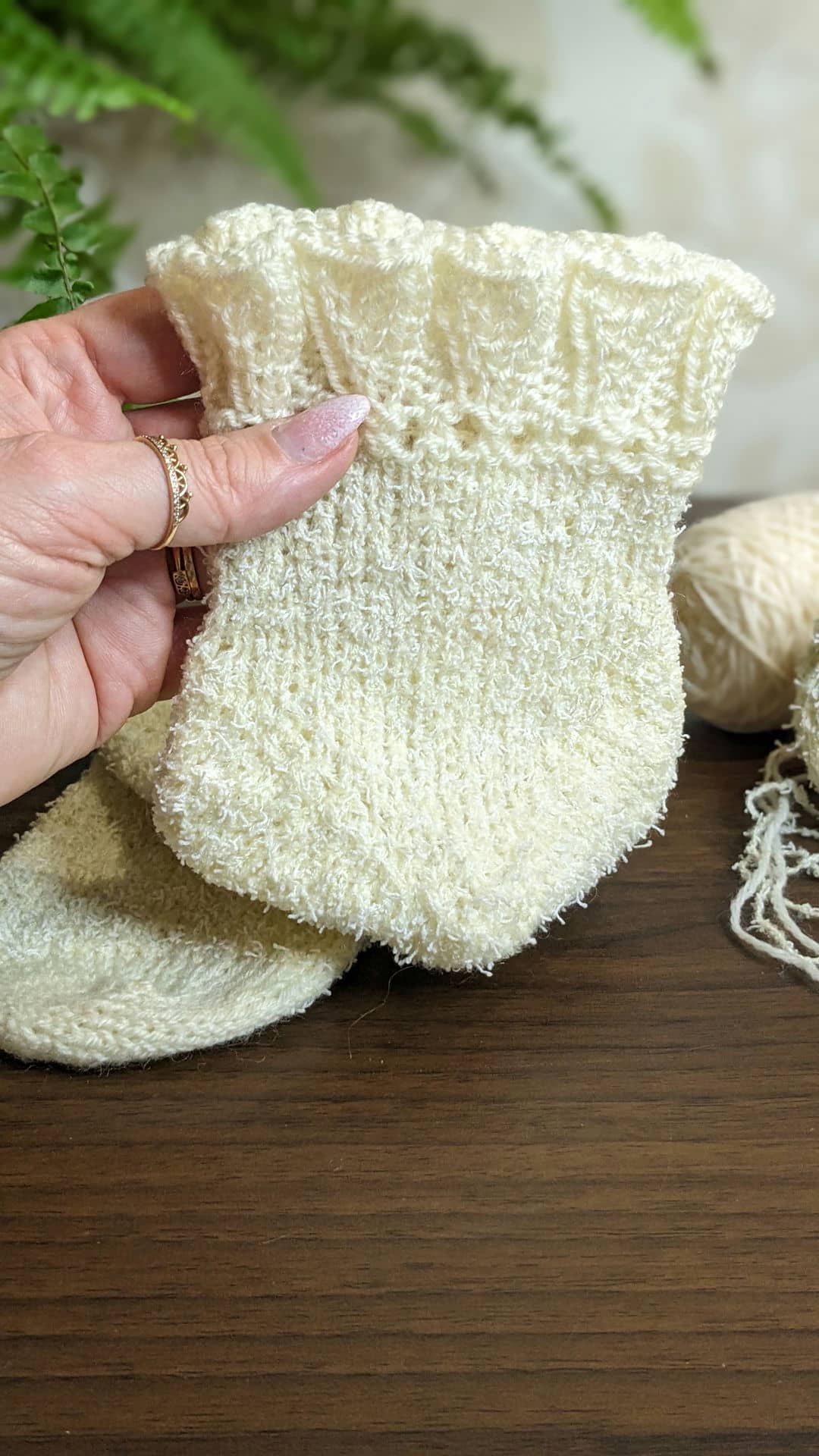
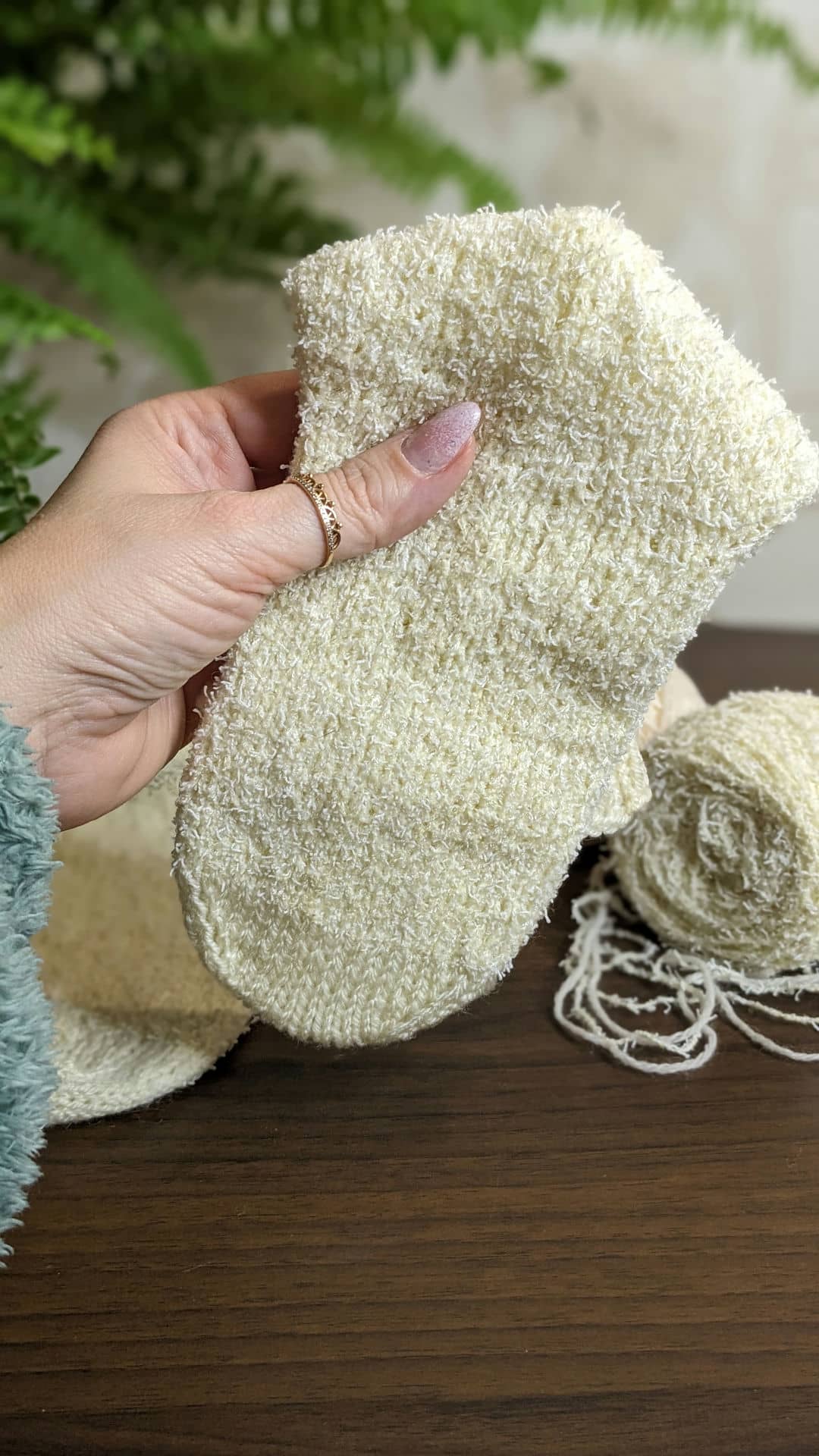
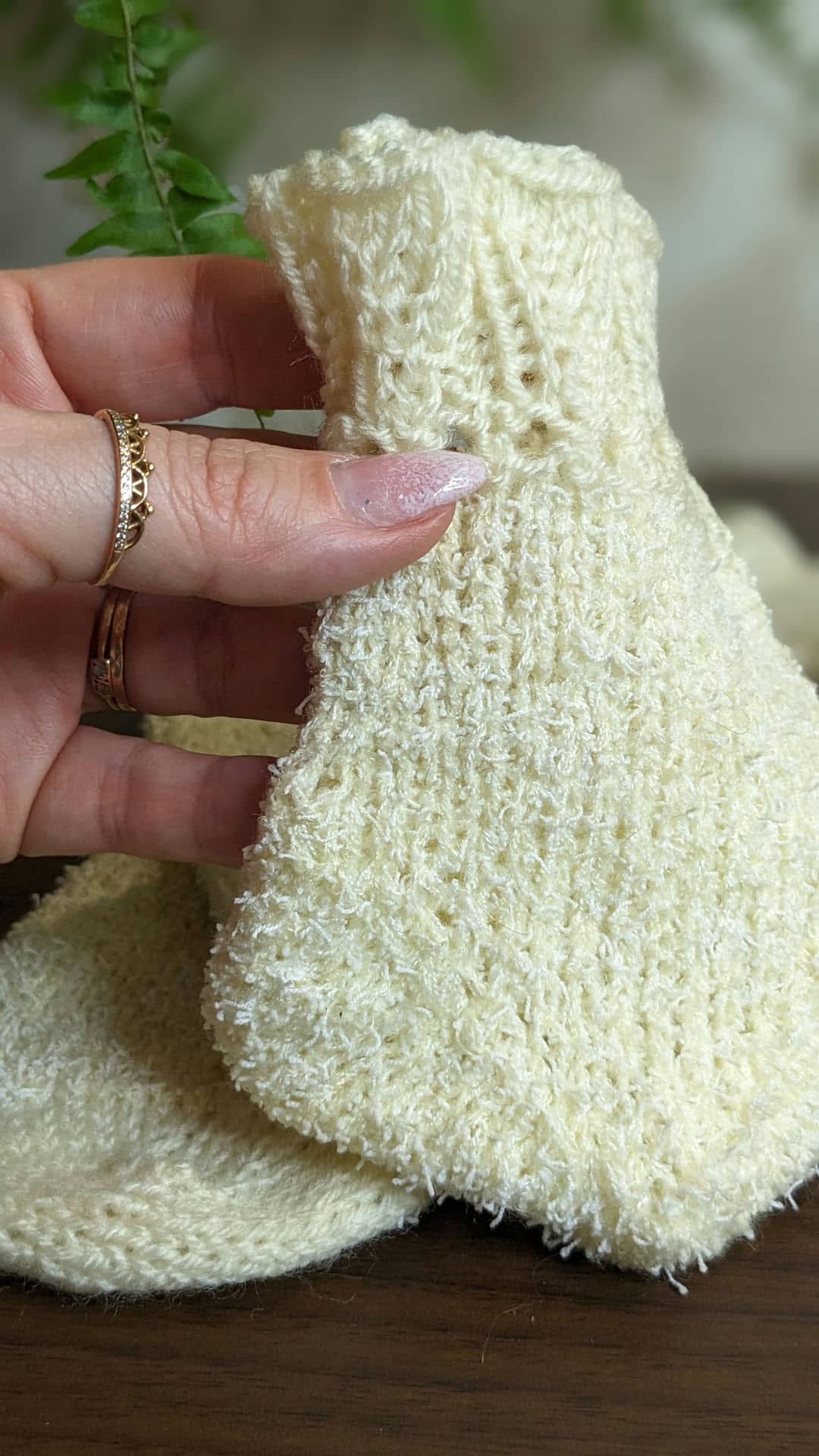
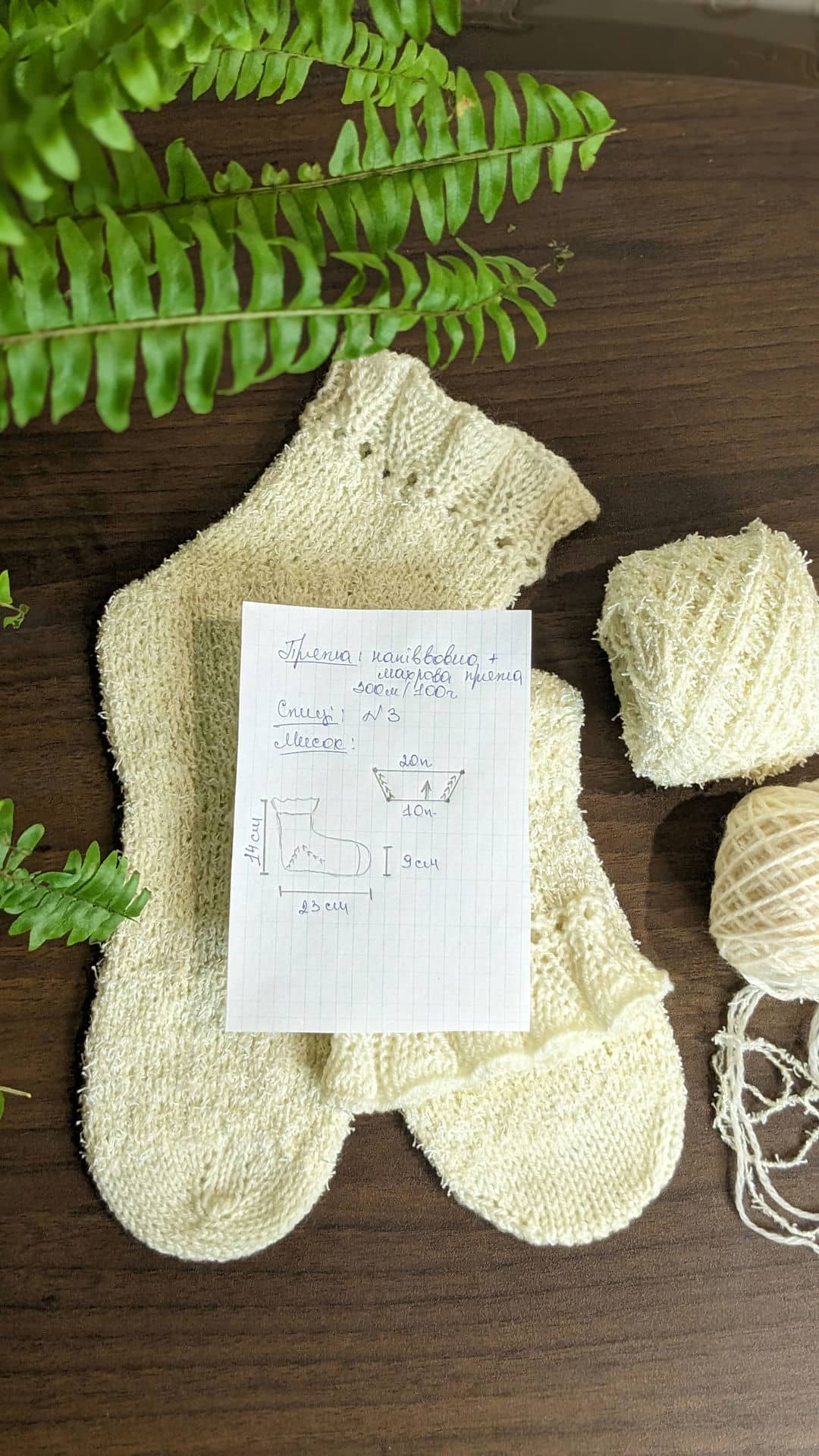
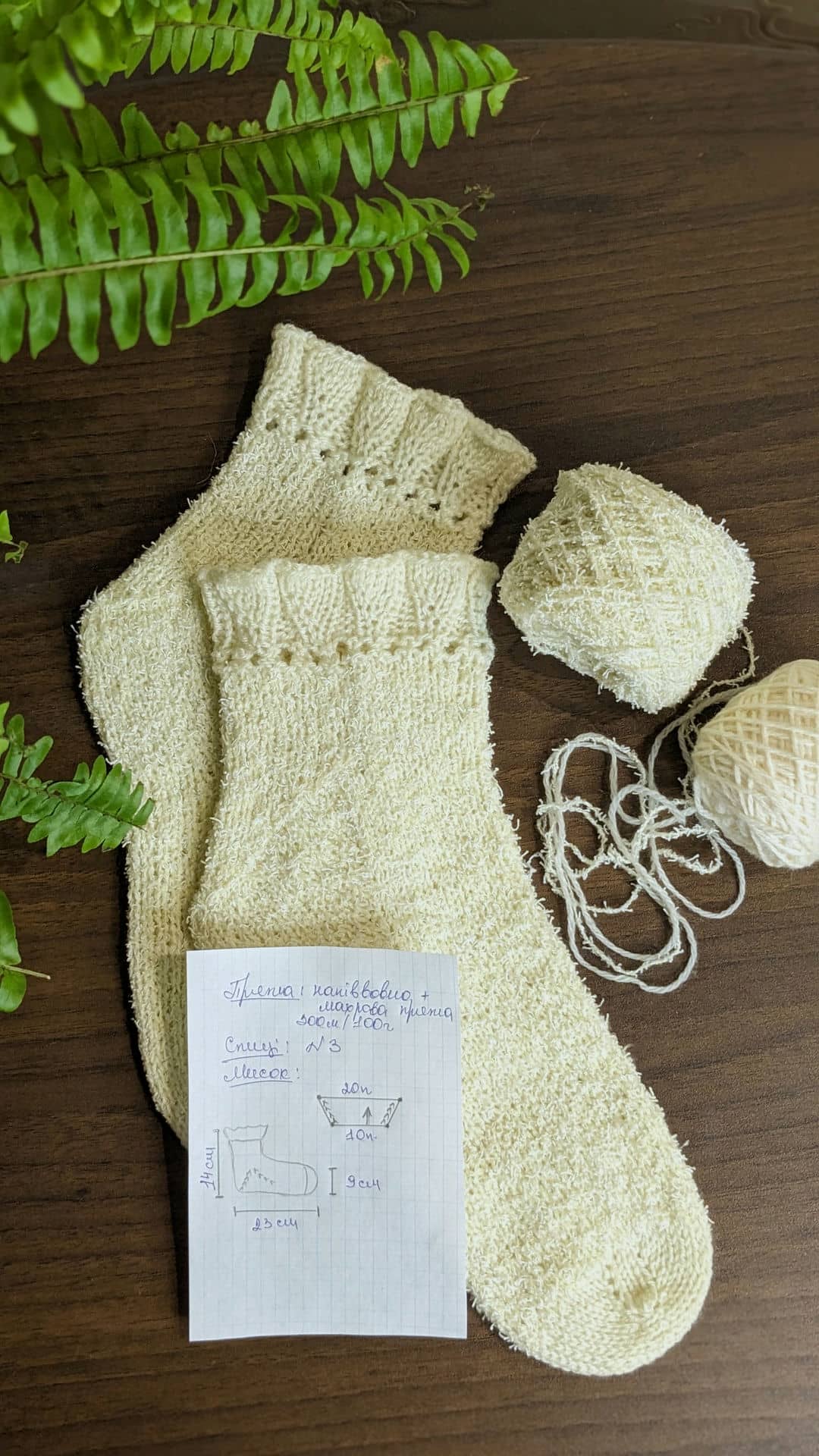
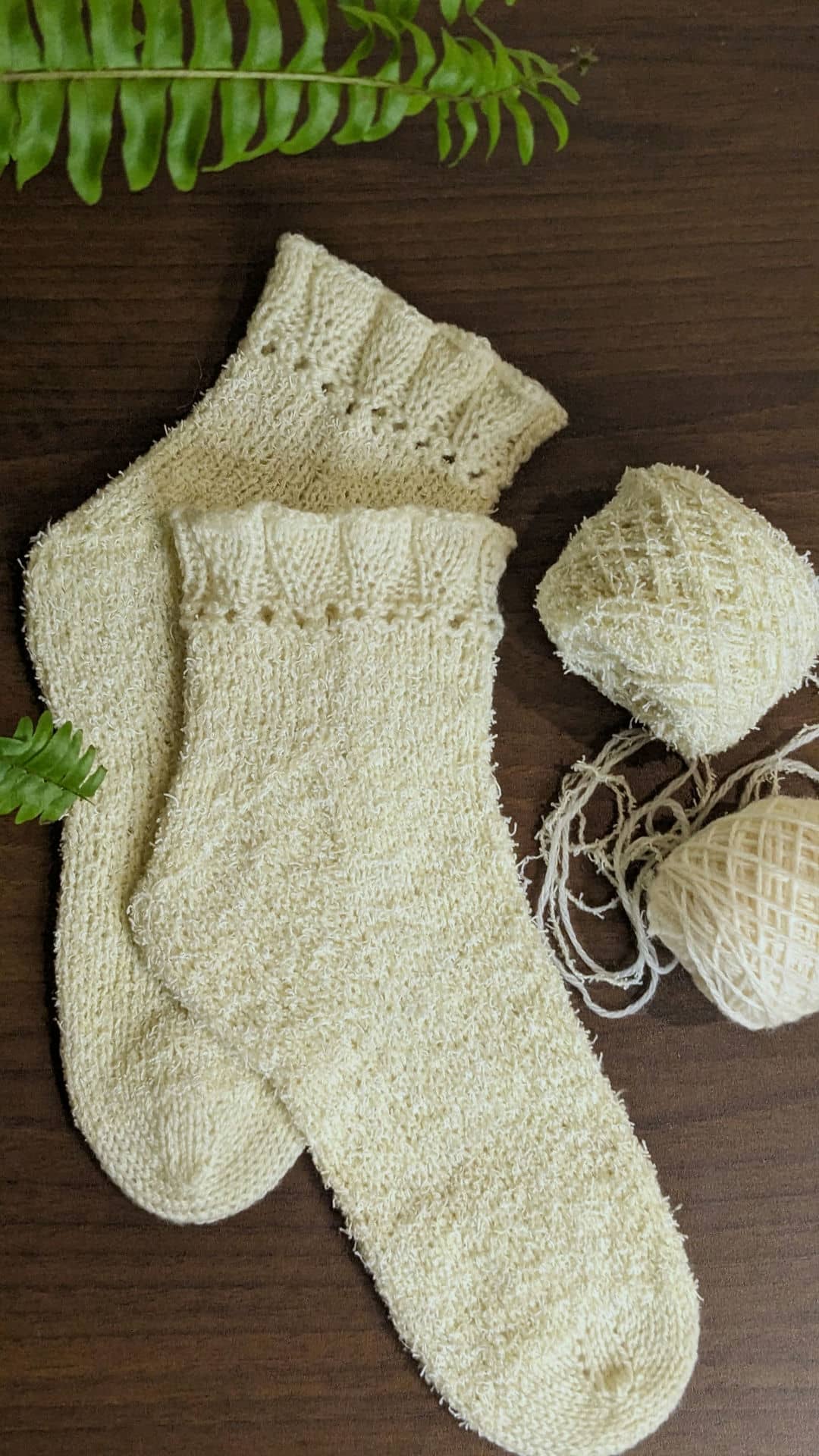
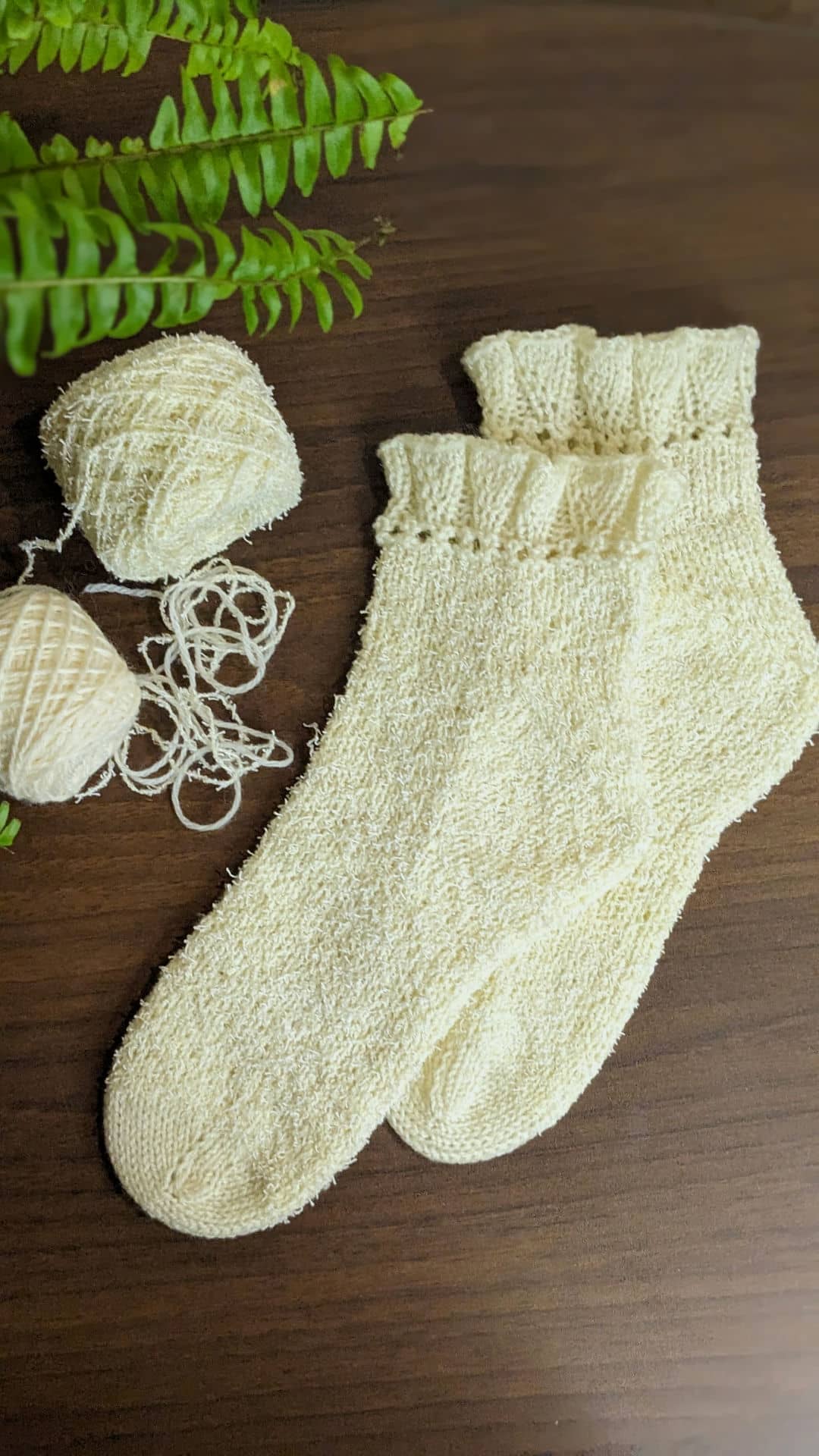
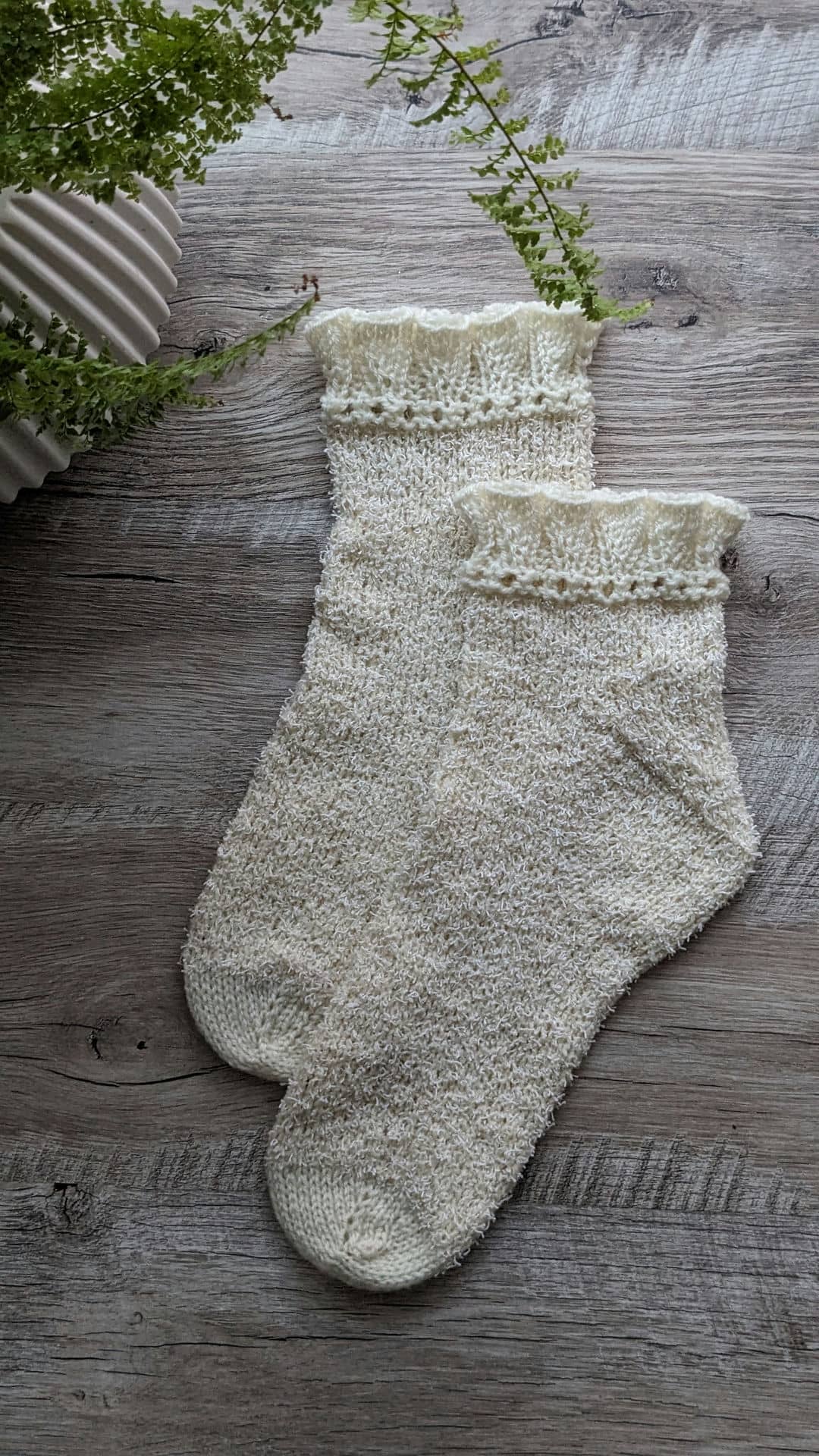
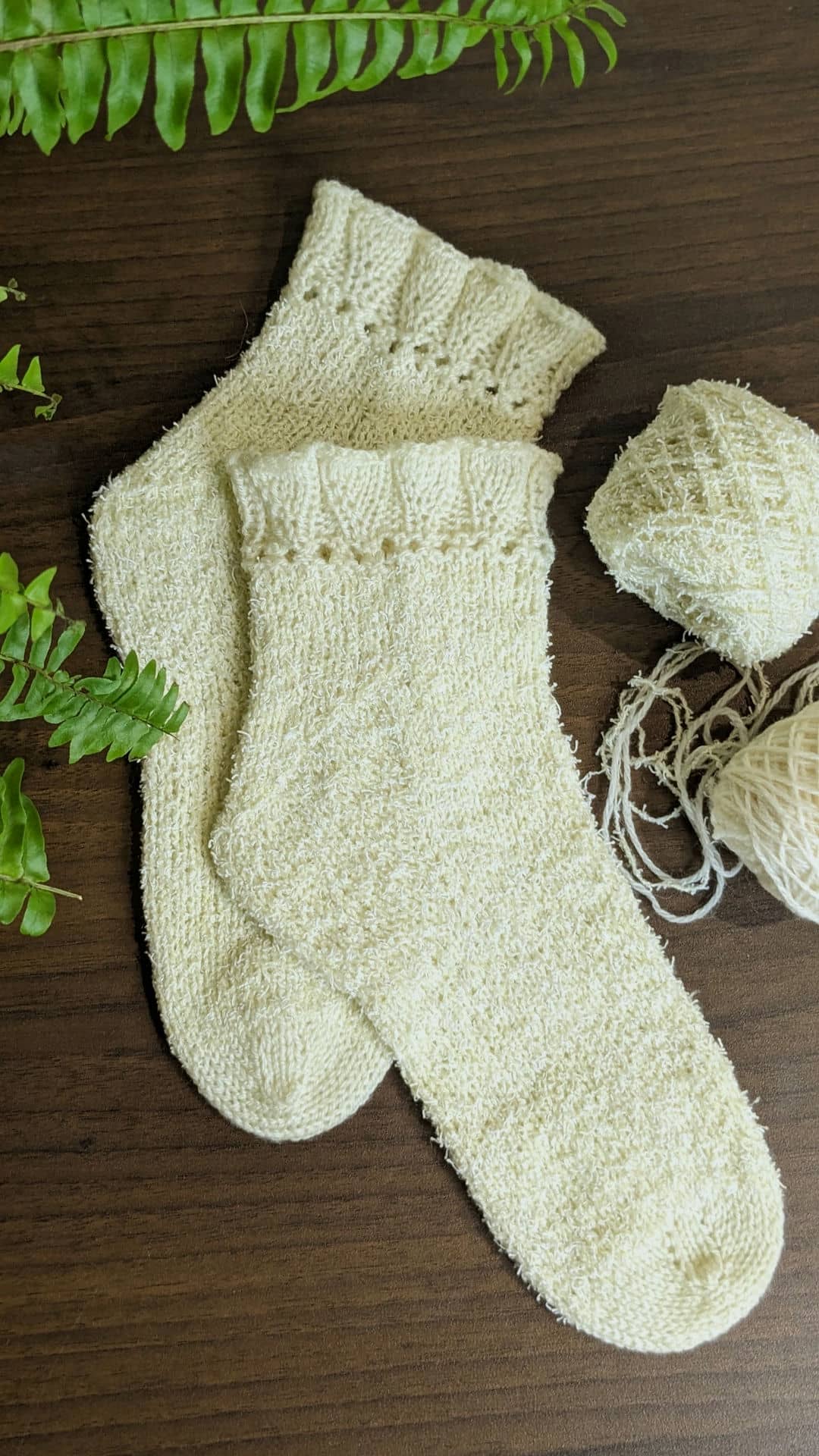
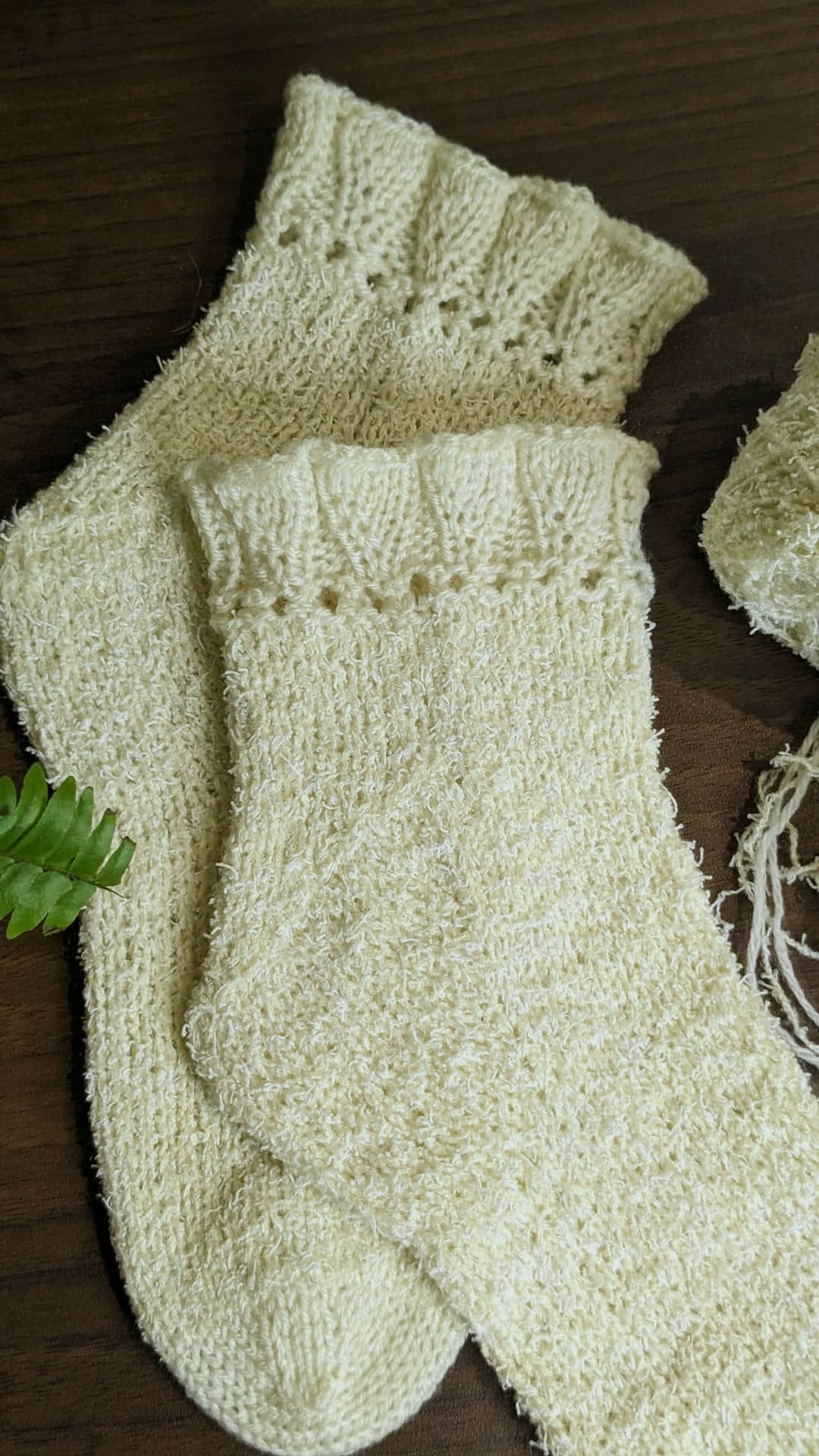
Socks with a ruffle (from terry yarn)
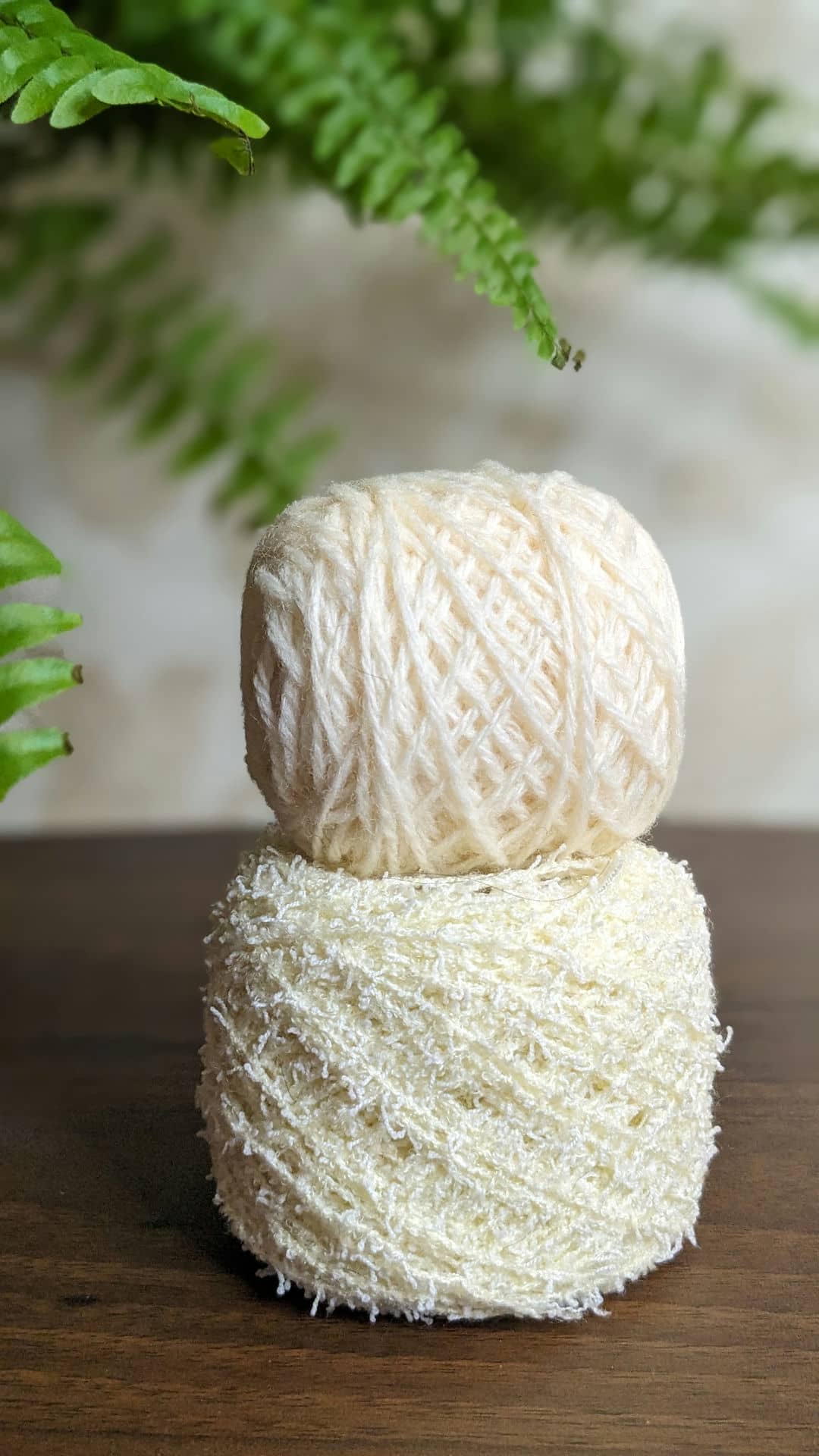
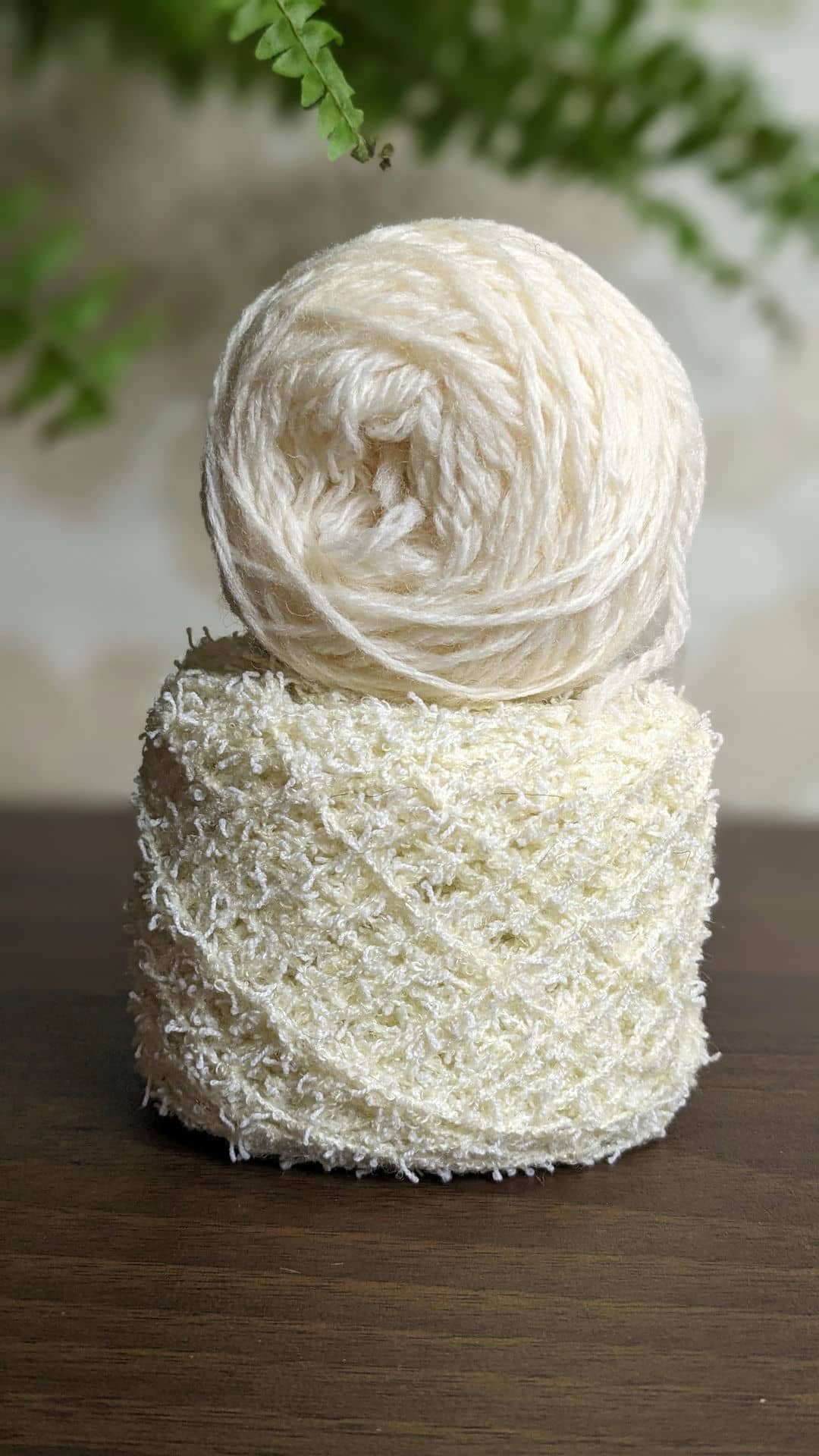
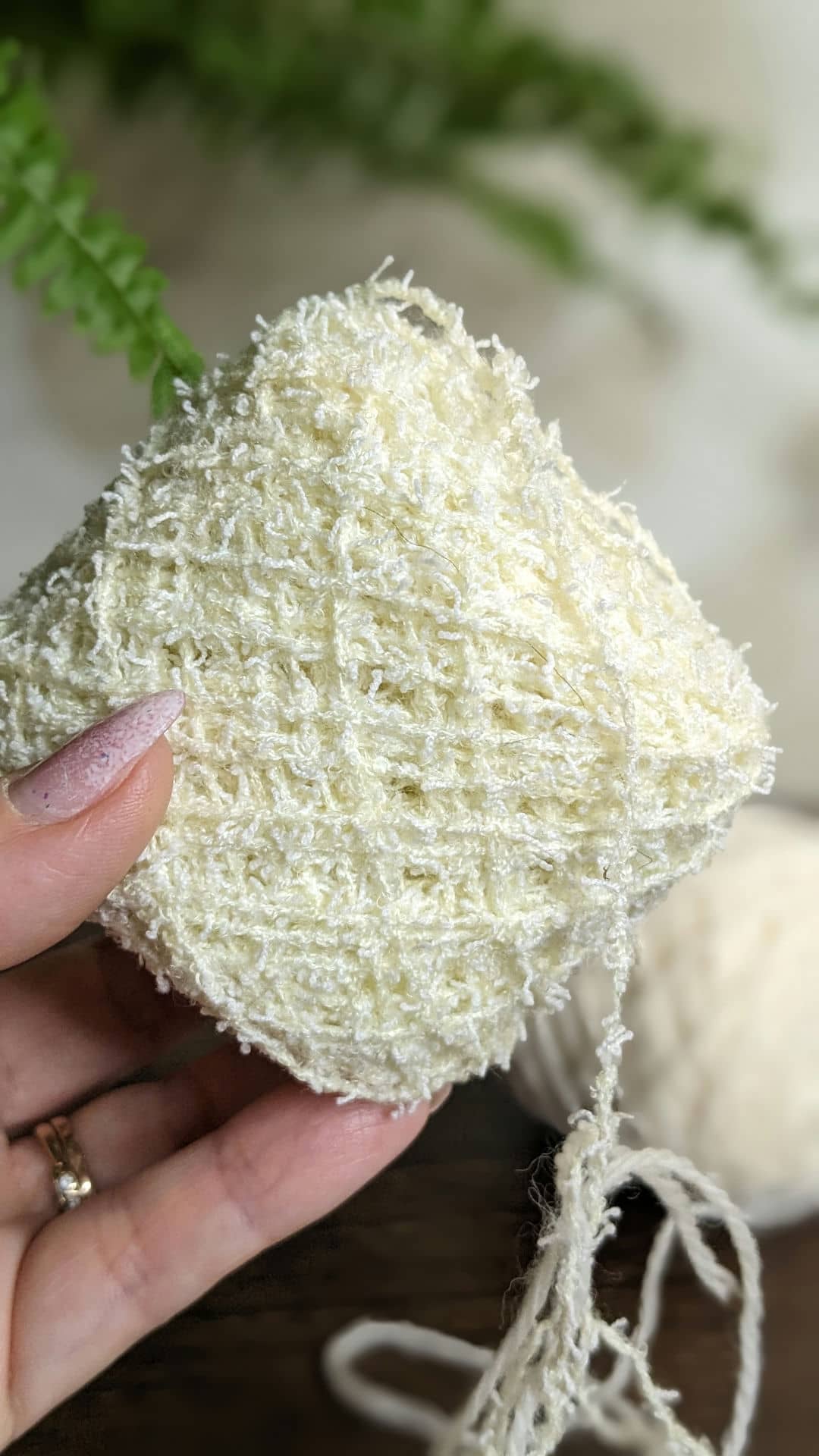
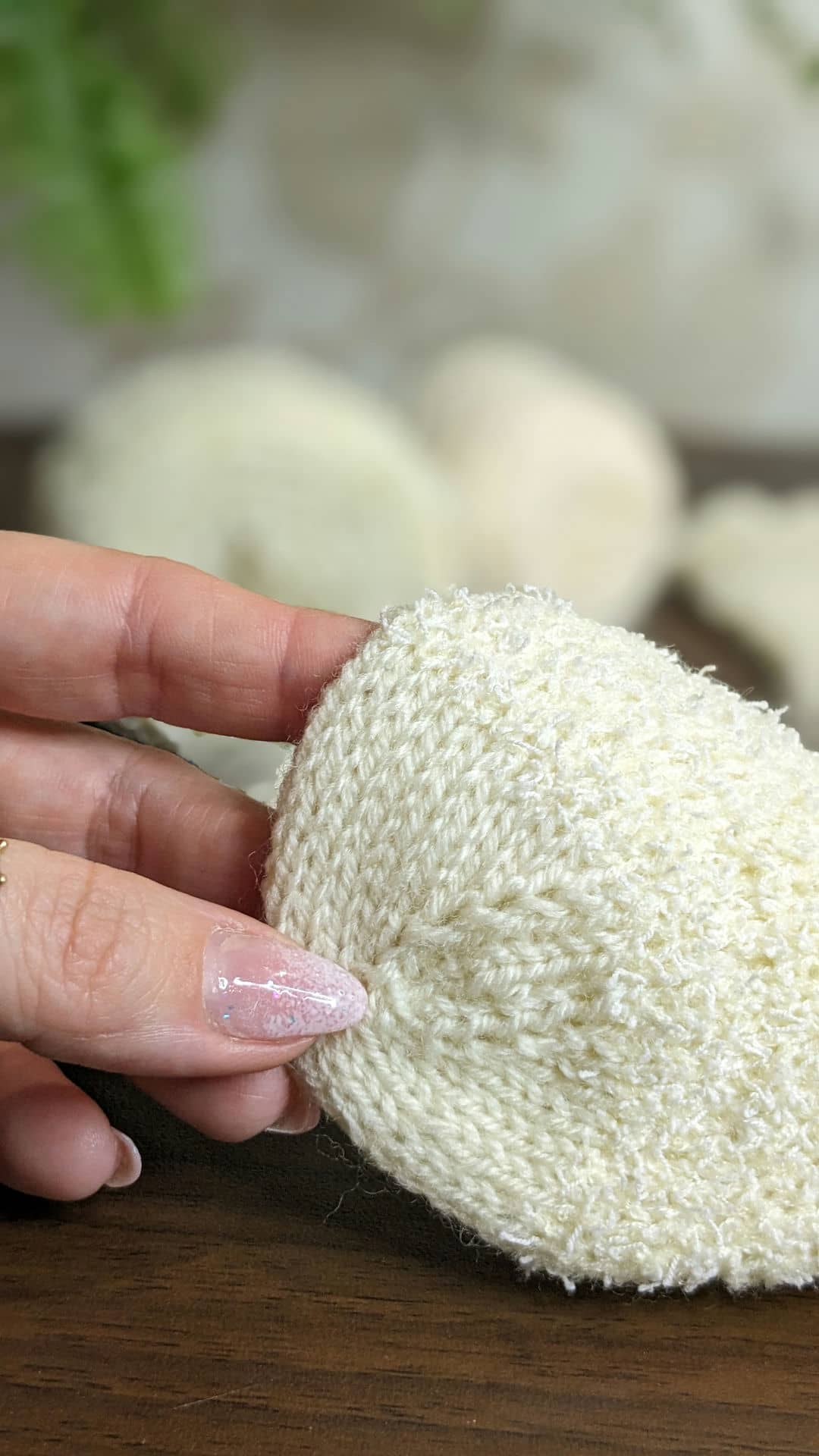
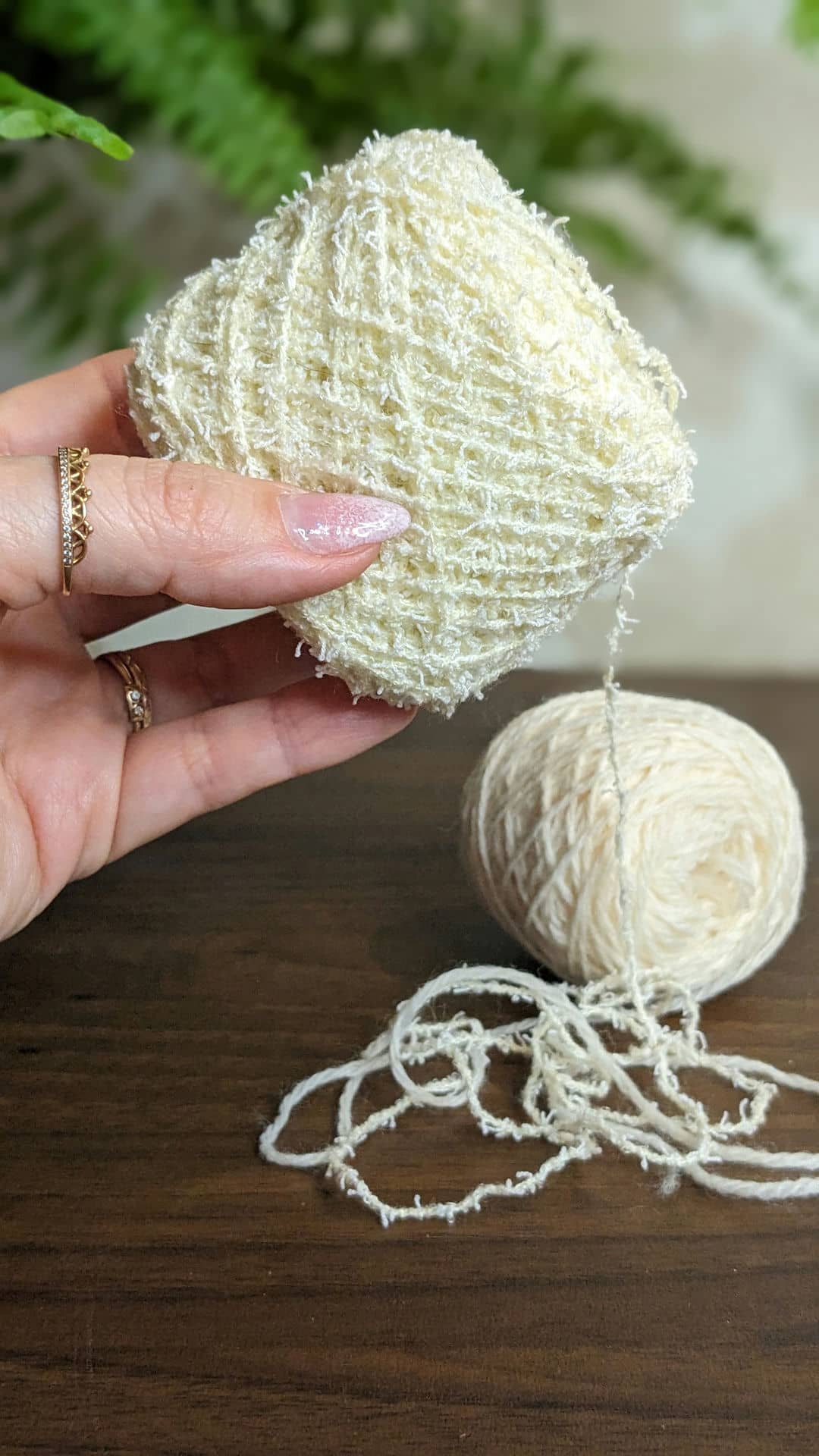
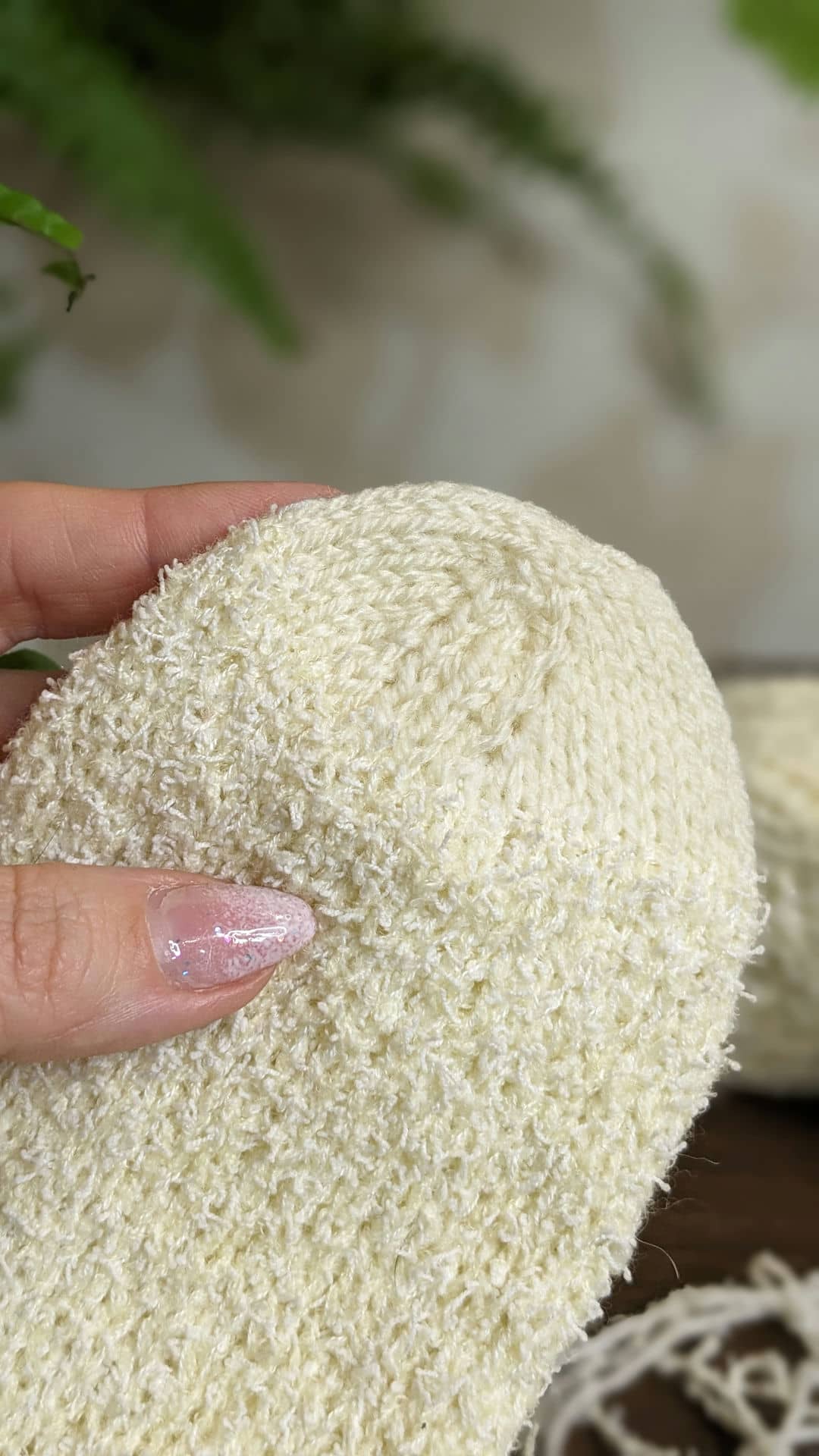
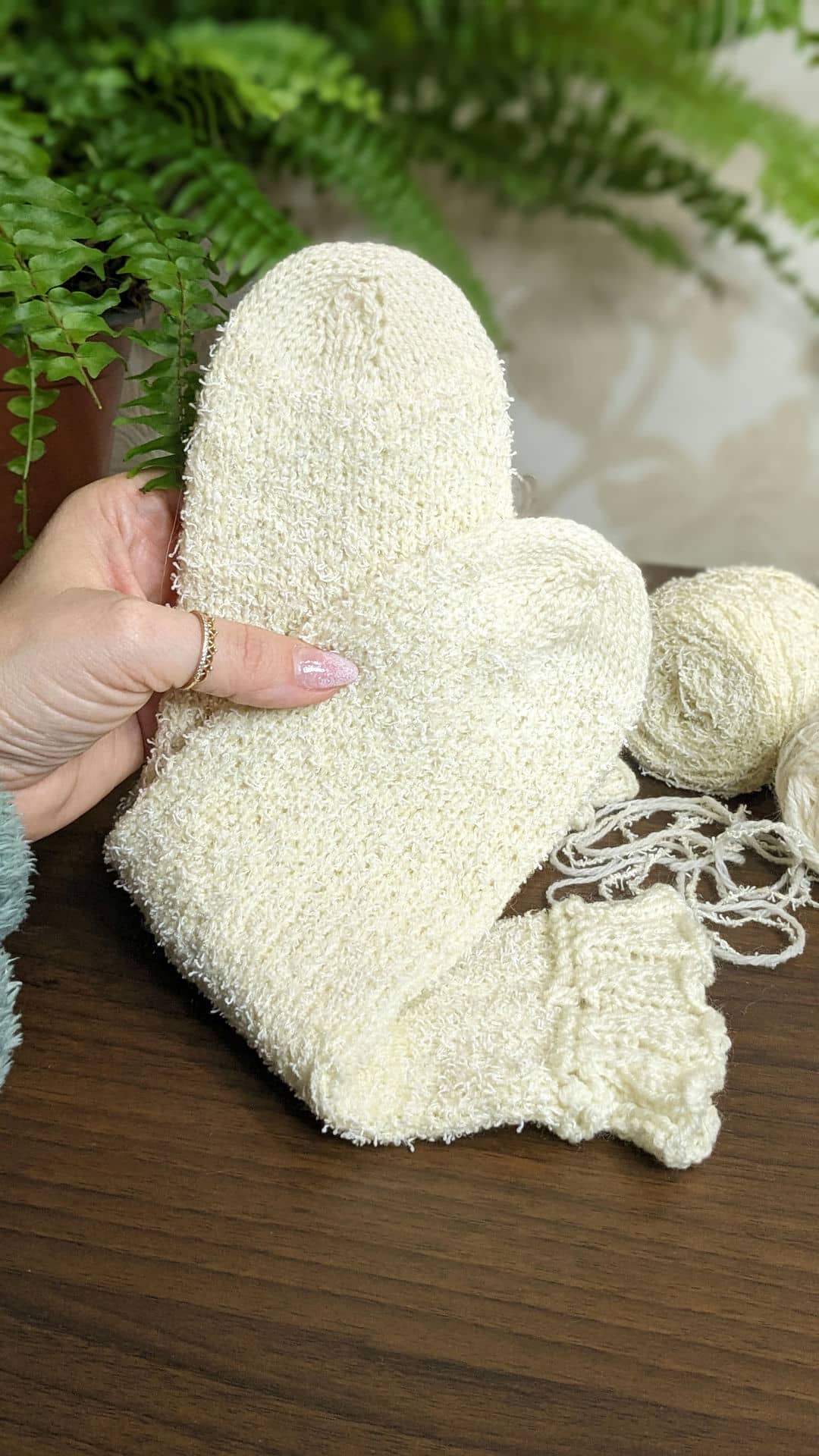
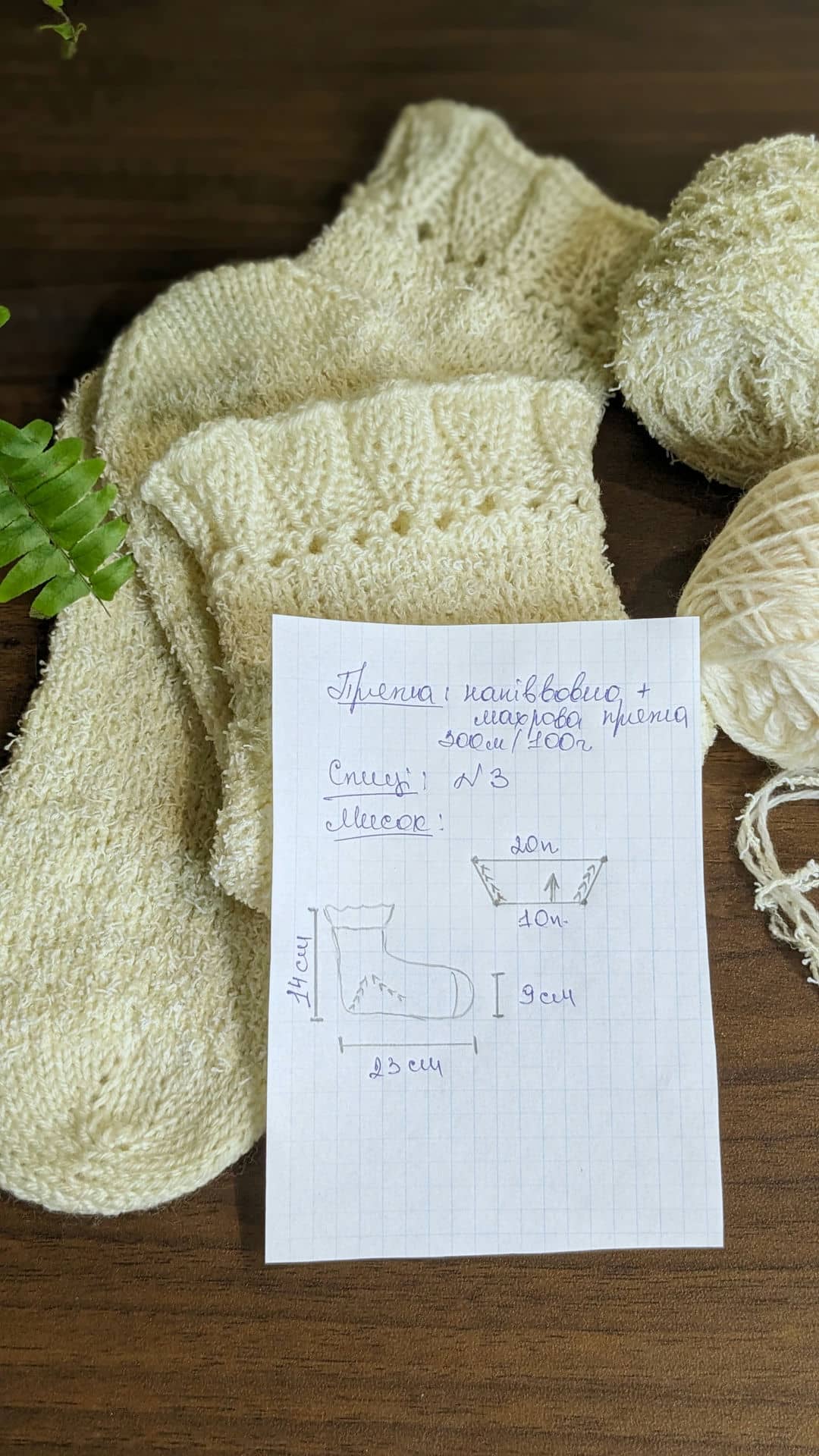
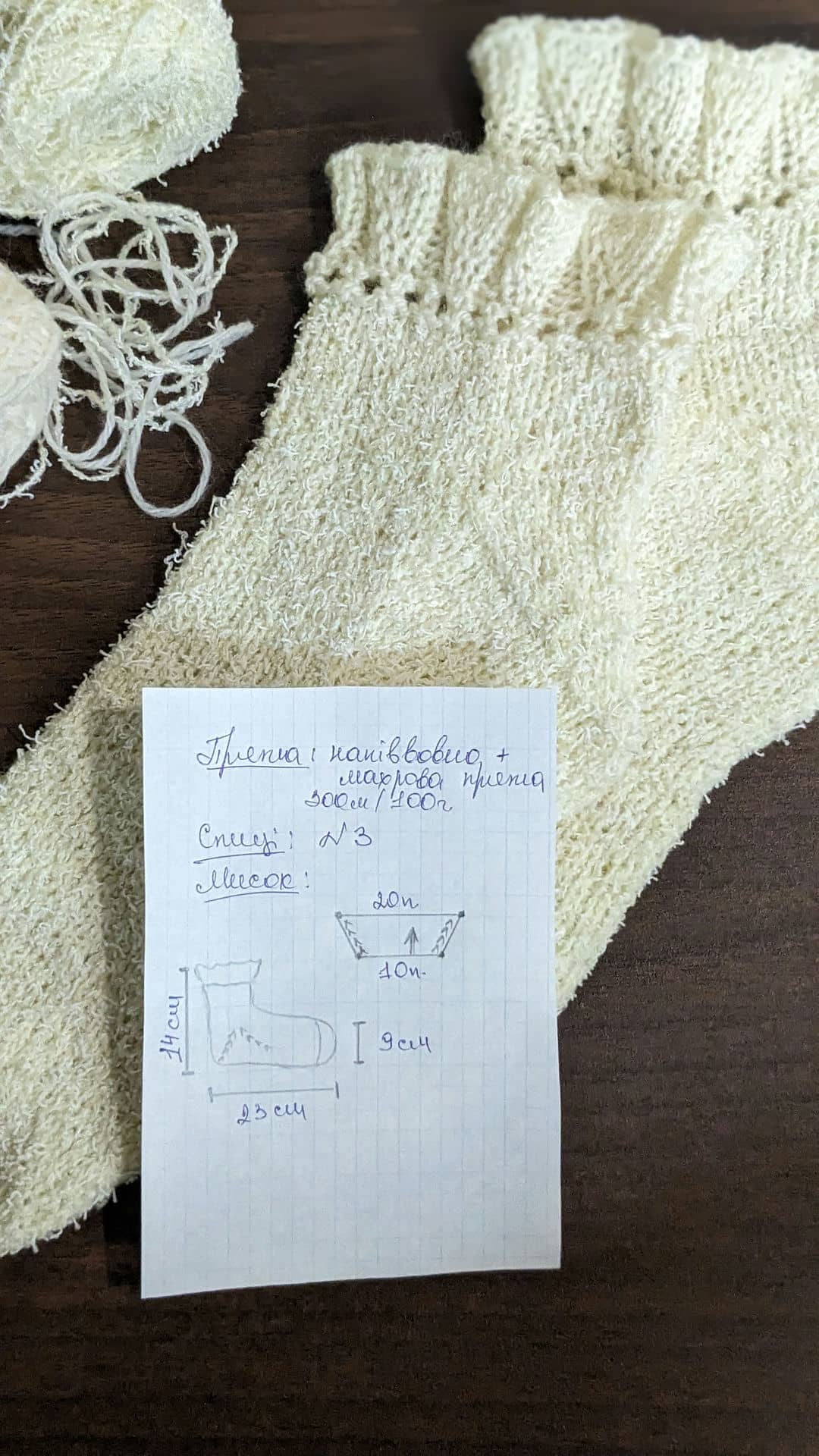
Yarn: semi-wool for the toe and the ruffle (300 m/100 g), terry yarn for the main fabric of the sock (300 m/100 g). Needles: 3 mm on a cable.
Turkish cast-on. Make a slip knot, place it on a needle, wrap the working yarn around both needles and form the stitches (in my case 1 slip-knot stitch + 10 wrap stitches). Pull out one needle and knit 10 stitches. Knit those same wrap stitches once more in the round. There will be 10 stitches on each needle.
Continue knitting in the round, adding one stitch at each side of each needle every other row. This is how the toe gradually takes shape and the stitch count grows to the width you need. I worked the increases 5 times. We have 20 stitches on each needle.
Next we shape the foot. We have two needles with 20 stitches on each, which are the two halves of our sock: top and bottom. Knit the foot in stockinette stitch to the length you need.
I am knitting size 37-38. So after 16 cm from the start I begin increasing for the instep gusset. On the bottom half of the sock, next to the edge stitches, we add new stitches 10 times, every 2nd row (see the video, part 2).
Knit in the round. On the bottom needle: 10+20+10 = 40 stitches. The gusset is 7 cm long.
Next we start shaping the triangular heel and decreasing stitches (see the video, part 2). On the bottom half of the sock, mark the 2 center stitches, begin knitting in short rows and decrease stitches, working 10 decreases on each side. There should again be 20 stitches left on the bottom needle.
Next we go back to knitting in the round. Knit the leg to the length you need, or until your yarn runs out. I knitted the leg to 10 cm.
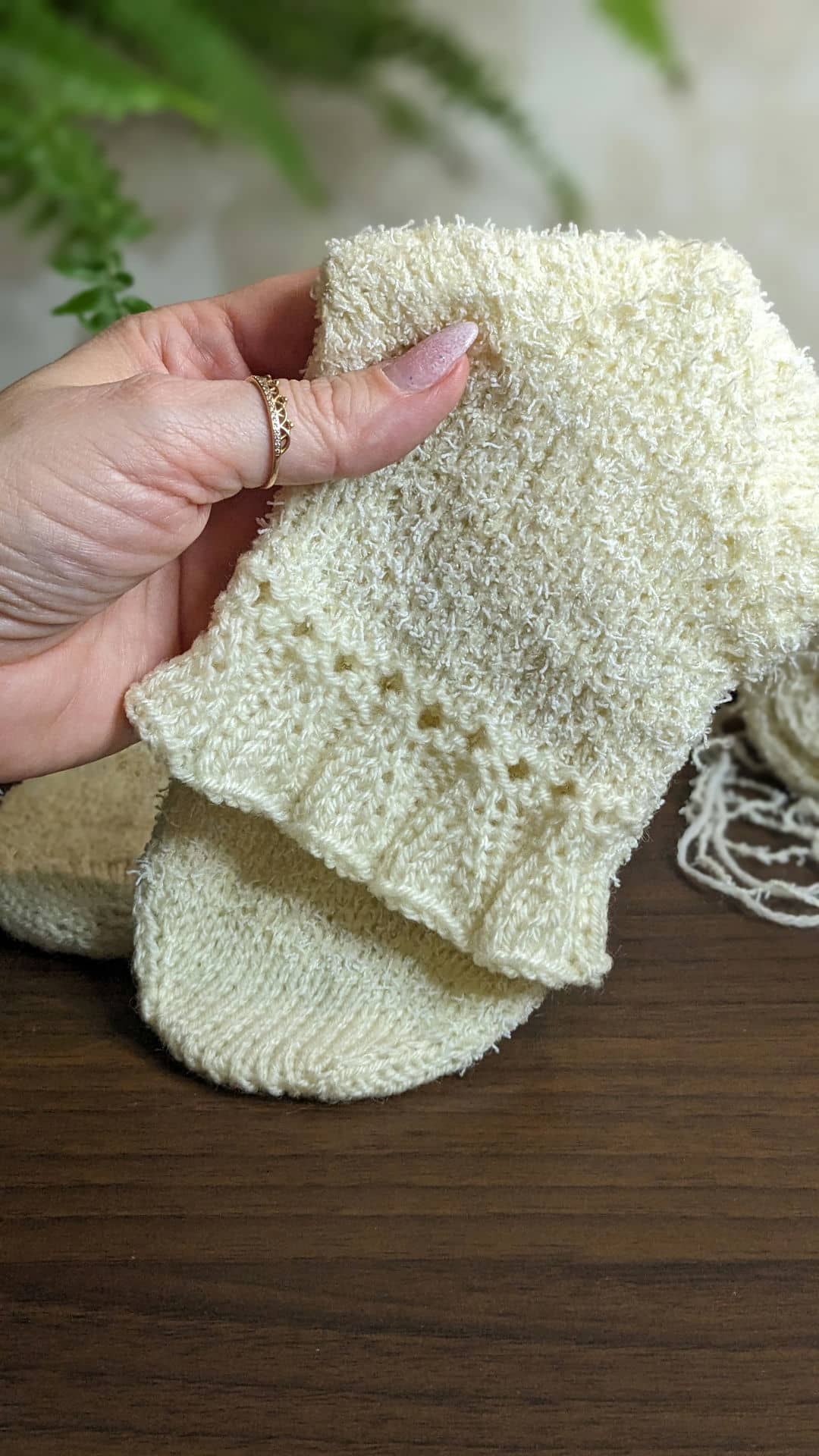
Then I decided to add a decorative element, an openwork band and a ruffle (see the video, part 2). So we continue knitting as follows.
Knit the openwork band:
Row 1: purl.
Row 2: *k2tog, yo*.
Row 3: purl.
Row 4: knit.
Knit the ruffle. The total number of stitches must be a multiple of 4.
1-3 rows: *k2, p2*.
Row 4: *k1, M1 from the bar, k1, p2*.
Row 5: *k3, p2*.
Row 6: *k2, M1 from the bar, k1, p2*.
Row 7: *k4, p2*.
Row 8: *k3, M1 from the bar, k1, p2*.
Row 9: *k5, p2*.
Bind off in the classic way.
I knitted the socks in size 37-38. The foot is 23 cm long, the leg with the ruffle is 14 cm. Yarn used for a pair of these socks: 50 g:
- semi-wool – 15 g,
- terry yarn – 35 g.
You may also like
Classic Knitted Vest with V-Neck and Ribbed Bands
April 3, 2024
Knitted Jumper “Palms” with a Jacquard and Intarsia Motif
November 25, 2020