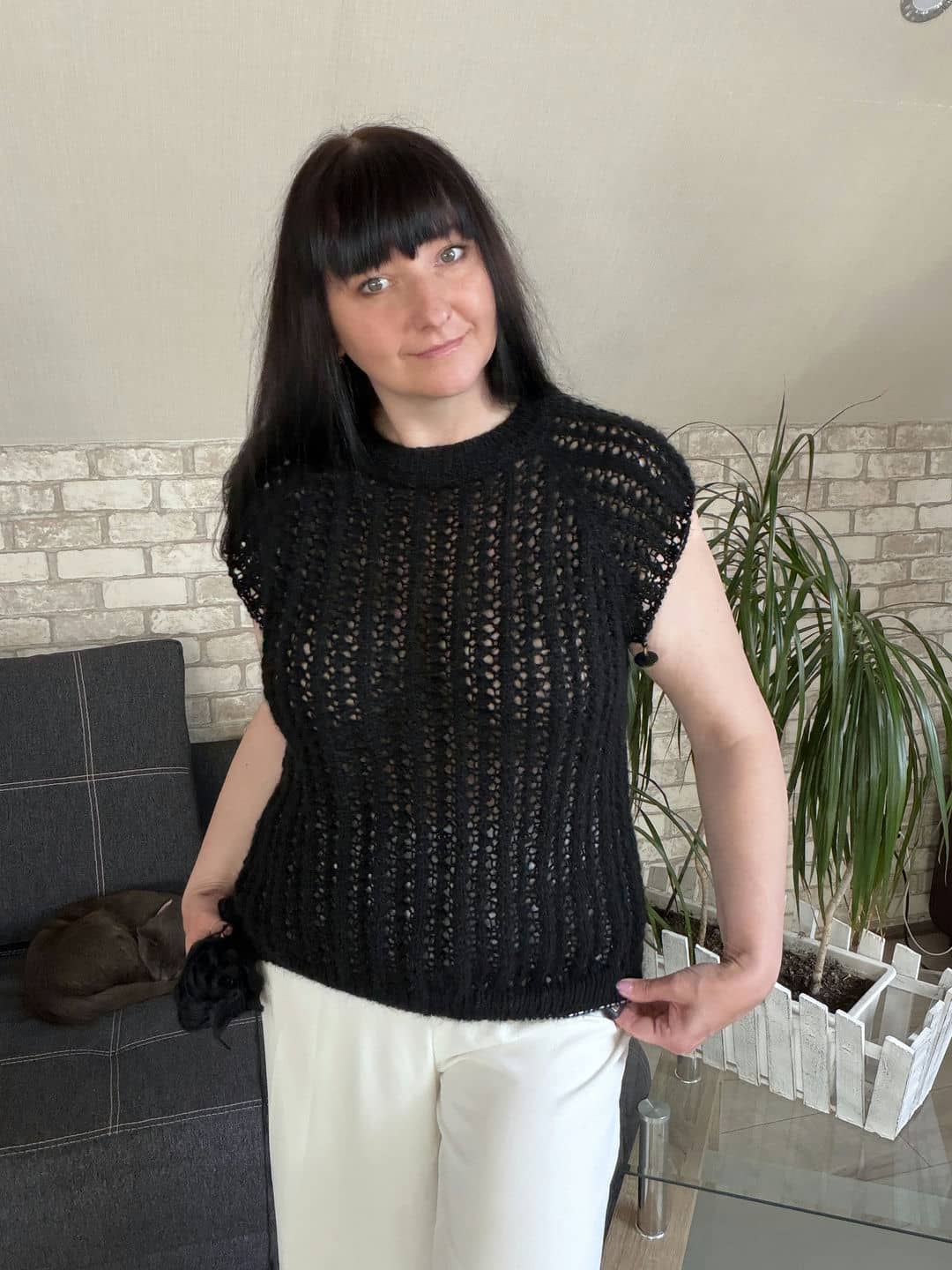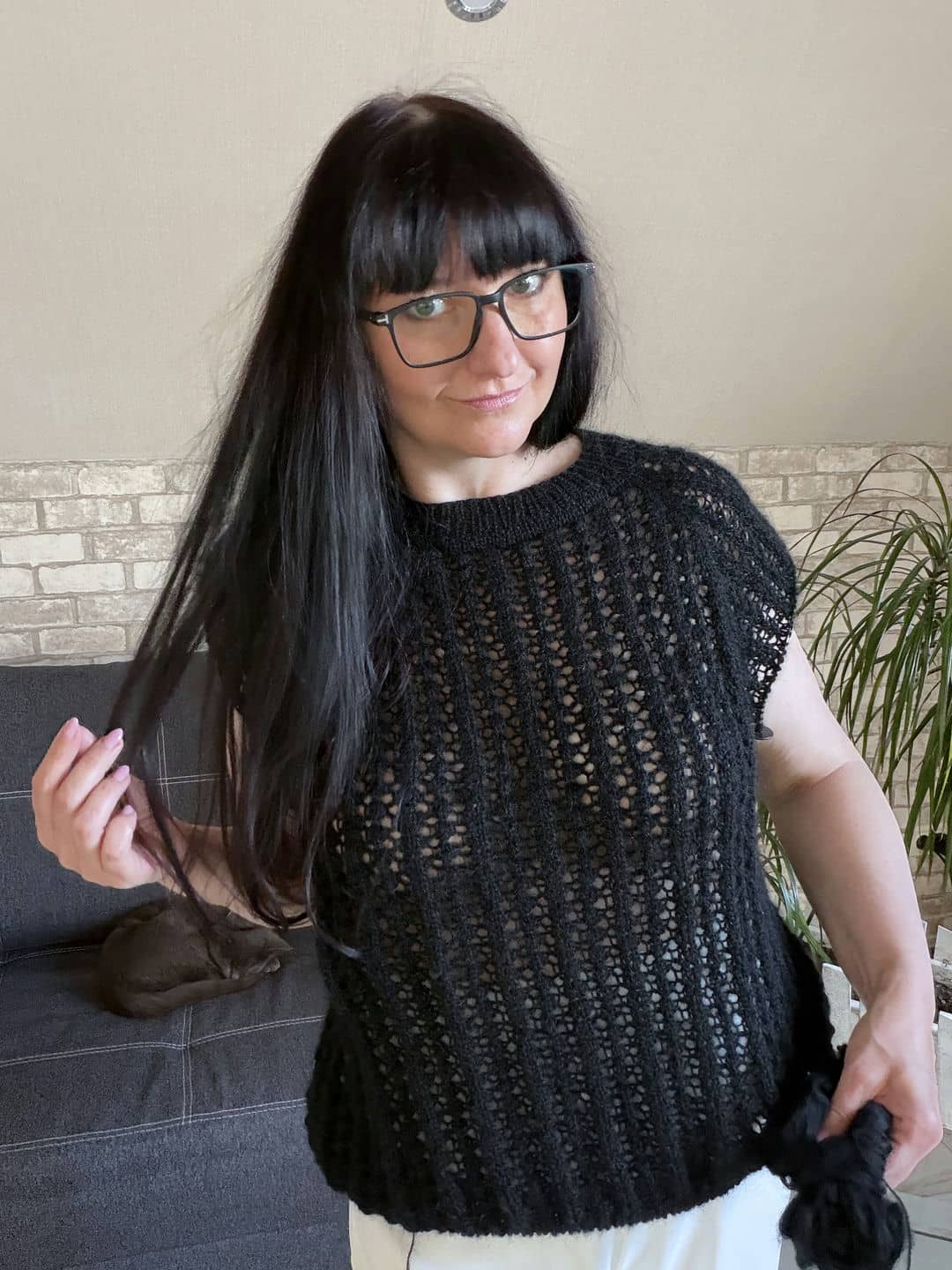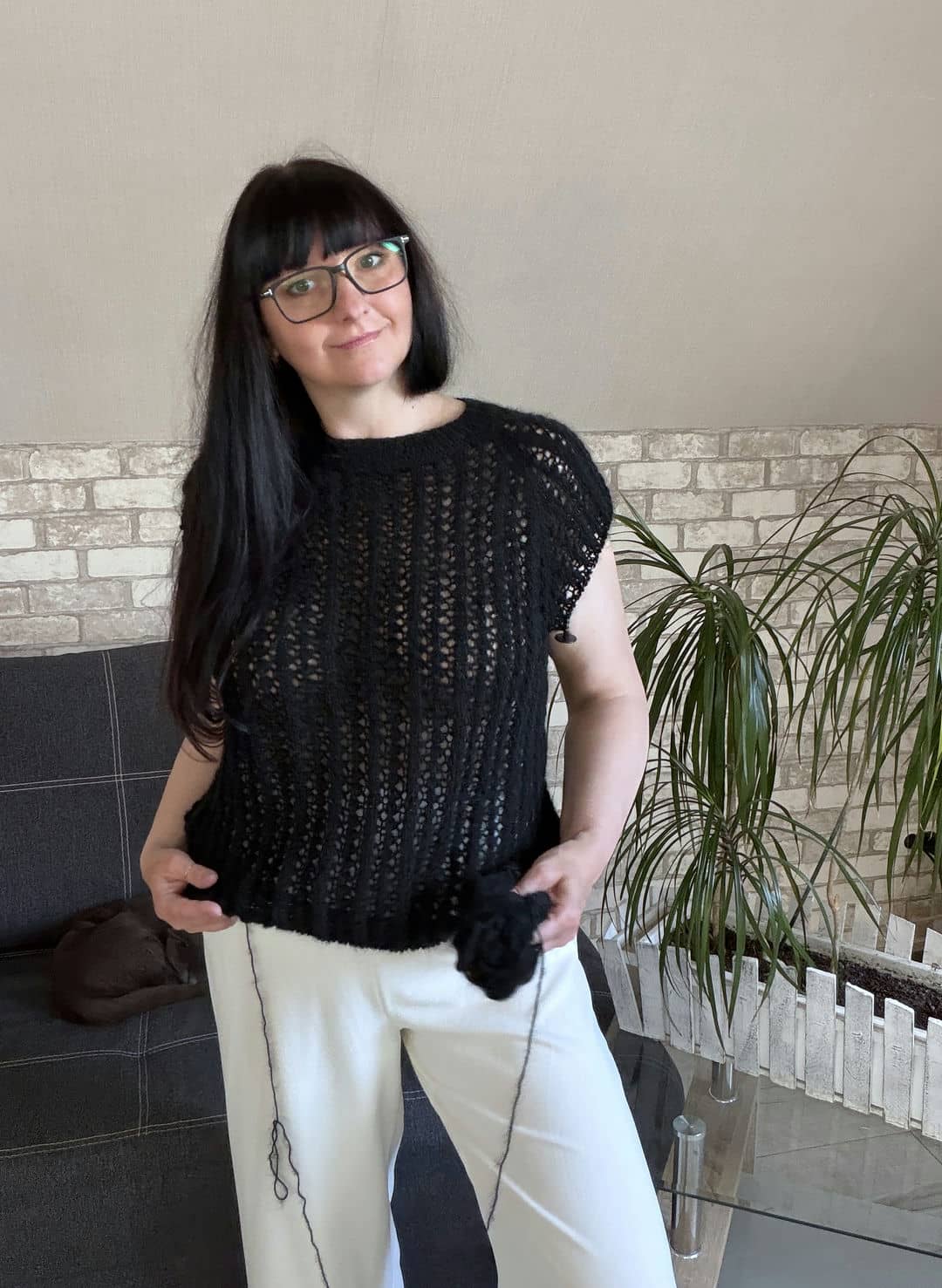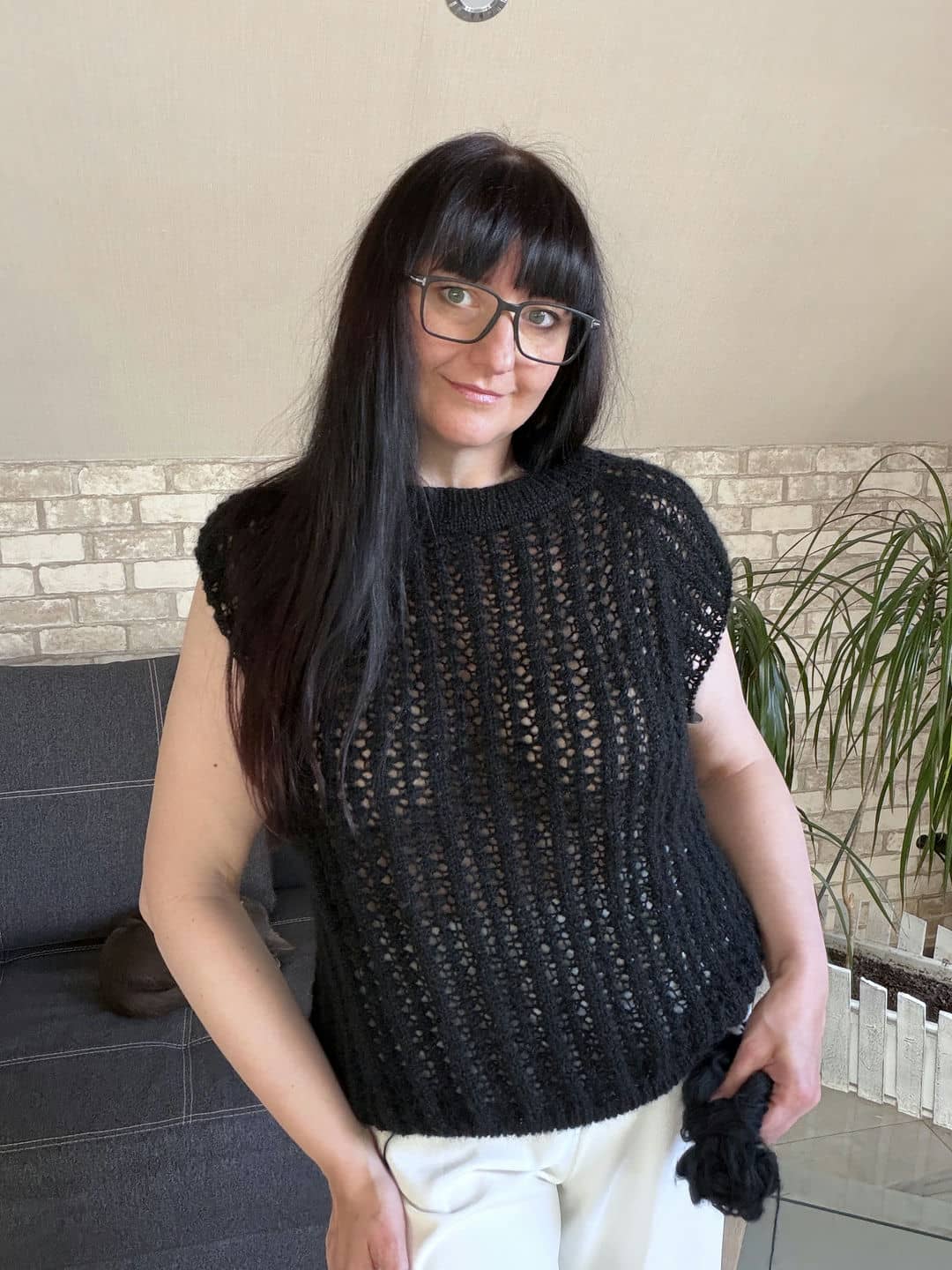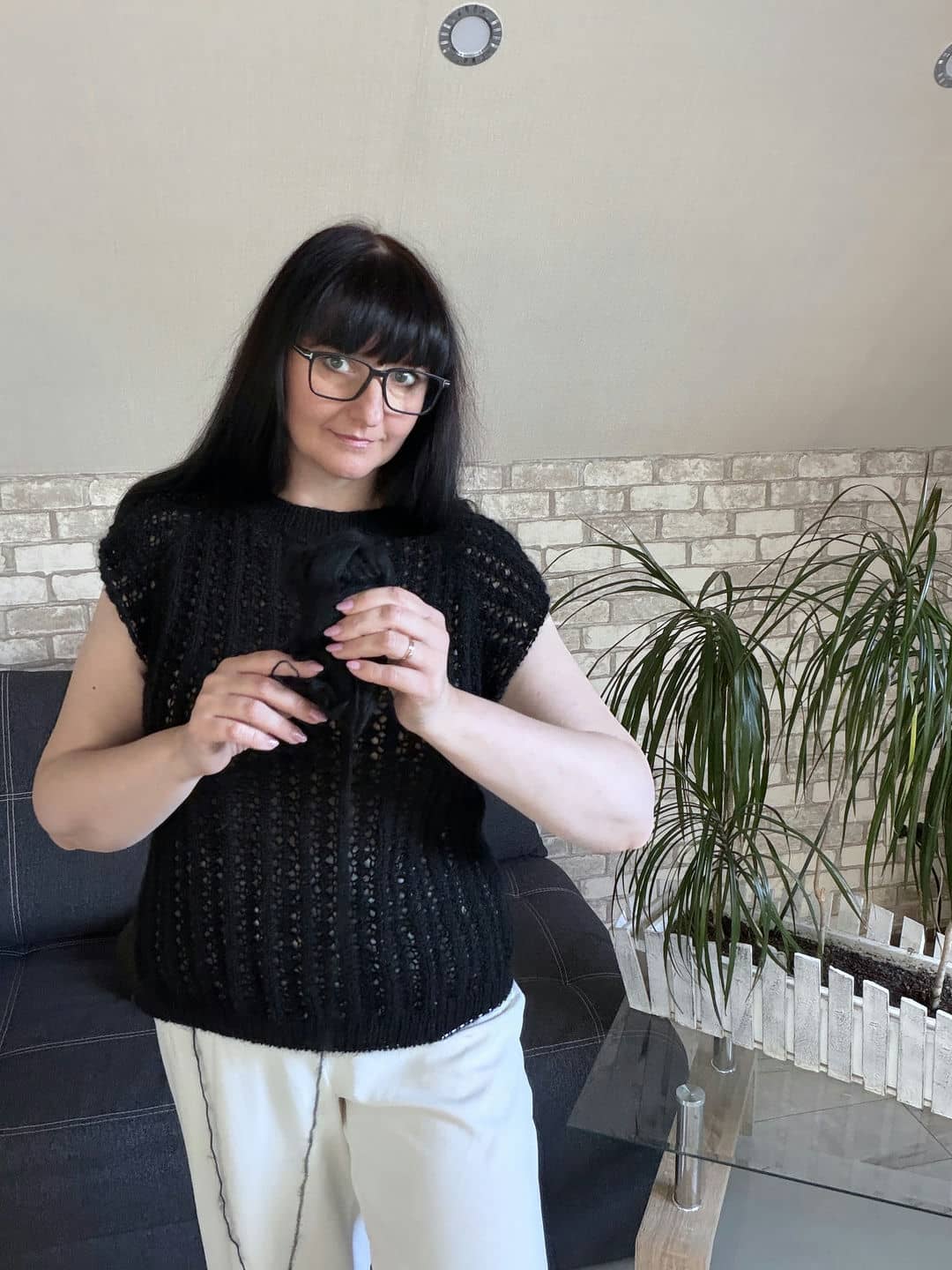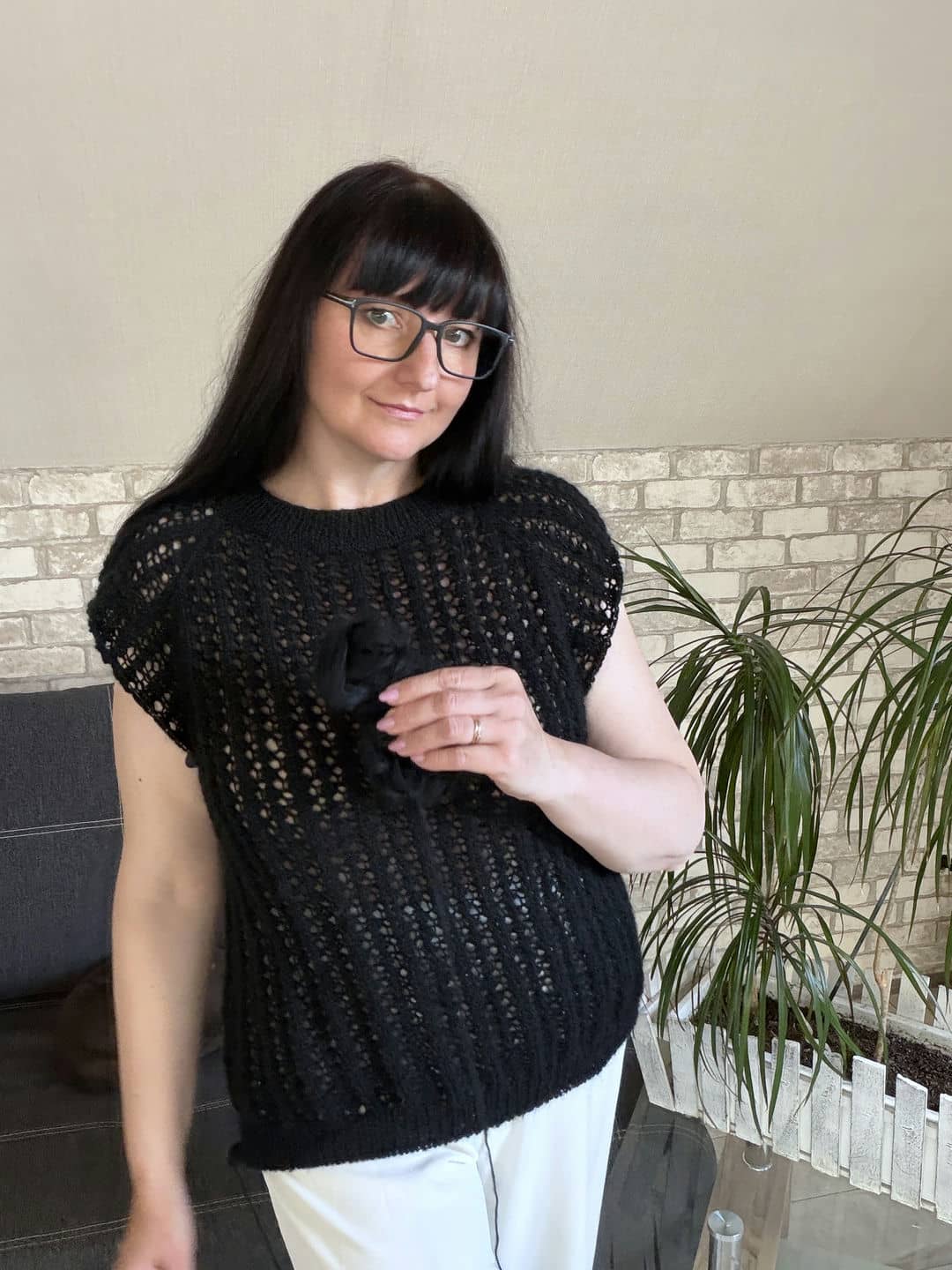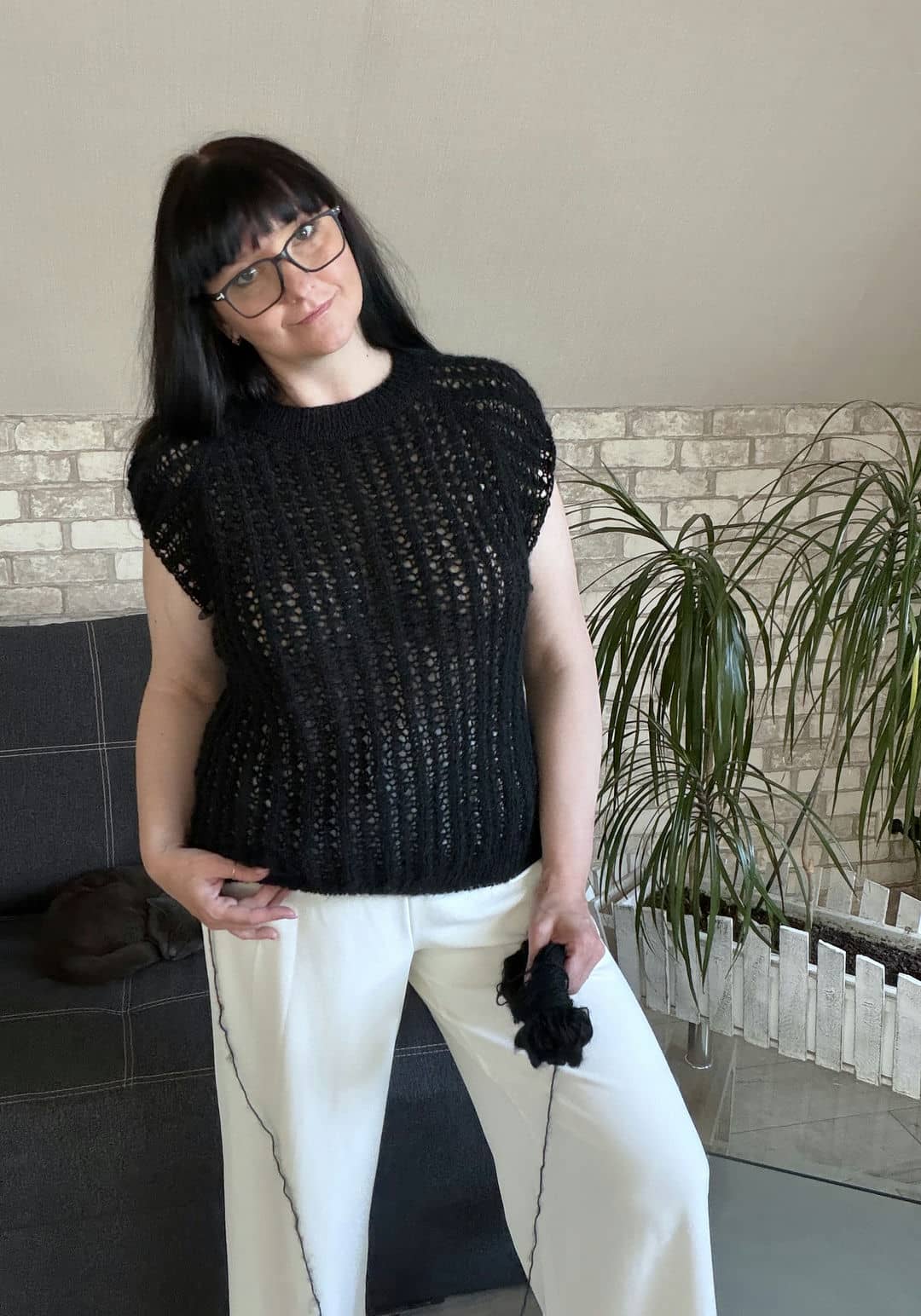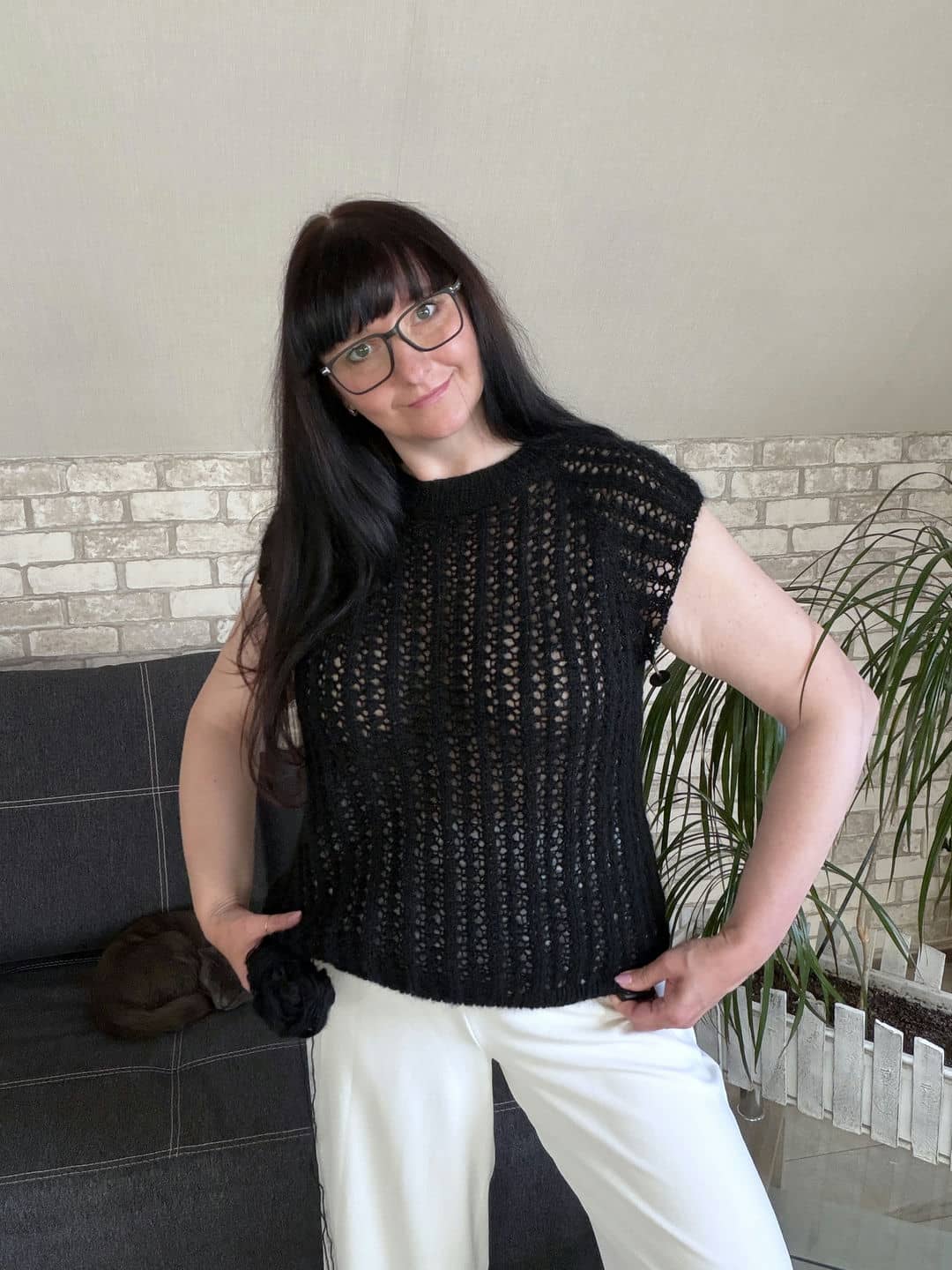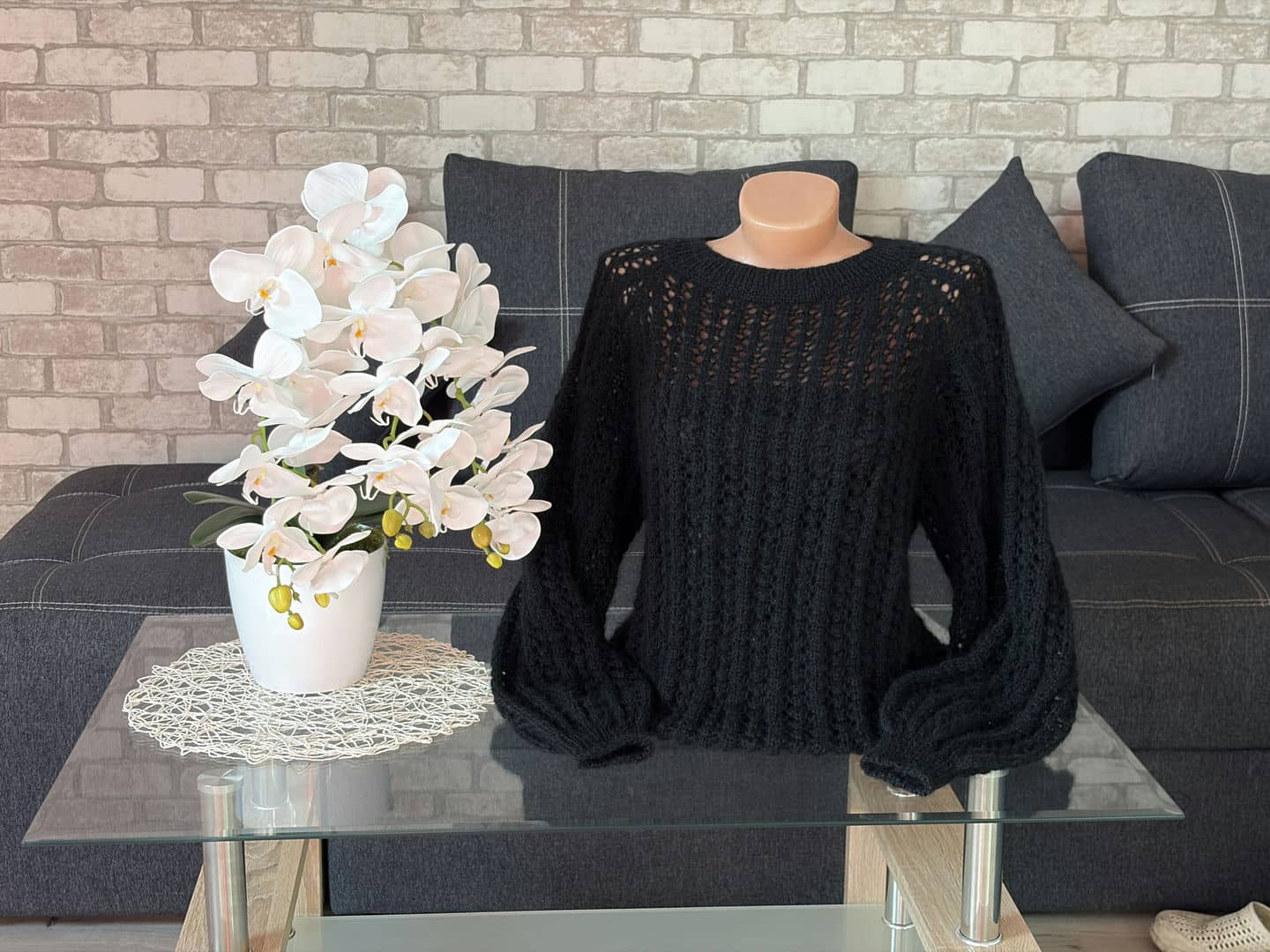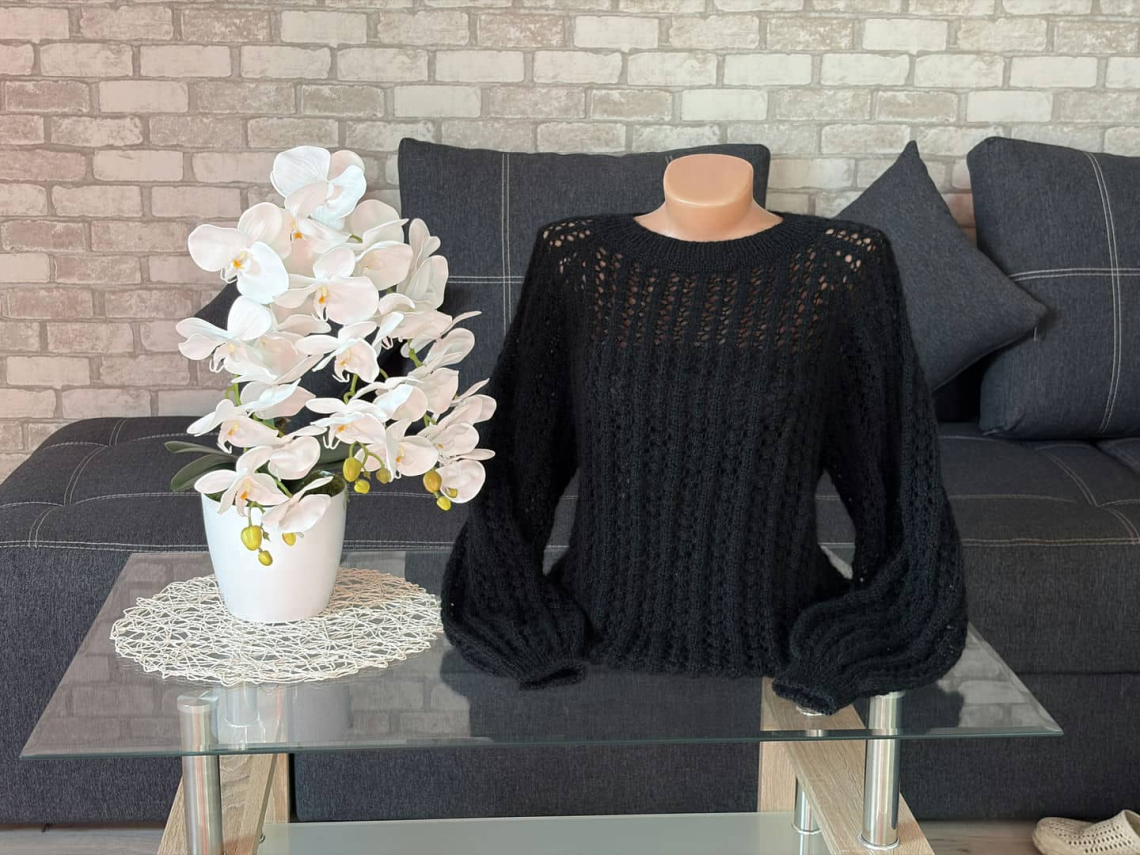
Openwork Mohair Jumper “Lily” Knitted Top-Down
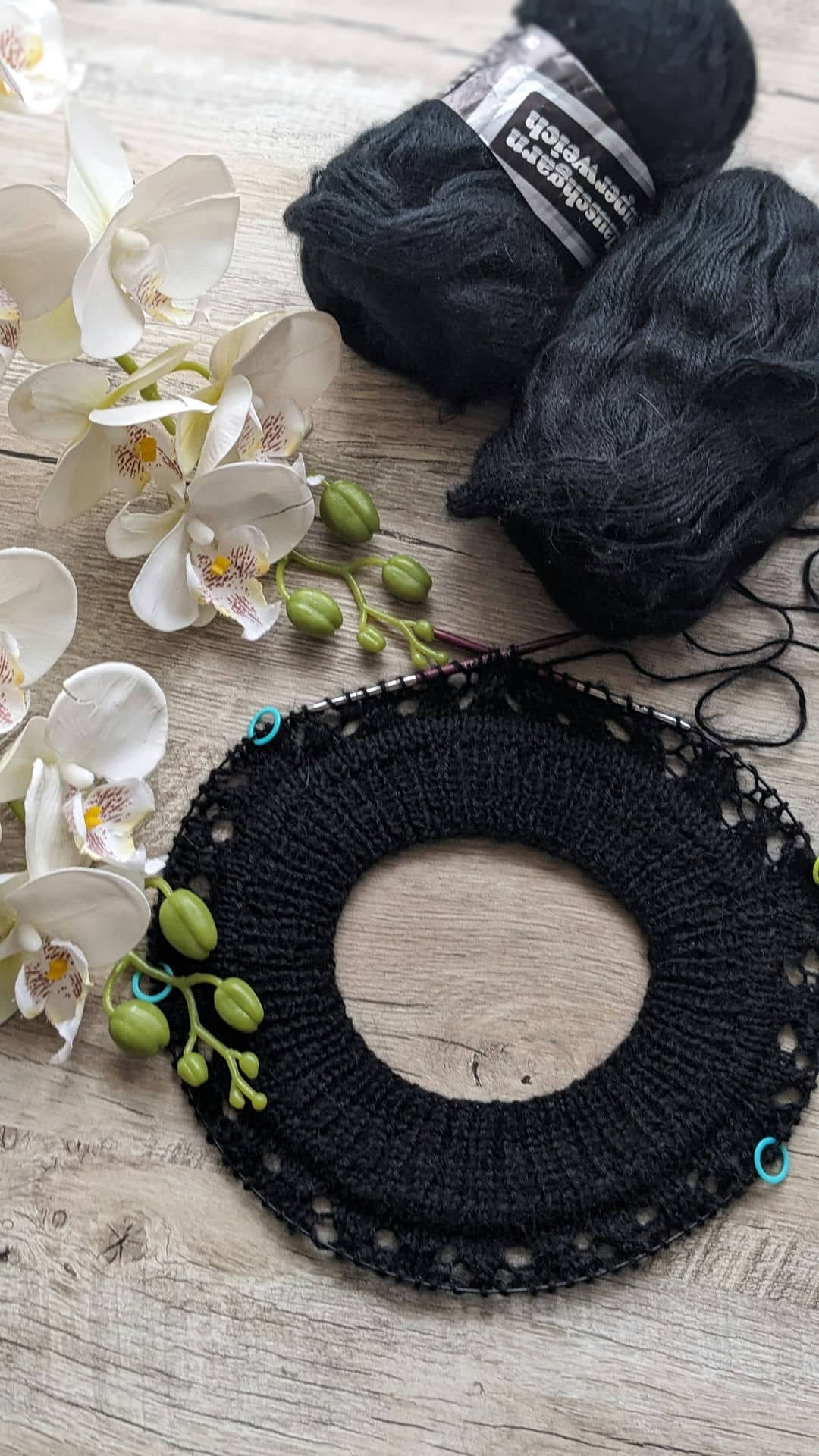
A new knitting project.
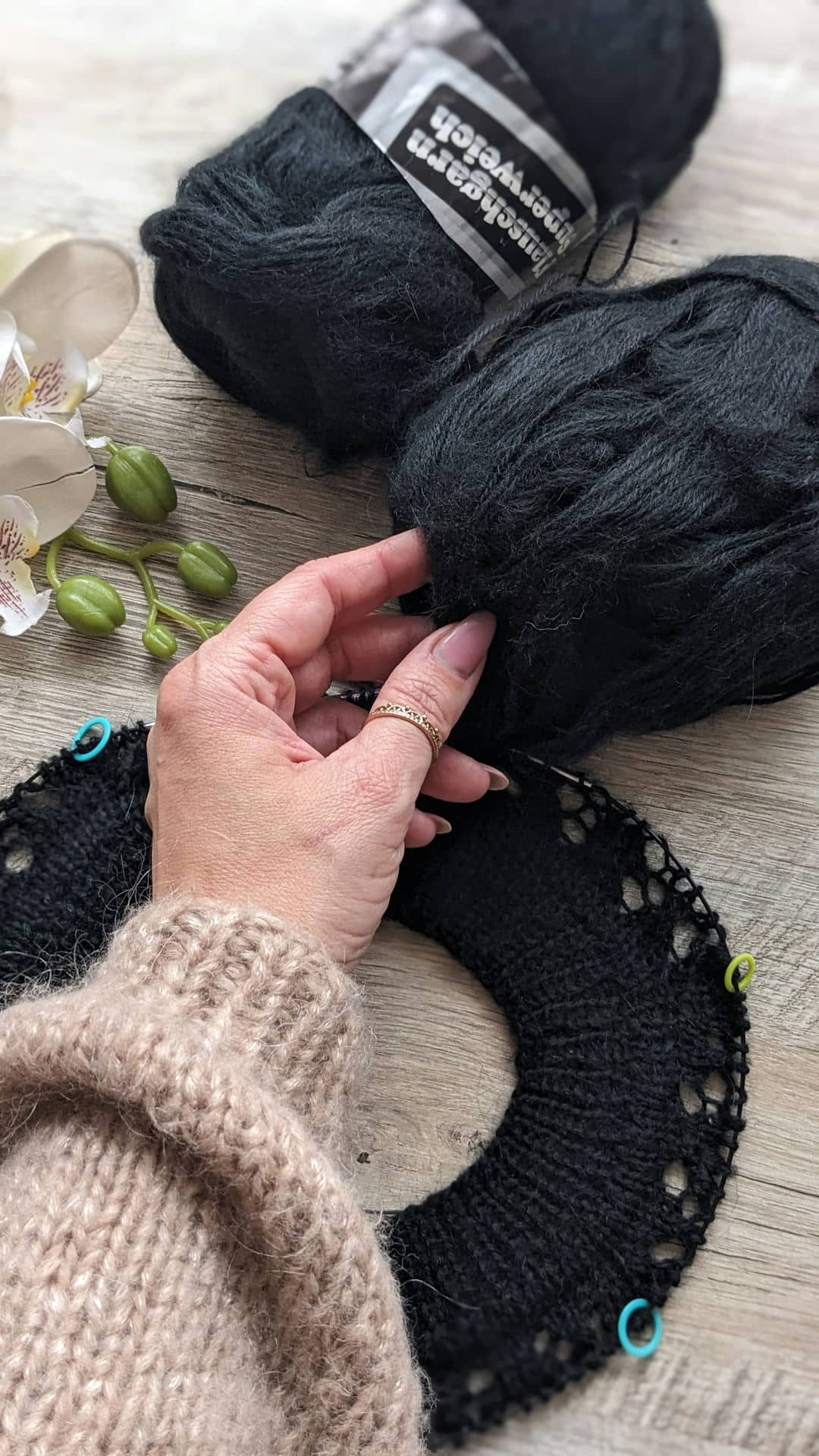
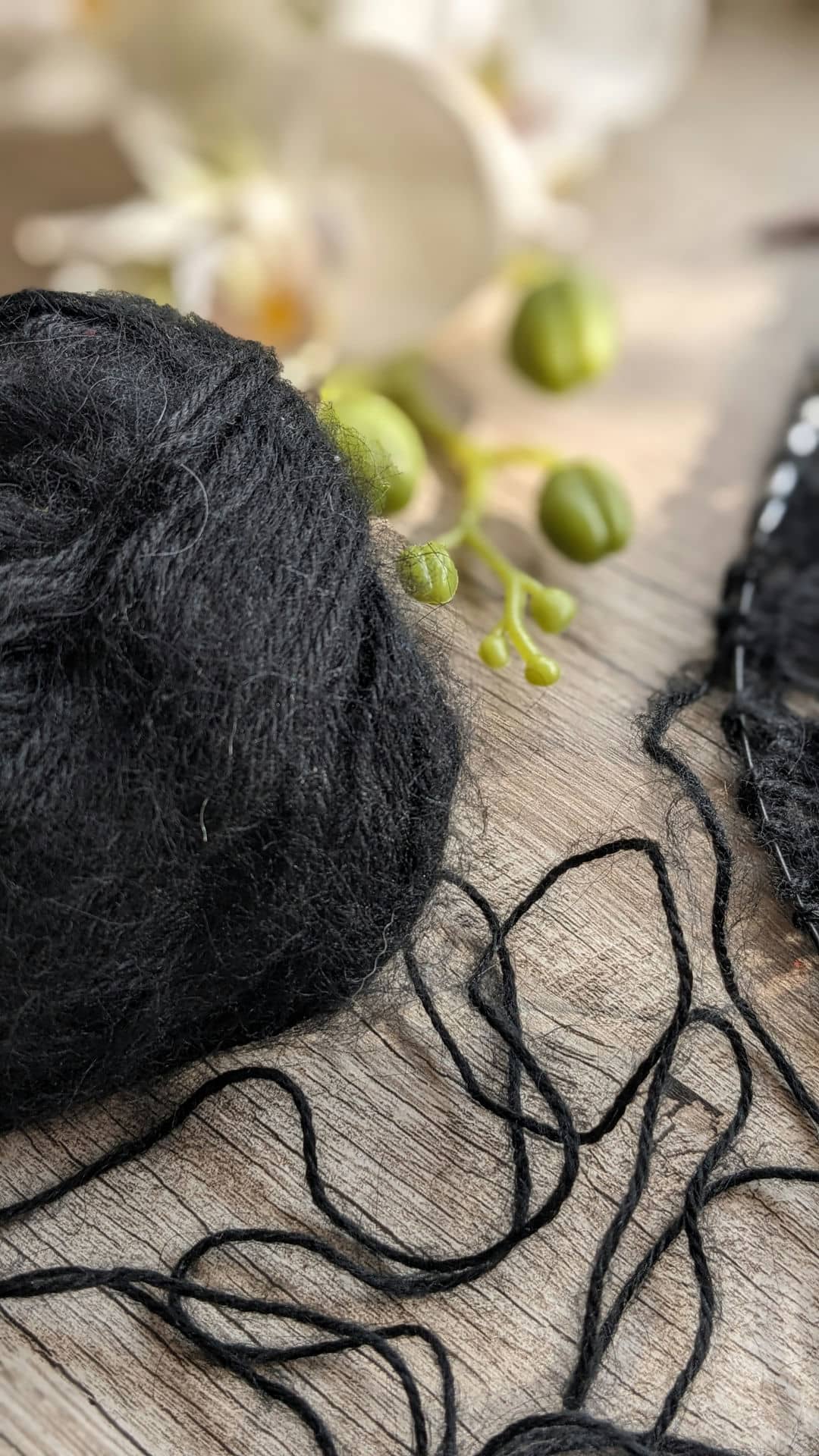
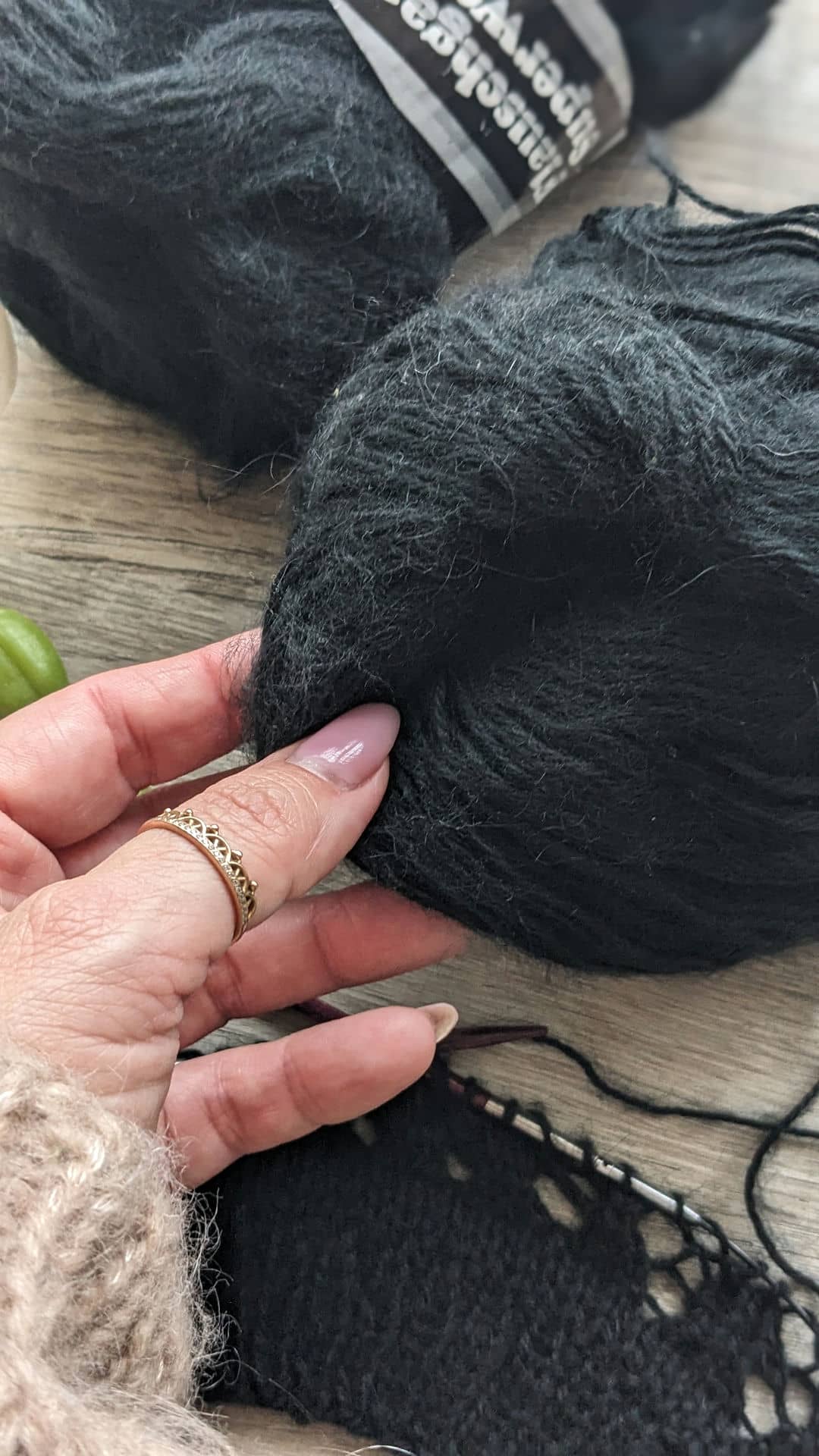
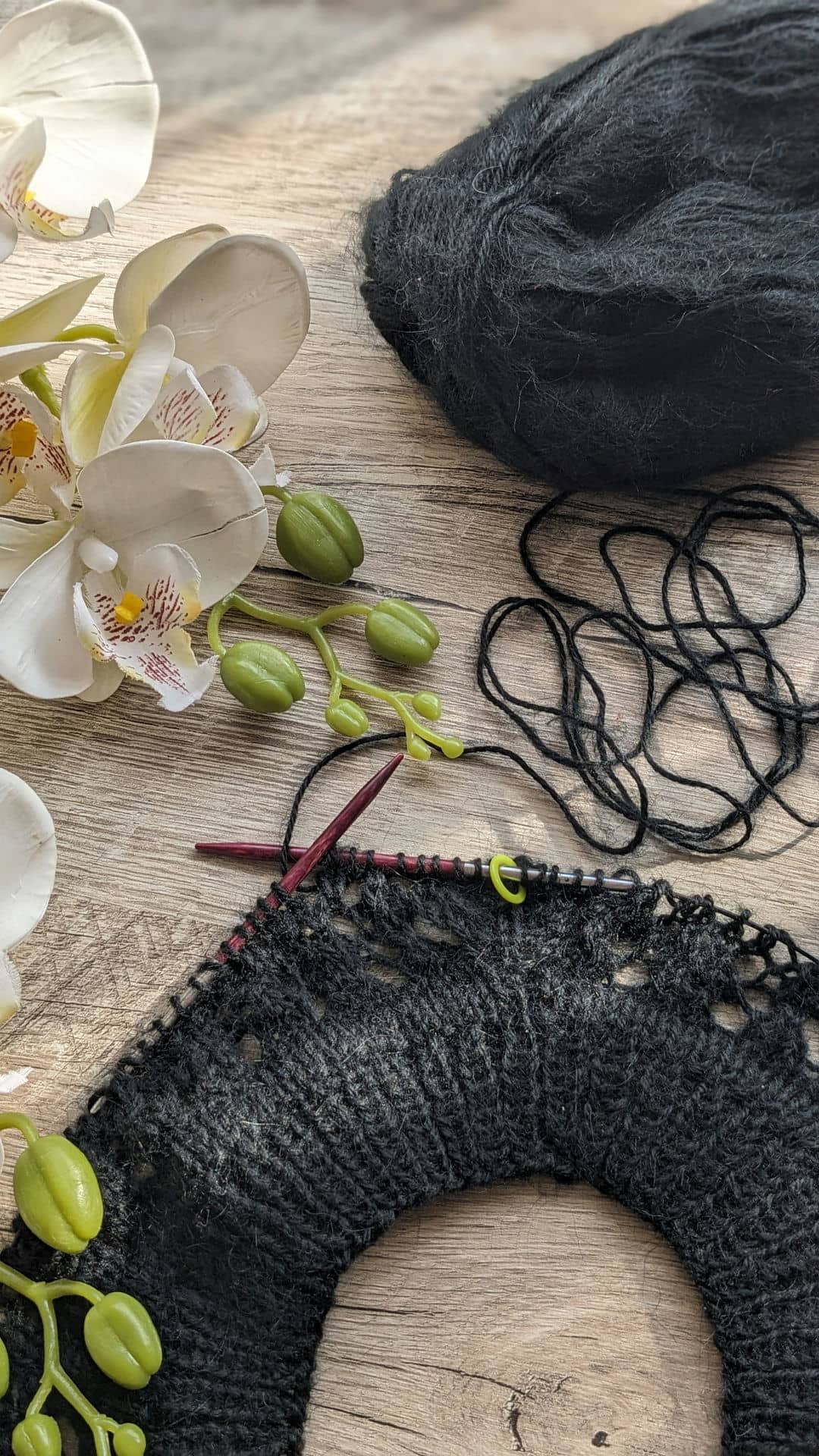
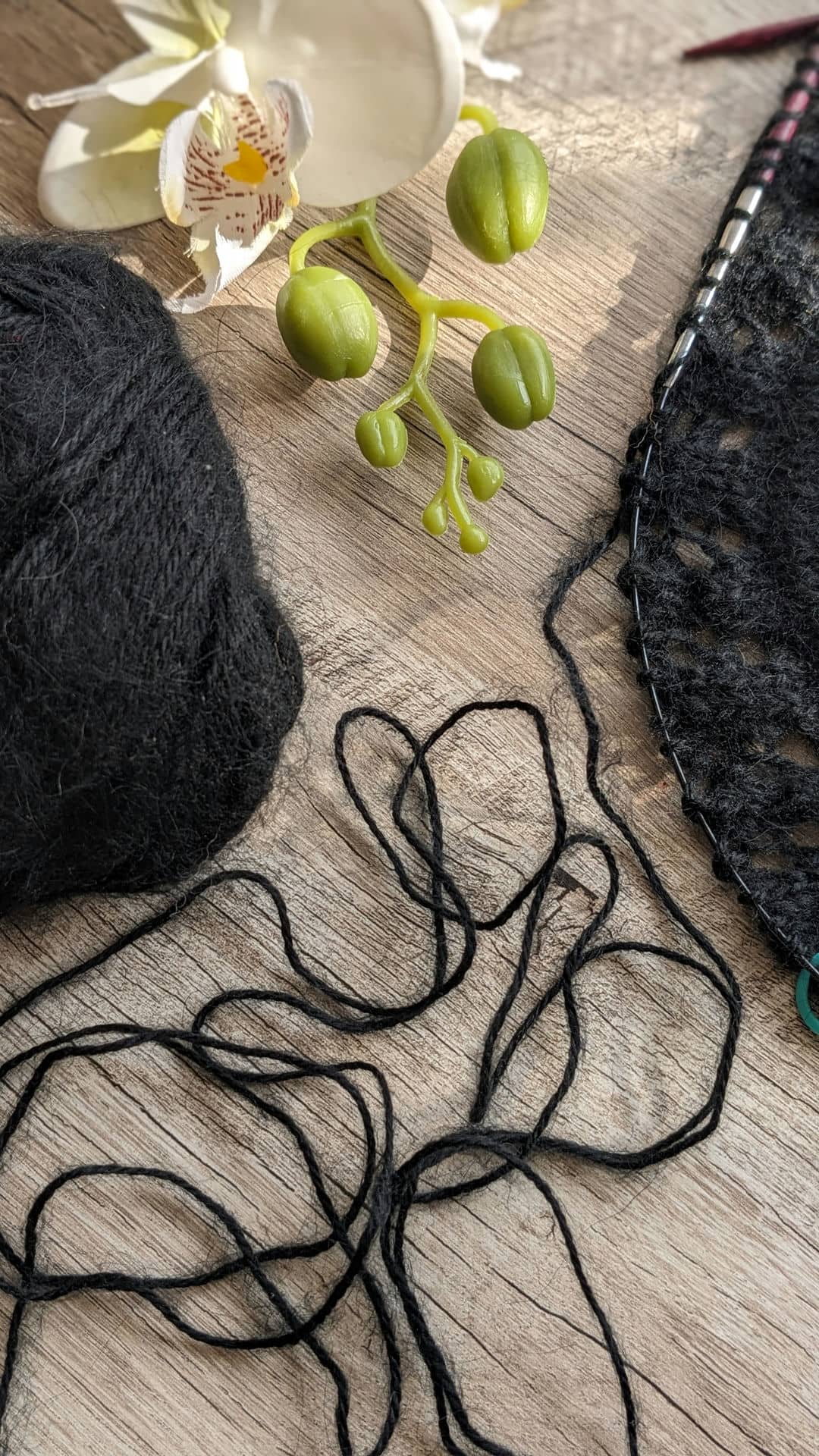
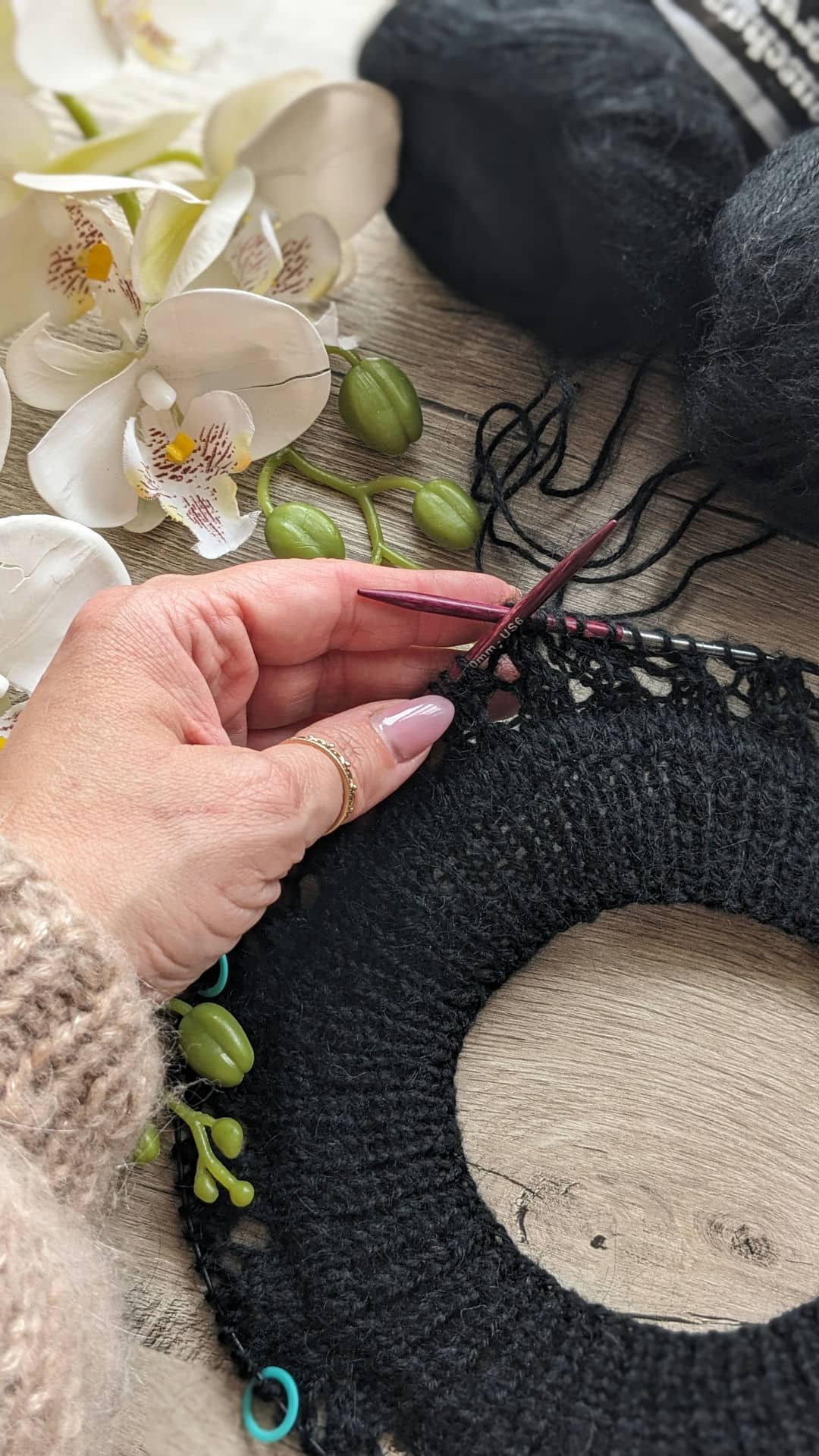
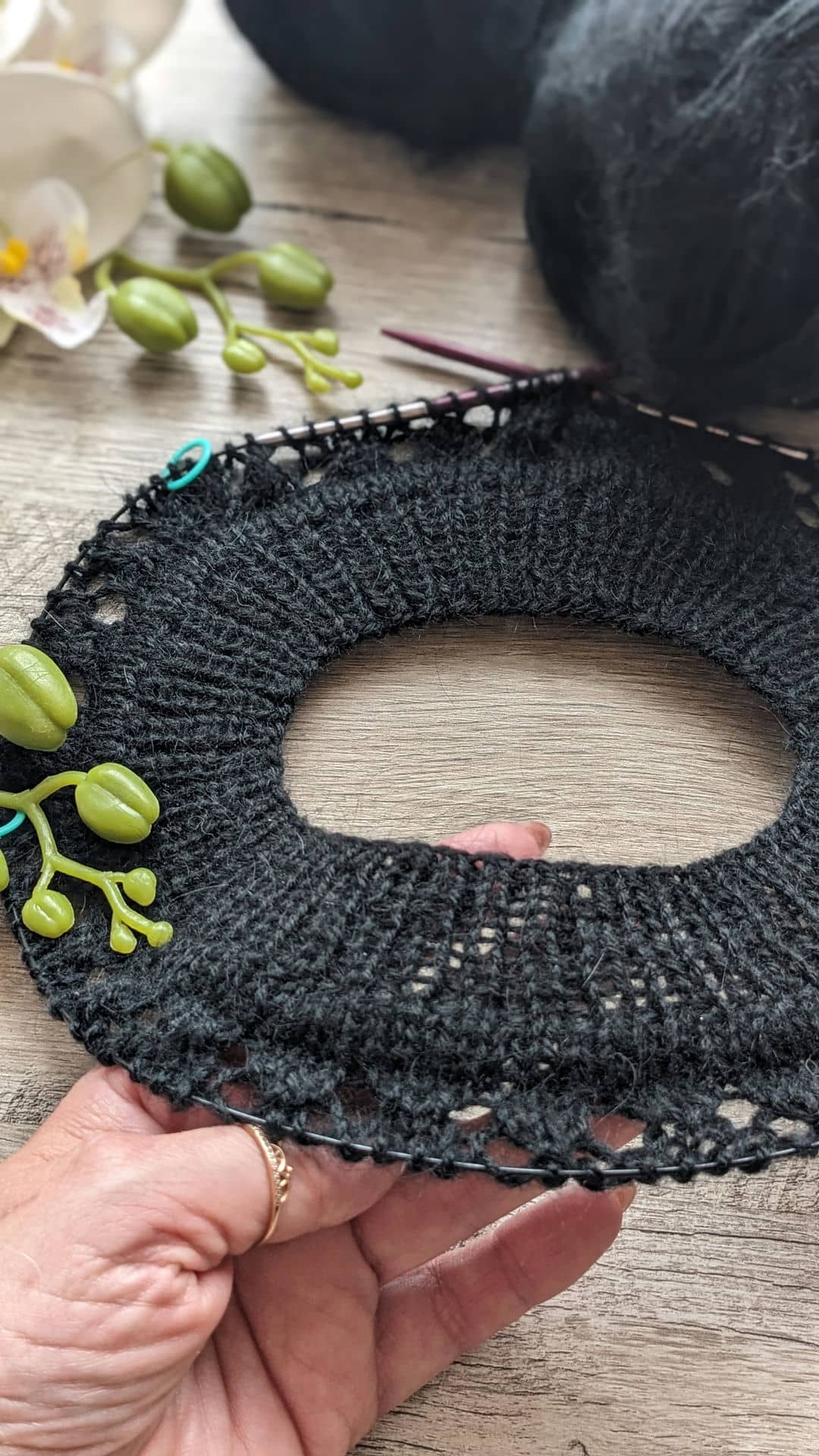
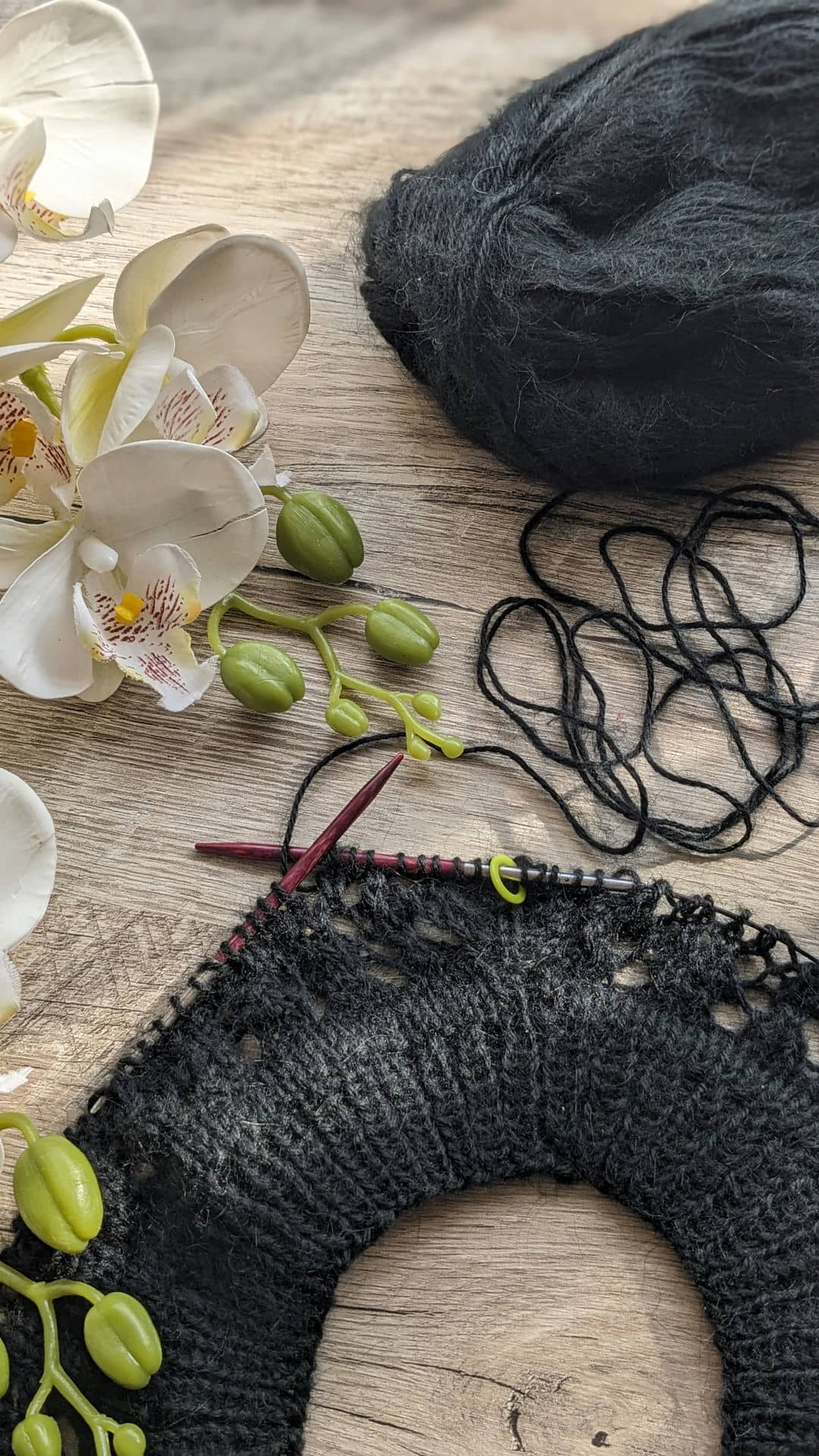
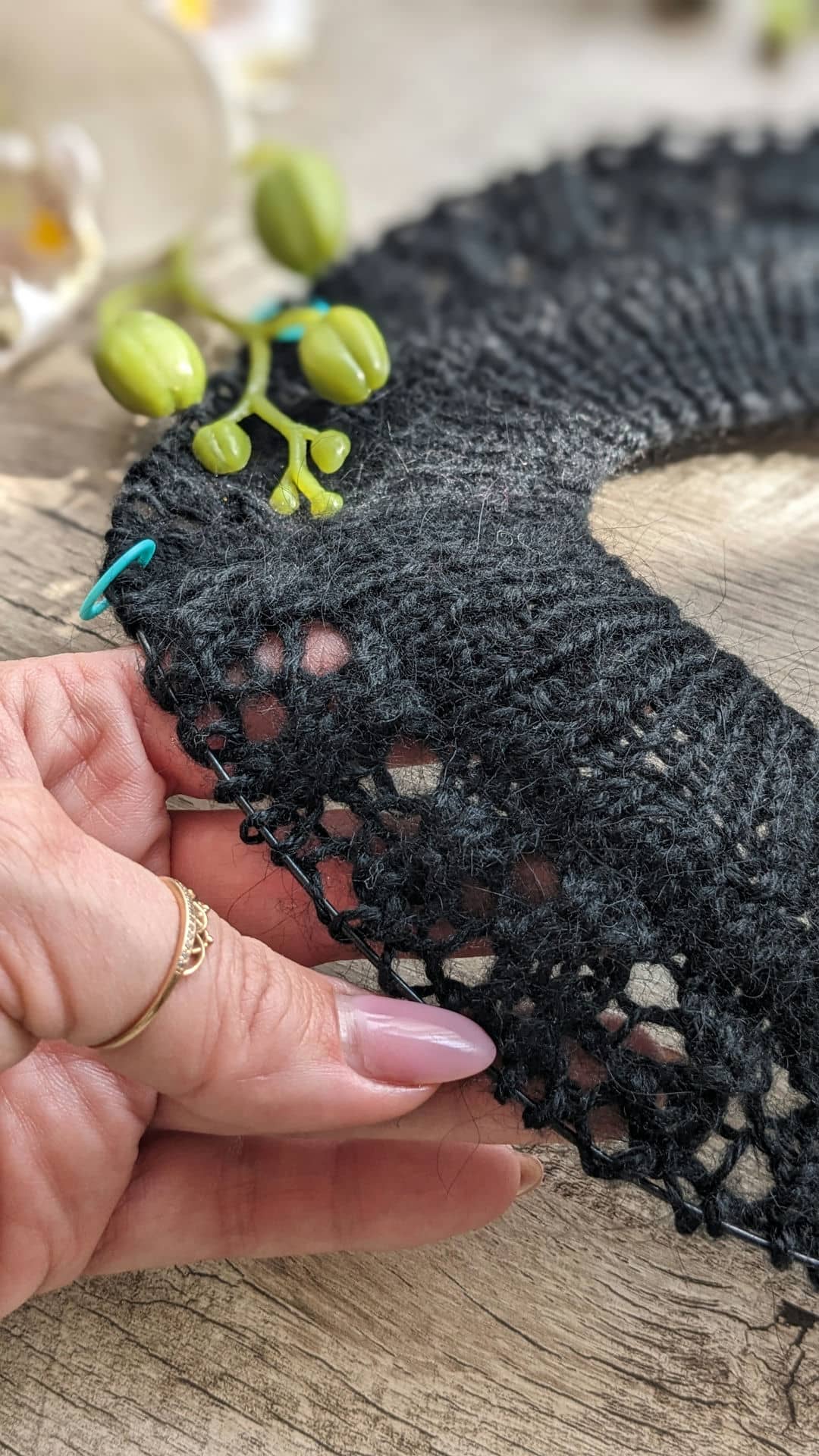
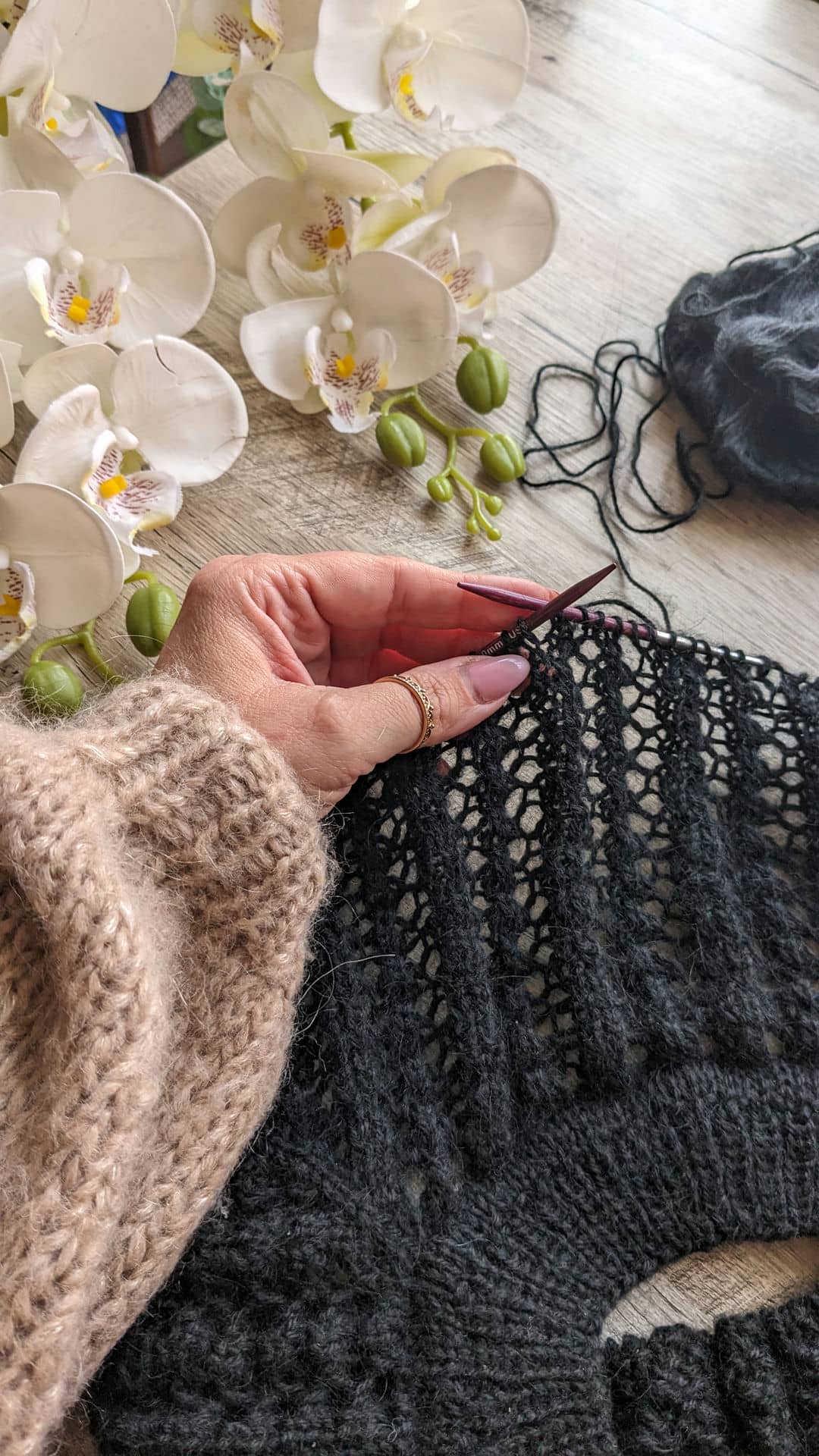
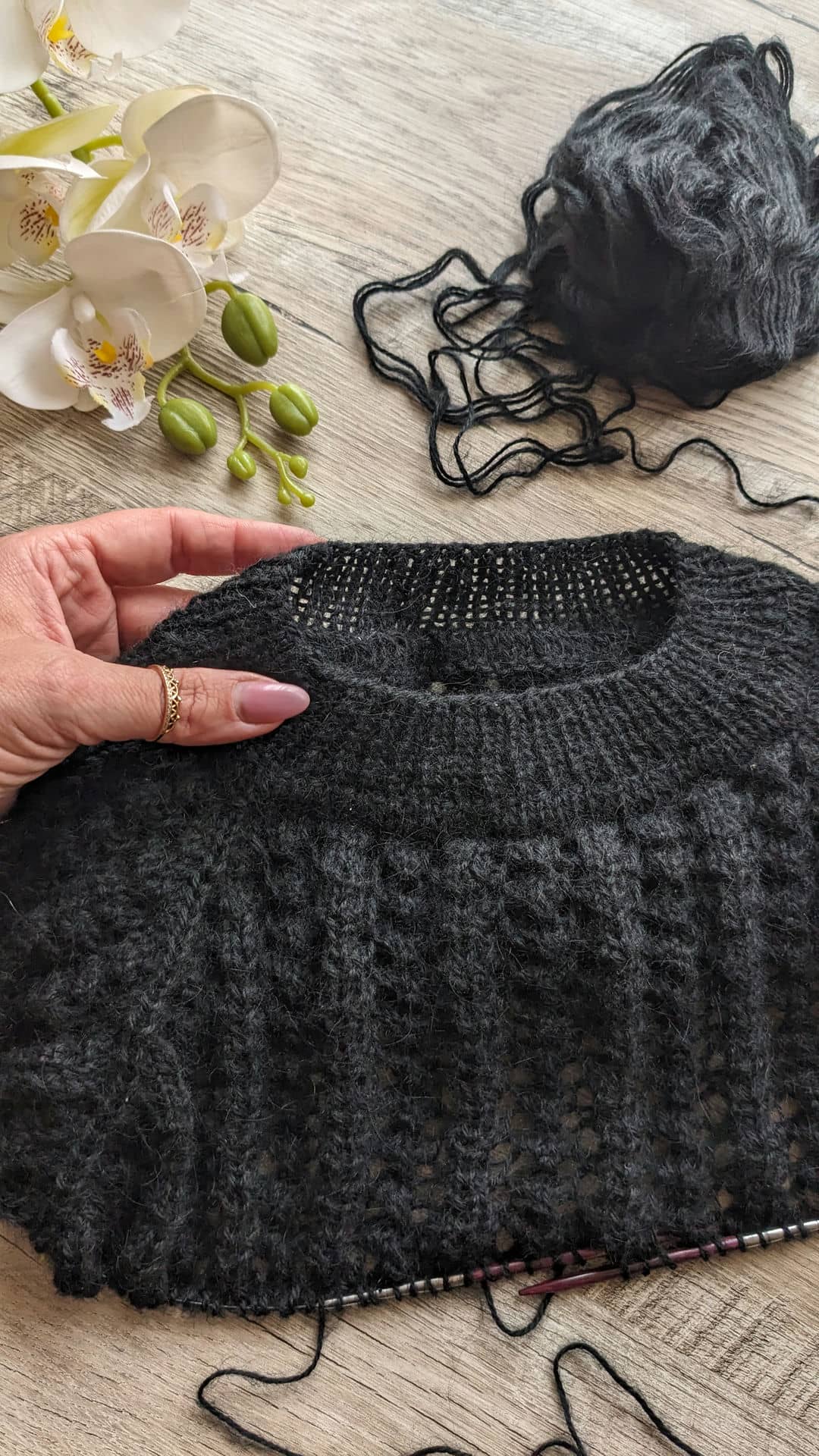
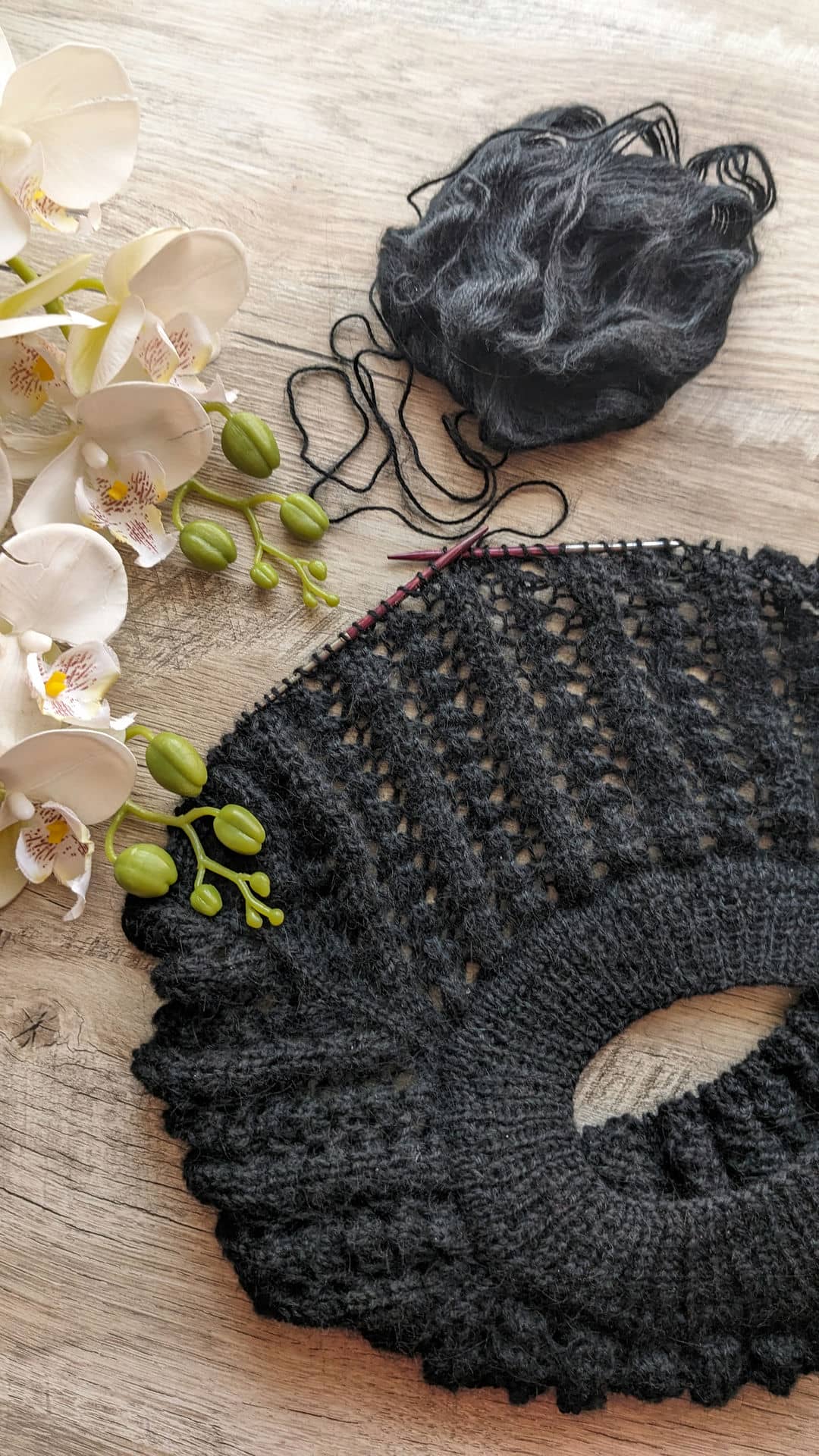
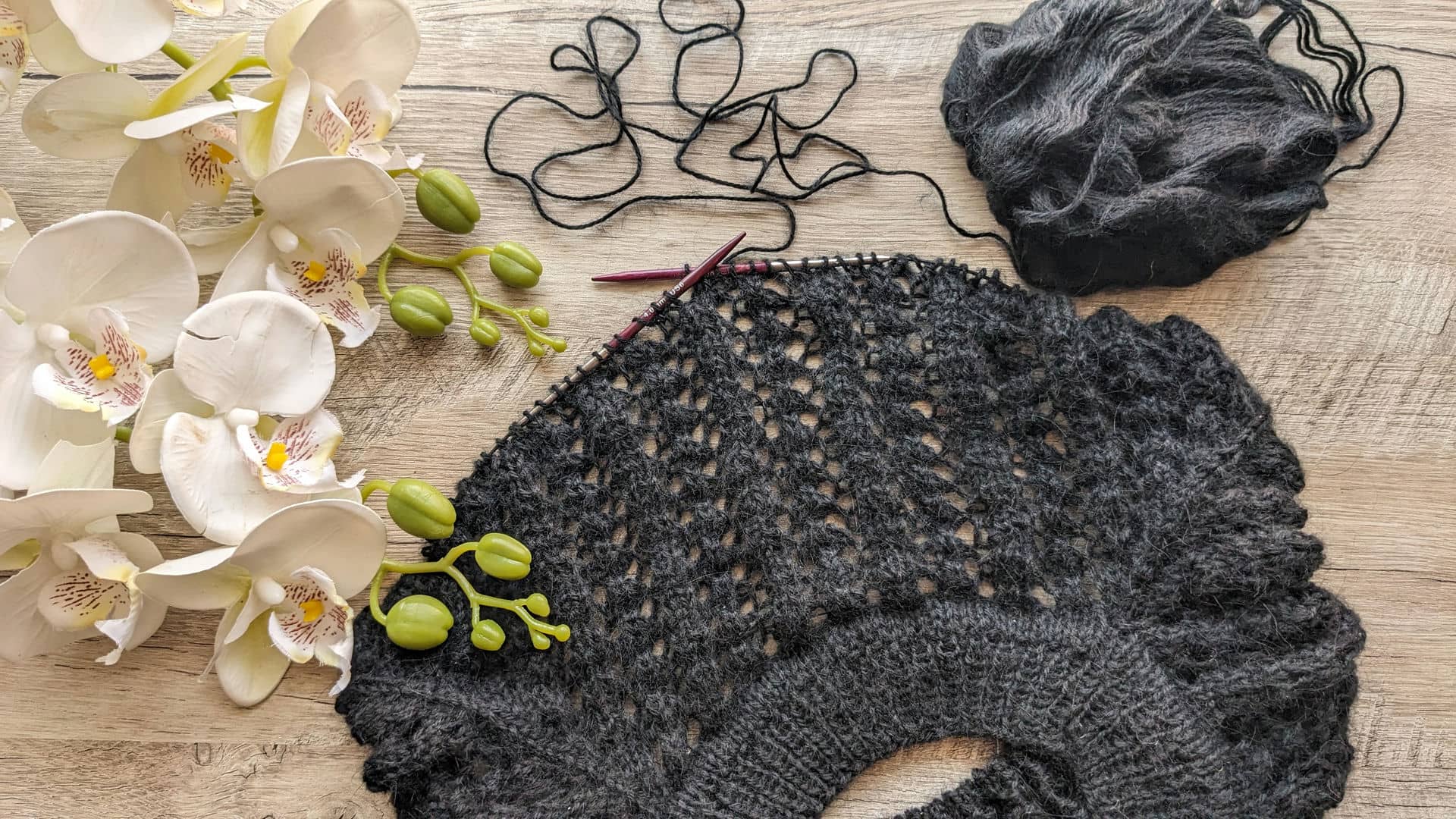
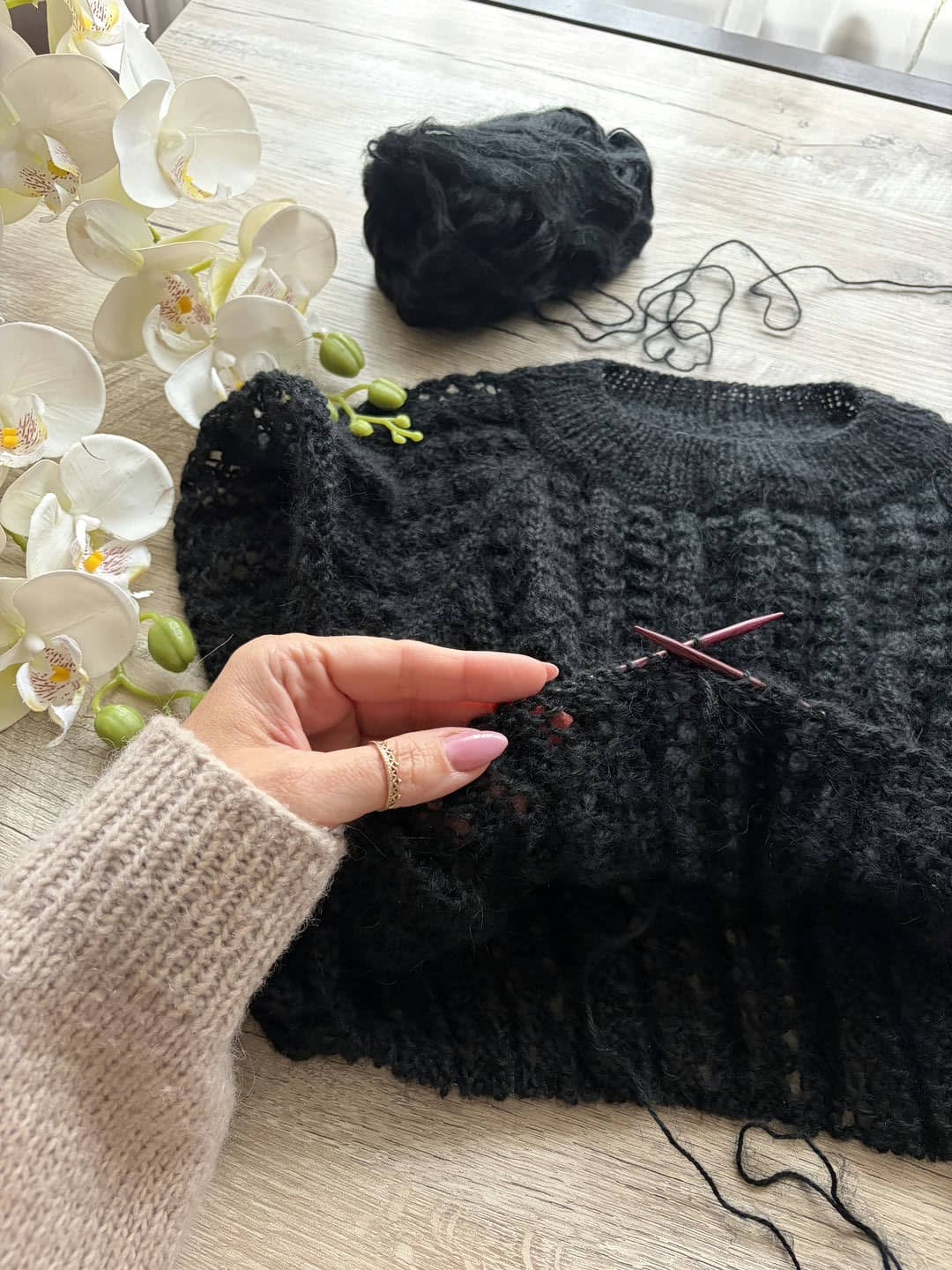
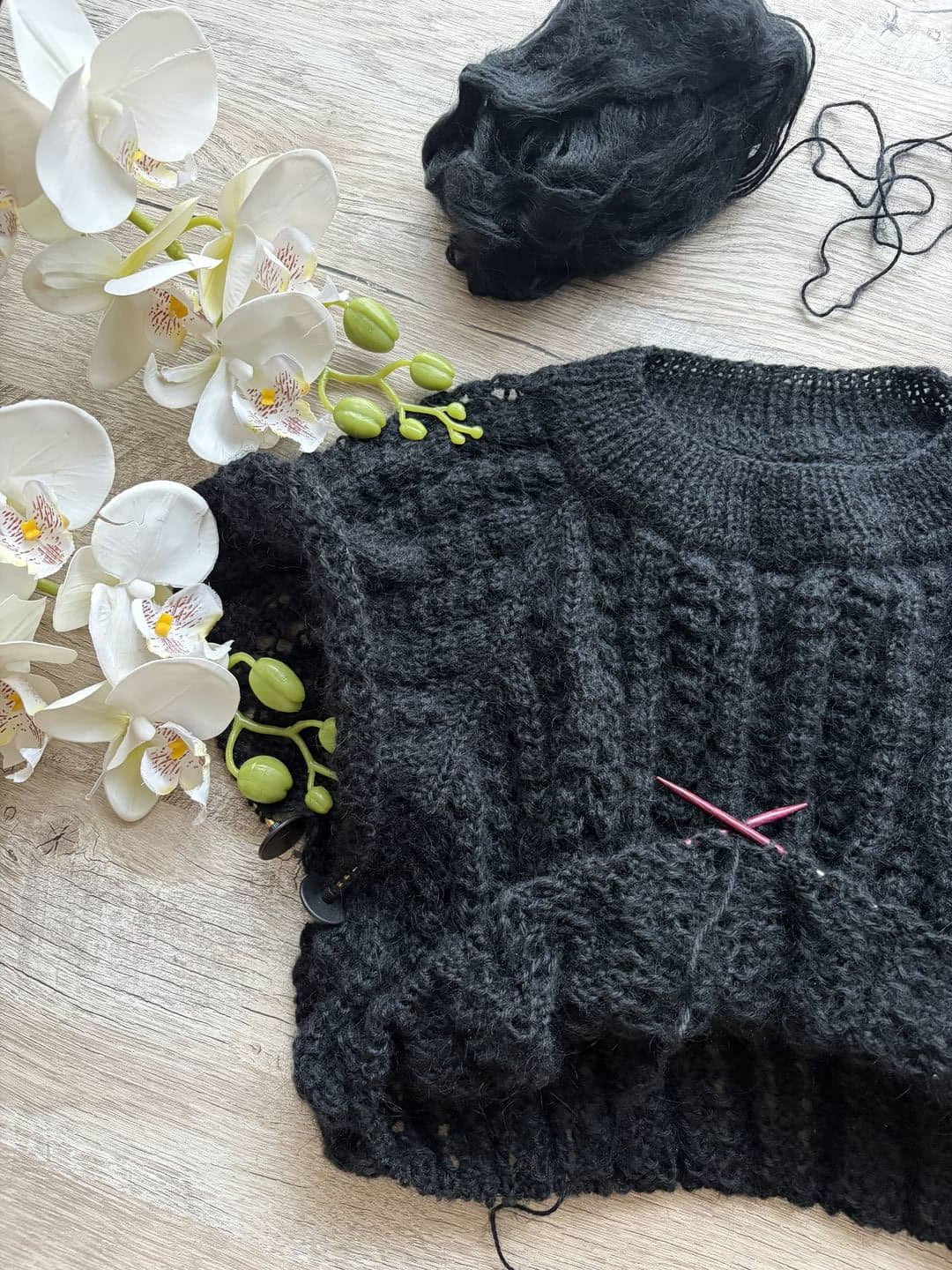
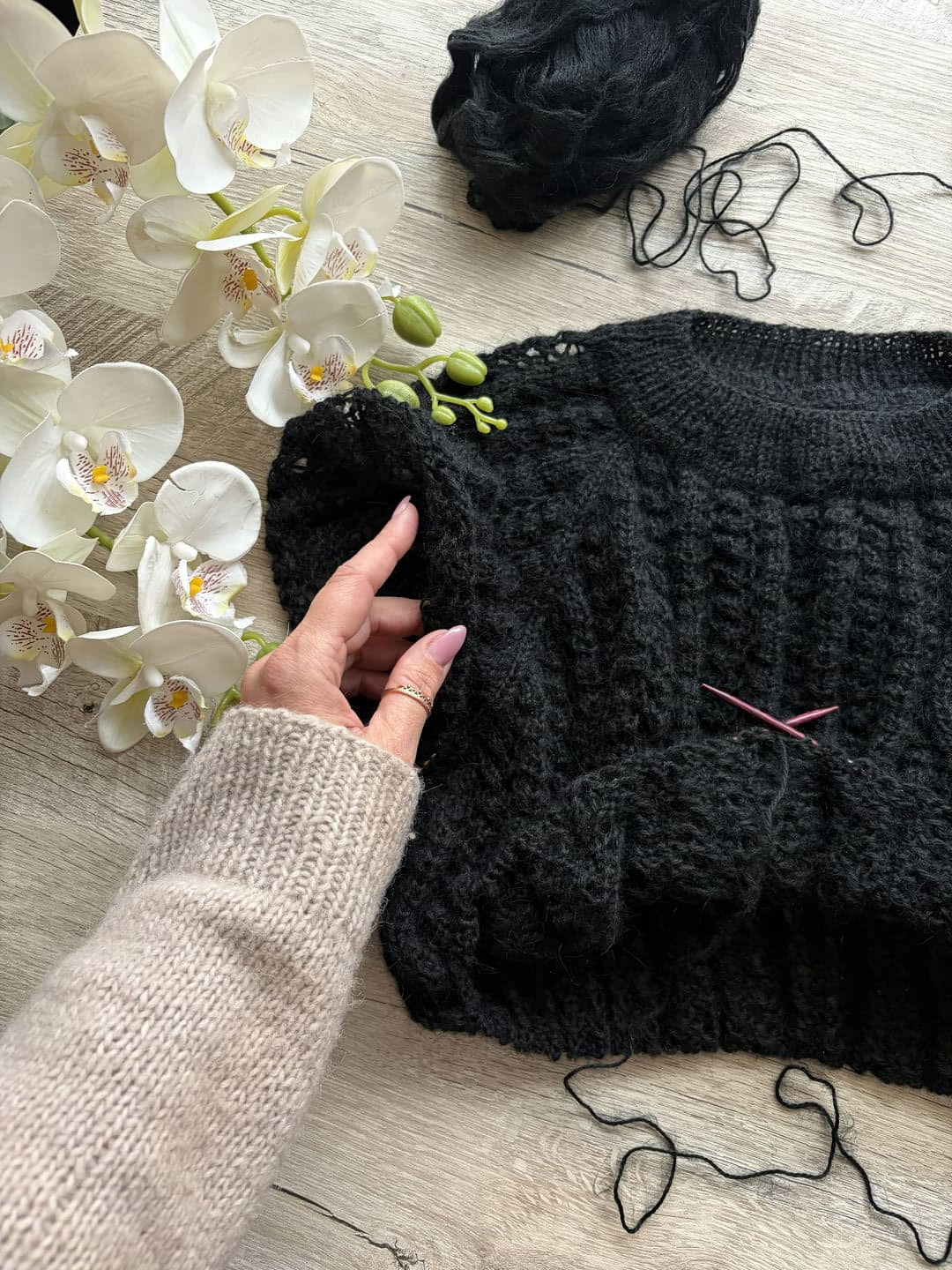
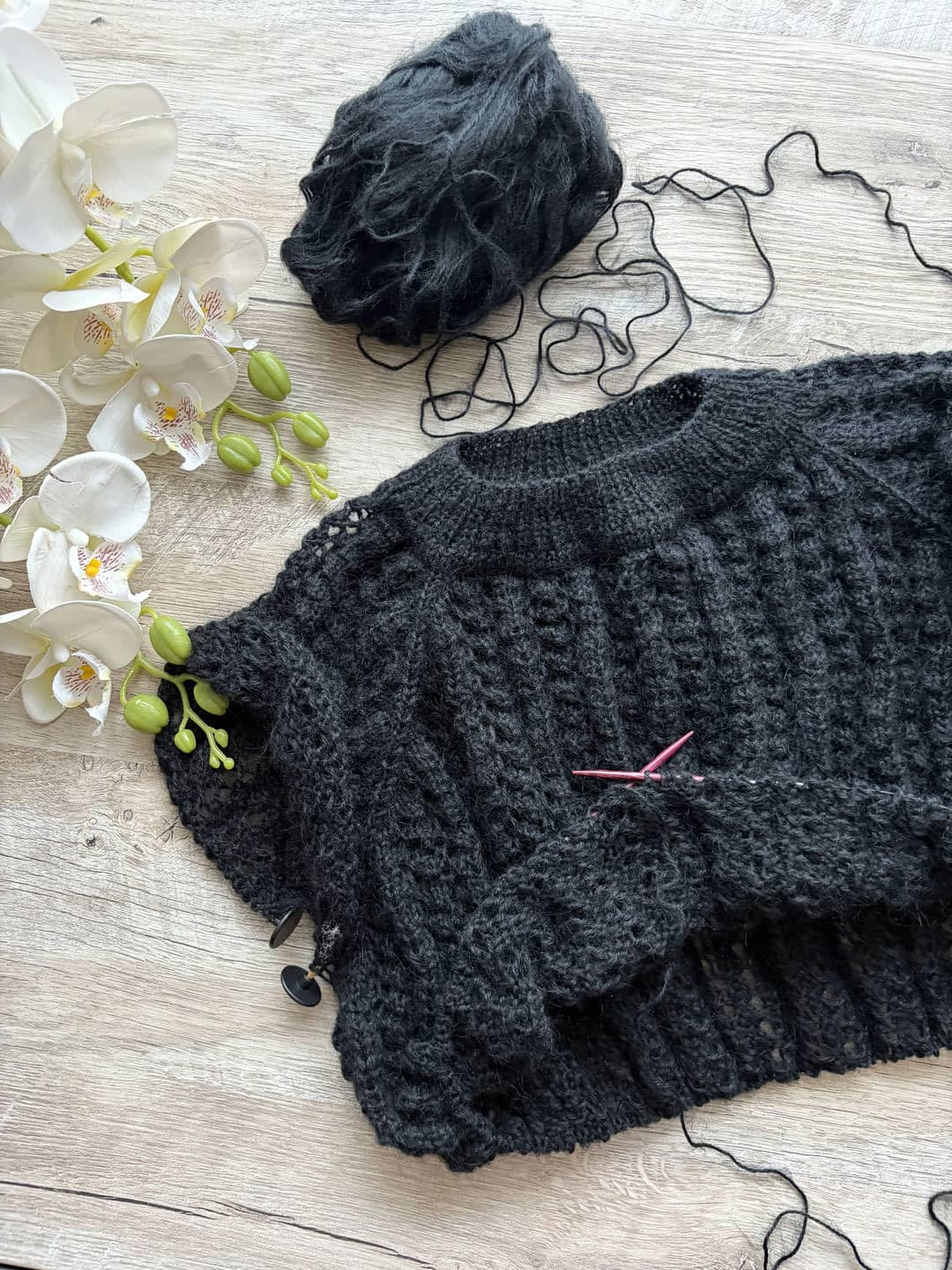
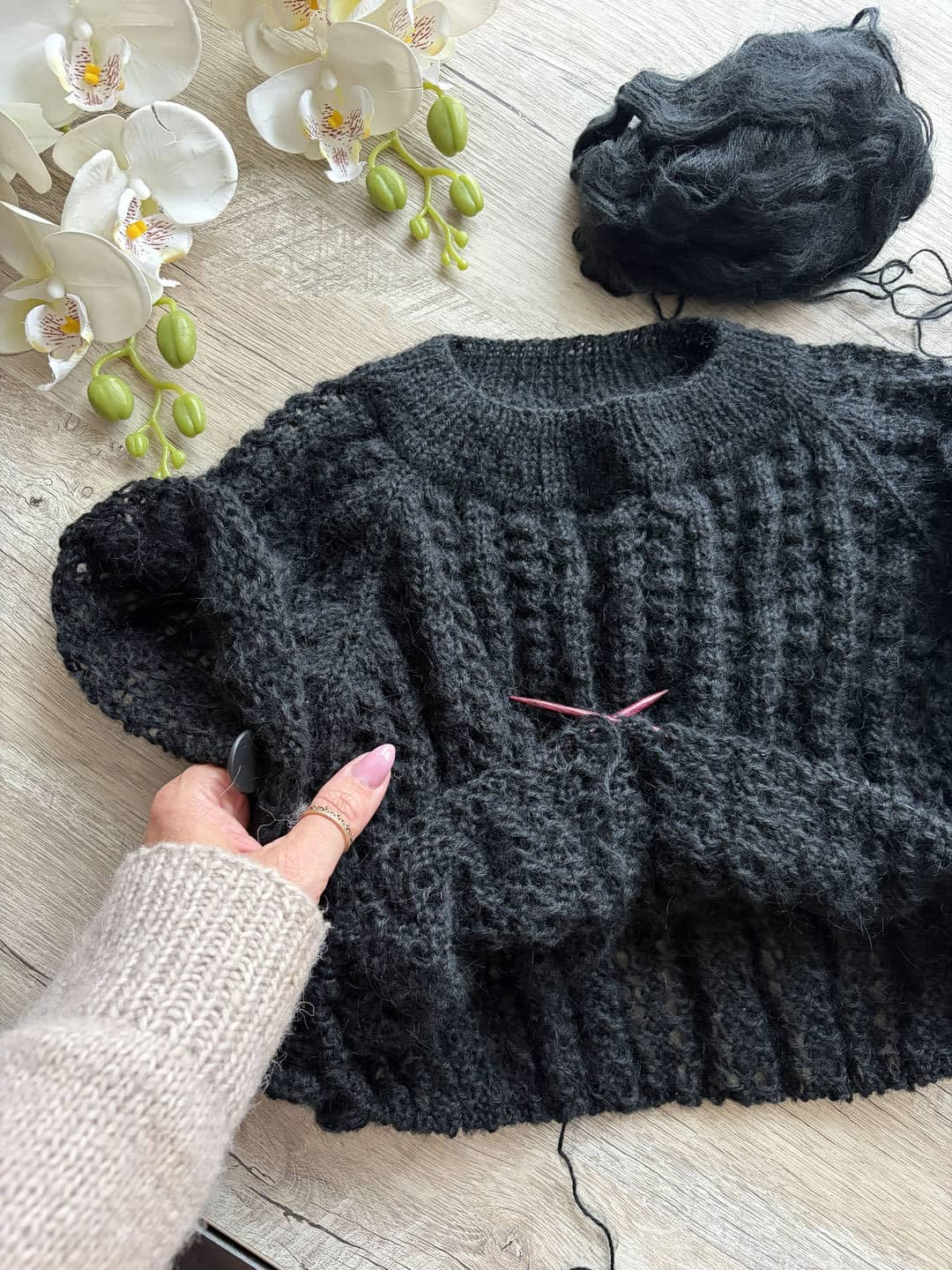
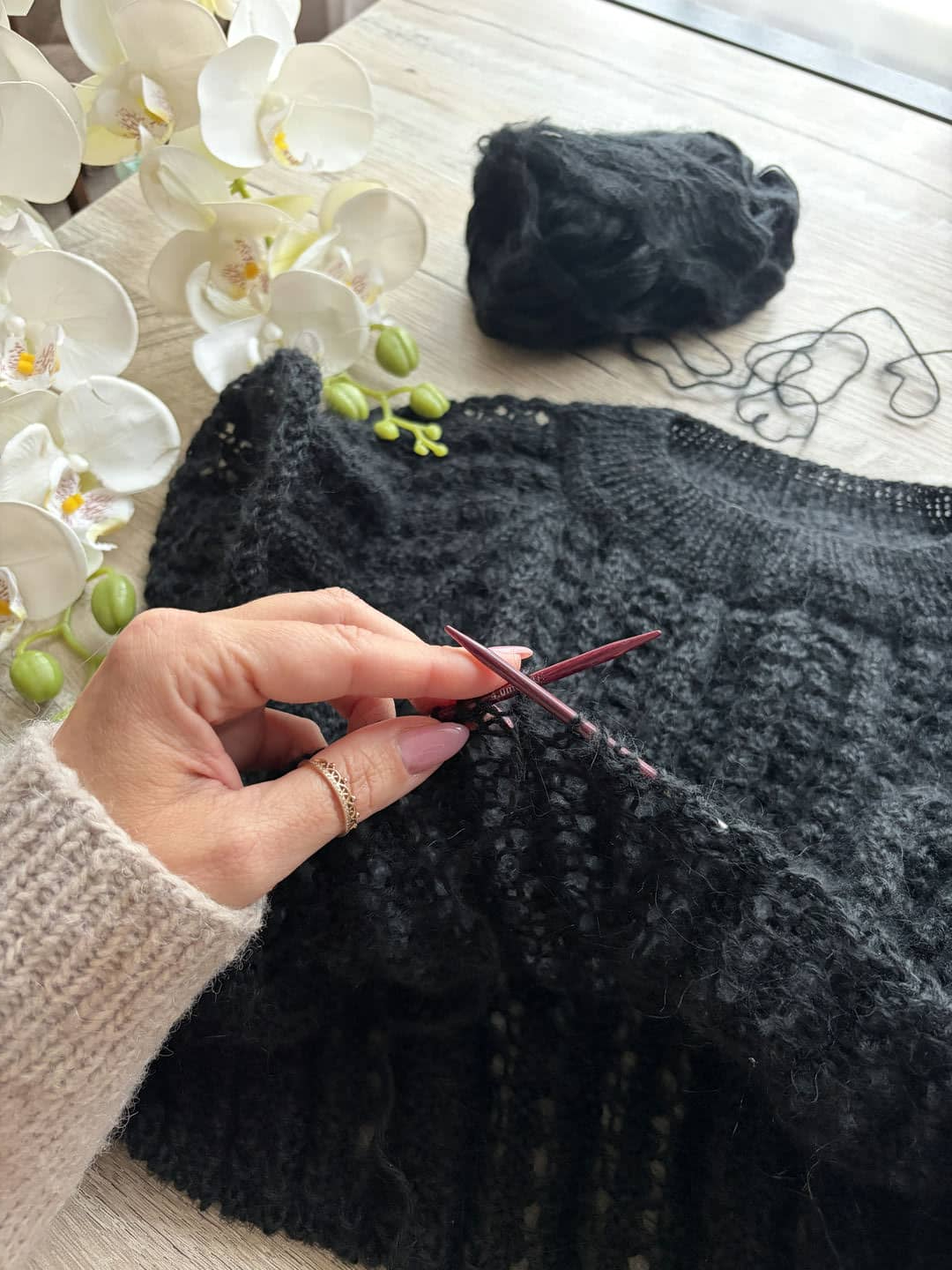
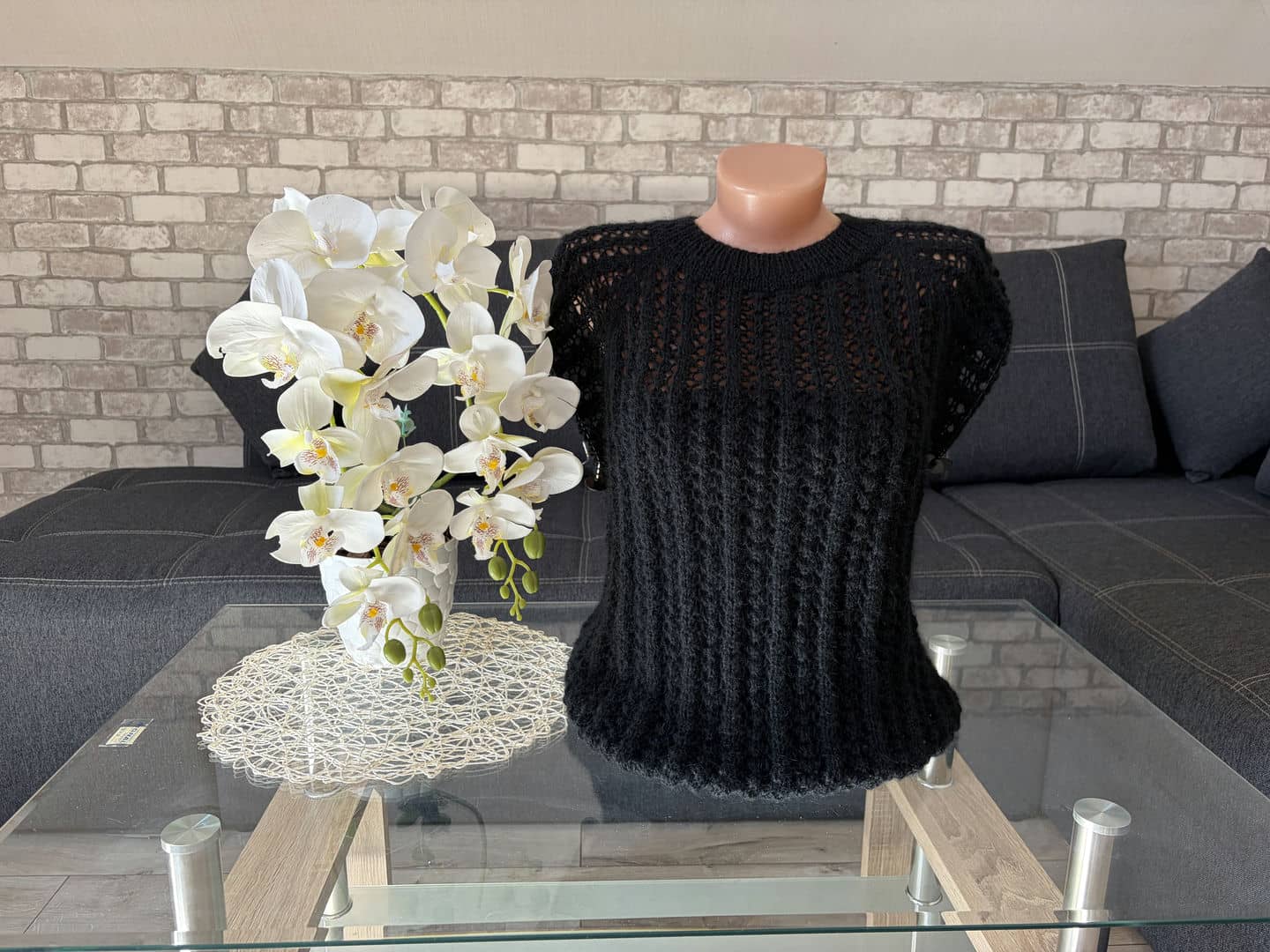
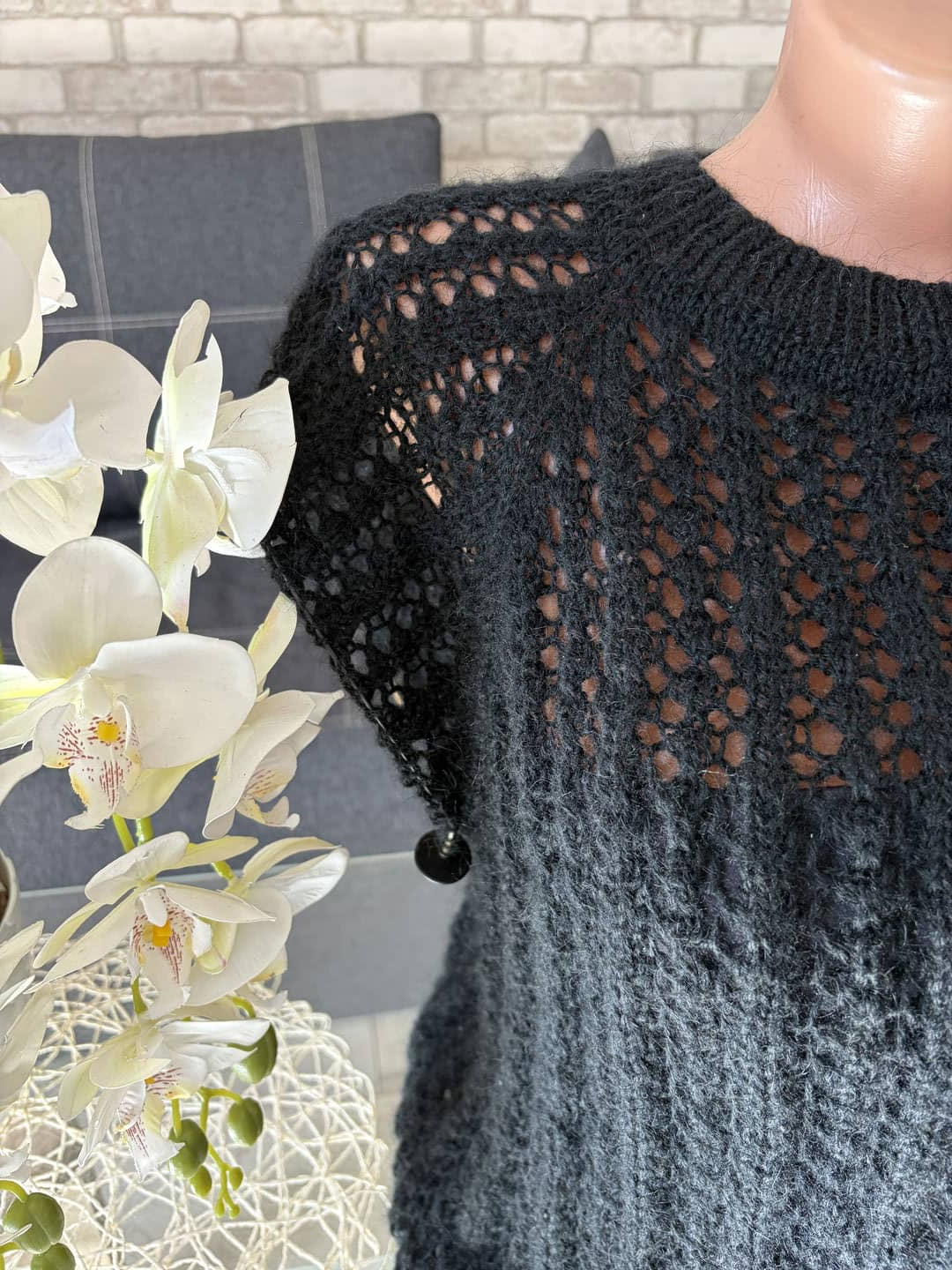
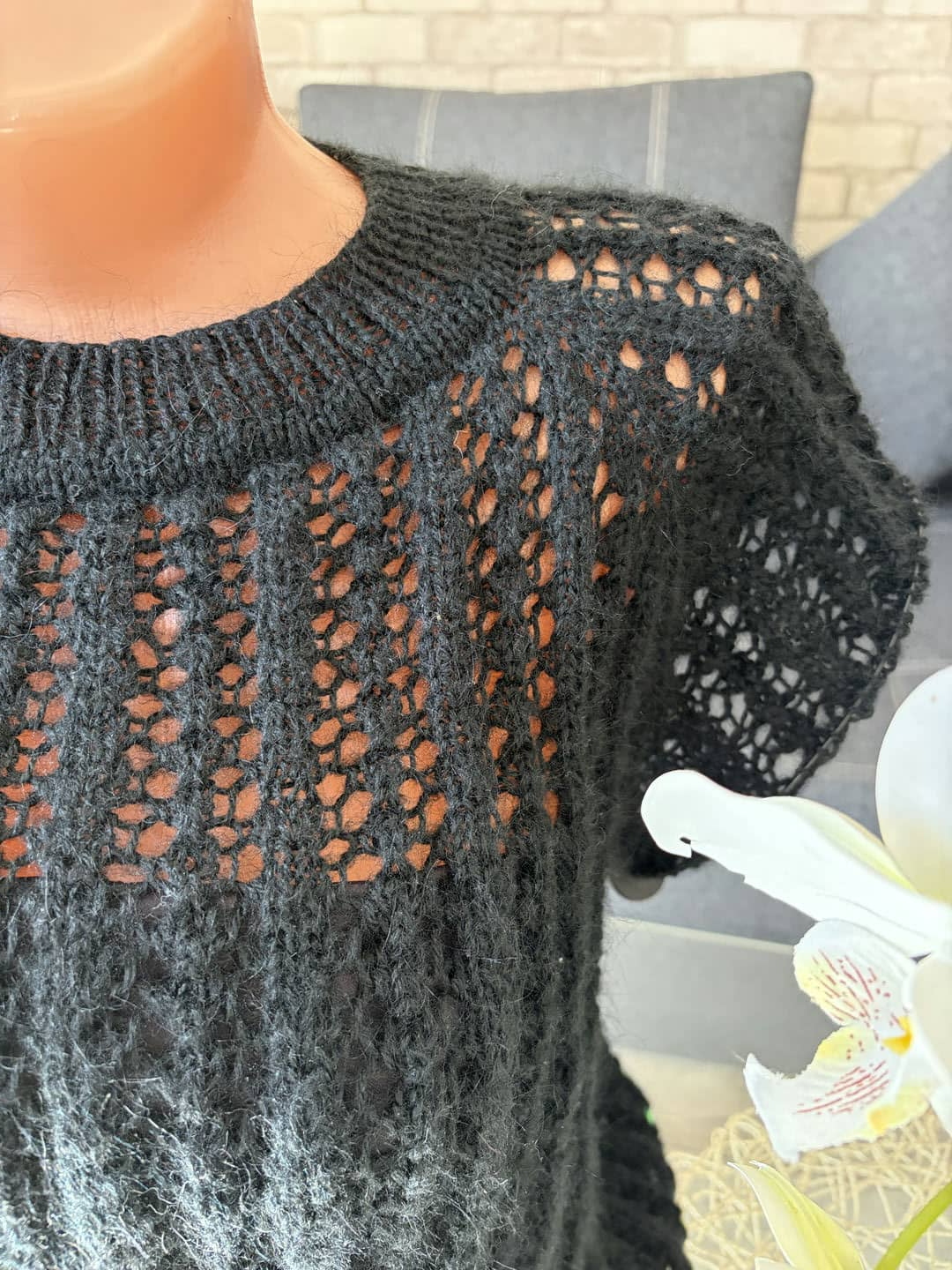
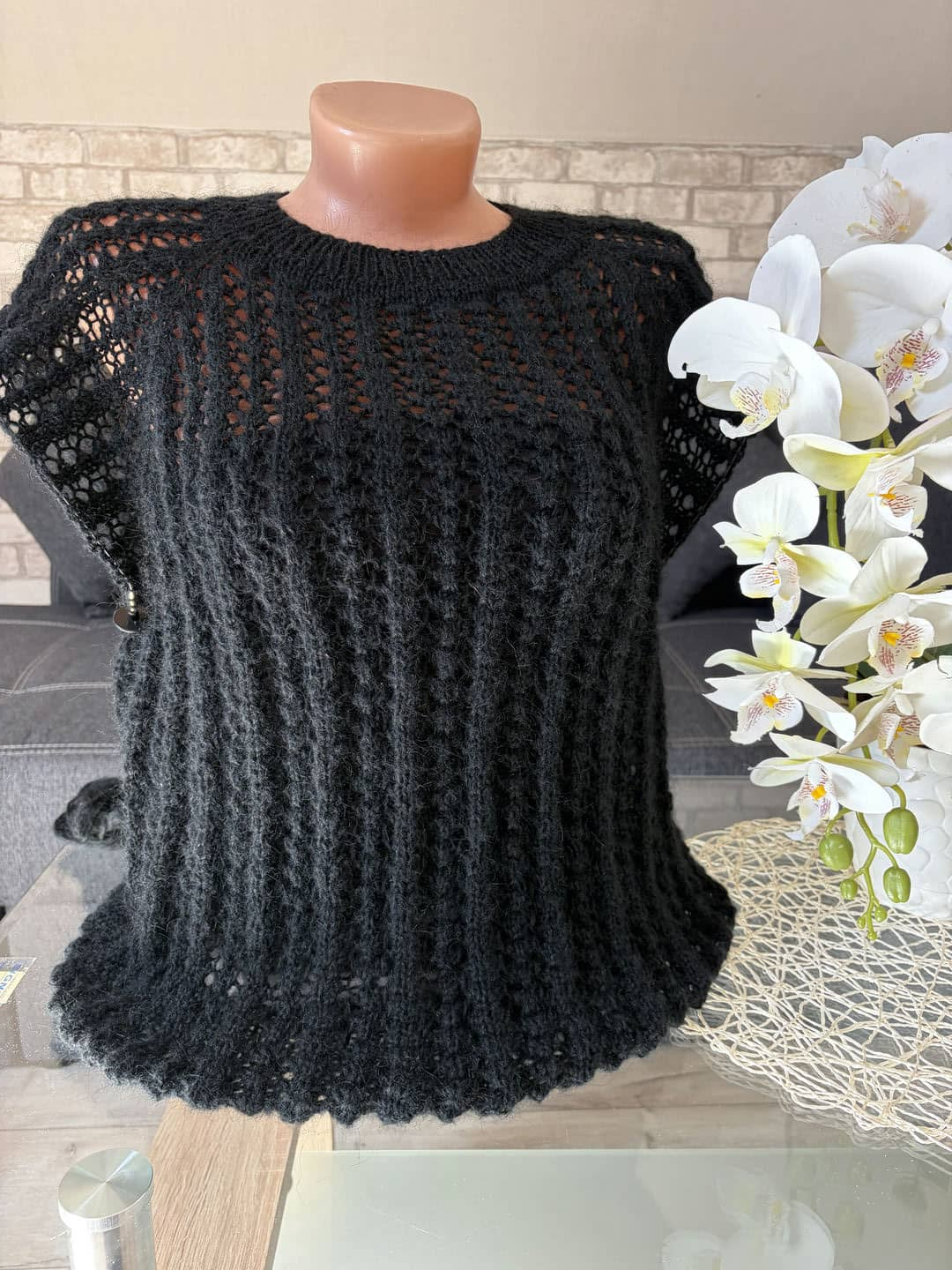
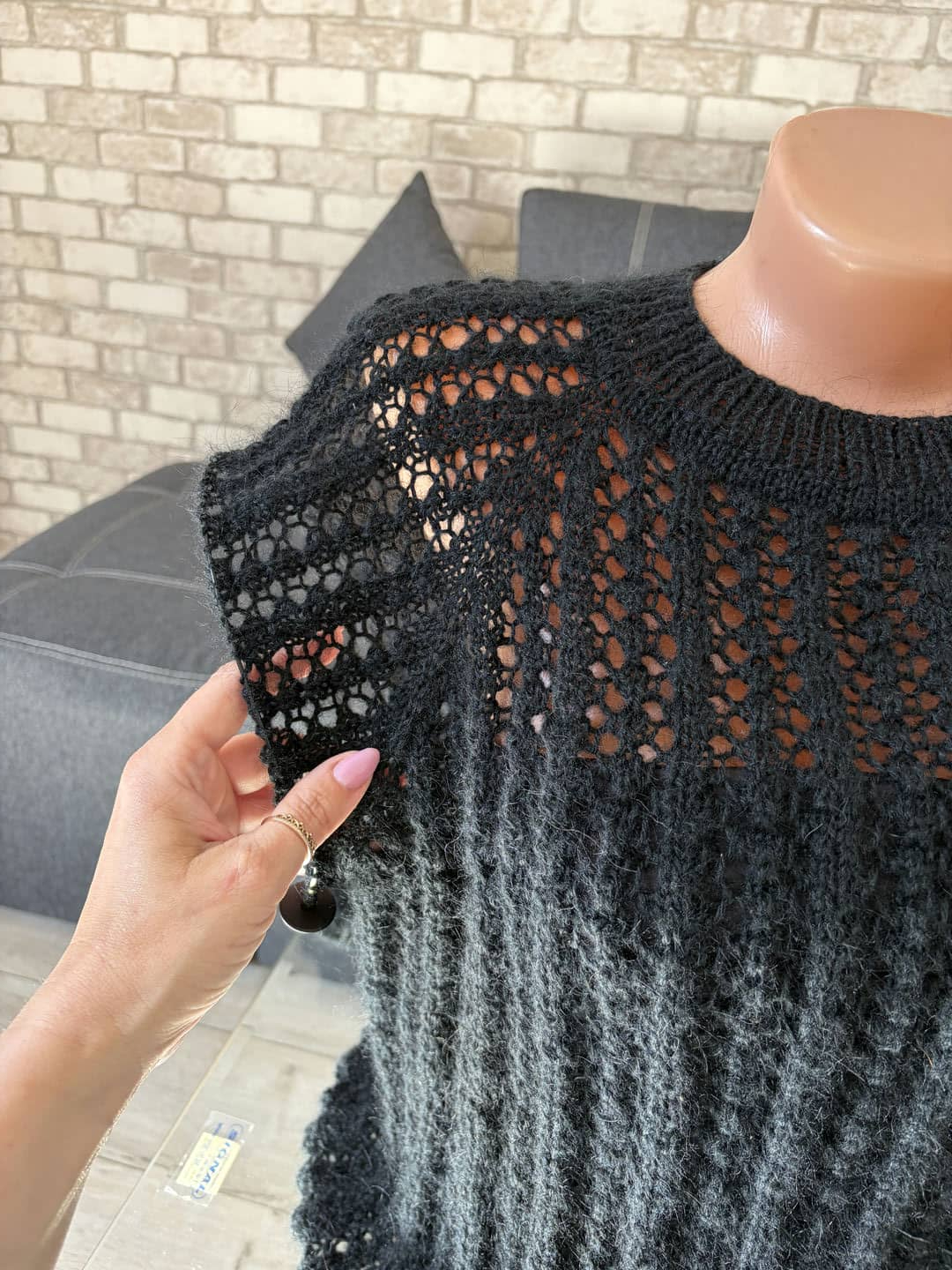
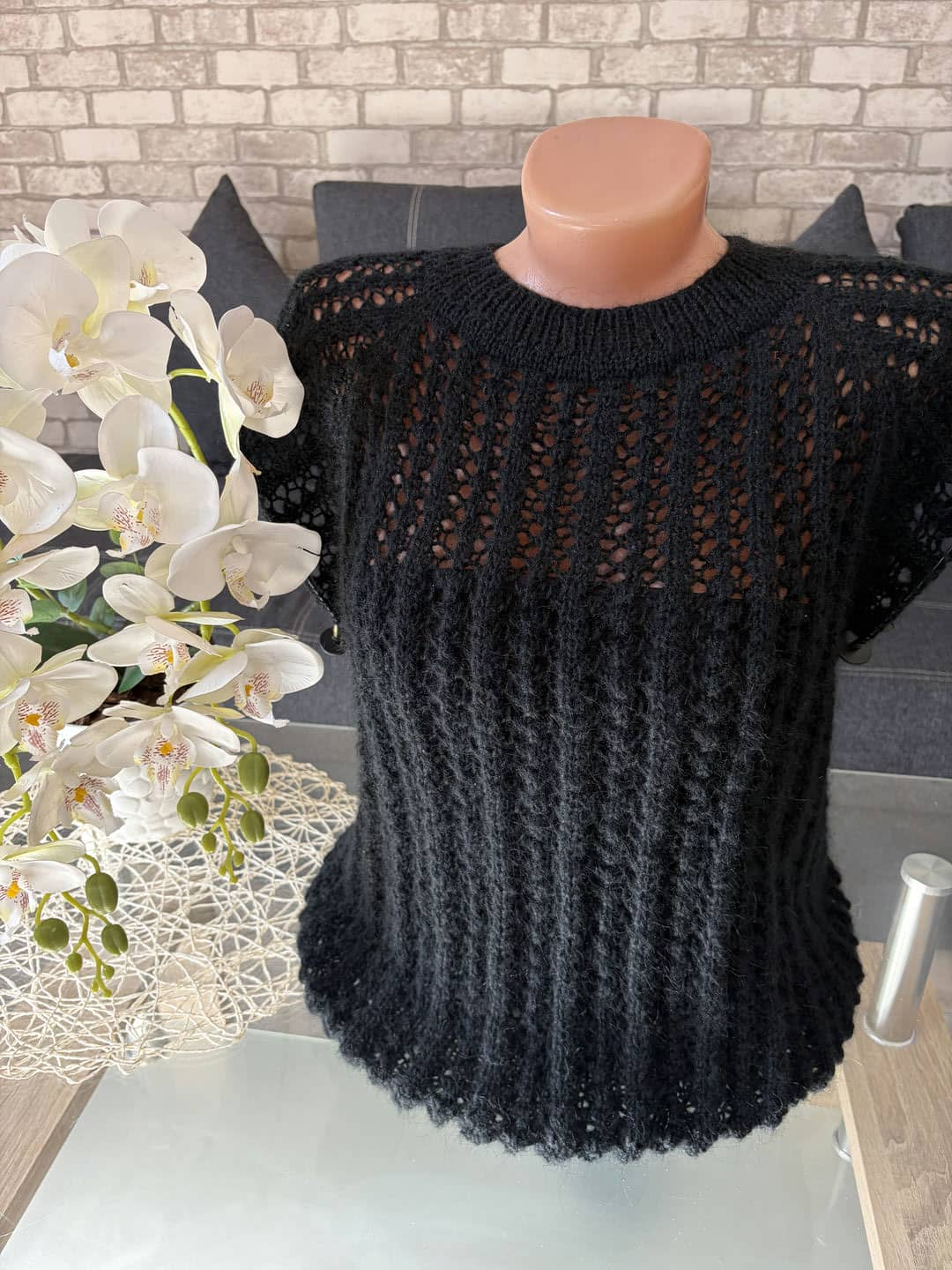
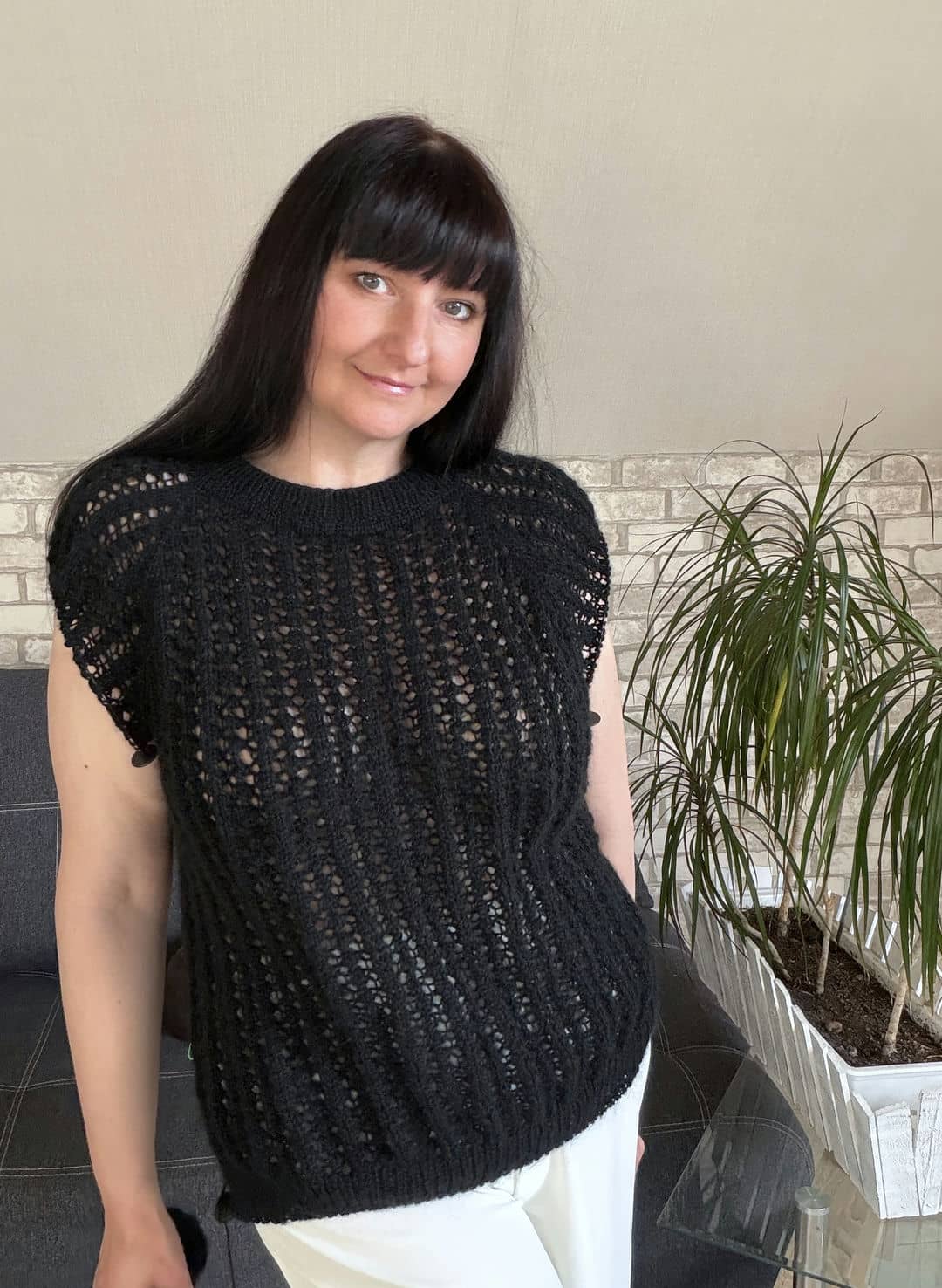
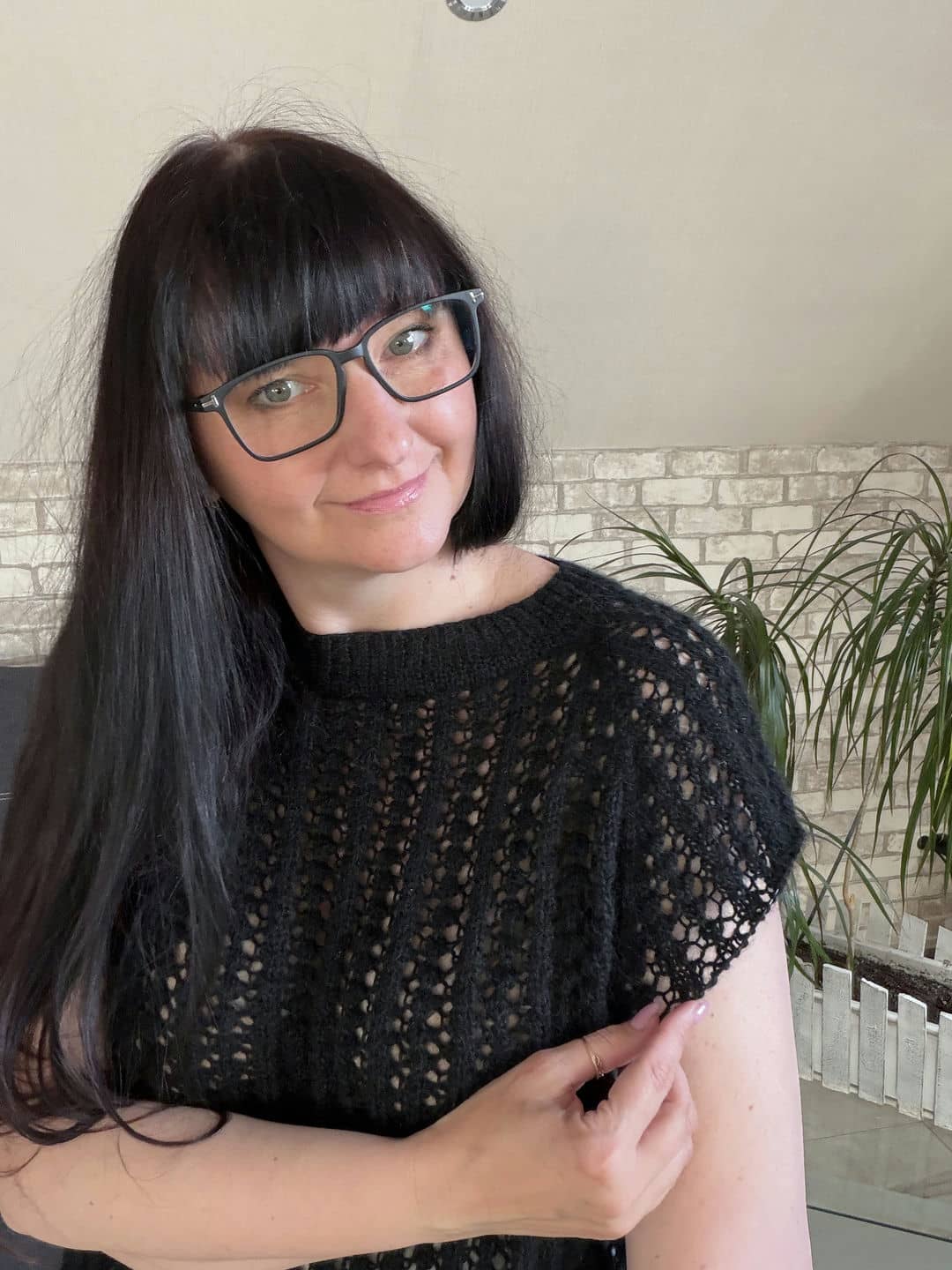
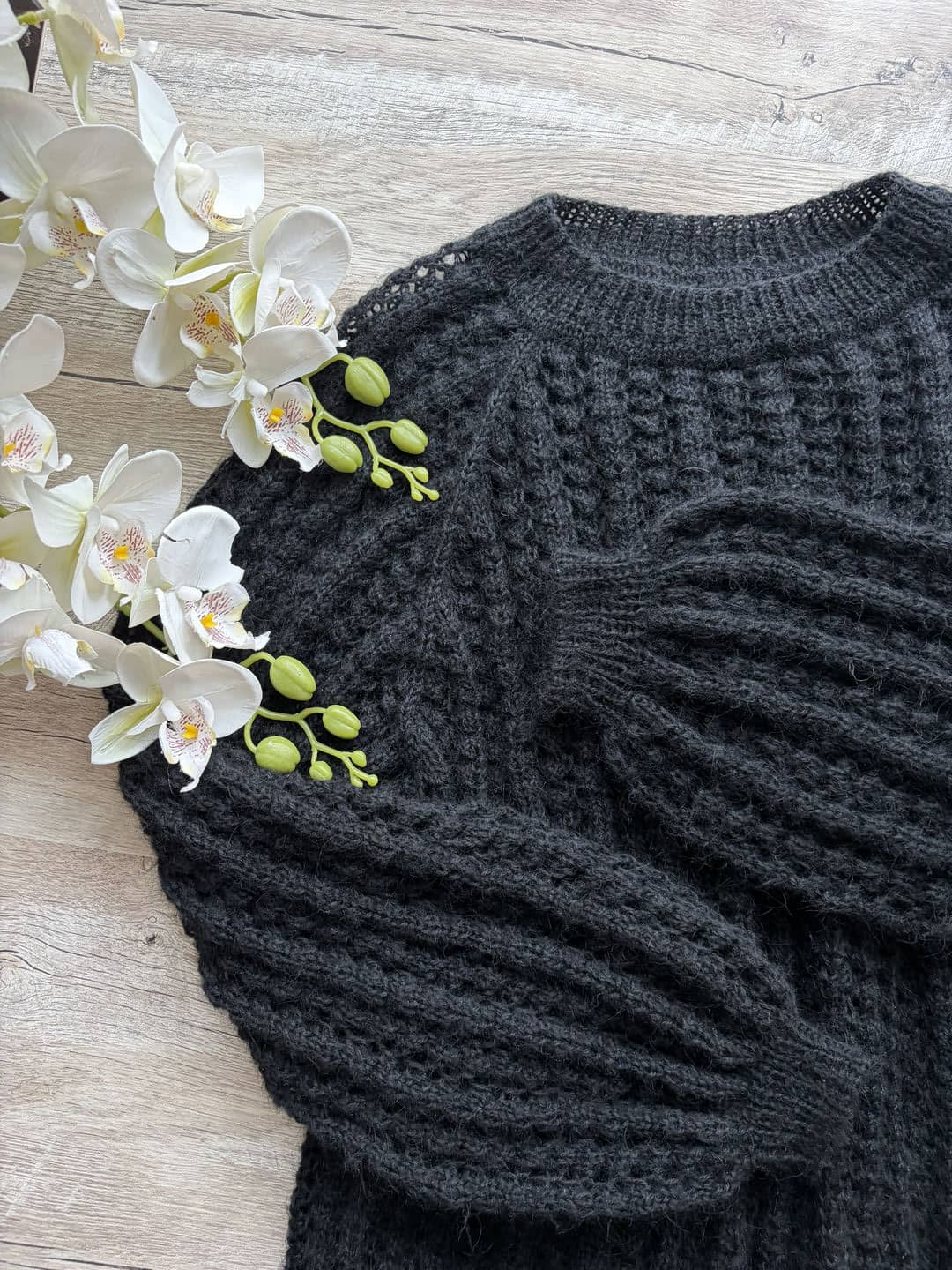
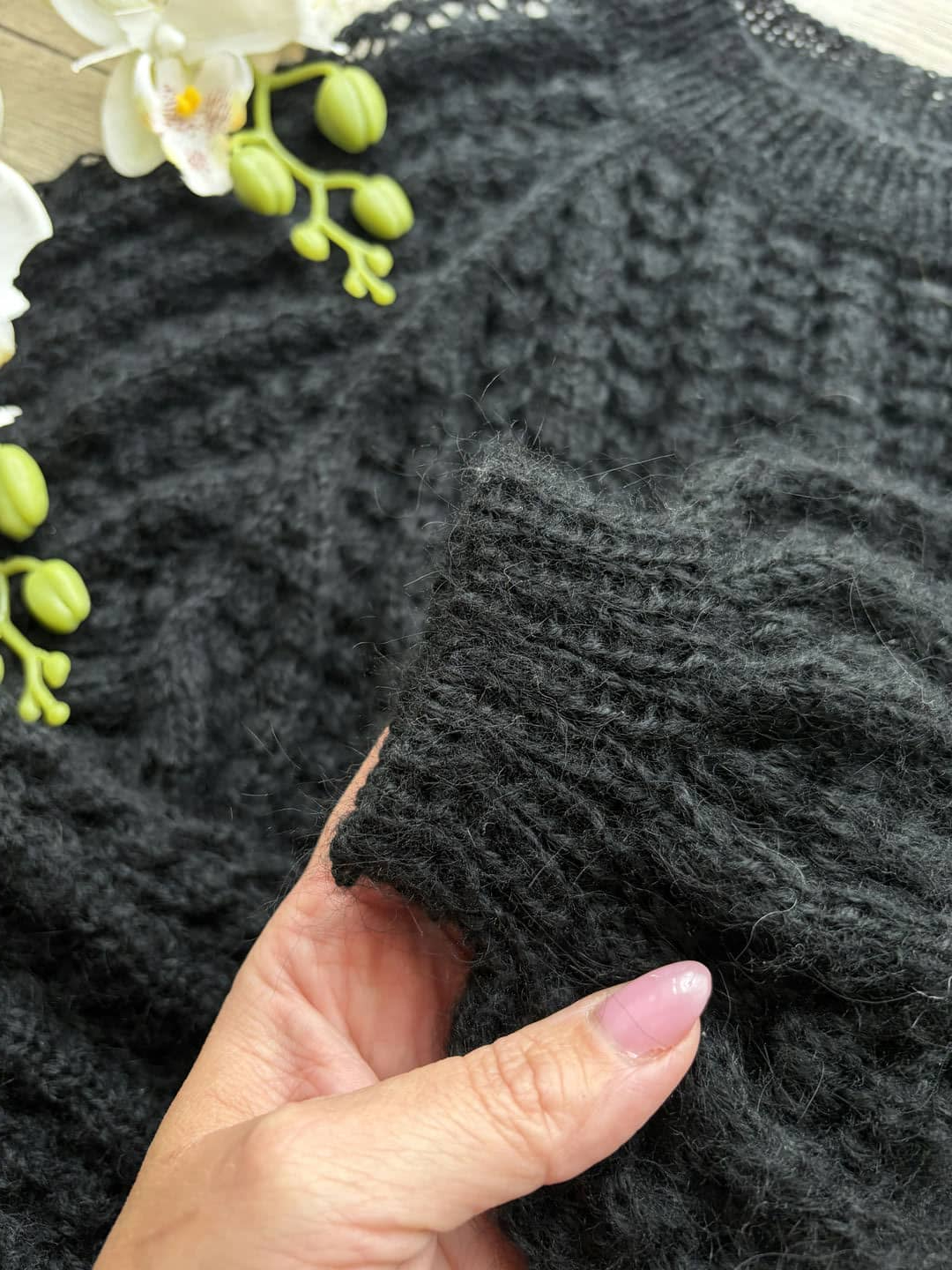
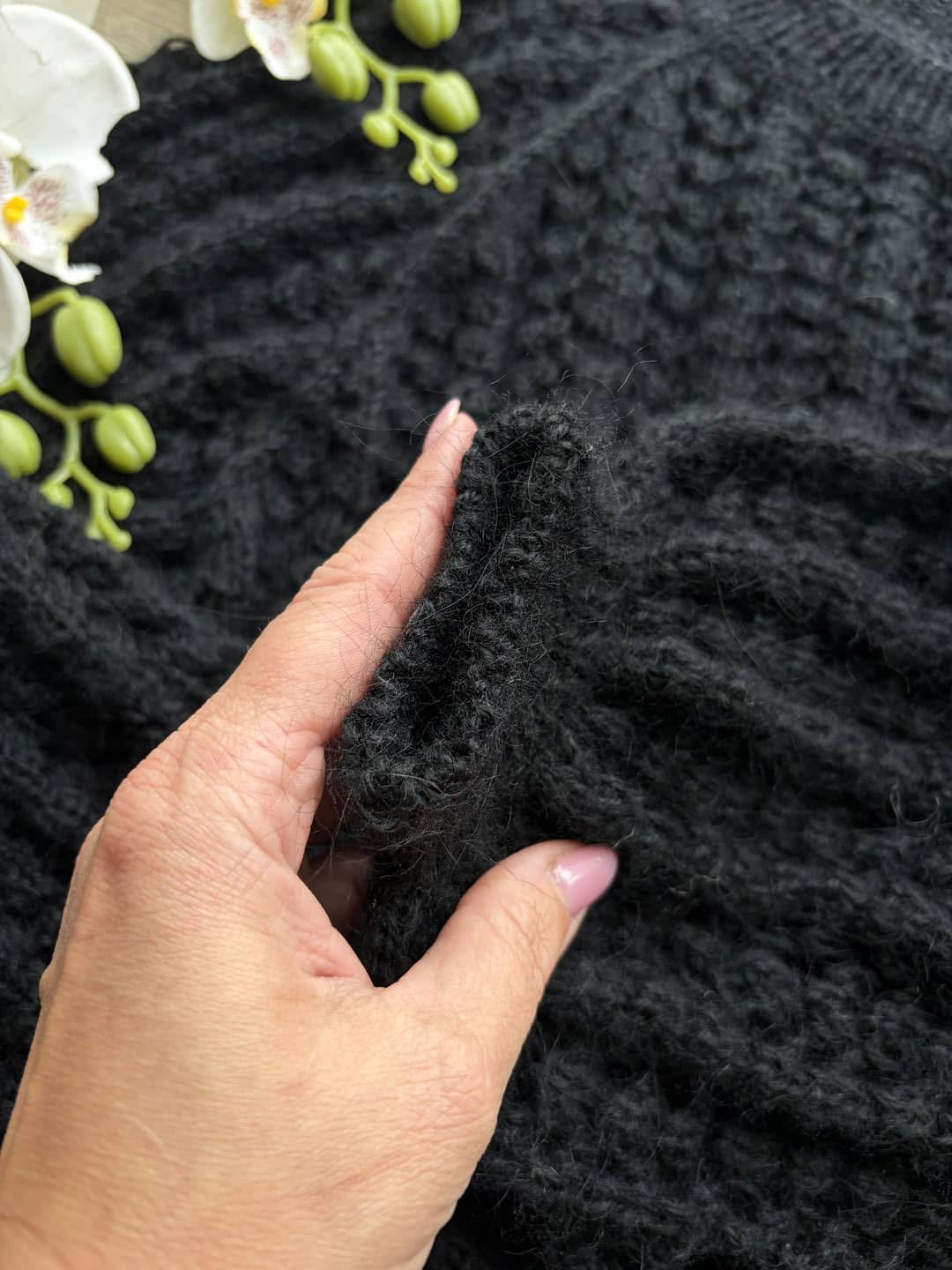
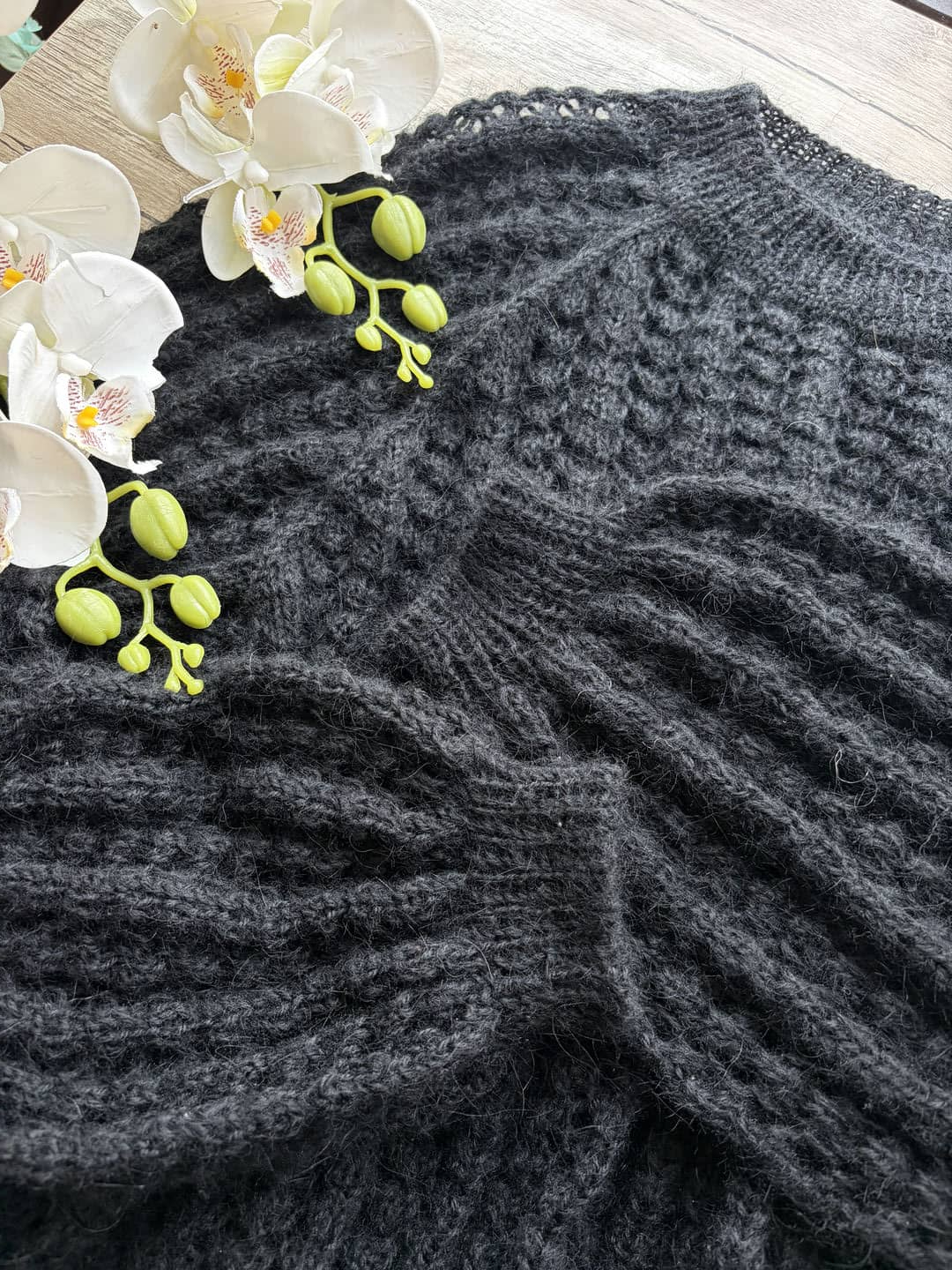
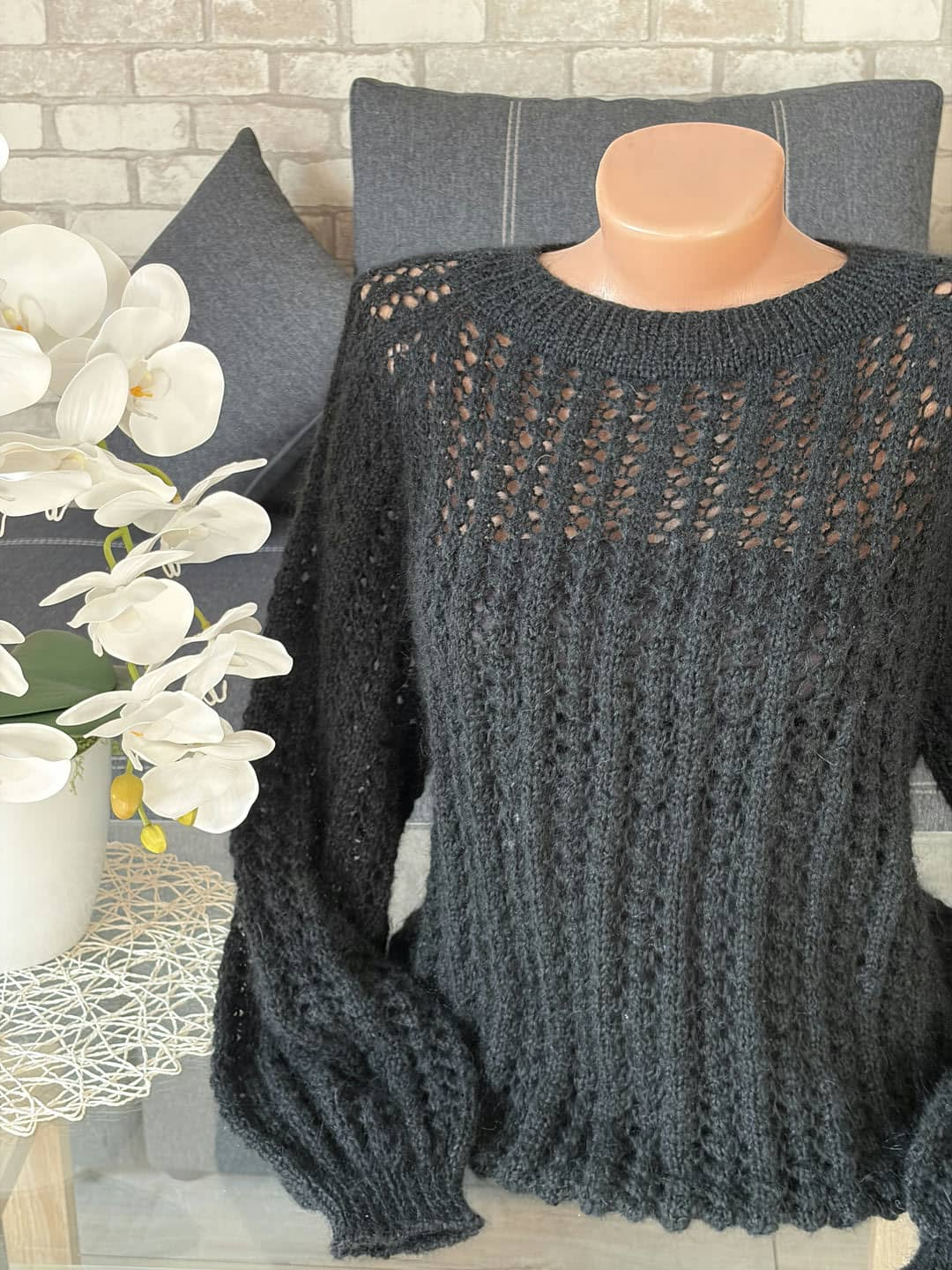
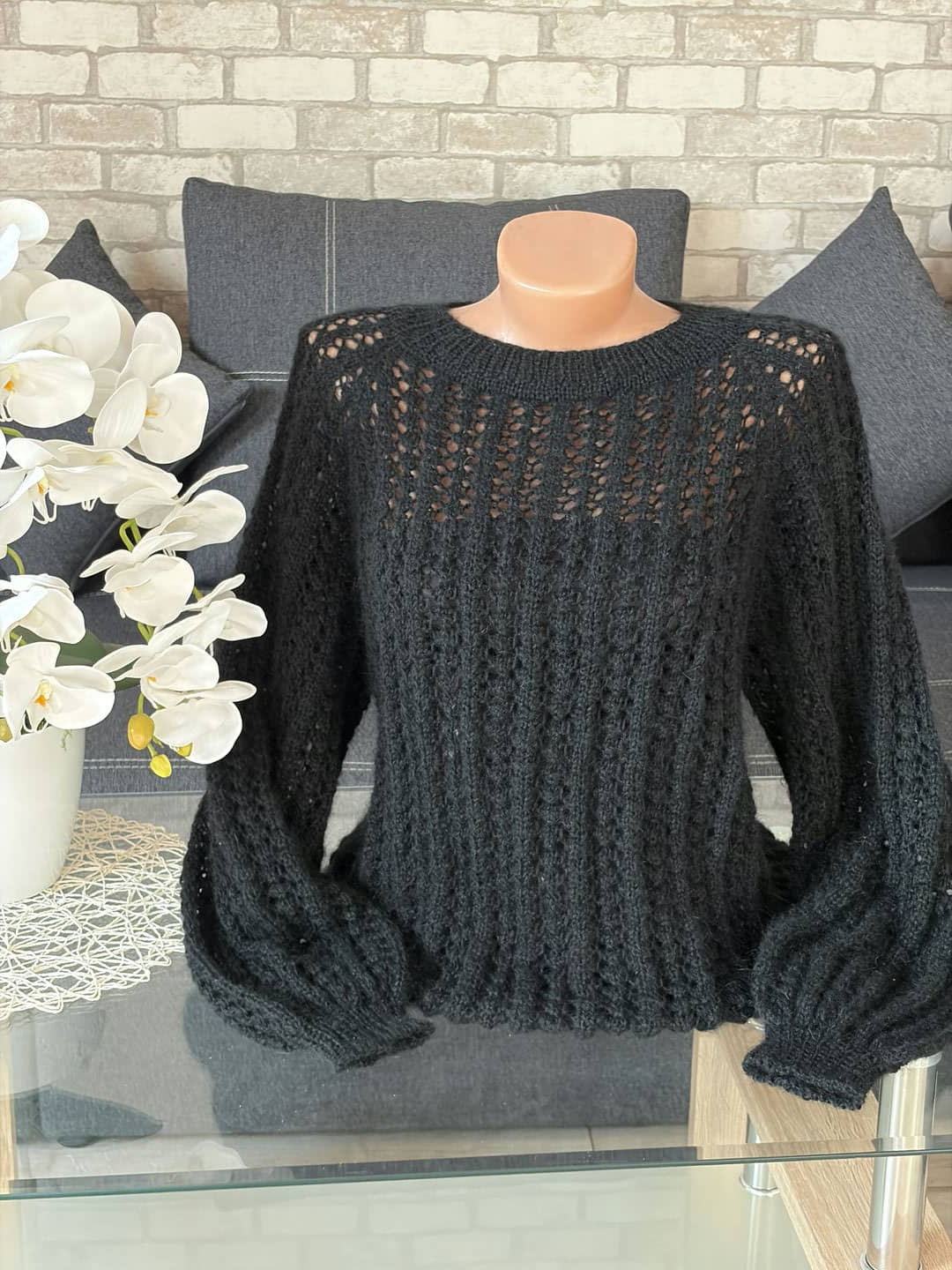
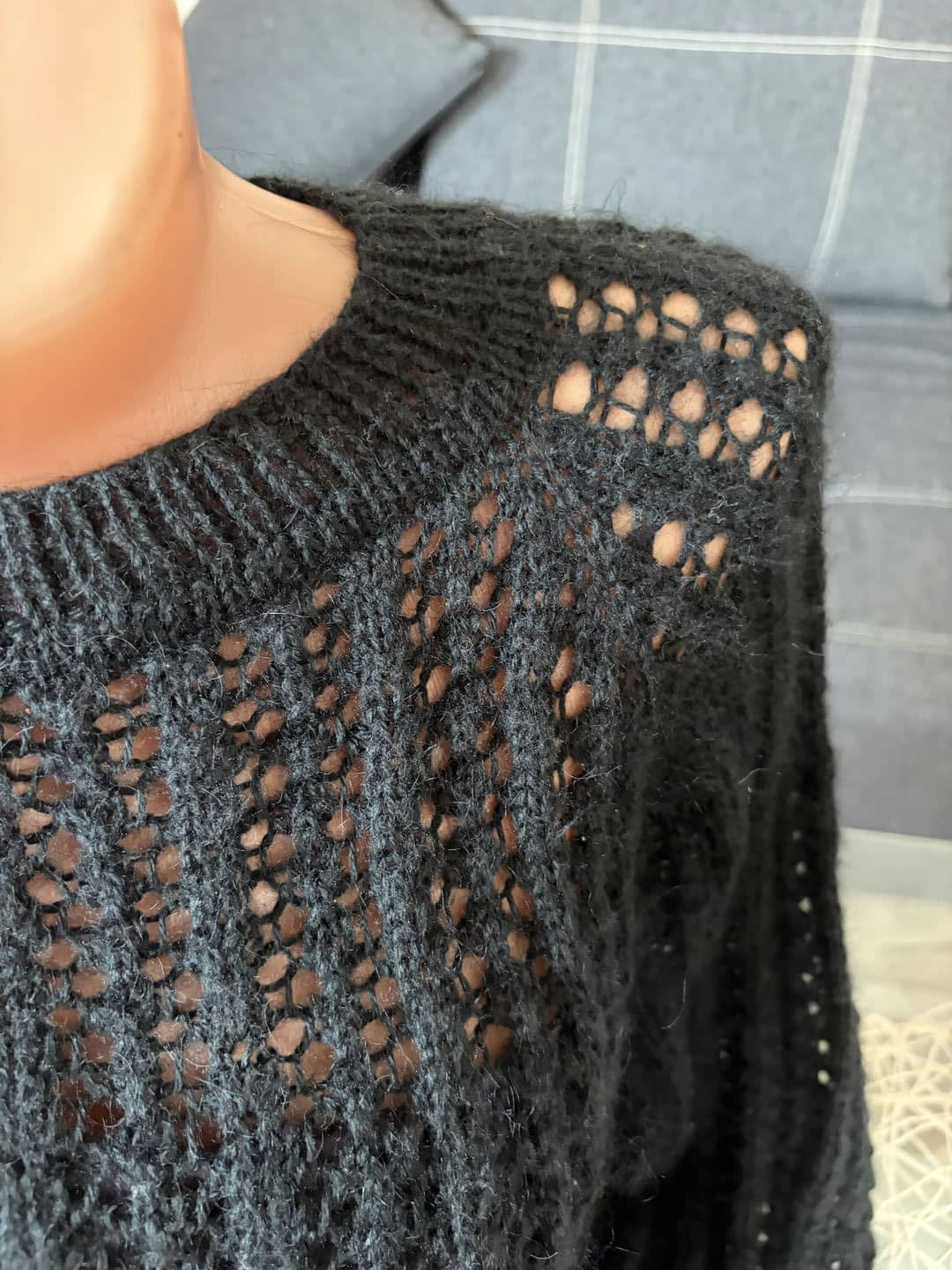
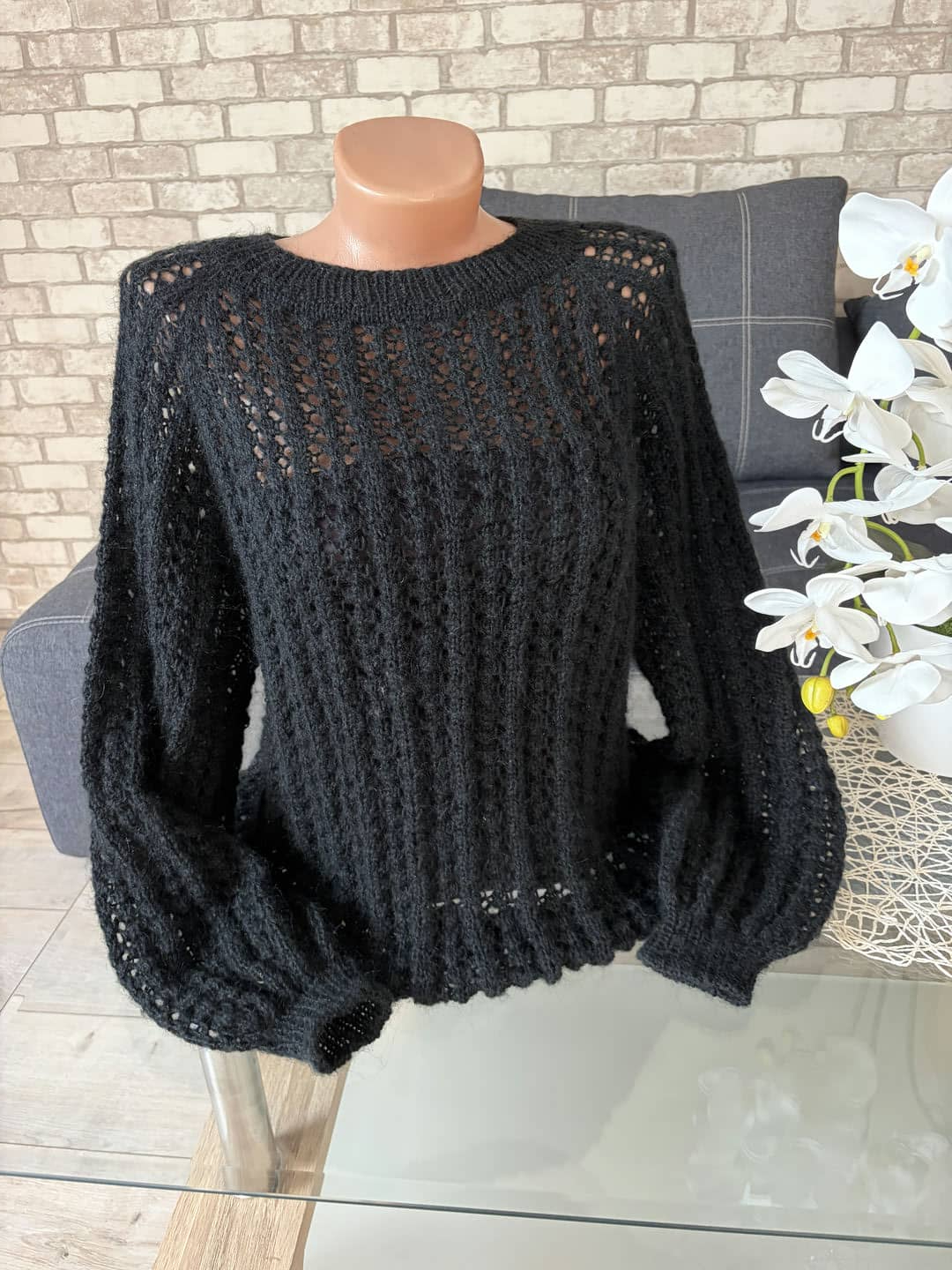
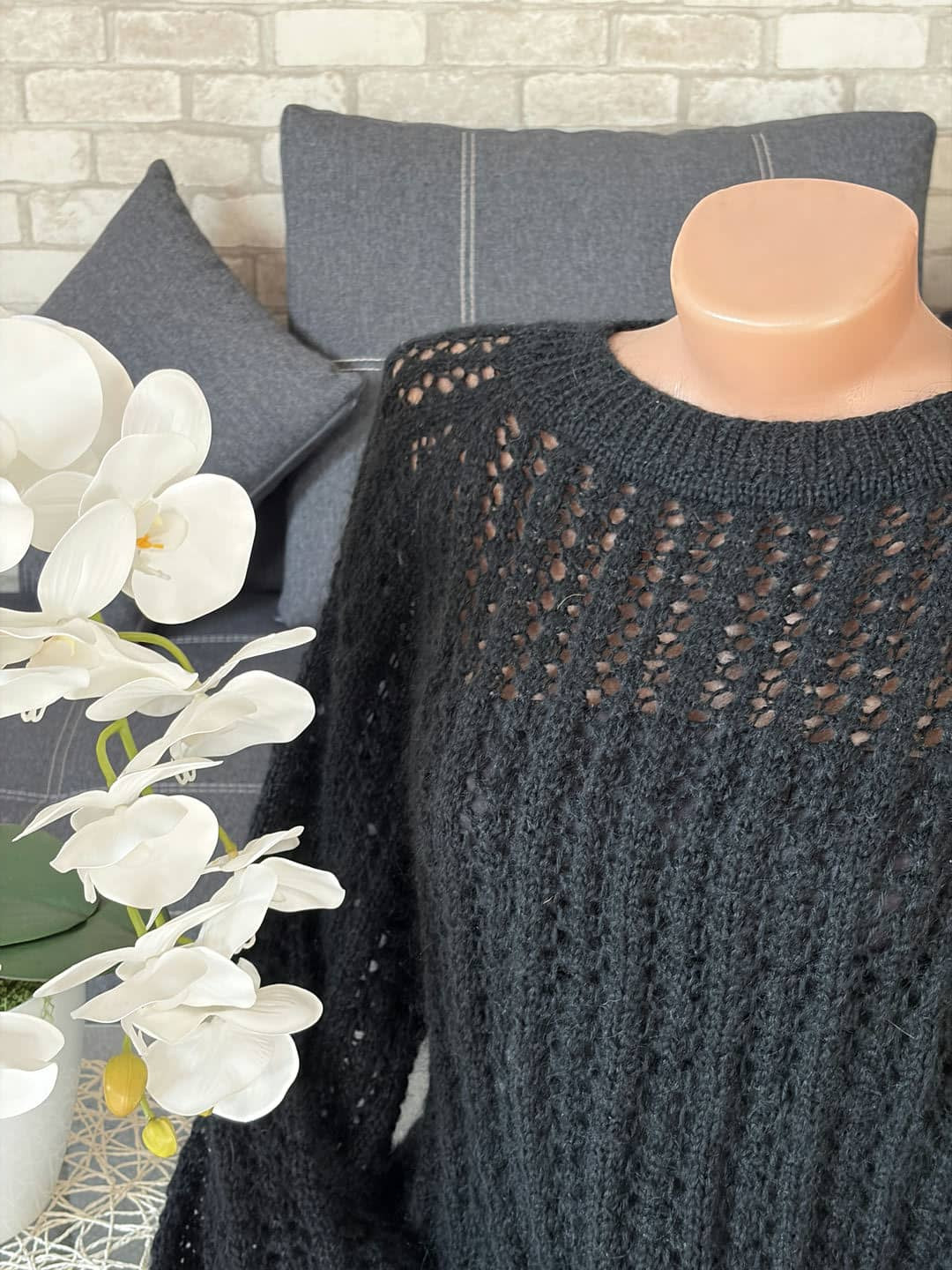
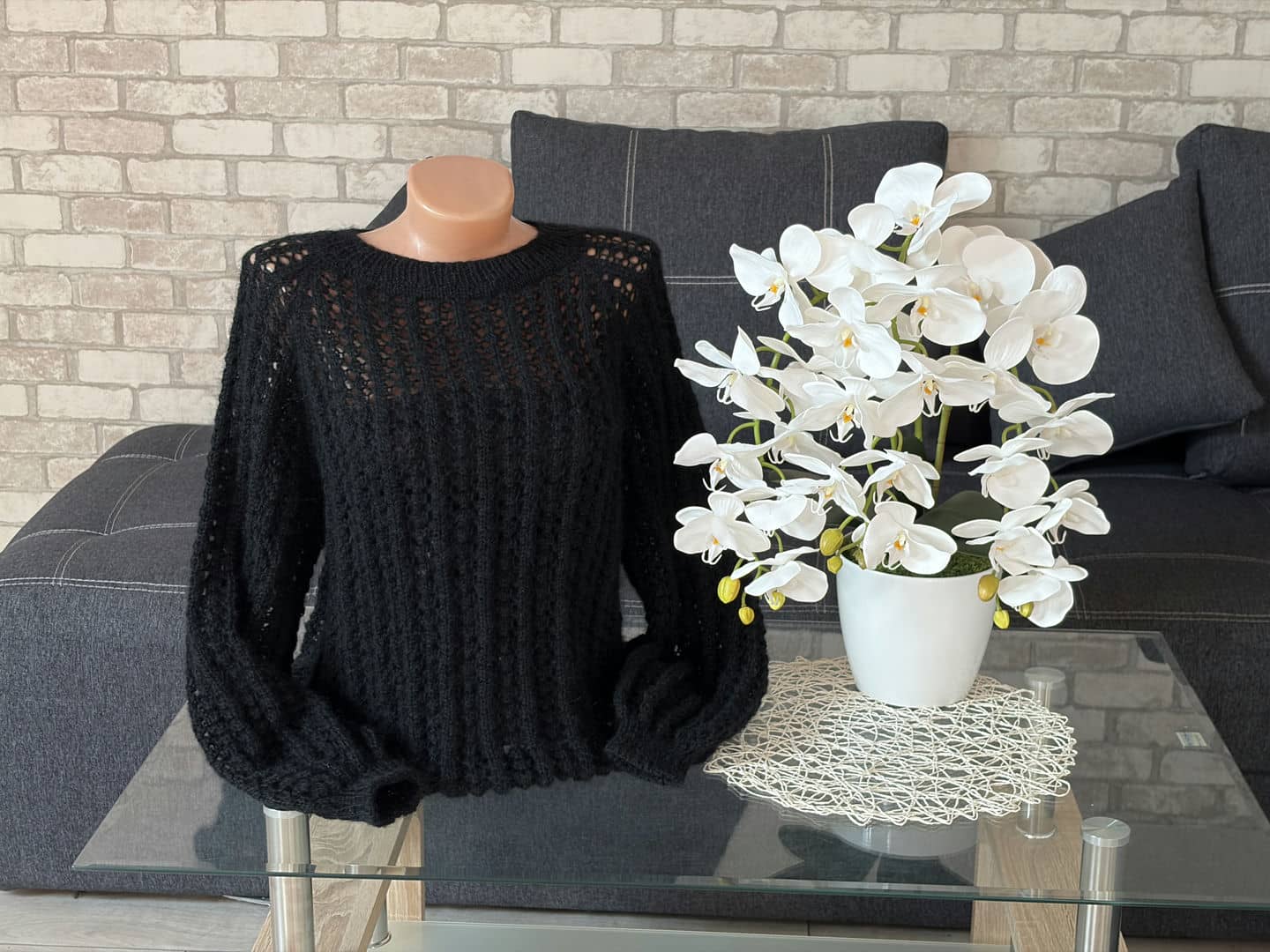
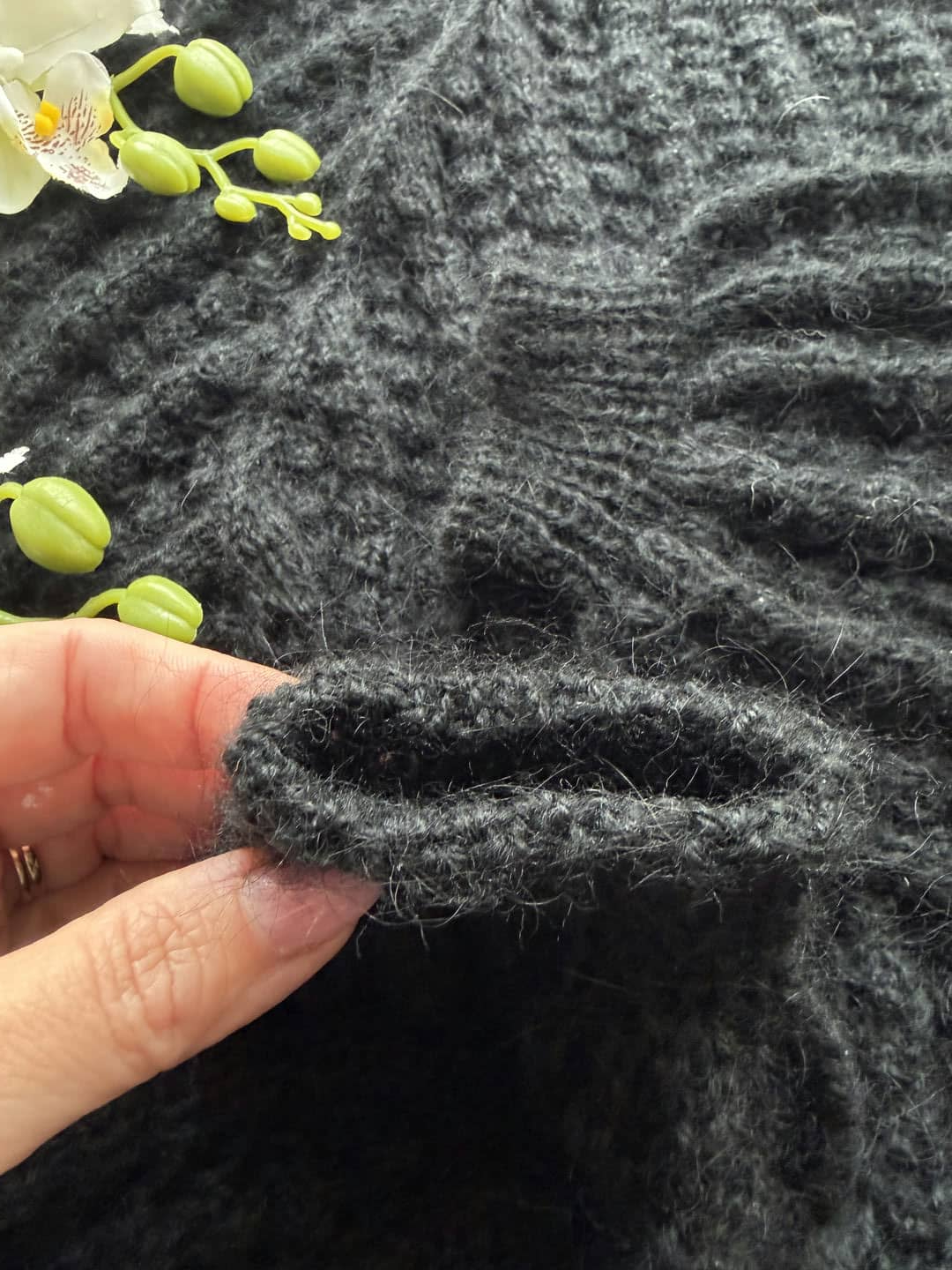
I have started an openwork jumper in delicate yarn that contains mohair. Black always has a special character: understated, deep and very striking. The fabric comes out light, airy, almost weightless, like a soft little cloud.
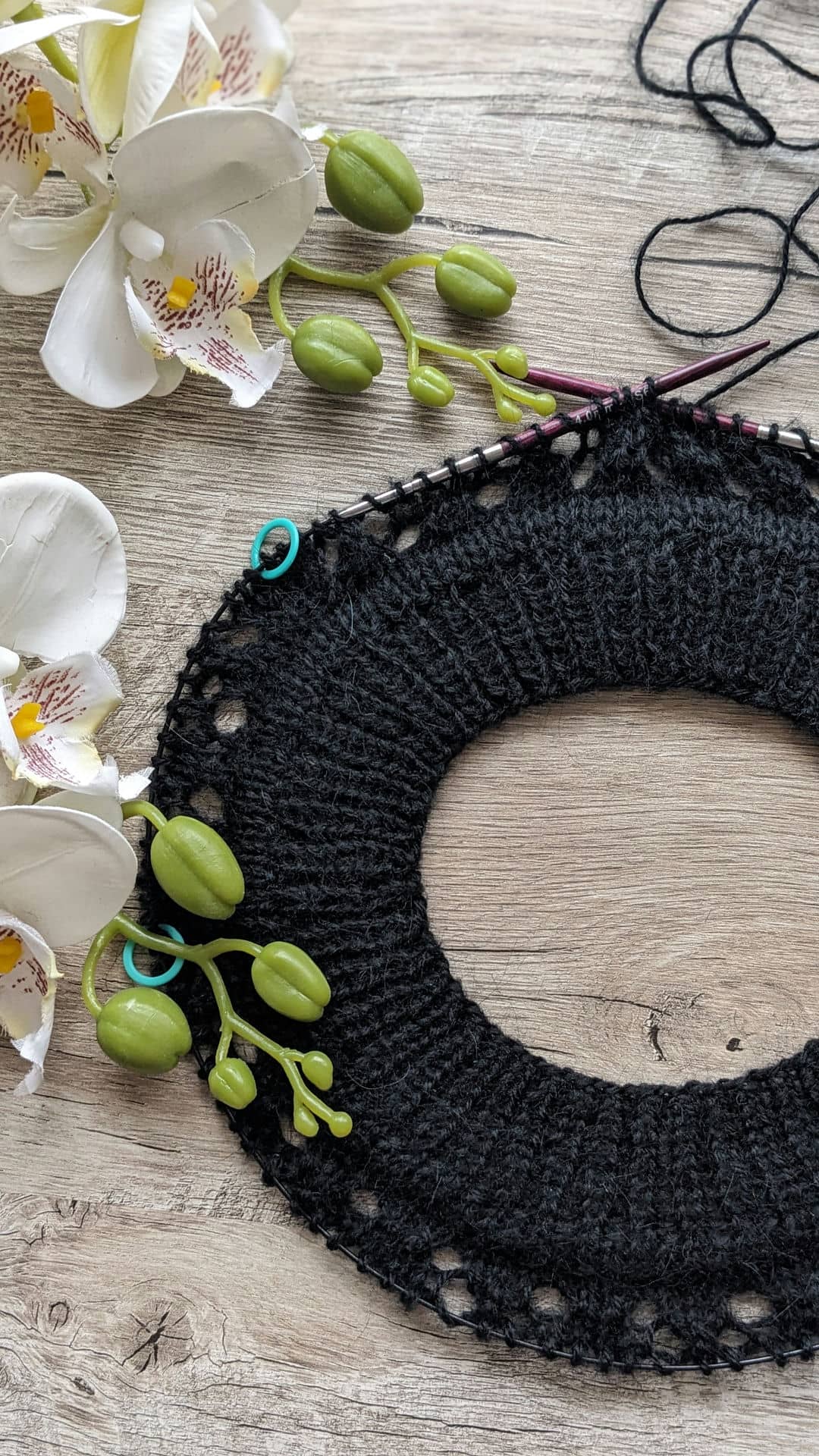
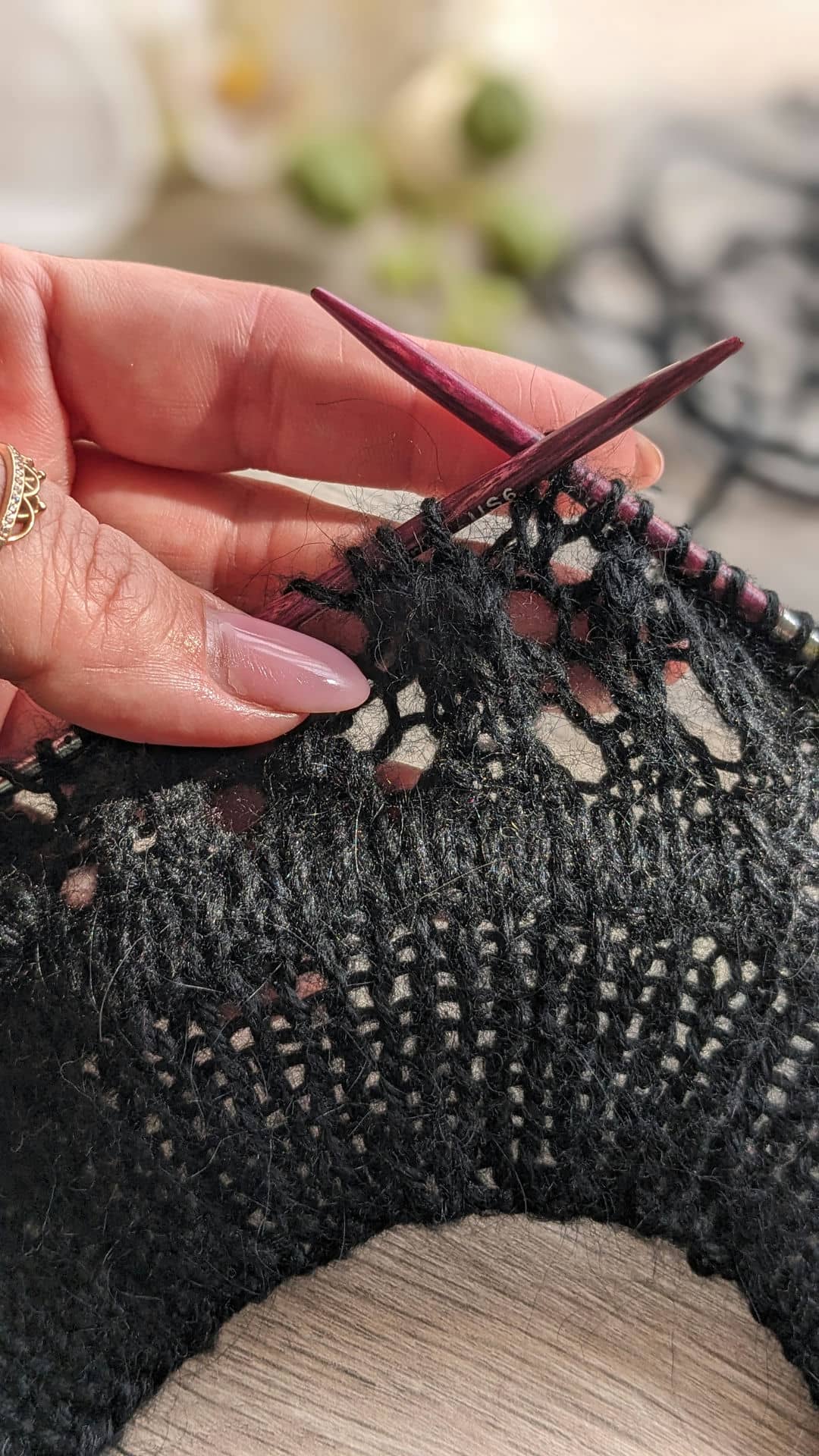
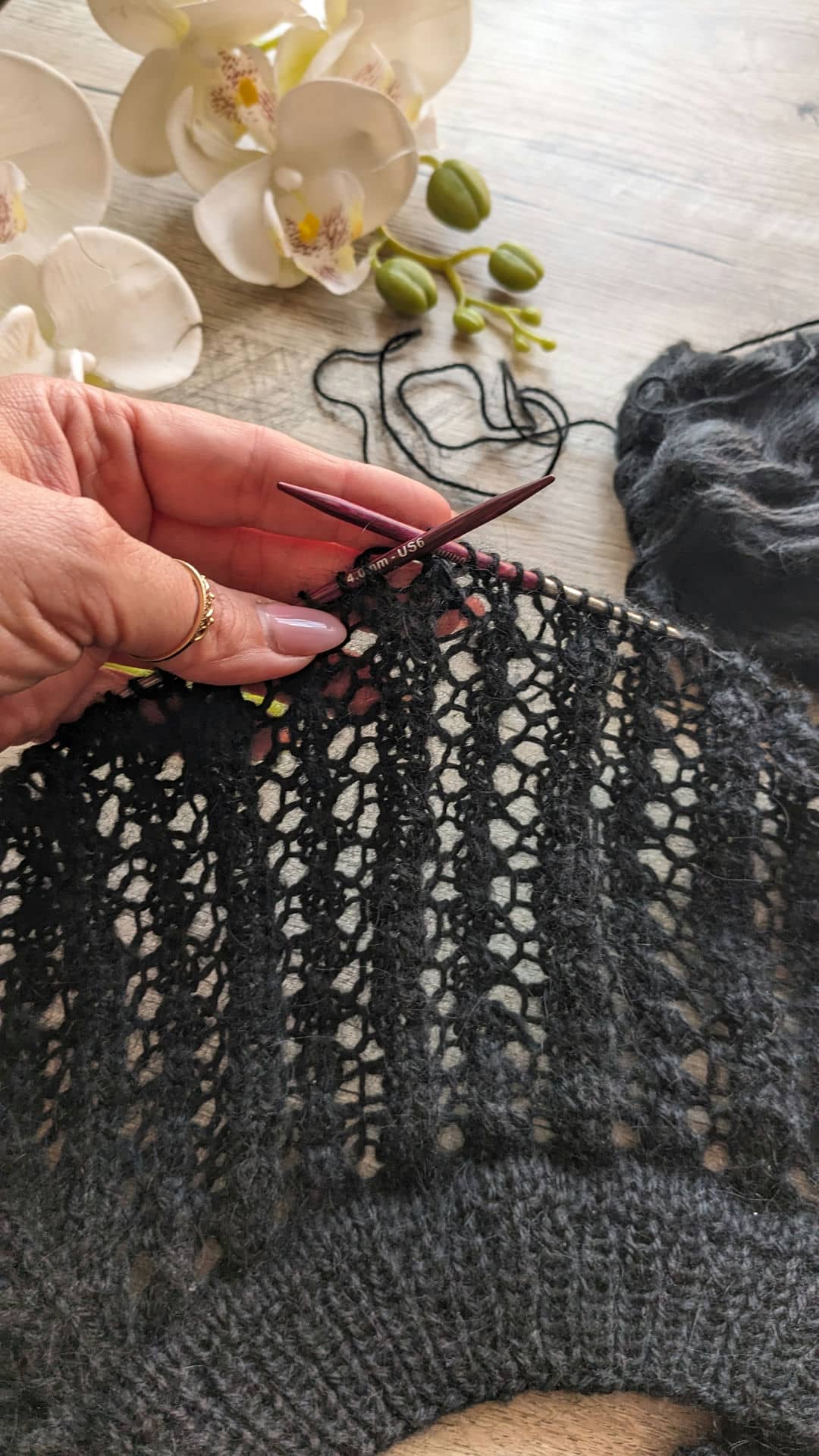
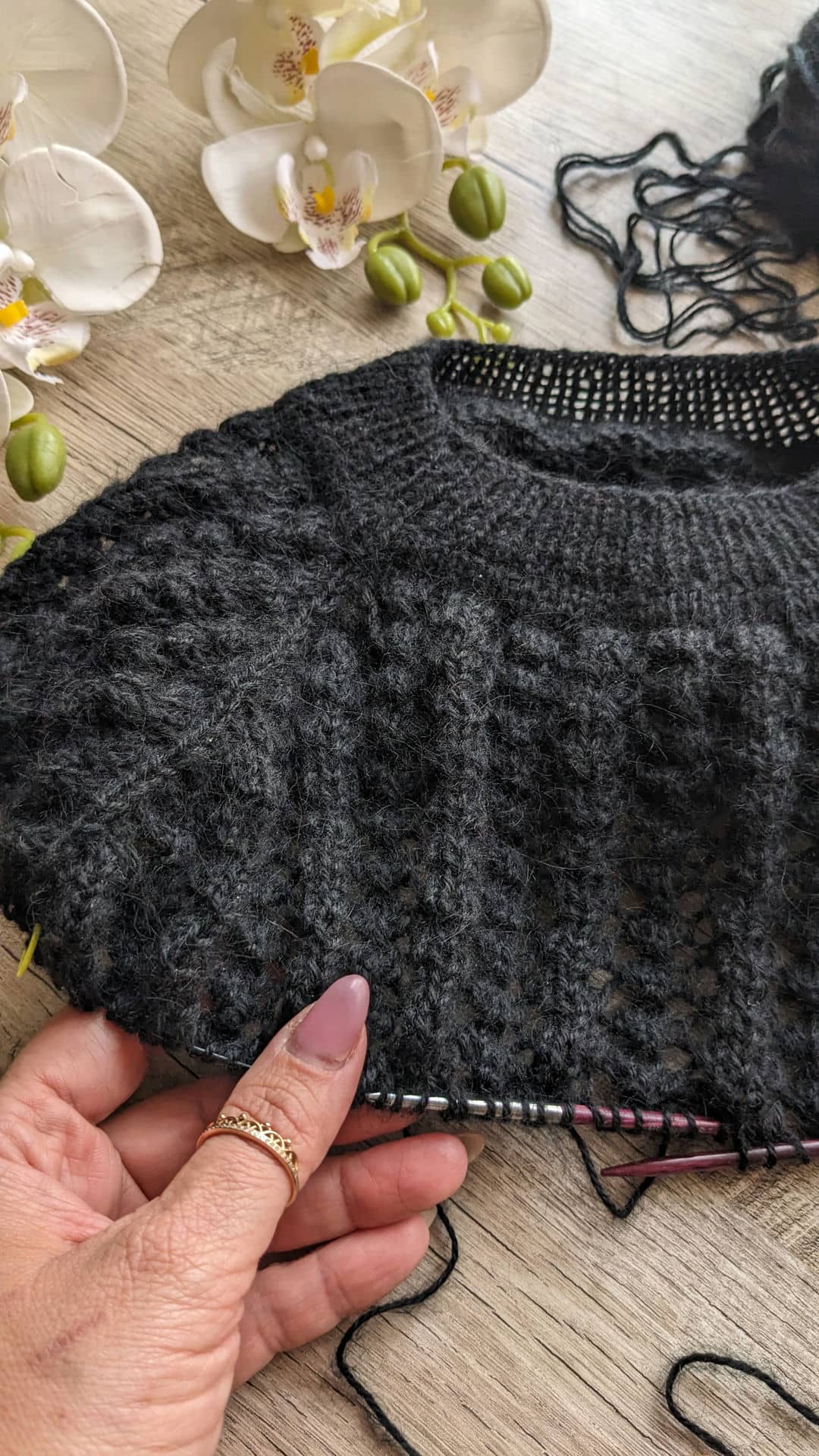
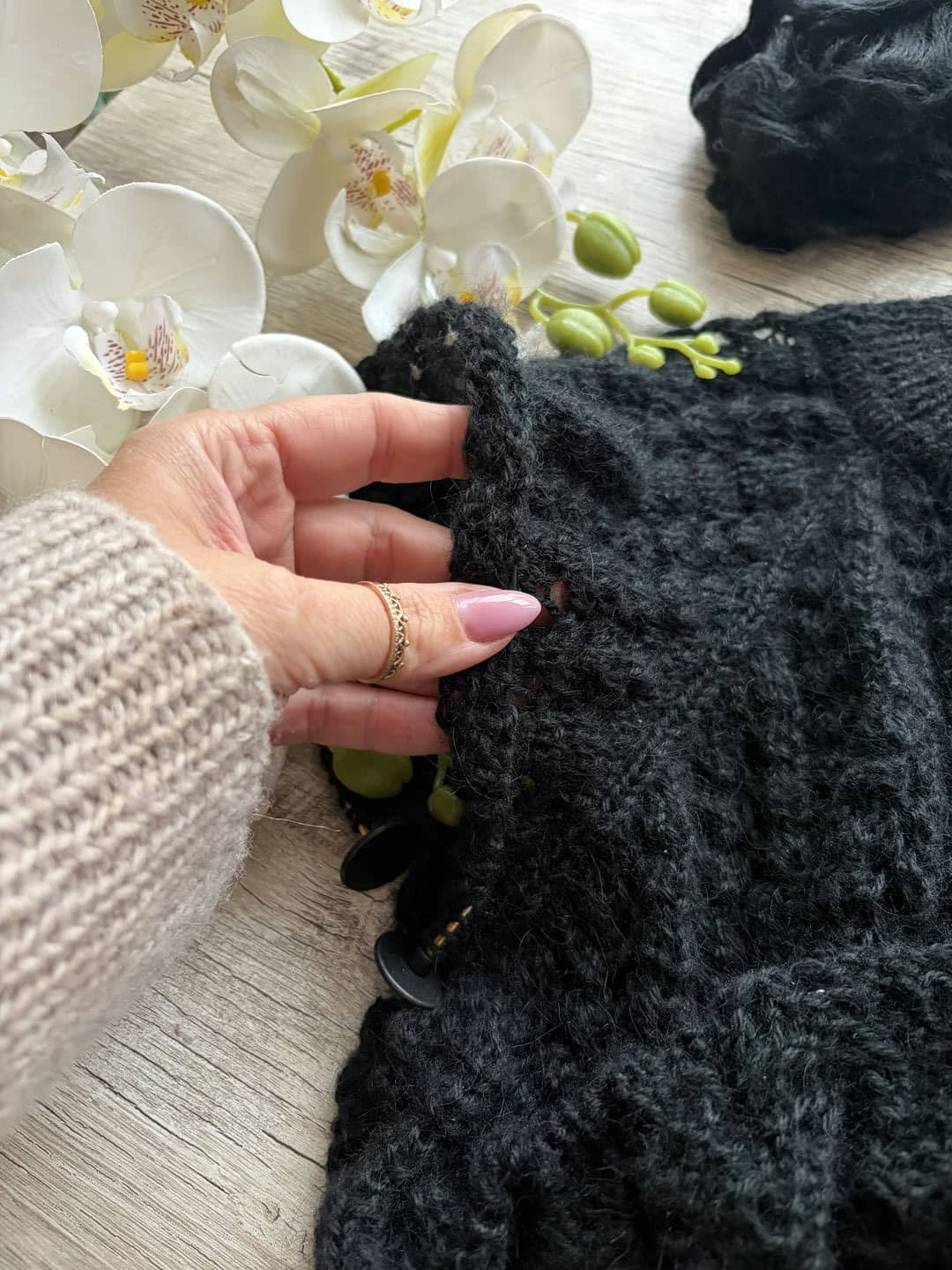
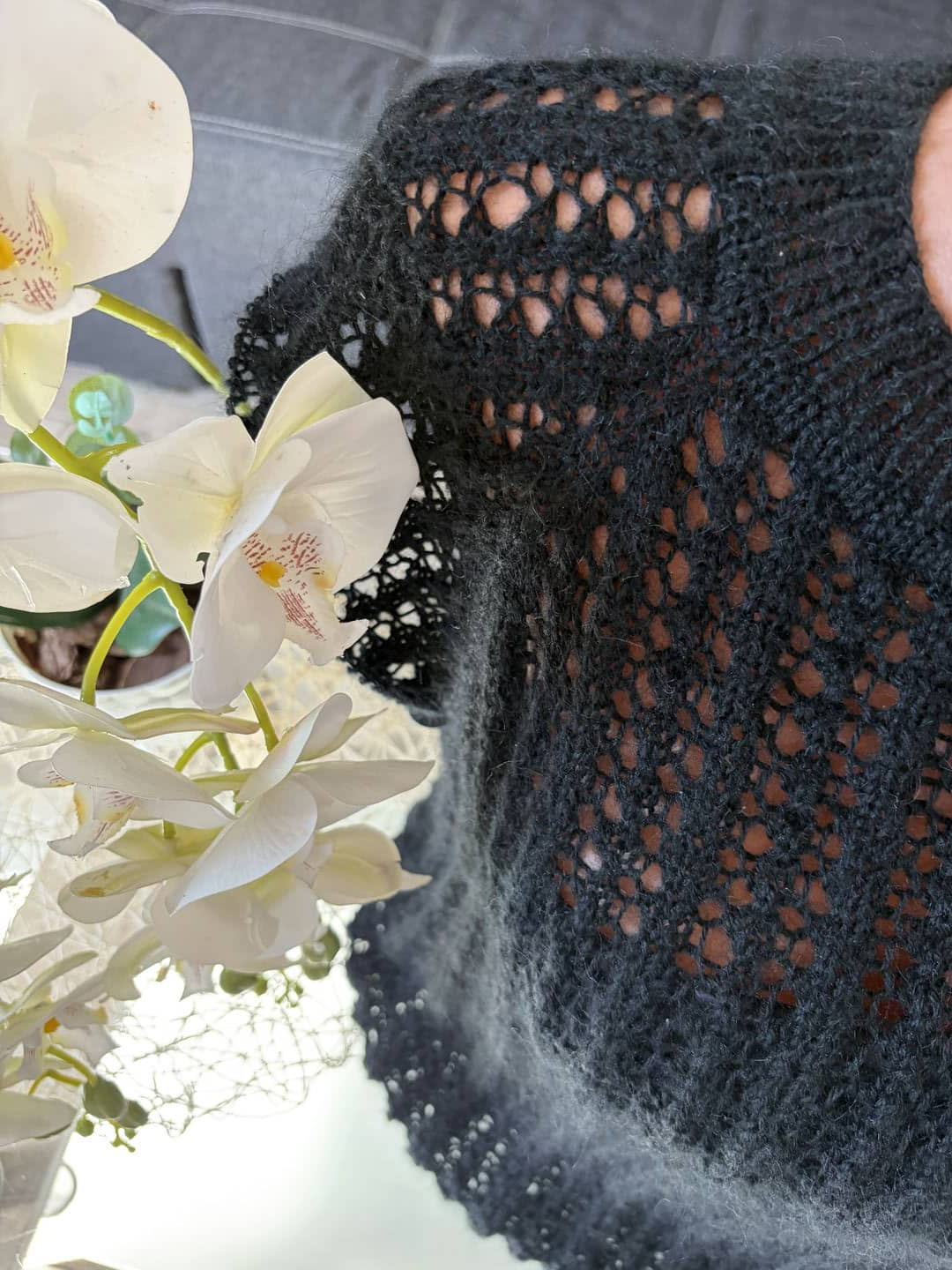
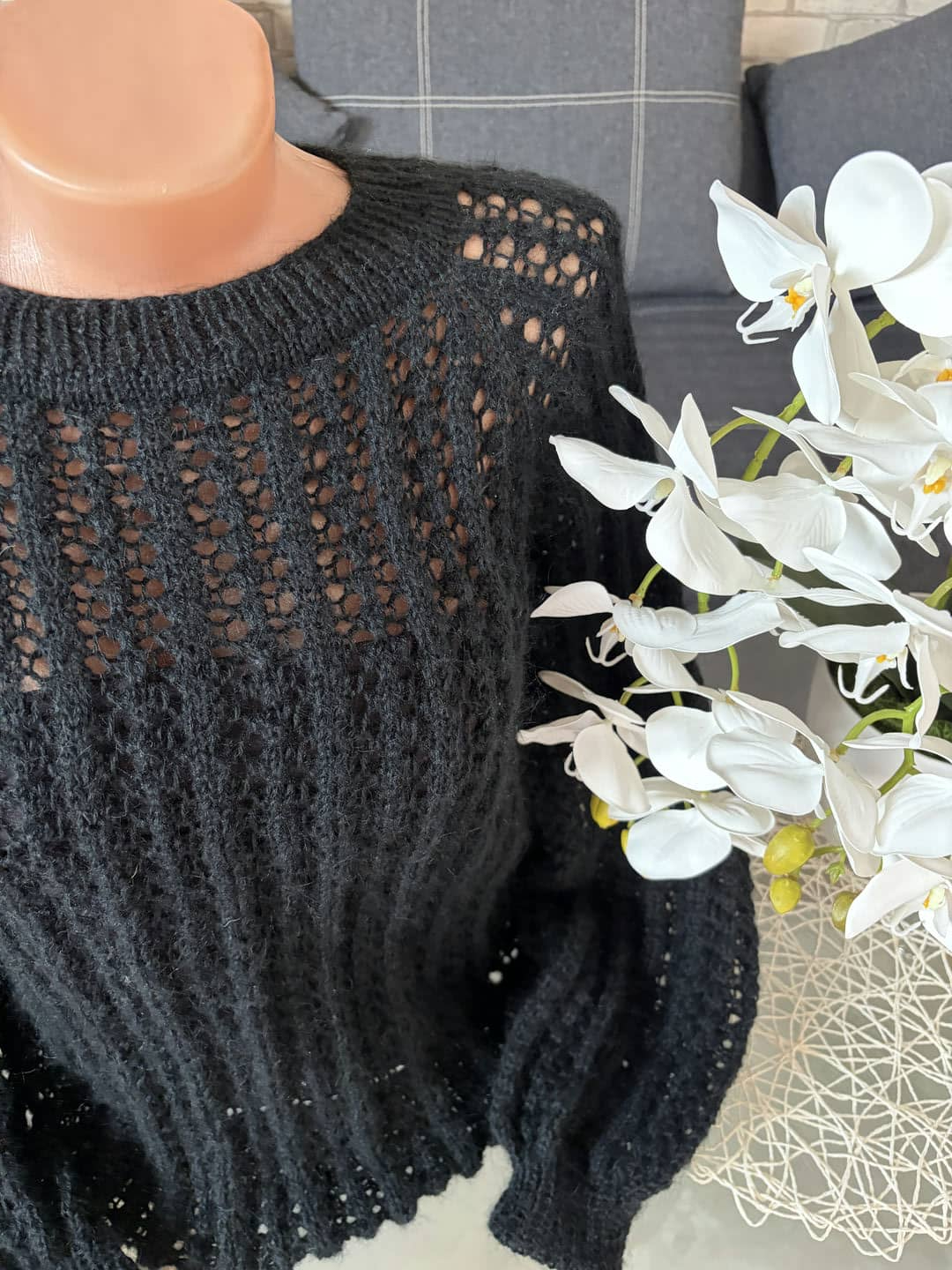
For this design I chose a simple openwork pattern. Working with black is harder on the eyes, especially when it is lace and a fine fuzzy strand, so I wanted to find a balance between beauty and comfort while working. A simple lace structure like this gives exactly the result I wanted: a delicate, tender and stylish fabric without being overloaded.
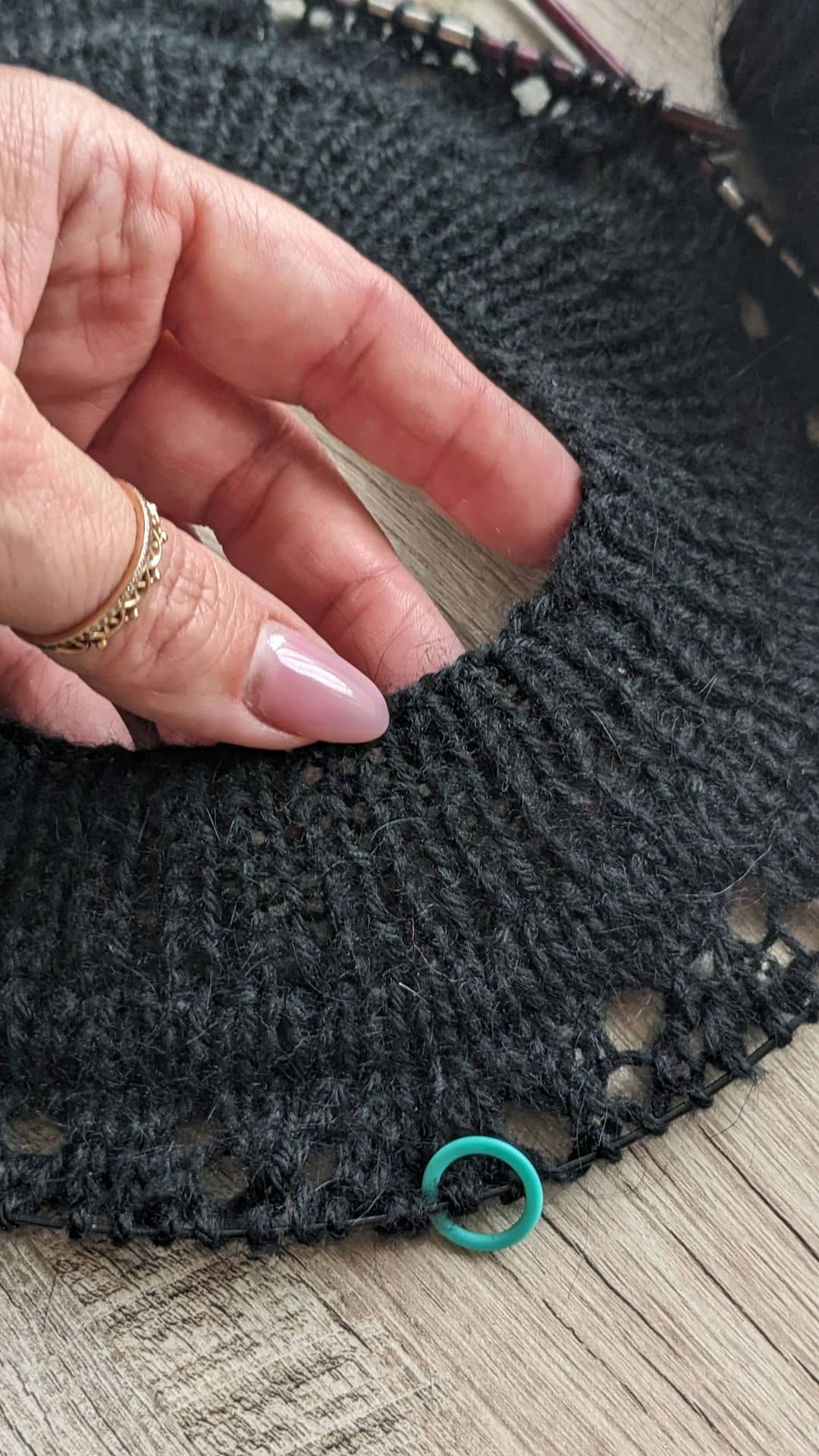
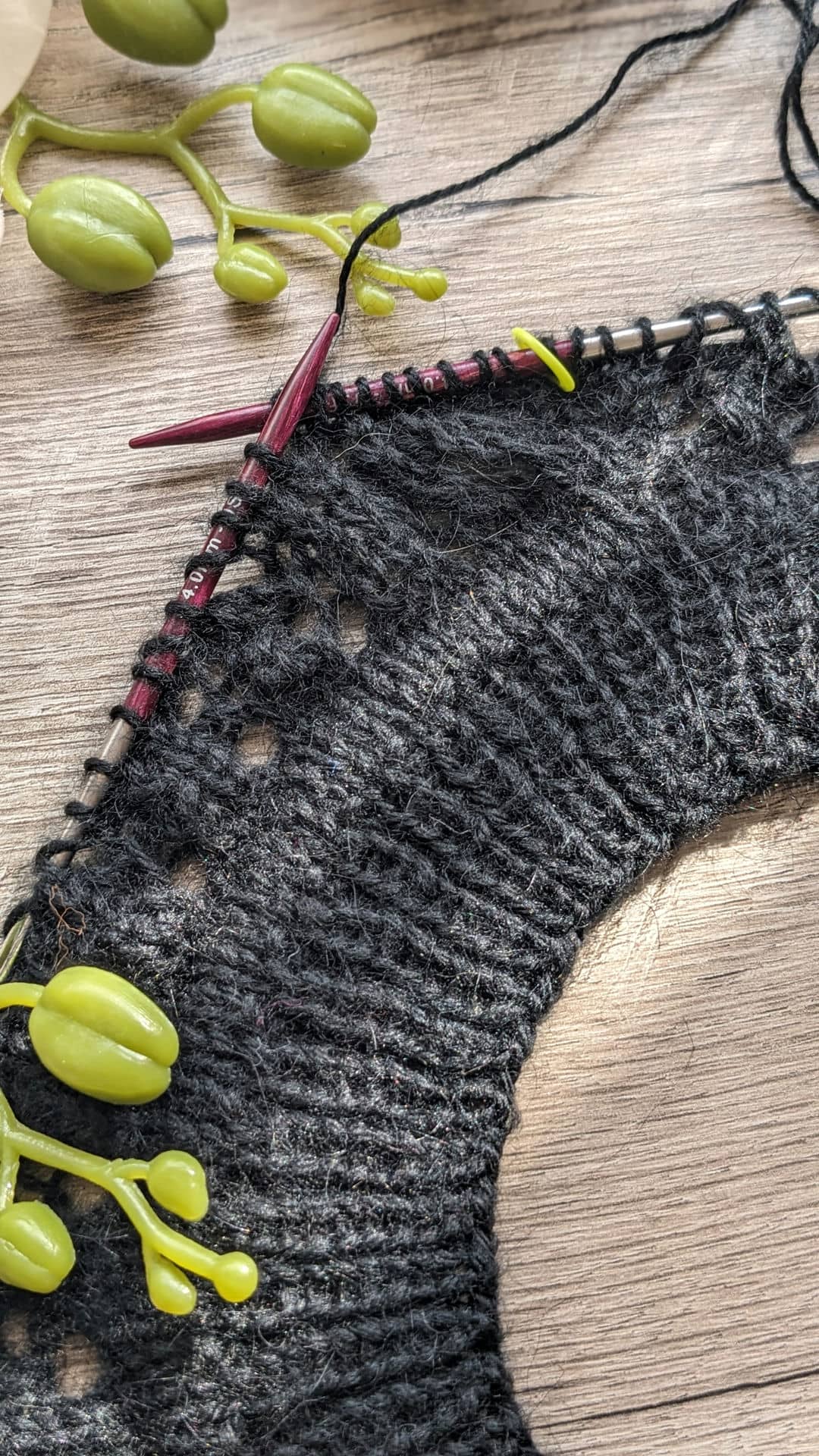
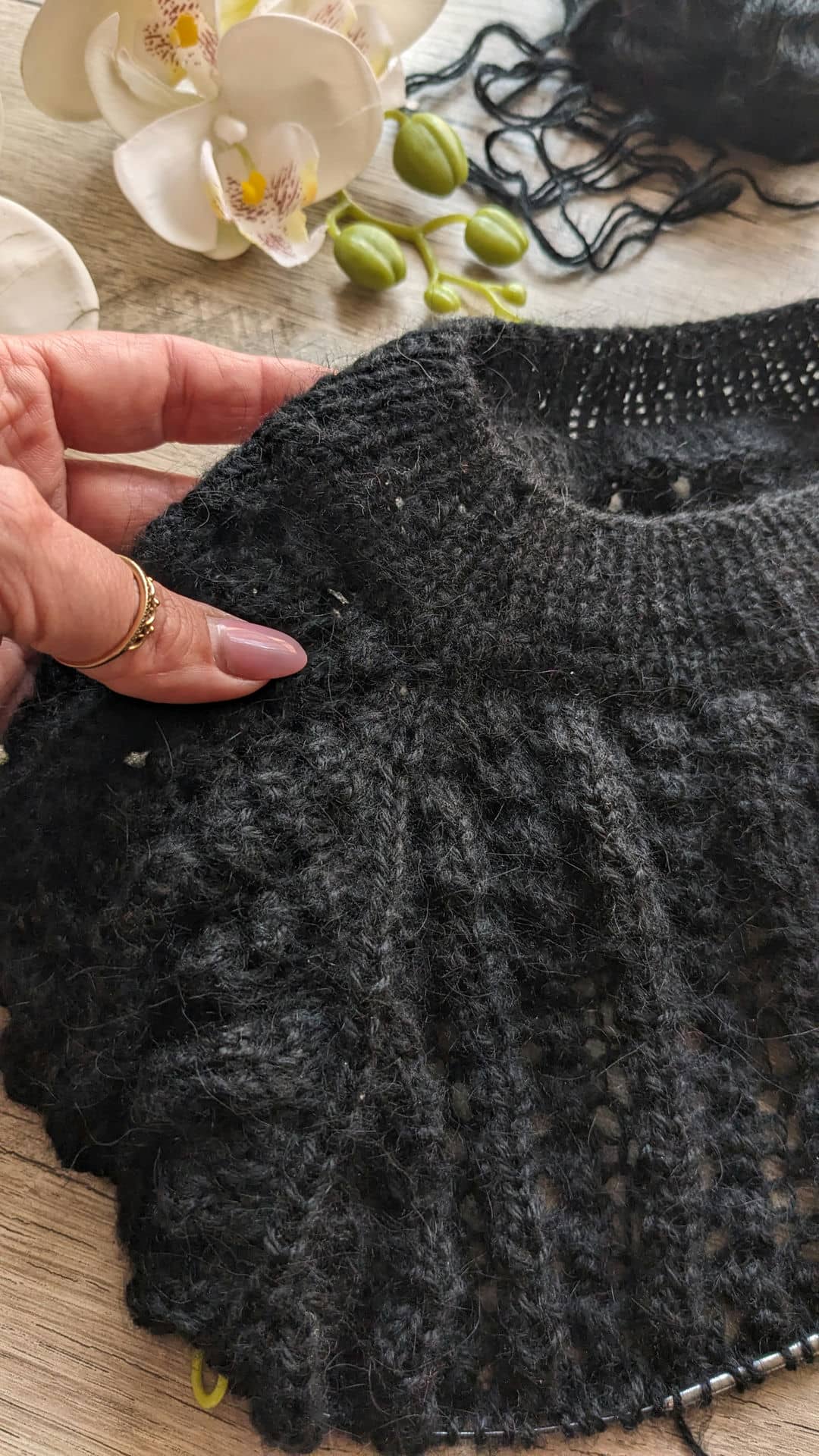
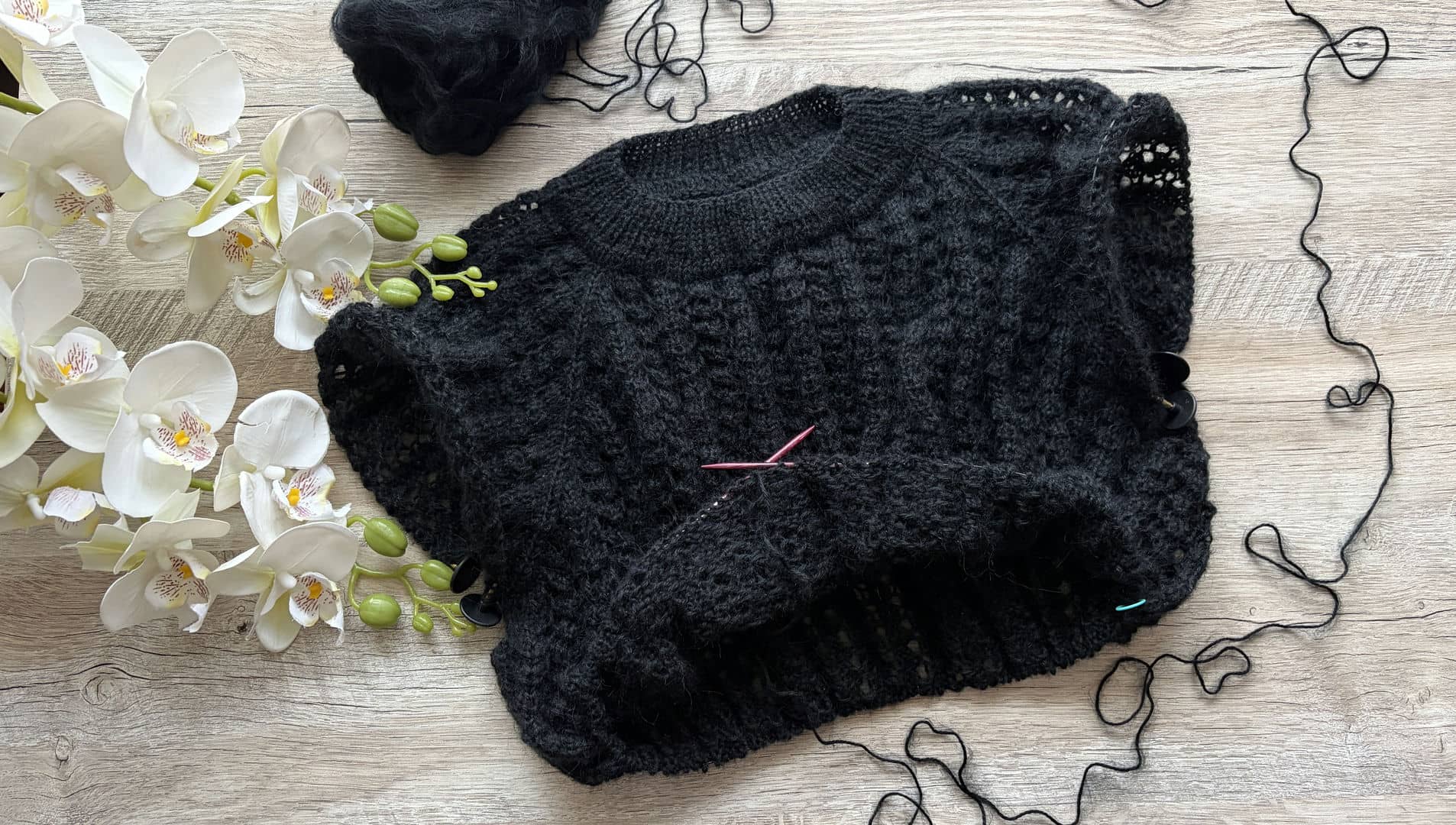
The jumper is a top-down raglan with a straight silhouette. The neckline with a mock-linked edge adds neatness and a finished look from the very first rows.
⠀
I love projects like this, calm and soft, where each row gradually turns into something special.
Yarn: mohair, polyamide. Yardage: 460 m/100 g. 3.5 mm needles for the neckline and cuffs and 4 mm needles for the main fabric.
Below are the calculations for a jumper in size 48–50 (≈ EU 42–44, L–XL).
With 3.5 mm needles, cast on 96 stitches + 1 stitch to join in the round. Work 10 rounds of 1×1 rib. Along the bottom of the collar we make a mock-linked edge.
Neckline:
Rounds 1–10: 1×1 rib.
Round 11: knit all the stitches on the needles, and between the stitches (from the strand between them) make new stitches and purl them.
The number of stitches in this round doubles: 96 × 2 = 192 stitches.
Round 12: knit the knit stitch, slip the purl stitch without working it, with the working yarn in front.
Round 13: slip the knit stitch without working it, with the working yarn behind, purl the purl stitch.
Round 14: knit the knit stitch, slip the purl stitch without working it, with the working yarn in front.
Round 15: slip the knit stitch without working it, with the working yarn behind, purl the purl stitch.
Round 16: knit each knit stitch together with the following purl stitch (k2tog), and so on all the way around. The number of stitches is halved: 192/2 = 96 stitches.
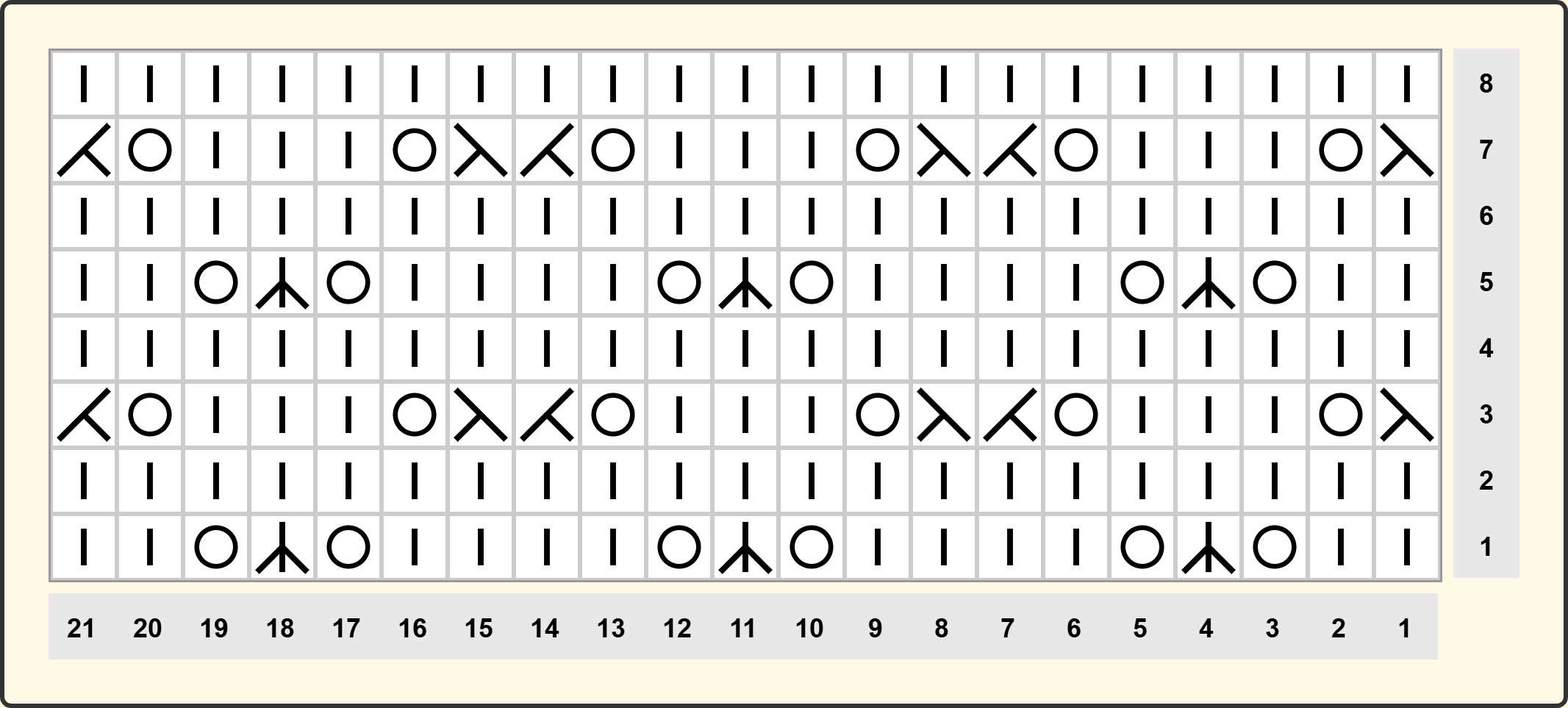
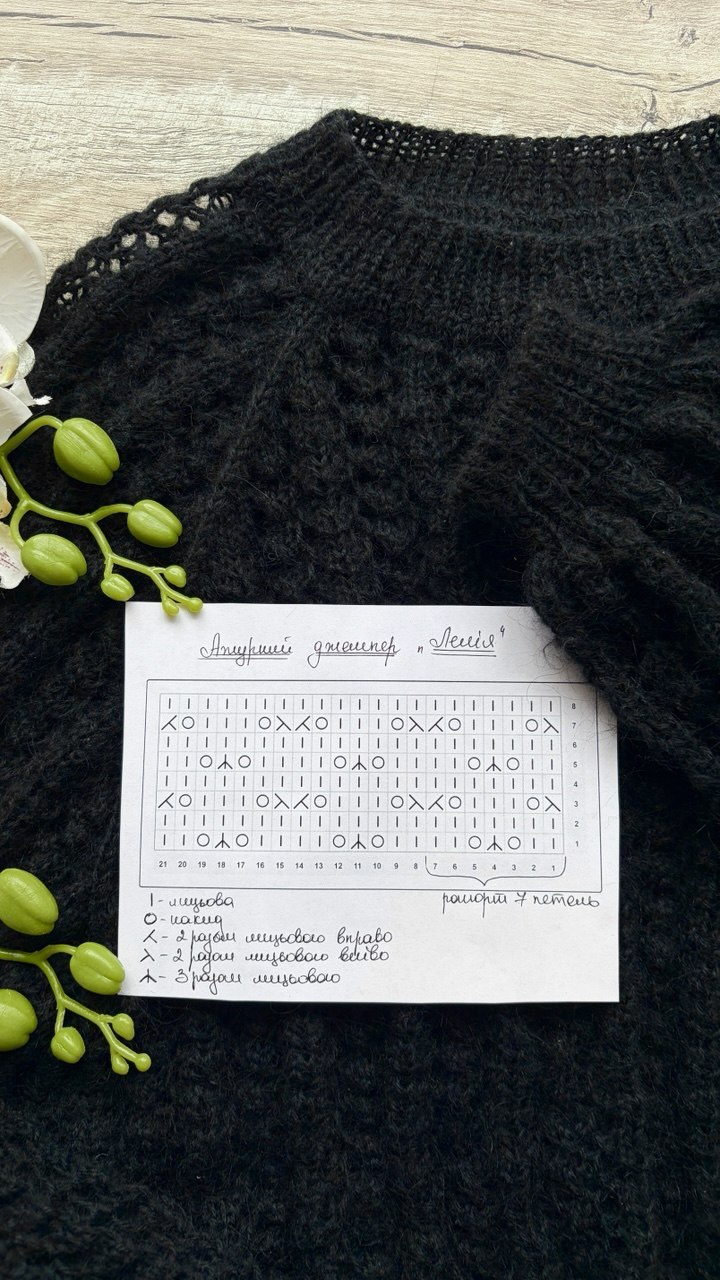
The neckline is done. Now we move on to the main fabric and the openwork pattern. Change to 4 mm needles. Below I have added the chart of the pattern for working in the round.
Technical notes on the pattern: Pattern repeat: 7 stitches + 2 edge stitches for working back and forth.
On RS rows (odd rows) – work from the chart.
On WS rows (even rows) – purl all stitches.
When working in the round, keep in mind that: The number of stitches must be a multiple of 7.
Odd rounds – work from the chart.
Even rounds – knit all stitches.
The pattern repeat is 4 rows tall.
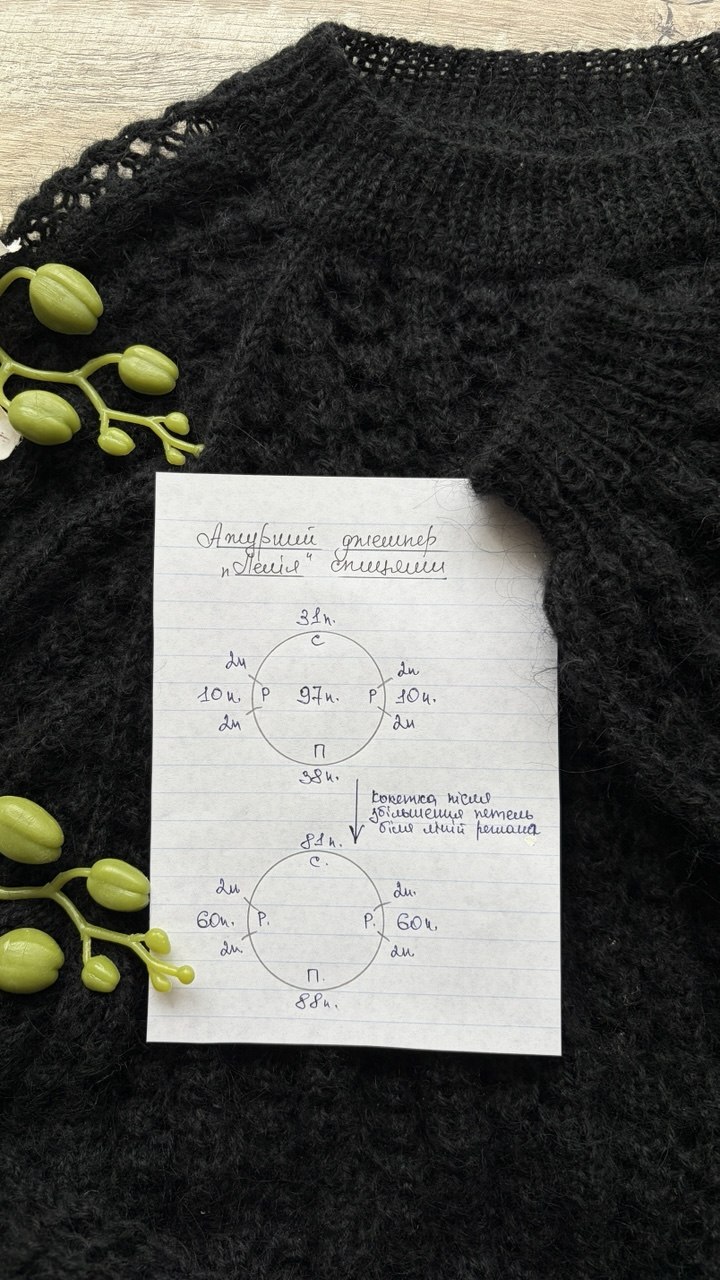
There are 96 stitches on the needles, and one more stitch must be added for the symmetry of the pattern in the first round (from the strand between stitches, next to the first raglan line): 96 + 1 = 97 stitches.
Divide the stitches into sections and mark them with markers:
- back – 31 stitches (4 repeats of 7 stitches + 3 stitches for symmetry),
- front – 38 stitches (5 repeats of 7 stitches + 3 stitches for symmetry),
- two sleeves – 10 stitches each (1 repeat of 7 stitches + 3 stitches for symmetry),
- four raglan lines – 2 stitches each.
Begin the yoke in the openwork pattern, working in rounds. Work the raglan lines (RL) in knit stitches. Increase next to the raglan lines every 2nd round, the same on all sections. Gradually work the new stitches into the pattern.
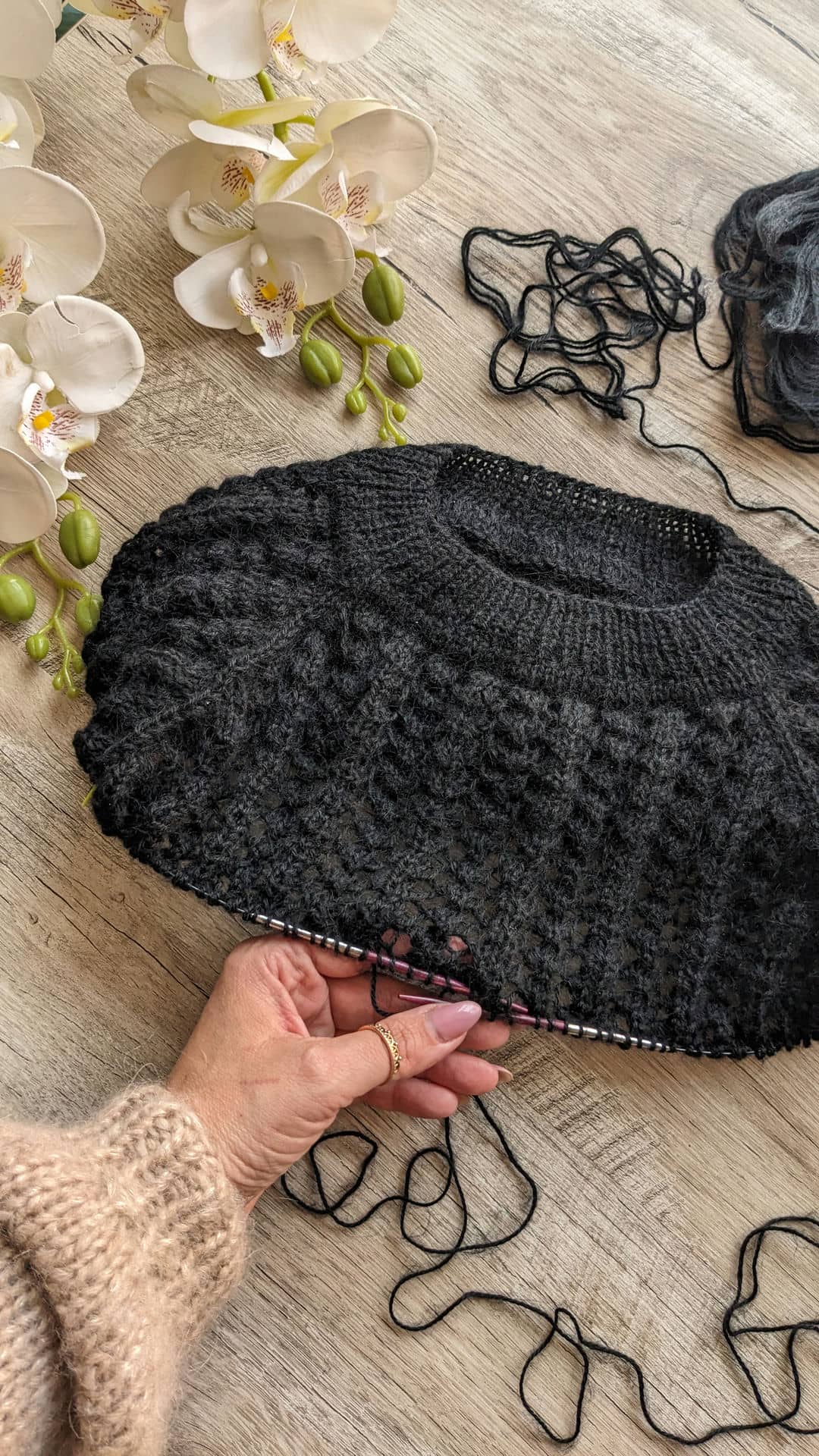
After working 21 cm of the yoke (including the height of the neckline), the stitch counts at this point are:
- back – 81 stitches,
- front – 88 stitches,
- two sleeves – 60 stitches each,
- four raglan lines – 2 stitches each.
I put the sleeve stitches on waste yarn. The raglan-line stitches are divided equally between the sections. Now we switch to working the Asian back raise in rows, on the back stitches + the raglan-line stitches. On the needles: 1 + 81 + 1 = 83 stitches.
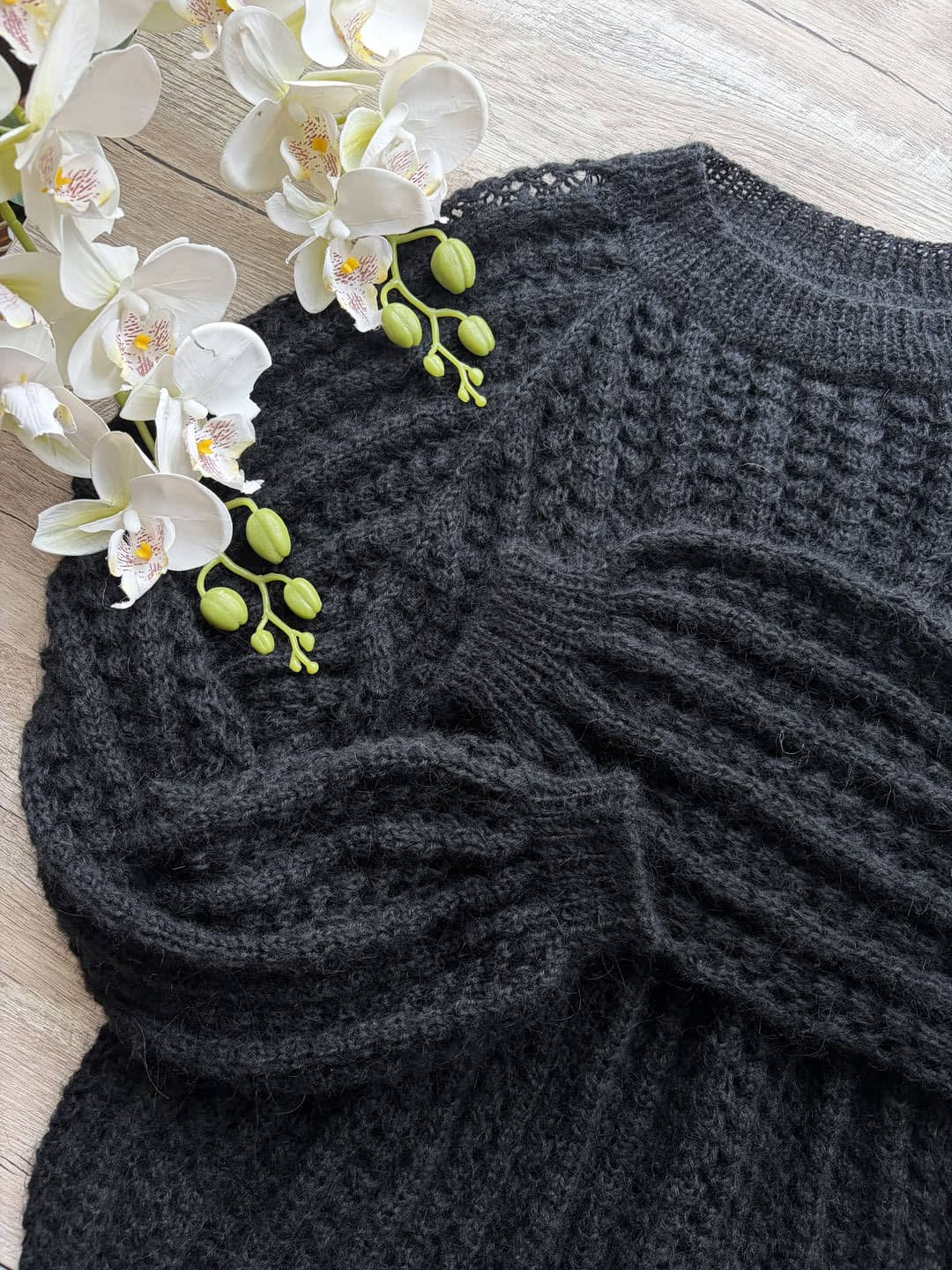
Now work the Asian back raise. Its height is 8 pattern rows, about 3 cm.
Next we go back to working the main fabric in the round. Join the back, front and four raglan-line stitches, cast on stitches for the two underarms (8 stitches each) and keep the pattern repeat in mind.
The total number of stitches for the body is:
83 (back + RL stitches) + 8 (underarm) + 90 (front + RL stitches) + 8 (underarm) = 189 stitches.
189 stitches/7 stitches per pattern repeat = 27 pattern repeats.
Work the body to the desired length. I do not change needles and keep working with 4 mm. Work 10 rounds of 1×1 rib. Then 2 rounds of double rib:
Round 1: knit the knit stitch, slip the purl stitch without working it, with the working yarn in front.
Round 2: slip the knit stitch without working it, with the working yarn behind, purl the purl stitch.
Bind off with a tapestry needle. The length of the piece is 60 cm. Yarn used so far, for the body: 140 g.
Next we move on to the sleeves. There are 62 stitches on each waste yarn holder, one for each sleeve. Use 4 mm needles.
Pick up the required number of stitches along the edge of the underarm and the back raise, keeping in mind the pattern repeat of 7 stitches.
On the needles: 62 + 15 = 77 stitches.
77 stitches/7 stitches per pattern repeat = 11 pattern repeats.
Knit the sleeves to the desired length. Before the cuff I decreased the stitches evenly by half: work the whole round in k2tog.
Change to 3.5 mm needles. Work 10 rounds of 1×1 rib and 2 rounds of double rib. Bind off with a tapestry needle.
The length of the finished piece is 60 cm. Size 48–50 (L–XL).
Total yarn used for the jumper is 220 g.
Happy knitting! Wishing you light, even stitches!
You may also like
Classic Knitted Cardigan with Raglan Sleeves
May 12, 2023
Knitted Gray Angora Sweater and Hat “Grace”
September 24, 2021