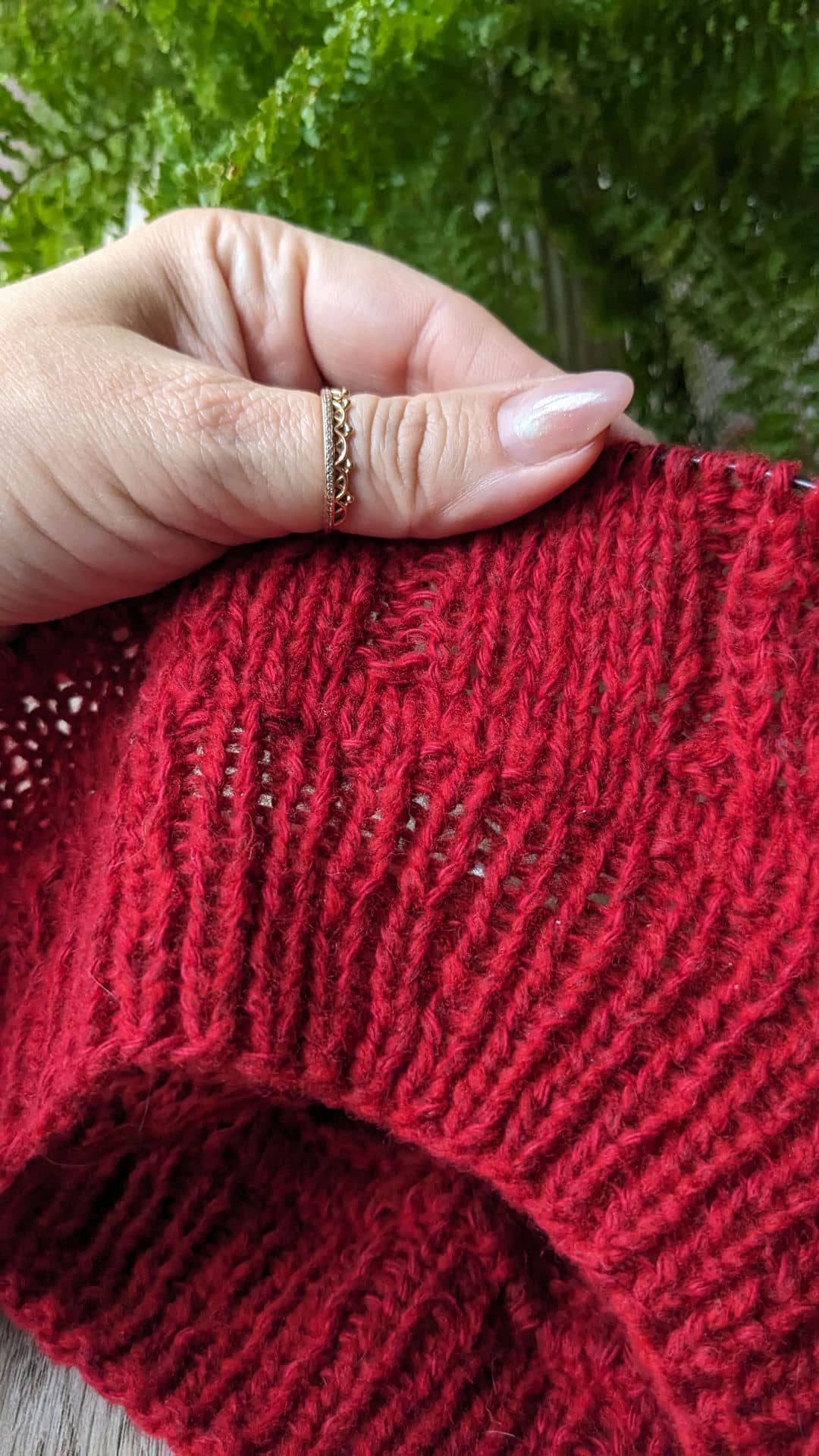
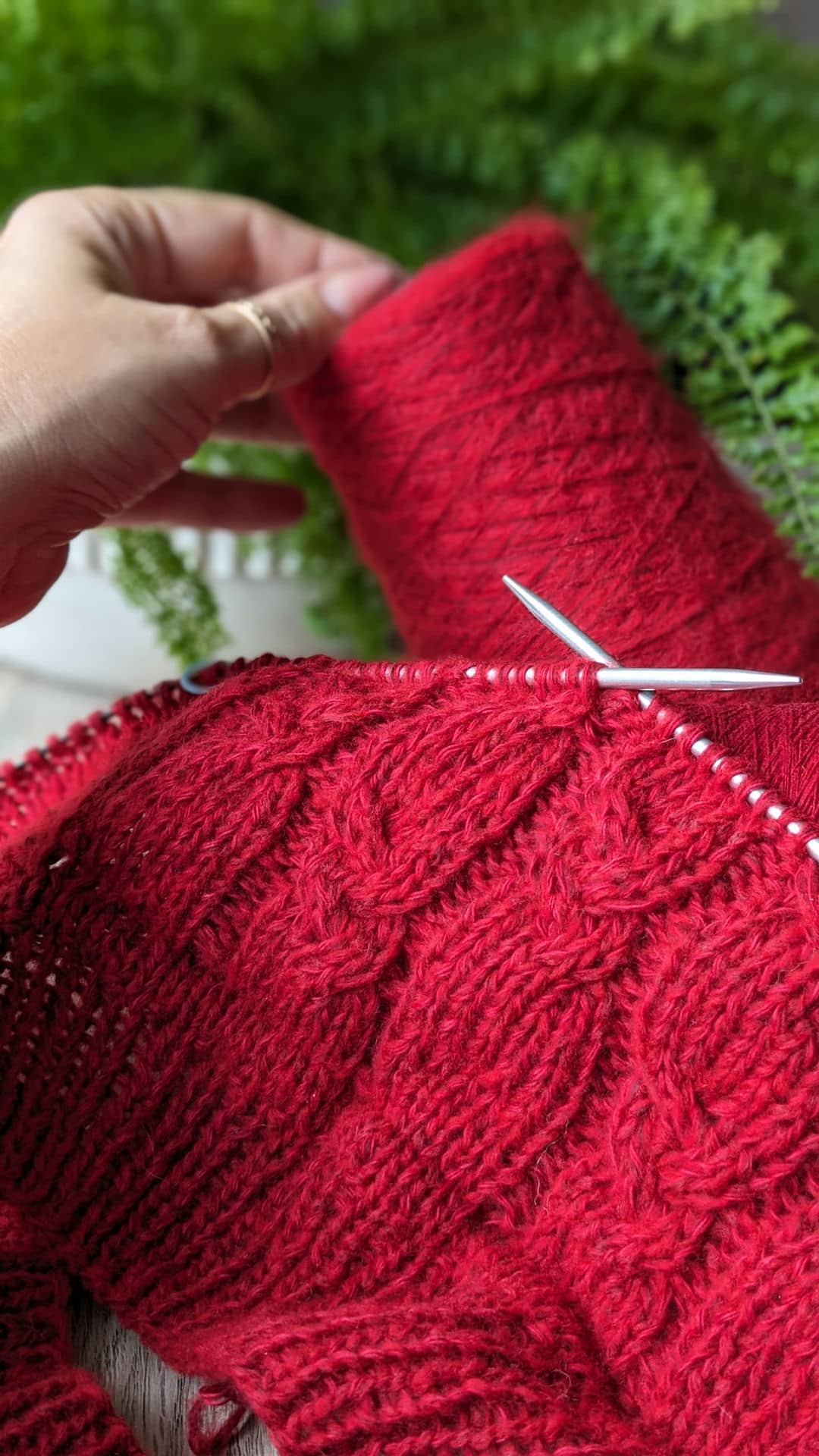
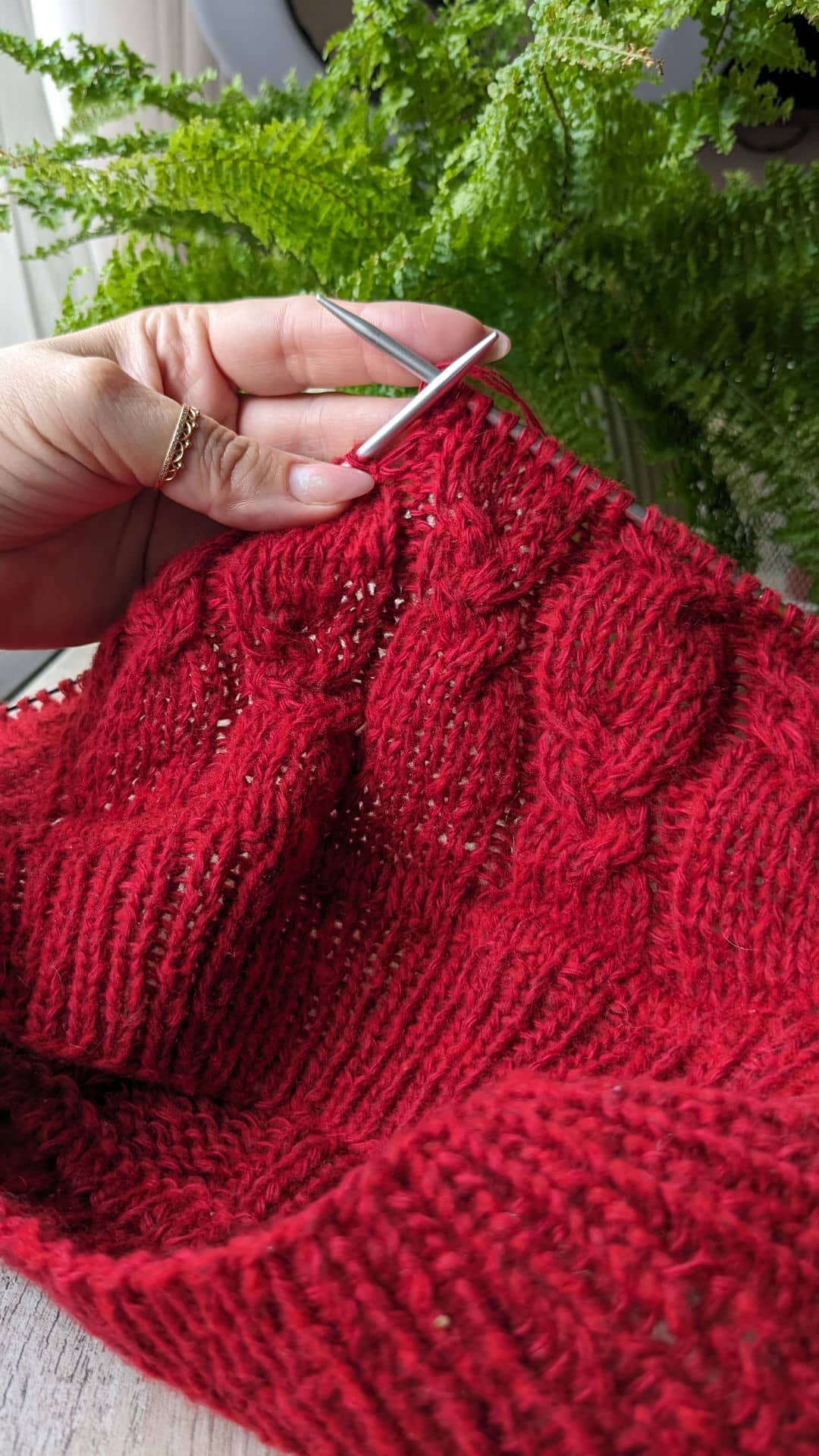
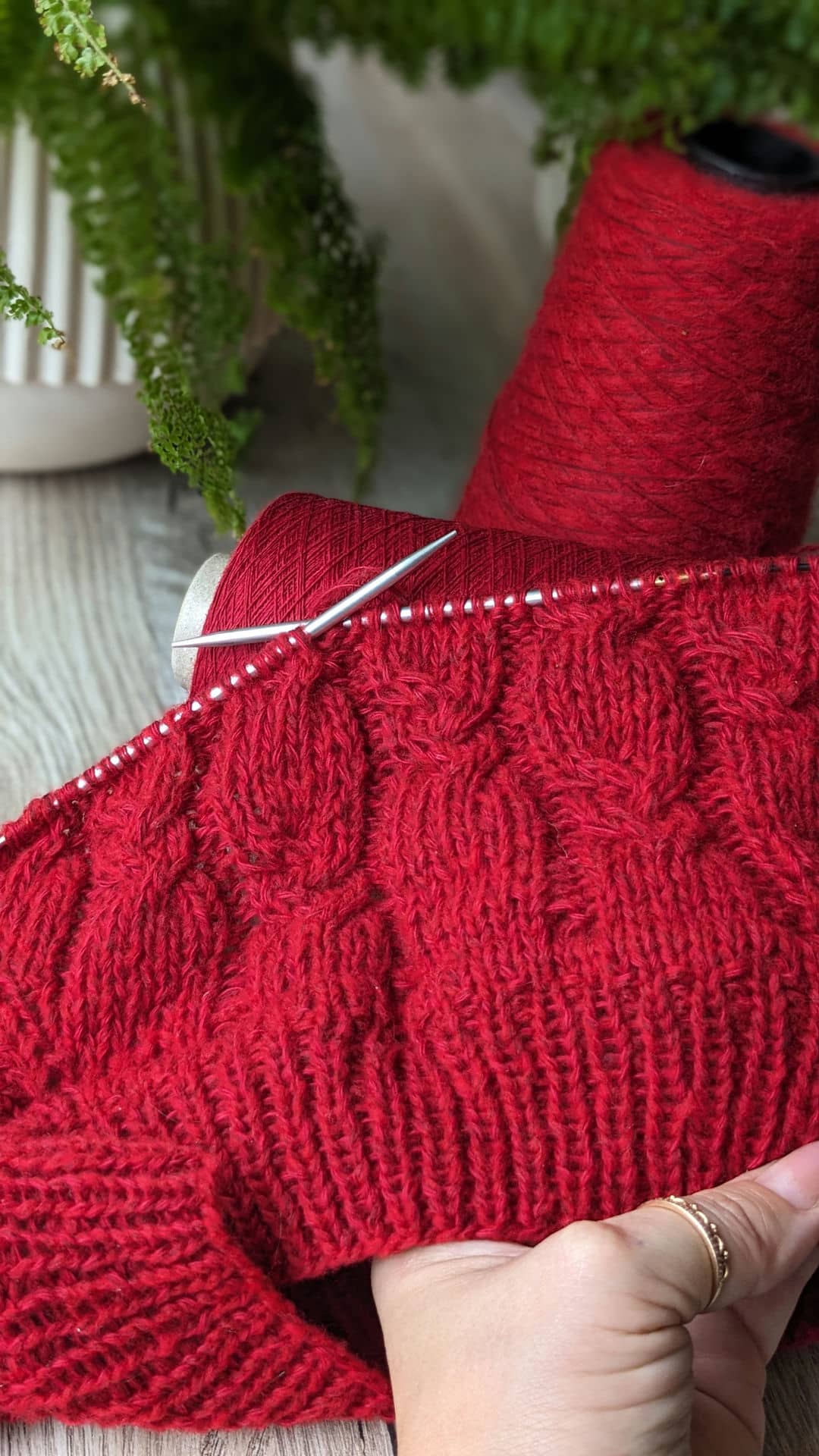
Aren Sweater: Top-Down Raglan with Aran Cables
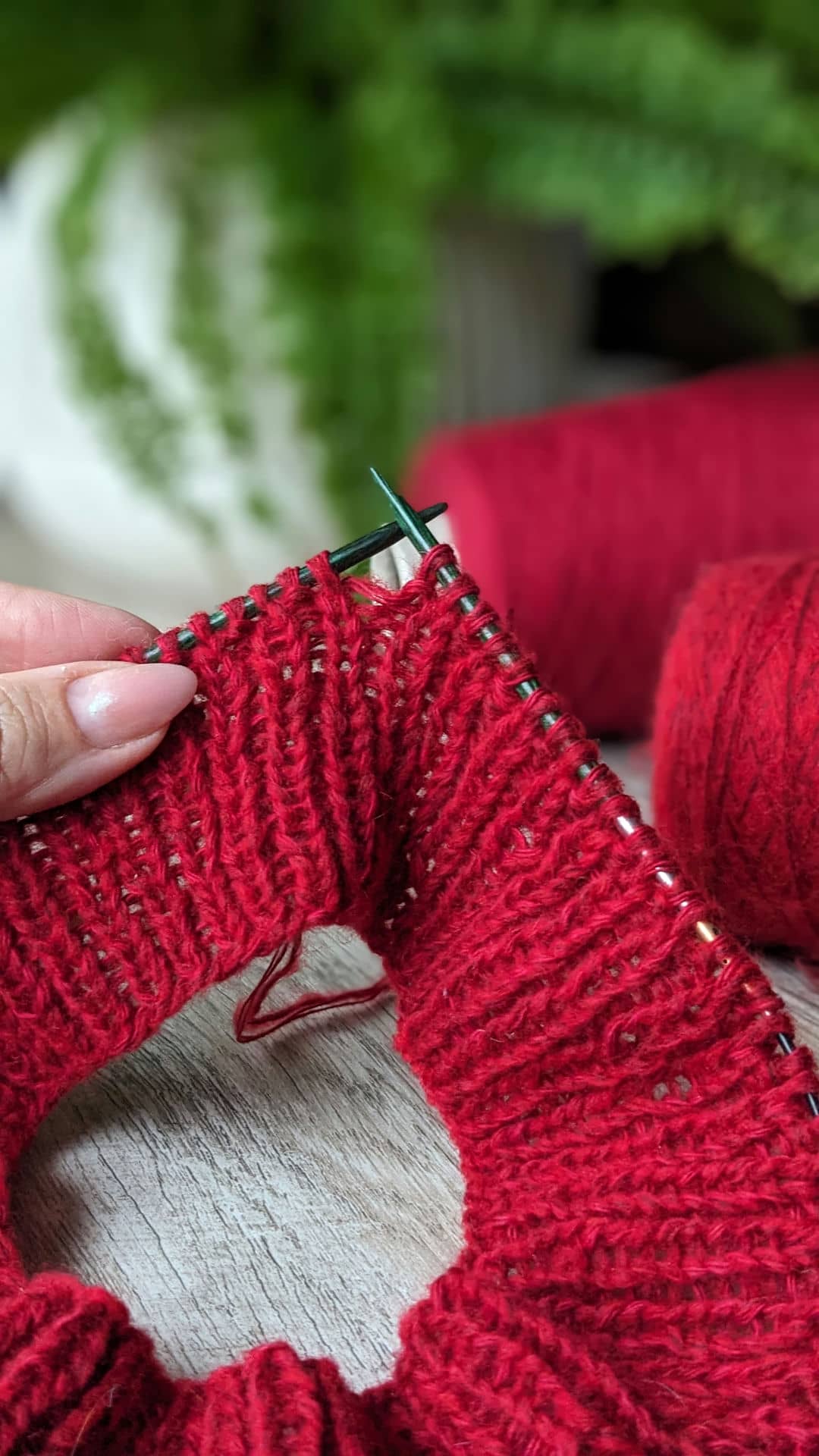
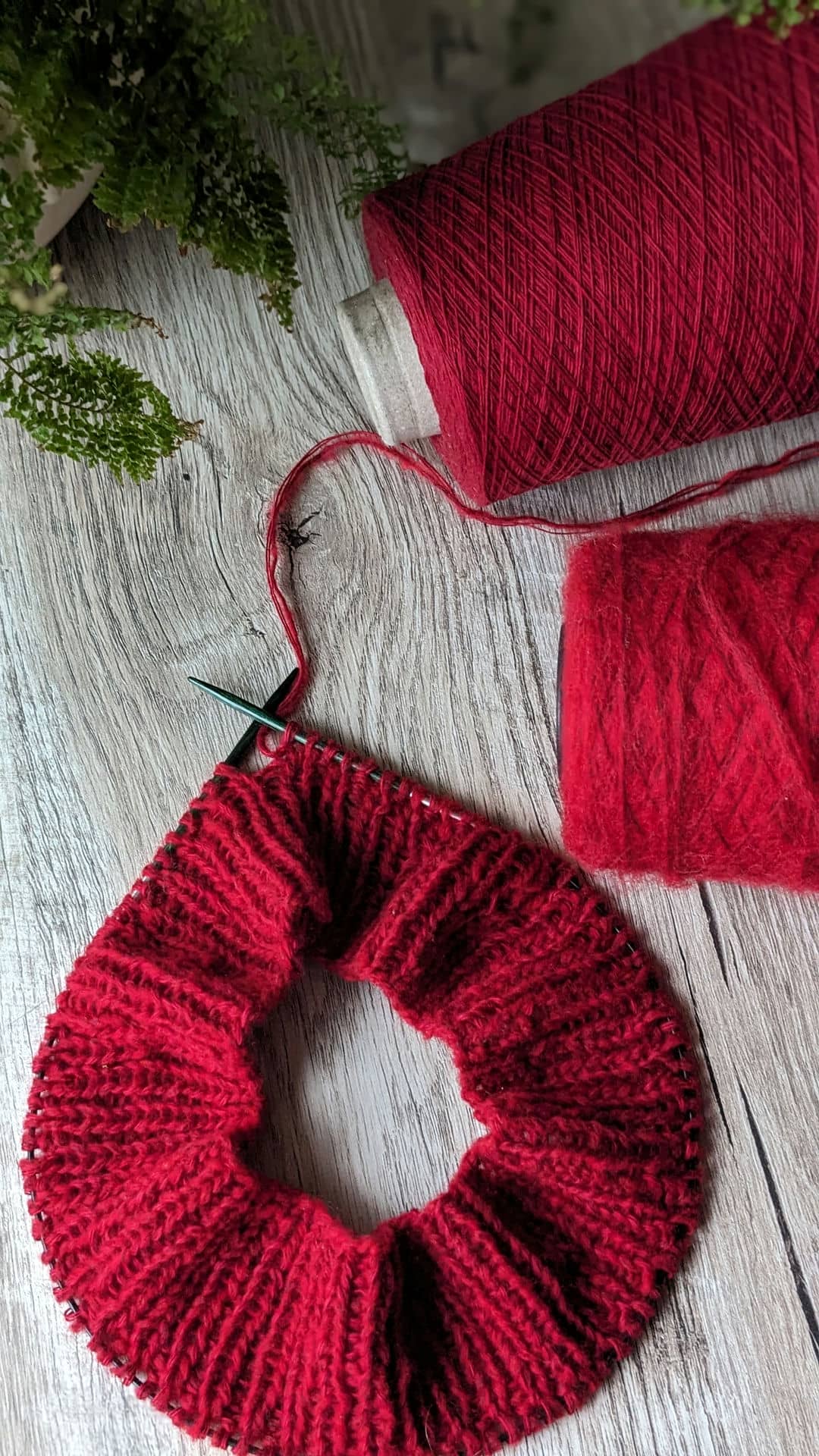
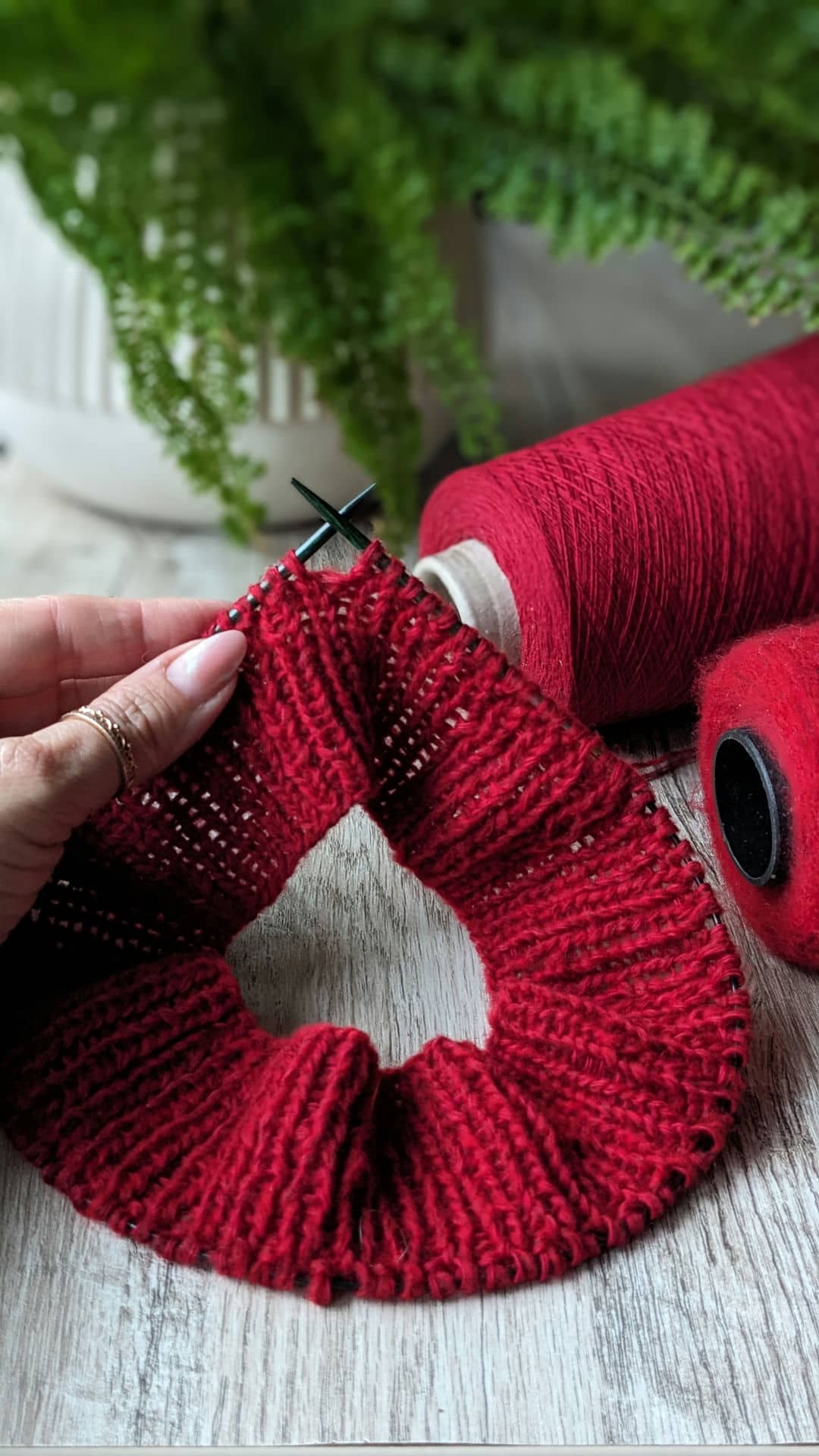
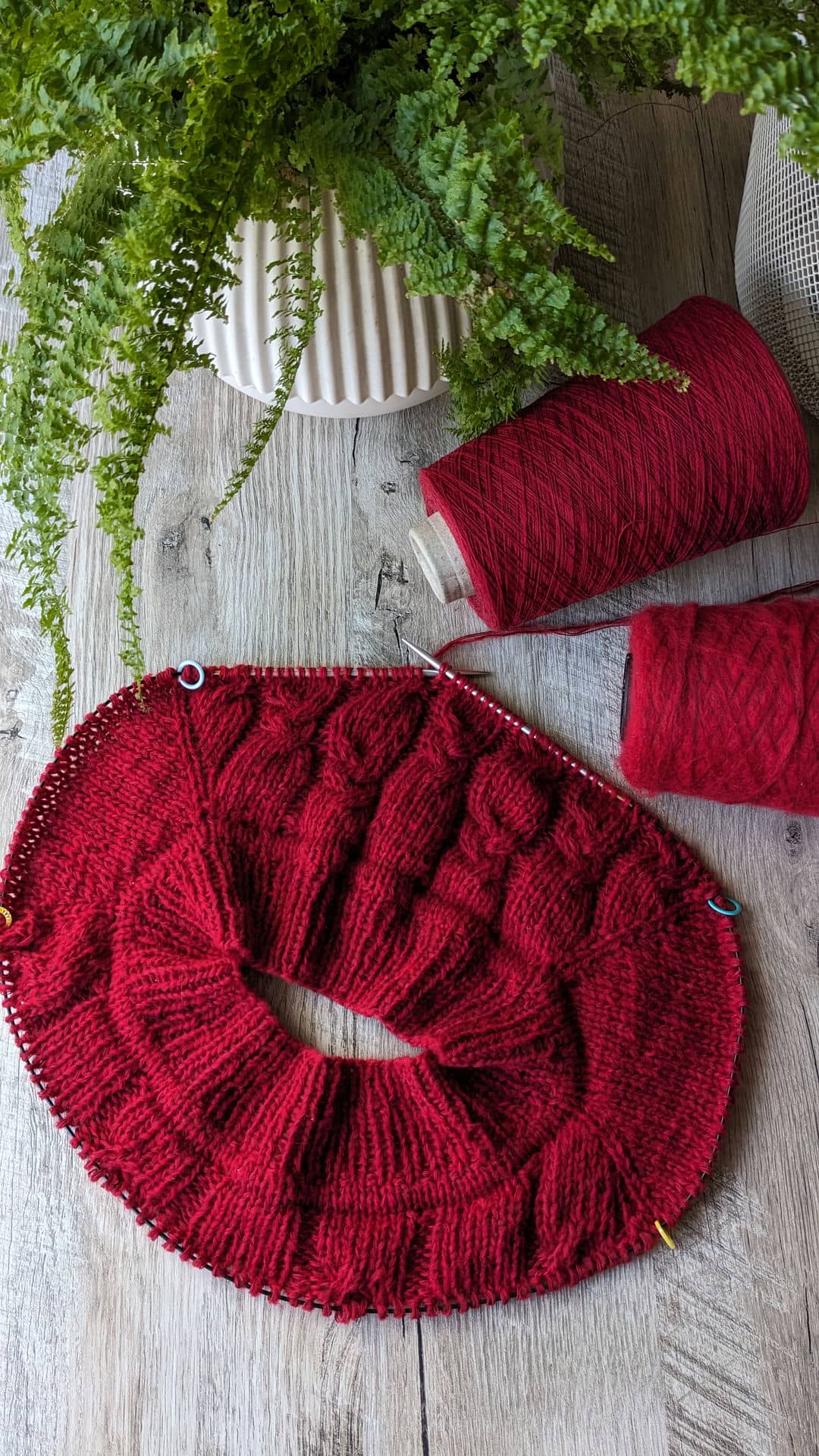
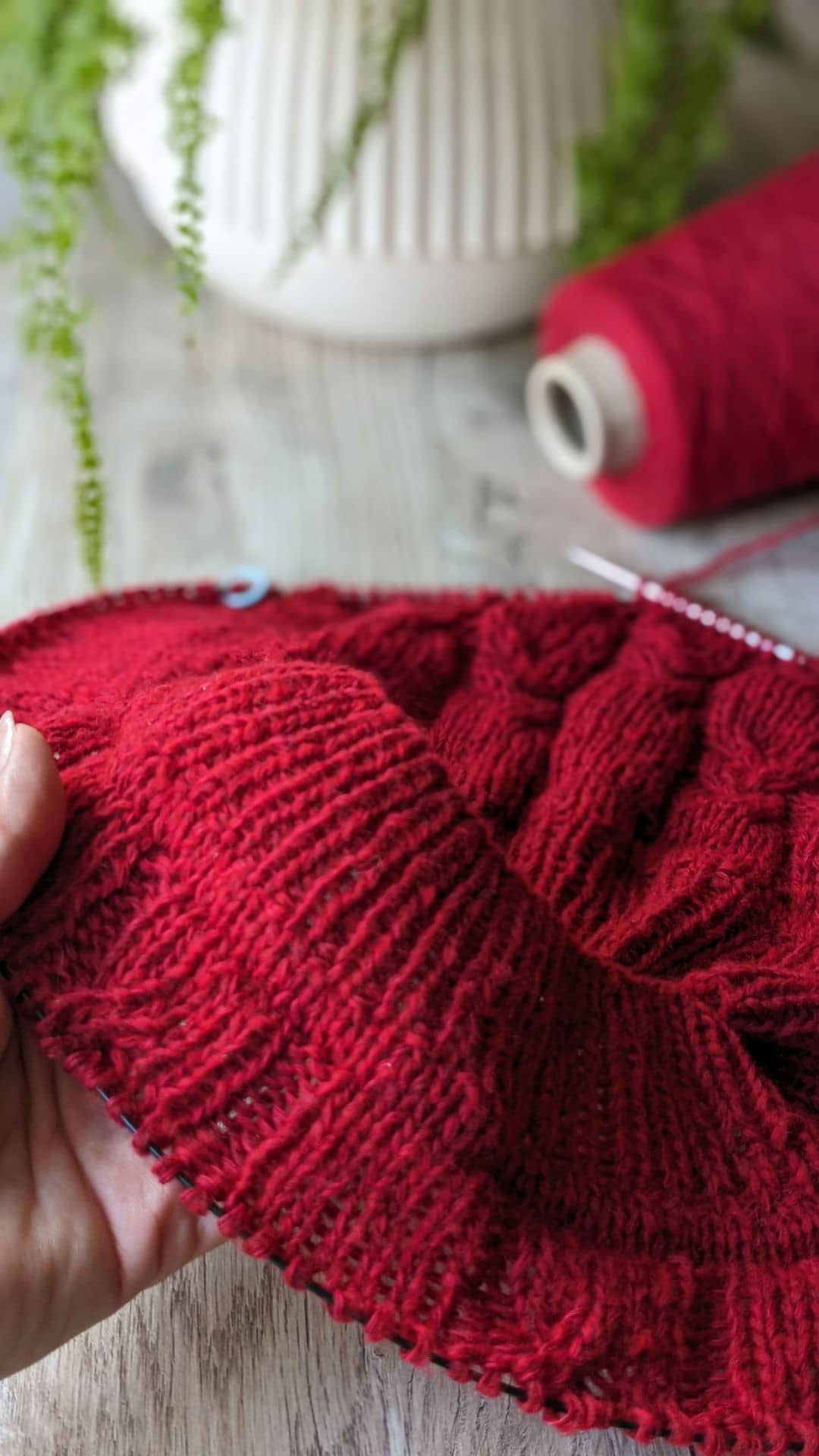
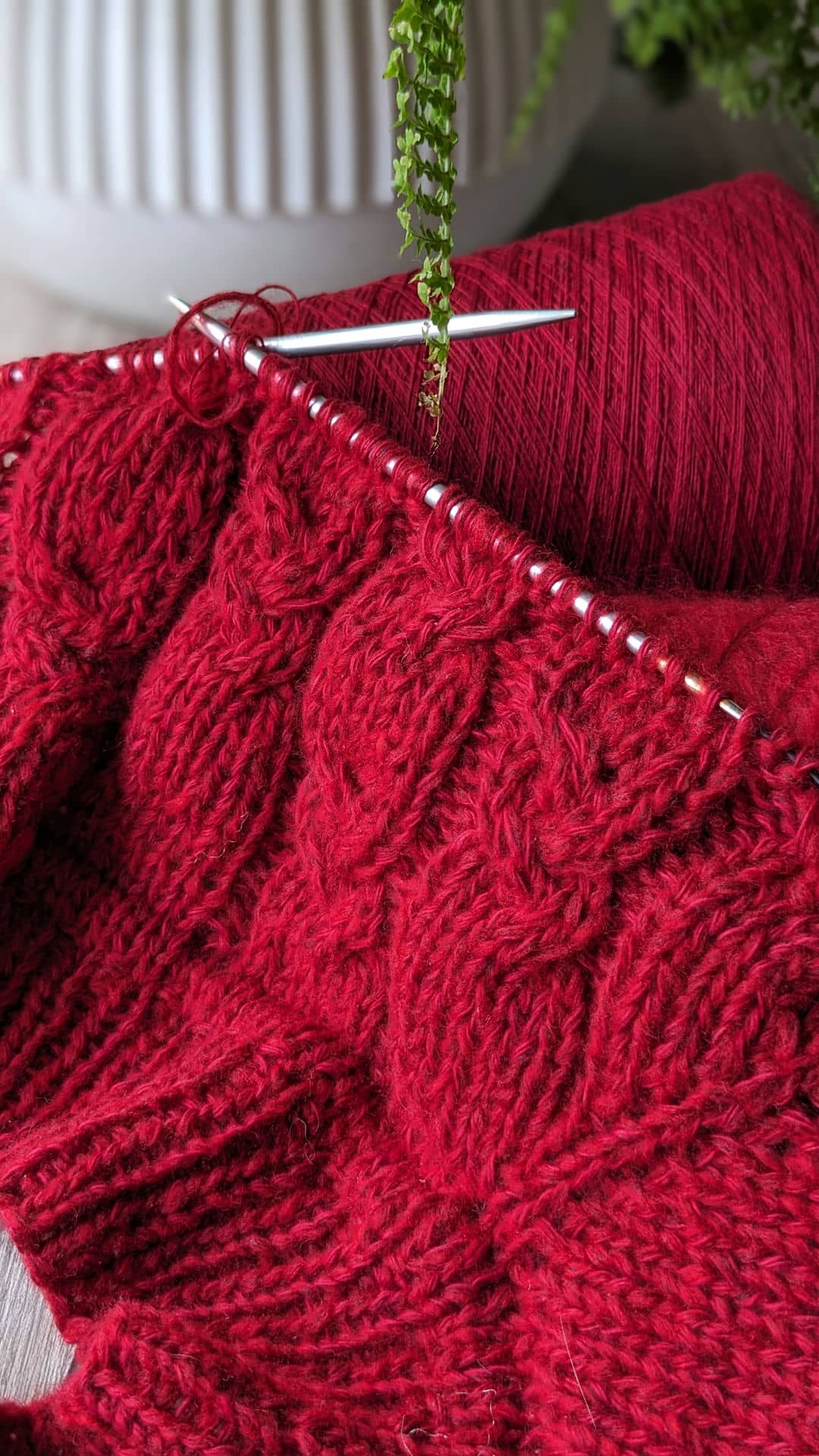
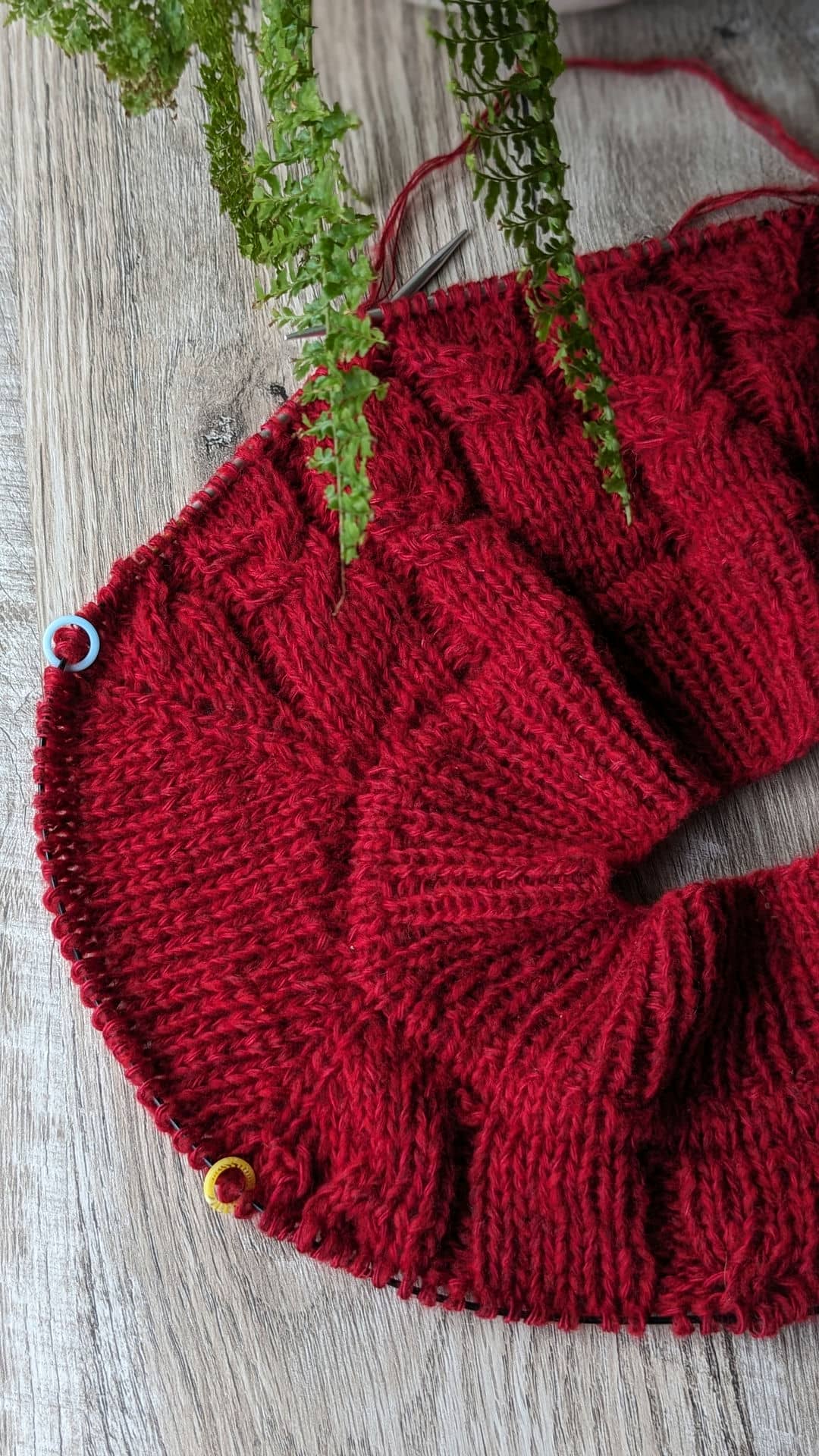
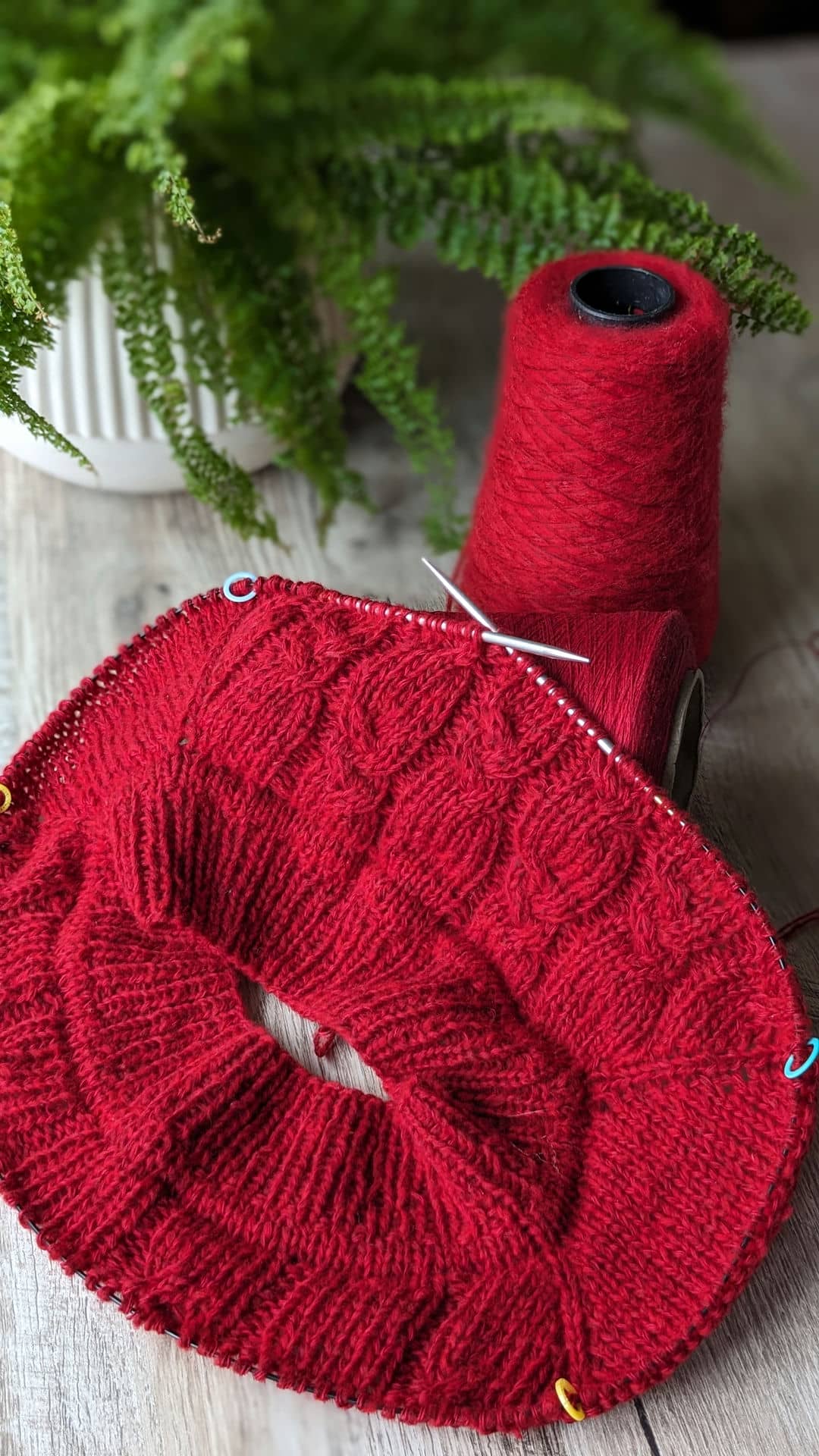
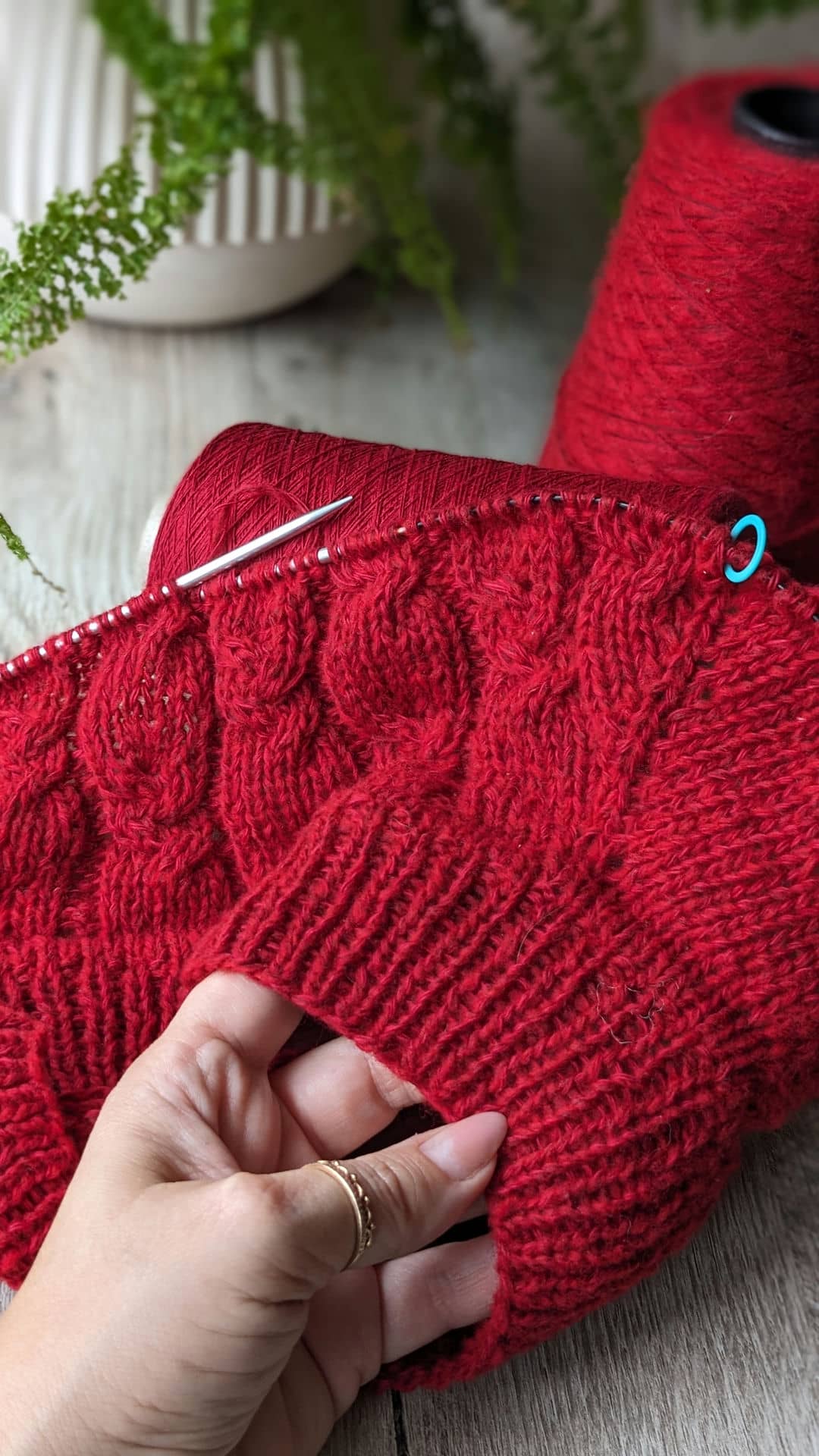
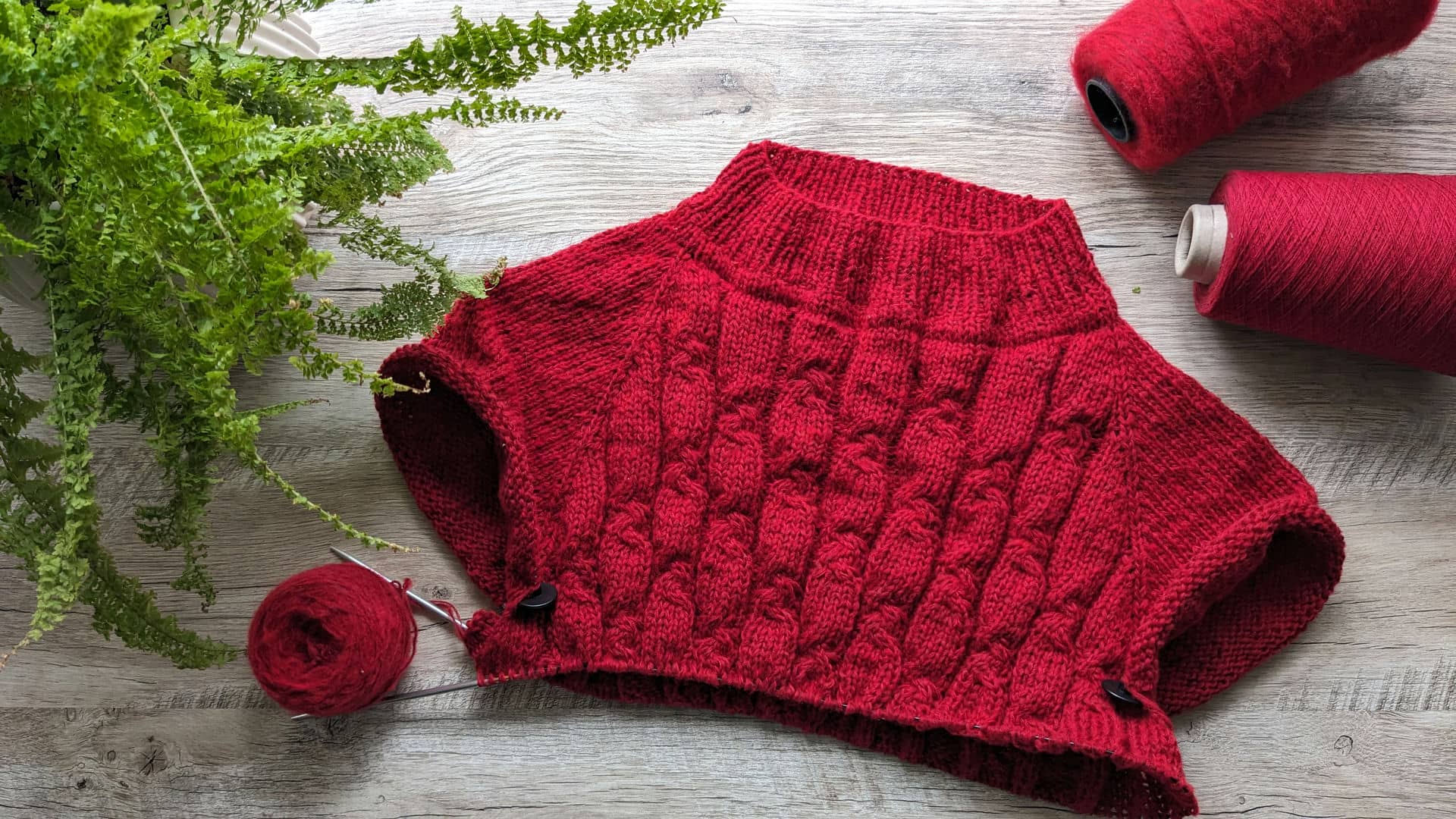
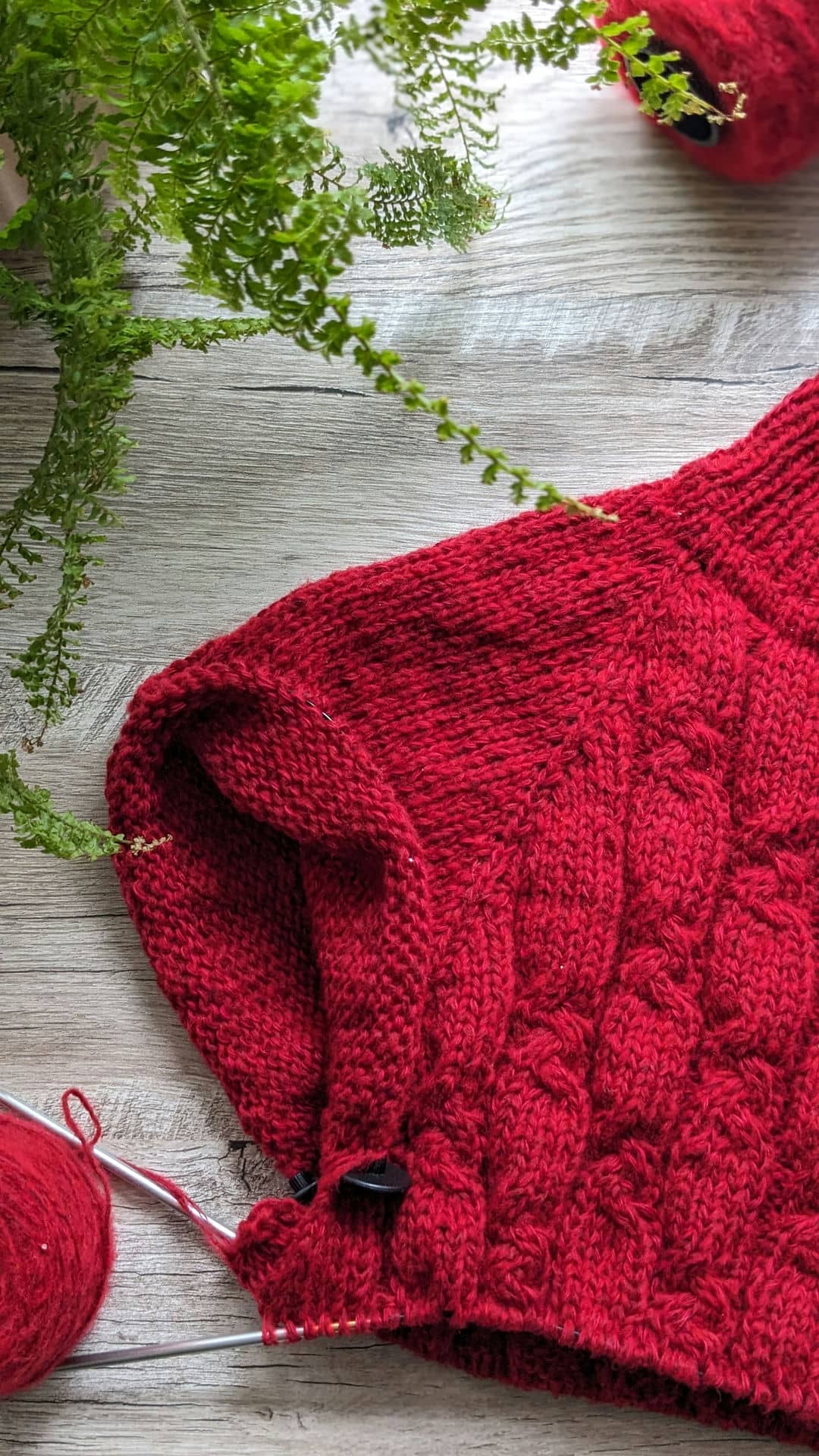
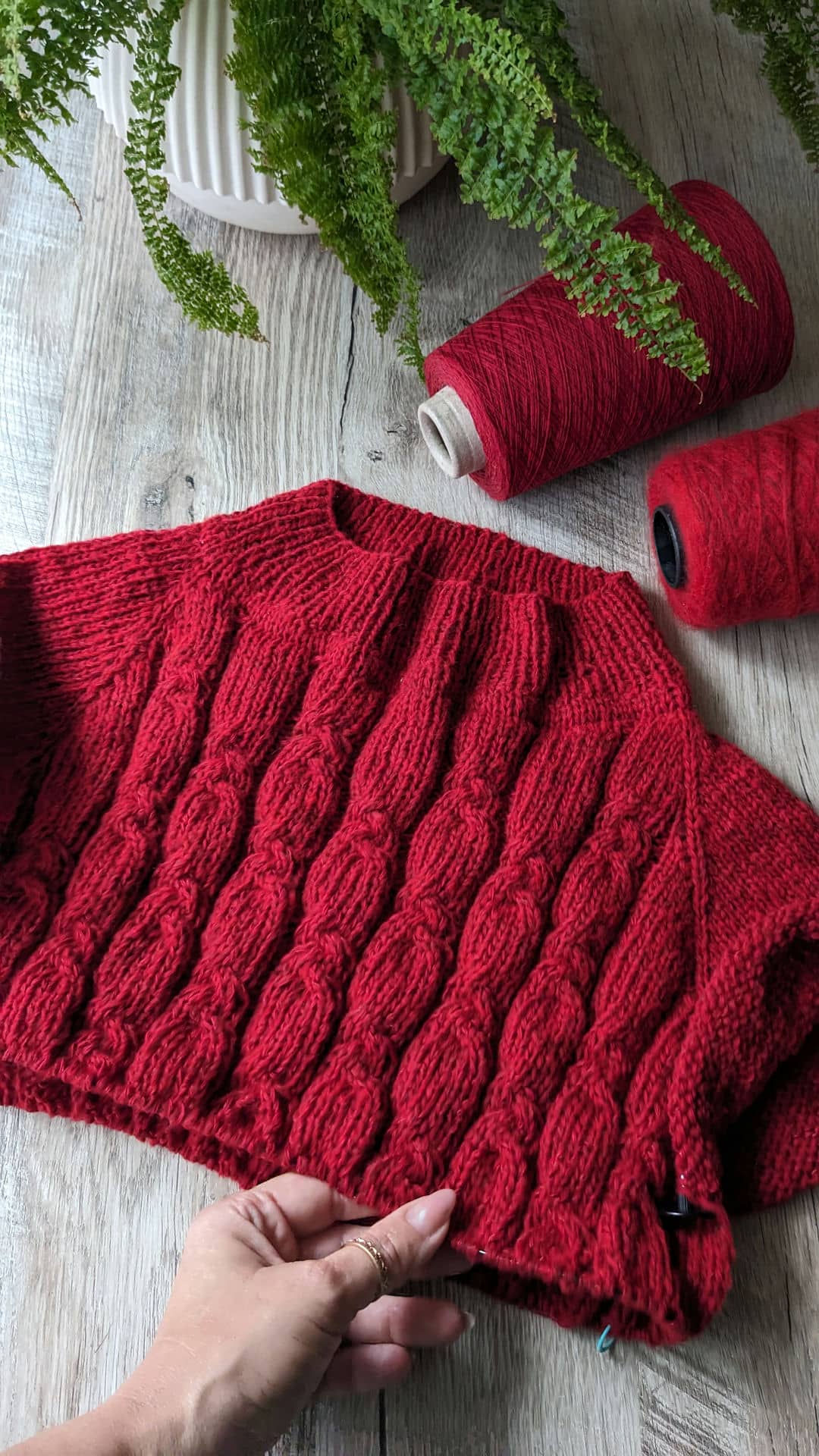
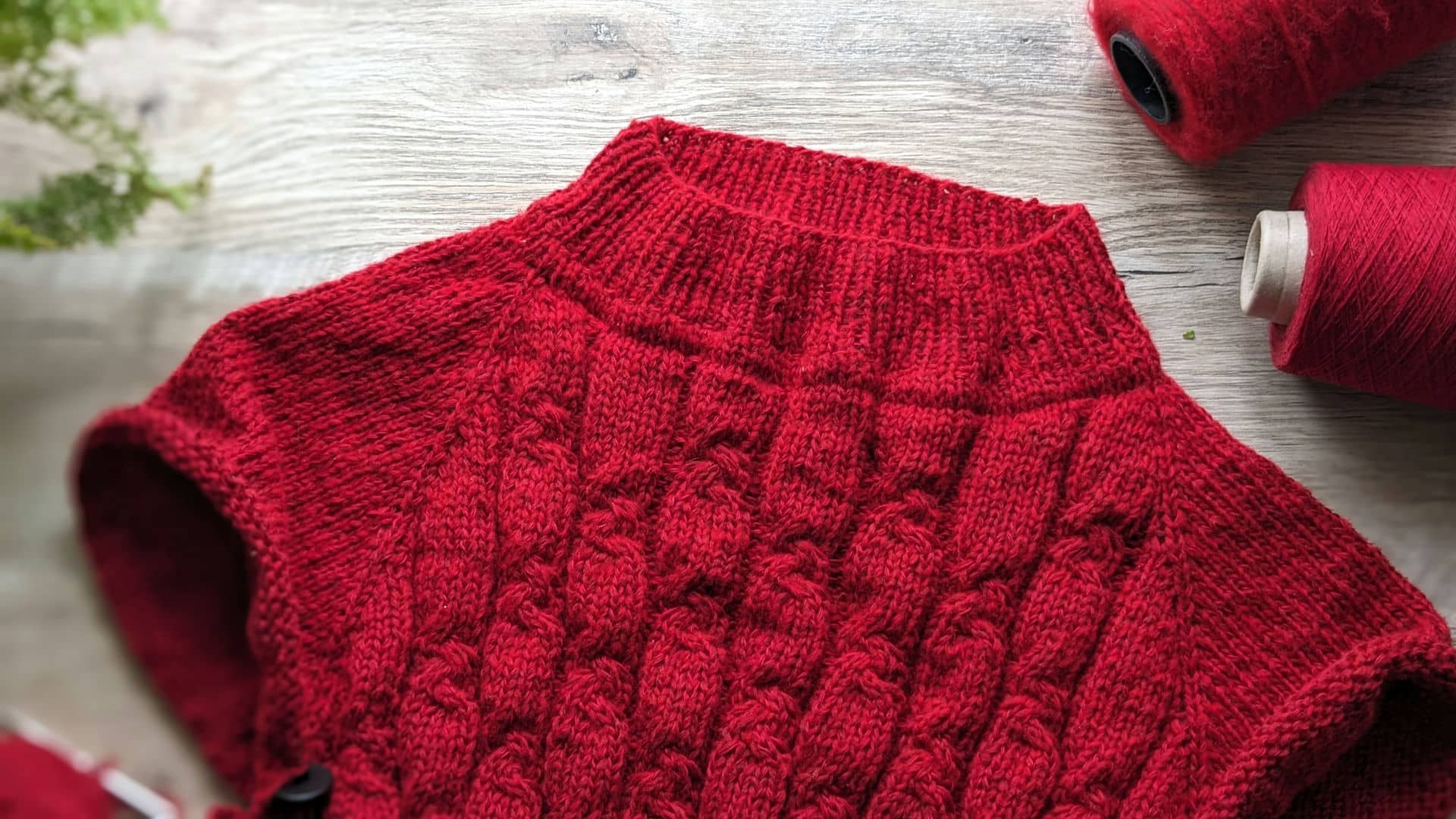
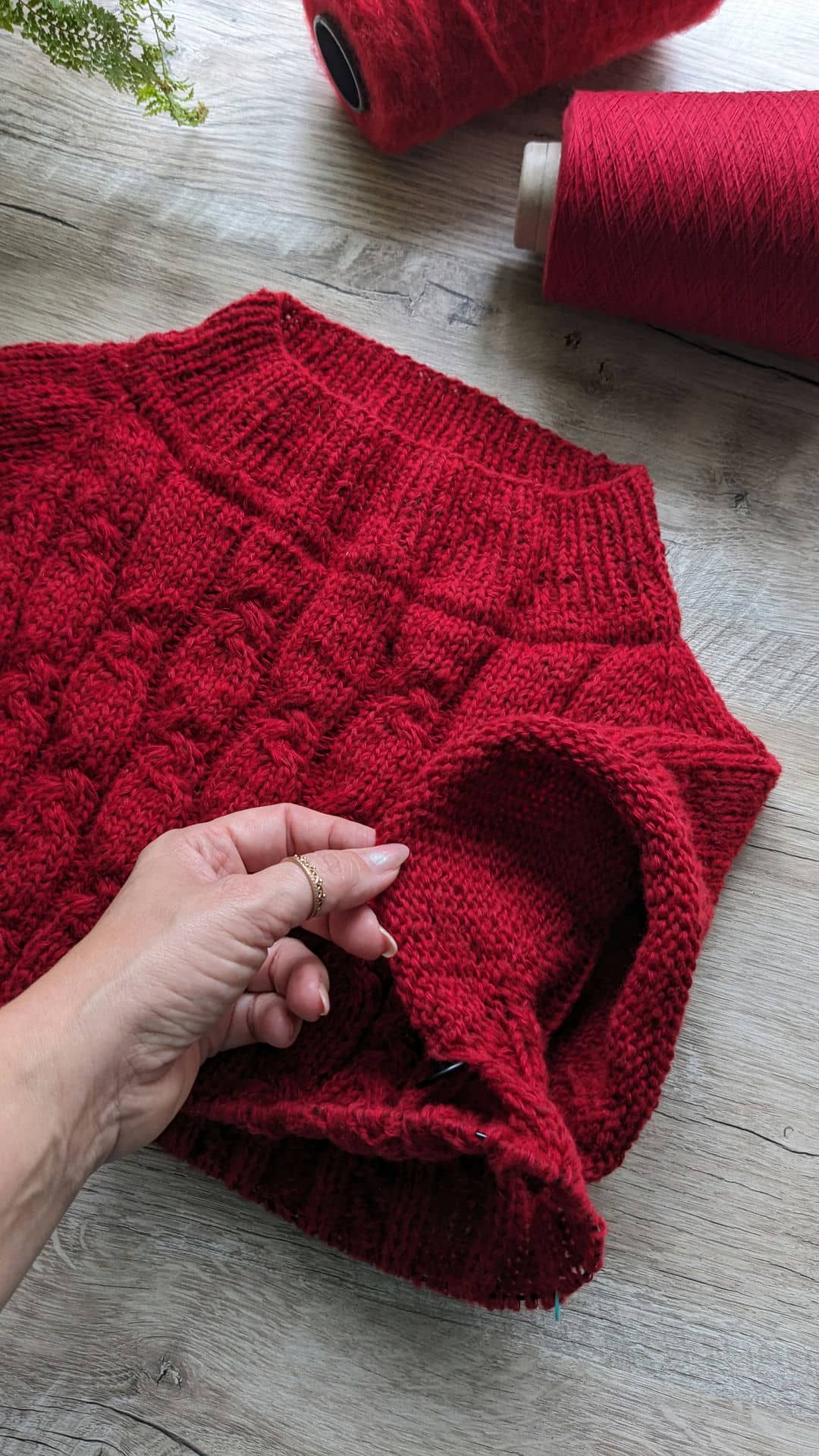
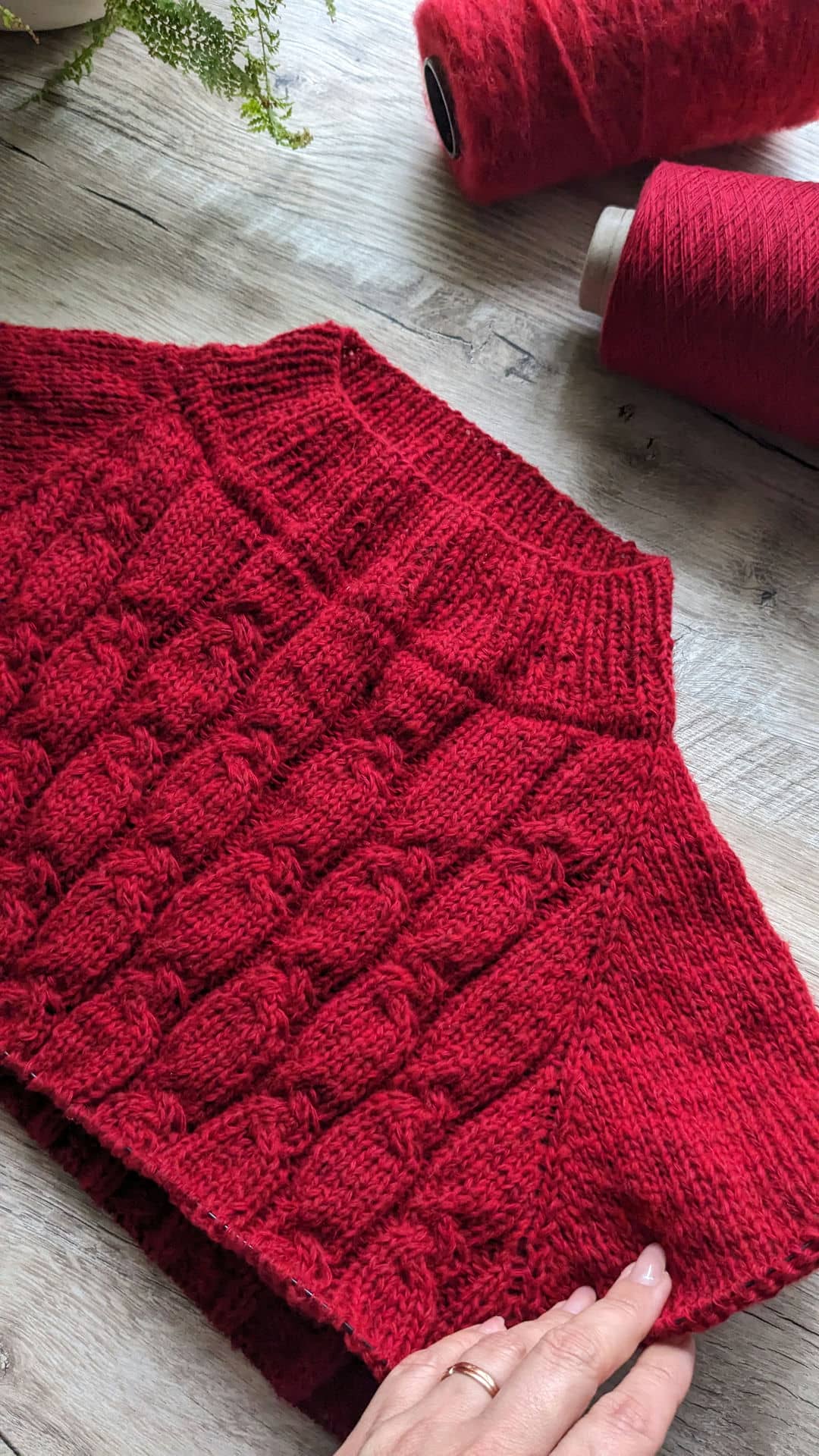
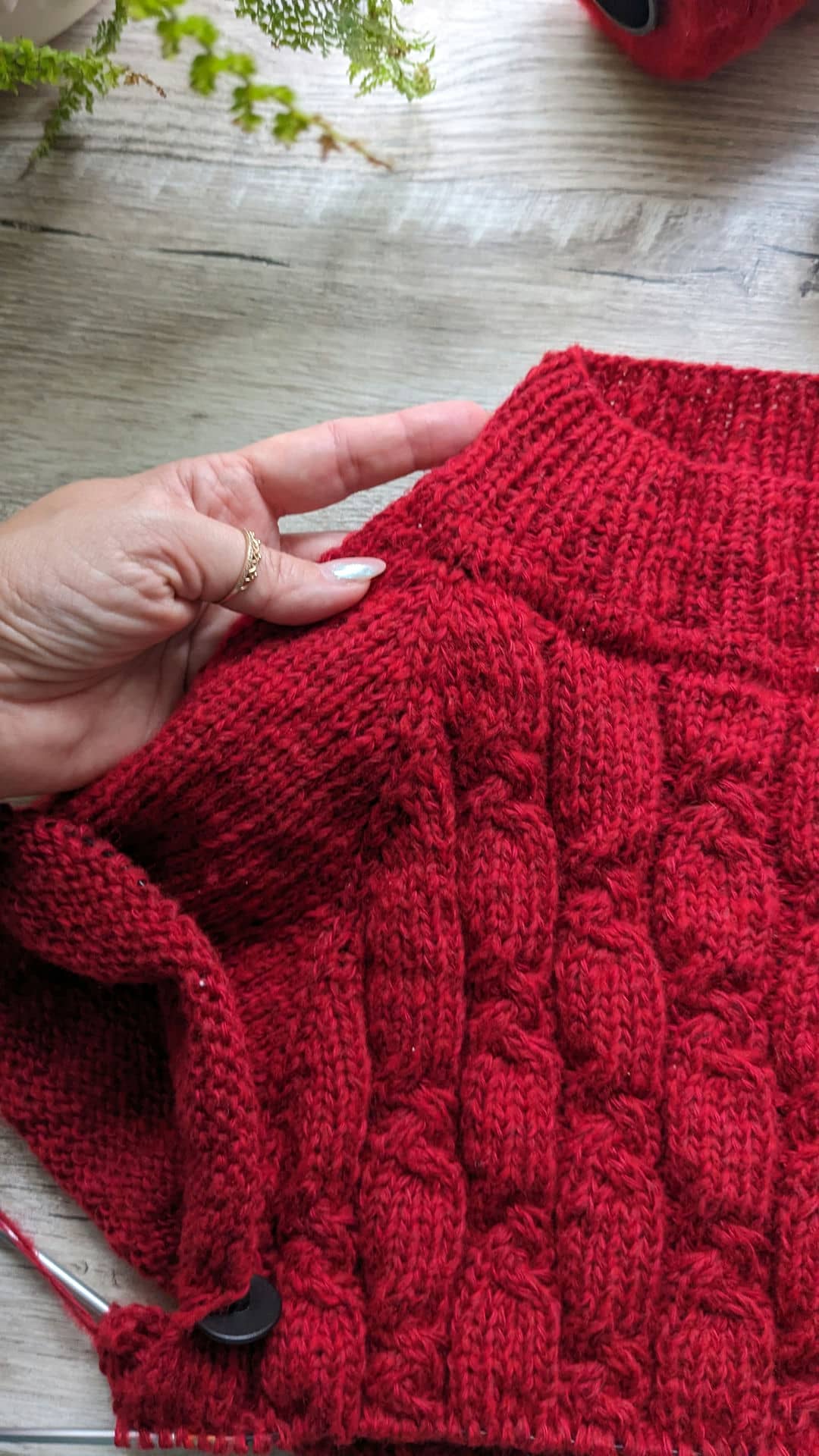
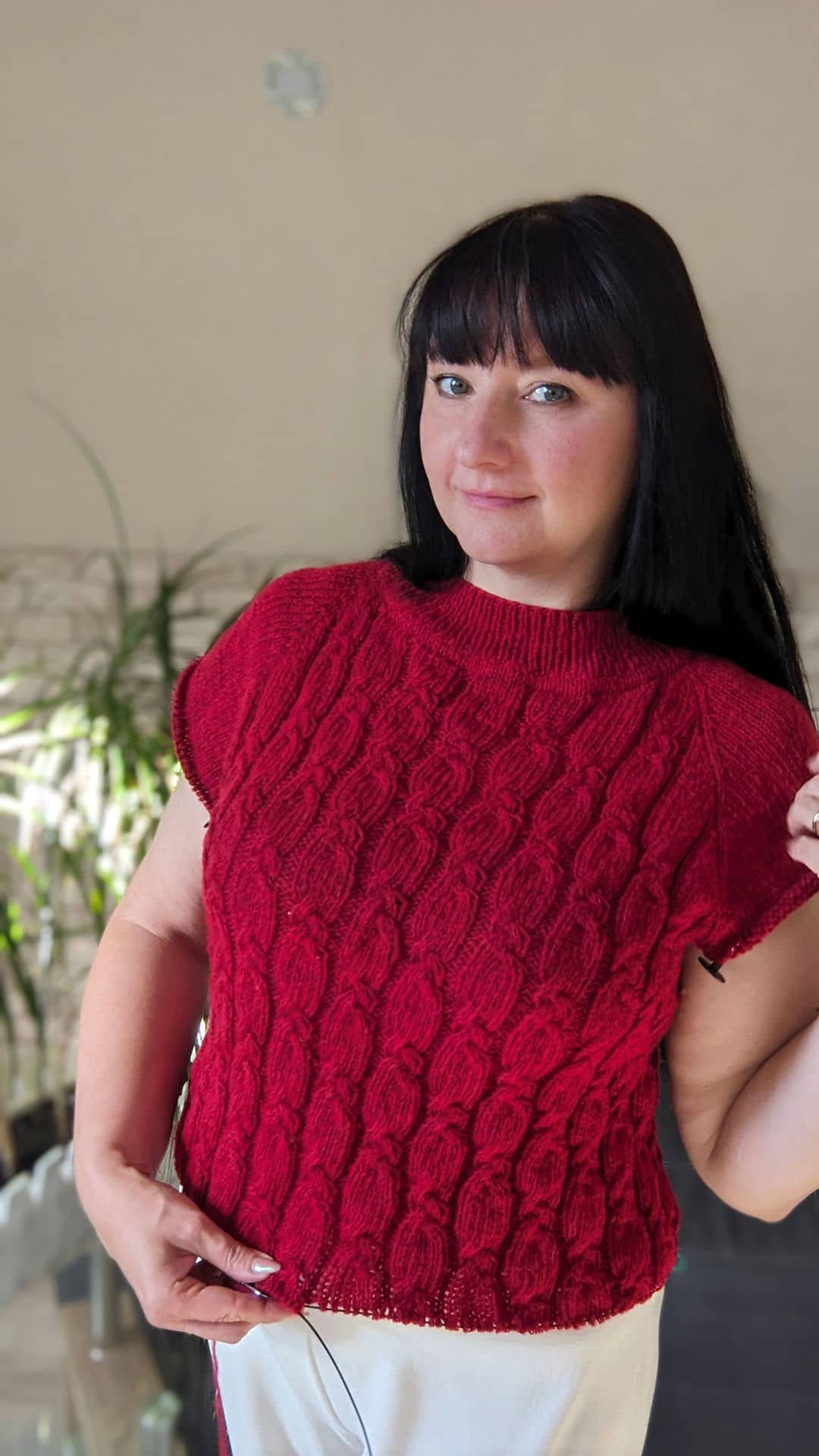
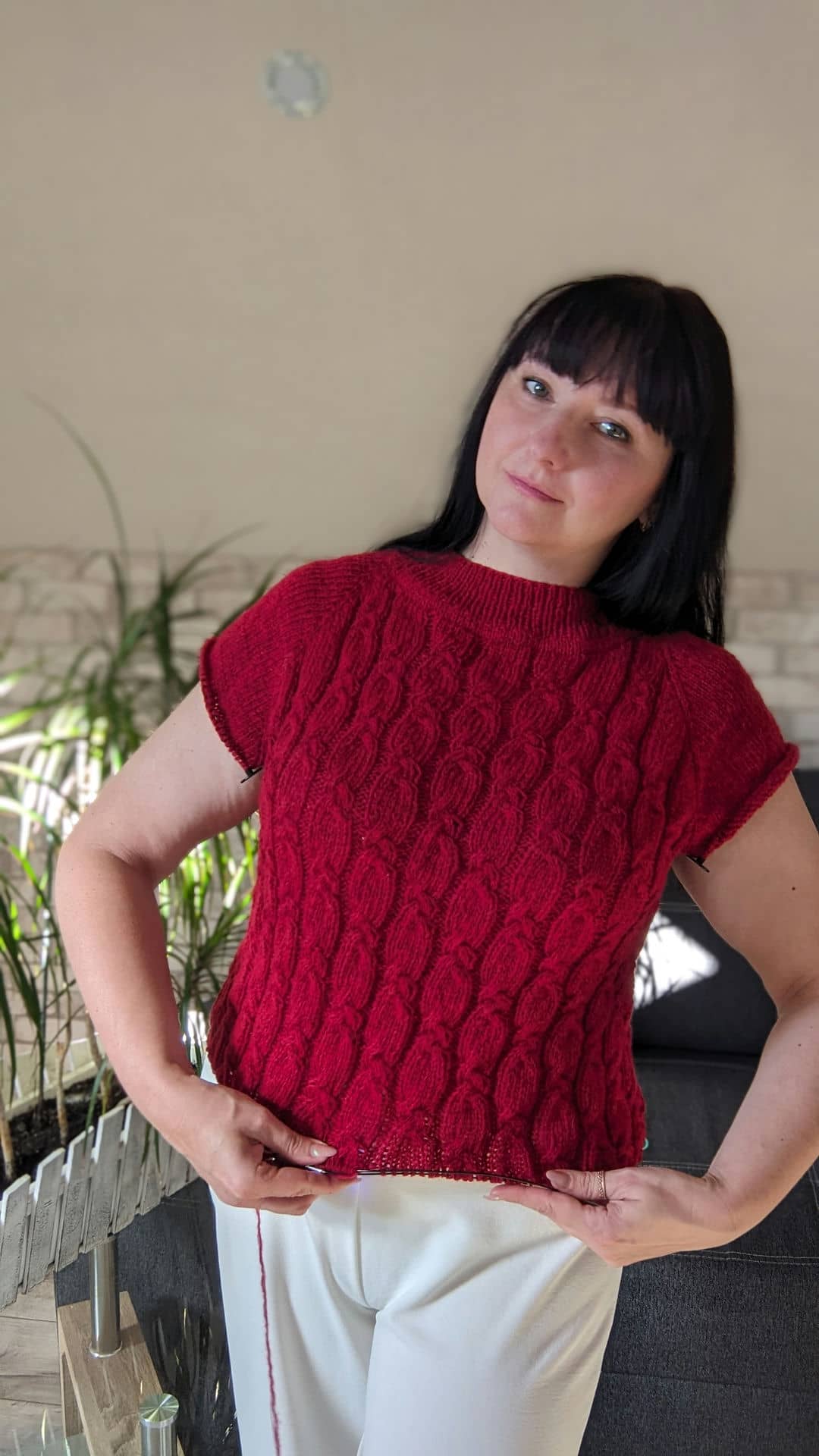
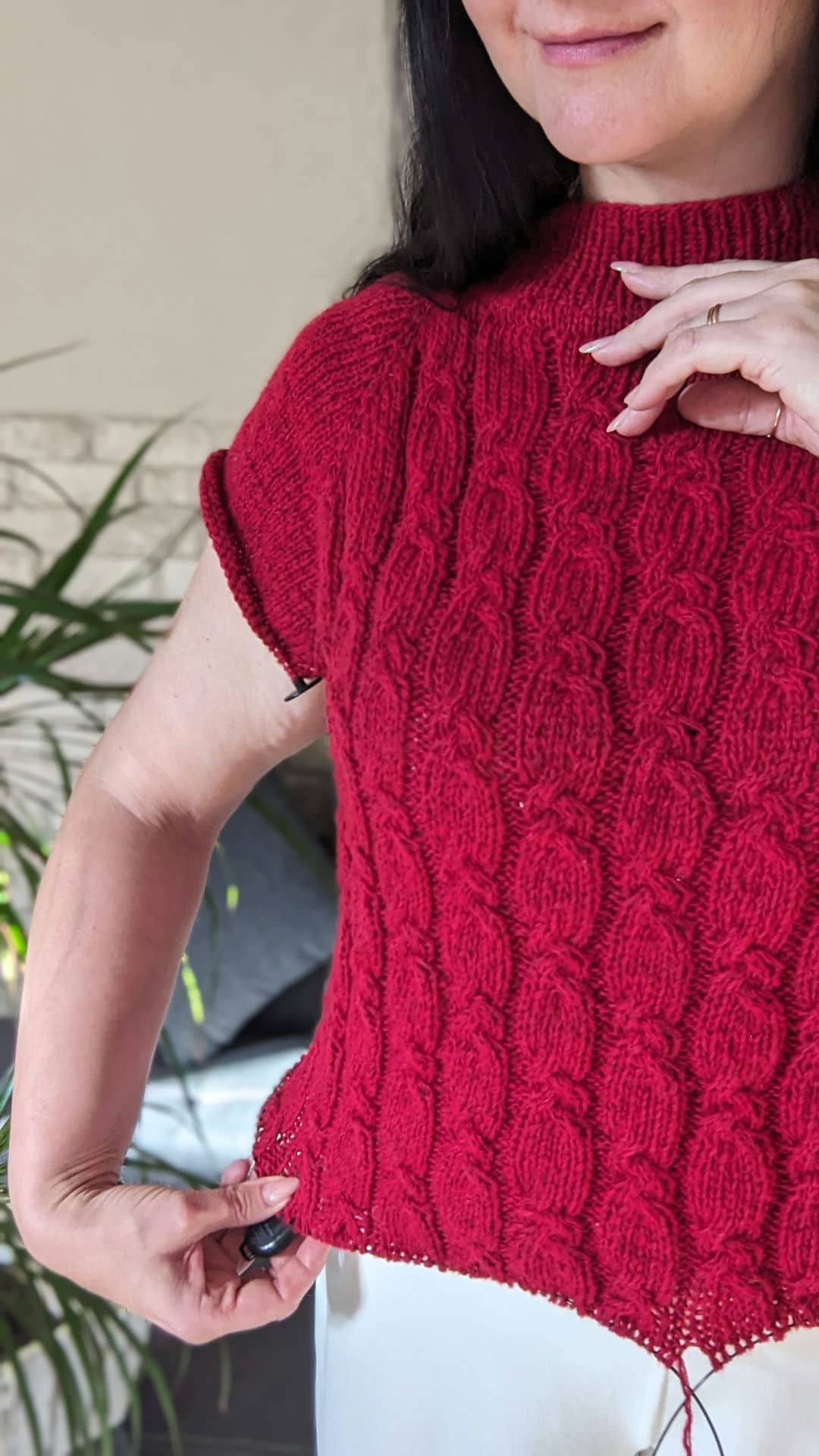
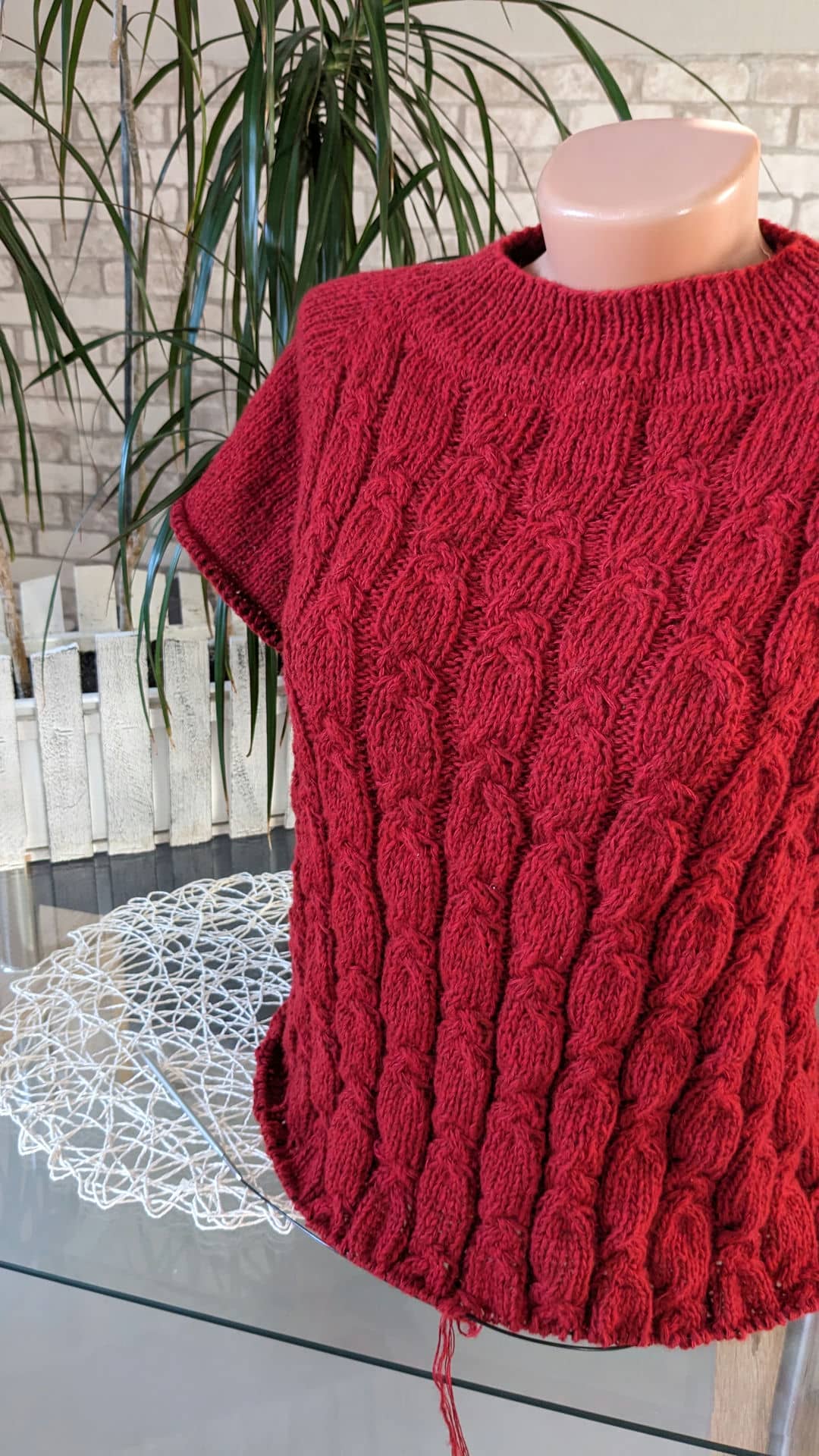
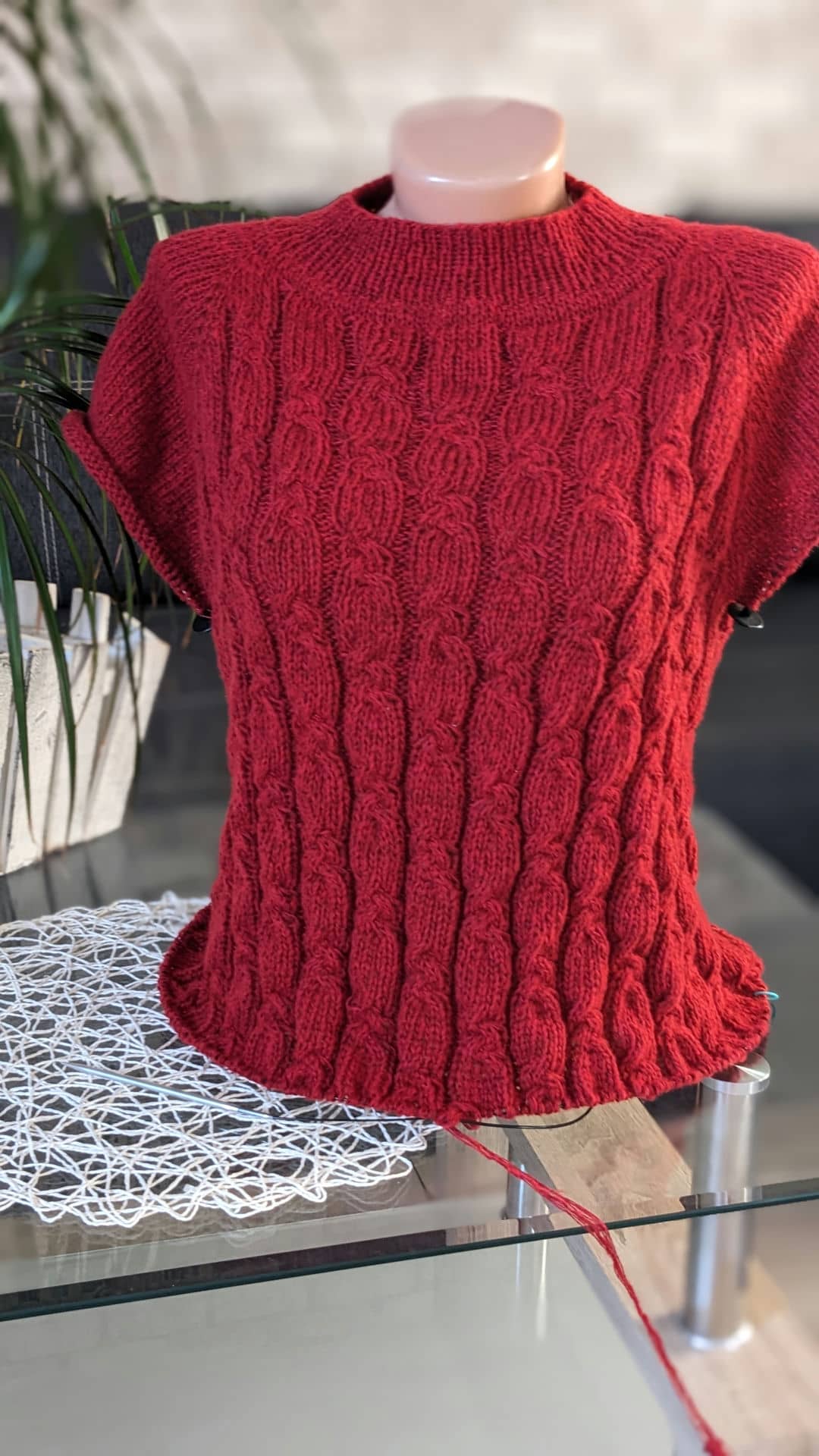
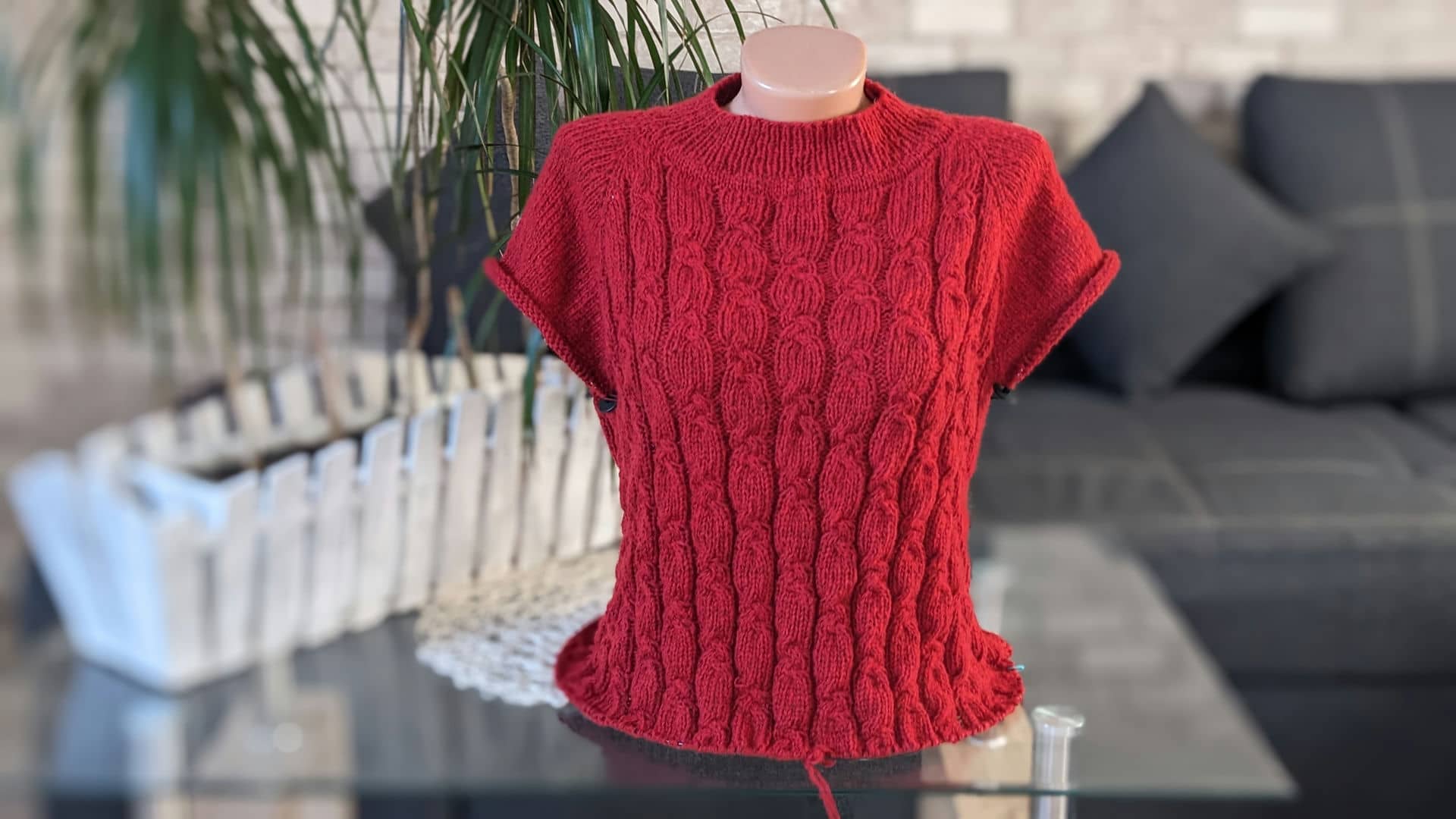
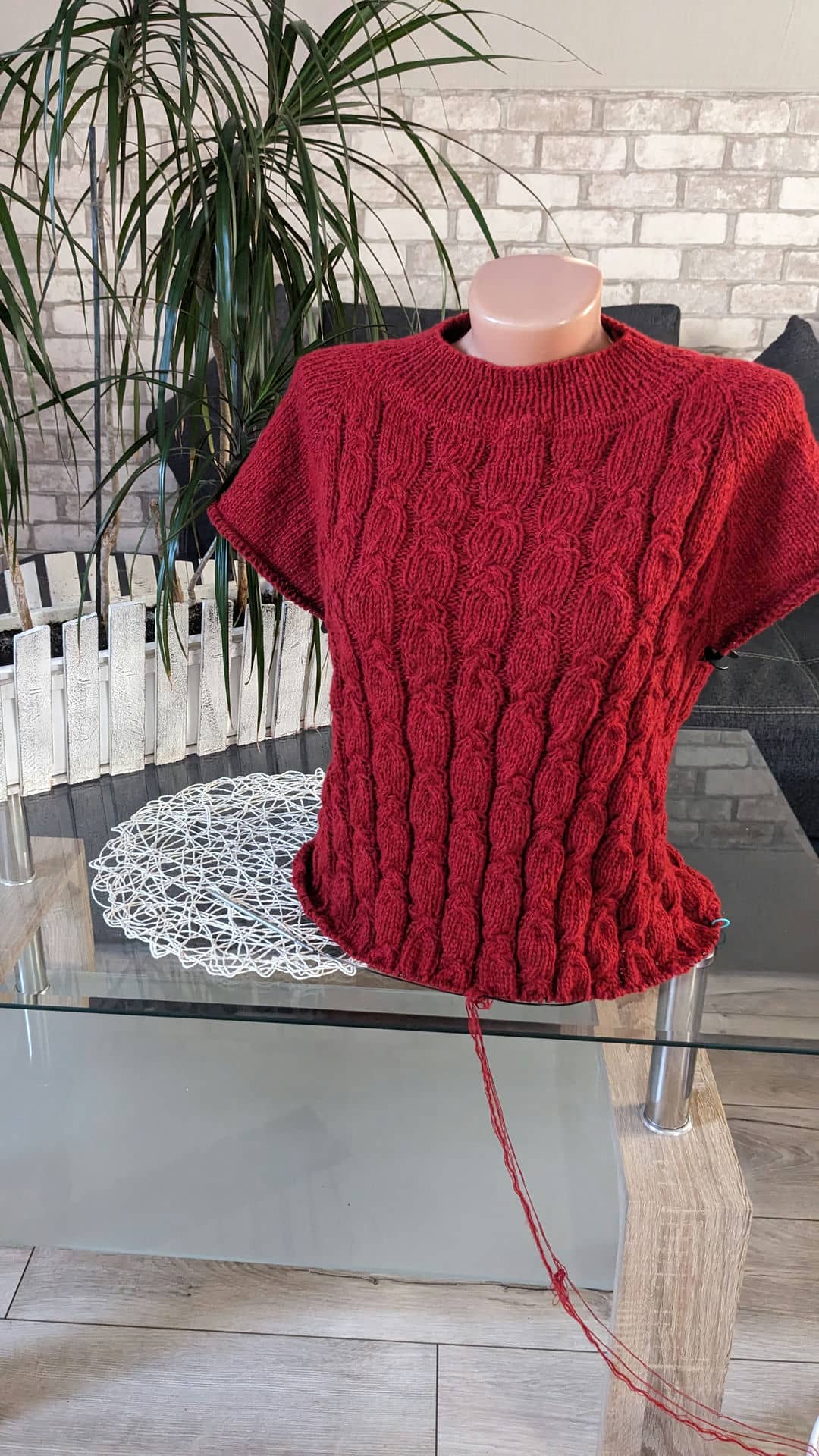
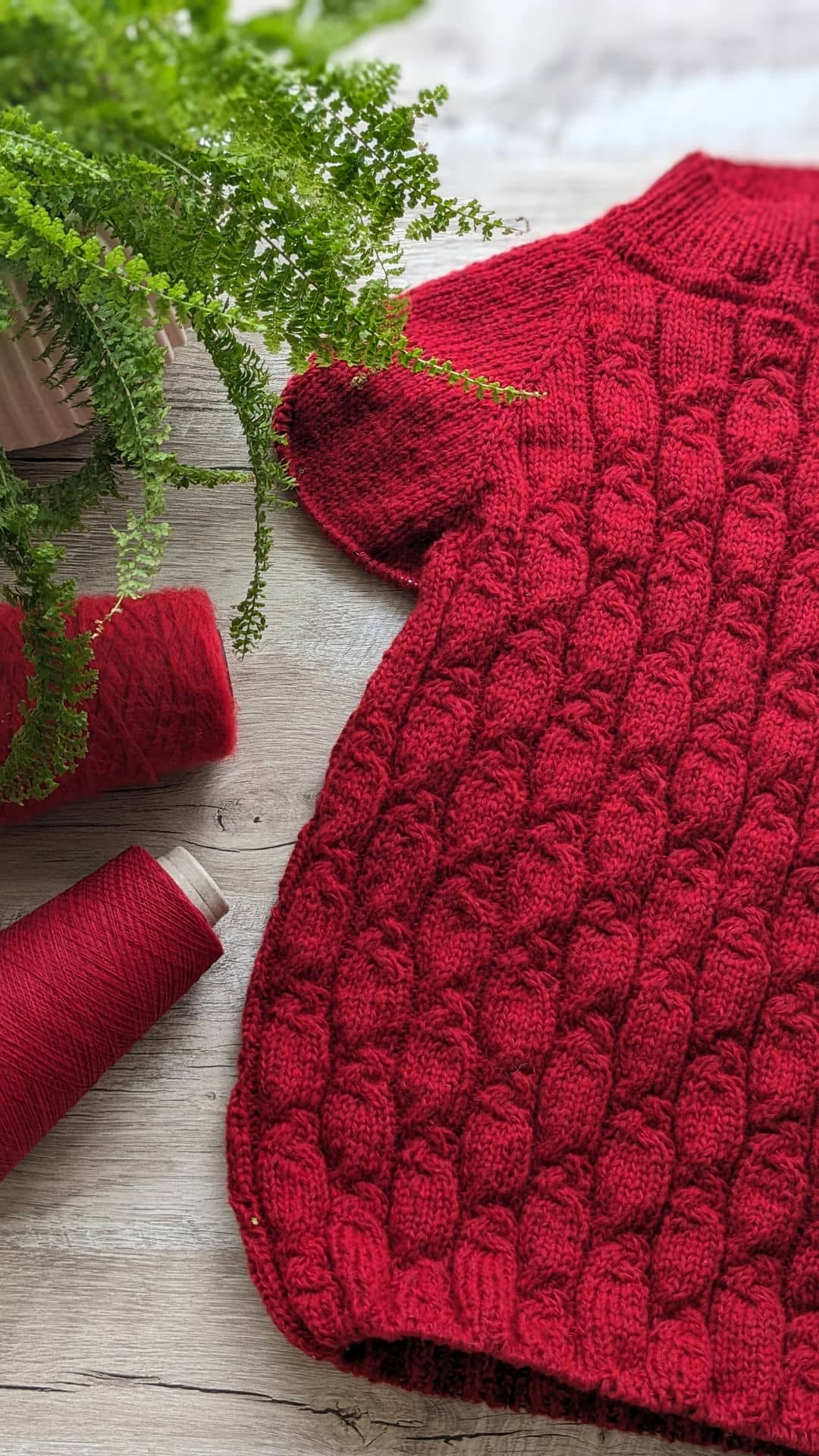
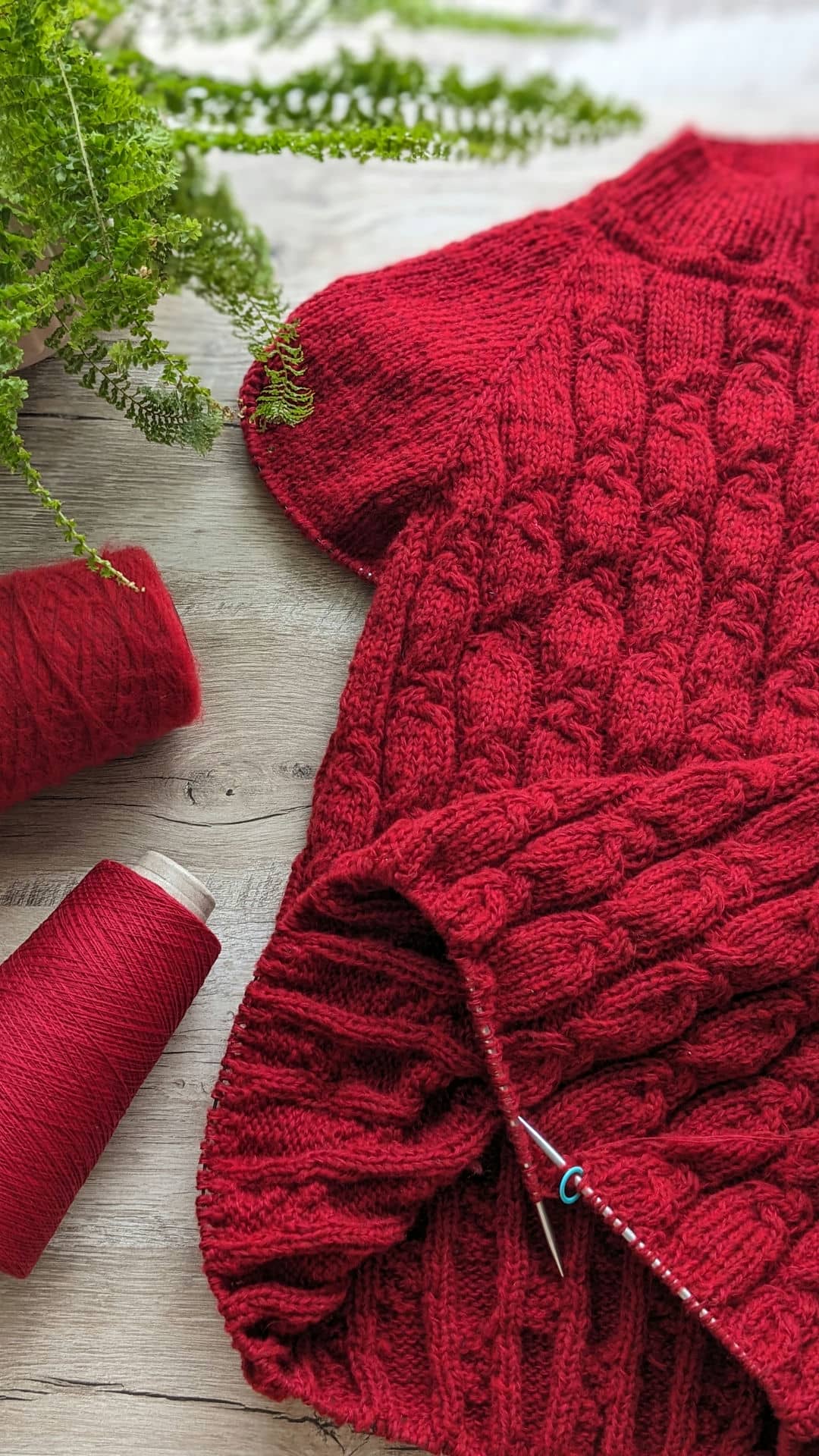
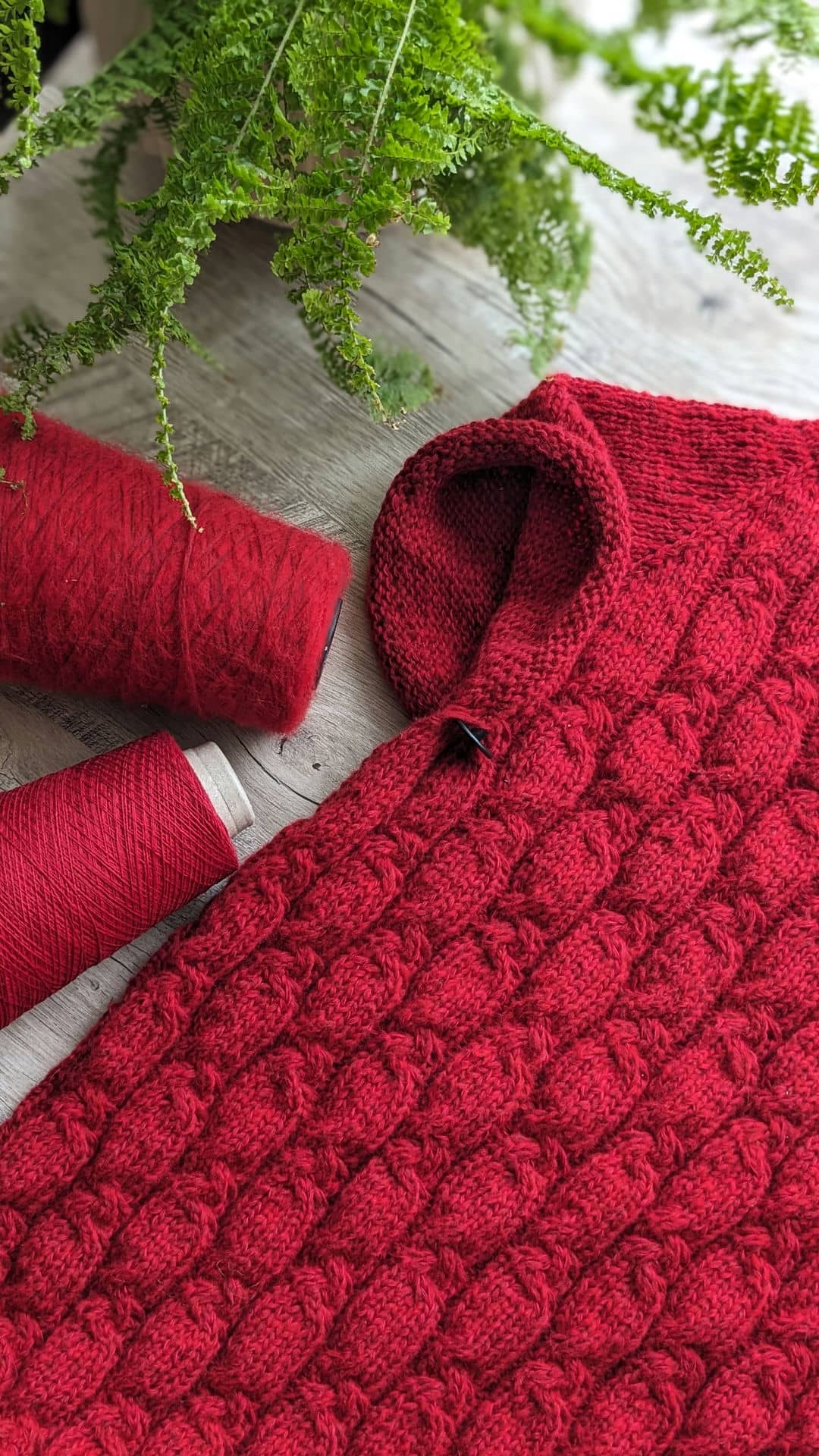
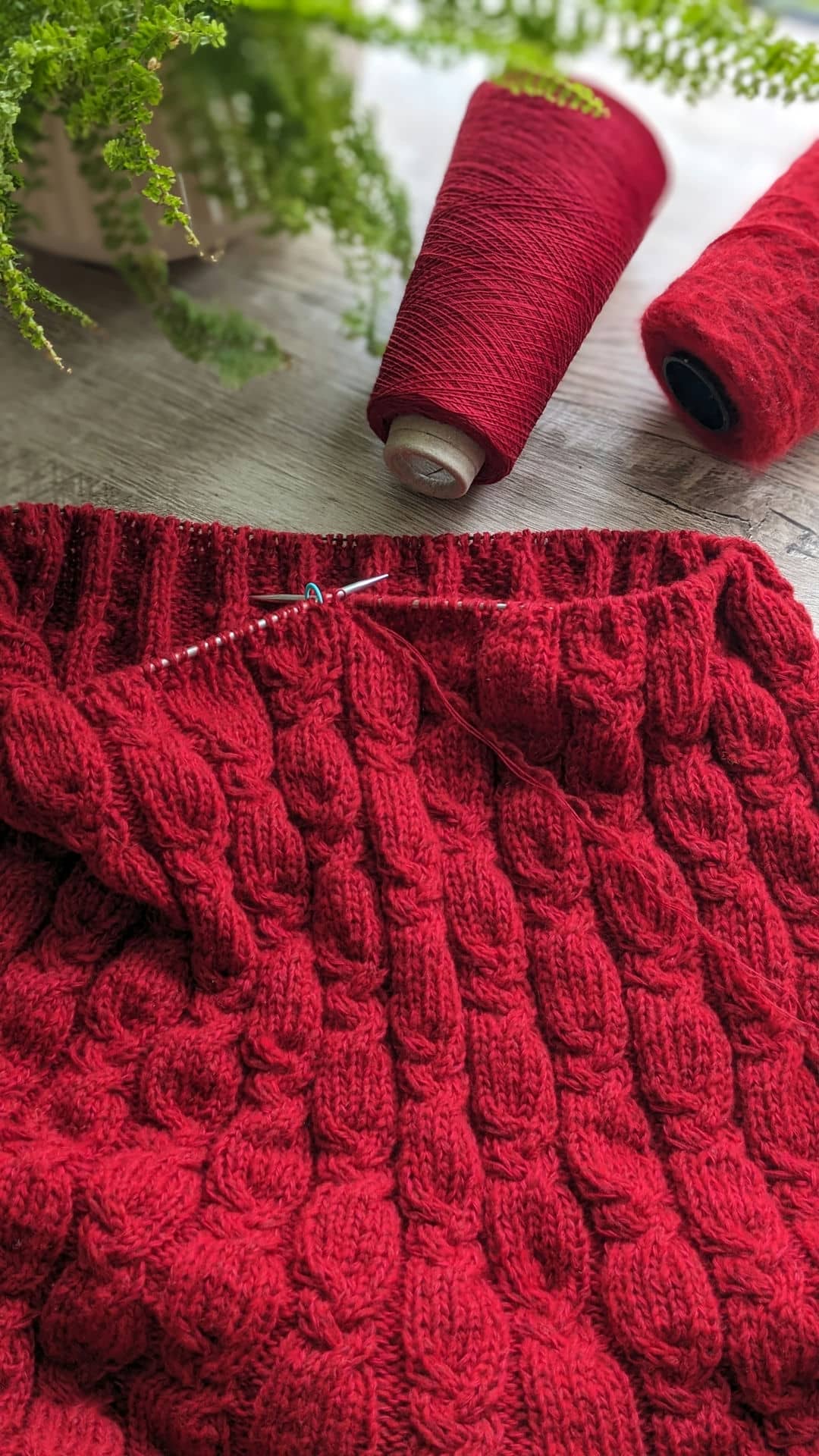
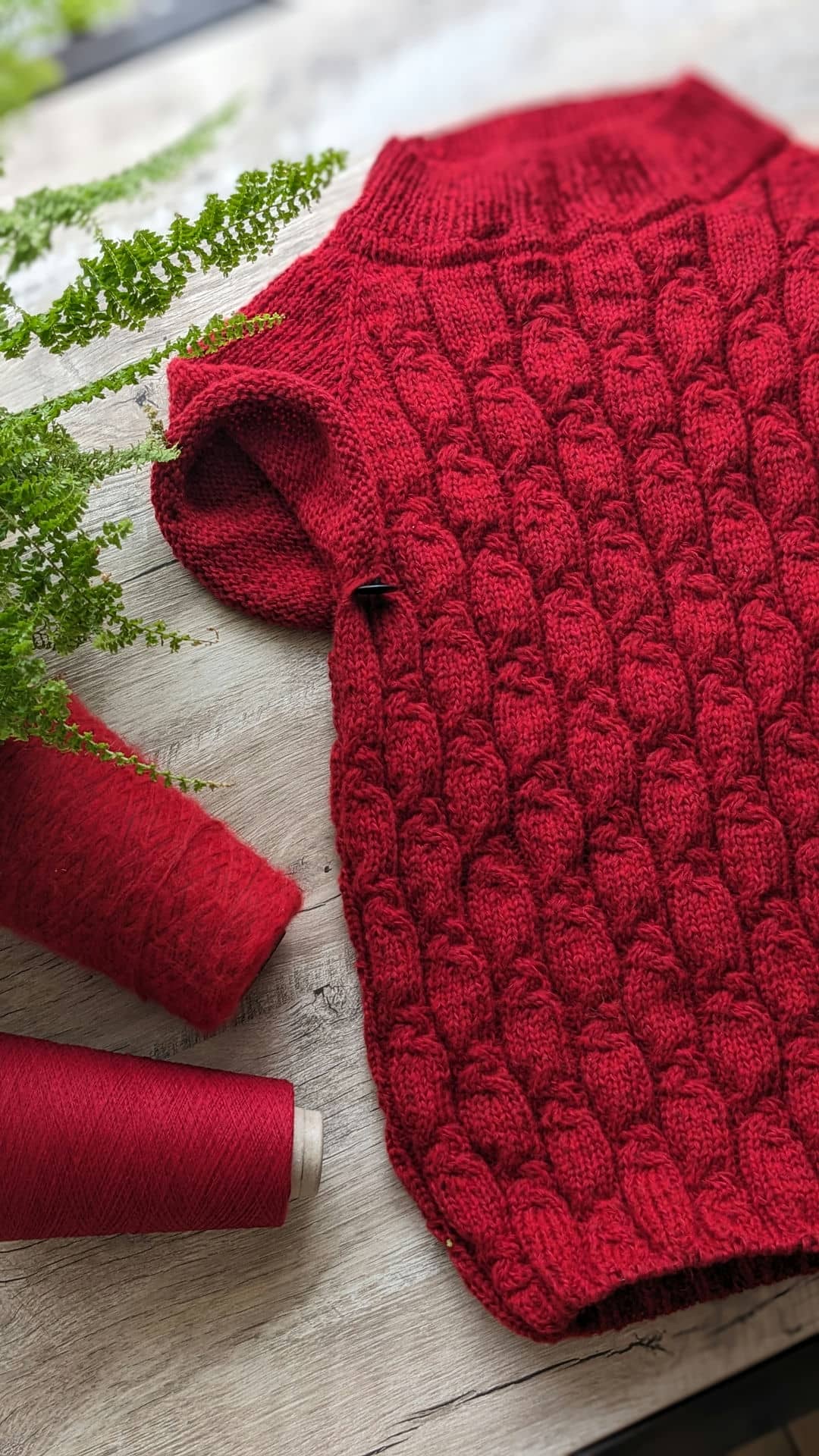
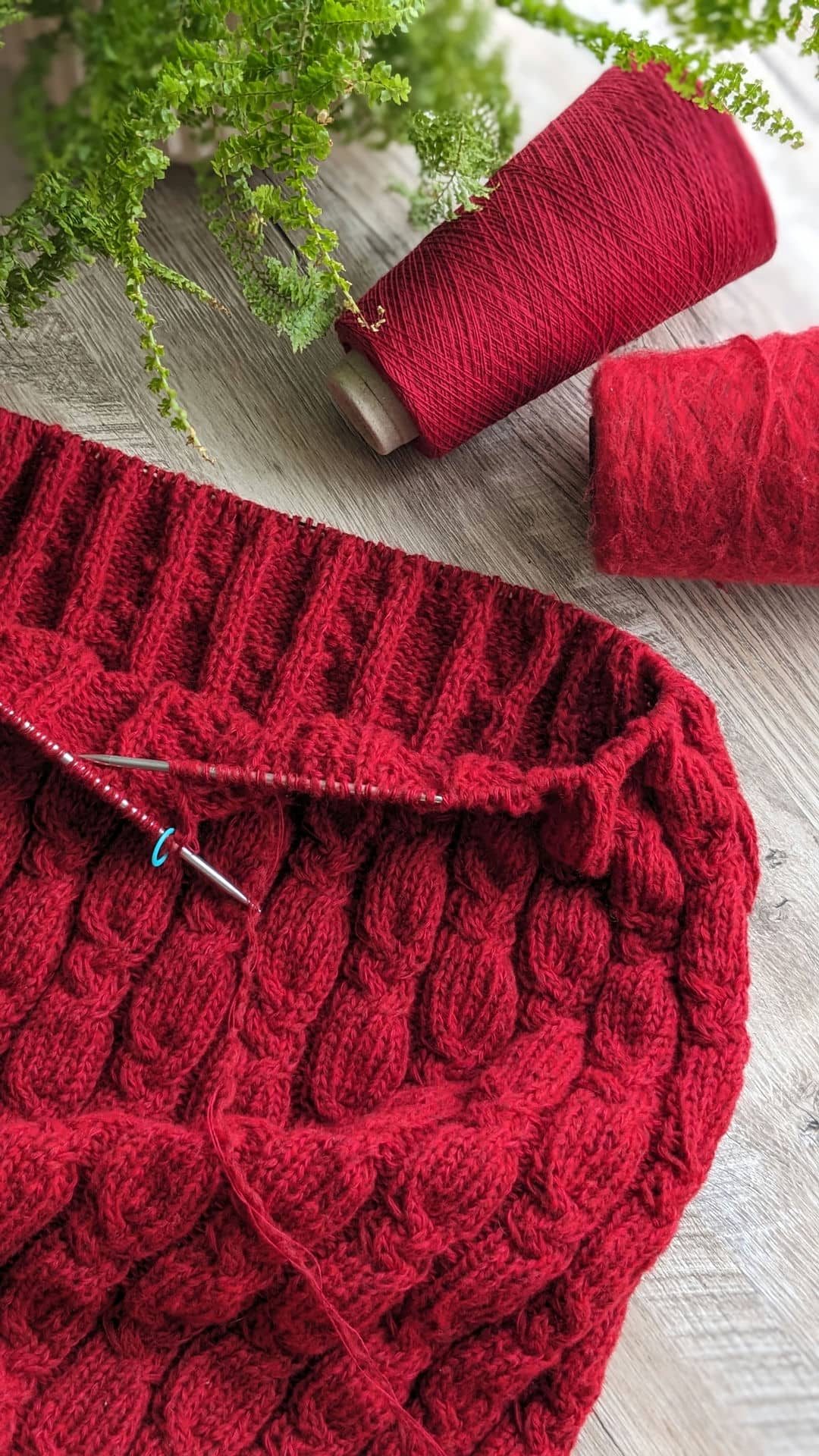
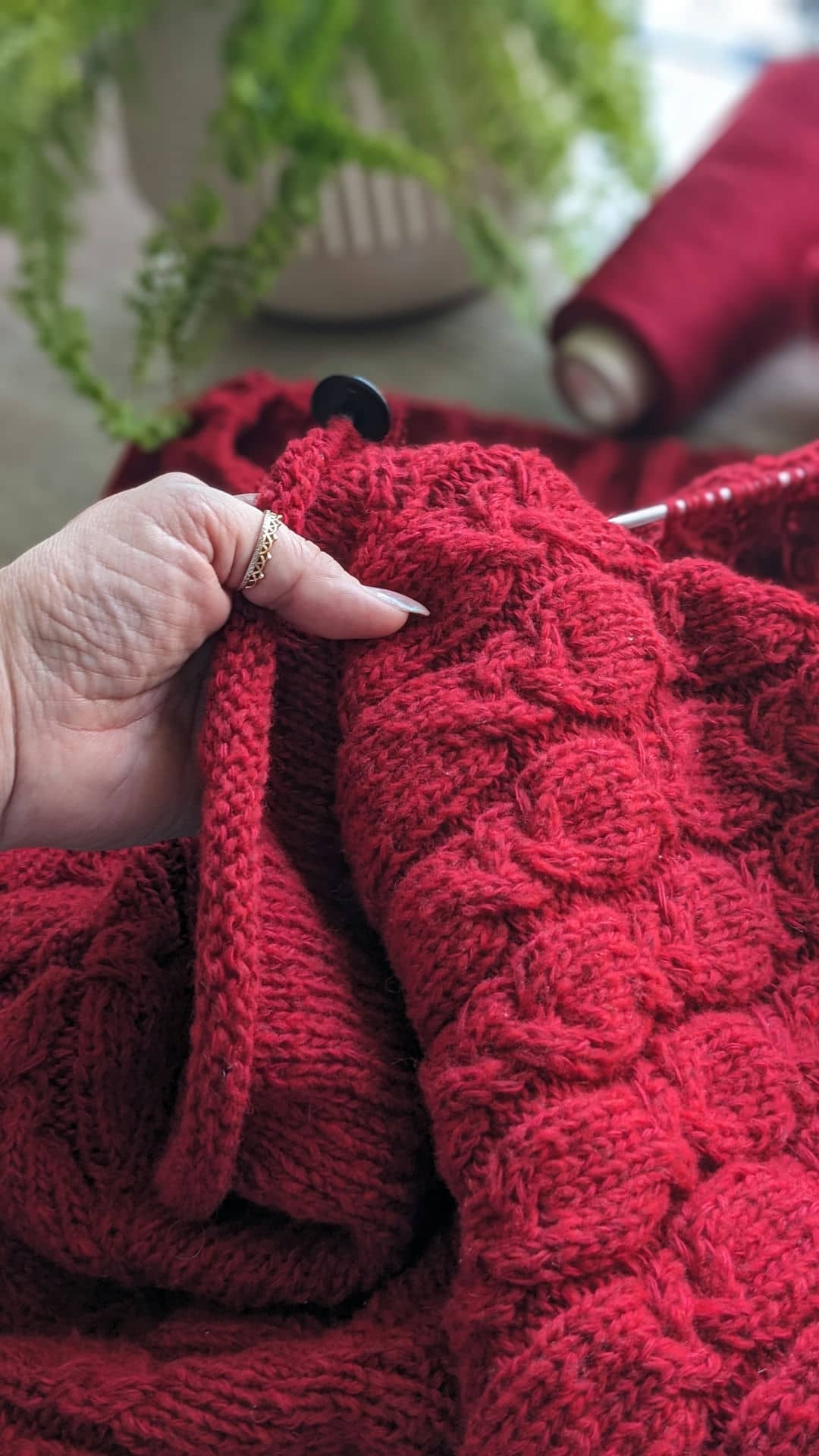
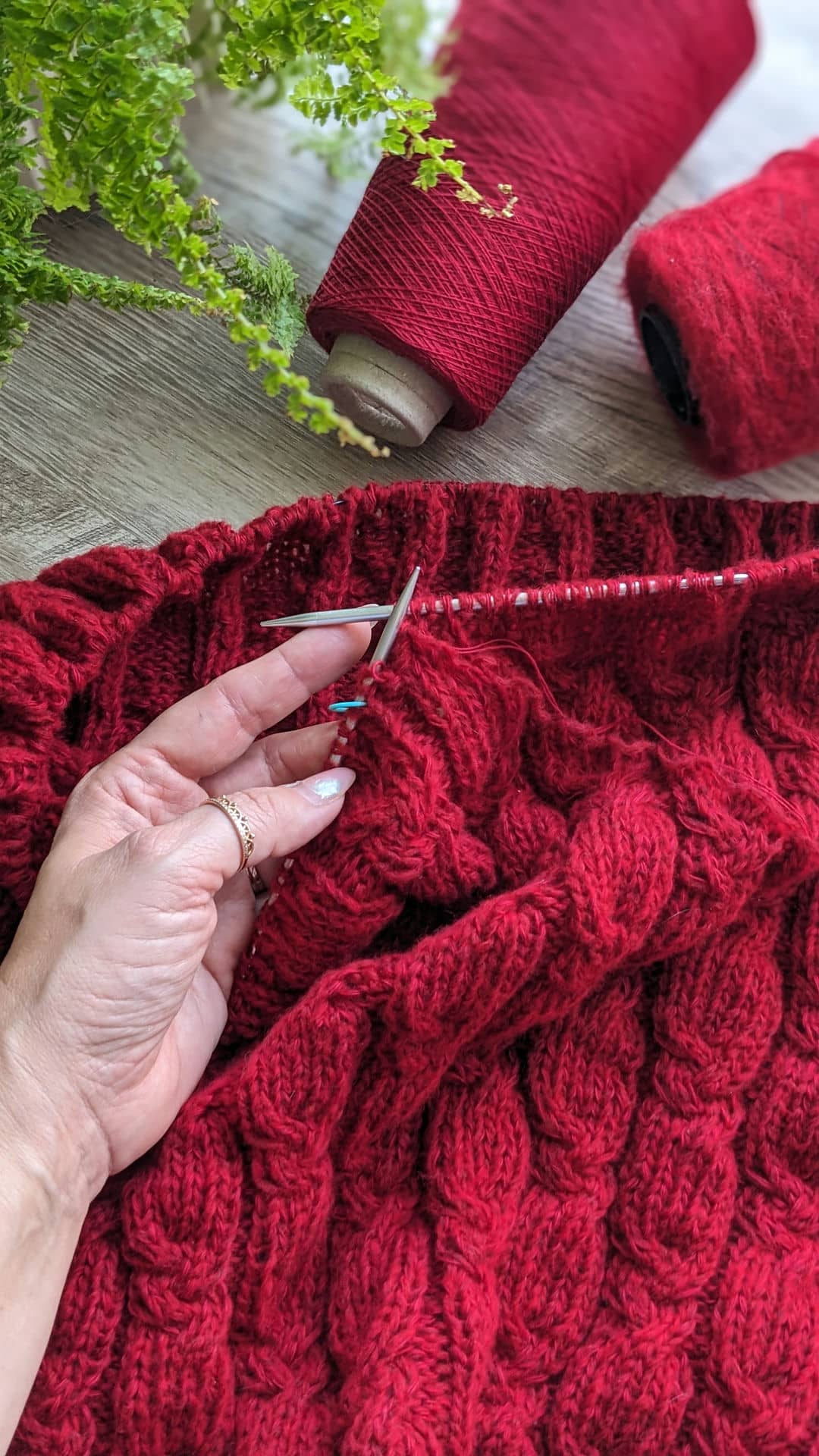
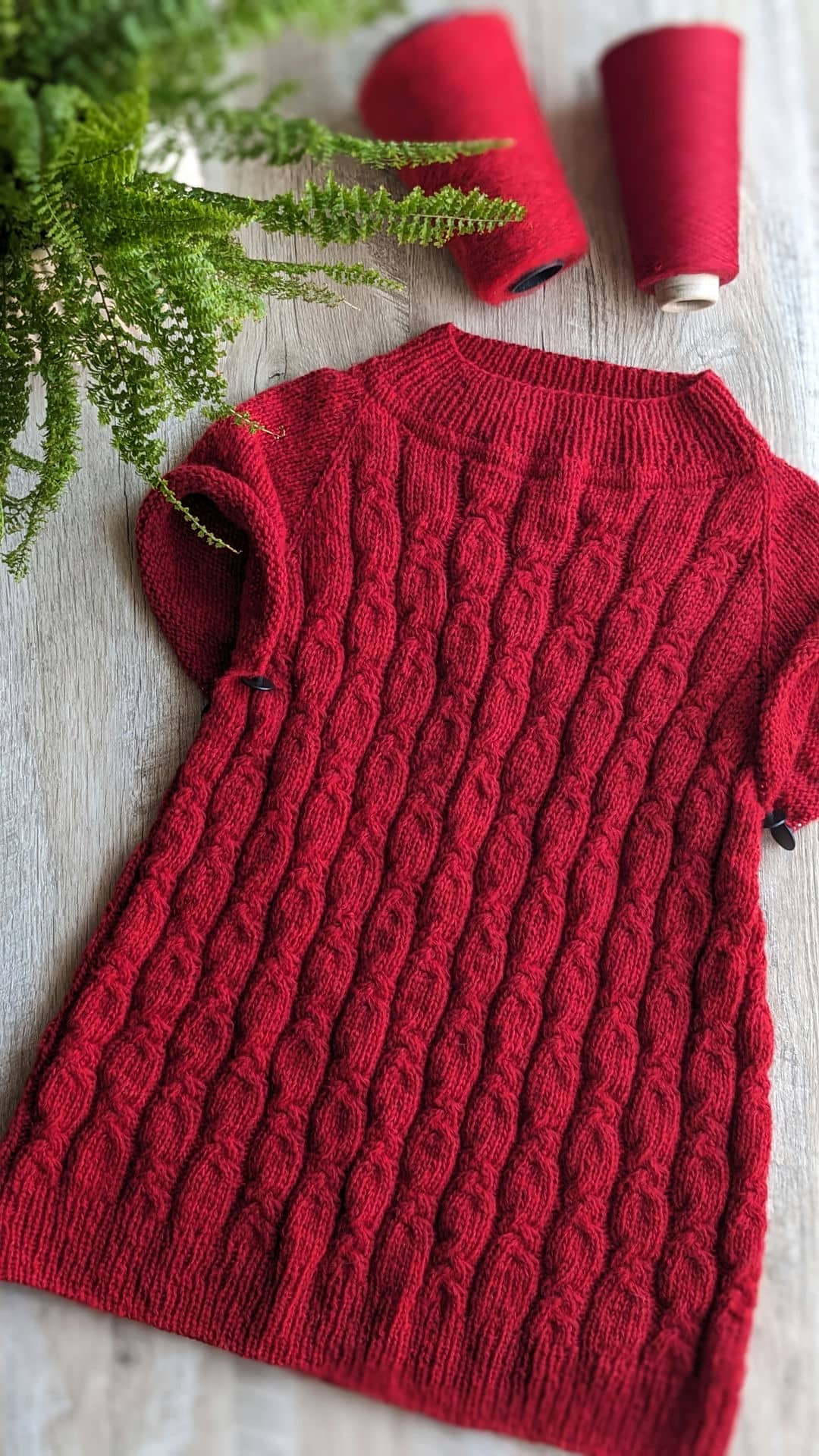
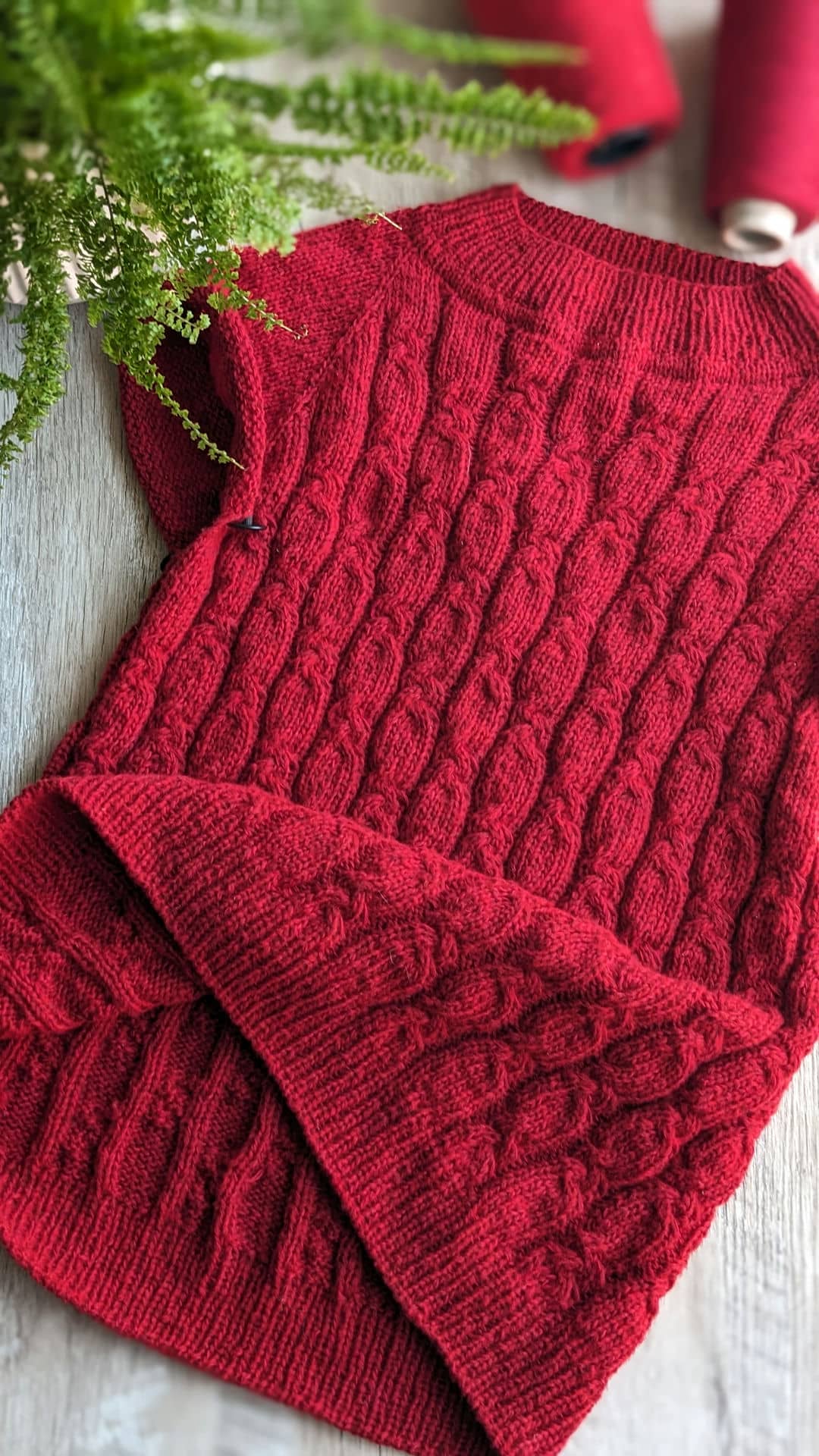
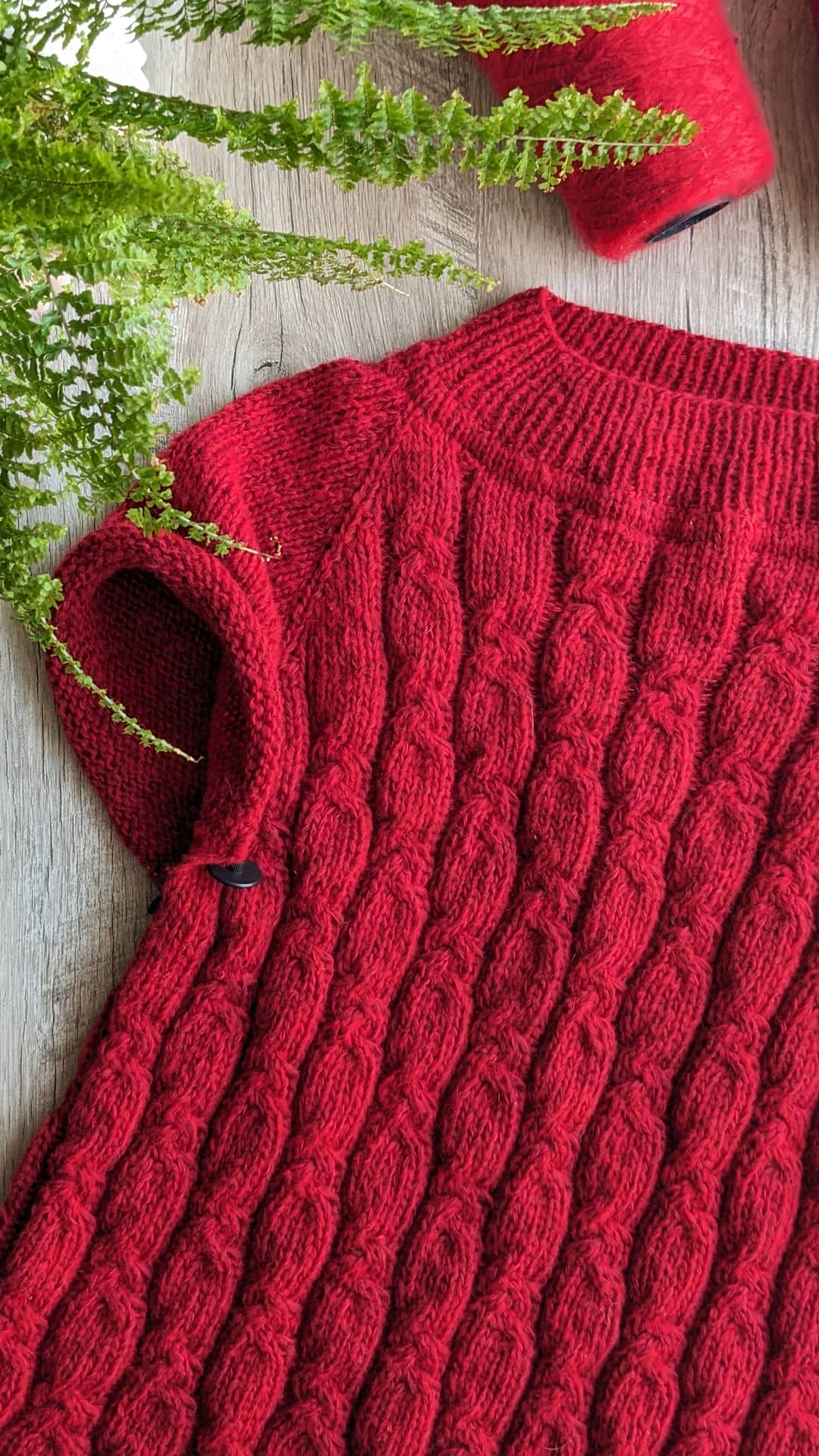
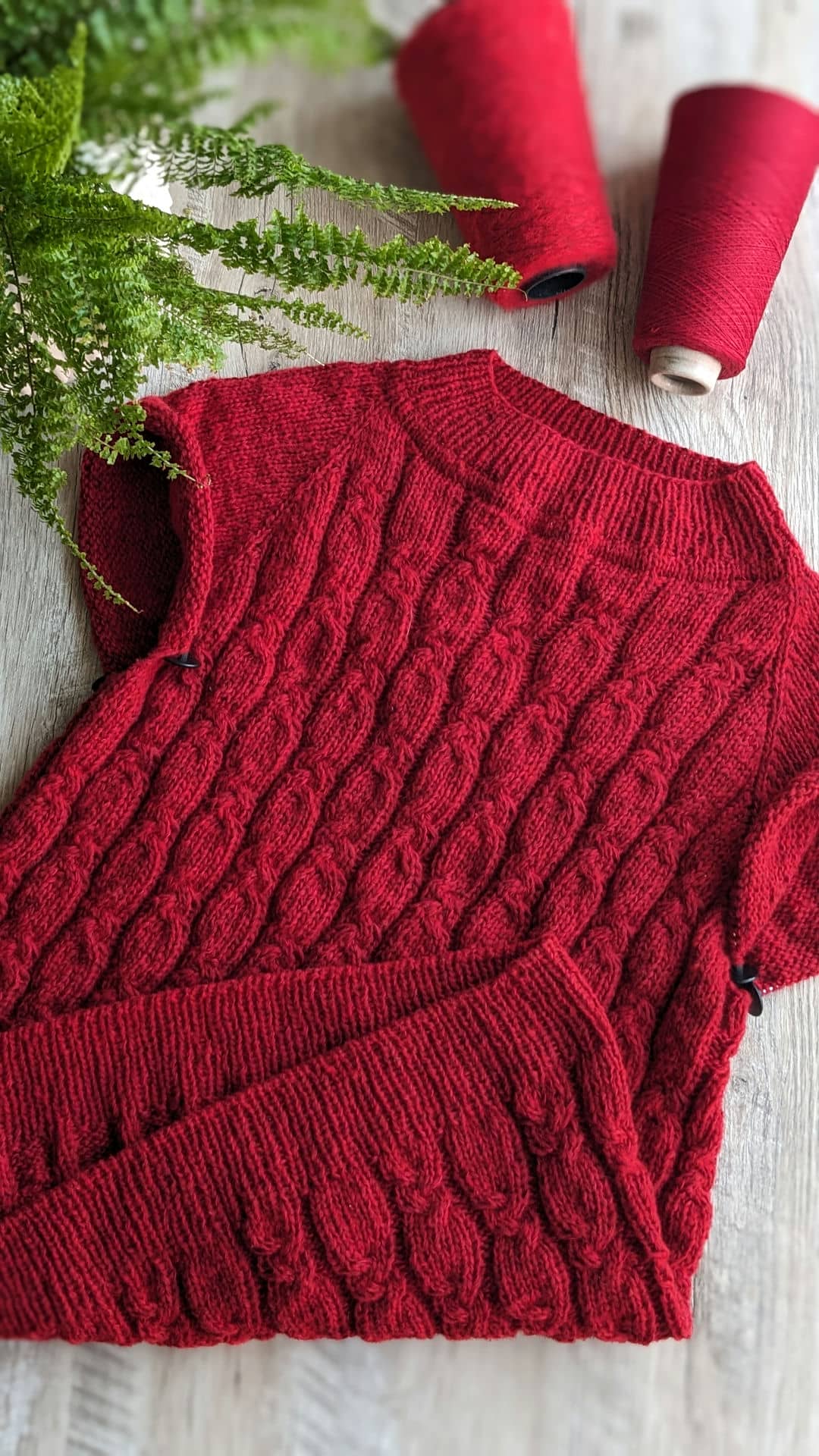
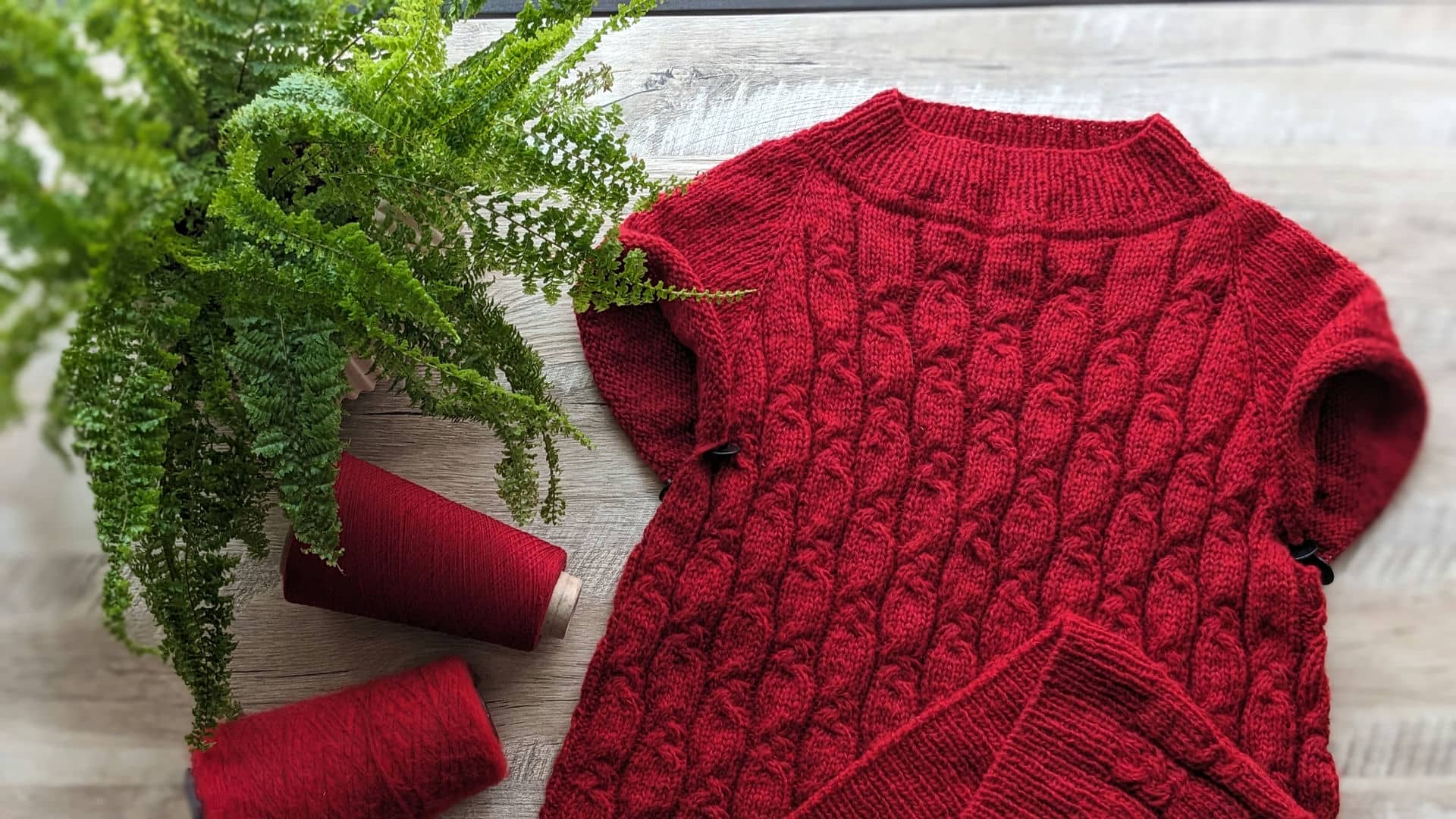
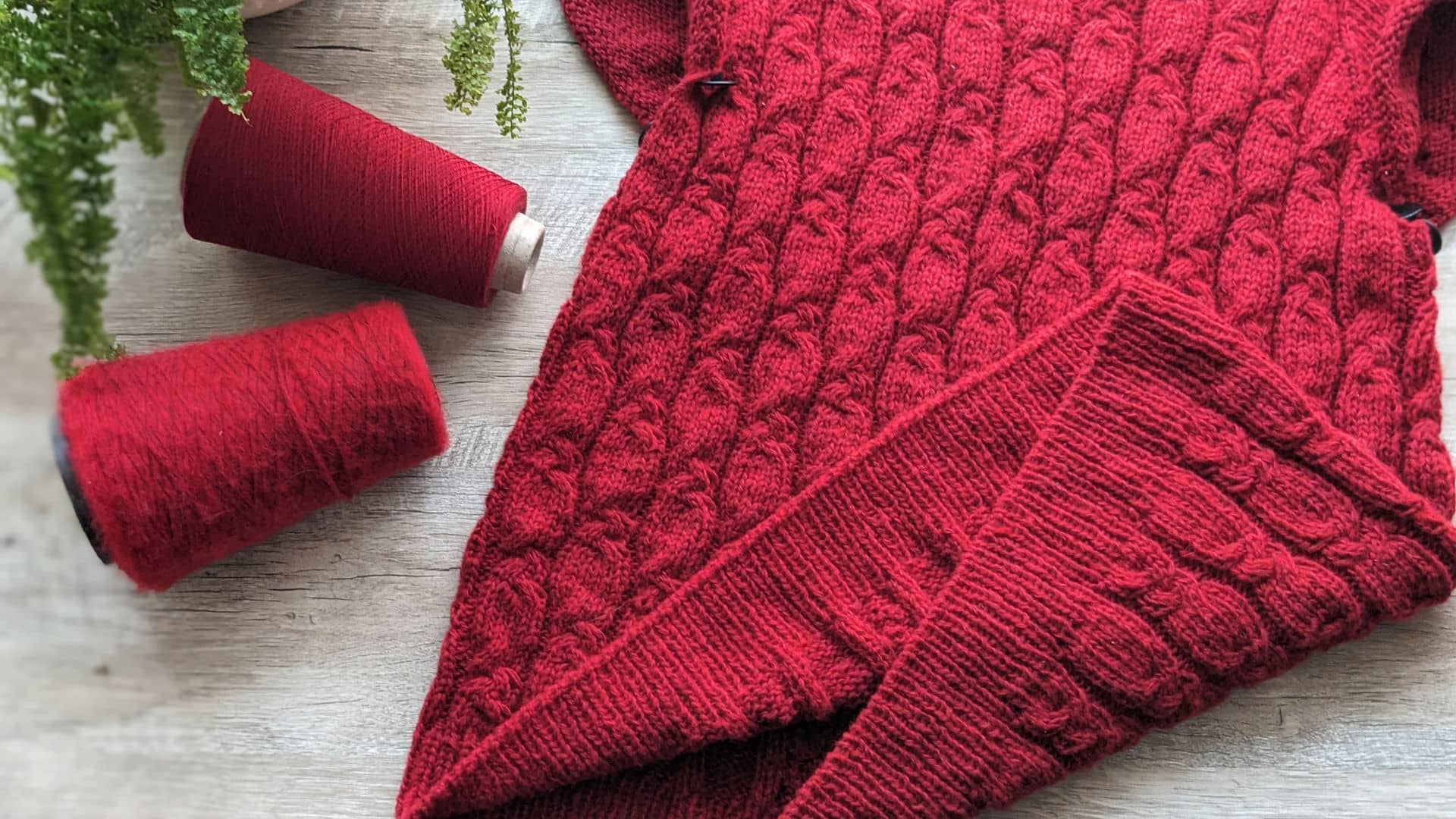
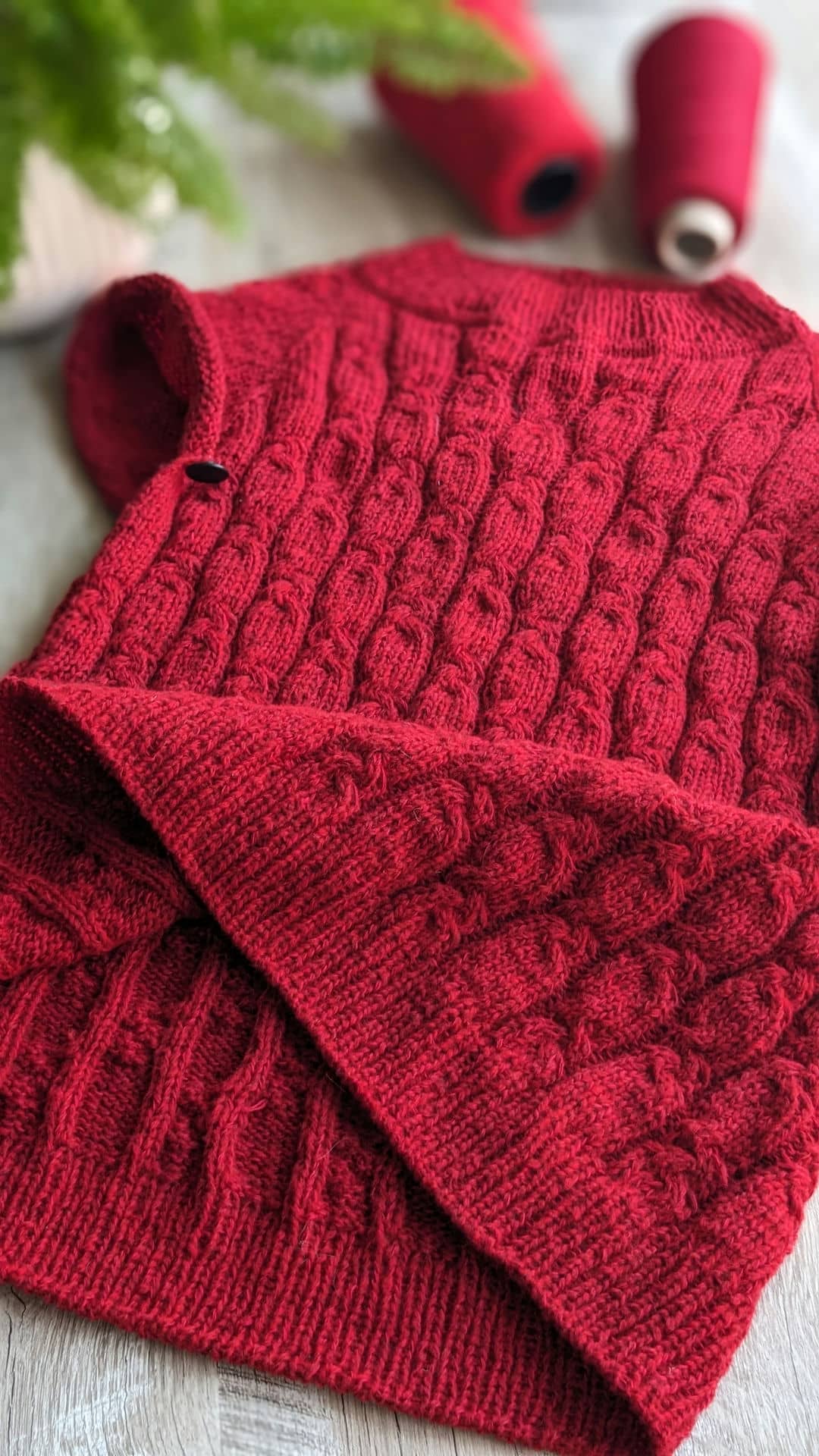
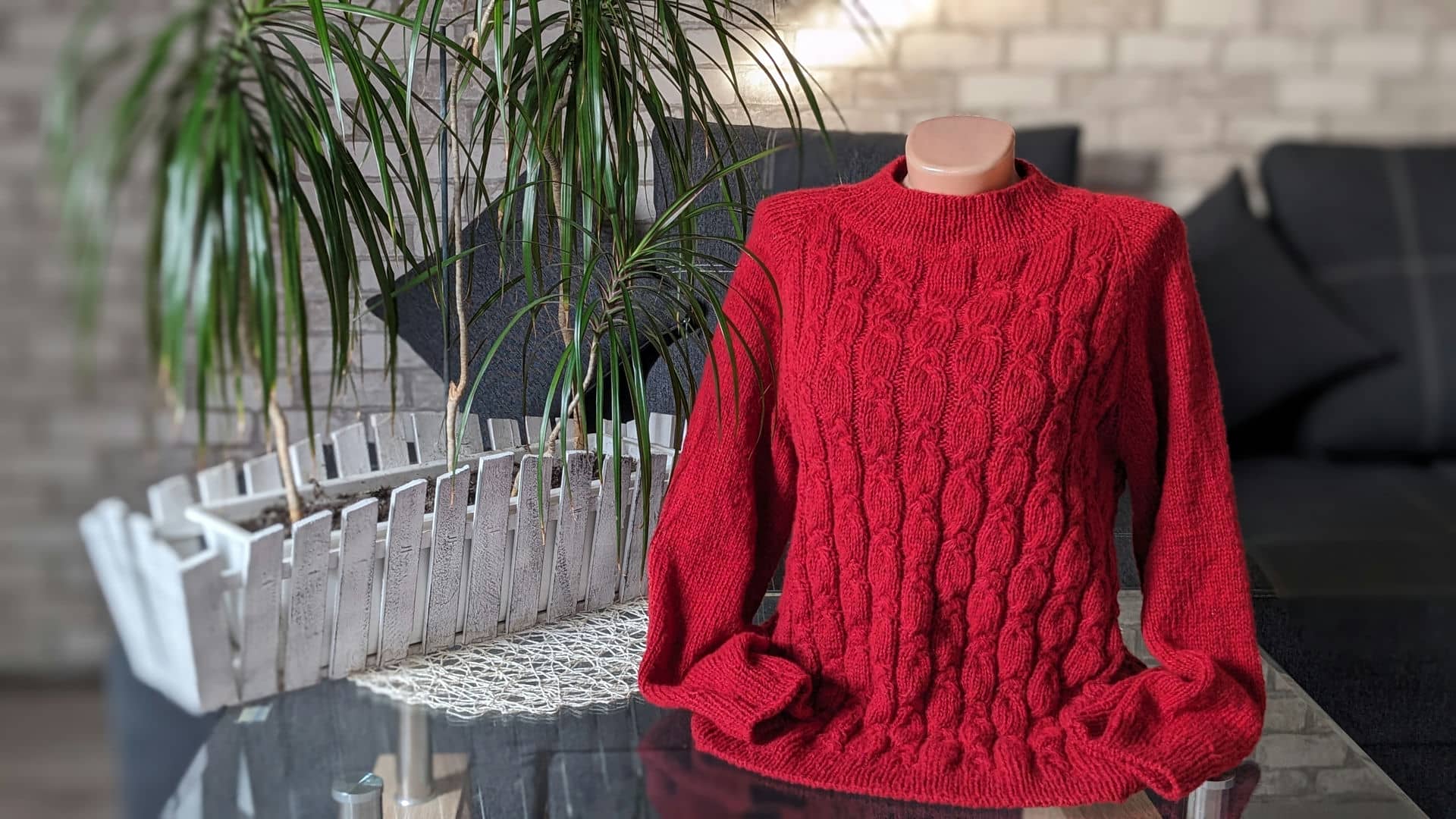
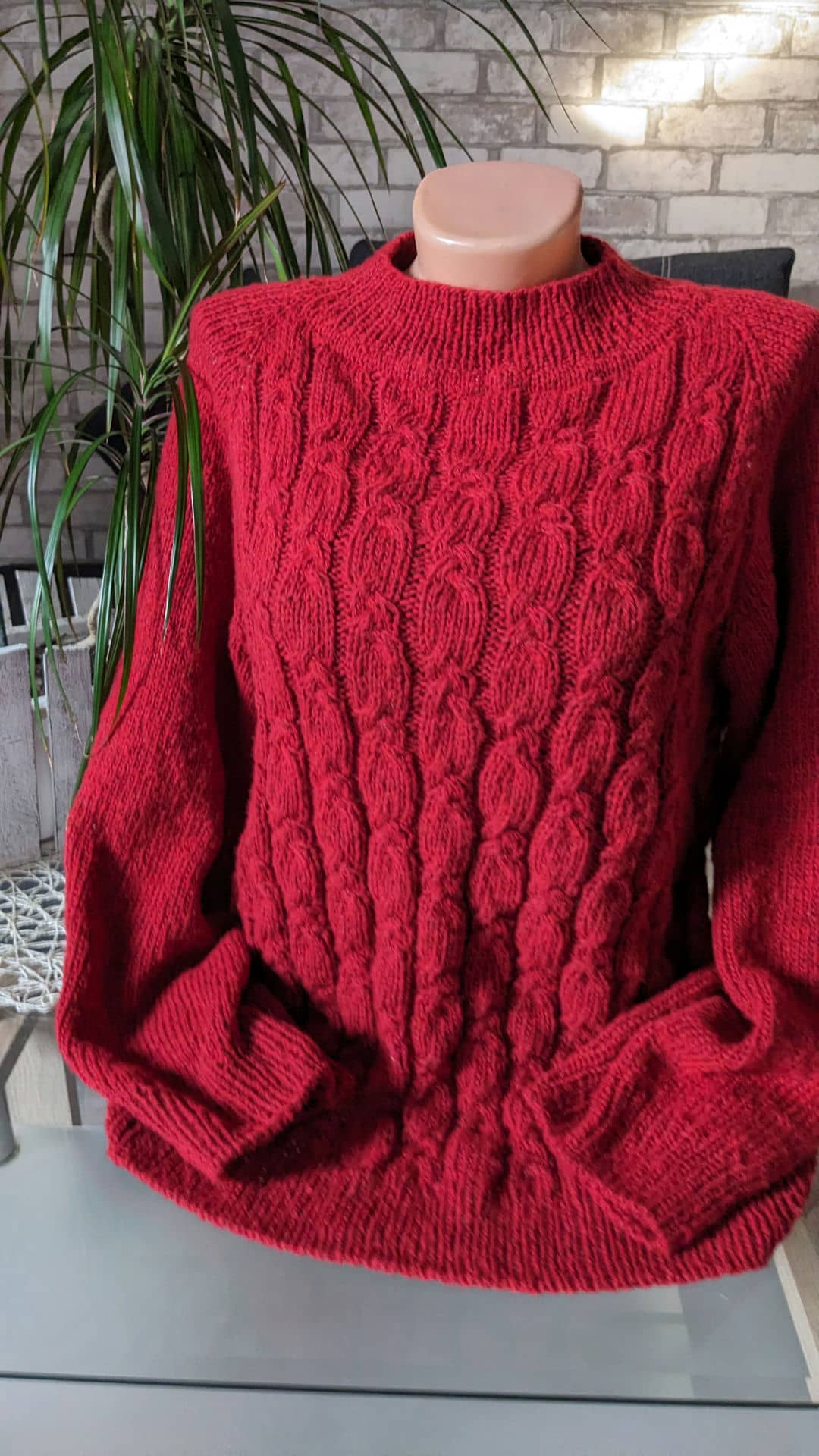
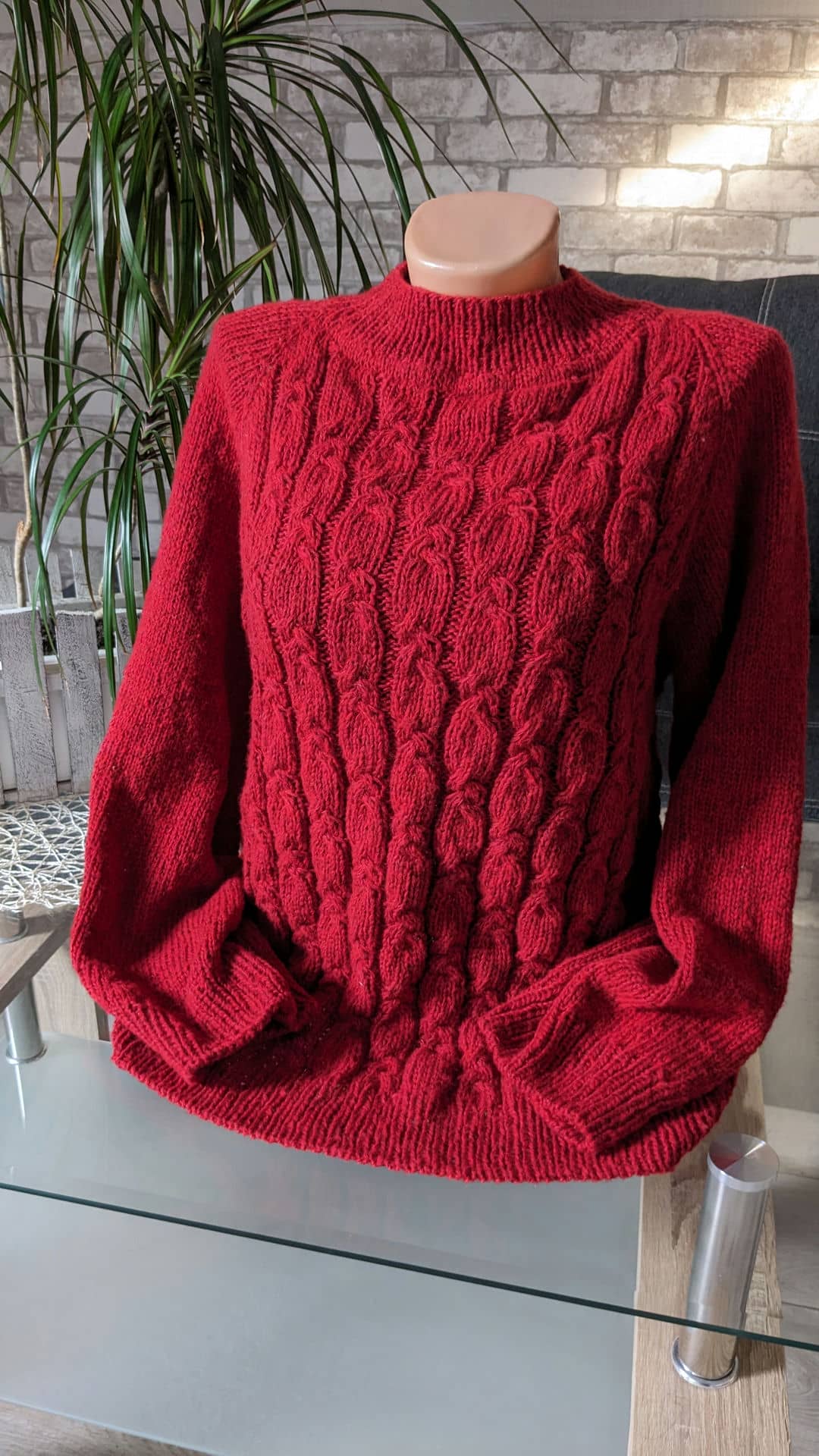
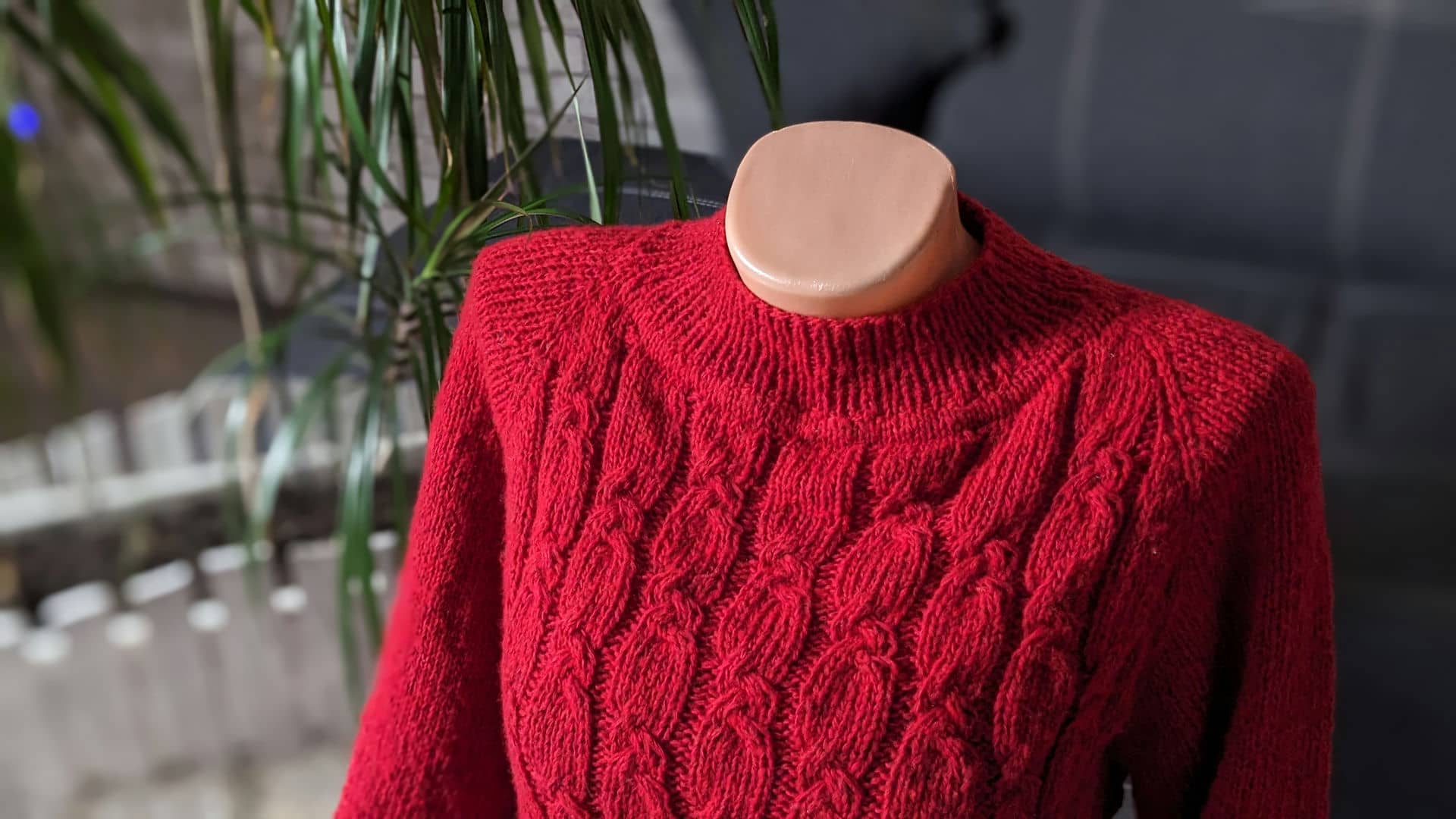
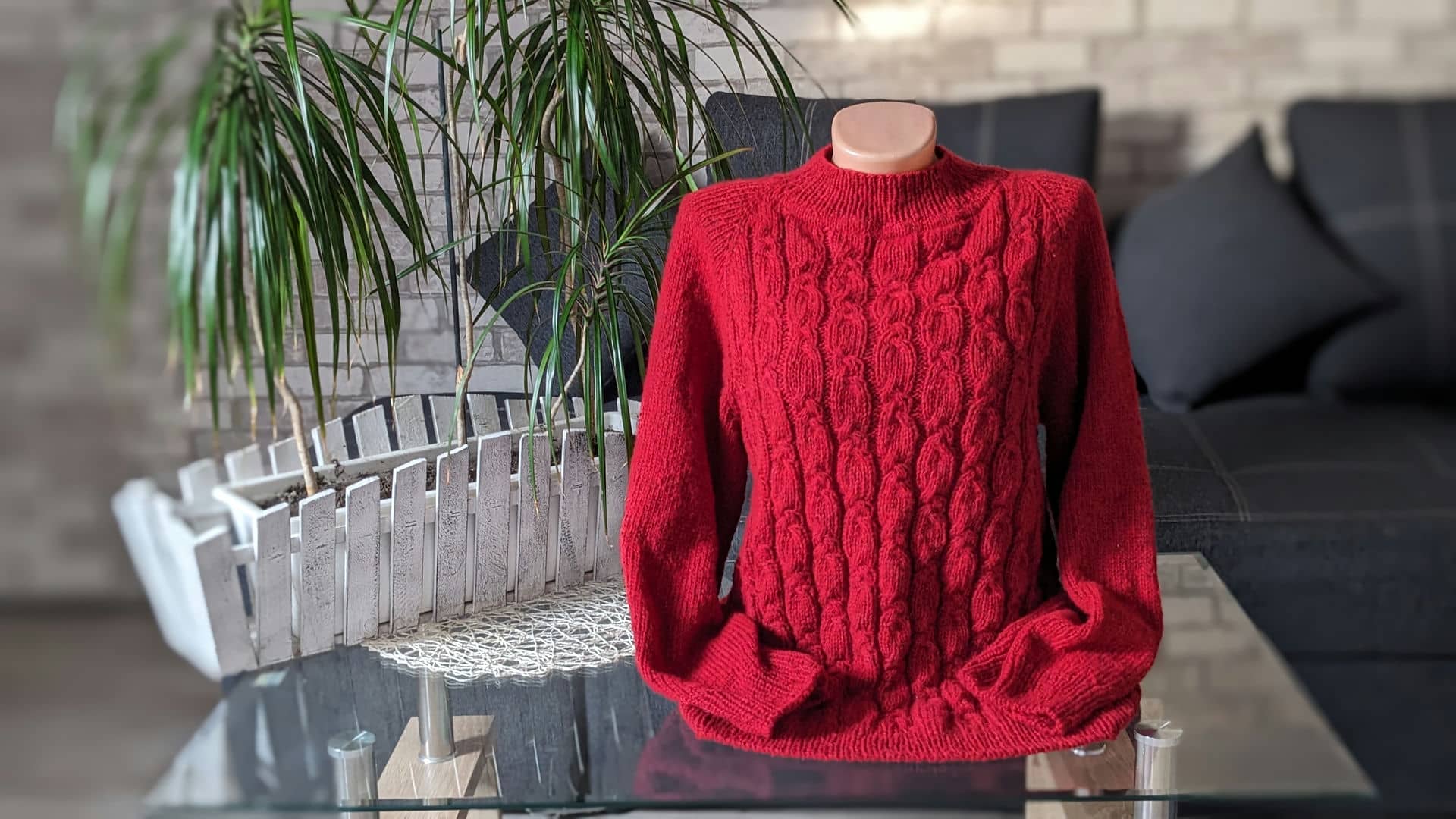
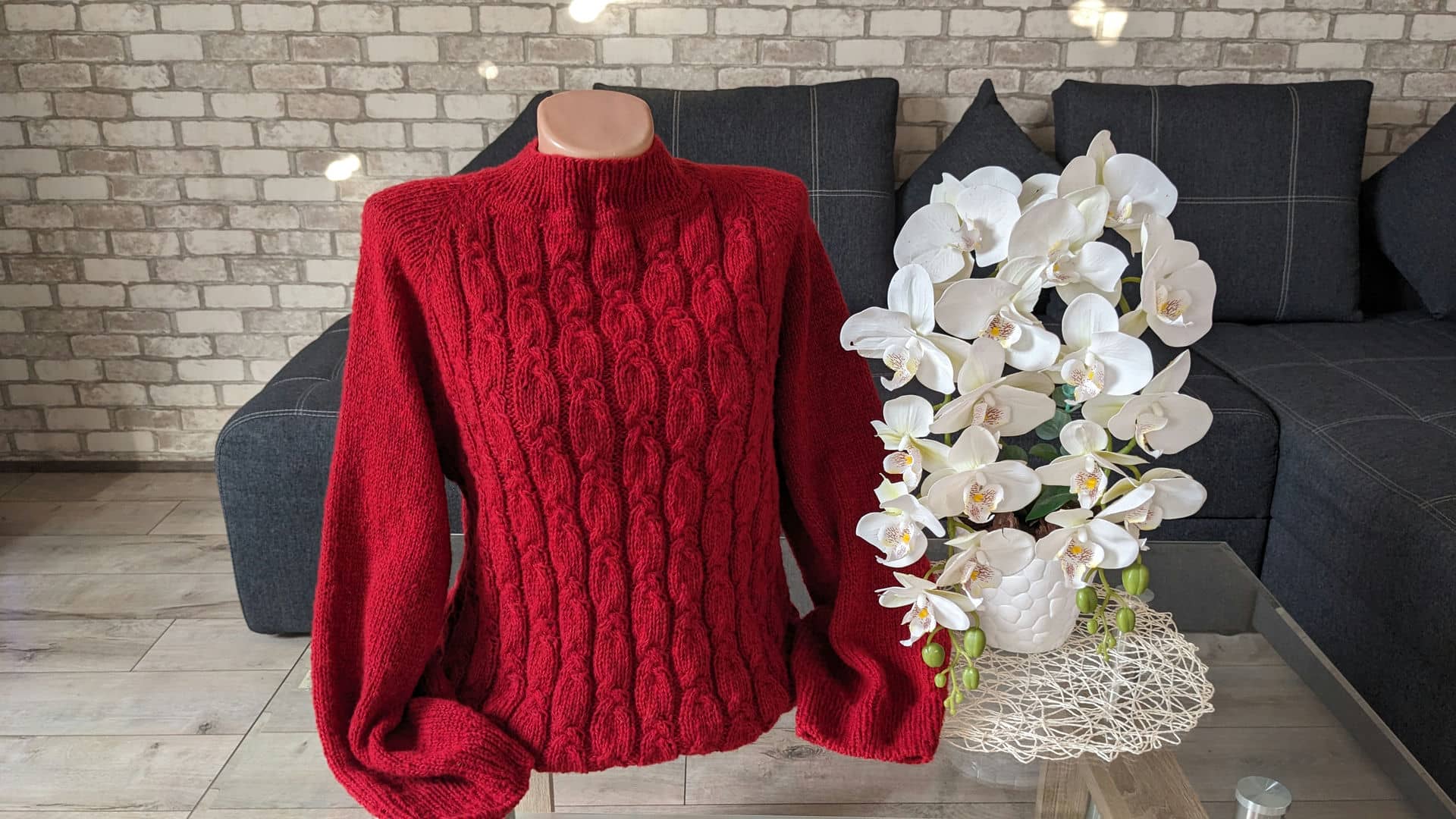
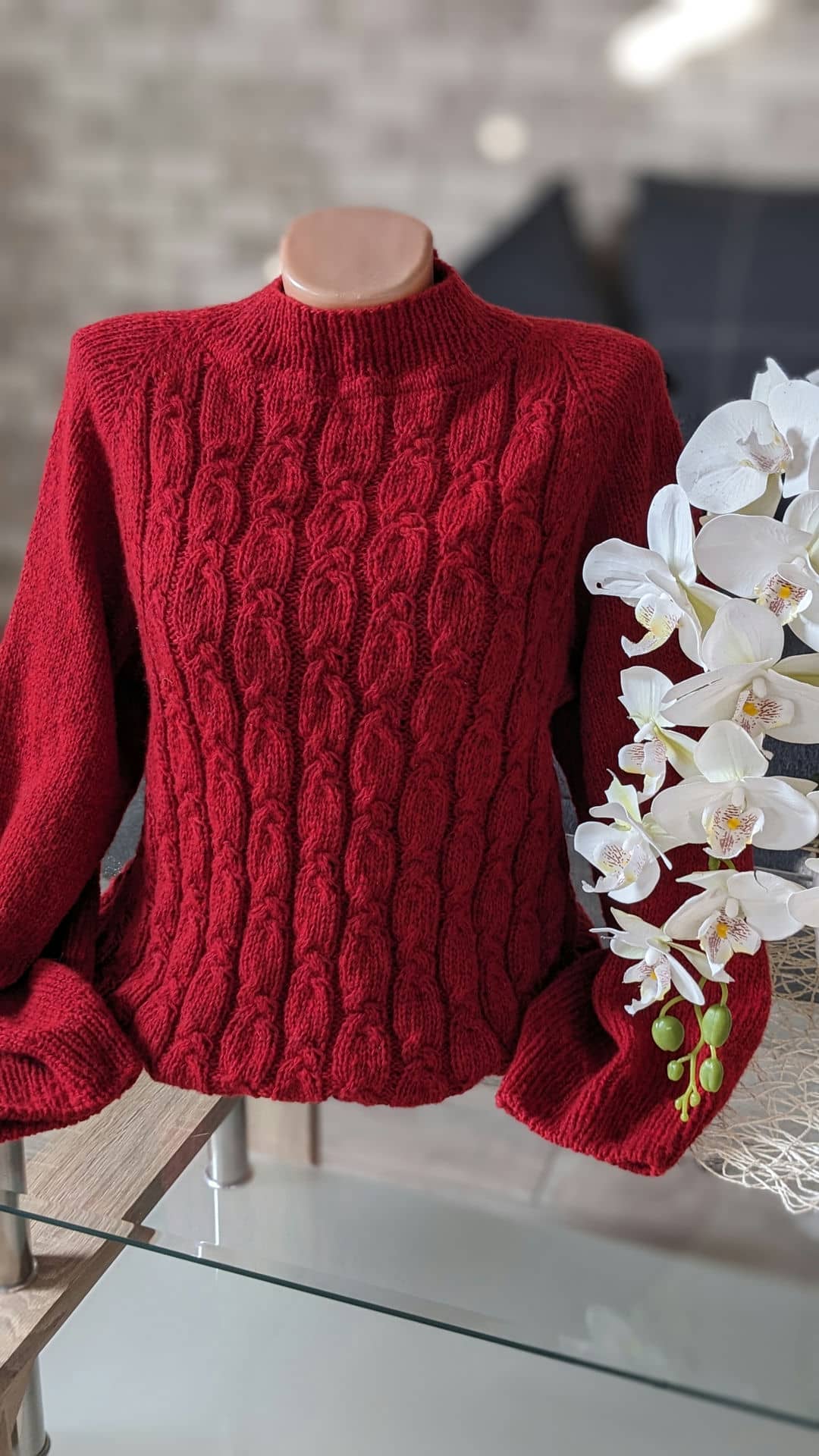
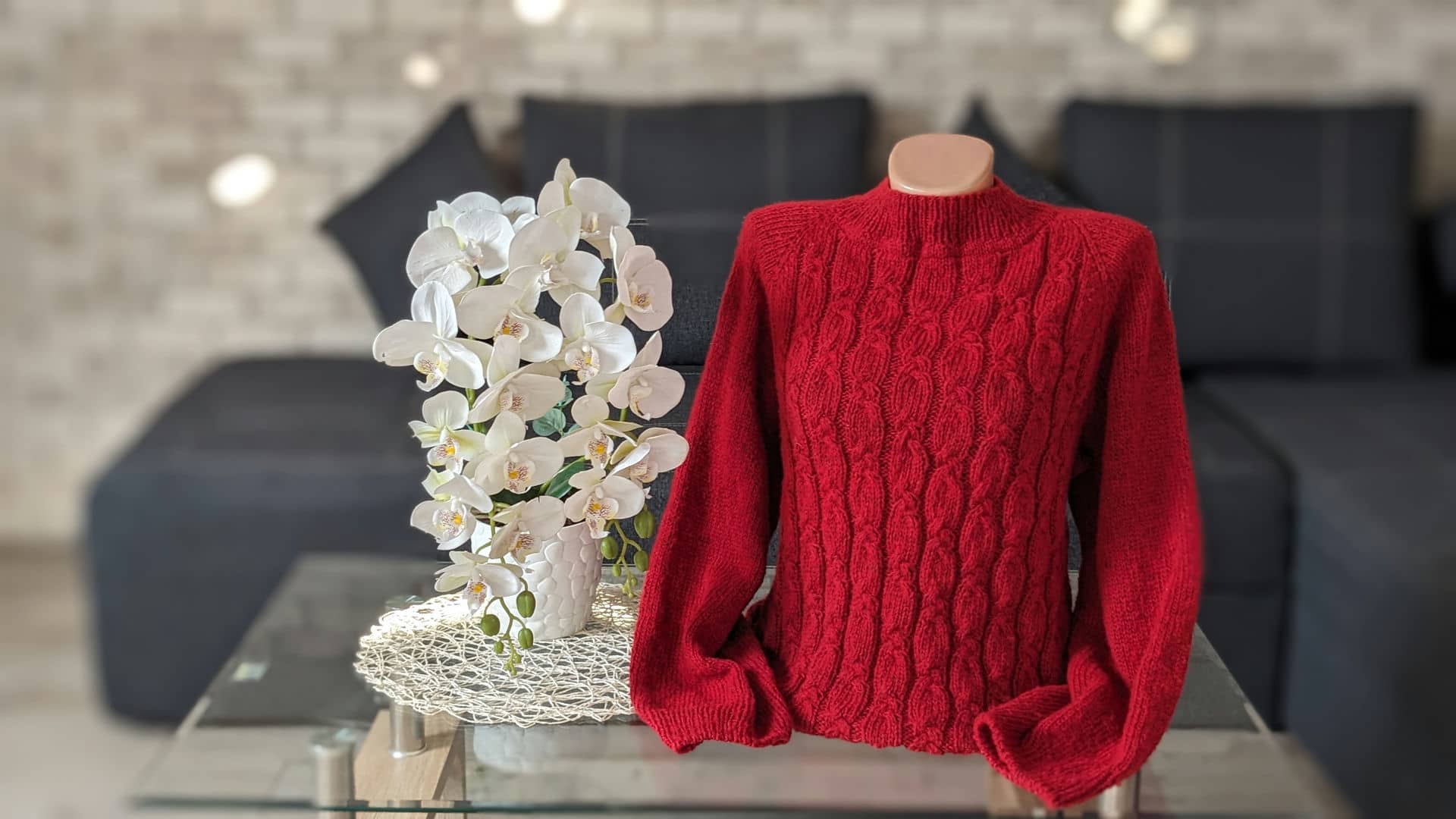
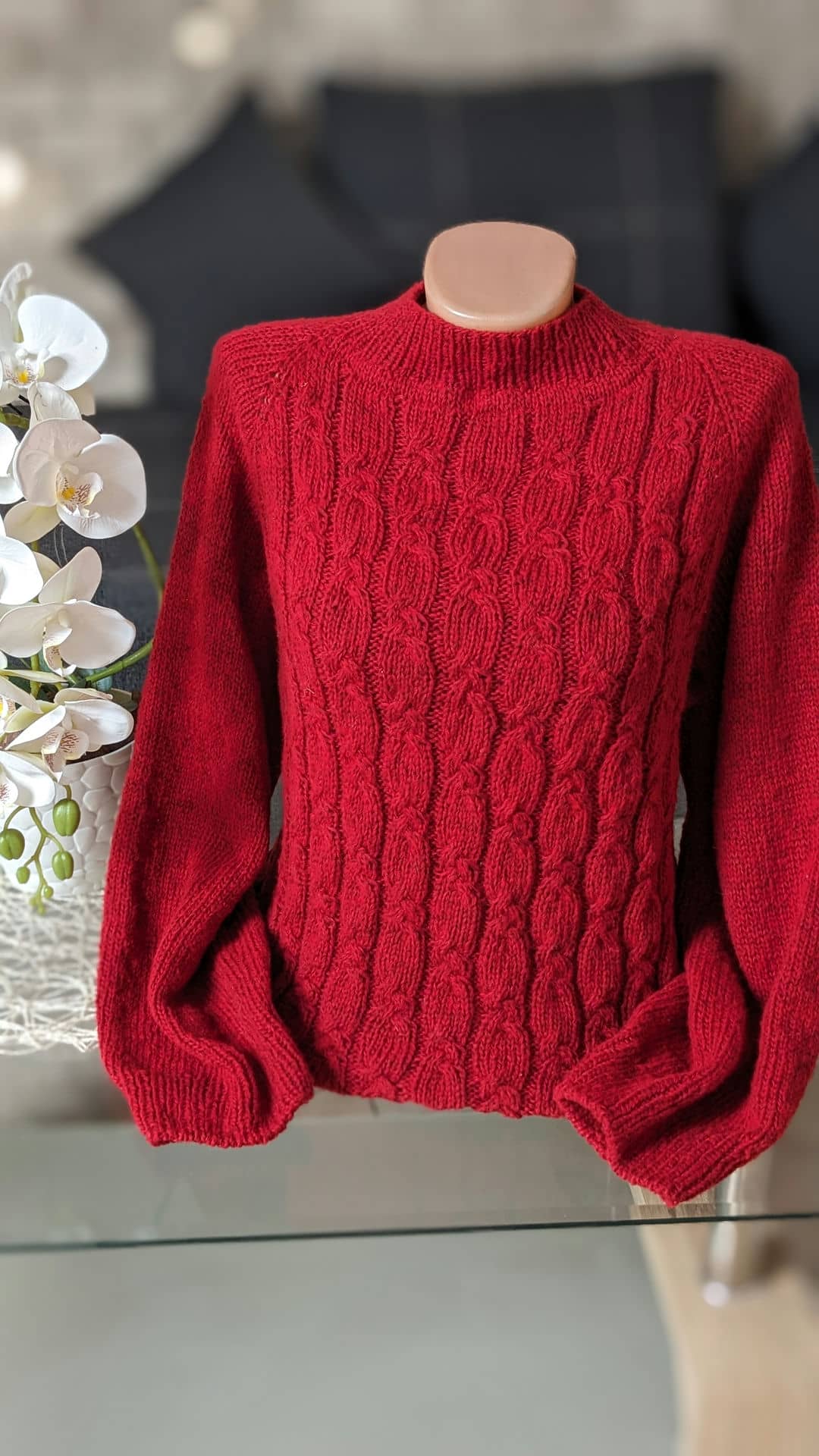
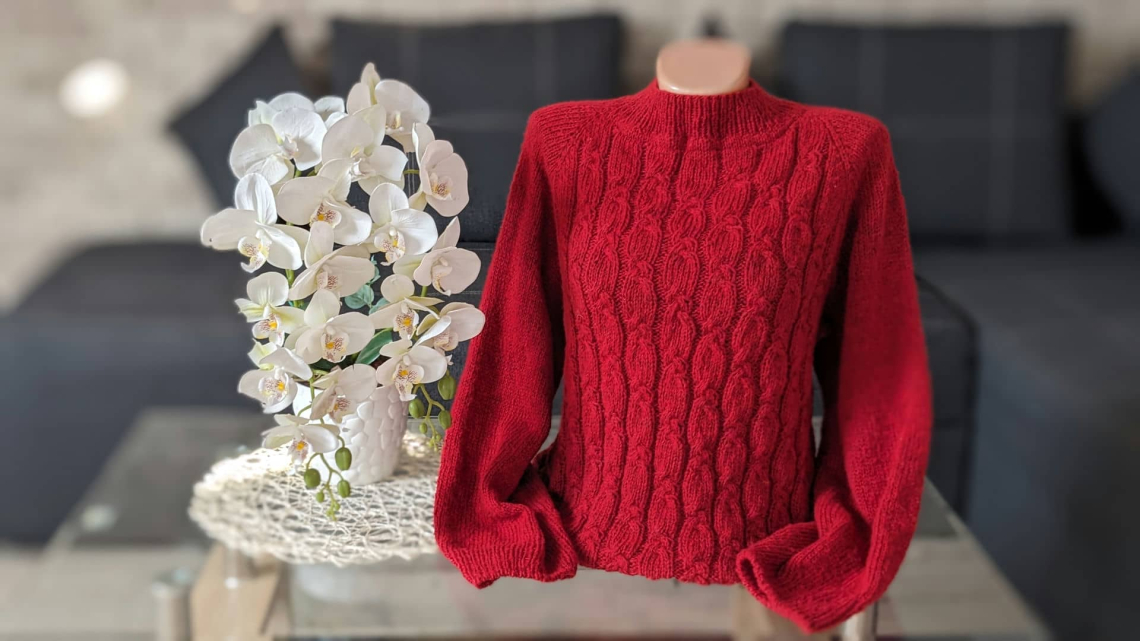
A new process, a new story. I have started work on the Aren sweater: warm, textured and modern. Its main feature is the relief Aran cables, which create an expressive fabric full of depth and volume. The rich red adds energy, making the sweater a bright accent and at the same time a warm, cosy piece for your wardrobe.
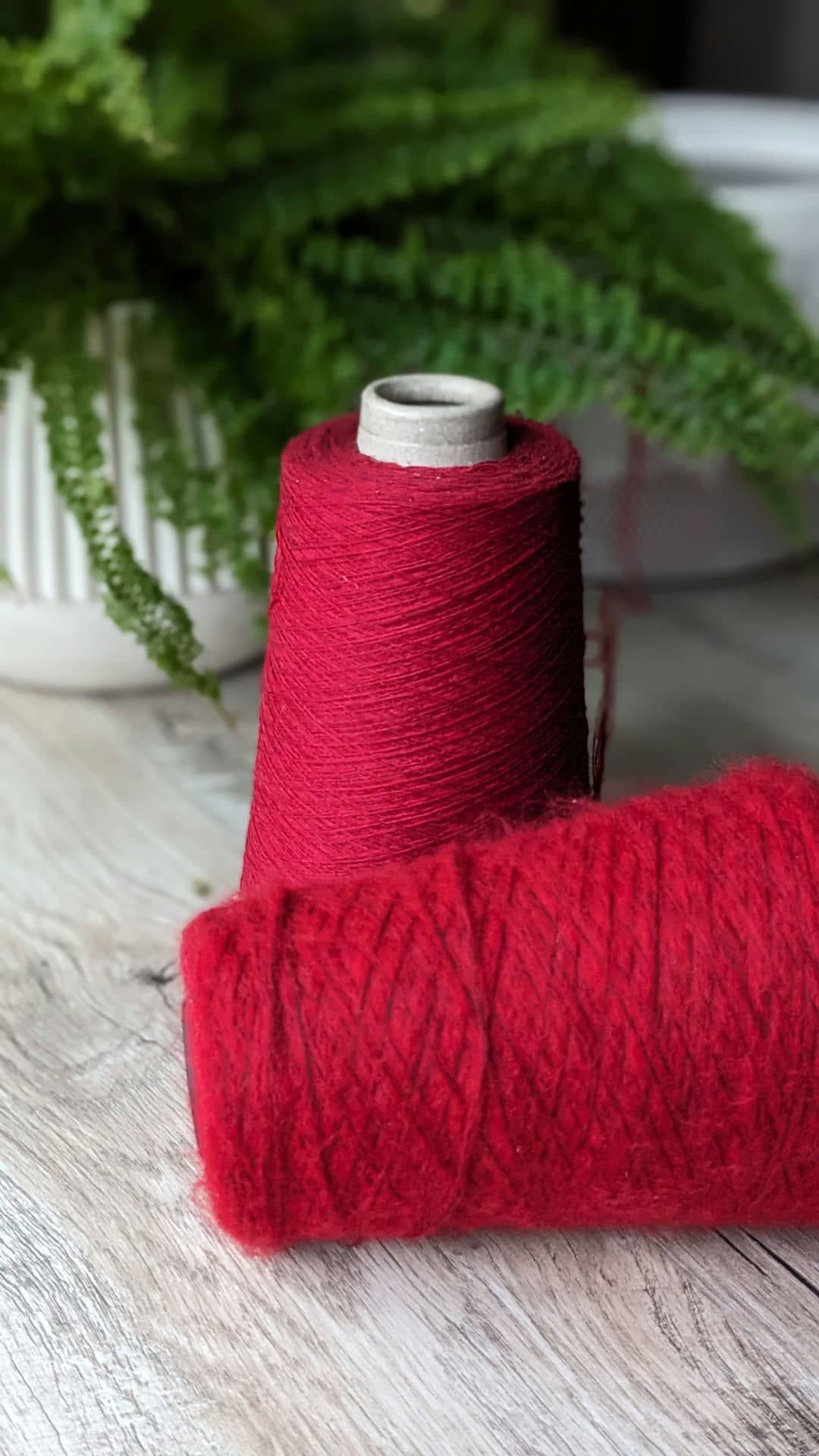
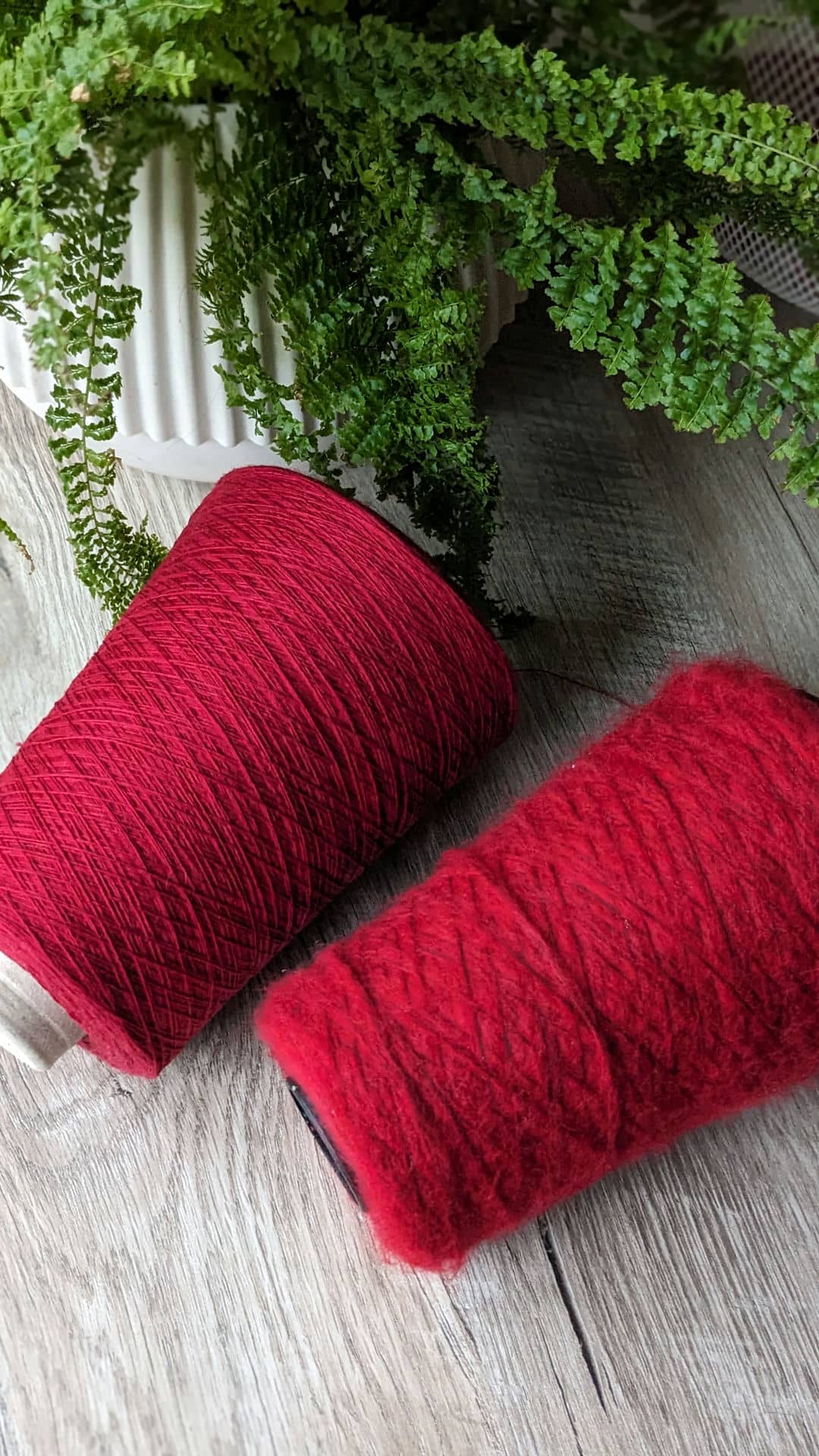
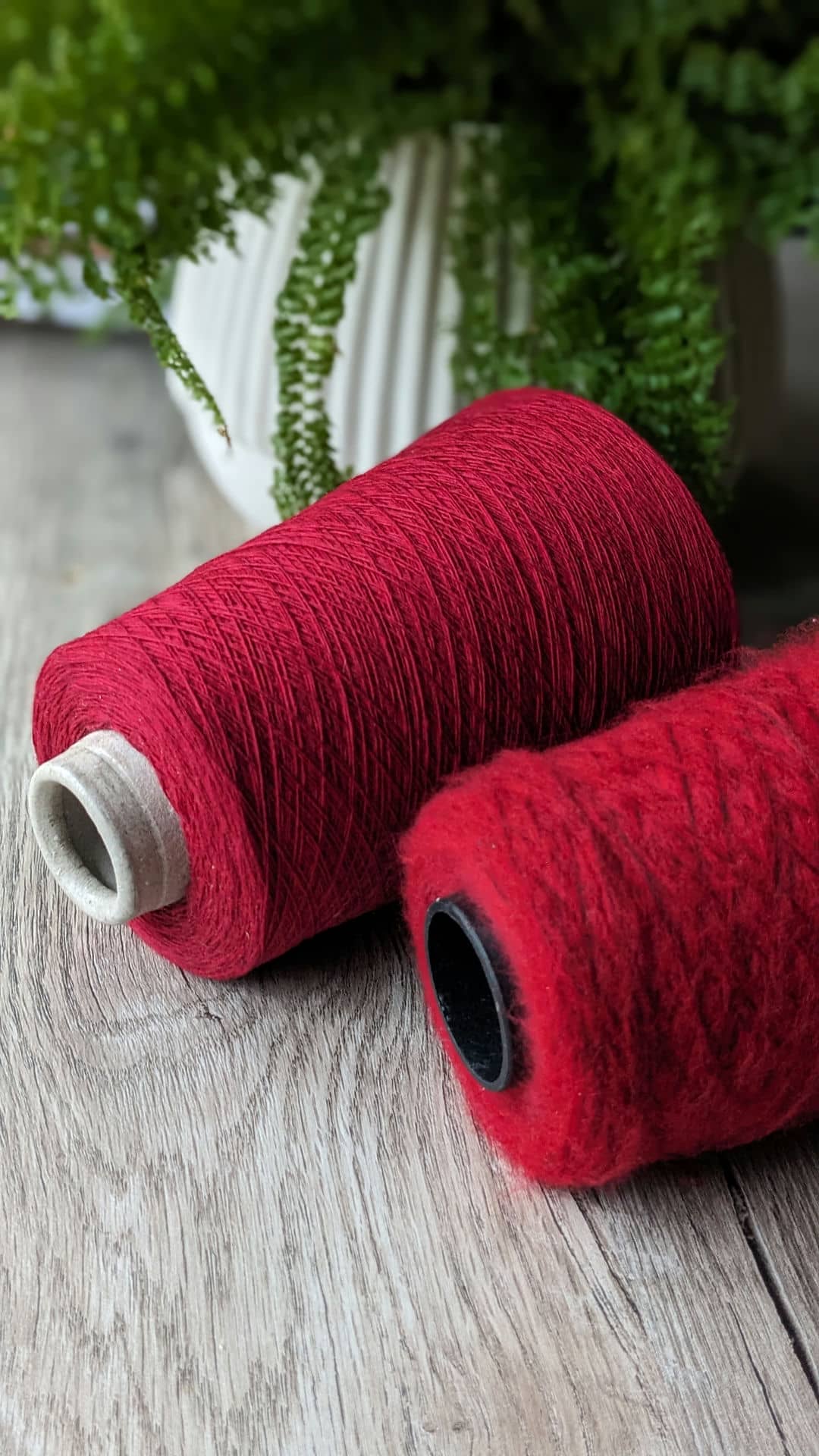
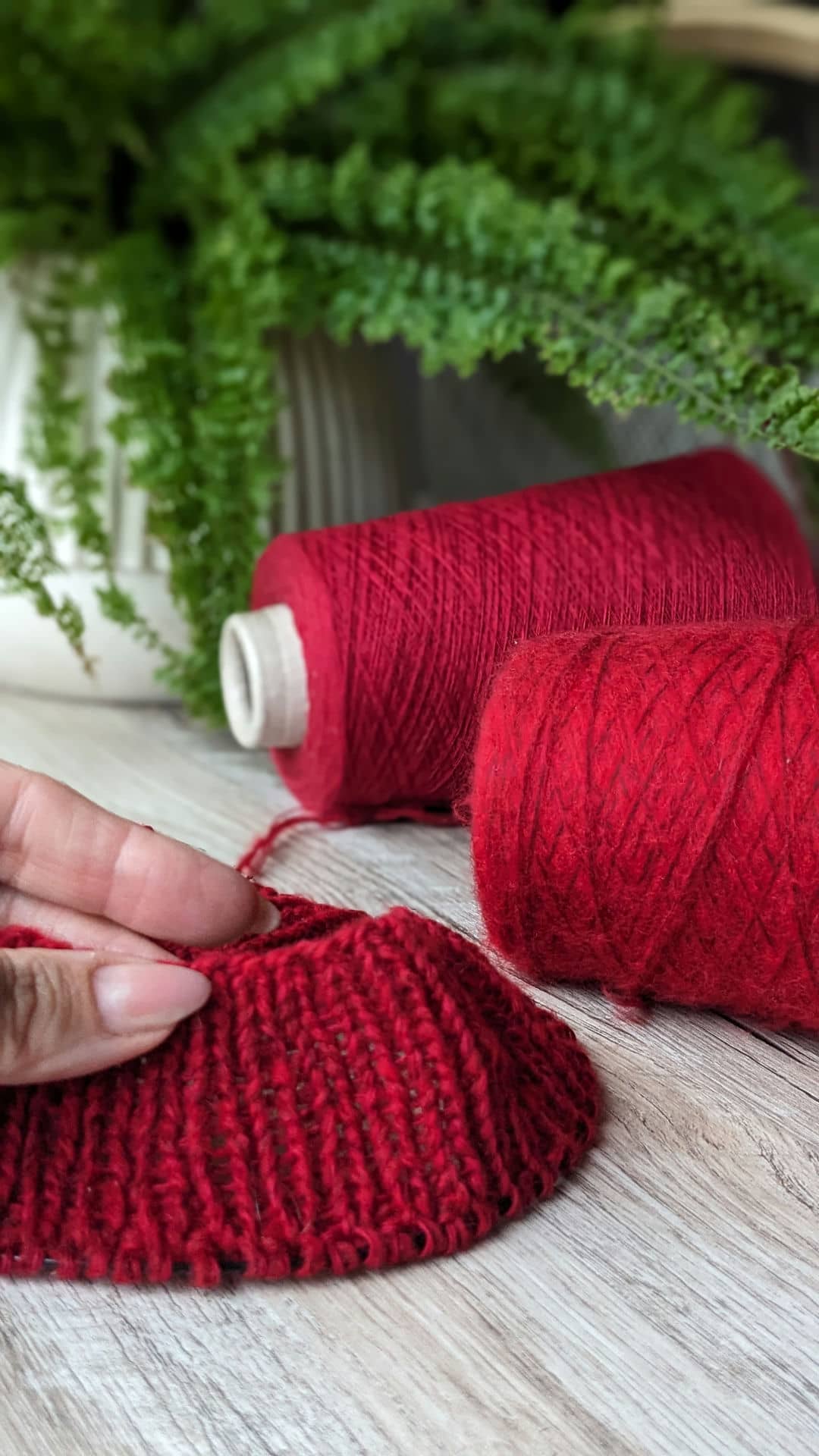
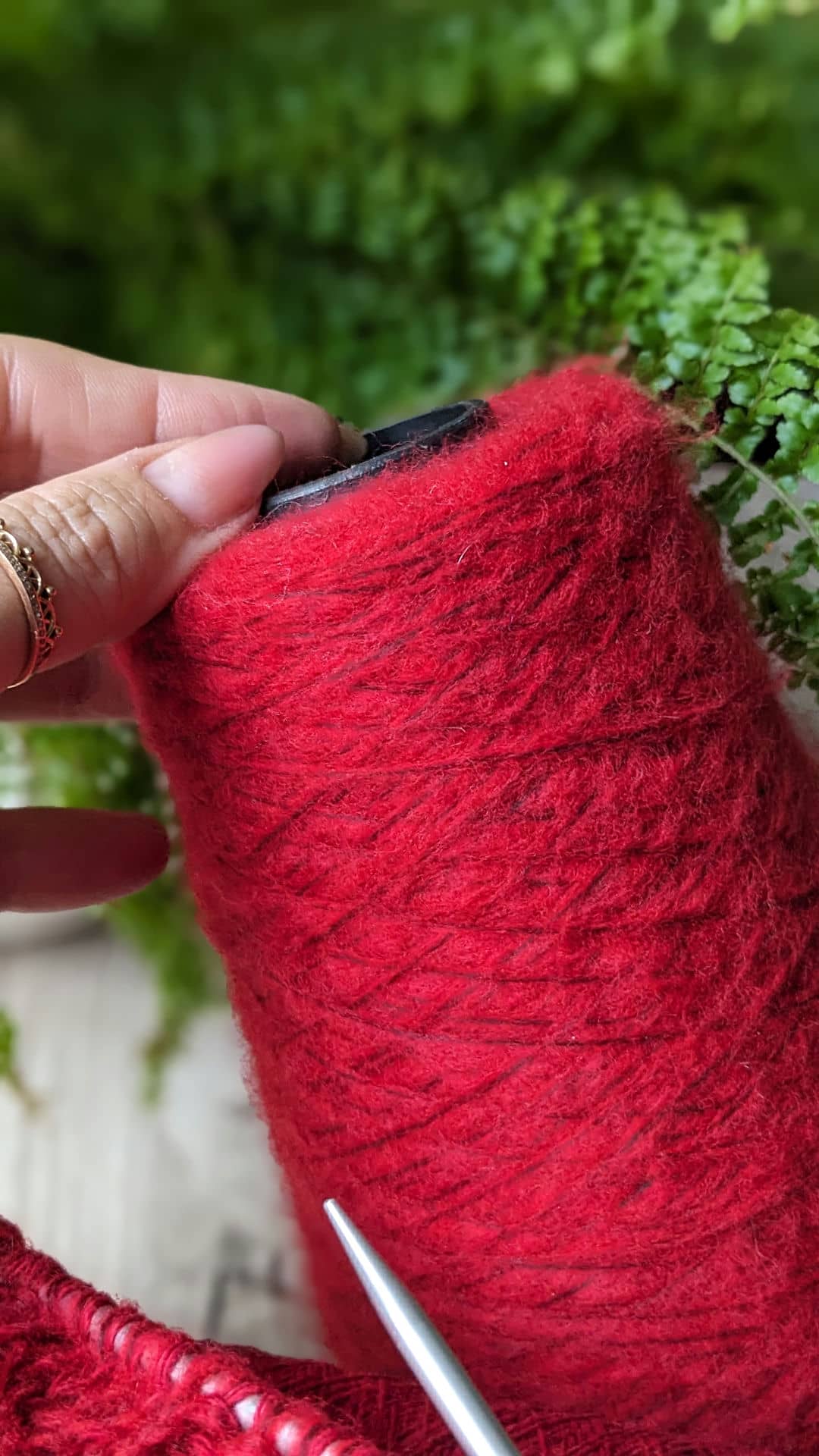
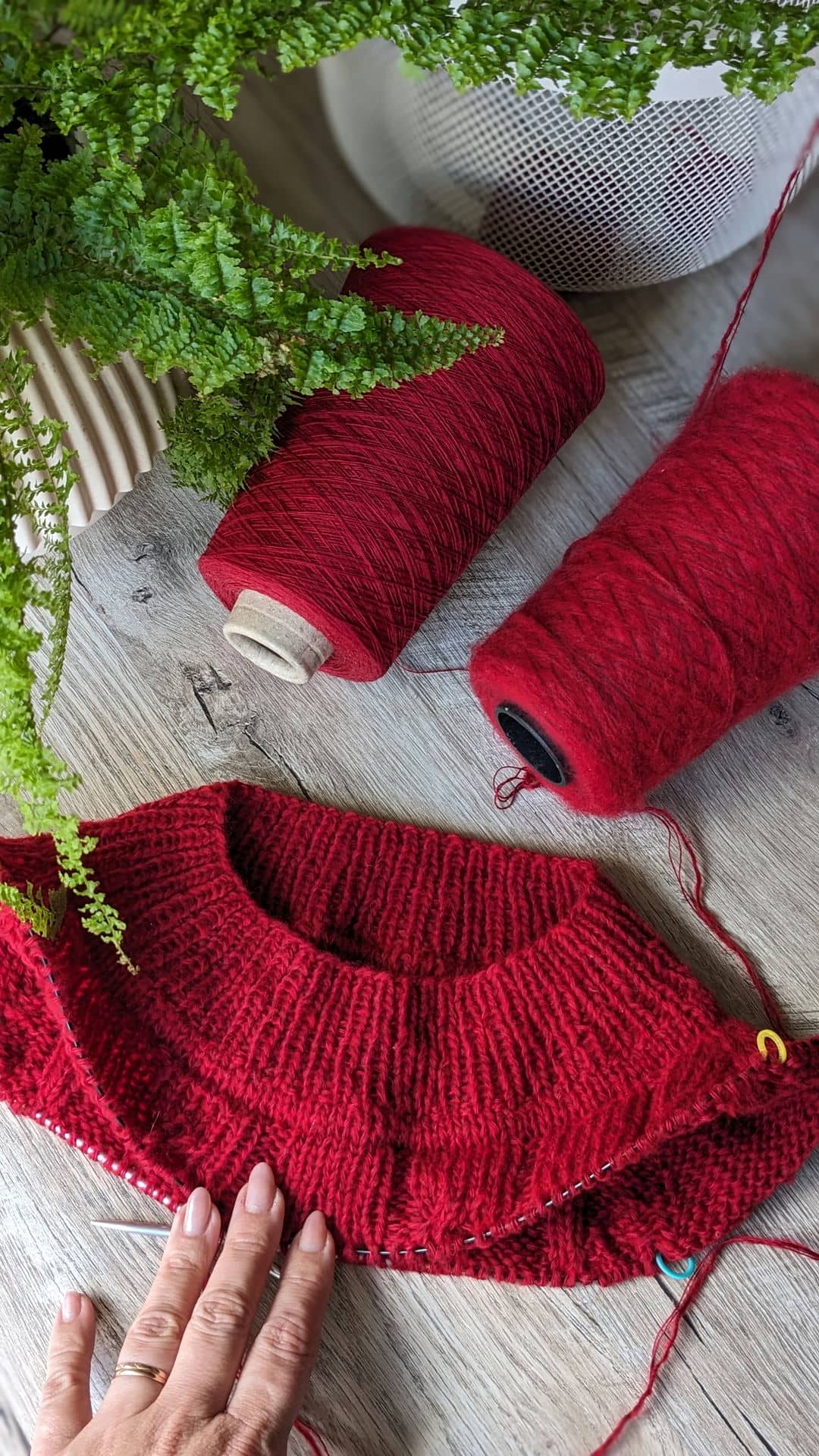
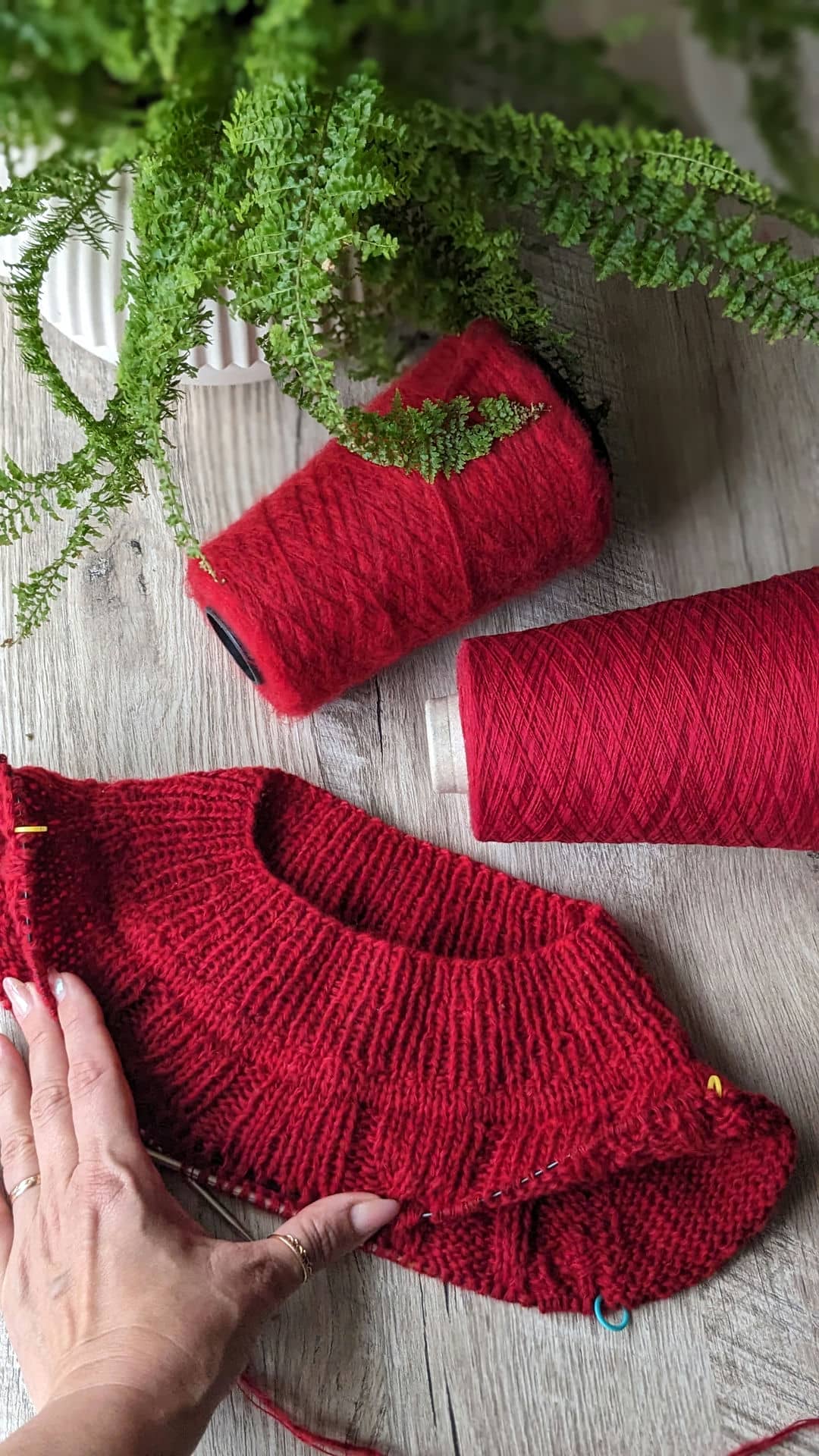
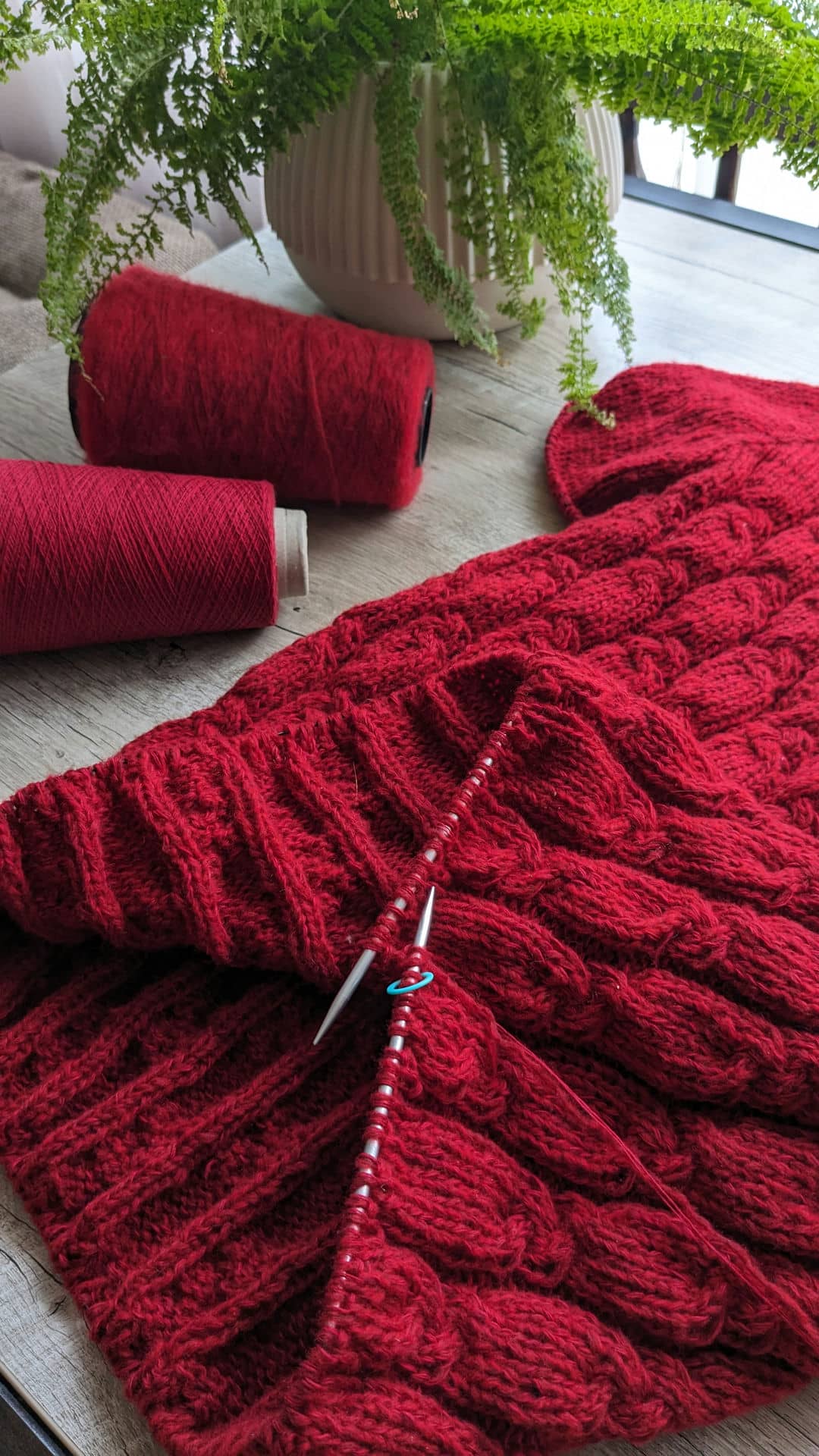
For this project I use two kinds of merino yarn:
- fluffy merino (600 m/100 g, one strand) for softness, lightness and volume,
- fine merino (1500 m/100 g, two strands) for a stable fabric and crisp cable definition.
Together they make a perfect combination: a soft, stretchy, yet strong and springy fabric. Thanks to this, the cables stand out nicely and the sweater keeps its shape while staying light and comfortable to wear. The yardage of the mix of 3 strands is about 330 m per 100 g. For a medium gauge we use 3.5 mm needles for the neckline and cuffs, and 4 mm for the main fabric and sleeves.
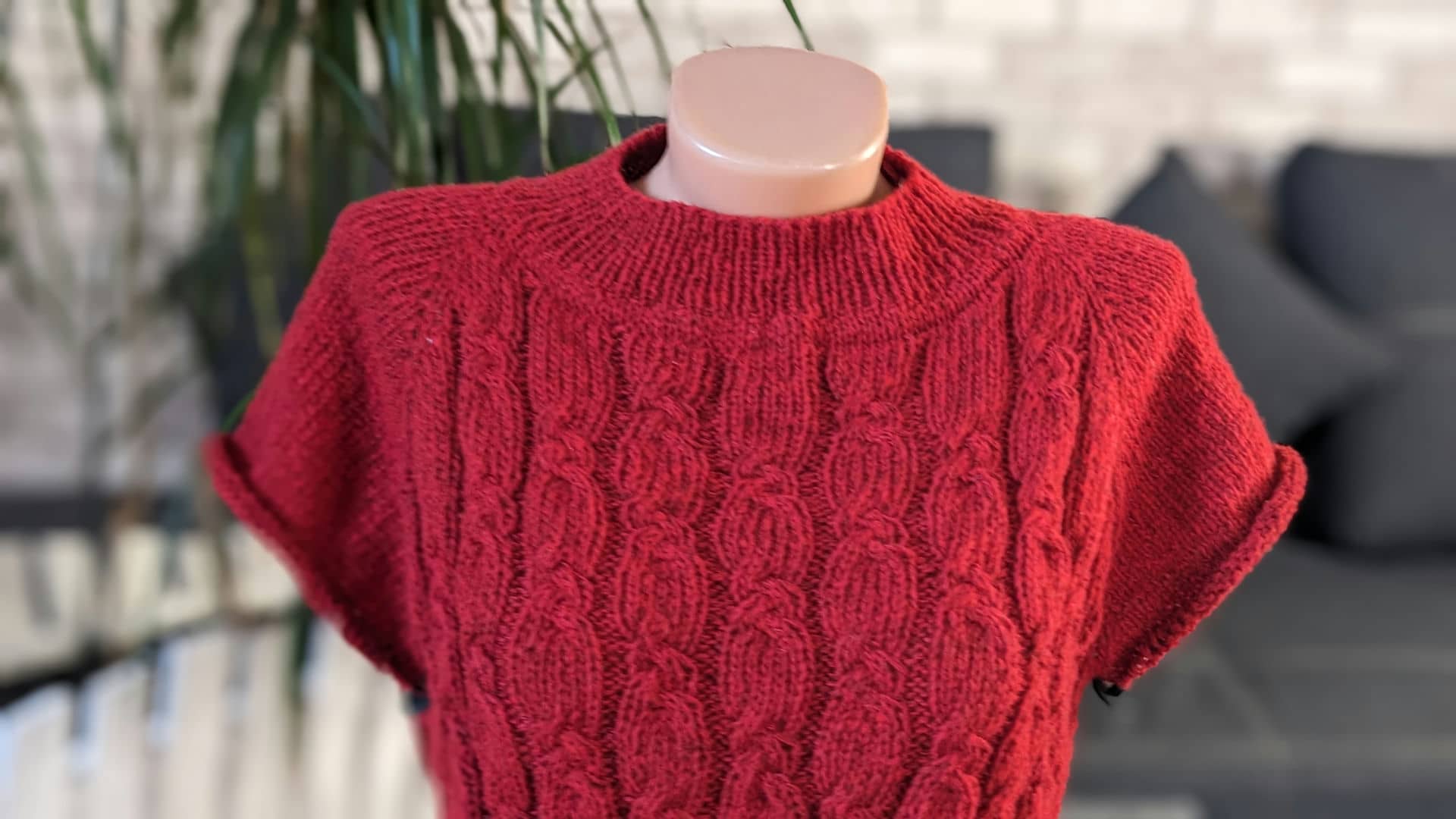
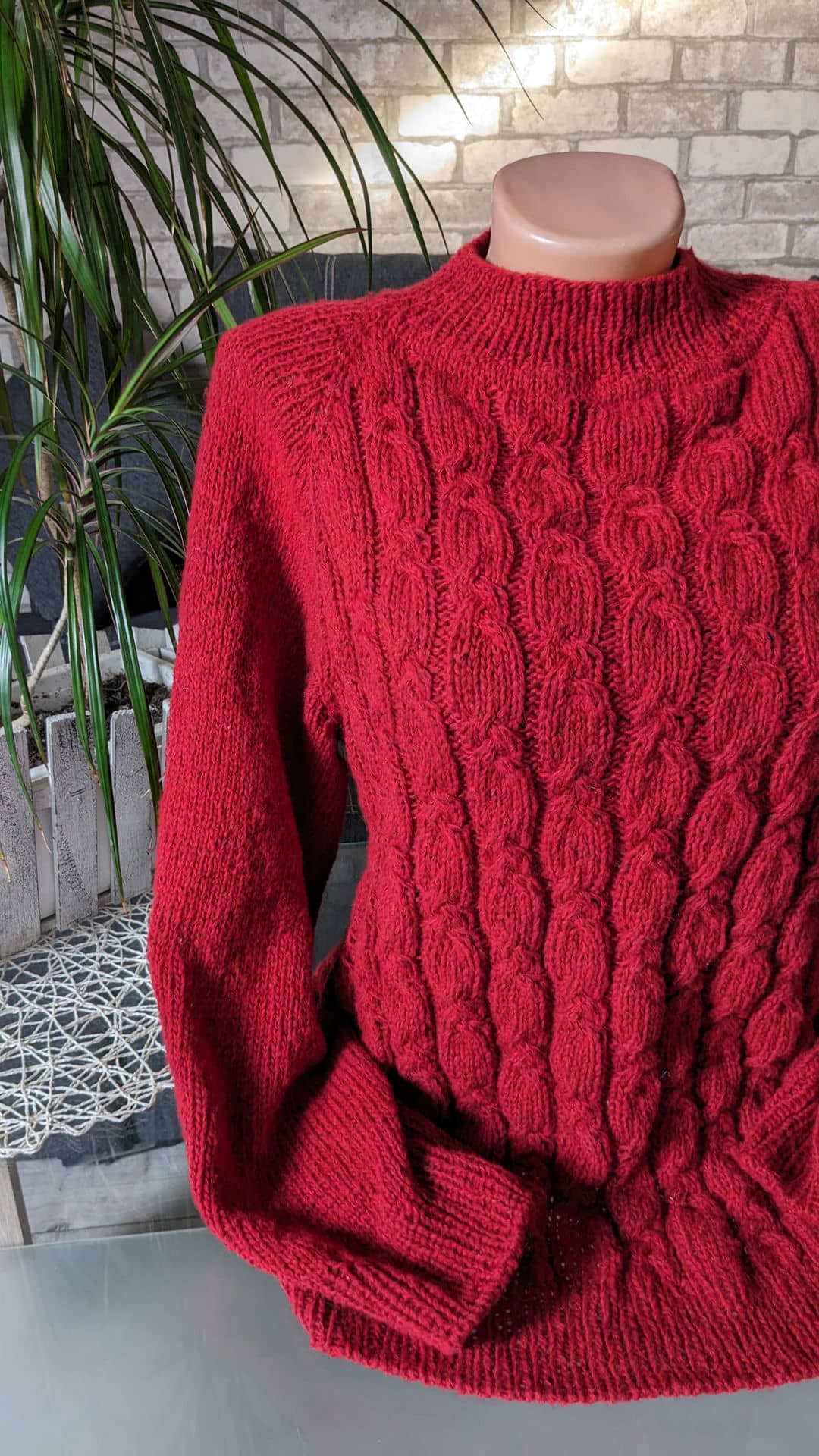
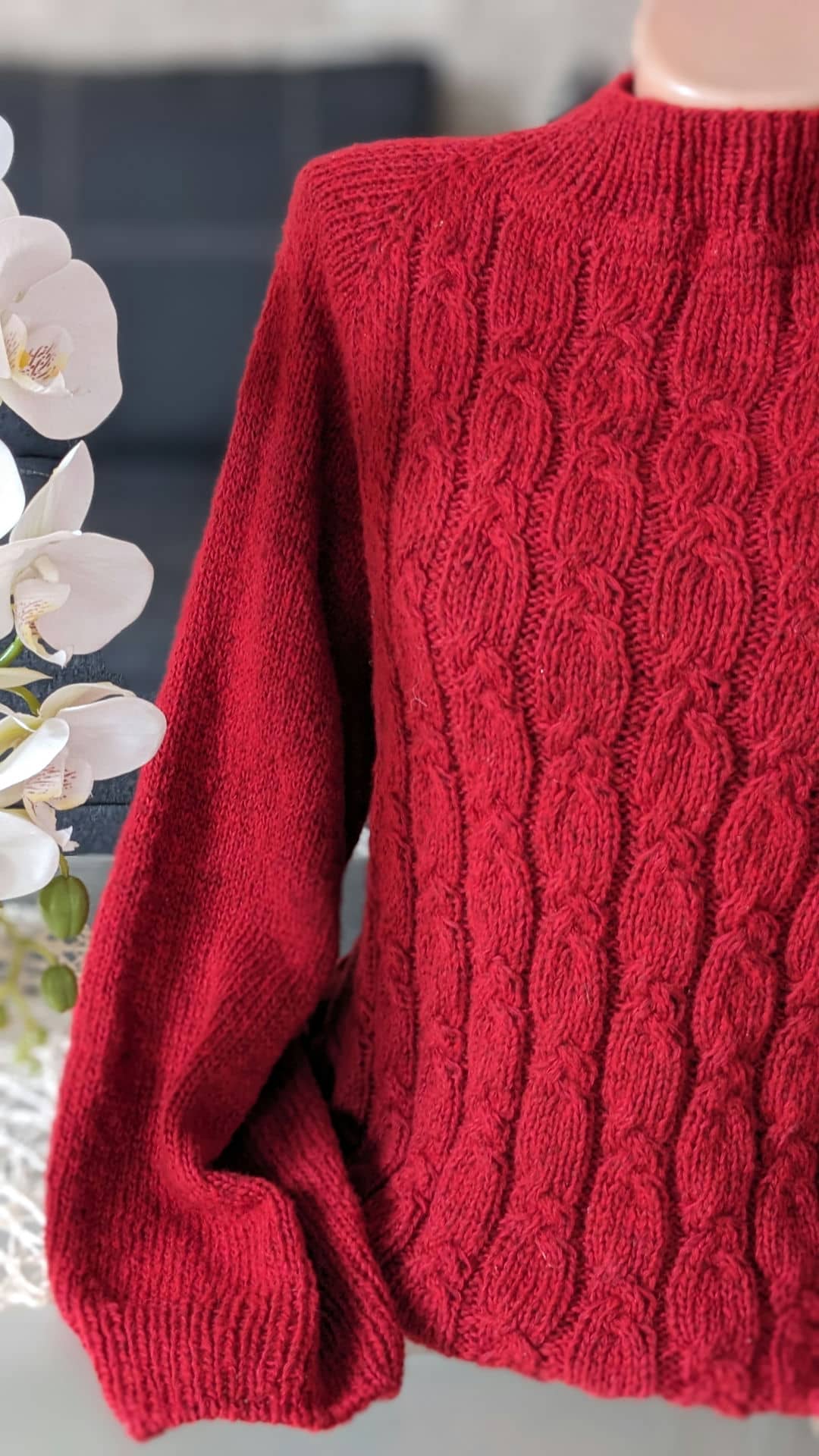
The Aren sweater is knitted top-down with a classic back neck raise. The construction is a raglan, which gives a good fit across the shoulders and ease of movement. The silhouette is straight and relaxed, without waist shaping, with a soft volume that gives the piece a modern look.
The sleeves are of classic width with a slight taper towards the cuff, which creates harmonious proportions and highlights the structure of the fabric.
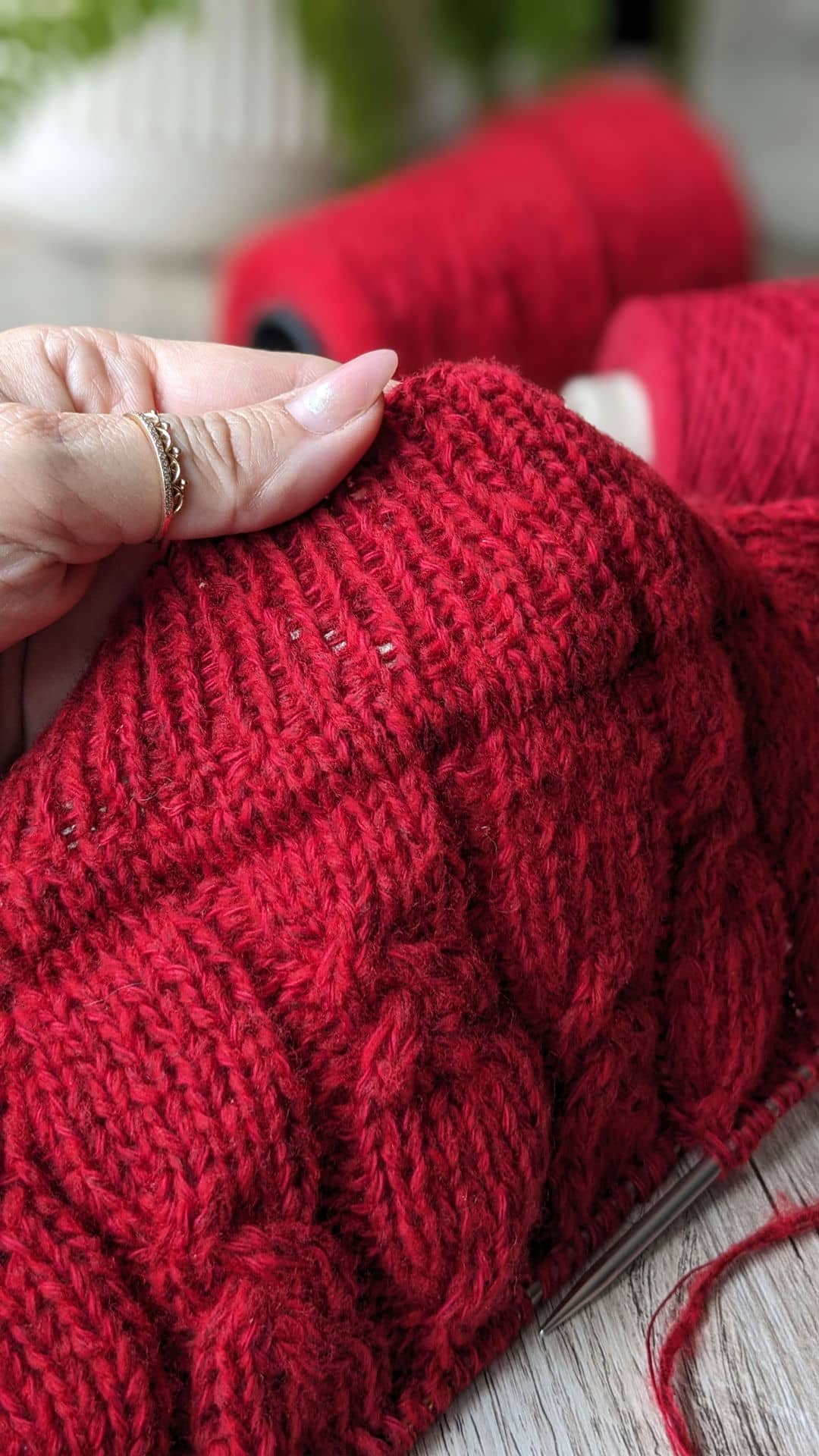
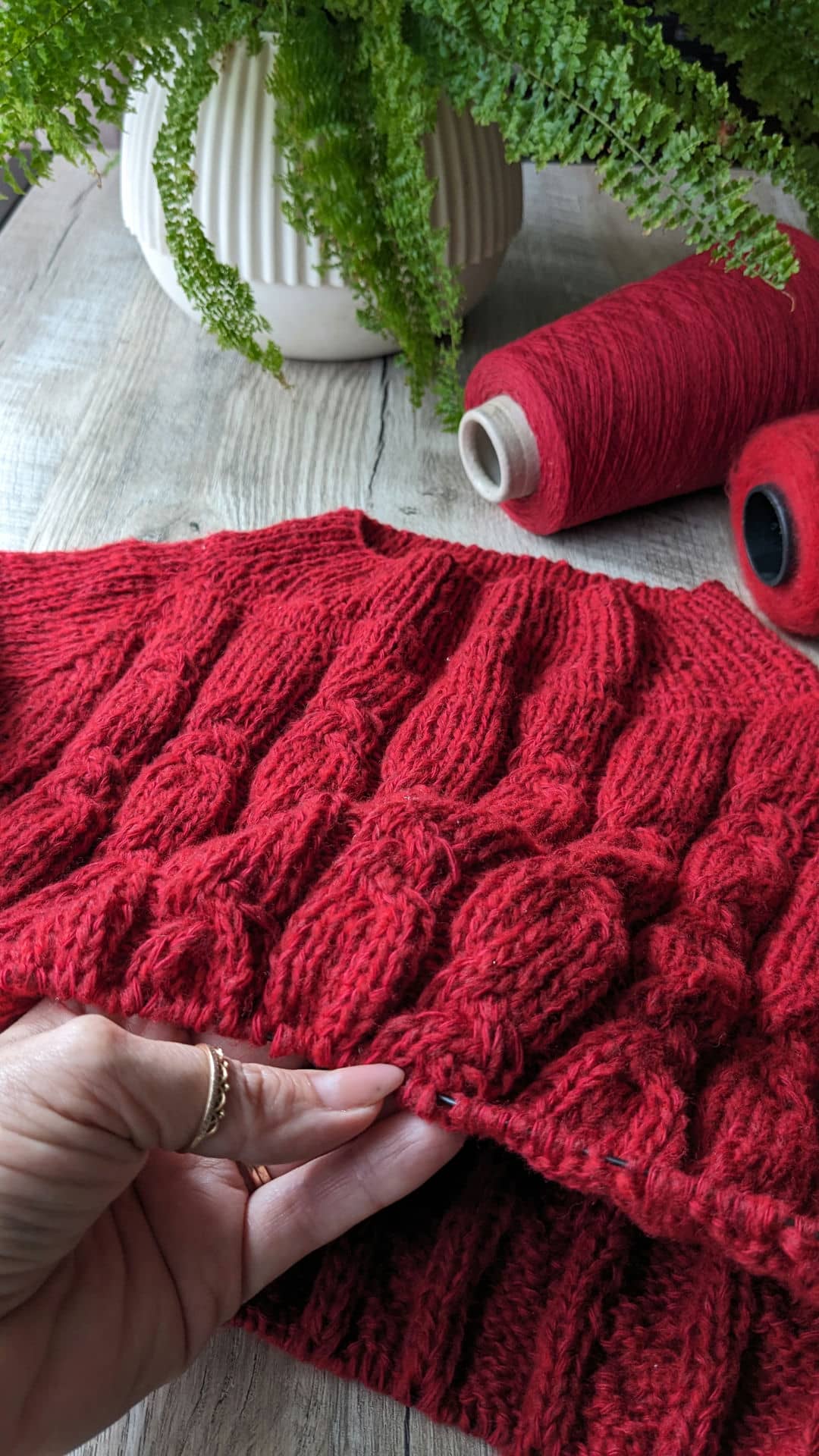
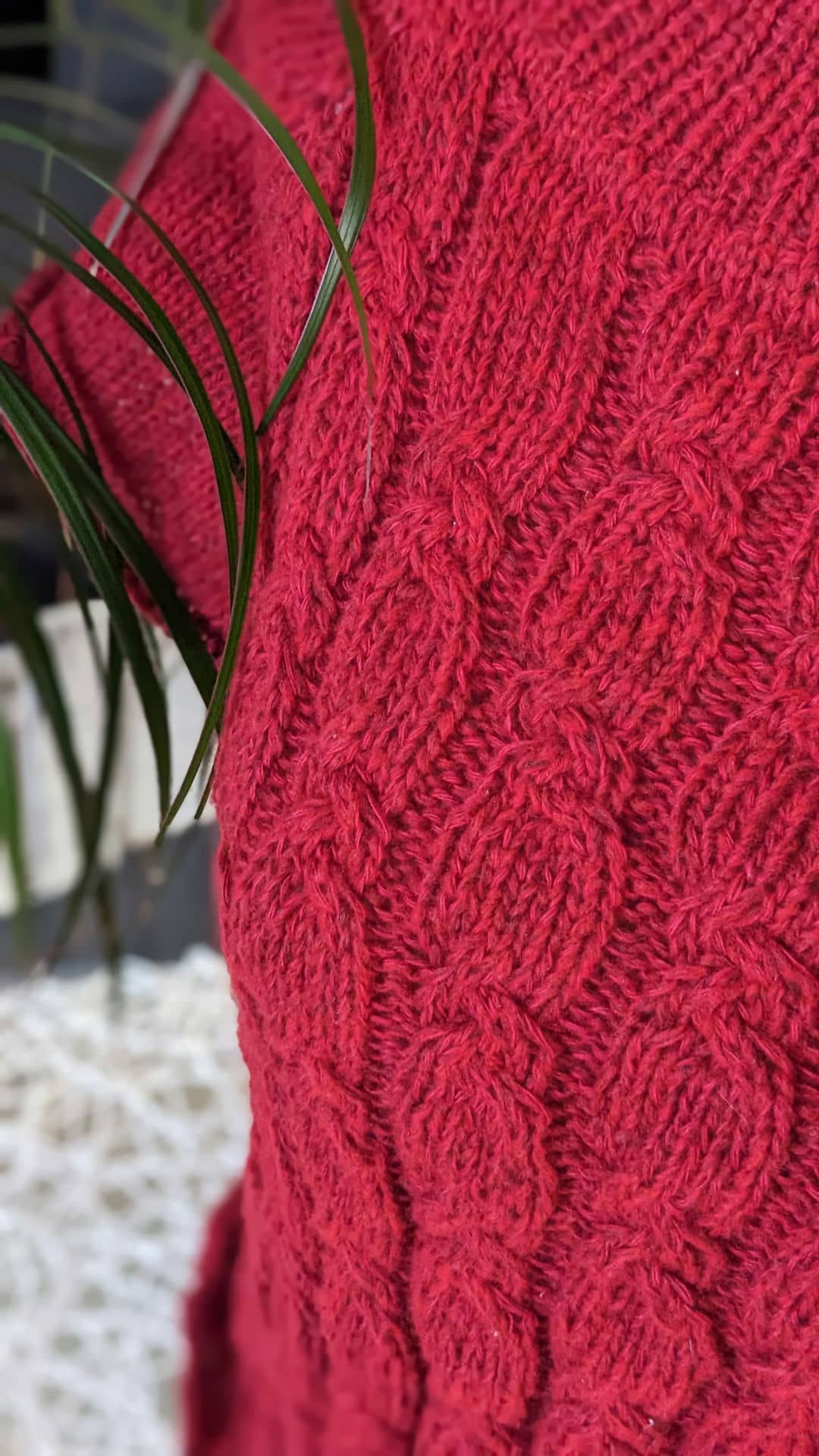
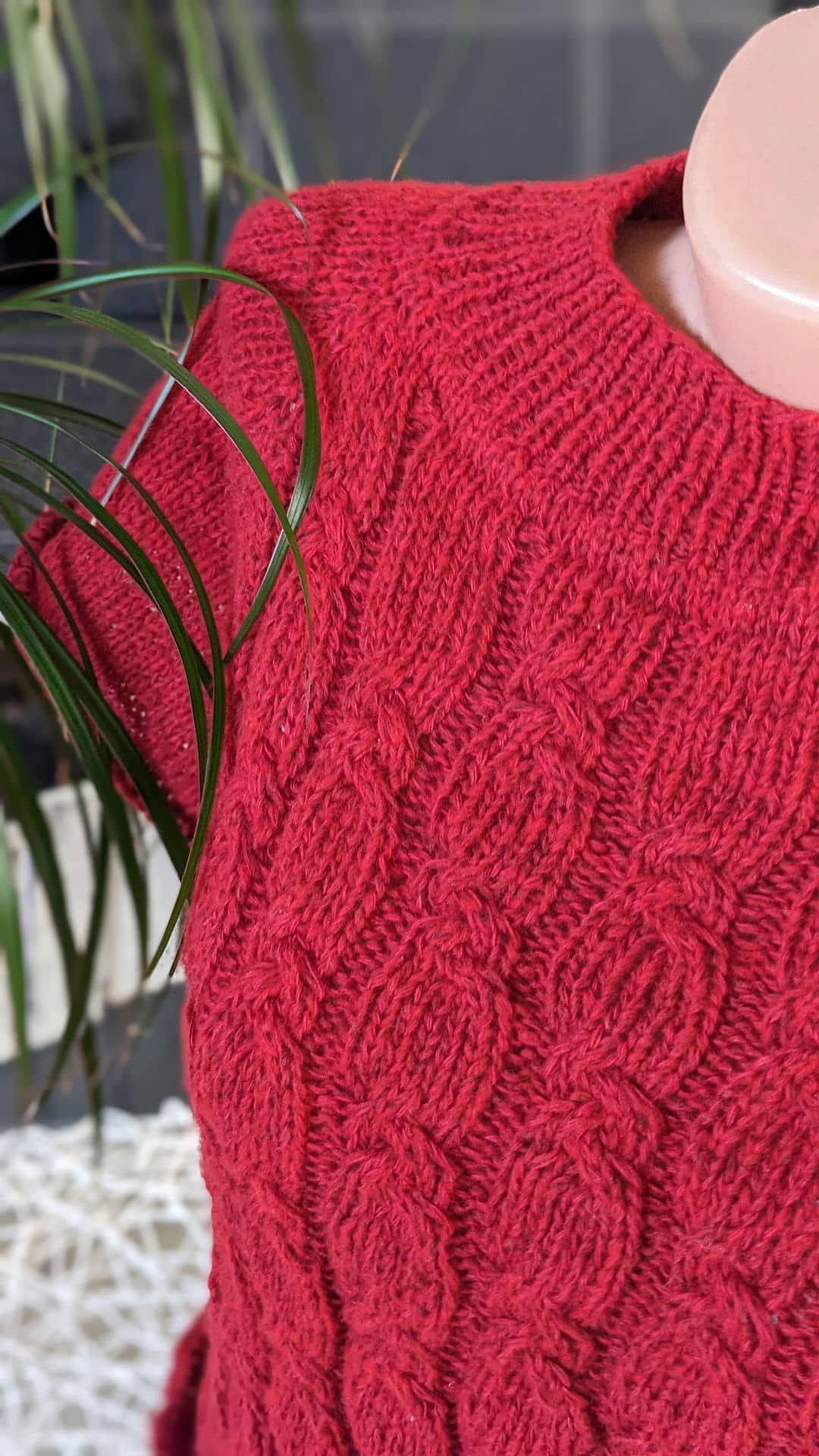
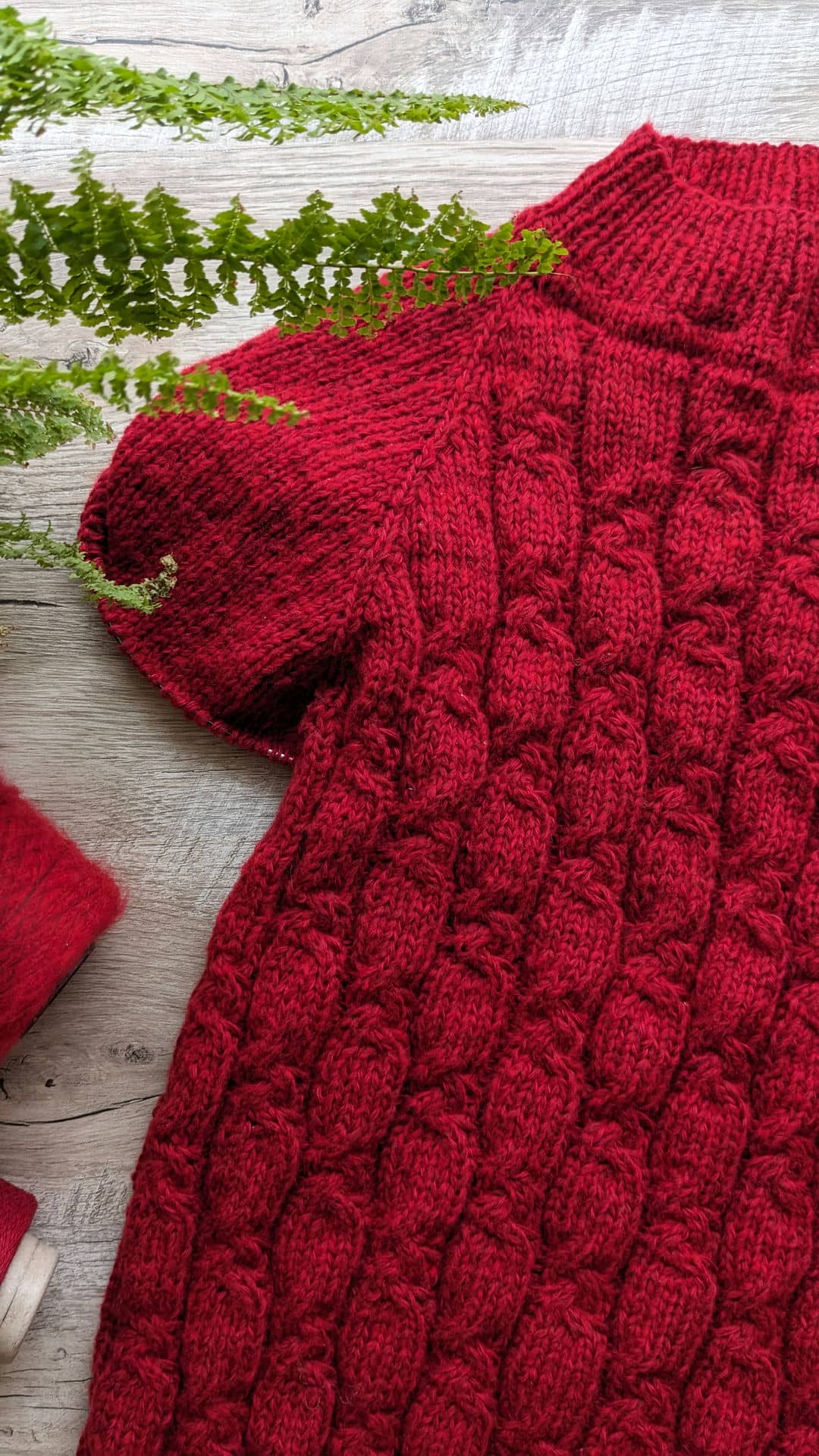
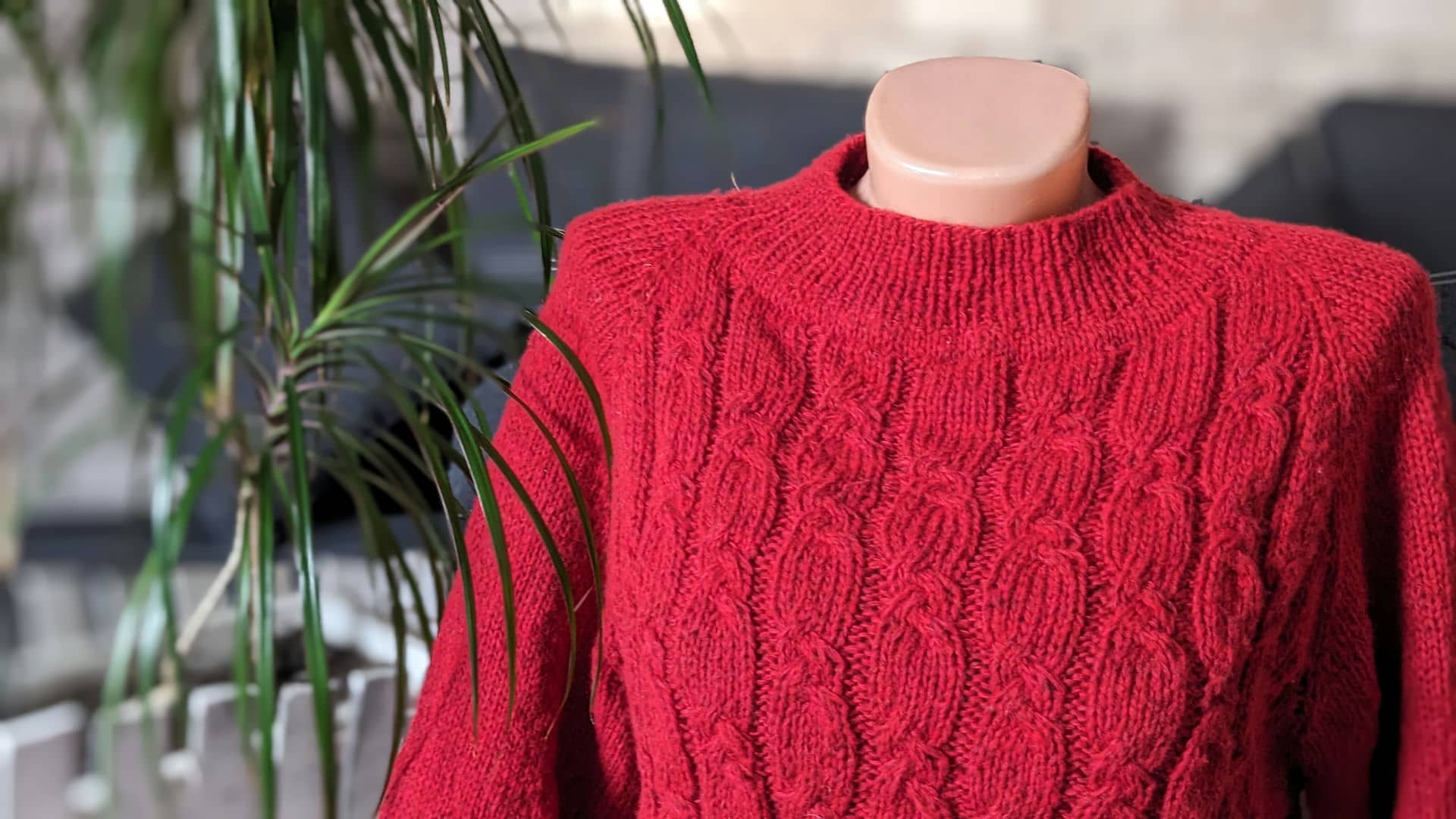
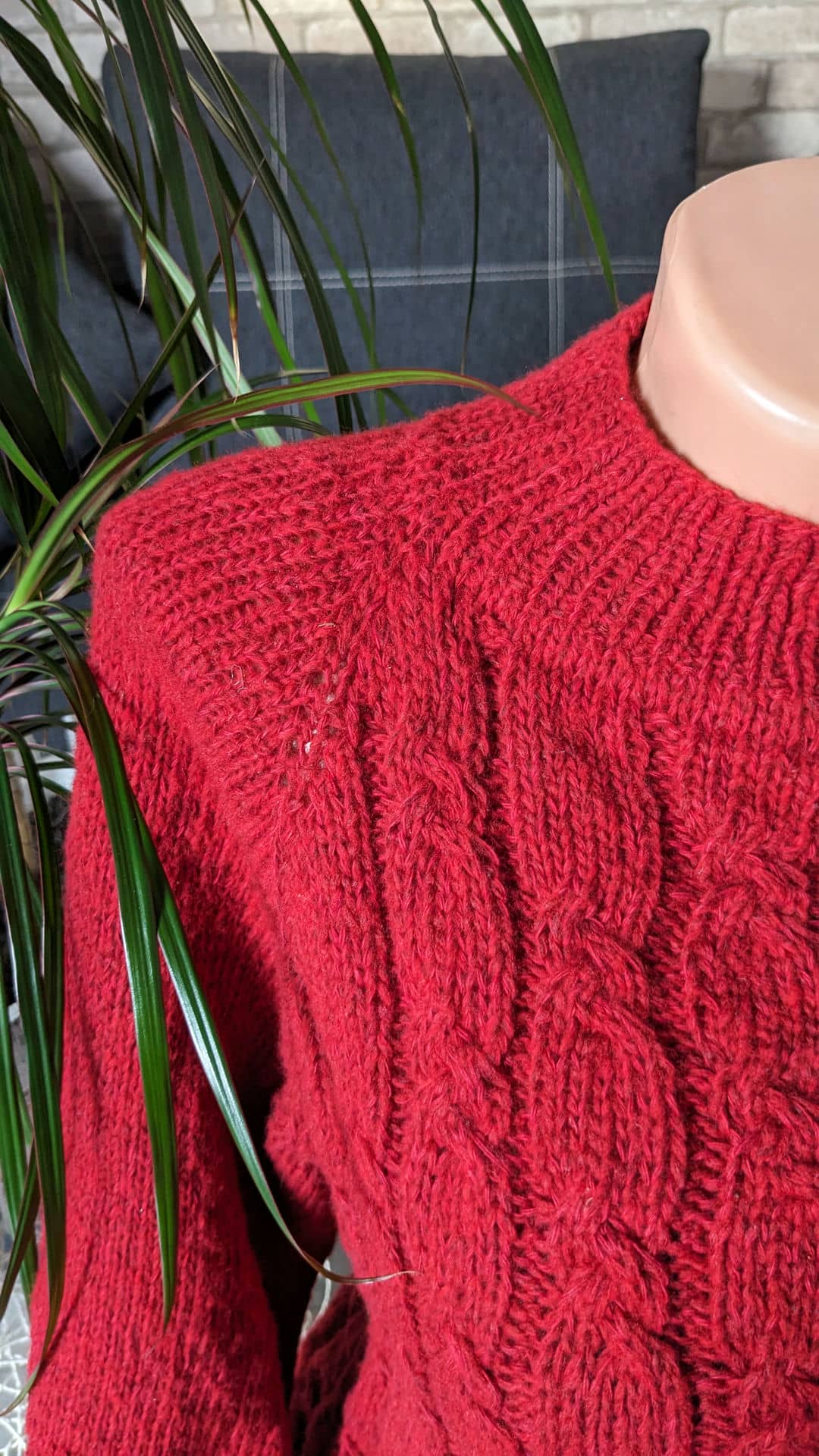
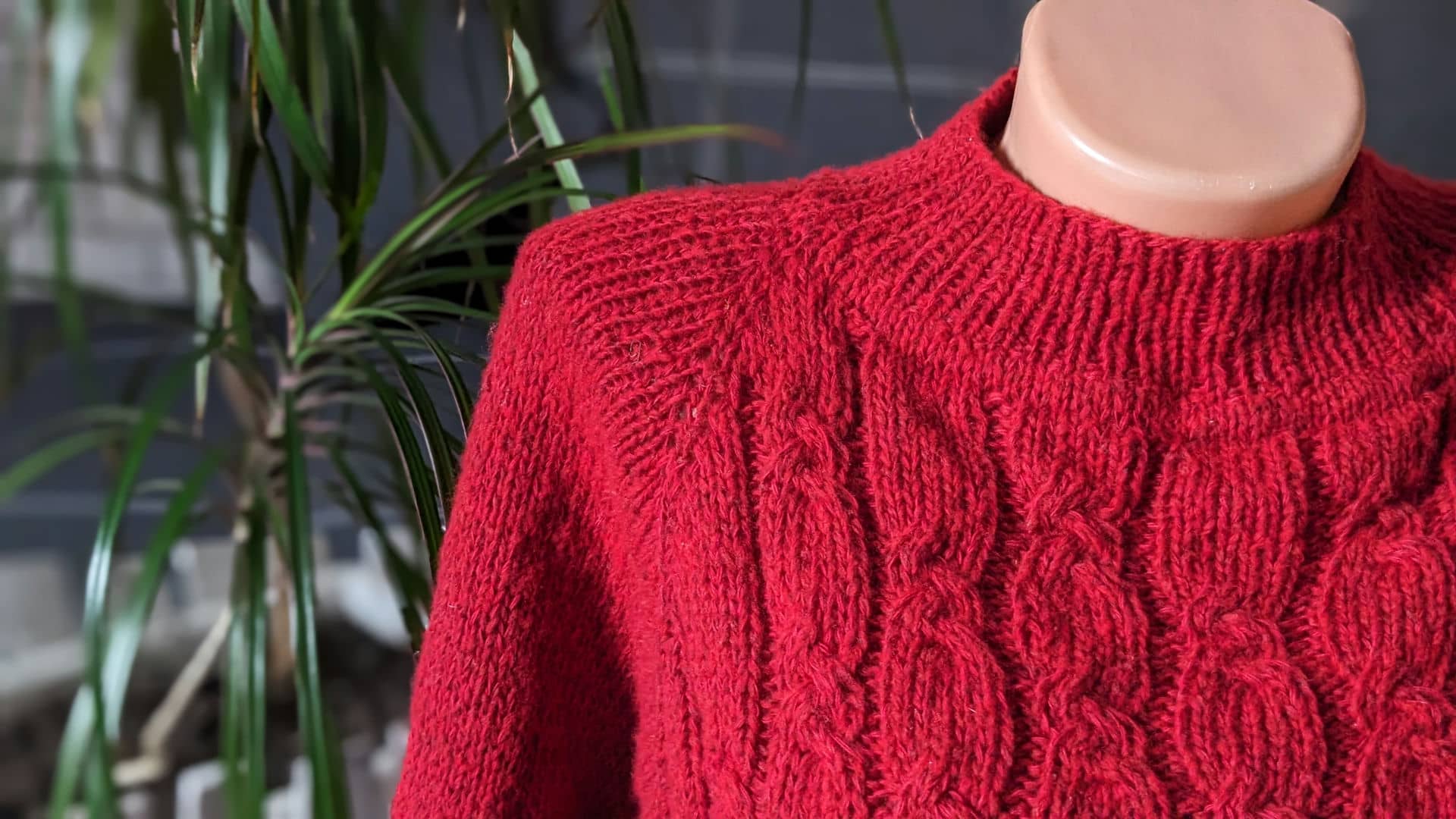
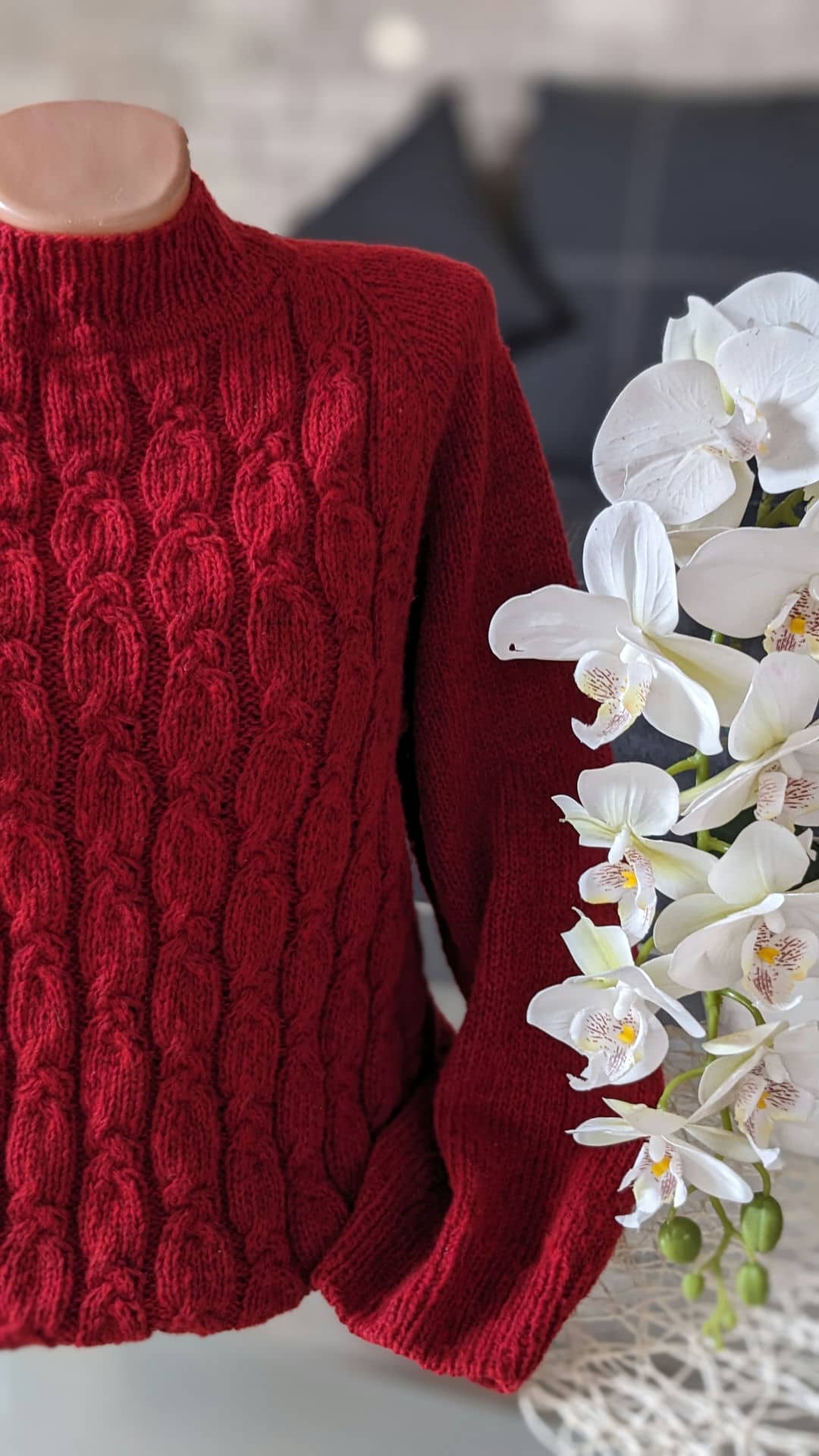
The main focus of the sweater is the Aran cables. Their crossings form an expressive relief that looks different depending on the light: sometimes deep and graphic, sometimes soft.
The red adds depth to the pattern. It is not just a bright shade but a warm, saturated tone associated with vital energy, strength and inner light.
The Aren sweater is a blend of classic and modern, of the power of colour and the softness of the materials. A garment where comfort and style meet in every detail.
Below are the calculations for a sweater in size 48–50 (≈ EU 42–44, M–L).
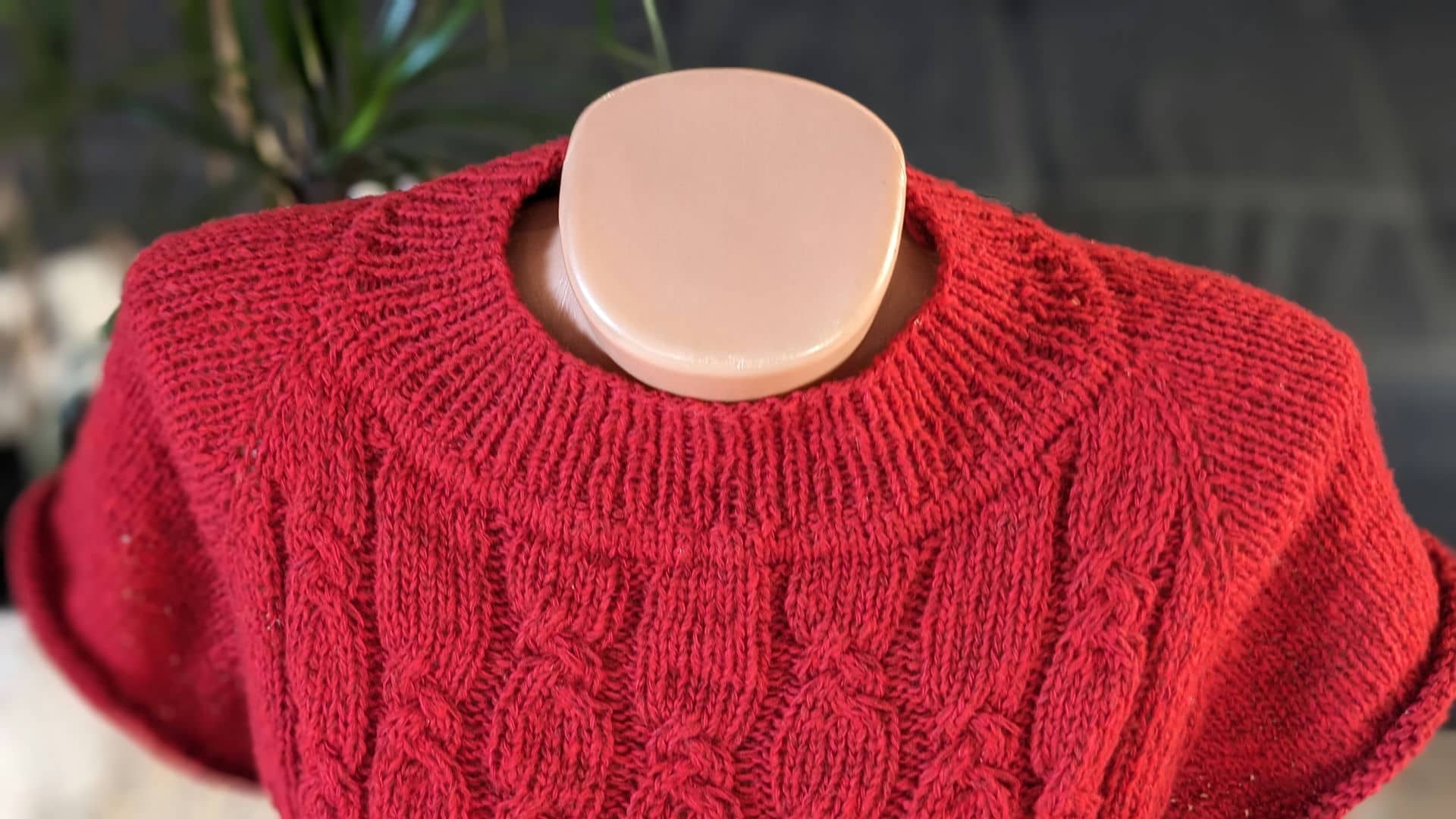
With 3.5 mm needles cast on 100 stitches + 1 stitch for joining in the round. Work 15 rounds of 1×1 rib. At the bottom of the collar we work a mock-linked edge.
Neckline:
Rounds 1–15: 1×1 rib.
Round 16: knit all the stitches on the needles, and between the stitches (from the bar) make new stitches and purl them.
The number of stitches in this round doubles: 100 × 2 = 200 stitches.
Next, four rounds of tubular rib (rounds 17–20).
Round 17: knit the knit stitch, slip the purl stitch without working it, with the working yarn in front of the stitch.
Round 18: slip the knit stitch without working it, with the working yarn behind the stitch, purl the purl stitch.
Round 19: knit the knit stitch, slip the purl stitch without working it, with the working yarn in front of the stitch.
Round 20: slip the knit stitch without working it, with the working yarn behind the stitch, purl the purl stitch.
Round 21: work each knit and purl stitch together as k2tog, all the way around the round. The number of stitches halves: 200/2 = 100 stitches.
The neckline is done. Now we move on to the main fabric and the relief pattern. Change the needle size to 4 mm.
You have 100 stitches on the needles. Divide the stitches into separate sections and mark them with markers:
- back – 34 stitches,
- front – 46 stitches,
- two sleeves – 6 stitches each,
- four raglan lines – 2 stitches each.
We begin the yoke worked flat, shaping a classic back neck raise. The raglan lines (RL) are knitted in knit stitches. Work the increases next to the raglan lines in every 2nd row, identically for all pieces. Gradually work the new stitches into the pattern.
On the back and front pieces work the relief pattern, on the sleeves stockinette stitch.
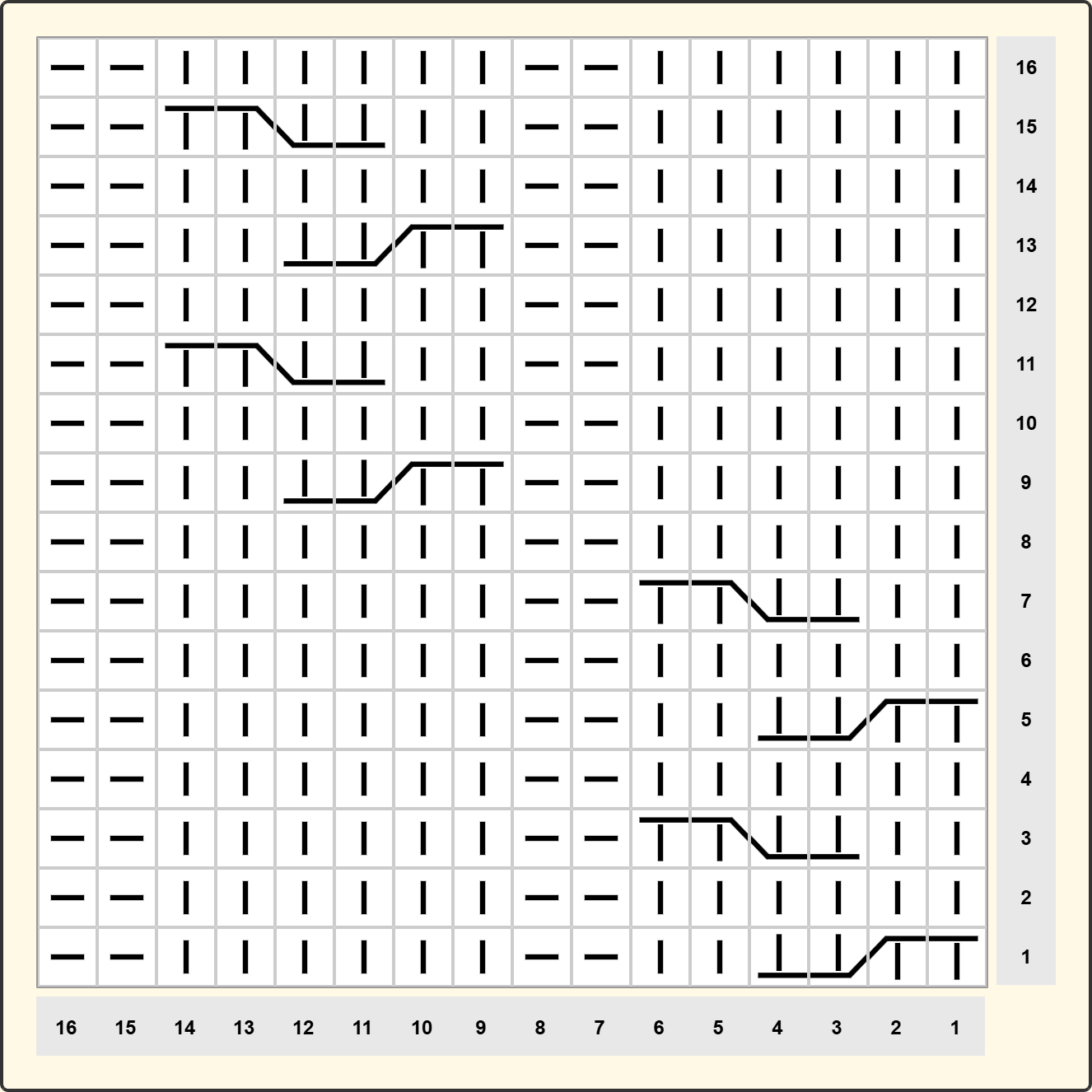
Pattern layout on the back piece (34 stitches), row 1: k4, then repeat three times the section between asterisks *p2, k6*, p2, k4. Then follow the chart.
Pattern layout on the front piece (46 stitches), row 1: k2, then repeat five times the section between asterisks *p2, k6*, p2, k2. Then follow the chart.
Classic back neck raise
Abbreviations used in this description:
RS – right-side row.
WS – wrong-side row.
RL – raglan line.
st/sts – stitch/stitches.
M1 – increase: make a new stitch from the bar.
We work the classic back neck raise in short rows:
Row 1 (RS): knit the 34 back sts. Turn the work to the WS.
Row 2 (WS): knit the 34 back sts and add 2 RL sts. Turn the work to the RS.
Row 3 (RS): 2 RL sts, M1, knit the 34 back sts, M1 and add 2 RL sts. Turn the work to the WS.
Row 4 (WS): 2 RL sts, knit the 36 back sts, 2 RL sts and add 2 sleeve sts. Turn the work to the RS.
Row 5 (RS): 2 sleeve sts, M1, 2 RL sts, M1, knit the 36 back sts, M1, 2 RL sts, M1 and add 2 sleeve sts. Turn the work to the WS.
Row 6 (WS): 3 sleeve sts, 2 RL sts, knit the 38 back sts, 2 RL sts, 3 sleeve sts and add 2 more sleeve sts. Turn the work to the RS.
Row 7 (RS): 5 sleeve sts, M1, 2 RL sts, M1, knit the 38 back sts, M1, 2 RL sts, M1, 3 sleeve sts and add 2 more sleeve sts. Turn the work to the WS.
In this row (row 7) we work the first cable crossings on the 2nd and 4th Aran cable panels.
Row 8 (WS): 6 sleeve sts, 2 RL sts, knit the 40 back sts, 2 RL sts, 6 sleeve sts and add 2 more sleeve sts. Turn the work to the RS.
Continue knitting the back neck raise.
Row 9 (RS): 8 sleeve sts, M1, 2 RL sts, M1, knit the 40 back sts, M1, 2 RL sts, M1, 6 sleeve sts and add 2 more sleeve sts. Turn the work to the WS.
Row 10 (WS): 9 sleeve sts, 2 RL sts, knit the 42 back sts, 2 RL sts, 9 sleeve sts and add 2 RL sts and 1 front st. Turn the work to the RS.
Row 11 (RS): 1 front st, M1, 2 RL sts, M1, 9 sleeve sts, M1, 2 RL sts, M1, knit the 42 back sts, M1, 2 RL sts, M1, 9 sleeve sts, M1 and add 2 RL sts and 1 front st. Turn the work to the WS.
Row 12 (WS): 2 front sts, 2 RL sts, 11 sleeve sts, 2 RL sts, knit the 44 back sts, 2 RL sts, 11 sleeve sts, 2 RL sts, 2 front sts and add 3 more front sts. Turn the work to the RS.
Row 13 (RS): 5 front sts, M1, 2 RL sts, M1, 11 sleeve sts, M1, 2 RL sts, M1, knit the 44 back sts, M1, 2 RL sts, M1, 11 sleeve sts, M1, 2 RL sts, M1, 2 front sts and add 3 more front sts. Turn the work to the WS.
Row 14 (WS): 6 front sts, 2 RL sts, 13 sleeve sts, 2 RL sts, knit the 46 back sts, 2 RL sts, 13 sleeve sts, 2 RL sts, 6 front sts and add 4 more front sts. Turn the work to the RS.
Row 15 (RS): 10 front sts, M1, 2 RL sts, M1, 13 sleeve sts, M1, 2 RL sts, M1, knit the 46 back sts, M1, 2 RL sts, M1, 13 sleeve sts, M1, 2 RL sts, M1, 6 front sts and add 4 more front sts. In this row we also add the remaining 30 front stitches and switch to working in the round.
Starting from the back stitches, begin a new row 16 in the round, with no increases in it. And so on: in every odd row we work the increases next to the RL, in even rows we don’t.
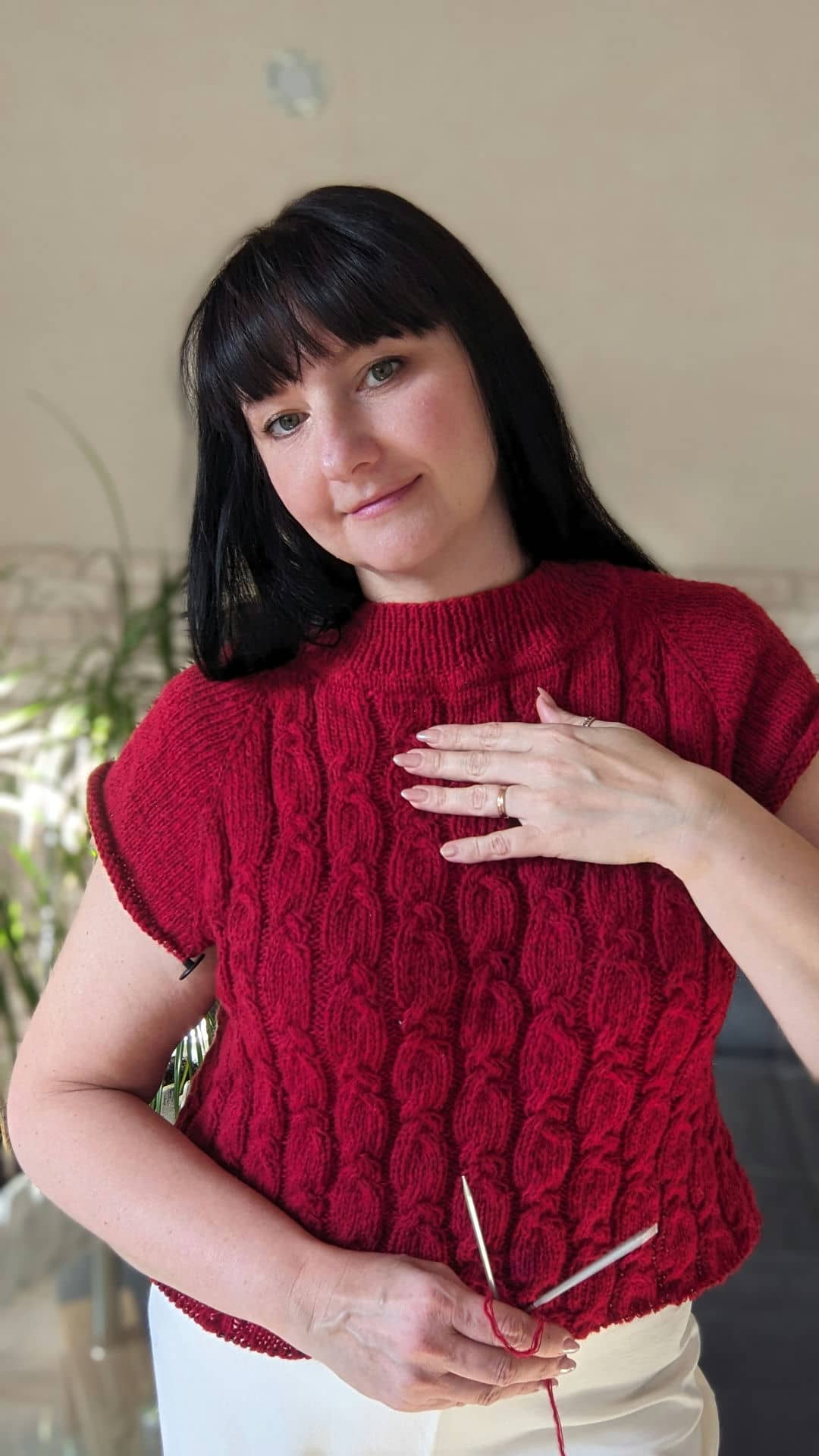
After working 24 cm of yoke (including the collar height), the stitch counts at this stage are:
- back – 94 stitches,
- front – 98 stitches,
- two sleeves – 61 stitches each,
- four raglan lines – 2 stitches each.
I slip the sleeve stitches onto waste yarn. The raglan line stitches are divided equally between the pieces.
We switch to working the main fabric in the round. Join the back, front and raglan line stitches, add stitches for the two underarms (14 stitches each), keeping the pattern repeat in mind.
The total number of stitches of the main part is:
96 (back + RL sts) + 14 (underarm) + 100 (front + RL sts) + 14 (underarm) = 224 sts.
We knit the main part to the length needed. Switch to 3.5 mm needles. At the bottom of the sweater work 16 rounds of 1×1 rib.
Then 2 rounds of tubular rib:
Round 1: knit the knit stitch, slip the purl stitch without working it, with the working yarn in front of the stitch.
Round 2: slip the knit stitch without working it, with the working yarn behind the stitch, purl the purl stitch.
Bind off with a tapestry needle.
The length of the main part is 64 cm.
Total yarn used at this stage: 260 g:
- fluffy merino (600 m/100 g, one strand) – 150 g,
- fine merino (1500 m/100 g, two strands) – 110 g.
Next we move on to the sleeves, worked with 4 mm needles.
On each waste yarn holder there are 61 + 2 RL sts = 63 stitches for each sleeve.
Along the edge of the underarm, pick up the number of stitches needed for the sleeve width you want. On the needles: 63 + 15 = 78 stitches.

We knit the sleeves to the length needed. Before the cuff, switch to 3.5 mm needles. Work 16 rounds of 1×1 rib and 2 rounds of tubular rib. Bind off with a tapestry needle.

The length of the finished garment is 65 cm. Size 48–50 (L-XL).
Total yarn used for the jumper: 360 g. Yarn used by type:
- fluffy merino – 200 g,
- fine merino – 160 g.
Happy knitting! Smooth, easy stitches!
Watch the video below to see how to bind off the rib with a tapestry needle
You may also like
Jacquard Yoke Sweater: Knitting a Round Yoke Top-Down
October 29, 2023
Knitted Jumper “Autumn Bouquet” with Rainbow Jacquard
February 13, 2020