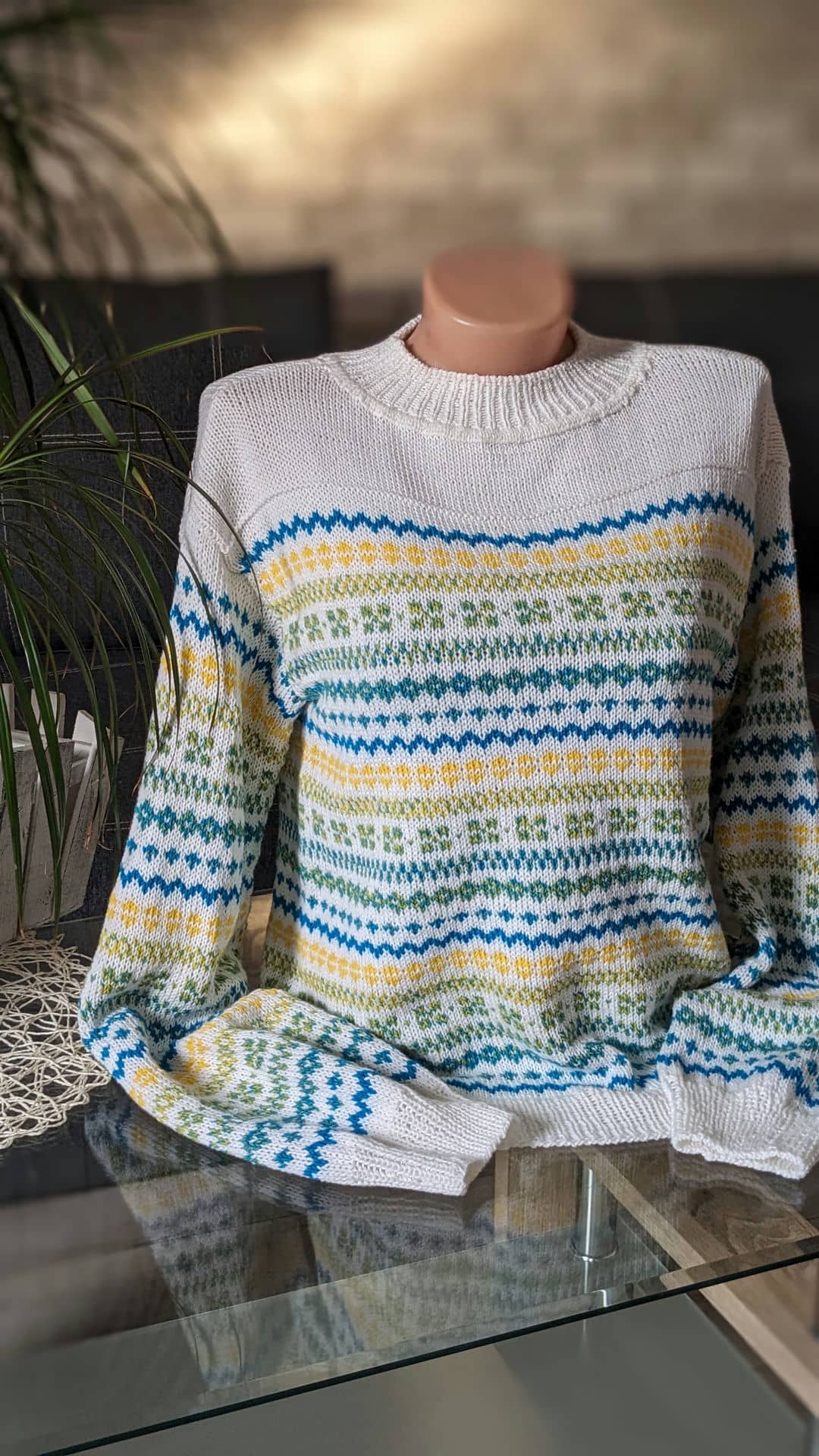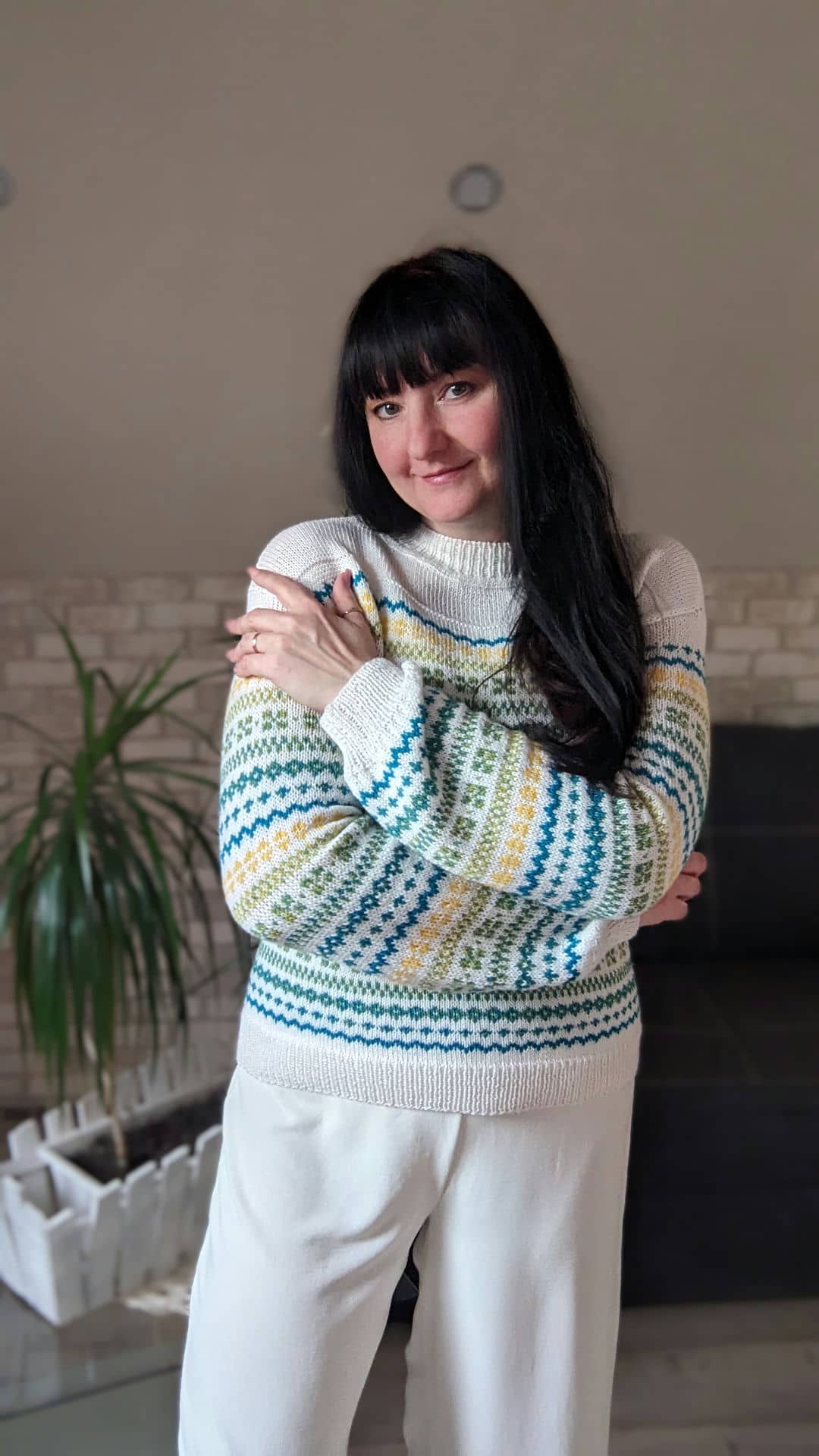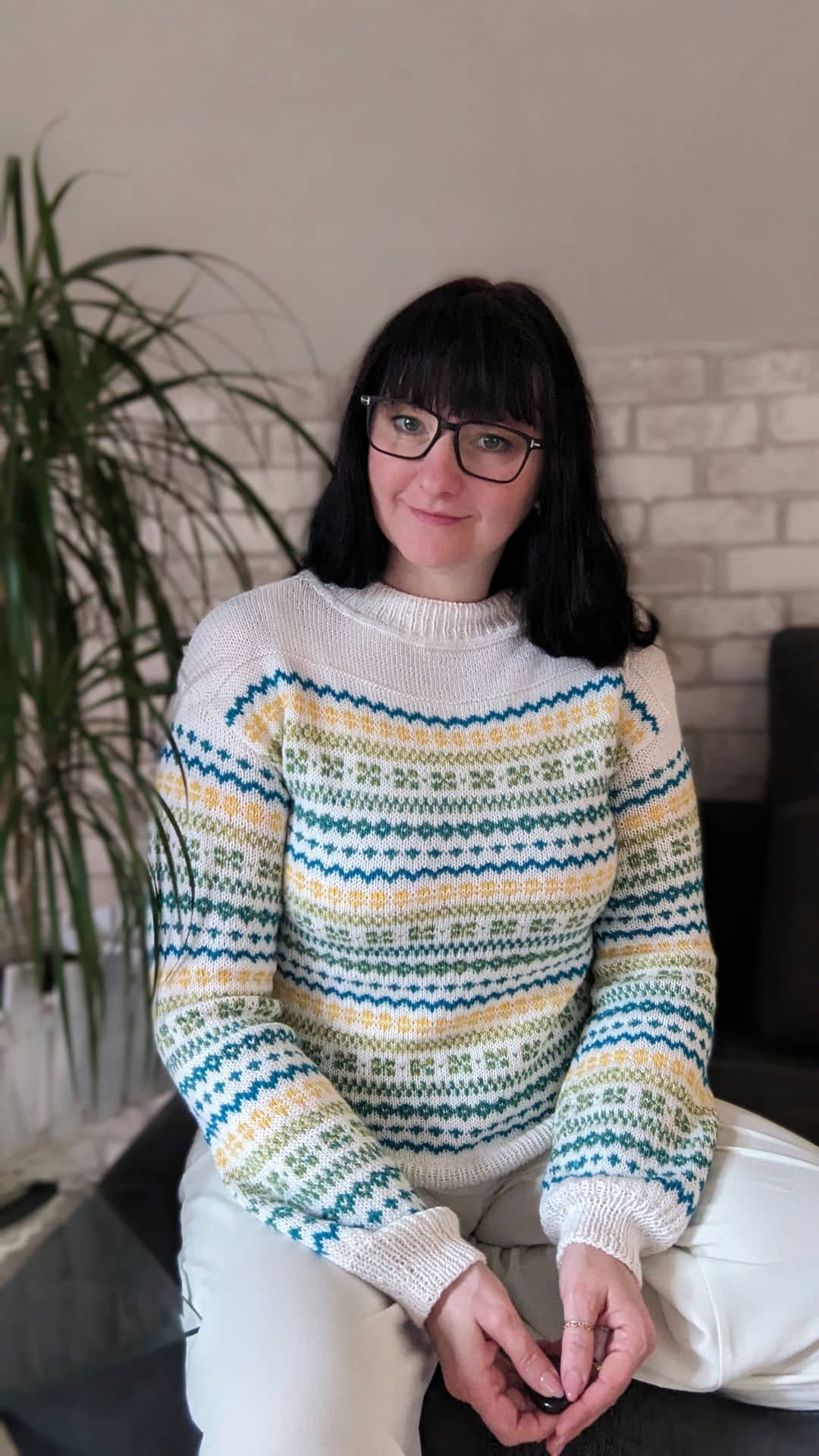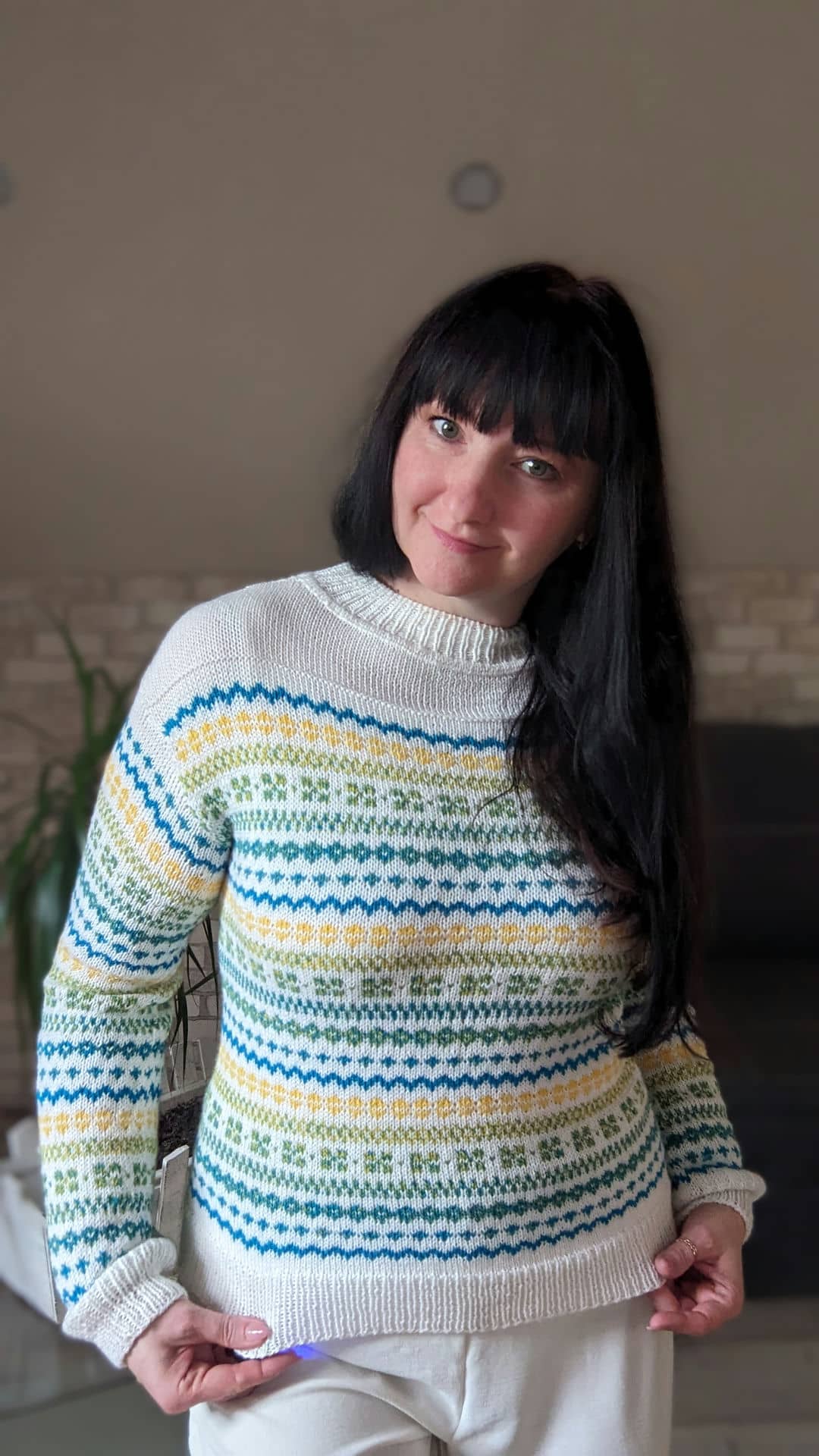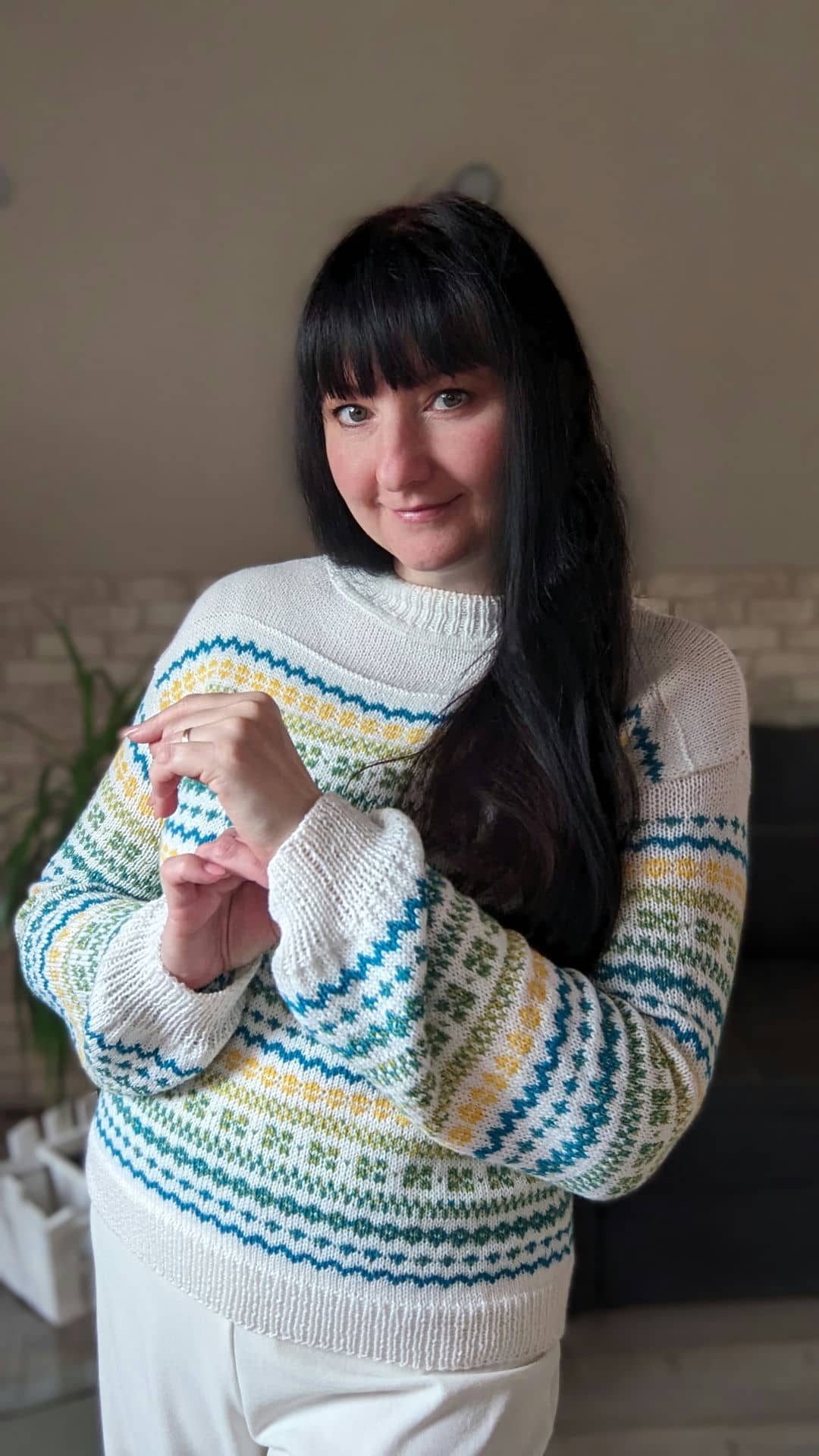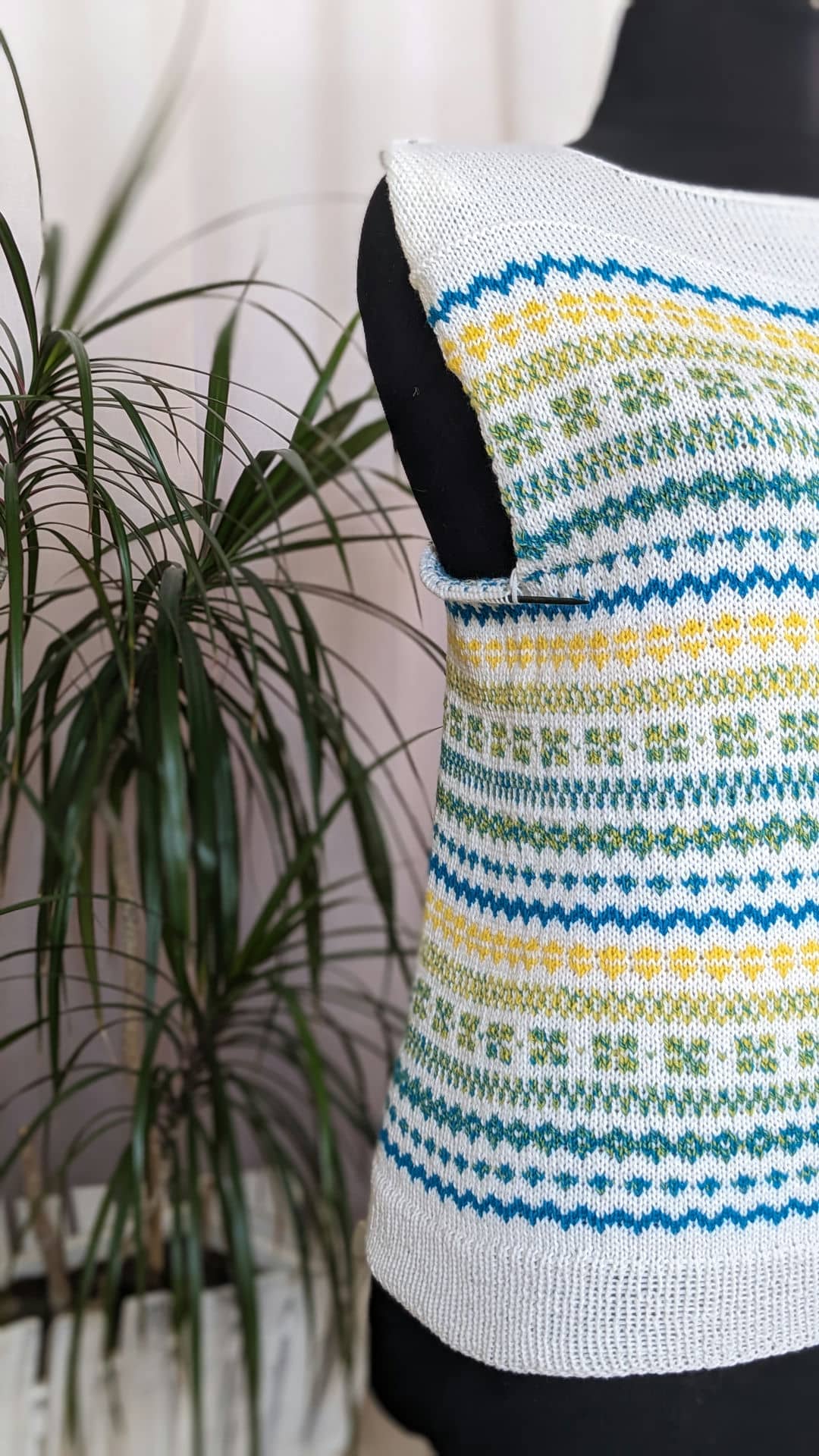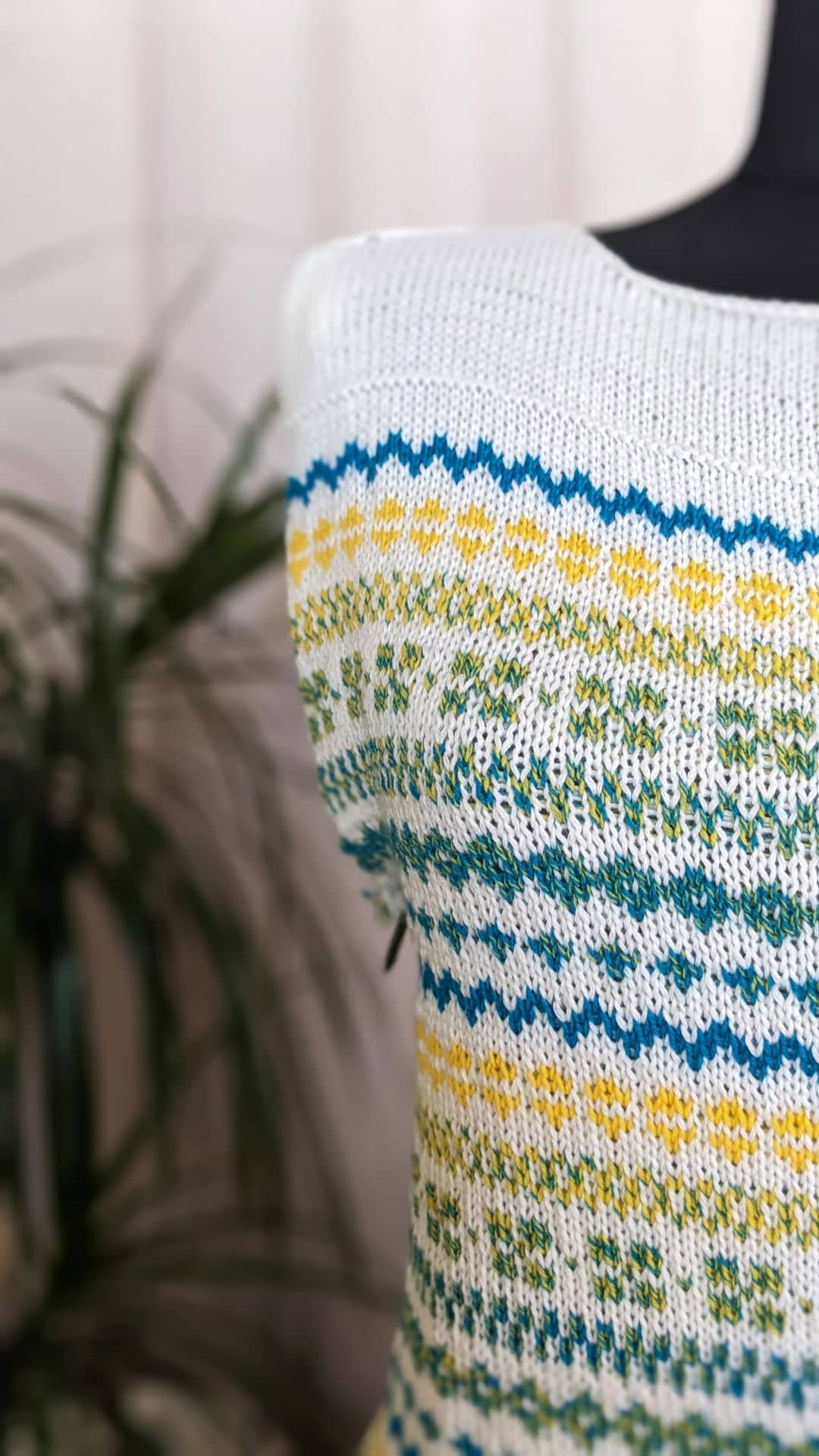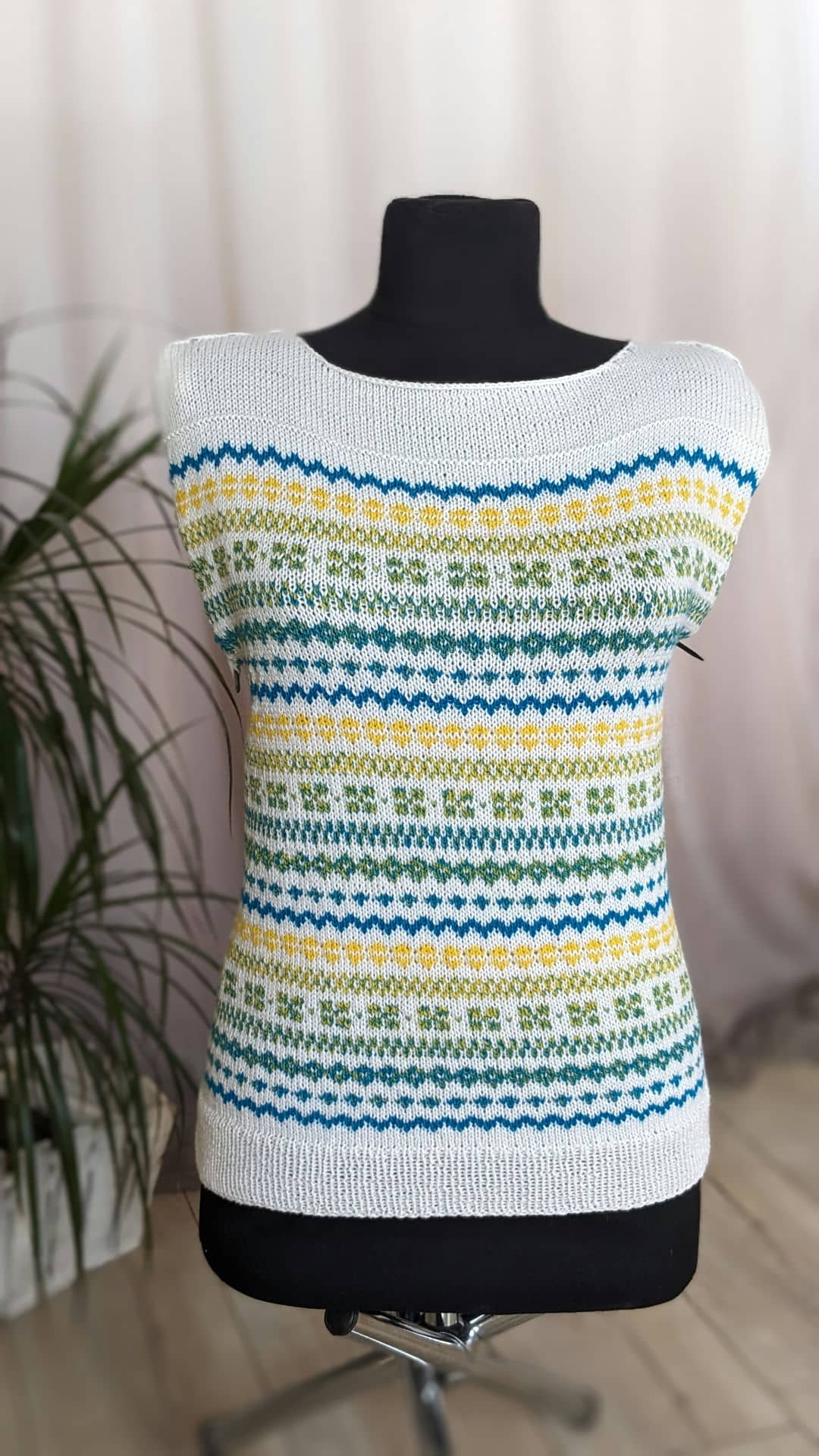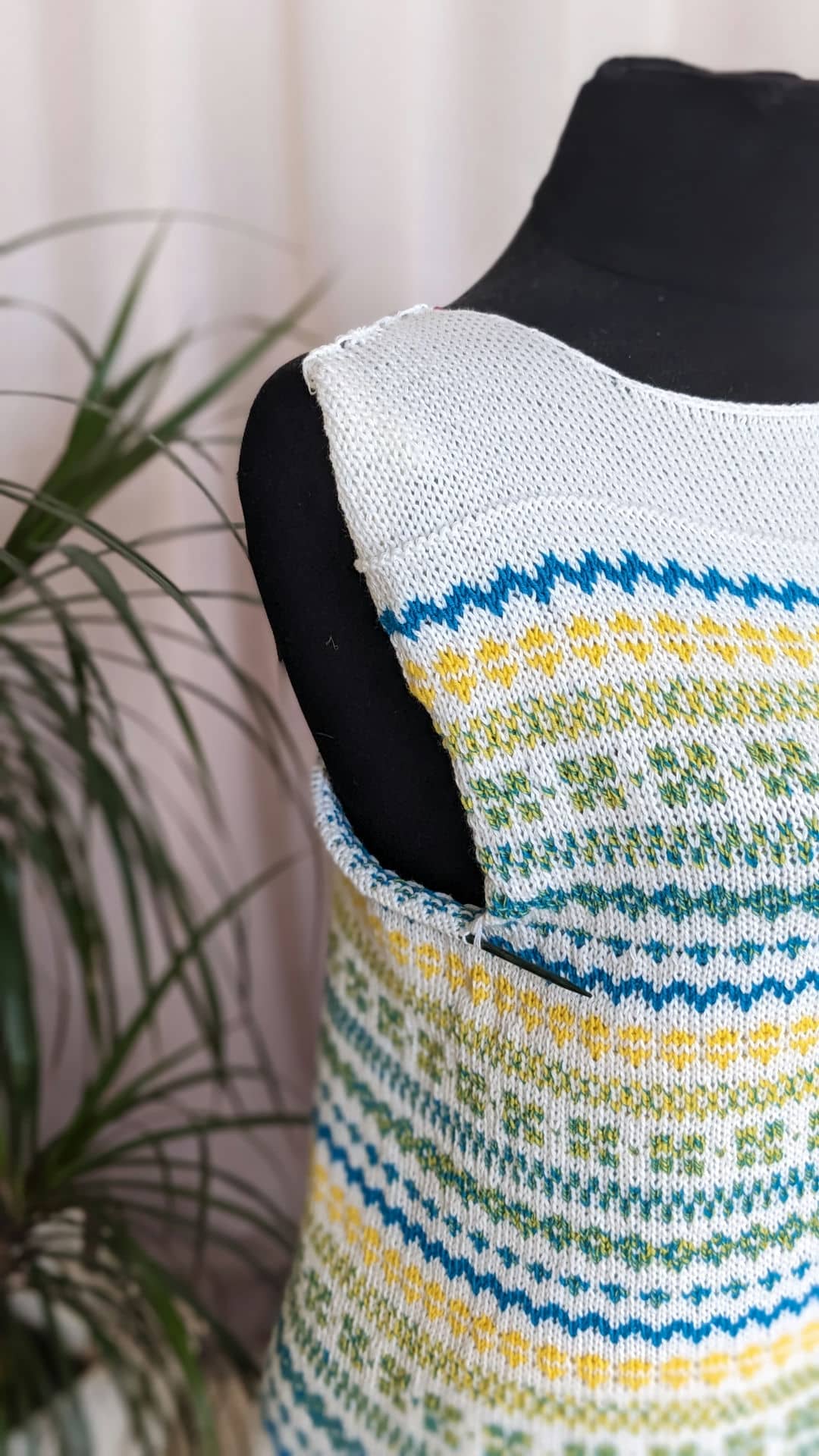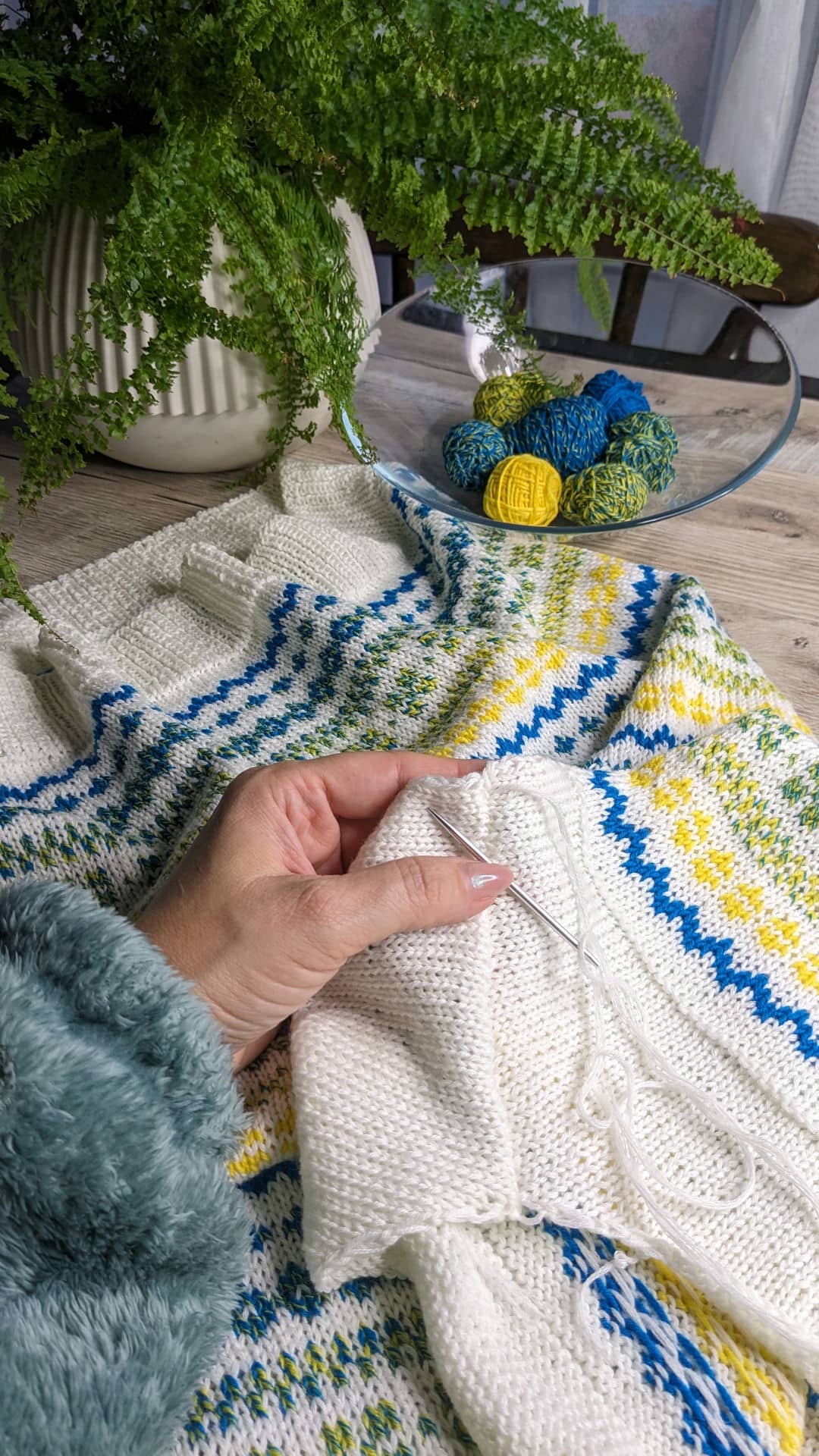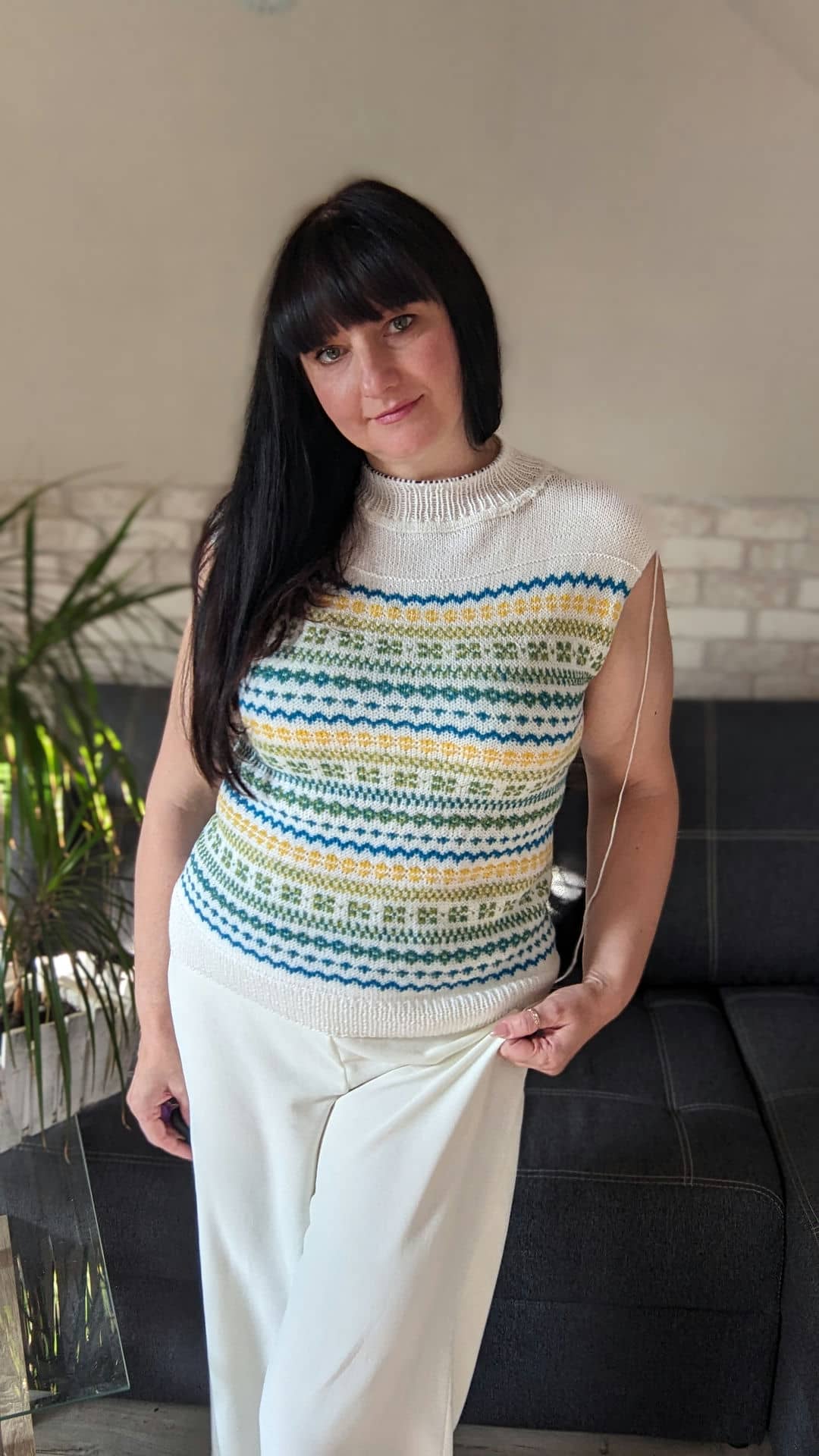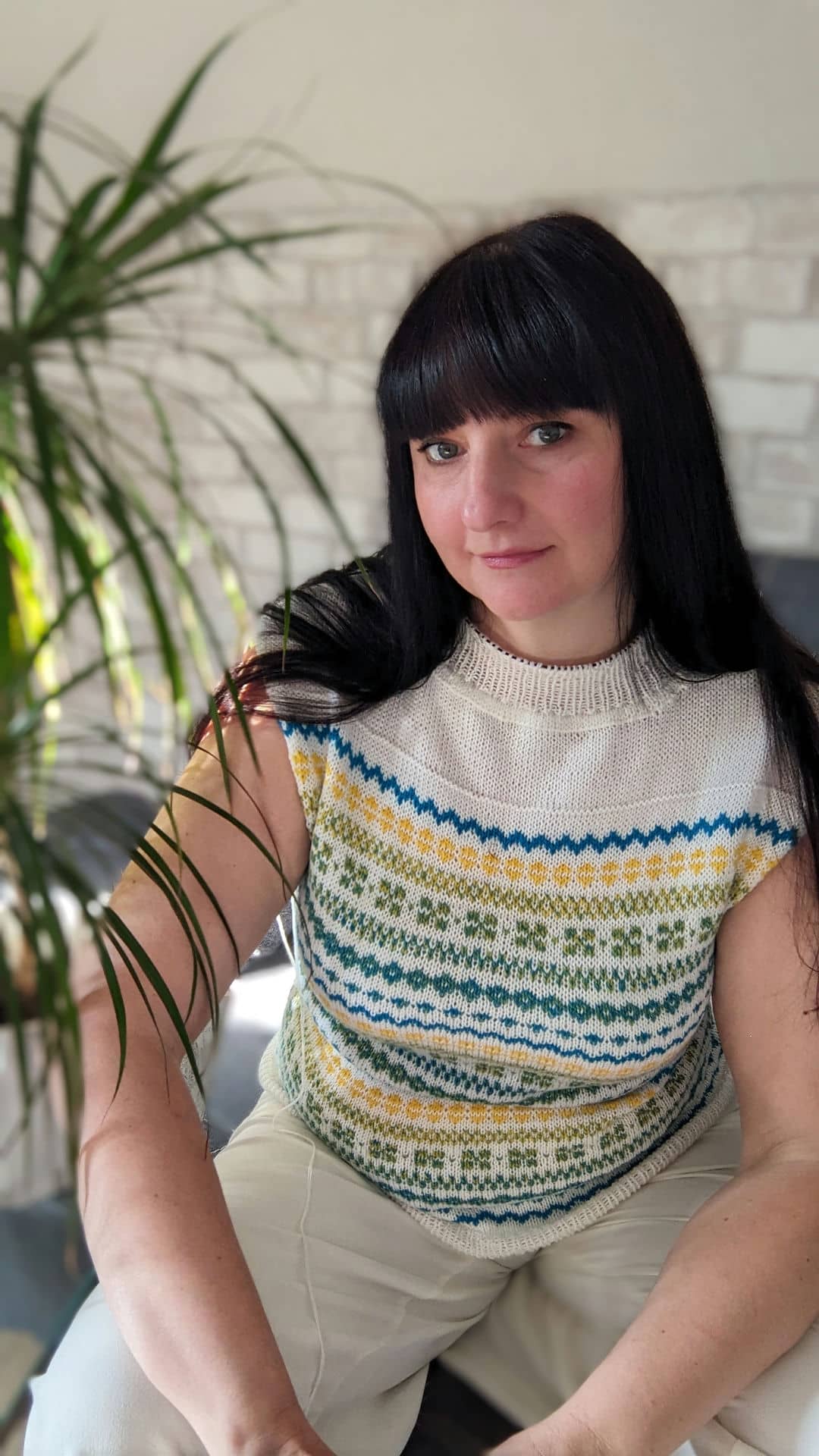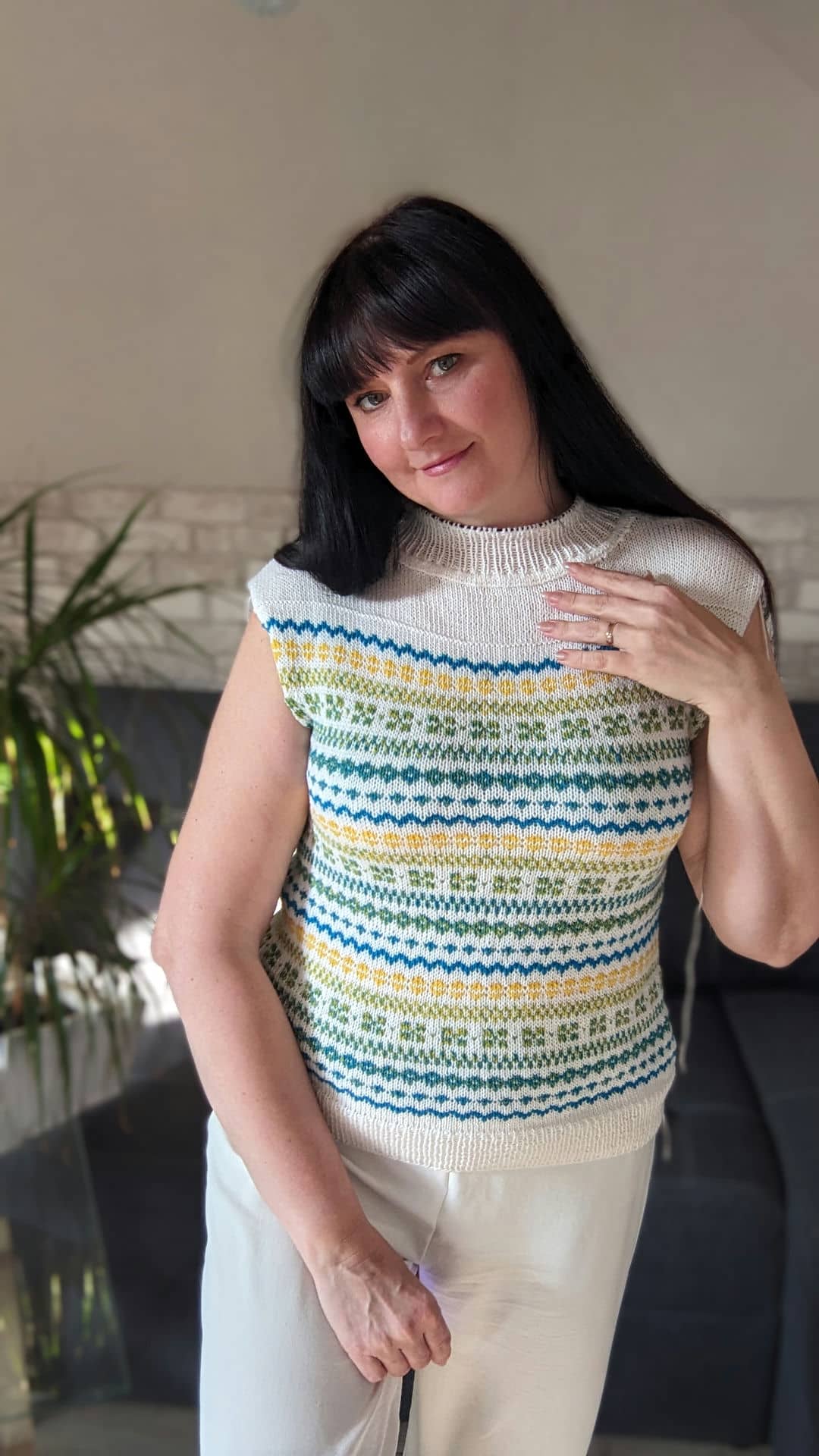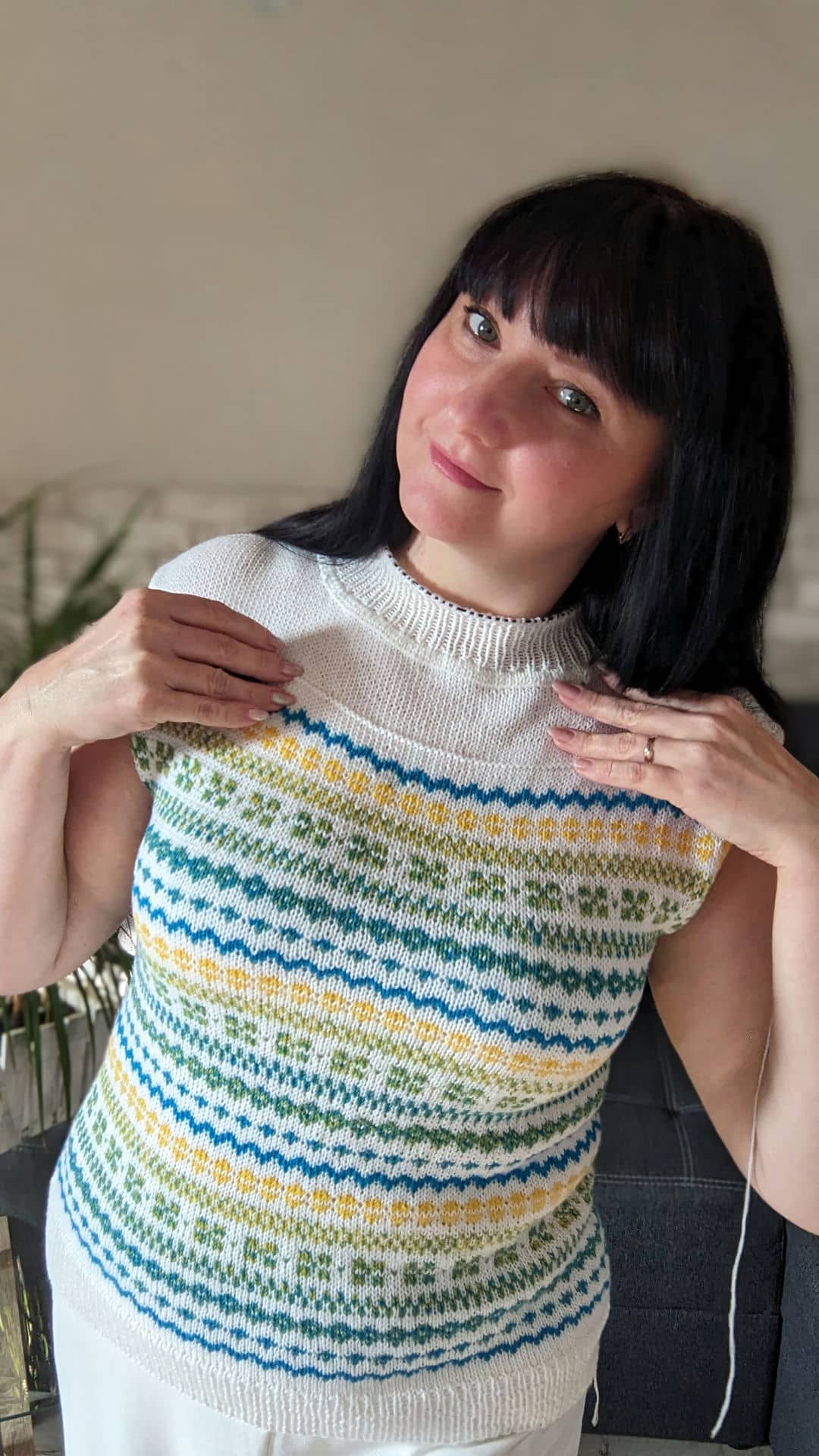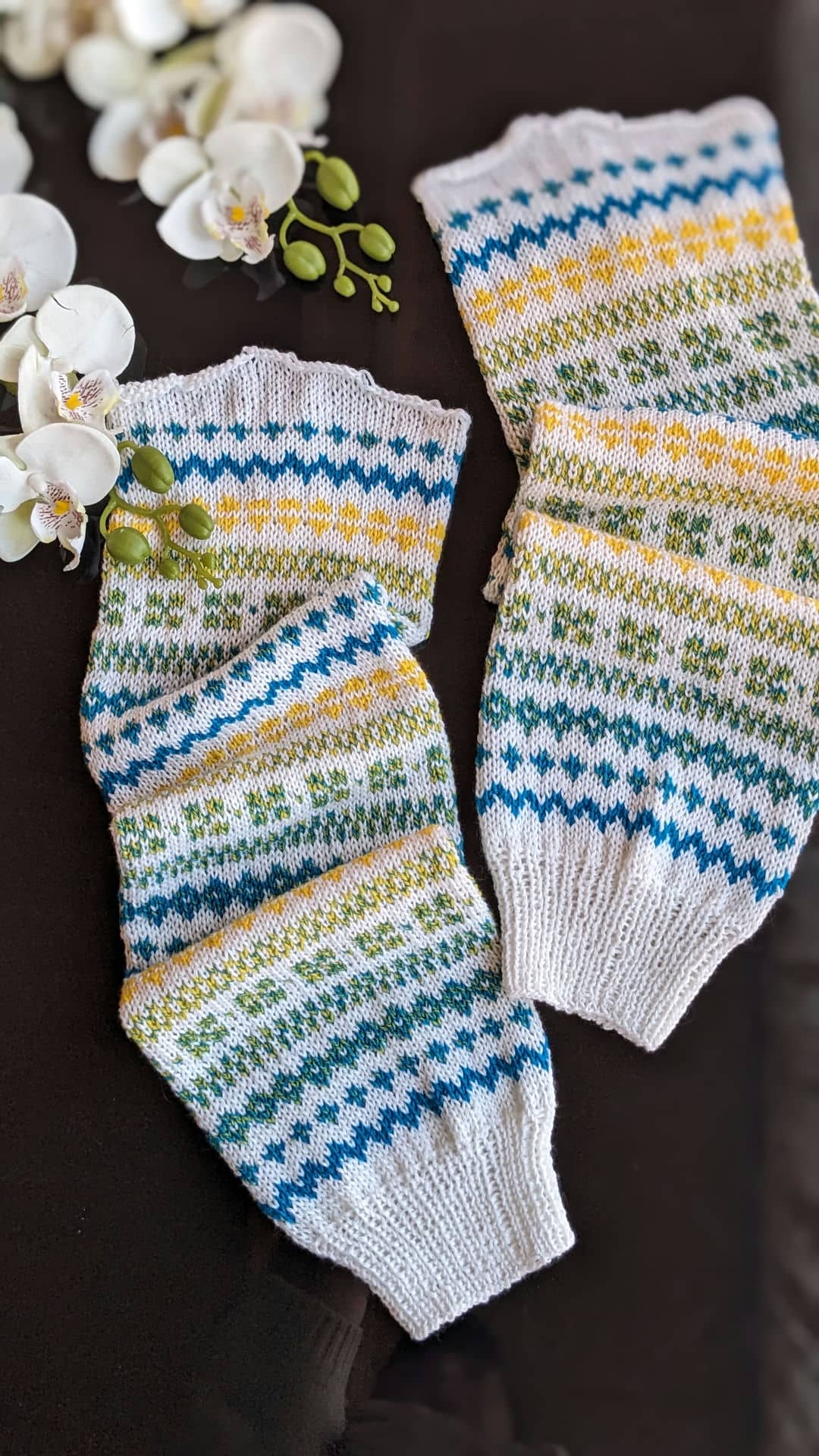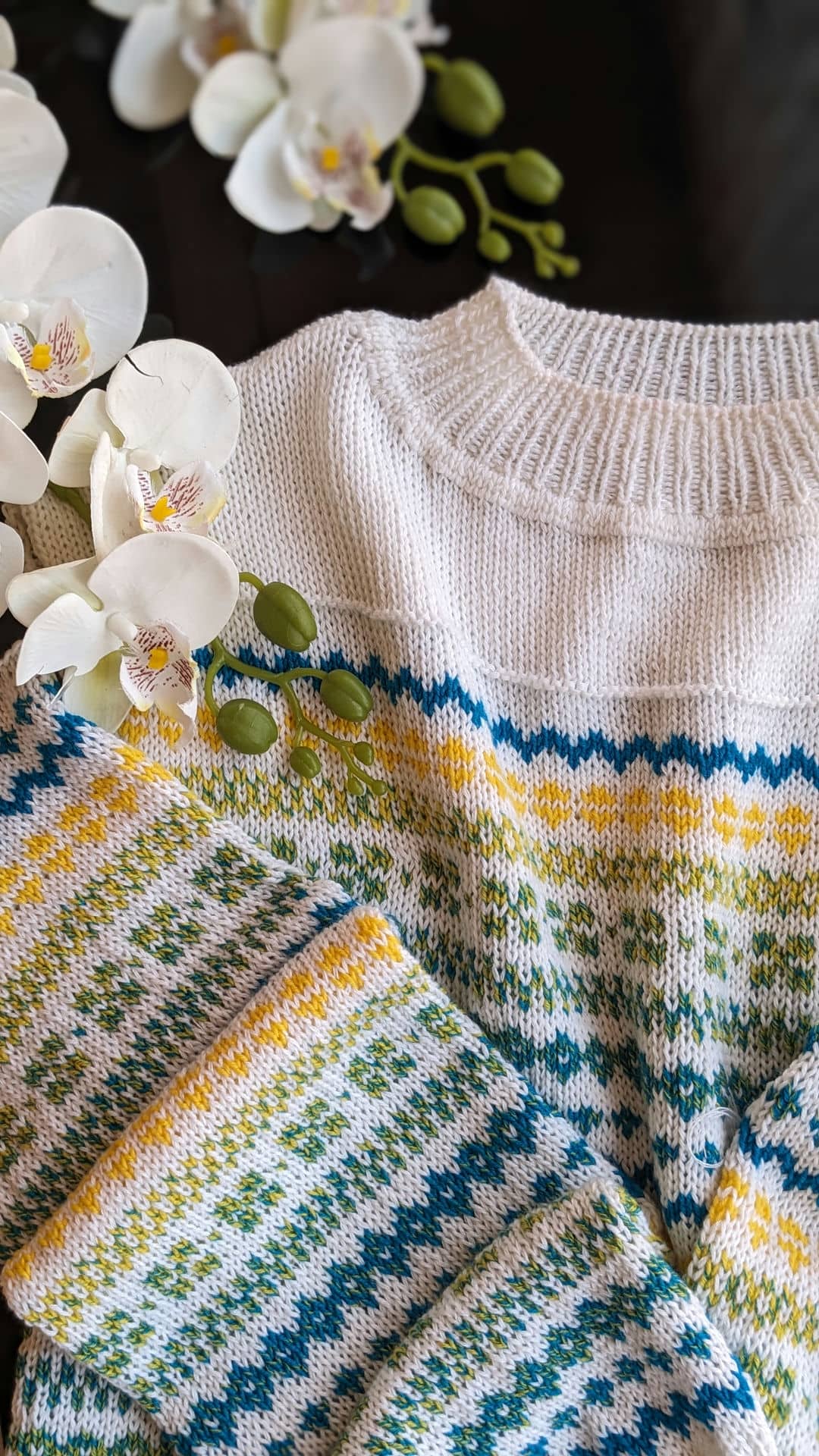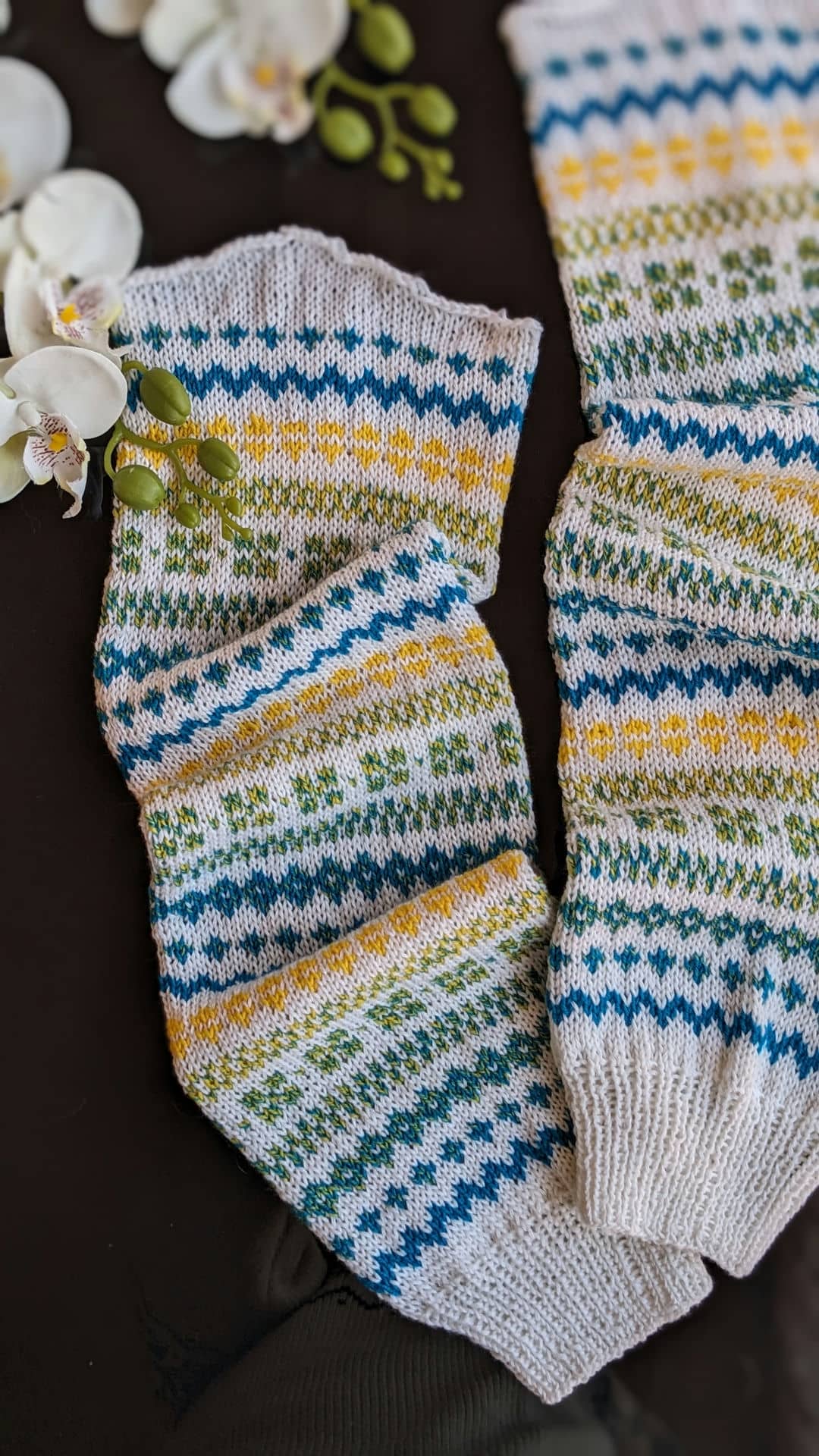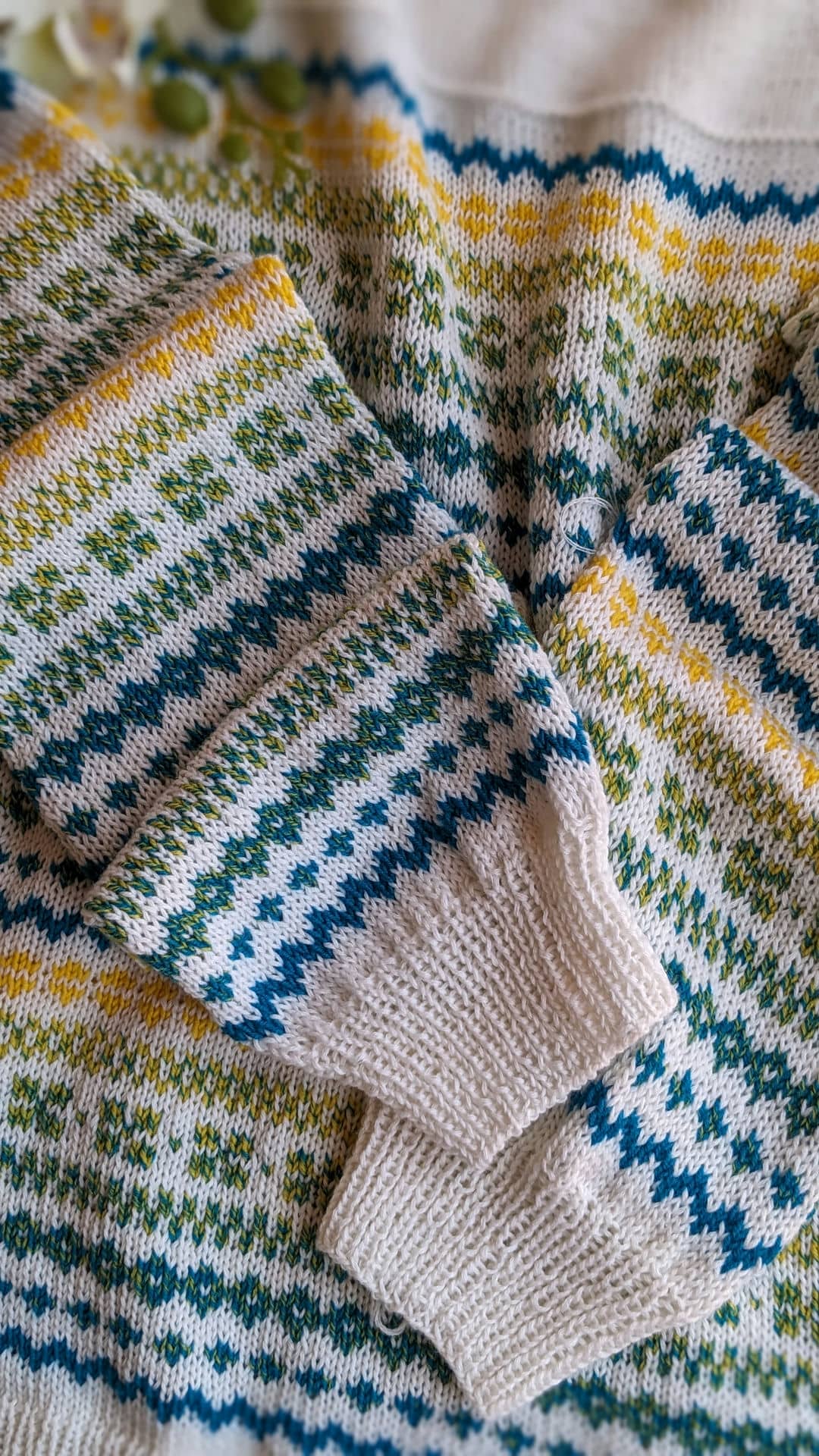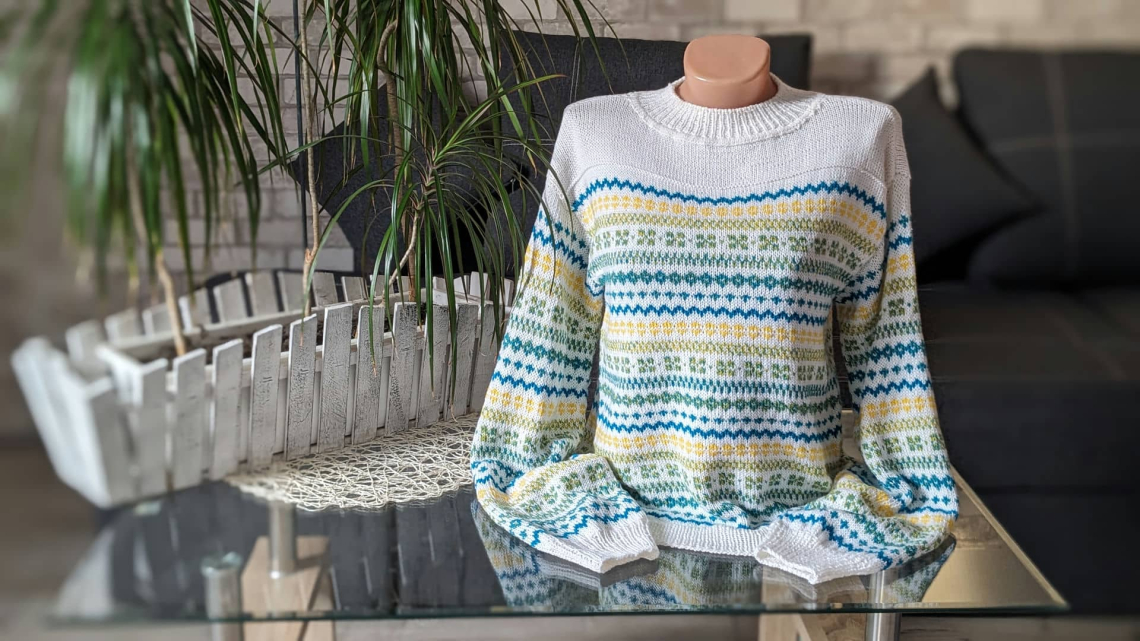
Solaria Jumper: Striped Colorwork Knitting Pattern
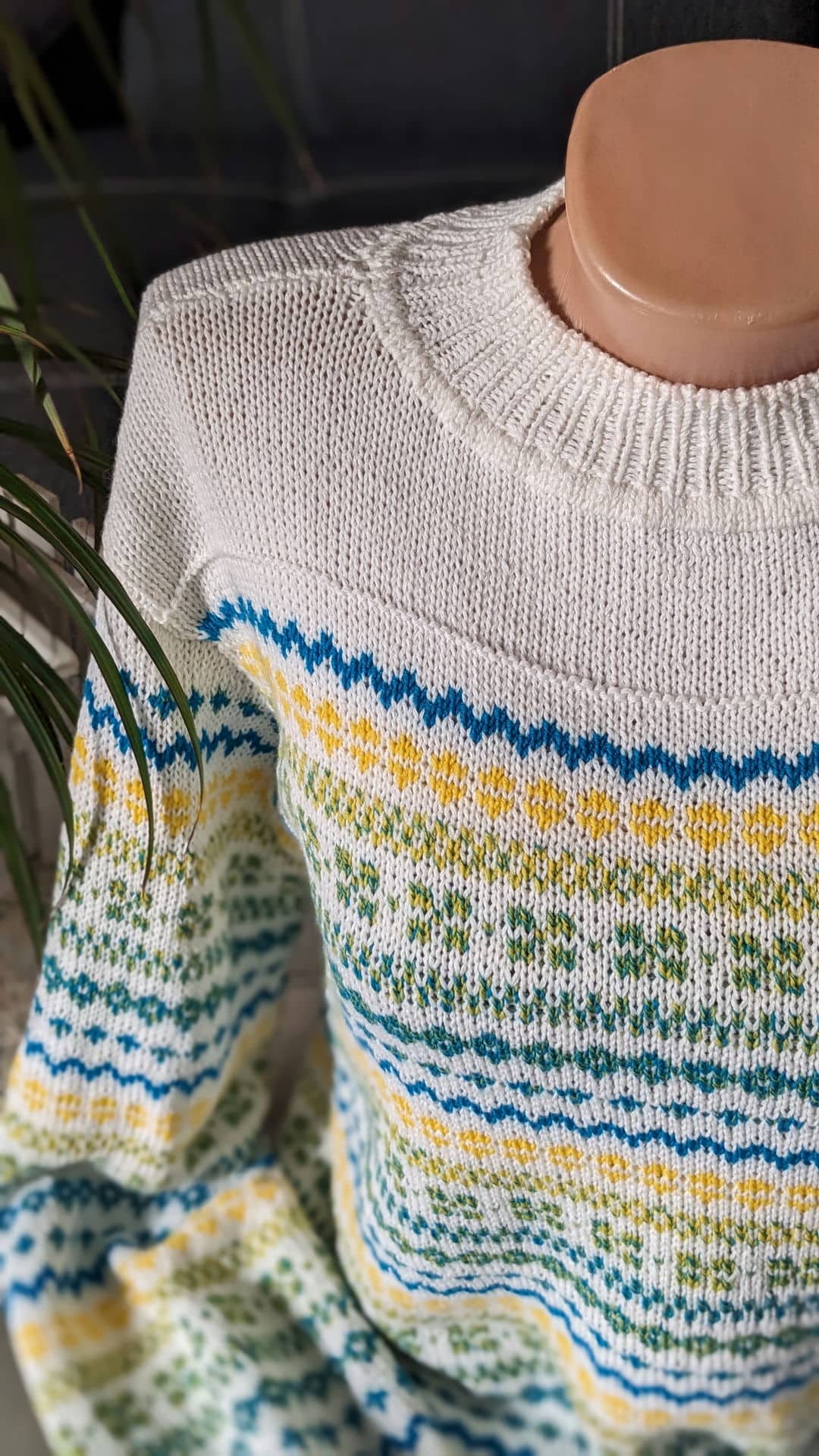
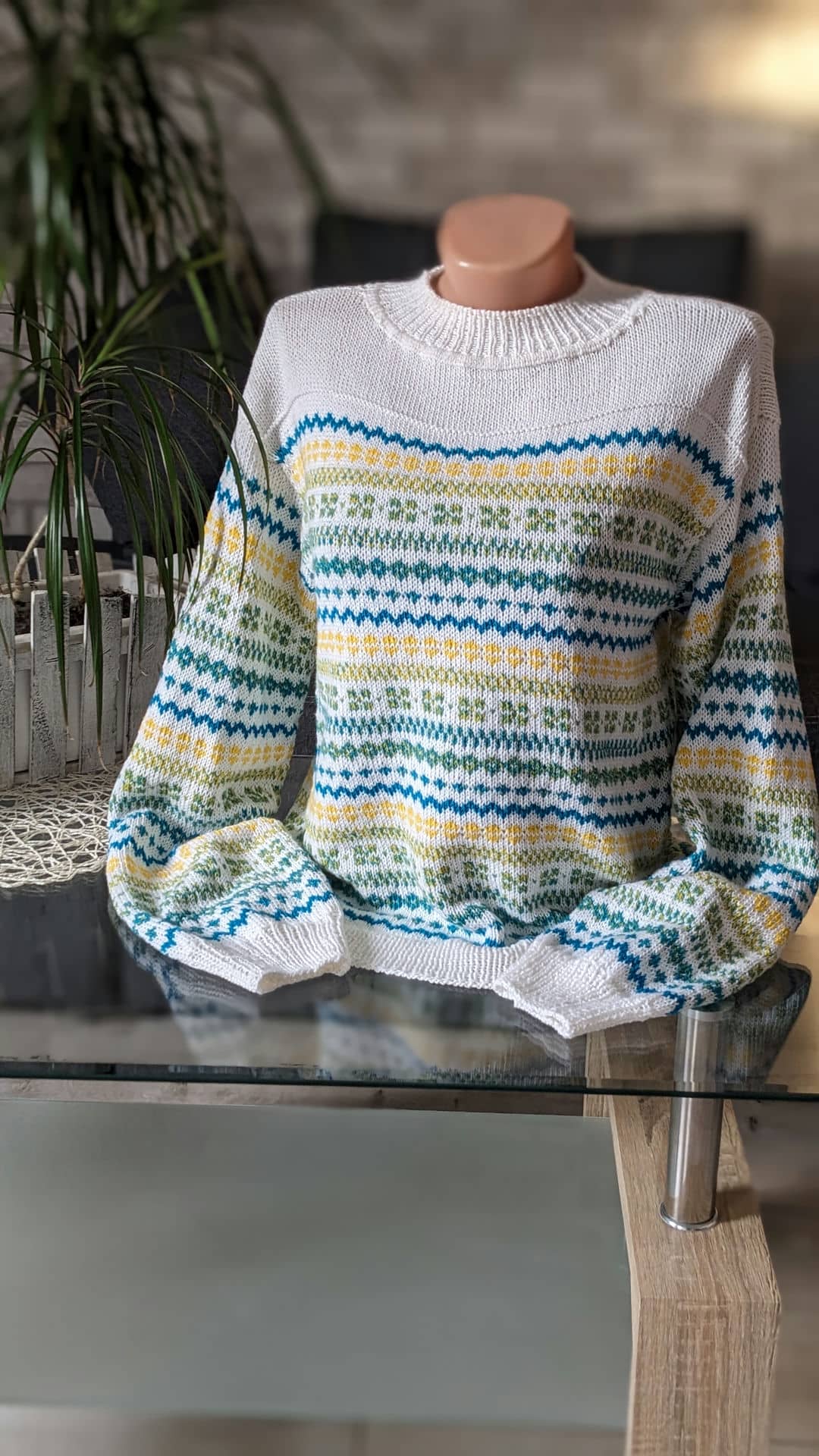
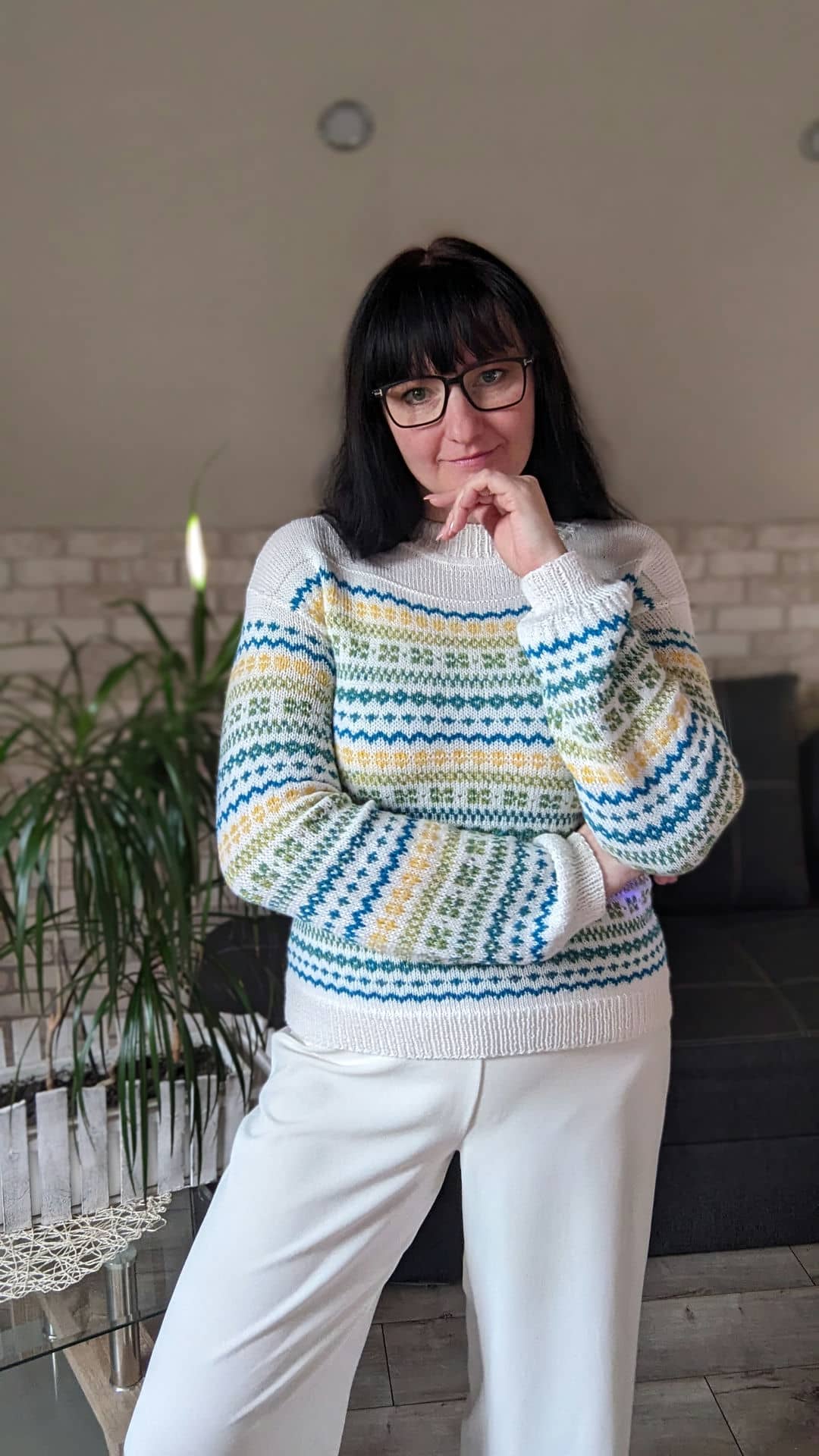
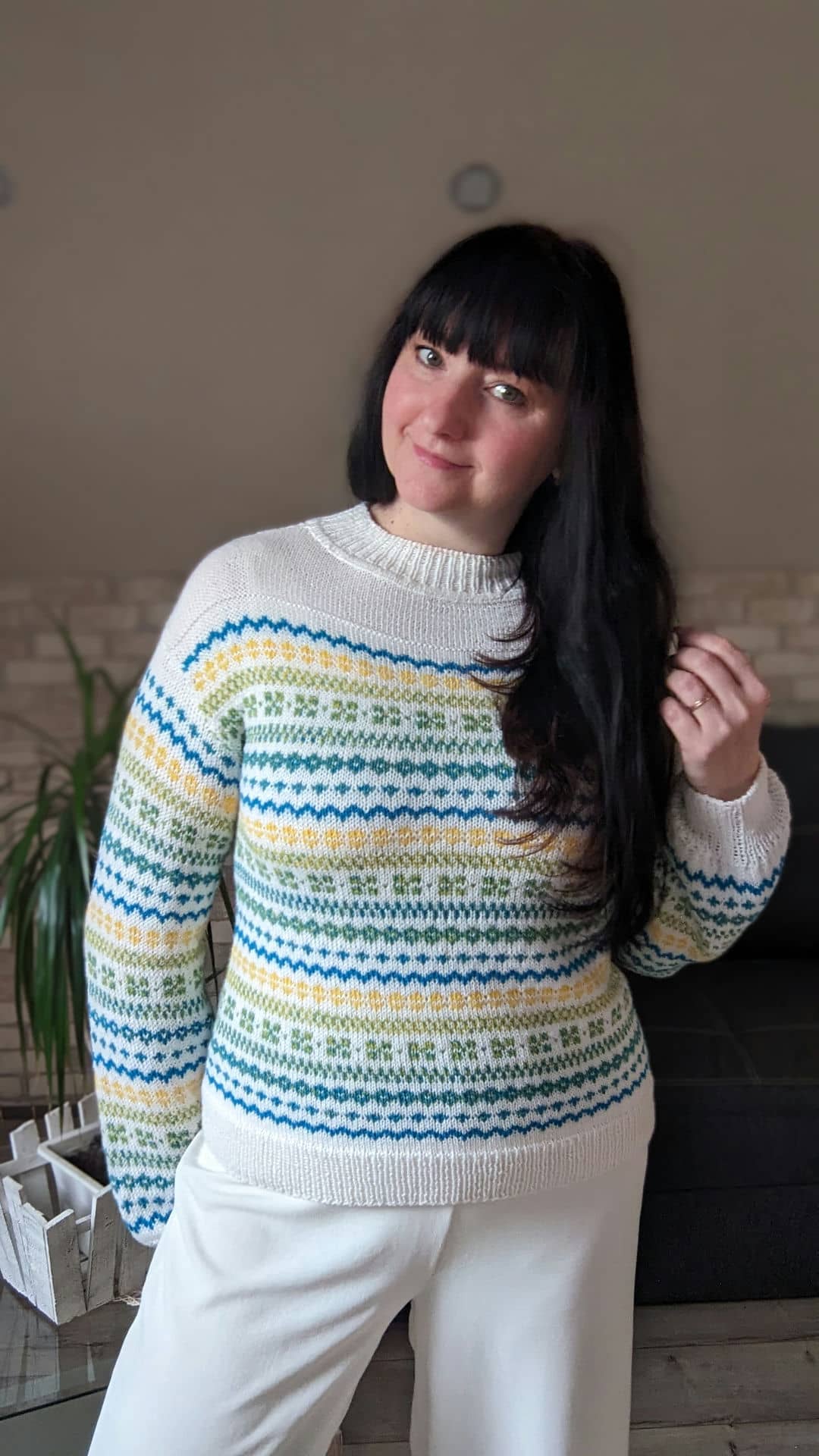
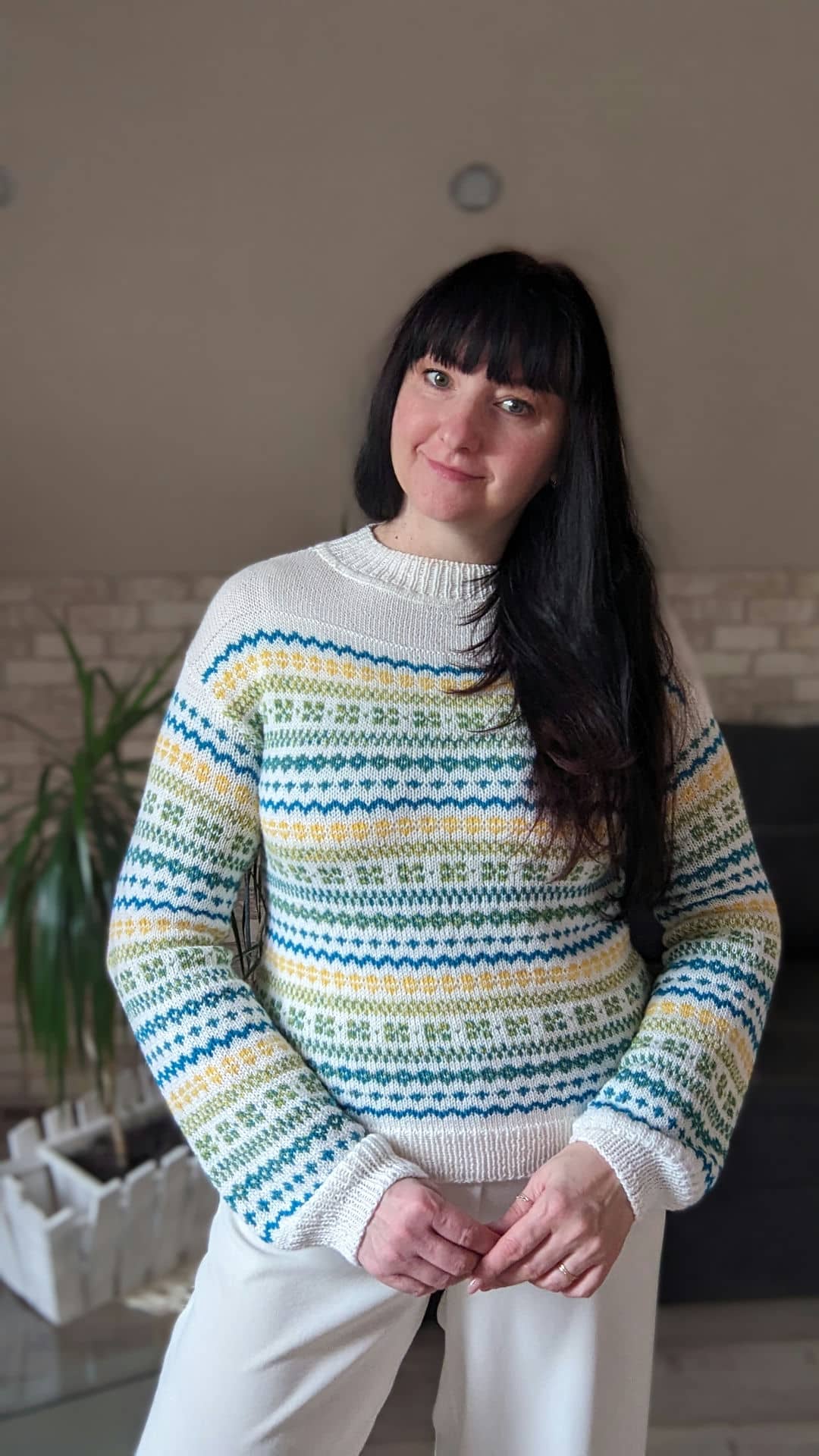
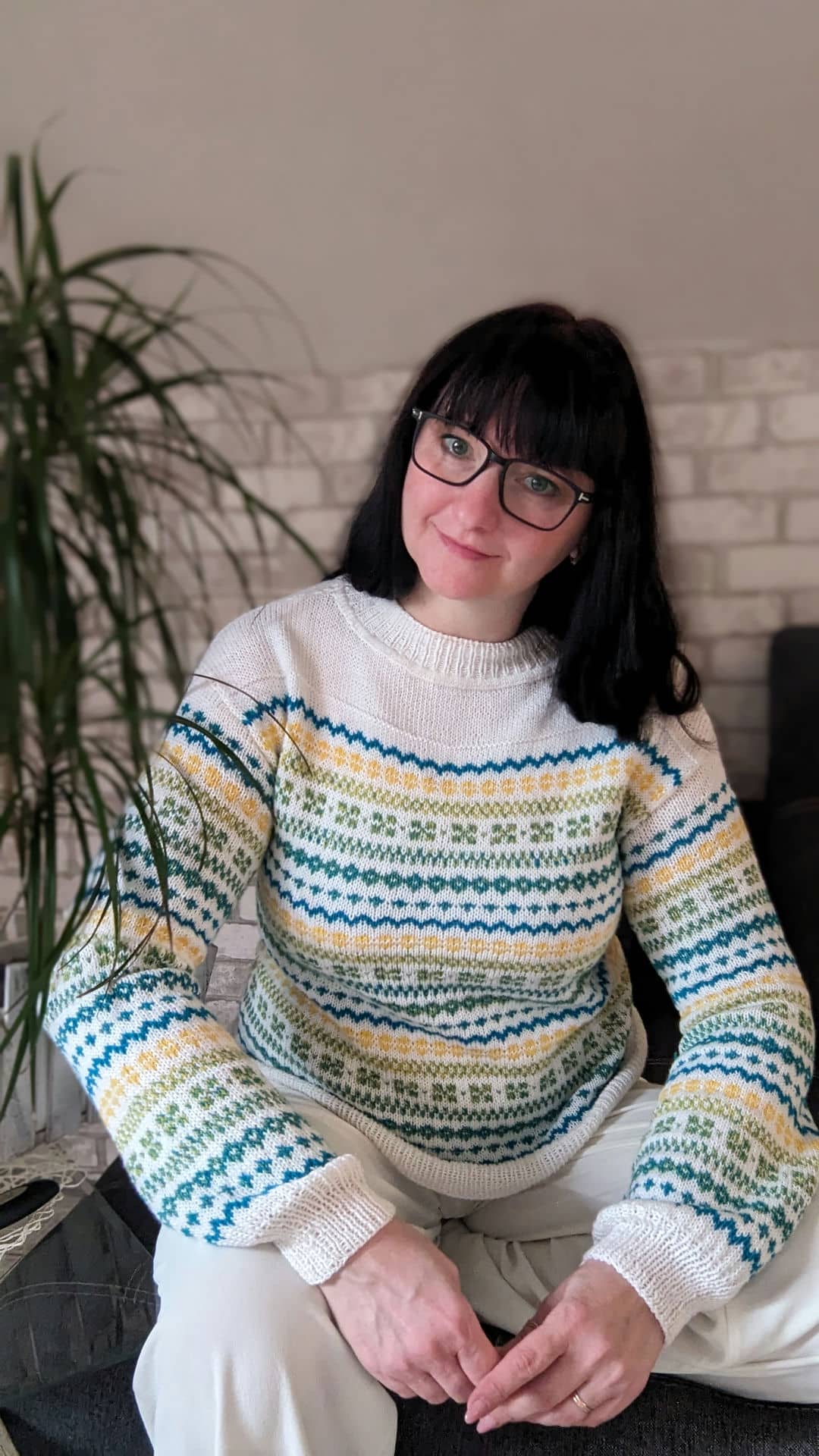
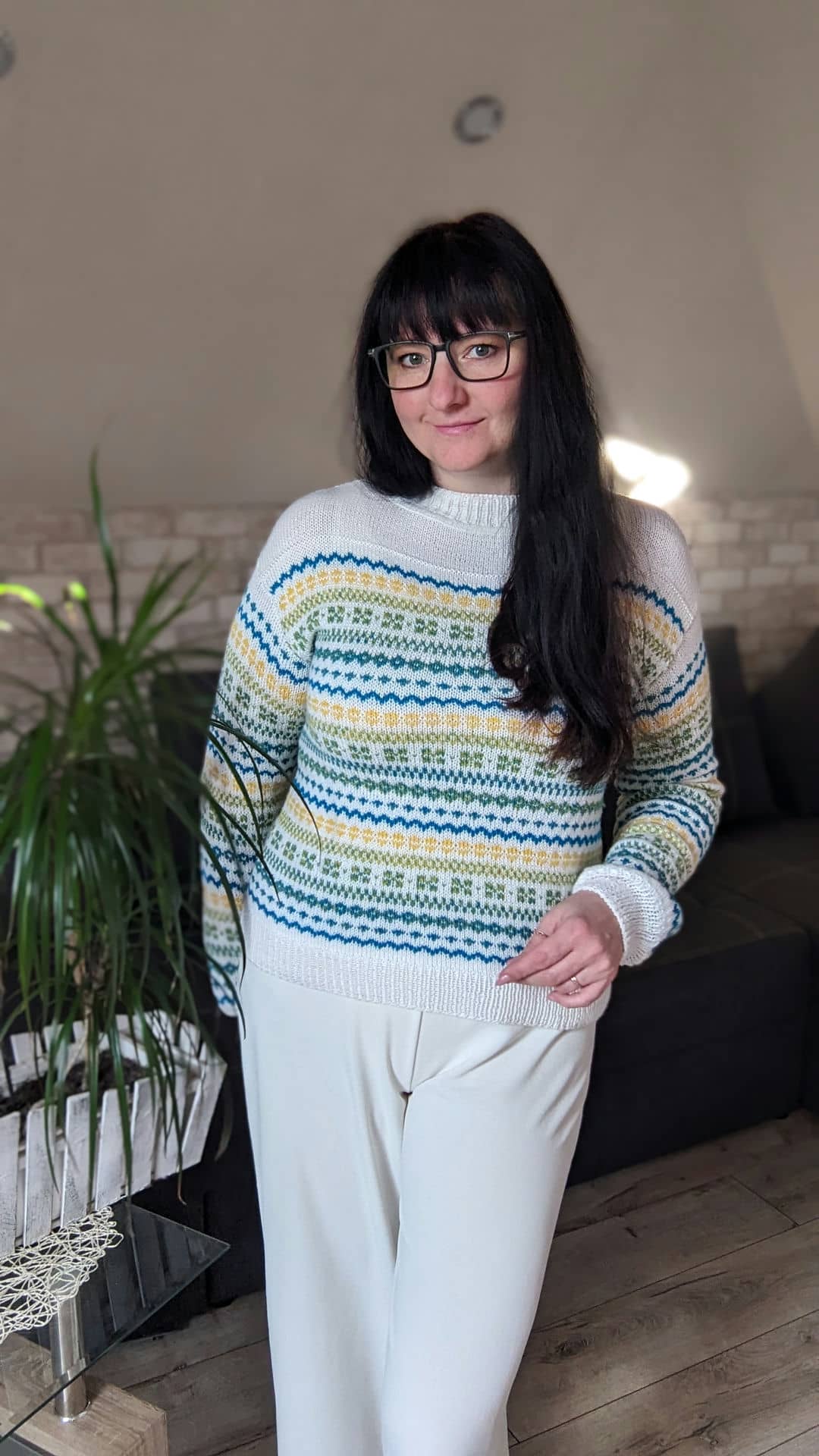
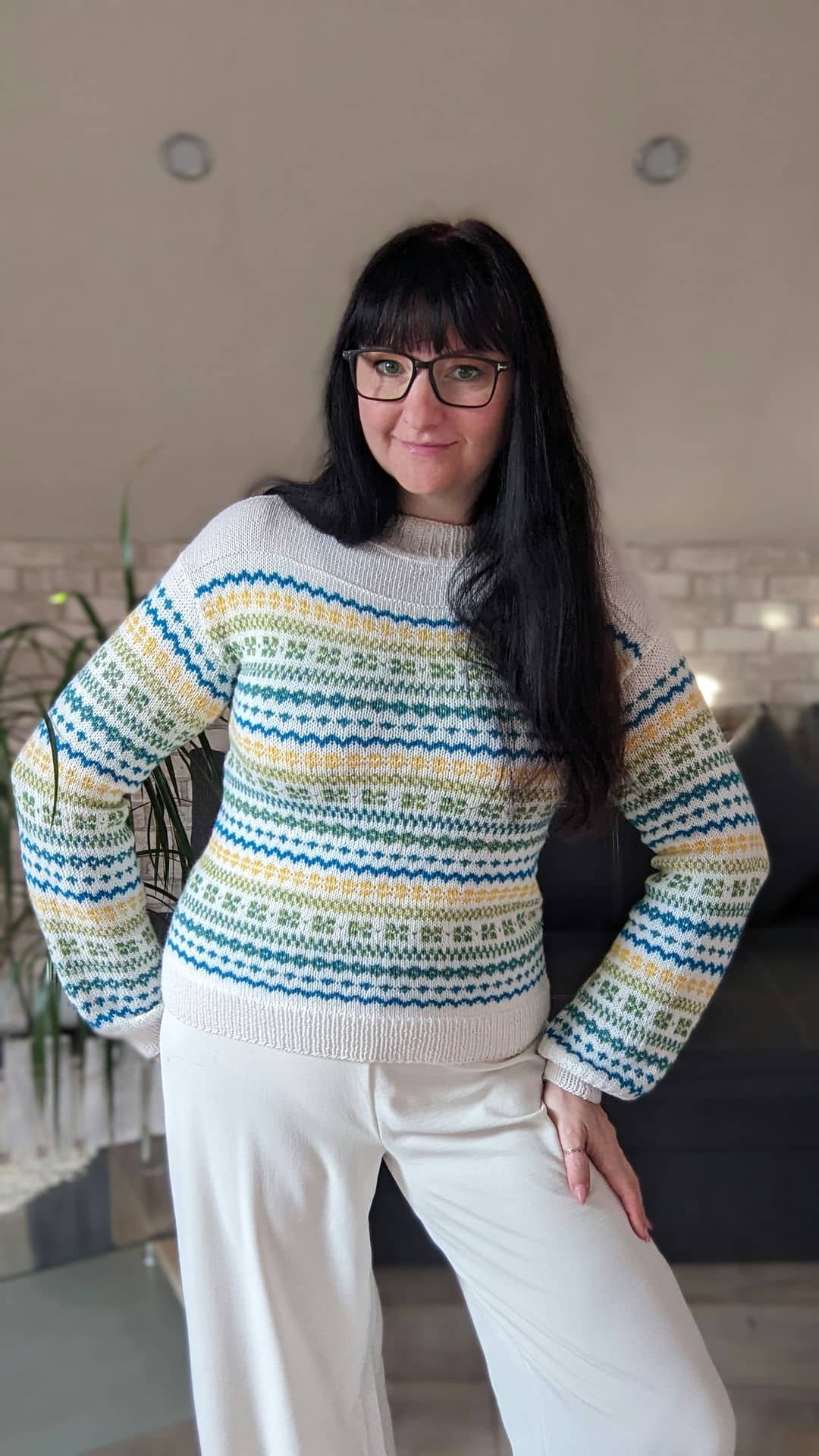
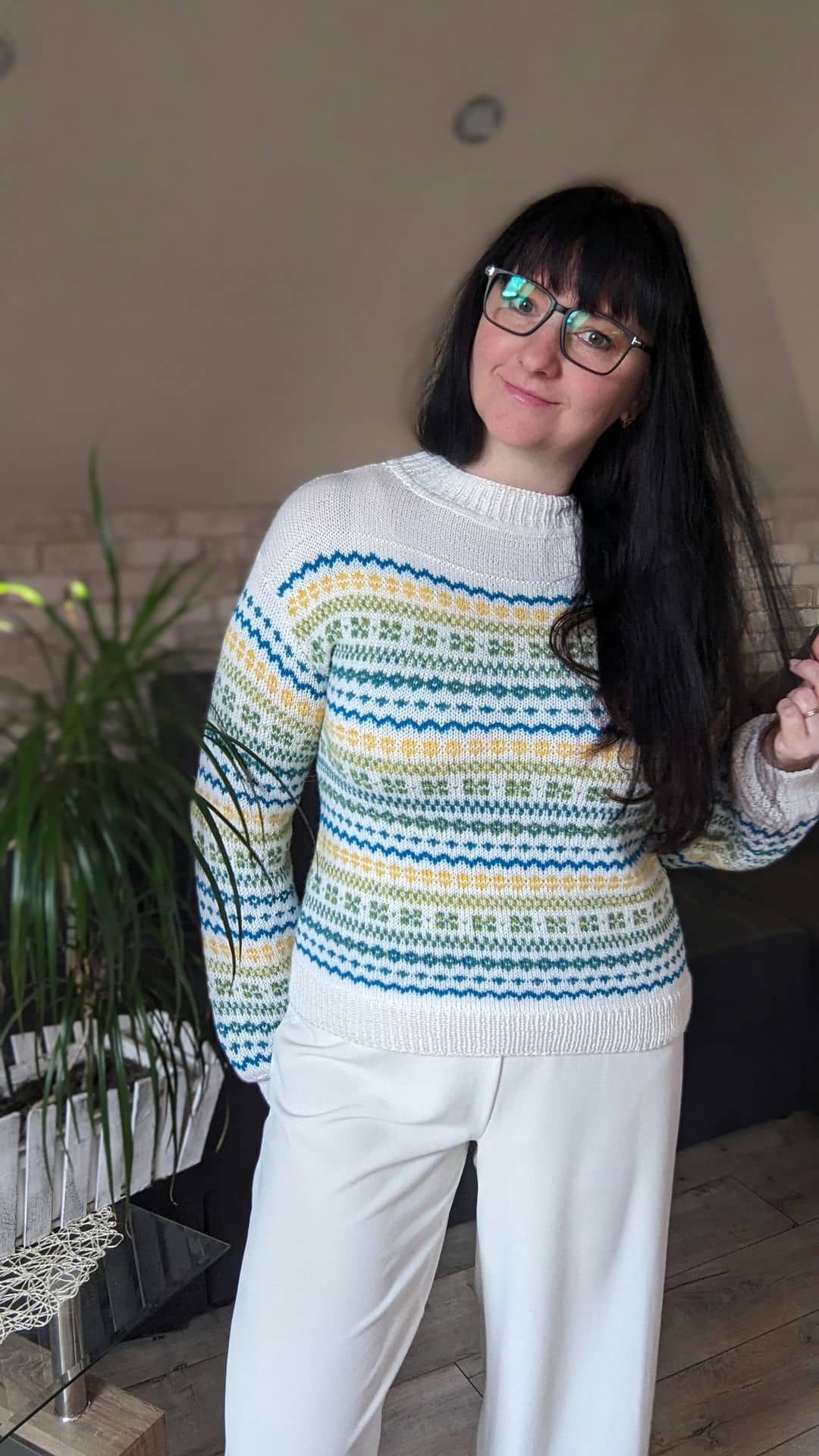
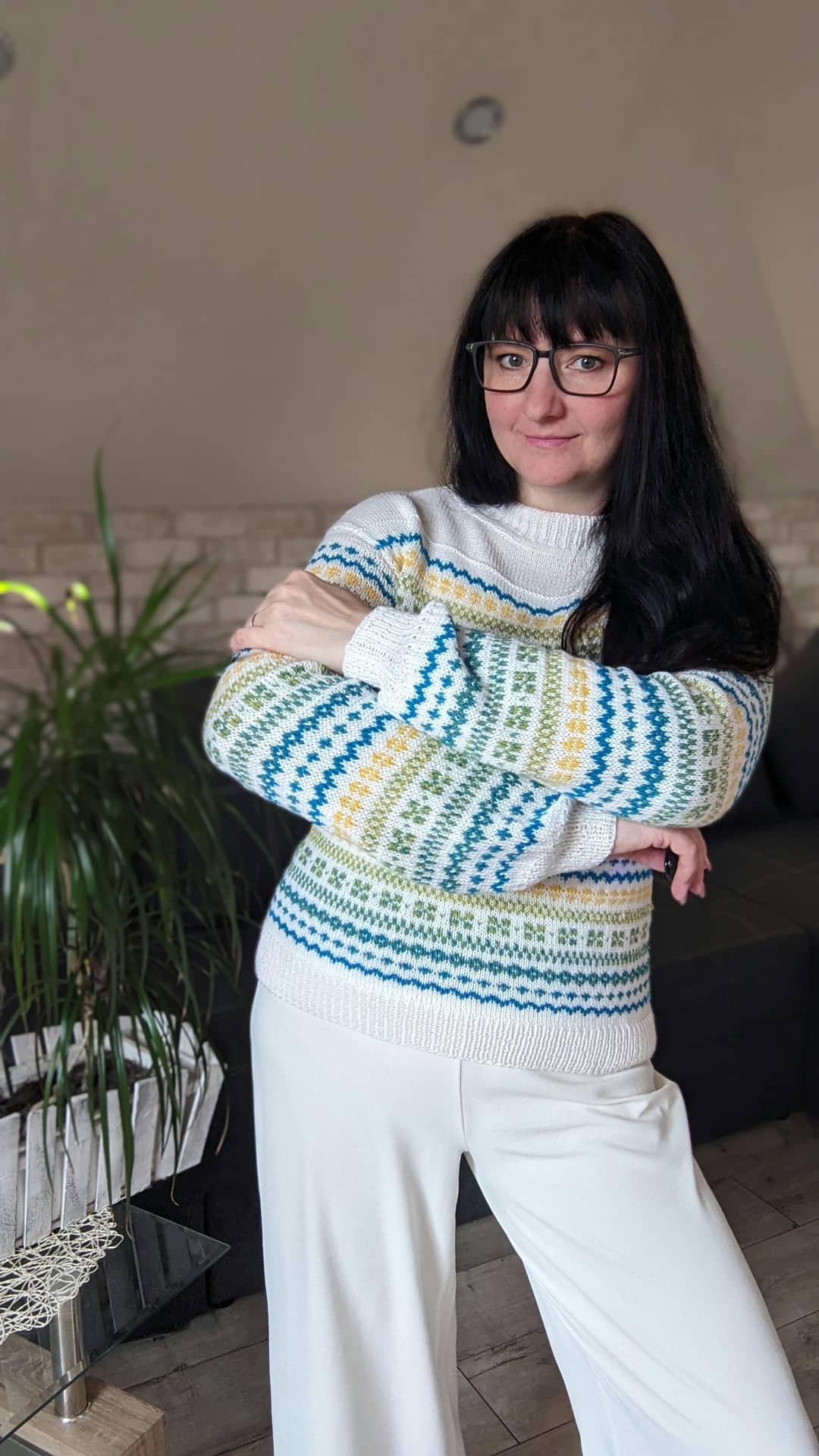
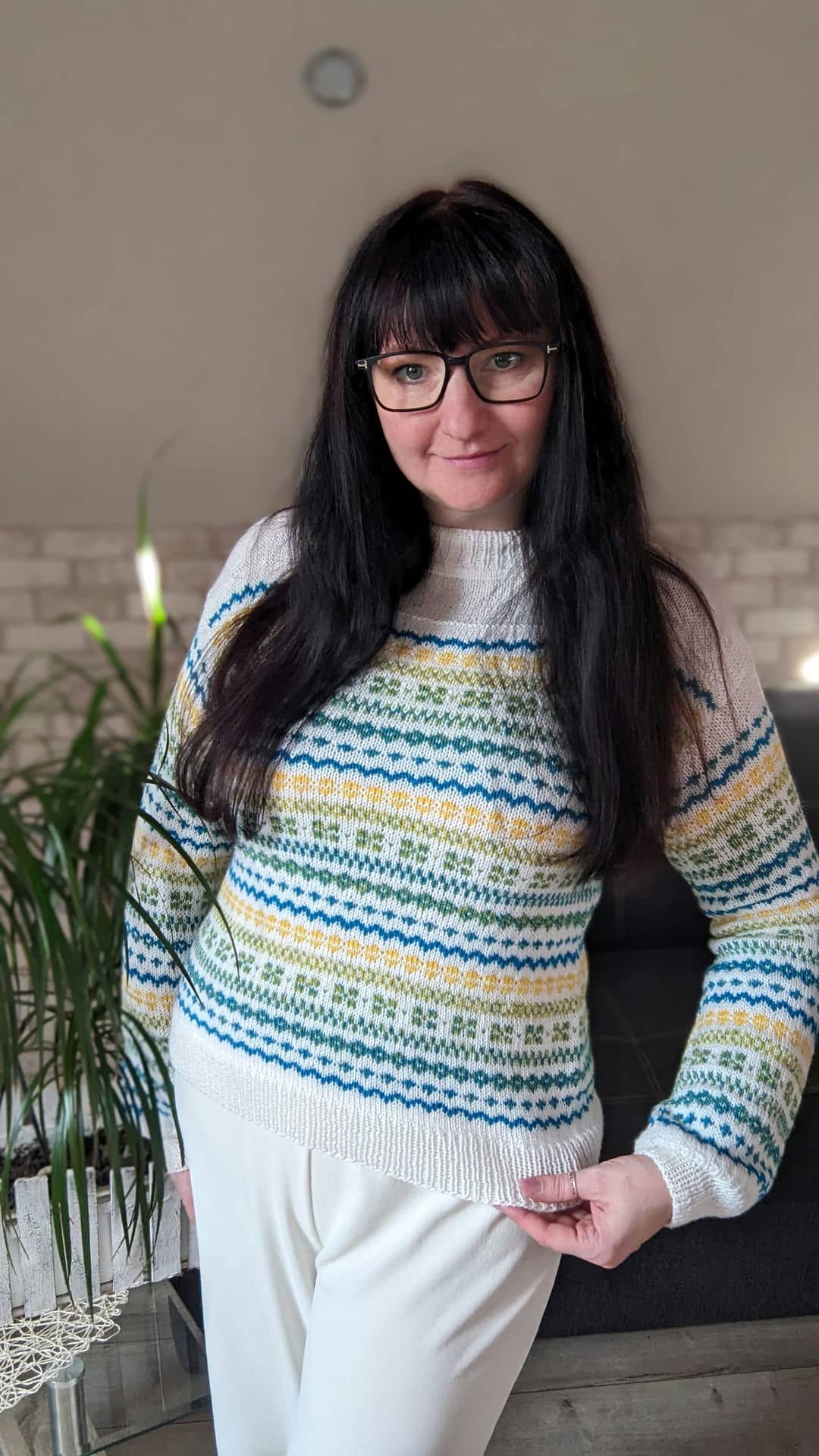
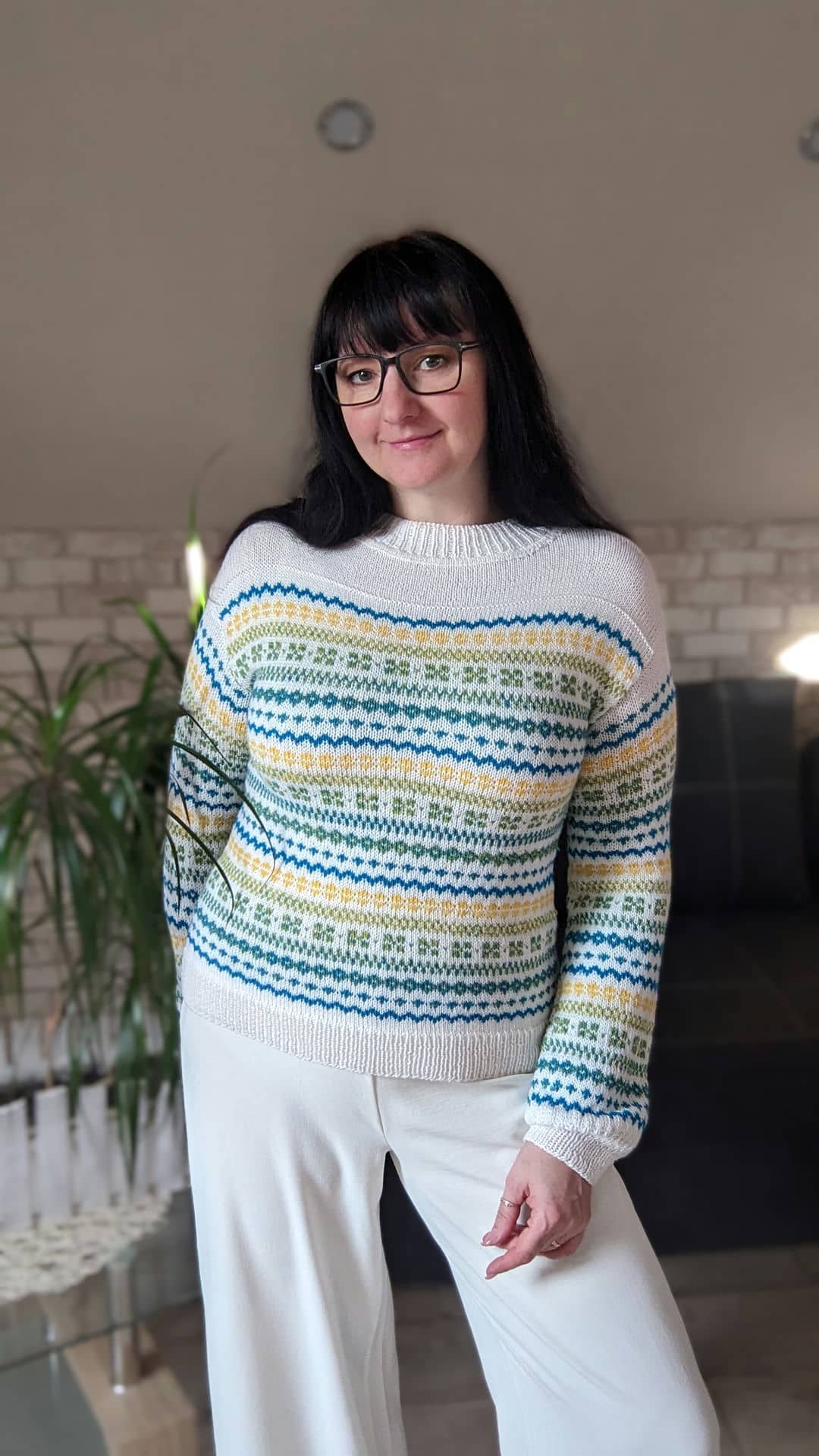
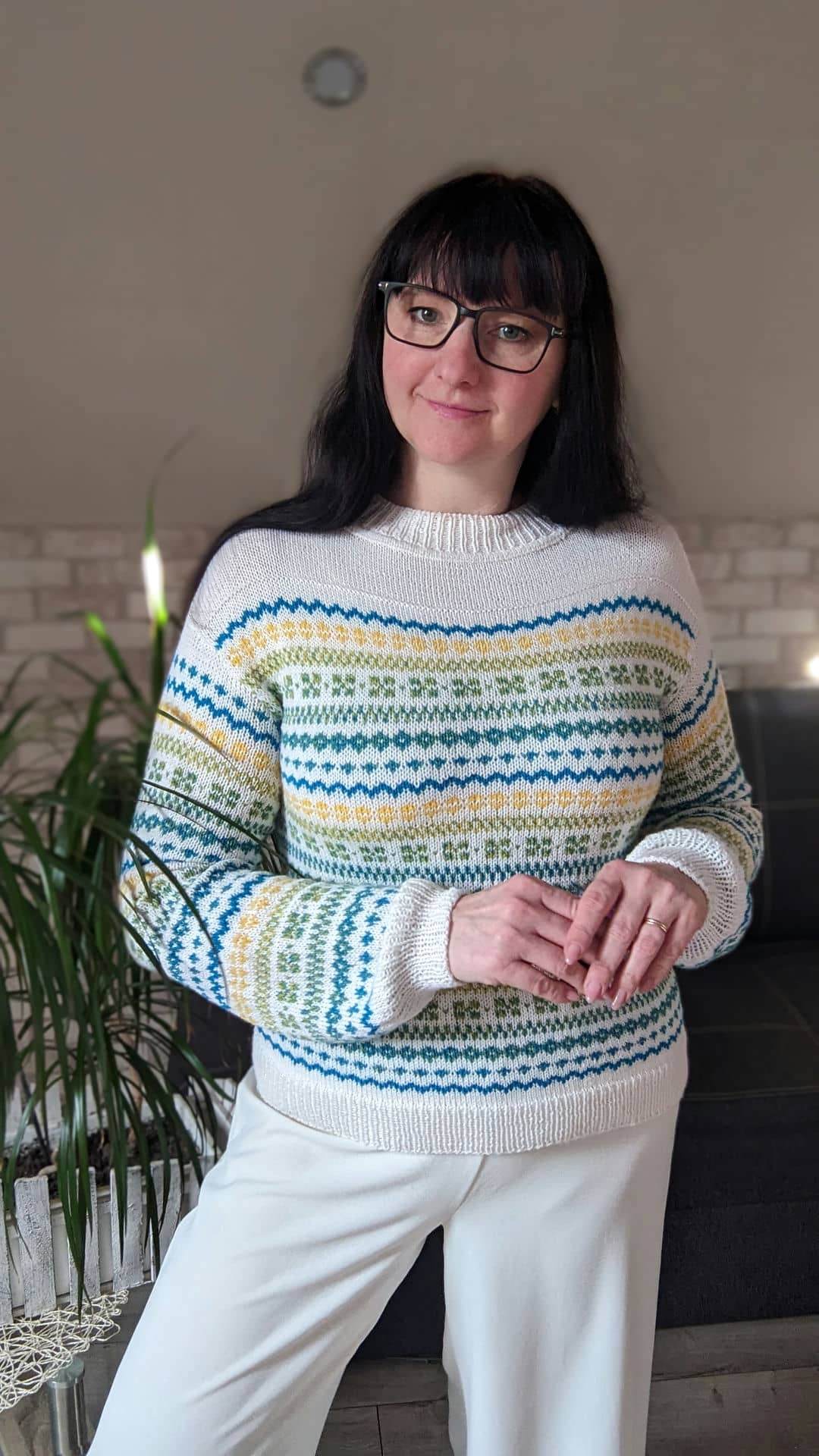
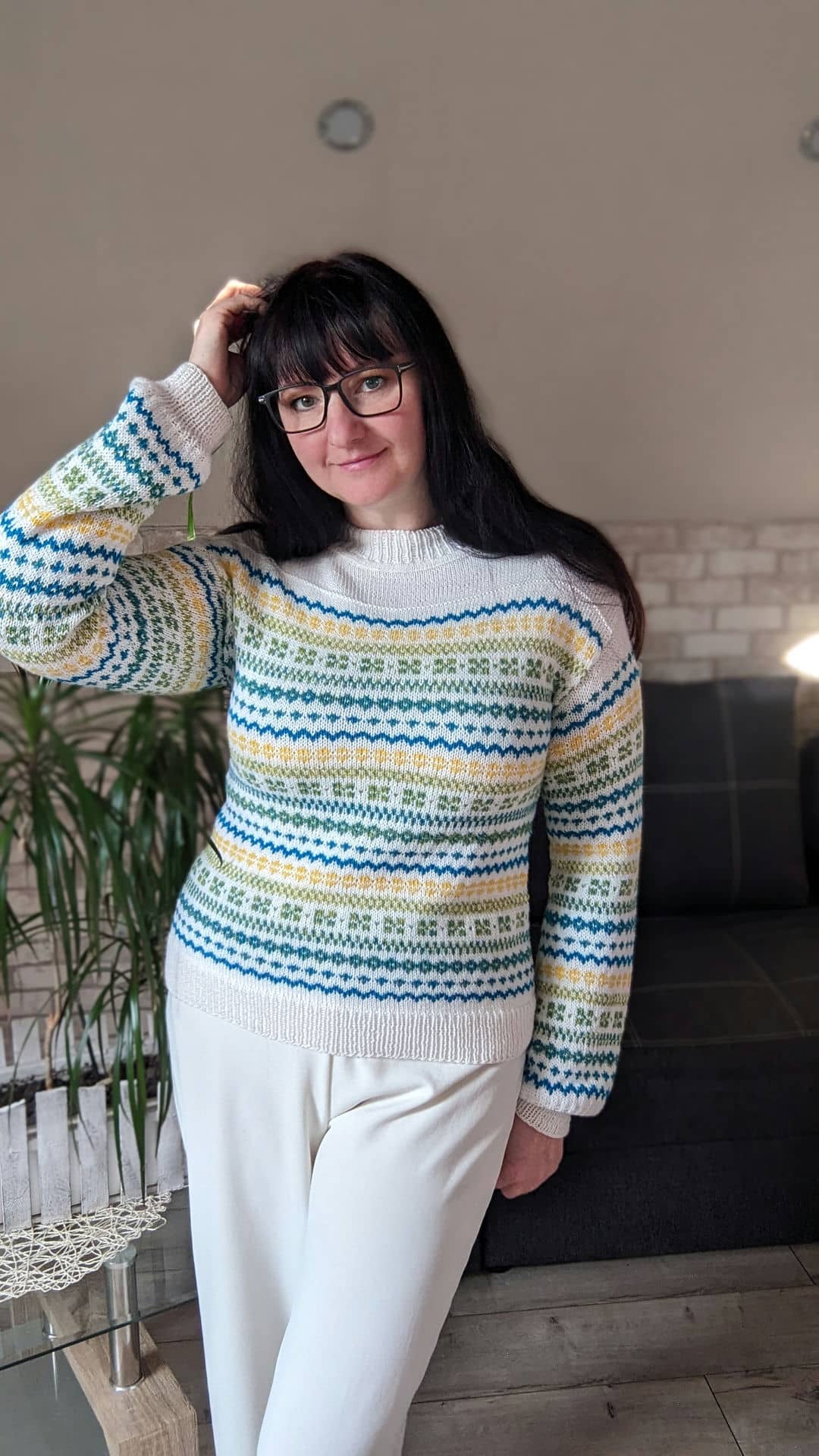
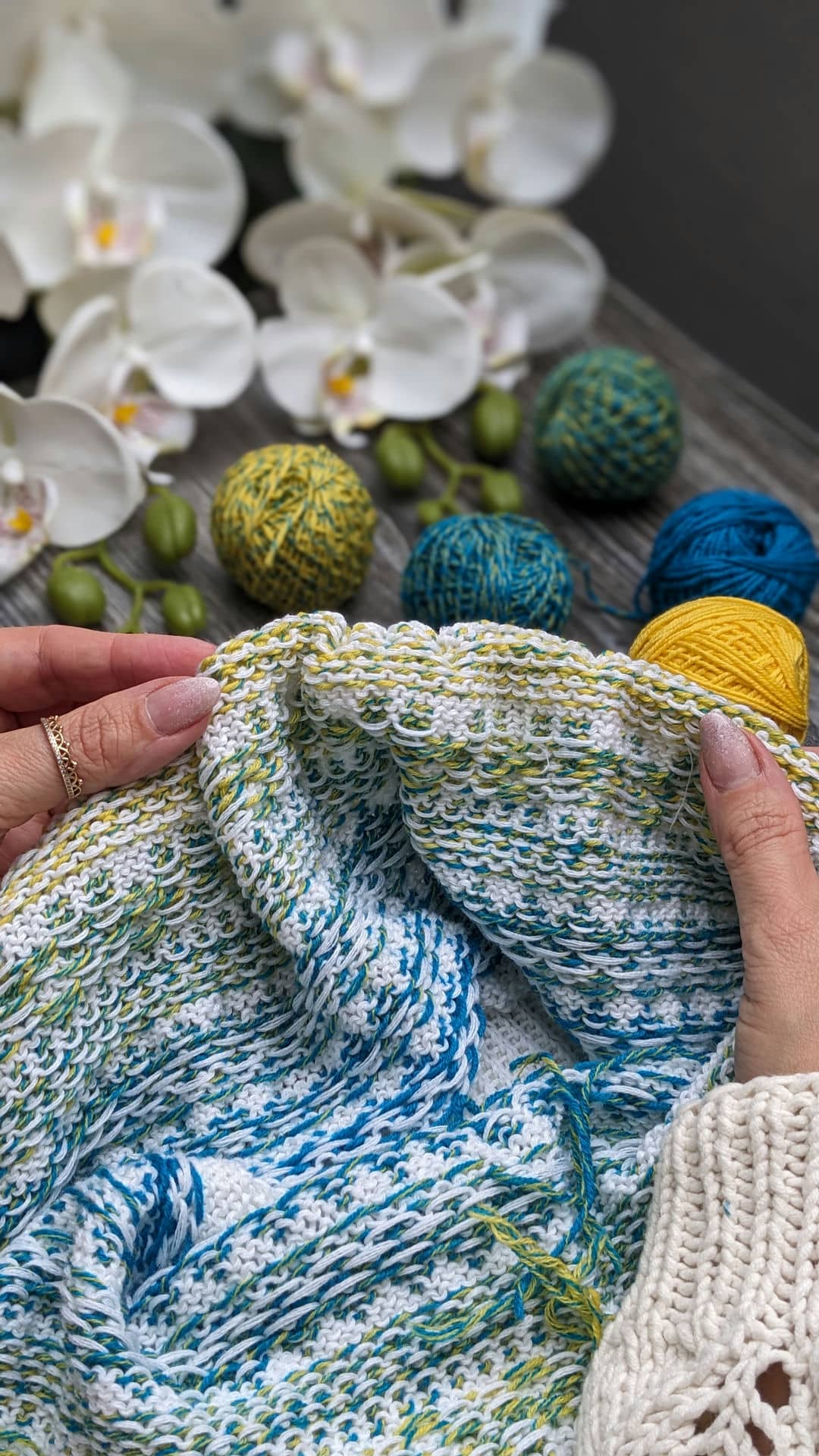
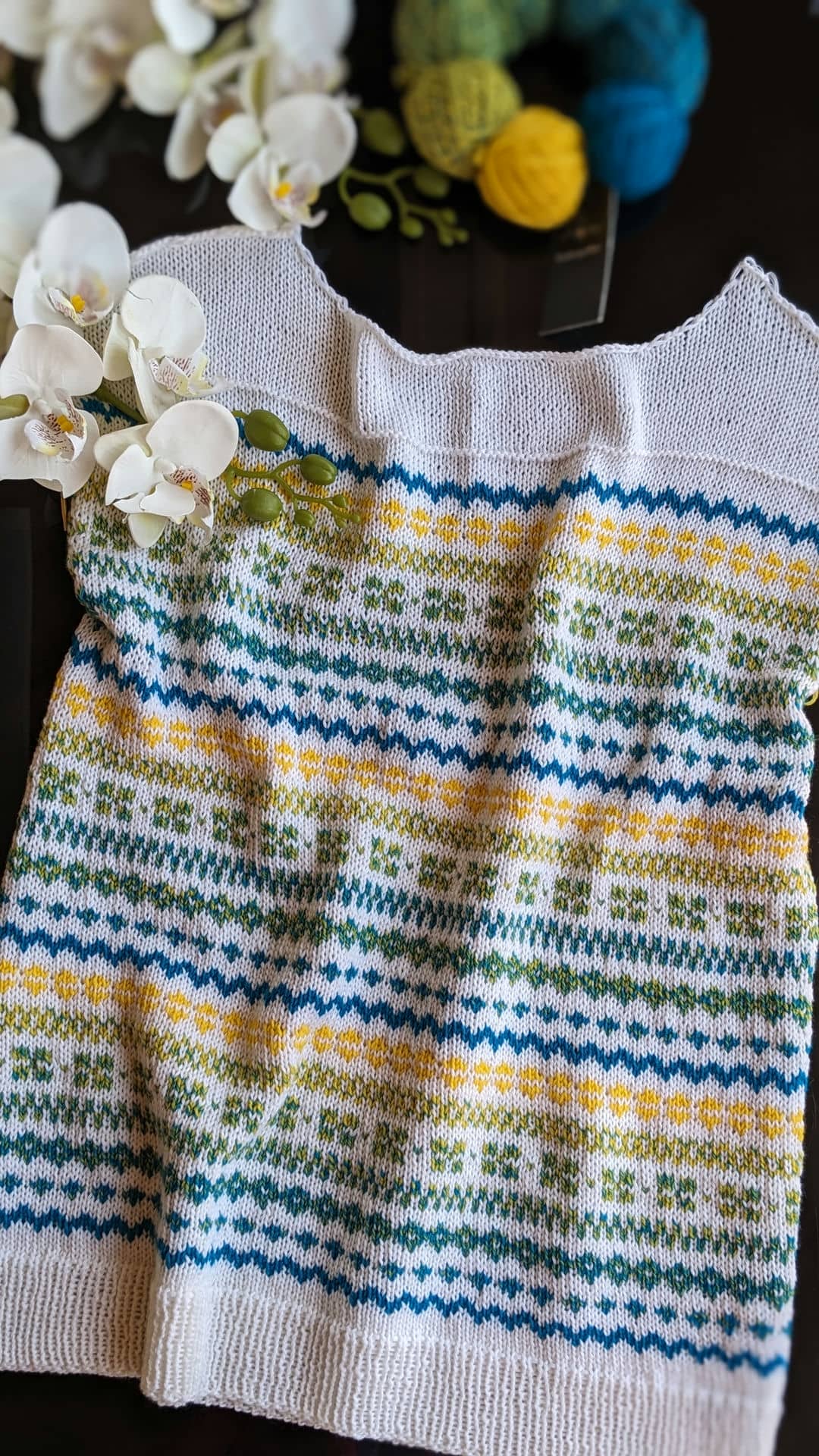
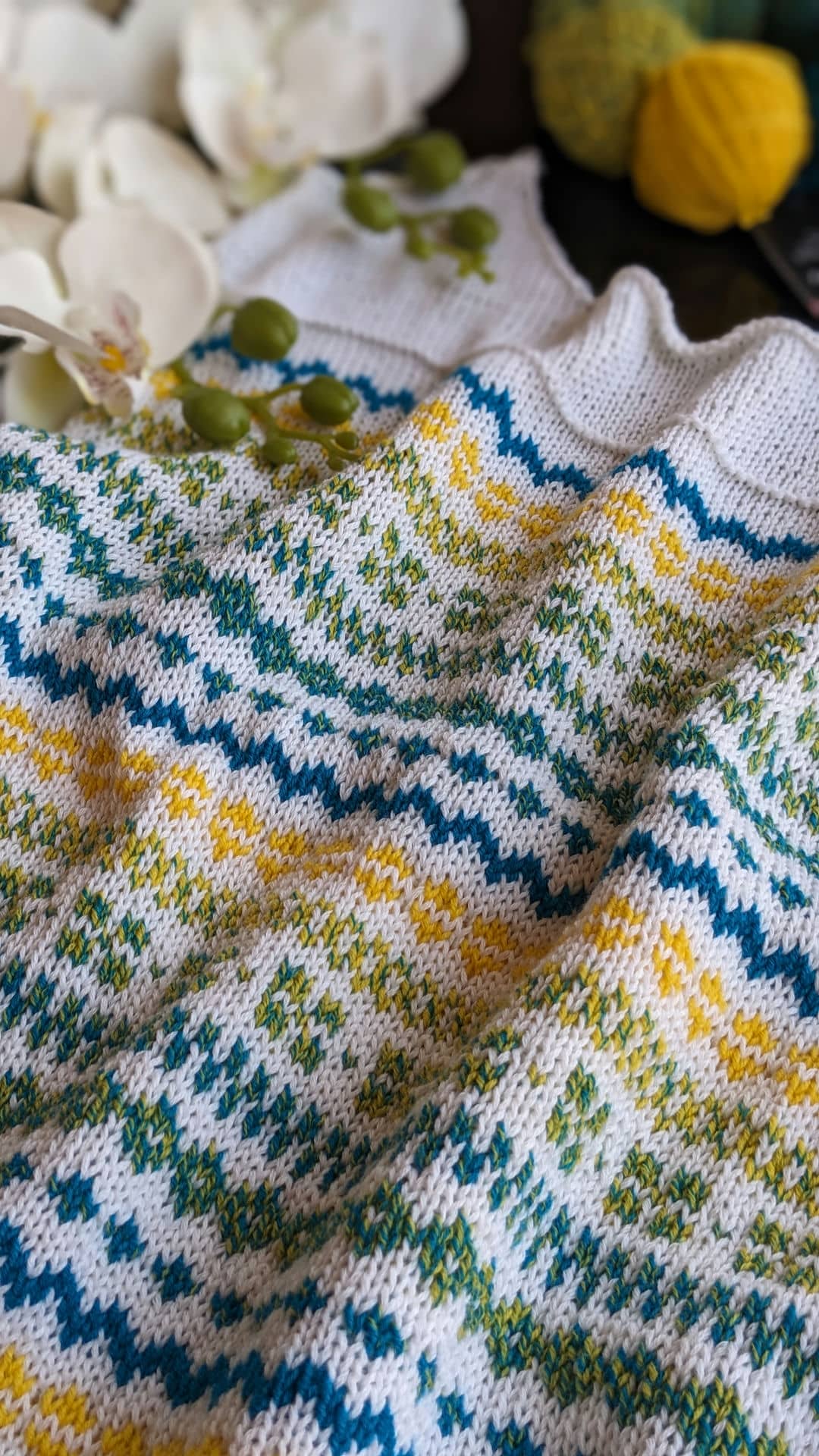
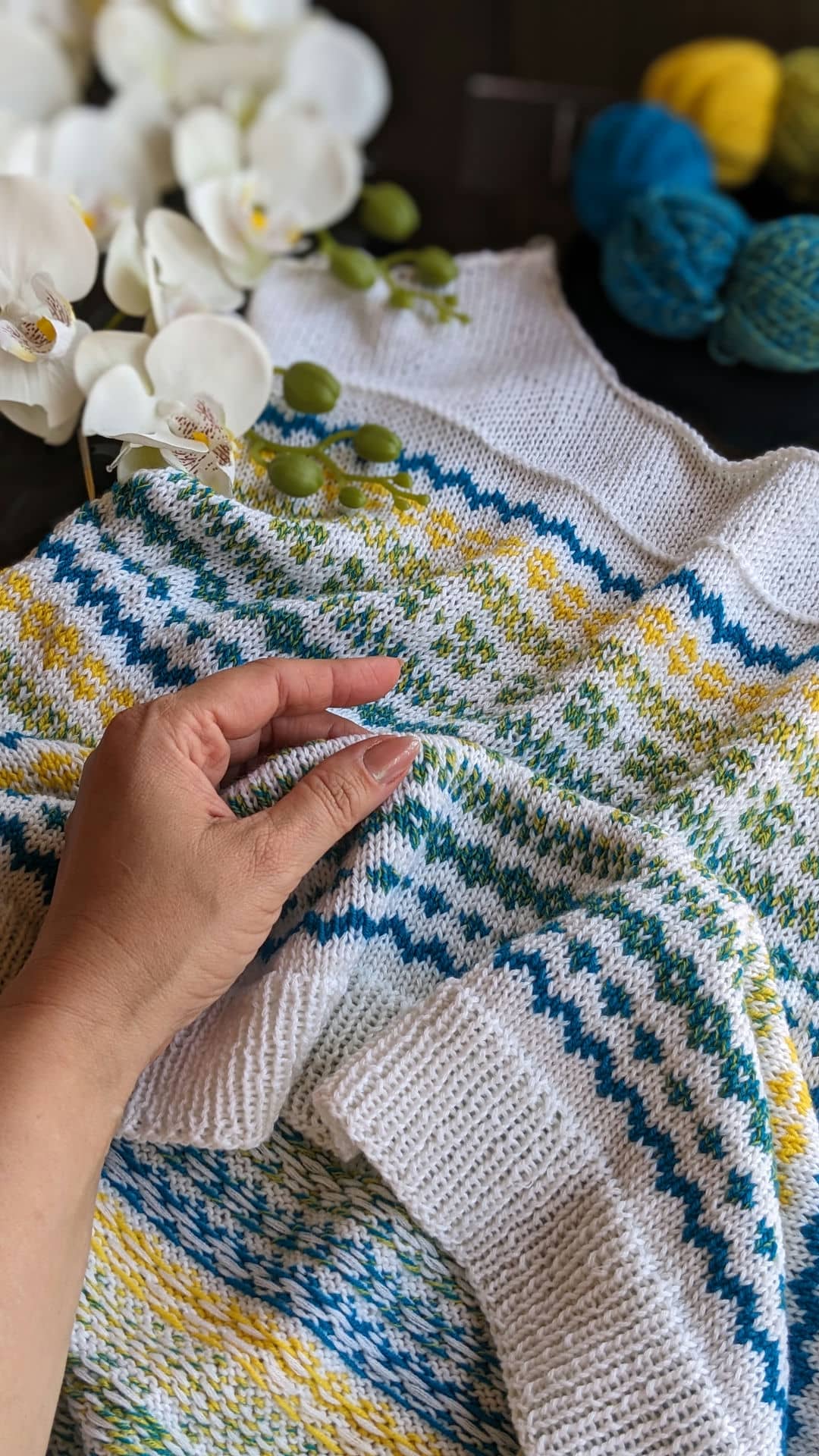
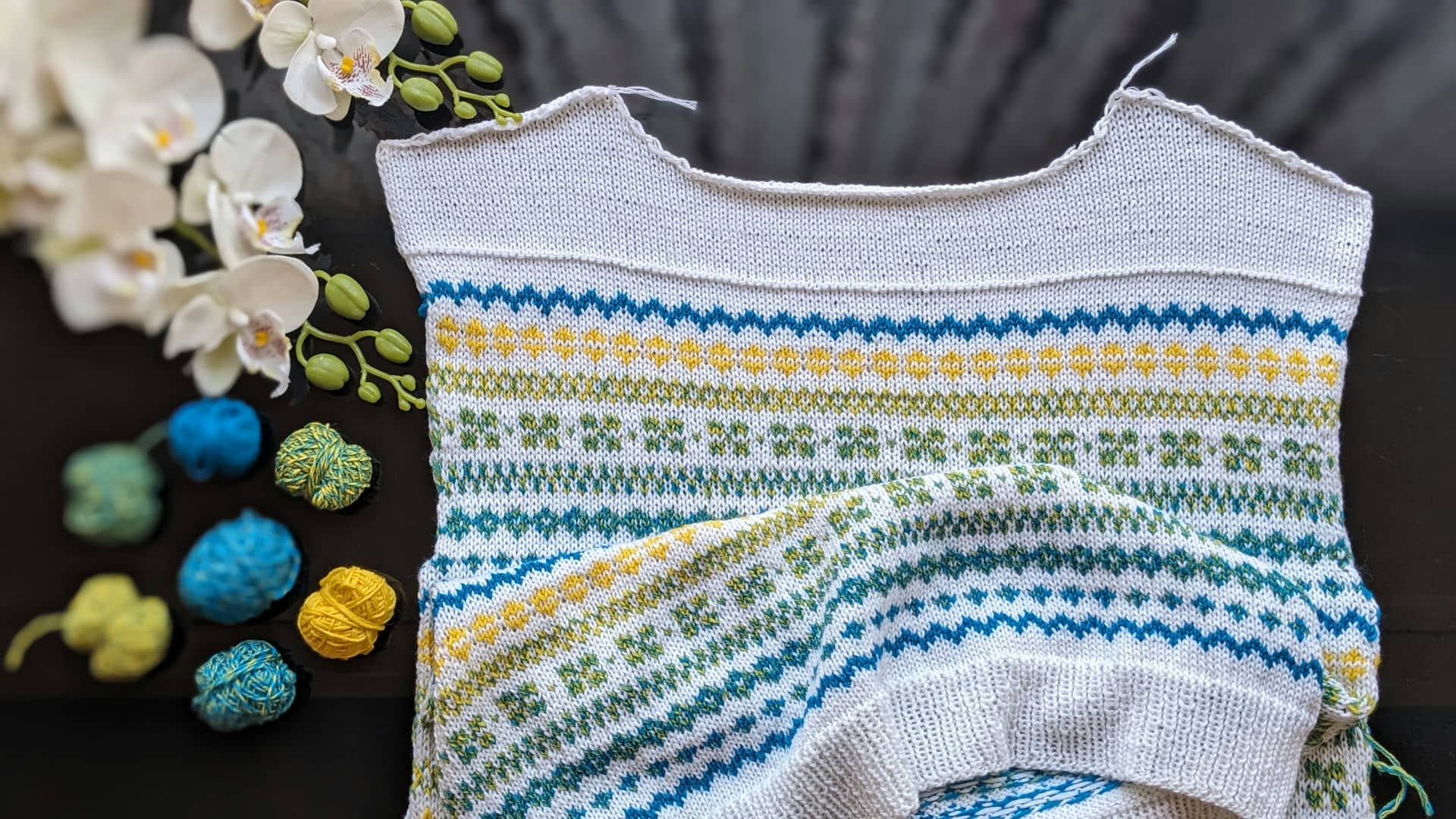
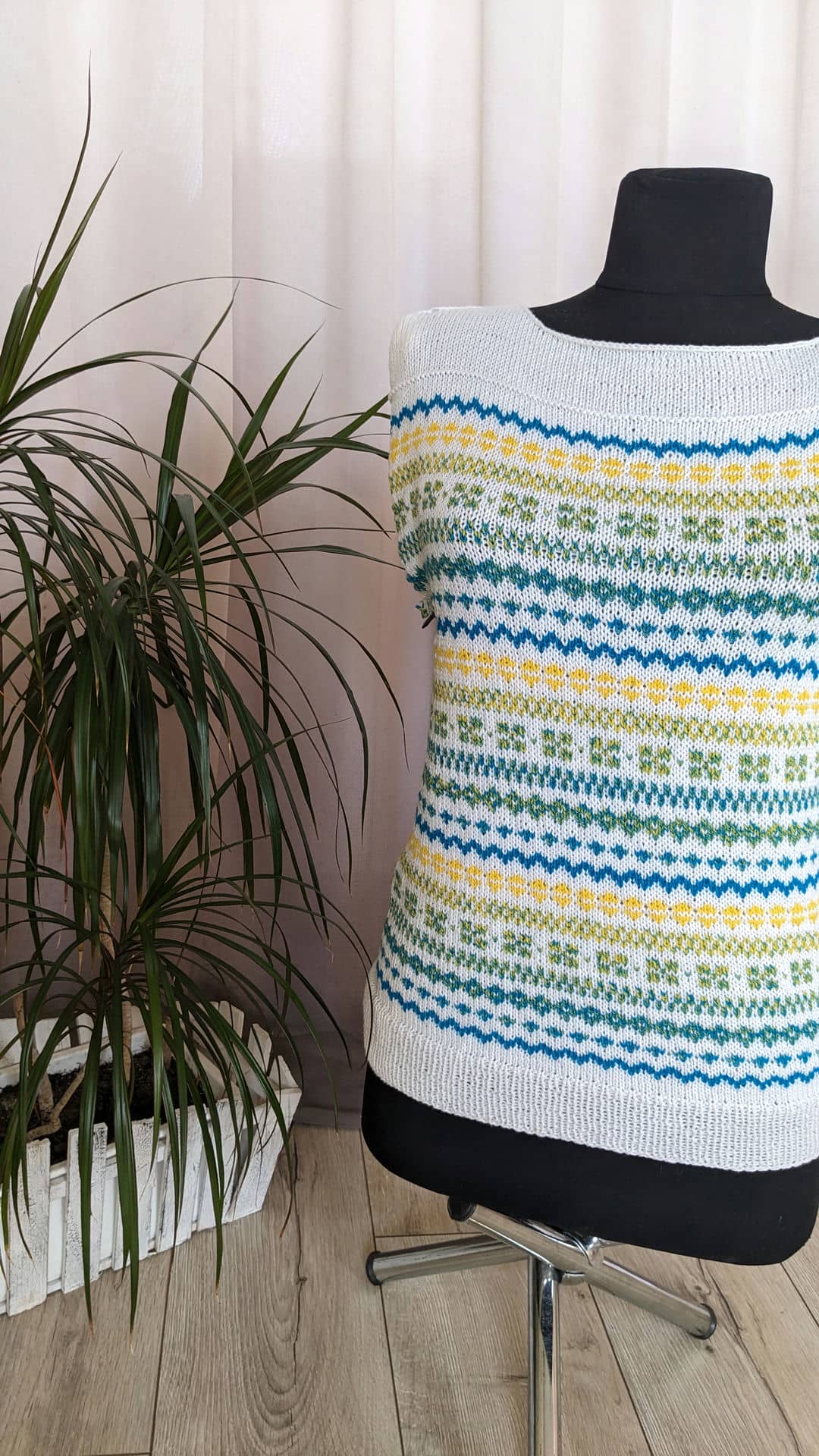
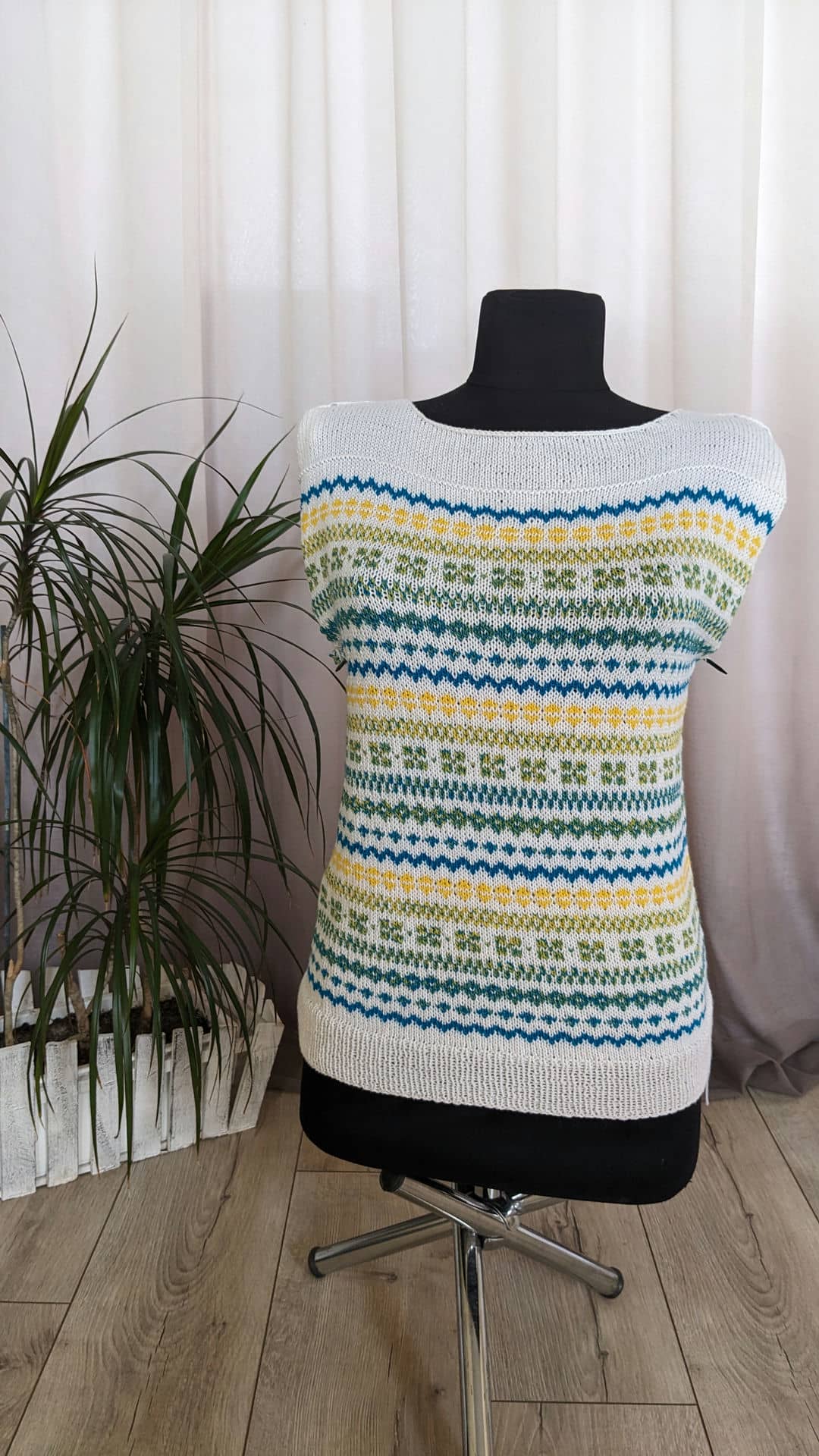
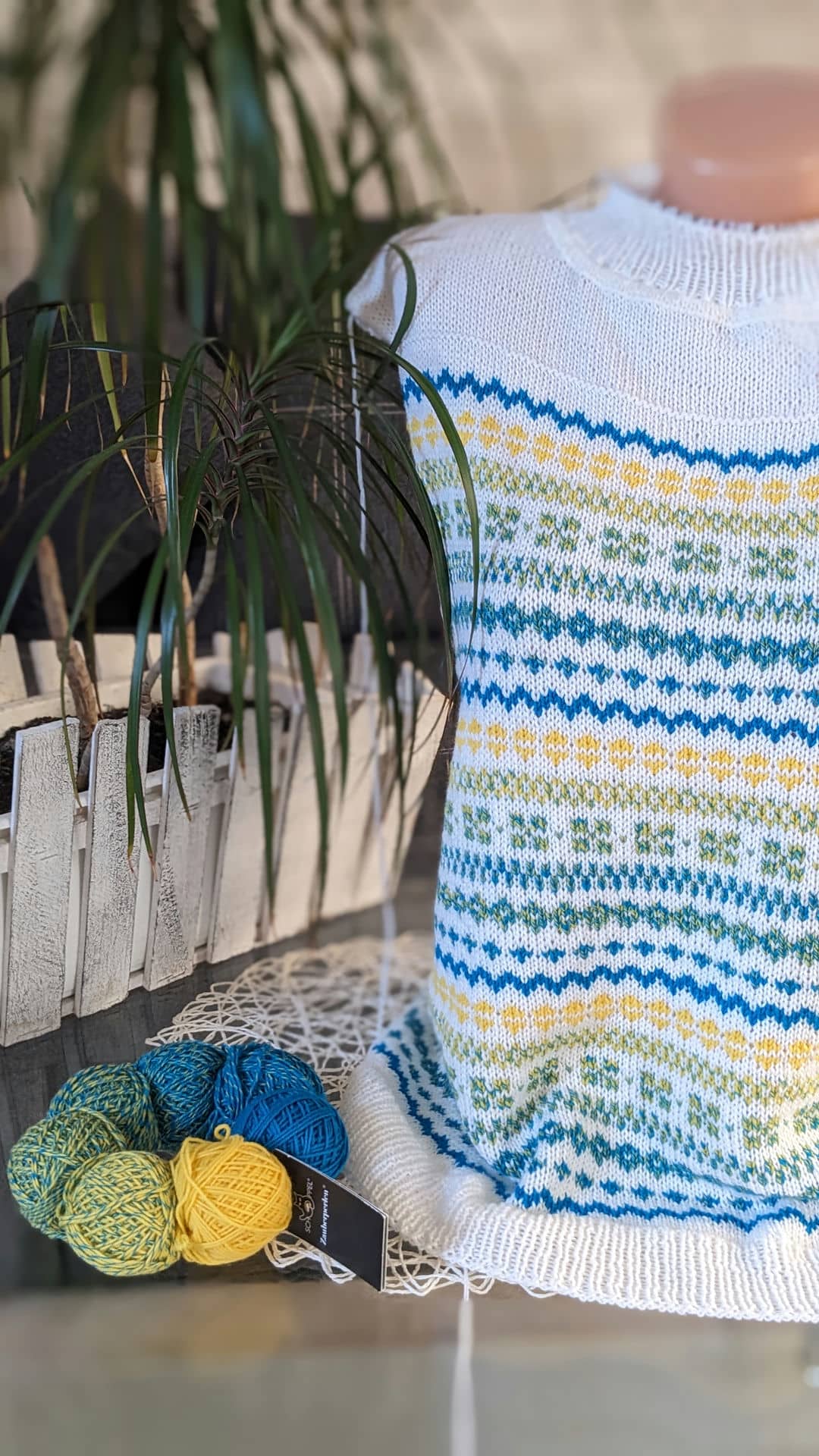
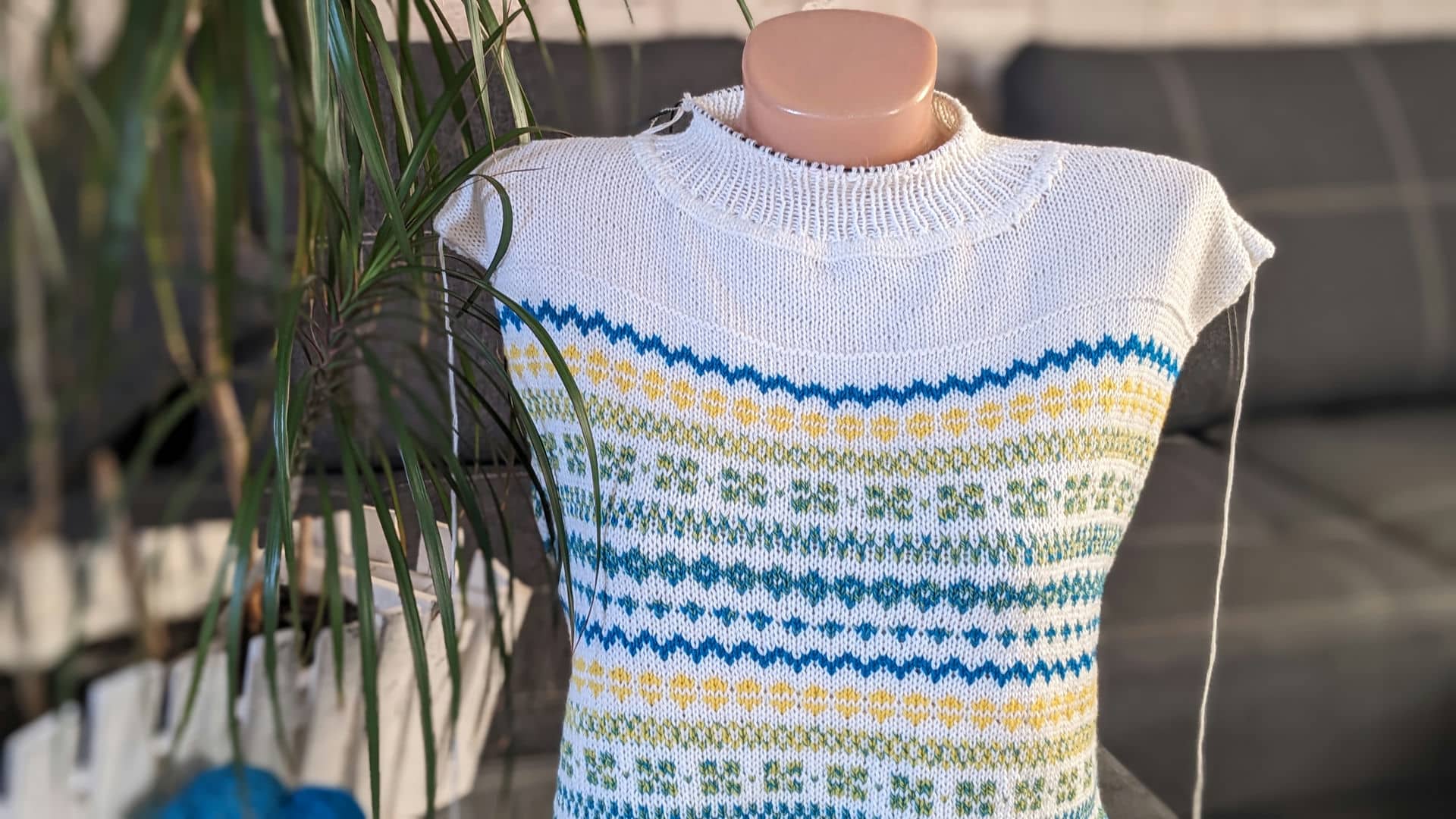
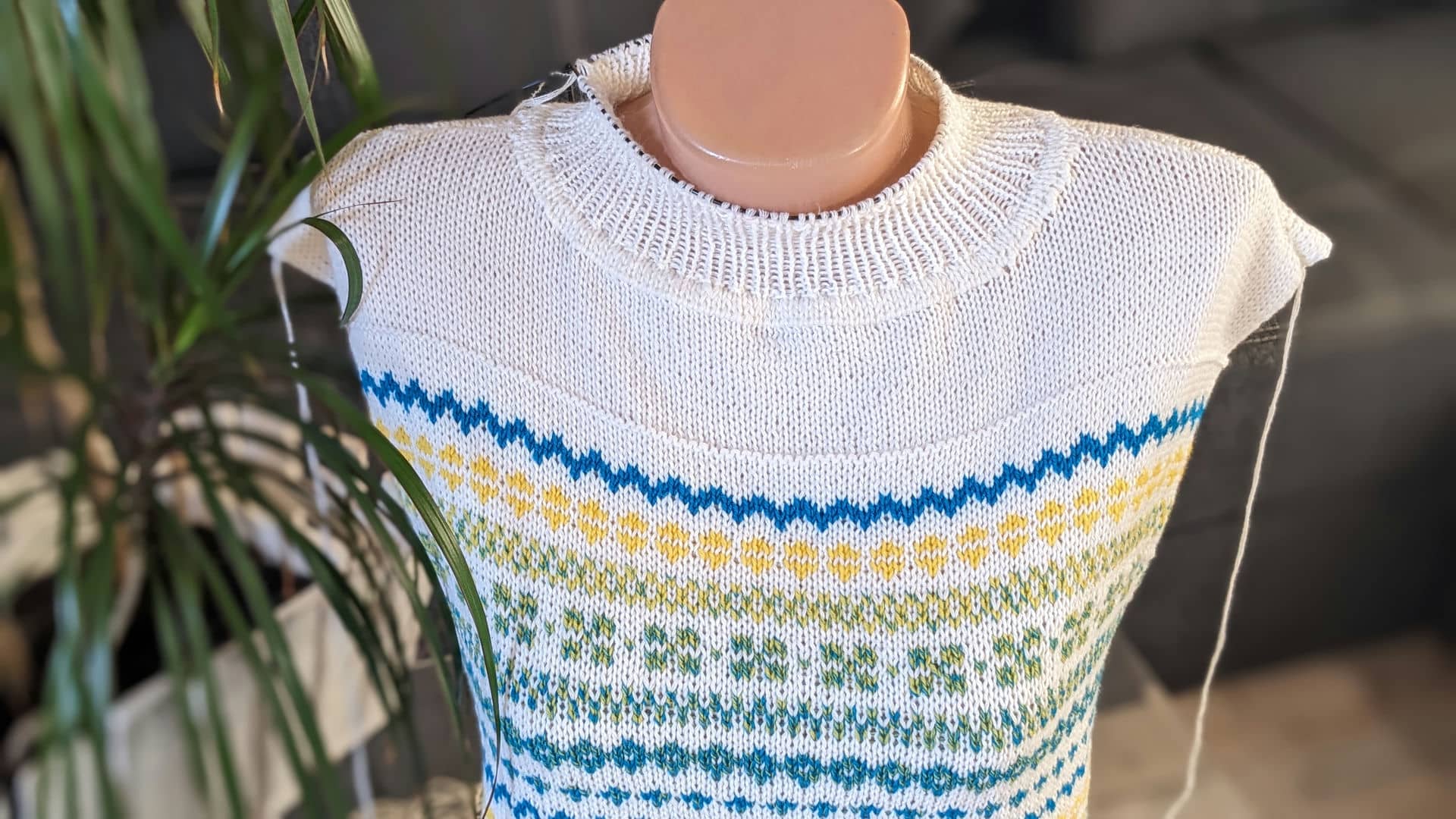
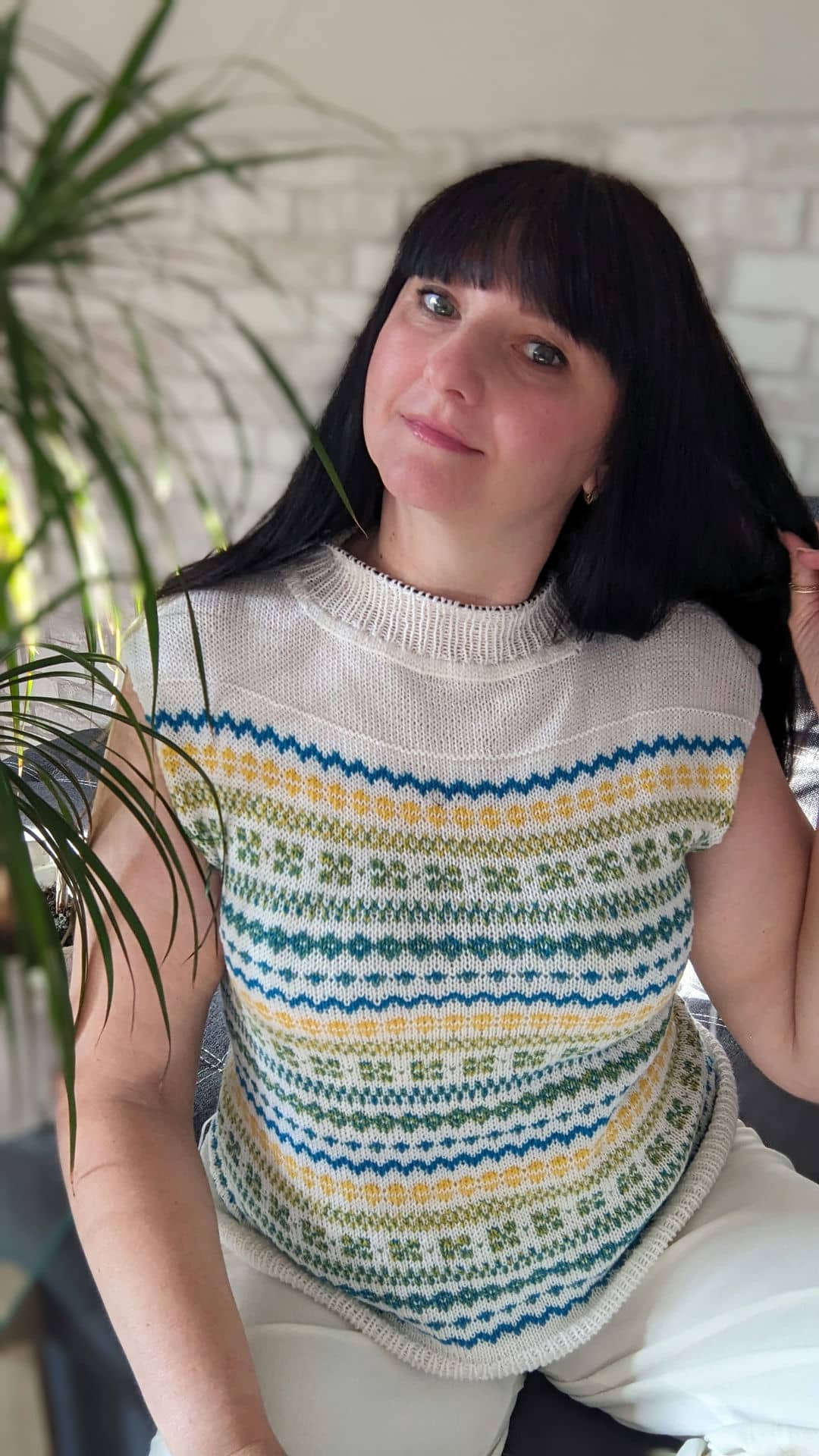
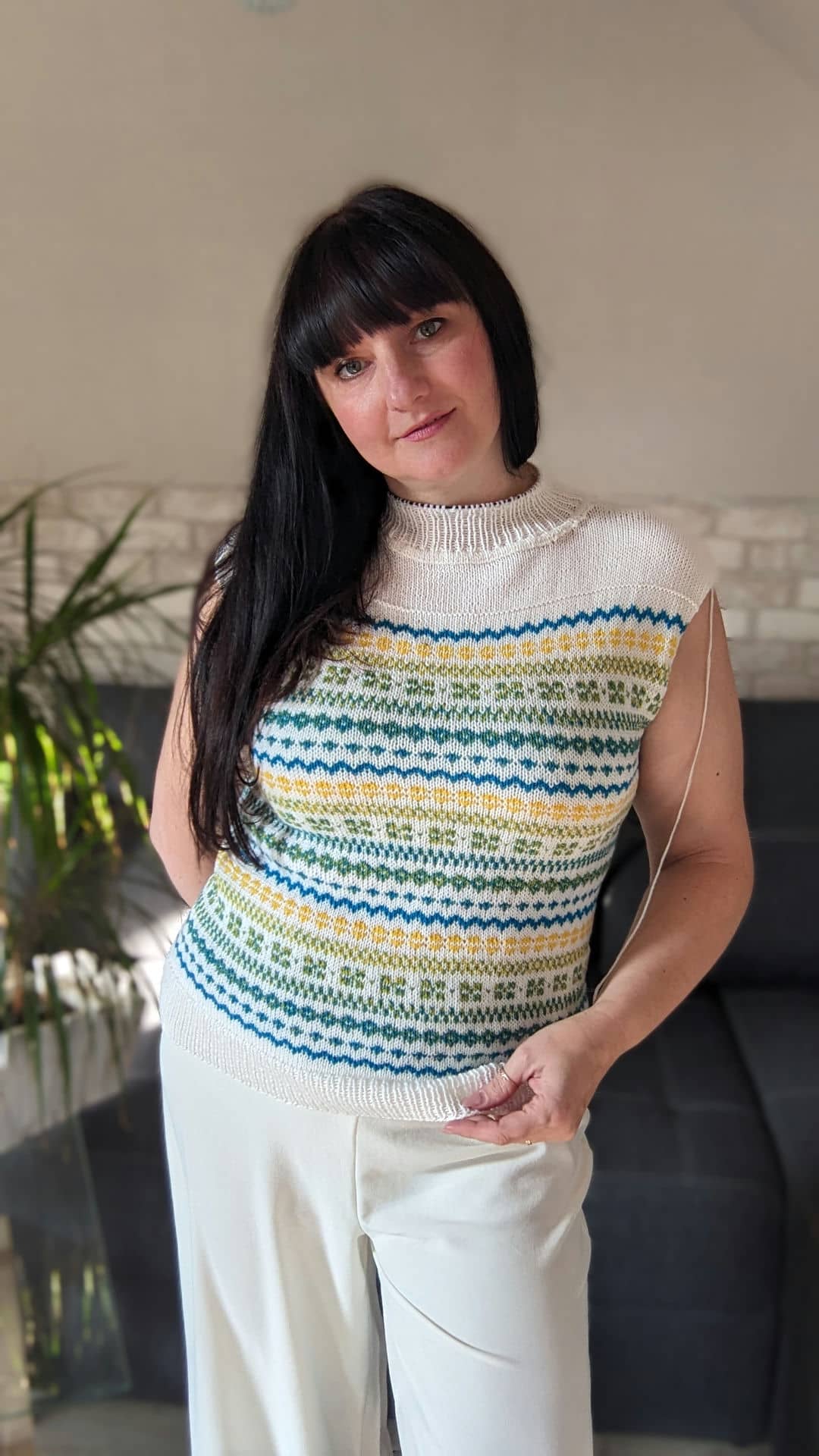
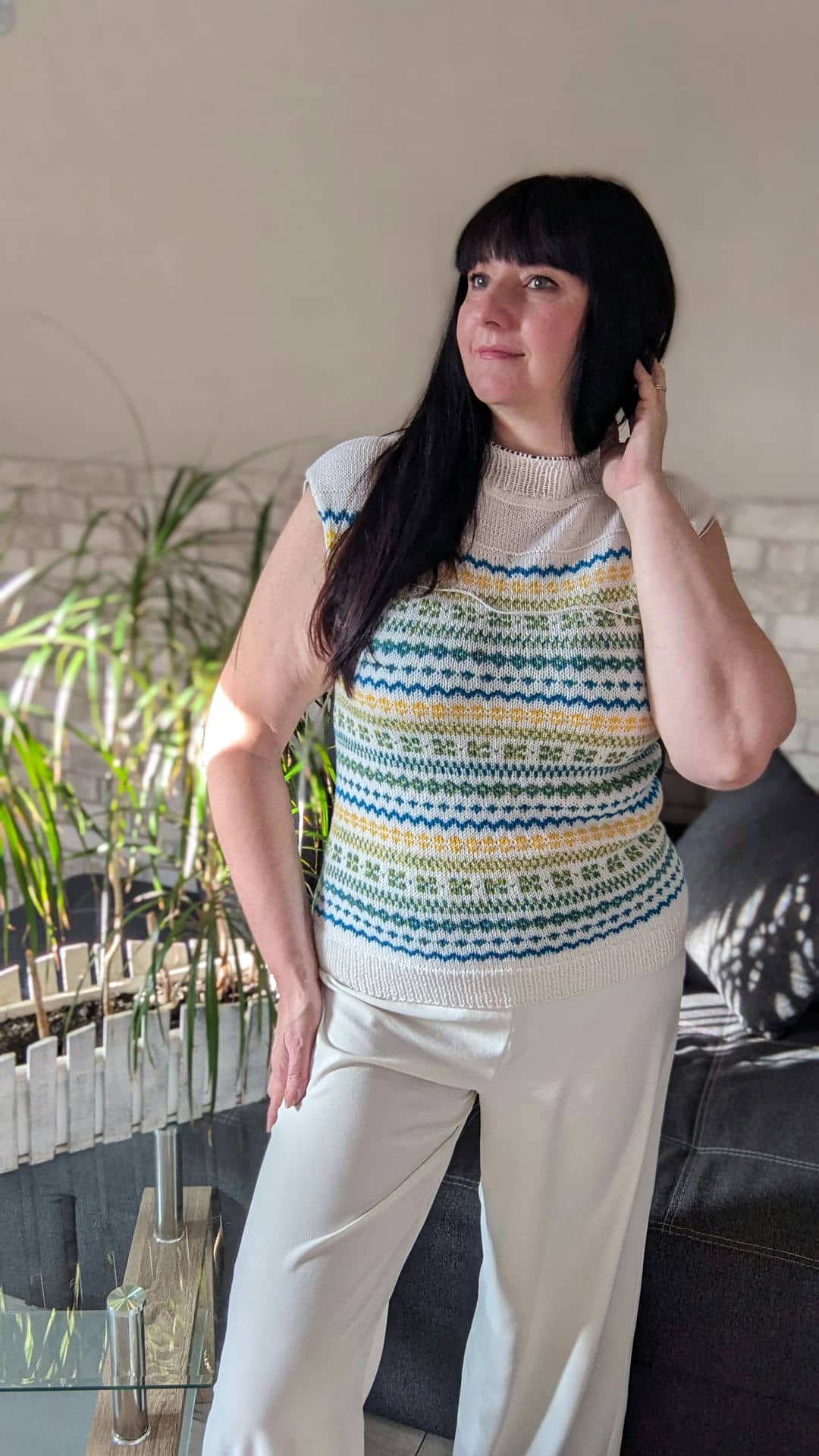
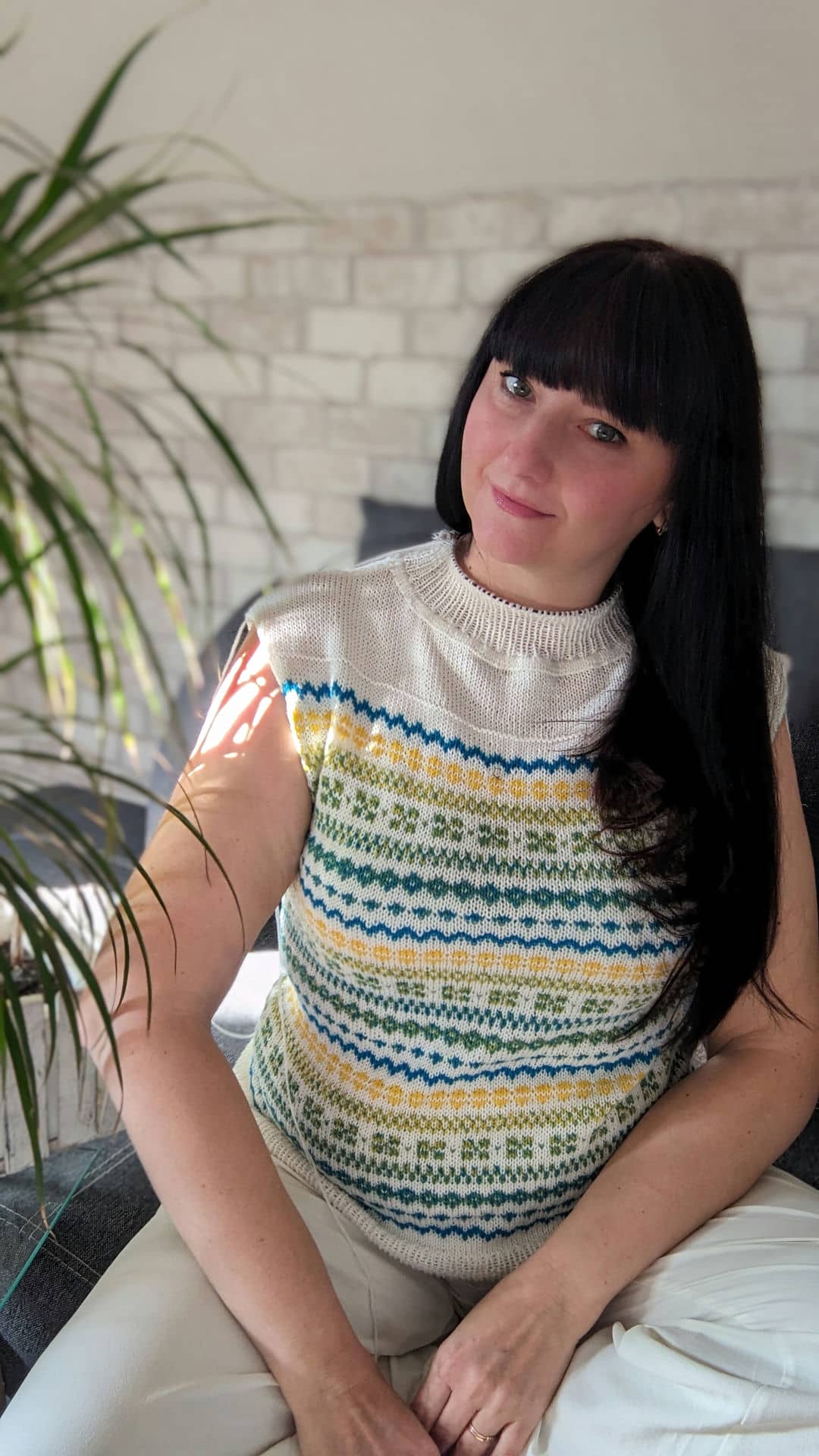
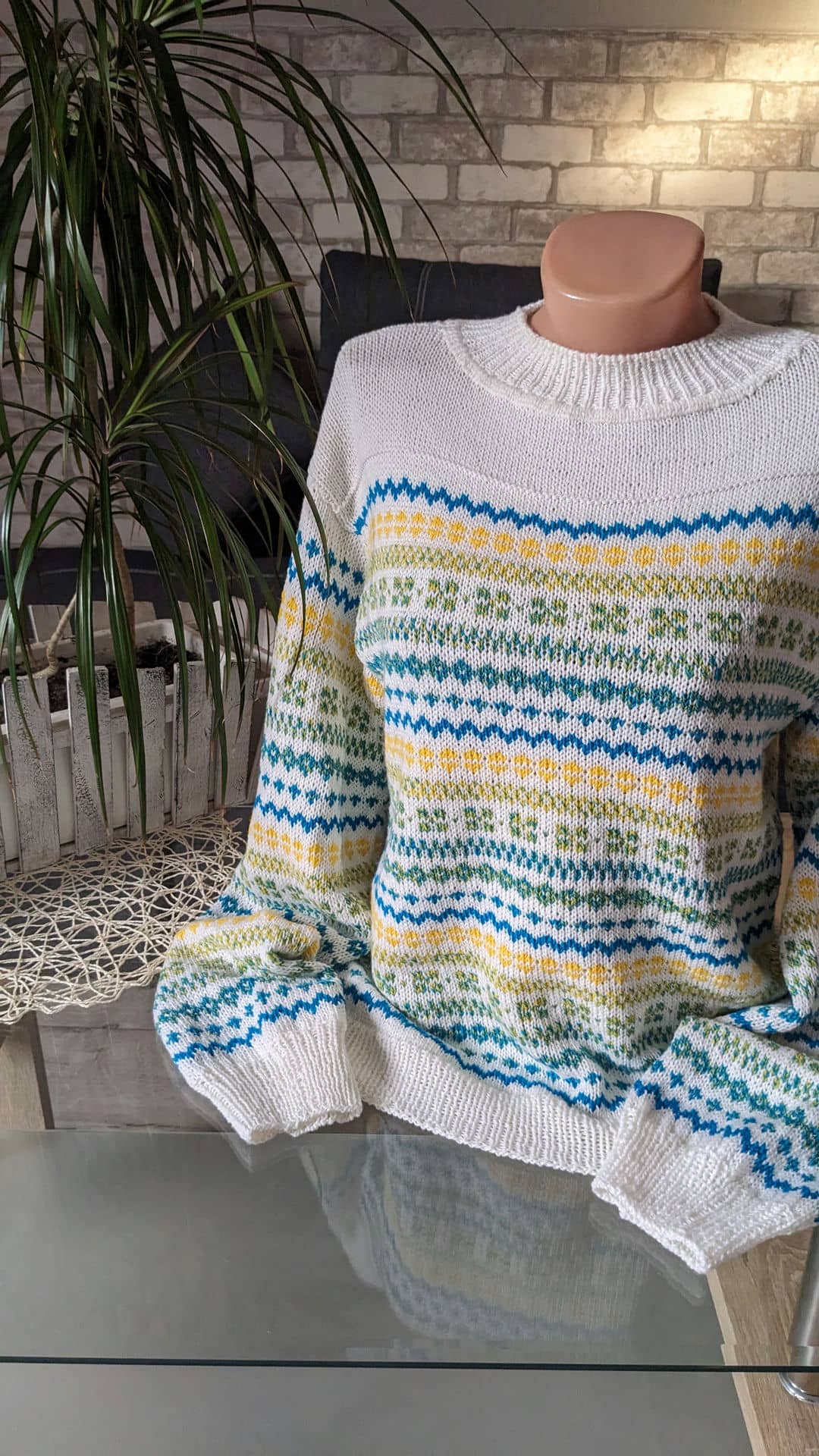
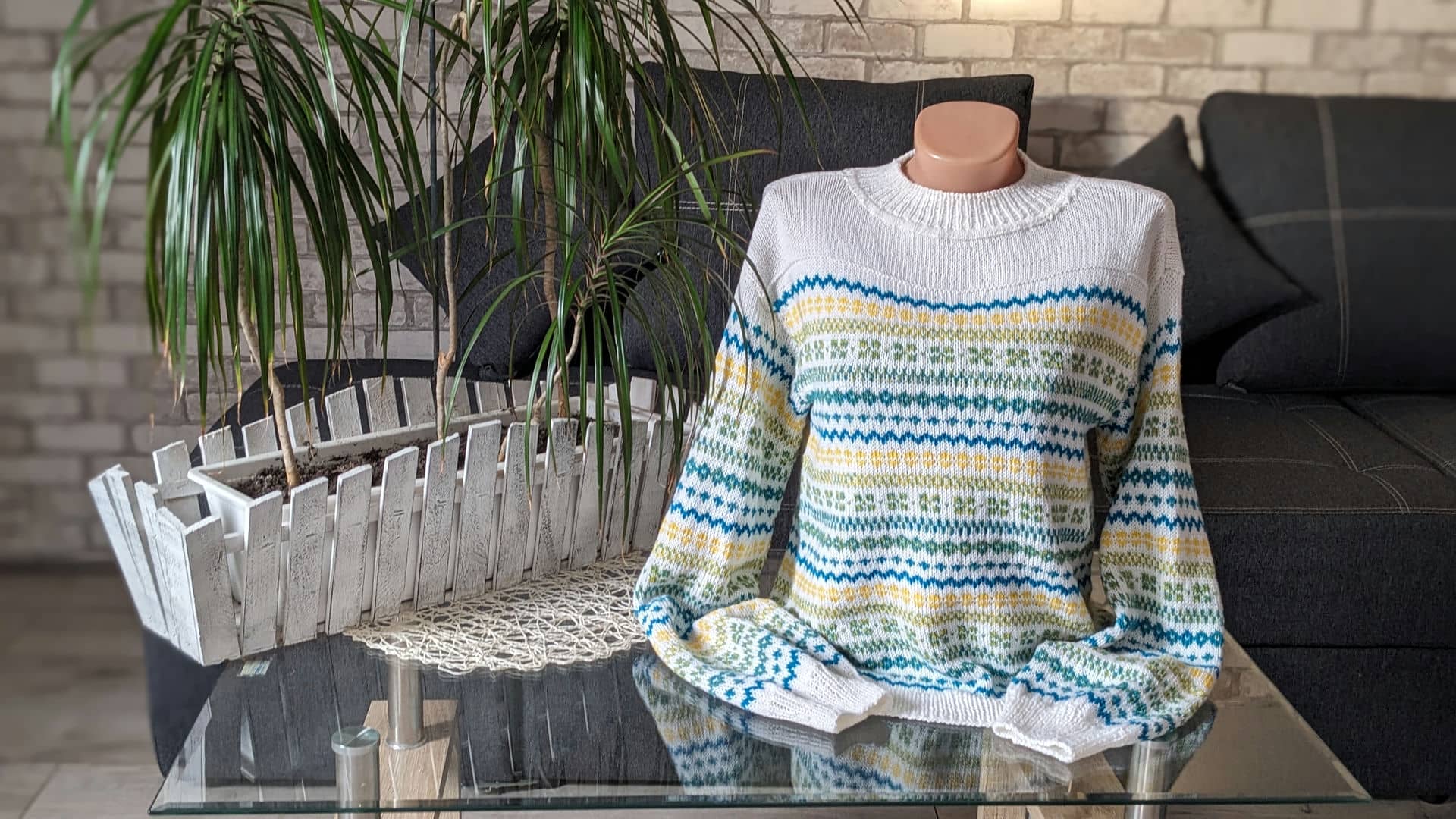
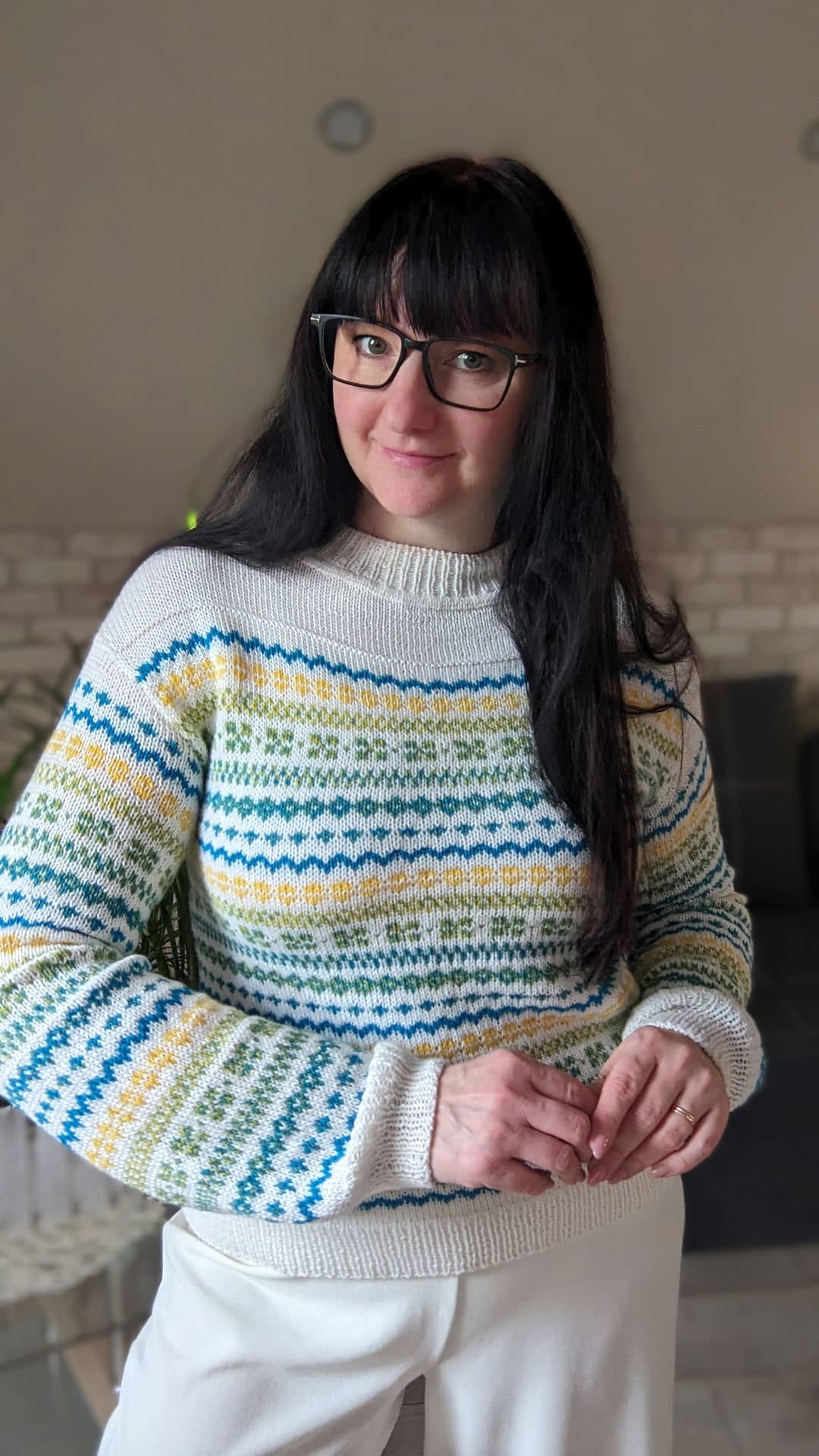
Light, colour and harmony: the three main elements that come together in the Solaria jumper.
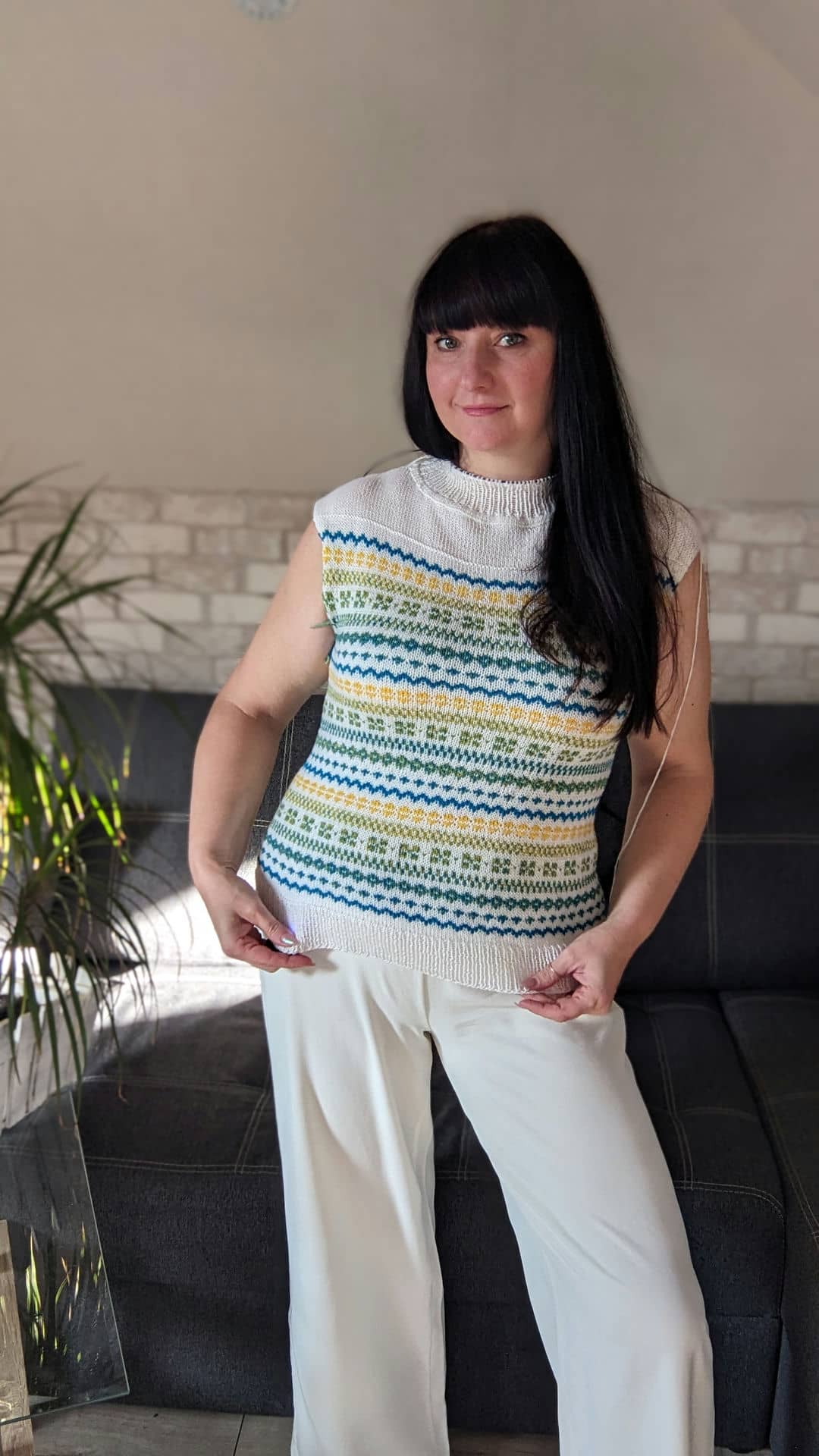
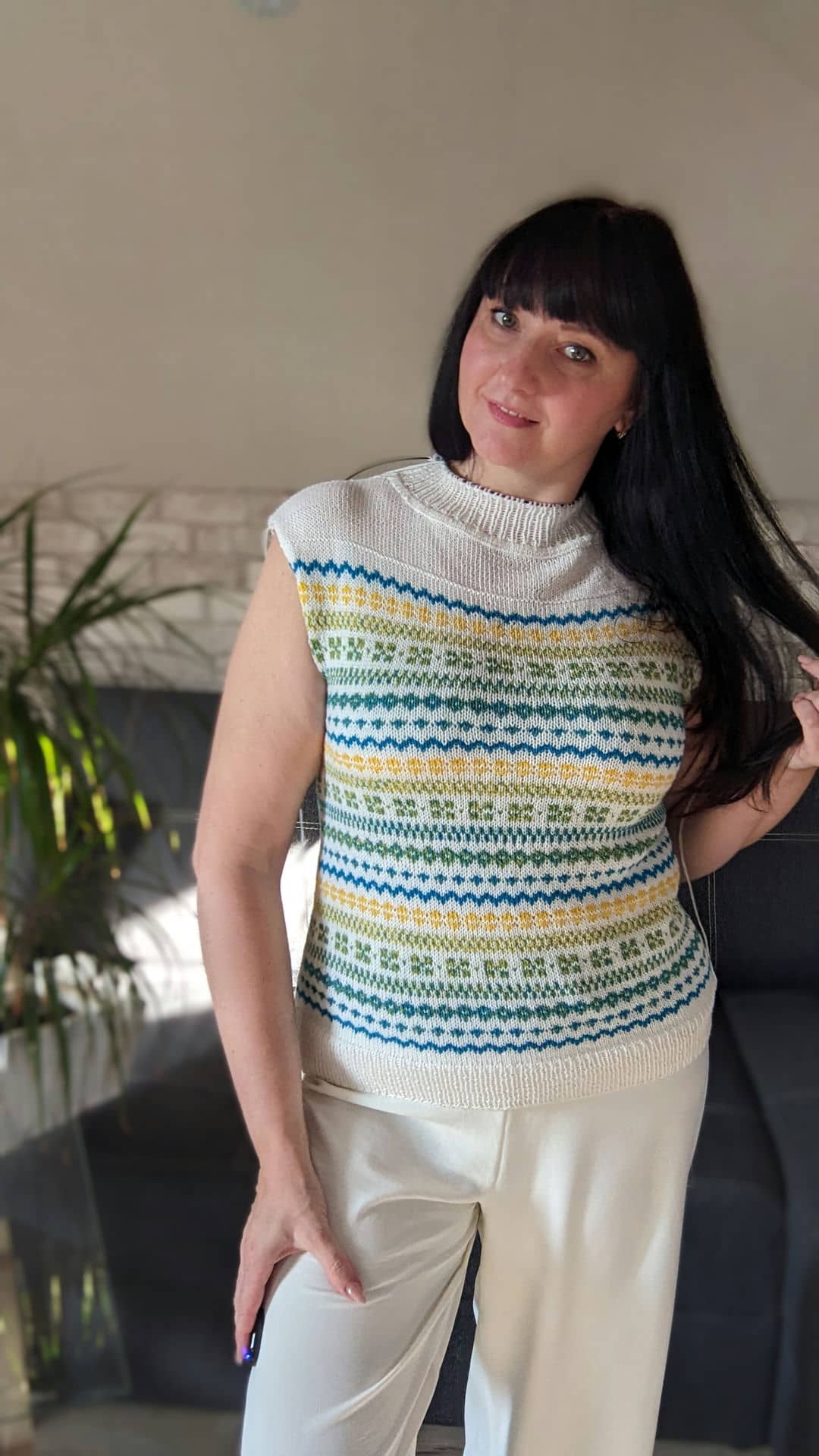
This design was born from my inspiration by the play of shades and smooth transitions, where the white fabric becomes a space for colourful movement.
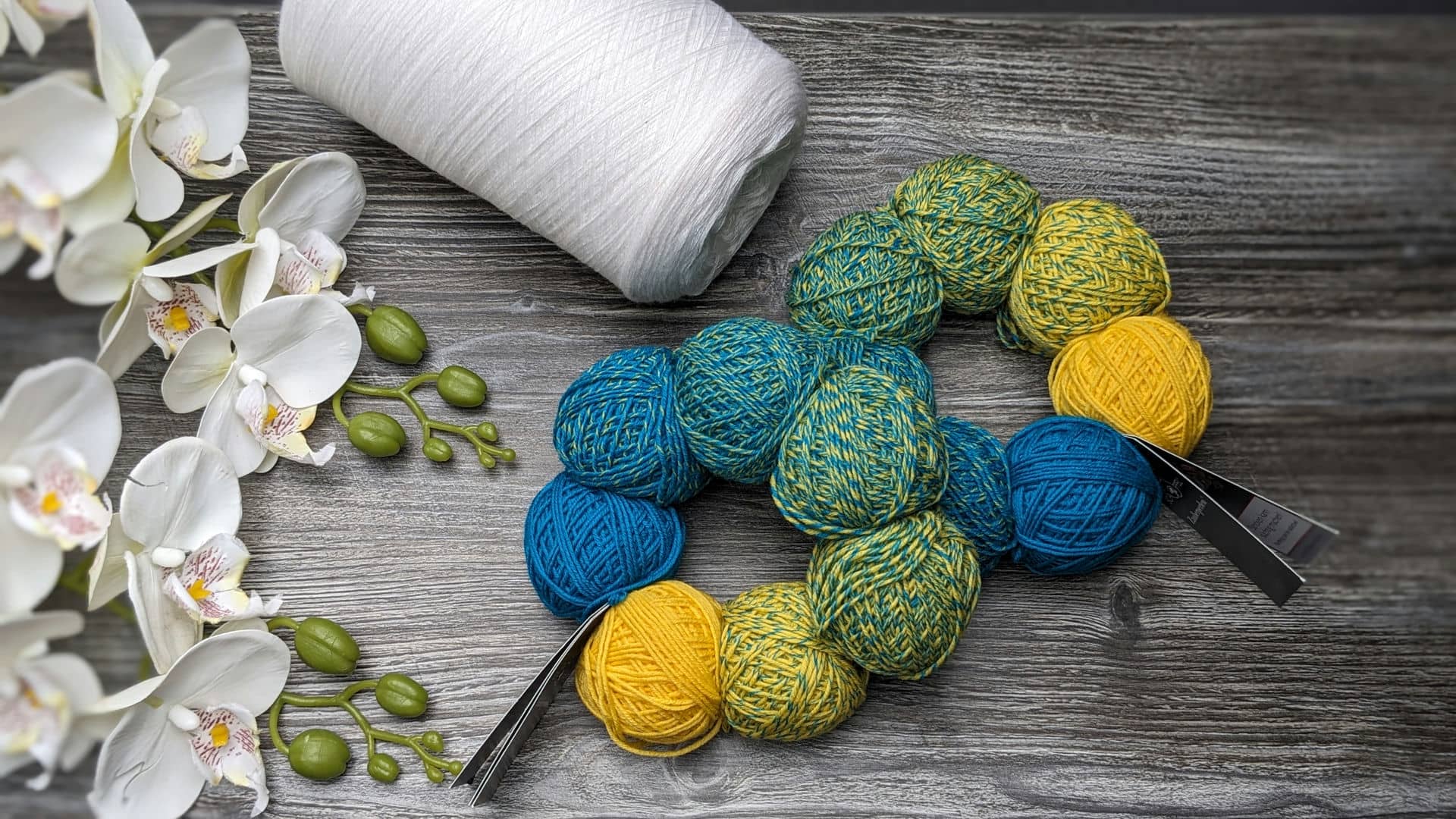
Materials
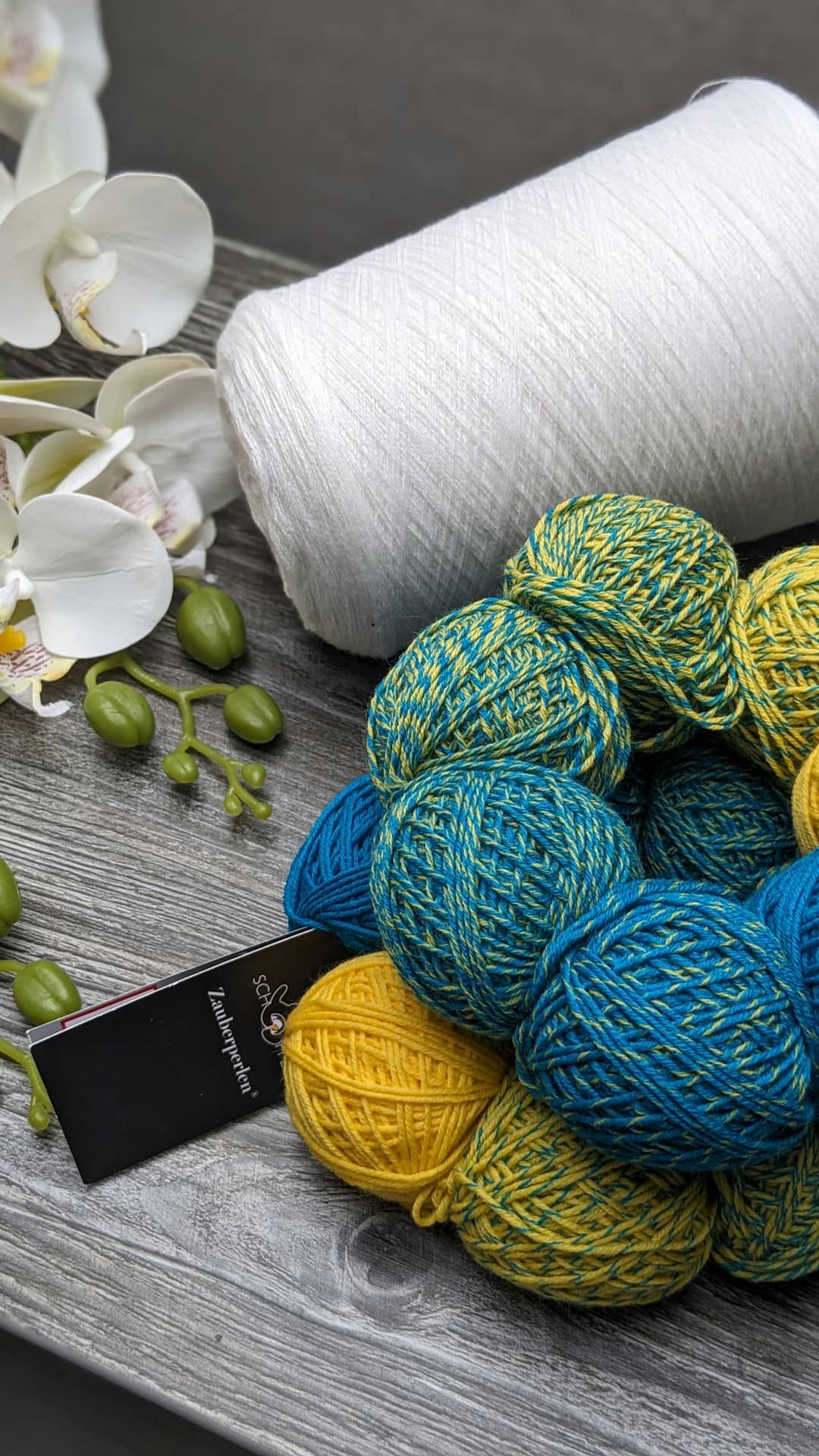
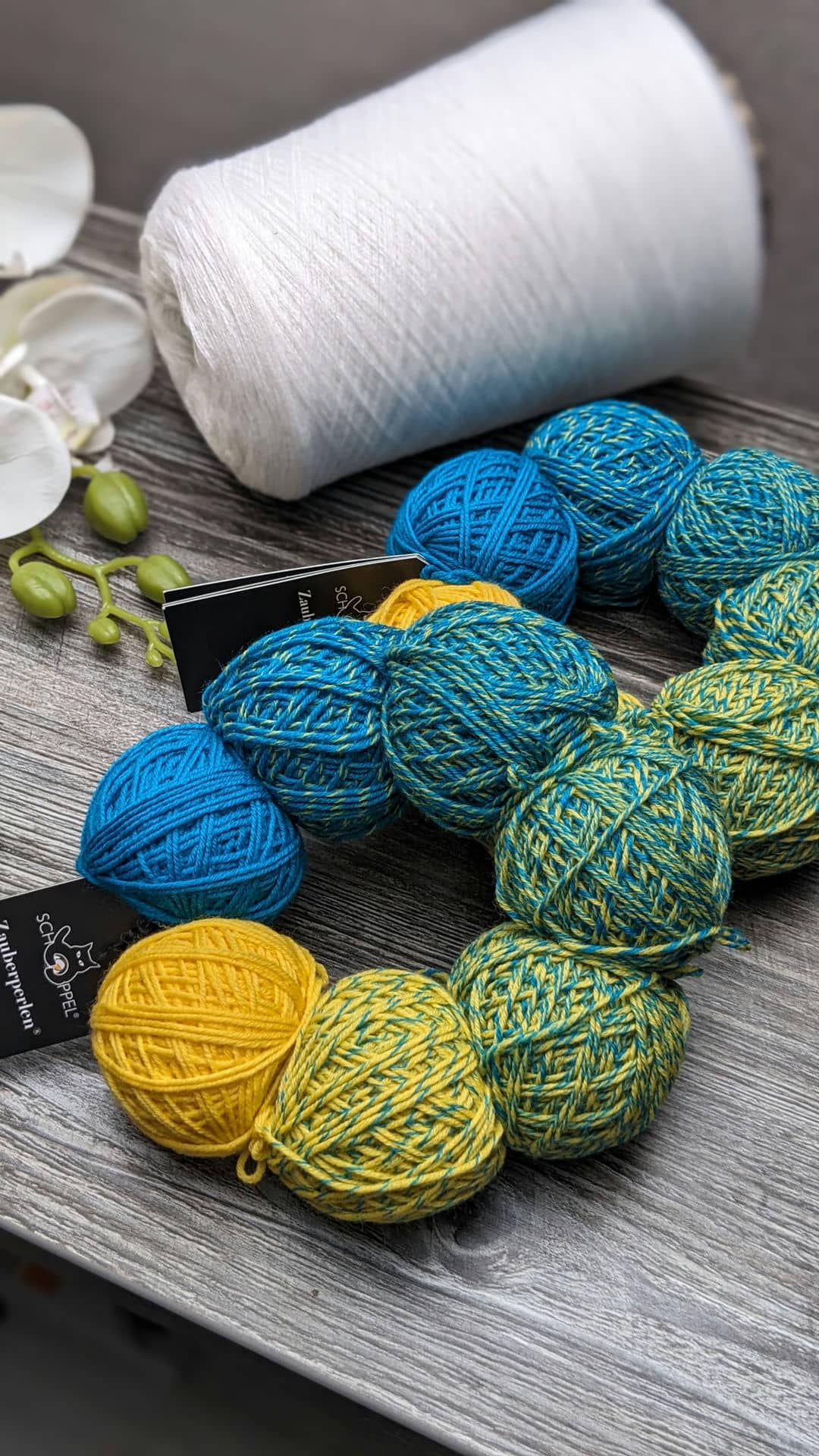
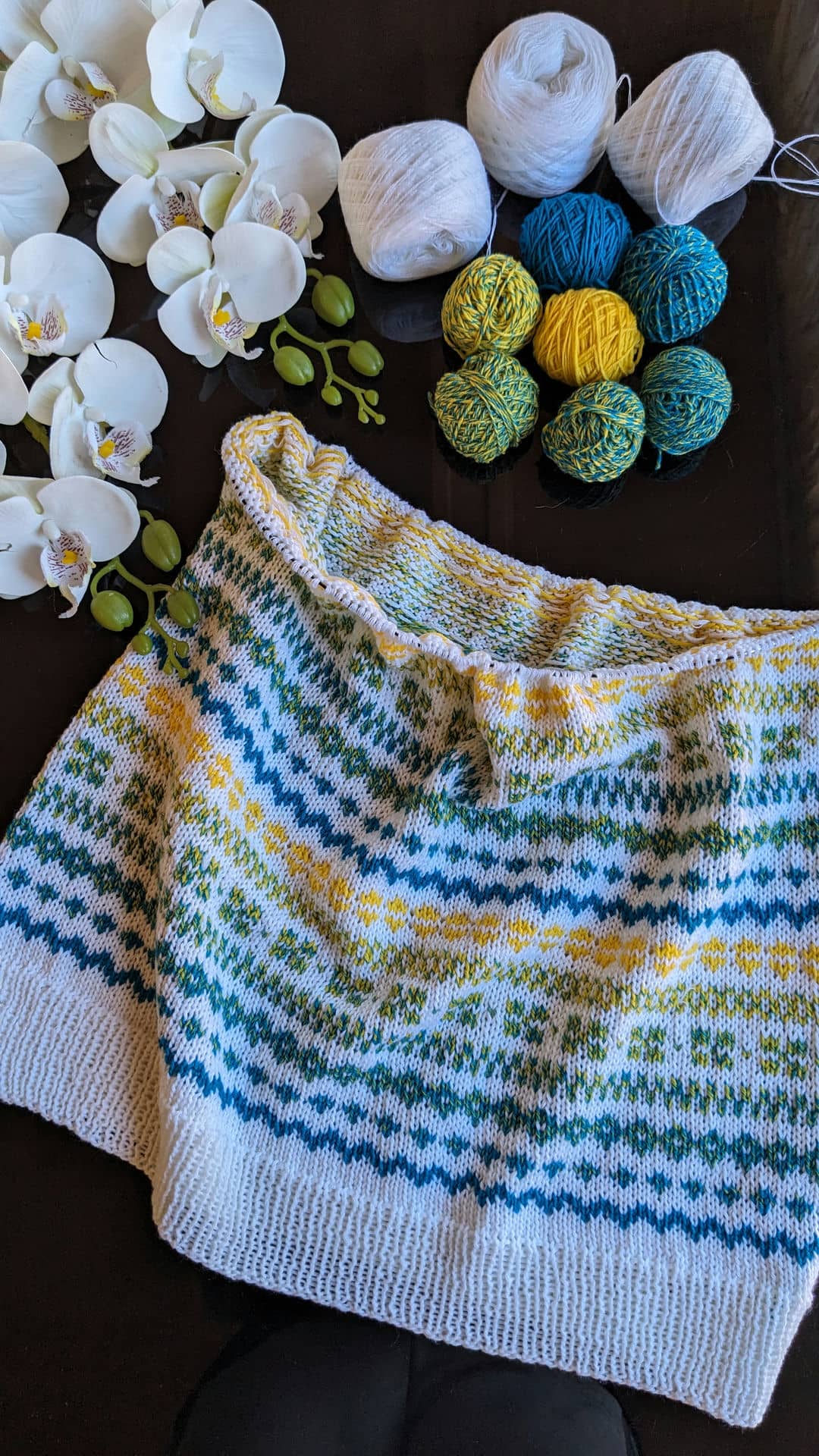
For the base I use white cone yarn (merino/cotton, 2400 m/100 g). It makes a soft, breathable fabric with comfortable stretch. We knit with 6 strands held together: 2400/6 = 400 (400 m/100 g).
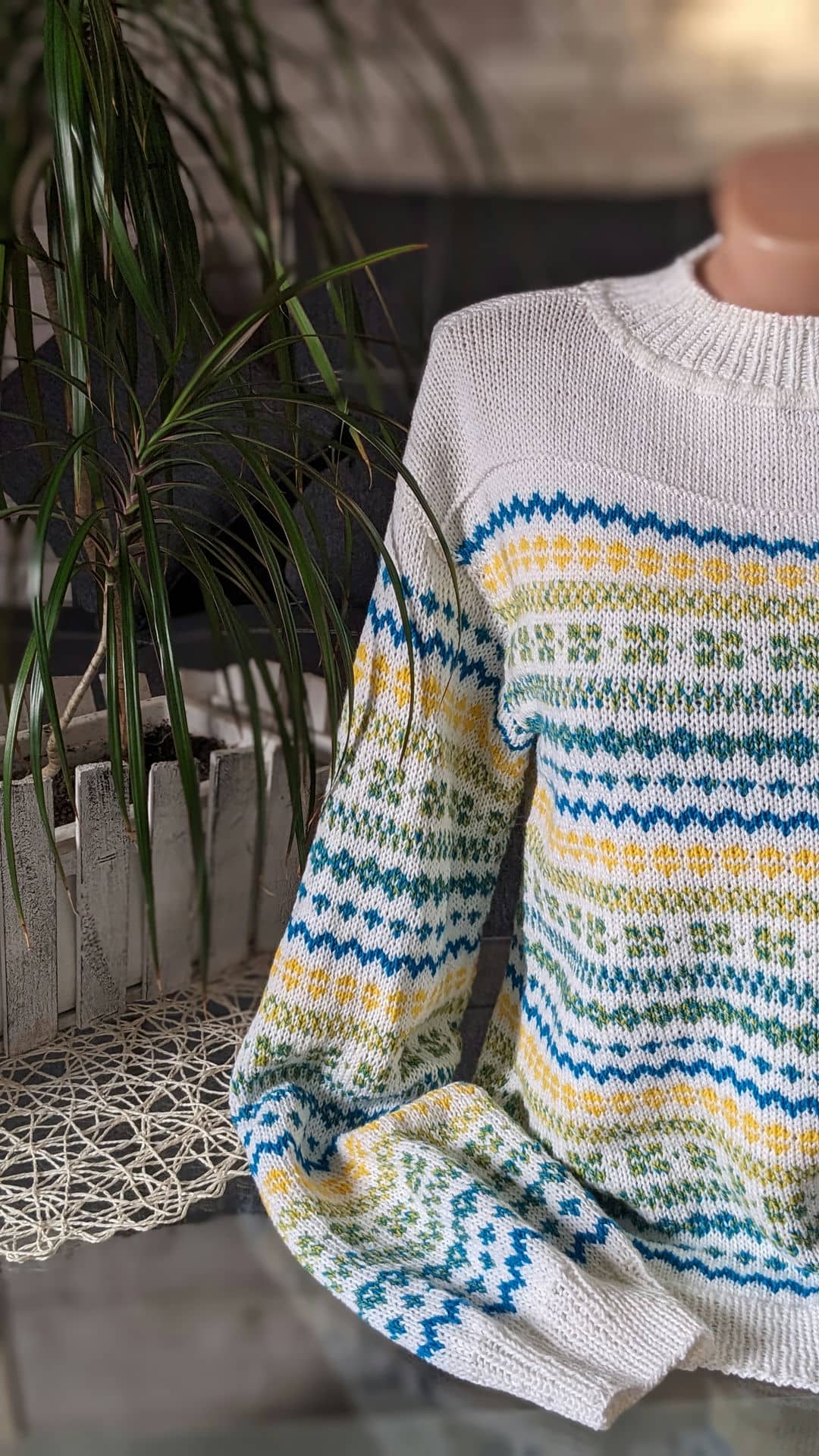
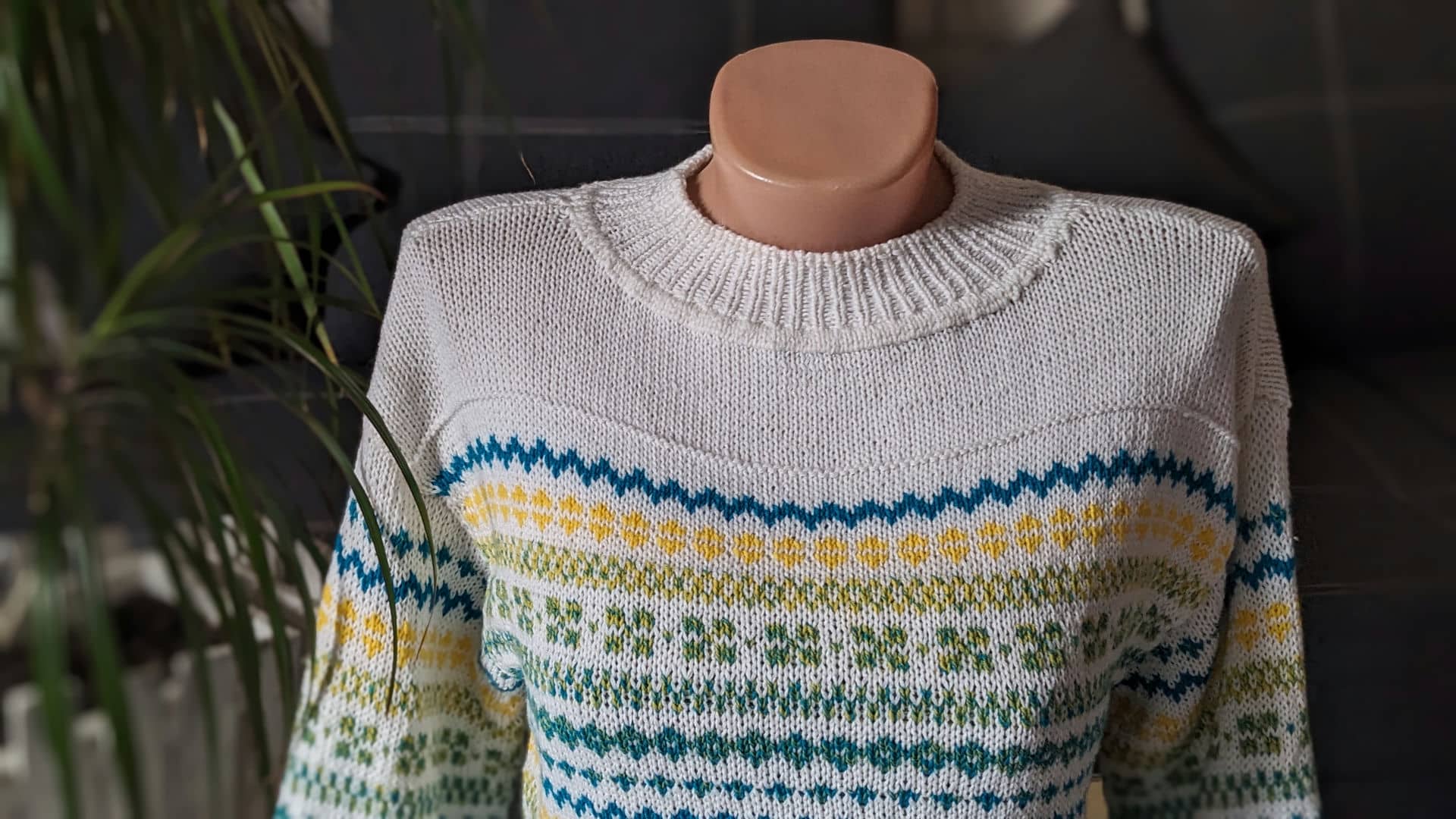
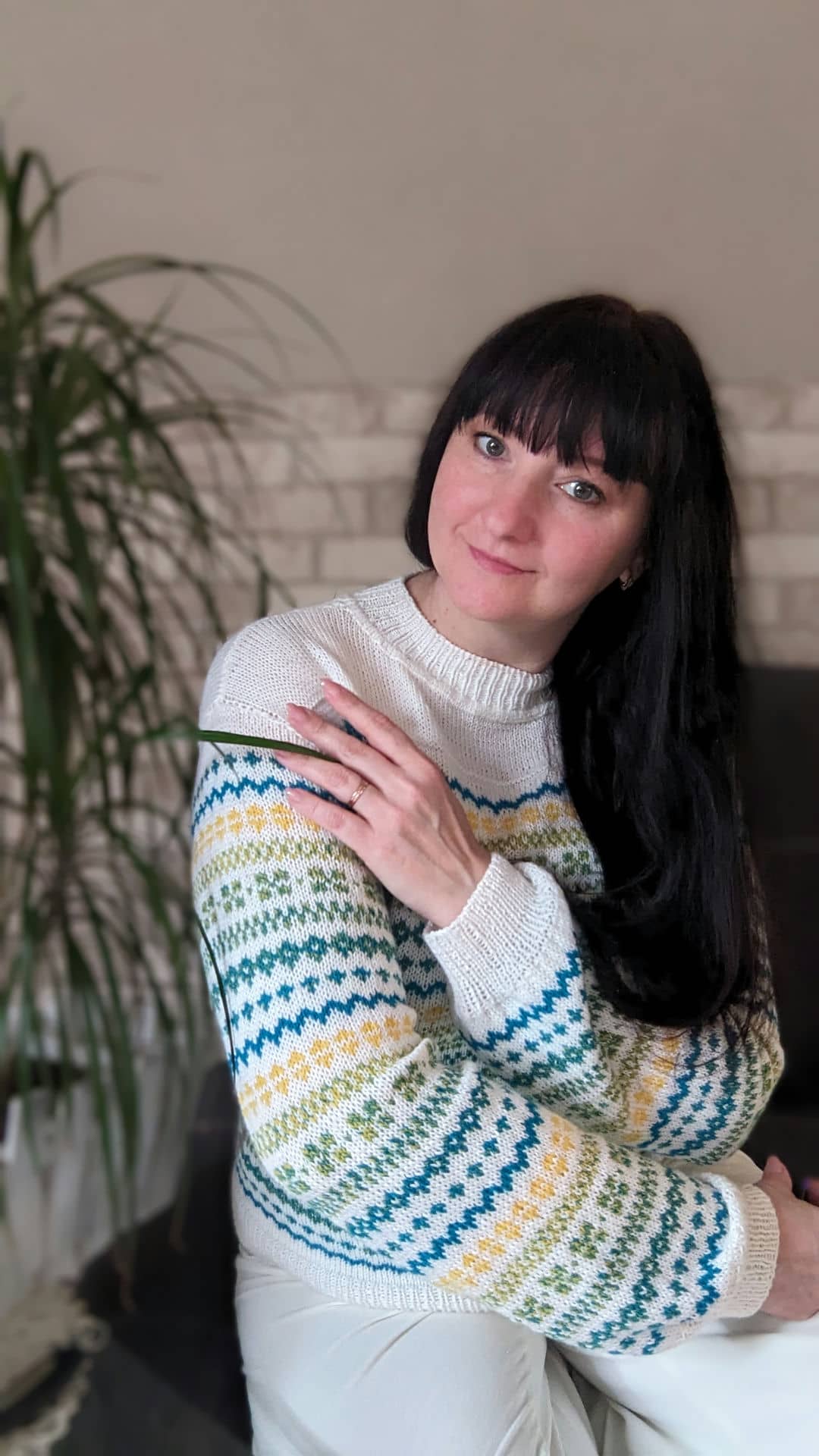
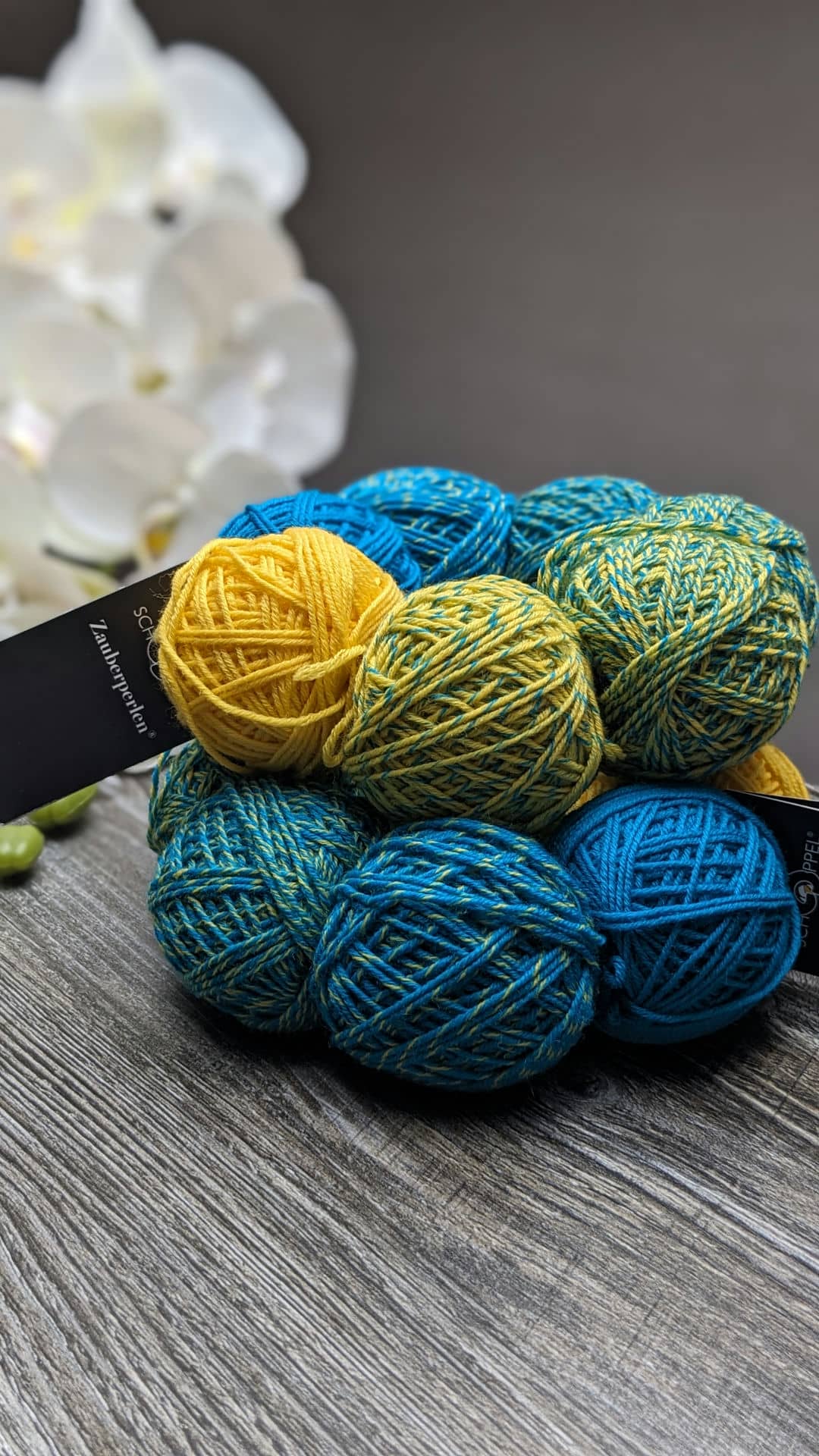
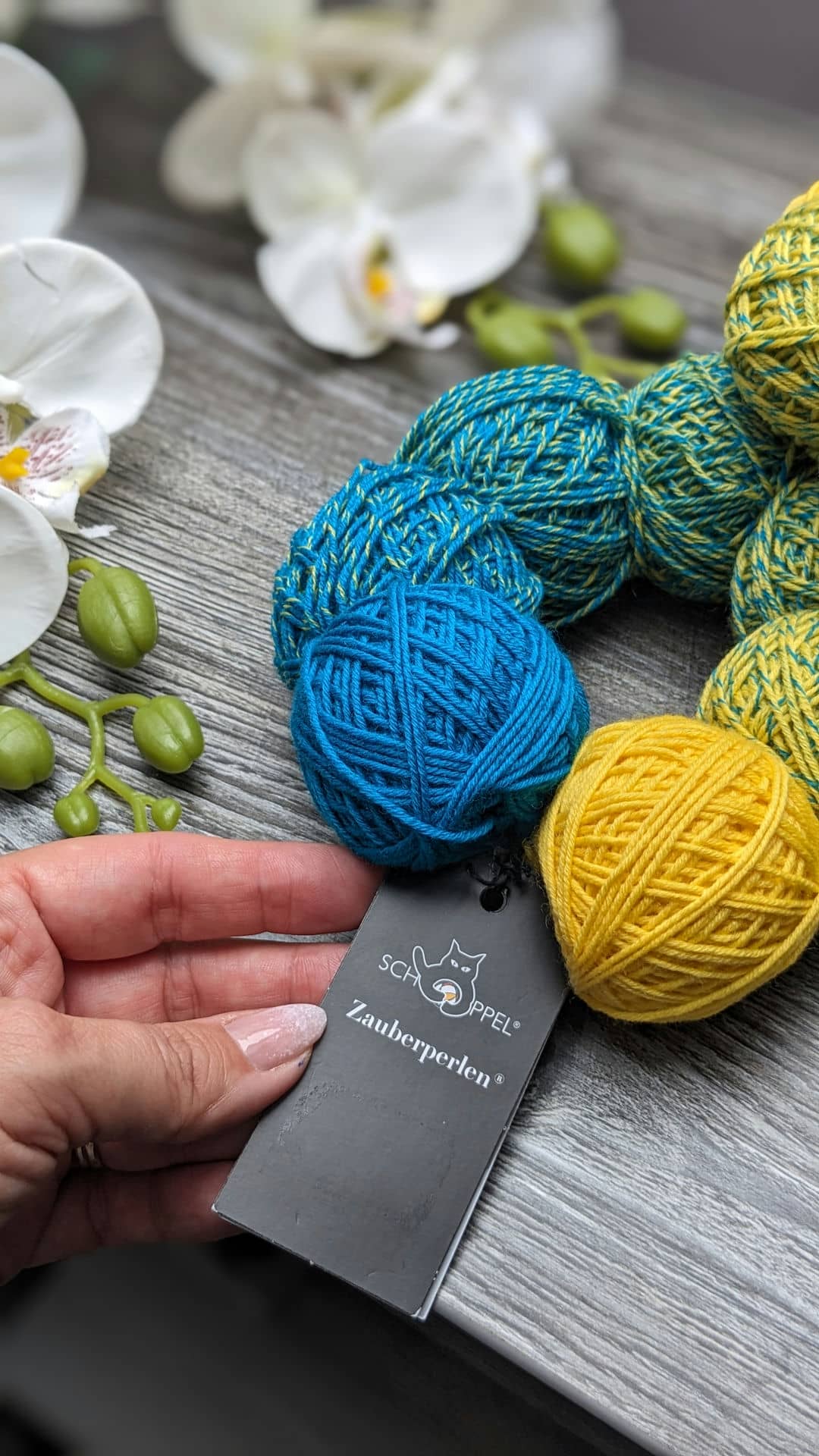
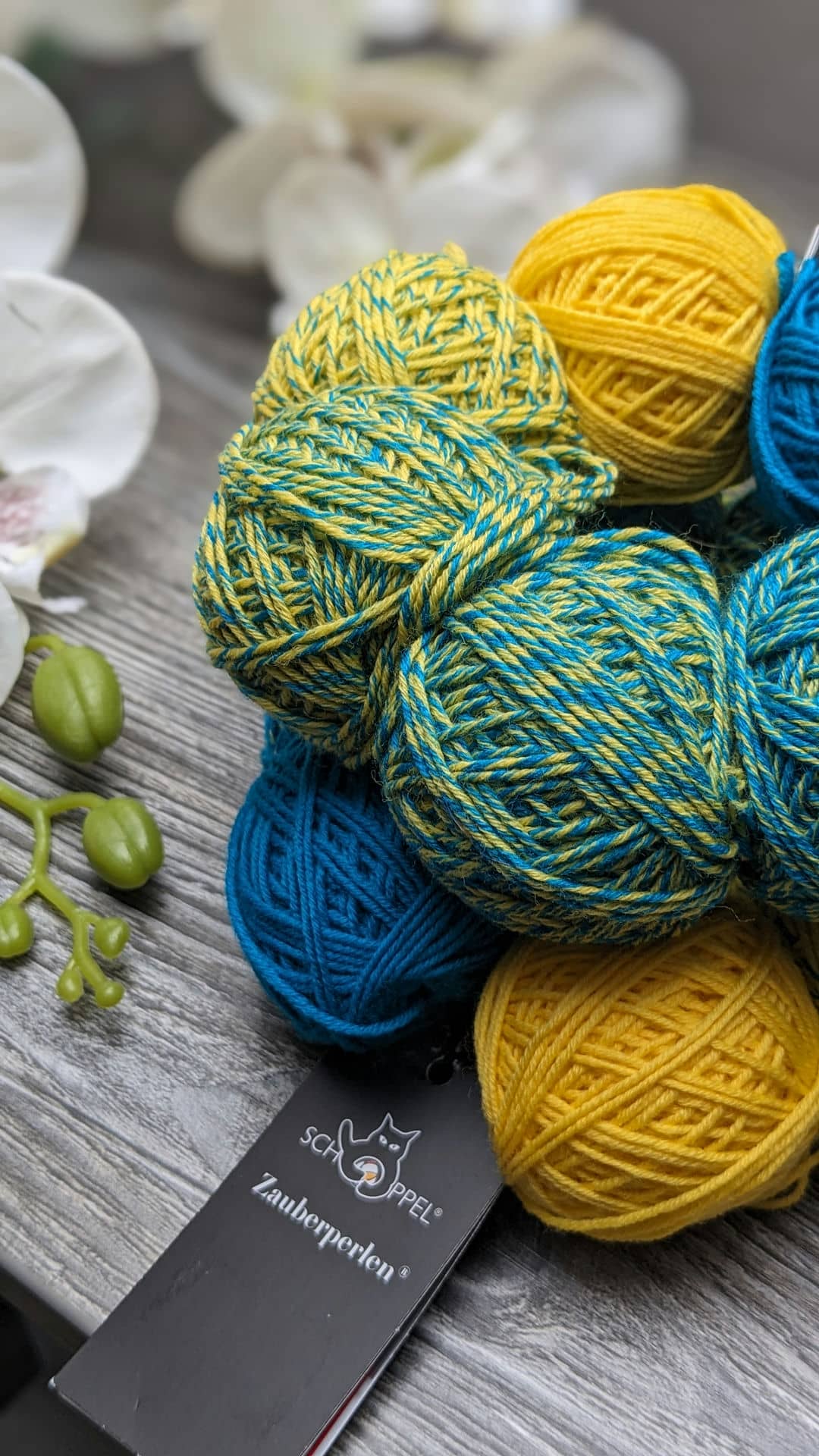
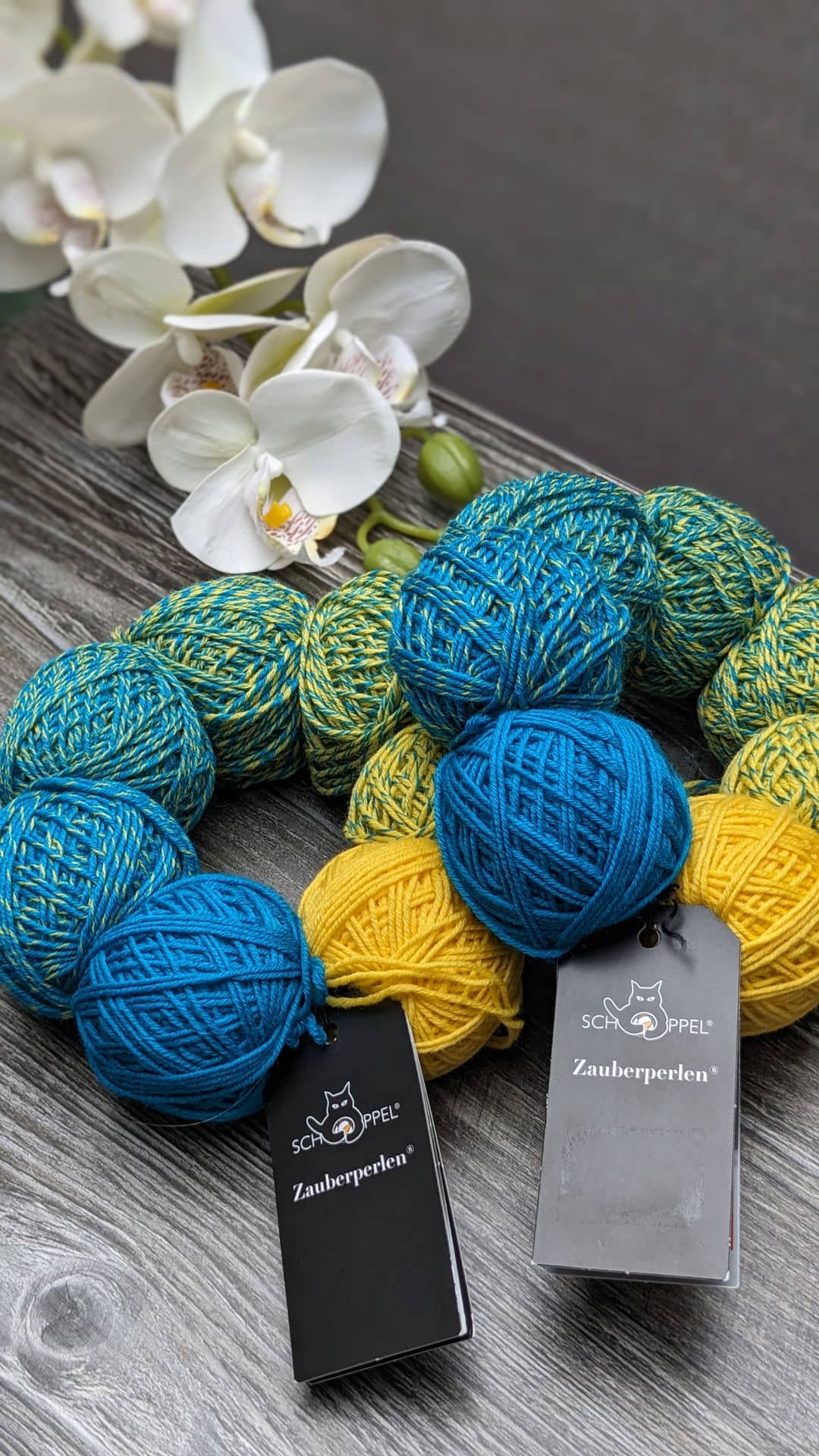
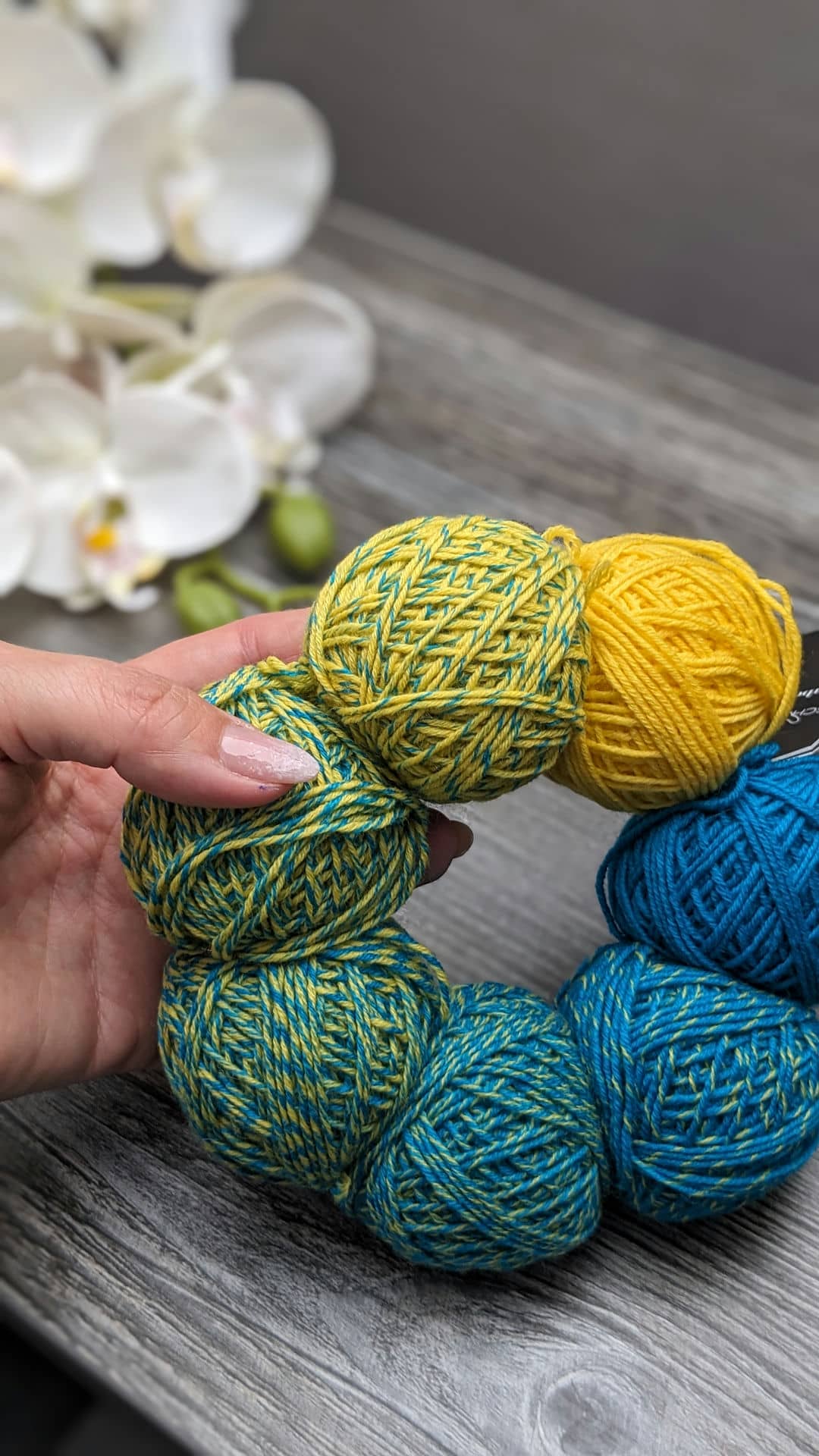
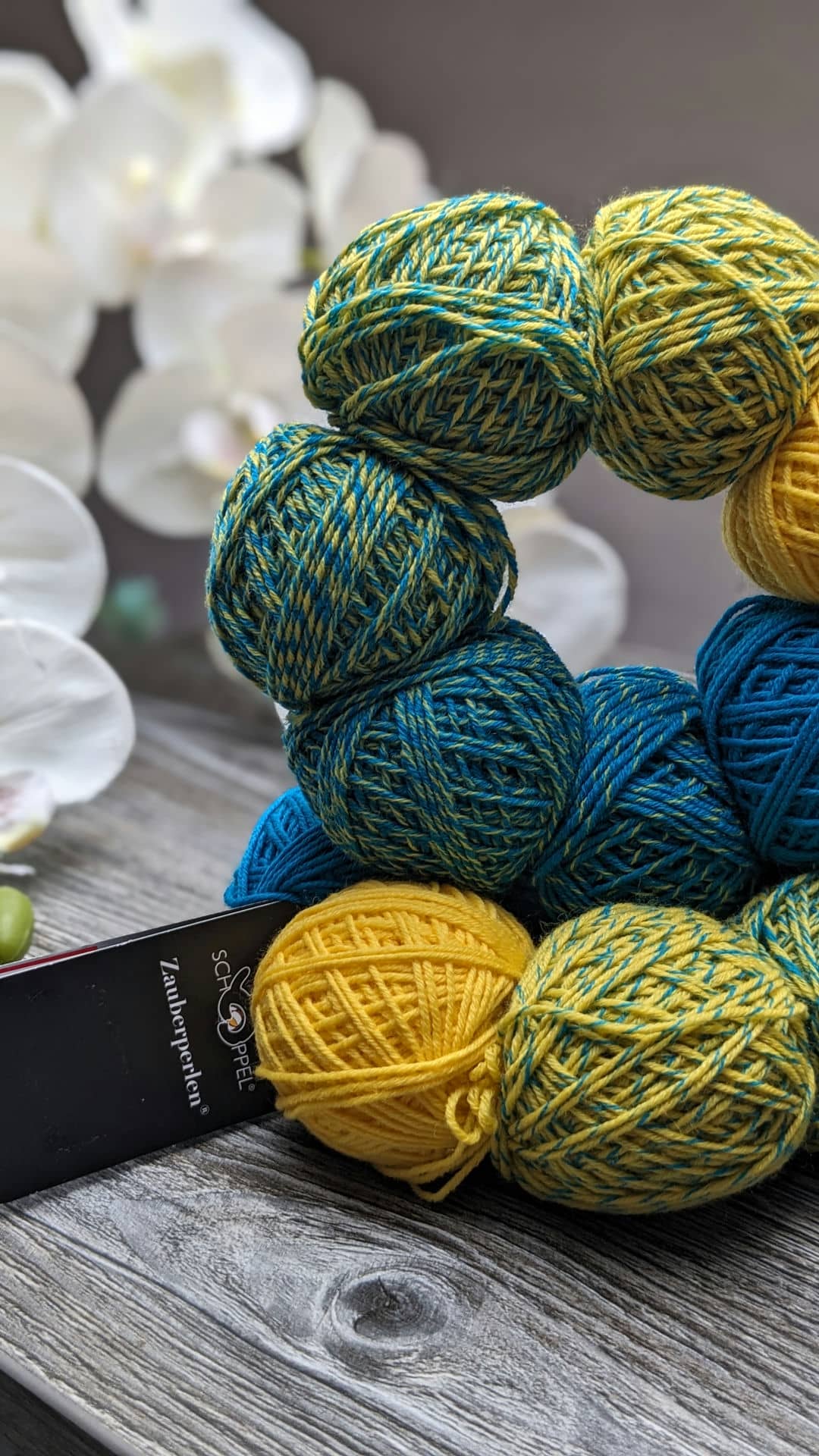
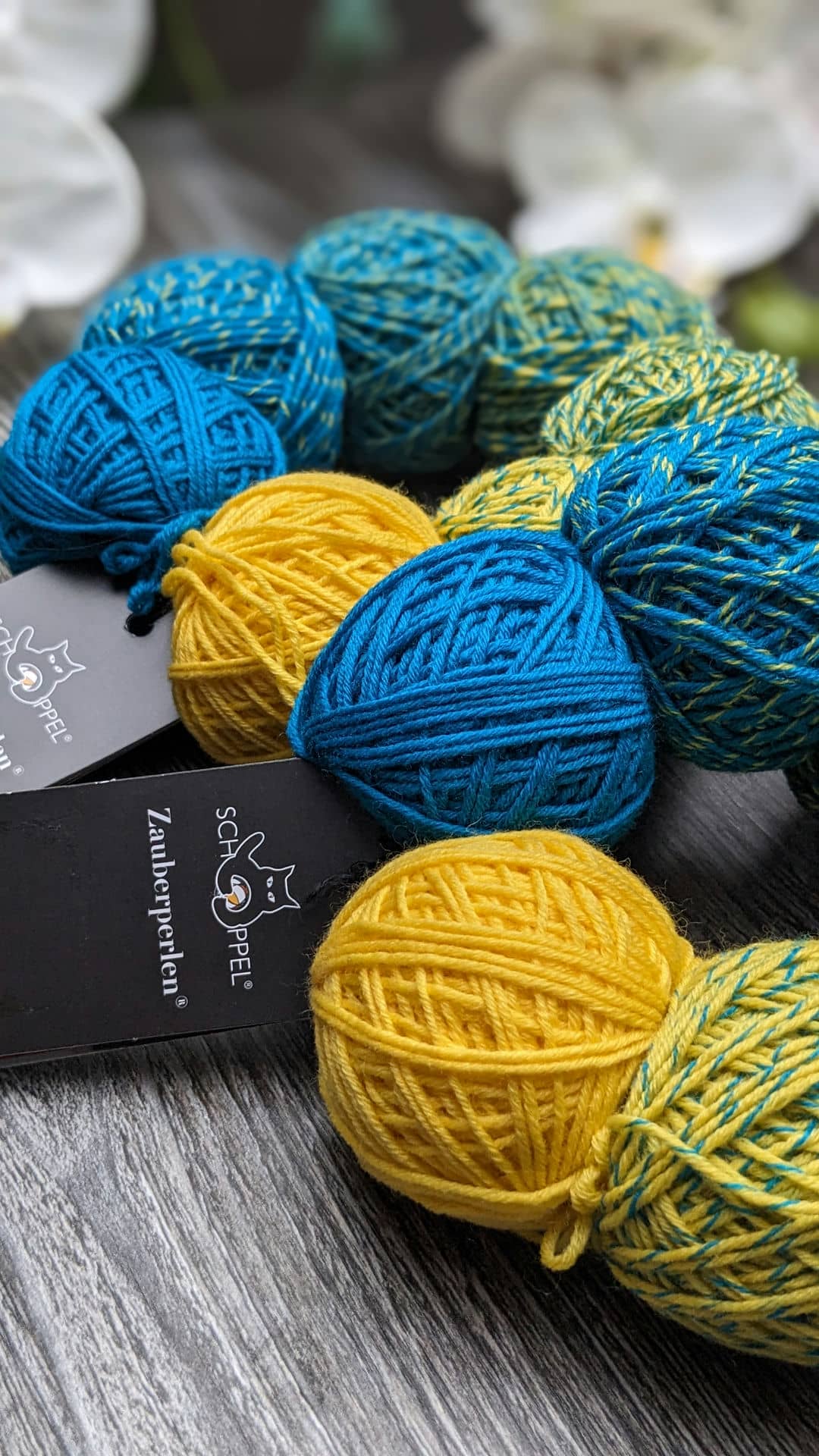
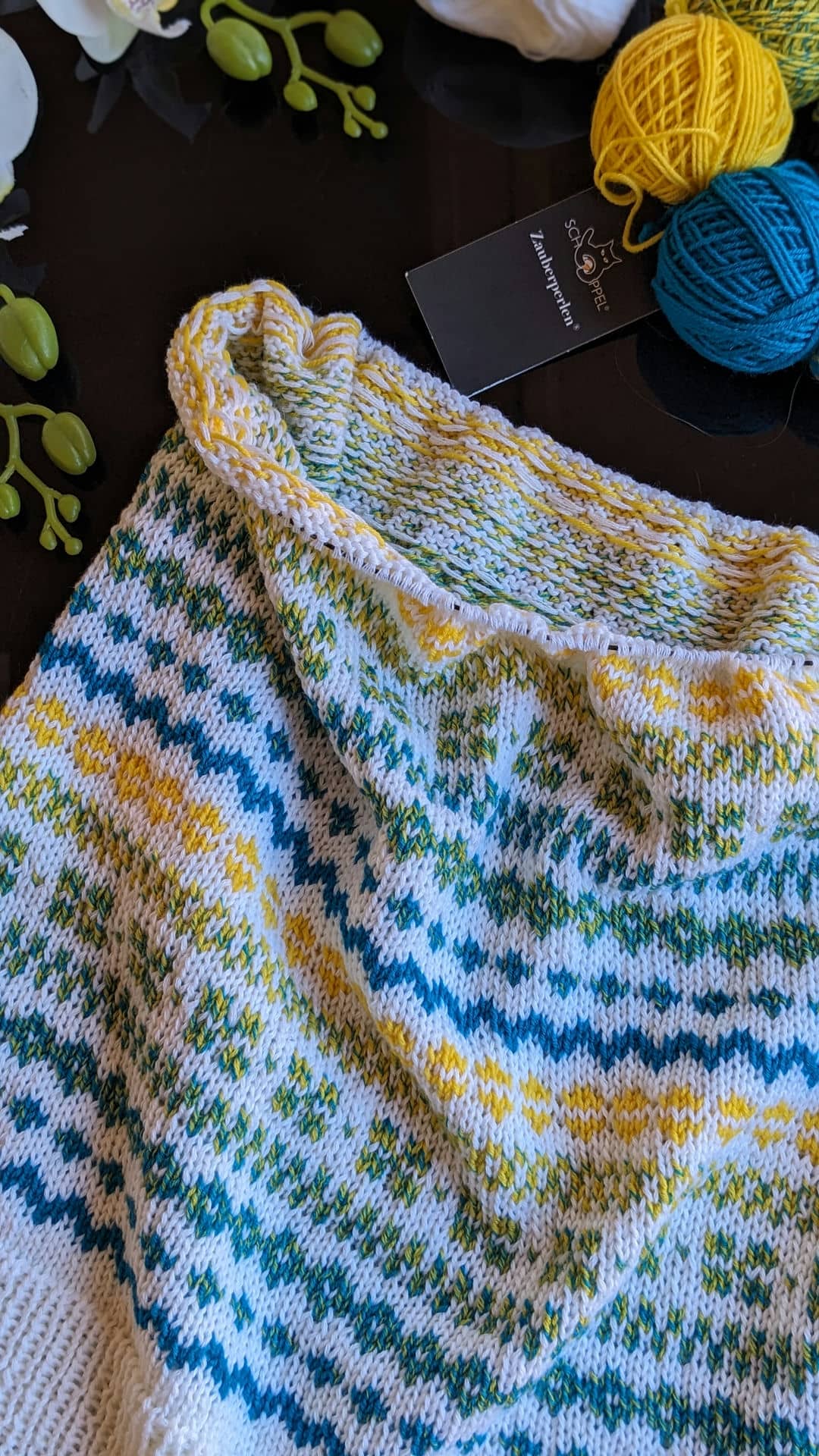
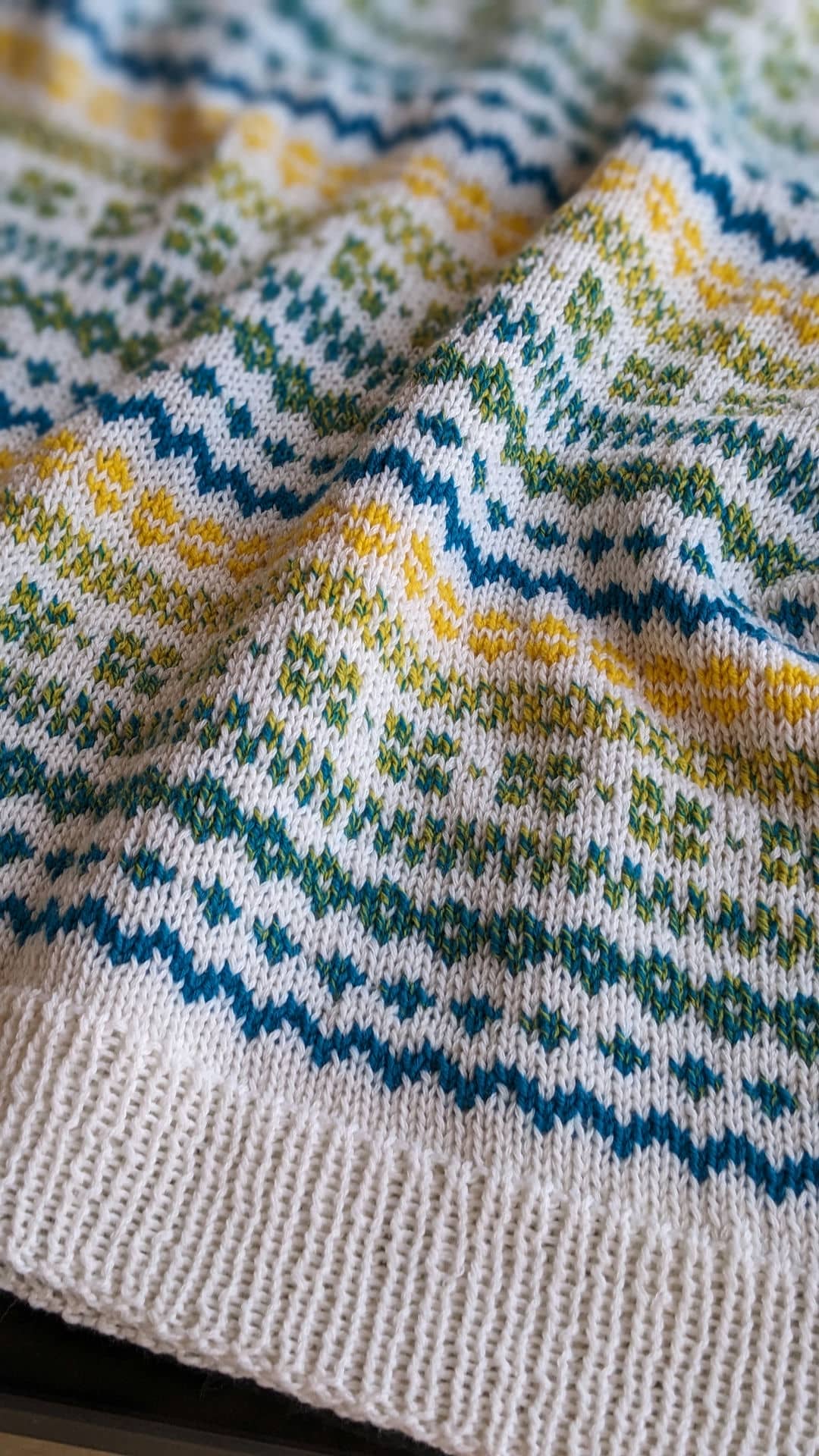
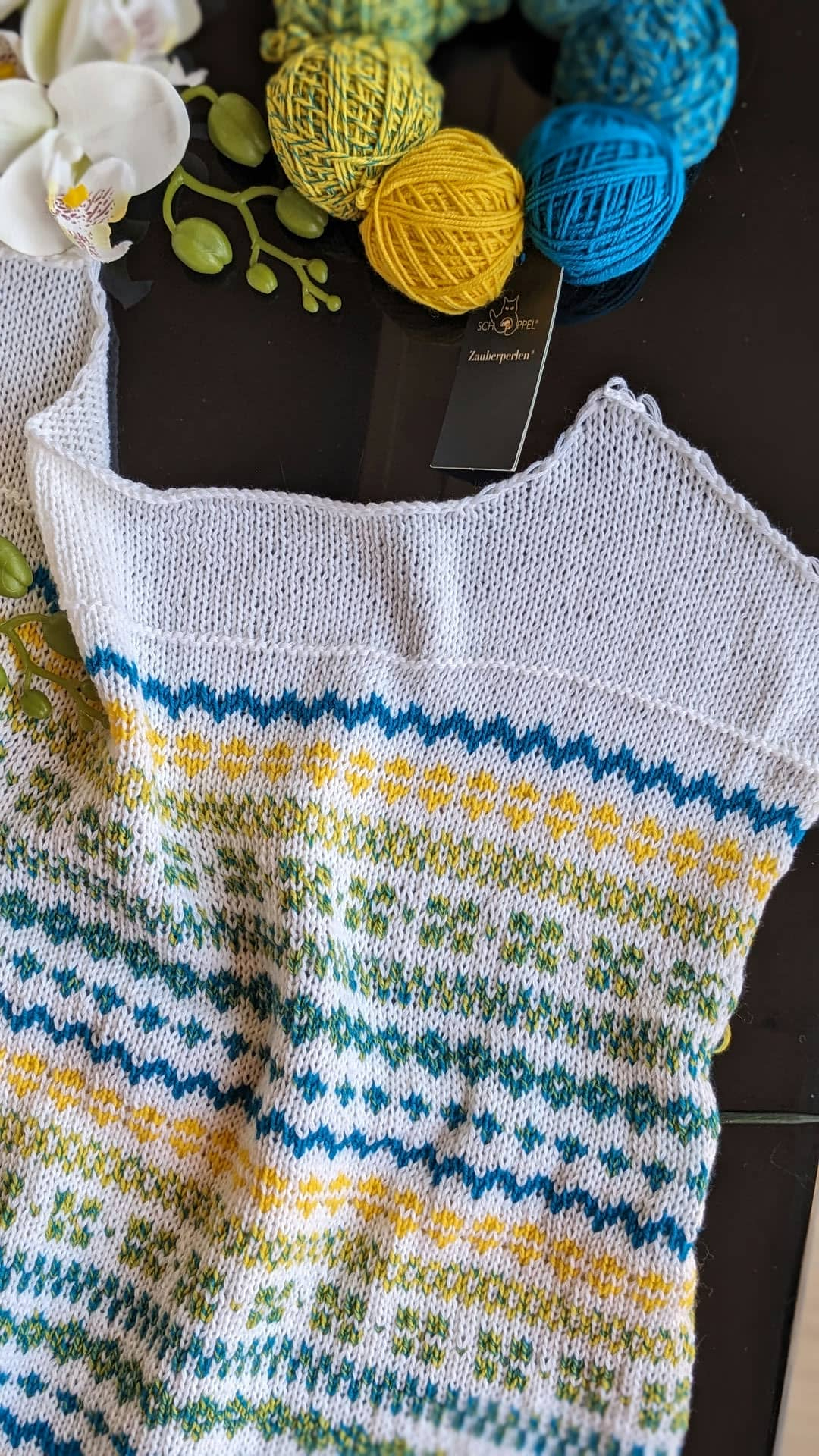
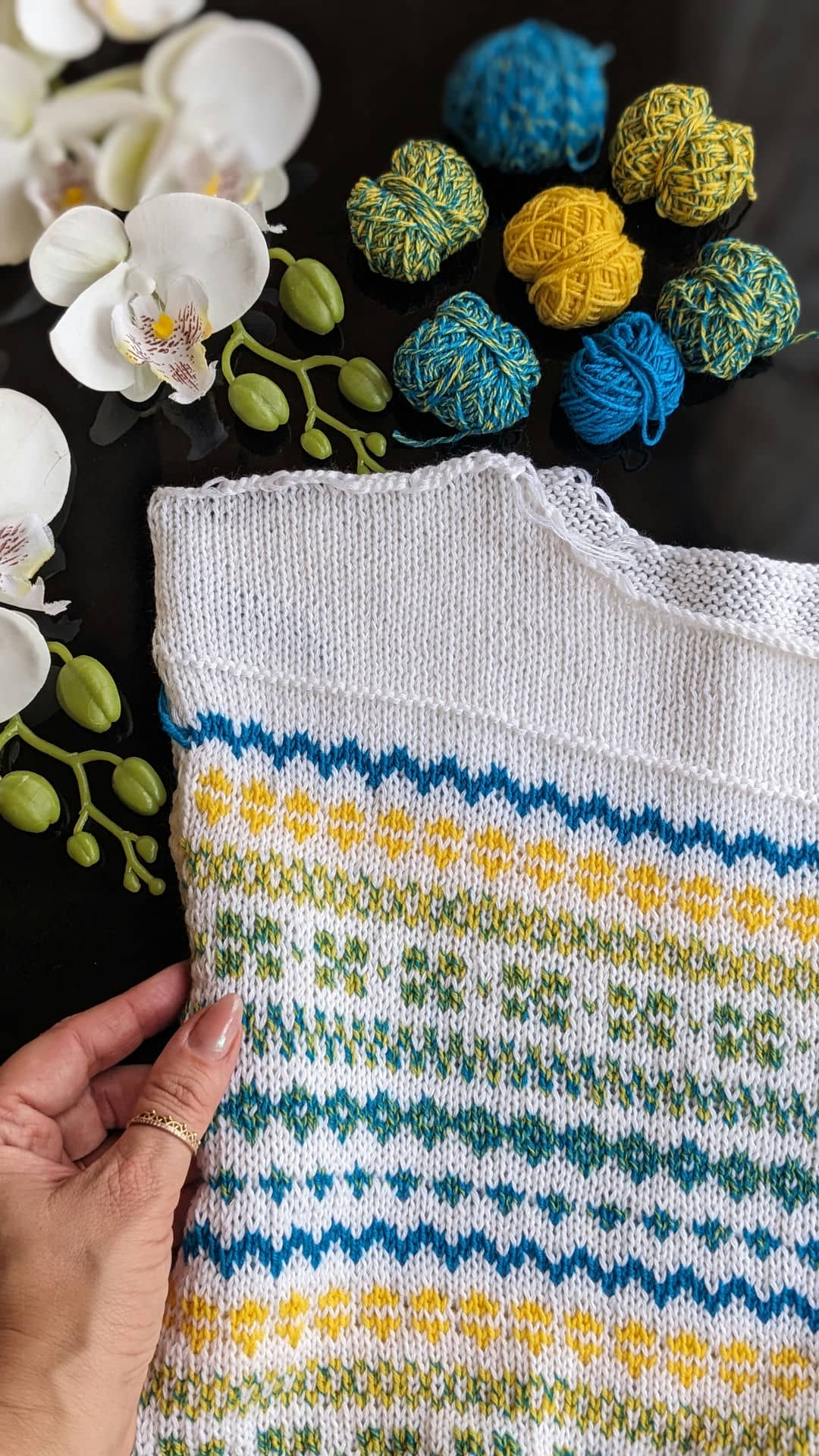
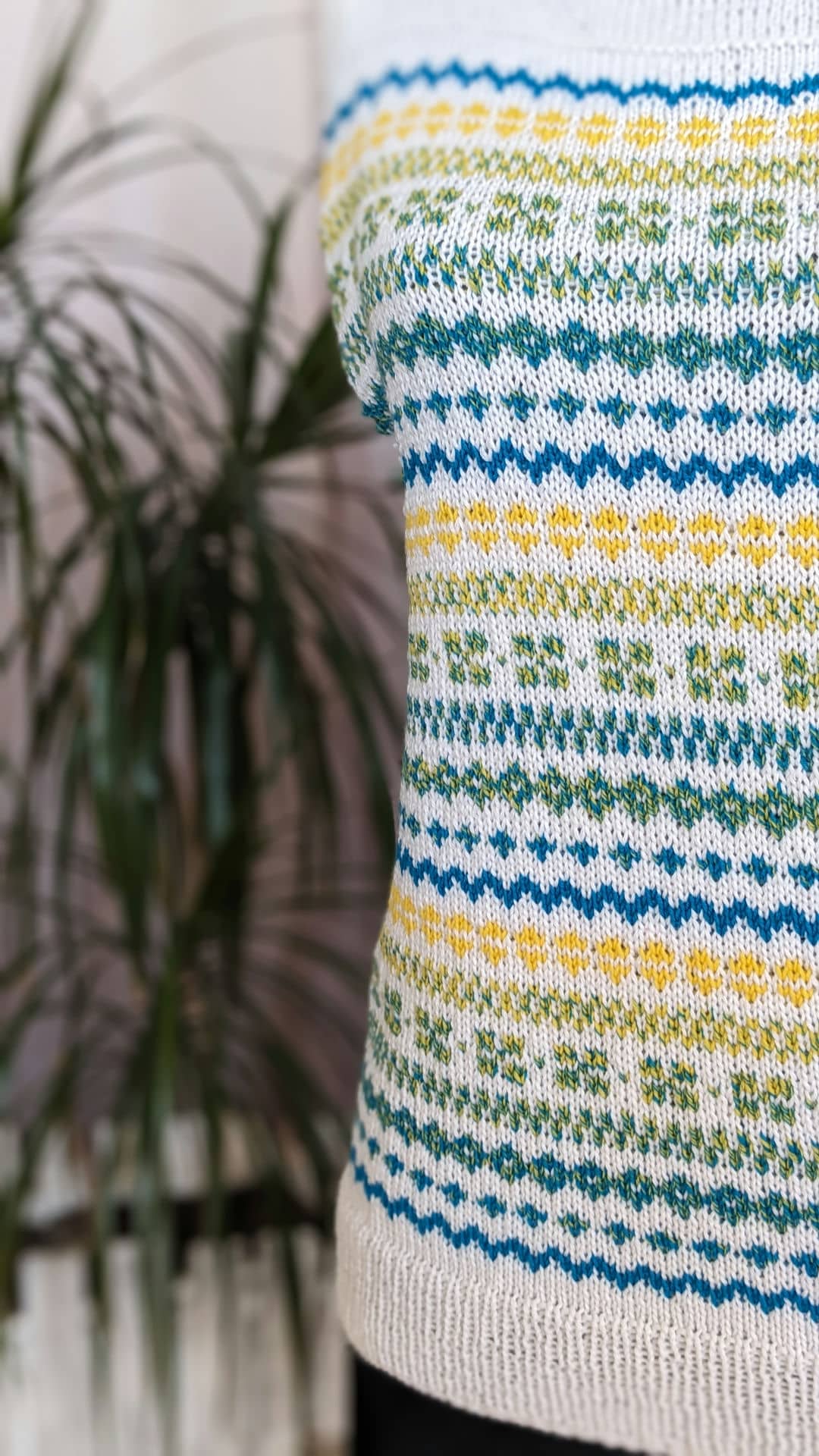
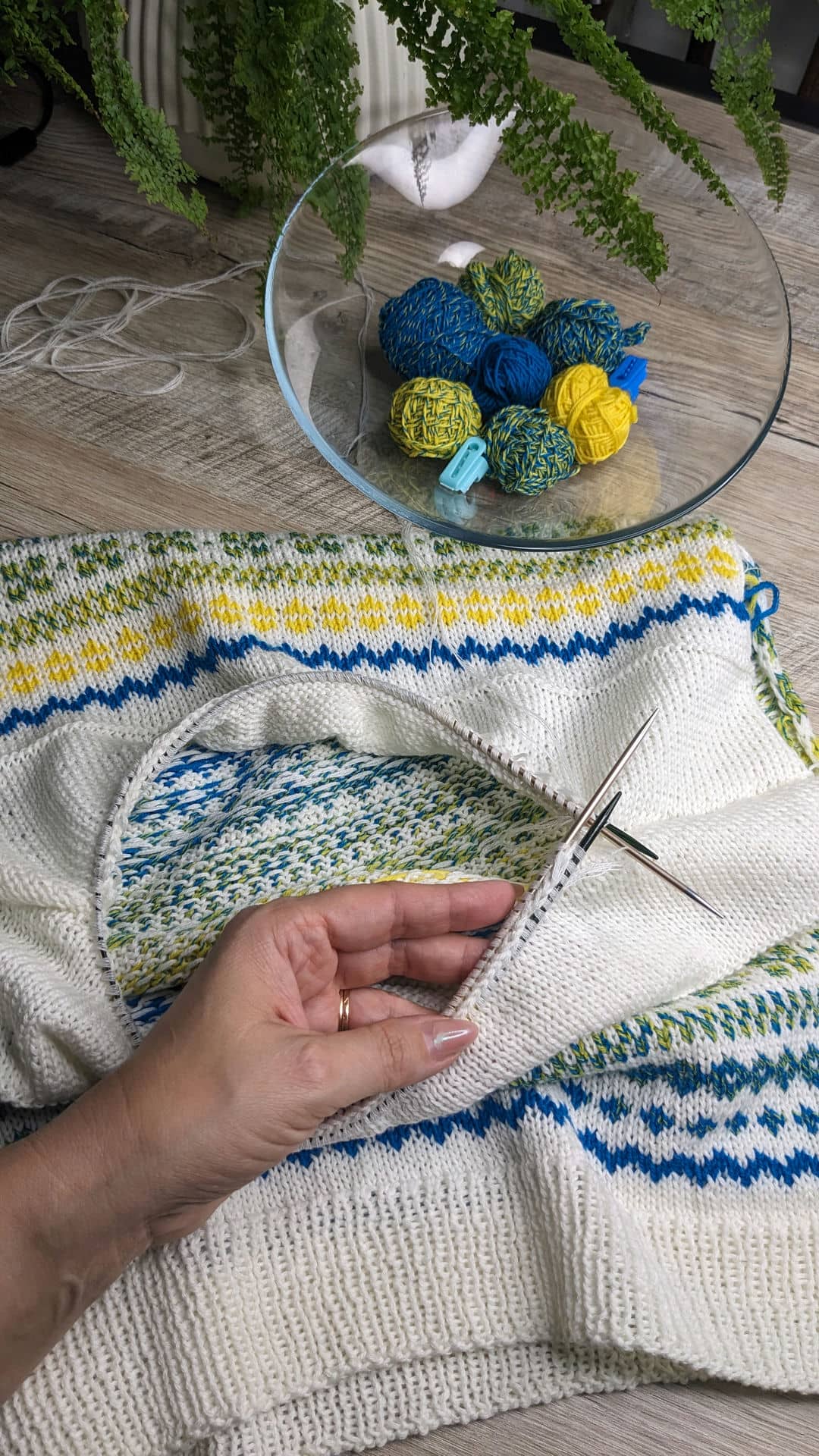
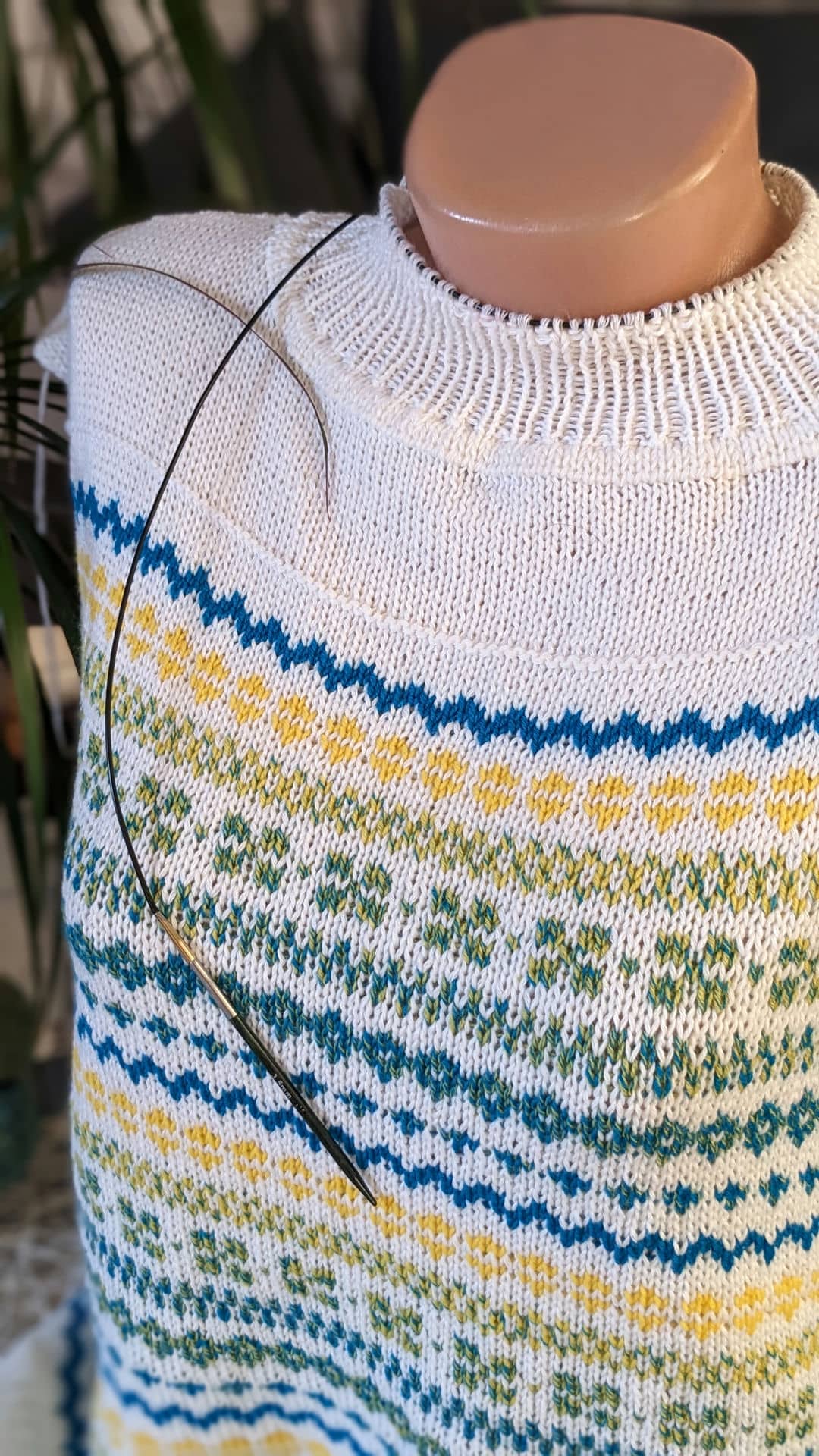
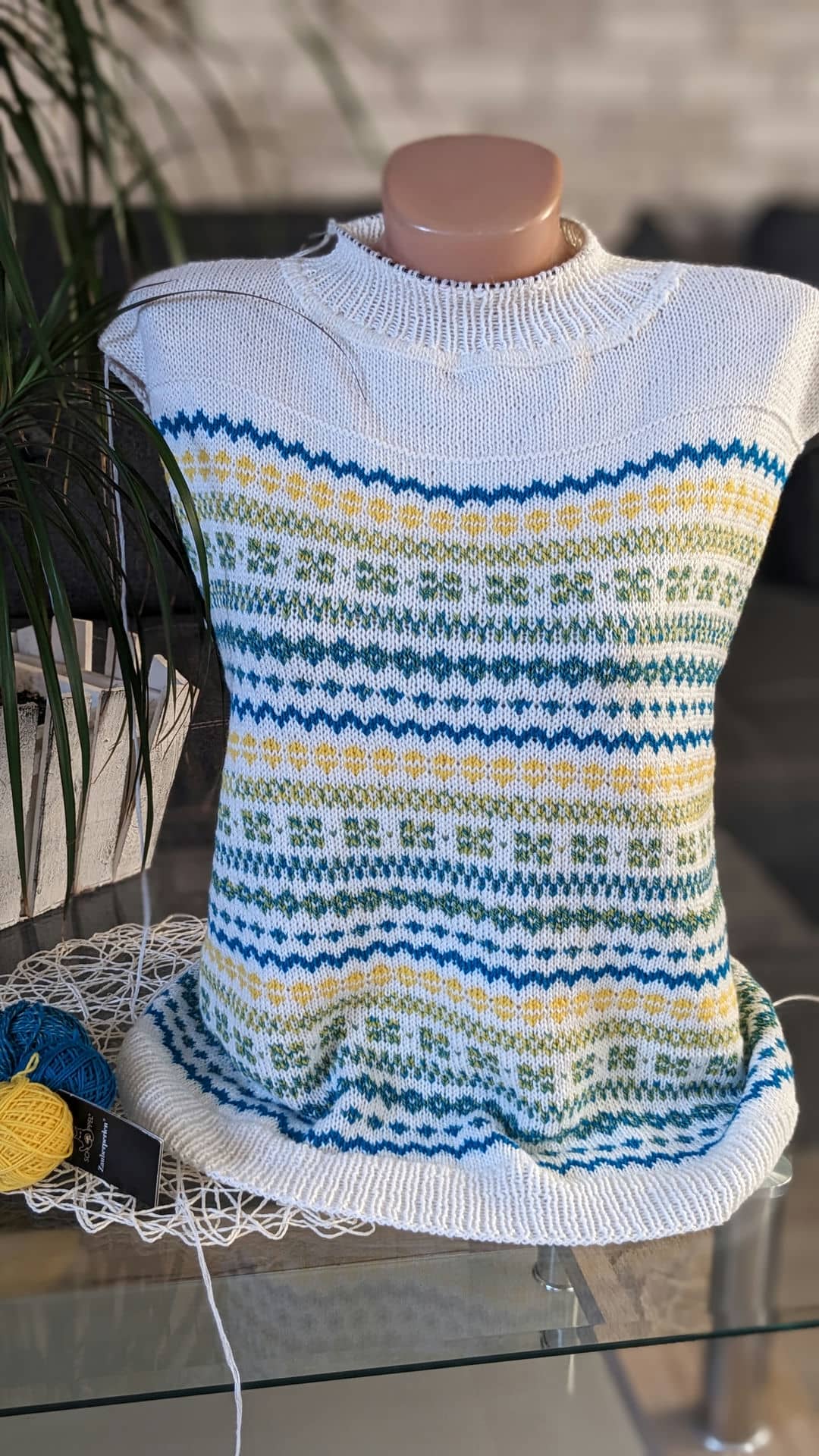
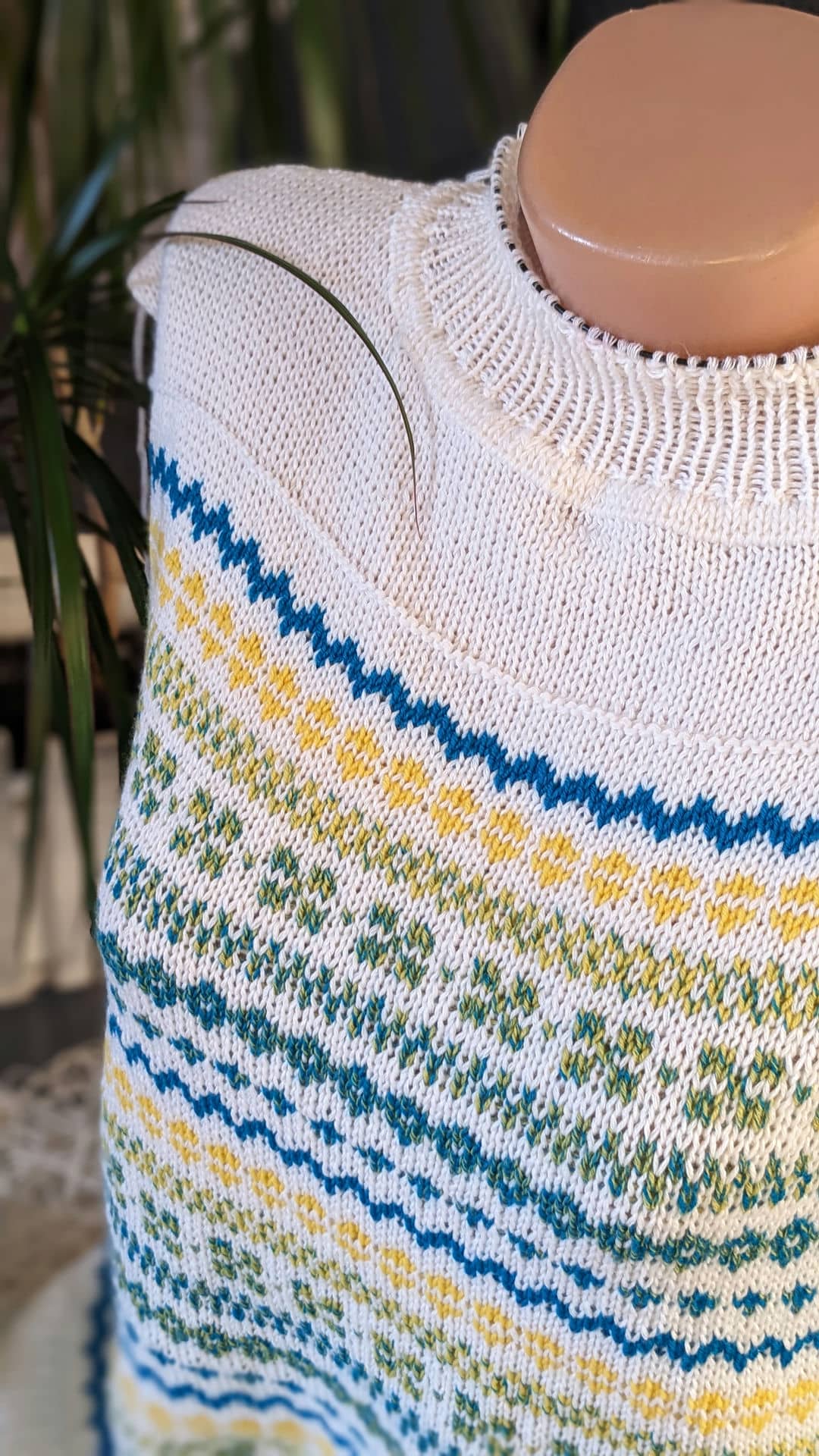
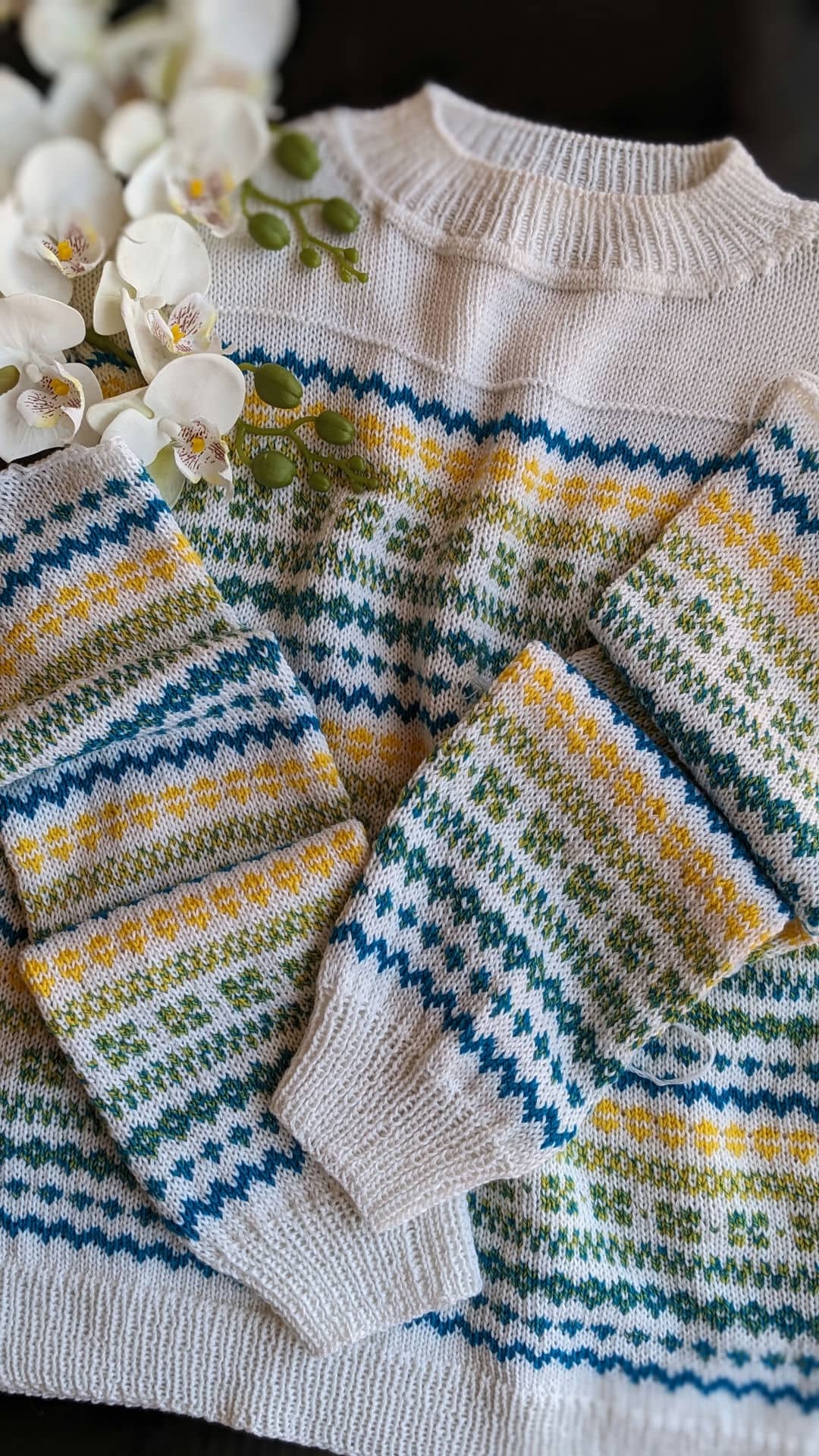
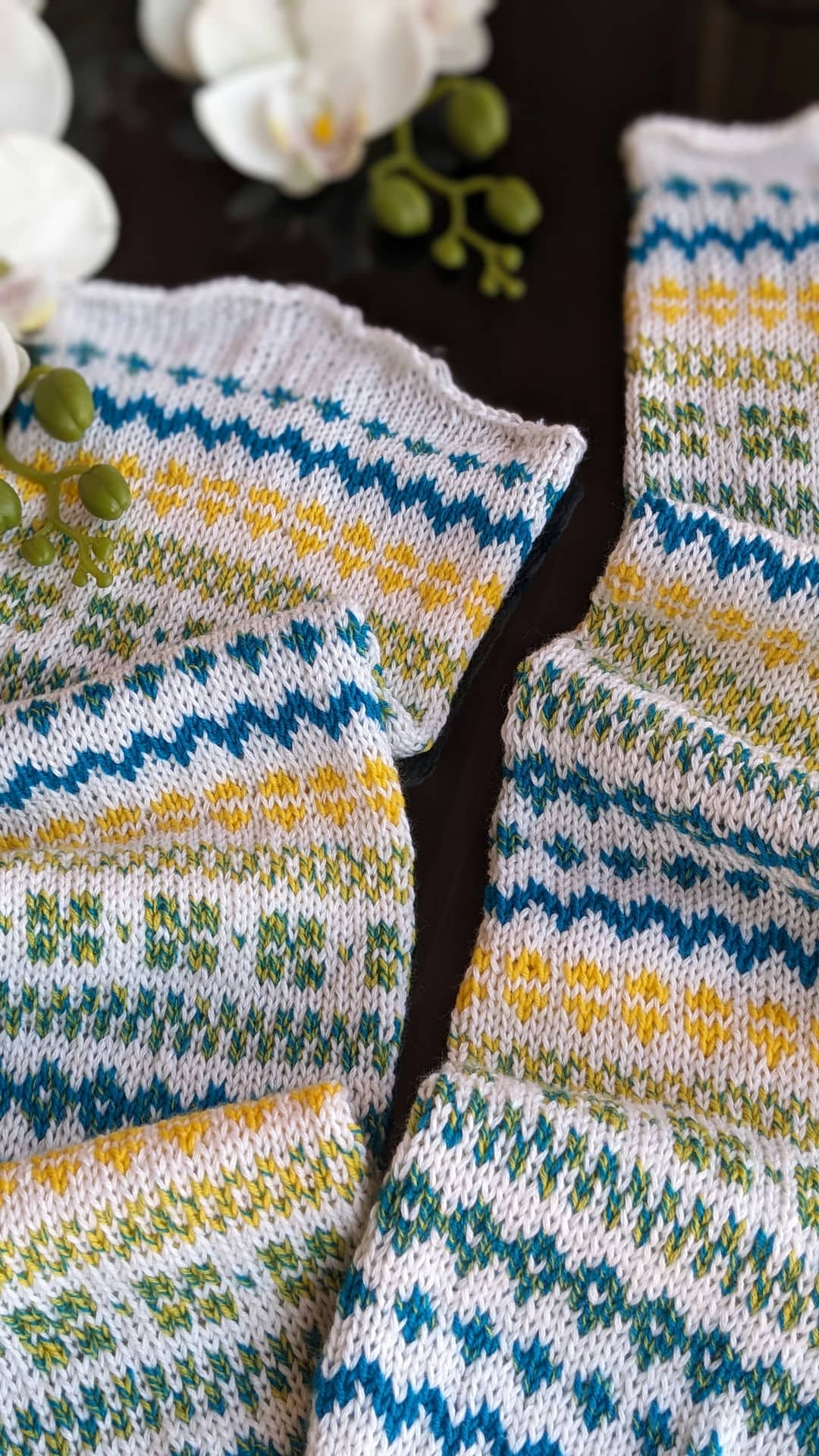
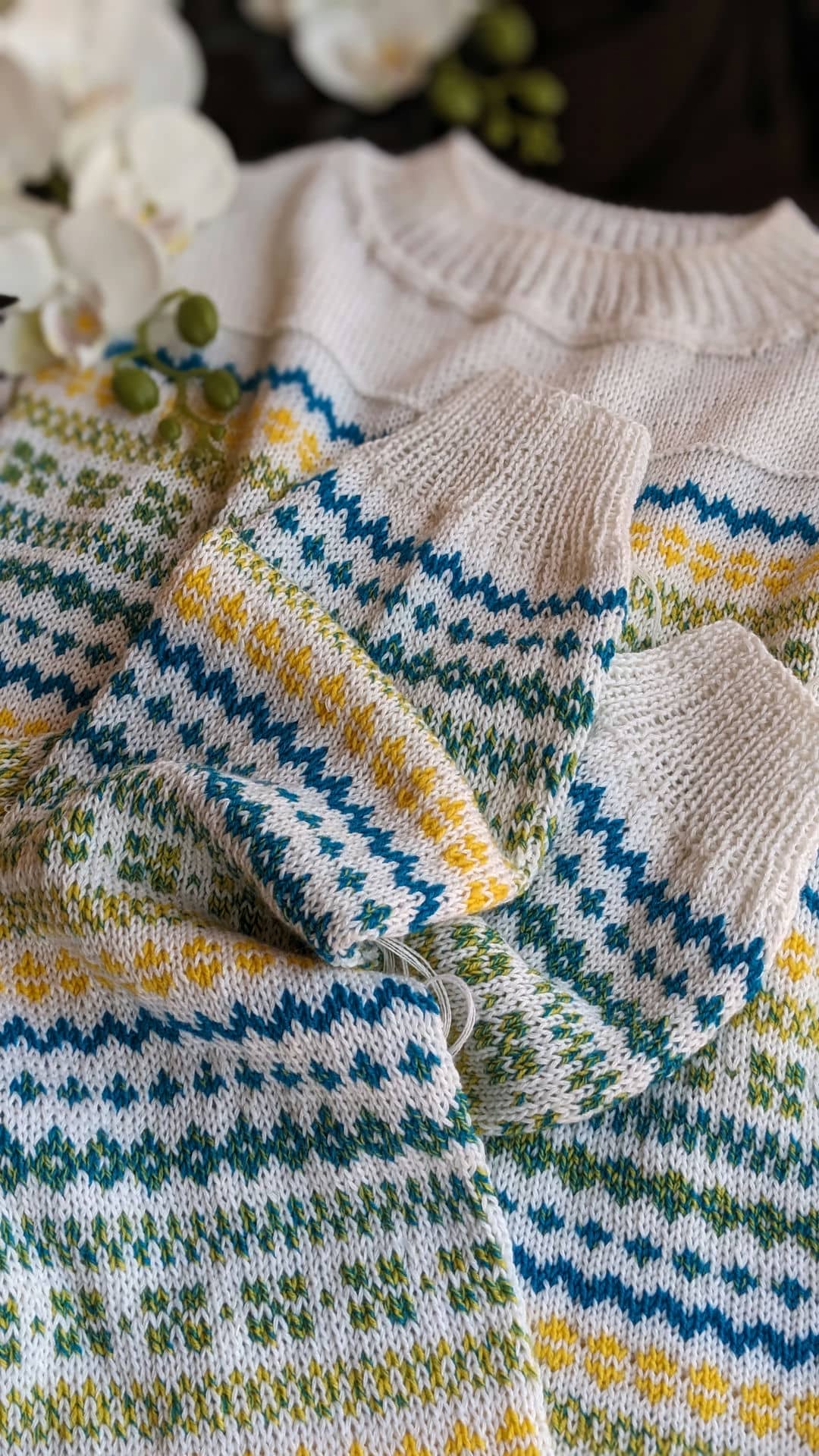
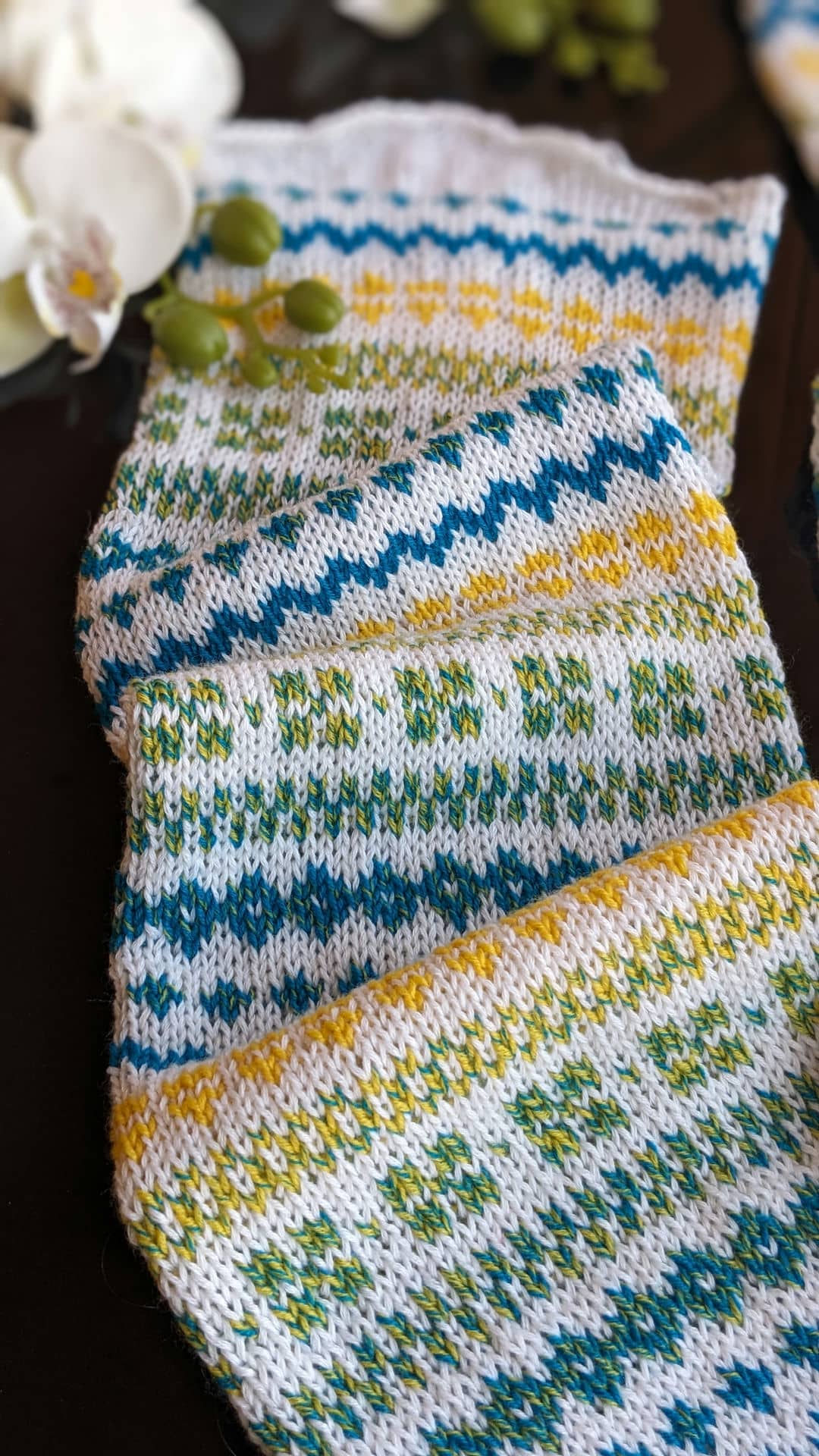
The coloured stripes are worked in Zauberperlen Schoppel, 100% merino (400 m/100 g) with a smooth gradient in yellow and turquoise tones. This colour transition is exactly what gives the jumper its “shimmering light” effect.
Combining the two yarns creates a perfect balance: the white base sets off the purity of the colour, while the merino adds softness and structure.
Technique
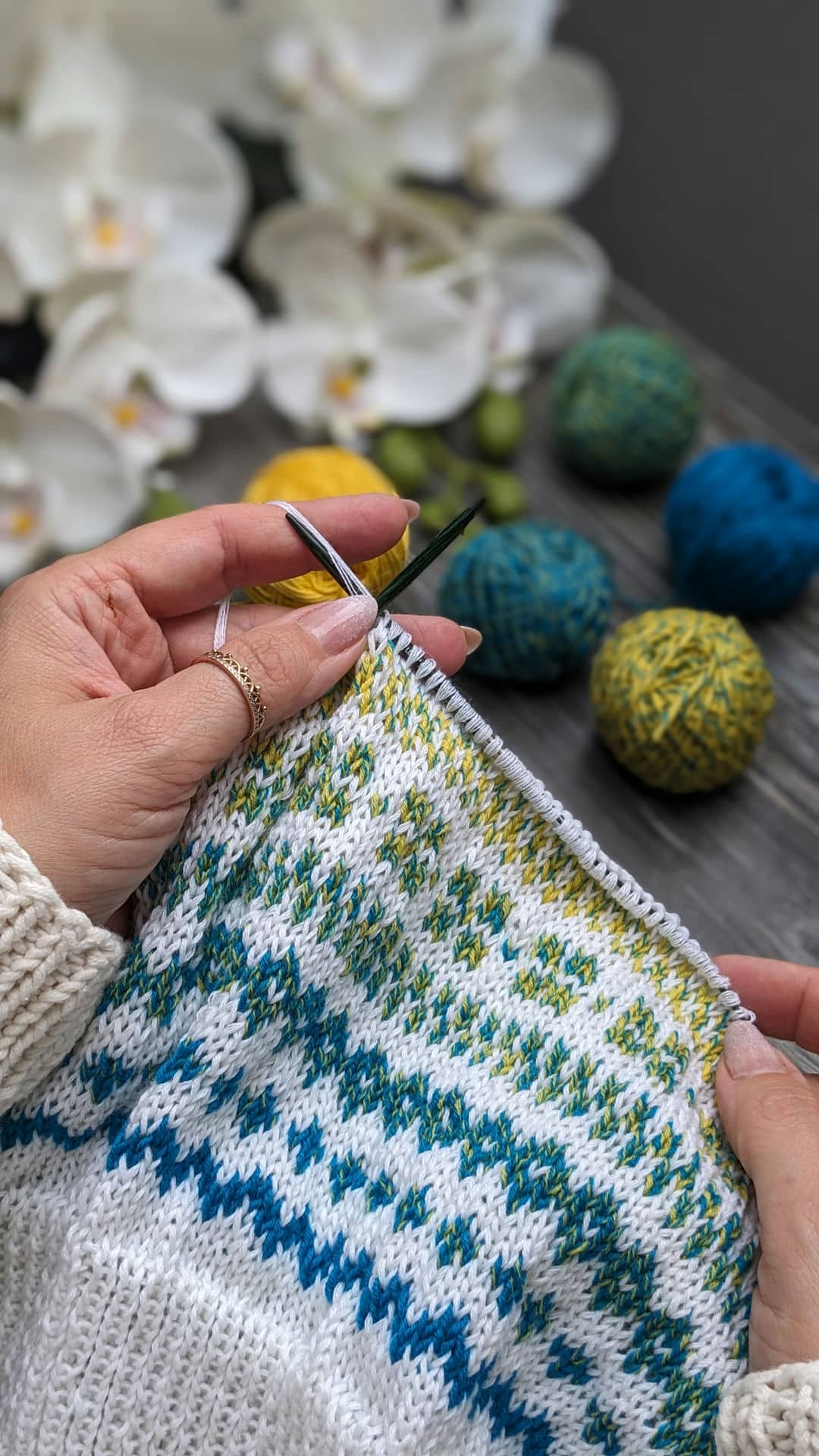
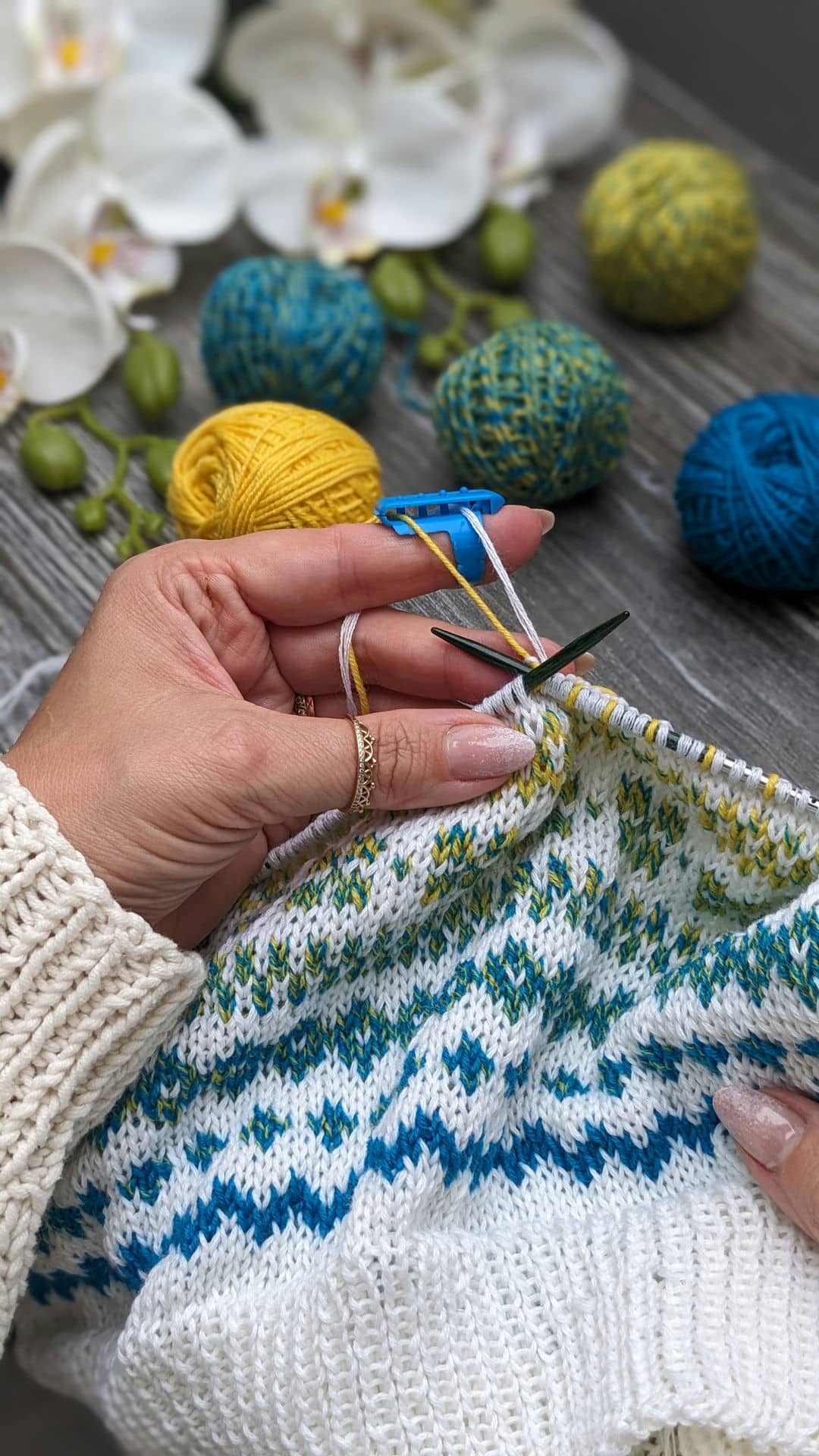
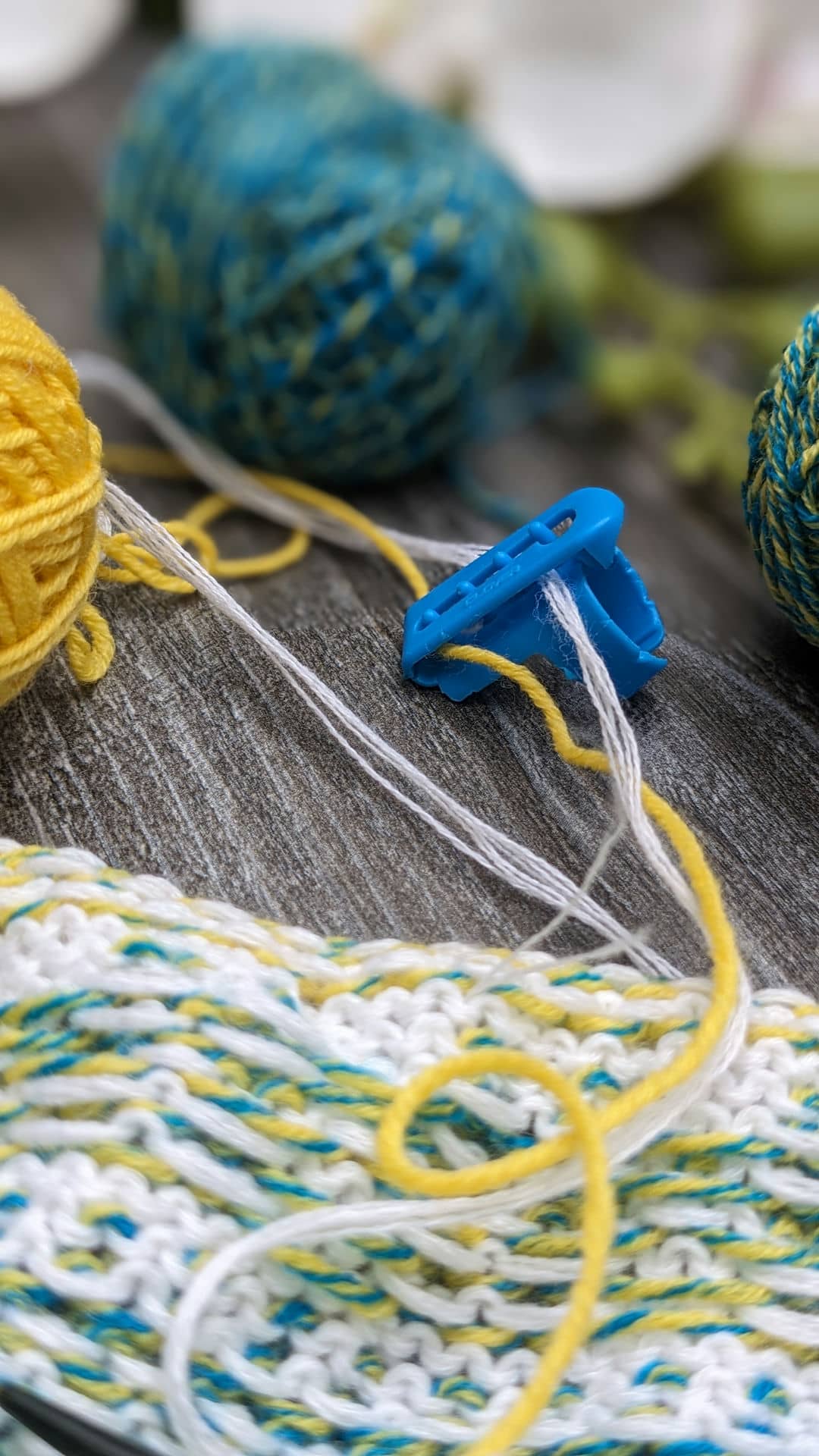
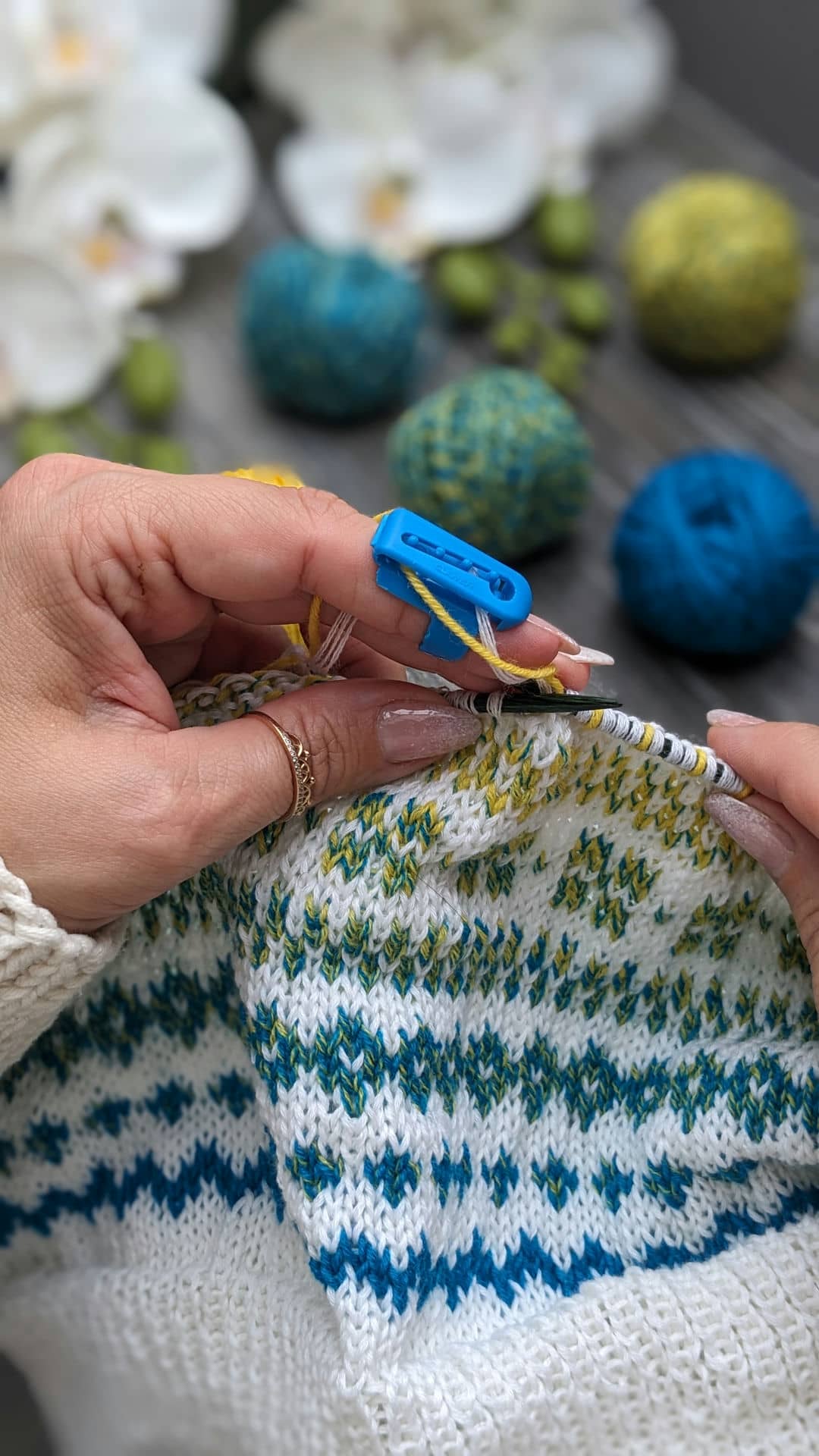
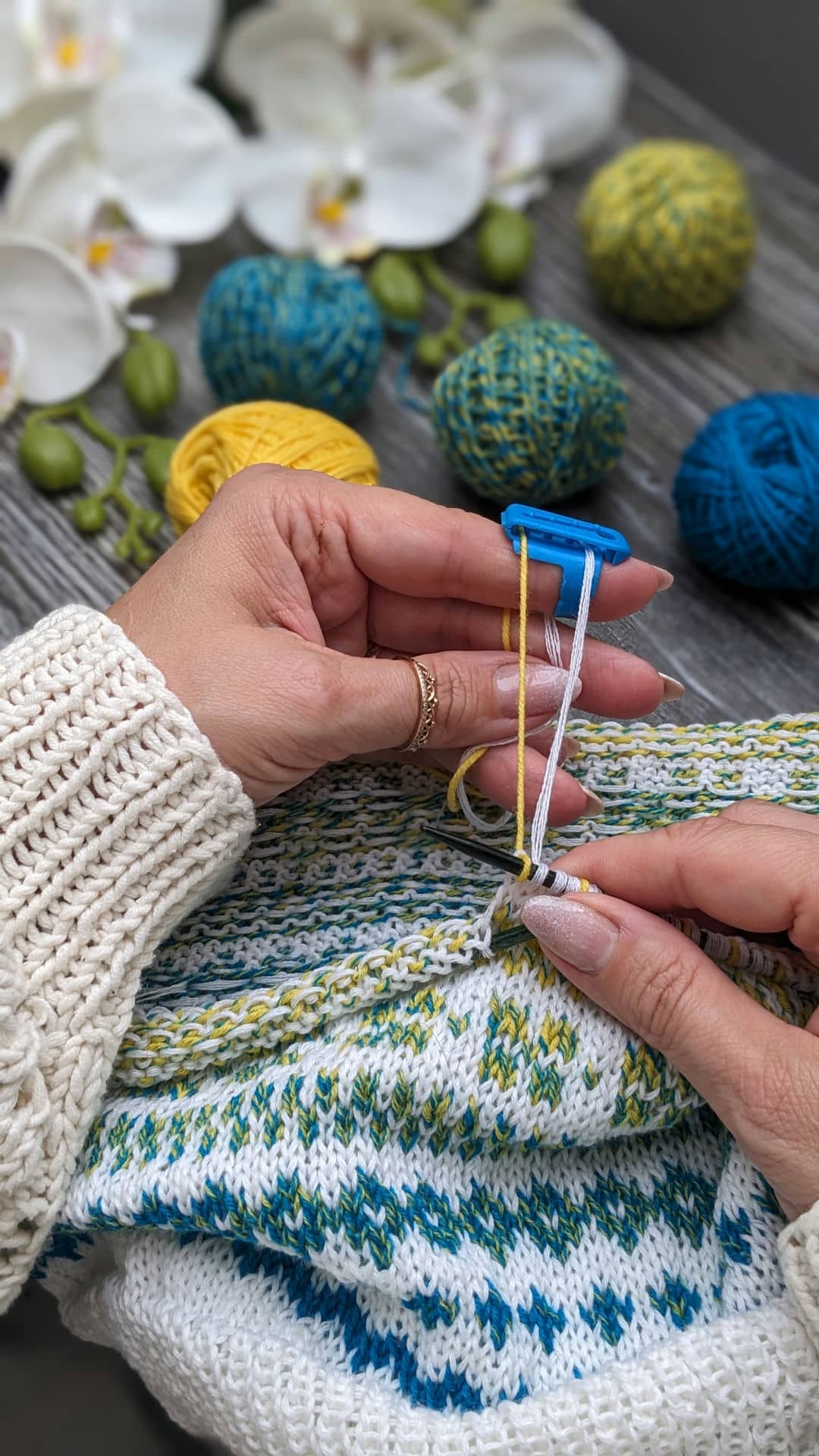
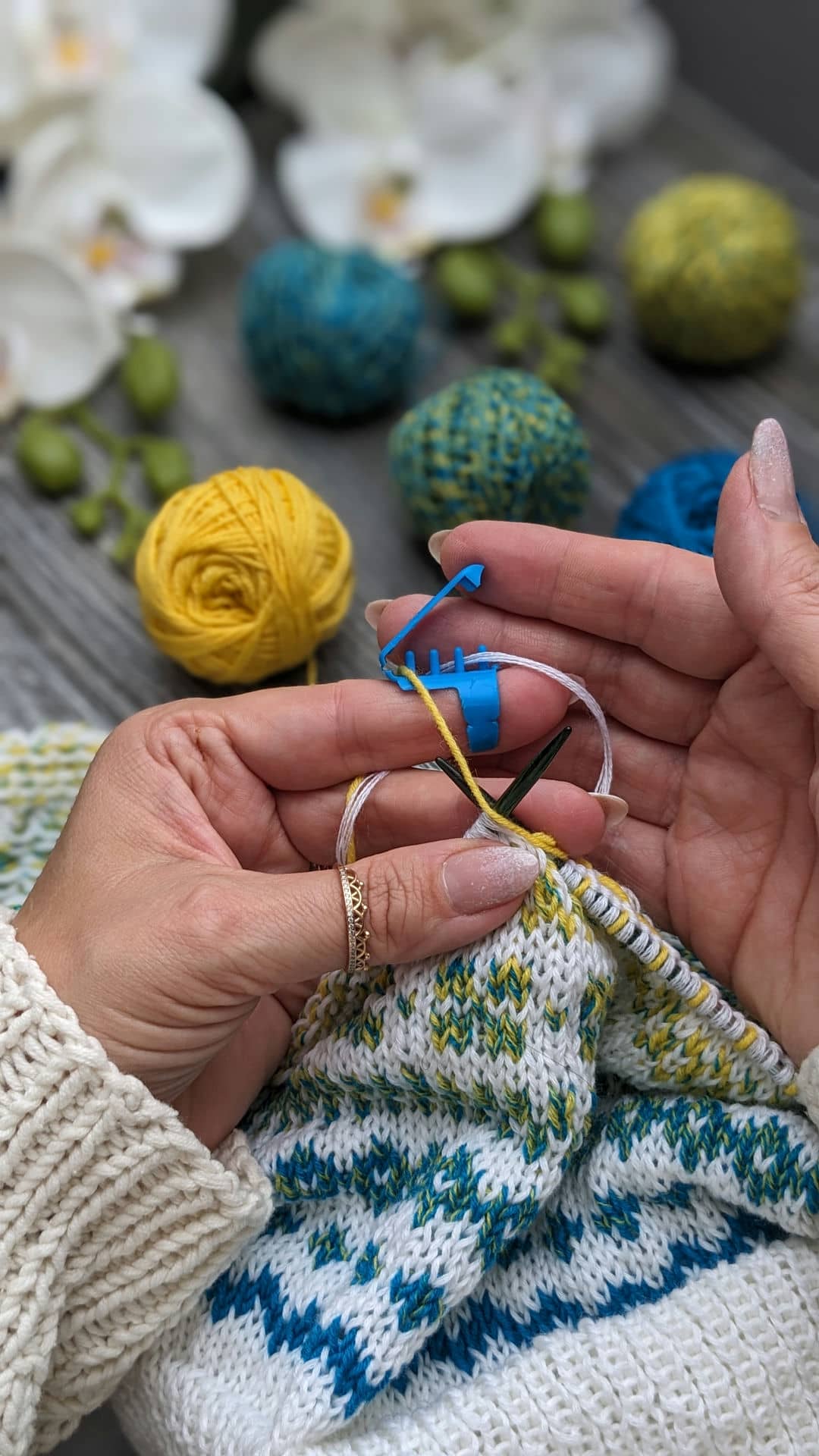
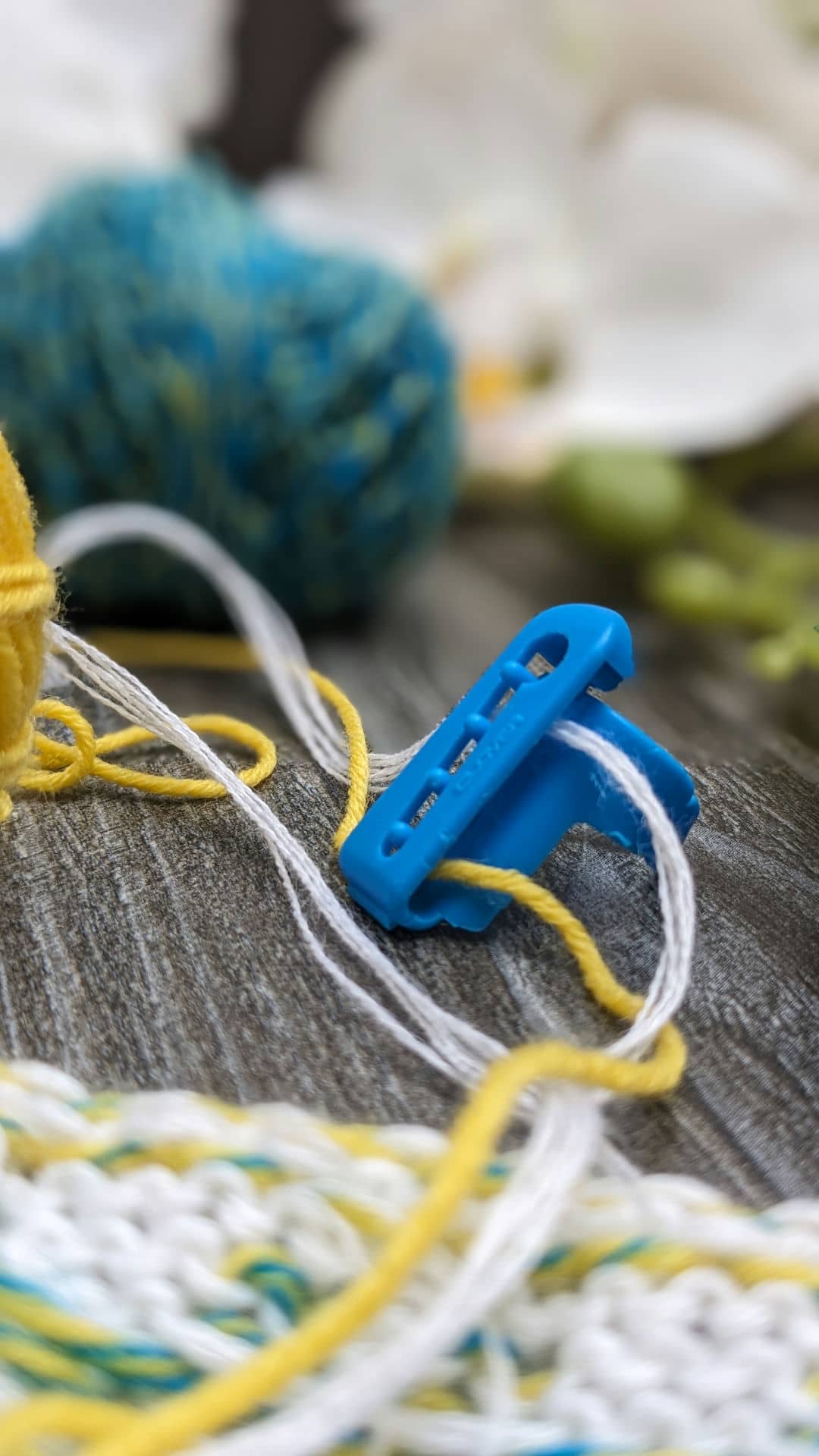
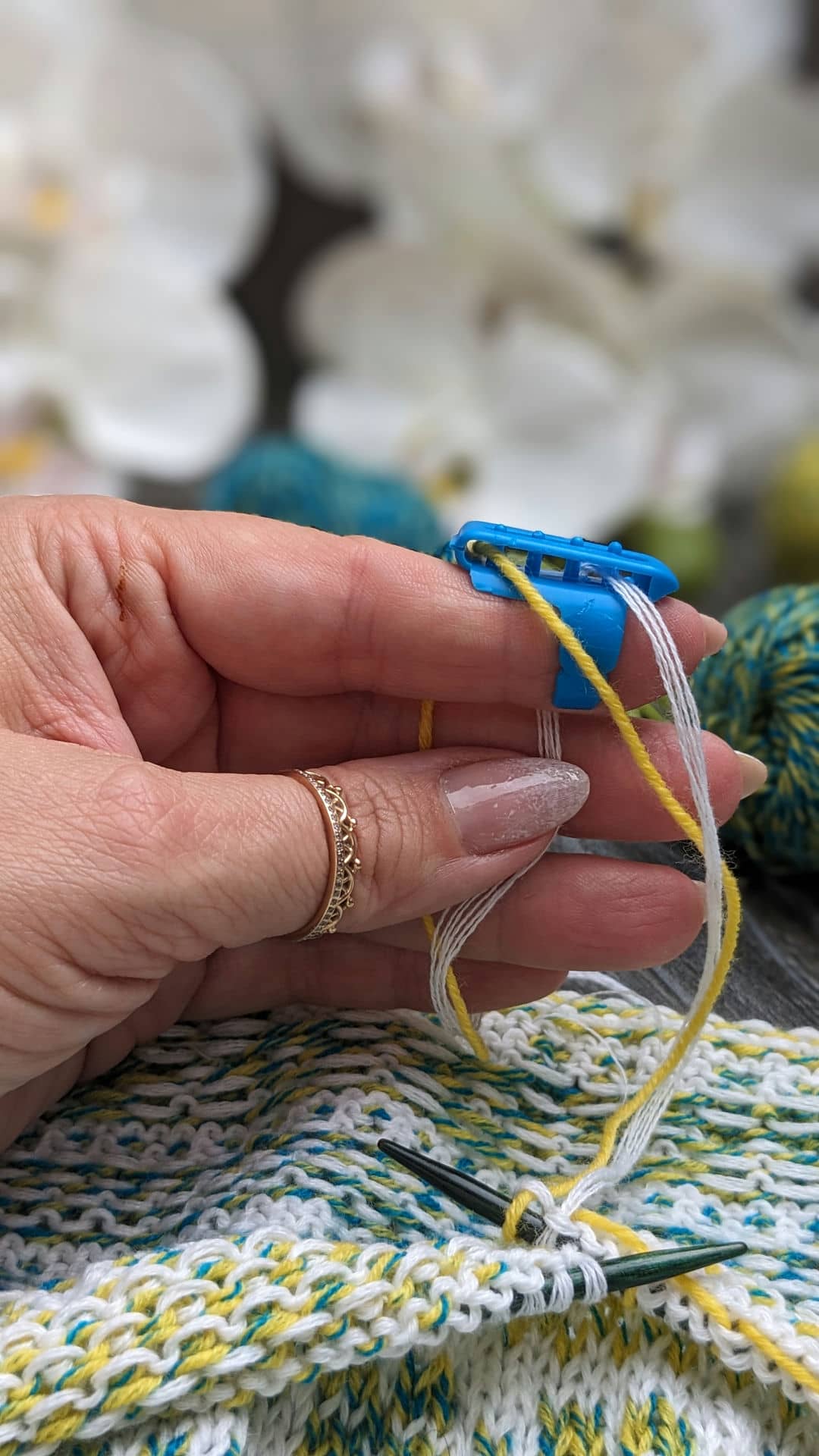
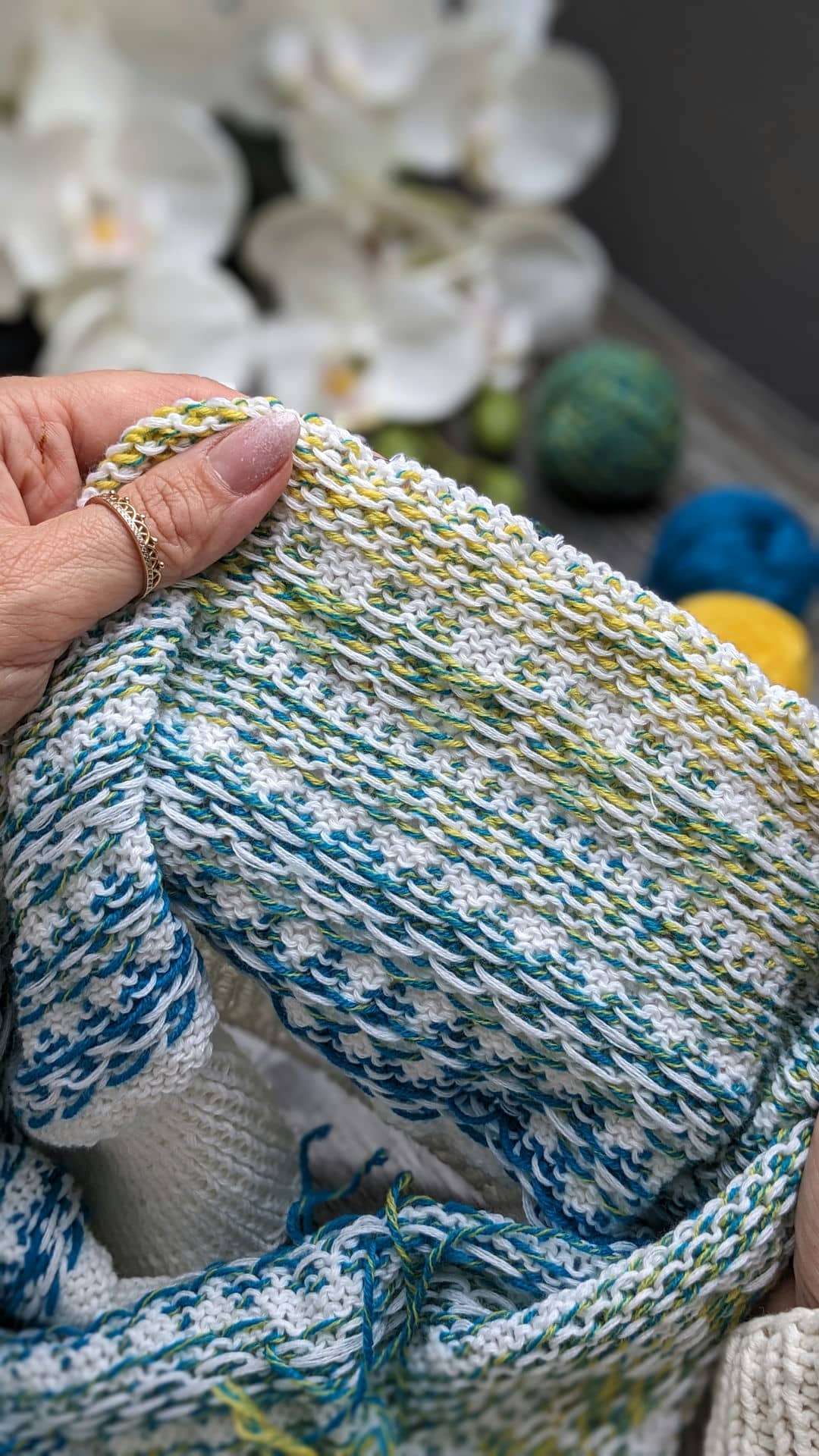
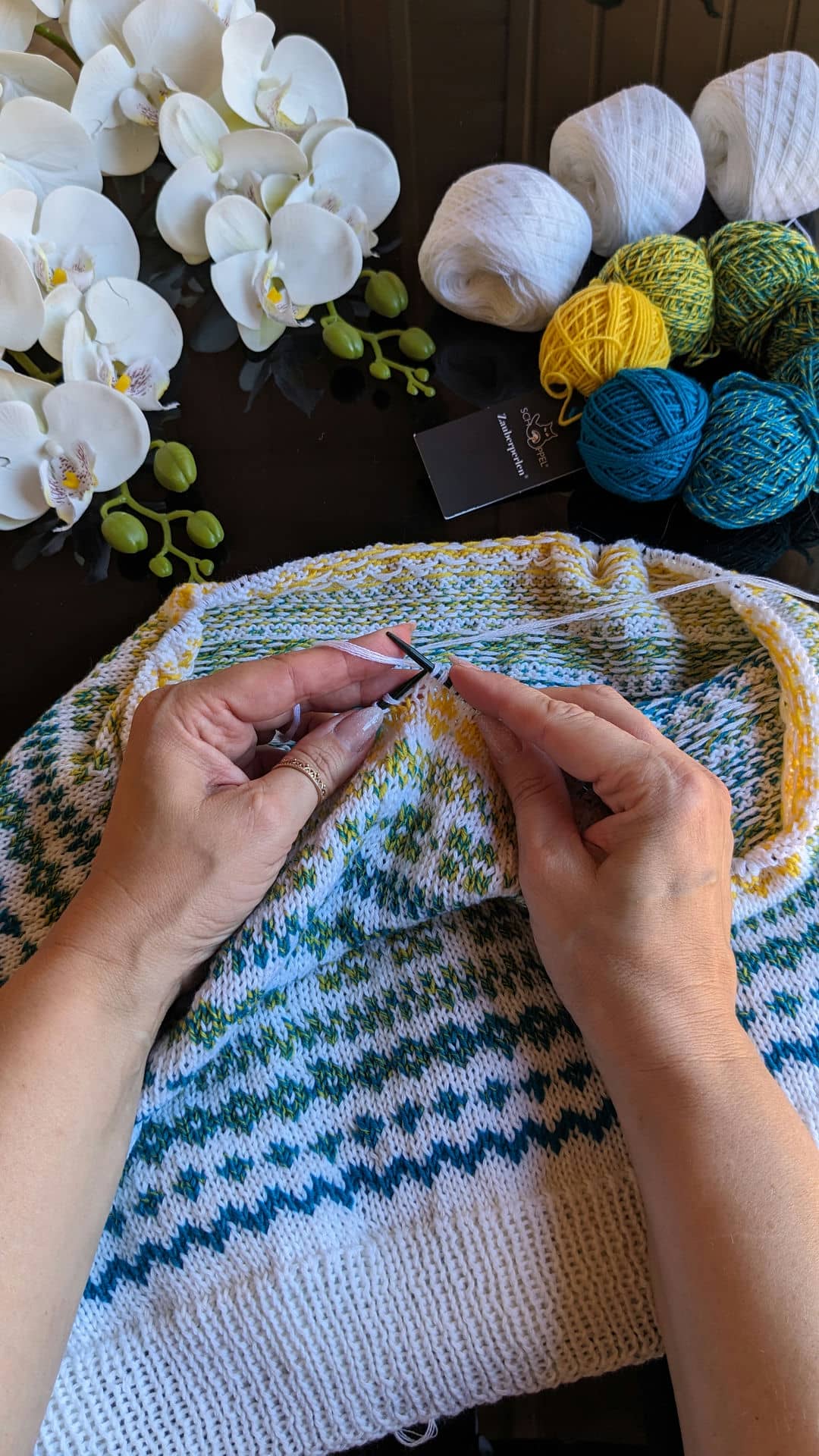
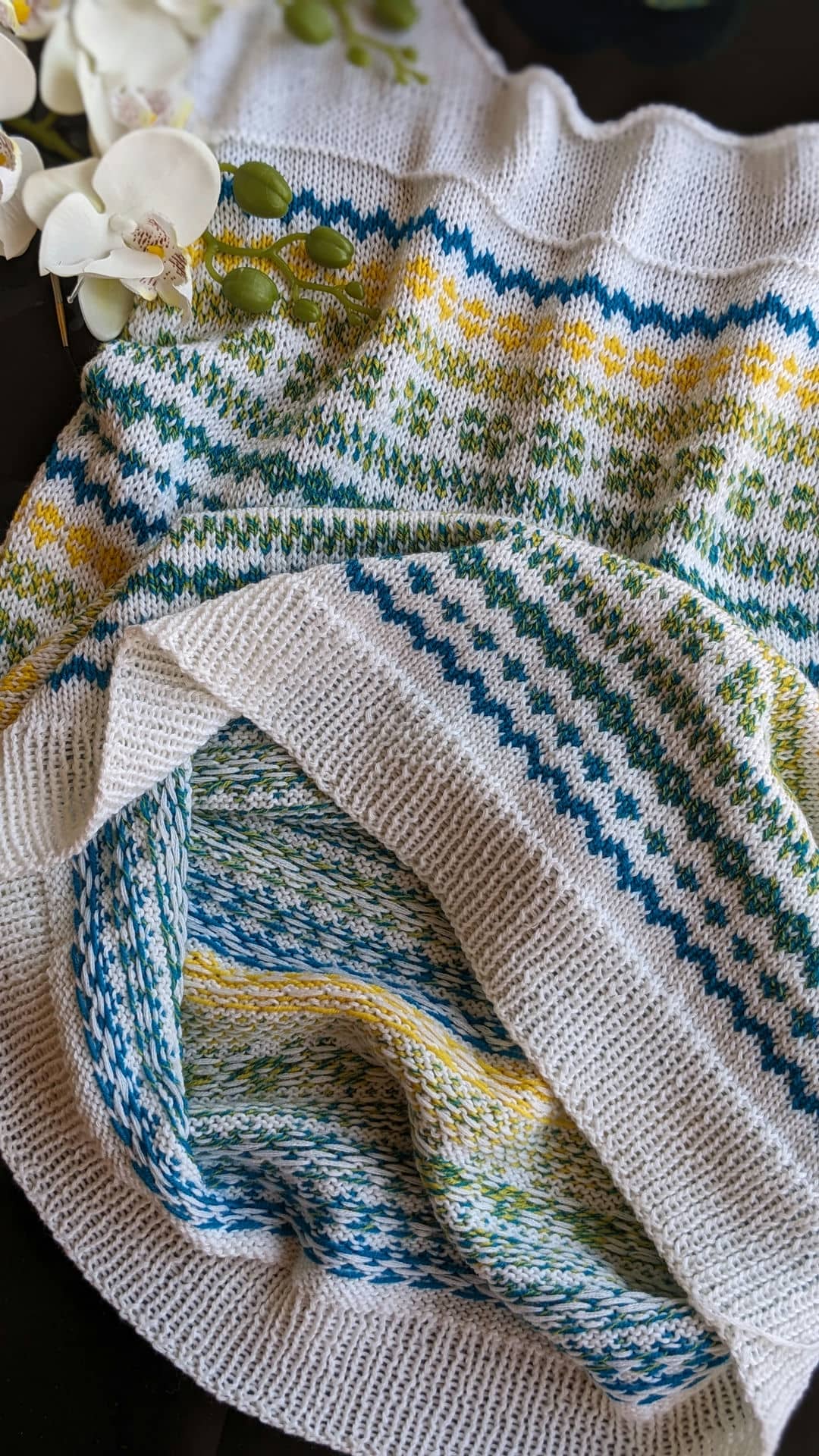
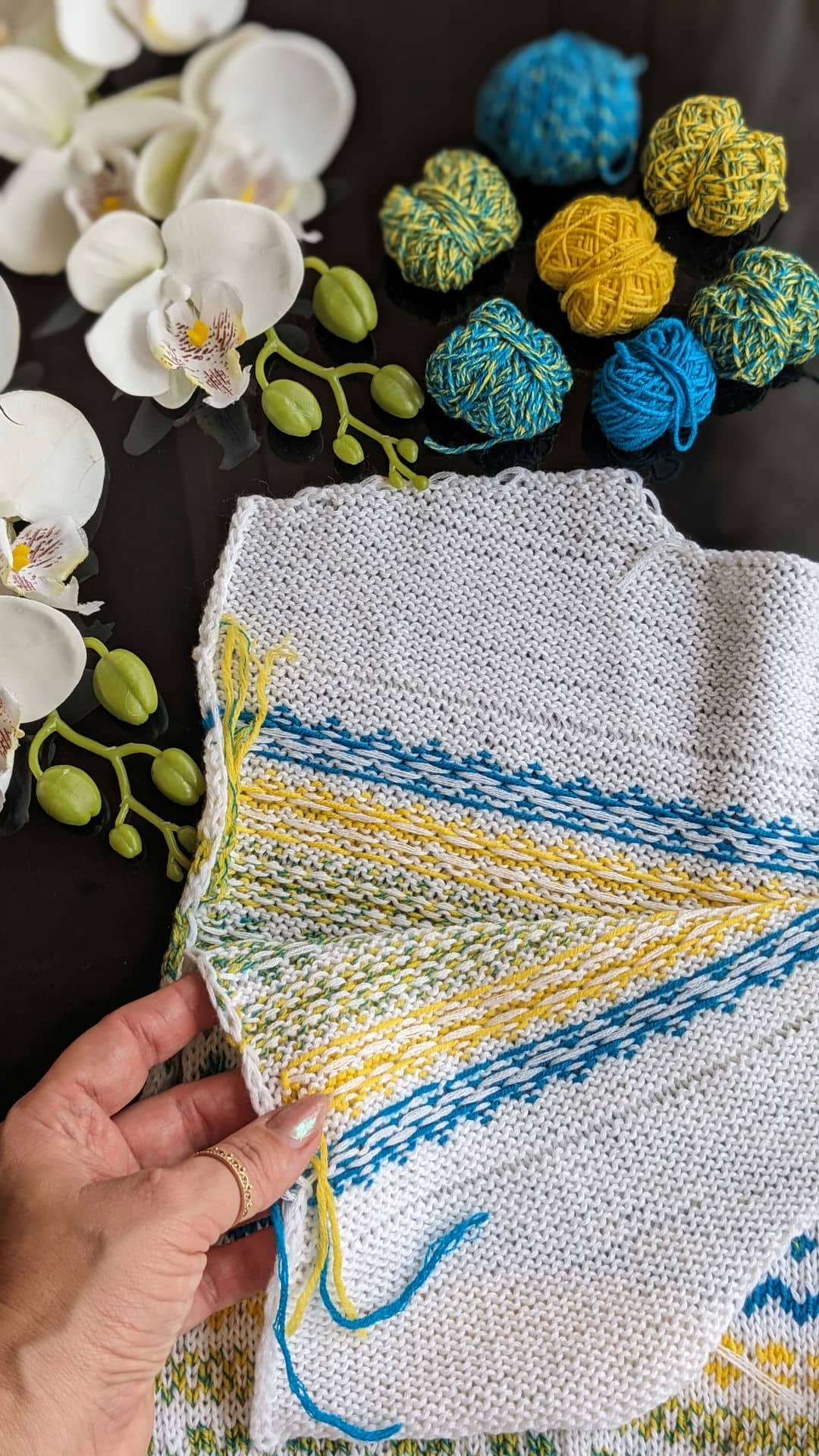
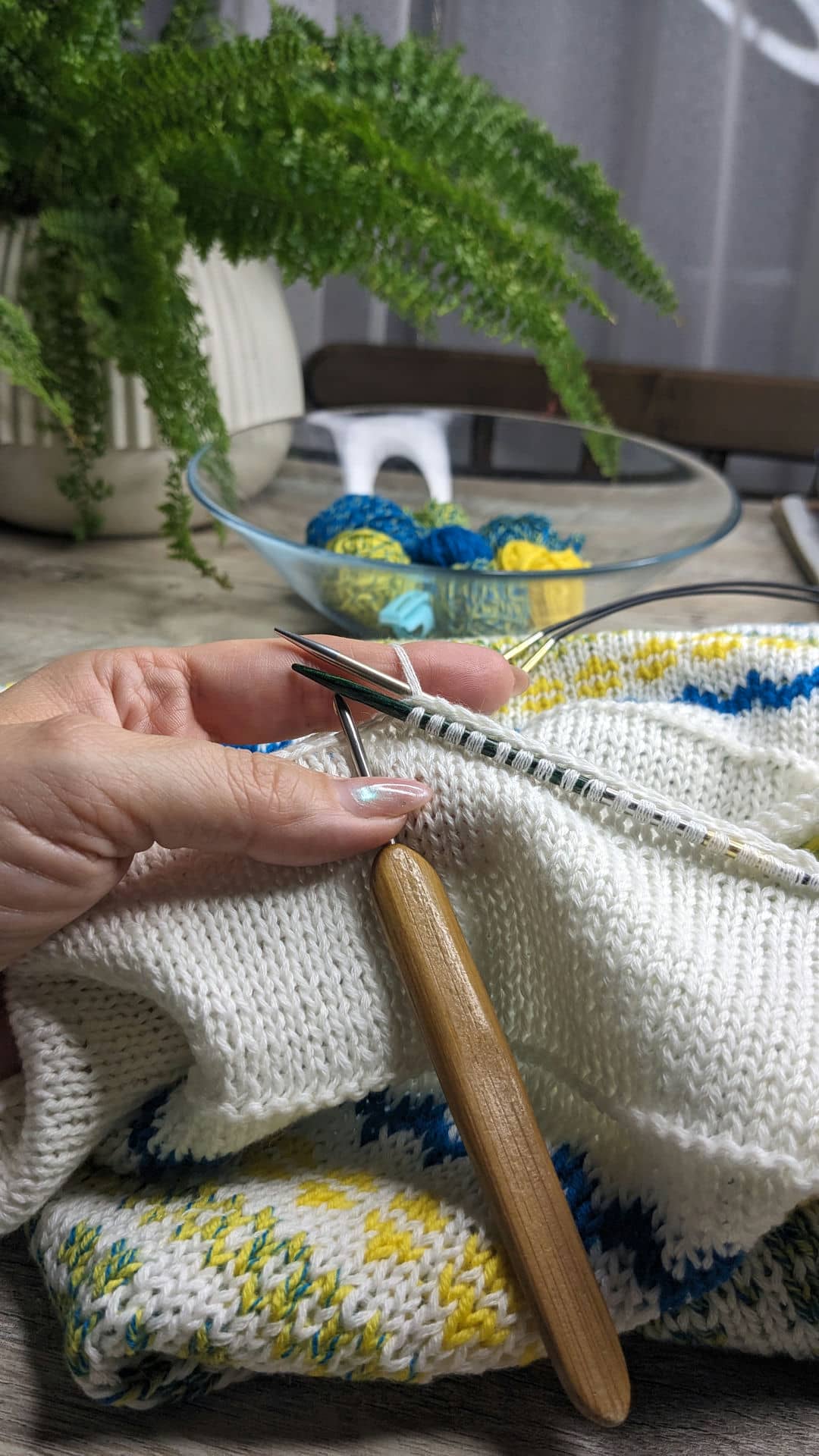
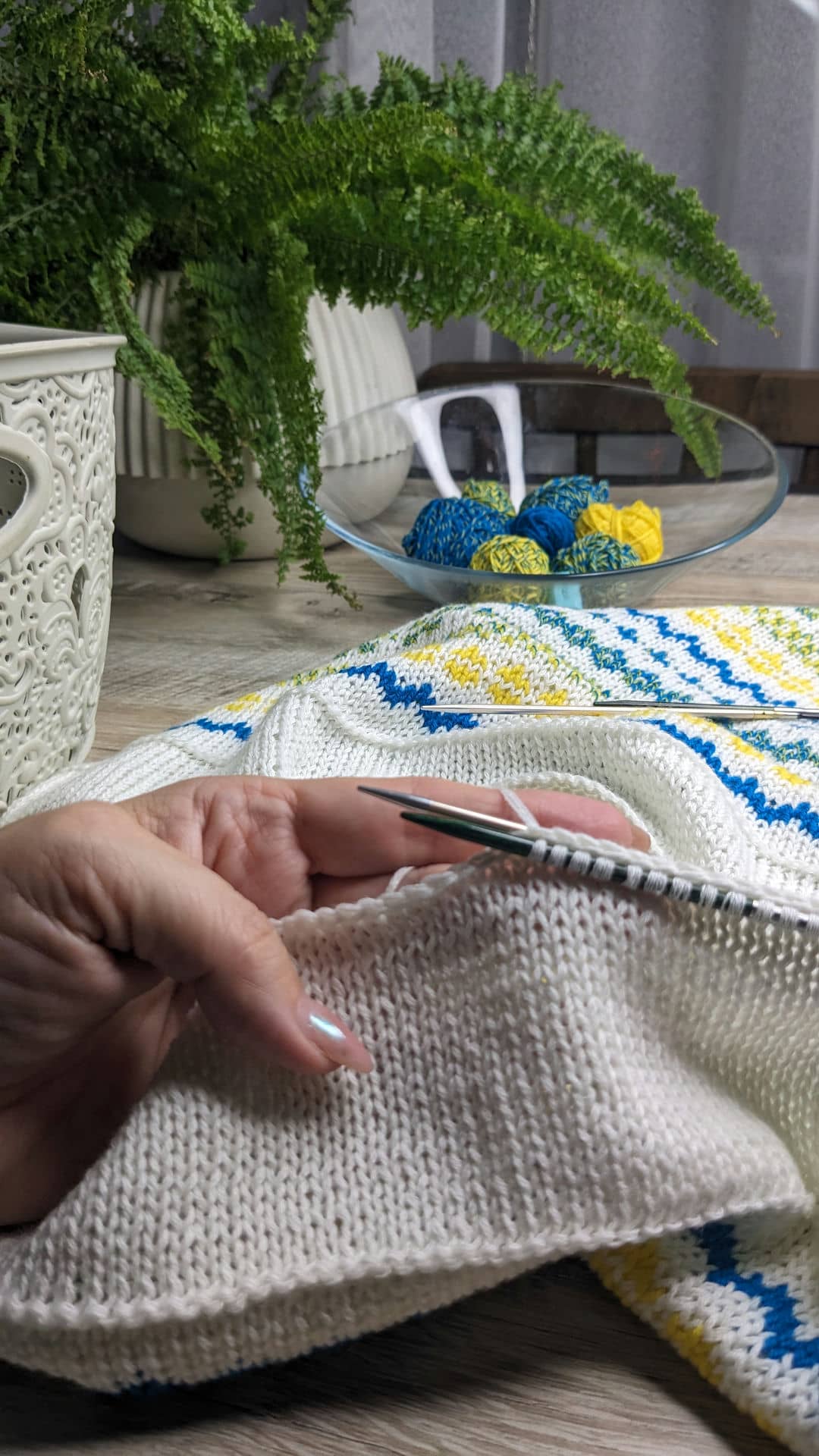
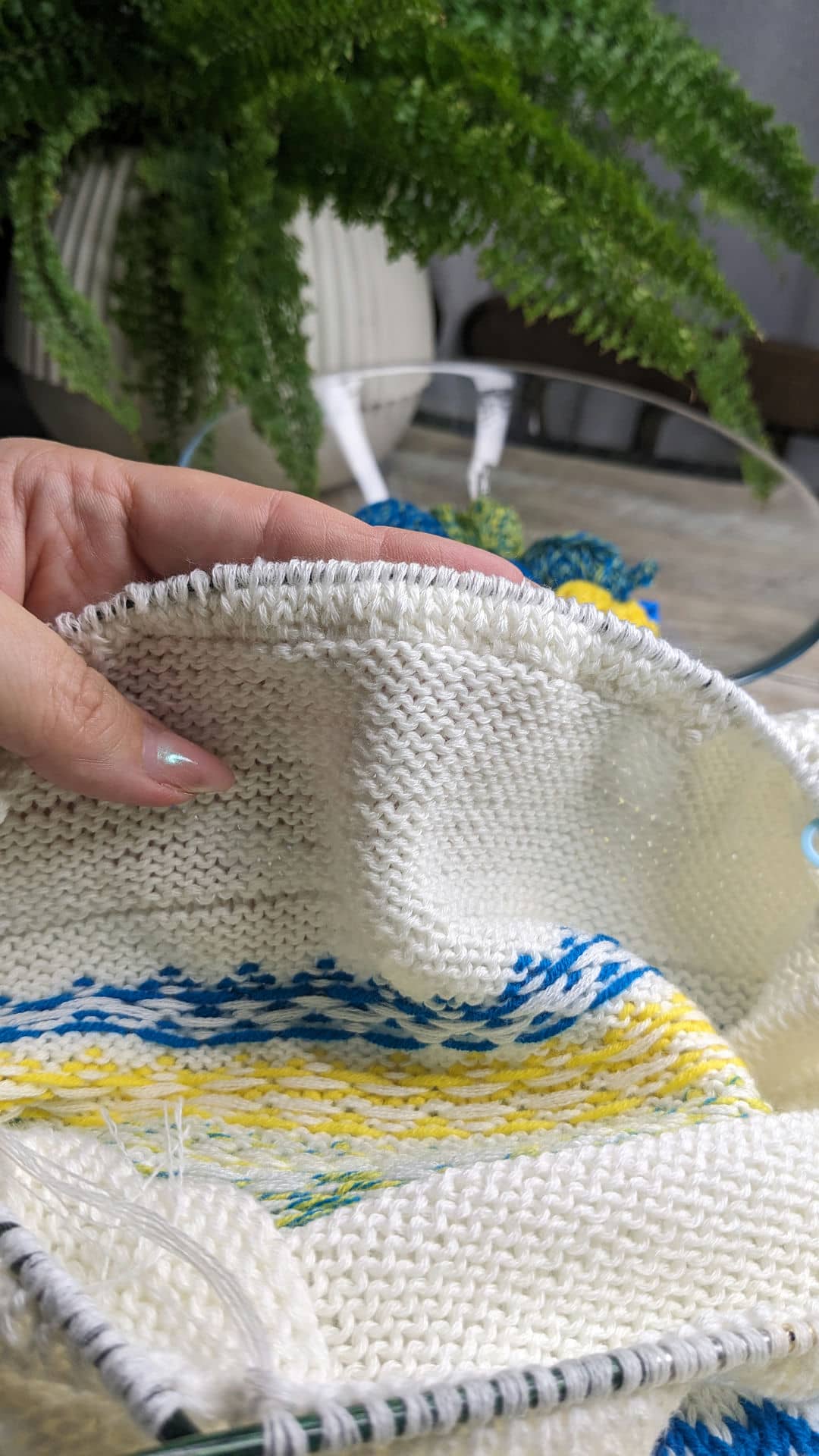
The fabric is worked in striped stranded colorwork, which calls for precision and attention to yarn tension. To make knitting easier I use a Clover thimble, a tried-and-true tool that remains a reliable helper when knitting stranded colorwork patterns.
“Solaria” is a versatile piece for those who appreciate details. It goes beautifully with jeans and skirts as well as with light summer outfits.
The pale stripes visually freshen the look, adding softness and a natural feel.
This jumper is about balance: between energy and calm, between warmth and coolness, between modern design and the tenderness of handwork.
We knit the jumper from the bottom up, seamlessly in the round up to the armholes, then work the front and back separately, back and forth. I’m knitting size 48–50 (≈ EU 42–44, M–L).
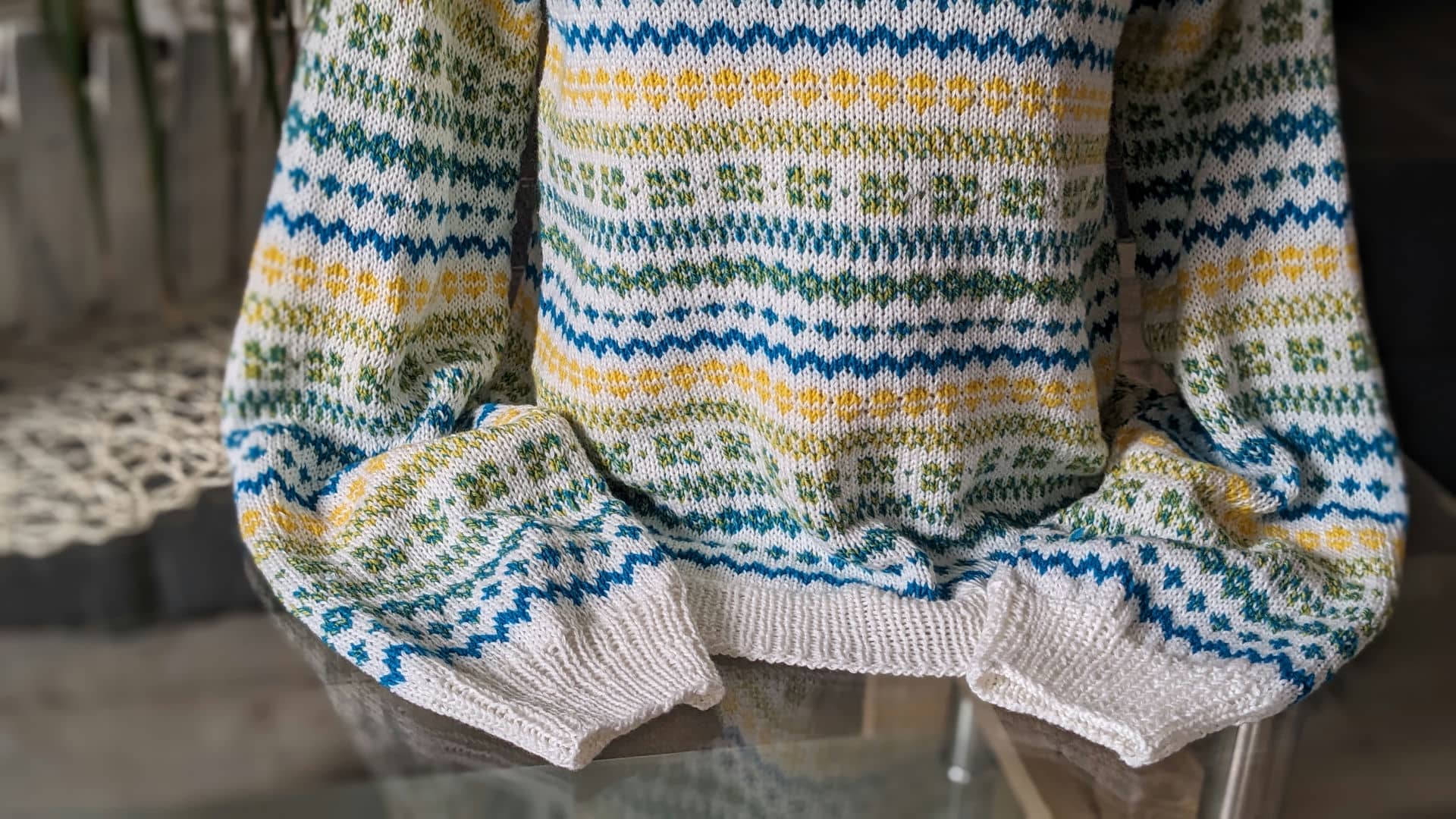
Let’s start on the main part. With 3.5 mm needles and the main-colour yarn, cast on 240 stitches + 1 stitch for joining in the round. Work 20 rounds of 1×1 rib.
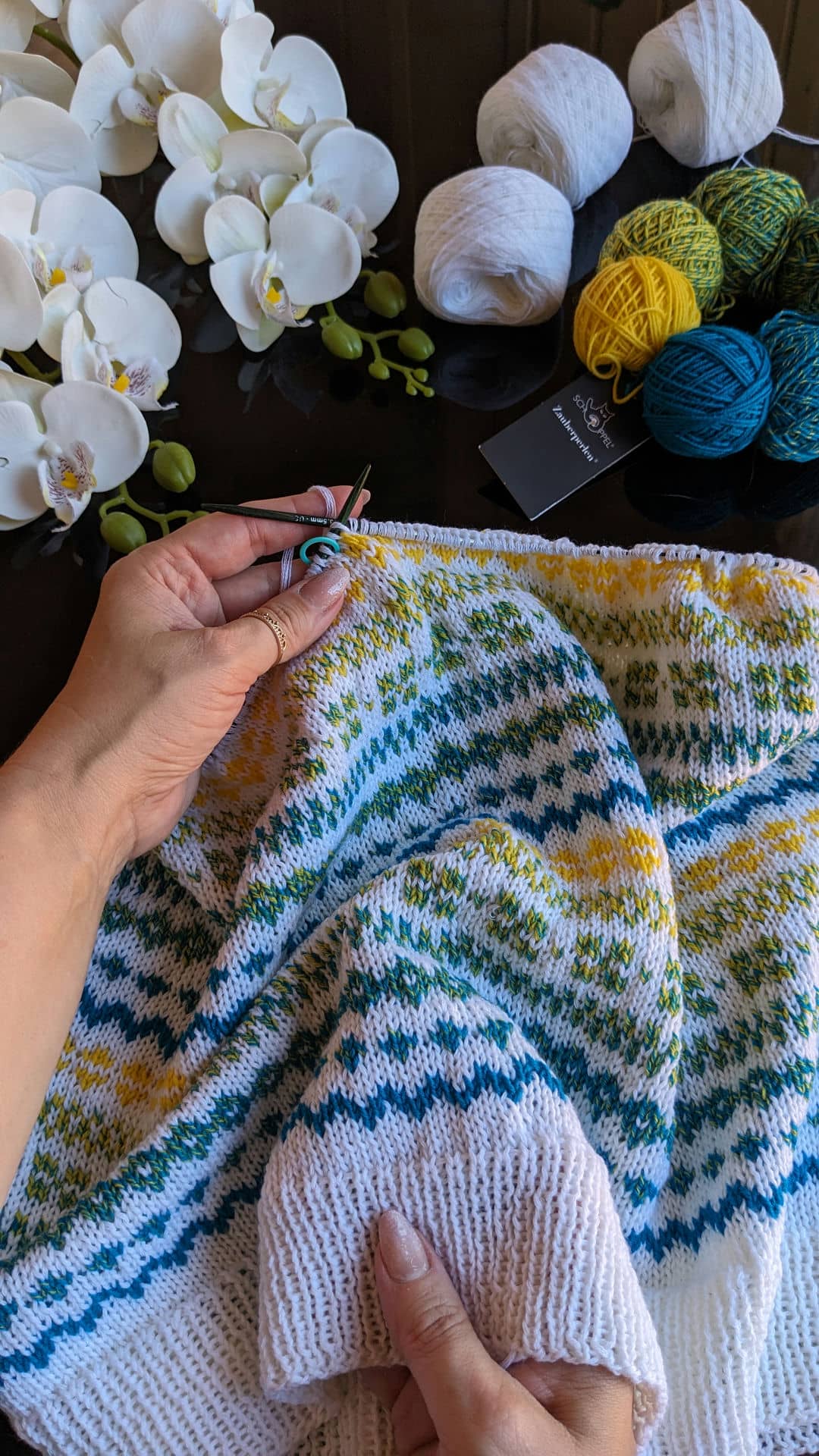
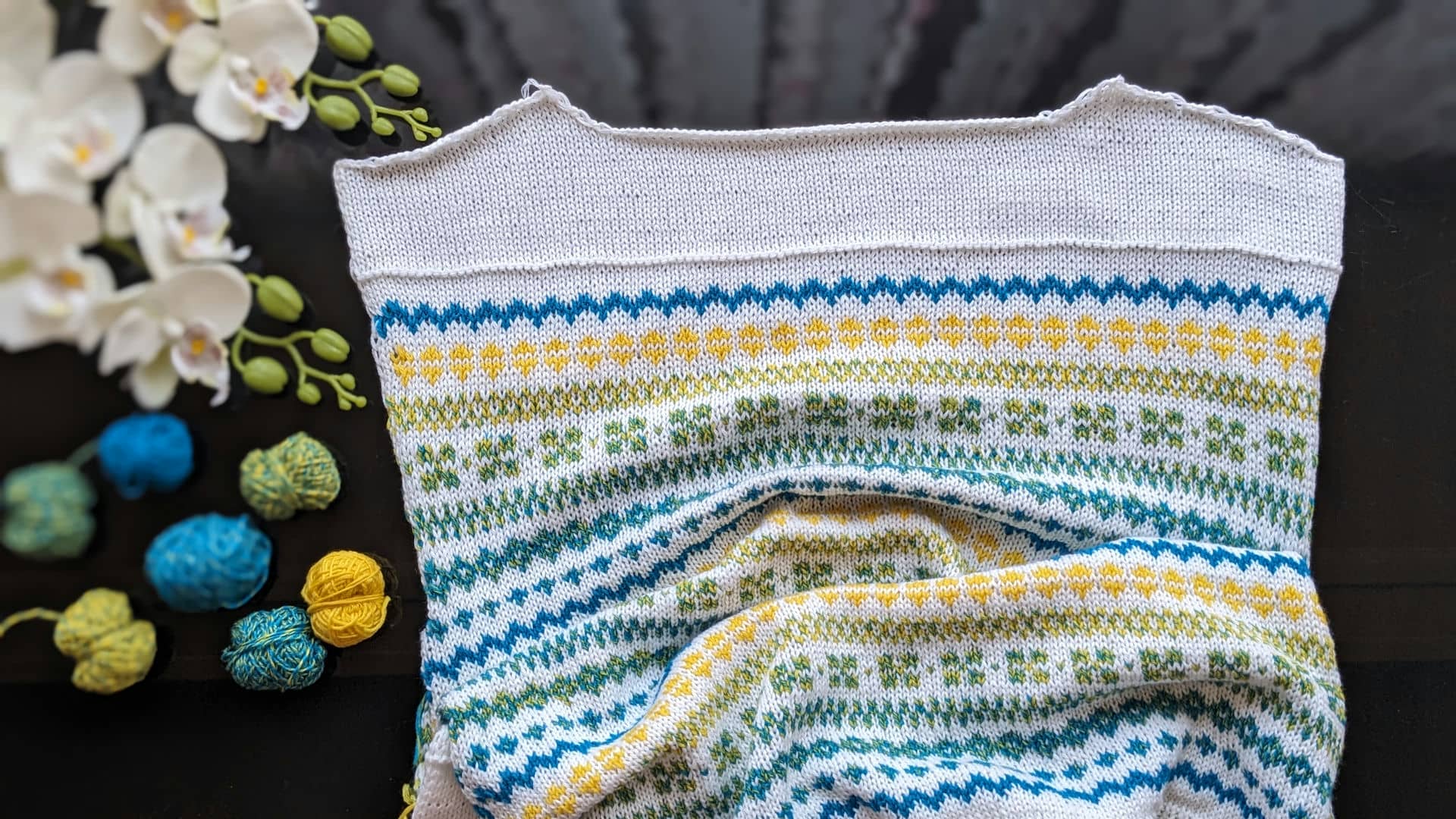
Next we move on to the stranded colorwork pattern in the form of coloured stripes. If your colorwork fabric turns out too dense or tight, it is best to switch to larger needles after the rib: 4 mm.
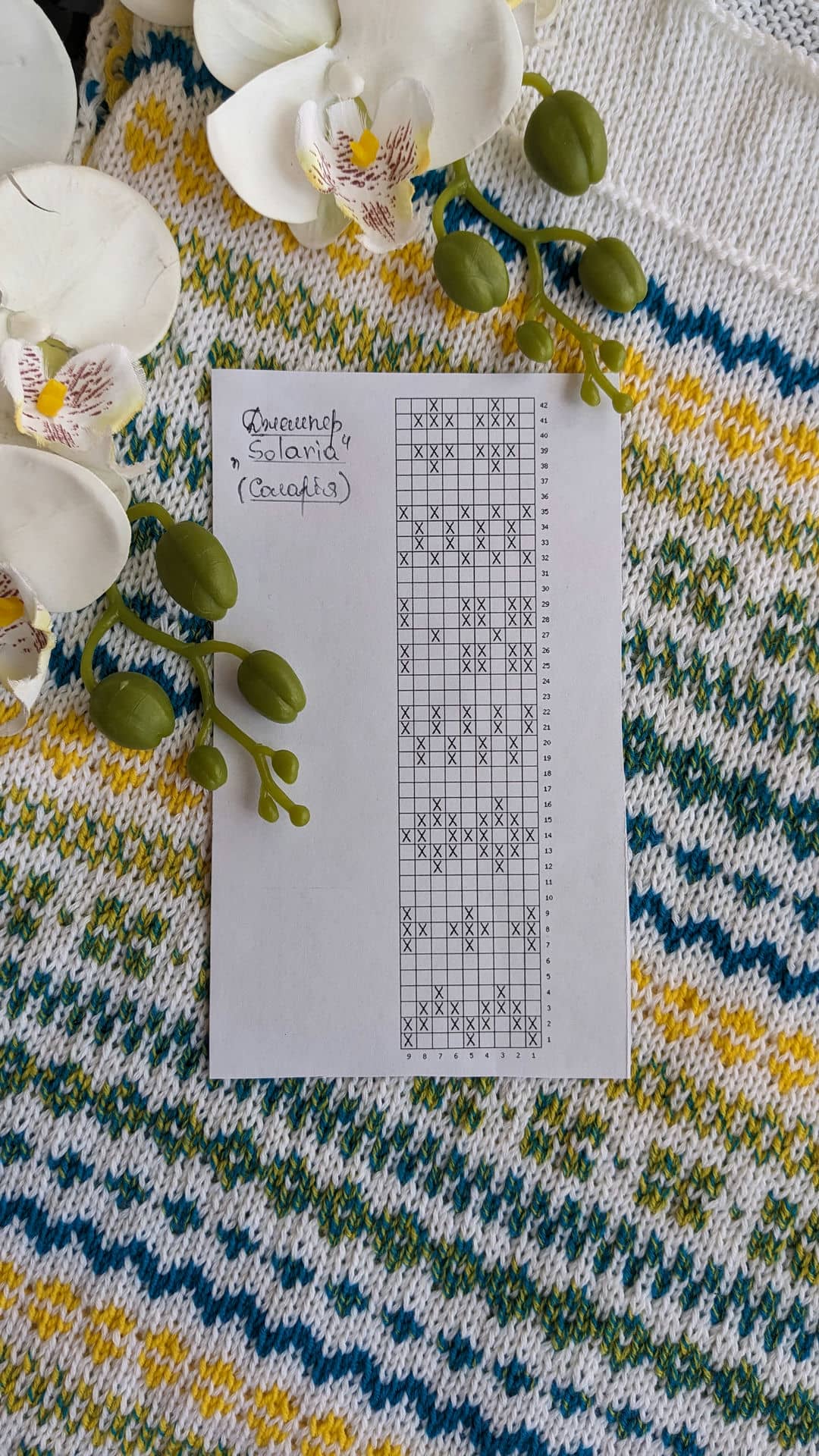
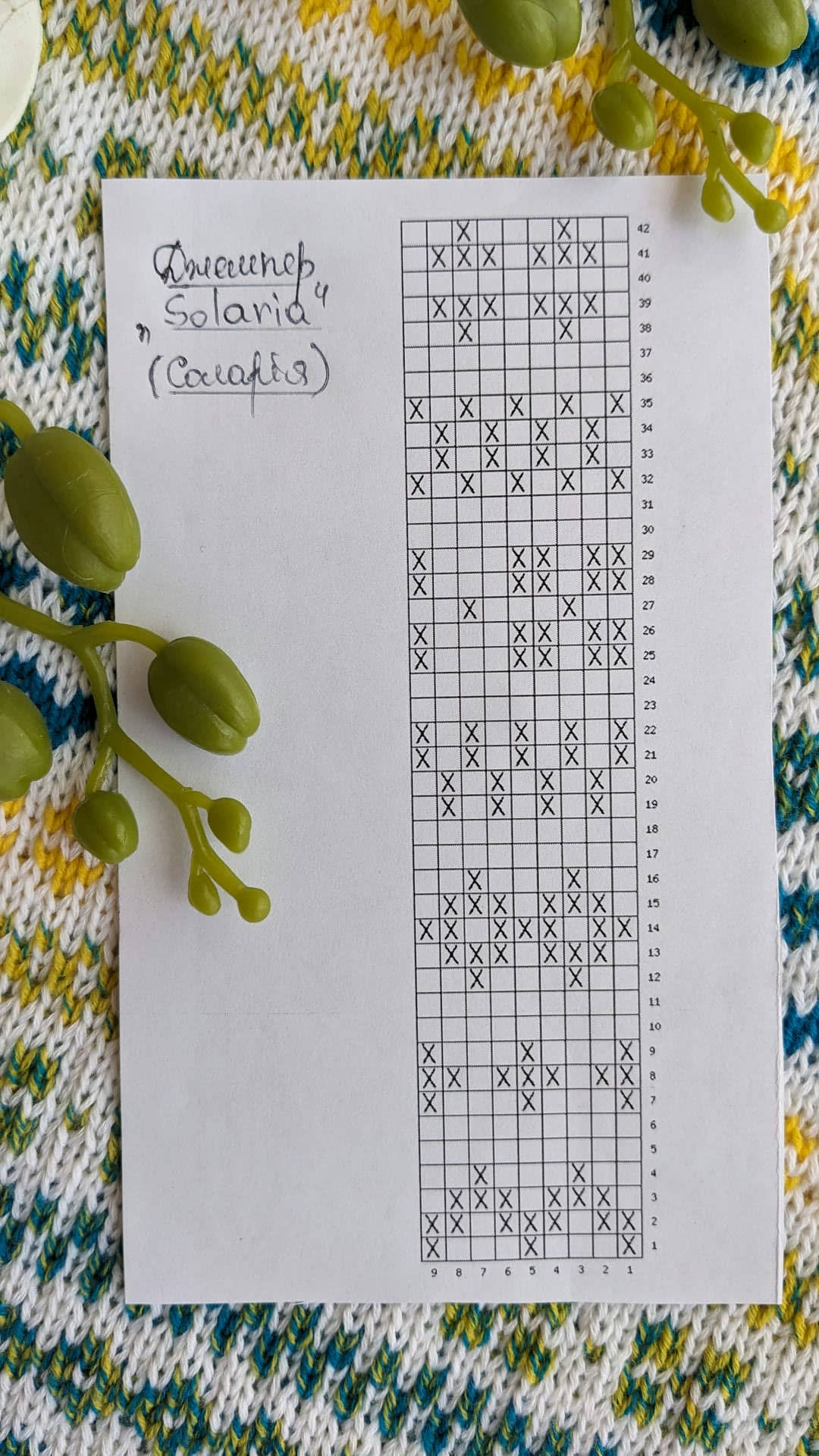
The pattern repeat is 8 stitches wide. You can adjust the height of the pattern as you like by working whichever elements are shown on the chart.
I have 240 stitches on the needles: 240/8 = 30 pattern repeats. We knit straight, even fabric to the length needed before the armholes.
I have added the colorwork chart to the gallery below. It works both in the round and flat, and shows both RS and WS rows.
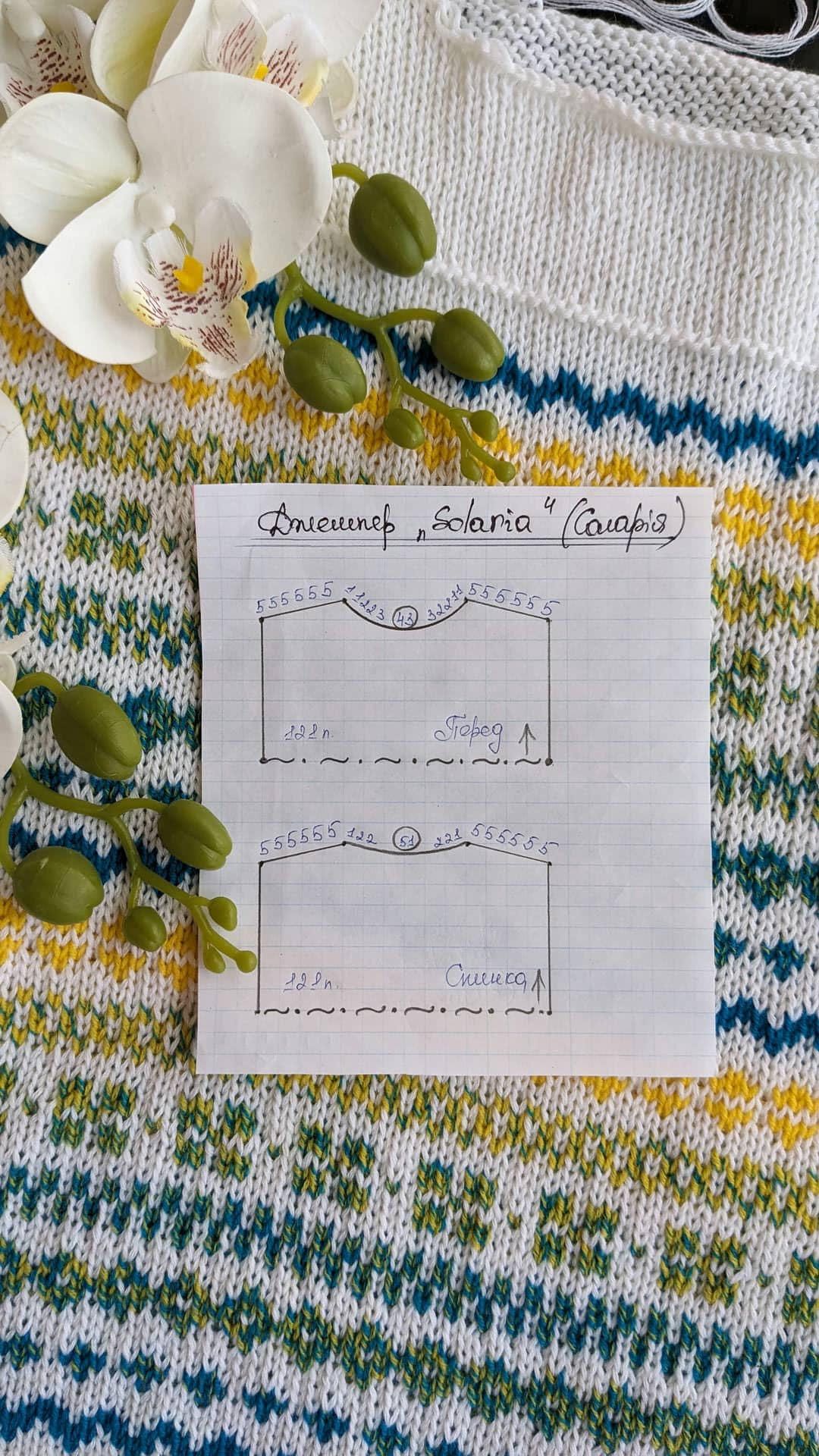
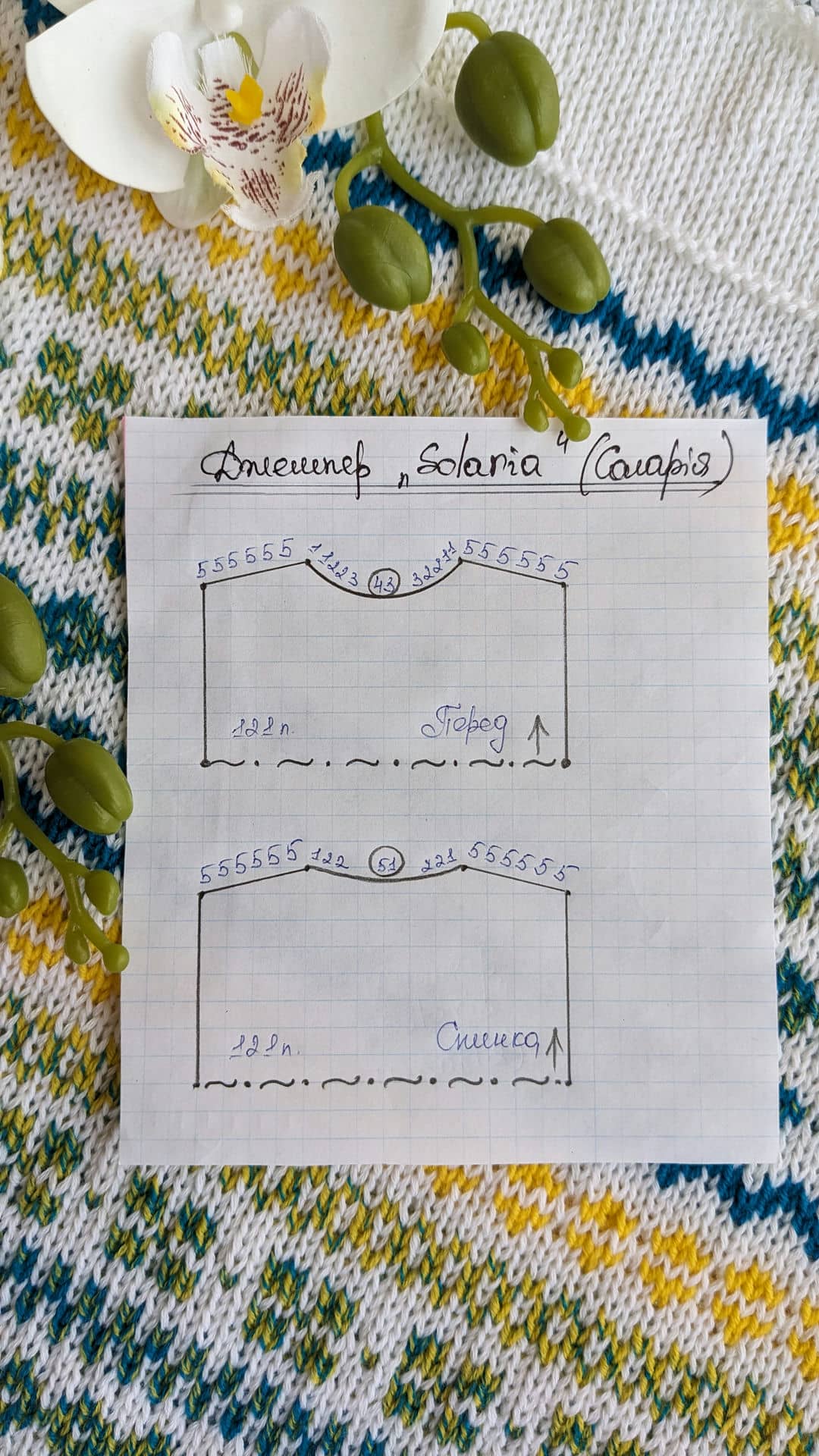
After 36 cm from the cast-on edge I divide the total number of stitches into two parts: 240/2 = 120 stitches. So the front and back now have 120 stitches each.
I continue working both pieces separately, flat. At the end of the first row of each piece I add 1 edge stitch for the symmetry of the pattern. So the front and back will have 121 stitches each.
Front. After dividing the stitches into separate pieces, we start knitting flat. I worked the armholes straight.
After 19 cm from the start of the armholes I begin shaping the shoulder slopes. To do this, in every 2nd row we bind off 5 stitches 6 times.
At the same time as the shoulder slopes, we start shaping the front neckline. First we bind off the central 43 stitches. Then, in every 2nd row, we bind off stitches to round the neckline:
- 3 stitches once,
- 2 stitches twice,
- 1 stitch twice.
Back. After dividing the stitches into separate pieces, we knit the back symmetrically to the front.
Next, we start shaping the shoulder slopes on both sides. To do this, in every 2nd row we bind off 5 stitches 6 times.
Once the shoulder bind-offs have been worked twice, we start shaping the back neckline. First we bind off the central 51 stitches. Then, in every 2nd row, we bind off stitches to round the neckline:
- 2 stitches twice,
- 1 stitch once.
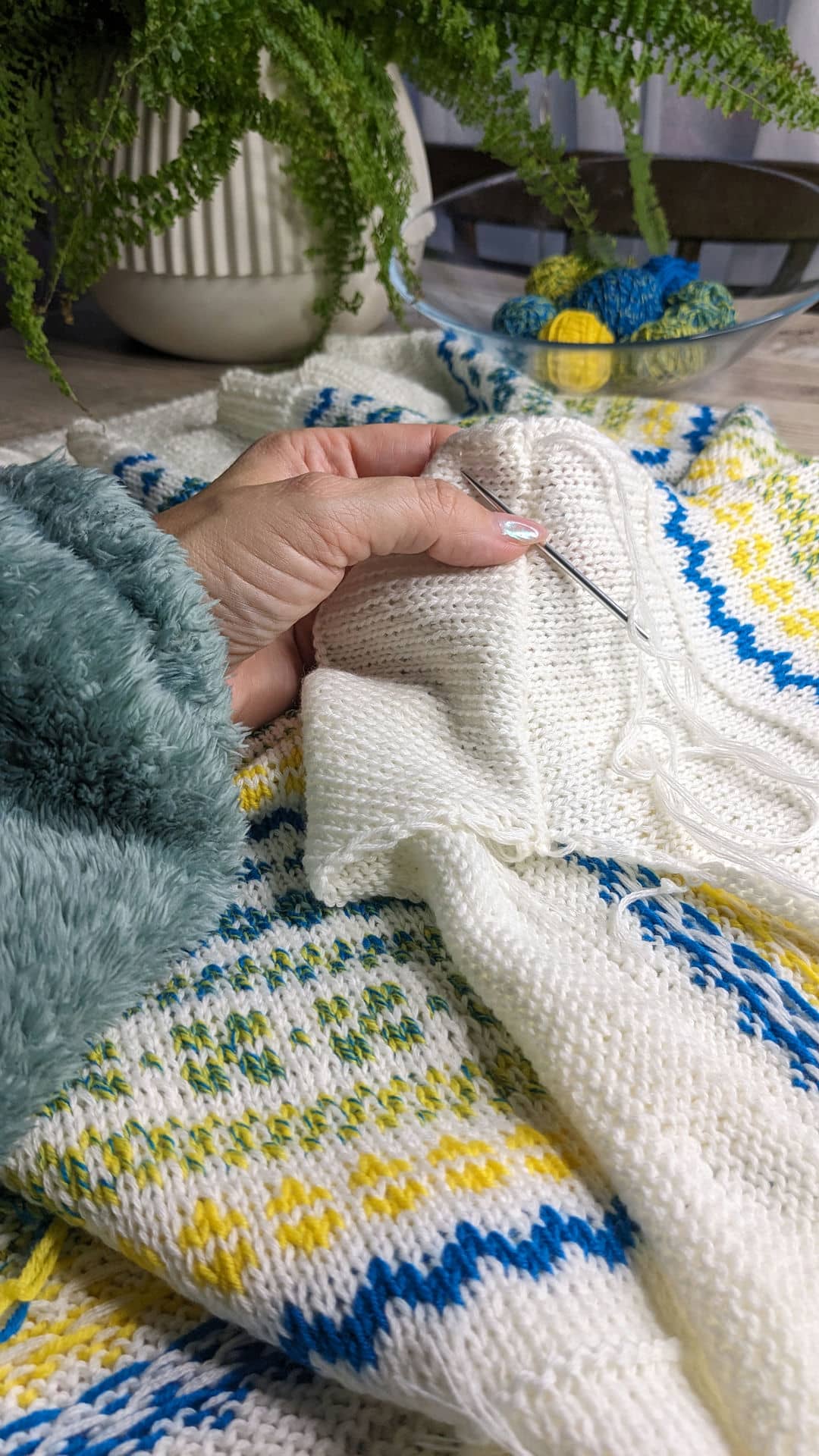
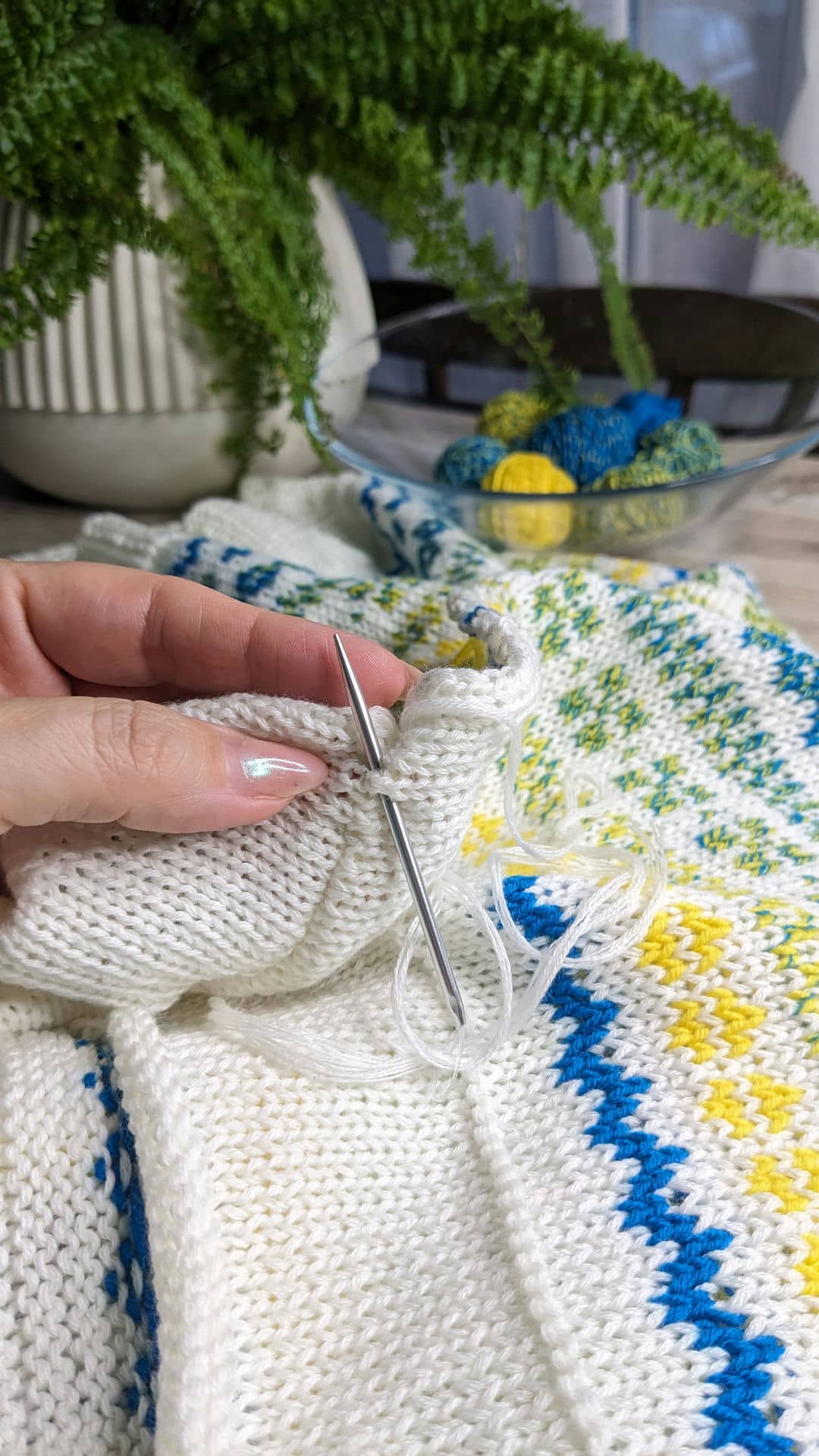
Sew the shoulder seams with a tapestry needle. The length of the main part is 60 cm.
Yarn used: 220 g:
- merino/cotton (2400 m/100 g), white – 160 g,
- Zauberperlen Schoppel 100% merino (400 m/100 g) – 60 g.
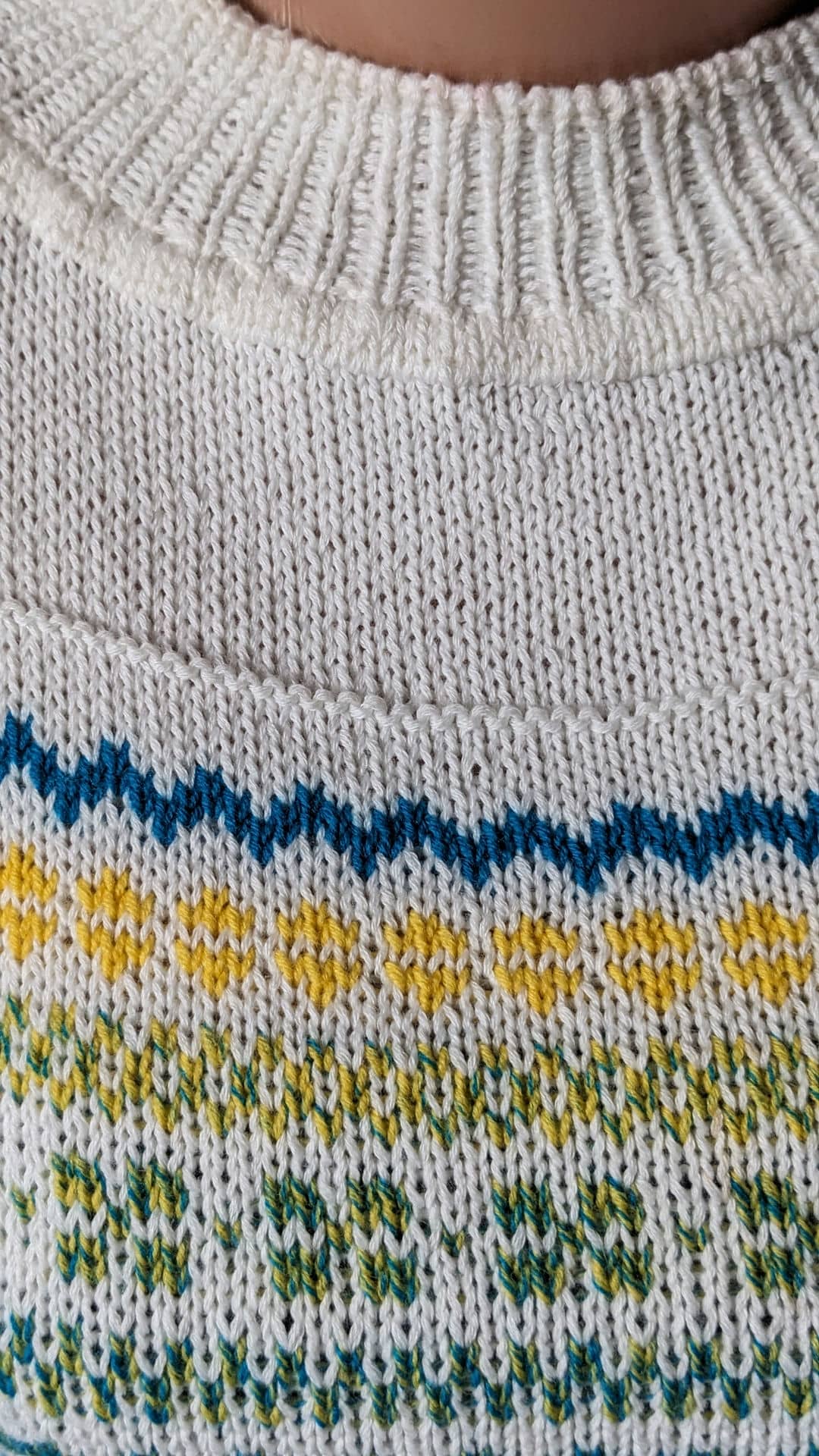
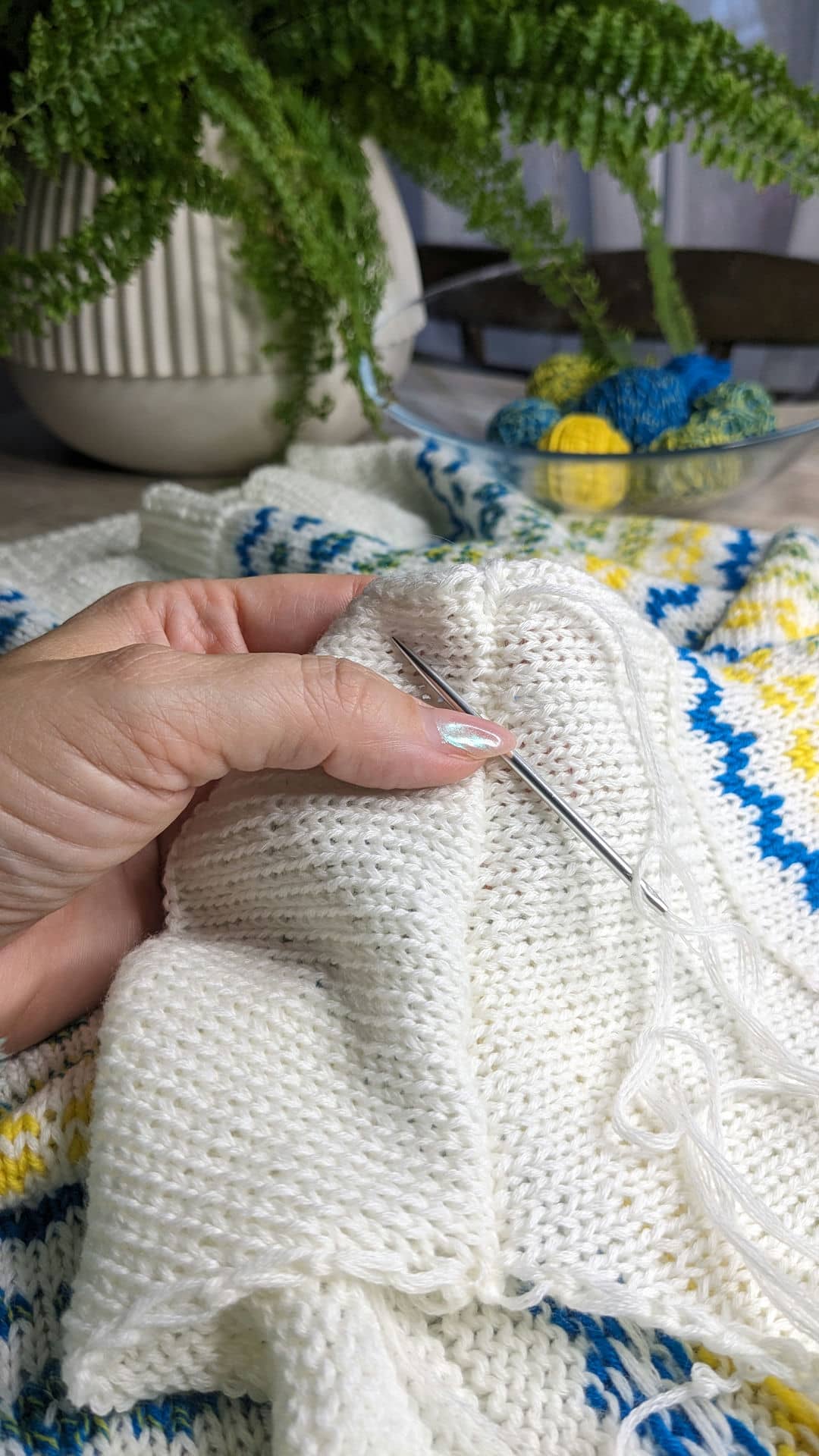
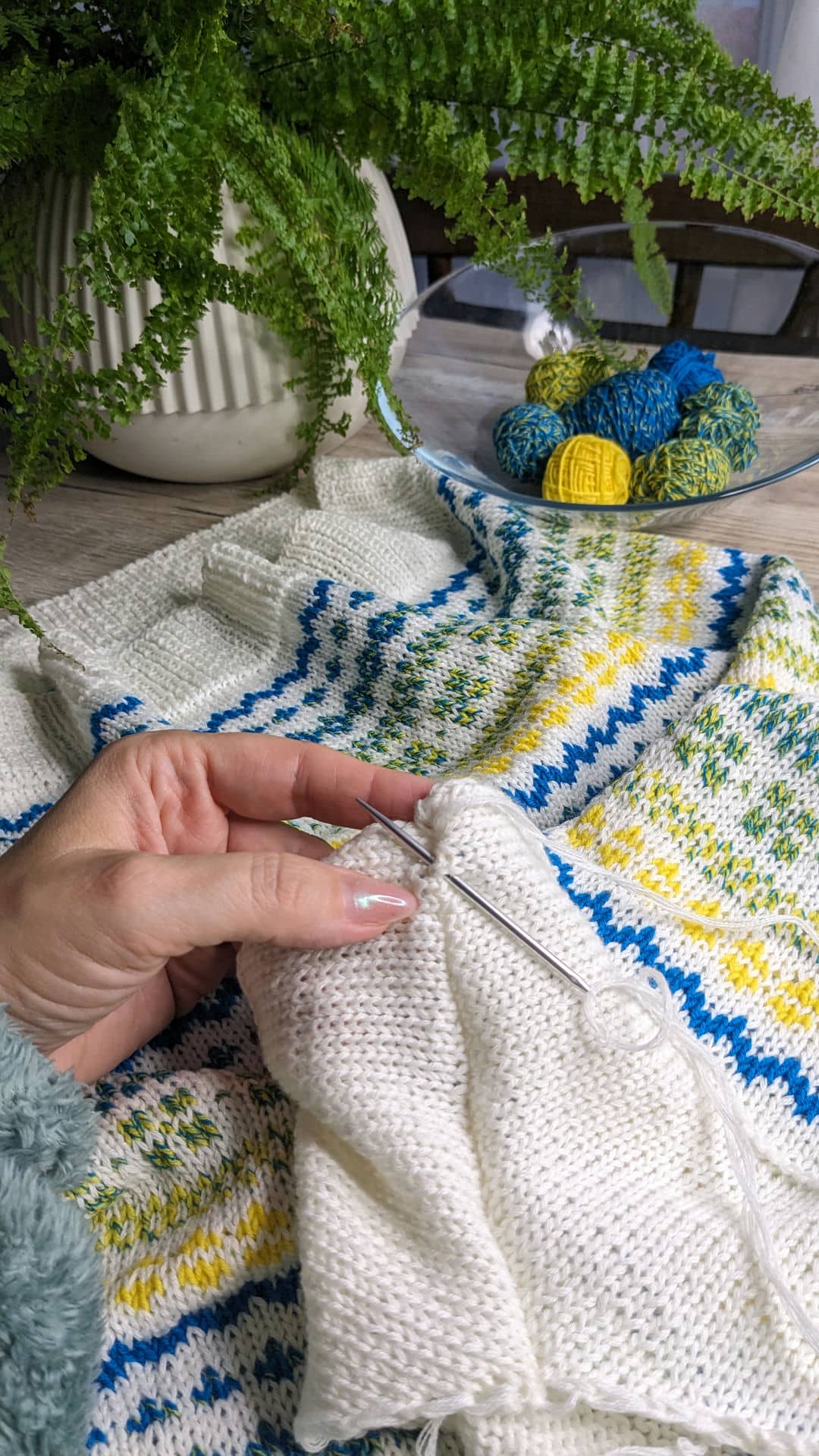
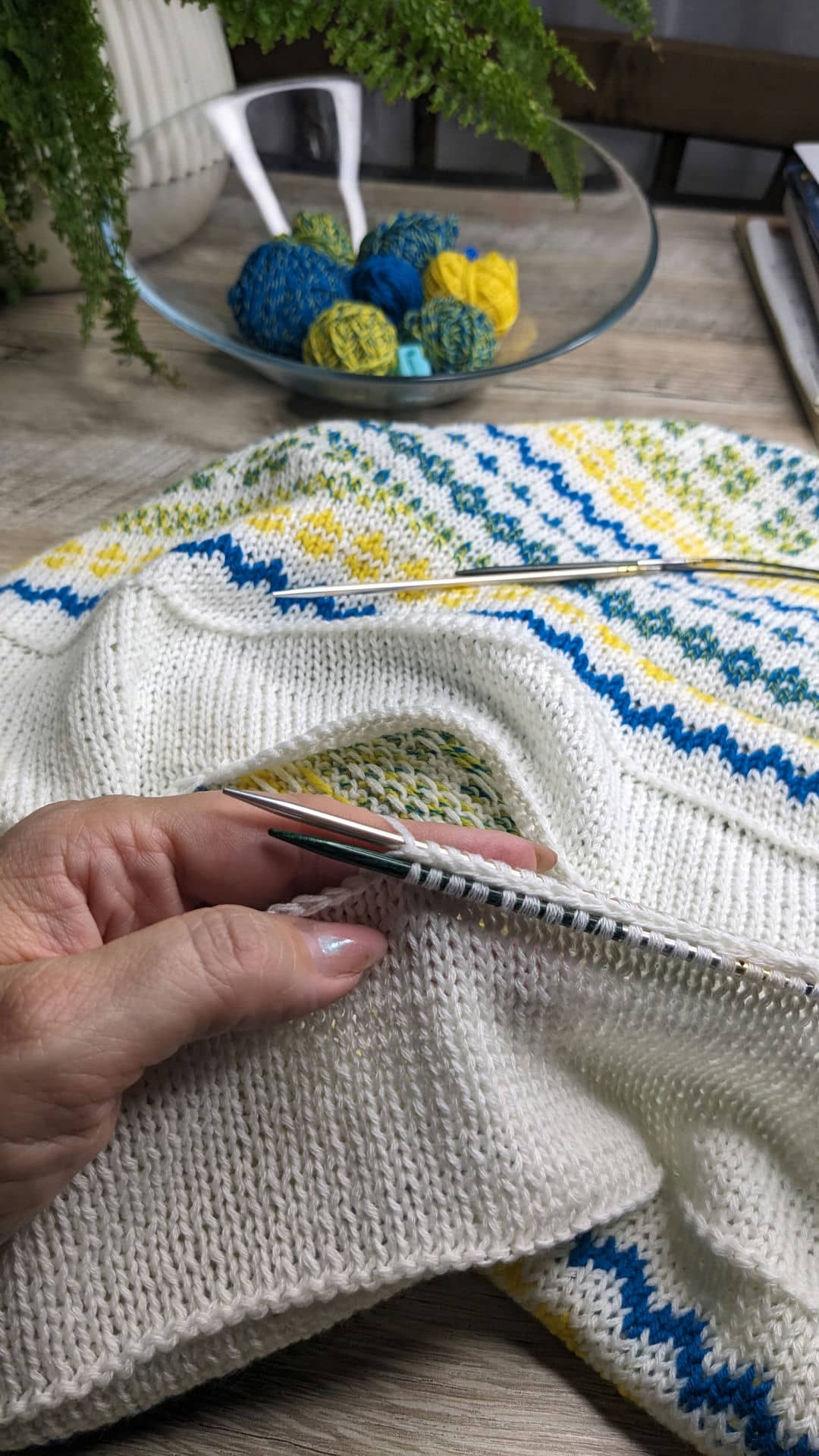
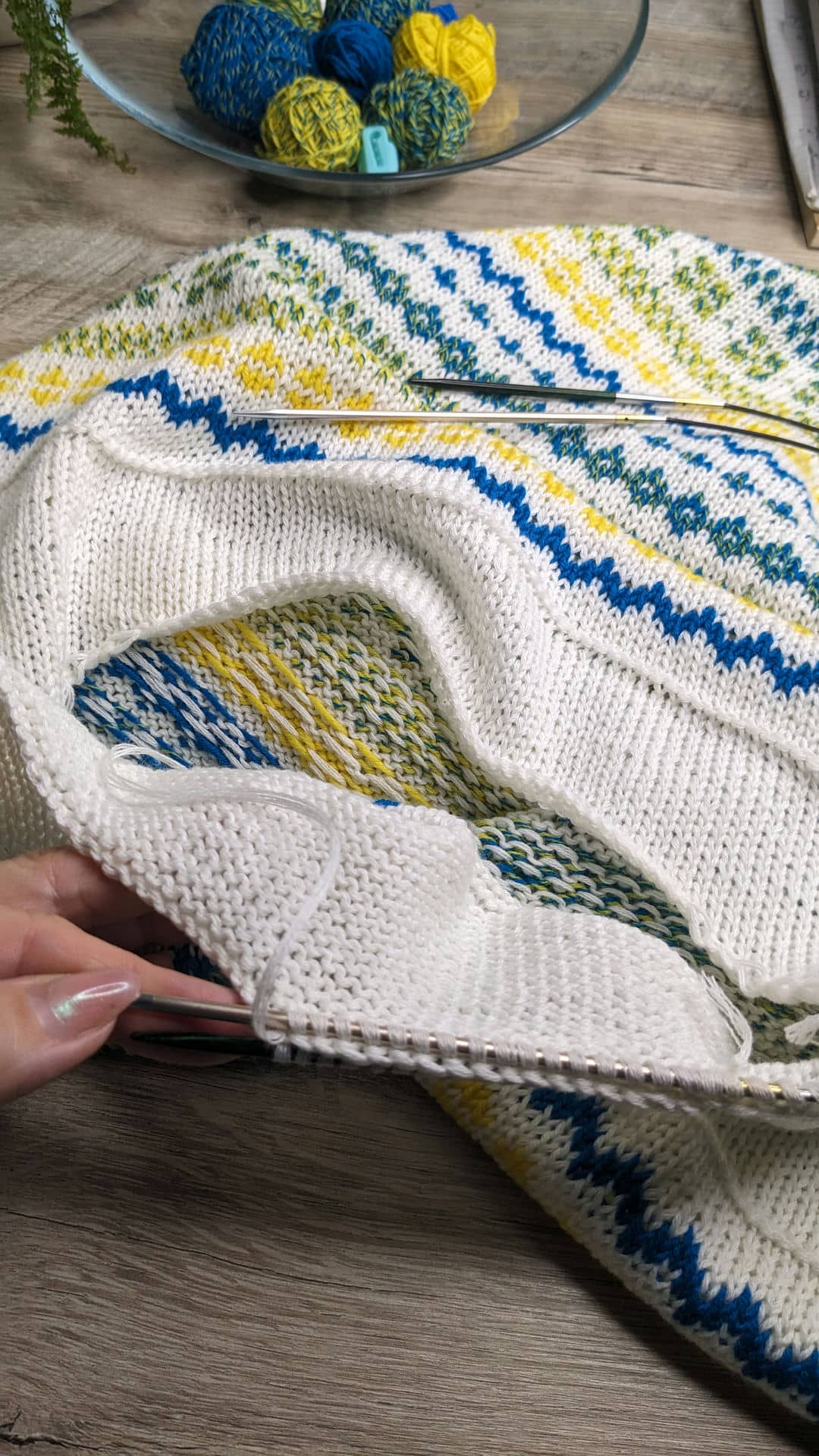
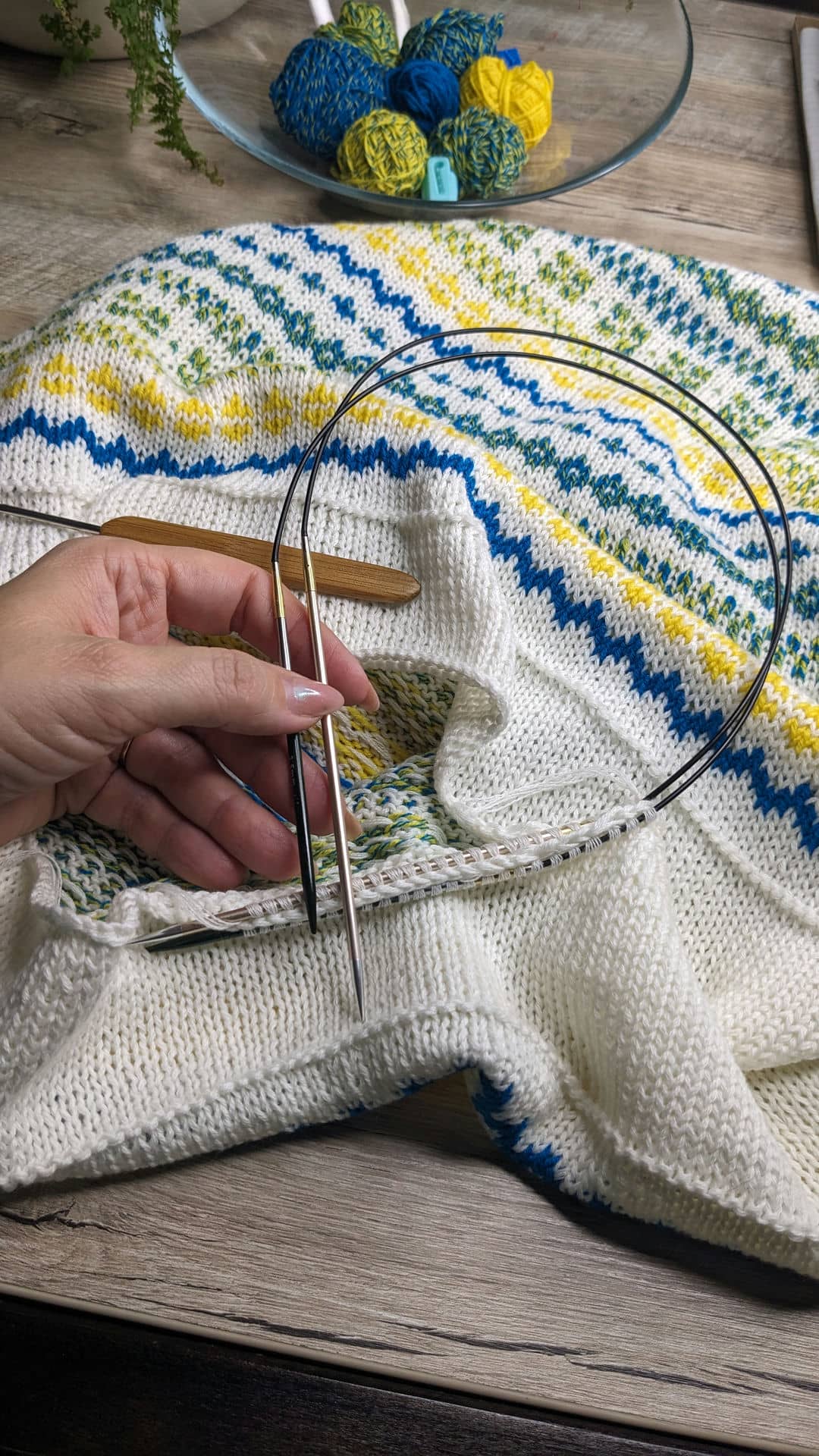
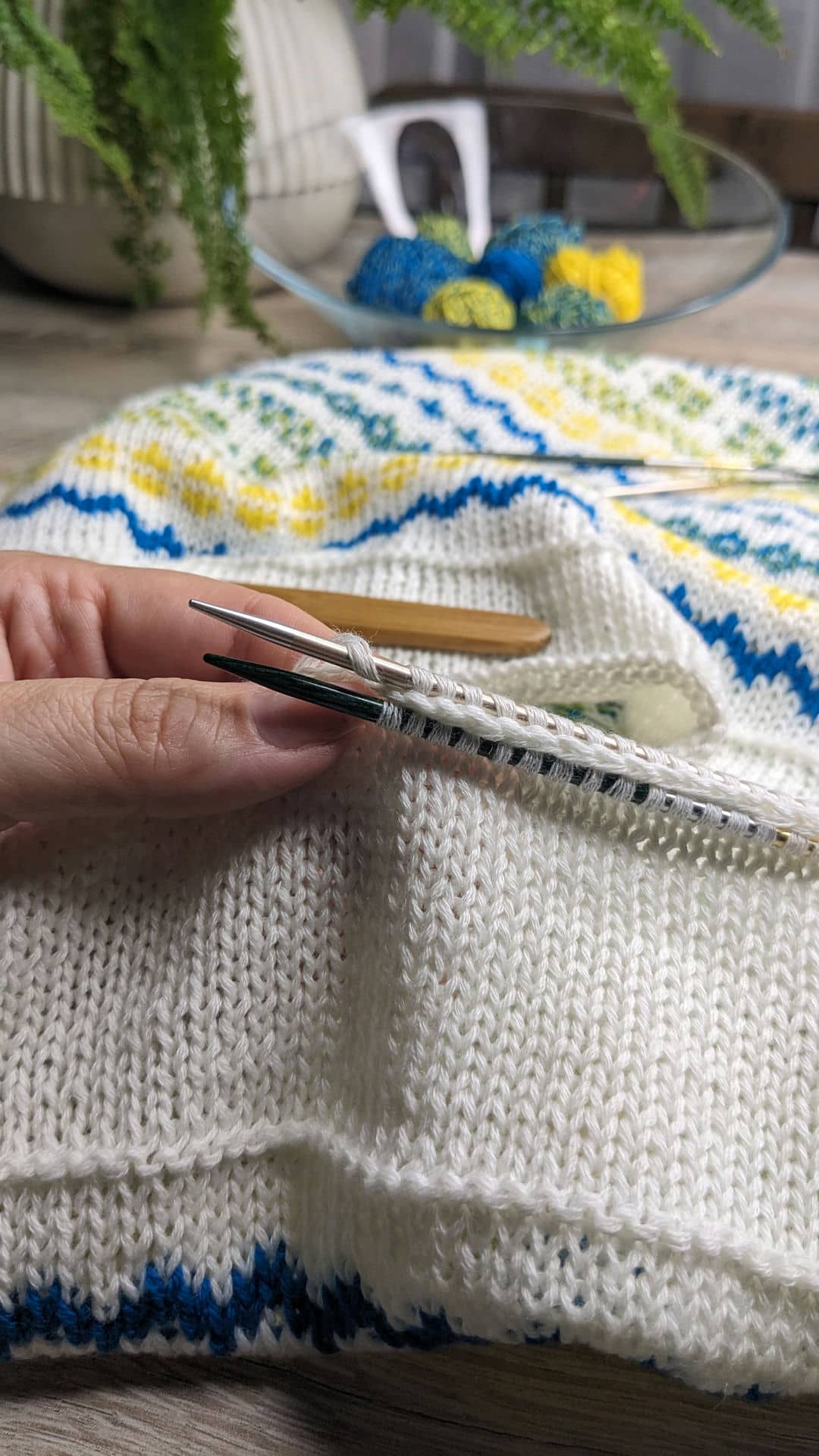
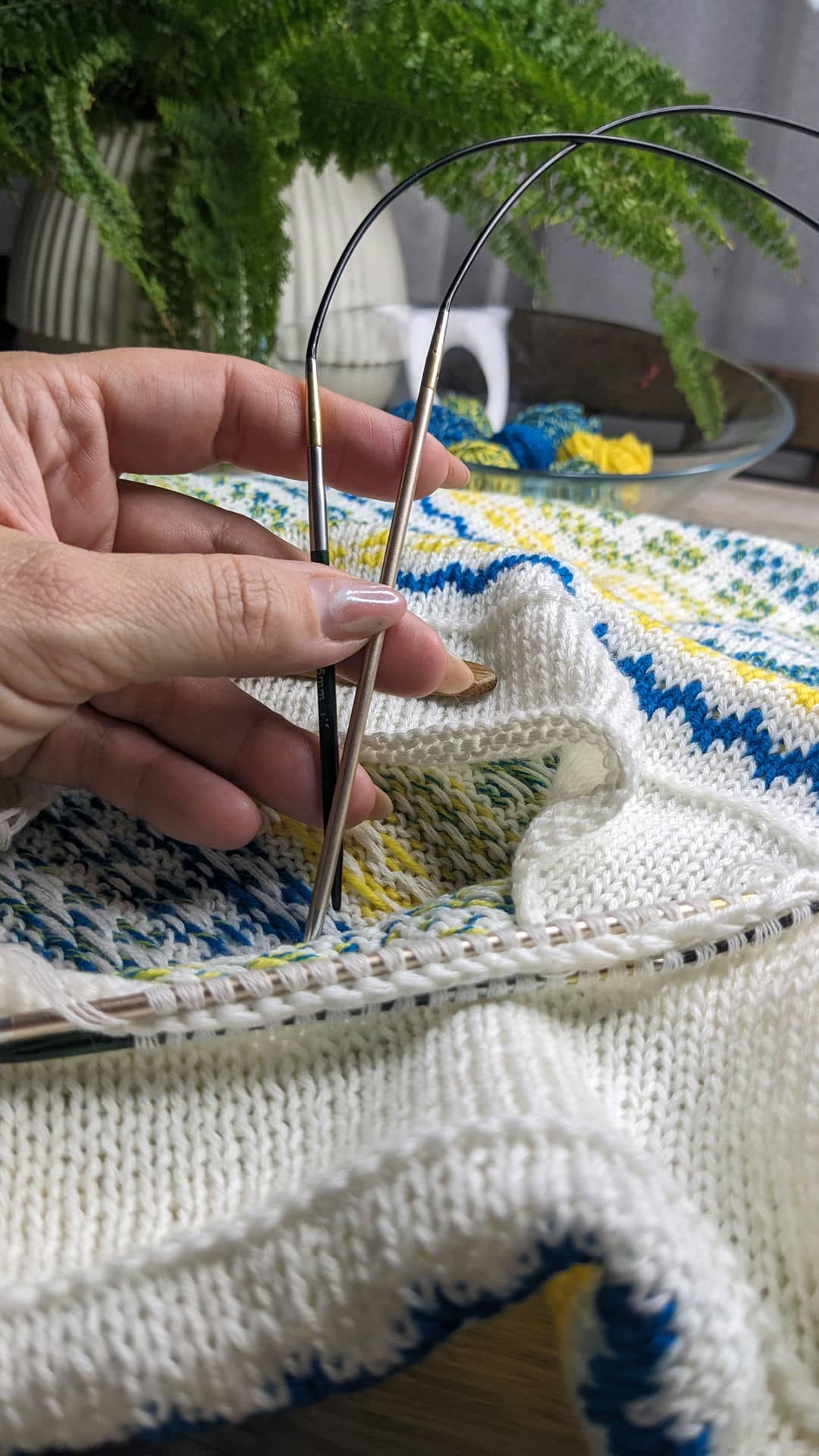
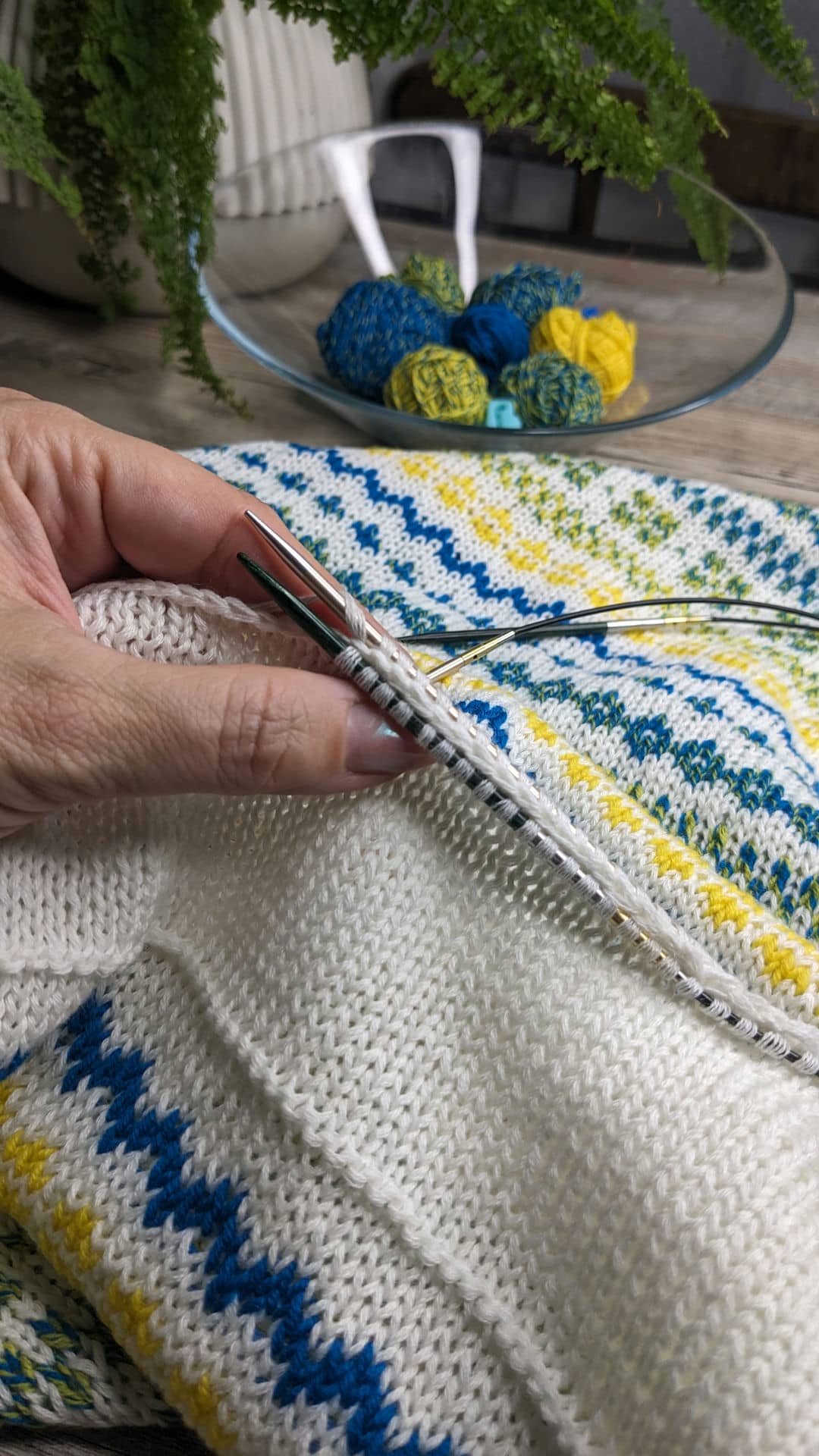
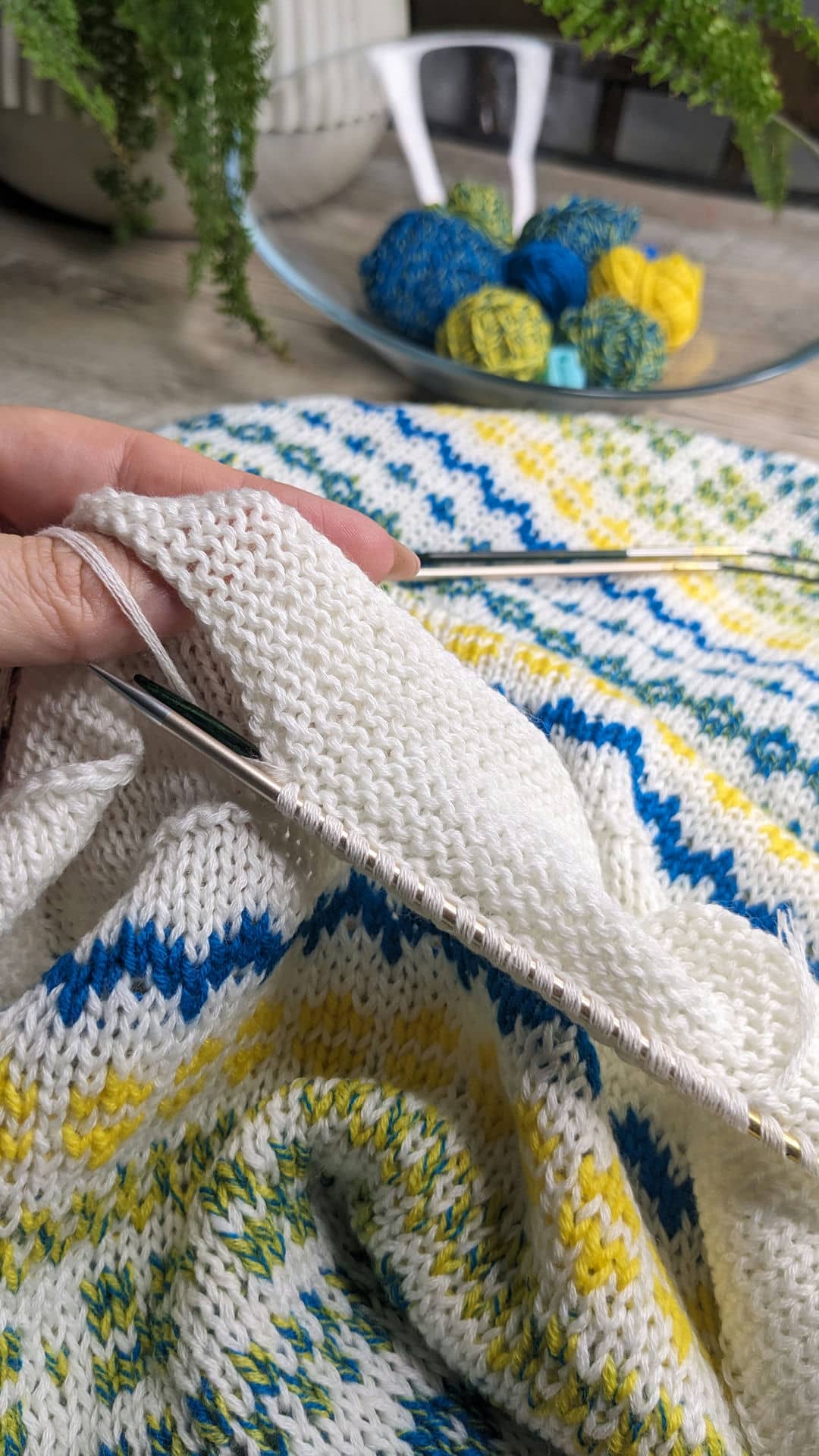
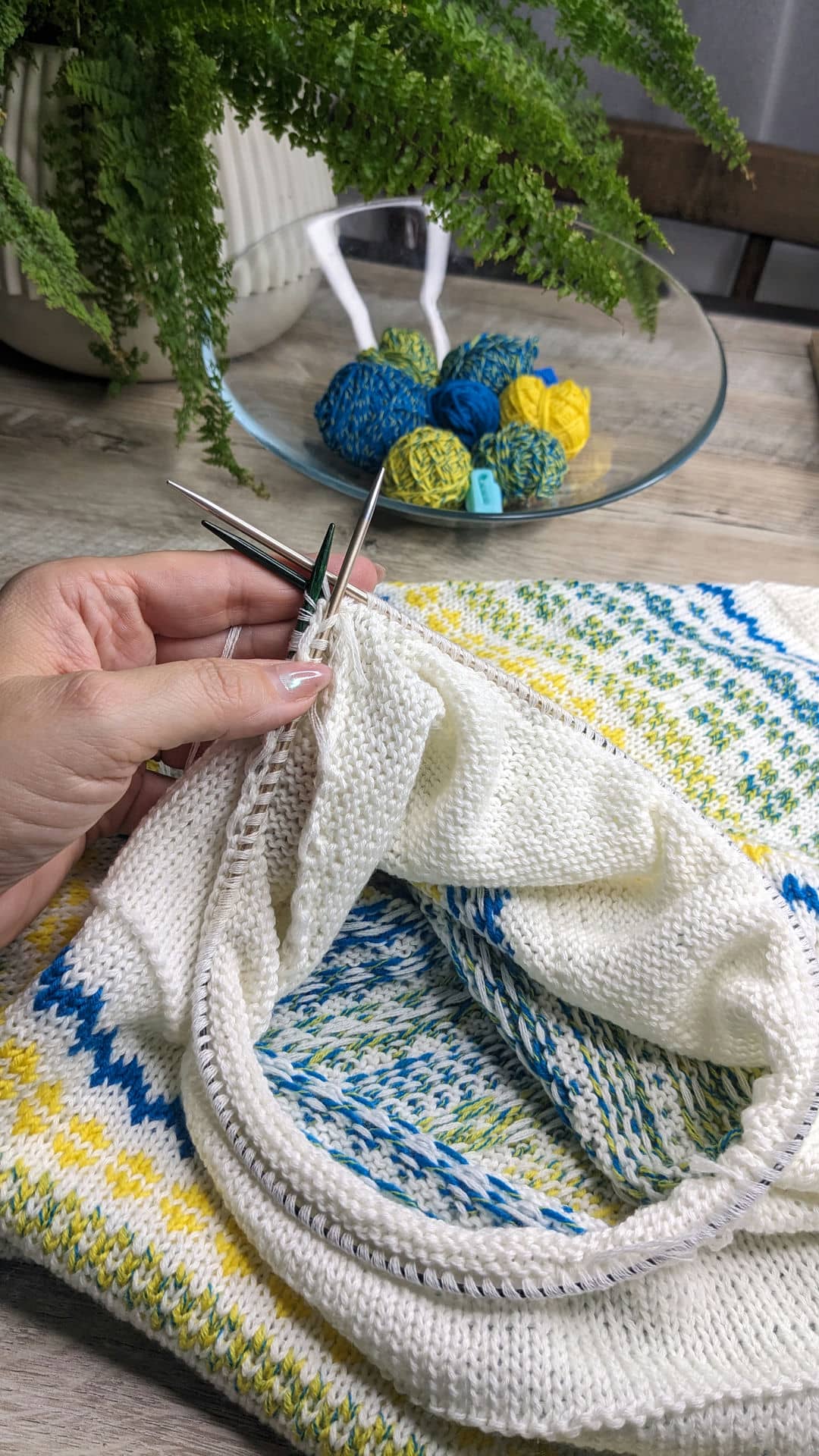
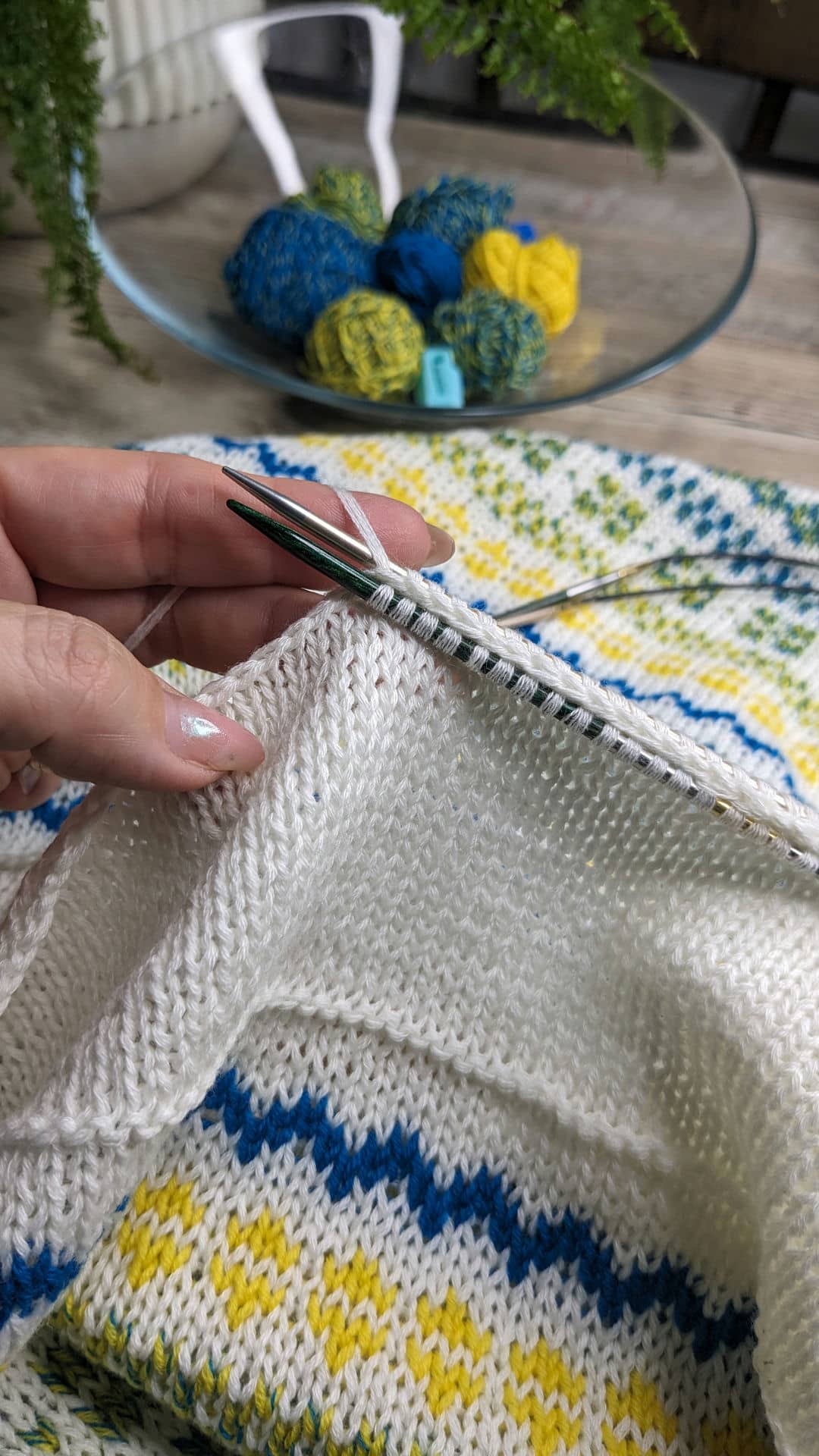
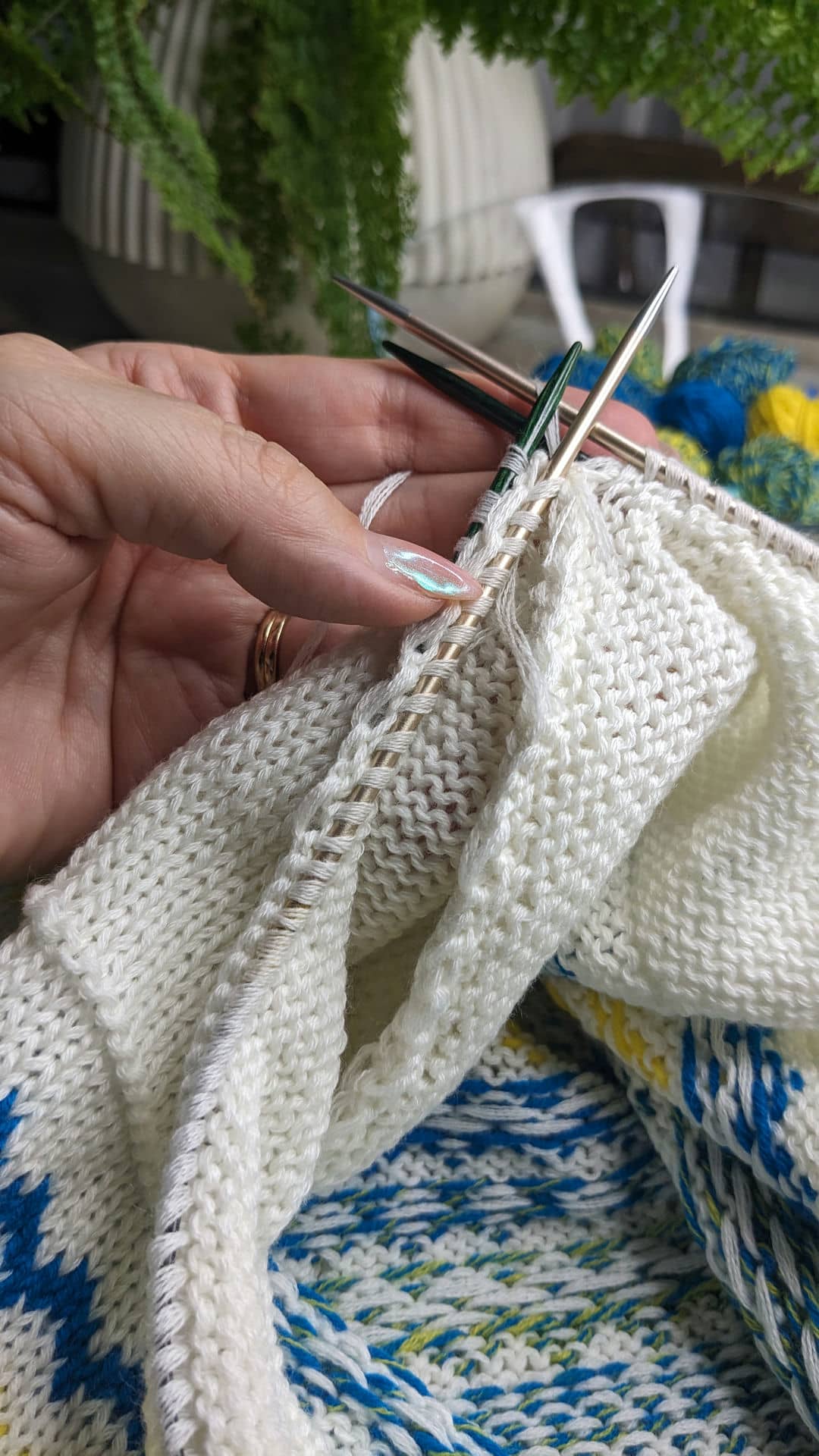
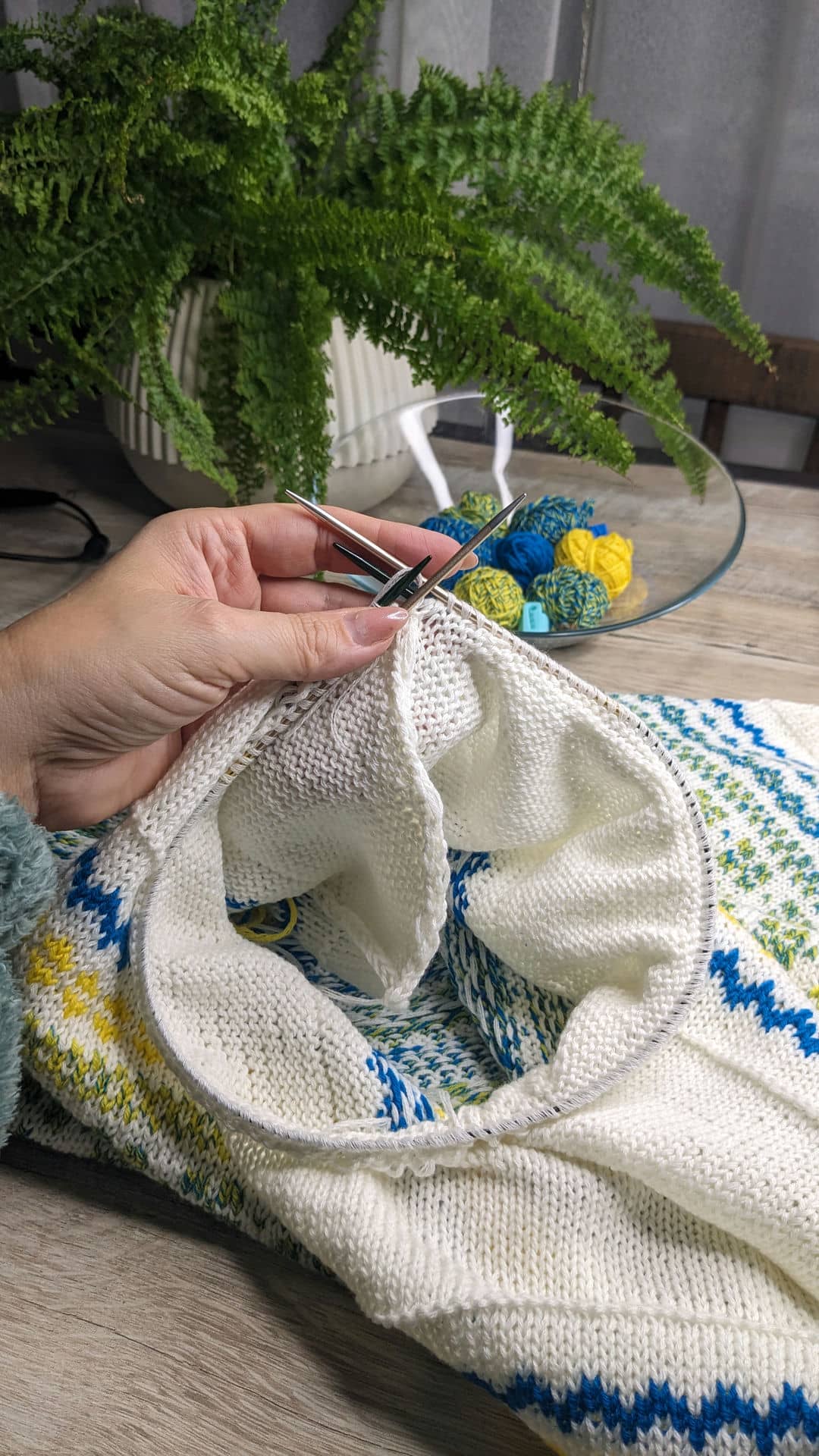
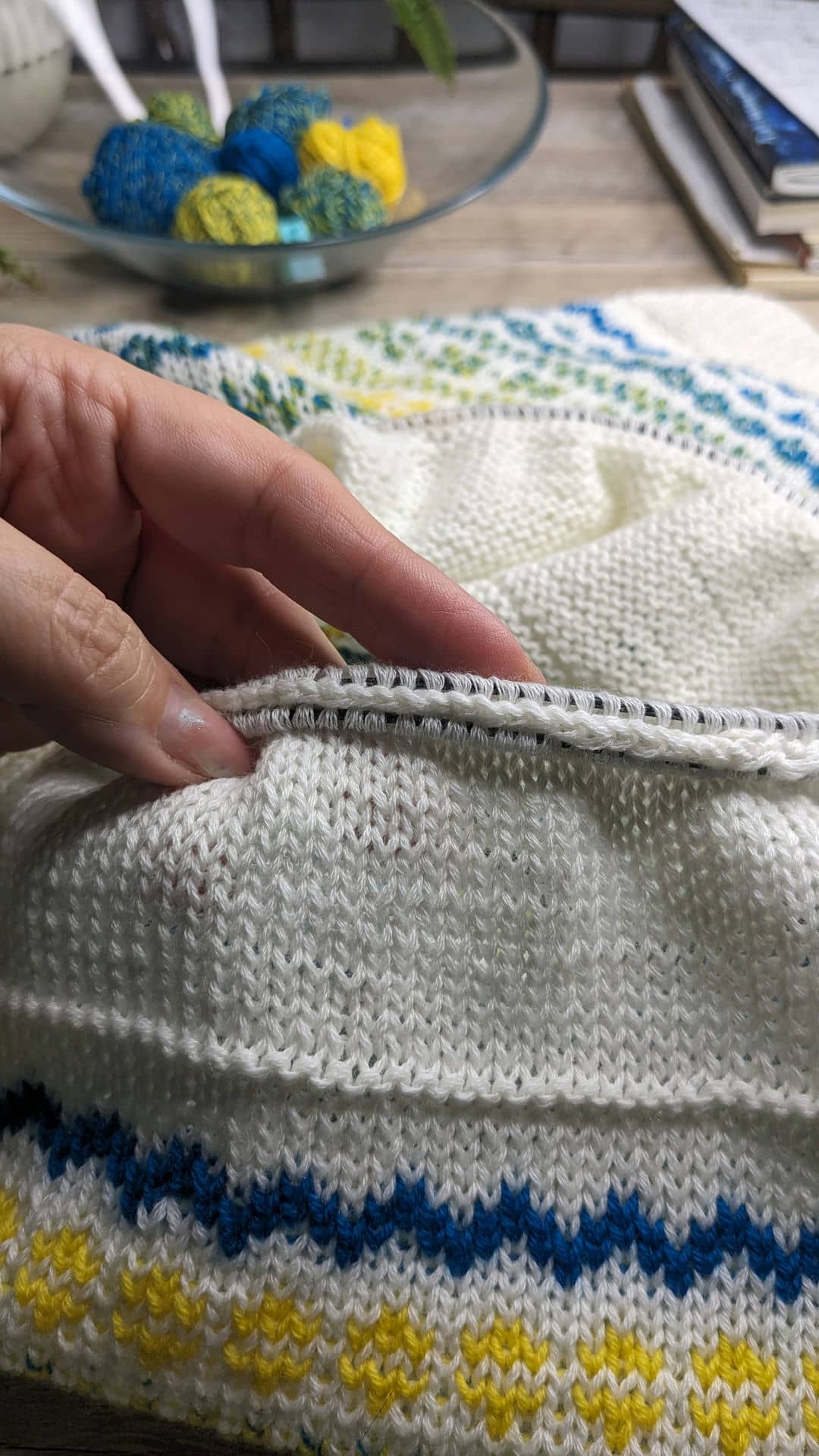
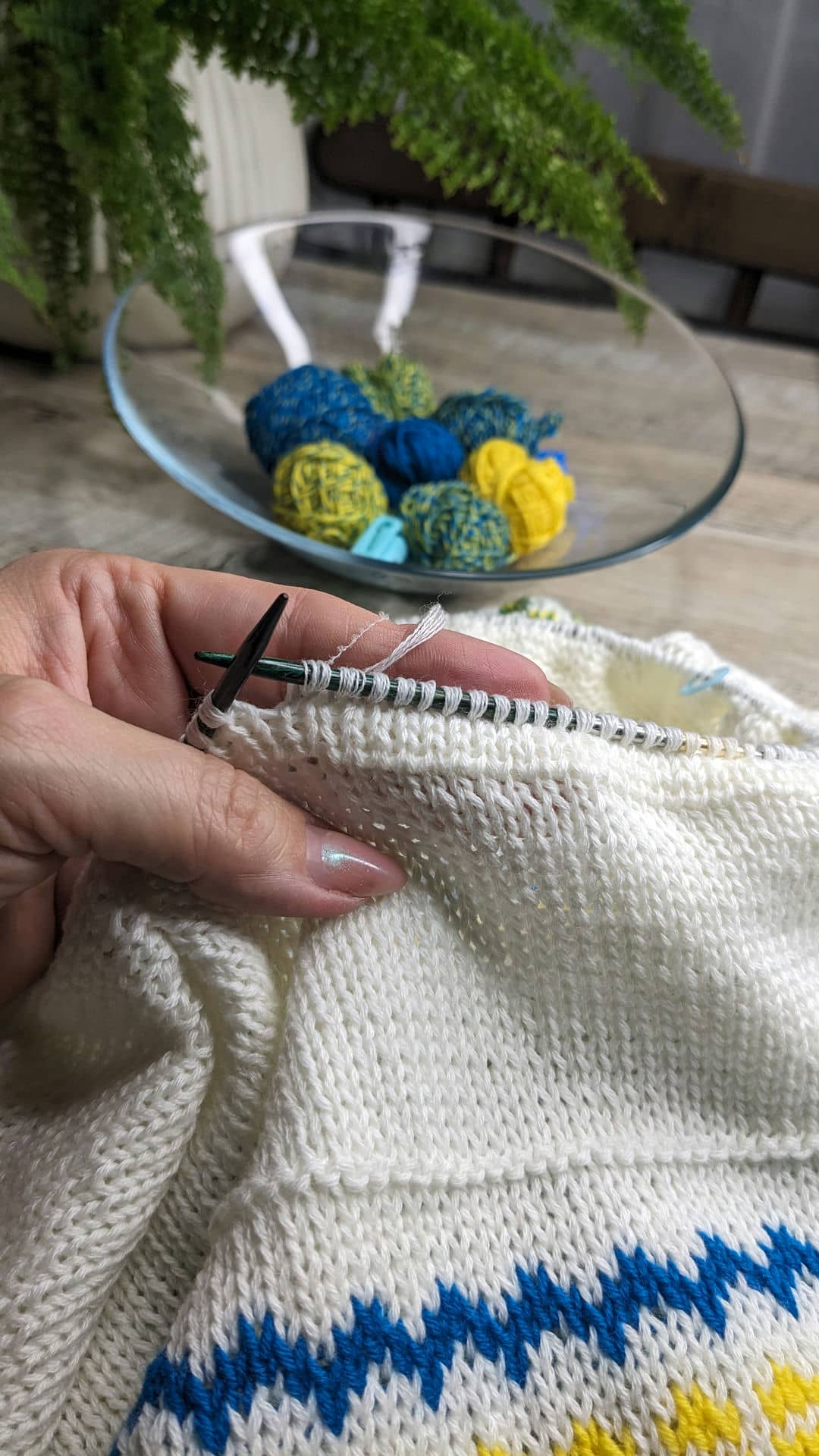
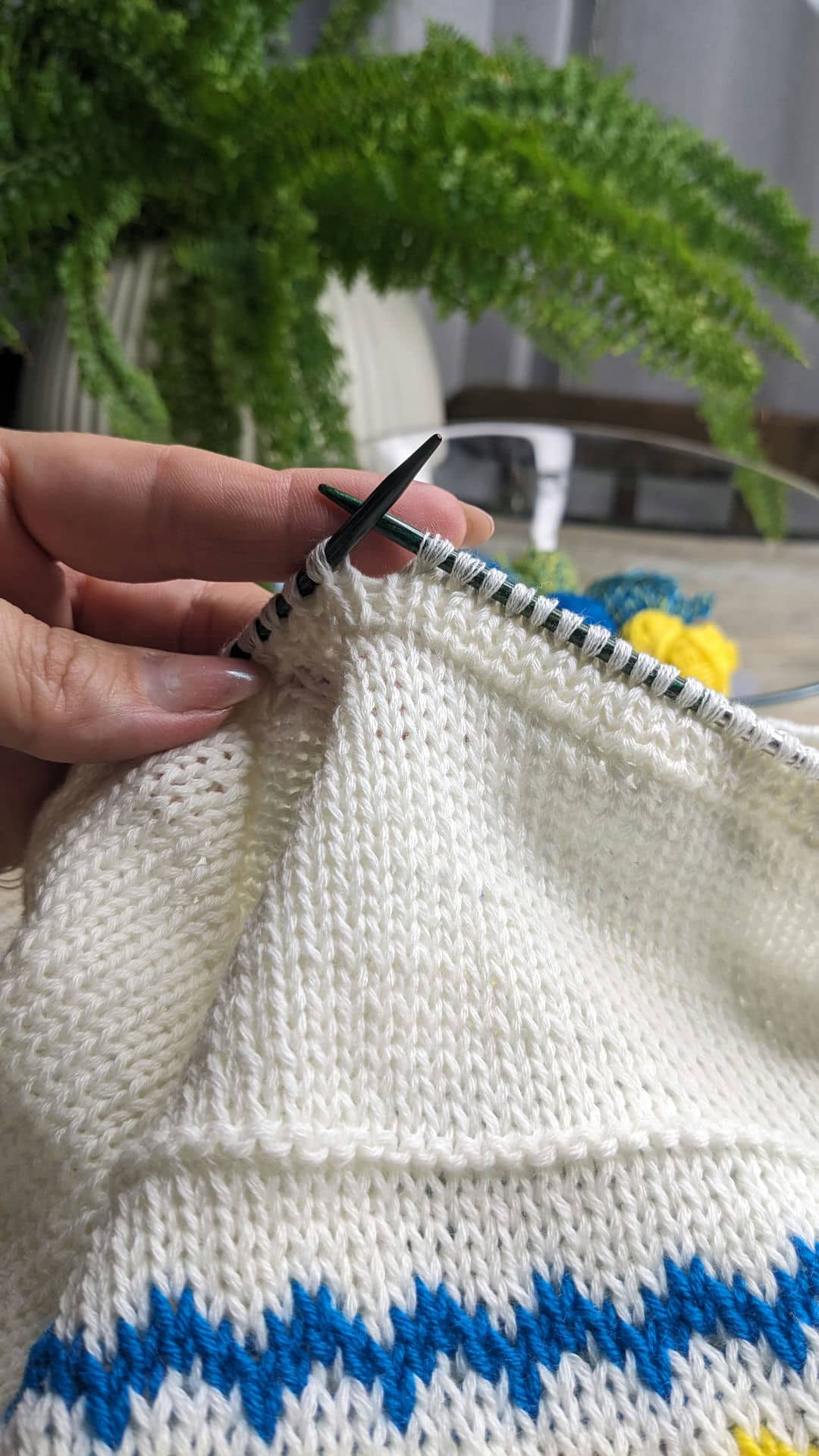
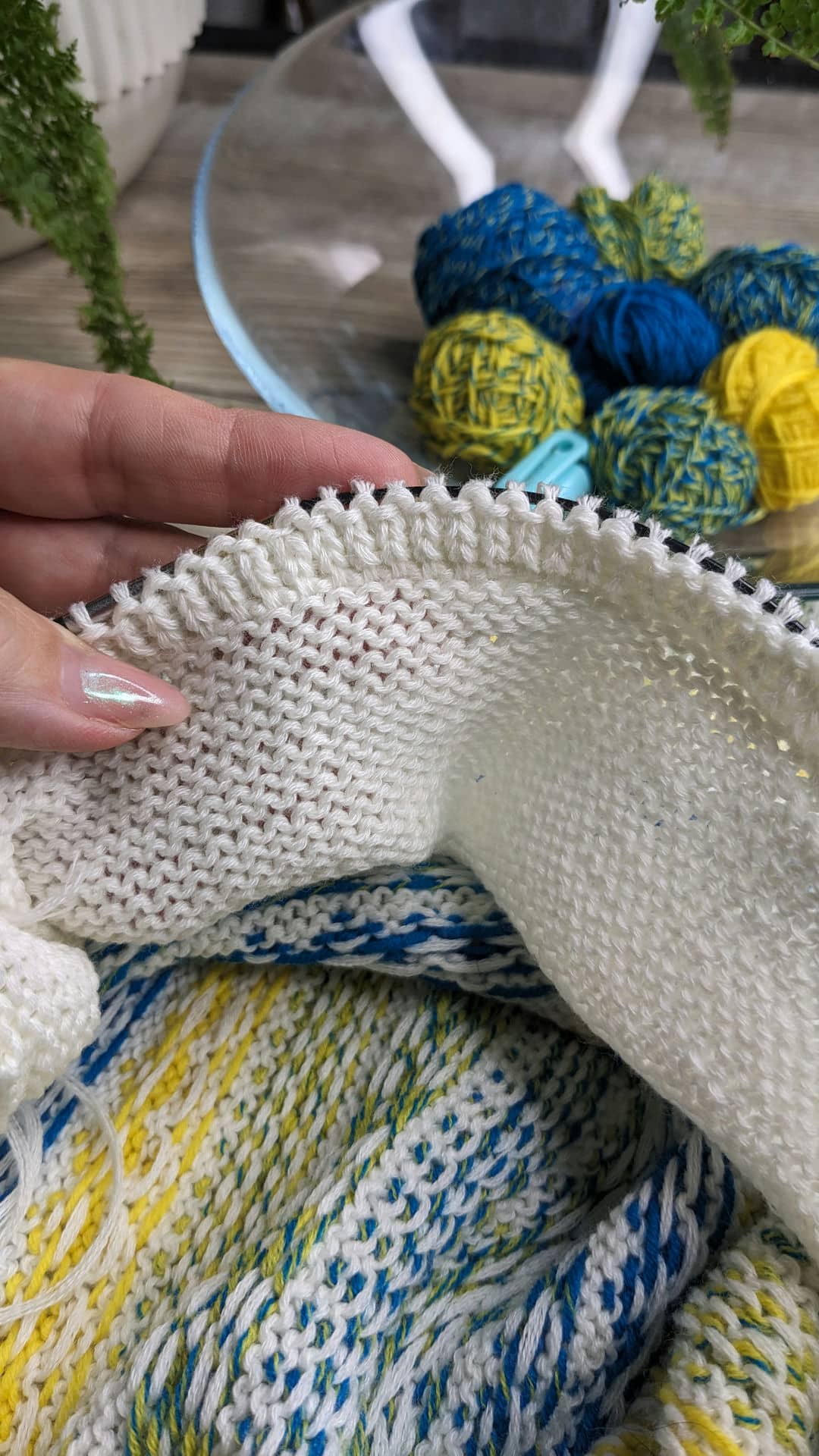
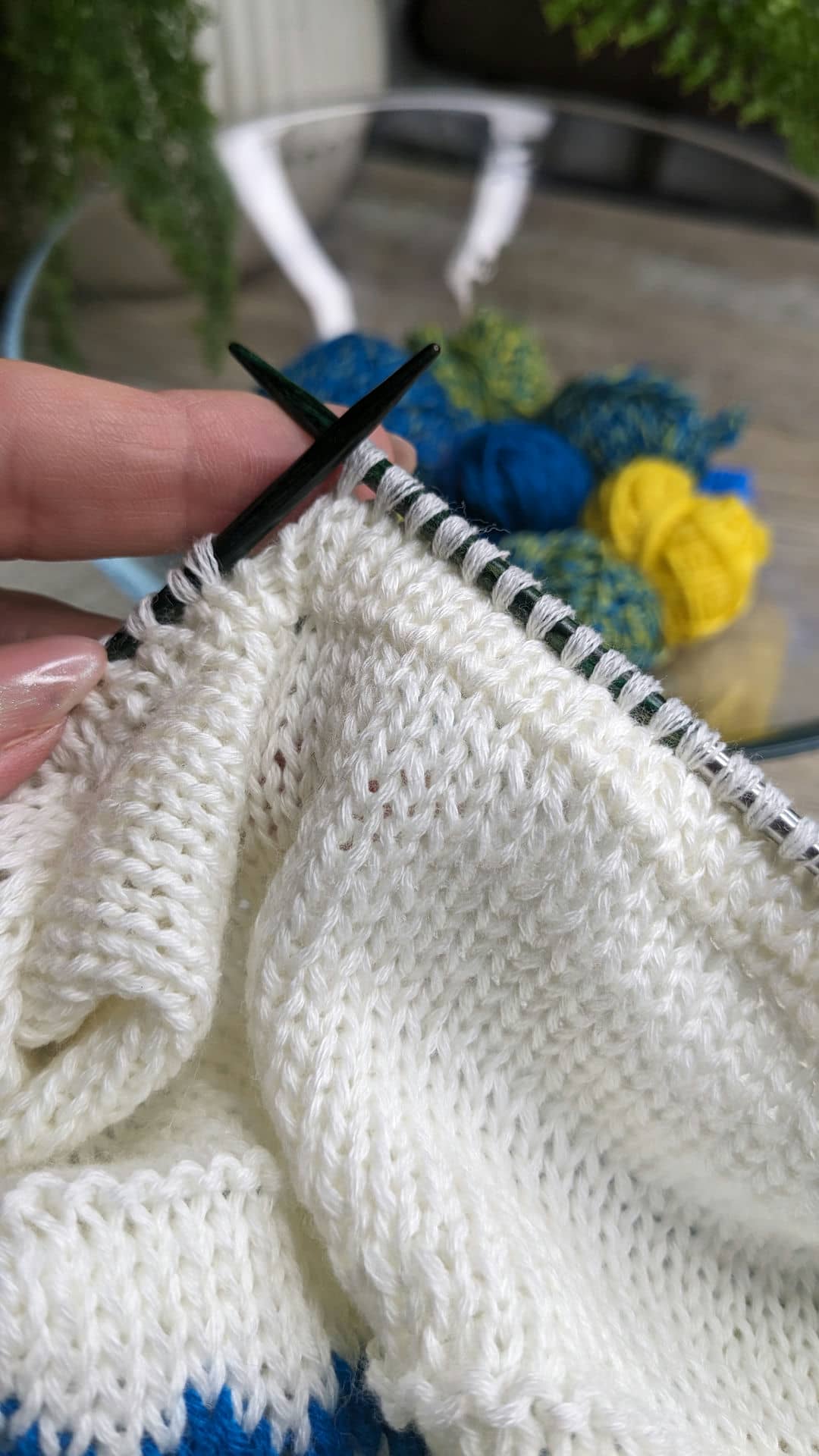
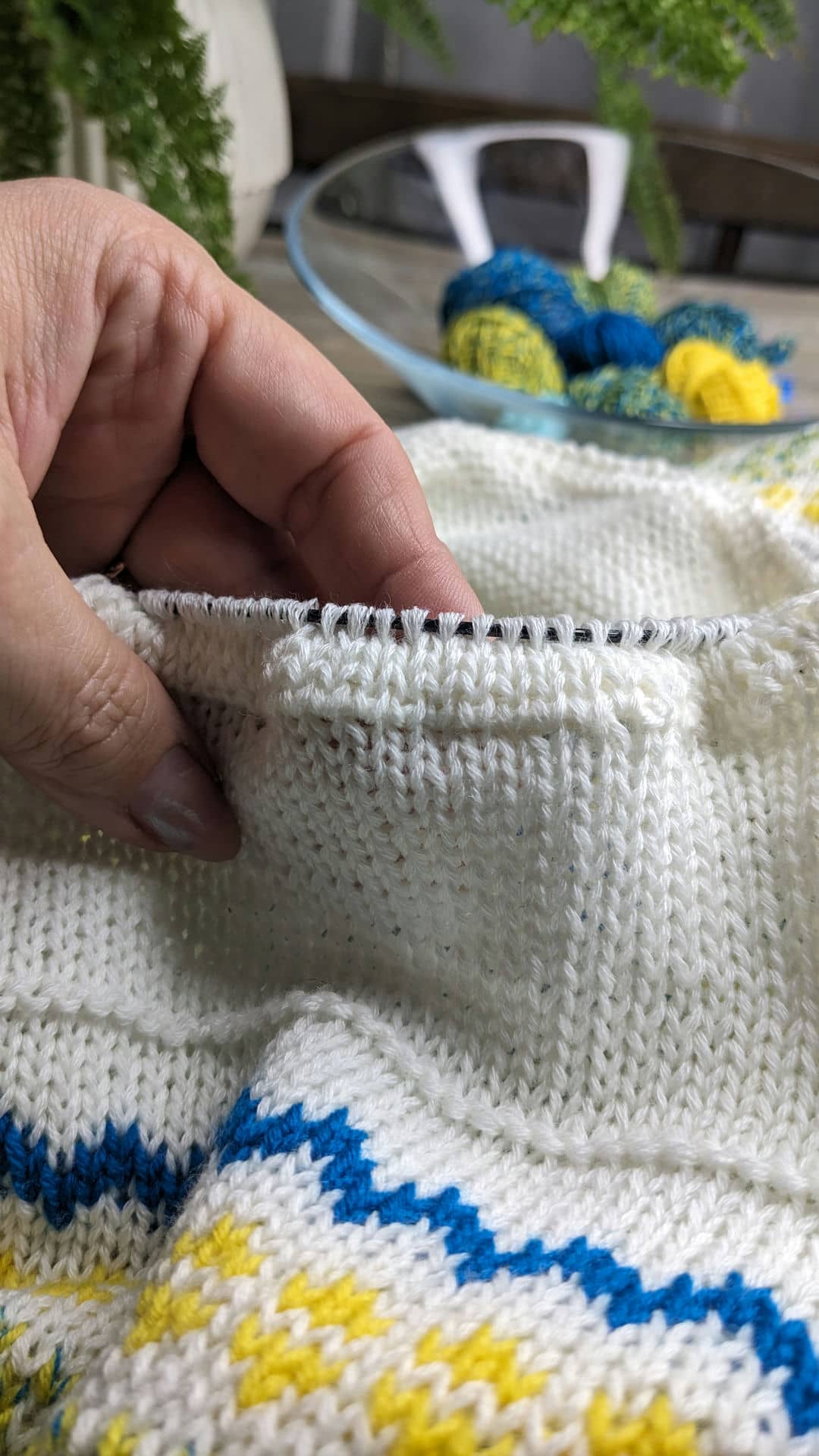
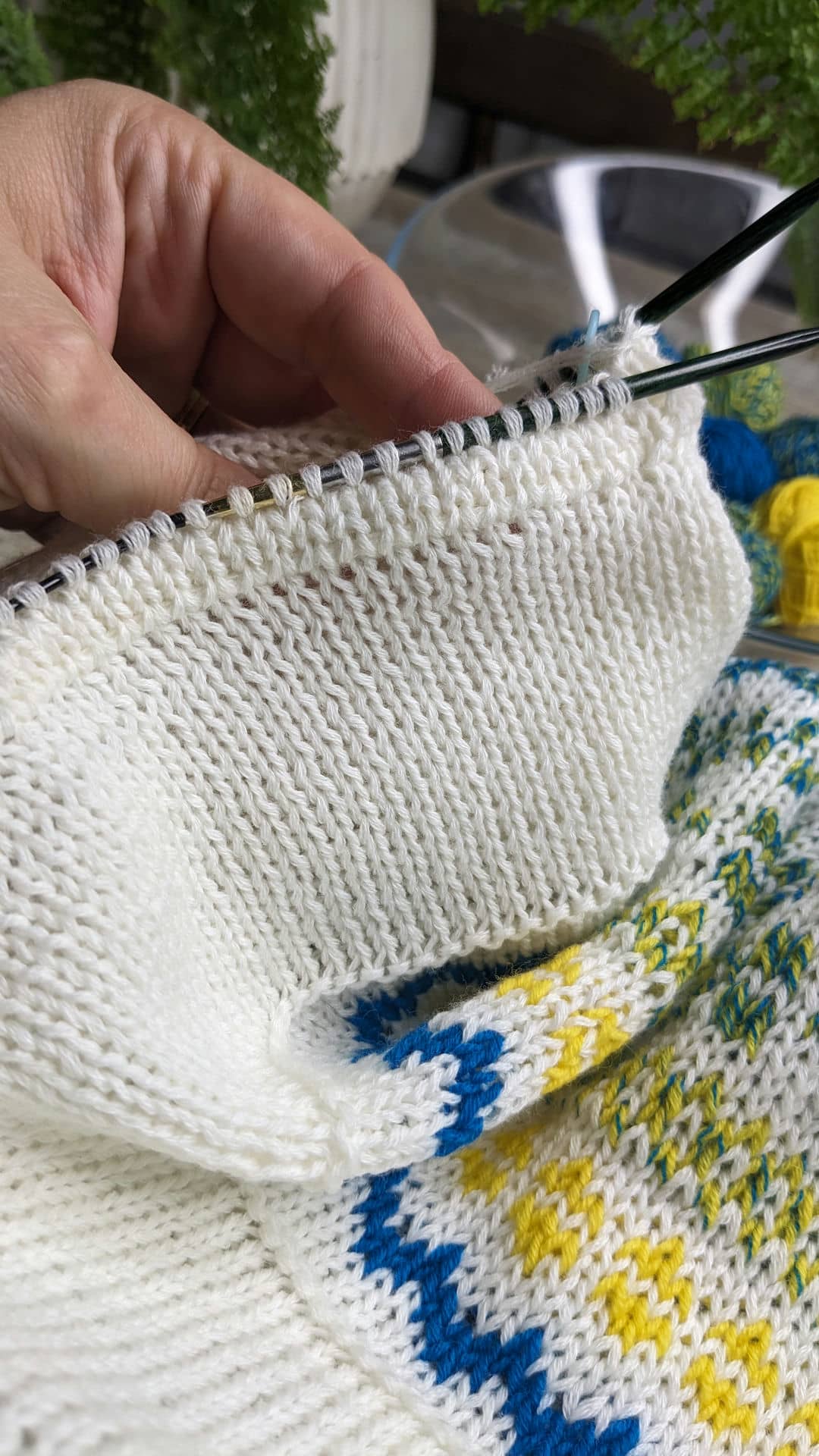
Next comes the neckline finish: a mock-linked edge. Along the neckline edge I pick up 131 stitches onto two pairs of 3.5 mm needles. We work the first row in 1×1 rib: the knit stitch from the first needle, the purl stitch from the second. Then we work 4 rounds of tubular rib.
In the next round we halve the number of stitches, then continue the neckband in 1×1 rib. Work 15 rounds.
Then two rounds of tubular rib. Bind off with a tapestry needle.
Yarn used: 230 g:
- merino/cotton (2400 m/100 g), white – 170 g,
- Zauberperlen Schoppel 100% merino (400 m/100 g) – 60 g.
For the neckline finish, see the detailed video below, shown on another jumper.
Next we move on to the sleeves, which we also knit from the bottom up.
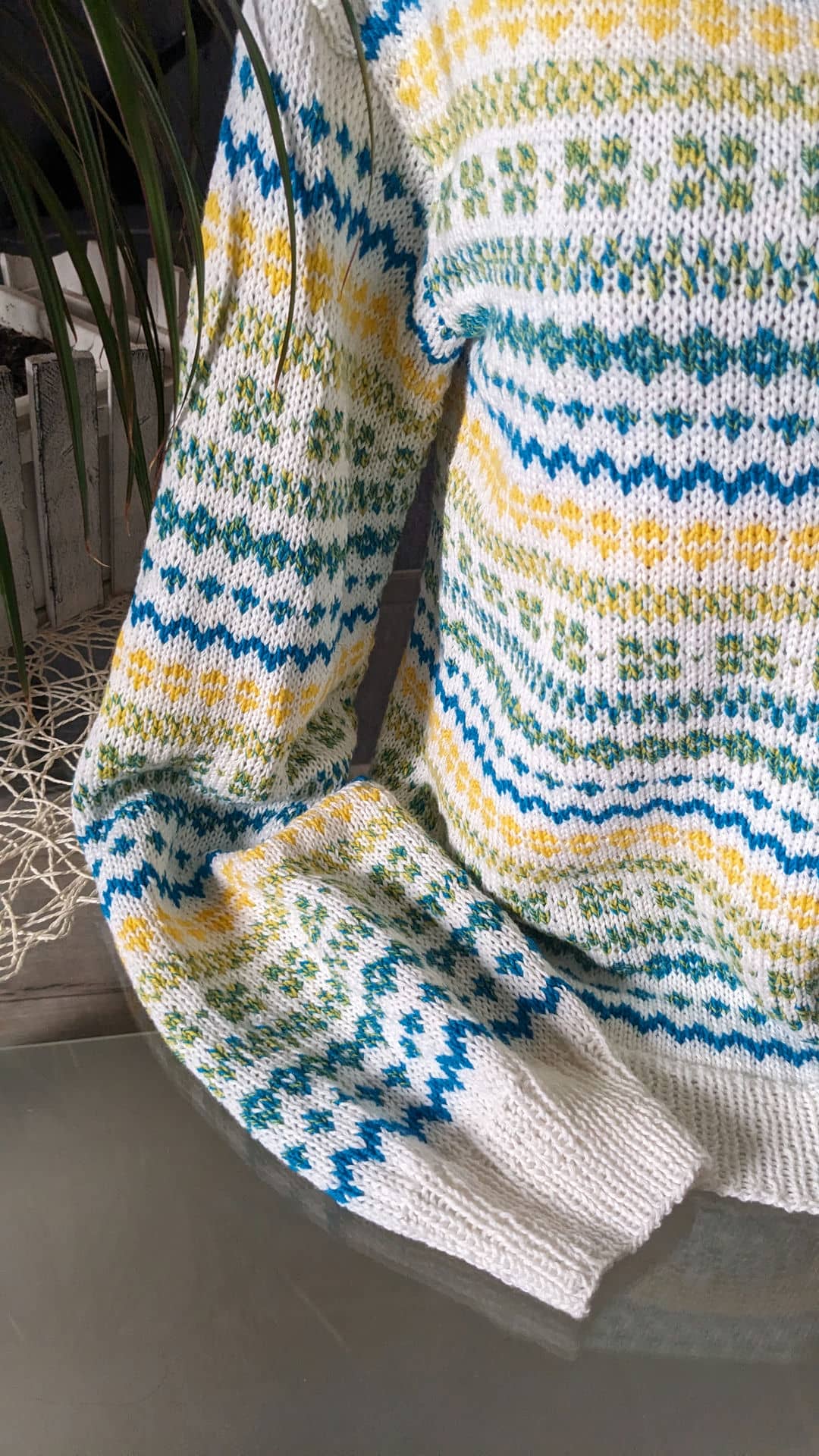
With 3.5 mm needles cast on 60 stitches + 1 stitch for joining in the round. Work the cuffs in 1×1 rib for 20 rounds. Then switch to 4 mm needles and start the stockinette stitch; in the first round increase the stitches unevenly to 88. That is, I add 28 new stitches from the bar. The number of sleeve stitches must be a multiple of 8, the pattern repeat.
Then we knit the sleeves to the length needed, straight, with the matching colorwork pattern.
Shaping the sleeve cap. We switch to working flat.
On each side we bind off 8 stitches 5 times in every 2nd row, then bind off the remaining 8 stitches. The cap height is 3 cm. Yarn used for the two sleeves: 150 g:
- merino/cotton (2400 m/100 g), white – 100 g,
- Zauberperlen Schoppel 100% merino (400 m/100 g) – 50 g.
The final stage: we sew the sleeves to the main part. Our bright, one-of-a-kind striped jumper is ready! Length 60 cm, size 48–50 (L-XL).
Total yarn used for the jumper: 380 g. Yarn used by type:
- merino/cotton (2400 m/100 g), white – 270 g,
- Zauberperlen Schoppel 100% merino (400 m/100 g) – 110 g.
Watch the video below to see how to bind off the rib with a tapestry needle
You may also like
Haze Sweater: Top-Down Raglan Knitting Pattern
December 11, 2025
Crochet Jumper “Cleopatra” Worked Top-Down
February 9, 2020