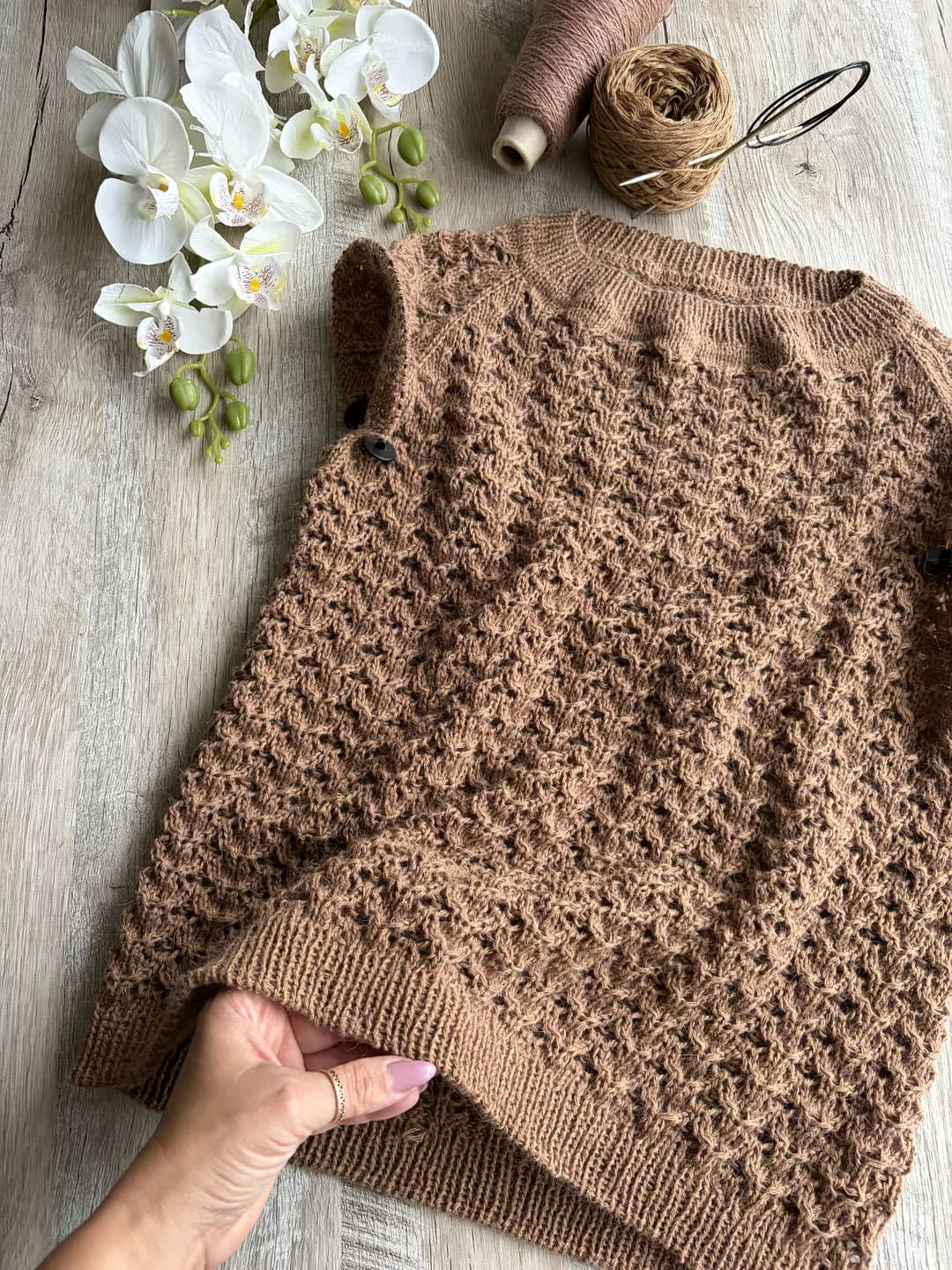
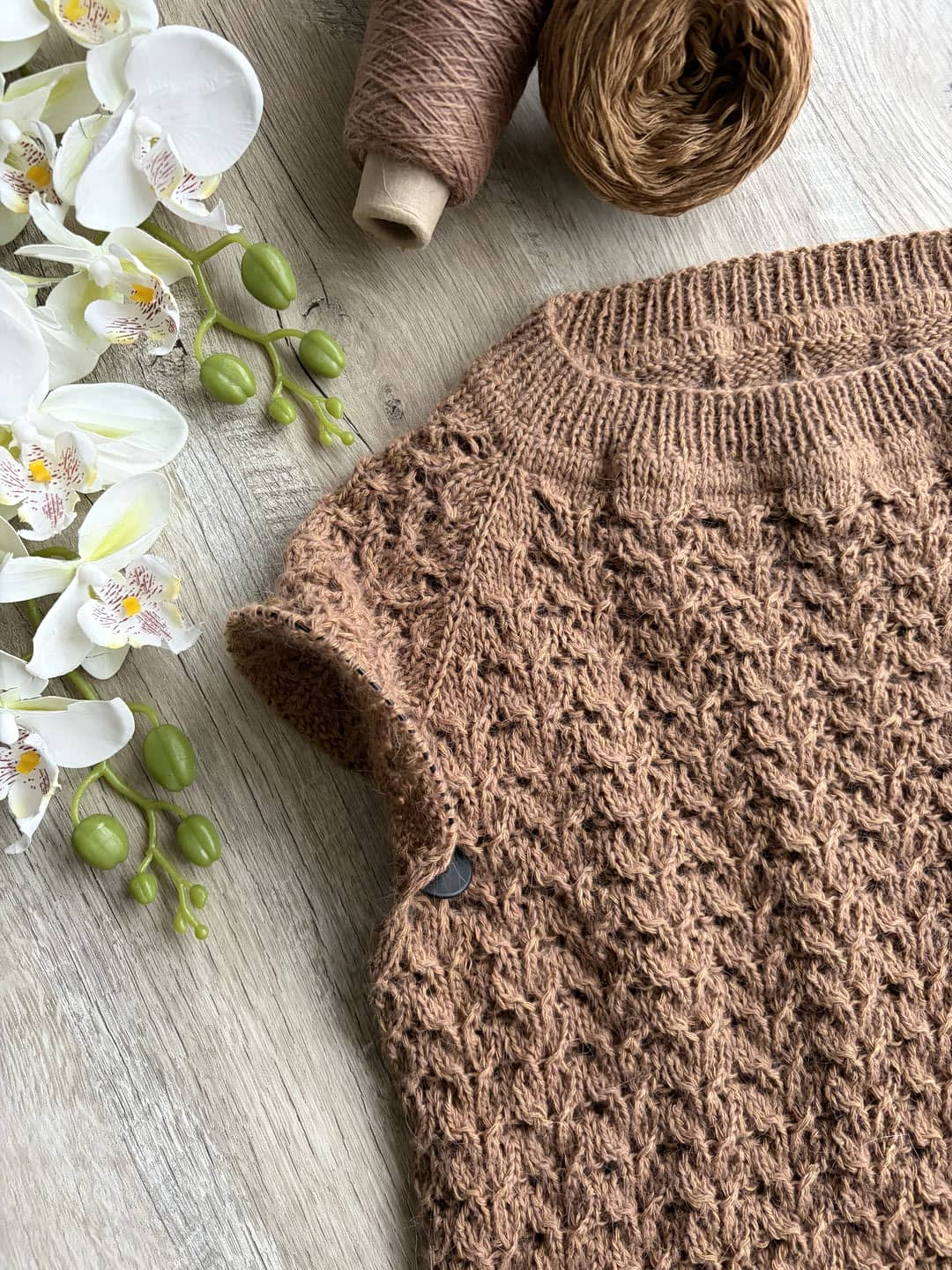
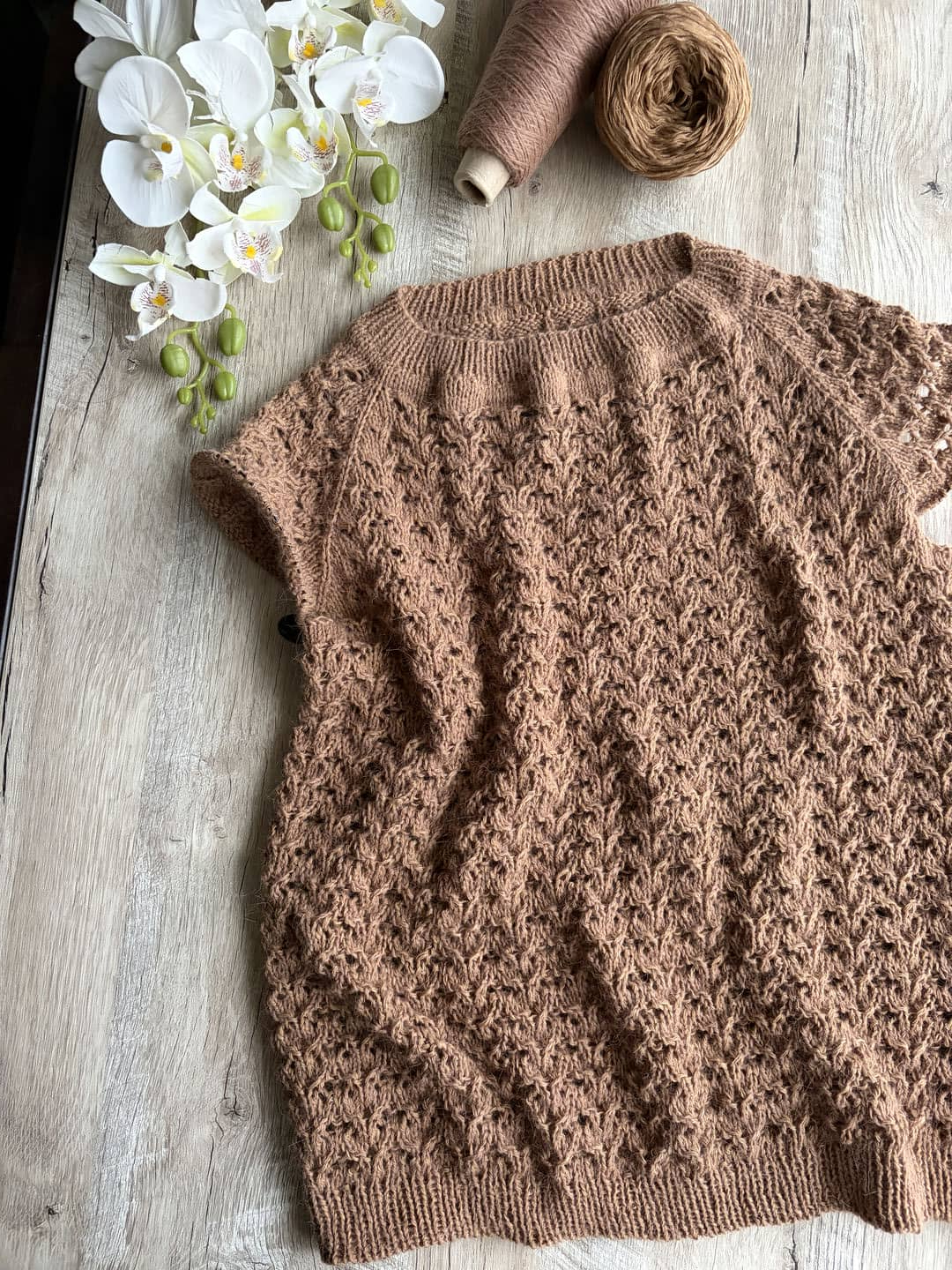
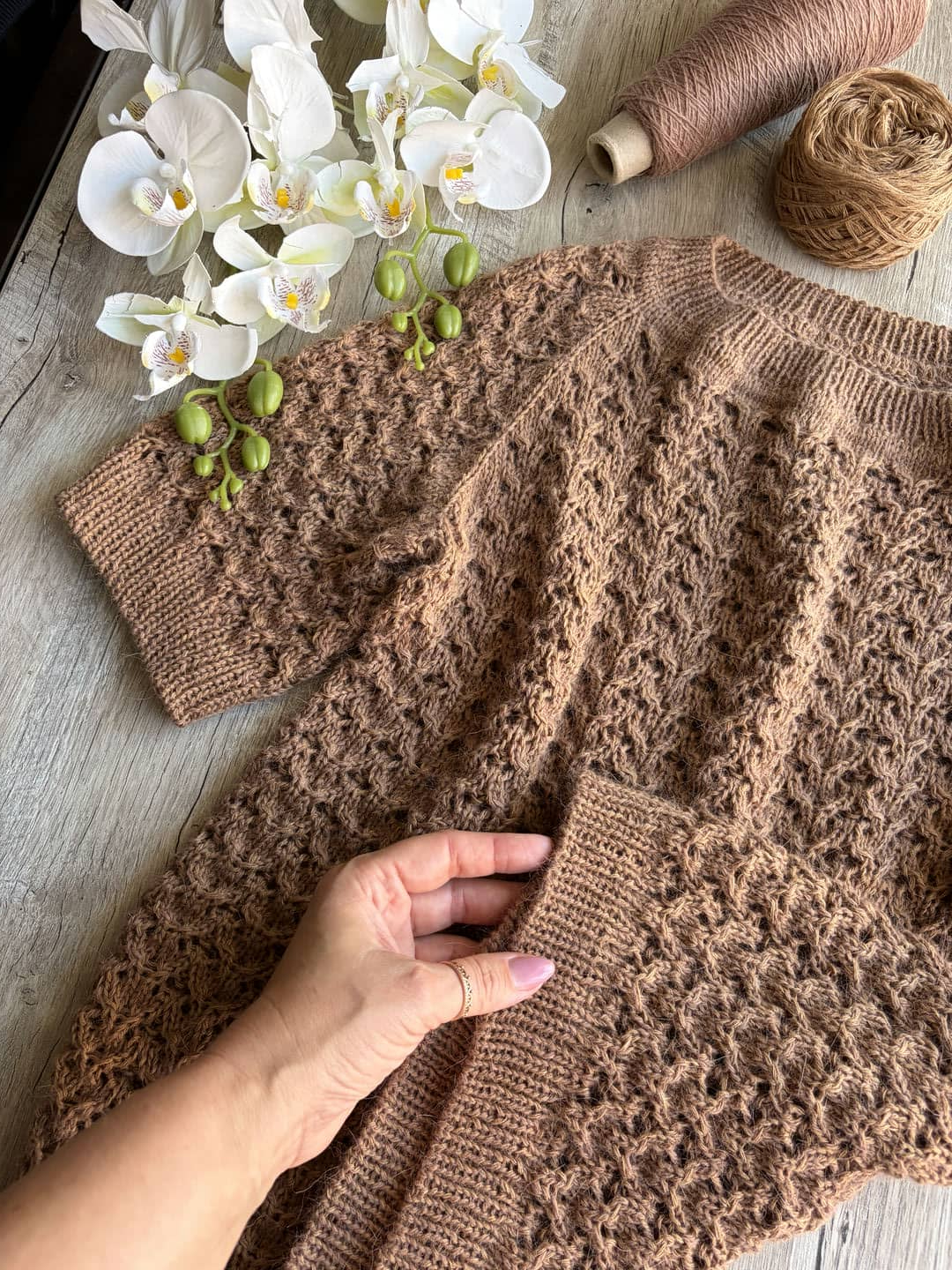
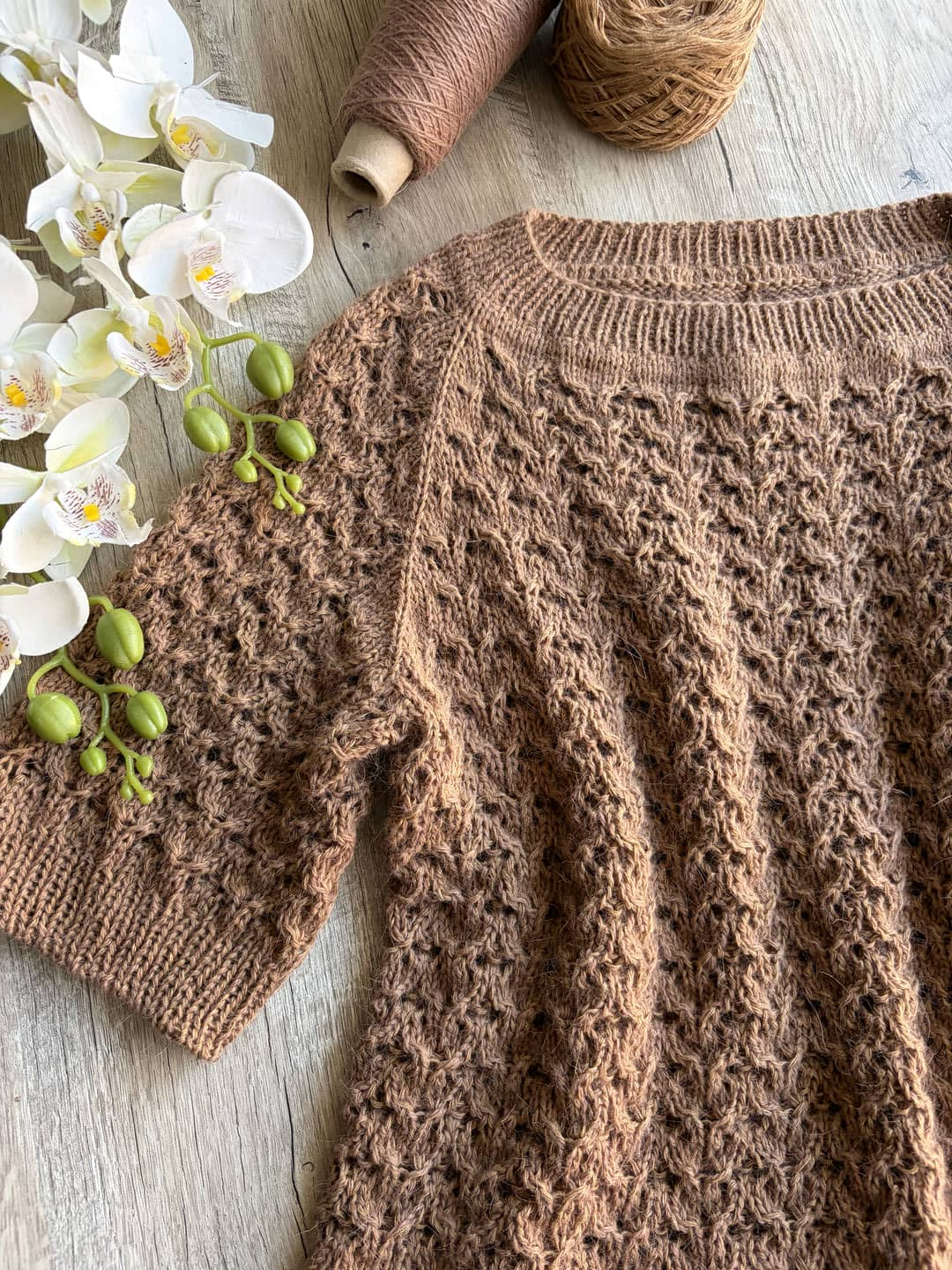
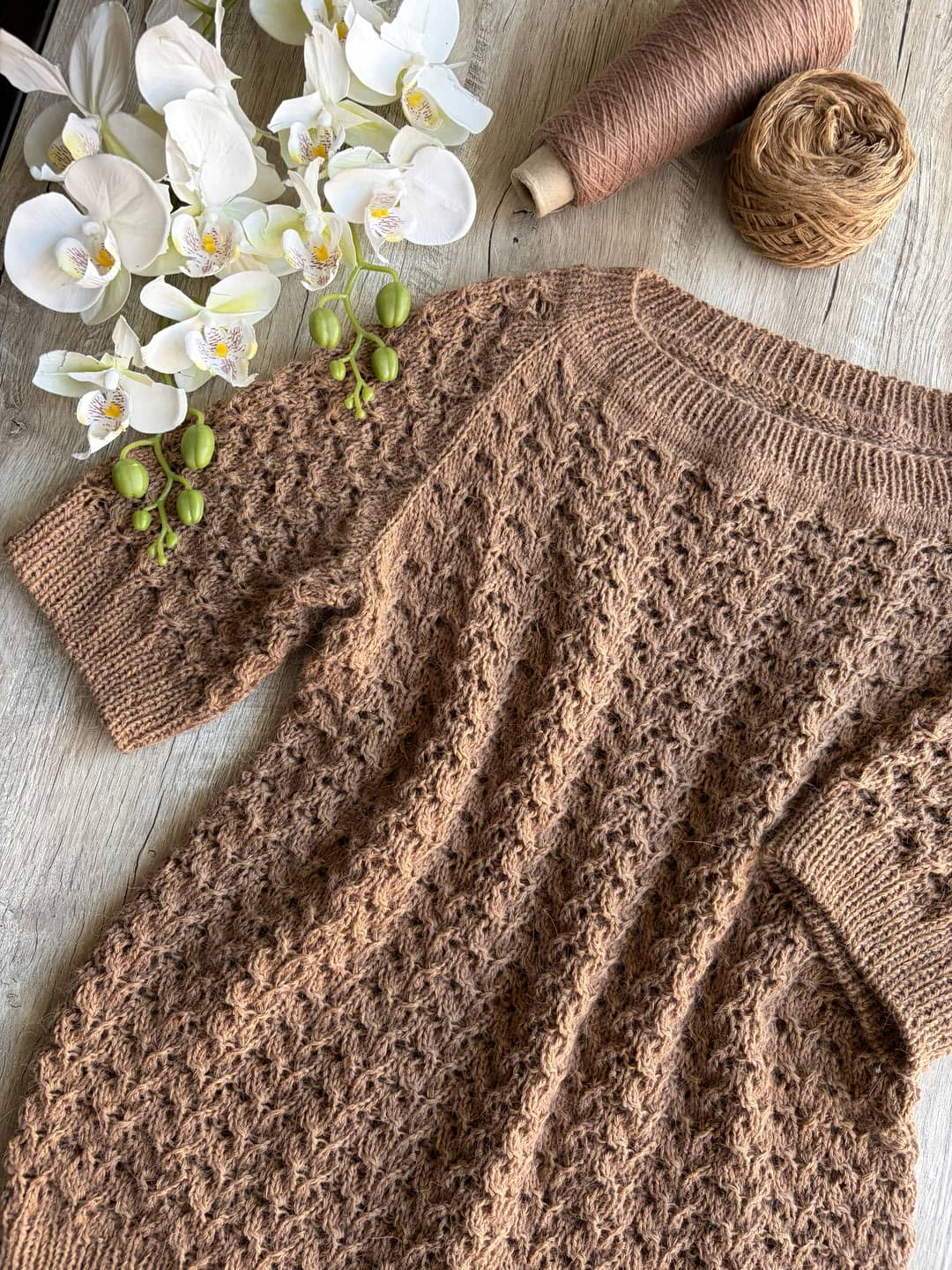
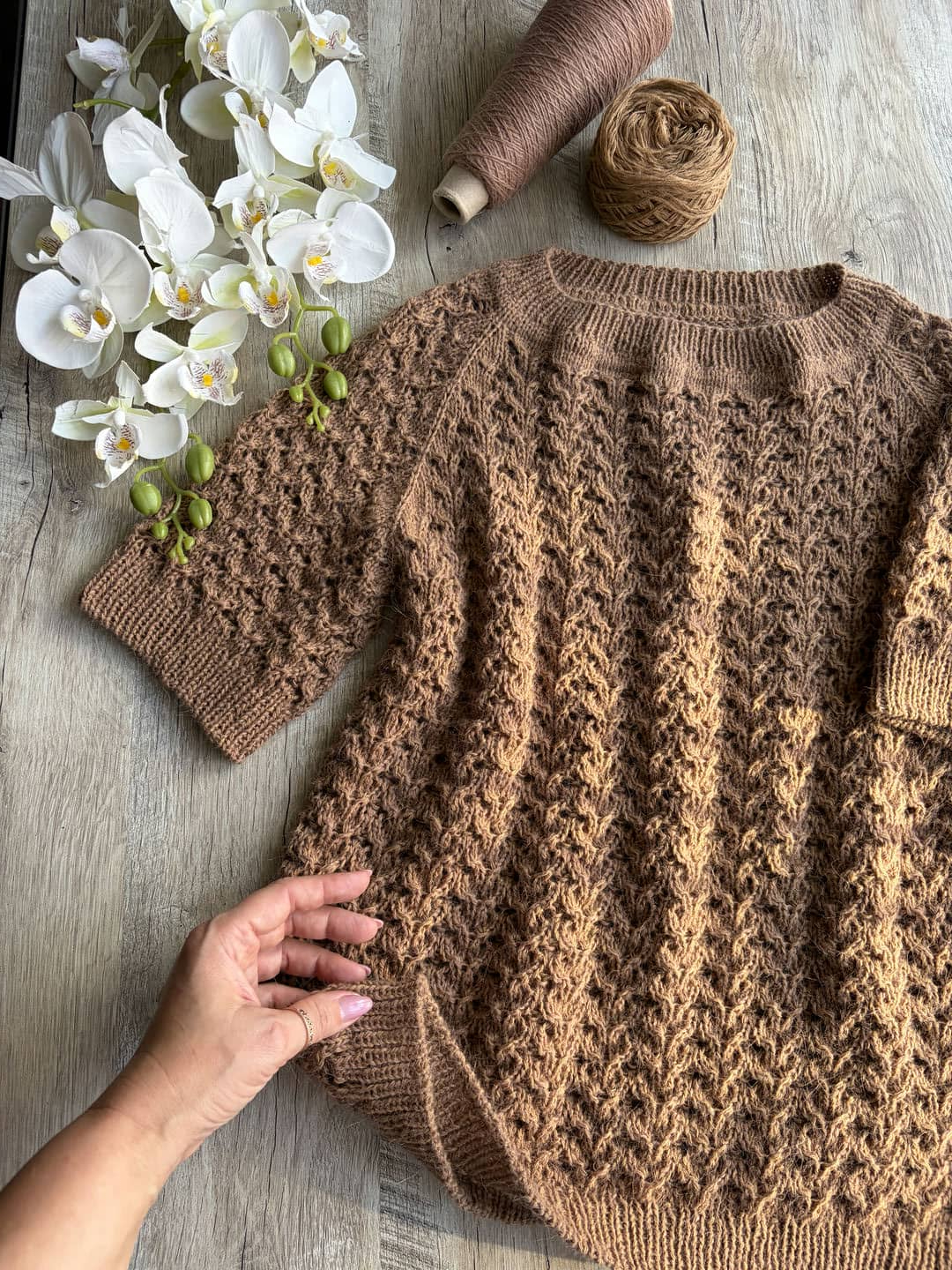
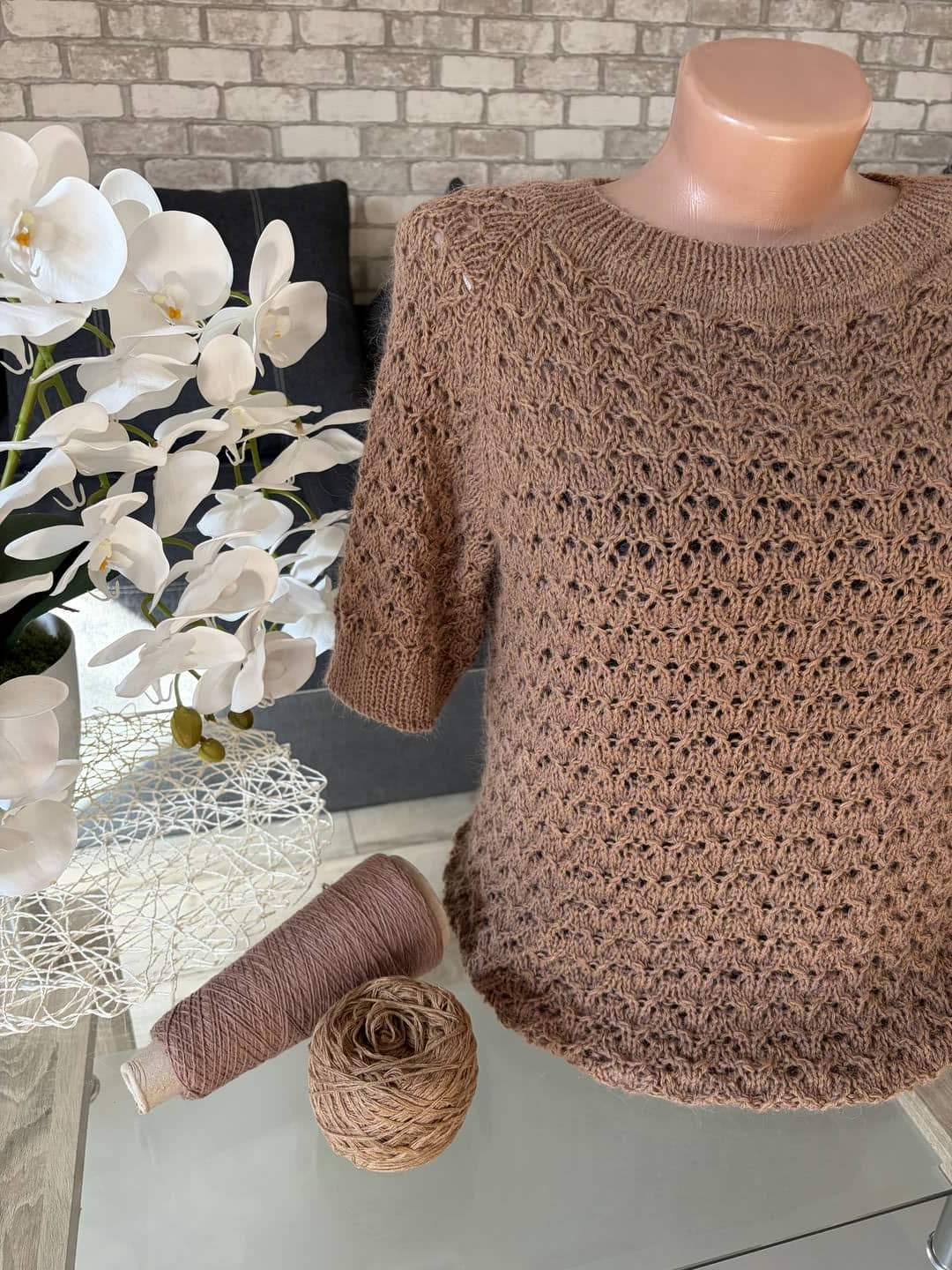
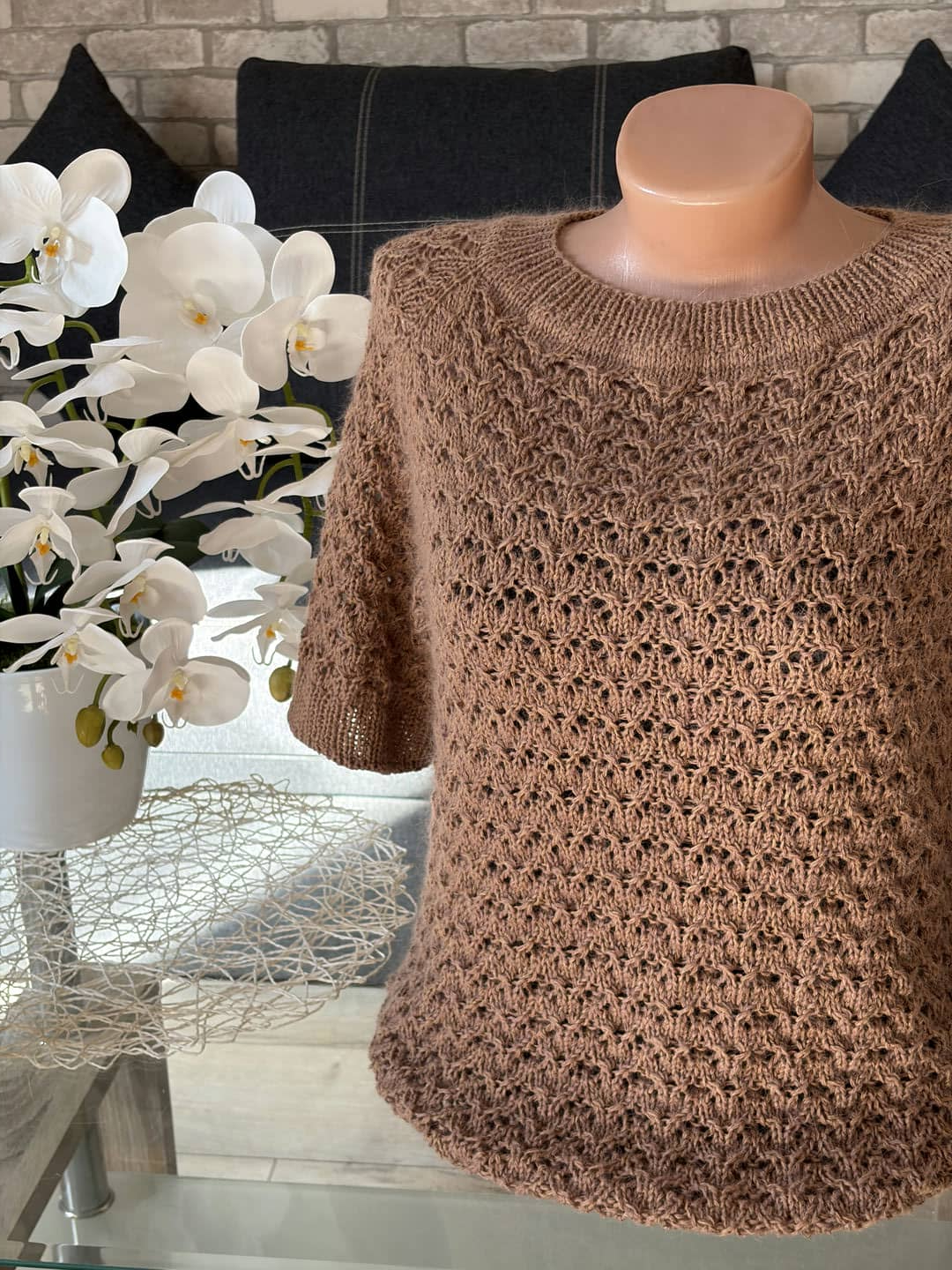
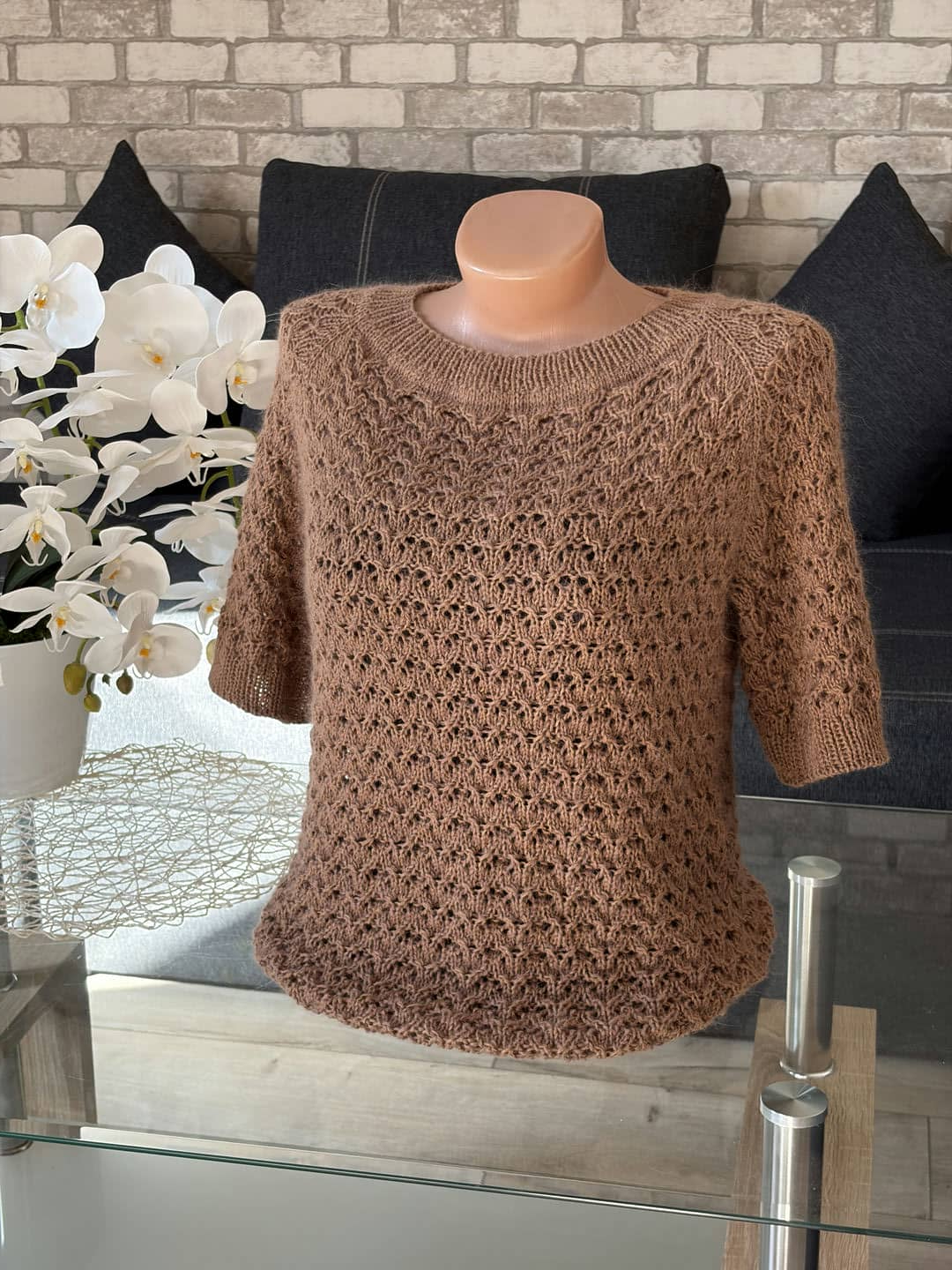
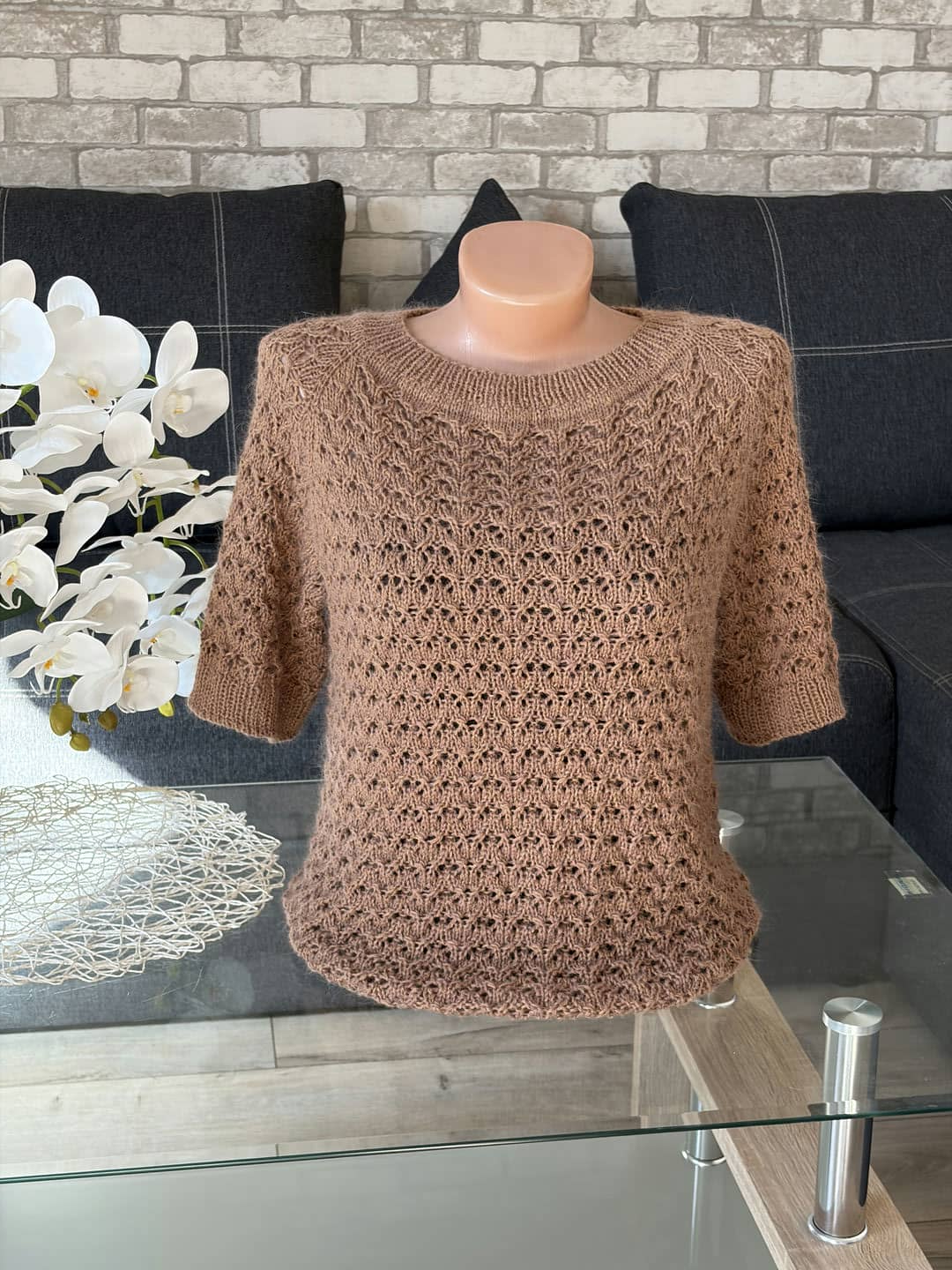
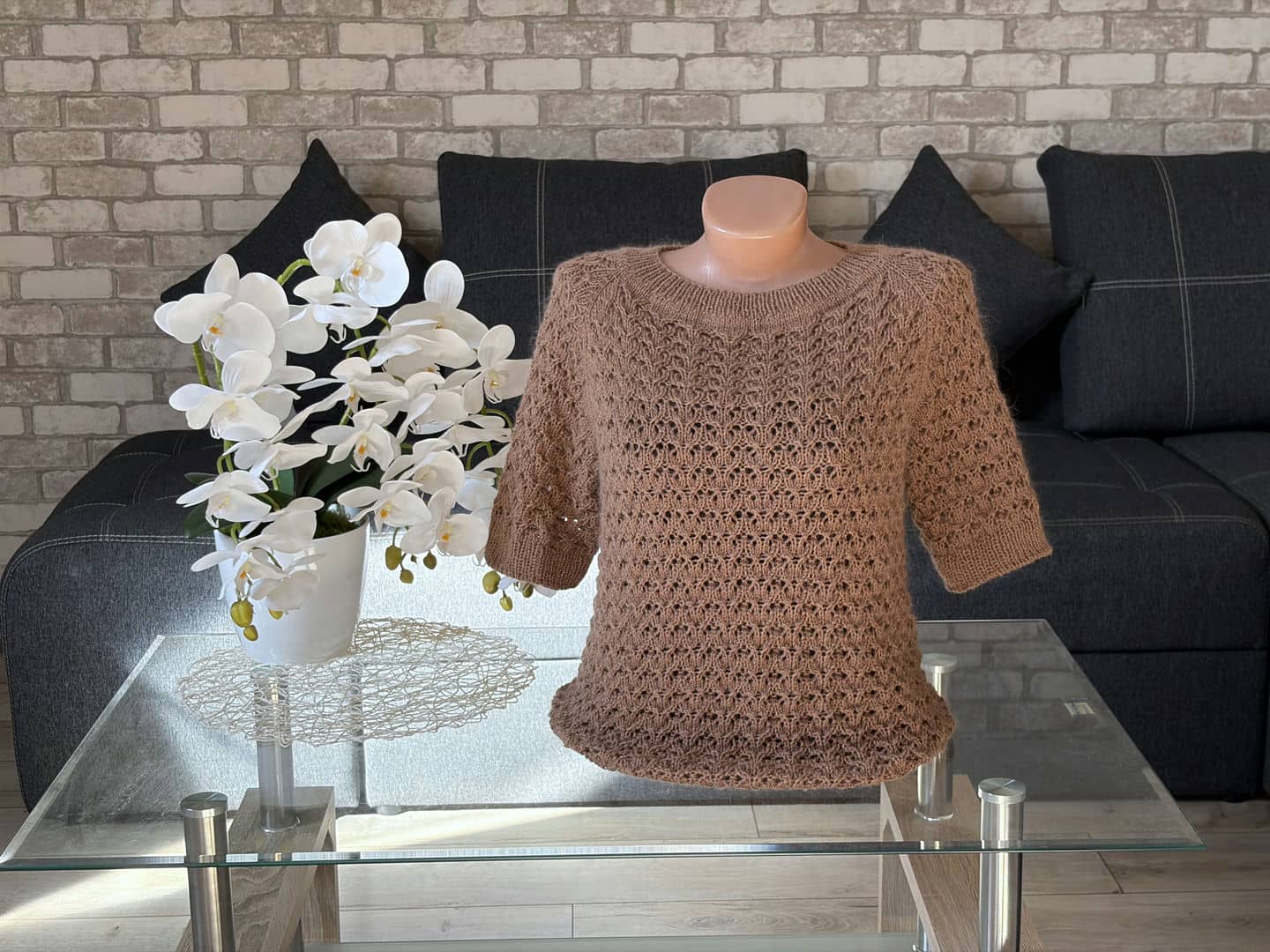
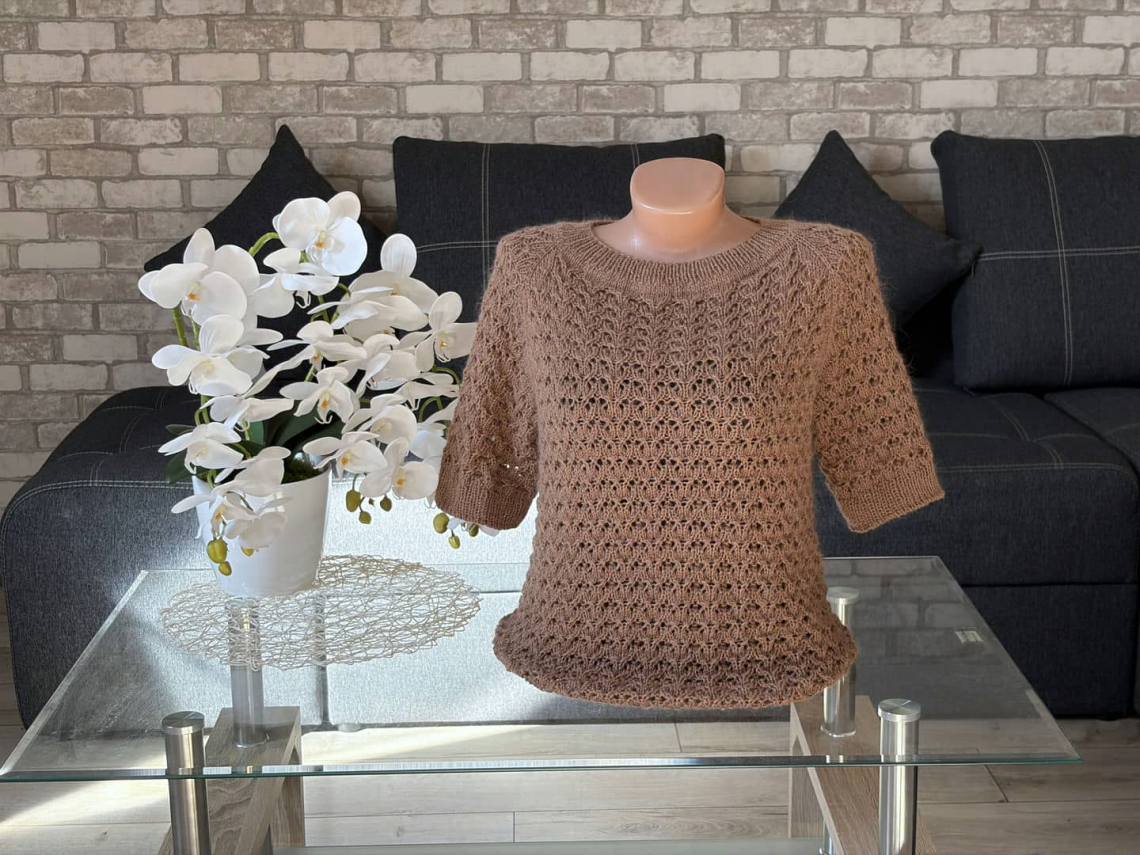
Lace T-Shirt Knitted from an Angora and Cotton Blend – “Lahoda”
Sometimes, when a knitting project is finished, there is only a little yarn left over (100–200 grams). It does not seem enough for a full garment, but you do not want to put it away for long either. And if you look at such leftovers from a different angle, you can find interesting possibilities for new creative experiments. Especially if you try combining different kinds of yarn in one piece.
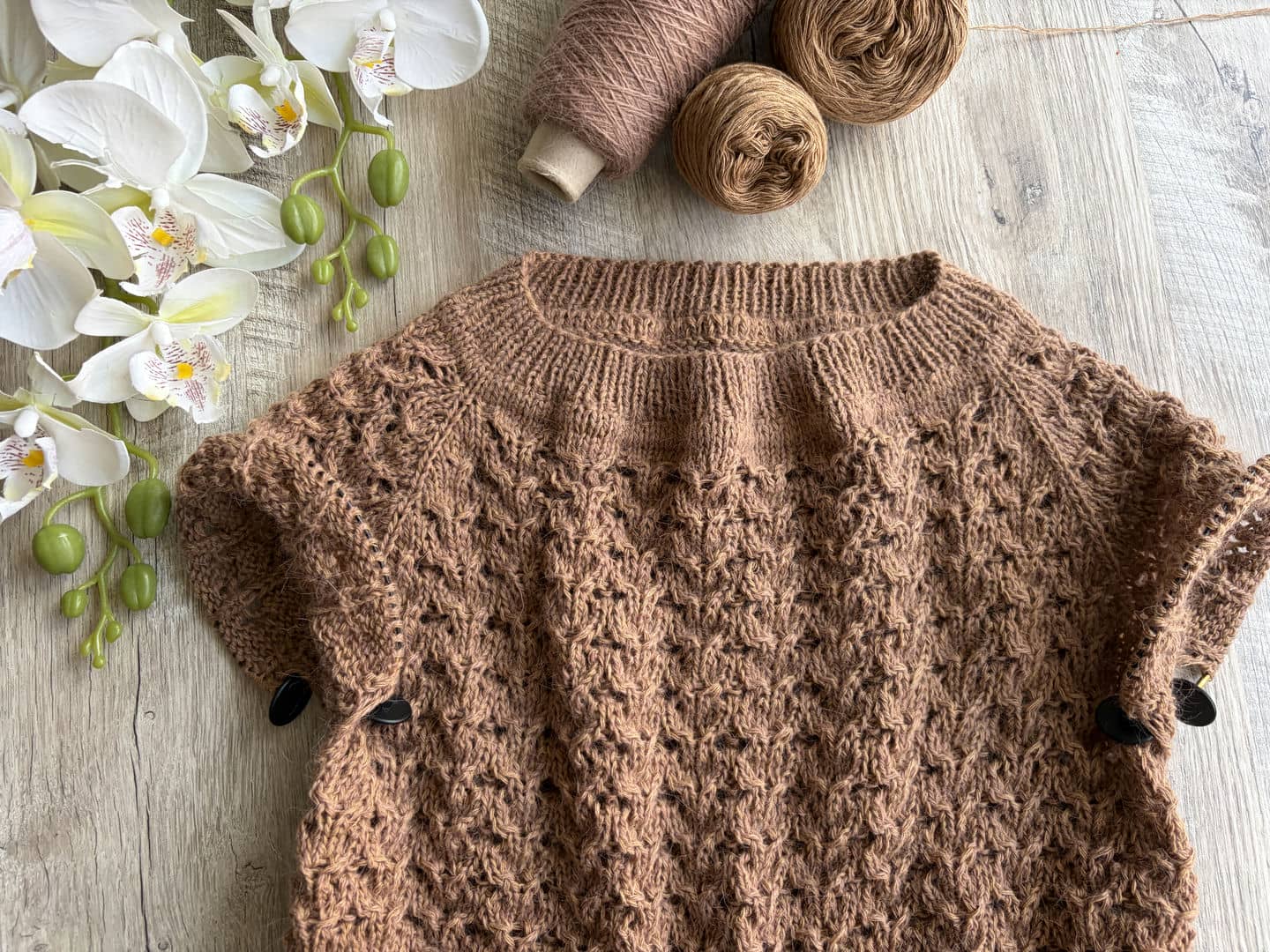
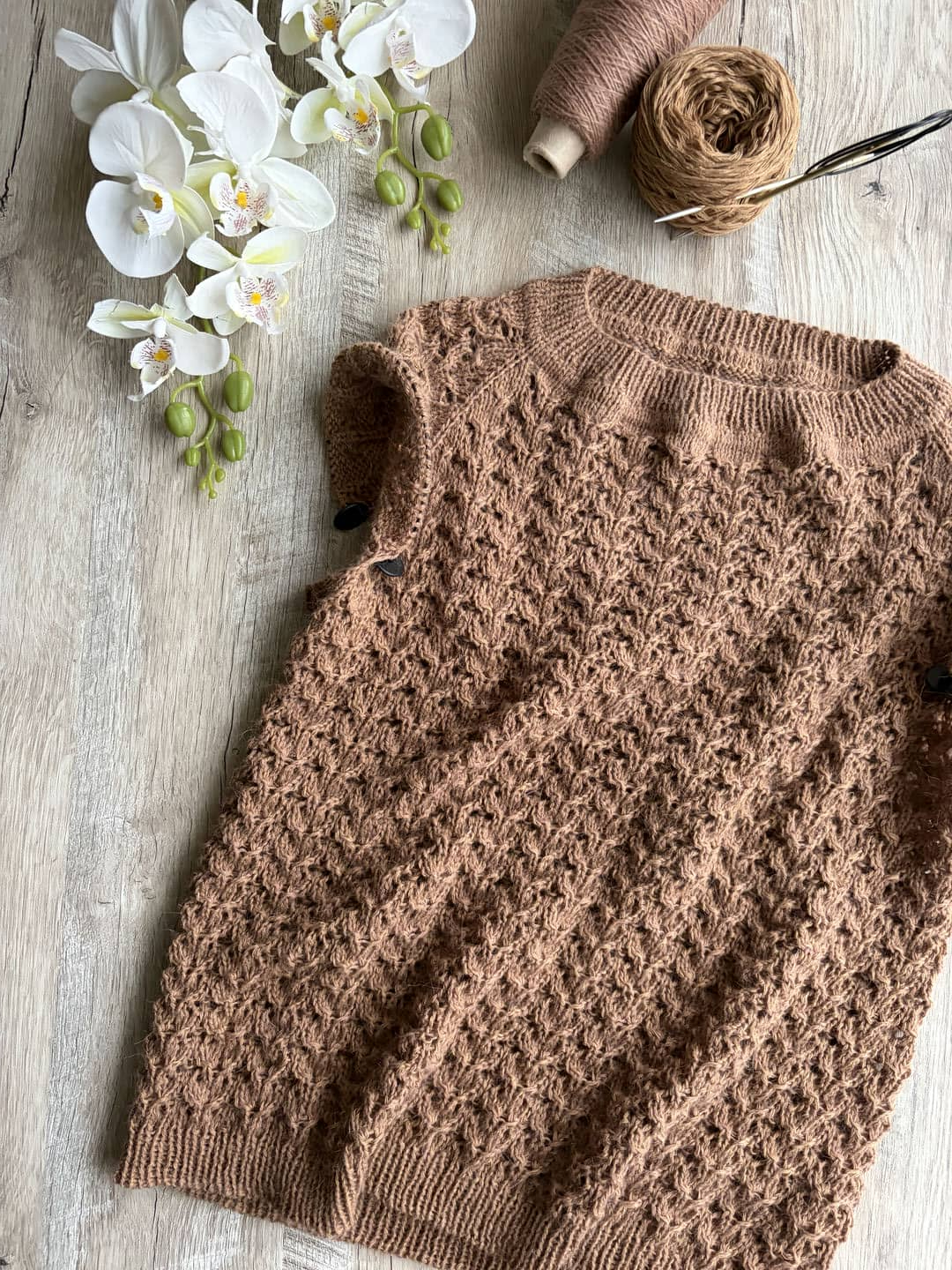
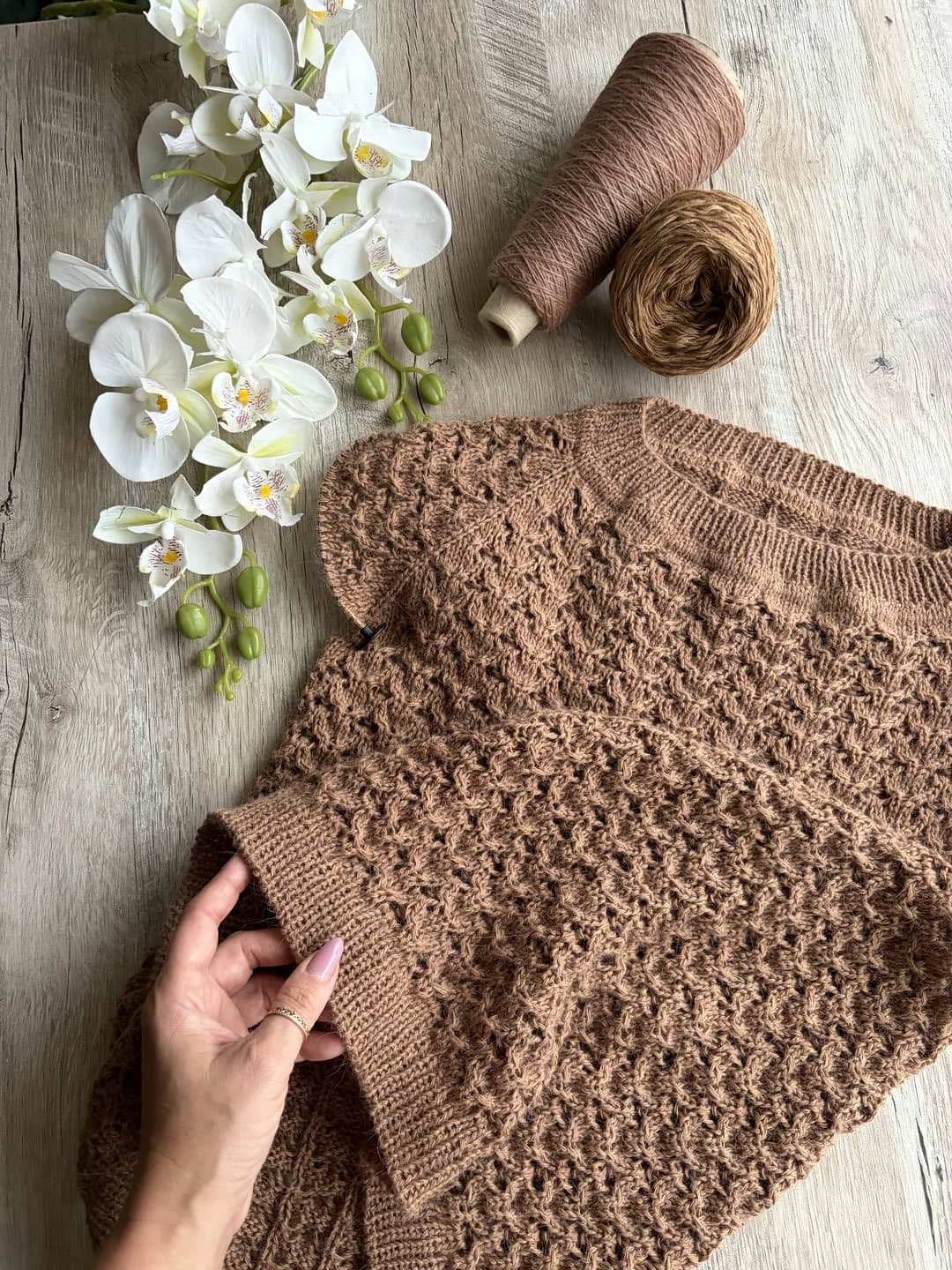
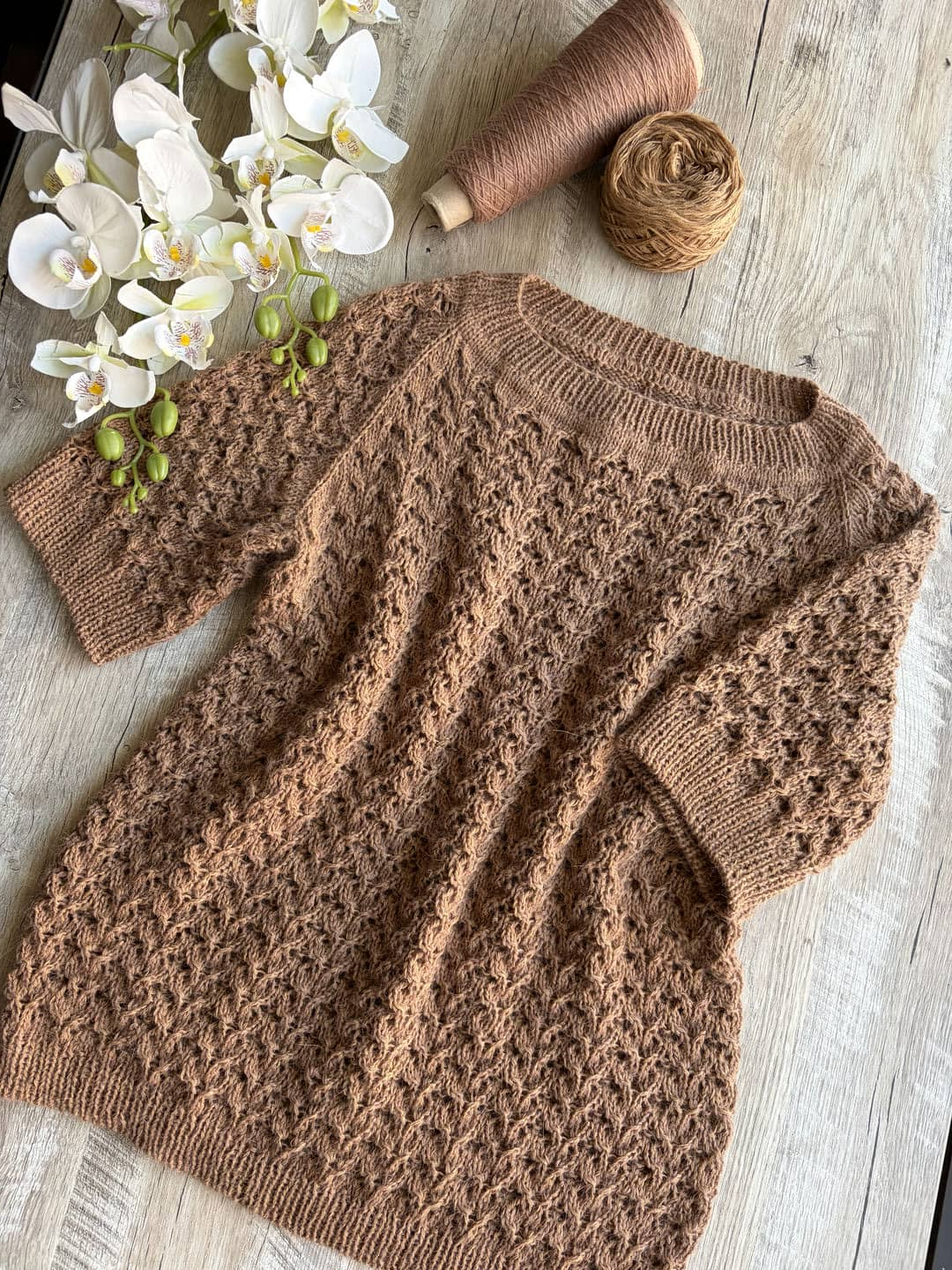
That is how the idea for the new T-shirt “Lahoda” (Lahoda) appeared. I decided to use leftover angora and cotton that were waiting for a continuation after my previous projects. Two materials with very different properties, an interesting lace pattern and the wish to make something tender, light and practical at the same time: that is how the story of this design began.
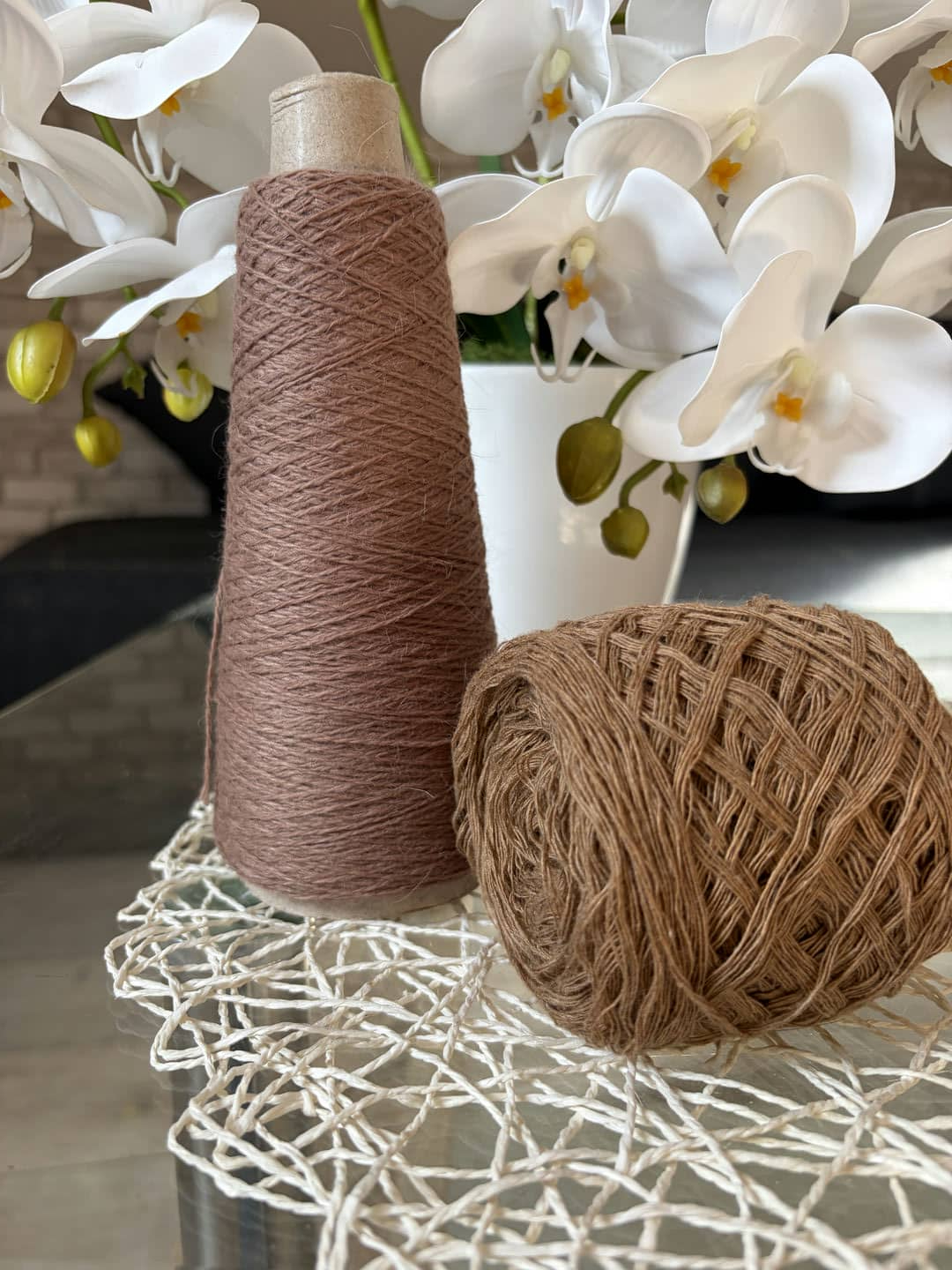
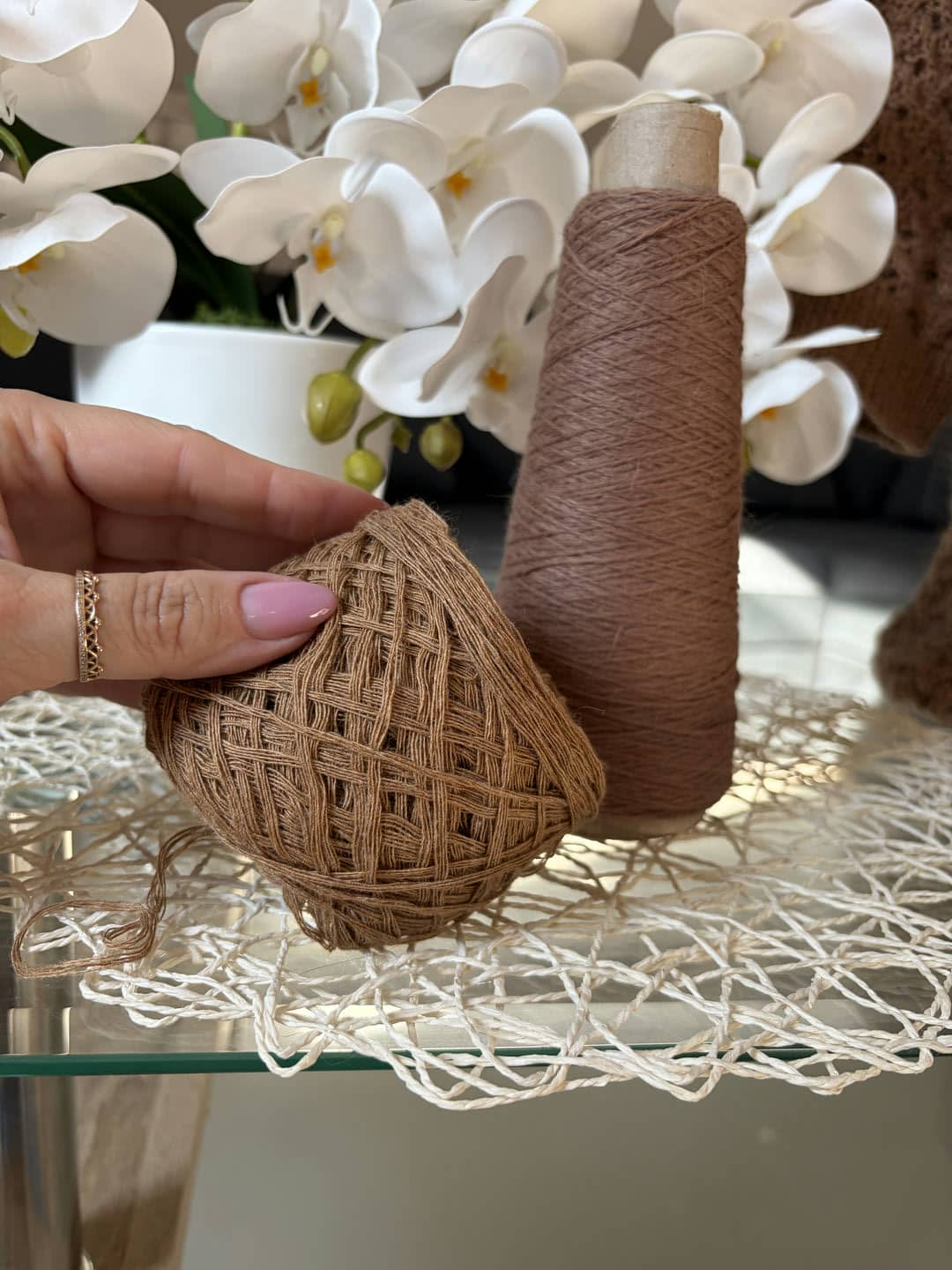
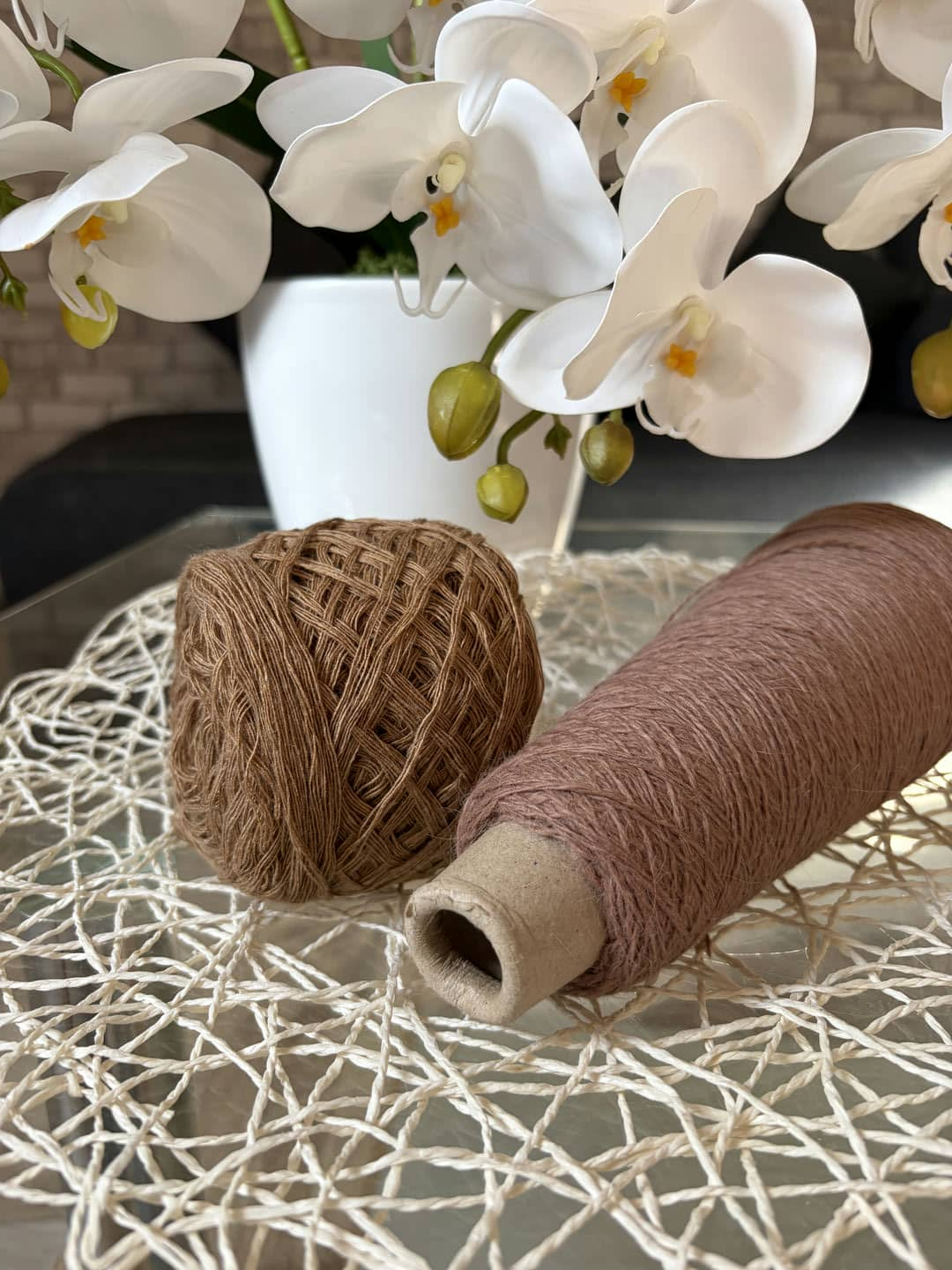
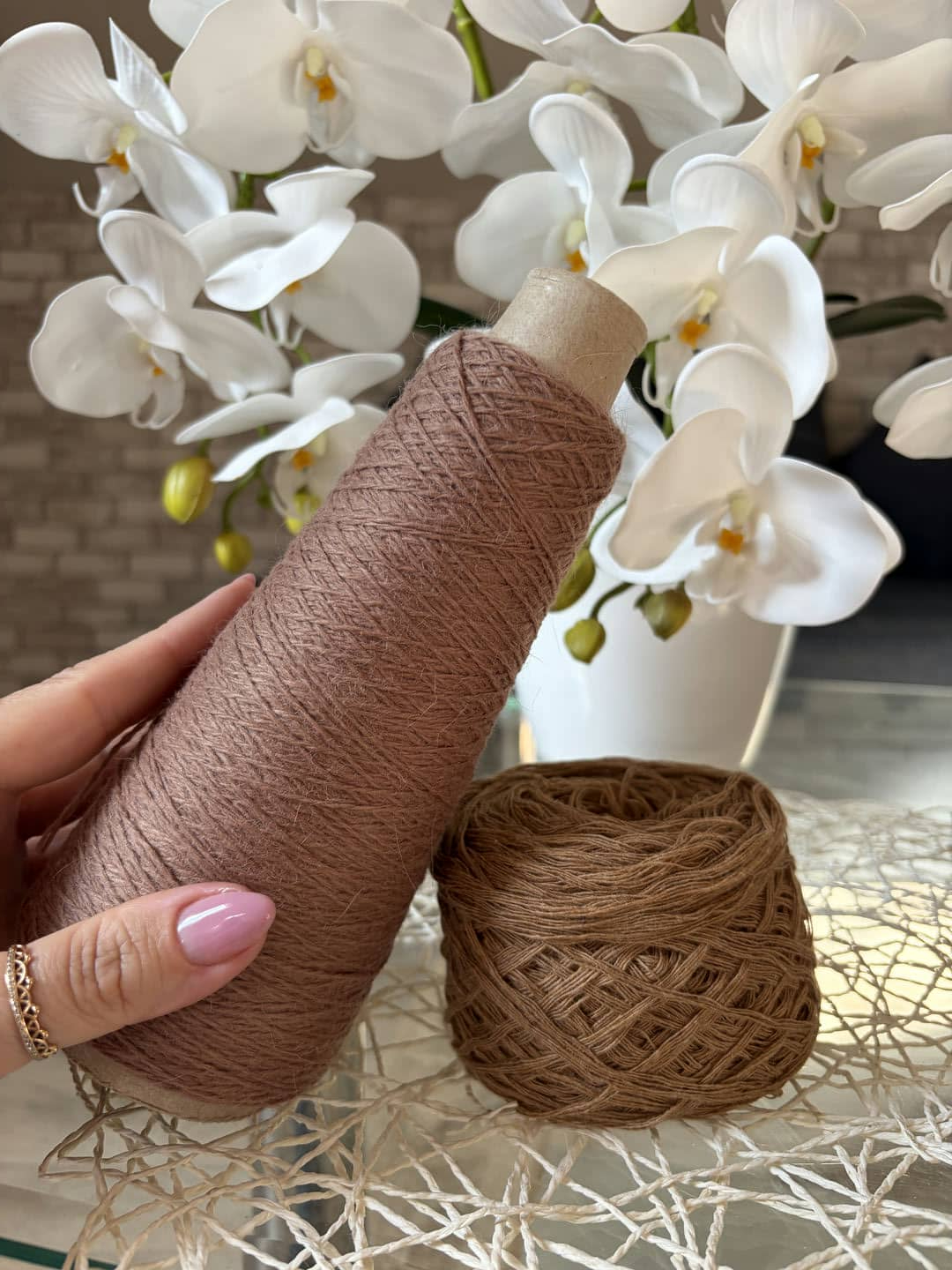
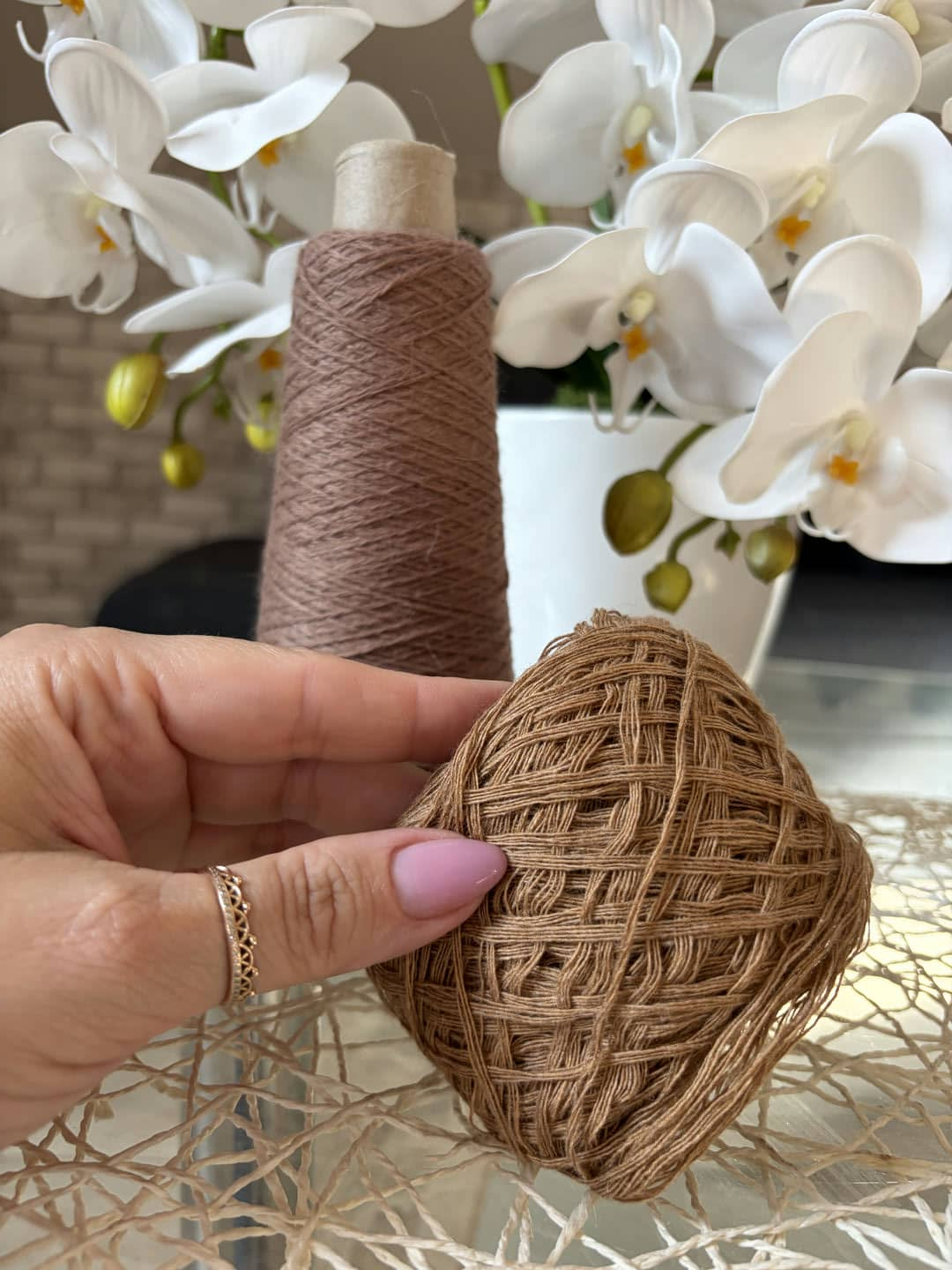
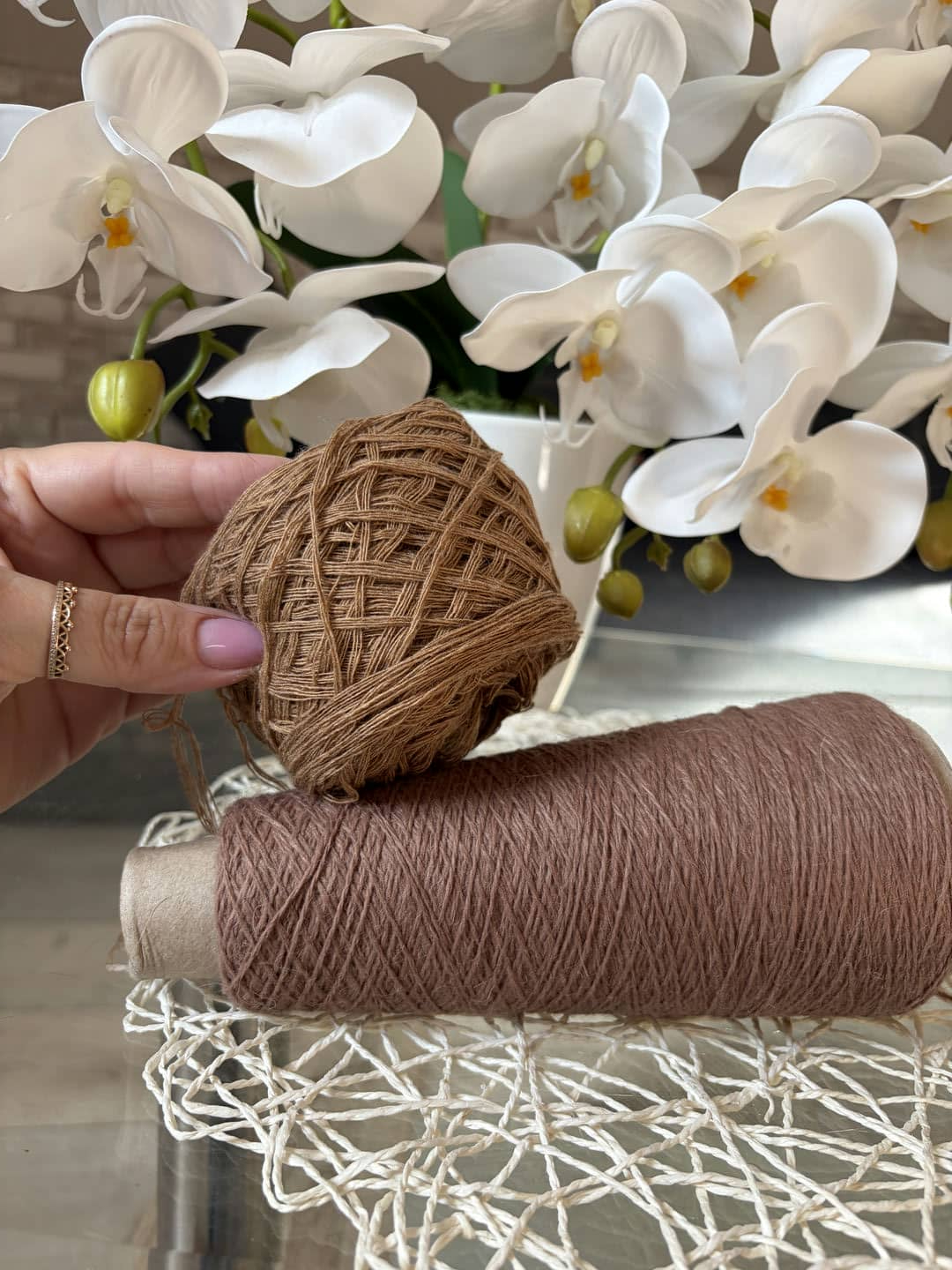
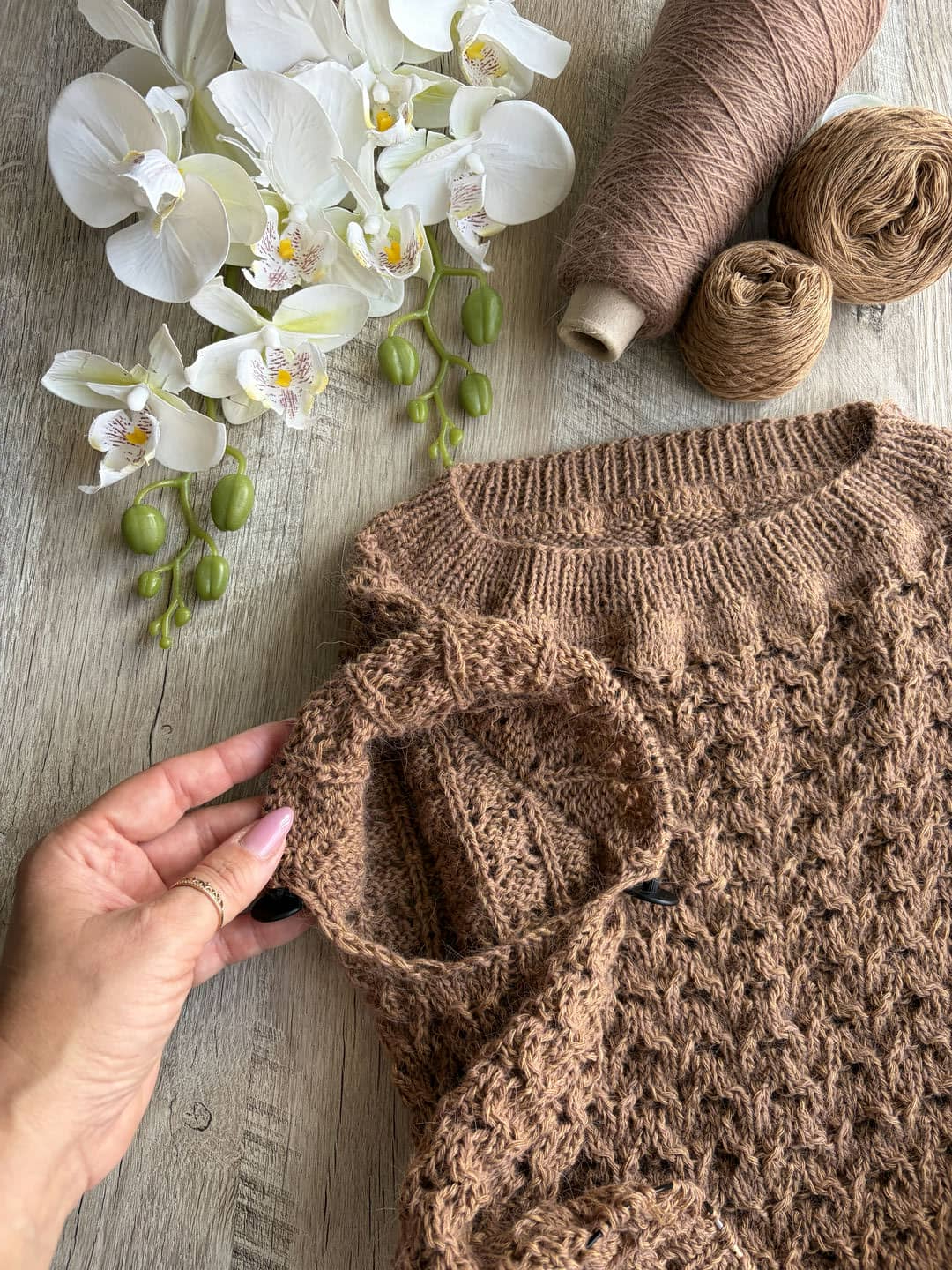
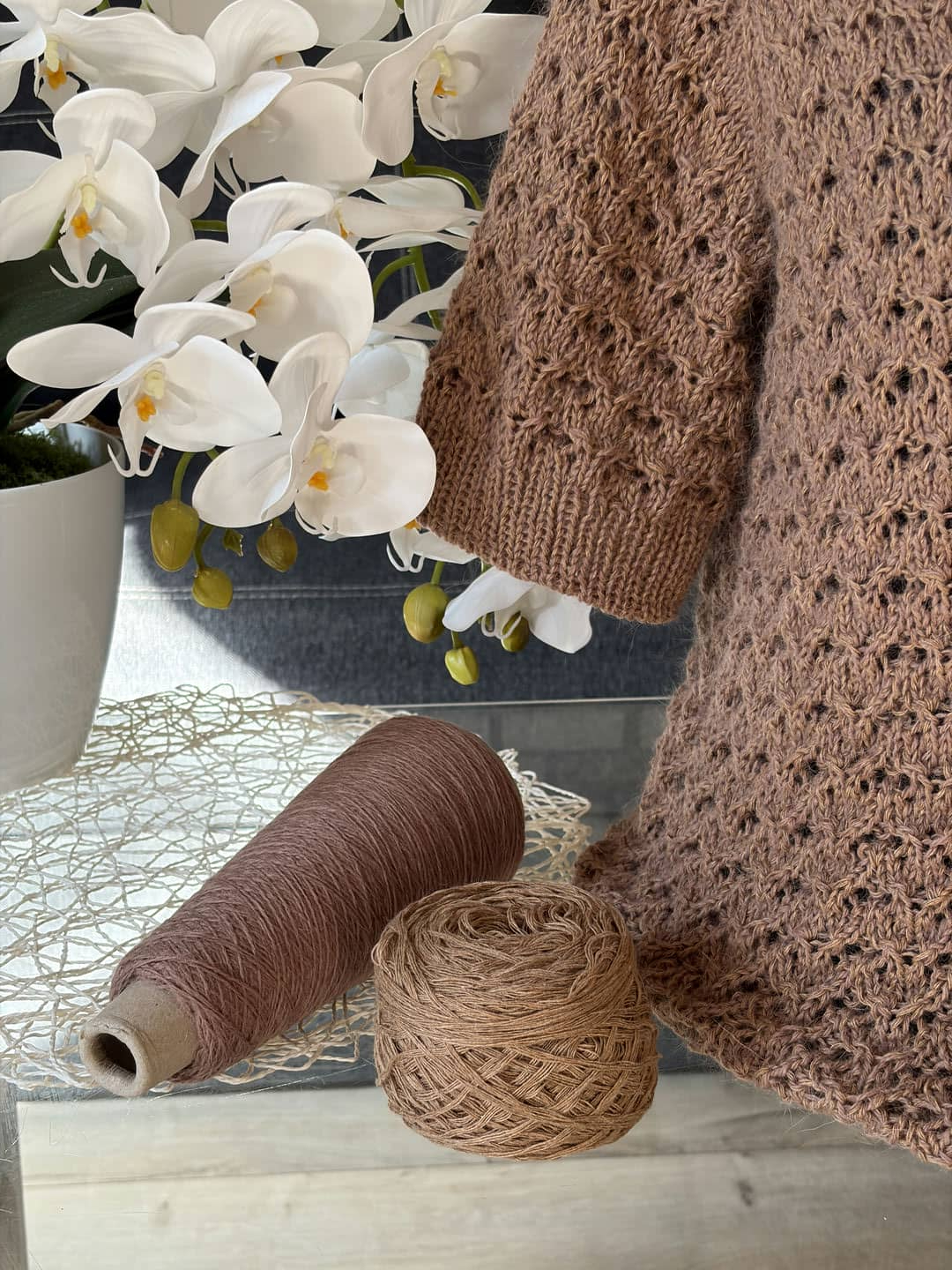
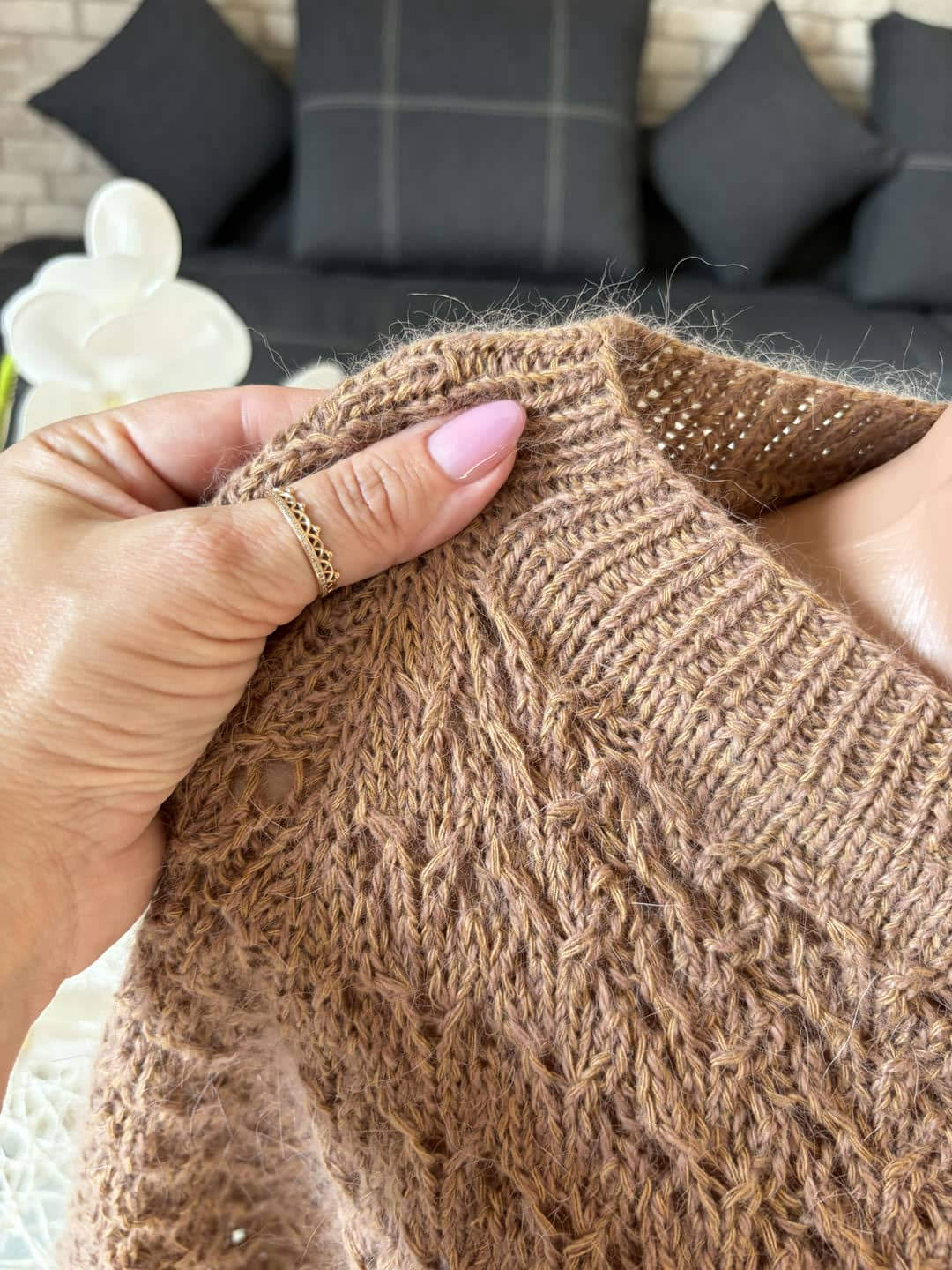
I love experimenting with different yarns, especially when I can combine materials that complement each other. Angora gives the fabric a special softness, tenderness and a light fuzzy halo. Cotton, in turn, adds stability and balances the fluffy texture.
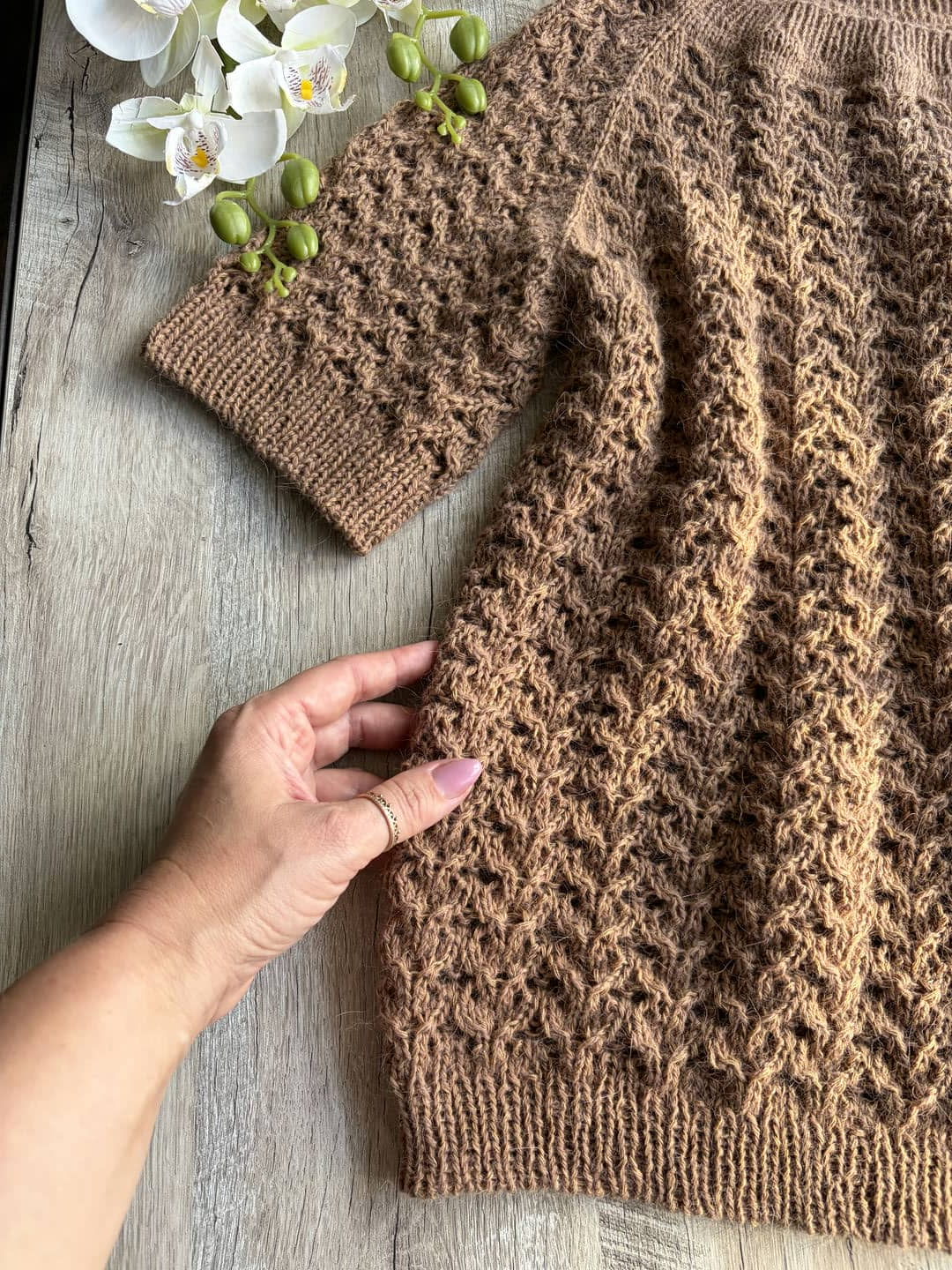
Together these strands create an interesting fabric with a pleasant texture. It has no extra density or heaviness; on the contrary, it turns out airy, soft and very delicate-looking. Angora – yardage 700 m/100 g (1 strand), cotton – 2200 m/100 g (3 strands). The yardage of the 4-strand mix is 358 m/100 g.
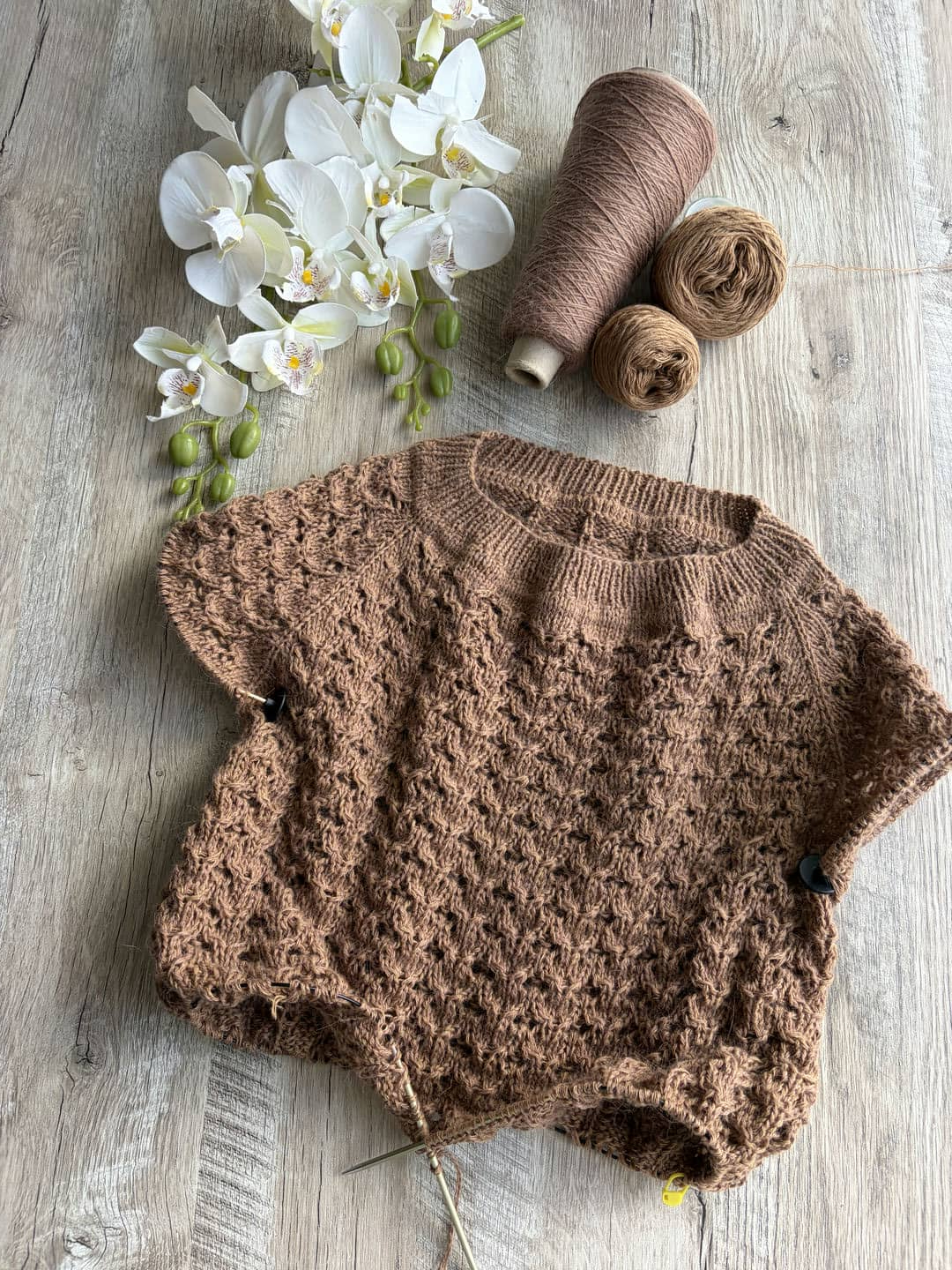
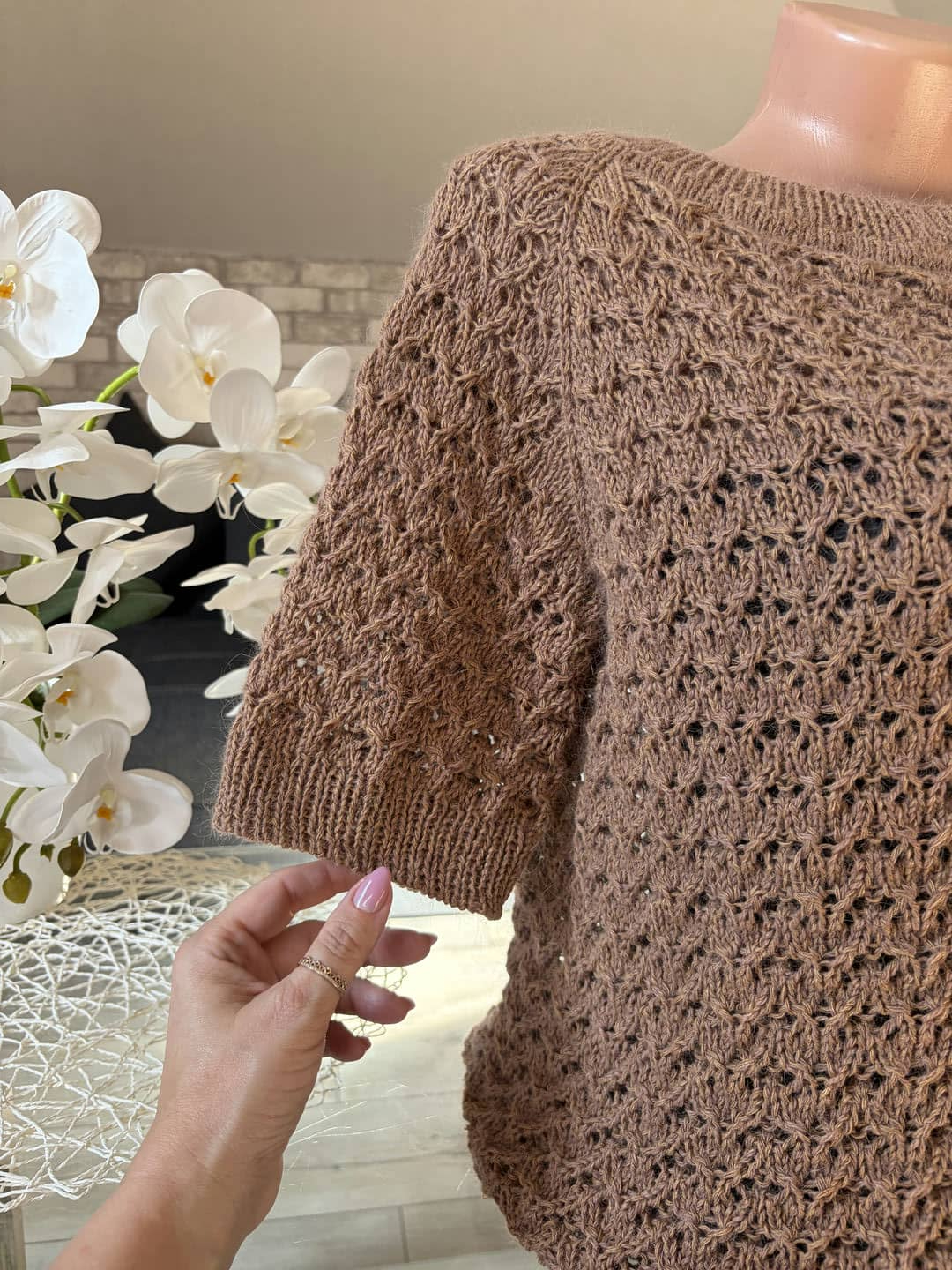
I paid special attention to the color. For the T-shirt I chose a milk-chocolate shade: warm, calm and very cozy. It goes beautifully with the soft texture of angora and gives the lace fabric a special mood.
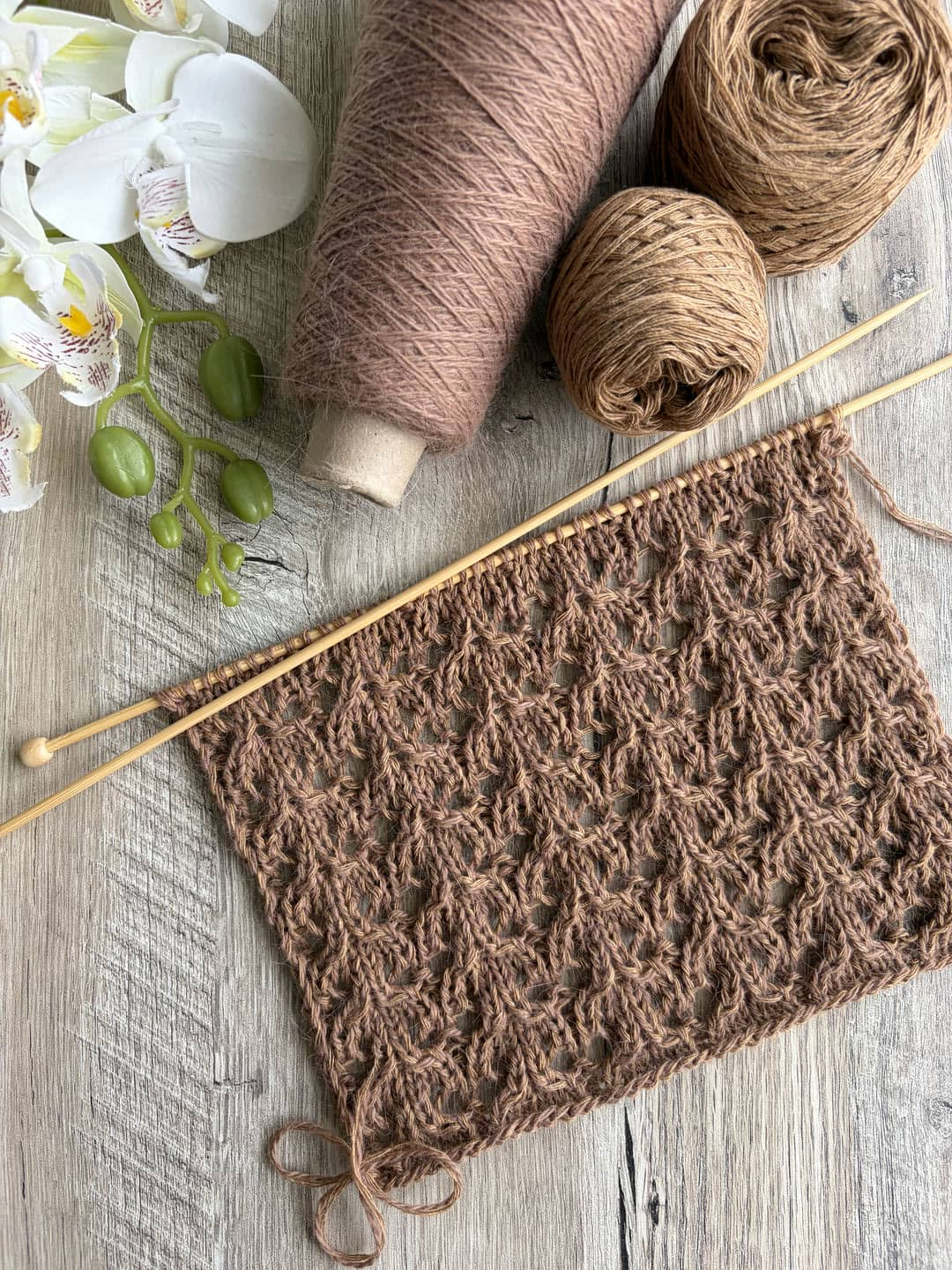
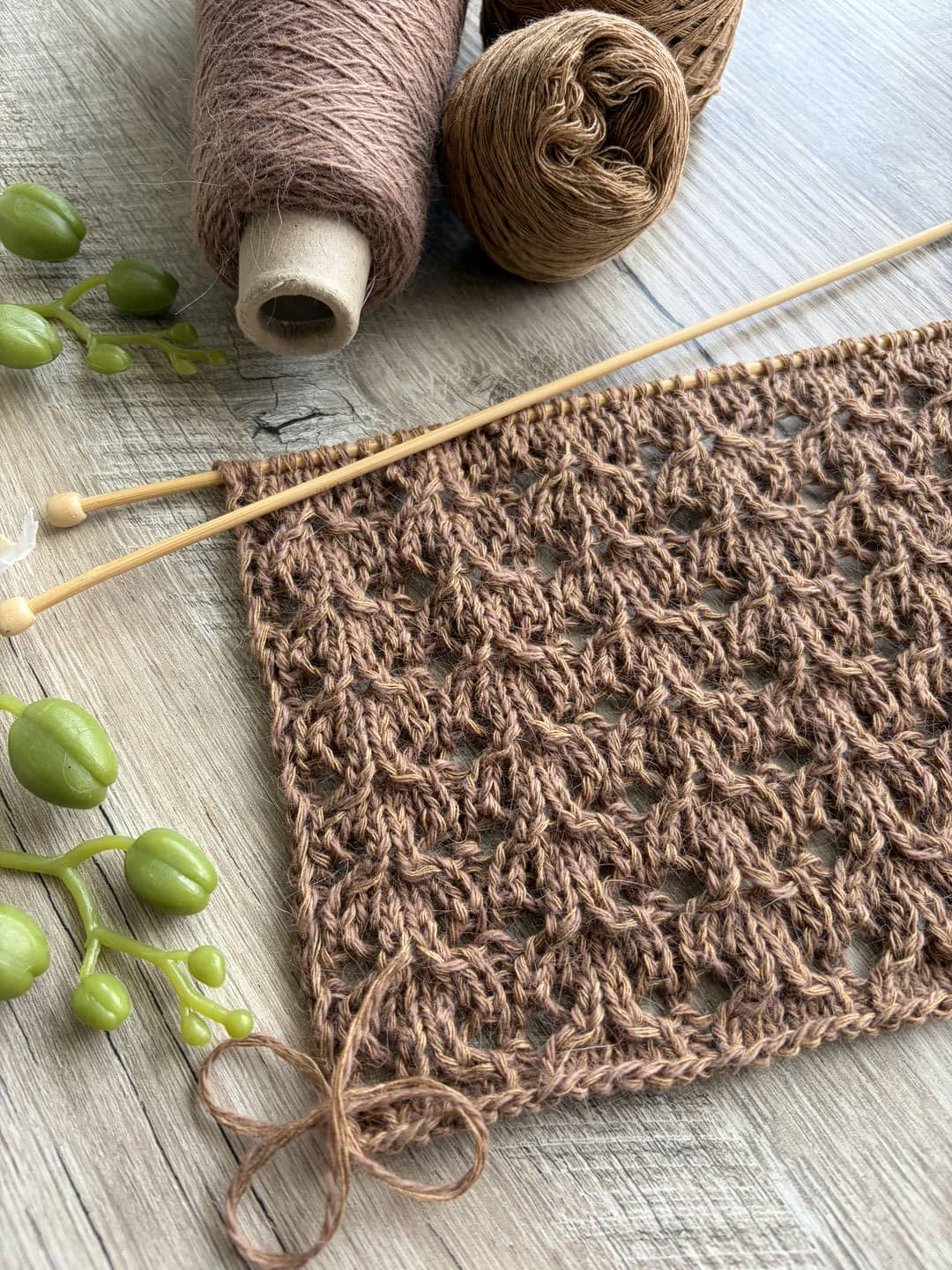
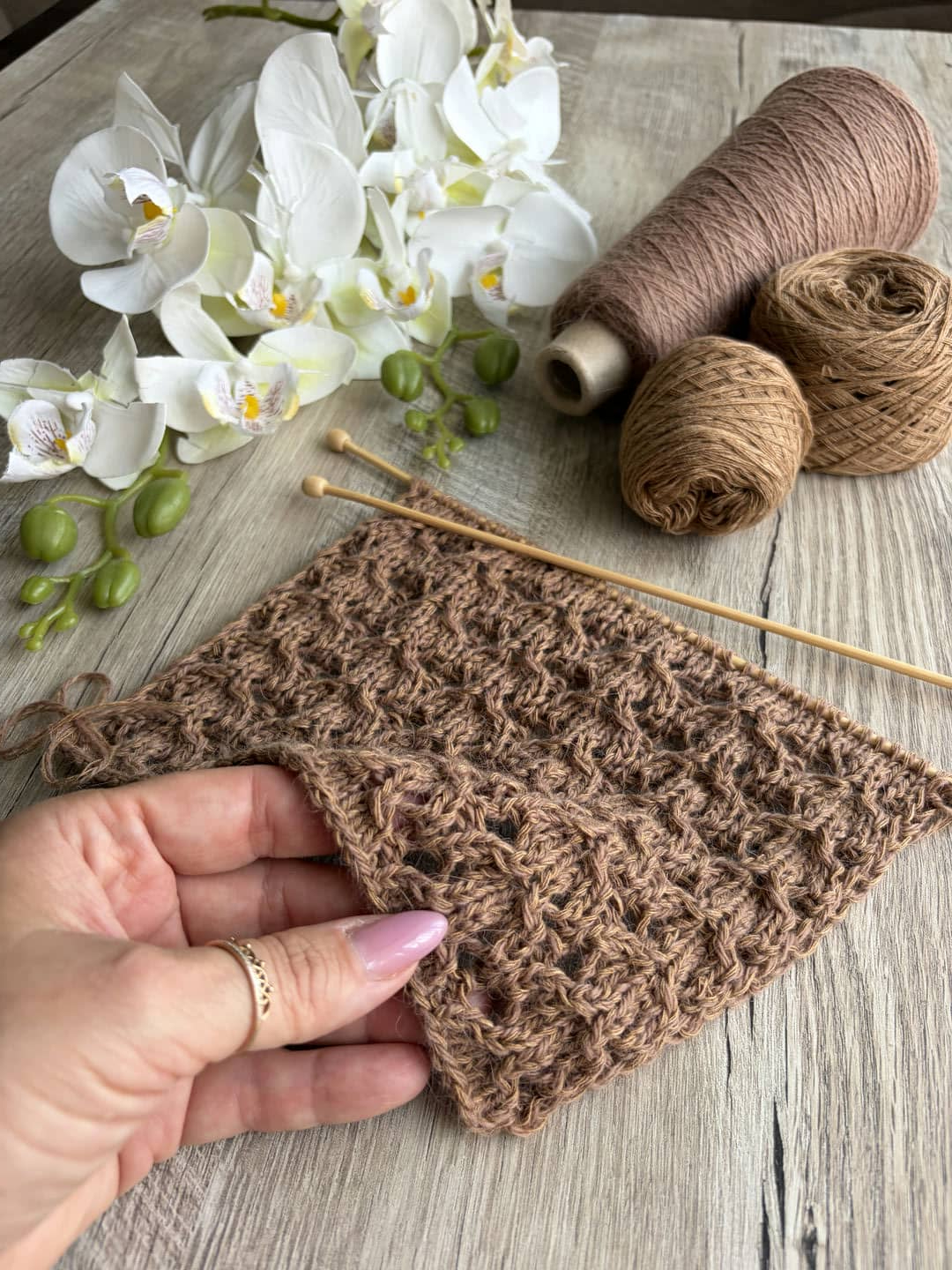
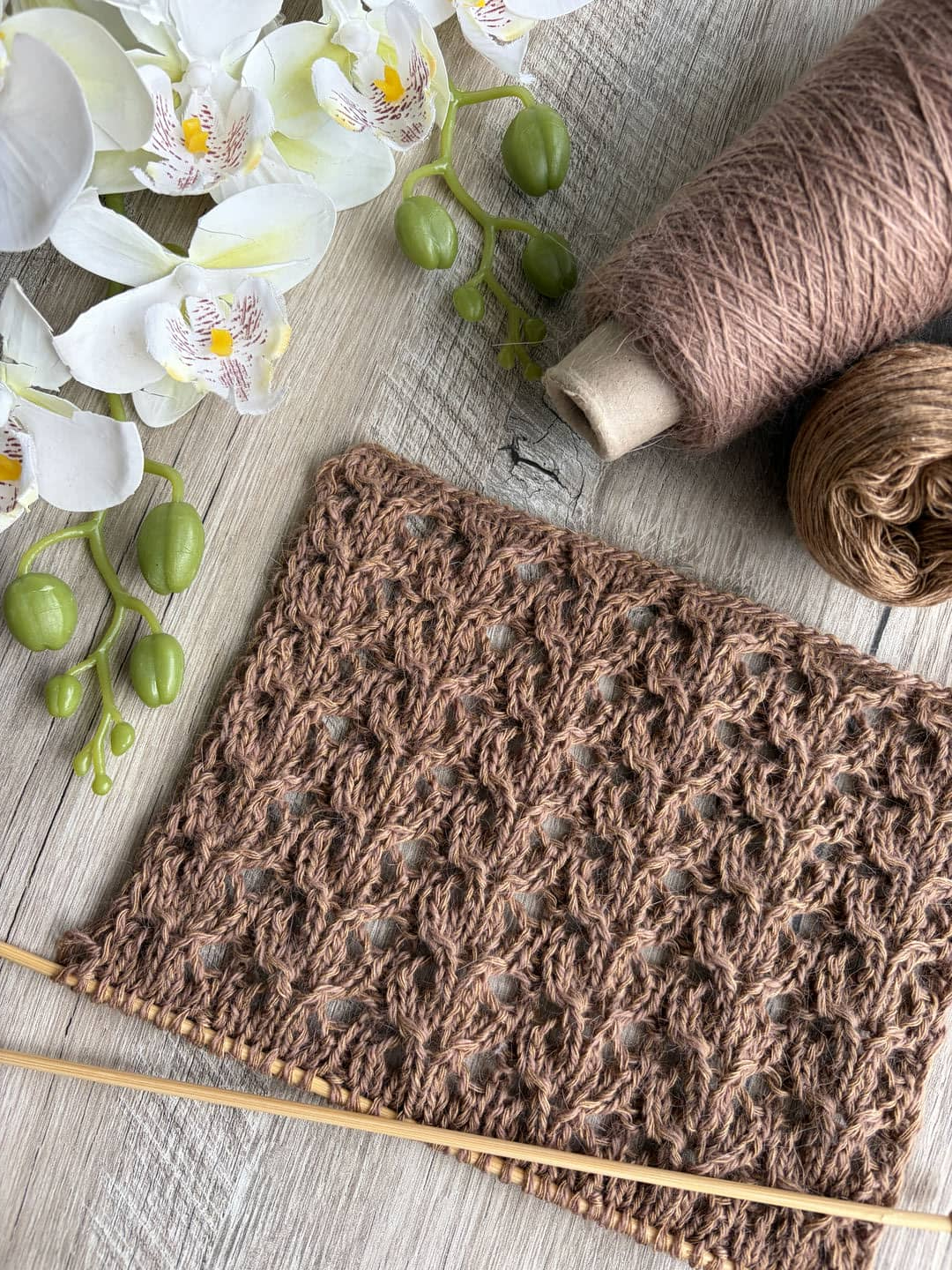
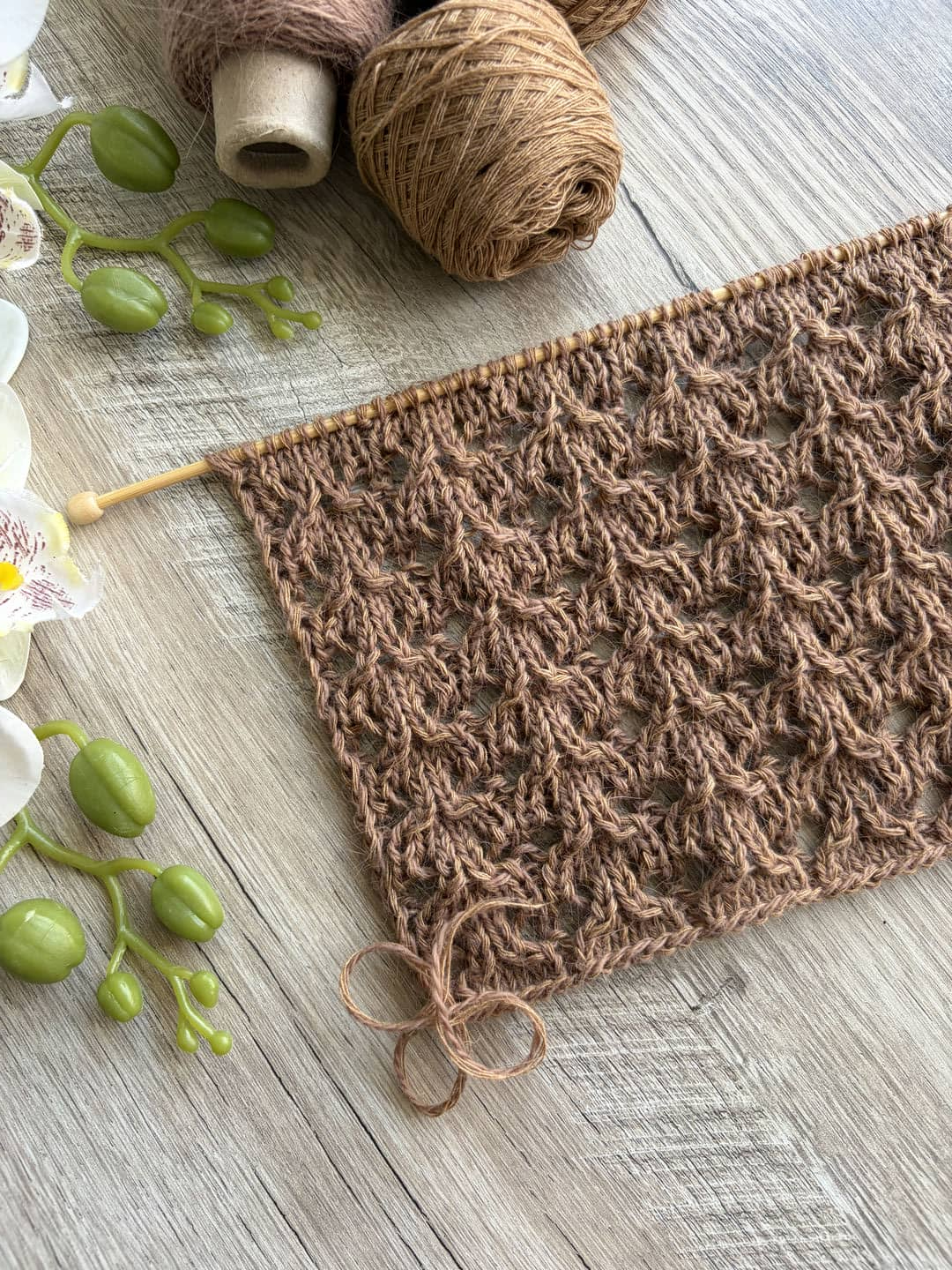
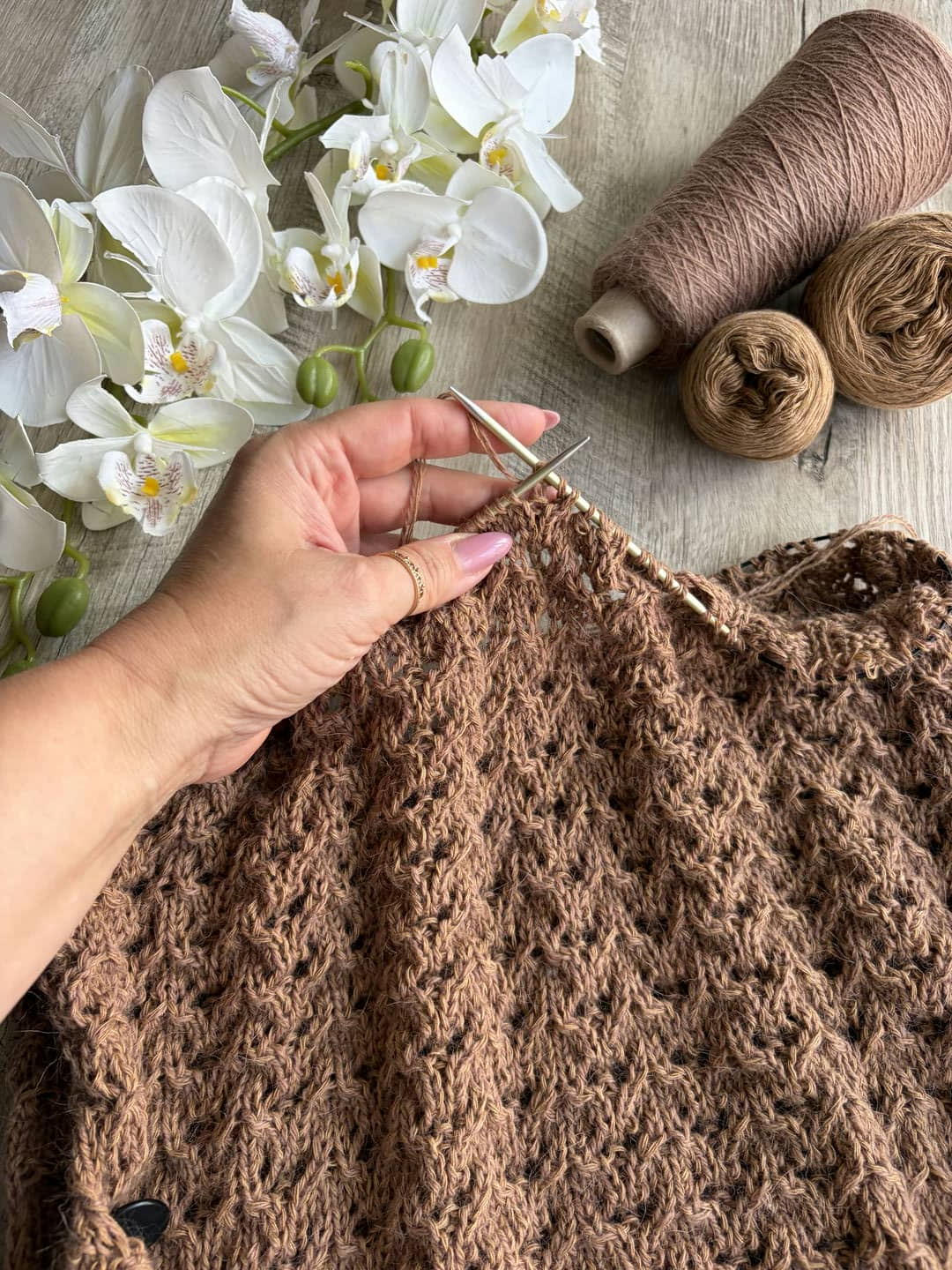
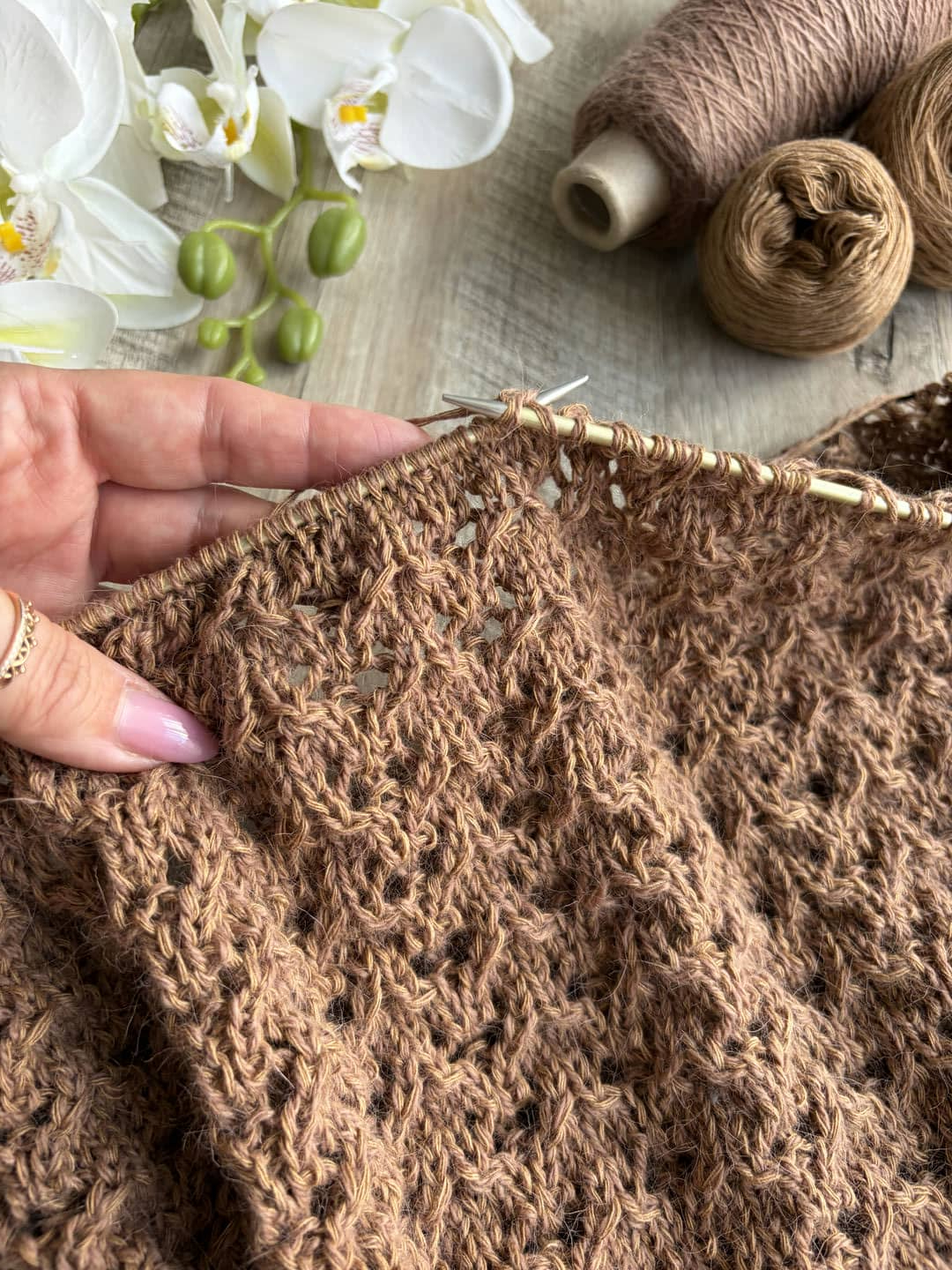
Before starting the garment, I knitted a small swatch to see how the chosen yarn combination would behave in the pattern.
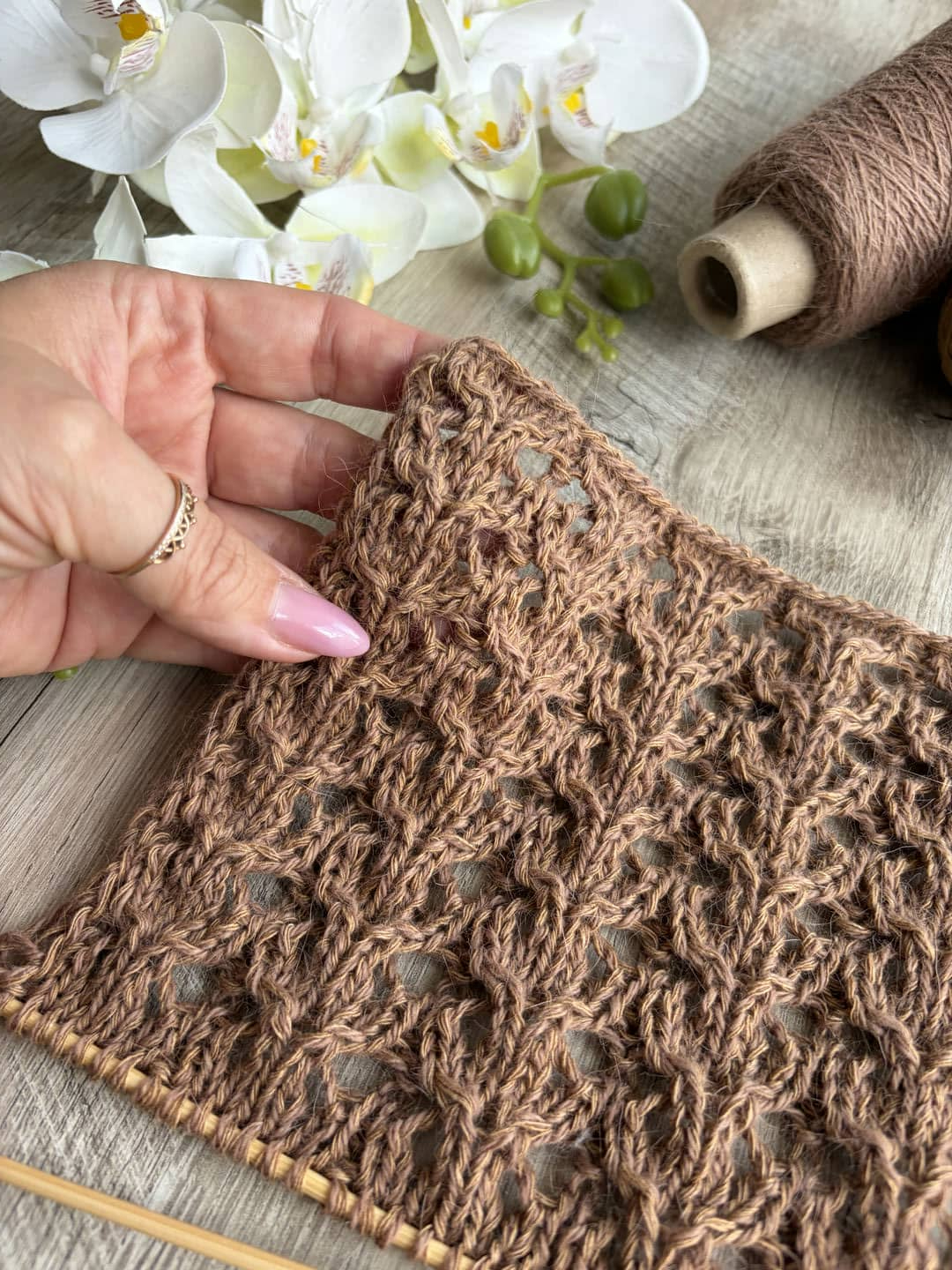
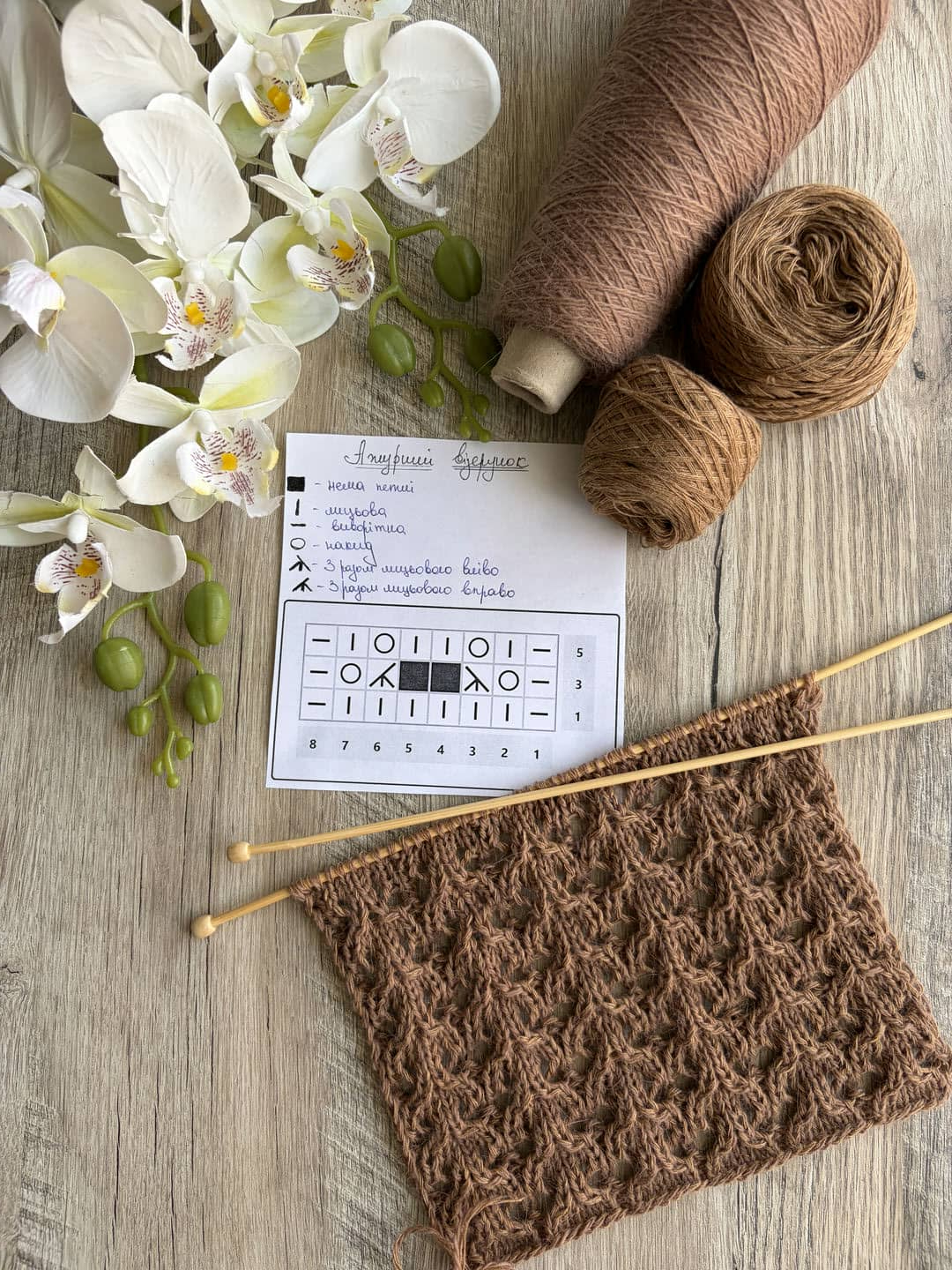
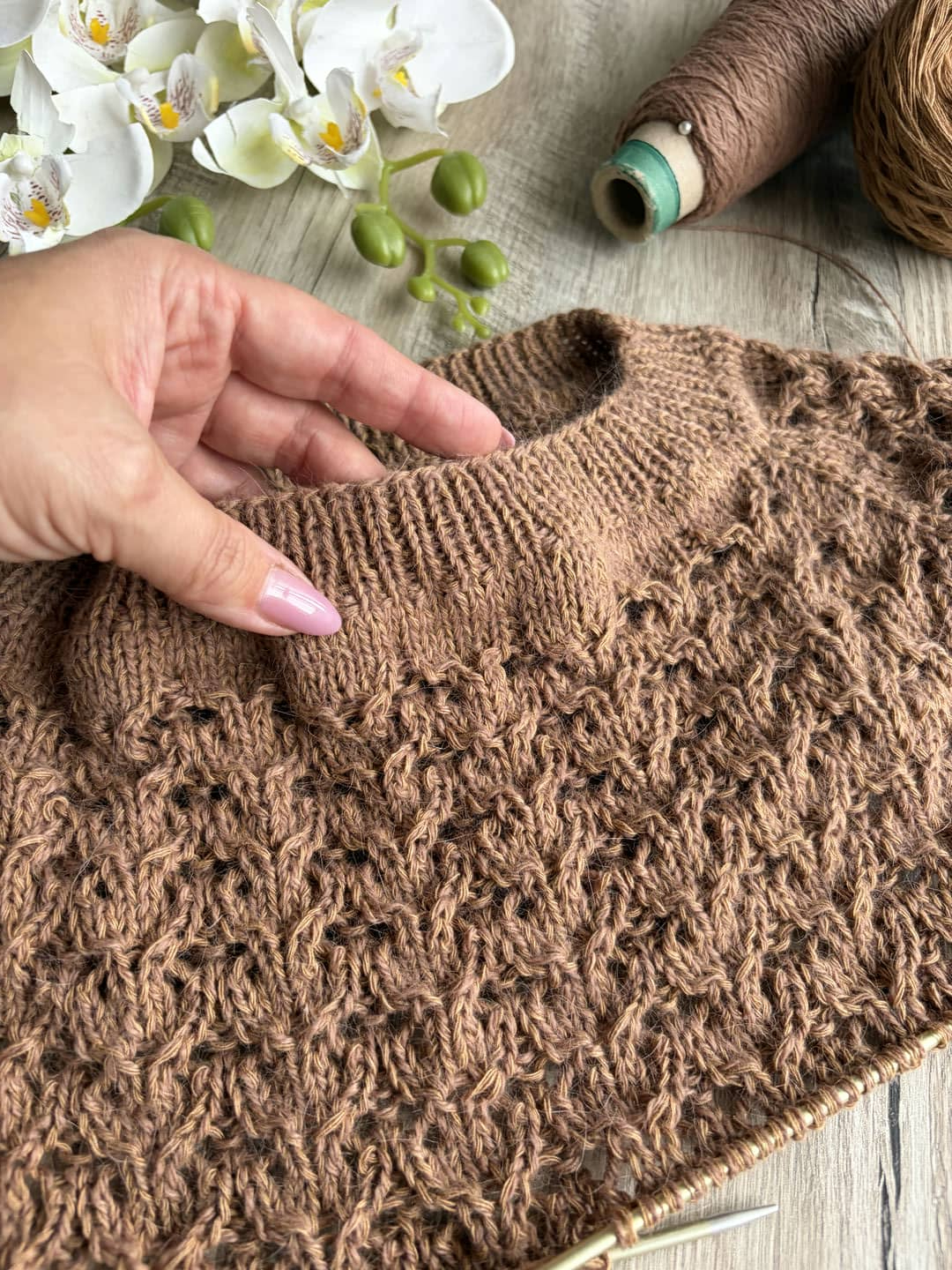
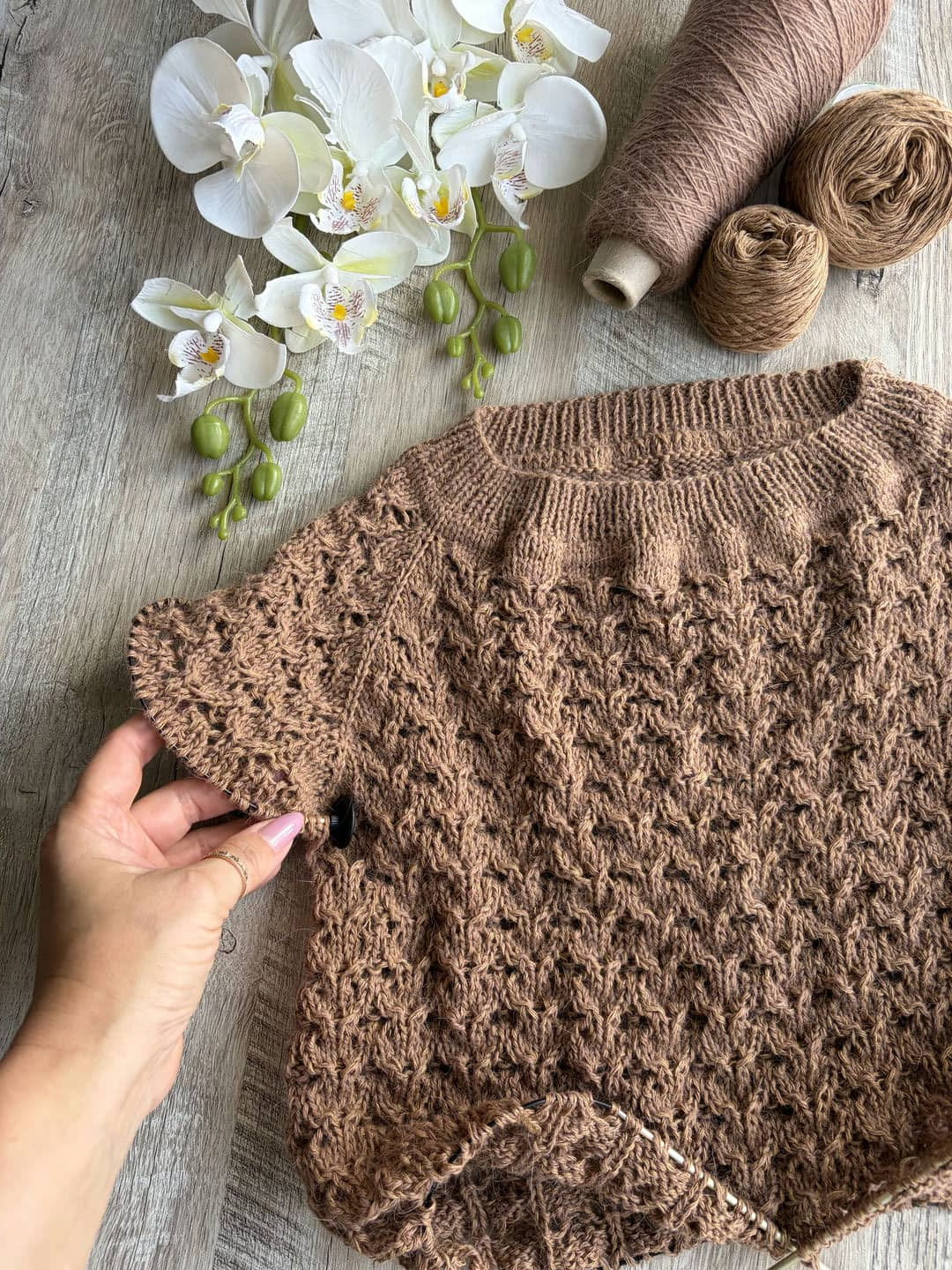
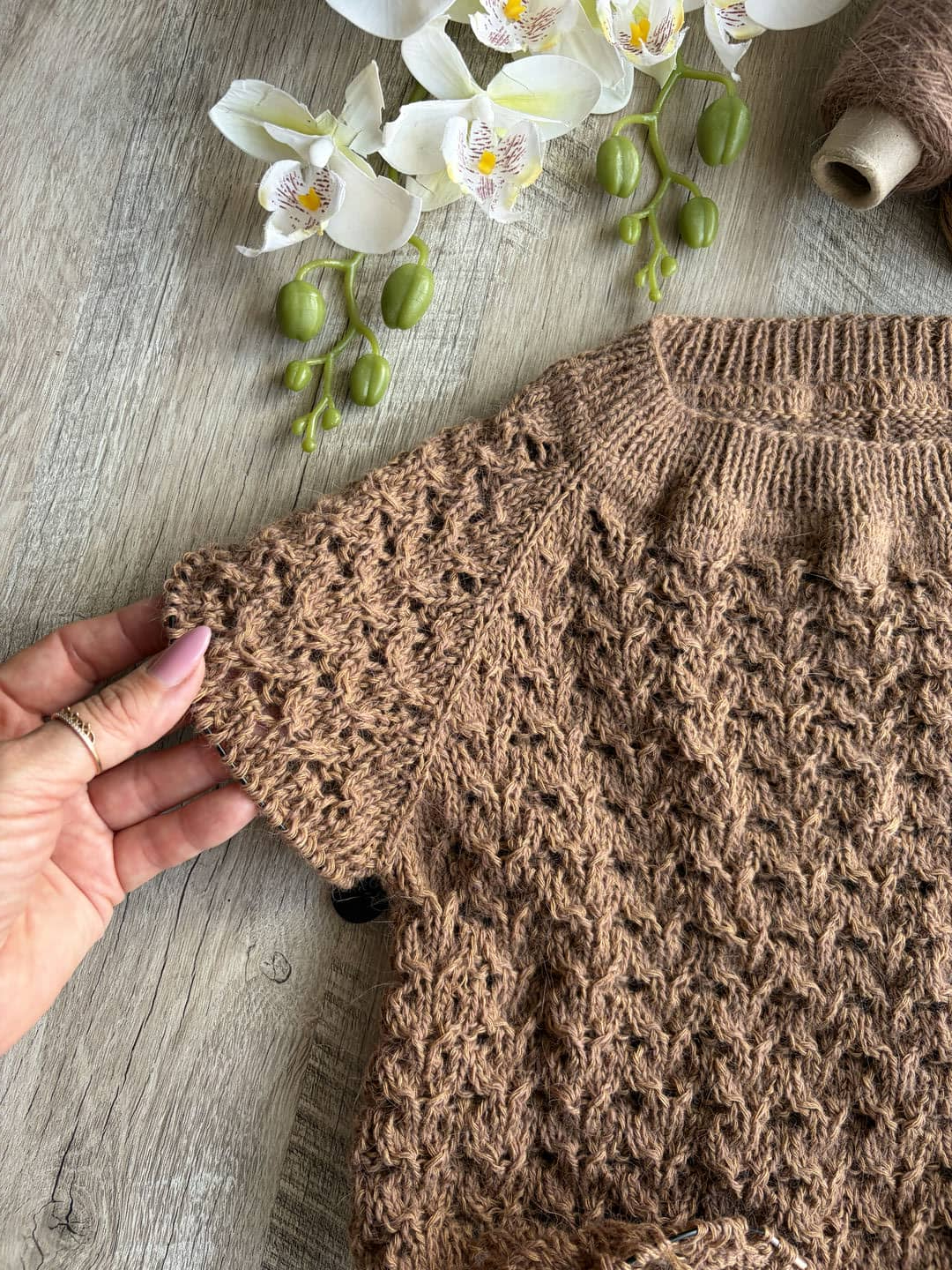
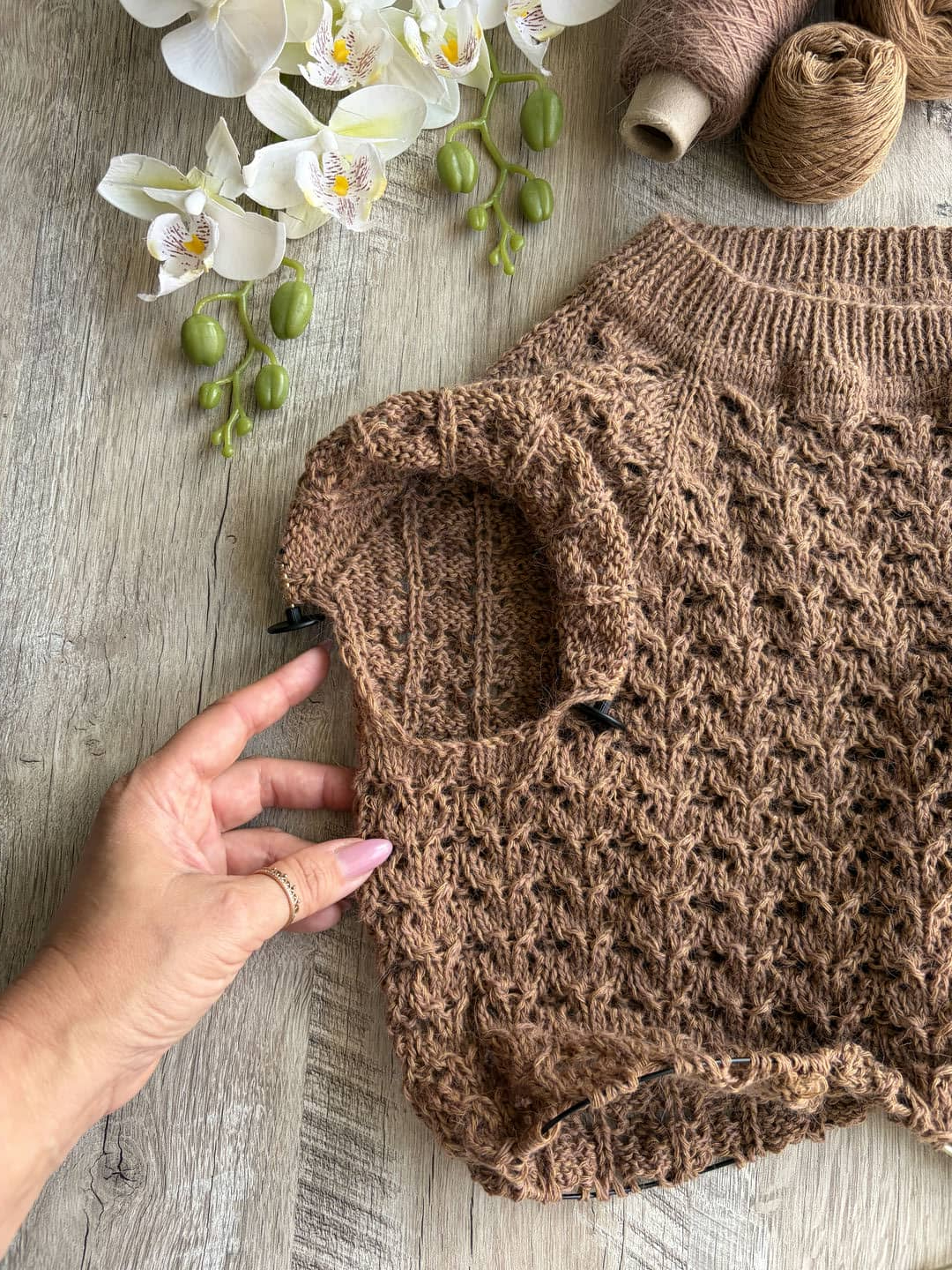
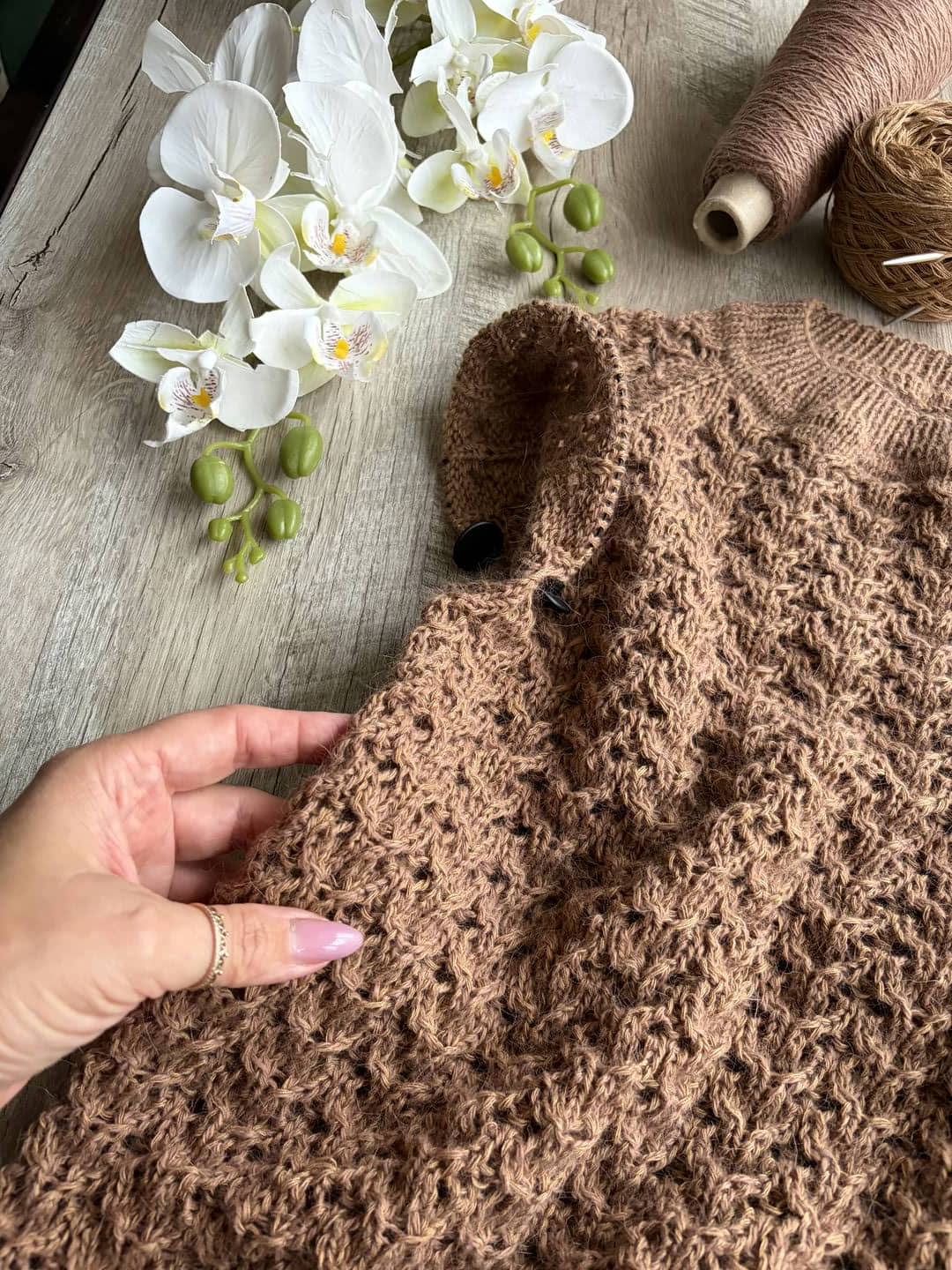
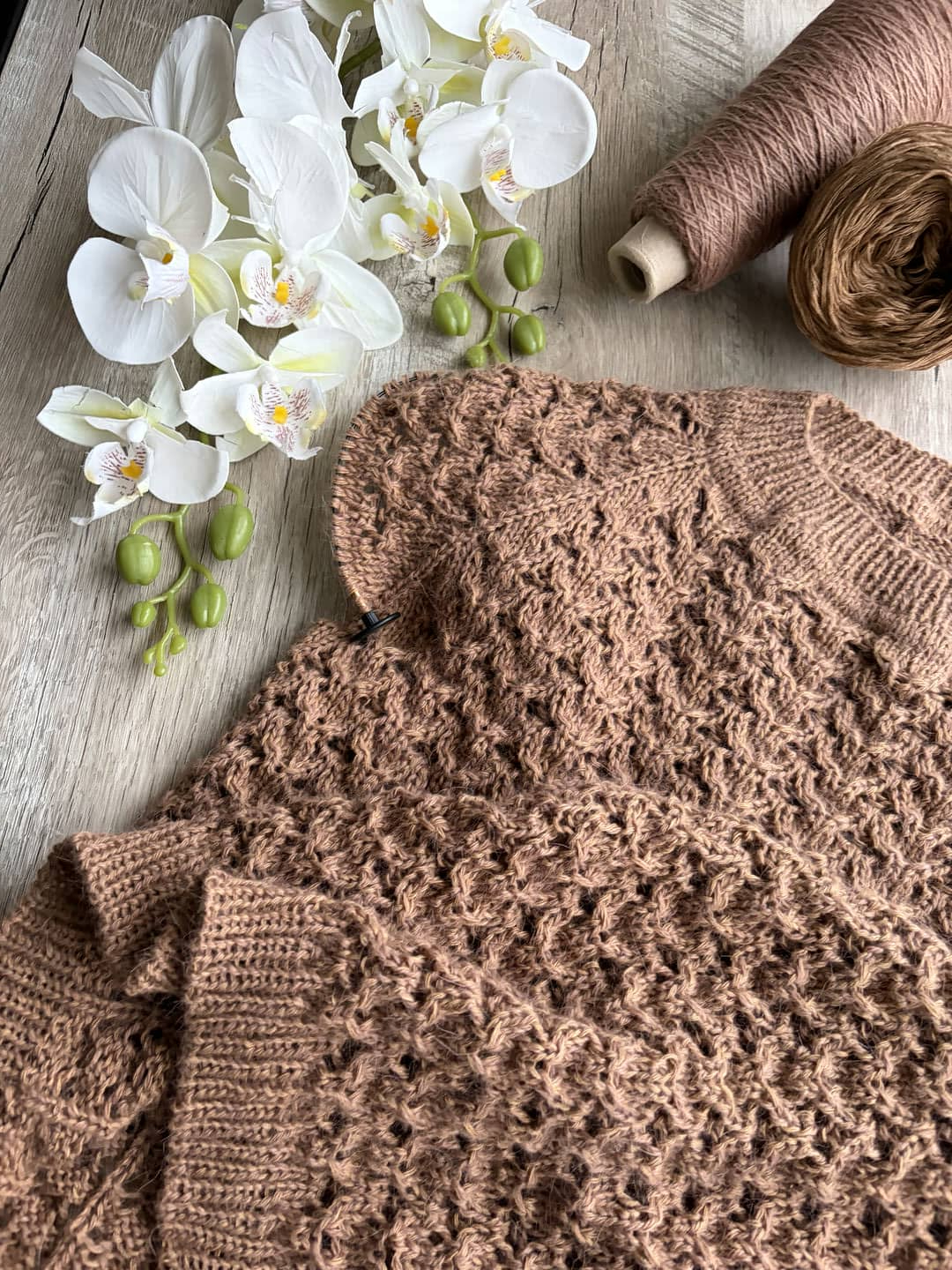
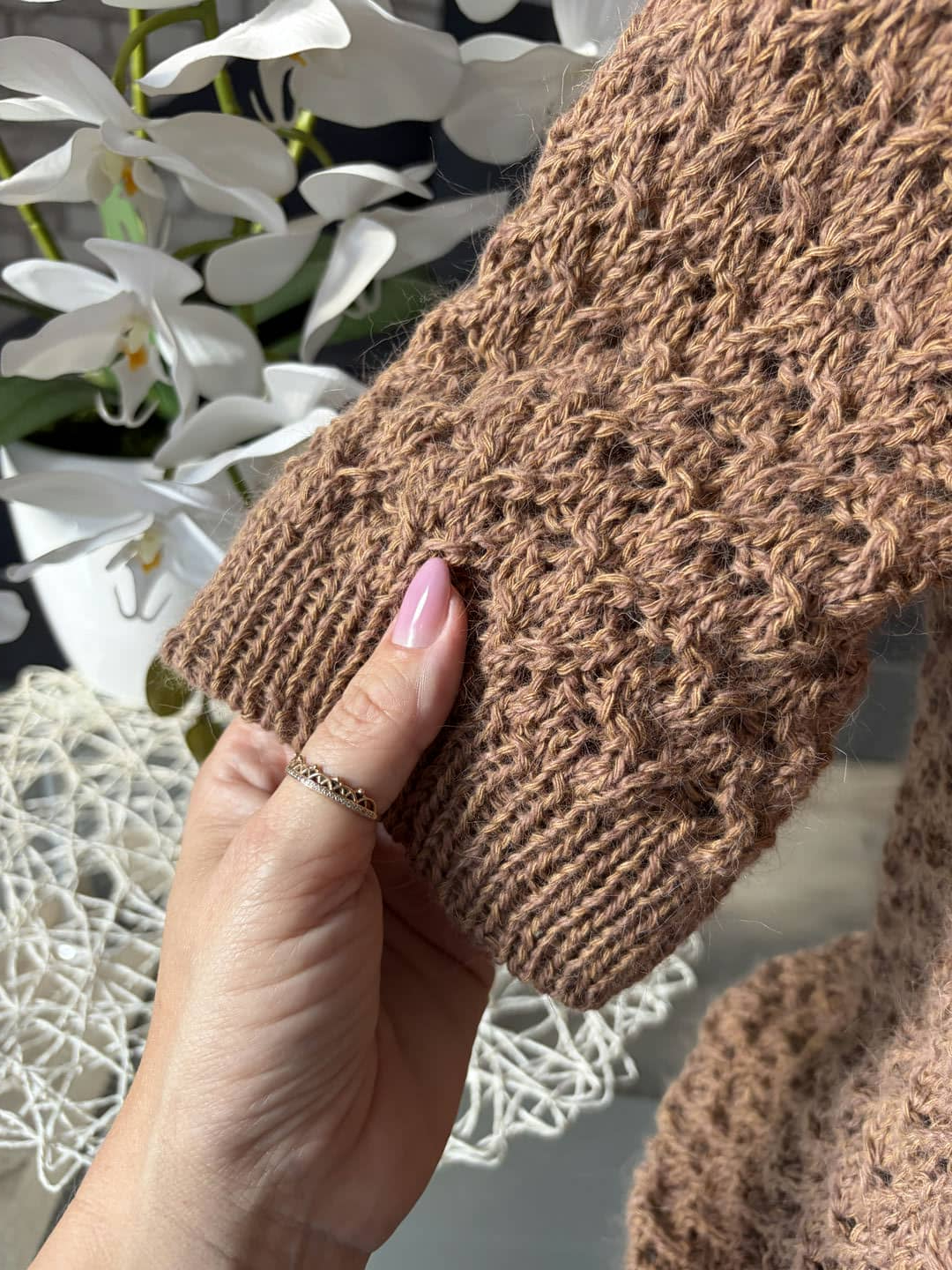
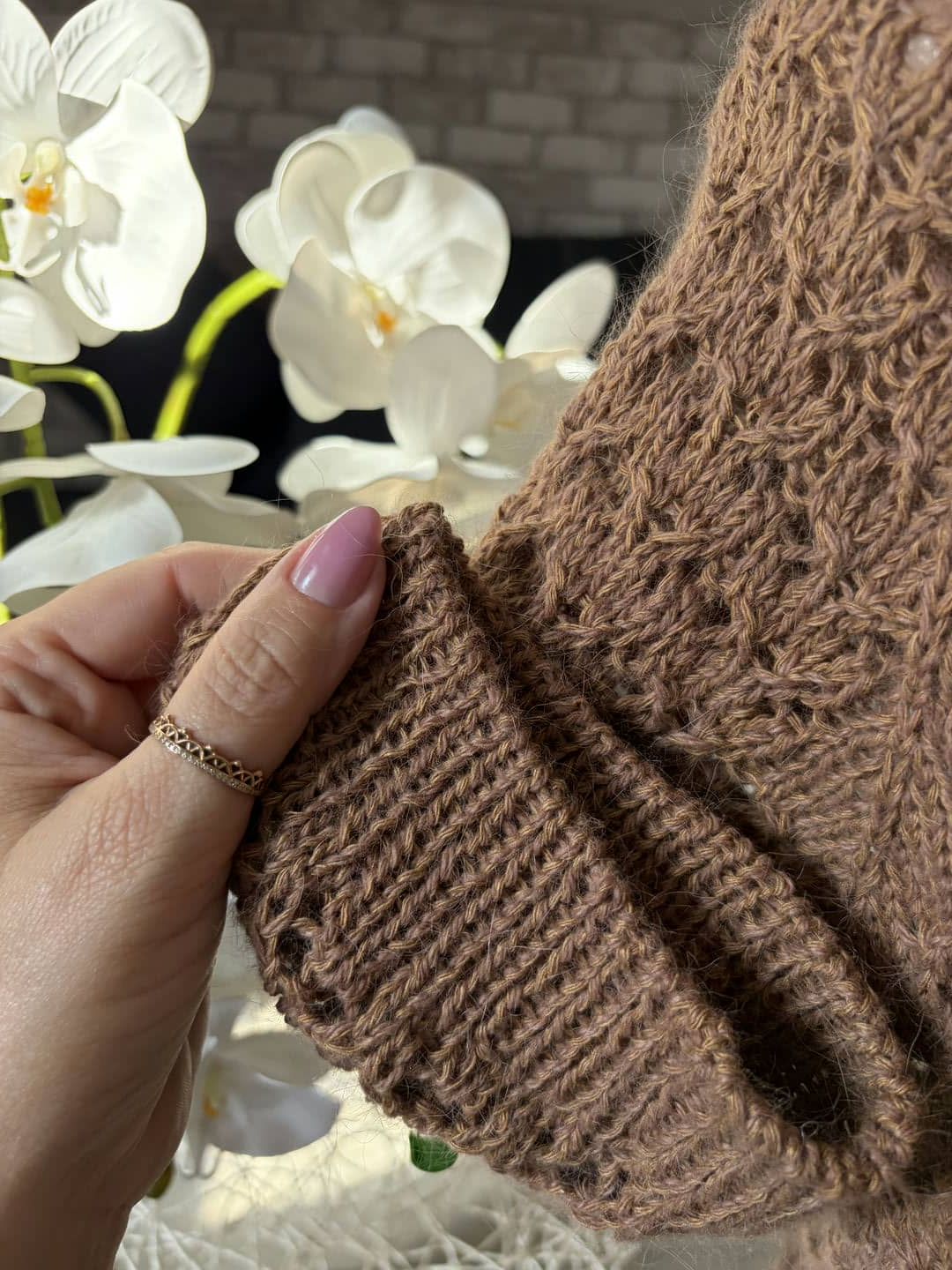
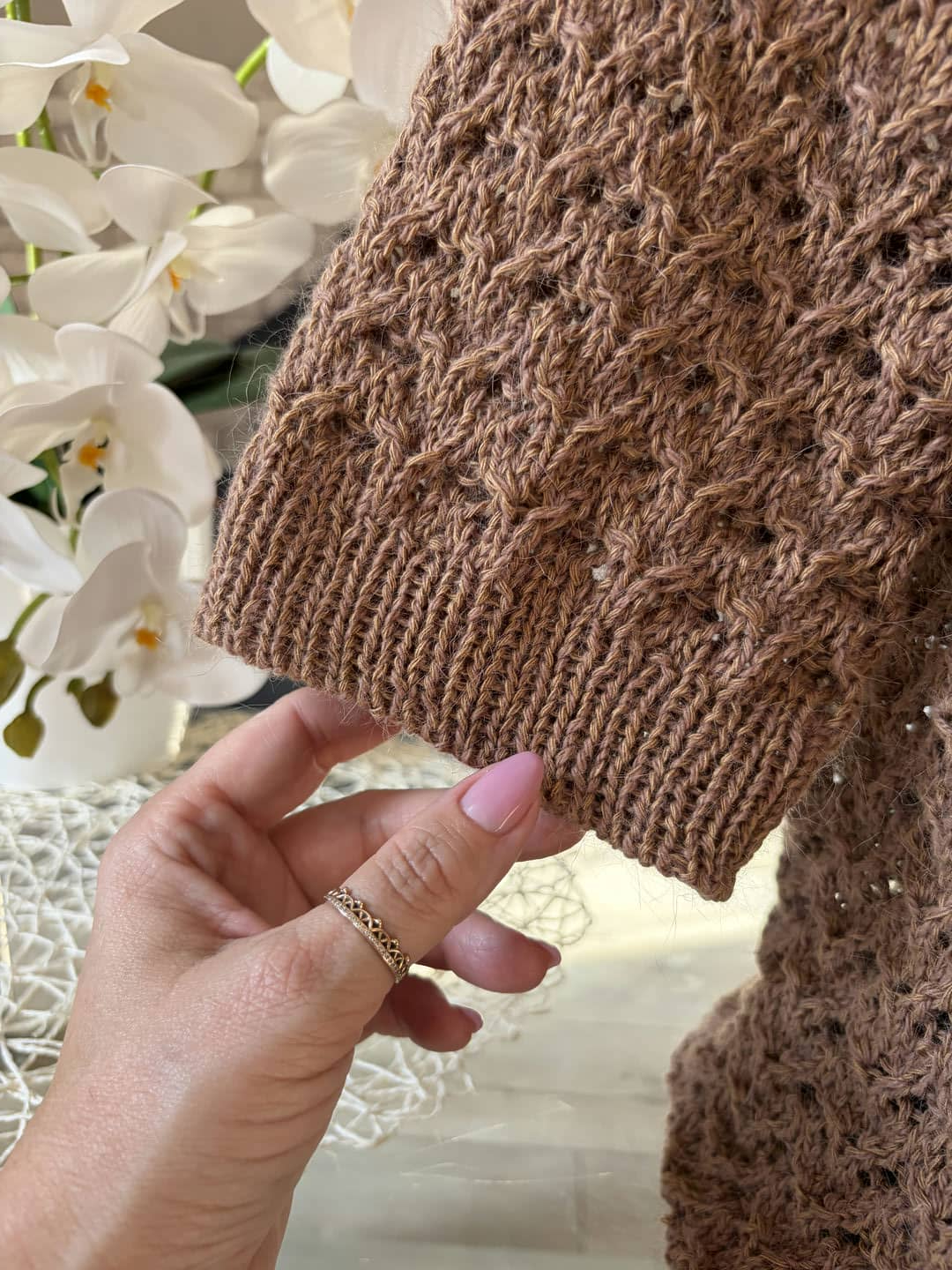
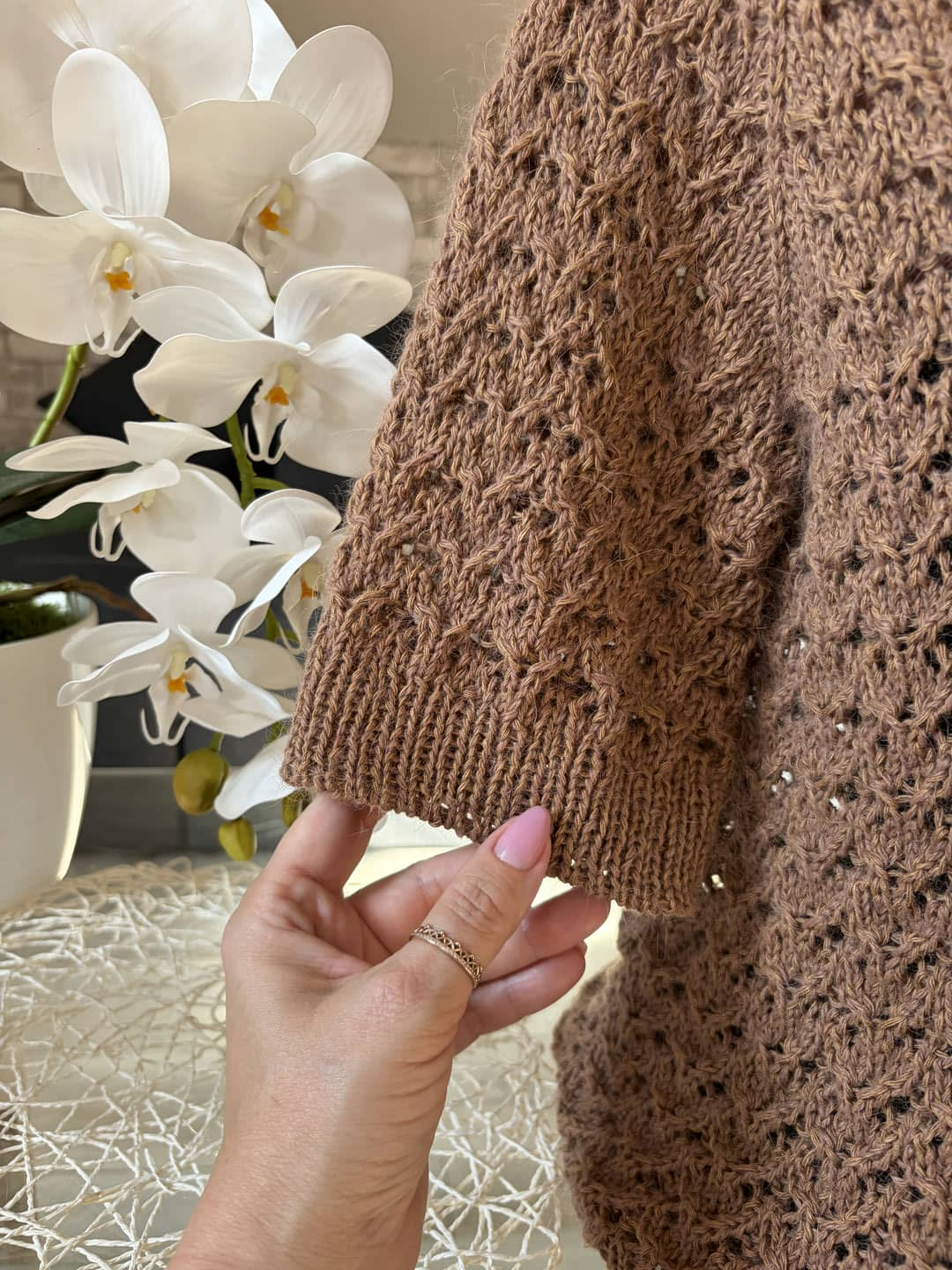
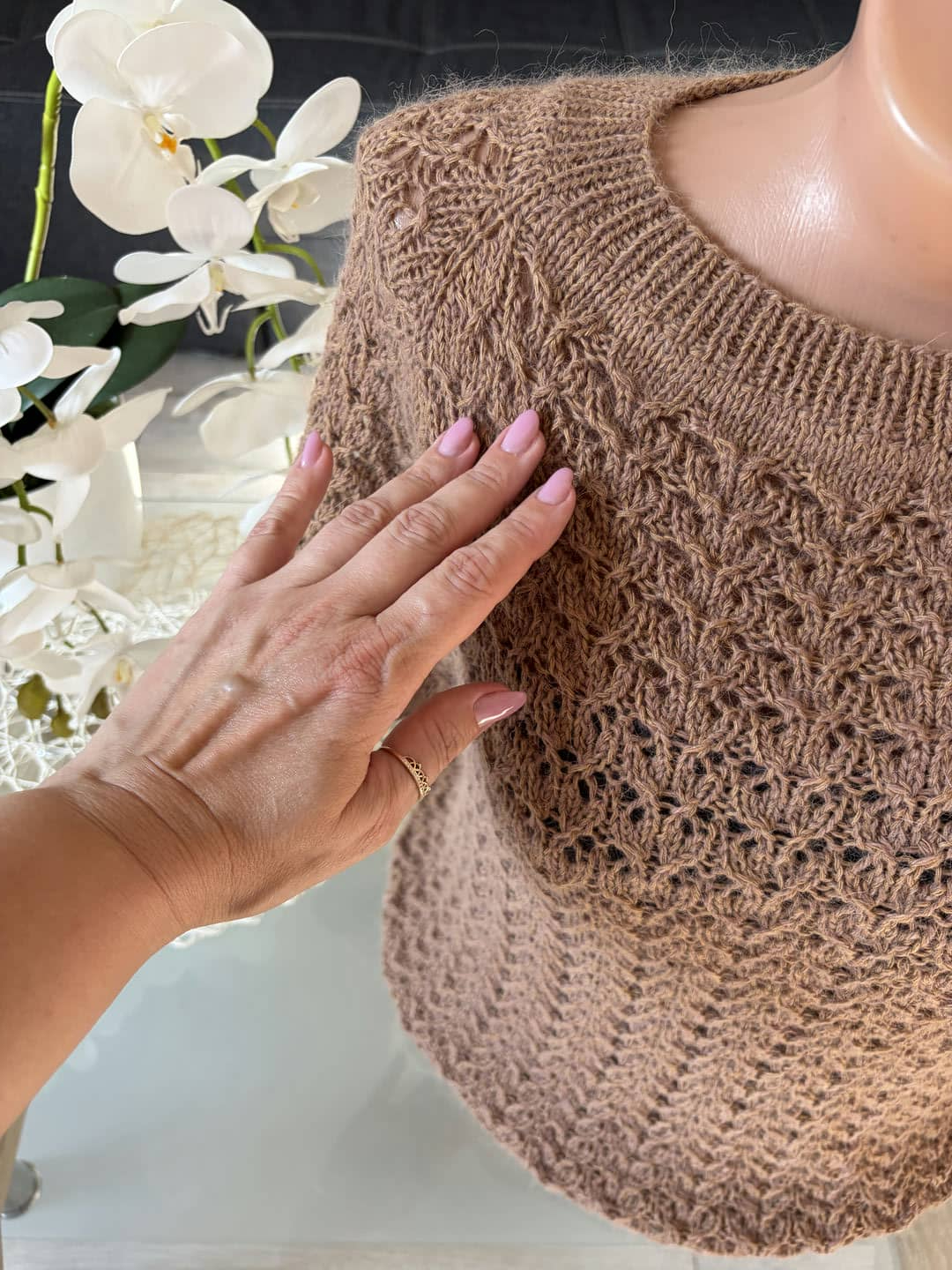
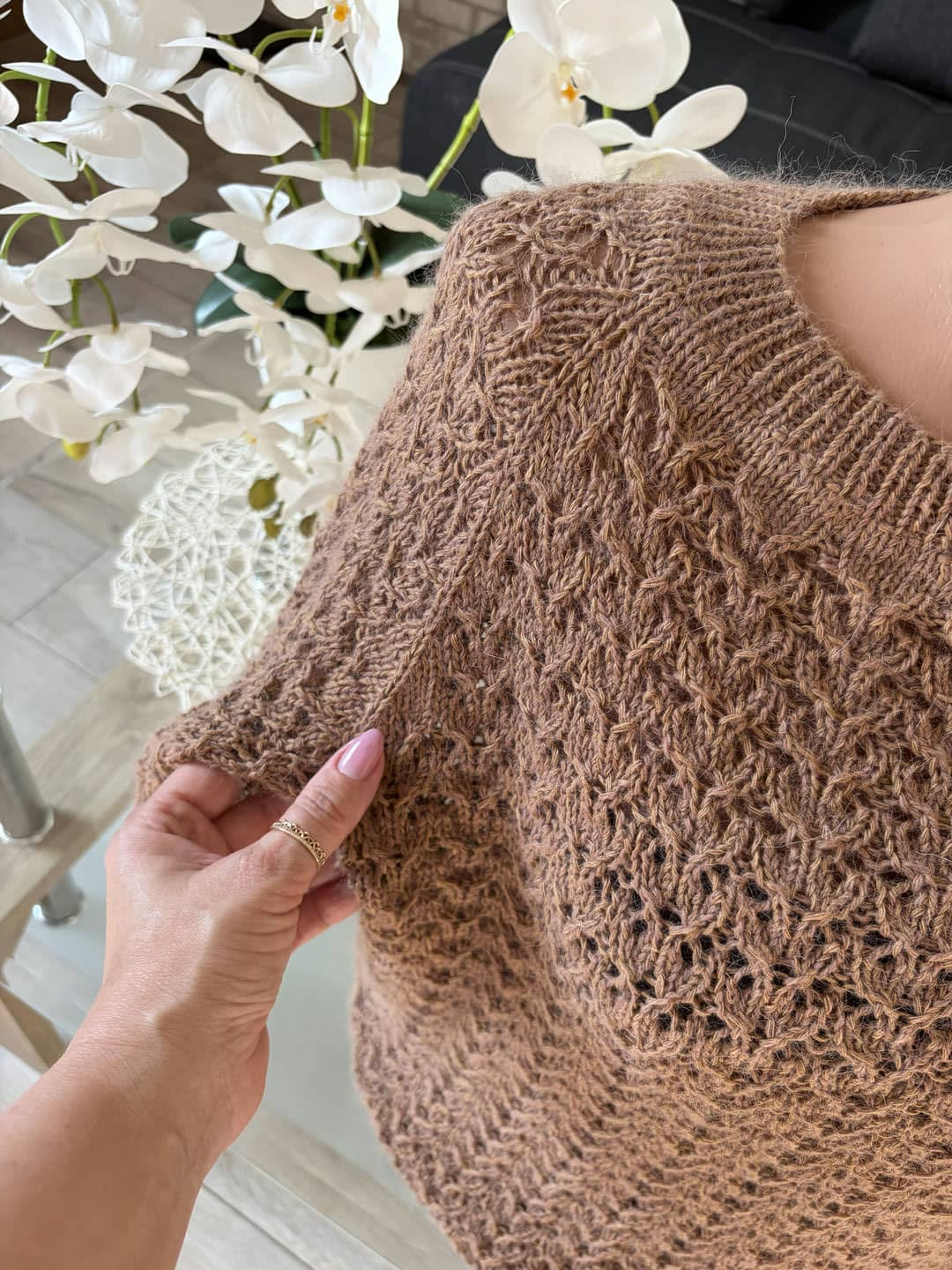
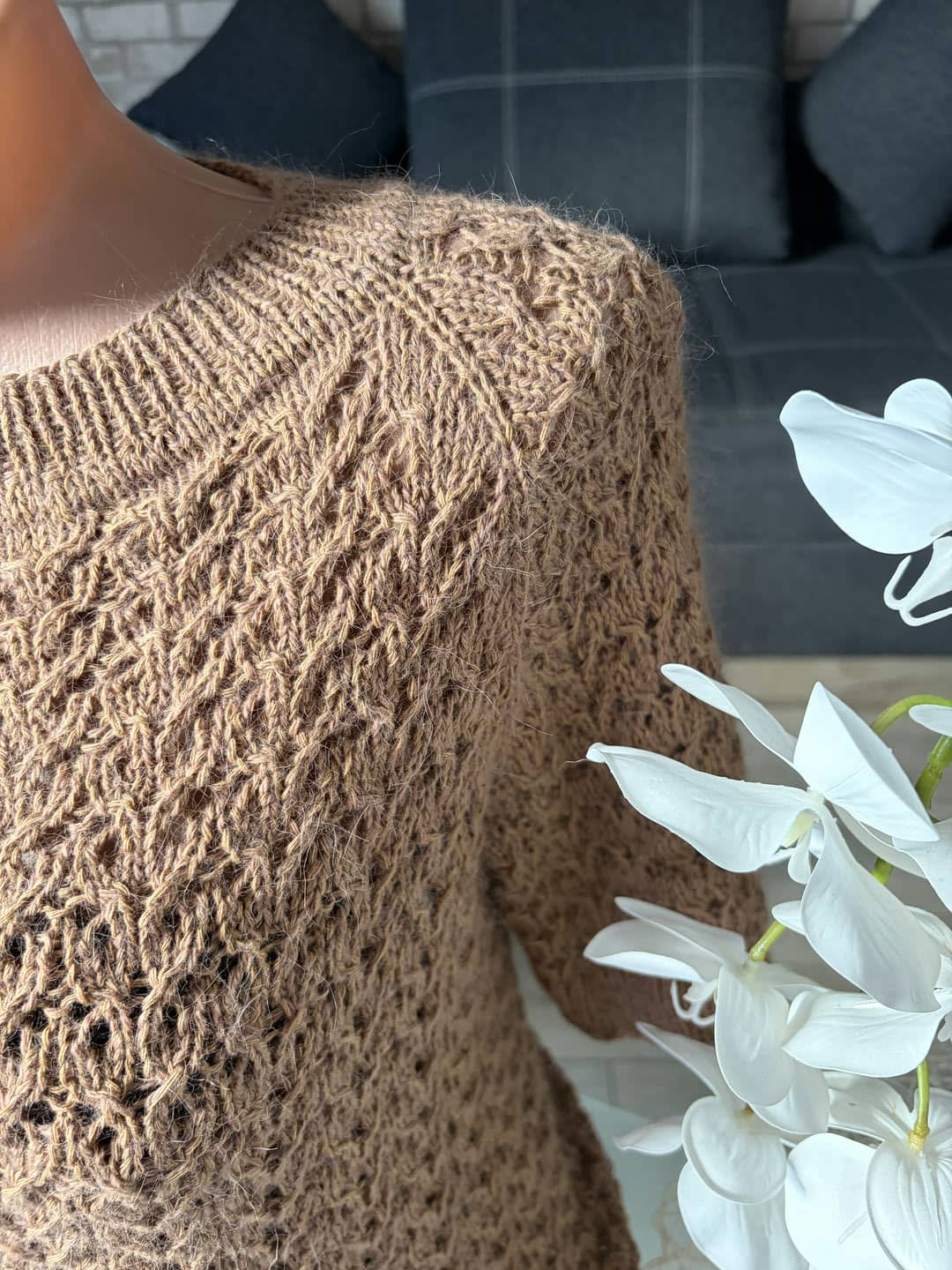
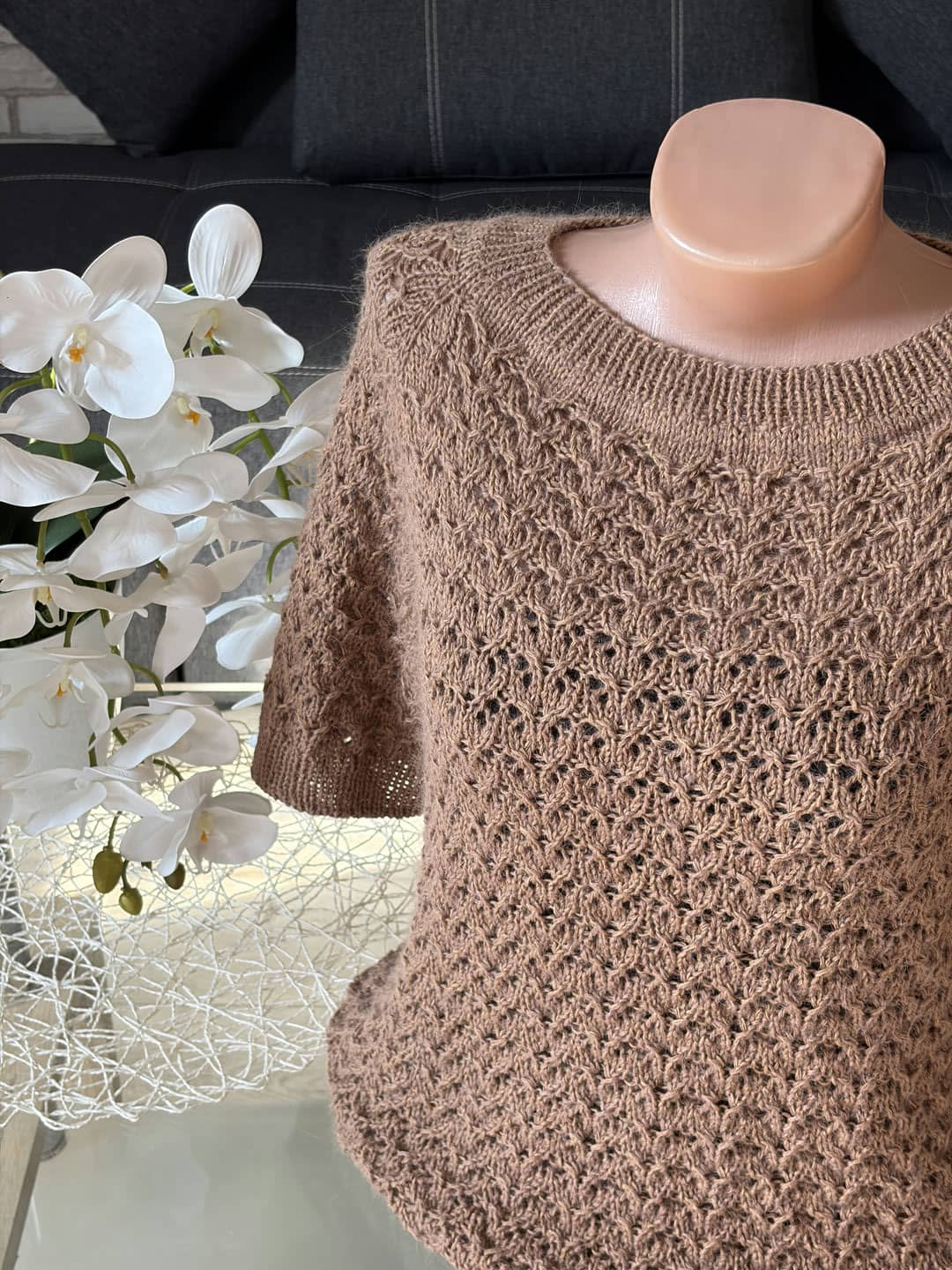
For the T-shirt I settled on a lace pattern with a light relief. It looks delicate, but still reads clearly in the fabric. The lace elements create a feeling of lightness, and the slight relief adds texture and makes the design more interesting.
I like it when a pattern does not overwhelm a piece but becomes its main decoration. This one turned out exactly like that: restrained, tender, with a beautiful play of stitches and a gentle volume.
The swatch helped me judge not only how the pattern looks, but also how the two yarns work together. When I saw the result, I understood that this combination could make exactly the T-shirt I had in mind.
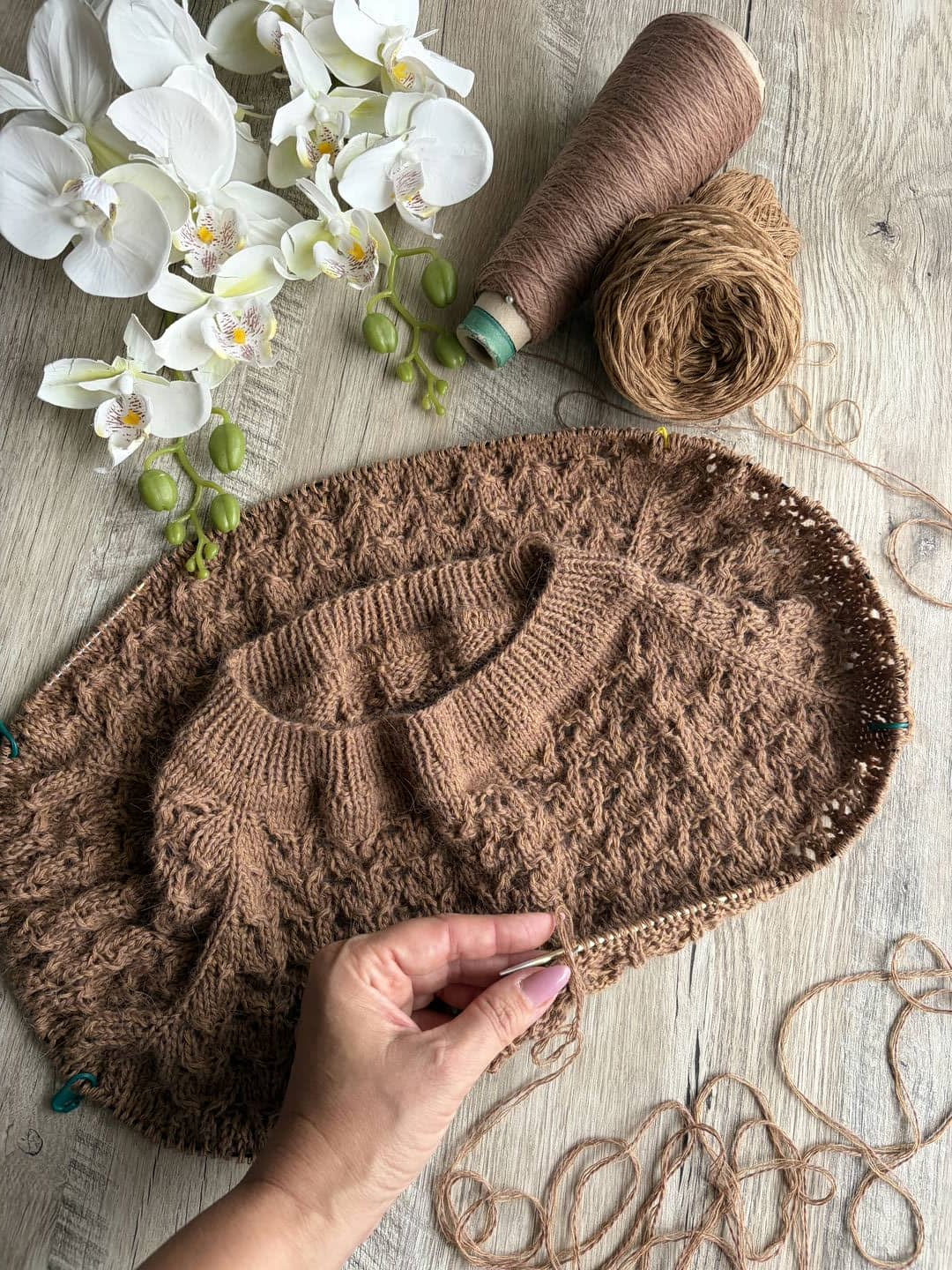
After a successful swatch, I began knitting the T-shirt itself. It is especially pleasant to watch the fabric slowly appear, the silhouette take shape, and small leftovers of yarn turn into something whole and finished.
For me, projects like this have a special appeal. It is not just a chance to use up the yarn left from earlier work. It is also a wonderful way to discover new combinations, try unusual textures and get a result I had not even planned at the start.
Calculations for the T-shirt in size 48–50 (≈ EU 42–44, M–L; L-XL).
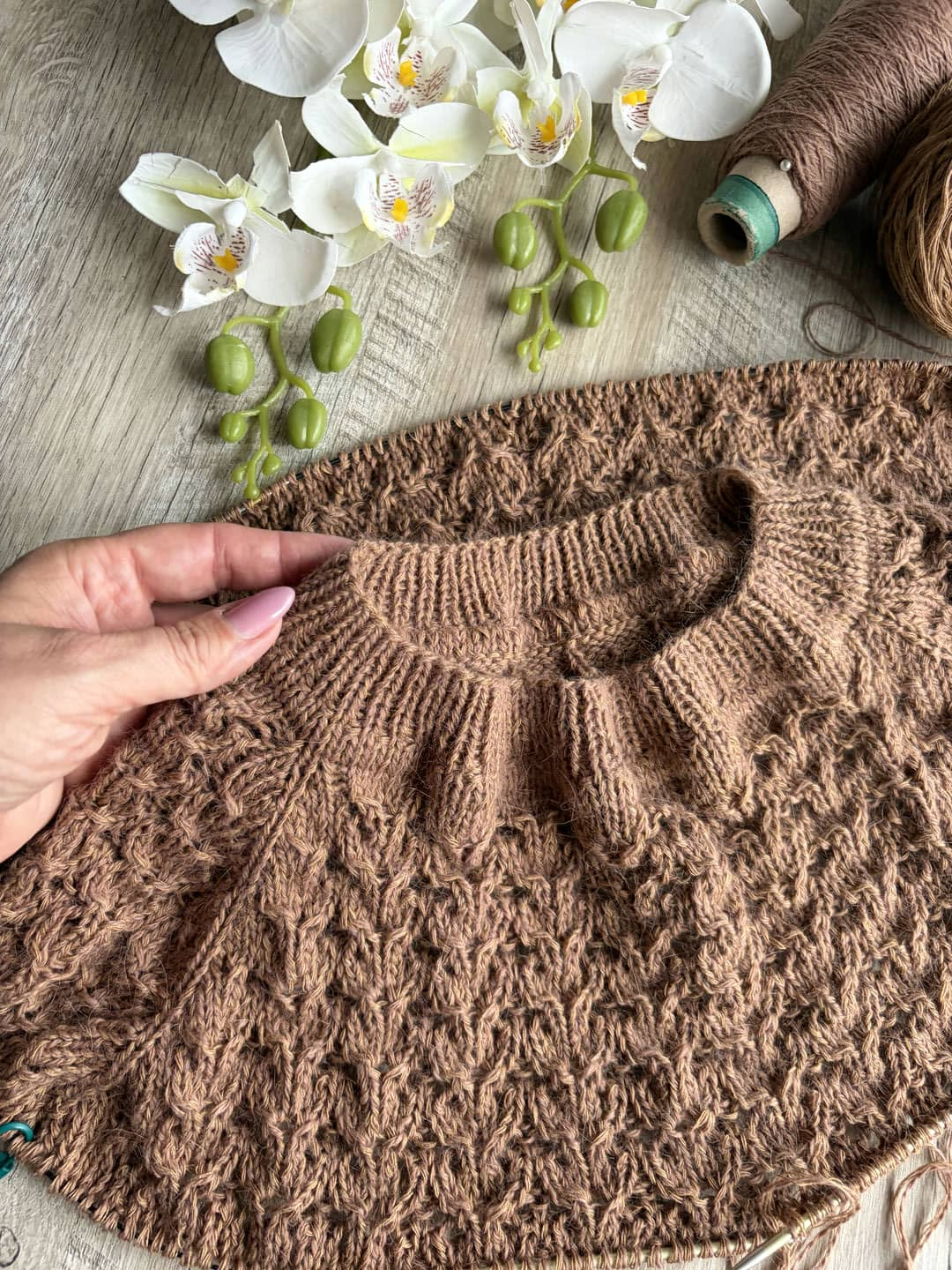
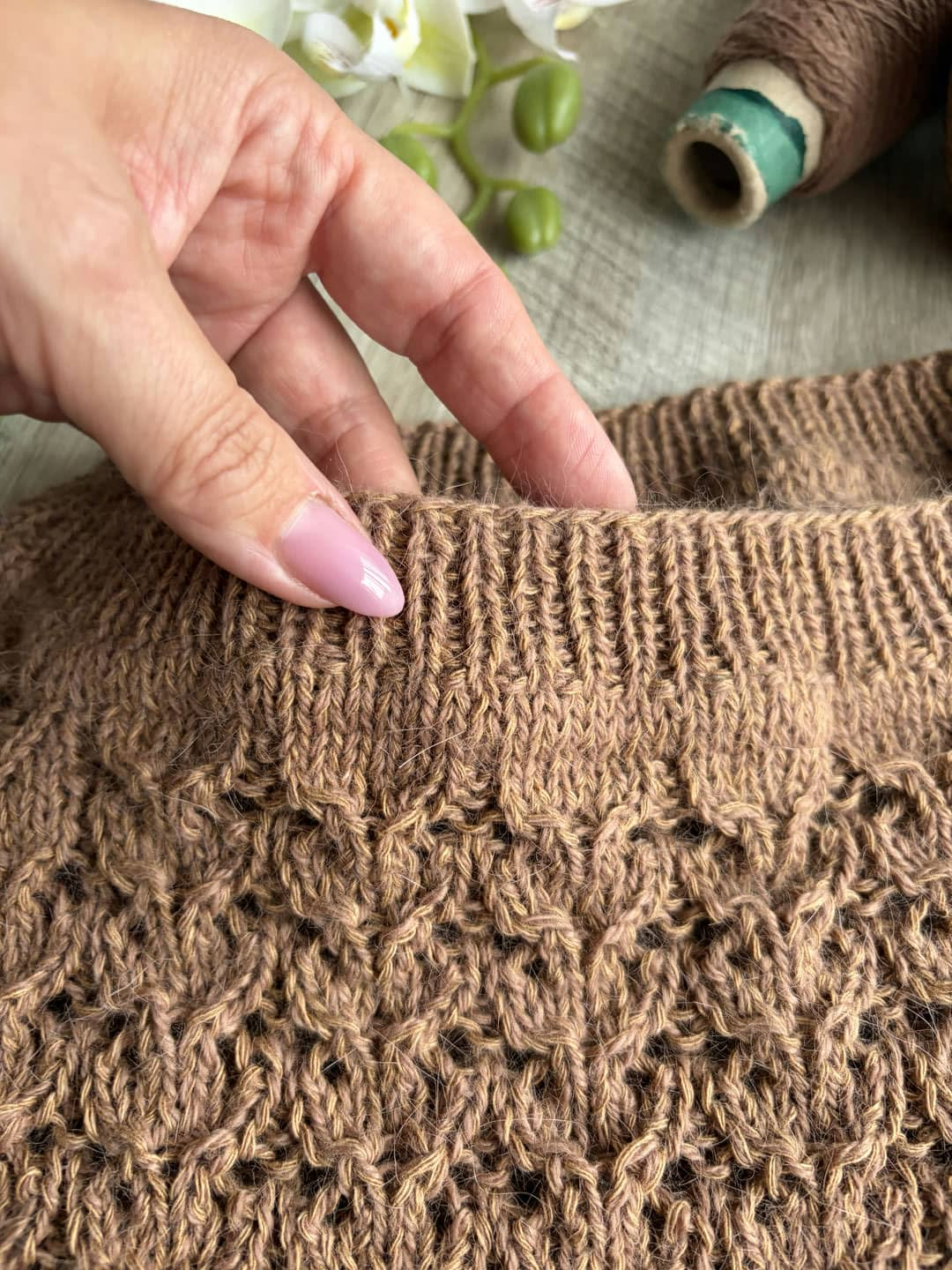
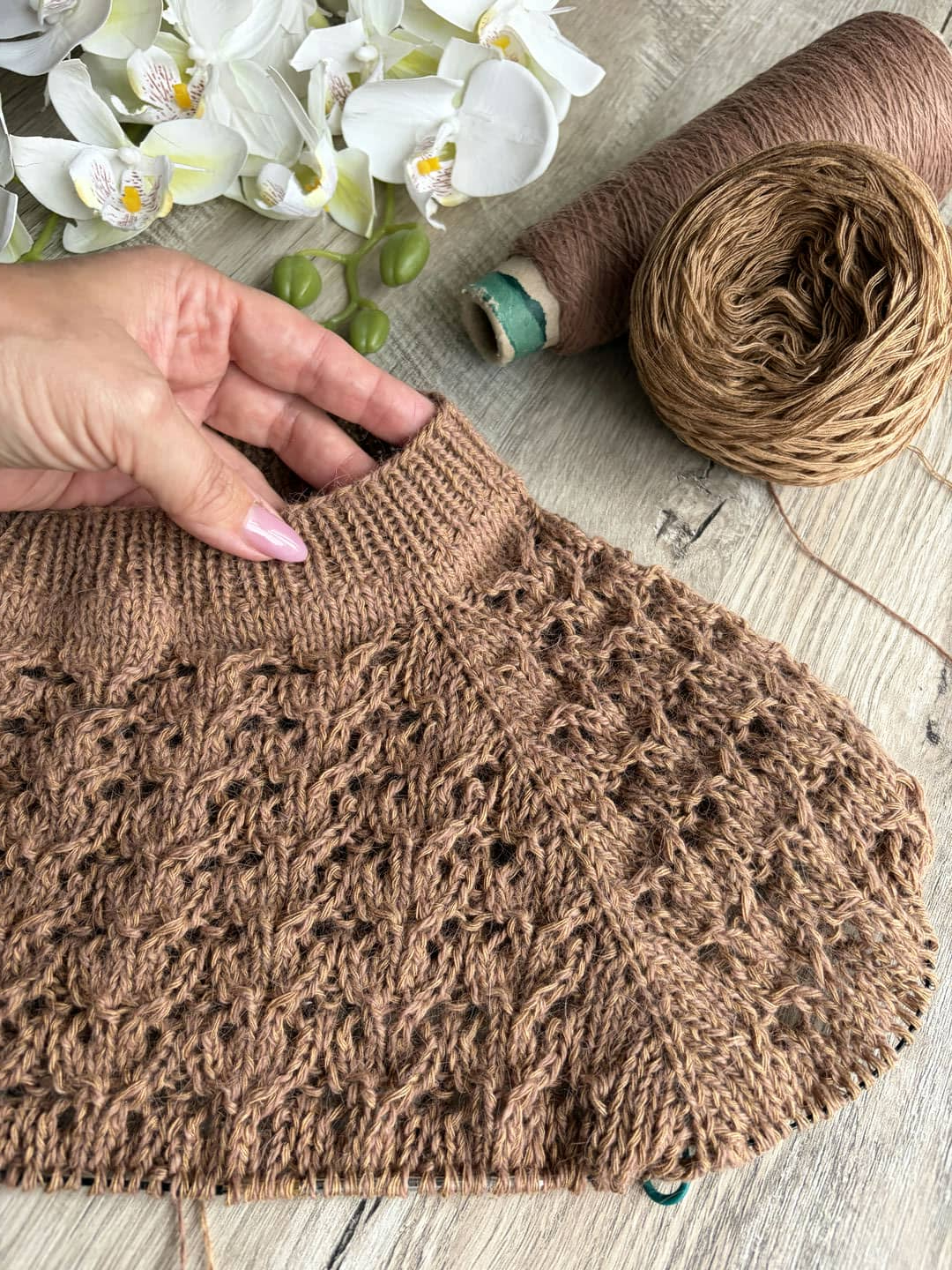
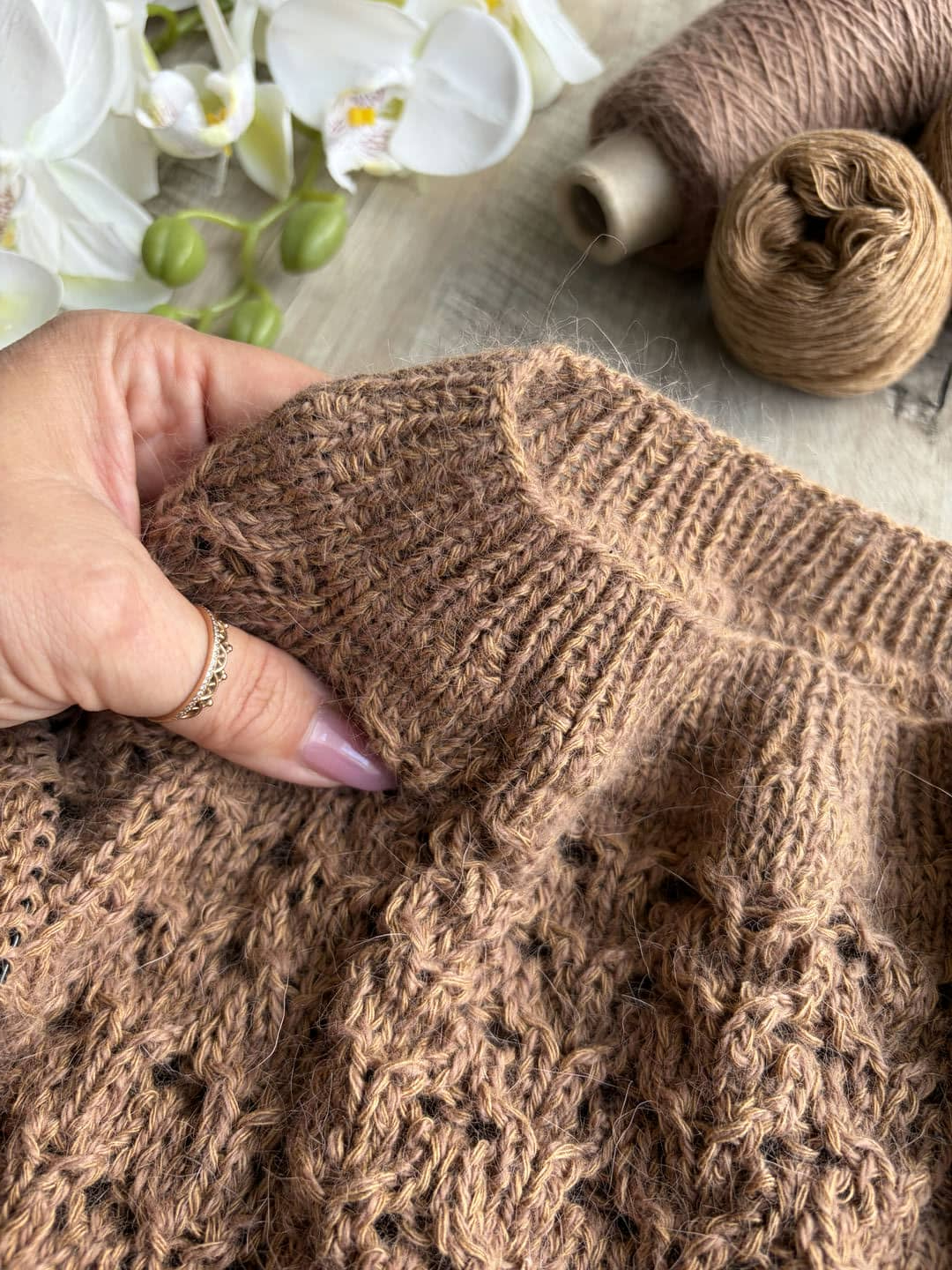
For the neckline, with 3.25 mm needles, cast on 124 stitches + 1 stitch to join in the round. We knit in 1×1 rib, then work a mock-linked edge at the bottom of the collar.
Neckline:
Rows 1–10: 1×1 rib.
Row 11: knit all the stitches on the needles, and between the stitches (picking up from the bar) make new stitches and purl them.
The number of stitches in this row doubles: 124 × 2 = 248 stitches.
Row 12: knit the knit stitch, slip the purl stitch without working it, with the working yarn in front of the stitch.
Row 13: slip the knit stitch without working it, with the working yarn behind the stitch, purl the purl stitch.
Row 14: knit the knit stitch, slip the purl stitch without working it, with the working yarn in front of the stitch.
Row 15: slip the knit stitch without working it, with the working yarn behind the stitch, purl the purl stitch.
Row 16: work each knit stitch and purl stitch together as k2tog, all the way around the round. The number of stitches is halved: 248/2 = 124 stitches.
The neckline is done. Now we move on to the main fabric and the lace pattern. Change the needle size to 3.5 mm.
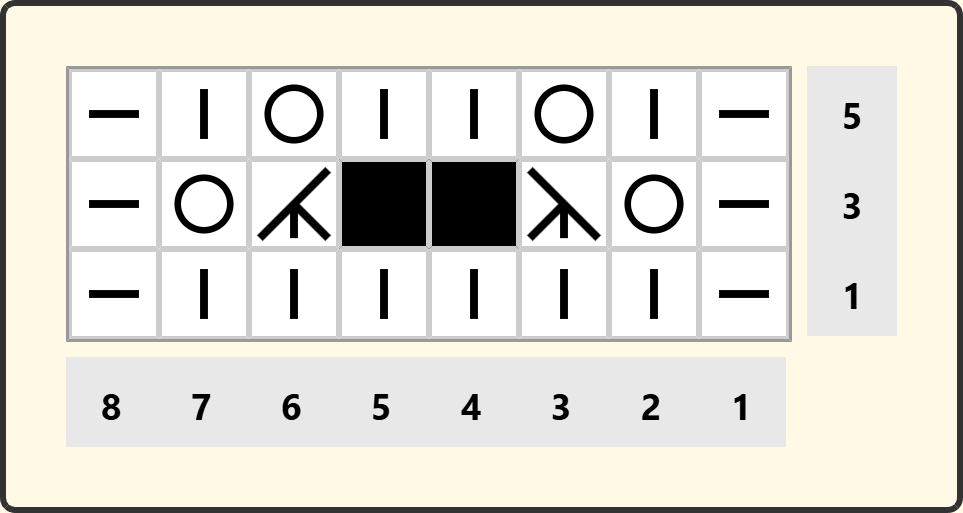
The pattern repeat is 7 stitches wide and 6 rows high. On RS rows (odd) – we follow the chart. On WS rows (even) – we work all stitches as they appear in the pattern.
Divide the stitches into separate sections and mark them with stitch markers:
- back – 43 stitches (6 repeats of 7 stitches + 1 stitch for symmetry),
- front – 57 stitches (8 repeats of 7 stitches + 1 stitch for symmetry),
- two sleeves – 8 stitches each (1 repeat of 7 stitches + 1 stitch for symmetry),
- four raglan lines – 2 stitches each.
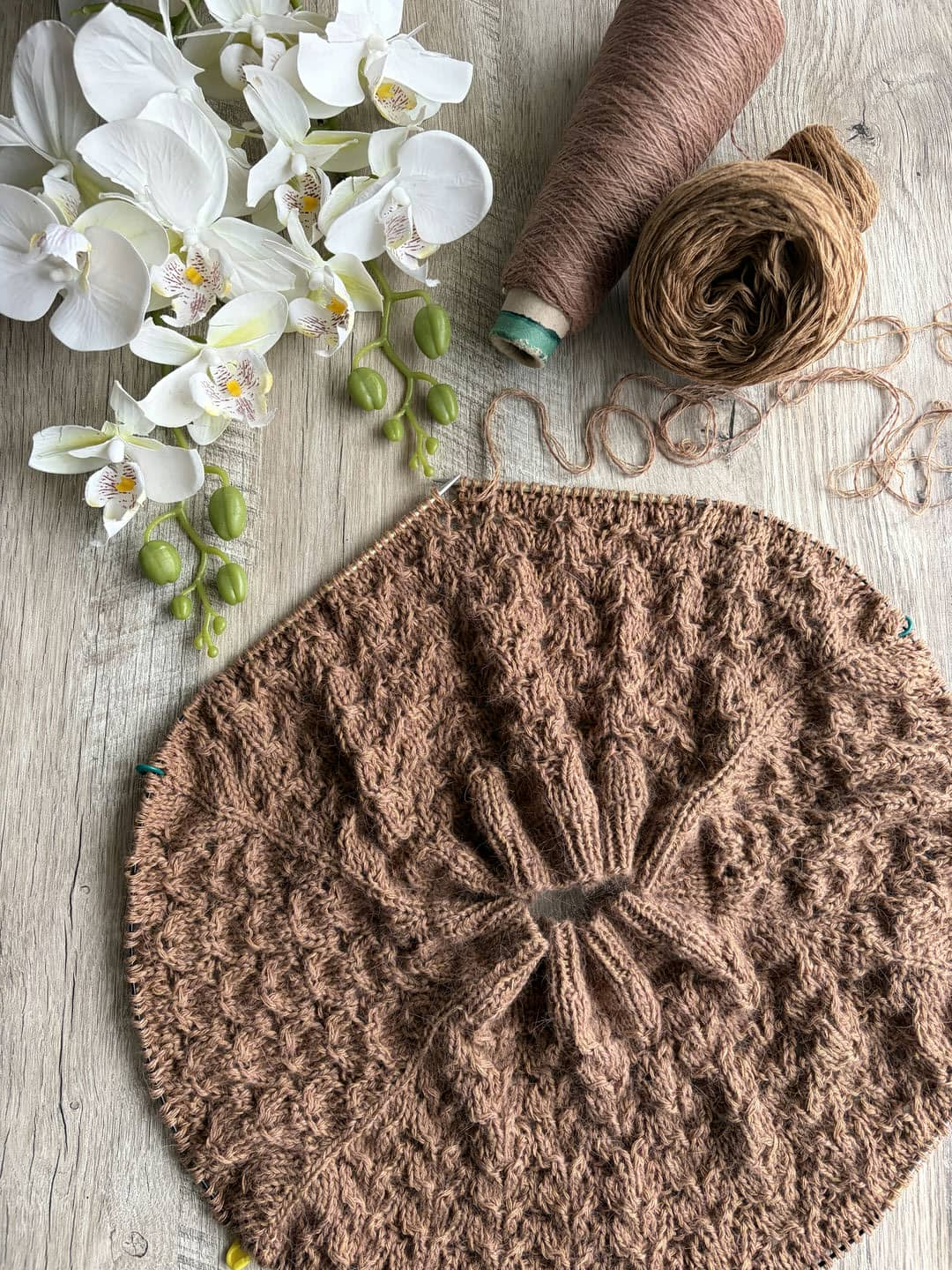
We begin knitting the yoke in the lace pattern, working in rounds. The raglan lines (RL) are knitted in knit stitches. We increase next to the raglan lines on every 2nd row, the same for all sections. We work the new stitches into the pattern gradually.
After 19 cm of yoke (not counting the height of the neckline), the stitch counts at this stage are:
- back – 87 stitches,
- front – 101 stitches,
- two sleeves – 52 stitches each,
- four raglan lines – 2 stitches each.
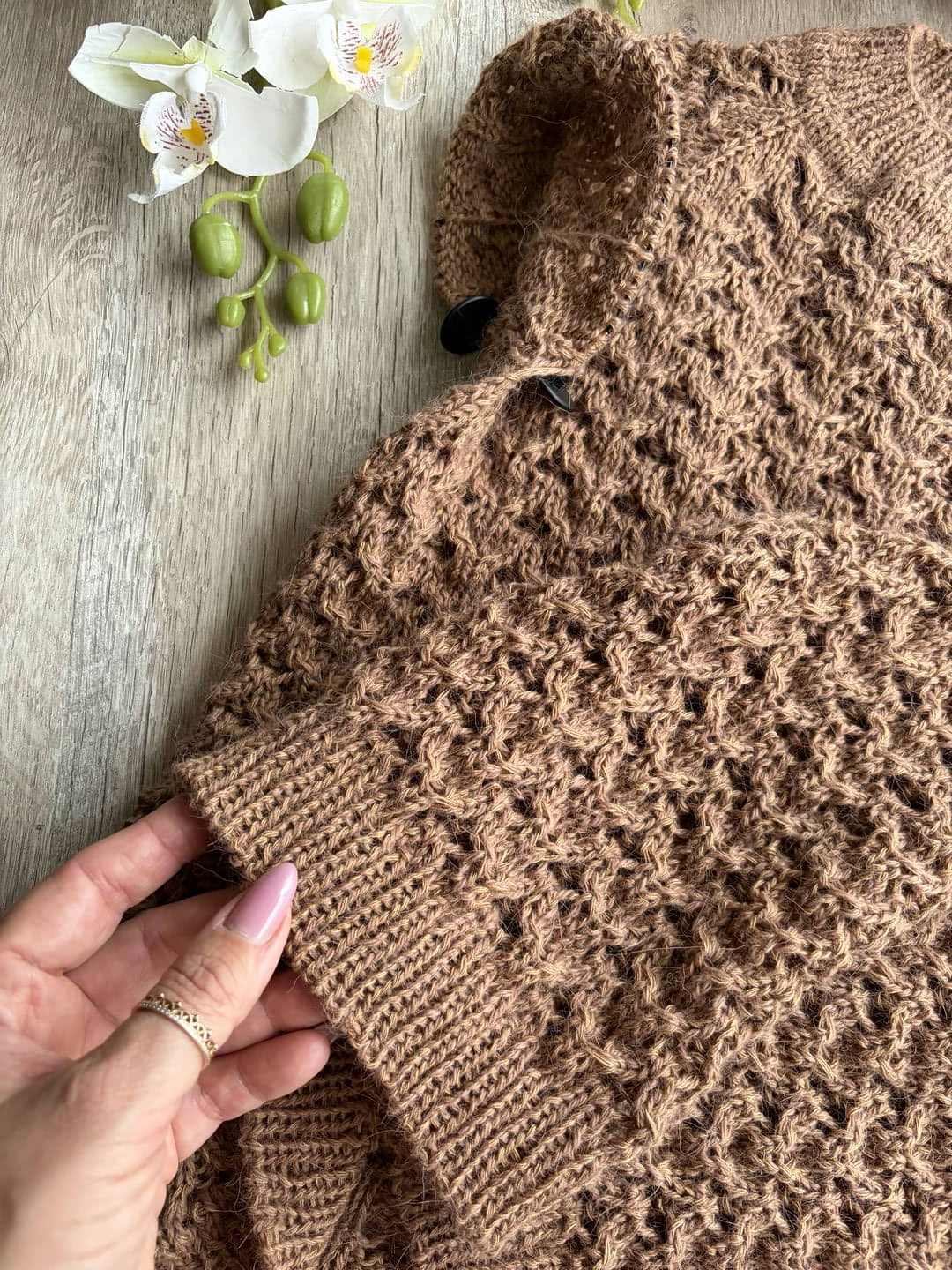
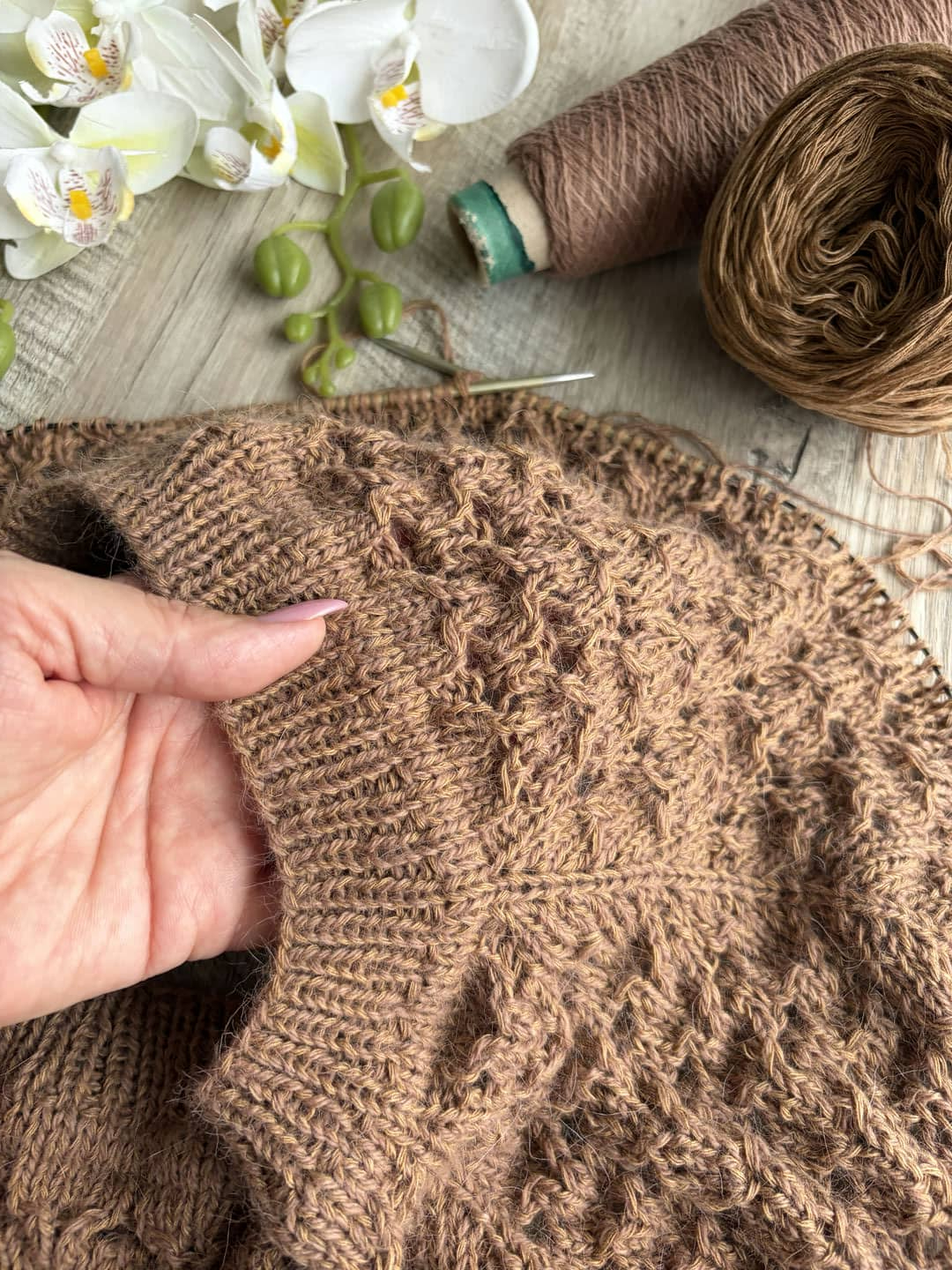
I put the sleeve stitches on waste yarn. The raglan line stitches are divided equally between the sections. We switch to knitting the Asian-style back raise in short rows, on the back stitches + the raglan line stitches. On the needles: 1 + 87 + 1 = 89 stitches.
We knit the Asian-style back raise. Its height is 12 pattern rows (two pattern repeats in height), about 5 cm.
Then we go back to knitting the main body in the round. We join the back stitches, the front stitches and the four raglan lines, and add stitches for the two underarms (9 stitches each), taking the pattern repeat into account.
The total number of stitches of the main part is:
89 (back + RL stitches) + 9 (underarm) + 103 (front + RL stitches) + 9 (underarm) = 210 stitches.
210 stitches/7 stitches per pattern repeat = 30 pattern repeats.
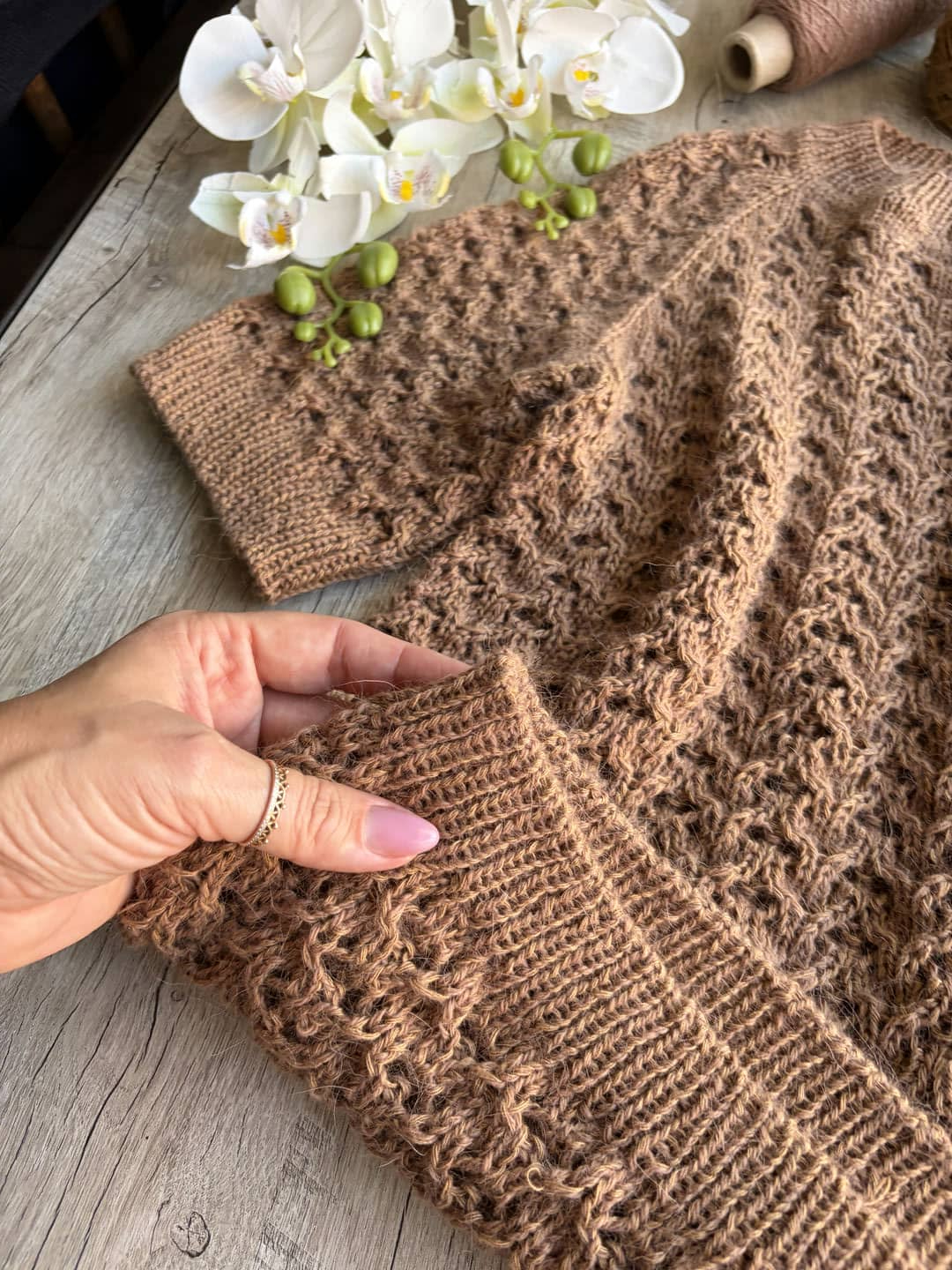
We knit the main part to the length you need. I do not change needles and keep knitting with 3.5 mm. Work 10 rows of 1×1 rib. Then 2 rows of double rib:
Row 1: knit the knit stitch, slip the purl stitch without working it, with the working yarn in front of the stitch.
Row 2: slip the knit stitch without working it, with the working yarn behind the stitch, purl the purl stitch.
Bind off with a tapestry needle. The length of the garment is 60 cm. The yarn used for the main part at this stage is 200 g: 100 g of angora and 100 g of cotton.
Next we move on to the sleeves. There are 54 stitches on the waste yarn for each sleeve. Use 3.5 mm needles.
Along the edge of the underarm and the back raise, pick up the required number of stitches, taking the 7-stitch pattern repeat into account.
A new idea does not always need new materials. Sometimes it is enough to look through your own stash, combine a few balls, choose a suitable pattern, and suddenly a whole new creative plan is in front of you. “Lahoda” is one more story created with love for knitting.
I chose the name for the T-shirt for a reason. Lahoda / Lahoda is a word with a very pleasant, soft sound that brings to mind calm, harmony and cozy comfort for the soul. That is exactly the mood I wanted to convey in this design.
The delicate lace fabric, the light relief, the softness of angora, the stability of cotton and the warm shade of milk chocolate all come together in one harmonious composition.
The “Lahoda” T-shirt is a good example of how leftover yarn can get a new life and become a complete original garment. It is also a reminder that creativity does not always start with a big plan or the purchase of new materials. Sometimes a few small balls, an interesting pattern and the wish to create something special are enough.
You may also like
Brown Knitted Vest with Cables and Seed Stitch
September 26, 2022
Crochet Sweater “Leaves” with a Round Yoke
March 1, 2020