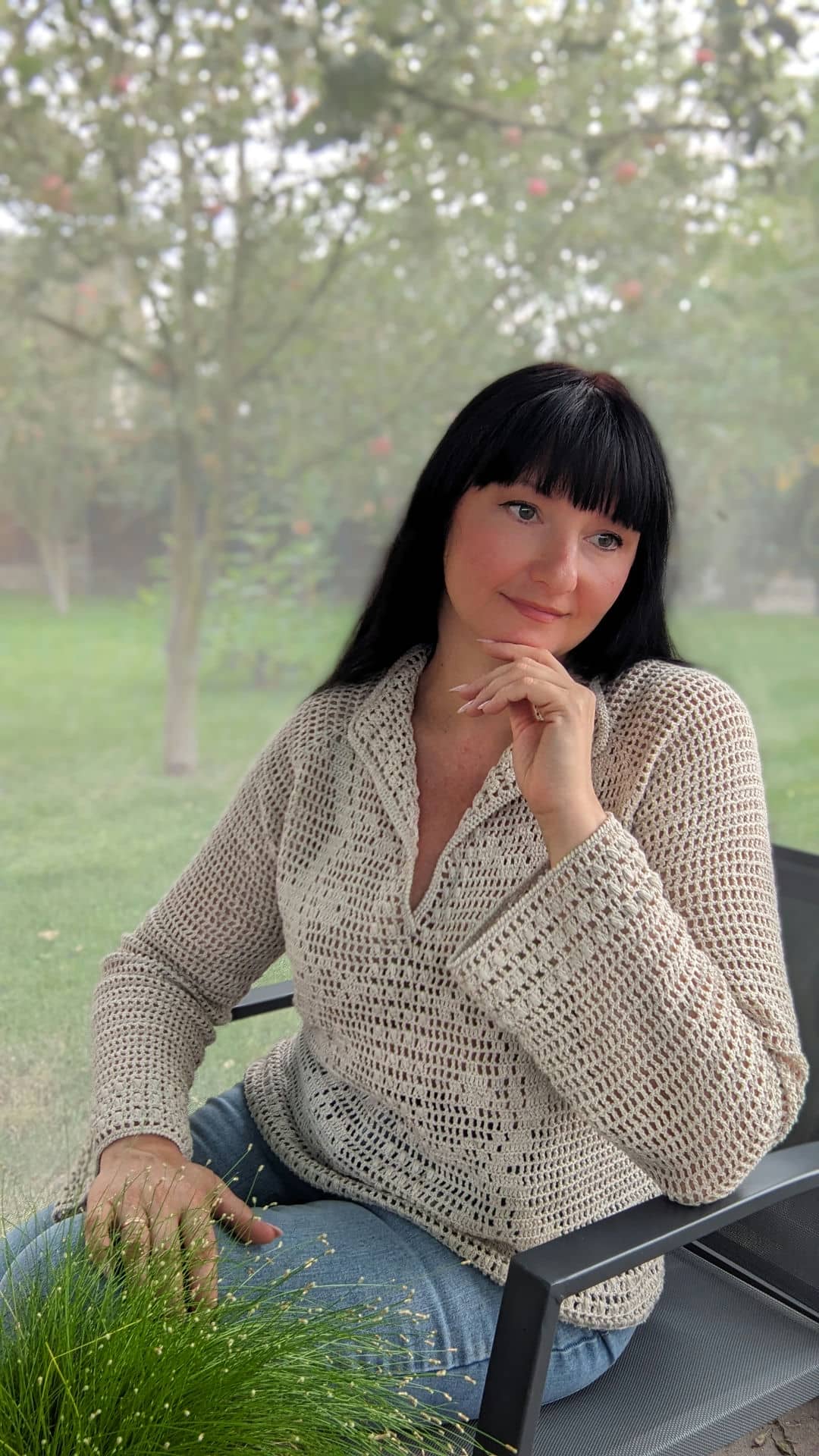
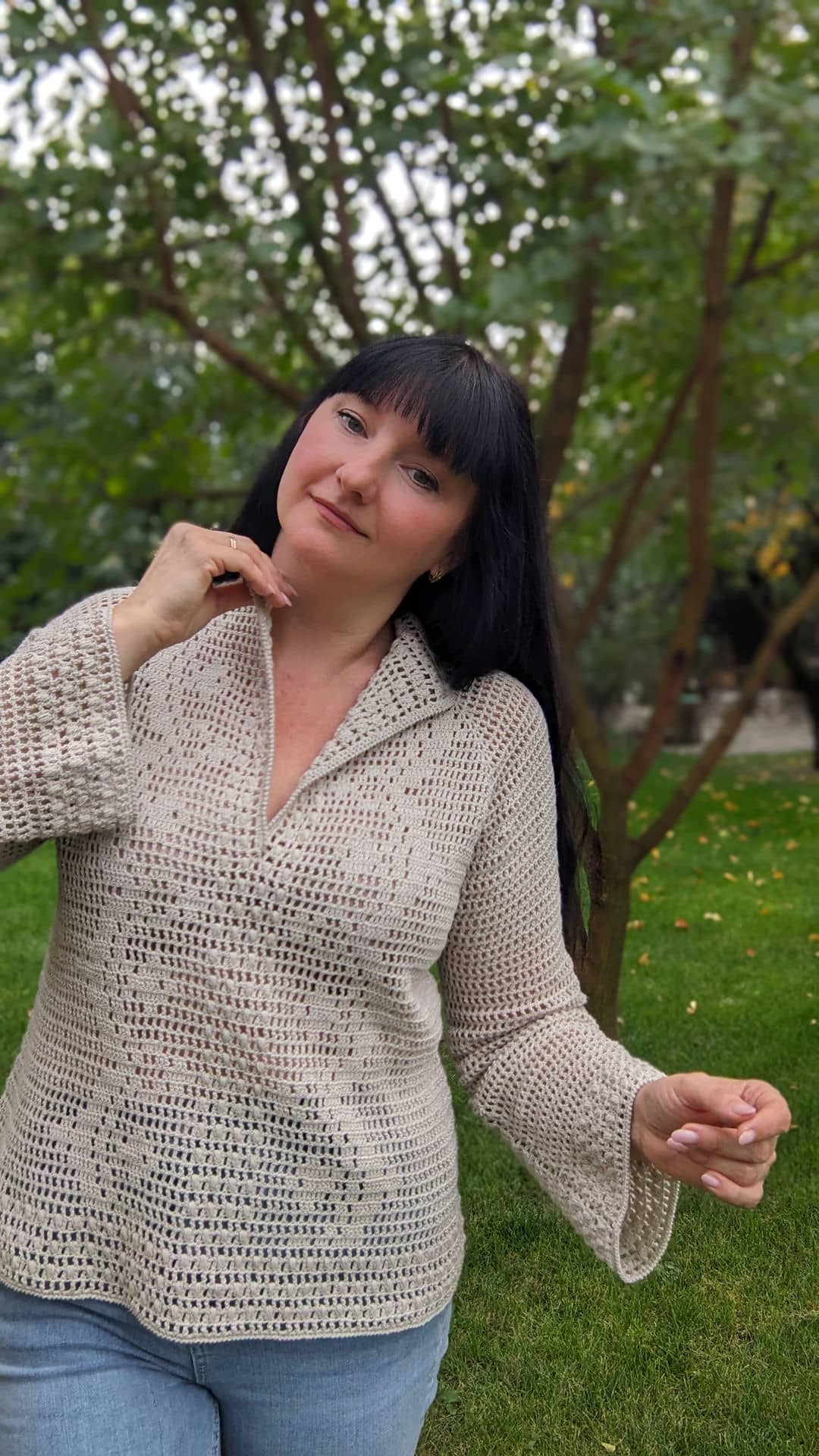
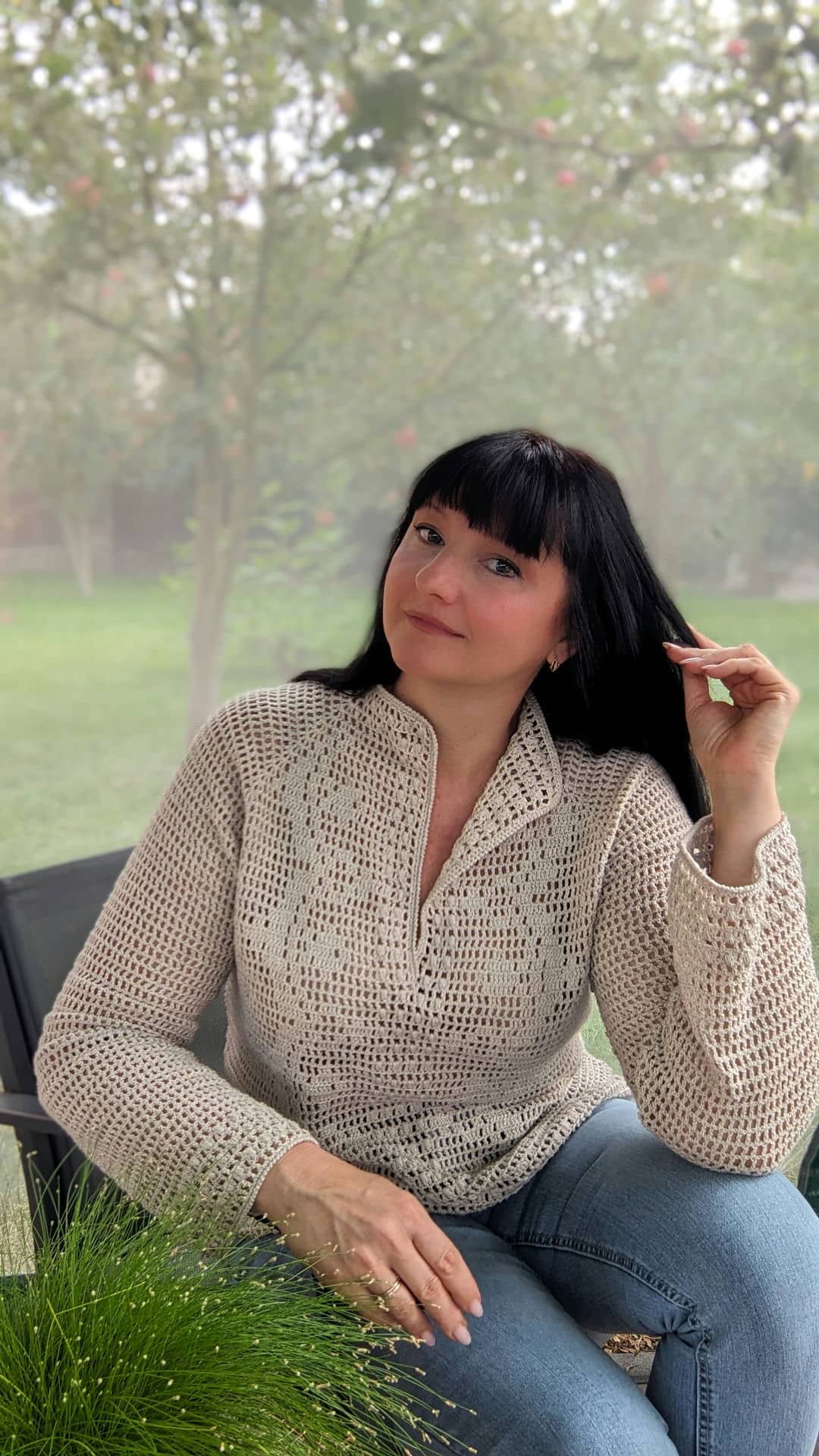
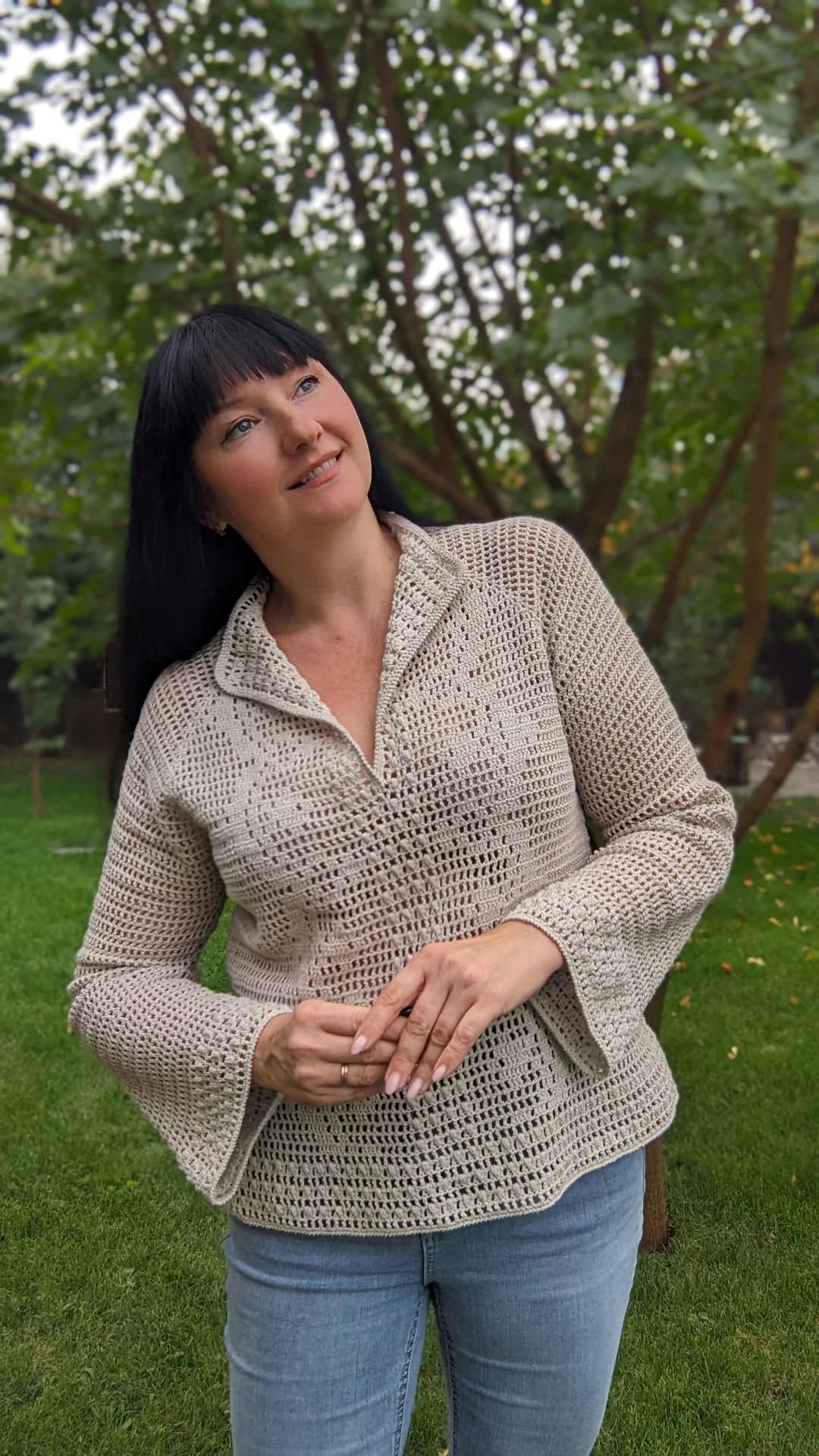
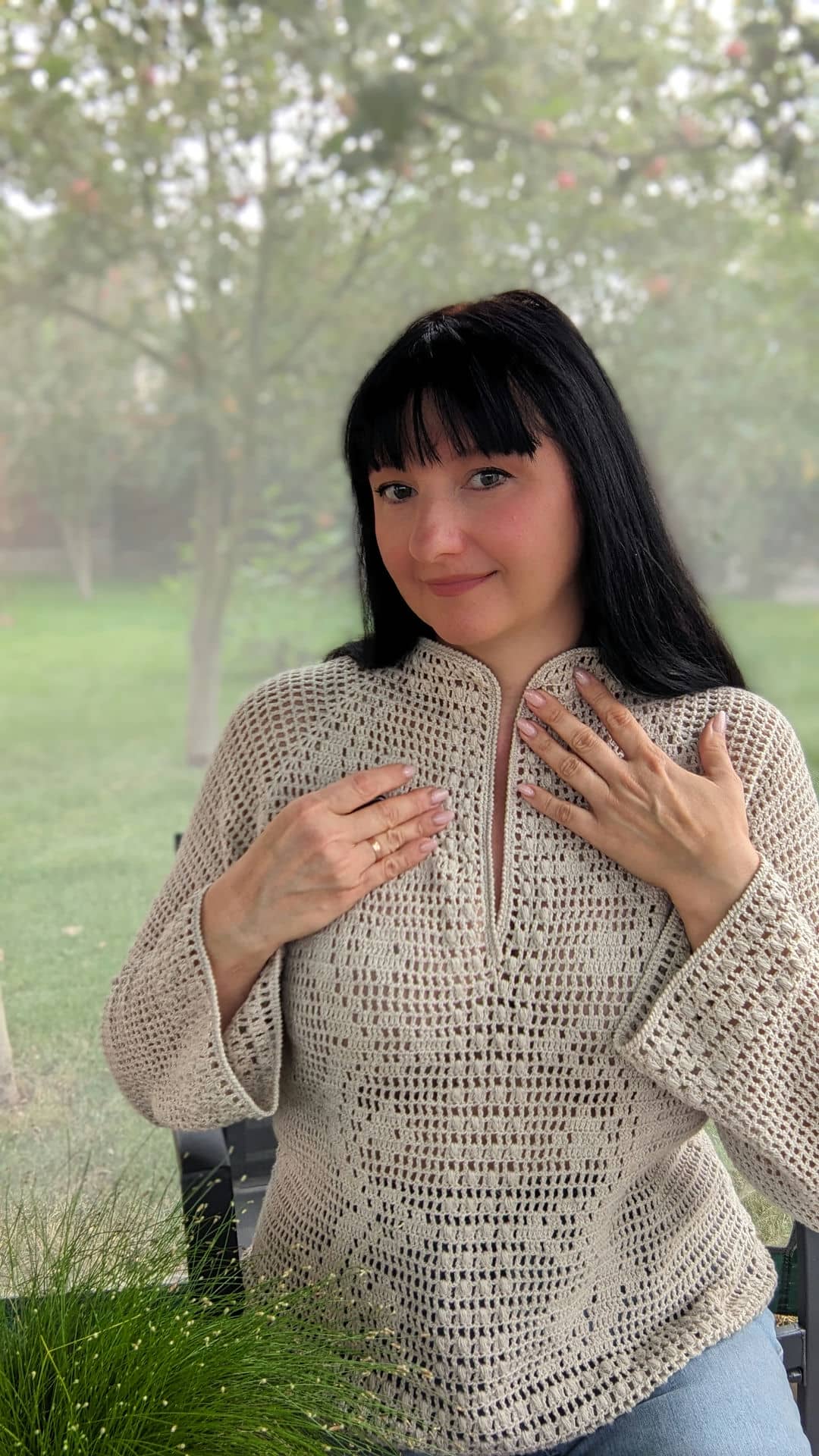
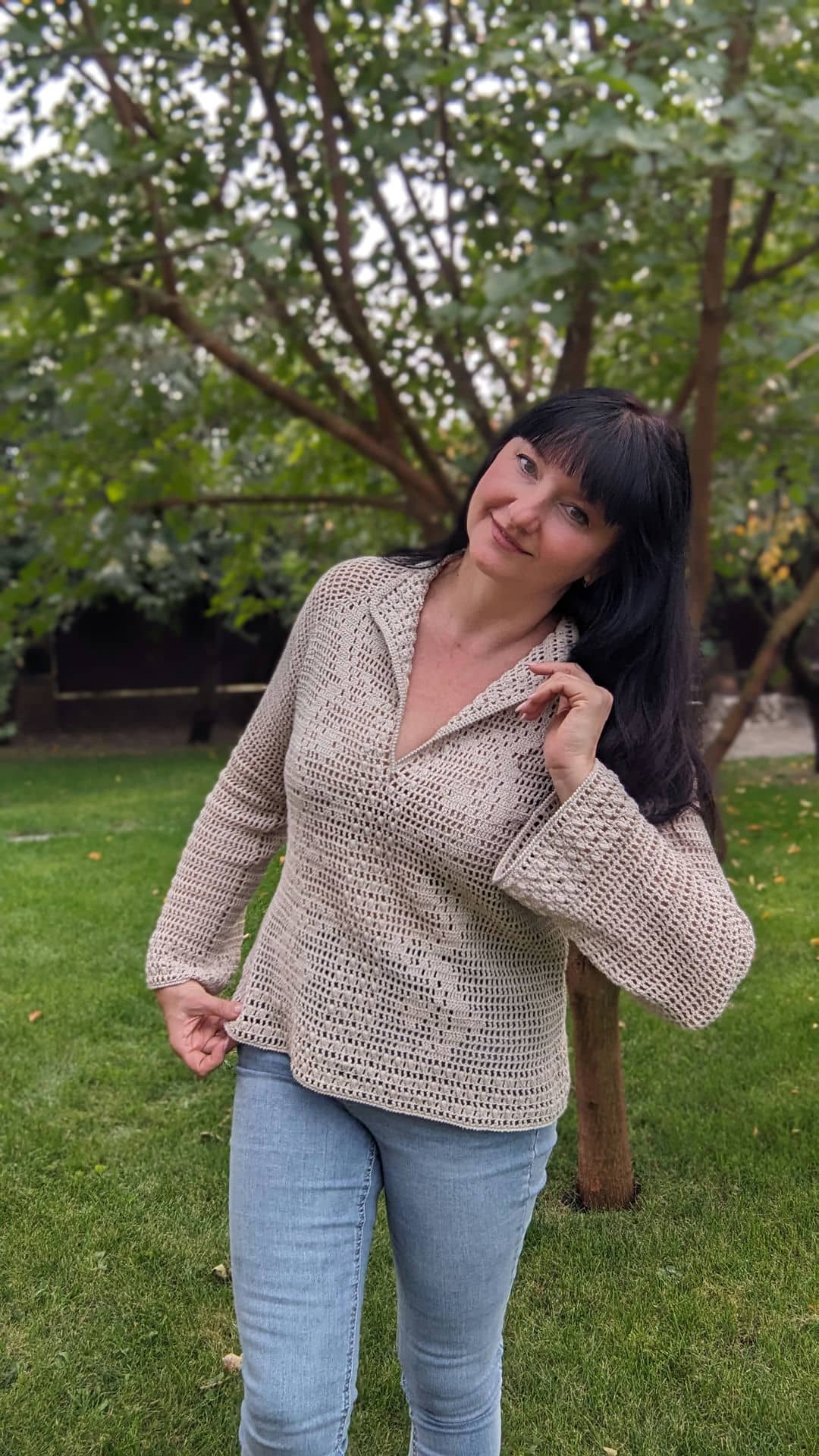
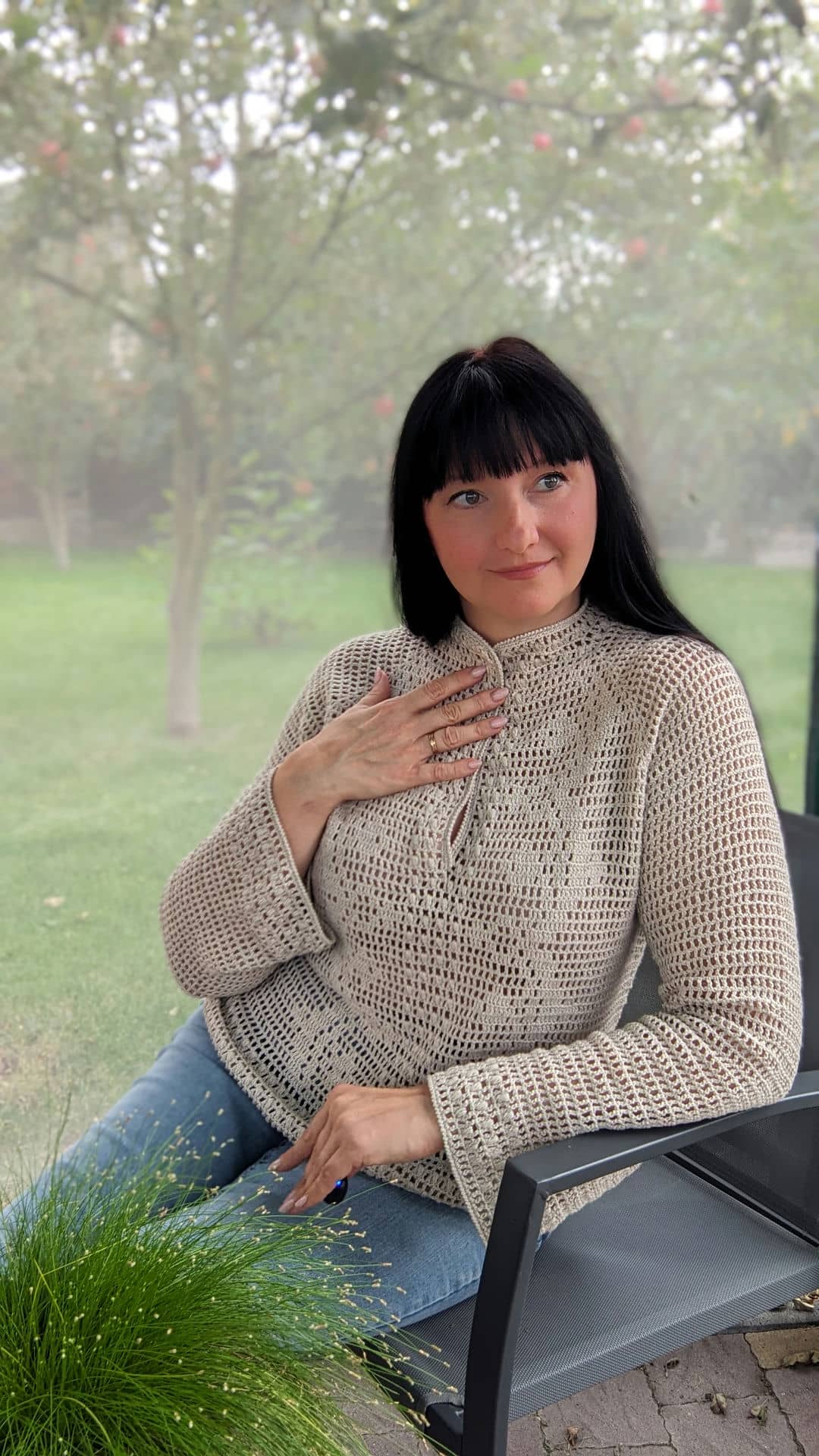
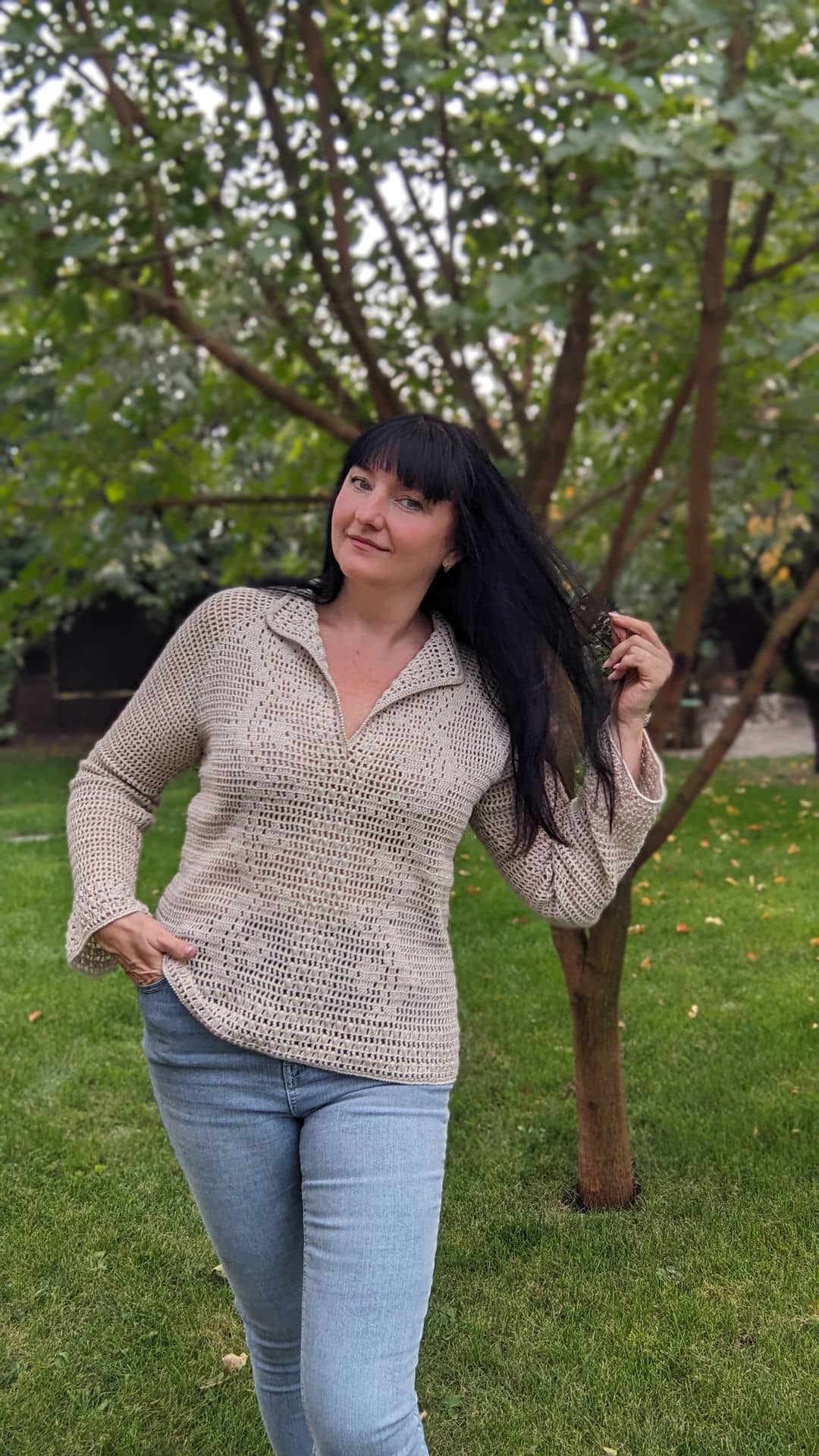
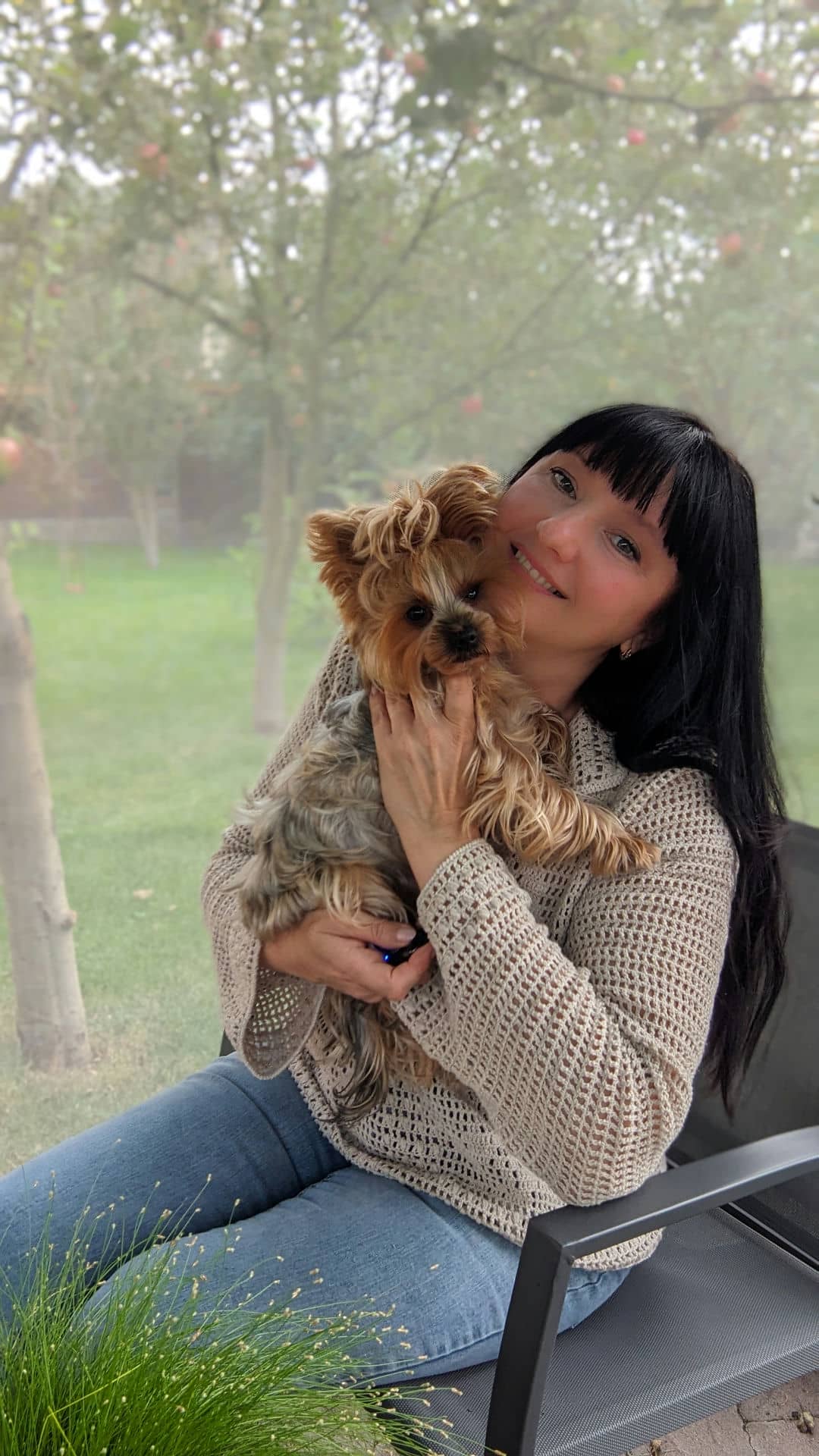
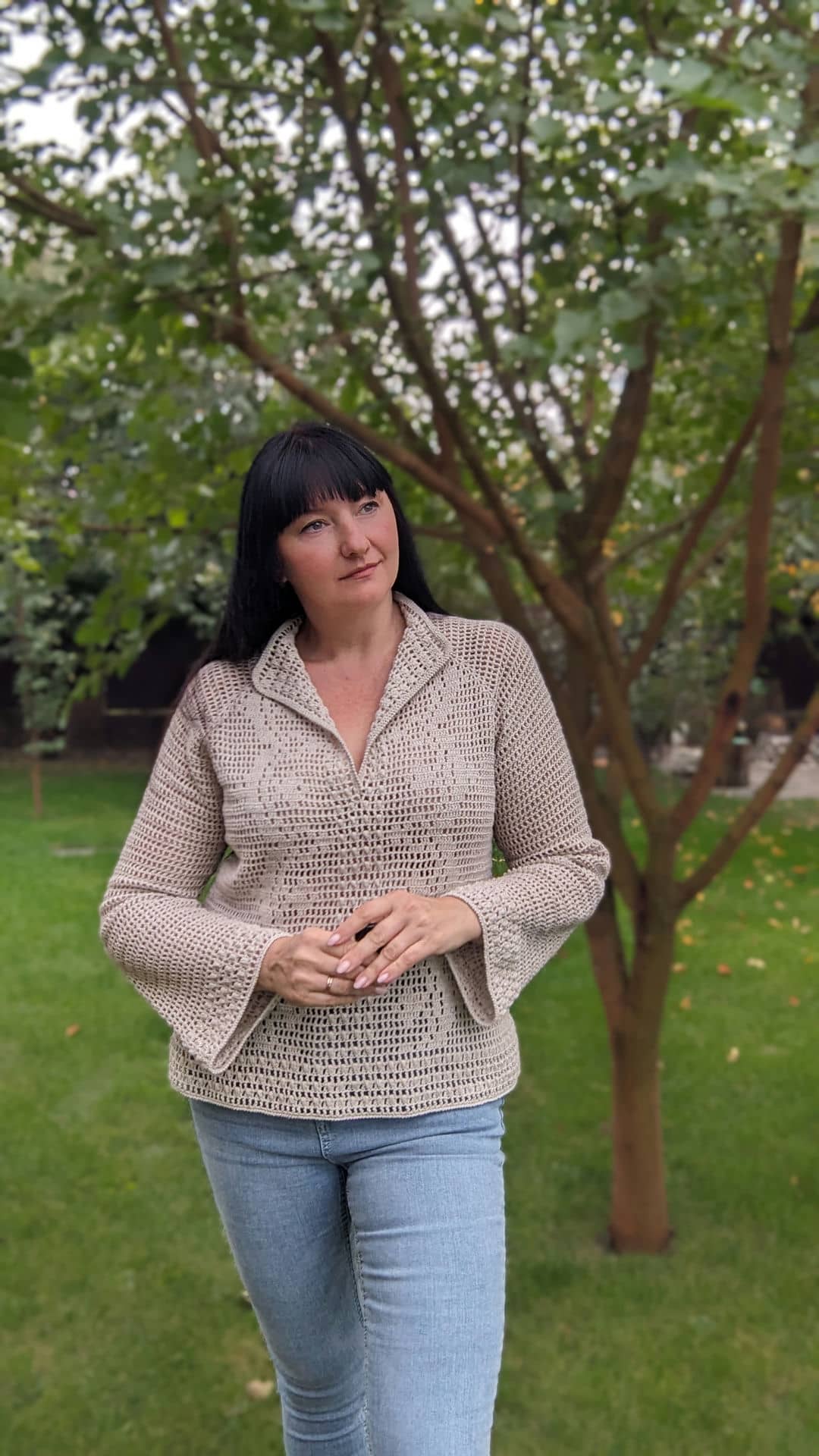
Crochet Filet Blouse with Raglan Yoke, Cotton and Linen
Filet crochet is one of the most popular and at the same time most delicate techniques in crochet, and it lets us create tender, openwork pieces. It is based on alternating filled and empty squares, which form a pattern. The squares are arranged on the fabric in a certain order, which lets you create various geometric patterns, flowers, leaves, abstract motifs and even complex ornaments. This technique is especially valued for its versatility and the chance to bring all kinds of design ideas to life.
To make a blouse in filet crochet we will need a chart of the pattern you want, medium-weight yarn and a hook of the right size. It is also important to choose quality yarn that will hold its shape and give your piece the right texture.
For this project I chose yarn with a summery composition (60% cotton, 40% linen), 500 m/100 g. 2 mm hook.
One square of the filet mesh consists of two stitches:
- empty square – double crochet and a chain,
- filled square – two double crochet.
The blouse is a classic top-down raglan. My calculations are for size 48–50 (≈ EU 42–44, M–L).
We start with the neckline. For a neck circumference of 34–36 cm, with a 2 mm hook chain 111 (ch). This will be 55 squares of filet mesh:
55 squares × 2 stitches (one square) = 110 stitches.
Add 1 more stitch for pattern symmetry: 110 + 1 = 111 stitches.
Abbreviations:
ch – chain.
1 dc – one double crochet.
PS – puff stitch.
RL – raglan line.
Crochet the collar in return rows following the chart.
We form the raglan lines and increase the fabric for the yoke.
Row 1 (wrong side) – work 1 dc and 1 ch alternately. We form a row of empty squares.
Row 2 (right side) – work 1 empty square and 1 filled PS square alternately.
Row 3 (wrong side) – work 1 dc and 1 ch alternately. We form a row of empty squares.
In this same row, divide the total number of squares into separate sections:
- first front – 12 squares,
- first sleeve – 7 squares,
- back – 17 squares,
- second sleeve – 7 squares,
- second front – 12 squares.
Form the raglan lines between these sections, in the top of the stitch of the previous row.
Row 4 (right side) – work 1 empty square and 1 filled PS square alternately. Continue forming the RLs from a group of stitches and chains. Repeat these increases in the following rows.
Row 5 (wrong side) – work 1 dc and 1 ch alternately. We form a row of empty squares.
From row 6 I switch to working the filet pattern on the fronts and back; I added the charts below.
Crochet the yoke to the required length. Then continue each section separately.
Back. Right after the yoke, on the back I work 4 rows of Asian back raise. Then, in the next row, I add chains of 10 ch at the edges, which gives 5 filet squares for each underarm. The back is 77 squares wide. I continue crocheting the back in a straight fabric. At the bottom I worked a few rows of empty squares and squares made of puff stitches.
The filet pattern charts for the back are in the gallery.
Fronts. At this stage you can continue the fronts separately if you want a blouse with a front opening, or join them into one piece, as I did. At the edges of the fronts we also form 5 additional squares for the underarms. Each front is 42 squares wide. When I joined the two fronts together, I merged the two center squares (the edges of the neckline) into one square. The width of the front is 83 squares: 42 + 42 – 1 = 83.
Next, we crochet the front in return rows, in a straight fabric.
The filet pattern charts for the fronts are in the gallery.
Sleeves. The main part is done, so we move on to the sleeves. Along the edges of the underarms and the raise we form new squares of mesh. If needed, you can reduce the number of stitches (squares) by gradually decreasing stitches or chains at the edges of the sleeve. At the corners of the armholes I worked 3 double crochet stitches together at the top twice, and then, on both edges of the sleeve, I worked 2 double crochet together at the top five times.
After the decreases, each sleeve has 55 squares left. I continue crocheting a straight fabric in return rows.
I do not work a pattern on the sleeves, only the filet mesh. At the bottom there is the same openwork edging as on the main body.
All the parts are done, so we move on to the side seams and the sleeve seams. Then we work an edging around all the edges of the piece.
Length of the piece 62 cm. Yarn used 335 g.
You may also like
Knitted Summer Top “Summer Touch” in Cotton-Hemp Yarn
June 24, 2025
Knitted Wrap Pullover with Textured Raglan Lines
October 25, 2022